THE DICTIONARY OF GARDENING, (continued 16)
Reading edition
CALLUS. The new formation at the end of a cutting before it puts forth roots; when the Callus is formed, it shows that the cutting is in a healthy state.
CALOCHILUS (from kalos, beautiful, and cheilos, a lip; referring to the beauty of the labellum or lip). ORD. Orchideæ. Interesting greenhouse terrestrial tuberous-rooted orchids, allied to Epipactis. Sepals yellowish-green; lip purple, covered with rich brown hairs. For culture, see Bletia.
C. campestris (field). fl. greenish and brown. April to June. l. narrow, oblong, pointed. Stem leafy, slender, terete. h. 9in. Australia, 1824. (B. M. 3187.)
C. paludosus (marsh).* fl. very similar in colour to those of C. campestris, but rather larger. May and June. l. rather broader. h. 9in. Australia, 1823. (F. A. O., part 4.)
CALOCHORTUS (from kalos, beautiful, and chortos, grass; referring to the leaves). Mariposa Lily. ORD. Liliaceæ. Handsome bulbous plants. Flowers showy, on erect scapes; perianth deciduous; three outer segments sepaloid, three inner ones much larger and broader, and bearded on the inside. Leaves ensiform. Bulbs tunicated. These have not, hitherto, been generally grown in the open air with much success; but in warm localities and sheltered positions, they may be flowered outside. A frame, in a sunny situation, is the best possible place for their cultivation. Here they may be fully exposed to the sun and air, during mild weather, through the winter; and, when expedient, they may be protected from excessive moisture, as that is the primary cause of failure, rather than cold, for they are perfectly hardy, and capable of enduring all the frost we are likely to get. From May onwards, the lights might be wholly removed. From the end of June to August, the bulbs will be in bloom, when, if necessary, the flowers should be fertilised to secure seed; and when the capsules are forming, material assistance would be given by placing the lights on again, allowing plenty of air. Assuming that fresh bulbs are being planted, they should be in the soil early in the autumn, as nothing is more prejudicial than keeping them dry through the winter. A good depth of soil should be provided, composed of fibrous loam, leaf soil, and sand, in equal proportions, in a well-drained position. The bulbs must be planted 3in. deep, and some sand placed about them; they may be left undisturbed for years. Of course, where no frame can be provided, they may be planted in a well-drained, sunny position in the same soil. They are also easily managed in pots, but it is necessary to pot in the autumn, and keep in a frame. Through the winter, they must never be allowed to get dry, until the leaves are withering in the autumn, when water may be withheld.
Propagation. This may be effected by seeds or offsets, and by the tiny bulbs frequently produced on the upper portion of the stem. Sow seeds in pans, in a cool house or frame, as soon as ripe, or in the early part of the year, and keep the plants close to the glass during their early stages, as they are very liable to damp off. Sow thinly, so as to enable the young plants to pass a second season in the seed pots or pans. Early in the third season, pot off and plant out singly, encouraging them to grow freely. Propagation by offsets is the most usual method. With liberal treatment, most of the species increase pretty freely. The offsets are best removed when the plants are in a dormant state. They may be either grown in pots or pans, or planted out in pits or frames, until they reach flowering size. During the season of rest, it is the safest plan, with those in pots, to keep them in the earth in which they were grown.
C. albus (white).* fl. snow-white, with a rich blotch, bearded and ciliated, large, globose, pendent; umbels many-flowered, on stems from 1ft. to 1½ft. high. California, 1832. This handsome species is rare. SYN. Cyclobothra alba. (B. R. 1661.)
C. Benthami (Bentham's).* fl. rich yellow; petals obtuse, densely covered with yellow hairs; stem three to six-flowered. July, August. l. linear, much elongated. h. 4in. to 8in. Sierra Nevada. SYN. C. elègans lutea.
C. cœruleus (bluish).* fl. lilac, more or less lined and dotted with dark blue, the petals covered and fringed with slender hairs; stem two to five-flowered. July. l. solitary, linear. h. 3in. to 6in. Sierra Nevada.
C. elegans (elegant).* fl. greenish-white, purplish at base; stems three-flowered; petals not ciliate on the margin, or sparingly so. June. h. 8in. California, 1826. This is a rare species.
C. e. lutea (yellow). A synonym of C. Benthami.
C. Gunnisoni (Gunnison's).* fl. light lilac, yellowish-green below the middle, with a purple band encircling the base of the perianth; large, 2in. to 3in. in diameter. Rocky Mountains.
C. Leichtlinii (Leichtlin's). A synonym of C. Nuttallii.
C. lilacinus (lilac).* fl. pale pink, hairy below the middle, 1½in. across, with three segments narrow and three broad; scape slender, leafy, bearing one to five flowers. l. solitary, narrow lanceolate, radical. h. 6in. to 8in. California, 1868. SYN. C. umbellatus. (B. M. 5804, under the name of C. uniflorus.)
C. luteus (yellow).* fl. terminal, two or three together; exterior segments of the perianth greenish; the inner yellow, bordered with purple hairs. September. h. 1ft. California, 1831. (B. R. 1567.)
C. l. oculatus (eyed). fl. very charming bright yellow, with a bold eye on the inside of each petal.
C. macrocarpus (large-capsuled). fl. very large, lavender-coloured, on stems 1ft. high. August. California, 1826. (B. R. 1152.)
C. Maweanus (Mawe's). fl., sepals purplish, broadly obovate acute; petals white or bluish-purple, longer than the sepals, the surfaces more or less covered with long purplish hairs. June, July. l. glaucous, linear. Stem three to six-flowered. h. 6in. to 10in. San Francisco, &c. (B. M. 5976, figured under the name of C. elegans.)
C. Nuttallii (Nuttall's).* fl. large, 2½in. across; the three smaller segments of the perianth of a greenish colour streaked with red; the three larger segments pure white, with a purple spot at the base on the inner surface; two or three flowers on a stalk. June. l. linear, glaucous. h. 6in. California, 1869. SYN. C. Leichtlinii. (B. M. 5862.)
C. pulchellus (beautiful).* fl. bright yellow, globular, drooping; umbels three to five-flowered, on stems from 10in. to 12in. high. Summer. California, 1832. A lovely species. (B. R. 1662.) SYN. Cyclobothra pulchella.
C. purpureus (purple).* fl., outer segments of the perianth green and purple outside and yellow within; inner segments purple outside and yellow within. August. h. 3ft. Mexico, 1827. (S. B. F. G. ser. ii., 20.)
C. splendens (splendid).* fl. clear lilac, large. August. h. 1½ft. California, 1832. (B. R. 1676.)
C. umbellatus (umbelled). A synonym of C. lilacinus.
C. venustus (charming).* fl. large, white, nearly 3in. in diameter, yellow at the base, deeply stained with crimson, and blotched on each segment with crimson. h. 1½ft. California, 1836. See Fig. 329. (B. R. 1669.) There are three varieties of this species, viz., brachysepalus (short-sepaled), lilacinus (lilac), and purpureus (purple-flowered).
CALODENDRON (from kalos, beautiful, and dendron, a tree). ORD. Rutaceæ. A very handsome greenhouse evergreen tree. Flowers in terminal panicles. Leaves large, opposite, simple, crenated. It will grow freely in a mixture of loam and peat. Cuttings of half-ripened wood root in sand if placed under a bell glass, in gentle bottom heat.
C. capensis (Cape). fl. flesh-coloured; pedicels compressed, dilated under the flower; panicle trichotomously divided. Branches opposite, or three in a whorl. h. 40ft. Cape of Good Hope, 1789. This is supposed to be one of the finest trees at the Cape of Good Hope. (G. C., 1883, xix., 217.) See Fig 330, for which we are indebted to Mr. Bull.
CALODRACON. See Cordyline.
CALONYCTION. See Ipomœa.
CALOPHACA (from kalos, beautiful, and phake, a lentil; in allusion to the beauty of the plant, and to its being one of the leguminous kind). ORD. Leguminosæ. A hardy deciduous shrub, with axillary pedunculate racemes of yellow flowers, and impari-pinnate leaves. This is well adapted for the front of shrubberies. It is somewhat difficult to propagate, except by seeds, which, however, in fine seasons, are produced in abundance. Grafted high on the common Laburnum, it forms an object at once singular, picturesque, and beautiful, whether covered with blossoms, or with its fine reddish pods.
C. wolgarica (Volga).* fl. yellow. May, June. l., leaflets six or seven pairs, orbicular, velvety beneath, as well as the calyces. h. 2ft. to 3ft. Siberia, 1786. (W. D. B. 83.)
CALOPHANES (from kalos, beautiful, and phaino, to appear; alluding to the flowers). ORD. Acanthaceæ. A genus of about thirty species, widely distributed, principally in the tropical regions of both hemispheres. The best garden plant is that mentioned below; it is an interesting hardy herbaceous perennial, excellent for growing in borders, in loam and peat, or sandy loam soil; and may be propagated by dividing the roots, in March.
C. oblongifolia (oblong-leaved).* fl. blue; corolla funnel-shaped, throat ventricose, limb bilobed, nearly equal; tube of corolla one-half longer than the calyx; pedicels axillary. August. l. opposite, oblong-spathulate, entire, acuminated. h. 1ft. Florida, &c., 1832. (S. B. F. G., ser. ii., 181.)
CALOPHYLLUM (from kalos, beautiful, and phyllon, a leaf; the leaves are large, of a beautiful green, and elegantly veined). ORD. Guttiferæ. Fine stove evergreen trees. Flowers disposed in axillary racemes. Leaves furnished with numerous transverse, parallel nerves. They thrive in a compost of loam, sand, and peat. Cuttings of half-ripened shoots will root in sand, if placed under a glass, in bottom heat.
C. Calaba. Calaba-tree. fl. white, sweet-scented, loosely racemose; racemes lateral, very short. fr. green. l. obovate or oblong, obtuse or emarginate. h. 30ft. West Indies, &c., 1780.
C. inophyllum (fibrous-leaved). fl. snow-white, sweet-scented, loosely racemose; racemes axillary; peduncles one-flowered, usually opposite. fr. reddish, the size of a walnut. l. oblong or obovate, obtuse, but usually emarginate. Branches round. Tropics of the Old World, 1793. A medium-sized tree.
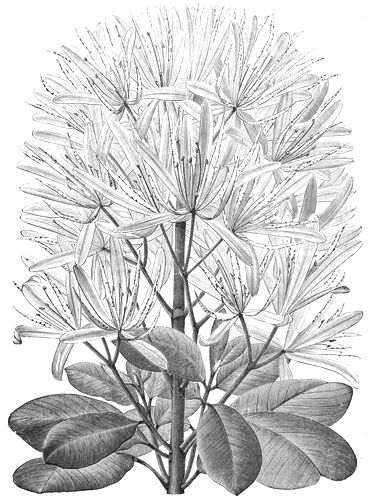
FIG. 330. CALODENDRON CAPENSIS.
CALOPOGON (from kalos, beautiful, and pogon, a beard; in reference to the fringe on the lip). ORD. Orchideæ. Very pretty, hardy, tuberous-rooted orchids, admirably suited for a good shady position at the foot of the rockwork, or for an open situation in a hardy fernery. Propagated by offsets, taken from the tuberous roots; but this method of increase is very uncertain. Perhaps the only species in cultivation is the following:
C. pulchellus (beautiful).* fl. purple, with a very pretty pale yellow beard or tuft of hairs growing from the lip; two or three to a plant. Late summer. l. few, radical, grass-like. h. 1½ft. North America. 1791. SYN. Limodorum tuberosum. (S. B. F. G. 115.)
CALOSANTHES INDICA. A synonym of Oroxylum indicum.
CALOSCORDUM (from kalos, beautiful, and skorodon, garlic). ORD. Liliaceæ. A genus of half-hardy bulbs, allied to Allium, but now referred to Nothoscordum. For culture, see Calochortus.
C. nerinæflorum (Nerine-flowered).* fl. rose; umbels about twelve-flowered; spathe one-valved. June and July. l. narrow, semi-terete, channelled above. h. 6in. Chusan, 1843. (B. R. 1847, 5.)
CALOSTEMMA (from kalos, beautiful, and stemma, a crown). ORD. Amaryllidaceæ. Handsome greenhouse bulbous plants, natives of New Holland. Flowers funnel-shaped, irregular; perianth with the orifice surmounted by a corona; stamens erect, united by their dilated bases; ovary three-celled, many-seeded. Leaves linear-lorate.
C. album (white). fl. white. May. l. ovate, acute, 3in. to 5in. long, 2in. to 3in. broad. h. 1ft. 1824.
C. luteum (yellow). fl. yellow. November. l. strap-shaped, narrow. h. 1ft. 1819. (B. M. 2101.)
C. purpureum (purple). fl. purple. November. l. like those of C. luteum. h. 1ft. 1819. (B. M. 2100.)
CALOTHAMNUS (from kalos, beautiful, and thamnos, a shrub; in reference to the elegance of the shrubs, from their scarlet flowers and terete leaves). ORD. Myrtaceæ. Greenhouse evergreen shrubs. Flowers scarlet, axillary and solitary, sessile. Leaves scattered, crowded, terete. They require much the same culture as Callistemon. Cuttings of young wood, firm at the base, will root in sand, if covered by a hand glass, which requires to be occasionally taken off and wiped, to prevent damp.
C. quadrifidus (four-cleft). fl. scarlet, somewhat secund; bundles of stamens four, distinct, equal. July. l. glabrous (as well as the flowers). h. 2ft. to 4ft. West Australia, 1803. (B. M. 1506.)
C. villosa (villous). fl. scarlet, quinquefid; bundles of stamens equal, distinct. July to September. l. villous (as well as the fruit). h. 2ft. to 4ft. West Australia, 1823. (B. R. 1099.)
CALOTIS (from kalos, beautiful, and ous, otos, an ear; in reference to the chaffy scales of the pappus, or seed-head). Allied to Bellium. ORD. Compositæ. Greenhouse or half-hardy herbaceous perennials, rarely annuals, all natives of Australia. Receptacle naked; involucre nearly equal, many-leaved, in a single or double row. They may be grown successfully in any ordinary garden soil. Propagated by divisions of the root.
C. cuneifolia (wedge-leaved).* fl.-heads blue, solitary, terminal. July and August. l. cuneate, cut, toothed at end. h. 1ft. 1819. Greenhouse herbaceous perennial. (B. R. 504.)
CALOTROPIS (from kalos, beautiful, and tropis, a keel; literally "beautifully twisted," apparently in reference to the corolla of C. gigantea). ORD. Asclepiadeæ. A genus of stove evergreen shrubs, or small trees. The three species bear large handsome flowers, in interpetiolar umbels. They thrive best in a mixture of loam, sand, and peat. Young cuttings, thinly dibbled in a pot of sand, strike root freely under a hand glass, in heat. Care must be taken that they do not receive an excess of moisture, or they will rot.
C. gigantea (gigantic).* fl. very handsome, a mixture of rose and purple; corona shorter than the gynostegium, obtuse, circinately recurved at the base; umbels sometimes, though rarely, compound, surrounded by several involucral scales. July. l. decussate, broad, wedge-shaped, bearded on the upper side at the base, woolly-downy on the under side, 4in. to 6in. long, 2in. to 3in. broad. h. 6ft. to 15ft. India, &c., 1690. (B. R. i. 58.)
C. procera (tall). fl. white; petals spreading, marked at the top by a purple spot. July. l. obovate-oblong, on short petioles, whitish from wool. h. 6ft. Persia, 1714. (B. R. 1792.)
CALPICARPUM. See Kopsia.
CALPIDIA. A synonym of Pisonia (which see).
CALTHA (a syncope of kalathos, a goblet; in allusion to the form of the perianth, which may be likened to a golden cup). Marsh Marigold. ORD. Ranunculaceæ. Hardy herbaceous perennials, of easy culture on the margin of a piece of water, or in a marshy bog, or in the ordinary border, where their showy blossoms look very brilliant. Propagation is readily effected by dividing the roots, in early spring, or in summer after flowering.
C. leptosepala (slender-sepaled).* fl. pure white, one to two upon erect, scape-like peduncles. May, June. l. radical, cordate, the margins nearly entire, or sometimes crenate. h. 1ft. Northwestern America, 1827. (H. F. B. A. 1, 10.)
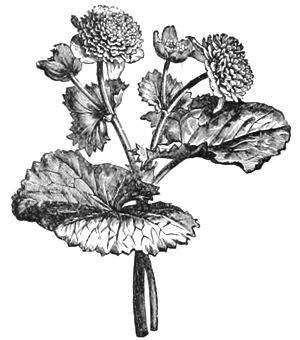
FIG. 331. CALTHA PALUSTRIS MONSTROSA PLENA.
C. palustris (marsh).* fl. golden-coloured, large; peduncles furrowed. Spring. l. cordate, somewhat orbicular, roundly-crenate, with rounded auricles. Stems dichotomous, erect. h. 1ft. Great Britain. (Sy. En. B. 40.) The double forms of this species, under the names of nana plena and monstrosa plena (see Fig. 331) are excellent plants, and, though growing best in the immediate vicinity of water, and most appropriate for rough scenery, they, like the type, do very well in ordinary well-enriched soil. A variety named purpurascens, from Southern Europe, is also showy, more erect, and branching; the shoots and pedicels purplish.
C. p. biflora (two-flowered). A twin-flowered variety of C. palustris. North America, 1827. This is not quite so tall as the type, and the flowers are rather larger.
C. p. parnassifolia (Parnassia-leaved). fl. yellow, on few-flowered peduncles. April, May. l. cordate-ovate, crenated. h. 3in. to 4in. North America, 1815.
C. radicans (rooting).* fl. bright yellow, several in small cyme. April, May. l. reniform-cordate, sharply crenate-serrate, spreading. h. 6in. Scotland. (Sy. En. B. 41.)
CALTROPS. See Tribulus.
CALTROPS, WATER. See Trapa natans.
CALUMBA, FALSE. See Coscinium fenestratum.
CALUMBA ROOT. See Jateorrhiza Calumba.
CALUMBA WOOD. See Coscinium fenestratum.
CALYCANTHACEÆ. A natural order of shrubs, with square stems, having four woody axes surrounding the central one. Flowers solitary, lurid; calyx of numerous coloured sepals compounded with the petals. Leaves opposite, entire, exstipulate. The two genera known are Calycanthus and Chimonanthus.
CALYCANTHUS (from kalyx, kalykos, a calyx, and anthos, a flower; in reference to the calyx being coloured, and appearing like a corolla). Allspice. ORD. Calycanthaceæ. A genus of hardy, deciduous, North American shrubs. Flowers lurid purple, axillary, and terminal, stalked, sweet-scented; stamens numerous. Leaves opposite, oval or ovate-lanceolate, entire, generally rough on the surface; sweet-scented. All are handsome and well worth growing. They thrive best in a peaty compost, but grow freely in almost any soil. Increased by layers, put down in the summer; or by seed, sown as soon as ripe, or in spring, in a cold frame.
C. floridus (Floridan).* Carolina Allspice. fl. with a sweet apple scent. May. l. ovate, downy beneath, as well as the branchlets. Branches spreading. Wood and roots smelling strongly of camphor. h. 4ft. to 6ft. Carolina, 1726. See Fig. 332. (B. M. 503.) There are several varieties of this species.
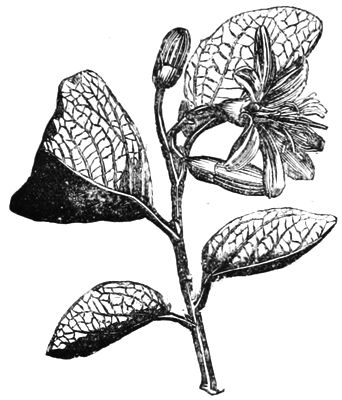
FIG. 332. FLOWERING BRANCH OF CALYCANTHUS FLORIDUS.
C. glaucus (glaucous).* fl. lurid purple, not strongly scented. May. l. ovate-lanceolate, acuminated, glaucous and pubescent beneath. h. 4ft. to 6ft. Carolina, 1726. SYN. C. fertilis. (B. R. 404.) C. oblongifolius is a variety with ovate-lanceolate elongated leaves.
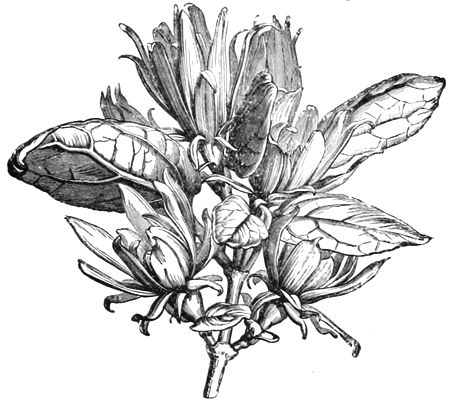
FIG. 333. FLOWERING BRANCH OF CALYCANTHUS LÆVIGATUS.
C. lævigatus (smooth-leaved).* fl. lurid purple. May. l. oblong, thin, either blunt or taper-pointed, bright green, and glabrous, or nearly so, on both sides, or rather pale beneath. Branches strictly erect. h. 3ft. to 6ft. Mountains of Pennsylvania, &c., 1806. See Fig. 333. (B. R. 481.)
C. macrophyllus (large-leaved). A garden synonym of C. occidentalis.
C. occidentalis (Western).* fl. brick-red, sweet-scented, 3in. to 4in. across, each petal about 2in. long and ½in. broad. June to October. l. oblong or ovate-cordate, acuminate, slightly pubescent on the veins only beneath. h. 6ft. to 12ft. California, 1831. In California, this is called the Sweet-scented Shrub. SYN. C. macrophyllus, of gardens. (B. M. 4808.)
CALYCIFLORÆ. A sub-division of dicotyledonous plants, having the stamens inserted on the calyx or disk.
CALYCIFORM. Formed like a calyx.
CALYCINE. Of, or belonging to, the calyx.
CALYCOPHYLLUM (from kalyx, a calyx, and phyllon, a leaf; in allusion to one of the teeth of the calyx being expanded into a large petiolate coloured leaf). ORD. Rubiaceæ. Stove evergreen shrubs, requiring a compost of loam, peat, and a little sand and charcoal. Cuttings of half ripe shoots will root in sand if placed under a bell glass, in bottom heat.
C. candidissimum (whitest).* fl., corolla white, campanulate, with a bearded throat, three together, the middle one bearing a petiolate leaf, but the two lateral ones naked; corymbs terminal. l. ovate, bluntly acuminated, 2in. to 3in. long. h. 30ft. Cuba, 1830.
CALYCOTOME (from kalyx, kalykos, calyx, and tome, a section; lips of calyx fall off). ORD. Leguminosæ. A small genus of hardy, divaricately-branched, spiny shrubs, formerly included as a section of Cytisus. Flowers yellow, disposed in short branched leafy fasicles. For culture, see Cytisus.
C. spinosa (spiny). fl. yellow. June and July. l., leaflets obovate-oblong. Branches angular, spiny. h. 5ft. to 6ft. Genoa, Corsica, &c., 1846. (B. R. 55.)
CALYCULATE. Having bracts so placed as to resemble an external or additional calyx.
CALYMMODON. See Polypodium.
CALYPSO (from the beautiful nymph, Calypso, or from Greek kalypto, to conceal; in reference to its place of growth). ORD. Orchideæ. An elegant terrestrial monotypic genus. It thrives well in half-shady spots on the margins of a rock garden or artificial bog, in a light, moist, vegetable soil, composed of peat, leaf soil, and sand, mulched with cocoa-nut fibre refuse in winter. Propagated by offsets.
C. borealis (Northern).* fl. solitary, delicate rose and brown, with a yellow crest on the lip; labellum longer than the sepals, the lateral lobes cohering in their upper part over the saccate central one, which is usually bifid at the tip, resembling those of a Cypripedium. Summer. l. solitary, thin, many-nerved, ovate or cordate. Stems usually thickening into pseudo-bulbs. h. 1ft. High latitudes of Northern hemisphere, 1820. (B. M. 2763.)
CALYPTRA. Literally an extinguisher; applied to the hood which covers the theca in mosses.
CALYPTRANTHES (from kalyptra, a covering, and anthos, a flower; in allusion to the operculum of the flower). ORD. Myrtaceæ. Strong-growing stove evergreen shrubs or small trees. Peduncles axillary, many-flowered. Leaves feather-veined. They are of easy culture, in a compost of loam and peat, and may be propagated by layers, or by cuttings, placed in heat.
C. Chytraculia (Chytraculia). fl. white, small, glomerate; peduncles axillary and terminal, trichotomous, panicled, and are, as well as the flowers, clothed with rufous velvety down. March. l. ovate, attenuated at the apex, stiffish, glabrous. h. 10ft. Jamaica, 1778. (N. S. 1, 26.)
C. Syzygium (Syzygium). fl. white, on short pedicels; peduncles axillary, trichotomous, many-flowered. May to July. l. ovate, obtuse, stiff. h. 10ft. to 12ft. Jamaica, 1779.
CALYPTRARIA. See Centronia.
CALYPTRATE. Resembling an extinguisher.
CALYPTRIFORM. Shaped like an extinguisher.
CALYPTRION. See Corynostylis.
CALYPTROCALYX (from kalyptra, an extinguisher, and kalyx, a calyx, in allusion to the form of the outer perianth segments). ORD. Palmeæ. A monotypic genus of stove palms. For culture, see Calamus.
C. spicatus (spiked). fl., spadices elongated, spicate, leafy at base; spathe opening longitudinally. l. terminal, pinnatisect; segments reduplicate, linear, acuminate, bifid at the apex; petiole fibrous at the base. Caudex finally smooth. h. 12ft. Moluccas. SYNS. Areca and Pinanga globosa.
CALYPTROGYNE (from kalyptra, an extinguisher, and gyne, a woman—pistil—in allusion to the form of the pistil). Including Calyptronoma. ORD. Palmeæ. A small genus comprising five species of handsome stove palms, allied to Geonoma (which see for cultivation).
C. Ghiesbreghtiana (Ghiesbreght's). fl., peduncles erect, overtopping the leaves, bearing a single cylindrical, undivided spadix, 9in. to 12in. in length. l. pinnate, 2ft. to 5ft. long; pinnæ opposite or alternate, sessile, of unequal breadth, the narrower ones one to two-nerved, the broader ones six to ten-nerved, usually from six to twelve on each side of the rachis; the intervals between the pinnæ vary from 1in. to 2in.; petiole broadly sheathing at the base, from a few inches to 1½ft. long. Stem short or absent. Mexico. A very elegant dwarf-growing species. SYNS. Geonoma Ghiesbreghtiana, G. magnifica and G. Verschaffeltii. (B. M. 5782.)
C. spicigera (ear-bearing). l. irregularly pinnate, 2ft. to 3ft. long, 1ft. broad, deeply bifid at apex, rich bright green; petioles short, sheathing at the base, flat on the upper side, rounded below. Stems stout. h. 5ft. Guatemala. A very elegant species.
C. Swartzii (Swartz's). l. equally pinnatisect; pinnæ deeply reduplicate at the base, bifid at the top. Trunk smooth. h. 50ft. to 60ft. Jamaica, 1878. A handsome plant when young, and useful for general decorative purposes. SYN. Calyptronoma Swartzii.
CALYPTRONOMA SWARTZII. See Calyptrogyne Swartzii.
CALYSTEGIA (from kalyx, a calyx, and stege, a covering; in reference to the two large persistent bracts enclosing the calyx). Bearbind. ORD. Convolvulaceæ. Hardy, glabrous, twining or prostrate herbs. Peduncles solitary, one-flowered; corolla campanulate, five-plicate. All the species are of easy cultivation in common garden soil. Propagation may be effected by dividing the plants; or by seeds, sown in spring.
C. dahurica (Dahurian).* fl., corolla of a rosy-purple; sepals lanceolate, acute, the two outer ones broadest; peduncles tetragonal, tomentose; bracts broad-ovate, acute, longer than the calyx. July. l. glabrous or hairy, oblong-cordate, having the margins and nerves on the under side tomentose. Dahuria, 1826. (B. M. 2609.)
C. inflata (inflated). Synonymous with C. sepium incarnata.
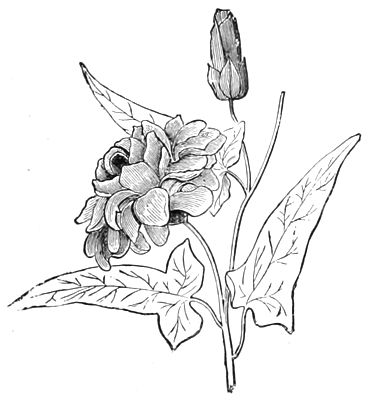
FIG. 334. FLOWERING BRANCH OF CALYSTEGIA PUBESCENS FLORE-PLENO.
C. pubescens flore-pleno (downy, double-flowered).* fl. 2in. to 3in. across; petals long, narrow, wavy, and reflexed, flesh-colour, but ultimately bright rose; pedicels 2½in. to 3½in. long. Summer and autumn. l. alternate, hastate, downy. China, 1844. See Fig. 334.
C. sepium (hedge). Common Bindweed. fl. white, sometimes tinged with red; peduncles tetragonal, exceeding the petioles; bracts cordate, keeled, acute, longer than the calyx, but one-half shorter than the corolla. Summer. l. sagittate or cordate, very acute; hind lobes obtuse, or truncate, entire. Britain. A very troublesome weed. (Sy. En. B. 924.) There is a variety named incarnata, with rose-coloured flowers. North America. SYN. C. inflata. (B. M. 732.)
C. Soldanella (Soldanella-like).* Sea Bells. fl. pale red, with five longitudinal, yellowish plaits, large; peduncles angular, angles winged; bracts large, ovate, blunt, mucronate, generally shorter than the calyx. June. l. rather fleshy, reniform, entire or a little angular. Sea-shores, Britain. This pretty species can only be grown with success in a very sandy soil. (Sy. En. B. 925.)
CALYTHRIX (from kalyx, a calyx, and thrix, a hair; in reference to the lobes of the calyx, which each end in a long hair). ORD. Myrtaceæ. A genus of very pretty and interesting greenhouse Heath-like shrubs, natives of Australia. Flowers small; bracteoles two under each flower; they are either free or joined together at the base, sometimes in the form of an operculum. Leaves scattered, crowded, opposite, full of dots, axillary, solitary, almost sessile. They grow well in a mixture of loam, peat, and sand, with good drainage and firm potting. Cuttings, made from young shoots, will root in April or May, if placed in sand, under a bell glass, in a cool house.
C. ericoides (Heath-like). A synonym of C. tetragona.
C. glabra (glabrous). A synonym of C. tetragona.
C. tetragona (tetragonal).* fl. white; bracts one-half shorter than the tube of the calyx. l. scattered, petiolate, glabrous; stipules deciduous. h. 2ft. 1825. SYNS. C. ericoides, C. glabra. (B. R. 409.)
C. angulata, aurea, and breviseta are other species which have been introduced, but are not worth house room when that described above is grown.
CALYX. The external whorl of floral leaves.
CAMARIDIUM (from kamara, an arched roof; in reference to the arched tip of the stigma). ORD. Orchideæ. A pretty stove orchid, allied to Cymbidium. It thrives best if grown in a shallow basket, or raised above the surface of the pots with sphagnum and broken pots.
C. ochroleucum (yellowish-white).* fl. yellowish-white. July. l. ligulate. Pseudo-bulbs oblong, compressed, smooth. h. 1ft. Trinidad, 1823. SYN. Cymbidium ochroleucum. (B. M. 4141.)
CAMAROTIS. See Sarcochilus.
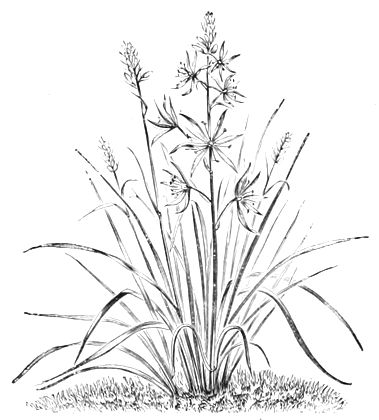
FIG. 335. CAMASSIA ESCULENTA.
CAMASSIA (from Quamash, so called by the North American Indians, who eat the bulbs). SYN. Sitocodium. ORD. Liliaceæ. A small genus (two species) of handsome bulbous plants. Perianth of six segments, slightly connected at base, and spreading out horizontally, but not equally. Leaves narrow, about 1ft. long, grooved down the inside. They thrive best in a sheltered, partially-shaded situation, but will do fairly well in almost any ordinary good garden soil. A compost of loam and leaf mould, with a liberal mixture of sharp sand, suits them best. They need not be disturbed for several years; but a top-dressing of rich soil or well-rotted manure may be given yearly. Propagated by offsets and seeds. The plants are so hardy that they ripen seeds in warm situations. These may be sown as soon as ripe, or the following spring, either in a warm situation out of doors, or in pots or boxes, under glass. The young plants make rapid progress, and should remain for at least two years in the seed beds. The best time for final transplanting is in February. Offsets are produced very freely, and should be removed either when in a dormant condition, or just previously to starting into fresh growth, and arranged in clumps or lines, placing a little sand about them.
C. esculenta (edible).* Camash or Quamash. fl. blue, about 2in. across; racemes loose, ten to twenty-flowered, borne on stout scapes; perianth six-cleft, the five upper segments close together, the sixth standing by itself. Summer. l. linear, about 1ft. high. Columbia, &c., 1837. The colour of the flowers varies from a deep blue to nearly white. See Fig. 335. (B. R. 1486.) The white-flowered form is figured in B. M. 2774, under the name of Scilla esculenta flore albo.
C. e. Leichtlini (Leichtlin's).* fl. creamy-white, larger than those of the type, with more numerous nerves in the keel of the segments of the perianth; racemes longer, and sometimes compound. Spring. h. 2ft. Columbia, 1853. This also differs from the type in its more robust habit and broader leaves. SYN. Chlorogalum Leichtlini. (B. M. 6287.)
C. Fraseri (Fraser's).* fl. pale blue, smaller than those of C. esculenta; pedicels and scape much more slender. l. narrow, acute; capsule more acutely angled. h. 1ft. Eastern States of North America. A smaller and more slender plant. (B. M. 1574, as Scilla esculenta.)
CAMBESSEDESIA (named after James Cambessedes, coadjutor of Auguste St. Hilaire, in his "Flora Brasiliæ Meridionalis," and author of several botanical memoirs). ORD. Melastomaceæ. A genus of elegant, erect, or ascending, dichotomously branched stove shrubs or herbaceous plants. Flowers terminal and axillary, in paniculate cymes; petals five, obovate; calyx bell-shaped. Leaves sessile, opposite or verticillate, obovate, oblong or linear. They thrive best in a compost of peat and sand. Propagated by half-ripened cuttings, which root freely in a similar mixture, if placed in heat and under a hand glass. There are about eight species known to science, but probably that mentioned below is the only one in cultivation.
C. paraguayensis (Paraguay). fl. rose-red, ⅔in. in diameter, in terminal corymbose, glandular, hairy panicles. July. l. nearly 1in. long, sessile, ovate, acute, three-nerved, pale green, with entire ciliate margins. Stem annual, herbaceous, leafy. h. 10in. to 18in. 1880. (B. M. 6604.)
CAMBIUM. The formative fluid found between the bark and wood of Exogens, in spring.
CAMBUY FRUIT. See Eugenia.
CAMELLIA (named in honour of George Joseph Camellus or Kamel, a Moravian Jesuit and traveller in Asia, who wrote a history of the plants of the Isle of Luzon, which is inserted in the third vol. of John Ray's "Historia Plantarum"). Japanese Rose. Including Thea. ORD. Ternstrœmiaceæ. A genus of elegant hardy or nearly hardy evergreen shrubs or trees. Flowers large; sepals five or six, gradually passing from bracts into petals, the latter slightly cohering at the base; stamens numerous. Leaves coriaceous. By close attention to a few particulars in the management of these beautiful plants, much disappointment may be avoided, and a succession of flowers obtained from October till the following July. The fact of the buds frequently dropping off, deters many would-be growers from attempting the culture of the Camellia. Dryness of the atmosphere, and want of water at the roots, are generally the primary causes of failure; the remedy for these evils rests with the cultivator. The roots are apt to get matted together, compressing the earth around them into a hard ball, impervious to water; hence attention is necessary to see that the water poured into the pot thoroughly moistens all the soil. In order to form handsome plants, they should be trained with single stems to rods, and pruned, so as to make them throw out side branches from every part of the stem; they must not be placed too close to each other on the stage, or when planted out. A liberal supply of water is always necessary, but especially so during the flowering period. Plants that are required to flower early may remain in the warm house till they commence to blossom, when they should be removed to a cold place, such as the back of a greenhouse, giving them plenty of light. Those kept in a hothouse or vinery during summer, will flower in the beginning or middle of October; and a large plant, having from fifty to one hundred buds, will continue in flower till the month of January. Those that are removed early, will blossom in January, and so succeed the others. The plants that have finished flowering should be brought back to the hothouse, where they will begin to make new wood, and be ready to come in succession next season. By thus shifting the plants from a warm to a cold situation, a regular succession will be secured from October to July. The soil should be kept constantly moist, and in the summer months the leaves occasionally syringed. Camellias flower best when kept in small pots or tubs. In order to raise and exhibit these handsome plants to the best advantage, they should be grown in a separate house, of ample height, as they never look so well as when 6ft. or 8ft. high, trained in a conical form, with branches from the root upwards; and the plants should be raised near to the glass on a movable stage, which should be lowered as they grow. In summer, they may either be placed in the open air in a sheltered spot, or the glass roof of the house can be taken off. The hardier sorts, such as the Double-red, Blush, and Pæony-flowered, succeed in the bed or border of a conservatory, if the roof can be taken off in summer, so as to admit air. If this cannot be managed, they are better grown in portable pots or boxes. The most suitable time for shifting Camellias is directly after flowering; they should then be put into a vinery or hothouse, where there is a little heat; or the warmest part of a greenhouse. They will soon begin to make new wood, where they should be allowed to remain, amply supplied with water, till they form their flower buds, at the extremity and sides of the young growth. A few should then be removed to a cold place, and shaded during strong sunshine. In a few weeks afterwards, others may also be transferred, so as to have a regular succession of flowering plants.
Propagation. The red Camellias are generally propagated by layers, but cuttings will also succeed; the single red Camellia being raised by either cuttings, layers, or seeds. This latter forms suitable stocks on which to inarch or graft the rarer kinds. The ripened shoots of the preceding summer should be taken off in August, cutting them smoothly at a joint or bud. Two or three of the lower leaves should be taken off, and the cuttings planted firmly in the soil with a dibble. Some growers use peat earth and sand to strike in, while others prefer a loam mixed with sand and peat. The pans containing the cuttings should be kept in a plant or cold frame, without being covered with glasses, but shaded during powerful sunshine. In the following spring, such as have struck will begin to push, when they need to be placed in a gentle heat. The following September or October, the rooted plants will be fit to pot off, and in the second or third spring they may be used as stocks. Inarching or grafting is done in early spring, as soon as growth commences. When this process is completed, care must be taken to fix the pot containing the stock so that it may not be disturbed during the connection of the scion with the parent plant. The grafting being clayed over, is then covered with moss, to prevent its cracking. When independent grafting is resorted to, the mode called "side grafting" is generally employed, as in the case of Orange-trees; but the operation of tongueing is generally omitted, as tending to weaken the stock. Liquid or other manure is not required; nor is it desirable to apply it, as it often, sooner or later, causes the destruction of the plants. As a rule, insects do not trouble this class of plants; but scale will sometimes appear, and can easily be removed by hand. Thrips occasionally put in an appearance, but a little smoke will quickly get rid of them.
C. euryoides (Eurya-like). fl. white; peduncles lateral, one-flowered, scaly. May to July. l. ovate-lanceolate, acuminate, serrated, silky beneath. Branches hairy. h. 4ft. China, 1822. (B. R. 983.)
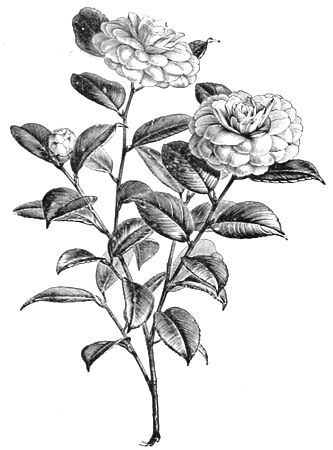
FIG. 336. FLOWERING BRANCH OF CAMELLIA JAPONICA.
C. japonica (Japanese).* Common Camellia. fl. variously coloured, axillary, sessile. l. ovate, acuminate, acutely serrated. h. 20ft. Japan and China, 1739. The innumerable hybrids are chiefly the offspring of this species. See Fig. 336.
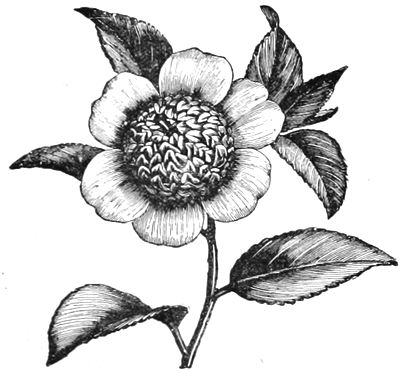
FIG. 337. FLOWER OF CAMELLIA JAPONICA ANEMONÆFLORA.
C. j. anemonæflora (Anemone-flowered). All, or nearly all, the stamens, &c., in this variety are transformed into small petaloid bodies, and the flower has the general aspect of a double Anemone. See Fig. 337. (B. M. 1654.)
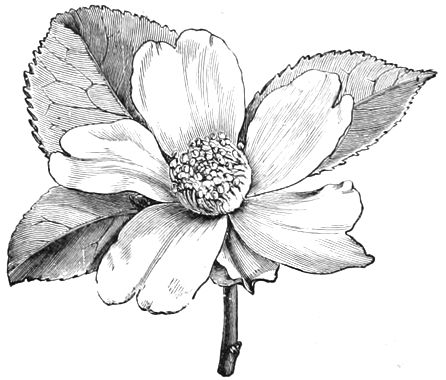
FIG. 338. FLOWER OF CAMELLIA OLEIFERA.
C. oleifera (oil-yielding).* fl. white, very numerous, fragrant, solitary. November. l. elliptic-oblong, acute, serrated, coriaceous, shining. h. 6ft. to 8ft. China, 1820. See Fig. 338. (B. R. 942.)
C. reticulata (netted-leaved). fl. bright rose, large, semi-double. l. oblong, acuminated, serrated, flat, reticulated. h. 10ft. China, 1824. There is a form of this species with full double flowers.
C. theifera (Tea-bearing). fl. white, spreading, of five sepals and five petals, axillary. November to spring. l. elliptical-oblong, obtuse, serrated, more than twice as long as broad, dark green. h. 2ft. to 6ft. China, Japan, and India, 1780. This species varies very considerably. In different countries, it has become modified by cultivation. The Green and Black Teas, formerly supposed to be produced by different species, are obtained from the same bushes, but subjected to different processes.
Less-known species are: drupifera, lanceolata, rosæflora, and Sasanqua.
The true species are rarely seen in cultivation. The following is a selection of the best forms of C. japonica; the list is a limited one, and is capable of great extension:
ALBA PLENA,* double white; ARCHIDUCHESSE AUGUSTA, petals deep red, veined with blue, a white band; ARCHIDUCHESSE MARIE,* flowers bright red, banded with white, imbricated; AUGUSTE DELFOSSE, bright reddish-orange, stripes down the centre of petals; AUGUSTINA SUPERBA,* flowers clear rose, free bloomer; BEALII ROSEA, one of the best and latest deep crimson varieties known; BICOLOR DE LA REINE, white and rose; BONOMIANA,* ground colour white, banded with intense deep red; CARYOPHYLLOIDES,* white, marbled with rosy-carmine, flowers very large; CHANDLERII ELEGANS,* flowers large, light rose; COMTE DE GOMER,* petals soft rose, striped with crimson, beautifully imbricated; COMTE DE PARIS, rich pink, large and full; CONTESSA LAVINIA MAGGI, pure white, broadly flamed with rosy-cerise; CONTESSA LAVINIA MAGGI ROSEA, flowers rich rosy-red, fine form, a superb variety; CORRADINO, rose, veined with salmon, centre delicate blush pink; COUNTESS OF DERBY,* beautifully imbricated, white, striped with rose; COUNTESS OF ELLESMERE,* colour varying from pure white to flesh, streaked with carnation; COUNTESS OF ORKNEY, pure white, striped with carmine, sometimes pink, shaded with deep rose; CUP OF BEAUTY,* pure white and rose, a beautifully imbricated flower; DAVID BOSCHI, clear pink, shaded with deep rose; DE LA REINE, petals white, striped with carmine; DONCKELAARII,* large flowers, semi-double, rich crimson, marbled white; DUCHESSE DE NASSAU,* flowers light pink, very large, and of superb form; DUCHESS OF BERRY, pure white, and cupped, beautifully imbricated, one of the most beautiful of all the double whites; EMPEROR OF RUSSIA, large crimson; FANNY BOLIS, white, striped and splashed with deep crimson; FIMBRIATA ALBA,* similar to Alba plena, outer petals notched at the edges; GENERAL CIALDINI, beautifully imbricated, bright carmine, flaked with red; HENRI FAVRE, flowers rosy-salmon, finely imbricated; HOVEY, C. H.,* bright crimson, well imbricated; HOVEY, C. M.,* deep velvety crimson, darkly shaded, very distinct; HOVEY, MRS.,* delicate pink, very smooth in outline, medium size; IL CYGNO, flowers pure white, petals Ranunculi-formed and imbricated; IL 22 MARZO, clear rose, the petals sometimes banded with white; IMBRICATA, deep carmine, occasionally variegated; JARDIN D'HIVER, a fine variety, flowers beautifully imbricated, colour bright rose; JEFFERSONII, fine crimson; JENNY LIND,* flowers imbricated to the extreme centre, broad, and of good substance, white, striped and marbled with rose; JUBILEE,* flowers very large, with broad, round, imbricated petals, white, marbled with rose, centre pure white; LADY HUME'S BLUSH,* flowers flesh-colour, and of excellent form; LA MAESTOSA, rose, mottled with white; LEEANA SUPERBA, flowers salmon-red, very fine; LEON LEGUAY, rich crimson; MADAME AMBROISE VERSCHAFFELT,* white, shaded with blush, and dotted with red; MADAME LEBOIS, bright rose, finely imbricated, and of good form; MATHOTIANA,* flowers brilliant red, and beautifully imbricated, extra fine; MATHOTIANA ALBA, flowers large, finely imbricated to the centre, pure white; MONTIRONI,* a fine pure white flower; MRS. ABBEY WILDER, ivory-white, striped with rose, well imbricated; MRS. COPE,* white, delicately shaded with pink, and striped with rose; MRS. DOMBRAIN,* shape and substance excellent, colour beautiful soft pink; NAPOLEON III., flowers rose, beautifully veined with deep rose, and edged with pure white; PRINCE ALBERT, white, beautifully flaked with carmine; PRINCESS BACCIOCCHI,* rich velvety carmine; PRINCESS FREDERICK WILLIAM,* flowers white, tipped with bright carmine; QUEEN OF ROSES, flowers delicate rose; REINE DES BEAUTéS,* very delicate clear rose, fine form, extra fine variety; REINE DES FLEURS,* finely imbricated, petals of good substance and perfect symmetry, colour vermilion-red, flaked occasionally with white; RUBENS, deep rose-white stripes; SACCOIANA,* a finely imbricated flower, colour very variable, occasionally clear rose, at other times spotted with pure white; SARAH FROST, flowers bright red; STORYI, outer petals bright rose, centre almost white; TARGIONI, flowers beautifully imbricated, pure white, striped with cerise; TEUTONIA, flowers sometimes red, at other times white, but occasionally half red and half white; THOMAS MOORE,* flowers 4½in. across, perfectly round, and well imbricated, petals also round, and well filled up in the centre, colour rich carmine, shaded with crimson; TRICOLOR DE MATHOT, flowers red, marbled with white, semidouble; TRICOLOR IMBRICATA PLENA, blush white, flaked with carmine and rose; VALTEVAREDA, colour bright rose, often spotted with snowy white; WILDERII,* soft rose, of excellent form.
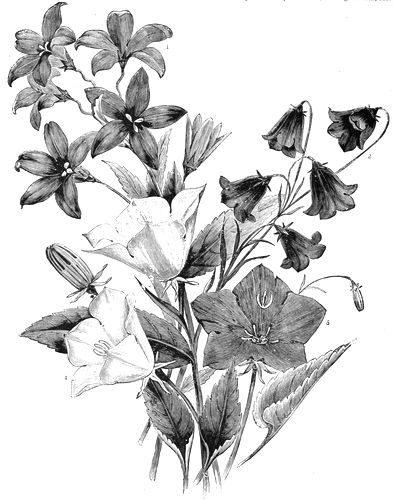
1. C. lactiflora. 2. C. rotundifolia Hostii. 3. C. carpathica turbinata. 4. C. carpathica alba.
FIG. 339. GROUP OF CAMPANULAS.
CAMOENSIA (named in honour of Luis Camoens, a celebrated Portuguese poet). ORD. Leguminosæ. A genus containing a couple of handsome species. C. maxima is the largest-flowered leguminous plant known. It thrives well in rich loam and leaf mould. Cuttings root in sandy loam, in bottom heat, if placed under a bell glass. It has not yet flowered in this country. The other species has not been introduced.
C. maxima (greatest).* fl. cream-colour, yellow, 1ft. long, in short axillary racemes. Angola, 1878. (T. L. S. 25, 36.)
CAMOMILE. See Chamomile.
CAMPANEA (from campana, a bell; alluding to the shape of the flowers). ORD. Gesneraceæ. Stove herbaceous climbing perennials, the only one at present introduced being C. grandiflora. For cultivation, see Gesnera.
C. grandiflora (large-flowered).* fl. in axillary tufts, at ends of long, axillary, and terminal peduncles; corolla white, lined and dotted with crimson. June. l. opposite, oval, acuminated, oblique, soft, crenated, stalked. Plant hairy. h. 2ft. Santa Fé, 1848. (R. H. 1849, 241.)
CAMPANULA (diminutive of campana, a bell; in reference to the shape of the flowers). Bell-flower; Slipperwort. ORD. Campanulaceæ. A genus of mostly perennial—rarely annual or biennial—herbs. Flowers blue or white, for the most part pedunculate, usually racemose, rarely spicate or glomerate. Radical leaves usually different in form from the cauline ones, especially in size. All the species of this genus are elegant when in flower (see Fig. 339), and are very largely grown. The dwarf varieties make excellent subjects for pot culture, rockeries, or the fronts of borders. A rather rich sandy loam, with plenty of drainage, suits these plants. The forms of C. pyramidalis may be kept in cold frames during the winter, and firmly repotted in summer, the crown of the plant being kept just a trifle raised above the soil, or they are at times liable to damp off, through the water lodging around the necks. During hot weather, the pots should be plunged in a bed of ashes. Campanulas are easily raised from seeds, which should be sown in spring.
General Culture. As a rule, few plants are so easily cultivated as these. The strong-growing kinds may be grown with the greatest success in ordinary garden soil, well enriched with manure, while the alpine kinds are easily managed on the rockery. Sow seeds of the annuals in April, and of the biennials in June, in the open, or in a cold frame. The perennials are chiefly propagated by dividing the roots, or by young cuttings, in spring—the latter is by far the best method of propagation with many of the species—or by seeds. Those kinds requiring special treatment are particularised, and those suitable to the rockery are so designated. Perennials, except where otherwise mentioned.
C. Adami (Adam's). fl. bluish, nearly erect, one on the top of each stem; corolla funnel-shaped. July. l. slightly ciliated; radical ones on long petioles, cuneate-spathulate, coarsely toothed at the apex; cauline ones sessile, obovate or linear. h. 6in. Caucasus, 1821. Alpine.
C. Allionii (Allioni's).* fl. usually blue, rarely white, subnutant, large, solitary. July to September. l., radical ones linear-lanceolate, nearly entire, ciliated; lower ones rosulate, bluntish. Stem rather pilose. Root creeping. h. 3in. to 4in. Piedmontese Alps, &c., 1820. A little gem, requiring a well-drained position, in rich sandy loam, with plenty of grit in it, and an abundance of moisture when growing. SYNS. C. alpestris and C. nana. (B. M. 6588.)
C. alpestris (rocky). A synonym of C. Allionii.
C. alpina (alpine).* fl. deep blue, few or numerous, scattered in a pyramidal manner along the whole stem. July. l. linear-lanceolate, repandly-crenate, woolly; radical ones crowded, narrowed at the base. Stem glabrous or woolly. h. 3in. to 9in. Europe, 1779. Rockery. (B. M. 957.)
C. americana (American). fl. erect, one to three from the axil of each bract; corollas blue, a little longer than the calycine lobes. July. l., radical ones rosulate, ovate, acute, a little cordate, petiolate, serrated; cauline ones ovate-lanceolate, acuminated at both ends, serrulated. h. 3ft. to 6ft. North America, 1763. Borders.
C. barbata (bearded).* fl. nutant, disposed in a loose, often secund raceme; pedicels one-flowered, rising from the axils of the superior leaves; corolla pale blue or white (in the variety alba), glabrous outside, but woolly in the mouth. June. l. villous, nearly entire; radical ones crowded, lanceolate; cauline ones few, ligulate. h. 6in. to 18in. European Alps, 1752. This is best grown on the rockery. The white variety is very handsome. (B. M. 1258.)
C. Barrelierii (Barrelier's). A synonym of C. fragilis.
C. betonicæfolia (Betony-leaved).* fl. terminal and axillary, the branchlets usually bearing three; corollas purplish-blue, with a pale yellow base, tubular. May. l. elliptic-oblong or ovate, acute, crenate-toothed; radical ones shortly petiolate. Stems much branched. Plant pilose. h. 1½ft. Mount Olympus in Bithynia, 1820. Borders. (S. F. G. 210.)
C. bononiensis (Bononian).* fl. bluish-violet, rather small, numerous, disposed in long racemes. July. l. serrulated, ovate, acuminate, dark green above, pale beneath; radical ones cordate, petiolate; upper ones stem-clasping. h. 2ft. to 3ft. Europe, 1773. Borders. There is also a very showy white-flowered variety.
C. cæspitosa (tufted).* fl. drooping, terminal, solitary, and sometimes three to four at the top of each stem; corollas deep blue or pure white (in the variety alba). May to August. l., radical ones crowded, on short petioles, ovate, glandularly toothed, shining. Stems numerous, tufted. Root fibrous, creeping. h. 4in. to 6in. Temperate parts of Europe, 1813. Rockery, delighting in rich fibrous loam and leaf mould.
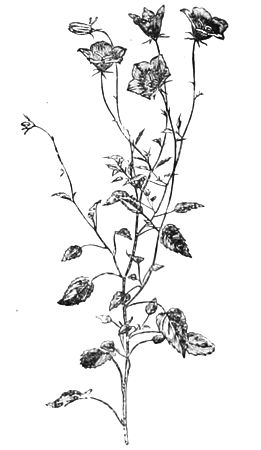
FIG. 340. FLOWERING STEM OF CAMPANULA CARPATHICA.
C. carpathica (Carpathian).* fl. blue, broadly campanulate, disposed in loose panicles, on long peduncles, which are elongated, naked, and terminated by an erect flower. June to August. l., lower ones on long petioles, ovate-roundish, cordate, toothed; upper ones on short petioles, ovate, acute. Stems leafy, branched. h. 9in. Transylvania, 1774. Borders or rockery. See Fig. 340. (B. M. 117.)
C. c. alba (white).* fl. quite white, otherwise like the type. See Fig. 339.
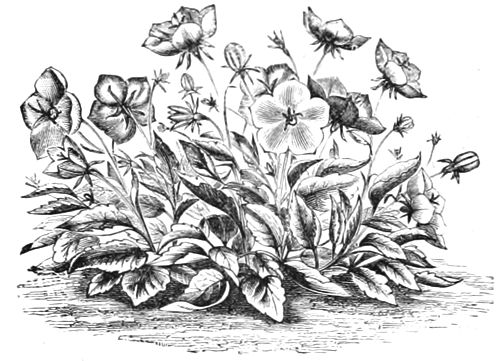
FIG. 341. CAMPANULA CARPATHICA PELVIFORMIS.
C. c. pelviformis (pelvis-formed).* fl. lilac, nearly 2in. across, numerously produced in lax panicles on much-branched stems, 9in. to 18in. high; fragrant. August. l. ovate, cordate, toothed. A distinct seedling from C. c. turbinata. See Fig. 341.
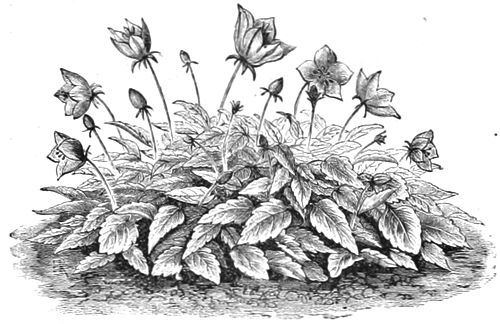
FIG. 342. CAMPANULA CARPATHICA TURBINATA.
C. C. turbinata (top-shaped).* fl. nearly 2in. across, erect; corolla deep purple, campanulate. Summer. l. ovate, rigid, greyish-green, toothed, and pointed, with cordate bases, in stiff tufts. Stems short, erect. h. 6in. to 12in. Transylvania, 1868. Borders or rockery. See Figs. 339 and 342. There is also a desirable variety named pallida, with very pale purple flowers.
C. c. t. Hendersoni (Henderson's). fl. rich mauve, in large pyramidal racemes, rather open. July to September. l., lower ones cordate, or ovate cordate, slightly crenulated, on long stalks; upper ones oblong, sessile. h. 1ft. Very handsome hybrid for borders.
C. caucasica (Caucasian). fl. few, terminal and axillary, drooping; corollas glabrous outside, but bearded inside, of a violaceous-blue colour. July. l. crenulated; lower ones obovate, obtuse, petiolate; upper ones lanceolate, sessile. Stems erect, branched, terete, scabrous, pilose. h. 6in. to 9in. Caucasus, 1804. Rockery; very pretty.
C. celtidifolia (Nettle-tree-leaved).* A synonym of C. lactiflora.
C. cenisia (Mont Cenis).* fl. deep blue, solitary, terminal, erect. June. l. entire; radical ones rosulate, obovate, obtuse; cauline ones ovate-oblong. Stems numerous, glabrous, or slightly pilose. h. 3in. Italy, &c., 1775. A rare little rockery gem, requiring a deep gritty loam and leaf soil, between stones. (A. F. P. 3, 6.)
C. Cervicaria. Throatwort. fl. blue, pilose outside; heads terminal, round, bracteate. July. l. crenately serrated; radical ones linear-lanceolate, bluntish, on short petioles; cauline ones linear-acuminated. Stem simple. h. 1ft. to 2ft. Mountains of Europe, 1768. Biennial. Borders. (L. B. C. 452.)
C. collina (hill).* fl. deep blue, funnel-shaped, few, secund, disposed in a long raceme. July. l., lower ones on long petioles, ovate-oblong, crenulated; middle ones lanceolate; upper ones linear-acuminated. Stems simple, rather pilose. h. 1ft. Caucasus, 1803. Borders. (B. M. 927.)
C. colorata (coloured). fl. purple; corolla tubular, velvety; peduncles elongated, terminal and axillary. September. l. scattered, lanceolate, acute, repandly denticulated. Stem branched, downy. Sikkim Himalayas, 1849. This requires frame protection during winter. (B. M. 4555.)
C. dichotoma (forked). fl. bluish-purple, with a paler tube, drooping, terminal, solitary in the forks of the branches and stem. July. l., cauline ones ovate, acute, a little crenated. Stem erect, with dichotomous branches. Plant clothed with stiff hairs. h. 6in. South-western Europe, 1820. Annual. Borders. (S. F. G. 211.)
C. drabifolia (Draba-leaved). fl. pedicellate, opposite the leaves; corolla inflated, with a white tube and a violaceous-blue limb. July. l. elliptic-oblong, toothed. Stem many times forked, slightly erect. Plant hispid. h. 3in. Island of Samos, 1823. Annual. Rockery. (S. F. G. 215.)
C. Elatines (Elatine).* fl. scattered over the upper part of the plant, sometimes racemose, and sometimes panicled; corollas bluish-purple. June to August. l. cordate, coarsely and acutely toothed, ovate-acute; lower ones roundish. Stem branched. Plant downy. h. 3in. to 6in. Piedmont, 1823. Rockery. (A. F. P. 3, 7.)
C. Erinus (Erinus).* fl. terminal and axillary, situated in the angles of the forks of the branches; corollas of a pale bluish-rose-colour, or white, pilose at the base, tubular. May to August. l. obovate or ovate, toothed. Stem much branched. Plant hispid. h. 3in. to 9in. Europe, 1768. Annual. Rockery. (S. F. G. 214.)
C. excisa (excised). fl. drooping; stem one-flowered; corollas blue, funnel-shaped. June. l. entire, or remotely-denticulated, linear-acuminated. Stems numerous, erect, slender, simple, naked at top. h. 3in. to 6in. Switzerland and Transylvania, 1820. Rockery. A rare species, requiring to be treated like cenisia. (L. B. C. 561.)
C. floribunda (many-flowered). A synonym of C. isophylla.
C. fragilis (fragile).* fl. clear lilac-purple, white in the centre, solitary or in pairs, axillary, erect, or nearly so, on spreading branches. July and August. l., radical ones reniform, or roundish-cordate, rather deeply lobed; cauline ones broadly-ovate, slightly cordate, all stalked. h. 4in. to 6in. South Italy. SYN. C. Barrelierii. (B. M. 6504.)
C. garganica (Gargano).* fl. axillary, in fascicles; corollas blue, rotate, deeply five-lobed. May to September. l., radical ones reniform, on long petioles; cauline ones cordate, all crenately toothed, downy. h. 3in. to 6in. Italy, 1832. An extremely variable species. Rockery, in rich sandy loam. (B. R. 1768.)
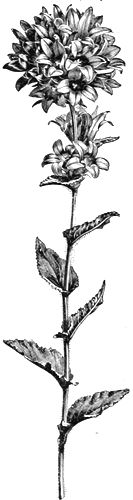
FIG. 343. FLOWER-SPIKE OF CAMPANULA GLOMERATA.
C. glomerata (clustered).* fl. sessile, disposed in terminal heads on the branches and stems; corollas bluish-violet or white, glabrous, except the nerves outside, funnel-shaped. May to September. l. serrulated; radical ones ovate, acute; bracts ovate, acuminated. Stems simple, or branched. h. 1ft. to 2ft. Britain, &c. Borders. See Fig. 343. (Sy. En. B. 866.) A double-flowered variety, and also a white-flowered form, are very desirable. There are numerous varieties of this species which are frequently described as distinct species. The following are among the number:
C. g. cervicaroides (Cervicaria-like). fl. bluish-violet, terminal and axillary. Lower leaves on long petioles. Stem flexuous, hairy.
C. g. elliptica (elliptical). fl. blue, large, capitate. l. on long petioles, elliptic; bracts large, often longer than the flowers.
C. g. nicæensis (Nice). fl. bluish-violet, disposed in short, dense spikes. l. approximate, ovate, acute, sessile.
C. g. pusilla (diminutive).* fl. few, capitate. l. round, cordate. h. 1in. to 2in. In addition to these, there are aggregata and speciosa (= dahurica). The latter is an excellent variety, with large heads of deep-coloured flowers.
C. grandiflora (large-flowered). See Platycodon grandiflorum.
C. grandis (large).* fl. pale violet-blue, broadly bell-shaped, with large pointed divisions, axillary and alternate, on the upper part of the stem. June. l. sessile, lanceolate, serrated. Stem simple, furrowed. h. 1ft. to 2ft. Siberia, 1842. Borders. There is also a very showy white-flowered variety named alba.
C. haylodgensis (Hay Lodge). fl. light blue, rather open, bell-shaped, few, at the ends of the stems. August. l., radical ones tufted, roundish-cordate, with the margins slightly indented; cauline ones ovate-cordate, conspicuously toothed, light green. h. 6in. to 9in. Rockery. This is a hybrid, raised by Mr. Anderson-Henry, Hay Lodge, Edinburgh, probably between C. carpathica and C. pusilla.
C. hederacea (Ivy-like). See Wahlenbergia hederacea.
C. Hostii (Host's).* A synonym of C. rotundifolia Hostii.
C. isophylla (equal-leaved).* fl. numerous, erect, disposed in a corymb; corolla lilac-blue, with a grey centre, large, salver-shaped, deeply five-lobed. August. l. broadly ovate, cordate, and toothed. Stems firm. North Italy, 1868. Borders and rockery. SYN. C. floribunda. (B. M. 5745.)
C. i. alba (white).* fl. pure white; in other respects like the species. It is a charming rockery plant, flowering very freely.
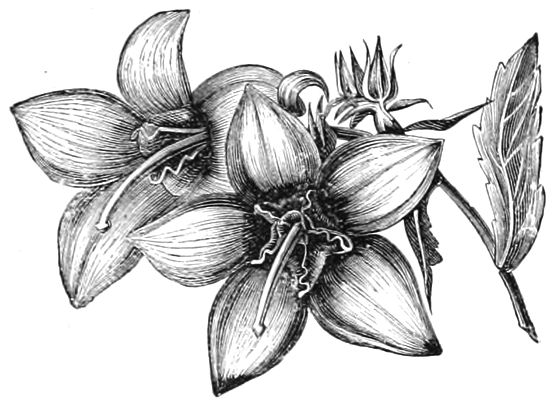
FIG. 344. FLOWERS OF CAMPANULA LACINIATA.
C. laciniata (cut-leaved). fl. long-stalked, in lax panicles. Stem erect, branchy, somewhat hairy. h. 1ft. Islands in Grecian Archipelago, 1790. This biennial species is impatient of much moisture during winter, and is therefore best kept in a cold frame. See Fig. 344.
C. lactiflora (milk-coloured-flowered).* fl. in loose panicles; peduncles erect, short, usually three-flowered; corollas erect, milk-coloured, tinged with blue, or quite blue, as in the variety named cœrulea. July to September. l. sessile. ovate-lanceolate, acutely serrated. Stems branched. h. 2ft. to 6ft. Caucasus, 1814. Borders. SYN. C. celtidifolia. See Fig. 339. (B. R. 241.)
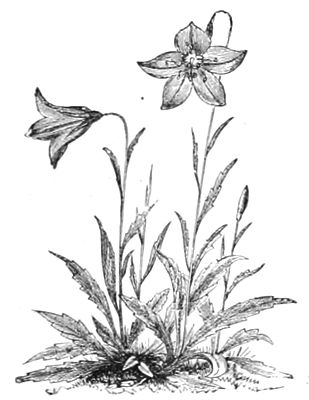
FIG. 345. CAMPANULA LANGSDORFFIANA.
C. Langsdorffiana (Langsdorff's). fl. blue, either solitary or in few-flowered panicles, not unlike those of C. rotundifolia. l. either entire or toothed. h. 3in. to 9in. Mountains of Northern Asia and America. Perennial. See Fig. 345.
C. latifolia (broad-leaved). fl. disposed in spicate racemes; peduncles erect, one-flowered; corolla blue, but sometimes white (in the variety alba) campanulately funnel-shaped, large. July. l. large, doubly serrated; radical ones petiolate, cordate, ovate-oblong; cauline ones sessile, ovate-acuminated. Stems simple, smooth. h. 1ft. to 2ft. Britain. (Sy. En. B. 868.)
C. l. eriocarpa (woolly-fruited). fl., tube of calyx very hispid. l. less acuminated. Stem and leaves pilose and pale. Caucasus, 1823. Borders.
C. l. macrantha (large-flowered).* fl., corollas purplish-blue, larger than those of the type. Stem and leaves rather pilose; teeth of leaves more distinct. A hybrid. Borders.
C. Loefflingii (Lœffling's). fl. solitary, terminating the naked branchlets, loosely panicled, drooping; corolla blue or violaceous, with a deeper-coloured zone beneath the middle, white at the base, both inside and out, funnel-shaped. July. l. crenulated; lower ones ovate-reniform; superior ones ovate, stem-clasping. Stem much branched. Annual. h. 6in. to 18in. South-west Europe, 1818. (B. R. 29, 19.)
C. Loreyi (Lorey's). A synonym of C. ramosissima.
C. lyrata (lyrate). fl. disposed in a long, many-flowered, loose raceme; corolla blue, tubular, with rather pilose nerves. June. l., lower ones petiolate, cordate, ovate, acute, crenated; superior ones sessile, ovate-lanceolate, serrate-toothed. Stem branched. Eastern Europe, Levant, &c., 1823. Borders.
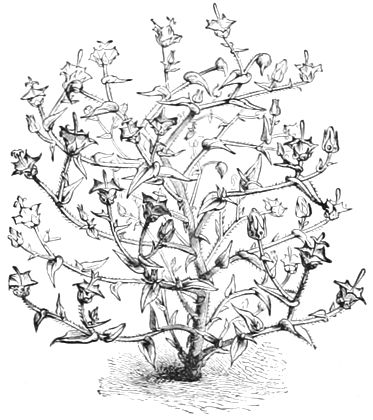
FIG. 346. CAMPANULA MACROSTYLA.
C. macrostyla (large-styled). fl. dull purple, reticulated with violet, solitary, on stout stalks; hairy towards the base. July. l., lower ones ovate-oblong, acute; upper ones ovate-lanceolate, recurved, small for the size of the plant, hispid on both surfaces, and ciliated with bristles. h. 1ft. to 2ft. Taurus Mountains. Annual. Borders. The rigid habit, bristly, almost prickly, stem and leaves, curious calyx appendages, short gaping corolla, and wonderful stigma, mark this as the most singular Campanula hitherto introduced. See Fig. 346.
C. Medium (middle-sized).* Canterbury Bells. fl. numerous, large, disposed in racemes; corolla blue, purple, and white, campanulate, inflated, single and double. July. l. sessile, ovate-lanceolate, crenately toothed. Stem erect, branched. h. 1ft. to 4ft. South Europe, 1597. See Fig. 347. A well-known and very handsome biennial, of which there are numerous varieties. Borders.
C. muralis (wall).* A synonym of C. Portenschlagiana.
C. nana (dwarf). A synonym of C. Allionii.
C. nitida (shining).* fl. blue or white, disposed in spicate racemes; corolla campanulately rotate. Summer. l. in rosettes, leathery, very dark and shining green, oblong, crenated; cauline ones linear-lanceolate, almost entire. Stem simple. h. 3in. to 9in. North America, 1731. Borders. There are also double blue and white flowered forms of this species. SYN. C. planiflora.
C. nobilis (noble).* fl. drooping, crowded towards the ends of the branchlets; corollas reddish-violet, or white, or cream-coloured, spotted, 3in. or more long. July. l. hairy; lower ones petiolate, ovate, toothed; upper ones lanceolate, nearly or quite sessile. h. 2ft. China, 1844. Borders. (B. R. 32, 65.) There is also a white-flowered variety.
C. patula (spreading). fl. panicled, terminal, and axillary, on long pedicels, large, erect; corollas blue or white, funnel-shaped. July. l., radical ones crowded, obovate, crenated; cauline ones linear-lanceolate, sessile, nearly entire. Stems branched. Branches diverging. Europe. Borders. (Sy. En. B. 873.)
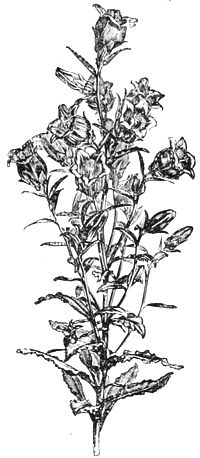
FIG. 347. FLOWERING BRANCH OF CAMPANULA MEDIUM.
C. peregrina (foreign).* fl. disposed in a dense spicate raceme, sessile; corollas of a dark violet colour at the base, not so deep in the middle, and paler towards the margins, funnel-shaped. July. l. crenated; lower ones obovate; superior ones ovate, acute. Stem simple, angular. h. 2ft. Mount Lebanon, 1794. Borders. (B. M. 1257.)
C. persicæfolia (Peach-leaved).* fl. terminal and axillary, pedunculate, solitary, inclined, racemose; corollas blue and all the intermediate shades to white, large, broadly campanulate. July. l. glabrous, stiff, crenulated; radical ones lanceolate-obovate; cauline ones linear-lanceolate. Stems nearly simple. h. 1ft. to 3ft. Britain. (Sy. En. B. 871.) The forms of C. persicæfolia are very numerous in gardens. The following are well worth growing: alba, pure white, single-flowered; alba coronata, pure white, semi-double; alba fl.-pl., flowers very double and Camellia-like, constituting one of the best hardy flowers for cutting; cærulea coronata, blue, in form like the white; cærulea fl.-pl., flowers semi-double.
C. phrygia (Phrygian). fl., corolla bluish-violet, spreading, having the nerves more intensely coloured. July. l. ovate-lanceolate, crenated; lower ones obtuse, upper acute. Stem branched. Branches very naked, divaricate, each terminating in a single flower. h. 3in. to 6in. Mount Olympus, 1820. Rockery annual.
C. planiflora (flat-flowered). A synonym of C. nitida.
C. Portenschlagiana (Portenschlag's).* fl. light blue-purple, erect, or nearly so, bell-shaped, with spreading segments, several at the ends of the shoots, and one or two in the upper axils. June, July. l., radical ones broadly reniform, conspicuously but irregularly toothed, on long slender petioles; cauline ones passing from reniform to ovate. h. 6in. to 9in. South Europe. Rockery. SYN. C. muralis. (B. R. 1995.)
C. primulæfolia (Primula-leaved). fl. disposed in a spicate raceme; corolla blue or purple, with a whitish downy bottom, campanulately rotate, nearly glabrous. July. l. unequally and doubly crenated; radical ones lanceolate, bluntish; cauline ones ovate-oblong, acute. Stem hispid, simple. h. 1ft. to 3ft. Portugal. Borders. (B. M. 4879.)
C. pulla (russet).* fl. terminal, large for the size of the plant; corollas violaceous-blue, campanulate. June. l. glabrous, crenulately toothed; lower ones on short petioles, ovate-roundish; superior ones sessile, ovate, acute. Stems rarely pilose at the base. h. 3in. to 6in. Eastern Europe, 1779. Rockery, in rich sandy peat and leaf soil. (L. B. C. 554.)
C. pumila (dwarf). A synonym of C. pusilla.
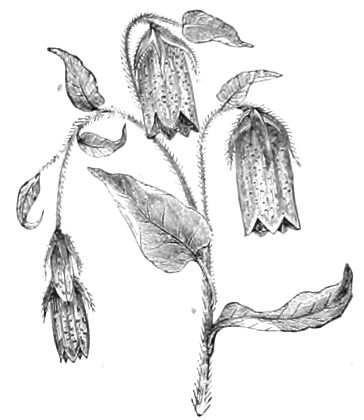
FIG. 348. UPPER PORTION OF FLOWERING STEM OF CAMPANULA PUNCTATA.
C. punctata (dotted). fl. whitish, spotted with red on the inner surface; large, pendulous. l. ovate-acute, somewhat crenate. Stem simple, erect, few-flowered. h. 1½ft. Siberia, Japan, &c. Border perennial. See Fig. 348.
C. pusilla (small).* fl. axillary and terminal at the upper part of the slender stems, pendulous, bell-shaped, passing from deep blue to white. July, August. l., radical ones tufted, broadly ovate or roundish, slightly cordate, obtusely serrated, on petioles longer than the laminæ; cauline ones linear-lanceolate, distinctly toothed, sessile. h. 4in. to 6in. Southern Europe. SYN. C. pumila. (B. M. 512.) There is a pale-coloured variety named pallida, and a pure white variety named alba, both of which, as well as the species, are most desirable for the embellishment of rockeries, or for planting in sandy soil as a front line for a border.
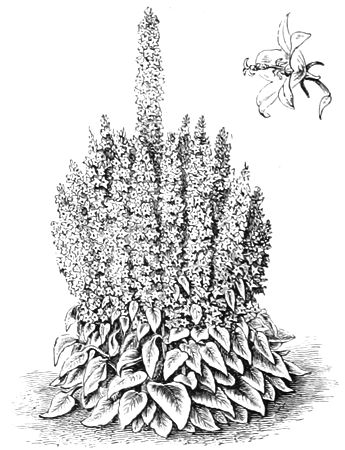
FIG. 349. CAMPANULA PYRAMIDALIS, showing Habit and Flower.
C. pyramidalis (pyramidal).* Chimney Bell-flower. fl. very numerous, pedicellate, usually three together from the same bract, the whole disposed in a large pyramidal raceme, which is loose at the base; corollas pale blue or white, with a dark base. July. l. glandularly toothed; lower ones petiolate, ovate-oblong, somewhat cordate; cauline ones sessile, ovate-lanceolate. Stem nearly simple, but furnished with floriferous branchlets. h. 4ft. to 5ft. Europe, 1596. See Figs. 349 and 350. There are several excellent varieties, but the light and dark blue and white are the best. Borders, and for pot culture.
C. Raineri (Rainer's).* fl. blue, erect; corolla turbinate. June. l. almost sessile, ovate, tomentose, remotely serrated; lower ones the smallest, obovate. Stems erect, firm, branched. Branches one-flowered, leafy. h. 2in. to 3in. Switzerland, Italy, &c., 1826. A beautiful little alpine, requiring a warm position in rich gritty soil; it must be religiously protected against slugs. (F. d. S. 1908.)
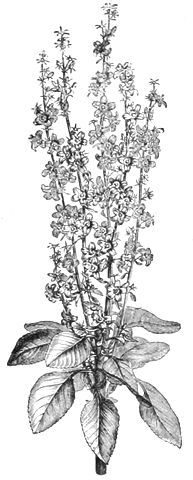
FIG. 350. FLOWERING BRANCH OF CAMPANULA PYRAMIDALIS.
C. ramosissima (much-branched). fl., corolla with a white base; middle part or base of the lobes pale blue, and the lobes bluish-violet; peduncles long, naked, glabrous, bearing each an erect flower at the apex. June. l. sessile, glaucous; lower ones obovate, crenated; middle ones ovate-lanceolate; superior ones linear, entire. Stem branched. h. 6in. to 12in. South Europe, 1824. Annual. SYN. C. Loreyi. (B. M. 2581.)
C. r. flore-albo (white-flowered) only differs from the type in having white flowers.
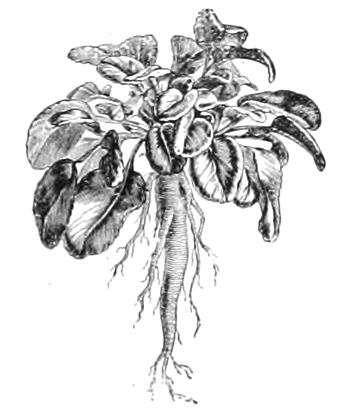
FIG. 351. CAMPANULA RAPUNCULUS.
C. rapunculoides (Rapunculus-like).* fl. drooping, solitary, disposed in spike-formed racemes, secund, but usually hanging on all sides in strong garden specimens; corollas bluish-violet, funnel-shaped, and bearded a little inside. June. l. scabrous, ovate, acuminated; radical ones petiolate, cordate, crenulated; cauline ones serrulated. Stems glabrous or scabrous, usually branched in gardens, but simple in the wild state. h. 2ft. to 4ft. Europe. Borders. (Sy. En. B. 869.)
C. r. trachelioides (Trachelium-like). Stem and leaves, but particularly the calyx, beset with stiff white hairs.
C. Rapunculus (little turnip).* Rampion. fl. nearly sessile, or pedicellate, erect, forming a long raceme, which is branched at the base; corolla blue or white, funnel-shaped. July. l., lower ones obovate, on short petioles, nearly entire; cauline ones sessile, linear-lanceolate, entire. Stem simple, but sometimes furnished with a few branches towards the top. h. 2ft. to 3ft. Europe. Borders. See Fig. 351. (Sy. En. B. 872.)
C. rhomboidalis (rhomboidal). fl. usually drooping, few, disposed in loose racemes, pedunculate; corolla blue, campanulate. July. l. sessile, ovate, acute, serrate. Stem glabrous, or a little pilose, furnished with flower-bearing branches at top. h. 1ft. to 2ft. Europe, 1775. Border. SYN. C. rhomboidea. (L. B. C. 603.)
C. rhomboidea (diamond-leaved). A synonym of C. rhomboidalis.
C. rotundifolia (round-leaved).* Blue-bell; Hare-bell. fl. drooping, solitary, pedunculate, few on each stem; corolla deep blue, campanulate. June to August. l., radical ones petiolate, cordate roundish, crenately toothed; cauline ones linear or lanceolate. Stems numerous. h. 6in. to 12in. Britain. (Sy. En. B. 870.)
C. r. alba (white).* fl. white, the same size as those of the type. Stems much more leafy.
C. r. Hostii (Host's).* fl. rich blue, much larger than those of the type, produced on stouter profusely branched stems. July, August. l., radical ones roundish only in a very early state; cauline ones linear, acuminate, sometimes 3in. to 4in. long. SYN. C. Hostii. See Fig. 339. There is a white-flowered form of this, not quite so vigorous as the blue-flowered form, but the flowers are equal in size.
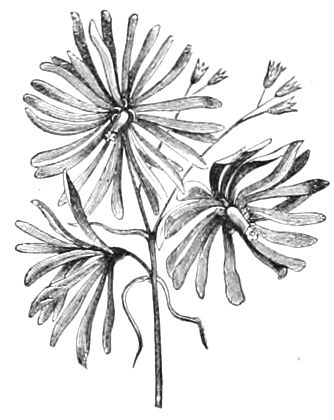
FIG. 352. FLOWERS OF CAMPANULA ROTUNDIFOLIA SOLDANELLÆFLORA.
C. r. soldanellæflora (Soldanella-flowered).* fl., corolla blue, semi-double, turbinate, with shallow marginal divisions, very acutely pointed. June. l. long, linear, acute, sessile. Stem simple, slender. h. 1ft. 1870. (R. G. 473.) All the forms of rotundifolia are pretty, and suitable for the front of borders, or the rockery; rising from the crevices of the latter, with their slender stems laden with flowers, they are especially beautiful. See Fig. 352.
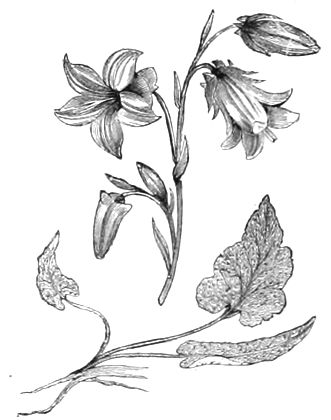
FIG. 353. FLOWERS AND LEAVES OF CAMPANULA SARMATICA.
C. sarmatica (Sarmatian).* fl. nutant, usually secund, terminal and axillary, forming a long, loose, scattered raceme; corolla pale blue, velvety outside. July. l. tomentose; lower ones petiolate, cordate, rather hastate, crenately toothed; superior ones sessile, ovate-lanceolate, serrate-toothed. Stems simple, straight, downy. h. 1ft. to 2ft. Caucasus, 1803. Borders. (B. R. 237.) See Fig. 353.
C. saxatilis (rock). fl. three to five, disposed in a loose raceme; corolla blue, tubular, nutant. May. l. crenated; radical ones rosulate, somewhat spathulate; cauline ones ovate, acute. Stem erect. h. 6in. Crete, 1768. Rockery. Very rare.
C. Scheuchzeri (Scheuchzer's).* fl. dark blue, pendent, on slender stems, broadly bell-shaped. July, August. l., lower ones similar to those of C. pusilla; upper ones linear. h. 3in. to 6in. South European Alps, 1813. (L. B. C. 485.)
C. Scouleri (Scouler's). fl. pale blue, paniculate, bell-shaped. July, August. l., lower ones ovate, on long petioles, coarsely serrated; cauline ones ovate-lanceolate. h. 1ft. North-west America, 1876. Rockery.
C. sibirica (Siberian). fl. panicled, numerous, drooping; corollas bluish-violet, large. July. l. crenulated; radical ones crowded, petiolate, obovate, obtuse; cauline ones sessile, oblong-lanceolate, undulated, acuminated. Plant beset with bristle-like hairs. Stem branched. h. 1ft. to 1½ft. East Europe, 1783. Biennial. Borders. (B. M. 659.)
C. s. divergens (divergent).* fl. violaceous, rather large, at first erect, but drooping in the expanded state; peduncles many-flowered, and, like the stem, usually trichotomous. June. l., radical ones sub-spathulate, crenulated, narrowed at the base; cauline ones sessile, lanceolate, acuminated. Plant pilose, panicled. h. 1½ft. Siberia, 1814. Biennial. SYN. C. spathulata. (S. B. F. G. ii., 256.)
C. spathulata (spathulate). A synonym of C. sibirica divergens.
C. speciosa (beautiful).* fl. pedicellate, disposed in a pyramidal raceme; corolla blue, purple or white, 1in. long, smooth outside, but often villous inside. June, July. l. sessile, repandly crenated; radical ones rosulate, linear-lanceolate; cauline ones linear. Stem simple. h. 12in. to 18in. South-west Europe, 1820. Borders. (B. M. 2649.)
C. spicata (spicate). fl. sessile, one to three from each bract; spike long, interrupted at the base; corolla blue, funnel-shaped. July. l. sessile, nearly entire; radical ones crowded, linear-lanceolate; cauline ones linear, acuminated. Stem simple. h. 1ft. to 2ft. Europe, 1786. Biennial. Borders. (A. F. P. 3, 46.)
C. stricta (strict). fl. almost sessile, few, solitary, spicate; corolla blue, tubular. July. l. ovate-lanceolate, acute, serrated, pilose. Stem branched, pilose. h. 1ft. to 2ft. Armenia, 1819. Biennial. Borders.
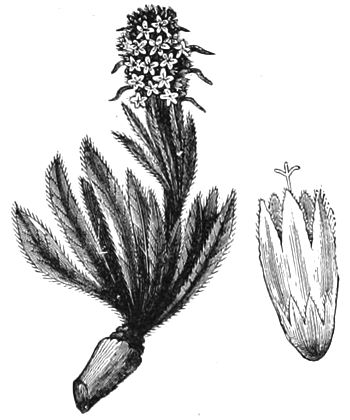
FIG. 354. CAMPANULA THYRSOIDEA, showing Entire Plant and Single Flower.
C. thyrsoidea (thyrsoid).* fl. disposed in a dense pyramidal spike, sessile; corolla sulphur-coloured, oblong. July. l. entire, pilose; lower ones lanceolate, obtuse; cauline ones linear-lanceolate, acute. Stem simple, covered with leaves and flowers. Plant pilose. h. 1ft. to 1½ft. Alps of Europe, 1785. Biennial. Rockery. (B. M. 1290.) See Fig. 354.
C. Tommasiniana (Tommasini's).* fl. pale blue, tubular, slightly angled, in closely set, several-flowered, axillary cymes. July, August. l. nearly or quite sessile, linear-lanceolate, acuminate, distinctly serrated, there being no difference between the lower and upper ones. Stems at first erect, ultimately drooping through the weight of the flowers. h. 9in. to 12in. Italy. A very handsome alpine species. (B. M. 6590.)
C. Trachelium (Throat-wort).* fl. drooping a little, one to four together, terminating the branchlets; corolla variously coloured, campanulate, bearded inside. July. l. scabrous, acuminated, coarsely and crenately toothed; radical ones petiolate, cordate. Stem angular, simple or branched. h. 2ft. to 3ft. Europe. Borders. (Sy. En. B. 867.) There are double blue, double white, and variously shaded single forms of this species.
C. trichocalycina (hairy-calyxed). fl. disposed in an almost simple terminal raceme, approximate at the top, one to three rising from each axil, at the time of flowering erect, but afterwards drooping; corolla profoundly five-cleft, funnel-shaped. July. l. on short petioles, ovate, acute, coarsely serrated. Stem simple. h. 1ft. to 3ft. Europe, 1823. Borders.
C. Van Houttei (Van Houtte's).* fl. dark blue, bell-shaped, pendulous, 2in. long, axillary and terminal. July, August. l., lower ones roundish-cordate, crenate on long stalks; cauline ones oblong-lanceolate, sessile, serrated. h. 2ft. This is a very fine hybrid. Differing from it only in colour and other unimportant details is C. Burghalti, a handsome hybrid, found in gardens; the flowers are of a pale purple colour, very large, pendent. These are two of the best border Bell-flowers in cultivation.
C. versicolor (various-coloured). fl. disposed in long spicate racemes; corolla of a deep violaceous colour at bottom, pale in the middle, and the lobes pale violet, companulately rotate. July to September. l. serrated; radical ones petiolate, ovate, acute, rather cordate; cauline ones on short petioles, ovate-lanceolate, acuminated. Stems erect. h. 3ft. to 4ft. Greece, 1788. Borders. (S. F. G. 207.)
C. Vidalii (Vidal's). fl. large, racemose; corolla white, wax-like, between urceolate and campanulate, pendulous; disk singularly broad, surrounded by a thick bright orange-coloured annulus. July and August. l. thick and fleshy, oblong spathulate, viscid, coarsely serrated. h. 1ft. to 2ft. Azores, 1851. Perennial. Cool greenhouse or (during summer) herbaceous border. (B. M. 4748.)
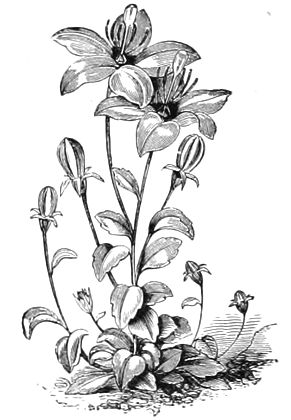
FIG. 355. CAMPANULA WALDSTEINIANA.
C. Waldsteiniana (Waldstein's).* fl. three to four at the top of each stem, one of which is terminal, and the others from the axils of the superior leaves, always looking upwards; corollas violaceous-blue, campanulate. June. l. greyish, sessile, lanceolate, serrated; lower ones obtuse; superior ones long-acuminated. Stems erect, flexuous, stiff, simple, numerous from the same root. h. 4in. to 6in. Hungary, 1824. See Fig. 355.
C. Wanneri (Wanner's). A synonym of Symphyandra Wanneri.
C. Zoysii (Zoys's).* fl. pedicellate, drooping; corolla pale blue, with five deeper-coloured lines, cylindrical, elongated. June. l. entire; radical ones crowded, petiolate, ovately obovate, obtuse; cauline ones obovate-lanceolate, and linear. Plant small, tufted. h. 3in. Carniola, 1813. A scarce little alpine gem, thriving in a sunny chink in rich gritty soil.
CAMPANULACEÆ. A large order of herbs or sub-shrubs. Flowers blue or white; corolla regular, bell-shaped, usually five-lobed. Leaves alternate, exstipulate. The genus best known is Campanula; other genera are Adenophora, Jasione, and Phyteuma.
CAMPANULATE. Bell-shaped.
CAMPANUMÆA (altered from Campanula). ORD. Campanulaceæ. A genus of greenhouse herbaceous, tuberous-rooted, twining perennials. Flowers involucrated, solitary, on axillary and terminal peduncles. Leaves opposite, petiolate, glaucescent beneath. Stems and branches terete. They thrive best in a rich sandy loam, with a little peat. Propagated by seeds and divisions.
C. gracilis (graceful). fl. pale blue; corolla membranous, with a tubular base, dilated throat, and slightly expanded, truncated limb. l. on long petioles, ovate, blunt. Himalayas. SYN. Codonopsis gracilis. (C. H. P. t. xvi. A.)
C. inflata (inflated). fl. yellowish, with brownish veins; corolla herbaceous, ventricose; peduncles opposite the leaves, one-flowered. l. alternate, ovate-cordate, acute. Himalayas. (C. H. P. t. xvi. C.)
C. javanica (Javan). fl. yellowish, with brownish veins; corolla herbaceous, very broadly campanulate, with five spreading lobes. l. variable, opposite and alternate, ovate-cordate, crenate. Himalayas. (C. H. P. t. xvi. B.)
CAMPEACHY WOOD, or LOGWOOD. See Hæmatoxylon campechianum.
CAMPHORA (Camphor, commercial name of its chief product). Camphor-tree. ORD. Laurineæ. Cool stove evergreen trees, now referred to Cinnamomum. The true Camphor of commerce is a product of the oil procured from the wood, branches, and leaves of this tree, by means of dry distillation. The species thrives in a compost of peat and loam, and may be propagated by cuttings.
C. officinalis (officinal). fl. greenish-white. March to June. l. triple-nerved, lanceolate, ovate. h. 20ft. Japan, 1727. SYN. Cinnamomum Camphora.
CAMPHOR-TREE. See Camphora.
CAMPION. See Silene.
CAMPION, MOSS. See Silene acaulis.
CAMPION, ROSE. See Lychnis.
CAMPSIDIUM (from kampsis, a curving). ORD. Bignoniaceæ. A small genus, the best-known (perhaps the only) species being a handsome greenhouse climber. For culture, see Bignonia.
C. chilense (Chilian). Pipil Boqui. fl. rich orange colour; corolla tubular, almost regular; anthers parallel. l. pinnate, dark shining green. h. 30ft. to 40ft. Chili. (G. C. 1870, 1182.)
CAMPTERIA. Included under Pteris (which see).
CAMPTODIUM. See Nephrodium.
CAMPTOPUS (from kamptos, curved, and pous, a foot; the flower-stalk is curved downwardly). ORD. Rubiaceæ. A curious shrub, now referred to Cephaelis. It requires a most stove temperature. Cuttings will root in sandy loam, under a hand glass, in bottom heat.
C. Mannii (Mann's). fl. white, numerously produced in subglobose, compound heads; peduncles stout, scarlet, drooping, from 12in. to 18in. long. Summer. l. large, opposite, obovate or obovate-lanceolate, glabrous, coriaceous; midrib thick, red beneath. h. 15ft. Fernando Po, 1863. (B. M. 5755.)
CAMPTOSORUS. See Scolopendrium.
CAMPYLANTHERA. A synonym of Pronaya.
CAMPYLIA. Included under Pelargonium.
CAMPYLOBOTRYS. See Hoffmannia.
CAMPYLONEURON. See Polypodium.
CAMWOOD. See Baphia.
CANADA BALSAM. See Abies balsamea.
CANADA RICE. See Zizania aquatica.
CANADA TEA. See Gaultheria procumbens.
CANALICULATE. Channelled, or furrowed.
CANARINA (so named from its habitat). SYN. Pernettya (of Scopoli). ORD. Campanulaceæ. A beautiful, glaucescent, greenhouse, herbaceous perennial. It thrives in a compost of loam, leaf mould, thoroughly decomposed manure, and sand, in equal parts; ample root space and perfect drainage are essential, and when new growth commences, a little extra heat will considerably accelerate the development of the flowers. Water should be liberally supplied during the growing season. The plant may be propagated by divisions when repotting, in January; or by young cuttings, inserted in sandy soil, in a gentle warmth.
C. Campanula (bell-shaped).* fl. of a yellowish purple or orange colour, with red nerves, drooping, solitary, terminating axillary branchlets; corolla six-lobed at the apex, large, campanulate. January to March. l. opposite, hastately sub-cordate, irregularly toothed. h. 3ft. to 4ft. Canary Islands, 1696. (B. M. 444.)
CANARIUM (from Canari, its vernacular name in the Malay language). ORD. Burseraceæ. A rather large genus of stove trees. Flowers small, in axillary panicles; petals usually three, valvate, or slightly imbricate in the bud. Drupe ovoid or ellipsoid, often three-angled. Leaves large, impari-pinnate. For culture, see Boswellia.
C. commune (common). fl. white, glomerate, nearly sessile, bracteate; panicle terminal. l., leaflets seven to nine, on long stalks, ovate-oblong, bluntly acuminated, entire. India. The fruit has a thin olive skin, and when the nuts are mature, they contain a sweet kernel, which does not become rancid, and resembles a Sweet Chestnut; they are also used for various economic purposes. (B. M. Pl. 61.)
CANARY-BIRD FLOWER. See Tropæolum peregrinum.
CANAVALIA (from Canavali, the name of one of the species in Malabar). ORD. Leguminosæ. A genus of elegant twining or climbing stove herbs or subshrubs. Flowers in racemes, produced from the axils of the leaves; calyx bell-shaped, two-lipped; corolla papilionaceous. Leaves trifoliate. They are well adapted for training up the rafters in a stove or warm greenhouse. For culture, see Dolichos.
C. bonariensis (Buenos Ayrean). fl. purple; racemes drooping, longer than the leaves. July and August. l., leaflets ovate, obtuse, coriaceous, glabrous. Buenos Ayres, 1824. (B. R. 1199.)
C. ensiformis (ensiform).* fl. white, red, pendulous; racemes longer than the leaves. June. l., leaflets ovate, acute. India, 1790. SYN. C. gladiata. (B. M. 4027.)
C. gladiata (sword-podded). Synonymous with C. ensiformis.
C. obtusifolia (obtuse-leaved). fl. purple. July, August. l., leaflets ovate obtuse. Malabar, 1820.
CANBIA (named in honour of W. M. Canby, of Wilmington, Delaware). ORD. Papaveraceæ. A monotypic genus, remarkable for its persistent (not caducous) corolla. Sepals three, caducous; petals six, barely 1/6in. in length; stamens six to nine.
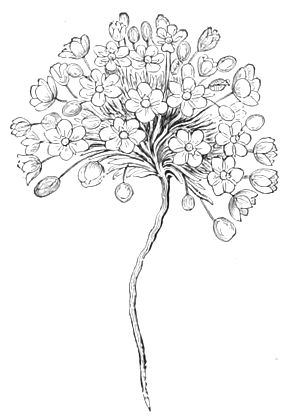
FIG. 356. CANBIA CANDIDA.
B. candida (glossy white). fl. white, solitary, on little scapes. l. alternate, linear, entire. h. about 1in. Discovered in sandy soil in South-east California, in 1876. See Fig. 356.
CANCELLATE. Latticed; resembling lattice-work.
CANDELABRUM or CHANDELIER TREE. See Pandanus candelabrum.
CANDLEBERRY MYRTLE. See Myrica cereifera.
CANDLEBERRY-TREE. See Aleurites triloba.
CANDLE-TREE. See Parmentiera cerifera.
CANDOLLEA (named after Augustus Pyramus De Candolle, formerly Professor of Botany, at Geneva, and author of numerous botanical works). ORD. Dilleniaceæ. A genus of very ornamental greenhouse evergreen shrubs, natives of Australia. Flowers yellow, sub-solitary, at the tips of the branches; sepals five, oval, mucronate; petals obovate or obcordate. They thrive in a compost of equal parts loam and peat, with which sufficient sand may be mixed to render the whole porous. Cuttings will root, if placed in a similar compost, under a hand glass; seeds are also sometimes obtainable.
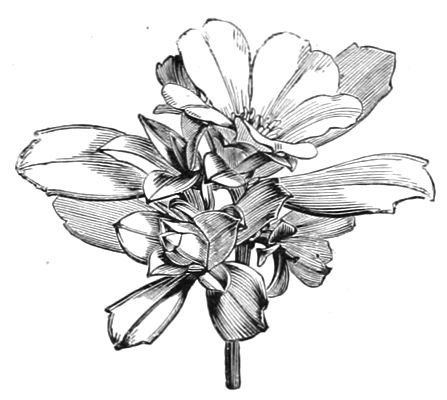
FIG. 357. FLOWERS AND BUDS OF CANDOLLEA CUNEIFORMIS.
C. cuneiformis (wedge-shaped).* fl. yellow. July. l. smooth, obovately cuneated, blunt at the top, entire. Branches cinerous. h. 7ft. 1824. See Fig. 357. (B. M. 2711.)
C. Huegelii (Huegel's). fl. at tops of the branches, among the leaves, on short pedicels; sepals acuminate, hoary outside, longer than the petals. May. l. linear, quite entire, villous when young. h. 6ft. 1837.
C. tetrandra (four-stamened). fl. yellow, solitary; petals emarginate. June. l. oblong, cuneate, toothed. h. 7ft. 1842. (B. R. 1843, 50.)
CANDYTUFT. See Iberis.
CANE-BRAKE. A common name for different species of Arundinaria.
CANELLA (a diminutive of canna, a reed; in allusion to the rolled bark, like cinnamon). ORD. Canellaceæ. The best-known species of this genus is a very ornamental and economically valuable stove evergreen tree, which thrives in a mixture of loam and sand. Well-ripened cuttings, taken off at a joint, will root in sand, under a hand glass, with bottom heat, in April or May; but care should be taken not to deprive them of any of their leaves. Sweet says that large old cuttings are best.
C. alba (white).* fl. violet-colour, small, growing at the tops of branches in cluster, but upon divided peduncles. l. alternate, obovate, cuneated at the base, white, or glaucous beneath, somewhat coriaceous, sometimes full of pellucid dots. h. 15ft. The whole tree is very aromatic, and, when in blossom, perfumes the neighbourhood. The flowers dried, and softened again in warm water, have a fragrant odour, nearly approaching to that of Musk. The leaves have a strong smell of Laurel. West Indies, &c., 1735. (T. L. S. i., 8.)
CANELLACEÆ. A small order of tropical American aromatic shrubs, allied to Bixineæ, from which it differs only in having the albumen firmer, and with a smaller embryo. The genera are Canella and Cinnamodendron.
CANESCENT. Hoary, approaching to white.
CANICIDIA. A synonym of Rourea (which see).
CANISTRUM (from canistrum, a basket; in allusion to the inflorescence resembling a basket of flowers). ORD. Bromeliaceæ. Stove epiphytes, with showy inflorescence, and requiring similar culture to Billbergia (which see).
C. aurantiacum (orange).* fl. orange-yellow, in a cup-shaped involucre of orange-red bracts; scapes erect. June to September. l. ligulate-lorate denticulate, deflexed. Brazil, 1873. See Fig. 358. (B. H. 1873, 15.)
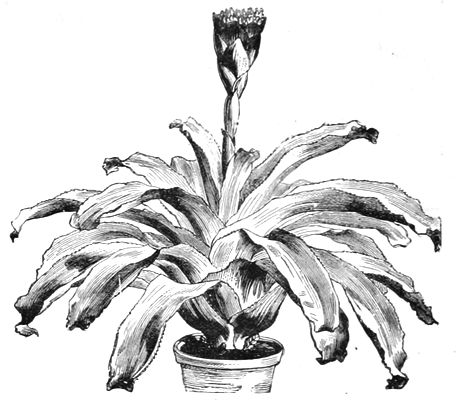
FIG. 358. CANISTRUM AURANTIACUM.
C. eburneum (ivory).* fl. white, green, disposed in a depressed head, the white ovaries of which give an appearance as of eggs in a basket. May. l. tufted, mottled, the central ones cream-coloured, surrounding the flower-heads. h. 2ft. SYNS. Guzmannia fragrans and Nidularium Lindeni. Brazil, 1876. (B. H. 1879, 13, 14.)
C. roseum (rose-coloured). fl. white, green; bracts rosy. 1879.
C. viride (green). fl. green. l. green, canaliculate, acuminate, irregularly toothed. Brazil, 1875. SYN. Nidularium latifolium. (B. H. 1874, 16.)
CANKER. This is a disease presenting very serious difficulties, principally in the cultivation of Apples and Pears. Both the trees and fruits, especially of some varieties, are, in many localities, so far injured as not to be worth cultivating. What causes the disease is not at all times known; indeed, it is, in most cases, but imperfectly understood. Were the causes better known, the remedy might generally be much easier found. Some of the primary causes are cold and undrained soil, severe and careless pruning, extreme variations of temperature, and excessive growth, made late in the season, when it has not sufficient time to get well ripened. Trees that are badly Cankered may often be improved by lifting, and replanting in improved or better-drained soil. Immediately the disease is detected in young trees, by the cracking of the bark or the skin of the fruits, measures should be taken to find the cause, if possible, and avert its progress. Some Pear-trees, in various localities, will not produce fruit without Canker in the open garden, but they will do so when planted against a wall; and as such may be the very best varieties, trees should be placed in the latter position. The removal of large branches, late in spring, will sometimes produce Canker, at the point where mutilation has taken place; and it may be caused by severe late pruning, which induces the growth of soft shoots that are almost certain to be injured by severe frosts. The difference in the seasons, as regards the amount of moisture, is one that can scarcely be provided against. One spring may be favourable to rapid growth, and the following may be most unfavourable, thereby arresting the natural flow of the sap until the latter part of the summer, when excessive growth will probably take place. Such checks invariably produce Canker. At times, the disease seems caused by the punctures of insects, in an early stage, on the stems or branches. In such instances, a thorough cleansing, and a smearing of quicklime, made into a wash, often proves successful. Strong tobacco water will destroy insects, and a weak solution of sulphuric acid is also fatal to lichens and mosses, which should never be allowed to obtain a footing. The chief preventatives, therefore, are: Planting in well-drained soil; avoiding the use of any rank manure, to cause excessive growth; changing the old, or adding new, soil to injured trees; careful pruning, and the encouragement of early growth in spring, and subsequent well ripening in autumn.
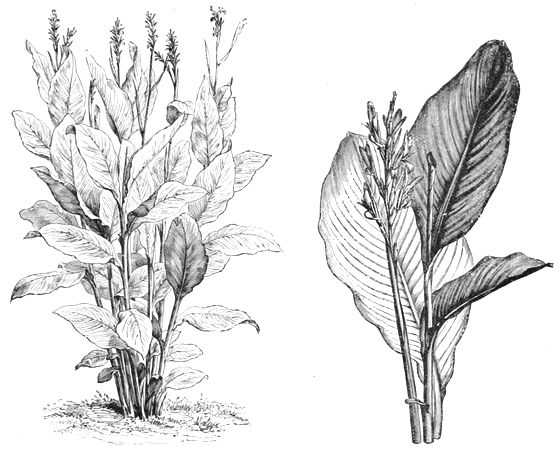
FIG. 359. CANNA INDICA, showing Habit, Flowers, and Leaves.
CANNA (derivation uncertain; according to some, from cana, the Celtic name for cane, or reed). Indian Shot. ORD. Scitamineæ. A large genus of stove herbaceous perennials, very extensively employed in sub-tropical and other methods of summer gardening. Flowers spathaceous; anther attached to the edge of the petal-like filament. Leaves very ornamental. Few plants are more easily grown, or more quickly propagated. Seeds of many of the finer sorts may be bought cheaply from respectable seedsmen. These should be sown in heat, in February or March. A warm house or cucumber pit is the best place for sowing the seeds, which are very hard. If soaked in tepid water for twenty-four hours, germination will be materially stimulated. A mixture of sand and leaf mould is best for them, and a covering of 1½in. or 2in. of earth is not excessive. They should be sown thinly, in pans. As Cannas are gross, and have somewhat brittle roots in a young state, it is a good plan to sow the seed singly in small pots. This method preserves all the roots intact, and prevents any check in potting off or dividing the plants out of seed pans or boxes. When this is not done, the plants must be potted off singly, as soon as they have formed two leaves, 3in. pots being used for the first shift. The soil can hardly be too rich and porous. Equal parts rotted dung, loam, and sand, with a little peat, form a capital mixture for them. The plants must be kept in a growing temperature of 60deg. or so, during their earlier stages, and shifted as required into larger pots. Under proper management, the roots will fill 6in. pots by the middle or end of May. They ought not to be planted out till the end of May or the first week in June. Should fairly rich soil and a sheltered place be selected for them, they will not only grow, but flower freely during the late summer and autumn months. Cannas are also very effective indoors, either for greenhouse or room decoration. For these purposes they may be grown on in 8in., 10in., or even 12in., pots, with rich soil, and placed either in a stove, intermediate house, warm or cool conservatory, window, or room. Liberal supplies of manure water will be of very great benefit. Propagation is also effected by means of divisions; they form a root-stock very like some of the commoner and more free-growing Irises, each portion of which, with bud and roots attached, may be converted into an independent plant. The best mode of procedure is to divide the root-stock in early spring, when the pieces may be placed in 4in. pots at once; and, if plunged in a bottom heat of 60deg. or so, they will quickly resume root action and grow rapidly. They may also be propagated by division without bottom heat. Those who grow large quantities seldom put their plants in pots at all. Stored in pots or boxes for the winter, they are divided and placed singly in similar positions in the spring, and transferred from such vessels into the open air. The best open site for Cannas is in a sheltered spot, with a good depth of rich soil, and plenty of moisture. In such a position, their noble leaves are not so much injured by rough winds. After flowering, or at the end of the season, they may be lifted and stored away in boxes, or in pots of earth, in dry, frost-proof sheds, or under greenhouse stages during winter. In warm, sheltered situations, with dry bottoms, they winter safely in the open, provided their crowns are covered with 1ft. of litter or cocoa fibre refuse. But where the soil is wet and cold, or the situation bleak and unprotected, they should be lifted and stored away, as already described.
C. Achiras variegata (variegated Achiras).* fl. dark red. August. l. bright green, striped with white and yellow. Better adapted for indoor culture than out.
C. Annæi (M. Année's).* fl. salmon-colour, large, well formed. June. l. large, green, glaucescent, ovate-acute, 2ft. long by 10in. wide. Stems vigorous, stiff, sea-green. h. 6ft. (R. H. 1861, 470.) Of this there are many forms, the best of which are:
C. A. discolor (two-coloured).* fl. rosy-yellow, few, small. Late summer. l. lanceolate, erect, light red, 2½ft. long, 10in. wide. Stems dark red. h. 3ft. to 5ft.
C. A. fulgida (red).* fl. orange-red, large, well-opened. l. 20in. long, 6in. wide, deep purple, erect. Stems small, dark red. h. 3ft. to 5ft.
C. A. rosea (rose).* fl. carmine-rose colour, small, few. Late summer. l. 2ft. long, very narrow, pointed, erect. Stems dark green, with a reddish base, numerous. h. 5ft.
C. Auguste Ferrier (A. Ferrier's).* fl. orange-red, medium-sized. l. very large, oval, erect, pointed, deep green, with narrow stripes and margins of dark purplish-red. Stem green, very thick, downy. h. 10ft.
C. aurantiaca (orange). fl., segments of perianth rose-coloured outside, reddish inside; upper lip orange, lower one yellow, dotted with orange. l. large, broadly lanceolate, pale green; margins slightly undulated. h. 6½ft. Brazil, 1824.
C. Bihorelli (Bihorell's).* fl. deep crimson, produced upon branching spikes in great abundance. l. red when young, changing to deep bronze with age. h. 6ft. to 7ft. One of the best.
C. Daniel Hooibrenk. fl. bright orange, large, freely produced. l. large, glaucous-green, acuminate, with bronzy margin. Stalks strong, green. h. 6ft.
C. Depute Henon.* fl. pure canary-colour, with a yellowish base, large; spikes numerous, rising gracefully above the foliage to a height of 1½ft. l. ovate-acute, erect. h. 4ft.
C. discolor (two-coloured).* fl. red. l. very large, broad, ovate-oblong; lower ones tinged with a blood-red hue; upper ones streaked with purple. Stems stout, reddish. h. 6ft. South America, 1872. (B. R. 1231.)
C. edulis (edible). fl. large, with purple outer segments, inner ones yellowish. l. broadly ovate-lanceolate, green, tinged with maroon. Stems deep purple tinged. h. 6ft. to 7ft. Peru, 1820. (B. R. 775.)
C. expansa-rubra (red-expanded).* fl. large, with rounded bright purple segments. l. very large, sometimes over 4ft. long, and nearly 2ft. broad, ovate, obtuse, spreading horizontally, dark red. Stems numerous, very thick. h. 4ft. to 6ft.
C. flaccida (flaccid). fl. yellow, very large, not very unlike those of the native Iris pseudo-acorus. l. ovate-lanceolate, erect. h. 2½ft. South America, 1788. (L. B. C. 562.)
C. gigantea (gigantic).* fl. large, very ornamental, with orange-red outer, and deep purple red inner segments. Summer. l. about 2ft. long; petioles covered with a velvety down. h. 6ft. South America, 1788. (B. R. 206.)
C. indica (Indian).* Indian Reed. fl. rather large, irregular; spikes erect, with light yellow and carmine-red divisions. Summer. l. large, alternate, ovate-lanceolate. h. 3ft. to 6ft. West Indies, 1570. See Fig. 359. (B. M. 454.)
C. insignis (magnificent). fl. orange-red, few, small. l. ovate, spreading horizontally, green, rayed and margined with purplish-red. Stems violet, downy. h. 3ft. to 5ft.
C. iridiflora (Iris-flowered). fl. rose, with a yellow spot on the lip; spikes slightly drooping, several emanating from the same spathe. Summer. l. broadly ovate-acuminate. h. 6ft. to 8ft. Peru, 1816. (B. R. 609.)
C. i. hybrida (hybrid). fl. blood-red, very large, only properly developed when grown in a greenhouse. l. green, very large. Stem green, downy, somewhat reddish. h. 6ft. to 8ft.
C. limbata (bordered).* fl. yellowish-red, disposed in long loose spikes; spathes glaucous. l. oblong-lanceolate, acute. h. 3ft. Native country uncertain, 1818. (B. R. 771.)
C. l. major (larger-bordered). fl. orange-red, large. l. large, lanceolate, 2½ft. long, 8in. wide, spreading, deep green. Stems downy. h. 5ft. to 6½ft.
C. nigricans (blackish).* l. coppery-red, lanceolate, acuminate, erect, 2½ft. long, 10in. to 12in. broad. Stems purplish-red. h. 4½ft. to 8ft. One of the finest kinds. C. atro-nigricans has leaves of a purplish shade, passing into dark red, of a deeper hue than those of C. nigricans.
C. Premices de Nice. fl. bright yellow, very large. Stems and leaves like those of C. Annæi.
C. Rendatleri (Rendatler's).* fl. salmon-red, numerous, large. l. much pointed, deep green, tinged with dark red. Stems purplish-red. h. 6ft. to 8ft.
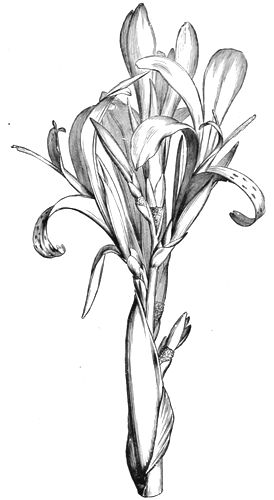
FIG. 360. FLOWERING SPIKE OF CANNA SPECIOSA.
C. speciosa (showy).* fl. sessile, in pairs; petals two, erect, bifid; lip spotted, revolute. August. l. lanceolate. h. 3ft. Nepaul, 1820. See Fig. 360. (B. M. 2317.)
C. Van-Houttei (Van Houtte's).* fl. bright scarlet, large, very abundantly produced. l. lanceolate, 2ft. to 2½ft. long, acuminated, green, rayed and margined with dark purplish-red.
C. Warscewiczii (Warscewicz's).* fl. with brilliant scarlet inner, and purplish outer segments. l. ovate-elliptic, narrowed at both ends, deeply tinged with dark purple. h. 3ft. Costa Rica, 1849. (B. H. 2, 48.) There are several varieties of this species, the best two are: Chatei, with very large dark red leaves, and nobilis, with deep green leaves, rayed and margined with dark red.
C. zebrina (zebra-striped).* fl. orange, small. l. very large, ovate, erect, deep green, passing into dark red, rayed with violet-purple. Stems dark violet-red. h. 6ft. to 8ft.
CANNABINACEÆ. This order, of which the genus Cannabis (Hemp) is the type, is now merged into Urticaceæ.
CANNABIS (from the Greek word kannabis, used by Dioscorides, and that from Sanskrit canam). Hemp. ORD. Urticaceæ. A small genus, of but little ornamental value. Flowers racemose, diœcious. Nut two-valved, within the closed calyx. The undermentioned species is a hardy annual, of easy culture in ordinary garden soil. Propagated by seeds, sown in spring.
C. sativa (cultivated). fl. greenish. June. l. on long stalks; leaflets from five to seven, long, lanceolate, acuminated; margins serrated. h. 4ft. to 10ft., or even 20ft. India, &c. This plant is cultivated very extensively for the sake of its valuable fibre. Well-grown plants have rather an ornamental appearance during the summer months. See Fig. 361.
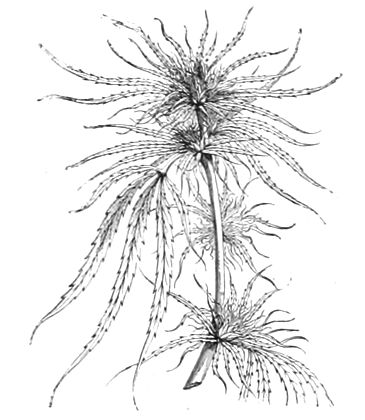
FIG. 361. HEAD OF CANNABIS SATIVA.
CANNON-BALL TREE. A common name for Couroupita guianensis (which see).
CANSCORA (from Kansgan-Cora, the Malabar name of C. perfoliata, as yet unintroduced). SYN. Pladera. Including Phyllocyclus. ORD. Gentianeæ. Small, erect, simple or branched, stove or greenhouse annuals. Flowers stalked or sub-sessile. Leaves opposite, sessile or amplexicaul. Corolla funnel-shaped, with a four-cleft, unequal limb; the two outer segments equal, two lower ones combined a greater distance. Stems tetragonal. C. Parishii requires similar treatment to Balsam, and grows best in a soil to which chalk or limestone débris is added.
C. Parishii (Parish's). fl. white. l. opposite, perfectly connate, so that the united two apparently form an exactly orbicular leaf. h. 2ft. Moulmein, 1864. Greenhouse. (B. M. 5429.)
CANTERBURY BELLS. See Campanula Medium.
CANTHARELLUS CIBARIUS. See Chantarelle.
CANTHIUM. A synonym of Plectronia.
CANTUA (from Cantu, the Peruvian name of one of the species). SYN. Periphragmos. ORD. Polemoniaceæ. Very pretty erect, branched greenhouse evergreen shrubs. Flowers in corymbs, at the termination of the branches, rarely solitary and axillary. Leaves entire or almost pinnatifid, alternate, petiolate, elliptic, acuminated, or cuneate-oblong, glabrous, or downy on both surfaces when young. They are of easy culture in a compost of turfy loam, leaf-mould, and sand, if good drainage is allowed. Propagated by cuttings, placed in sand, under a hand glass. In the western parts of England, these plants—particularly C. buxifolia—thrive remarkably well in sheltered situations.
C. bicolor (two-coloured). fl. solitary; corolla with a short yellow tube and scarlet limb. May. h. 4ft. Peru, 1846. (B. M. 4729.)
C. buxifolia (Box-leaved).* fl., corolla pale red, straight, funnel-shaped, with a very long tube; corymbs few-flowered; peduncles tomentose. April. l. cuneate-oblong, mucronulate, quite entire. h. 4ft. Peruvian Andes, 1849. An elegant plant, having the tops of branches, calyces, and young leaves, downy. SYN. C. dependens. See Fig. 362. (B. M. 4582.)
C. dependens (hanging). Synonymous with C. buxifolia.
C. pyrifolia (Pyrus-leaved).* fl., corolla yellowish-white, curved; stamens twice as long as the corolla; corymbs terminal, dense-flowered. March. l. elliptic or obovate acute, entire or sinuate-dentate. h. 3ft. Peru, 1846. (B. M. 4386.)
CAOUTCHOUC. The elastic gummy substance known as indiarubber, which is the inspissated juice of various plants growing in tropical climates in different parts of the world; such as Castilloa, Ficus elastica, Hevea, various species of Landolphia, Manihot, &c., &c.
CAPE EVERLASTING. See Helichrysum.
CAPE GOOSEBERRY. See Physalis peruviana.
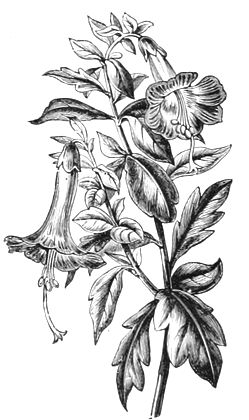
FIG. 362. FLOWERING BRANCH OF CANTUA BUXIFOLIA.
CAPE GUM. The gum of Acacia Karroo or A. capensis.
CAPE JESSAMINE. See Gardenia florida.
CAPER-TREE. See Capparis.
CAPILLARY. Very slender; resembling a hair.
CAPITATE. Growing in a head.
CAPITULATE. Growing in small heads.
CAPITULUM. A close head of flowers; the inflorescence of Composites.
CAPPARIDEÆ. An order of herbs or shrubs, rarely trees. Flowers clustered, or solitary; sepals four to eight, imbricate or valvate; petals four, arranged crosswise, sometimes, but rarely, five, or eight, rarely absent. Leaves alternate, very rarely opposite, stipulate or exstipulate. The order is distributed throughout the tropical and warm temperate regions of both hemispheres, the frutescent species being largely represented in America. There are about twenty-three genera—the best-known being Capparis, Cleome, and Cratæva—and about 300 species.
CAPPARIS (kapparis, old Greek name used by Dioscorides, from Persian kabar, Capers). Caper-tree. ORD. Capparideæ. Greenhouse or stove evergreen shrubs, of considerable beauty. Calyx four-parted; petals four; stamens numerous; succeeded by a berry. They thrive best in a compost of well-drained sandy loam. Cuttings of ripe shoots will root in sand, under a hand glass, in moist heat. This genus contains about 120 species, but it is very doubtful if more than six are to be found under cultivation in this country.
C. amygdalina (Almond-like).* fl. white; peduncles axillary, compressed, corymbiferous. l. elliptical-oblong, narrowed towards both ends, with a callous point; upper surface smooth; under surface, as well as the branches, covered with silvery scaly dots. h. 6ft. West Indies, 1818. Stove.
C. cynophallophora (Dog-phallus bearing). fl. white, large, fragrant; peduncles few-flowered, shorter than the leaves. l. smooth, leathery, oblong, on short petiole. h. 8ft. to 25ft. West Indies, 1752. Stove. (R. G. 1862, 351.)