THE DICTIONARY OF GARDENING, (continued 15)
Reading edition
CABBAGE CATERPILLARS. Large Cabbage White (Pieris brassicæ). From May to July, and again in September and October, this, the most common of our butterflies, may be seen in great numbers, frequenting gardens, lanes, and fields, being especially numerous where Cabbages are growing. Their beautiful yellow eggs are laid singly on the under surface of the leaves, and securely fastened by a natural glue; from these, in due time, issue the small, but destructive, "green caterpillars." Shortly after birth, they become quite green in front and yellow behind. They then get hairy and dotted over with black; they have eight pairs of feet, of which the three front ones only are "true" legs, or those which ultimately develop into the legs of the butterfly. They change their skin several times, and at each moult become larger in size. When full grown, they are about 1½in. long, of a light green or bluish hue above, and yellow beneath; along the back of the adult caterpillar is a conspicuous yellow line, edged on each side with black dots.
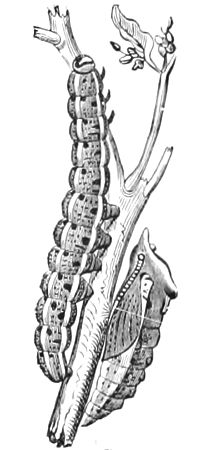
FIG. 309. CATERPILLAR AND CHRYSALIS OF LARGE CABBAGE BUTTERFLY.
The chrysalis, or pupa, is commonly found on window-ledges, palings, walls, and similar places; but is sometimes attached to the plant (see Fig. 309). It is a rather curious object, of the colour of stone, and prettily chiselled. It is fastened to the plant by the tail and by a belt of silk round the middle.
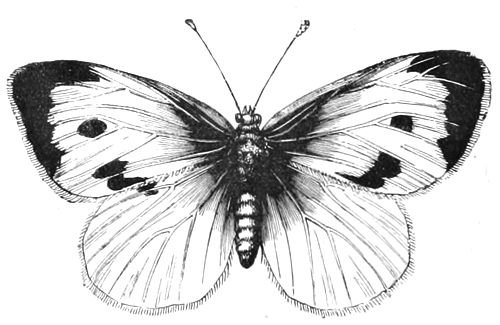
FIG. 310. LARGE WHITE CABBAGE BUTTERFLY.
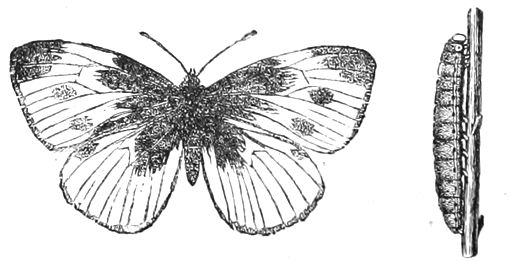
FIG. 311. SMALL WHITE CABBAGE BUTTERFLY AND CATERPILLAR.
The perfect male insect has the body black and wings white on the upper side, except the tips of the fore-wings, which are black and crescent-shaped; and on the upper edge of the hinder wings there is a black spot. On the under side, the fore wings are white with yellow tips, and two black patches on each; the hind wings are yellow, with small black markings. The antennæ are alternately black and yellow, with the club black above and yellow beneath. The female (see Fig. 310) differs from the male in having two large black spots on each of the fore or upper wings, and a spot on the inner margin.
The Small White (Pieris rapæ, see Fig. 311) has two broods in the year, the first batch about April, and the second in July. The eggs are always placed on the upper side of the leaf, and are hatched in from ten to thirteen days, the caterpillars becoming full grown in about three weeks after emerging. The colour of the caterpillar is dark green, with a fine line of yellow, and a row of yellow spots down the sides. The chrysalis is attached by the tail and a band of silk to the place selected by the caterpillar, and varies greatly in colour, although generally it is of a whitish-brown.
Cabbage Moth (Mamestra brassicæ). Newman, in his "British Moths," thus describes the Cabbage Moth: "The antennæ are rather long and slender, and scarcely ciliated in either sex; the fore-wings are dark, smoky, grey brown, mottled and marbled with confused markings, both darker and paler; the orbicular spot is inconspicuous, but decidedly to be traced; the reniform stigma is delicately outlined with white or whitish-grey, and has a pale anterior disc, in which the same pale grey colour predominates; the hind wings are dark, smoky brown with rather pale base, and rather darker crescentic discoidal spot and wing-rays; the head, thorax, and body have the same colour as the fore and hind wings." The eggs are laid on Cabbages, or similar plants, and are hatched in a few days. The caterpillars are very voracious, feeding by day and night, and, what is worse, they spoil with their excrement, in the case of Cabbages, more than they eat. They are of a dark colour, with a kind of marbling, more or less distinct, on the back, the effect being produced by a triangular mark containing two white dots on each of their segments. On being disturbed, they roll themselves into a tight ring, and so remain until they suppose that danger is over. They descend into the earth for change to smooth red-brown chrysalids, and remain there till the following spring. If the chrysalids were collected and destroyed during the autumn and winter digging, much injury would be obviated through the succeeding spring and summer.
The destruction of these pests is a very troublesome matter, as the grubs of the last-named kind bore into the heart of the cabbage. Hand-picking is the only sure method. Anything emitting a distasteful odour will also keep them at bay. Miss Ormerod recommends throwing gas-lime over the plants, but it must be previously weakened by a few months' exposure. The following remedy may also be recommended:
Paraffin, or Coal Oil. Mix one ounce of oil with a gallon of soapsuds, and water the plants with the mixture before the caterpillars appear. If any have appeared, an application at the rate of two ounces to the gallon will generally clear them off. Of course, this operation must not be performed less than a month previous to cutting the cabbages, on account of the smell. Soapsuds alone will also clear caterpillars from most smooth-leaved subjects if frequently applied.
CABBAGE FLY (Anthomyia brassicæ). Among the injurious insects which infest Cabbages, none commit greater havoc to both stem and root, than the maggots of the Cabbage Fly. "They are whitish, cylindrical, and legless, tapering to the head, and blunt at the tail, which has short teeth on the lower margin, and two brown tubercles in the middle. When full grown, they are about ⅓in. long. They then leave the plants, and turn, in the earth, to pupæ, with a few black spots at the head, and short teeth at the tail, inside which the flies form, and emerge in about a fortnight or three weeks. The fly is of an ashen-grey colour, and smaller than the Onion Fly, which it much resembles. The male is of a darker grey, and has a short black stripe along the back between the wings, with a curved one on each side of it, and one black stripe along the abdomen" (Ormerod). The presence of these maggots may be easily detected by the flagging and change of colour of the leaves. The infested plants should be immediately removed and destroyed. The following remedy will be found beneficial:
Lime. Hot lime should be soaked in water for about twenty-four hours. When clear, the infested Cabbages should be well washed with the liquid. Superphosphate of lime may also be applied with advantage.
CABBAGE GALL WEEVIL (Ceutorrhynchus sulcicollis). This is a pretty little beetle, about three-quarters of a line or one line in length. Its colour is dark, but the insect is really of a coppery hue; on the thorax and head are rather large depressions; the wing-cases vary in colour from green to greenish-blue, or even black, and along the entire length of the elytra are parallel lines or holes, as may be seen with the aid of an ordinary lens. This insect, which causes much damage to plants of the Brassica family, is, in some places, very difficult to eradicate. It is also very destructive to other crops, and, therefore, any effectual remedy is valuable. The following methods may be recommended:
Carbolic Acid. Mix 1oz. Calvert's No. 5 carbolic acid with two gallons of soapsuds, and add sufficient loam or clay to make a thin paste. Dip the roots of the whole of the plants into this before they are set out. Well stir the mixture, and put the plants out in a damp soil, so that watering will not be necessary.
Paraffin, or Coal Oil. This, applied in the same manner as recommended for Carbolic Acid, is also very good.
Guano, Superphosphate of Lime, and Nitrate of Soda. A good dressing of either of these, given after the ground is dug, and in wet weather, about a month before the plants are put out, has been found very beneficial; but, although preventatives, they do not totally clear the crop from insects for the season.
Soot and Lime. Take equal parts of air-slaked lime and soot, and mix together. Set the plants with a trowel, and, having placed some soil over the roots, throw in a little of the mixture, filling up the hole with soil.
CABBAGE MOTH. See Cabbage Caterpillars.
CABBAGE PALM. See Euterpe oleracea.
CABBAGE POWDERED-WING (Aleyrodes brassicæ). A small four-winged powdery fly, closely allied to the Aphides. As implied by its name, this pest infests the various sorts of Cabbages. It is more particularly prevalent in autumn. Its presence may be readily detected by the partial discoloration of the leaves attacked. The head and body between the wings are black, with yellow variegation; abdomen yellow or rosy; wings white and mealy (whence its common name), the upper pair each having a darker spot, near the centre. Its destructive power resides in the rostrum, or sucking-tube, with which its head is furnished.
Remedies. The only effectual means of exterminating this pest is to destroy the leaves, preferably by burning. If its presence is detected early, an application of tobacco water, or diluted soft soap, may prove beneficial.
CABBAGE ROOT-EATING FLY. See Root-eating Fly.
CABBAGE-TREE. See Euterpe oleracea.
CABBAGE WEEVIL. See Cabbage Gall Weevil.
CABOMBA (the native name in Guiana). ORD. Nymphæaceæ. SUB. ORD. Cabombeæ. Small and very interesting aquatics. They thrive well in a cistern 1ft. deep, with 2in. of loam in the bottom, for the plants to root in, then filled up with water, and placed in a warm part of the greenhouse during summer, being allowed a rest in a cool part of the stove in winter. Propagation may be effected by root division.
C. aquatica (water-loving). fl. yellow, small; peduncles long, axillary, solitary, one-flowered. July. Submerged leaves opposite, stalked, cut into five divisions even to the petiole; segments multifid; floating leaves alternate, on long petioles, peltate, orbicular, entire. Guiana, 1823. SYN. Nectris aquatica.
C. caroliniana (Carolina) is somewhat similar to C. aquatica. It is a native of the Southern United States.
CACALIA (from kakalia, a name used by Dioscorides). ORD. Compositæ. A genus of hardy herbaceous perennials, here treated as distinct from Senecio, of which genus, from a botanical point of view, it is but a section. Heads five to many-flowered; florets all tubular and perfect; scales of the involucre in a single row; receptacle naked; pappus of numerous capillary bristles. For culture, see Senecio.
C. atriplicifolia (Atriplex-leaved). fl.-heads white. August. l., lower ones triangular-kidney shaped, or slightly cordate; the upper rhomboid, toothed. Stem terete. h. 3ft. to 6ft. United States of America.
C. hastata (hastate). fl.-heads white, nodding, racemose. Autumn. l. stalked, three-lobed, hastate, serrate. h. 1ft. Siberia, 1780.
C. reniformis (reniform). fl.-heads white, disposed in large corymbs. August. l. dilated, fan-shaped, 1ft. to 2ft. broad, repandly-toothed and angled, petiolate. Stem grooved and angled. h. 4ft. to 9ft. New Jersey, 1801.
C. suaveolens (sweet-scented).* fl.-heads white. Autumn. l. triangular-lanceolate, halbert-shaped, pointed, serrate; those of the stem on winged petioles. Stem grooved. h. 3ft. to 5ft. North America, 1752.
C. tuberosa (tuberous).* fl.-heads whitish. June. l. thick; lower ones lanceolate or oval, nearly entire, tapering into long petioles; upper ones on short margined petioles, sometimes toothed at the apex. Stem angled and grooved. h. 2ft. to 6ft. North America.
CACOUCIA (its name in Guiana). ORD. Combretaceæ. A small genus of stove twining or climbing shrubs. Flowers large, showy, racemose. Leaves opposite, oblong or ovate-elliptical. For culture, see Combretum.
C. coccinea (scarlet).* fl. scarlet, alternate, bracteate at the base, disposed in long terminal racemes. May. l. ovate, acuminated, shortly petiolate. Guiana. (A. G. i., 179.). A handsome stove climber.
CACTEÆ. A large order of succulent plants, with remarkable spines clustered on the cylindrical, angular, two-edged, or leafy stems. Flowers very variable, showy or minute, usually solitary, sessile, rarely in fascicles, ephemeral; petals disposed in two or more series, hardly distinguishable from the inner sepals, and sometimes united with them; sepals numerous, united and adnate a great length to the ovarium. Fruit fleshy, one-celled, many-seeded. Well-known genera are Cereus, Melocactus, Mammillaria, Opuntia, Pereskia, and Rhipsalis.
CACTUS (from kaktos, a name used by Theophrastus to describe a spiny plant). This generic term is popularly applied to all members of the extensive family Cacteæ, which order may be distinguished by the following characteristics: Calyx composed of many sepals, usually indefinite in number, the inner series not readily distinguishable from the petals, united and adnate a great length to the ovary; with the tube smooth in the genera Mammillaria, Melocactus, and Rhipsalis; or with the lobes of the sepals crowning the fruit, and having the tube scaly, as in the genera Cereus, Opuntia, and Pereskia. Petals disposed in two or more series, hardly distinguishable from the inner sepals, and somewhat united to them; sometimes irregular, and disposed in a long tube at the base, but distinct at the apex, as in the genera Mammillaria, Melocactus, and Cereus; sometimes equal and distinct to the very base, forming a rotate corolla, as in the genera Opuntia, Pereskia, and Rhipsalis. Stamens indefinite, disposed in many series, more or less cohering with the petals or inner sepals; filaments slender, filiform; anthers ovate, versatile, two-celled. Ovarium obovate, fleshy, one-celled. Fruit fleshy, one-celled, many seeded, either smooth and crowned by the calyx, or covered with scales, scars, or tubercles, and umbilicate at the apex. This order contains fleshy or succulent shrubs, very variable in habit and size. Flowers very variable, showy, or minute, usually solitary, sessile, rarely in fascicles, ephemeral, expanding by night or day. Leaves usually wanting, but, when present, small, caducous, and terete, rarely flat and expanded, sometimes alternate and disposed in a spiral order, always glabrous and fleshy. Prickles or bristles disposed in fascicles, rising from the axils of the leaves. In the leafless genera, the fascicles of spines are disposed on the angles of the stem, rising from tubercles. Stems usually angular, winged, or regularly beset with tubercles, rarely terete, usually jointed; joints compressed. A group of Cacti is shown at Fig. 312, for which we are indebted to Herr Fr. Ad. Haage, jun., of Erfurt, Germany. See Cereus, Disocactus, Echinocactus, Epiphyllum, Leuchtenbergia, Mammillaria, Melocactus, Nopalea, Opuntia, Pelecyphora, Pereskia, Phyllocactus, and Rhipsalis.
Cultivation. Perhaps no class of plants more easily accommodate themselves to a general system of treatment, than do these; although certain genera would undoubtedly thrive better than when subjected to the lower temperature, suited to the requirements of those coming from cooler regions. Notwithstanding that nearly all the species are natives of the western hemisphere, they occur in various geographical and altitudinal areas, in which the temperature is proportionately lessened or increased, as the case may be; yet, presuming a special house is set apart for their culture, the majority of the species may be happily suited therein. The warmest end of the structure should be selected for the tropical kinds; while those found in cooler regions may be grown in the other portions of the house; even those which are hardy in our climate are really best wintered in a house or frame. Granted that several species will endure our winter outside, it is yet necessary to give them the shelter of a friendly ledge of the rockery, or frame, or to cover them in their permanent position with a hand light, or sheet of glass, in order to prevent the ill-effects of excessive moisture. Generally, a winter temperature of from 50deg. to 55deg., and a summer one of from 70deg. to 80deg. during shade, or in sunshine up to 90deg., will be found advantageous. When thus treated, it will be necessary to keep the tropical species, on the whole, very dry during the winter. As regards soil, potting, and general treatment, all may be treated alike, except Epiphyllum, Disocactus, and Pereskia (which see). Some growers give them the protection of a house in winter, and stand them outside during the summer, which is not, however, a very commendable plan, as, in consequence of the very variable character of our climate being especially prejudicial to several of the tender and more delicate species, the often excessive amount of moisture they would receive, will produce a weakly state of health in many, while others will be lost. It is far better if their culture is attempted at all, to give them the proper treatment. The numerous species and varieties found on the Rocky Mountains are a most interesting series, and may be well managed in a cold frame facing south, arranging them on shelves as close to the glass as possible, and keeping them very dry through the winter. If the weather is very severe, the lights should be matted. One of the best collections of these in the country, is in the possession of E. G. Loder, Esq., Floore House, Weedon, Northampton, where a great number are admirably grown in frames, and under a large ledge of the rockery outside. Amateurs may grow quantities of handsome Cacti either in dwelling rooms near the window, or in small frames or greenhouses. As they are slow growing, not much space will be occupied; at the same time, a great deal of interest will be centred in their culture. As regards watering and insect pests, they are but little trouble. Miniature Cacti, of numerous kinds, are now often sold in small pots, and most attractive little subjects they prove.
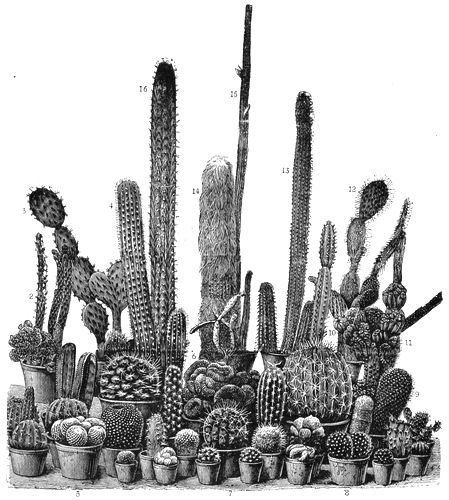
1. Opuntia. 2. Cereus. 3. Opuntia streptacantha. 4. Cereus candicans. 5. Mammillaria. 6. Cereus peruvianus monstrosus. 7. Echinocereus electracanthus. 8. Mammillaria. 9. Echinopsis formosa. 10 Echinocactus Visnaga. 11. Cereus peruvianus var. 12. Opuntia candelabriformis. 13. Cereus strictus. 14. Pilocereus senilis. 15. Cereus Tweedii. 16. Cereus chilensis.
FIG. 312. GROUP OF CACTI.
[See larger version]
Soil, Drainage, and Potting. Good ordinary fibrous loam should form about one-half of the compost, the other half should be made up of sand, broken bricks, and lime rubbish in equal quantities; the whole to be carefully mixed together, and not used until it is moderately dry. It is absolutely necessary to ensure perfect drainage; a good "stopper" should, therefore, be placed over the hole at the bottom of the pot, and about one-third of its depth filled with draining material. The best time for potting is during February and March. Turn out the plants, and remove nearly all the old soil from the roots, taking away any dead or decaying roots which may be observable. Place some of the roughest soil next the crocks, and gradually fill the pots with the finer material, well working the same amongst the roots; finally press the soil moderately firm. Do not water for a few days after potting, but syringe every evening, especially if the weather be fine; a little extra heat may be given after potting, to excite new, healthy growth. It will not be necessary every year to repot specimens in large vessels. A good top-dressing, with an occasional dose of weak liquid manure, is all they will require for several seasons.
Watering. This must be discriminately managed, especially during the winter; for, whatever their treatment as regards temperature during that season, they must be studiously watered, and anything like a saturated condition of the soil should be avoided. If the temperature is brisk, a little water may be given once a week, or perhaps not quite so often. If the plants are subjected to very cool treatment, water must be sparingly administered during November, December, and January; after which, they should be examined weekly, and very carefully attended to. During the summer months, when in active growth, they will not suffer if watered twice a week; and, on bright afternoons, light syringings may be advantageously given.
Propagation. Three methods are adopted, viz., by cuttings or offsets, grafting, and seeds; the former is the plan generally adopted. The cuttings or offsets should be removed with a sharp cut, and laid upon a sunny shelf until the wound is healed and roots are emitted, when they should be potted in sandy soil, and placed with the others. They will thrive freely if kept syringed. Grafting is resorted to with delicate kinds, which, from some reason or another, will not grow freely except upon the stock of a stronger species; and, by this means also, such delicate kinds can be kept from the damp soil, which frequently causes incipient decay. The stocks usually employed are those of Cereus tortuosus, C. peruvianus, &c., according to the species intended for working; they readily unite with each other. If the scion and stock are both slender, wedge-grafting should be adopted; if both are broad, it is best to make horizontal sections, placing them together and securing in proper position by tying with matting, but not too tightly, or the surface may be injured. Propagation by seeds is not often adopted, as it is a very slow method; they should be sown in very sandy soil, and placed in a semi-shady position until germination commences, when they may be exposed, and very carefully watered.
CACTUS DAHLIA. See Dahlia Juarezii.
CADUCOUS. Falling off soon; deciduous.
CÆNOPTERIS. See Asplenium.
CÆSALPINIA. (in honour of Andreas Cæsalpinus, a celebrated Italian botanist, 1519-1603). Brasiletto. ORD. Leguminosæ. An ornamental genus of stove evergreen trees or shrubs, not much grown, on account of the space required and the time the species take to flower. Flowers yellow or red, produced in racemes, having a top-shaped calyx, divided at the end into five parts, the lowest larger than the others; petals five, unequal-stalked, upper one shortest; stamens ten. A mixture of loam and leaf mould suits them best. Cuttings are somewhat difficult to root, but sometimes will succeed if taken off from the mother plant in a growing state and planted in sand, with a hand glass placed over them, in heat.
C. alternifolia (alternate-leaved). fl. orange, clustered. l. alternate, very elegant, compound. Central America, 1868.
C. brasiliensis (Brazilian). Brazil Wood. fl. orange; racemes rather panicled. l. with seven to nine pairs of pinnæ, each pinna bearing about fifteen or sixteen pairs of oval-oblong, obtuse, glabrous leaflets. Brazil, 1739. Plant unarmed.
C. Sappan (Sappan). fl. yellow, panicled. l. with ten to twelve pairs of plane, each pinna bearing ten to twelve pairs of unequal-sided, obliquely oval-oblong leaflets, which are emarginate at the apex. h. 40ft. Tropical Asia, 1773. This tree furnishes the Sappan-wood of commerce.
C. sepiaria (hedge). fl. yellow. April. l. compound; pinnæ with about ten pairs of pinnules. h. 60ft. India, 1857. SYN. Biancea scandens.
CÆSIOUS. Lavender-colour, bluish-grey.
CÆSPITOSE. Growing in tufts.
CAFFER BREAD. See Encephalartos Caffra.
CAFFER TEA. See Helichrysum nudifolium.
CAFTA. See Catha edulis.
CAHOUN NUTS. A name applied to the fruits of Attalea Cohune, which yield a valuable oil.
CAIOPHORA. See Blumenbachia and Loasa.
CAJAN. See Cajanus.
CAJANUS (Catjang is the Amboyna name). Cajan. ORD. Leguminosæ. A genus of erect stove evergreen shrubs, clothed with velvety pubescence. Flowers yellow, distinctly peduncled, corymbose, racemose; standard sometimes beautifully veined with red. Leaves pinnately trifoliate. A light rich soil suits these plants well. Young cuttings will root in sand, with a hand glass placed over them, in heat; but plants are usually raised from seeds, obtained from the West Indian Islands and India.
C. indicus (Indian).* Pigeon Pea. fl. yellow, or purple-spotted, in axillary racemes. July. l. pinnately trifoliate; leaflets lanceolate. h. 6ft. to 10ft. India. (B. M. 6440.)
C. i. bicolor (two-coloured). fl. yellow. July. h. 4ft. India, 1800. (B. R. 31, 31.)
C. i. flavus (yellow). fl. yellow. July. h. 4ft. India, 1687.
CAJUPUT OIL and CAJUPUT-TREE. See Melaleuca leucadendron minor.
CAKILE (derived from the Arabic). Sea Rocket. ORD. Cruciferæ. A pretty hardy annual, frequently found on sea-shores. It is of easy culture in most sandy soils. Propagated by seed, sown in spring.
C. maritima (sea). fl. lilac, large, densely corymbose. Summer and autumn. fr. a succulent pod, divided, when mature, by a horizontal partition into two cells, the upper containing a single erect seed, the lower a pendulous one. l. oblong, deeply lobed, fleshy. Stem much branched. h. 1ft. Sea-shores of Europe and North America.
CALABASH NUTMEG. See Monodora Myristica.
CALABASH, SWEET. See Passiflora maliformis.
CALABASH-TREE. See Crescentia Cujete.
CALABA-TREE. See Calophyllum Calaba.
CALADENIA (from kalos, beautiful, and aden, a gland; in reference to the disk of the labellum being finely beset with glands). ORD. Orchideæ. A genus of pretty greenhouse terrestrial orchids from New Zealand and Australia. They should be kept in a cool frame or greenhouse, and carefully watered, when not in a growing state. A compost of peat, loam, and sand, in equal parts, suits them well. Over thirty species are enumerated, but probably none are seen out of botanic gardens.
CALADIUM (derivation of name doubtful; probably of Indian origin). ORD. Aroideæ. Stove perennials, chiefly grown for the great beauty and varied hue of their leaves. Spathe hood-like, rolled round at the base; spadix, upper portion entirely covered with stamens, but ultimately becoming bare at the extreme top, provided with blunt glands or sterile stamens in the middle, and ovaries beneath; anthers shield-shaped and one-celled; ovaries numerous, two-celled, with from two to four ascending ovules in each cell. Leaves upon long petioles, more or less sagittate, ovate, and usually very richly coloured. Fruit a one or two-celled berry, with few seeds. They are all of easy culture, and grow freely in a humid atmosphere. In March, when the tubers have been kept dry or rested for some time, they may be started into growth again, in small pots, placed in a stove or pit, where a night temperature of from 60deg. to 65deg. is maintained, and syringed daily once or twice at least. As soon as indications of activity are presented, they may be shifted into 4in., 5in., or 6in. pots, or larger ones may be used if good sized specimens are required. If the tubers should be in large pots, it is best to turn them out, dividing if necessary, and placing all the crowns in small pots, from which they can be removed when root action and growth are resumed, and they require more room. Large tubers, if sound, may be divided, and the pieces placed in pots of such sizes as it is desired to grow them in.
Soil. Turfy loam, leaf mould, turfy peat, and a little well decomposed manure, in equal parts (not broken up too fine), with a good sprinkling of sharp sand, form an excellent compost, the whole being well incorporated together. Thorough drainage must be insured, as these plants require an abundance of water. After potting, they should be placed in a stove temperature, and kept well moistened by syringing two or three times daily. If accommodated with mild bottom heat at this time, they will make much freer and more vigorous growth than if otherwise treated. Water sparingly at first, but as soon as the leaves expand, increase the supply; and, when the pots are well filled with roots, apply clear liquid manure at every other time of watering. As the season advances, the temperature and humidity of the house should be increased. During bright sunshine, Caladiums should be slightly shaded for a few hours in the middle of the day, with some thin material, just to break the fierceness of the sun's rays; but the more they are exposed to the light at other times during growth, the brighter, richer, and more beautiful will the foliage be. As soon as the plants have attained a good size, some of them should be placed in the coolest part of the house, and partially hardened off; they may then be taken to the conservatory, allowing them a situation free from currents of cold air, and giving water only when really necessary. They may remain here for some time, but care must be taken to return them to the stove before they suffer from cold.
Small neatly grown specimens make beautiful ornaments for table decoration, and their suitability for exhibition purposes is well known, and largely taken advantage of. Towards autumn, and as the foliage begins to fade, the supply of water should be gradually lessened, until all the leaves die down; the pots should then be placed under the stage in the stove, where they can be looked to now and then, and a little water given if required. By no means allow the tubers to get dried up, as is often done; for, if so, they will frequently rot away inside; whereas, kept in a semi-moist condition, even the most delicate can be preserved. In this state, they may remain until the following season. Caladiums will not endure a very low temperature; from 55deg. to 60deg. is as low as they can be safely kept. Very few of those known as "true species" are grown, being superseded, for general decorative purposes, by the numerous hybrids which have been raised of late, principally from C. bicolor.
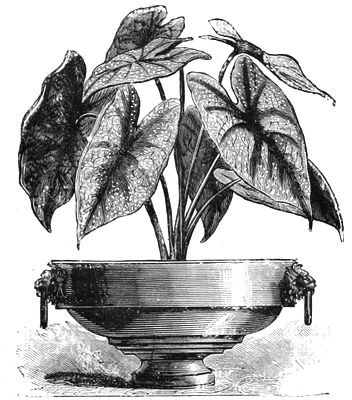
FIG. 313. CALADIUM CHANTINII.
C. argyrites (silvery).* l. small, sagittate, round colour light green; centre and margins white, with many irregular white blotches scattered over the remaining portion. Para, 1858. One of the smallest and most elegant of the genus, and much esteemed for table decoration. (I. H. 1858, 185.)
C. Baraquinii (Baraquin's). l. from 20in. to 30in. long; centre deep red; margin dark green. Para, 1858. (I. H. 1850, 257.)
C. bicolor (two-coloured).* fl., spadix shorter than the hooded spathe, which is contracted in the middle. June. l. peltate-cordate, sagittate, coloured in the disk. h. 1ft. Brazil, 1773. (B. M. 820.)
C. Cannartii (Cannart's). l. green, with pale blotches; veins deep red. Para, 1863.
C. Chantinii (Chantin's).* l. chiefly brilliant crimson, irregularly blotched with white, and margined with dark green. Para, 1858. See Fig. 313.
C. Devosianum (Devosie's).* l. angular, blotched white and pink. Para, 1862.
C. esculentum (edible). Synonymous with Colocasia esculenta.
C. Hardii (Hardy's). l. red-tinged, slightly spotted with white. Para, 1862.
C. Kochii (Koch's).* l. spotted with white. Para, 1862.
C. Lemaireanum (Lemaire's). l. green, with whitish venation. Brazil, 1861. (I. H. 1862, 311.)
C. Leopoldi (Prince Leopold's).* l. green, marbled with red, and blotched with pink. Para, 1864.
C. macrophyllum (large-leaved).* l. large, palish green, blotched with greenish-white. Para, 1862.
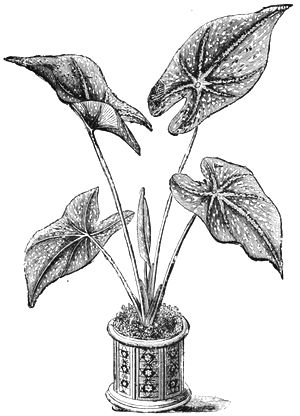
FIG. 314. CALADIUM MACULATUM.
C. maculatum (spotted).* l. oblong, acuminate, cuspidate, cordate at base, finely spotted with clear white. Plant erect, caulescent. South America, 1820. See Fig. 314.
C. marmoratum (marbled).* l. broad, peltate, upwards of 1ft. long, sagittate-ovate, acute or shortly acuminate, the two basal lobes being slightly divergent, dark bottle-green, variegated with greyish or silvery angular spots and blotches; petioles terete, greenish, mottled with purple. Guayaquil. SYN. Alocasia Roezlii. The variety costata differs from the type in having the midrib (or costa) marked out by a tapering band of silver grey.
C. Rougieri (Rougier's). l. green, with white spots; the centre pale green, with red veins. Para, 1864.
C. rubronervium (red-nerved). A synonym of C. rubrovenium.
C. rubrovenium (red-veined).* l. greyish-green in the centre, with red veins. Para, 1862. SYN. C. rubronervium.
C. sanguinolentum (blood-red blotched).* l. with a white midrib, blotched with red. Amazons, 1872.
C. Schoelleri (Schoeller's). A synonym of C. Schomburgkii.
C. Schomburgkii (Schomburgk's).* l. green, with white veins. Brazil, 1861. SYNS. C. Schoelleri and Alocasia argyroneura.
C. S. Schmitzii (Schmitz's). l., centre whitish, with green network; midrib and veins red. 1861. SYN. Alocasia erythræa.
C. sub-rotundum (half-round). l. roundish, spotted with red and white. Brazil. 1858.
C. Verschaffeltii (Verschaffelt's).* l. somewhat heart-shaped; ground colour brilliant green, entire surface irregularly spotted with bright red. Para.
C. Wallisii (Wallis's). l. dark olive green, with large irregular shaped spots and blotches of the purest white, and the veins all yellowish-white. Para, 1864.
The following descriptive list of hybrid varieties is, for the most part, a selection from Mr. Bull's catalogue, and contains all of importance:
ADOLPHE ADAMS, green leaf-ground, densely speckled with white, and rose-coloured midribs; ADOLPHE AUDRIEN,* a very attractive variety, with fine large richly-coloured foliage; AGRIPPINE DIMITRY, leaves large, with white ground, narrow green margin and veins, and pink centre; ALCIBIADE,* crimson-rayed centre, surrounded with pale green, and blotched with pure white, green margin; ALFRED BLEU, leaves rich green, with pure white spots, and flesh-coloured centre; ALFRED MAME,* carmine-red, bordered with white, and profusely spotted with rose; ALPHAND, green, spotted with red, crimson centre; ALPHONSE KARR, rosy-carmine centre and red spots; ARISTIDE, light green, with crimson centre; AUGUSTE LEMONIER,* fine large leaves, with soft green centre, and rosy-crimson ribs and veins; AUGUSTE RIVIERE, white centre and rays upon a light green ground, with crimson spots; BARILLET,* bright rosy-crimson centre, and ribs on green ground, with broad margin of rich green; BARON DE ROTHSCHILD, rich blood-red centre, and spots, on mottled green leaf-ground; BARONNE JAMES DE ROTHSCHILD,* young leaves of a bright rose colour, the more matured foliage soft rose, with red veins; BARRAL, bright green, with a fine red centre, and large spots of rose; BEETHOVEN,* ground colour white, intersected and veined with green, centre rib delicate rose; BELLEYMEI,* fine white variegated leaves; BELLINI, mottled pale green ground, with rosy centre and spots; BLANQUÆRTI, dark green, with grey veins and white spots; BUREL, dark bluish-green, veined bright rose, marked with rosy-violet, and spotted orange-red; CHANTINII FULGENS,* rich dark metallic-green, with attractive crimson centre and white spots; CHELSONI,* bright glossy green, suffused with brilliant red, and blotched with crimson; CLIO, ground colour deep rose, shaded white, green ribs and narrow green margin; DE CANDOLLE,* rich green, with beautiful rose-coloured spots and creamy white centre rays; DE HUMBOLDT, a fine variety, having glossy green leaves, spotted with scarlet; DEVINCK, leaves heart-shaped, delicate pink centre ribs, interspersed with white spots; DR. BOISDUVAL, centre rayed crimson, snow-white blotches on a green ground; DR. LINDLEY,* crimson centre, the green ground marked with rose blotches; DUC DE CLEVELAND, deep red centre, surrounded with pea-green, largely spotted with red; DUC DE MORNY,* deep green leaf borders, with large crimson-rayed centre; DUC DE NASSAU,* brilliant red centre and ribs, white spot on emerald green leaf borders; DUC DE RATIBOR, green ground, with red midribs marked with white spots; DUCHARTRE, leaf-ground white, flushed rose, green veins and red spots; EDOUARD ANDRE, crimson centre, and rose blotches; EDOUARD MOREAUX, mottled green ground, with lake centre; EDOUARD RODRIGUES,* deep carmine, margined with light green, and spotted with rose; E. G. HENDERSON,* green, with transparent rose spots and mottled crimson rays and centre; ELVINA, bright green, blotched with red, grey centre and veins; EMILIE VERDIER,* leaves of a light transparent rose colour, spotted with red; ETOILE D'ARGENT,* bright green, midribs and veins creamy-white, shaded with grey; EUCHARIS, rose centre, with violet reflections, margined with bright green, very fresh and bright looking; FELICIEN DAVID,* centre of leaf dark carmine, surrounded with white and beautifully veined with red on a light green ground; GOLDEN QUEEN, leaves large, pale golden yellow, uniform in colour; GRETRY, carmine centre, with white spots on a dark green ground; HELEVY, white midribs and marked with crimson blotches, on a green ground; HEROLD,* dark carmine veins, surrounded by light green, blotched with pure white, and margined dark green; IBIS ROSE,* a magnificent variety, with beautiful rich rose-coloured foliage, extremely attractive; ISADORA LEROY, rich metallic green, with crimson-red centre rays; JULES DUPLESSIS, bright rose centre, shaded with rich red and bordered with green; JULES PUTZEYS, rich green, with crimson midrib and veins, centre mottled grey, and the whole surface blotched with red; LAINGII,* reddish-carmine centre, surrounded with yellowish-green, the whole of the leaf sprinkled with white; LAMARTINE, deep crimson centre, with white and red spots; LA PERLE DU BRéSIL,* exceedingly attractive, large leaves, white, delicately tinted with rose, midrib and veins dark green; LEPLAY, leaves attractively marked with white, and beautifully veined with rosy-violet; LOUISE DUPLESSIS, red rays and veins on a white ground, green margin; LUDDEMANNII,* deep crimson ribs, the leaf blotched with magenta and white, border pea green; MADAME ALFRED BLEU, deep green, with large white blotches, and broad crimson-scarlet veins; MADAME ALFRED MAME, light green, covered with large white spots, rosy-carmine centre; MADAME DE LA DEVANSAYE, leaves white, shaded rose, and veined with red and green; MADAME DOMBRAIN,* centre and ribs pale yellowish-green, shaded rose, surface covered with large white and rose spots; MADAME FRITZ KœCHLIN,* white ground, with violet-rose ribs and green veins, a beautiful dwarf-growing variety; MADAME HEINE,* silvery white, stained and edged with pale green, distinct; MADAME HUNNEBELLE, leaves veined with light garnet colour on a white ground, and margined with green veins; MADAME JULES MéNOREAU, fine large leaves, with white centre tinted rose, veined rich bright rose, and margined green; MADAME LAFORGE, centre and ribs reddish-crimson, with green margin; MADAME MARJOLIN SCHEFFER,* a beautiful variety, with white foliage, charmingly veined and netted with pure rosy-lake; MADAME WILLAUME, a charming variety, with transparent leaves, of a delicate salmon-rose colour; MARQUIS DE CAUX, red centre and veins, with rose blotches on margins; MARTERSTYGINUM, crimson centre and white spots; MERCADANTE, pale copper-coloured centre and veins, bordered with green; MEYERBEER,* white leaf-ground, green veins, and red midribs; MINERVE,* silvery white midrib and rays, surrounded with greyish white, green margin, with snowy white spots; MITHRIDATE, ground colour crimson-lake, with darker ribs, and dark bronze-green margin; MONSIEUR A. HARDY, rich reddish-carmine veins on white ground, tinted with rose and spotted with green; MONSIEUR J. LINDEN,* a fine large whitish leaf, with metallic reflections, coral-rose veins, and reticulated green border; MRS. LAING,* white ground, deep rose centre and veins, green margin; MURILLO,* centre and veins metallic-red, with large crimson blotches, broad margin of lustrous bronzy-green; NAPOLEON III.,* flamed crimson centre, with forked rays, and carmine spots on green ground; ONSLOW, deep rosy-crimson centre, with broad green margin, spotted with rose; PAILLET, crimson centre, broad green margin, splashed with crimson, and dotted with white; PAUL VERONESSE, large leaves, with pinkish-white centre, deep scarlet ribs, and broad green margin; PHILIPPE HERBERT, deep mottled crimson rays, and clear white margin, spotted with crimson; PICTUM, green blotched, and spotted with white; PRINCE ALBERT,* dark emerald green, rich crimson midrib, radiating from centre to margins, the intervening spaces spotted with white; PRINCE OF WALES,* a very handsome variety, with large golden-yellow leaves; PRINCESS ALEXANDRA,* rosy-salmon leaf, green centre rib, bordered with magenta-crimson, green margin, with light pink chain; PRINCESS OF TECK,* ground colour bright orange-yellow, the veins suffused with deep red; PRINCESS ROYAL, leaves of a golden ground, with crimson centre; PYRRHUS, centre and ribs deep crimson, pea-green margins; QUADRICOLOR, centre of leaf pale yellowish-green, ribs white, edged rosy-crimson, and margined green; RAMSAU, centre and ribs deep reddish-crimson, surface covered with white blotches, shaded red; RAULINII, rich red centre and veins, finely spotted with white; REGALE, silvery grey centre, rosy-red ribs, spotted with vermilion-red; REINE MARIE DE PORTUGAL,* violet-rose centre, with red veins, dark maroon zone, and green border, very handsome; REINE VICTORIA,* green veins and margins, spotted or marbled with white and rich crimson; ROSSINI, large leaf, with pale centre, pink midribs, and red blotches; ROUILLARD, glossy green margin, pale green centre, midrib and rays rich violet-plum, the whole leaf spotted crimson; SANCHONIANTHON, crimson centre, deep glossy crimson ribs, and pea-green margin; SIEBOLDII, rich green, with fiery-red crimson-rayed centre, green spaces, spotted with claret red; SOUVENIR DE MADAME E. ANDRE,* large deep green leaves, marbled with pure white, veins fine rosy crimson; SPONTINI, pea-green, with white spots, and rosy-pink ribs and veins; THIBAUTII, fine large leaf, with rich crimson veins on a red ground; TRICOLOR, edges of leaves grey-green, intersected with dark green, centre red-lake, carmine midribs; TRIOMPHE DE L'EXPOSITION,* crimson centre, with red ribs, and green border; VERDI, crimson-lake centre with small green zone and apple-green margin; VESTA, greenish-white veins, surrounded with crimson, the whole of the leaf spotted bright rose; VICOMTESSE de la ROQUE-ORDAN, red midrib, and rays bordered with white, the margin beautiful emerald green; VILLE DE MULHOUSE, a beautiful variety, with greenish-white leaves, shaded rose, and rich green centre; VIRGINALE,* clear shining white, veined with dark bluish-green, a handsome variety.
CALAIS. See Microseris.
CALAMAGROSTIS (from calamos, a reed, and agrostis, grass). ORD. Gramineæ. An extensive genus of grasses, for the most part hardy. Panicle more or less spreading; spikelets compressed, one-flowered; empty glumes two, sub-equal, lanceolate, pointed, keeled, awnless. They thrive in any ordinary garden soil. Seeds may be sown during autumn.
C. lanceolata (lanceolate). fl. purple, spreading in all directions; panicle erect, loose, much branched. July. Culms about 3ft. high, smooth, slender. Britain (moist woods and hedges). (Sy. En. B. 1724.)
C. stricta (upright). fl. brown, spreading in all directions; panicle erect, close. June. Culm about 2ft. high, very slender, smooth. England, &c. (bogs and marshes), but very rare. (Sy. En. B. 1725.)
CALAMANDER WOOD. See Diospyros quœsita.
CALAMINT. See Calamintha.
CALAMINTHA (from kalos, beautiful, and mintha, mint). Calamint. ORD. Labiatæ. A genus of hardy herbaceous plants, having the following essential characters: Calyx two-lipped; stamens diverging; upper lip of corolla nearly flat; tube straight. Rather pretty plants, with Thyme-like flowers, well suited for furnishing rock gardens. They grow in almost any garden soil. Increased by seeds, cuttings, or divisions of the roots, in spring.
C. Acinos (Acinos). Basil Thyme. fl. bluish-purple, variegated with white and dark purple, disposed in whorls, one on each flower-stalk. July and August. l. acute, serrate. Stems branched, ascending, leafy. h. 6in. England. Annual. SYNS. Acinos vulgaris and Thymus Acinos. (Sy. En. B. 1048.)
C. alpina (alpine). fl. purplish, almost sessile, four to six in a whorl, June to September. l. petiolate, roundish or ovate, slightly serrated. h. 6in. S. Europe, 1731. A freely branched, tufted plant.
C. grandiflora (large-flowered).* fl. purplish, 1½in. long, in loose racemes; throat much inflated. June. l. petiolate, ovate, acute, coarsely toothed, rounded at the base, 2in. to 3in. long. Herbaceous stems branched at the base, and decumbent. h. 1ft. 1596.
C. patavina (Paduan). fl. pale or purplish-red, rather large. June. l. petiolate, ovate, acute, pubescent. h. 6in. to 9in. S. Europe, 1776.
CALAMPELIS. See Eccremocarpus.
CALAMUS (from kalamos, a reed; old Greek name used by Theophrastus). ORD. Palmeæ. An elegant genus of stove palms. Flowers small, usually of a rose or greenish colour, clustered upon branching spikes, each branch having a separate spathe, which is not large enough to enclose it. Fruit one-seeded, and covered with smooth, shining scales. Leaves pinnate. Stems reed-like, 1in. to 2in. in thickness. When in a young state, these palms are most effective as drawing or diningroom decorations; and, when in a more mature condition, they are excellent as stove ornaments and for exhibition purposes. They are all of slender growth, and of easy culture in a compost of equal parts loam and vegetable mould; a copious supply of water being needed to keep them in a flourishing state. Propagated by seeds. C. Rotang, C. viminalis, and several other species furnish the canes usually employed in this country for the bottoms of chairs, couches, &c.
C. accedens (yielding). l. long, arching, dark green, pinnate; pinnæ long, narrow, closely set; petioles with slender black spines. India. A rare, but elegant, slender-growing, miniature tree.
C. adspersus (scattered). l. pinnate; pinnæ 6in. to 8in. long, narrow, deep green; petioles about 6in. in length, sheathing at the base, clothed with long, slender, black spines. Stem not much stouter than a large wheat straw. h. 20ft. Java, 1866.
C. asperrimus (very rough).* l. pinnate, 3ft. to 12ft. long; pinnæ 1ft. to 2ft. in length, 1in. in breadth, pendent, light green, upper side with two rows of hair-like spines; petioles broadly sheathing at the base, densely armed with long, stout, black spines. Java, 1877. A beautiful species, which attains a considerable size. (I. H. 275.)
C. ciliaris (fringed).* l. pinnate, clothed with a quantity of soft hair-like bristles; petioles sheathing at the base. Stem erect and slender. India, 1869. From the plume-like habit of the leaves, it makes a splendid plant for table decoration, as well as being a beautiful specimen for exhibition.
C. draco (dragon). l. 4ft. to 6ft. in length, beautifully arched, pinnate; pinnæ 12in. to 18in. long, narrow, slightly pendent, dark green; petioles sheathing at base, armed with long, flat, black spines. h. 20ft. to 30ft. India, 1819. A very handsome species, with a robust constitution.
C. fissus (cleft). l. ovate in outline, pinnate, when young bright cinnamon; leaflets pendent, dark green, bearing on the upper side a few black hair-like bristles; petioles armed with dark, stout spines. Borneo. A very ornamental species.
C. flagellum (whip-like). l. 6ft. to 8ft. in length when fully grown, pinnate; pinnæ pendent, about 1ft. in length and 1in. in breadth, dark green, furnished on the upper side with two rows of long, white, hair-like spines; petioles sheathing, copiously armed with stout white spines, much swollen at the base, and tipped with black. Stem slender.
C. Hystrix (bristly). l. pinnate; petioles spiny. A compact-growing and very graceful species.
C. Jenkinsianus (Jenkins's). l. pinnate, gracefully arched, 2ft. to 6ft. long; pinnæ 6in. to 12in. long, 1in. broad, rich dark green; petioles slightly sheathing at the base, armed with long flat spines. Sikkim.
C. leptospadix (slender-spadix).* l. pinnate; pinnules about ⅓in. wide, and from 6in. to 12in. long, subulately acuminate; upper surface with three bristle-bearing ribs; a few smaller bristles are disposed along the midrib underneath; margins finely and regularly toothed with small ascending bristles; petiole channelled, tomentose towards the base, bearing three or four solitary needle-like spines, about 1in. long. India. A rare species, and described as one of the most graceful.
C. Lewisianus (Lewis's).* l. ultimately spreading, 2ft. to 6ft. long, pinnate: pinnæ equidistant, ½in. broad, and front 13in. to 15in. long: veins on the upper surface bristled, under surface smooth; margins rough, with appressed bristles; petioles white, with a broad, sheathing, blackish-brown base, densely armed with long, flat, black spines. India. A fine, but somewhat rare, species.
C. Rotang (Rotang). l. pinnate, from 3ft. to 4ft. in length. very gracefully arched; pinnæ 6in. to 12in. long, less than 1in. broad; upper side dark green, with two rows of hair-like spines; petioles and stems armed sparingly with stout, slightly reversed spines. Stems slender. India. When young, especially, this plant is very handsome.
C. Royleanus (Royle's).* l. pinnate, arching; pinnæ very numerous, narrow, pendent, deep green; petioles with few spines, dark green. North-west Himalayas.
C. spectabilis (showy).* l. pinnate, with a few pairs of smooth linear-lanceolate, three-ribbed leaflets, measuring 6in. to 8in. long; petioles green, furnished with numerous short conical white spines, tipped with brown. Malacca. A slender-growing species.
C. verticillaris (whorled). l. pinnate, with a very ornamental plume-like appearance; pinnæ long, broad, drooping; petioles with the spines arranged verticillately. Malacca. This beautiful species is extremely rare.
C. viminalis (twiggy).* l. 1ft. to 2ft. long, pinnate; pinnæ about 6in. long, narrow, light green; petioles sheathing, densely armed with long flat white spines. When only 3ft. or 4ft. in height, its spiny whip-like spikes of flowers are often produced. Stem slender. h. 50ft. Java, 1847.
The following are other, but less-known, species: australis, elegans, micranthus, niger, oblongus, and tenuis.
CALAMUS AROMATICUS. An old name of Acorus Calamus (which see).
CALAMUS ODORATUS. An old name of Andropogon Schœnanthus (which see).
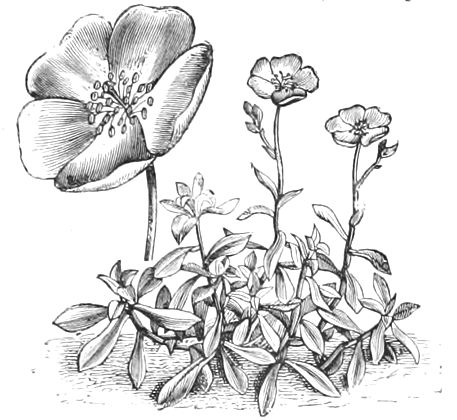
FIG. 315. CALANDRINIA MENZIESII, showing Flower and Habit.
CALANDRINIA (in honour of L. Calandrini, an Italian botanist, who lived in the beginning of the eighteenth century). ORD. Portulaceæ. A rather large genus of fleshy, glabrous, annual or perennial, herbaceous plants, some fourteen or fifteen species growing in Australia, the rest occurring in the New World. Flowers usually rose or purple, solitary, or in terminal umbels or racemes. Leaves quite entire, radical or alternate. Only four or five species are cultivated in this country; these are treated as half-hardy annuals—with the exception of C. umbellata, which is best treated as a biennial—and as such they are extensively grown in small gardens, with most satisfactory results. They should be sown in the spots where they are intended to flower, as transplantation, unless performed with more than ordinary care, will considerably check their growth or result in loss. Their flowers only expand during bright sunshine, and, consequently, they are less grown than they otherwise would be. The plants thrive in a light sandy soil. C. umbellata may be sown in a pan, placed in a cold frame, in May or June; and when the plants are large enough to handle, they should be potted off, or placed out in colonies where they are to bloom.
C. discolor (two-coloured). fl. bright rose, with a yellow tuft of stamens in the centre, 1½in. across; raceme long. July, August. l. fleshy, obovate, attenuated at the base, pale green above, purple beneath. h. 1ft. to 1½ft. Chili, 1834. (B. M. 3357.)
C. grandiflora (large.flowered).* fl. rosy, about 2in. across; calyx spotted; raceme simple, loose. Summer. l. fleshy, rhomboid, acute, petiolate. Stem suffruticose. h. 1ft. Chili, 1826. (B. R. 1194.)
C. Menziesii (Menzies').* FL. deep purple-crimson, from ½in. to 1in. across, terminal and axillary, solitary. June to September. l. elongated, spathulate, much attenuated at the base. Stems much branched, prostrate. California, 1831. SYN. C. speciosa. See Fig. 315. (B. R. 1598.)
C. nitida (shining). fl. rose-coloured, about 2in. across; raceme leafy, many-flowered. Summer. l. oblong-spathulate, sub-acute, glabrous, attenuated at the base, 1in. to 2in. in length. h. 6in. Chili, 1837. A very pretty hardy annual, forming a tuft from 4in. to 6in. across.
C. speciosa (showy). A synonym of C. Menziesii.
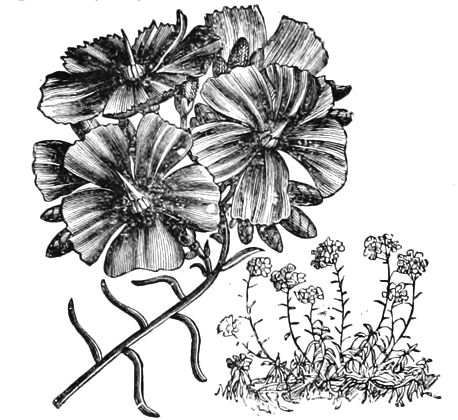
FIG. 316. CALANDRINIA UMBELLATA, showing Flower and Habit.
C. umbellata (umbellate).* fl. of a dazzling magenta-crimson, about as large as a sixpence; corymb cymose, terminal, many-flowered. Summer. l. radical, linear, acute, pilose. h. 6in. Peru, 1826. A very charming half-hardy biennial. See Fig. 316. (P. M. B. 12, 271.)
Other species occasionally met with are: compressa, micrantha, and procumbens; they are, however, inferior to those described above.
CALANTHE (from kalos, beautiful, and anthos, a flower). ORD. Orchideæ. SEC. Vandæ. A very handsome genus of stove terrestrial orchids. They may be characterised as robust-growing plants, producing large, broad, many-ribbed, or plaited leaves, which are, with one or two exceptions, evergreen, and long spikes, bearing many flowers, distinguished by their calcarate lip, which is attached to the column, and by the eight thick, waxy pollen masses adhering to a separate gland. Calanthes should be special favourites with amateurs, as, in the first place, they produce an abundance of showy flowers, which last a long time in perfection; and, secondly, because they are so easily managed. In potting these plants, it will be necessary to depart from the usual style of potting orchids, and, instead of elevating them above the rim of the pot upon a cone of peat and sphagnum, they must be kept below the rim, as in potting ordinary plants. In place of the usual soil and moss, these plants should have a mixture of loam, leaf mould, and peat, broken up rough, to which may be added some silver sand and dried cow manure. During the growing season, they require abundant supply of water, and in winter even this element must be administered freely to the evergreen kinds; whilst the deciduous ones, on the contrary, enjoy a thorough rest after blooming. Good drainage is essential to all. Little more need be said upon the cultivation of Calanthes during the summer months. When growing, they enjoy strong heat and plenty of moisture; but, when growth is complete, a cooler situation is most beneficial. They are subject to the attacks of various insects, which must be continually searched for, and, when found, destroyed; for, if neglected in this particular, the bold and handsome leaves will be much disfigured, and rendered far from ornamental. Propagated by suckers and divisions. About forty species are known, of which the following are a selection:
C. curculigoides (Curculigo-like). fl. beautiful orange-yellow, disposed in an erect spike. Summer and autumn. l. large, evergreen, plaited. h. 2ft. Malacca, 1844. (B. R. 33, 8.)
C. Dominyi (Dominy's).* fl., sepals and petals lilac; lip deep purple. This fine hybrid is a cross between C. Masuca and C. veratrifolia. (B. M. 5042.)
C. furcata (forked). fl. creamy white, very freely produced; spikes erect, 3ft. long. June to August. Luzon Isles, 1836. An excellent exhibition plant.
C. Masuca (Masuca).* fl., sepals and petals deep violet colour, with an intense violet-purple lip; numerously produced on spikes 2ft. long. June to August. India, 1838. (B. M. 4541). The variety grandiflora differs from the type in its greater size both of spike and individual flower; the gigantic spikes are from 3ft. to 4ft. high, and continue blooming for three months.
C. Petri (Peter Veitch's).* fl. whitish-yellow. Said to be very like C. veratrifolia, but bearing leaves a little narrower, and a system of five curious sulcate yellowish calli on the base of the lip, without the single lamella and teeth which are proper to that species. Polynesia, 1880.
C. pleiochroma (many-coloured). fl. whitish, purplish, ochre, orange. Japan, 1871.
C. Regnieri (Regnier's). fl., sepals and petals white; lip rosy-pink; middle lobe short, wedge-shaped, and emarginate. Pseudo-bulbs jointed, Cochin China. fausta is a fine variety, with the base of the tip and column a warm crimson.
C. Sieboldii (Siebold's).* fl. yellow, large; spikes erect. l. broad, dark green, plaited. h. 1ft. Japan, 1837. An elegant evergreen dwarf-growing species. (R. H. 1855, 20.)
C. Textori (Textor's). fl. cream-white, washed with violet on the petals and column, as well as on the base of lip, where the calli are brick-red, changing later on to ochre-colour, excepting the white-lilac base of sepals and petals and the column; lip very narrow. Japan, 1877.
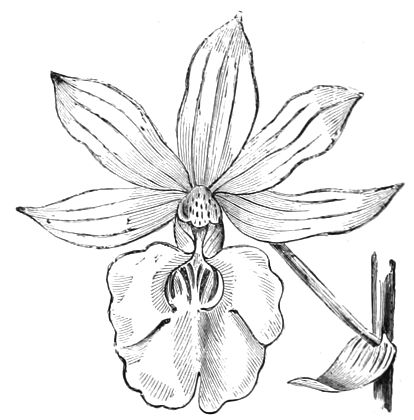
FIG. 317. SINGLE FLOWER OF CALANTHE VEITCHII.
C. Veitchii (Veitch's).* fl. rich bright rose, with a white throat; spikes often attaining a height of 3ft., and bearing an immense quantity of flowers. Winter. l. large, plaited, light green, deciduous. Pseudo-bulbs flask-shaped. This very beautiful hybrid is the result of a cross between C. vestita and C. rosea (SYN. Limatodes rosea). See Fig. 317. (B. M. 5375.)
C. veratrifolia (Veratrum-leaved).* fl. pure white, except the green tips of the sepals and the golden papillæ on the disk of the labellum; spikes 2ft. to 3ft. high, freely produced on well-grown plants. May to July. l. 2ft. or more long, dark green, broad, many-ribbed, with wavy margins. India, 1819. See Fig. 318. (B. M. 2615.)
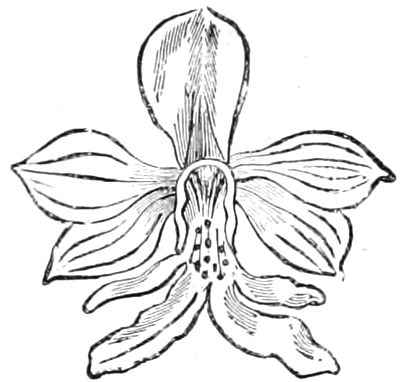
FIG. 318. SINGLE FLOWER OF CALANTHE VERATRIFOLIA.
C. vestita (clothed).* fl., sepals and petals pure white, numerously produced in a many-flowered, nodding spike. l. deciduous. Pseudo-bulbs large, whitish, h. 2½ft. Burmah. (B. M. 4671.) The varieties of this species are very numerous.
C. v. igneo-oculata (fire-eyed).* fl., base of the column purplish, over which is a dazzling fire-colour, the blotch in the base of the lip of the same colour. Borneo, 1876.
C. v. nivalis (snowy).* fl. pure white, entirely destitute of any colour on the lip. Java, 1868.
C. v. rubro-oculata (red-eyed).* fl. delicate white, with a blotch of rich crimson in the centre; upwards of 2in. across; spikes long, drooping, having a white downy covering, and rising from the base of the silvery-green pseudo-bulbs, when the latter are without leaves. October to February.
C. v. Turneri (Turner's).* fl. pure white, with rose-coloured eye, larger, and produced on longer flower-spikes than the other kinds; form of flowers more compact. Java. This is considered by some authorities, to be a distinct species.
CALATHEA (from kalathos, a basket; in reference to the basket-shaped stigma, or to the leaves being worked into baskets in South America). ORD. Scitamineæ. This genus of very ornamental-leaved stove plants is distinguished from Maranta by mere botanical characters; and the two genera are often confounded. Flowers in terminal spikes, bracteate; perianth six-cleft, outer segments lanceolate, inner ones blunt and irregular; stamens three, petal-like. Leaves large, springing from the contracted stem, near the root. They delight in a rich, loose, open soil, consisting of peat, loam, and leaf soil, in about equal proportions, with the addition of a good sprinkling of sand, to keep it open and porous. The mixture should be used in a rough, lumpy state, so that the roots, which are of large size, may be able to travel with freedom. Nearly all the species admit of easy increase by division. July is a favourable time to set about it, or it may be carried out any time between that and the spring months. In order to make the necessary separation without damaging the roots, the plants should be shaken out from the soil, when they may be divided into as many pieces as there are separate crowns. Whether an increased stock be desired or not, Calatheas require fresh soil annually; and, if not reduced by division, they become much too thickly foliaged to properly develop, unless they are shifted into larger-sized pots, which can always be done if large specimens are required. When making divisions, see that each crown is well furnished with roots, so that they may at once commence sending up fresh young foliage. Although Calatheas require an abundant supply of water while growing, a stagnant moisture is most injurious; good drainage is, therefore, essential. To have the leaves in fine, healthy condition, plenty of atmospheric moisture must be maintained during their growth; and, if syringing is resorted to for the purpose of securing this, clear soft water should be used, or an unsightly deposit will be the result, by which the beauty of the plants, unless they are frequently sponged, will be spoiled. These plants require, in addition to plenty of moisture, moderate shade during the summer, as they dislike strong sunshine, and may, therefore, be grown among ferns, under creepers, in situations that would be of little use for other purposes. Calatheas are not subject to insects if properly supplied with water while growing, and a sufficiently moist atmosphere is at all times maintained; but, if either of these are lacking, red spider soon put in an appearance, and quickly disfigure the leaves.
C. applicata (inclined). fl. white. Brazil, 1875. SYN. Maranta pinnato-picta. (B. H. 1875, 18.)
C. arrecta (erect).* l. rich satin-green on the upper side, and heavy ruby colour on the under side. Ecuador, 1872. A fine species, with a very elegant growth. (I. H. 1871, 77.)
C. Bachemiana (Bachem's). l. silvery, with green lines and blotches. Brazil, 1875.
C. Baraquinii (Baraquin's).* l. ovate-lanceolate; ground colour bright green, relieved by beautiful bands of silvery white. Amazons, 1868.
C. bella (handsome).* l. greyish-green, with the margins and two series of central patches deep green. Brazil, 1875. SYN. Maranta tessellata Kegeljani.
C. crocata (saffron-coloured). fl. orange. Brazil, 1875.
C. eximia (choice). 1857. SYN. Phrynium eximium. (R. G. 686.)
C. fasciata (banded).* l. 8in. to 12in. long, 6in. to 8in. wide, broadly cordate; ground colour bright green, with broad bands of white running across from midrib to the margin; the under side pale green, tinged with purple. h. 1ft. Brazil, 1859. (R. G. 255.)
C. hieroglyphica (hieroglyphic). l. broadly obovate, obtuse; ground colour rich dark velvety green, which, towards the midrib, shades off into light emerald green; primary veins oblique, and the spaces between them ornamented with irregular streaks and bars of silvery white; under surface of a uniform dark vinous purple. Columbia, 1873. Dwarf and distinct. (I. H. 1873, 122.)
C. illustris (bright).* l. somewhat obovate; upper surface of a bright pea-green, streaked with transverse bands of a deeper green; midrib pink, with two irregular blotches of white traversing the leaves from base to point, midway between the margin and costa; under surface deep purple. Ecuador, 1866.
C. Kerchoviana (Kerchove's).* l. cordate, oblong, obtuse, shortly and abruptly acuminate, greyish-green, with a row of purplish blotches on each side of the midrib. h. 6in. Brazil, 1879. SYN. Maranta leuconeura Kerchoviana.
C. Legrelliana (Le Grell's). l. very dark green, relieved by a feathery band of white, extending the whole length between the midrib and margin. Ecuador, 1867.
C. Leitzei (Leitze's). l. oblong-lanceolate, deep metallic green, and shining on the upper surface, with feather-like markings of deeper colour, purplish-violet beneath. Brazil, 1875. (R. G. 935.)
C. leopardina (leopard).* l. oblong, pale or yellowish-green, marked on each side of the costa with several oblong acuminate blotches of deep green. h. 2ft. Brazil, 1875. (R. G. 893.)
C. leuconeura (white-nerved). A synonym of Maranta leuconeura.
C. leucostachys (white-spiked). h. 1ft. A fine species, allied to C. Warscewiczii. Costa Rica, 1874. (B. M. 6205.)
C. Lindeni (Linden's).* l. oblong, 6in. to 12in. long, deep green, with blotches of yellowish-green on each side of the midrib; under surface purplish-rose, through which the markings of the upper side are visible. Peru, 1866. Very handsome and free-growing. (I. H. 1871, 82.)
C. Luciani (Lucian's). l. shining green, the midrib festooned with silvery white. Tropical America, 1872.
C. Makoyana (Makoy's).* l. oblong, somewhat unequal-sided, 6in. to 8in. long, upwards of 4in. broad; outer margin deep green, the central portion semi-transparent, beautifully blotched with creamy-yellow and white; the central part is also ornamented between the transverse veins with oblong blotches of deep green; petioles slender, purplish-red. Tropical America, 1872. SYN. C. olivaris. (G. C. 1872, p. 1589.)
C. Massangeana (Massange's).* l. beautifully covered with rich marking, presenting a somewhat similar appearance to the wings of certain butterflies. The outer portion is olive-green; the middle, on both sides of the costa, of a delicate silvery-grey colour, from which the whitish side veins run out in a well-defined and regular manner; the portion of the leaf surrounding the silvery centre is ornamented with large blotches of dark velvety purplish-maroon, occasionally shaded with brownish-crimson; the whole of the leaf being marked with silky and sparkling reflections. Brazil, 1875. It is of neat habit, growing in close tufts, its ample foliage covering the ground.
C. medio-picta (middle painted). l. oblong-acute, tapering to the base, dark green, with a feathered white central stripe. Brazil, 1878.
C. micans (glittering).* l. oblong-acuminate, 2in. to 3in. long, a little over 1in. in breadth, dark shining green, with a white feathery stripe down the centre. Tropical America. The smallest species of the genus with a spreading habit, and quickly forming dense and beautiful tufts. There is a variety of this named amabilis. Brazil.
C. nitens (shining).* l. oblong, green, with a bright glossy surface, marked on each side of the midrib with a series of oblong acute bars, alternating with numerous lines of a dark green on a pale bright green ground. Brazil, 1880. An elegant and small-growing plant.
C. olivaris (olive-green). Synonymous with C. Makoyana.
C. ornata (ornamented).* l. oblong acuminate, 6in. to 9in. long, 3in. or more broad, yellowish-green, relieved by broad transverse bands of dark olive-green; under side tinged with purple. h. 1ft. to 2ft. Columbia, 1849.
C. o. albo-lineata (white-lined). Columbia, 1848. SYN. Maranta albo-lineata.
C. o. majestica (majestic). Rio Purus, 1866. SYN. Maranta majestica.
C. o. regalis (royal). Peru, 1856. SYNS. Maranta regalis and M. coriifolia.
C. o. roseo-lineata (rosy-lined).* h. 1ft. 1848. SYN. Maranta roseo-lineata.
C. pacifica (Pacific). l. oblong ovate, of a fine dark green on the upper surface, olive-brown beneath. Eastern Peru, 1871.
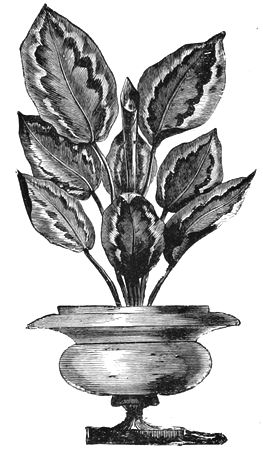
FIG. 319. CALATHEA VEITCHII.
C. pardina (leopard).* fl. yellow, large, handsome, produced in great abundance. l. 10in. to 18in. long, 5in. to 6in. wide, ovate, pale green, with dark brown blotches on each side the midrib, and which occur at regular intervals the whole length of the leaf. New Grenada. (F. d. S. ii., 1101.)
C. prasina (leek-green). l. with a yellow-green central band. Brazil, 1875.
C. princeps (magnificent).* l. 12in. to 18in. long; centre rich dark green, broadly margined with yellowish-green, purple beneath. h. 2ft. to 3ft. Peru, 1869. A superb large-growing species.
C. pulchella (pretty). l. bright green, with two series of deep green blotches, alternately large and small. Brazil, 1859. This much resembles C. zebrina in general appearance, but is not so strong a grower, and the leaves are not so dark.
C. rosea-picta (rose-coloured). l. somewhat orbicular, of a rich glossy green; midrib of a lovely rose-colour, between the margin and midrib are two irregular bands of the same colour, traversing the entire length of the leaf. Upper Amazon, 1866. (R. G. 610.)
C. Seemanni (Seemann's). l. about 1ft. long, 6in. broad, satiny emerald-green; midrib whitish. Nicaragua, 1872.
C. splendida (splendid). l. large, oblong-lanceolate, deflexed, 10in. to 18in. long, rich dark olive-green, with distinct blotches of greenish-yellow. Brazil, 1864.
C. tubispatha (tube-spathed).* l. somewhat obovate, obtuse, 6in. to 12in. long, pale greenish-yellow, beautifully relieved by a row of rich brown oblong blotches, set in pairs on each side of the midrib, throughout the entire length of the leaf. West Tropical America, 1865. An elegant species. (B. M. 5542.)
C. Vanden Heckei (Van den Heck's).* l. rich dark glossy green, shaded with transverse bands of a lighter green; midrib broadly margined with silvery-white, two bands of the same colour traverse the leaf from base to apex, midway between midrib and margin; under side of a uniform purplish-crimson. Brazil, 1865. Very distinct and handsome.
C. Veitchii (Veitch's).* l. large, ovate elliptic, over 1ft. long, very rich glossy green, marked along each side the midrib with crescent-shaped blotches of yellow, softened by shades of green and white; under surface light purple. h. 3ft. W. Tropical America, 1865. Probably the handsomest of the genus. See Fig. 319.
C. virginalis (virginal). l. large, broadly ovate, light green; midrib white, also with a white band on each side; the under side of a greyish-green. Amazons, 1857. Habit dwarf and compact.
C vittata (striped). l. ovate-acuminate, 9in. long, very light green, with narrow transverse bars of white on each side of the midrib. Brazil, 1857.
C. Wallisii (Wallis's).* l. rather large, of a rich and pleasing light green, beautifully relieved with a ray of rich dark green. South America, 1867. A handsome and distinct sort, but somewhat rare.
C. W. discolor (two-coloured). l. bright velvety green, with the centre and margins grey. South America, 1871.
C. Warscewiczii (Warscewicz's).* l. 2ft. long, about 8in. wide, deep velvety green in colour, relieved by a feathery stripe of yellowish-green on either side the midrib, and extending from the base to the apex. h. 3ft. Tropical America, 1879. A fine sort. (R. G. 515.)
C. Wioti (Wiot's). l. bright green, with two series of olive-green blotches. Brazil, 1875.
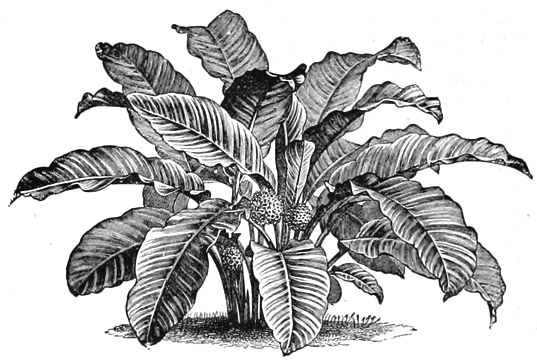
FIG. 320. CALATHEA ZEBRINA.
C. zebrina (zebra).* l. 2ft. to 3ft. long, 6in. to 8in. wide, beautiful velvety light green on the upper side, barred with greenish-purple; under side of a dull greenish-purple. h. 2ft. Brazil, 1815. This is a very old inhabitant of our stoves, and, for general usefulness is not much surpassed. See Fig. 320. (B. R. 385.)
CALATHIAN VIOLET. See Gentiana Pneumonanthe.
CALCARATE. Spurred, or having a spur.
CALCEOLARIA (from calceolus, a little slipper, in allusion to the form of the corolla; the form calceolarius, shoemaker, probably chosen to include a reference to F. Calceolari, an Italian botanist of the sixteenth century). Slipperwort. ORD. Scrophularineæ. A genus of hardy or half-hardy shrubs, sub-shrubs or herbs. Peduncles one or many-flowered, axillary or terminal, corymbose; corolla with a very short tube; limb bilabiate; upper lip short, truncately rounded, entire; lower lip large, concave, slipper-shaped. Leaves opposite, sometimes three in a whorl, rarely alternate.
SHRUBBY SECTION. In addition to the widely-known utility of this class for bedding purposes, they are fine decorative plants when well grown, and useful alike in conservatory or dwelling house. It will be found more convenient to grow these in a pit or frame, as in such places they are less liable to the attacks of fly, and make sturdier growth. If large plants are required, cuttings should be taken in August, placed in a cold frame facing the north, in sandy soil, and, when rooted, potted off into 3in. pots. They should then be placed in a light sunny frame, where they may remain until the middle of February. The points should then be pinched out. When the plants break, they must be shifted into 48-sized pots. If there are from four to six breaks to each plant, it will be sufficient; but, should such not be the case, the plants must be stopped again, when the requisite number will probably be obtained. Directly the roots touch the pots, the plants should be transferred to 7in. or 8in. pots, in which they will flower, and the shoots must be tied out so as to develop fully. Every effort should be exerted to keep the foliage green to the base of the plants, and they should be fumigated on the first appearance of green fly. As the flower-spikes are thrown up, weak liquid manure, applied two or three times a week, will prove beneficial. For potting, the following compost is most suitable: One-half good fibrous loam, one-eighth thoroughly rotted manure, and the remainder leaf soil, with enough sharp sand to keep the whole open. During frosty weather, of course, it will be necessary to protect the frames with mats, and to water judiciously, to avoid damping. Those plants intended for bedding will not require to be repotted, but should be inserted, about 3in. apart, in sandy soil, in a cold frame. The tops must be taken off early in March; and from the middle of April to the middle of May, they may be planted out where they are to remain. Should frosty weather, accompanied by drying winds, ensue, the plants will require the protection of inverted flower-pots, with pieces of slate or crock placed over the holes. A good soil, abundantly enriched with rotten manure, is most desirable for them.
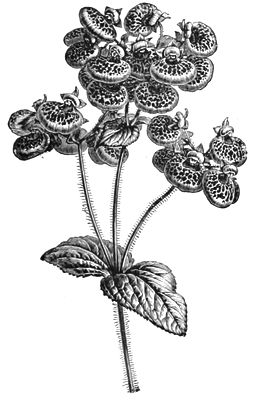
FIG. 321. HERBACEOUS CALCEOLARIA.
Varieties. These are very numerous. The best of them are the following: BIJOU, dark red, very free; GAINE'S YELLOW, rich deep yellow, extremely free; GENERAL HAVELOCK, crimson-scarlet, very fine; GOLDEN GEM, bright yellow, perhaps the best; SPARKLER, crimson-gold, dwarf; VICTORIA, dark maroon, very attractive.
HERBACEOUS SECTION. These, like the preceding, are very useful, both for house and conservatory decoration (see Fig. 321). A packet of seed from a first-class firm will, if properly managed, produce a good percentage of excellent flowers. The seed may be sown from June to August, when large batches are required (when only one sowing is made, July will be the best month), on pans of light, sandy soil, which should be soaked with water before sowing. Care must be taken to make the surface of the soil level, and also to sow the seed as evenly as possible. It is better not to cover with soil, but a sheet of glass should be laid over the pan, which must be placed in a shady part of the greenhouse or cold frame until the young plants show the first leaf. The glass can then be gradually removed. When large enough to handle, the seedlings must be pricked out, about 2in. asunder, in pans or boxes, and placed in a close, shaded situation. As soon as of sufficient size, they must be placed singly in 3in. pots, returned to the frame, kept close for a few days, and as near the glass as possible, to make them sturdy. When necessary, they should be shifted into 5in. pots, in which they may be kept through the winter; or the later batches may be placed in small pots. By the end of October or early in November, the plants will be strong and fit for wintering; at this stage, the best place for them is in a dry, frost-proof pit, or on an airy shelf of the greenhouse, giving them sufficient water to prevent flagging. All dead leaves must be removed. On the first appearance of green fly, the plants should be fumigated with tobacco. From the end of January onwards, in order to encourage growth, the plants should be removed into 7in. or 8in. pots, giving plenty of drainage, and a compost consisting of one-half good light fibrous loam, one-fourth thoroughly decayed sheep manure, and one-fourth leaf soil, to which must be added sufficient coarse sand to keep the whole open. After potting, the plants must be again placed in the same position, and, as they require it, plenty of room given. Careful attention to watering is necessary, as they must not be allowed to get dry. Air must be given on all suitable occasions. The flower-stems, as they require it, should be supported with small neat sticks. About May, the plants will commence to bloom, and continue to do so for a couple of months. The best flowers should be selected, and cross-fertilised with a camel-hair pencil, in order to produce a good strain of seed for future sowing. The attention of horticulturists appears to be almost wholly confined to the innumerable hybrids raised from amplexicaulis, arachnoidea, corymbosa, integrifolia, purpurea, thyrsiflora, and a few others. Very few pure species are seen in cultivation, although most of them are well worth growing.
C. alba (white). fl. white; peduncles elongated, racemose, dichotomous. June. l. linear, remotely serrated. Plant suffruticose, clammy, and resinous. h. 1ft. Chili, 1844. Shrubby. (B. M. 4157.)
C. amplexicaulis (stem-clasping).* fl. yellow, umbellately fascicled; corymbs terminal; pedicels pilose. l. stem-clasping, ovate-oblong, acuminated, cordate, crenately-serrated, pilose. h. 1½ft. Peru, 1845. Half-hardy, herbaceous. (B. M. 4300.)
C. arachnoidea (cobwebby).* fl. purple; peduncles terminal, twin, elongated, dichotomous. June to September. l. lingulately-oblong, a little toothed, narrowing downwards into long winged petioles, which are connate at the base; about 5in. long, wrinkled. Stem herbaceous, branched, spreading, clothed with white cobwebbed wool, as well as the leaves and other parts, except the corolla. h. 1ft. Chili, 1827. (B. M. 2874.)
C. bicolor (two-coloured).* fl. in large terminal cymes; upper lip yellow, small; lower lip large, gaping, conchiform, the front clear yellow, the back white. July to November. l. broadly-ovate, sub-acute, coarsely crenated, wrinkled. h. 2ft. to 3ft. Stem much branched, woody at the base. Peru, 1829. SYN. C. diffusa. (B. R. 1374.)
C. Burbidgei (Burbidge's).* fl. rich yellow, with large lower lip. Autumn and winter. l. ovate, distinctly obtusely biserrate, sub-acute, with a narrow wing running down the petiole; both surfaces downy. h. 2ft. to 4ft. This is a handsome hybrid between C. Pavonii and C. fuchsiæfolia, raised by F. W. Burbidge, Esq., Trinity College Botanic Gardens, Dublin, 1882.
C. chelidonioides (Chelidonium-like). fl. yellow. June. h. 1ft. Peru, 1852. Annual.
C. corymbosa (corymbose). fl. yellow, marked with purple dots and lines, corymbose. May to October. l., radical ones ovate and cordate, petiolate, doubly crenated, white beneath; cauline ones few, cordate, half amplexicaul. Stems herbaceous, leafless at bottom, but dichotomous and leafy at top. Plant hairy. h. 1ft. to 1½ft. Chili, 1822. (B. R. 723.)
C. deflexa (bending). Synonymous with C. fuchsiæfolia.
C. diffusa (spreading). A synonym of C. bicolor.
C. flexuosa (flexuose). fl., corolla yellow; lower lip large, ventricose; peduncles axillary and terminal, many-flowered; pedicels umbellate. l. cordate, unequally and bluntly crenated, petiolate, remote. Plant shrubby, rough, beset with glandular hairs. h. 3ft. Peru, 1847. (B. M. 5154.)
C Fothergillii (Fothergill's).* fl., upper lip of corolla yellowish; lower lip sulphur colour, having the margins spotted with red, four times the size of the upper one; peduncles scape-formed, one-flowered. May to August. l. spathulate, quite entire, pilose above, about 1in. long. Stem herbaceous, a little divided near the root. h. 3in. to 6in. Falkland Islands, 1777. (B. M. 348.)
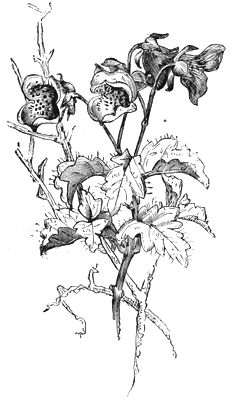
FIG. 322. CALCEOLARIA VIOLACEA.
C. fuchsiæfolia (Fuchsia-leaved).* fl. yellow, disposed in terminal panicles; upper lip nearly as large as the lower one. Spring. l. lanceolate, glandless. h. 1ft. to 2ft. Peru, 1878. This is a very handsome winter-flowering shrubby species, but it is difficult to keep the foliage in anything like good condition. SYN. C. deflexa. (Garden, March, 1879.)
C. Henrici (Anderson-Henry's). fl. yellow, disposed in terminal corymbose cymes; both lips of corolla much inflated, so as to entirely close the mouth. l. rather large, elongate-lanceolate, downy beneath. h. 2ft. Andes of Cuenca, 1865. Shrubby evergreen. (B. M. 5772.)
C. hyssopifolia (Hyssop-leaved).* fl. in terminal cymes; upper lip clear yellow, about half the width of the lower, and meeting closely to it; lower lip clear canary-yellow above, nearly white beneath. May to August. l. sessile, linear-lanceolate, sub-acute, entire. h. 1ft. to 2ft. Chili. Shrubby. (B. M. 5548.)
C. integrifolia (entire-leaved). Synonymous with C. rugosa.
C. lobata (lobed). fl. yellow, disposed in erect, loosely-branched cymes; lip curiously folded on itself, and spotted on the inner surface. l. palmately lobed. h. 9in. Peru, 1877. Herbaceous species. (B. M. 6330.)
C. Pavonii (Pavon's).* fl. rich yellow and brown, in large terminal clusters; upper lip small; lower lip large, widely gaping. l. perfoliate, the petioles connected by a broad wing, running all their length; blade broadly ovate, coarsely serrate-dentate; both sides covered with soft down. h. 2ft. to 4ft. Herbaceous. (B. M. 4525.)
C. pinnata (pinnate). fl. sulphur-coloured; peduncles twin or tern, panicled. July to September. l. pinnate; leaflets or segments toothed, lower ones pinnatifidly toothed. h. 2ft. to 3ft. Peru, 1773. Annual, clothed with clammy hairs. (B. M. 41.)
C. pisacomensis (Pisacomanese). fl. rich orange-red, large; lower lip of corolla so bent upwards as to close the mouth; cymes produced from all the upper axils, forming long leafy panicles. l. ovate, obtuse, coarsely crenate. h. 3ft. Peru, 1868. A sub-shrubby perennial, of strong, erect habit.
C. plantaginea (Plantain-like).* fl. yellow; lower lip of corolla large, hemispherical; upper one small, bifid; scapes generally two to three-flowered, pilose. August. l. radical, ovate, rhomboid, rosulate, serrated. Plant herbaceous, stemless, pubescent. h. 1ft. Chili, 1826. (B. M. 2805.)
C. purpurea (purple). fl., corolla of an uniform reddish-violet, rather small; corymbs terminal, many-flowered. July to September. l. wrinkled, hispid; radical ones cuneate-spathulate, serrated, quite entire behind, petiolate, acutish; cauline ones cordate, decussate, with a few long scattered hairs on their surfaces. Stems herbaceous, many from the same root. h. 1ft. Chili, 1826. There are several hybrids between this and other species. (B. M. 2775.)
C. rugosa (wrinkled). fl. yellow; panicles terminal, corymbose, pedunculate. August. l. ovate-lanceolate, or lanceolate, denticulated, wrinkled, opaque, rusty beneath; petioles winged, connate. h. 1ft. to 1½ft. Chili, 1822. Shrubby species. SYN. C. integrifolia. (B. R. 744.) Two varieties of this are angustifolia, and viscosissima.
C. scabiosæfolia (Scabious-leaved).* fl., corolla pale yellow; lower lip large, ventricose; peduncles terminal, corymbose. May to October. l., lower ones pinnate; superior ones pinnatifid, three-lobed, or simple, the terminal segment always the largest. Plant rather hairy. Peru, 1822. Evergreen trailer. (B. M. 2405.)
C. tenella (small). fl. golden yellow, with orange-red spots within the lower lip; corymbs few-flowered. l. opposite, ovate, acuminated. h. 6in. Chili, 1873. Hardy, herbaceous. (B. M. 6231.)
C. thyrsiflora (thyrse-flowered). fl. yellow, downy inside; thyrse terminal, crowded; peduncles compound, umbellate. June. l. linear, attenuated at both ends, serrate-toothed, sessile, 2in. long, and two lines broad. h. 1ft. to 2ft. Chili, 1827. Shrubby, clammy. (B. M. 2915.)
C. violacea (violet).* fl., corolla pale violet, spotted with deeper violet beneath; lip spreading in a campanulate manner; peduncles terminal by threes, corymbose; pedicels one to two-flowered. June. l. petiolate, ovate-lanceolate, coarsely serrated, white beneath. h. 2ft. Chili, 1853. Shrubby. (B. M. 4929.) See Fig. 322.
CALCEOLATE. Shaped like a slipper or round-toed shoe.
CALDASIA. See Galipea heterophylla.
CALDCLUVIA (named after Alexander Caldcleugh, F.R.S. and F.L.S., who collected and sent to this country many plants from Chili). ORD. Saxifrageæ. A greenhouse evergreen tree. Flowers panicled, terminal. Leaves opposite, simple, serrate, glabrous; pedicels jointless; stipules twin, sub-falcate, toothed, caducous. It thrives well in a compost of peat and loam, and may be propagated by cuttings of the half-ripened shoots, planted in sand, under a hand glass, and placed in a very gentle bottom heat.
C. paniculata (panicled). fl. white. June. Chili, 1831.
CALEA (from kalos, beautiful; referring to the flowers). ORD. Compositæ. A genus of stove evergreen herbs or small shrubs. Pappus hairy; receptacle paleaceous; involucre imbricated. They thrive in a compost of peat and loam. Side shoots root readily, if placed in sand, under glass, and with bottom heat; seeds may be sown in March. Warmer parts of New World.
CALEANA (named after G. Caley, Superintendent of the Botanical Garden, St. Vincent). ORD. Orchideæ. A genus of greenhouse terrestrial orchids, natives of Australia. Flowers few, greenish-brown; column broad, thin, concave; sepals and petals narrow, reflexed; lip posticous, peltate, unguiculate, highly irritable. In fine weather, or if left undisturbed, this lip bends back, leaving the column uncovered; but in wet weather, or if the plant is shaken, the lip falls over the column, securely fastening it. Leaves solitary, radical. They are of easy culture, in a compost of fibry peat, lumpy loam, and a little charcoal.
B. major (greater). fl. green-brown. June. 1810.
C. minor (less). fl. green-brown. June. 1822.
C. nigrita (blackish-flowered). fl. dark.
CALECTASIA (from kalos, beautiful, and ektasis, extension; in allusion to the star-like perianth segments). ORD. Juncaceæ. An elegant greenhouse suffruticose perennial, with dry, permanent, starry flowers. It thrives best in a compost of peat and loam. Propagated by divisions.
C. cyanea (blue). fl. bright blue, solitary, on short terminal branches. June. l. needle-shaped, sheathing at the base. Australia, 1840. (B. M. 3834.)
CALENDULA (from calendæ, the first day of the month; in allusion to the almost perpetual flowering). Marigold. ORD. Compositæ. A genus of showy greenhouse and hardy annuals, and some few greenhouse shrubby species. Pappus none; receptacle naked; involucre of one or two series of sub-equal, acuminate, generally scarious-edged bracts. The shrubby species are propagated by cuttings, and thrive best in a compost of loam and peat.. For culture of the annuals, see Marigold.
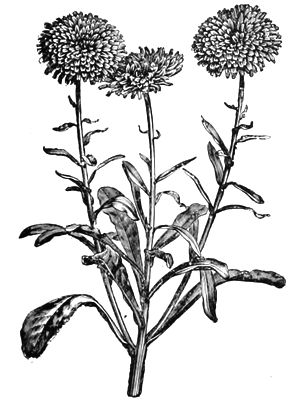
FIG. 323. FLOWERS OF CALENDULA OFFICINALIS.
C. arvensis (field). fl.-heads yellow. Pericarps urceolate, obovate, smooth; outer lanceolate-subulate, muricated at back. h. 2ft. Europe, 1597. Hardy annual.
C. maderensis (Madeira).* fl.-heads orange. Pericarps cymbiform, incurved, muricated; outer five ovate-lanceolate, membranous, toothed at edge. h. 2ft. Madeira, 1795. Hardy. SYN. C. stellata.
C. officinalis (officinal).* Common Marigold. fl.-heads orange. June to September. Pericarps cymbiform, all incurved, muricated. h. 3ft. South Europe, 1573. Hardy annual. See Fig. 323.
C. o. prolifera (proliferous). A garden form, analogous to the Hen and Chickens Daisy. See Fig. 324.
C. stellata (stellate). A synonym of C. maderensis.
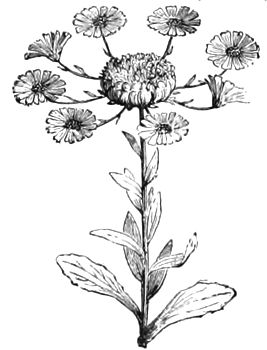
FIG. 324. FLOWER OF CALENDULA OFFICINALIS PROLIFERA.
CALICO BUSH. See Kalmia latifolia.
CALIFORNIAN EVERGREEN REDWOOD. See Sequoia sempervirens.
CALIFORNIAN MAYBUSH. See Photinia arbutifolia.
CALIFORNIAN PEPPER-TREE. See Schinus Molle.
CALIFORNIAN POPPY. See Platystemon californicus.
CALIPHRURIA (from kalos, beautiful, and phroura, prison; from the handsome spathe inclosing the flowers). ORD. Amaryllideæ. Pretty half-hardy greenhouse bulbs. Tube of perianth narrow, funnel-shaped, nearly straight; limb regular, stellate; stamens furnished with a bristle on each side. They thrive best in a compost of sandy loam, a little peat, leaf soil, and sand. Propagated by offsets. After flowering, the plants should have a slight heat; and, when starting into new growth, should be repotted.
C. Hartwegiana (Hartweg's).* fl. greenish-white; umbels seven-flowered; scape nearly terete, glaucous. May. l. petiolate, depressed, ovate, sub-plicate, green. h. 1ft. New Grenada, 1843. (B. M. 6259.)
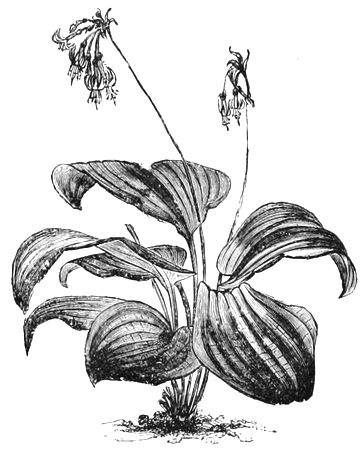
FIG. 325. CALIPHRURIA SUBEDENTATA.
C. subedentata (rarely-toothed).* fl. white, funnel-shaped, disposed in a truss, on a long scape. Winter. l. stalked, ovate-oblong. h. 1½ft. Columbia, 1876. See Fig. 325. (B. M. 6289.)
CALISAYA BARK. See Cinchona Calisaya.
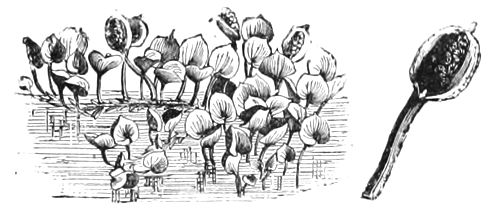
FIG. 326. CALLA PALUSTRIS, showing Habit and detached Inflorescence.
CALLA (from kallos, beauty). SYN. Provenzalia. ORD. Aroideæ (Araceæ). A monotypic genus. The species is a native of Central and Northern Europe and North America, has creeping or floating stems, and cordate entire leaves. C. palustris is sometimes grown in collections of aquatics or bog plants; and, although, perhaps, hardly worth cultivating as a pot plant, is well worth a place in open ornamental waters. Richardia æthiopica is frequently erroneously called Calla æthiopica.
C. palustris (marsh). fl., spadix protected by a flat white spathe, upper ones female, lower hermaphrodite, with numerous thread-like stamens. l. stalked, emerging from a sheath. h. 6in. Hardy aquatic, naturalised here and there in Britain. See Fig. 326.
CALLI. Small callosities, or little protuberances.
CALLIANDRA (from kallos, beauty, and andros, a stamen; referring to the elegant long, silky, purple or white stamens). ORD. Leguminosæ. A genus of beautiful stove evergreen shrubs. Flowers usually borne on stalked globose heads; corollas small, hidden by the numerous filaments of the stamens. Leaves bipinnate; leaflets varying in size and number. They thrive in a compost of peat and loam. Propagated by cuttings of rather firm young wood, inserted in sand, under a hand glass, in heat.
C. Harrisii (Harris's). fl. pink; peduncles axillary, fascicled, glandularly downy. February. l. bipinnate; leaflets obovate, falcate, downy; stipules small, falcate. Branches puberulous. h. 10ft. Mexico, 1838. (B. M. 4238.)
C. Tweediei (Tweedie's).* fl. red; peduncles longer than the petioles; bracts linear. March and April. l. with three or four pairs of pinnæ; leaflets numerous, oblong-linear, acutish, ciliated, pilose beneath; stipules ovate, acuminate. Branches and petioles pilose. h. 6ft. Brazil, 1840. (B. M. 4188.)
CALLICARPA (from kallos, beauty, and karpos, fruit; referring to the beautiful berries). SYN. Porphyra. ORD. Verbenaceæ. A genus of stove, greenhouse, or nearly hardy evergreen shrubs, closely allied to Petræa. Flowers inconspicuous, disposed in axillary cymes; corolla-tube short, with the limb four-lobed. Fruit a very ornamental small juicy berry or drupe. The following mode of culture has been recommended: "After the old plants have been cut back in the spring, and started into growth, the young shoots will strike as readily as a Fuchsia, and with exactly the same treatment. In order to make good plants, short-jointed cuttings should be selected; and, as soon as these are struck, they should be potted into 2½in. pots, using a compost of equal parts loam and peat, with a little charcoal and river sand. When they commence to grow, after being potted, remove to a pit or house with a temperature ranging from 60deg. to 75deg. Pinch out the tops of the plants as soon as they have three pairs of leaves, and whenever each of the laterals has made two pairs of leaves, pinch out their points, and continue this operation with all the rest of the shoots till the beginning of August, at the same time keeping off all the flower-buds. The next shift will be into 4in. or 5in. pots. They should always have plenty of light and air, but more especially after they come into flower."
C. americana (American). fl. red, small, in axillary cymes. Berries violet-coloured. l. ovate-oblong, toothed, silvery beneath, with a scurf of tomentum. h. 6ft. South America, 1724. Greenhouse.
C. japonica (Japanese). fl. pink. August. l. stalked, ovate, oblong, acuminate, serrate. h. 3ft. Japan, 1850. Stove. (L. & P. F. G. ii., p. 165.)
C. lanata (woolly). fl. purplish. June. Berries purple. l. sessile, ovate, acuminate, serrate, hairy beneath. h. 3ft. India, 1788. Stove. (S. F. d. J. 1861, p. 96.)
C. purpurea (purple). fl. insignificant, borne in cymose clusters, upon axillary footstalks. Berries very numerous, bright glossy deep violet coloured. l. opposite, ovate, acuminate; edges serrated; profusely clothed, as well as the stem, with hairs. h. 3ft. India, 1822. Stove. (Garden, June, 1833.)
C. rubella (reddish). fl. red. May. l. sessile, obovate, acuminate, cordate at the base, hairy on both surfaces. h. 2ft. China, 1822. Half-hardy. (B. R. 883.)
CALLICHROA (from kallos, beauty, and chroa, colour; referring to the bright yellow colour of the flowers). ORD. Compositæ. This genus is now usually included under Layia. Hardy annual, of easy culture in common garden soil. Seeds may be sown in March, on a slight hotbed, and transplanted to the open border early in May; or if sown out of doors in April, it will flower in the autumn.
C. platyglossa (broad-tongued). fl.-heads yellow, solitary, pedunculate; ray florets large, cuneate. Autumn. l. alternate, sessile, ciliated. h. 1ft. California, 1836. SYN. Layia platyglossa. (B. M. 3719.)
CALLICOMA (from kallos, beauty, and kome, hair; in reference to the tufted heads of flowers). ORD. Saxifrageæ. A greenhouse evergreen shrub. Flowers capitate; heads terminating the tops of the branchlets, pedunculate, globose. Leaves simple, coarsely serrated, stalked. Stipules membranous, bidentate, caducous. It thrives well in a sandy peat soil. Half ripened cuttings will root if placed in the same sort of soil, under a hand glass.
C. serratifolia (saw-leaved). Black Wattle. fl. yellow. May to August. l. lanceolate, acuminate, hoary beneath, attenuated at the base. h. 4ft. New South Wales, 1793. (B. M. 1811.)
CALLIGONUM (from kallos, beauty, and gonu, a knee-joint; in reference to its leafless joint). ORD. Polygonaceæ. SYNS. Pallasia, Pterococcus. A genus containing about a score species of very curious, erect, evergreen, hardy shrubs, found growing in dry, arid, sandy spots in Northern Africa and Western Asia. They will thrive in any well-drained sandy loam. Cuttings will root in spring or autumn if placed under a hand glass.
C. Pallasia (Pallas's). fl. whitish, in groups. May. fr. winged; wings membranous, curled and toothed, succulent, acid, edible. l. simple, alternate, exstipulate, deciduous, caducous, minute. Shoots rush-like, smooth, green. h. 3ft. to 4ft. Caspian Sea, 1780.
CALLIOPSIS. See Coreopsis.
CALLIPRORA (from kallos, beauty, and prora, a front; referring to the front view of the flower). ORD. Liliaceæ. A very pretty little bulbous plant, now often referred to Brodiæa. It thrives in a well-drained spot on the lower flanks of rockwork, in dry, rich, sandy soil. Propagated by offsets, which should remain on the parent bulbs until they are a good size.
C. lutea (yellow).* Pretty Face. fl., segments purplish-brown in the middle on the outside. Summer. l. linear-lanceolate, acuminated, channelled, longer than the flower-stem; bracts sheathing, scarious, much shorter than the pedicels. h. 9in. North California, 1831. SYNS. Brodiæa ixioides, Milla ixioides. (B. M. 3588.)
CALLIPSYCHE (from kallos, beauty, and psyche, a butterfly; alluding to the handsome flowers). ORD. Amaryllidaceæ. Ornamental greenhouse bulbs; requiring shade, and a compost of rich sandy loam and leaf mould, with good drainage. Propagated by seeds and offsets. They should have plenty of water when growing, and, during the winter, be kept moderately dry, but not dried off, so as to cause them to shrivel. As the leaves wither, water should be gradually withheld.
C. aurantiaca (orange).* fl. deep golden-yellow, several in an umbel, spreading, much flattened sideways; stamens green, twice the length of the perianth; scape erect, nearly 2ft. high. l. few, oblong-acute, bright green, conspicuously veined, stalked, 6in. long. Andes of Ecuador, 1868. (Ref. B. 167.)
C. eucrosiodes (Eucrosia-like).* fl. scarlet and green; stamens very long, incurved; scape about ten-flowered, glaucous. March. l. few, green, tessellated, pitted, 4in. wide. h. 2ft. Mexico, 1843. (B. R. 1845, 45.)
C. mirabilis (wonderful)*, fl. greenish-yellow, small, with stamens three times as long as the perianth, and spreading out on all sides; disposed in an umbellate head of about thirty blooms; scape 3ft. high. l. about two, oblong-spathulate, green, 1ft. long. Peru, 1868. An extremely curious plant. (Ref. B. 168.)
CALLIPTERIS (from kallos, beauty, and pteris, a fern). ORD. Filices. A genus of stove ferns, founded upon the sub-genus Diplazium, which is now included under Asplenium.
CALLIRHOE (of mythological origin, from Callirhoe, a daughter of the river-god Achelous). Poppy-Mallow. Allied to Malva. Species belonging to this genus have been erroneously referred to Malva and Nuttallia. ORD. Malvaceæ. A genus of elegant annual or perennial herbs, natives of North America. They are of extremely easy cultivation, thriving in a compost of light, rich, sandy loam. Propagation of the perennial species may be effected by means of both seeds and cuttings; of the annuals, by seeds only. Seeds should be sown in spring, either outside, or in pans in a cold frame. Young cuttings should be taken and dibbled in sandy soil in a frame.
C. digitata (fingered).* fl. reddish-purple; peduncles long, axillary, one-flowered. Summer. l. sub-peltate, six to seven-parted, with linear-entire or two-parted segments; upper ones more simple. h. 2ft. to 3ft. 1824. Perennial. (S. B. F. G. 129, under the name of Nuttallia digitata.)
C. involucrata (involucrate).* fl. crimson, nearly 2in. across, loosely panicled. Summer. l. divided nearly to the base, three to five-parted; segments narrow, lanceolate, three to five-toothed, hairy on both surfaces. Habit procumbent; stems hairy. h. 6in. Perennial. (G. W. P. A. 26.) SYN. Malva involucrata (B. M. 4681).
C. Papaver (Poppy-like).* fl. violet-red; sepals ovate-acute, ciliated. Summer. l., root leaves lobed or pedate; lower stem leaves palmato-pedate, upper digitate or simple. h. 3ft. Louisiana, 1833. Perennial. SYN. Nuttallia Papaver. (B. M. 3287.)
C. pedata (pedate-leaved). fl. cherry-red, panicled. August. l. laciniately-pedate; upper ones trifid. h. 2ft. to 3ft. 1824. Annual. (R. H. 1857, 148.)
C. triangulata (triangular-leaved). fl. pale purple. August. 1836. Perennial. SYN. Nuttallia cordata (under which name it is figured in B. R. 1938).
CALLISTACHYS. See Oxylobium.
CALLISTEMMA. See Callistephus.
CALLISTEMON (from kallos, beauty, and stemon, a stamen; in most of the species, the stamens are of a beautiful scarlet colour). ORD. Myrtaceæ. Handsome greenhouse evergreen shrubs or trees, having the inflorescence rising from the old branches in crowded spikes, as in the species of Melaleuca, but with the stamens free, as in Metrosideros. Leaves elongated, stiff, alternate, usually lanceolate. All the species of this genus are very ornamental and neat in habit. They are well adapted for a conservatory. The soil best suited for them is a mixture of loam, peat, and sand. Ripened cuttings strike root in sand, under a hand glass; seeds are frequently produced on large plants, and these may also be used to increase the stock, but they do not produce flowering plants for a considerable time; whereas plants raised from cuttings, taken from flowering plants, come into flower when small.
C. linearis (linear-leaved).* fl. scarlet; calyces clothed with velvety pubescence. June. l. linear, stiff, acute, keeled beneath, channelled above, villous when young. h. 4ft. to 6ft. New South Wales, 1788.
C. lophanthus (crest-flowered). Synonymous with C. salignus.
C. salignus (willow). fl. straw-coloured, distinct, spicate, nearly terminal; petals rather pubescent, ciliated; calyx pilose. June to August. l. lanceolate, attenuated at both ends, mucronate, one-nerved, villous when young, as well as the branches. h. 4ft. to 6ft. Australia, 1806. SYN. C. lophanthus. (L. B. C. 1302.)
C. speciosus (showy).* fl. scarlet; calyx villous. March to July. l. lanceolate, mucronate, flat, middle nerve rather prominent; when young, rather silky from adpressed villi, and reddish. h. 5ft. to 10ft. West Australia, 1823. SYN. Metrosideros speciosa. See Fig. 327. (B. M. 1761.)
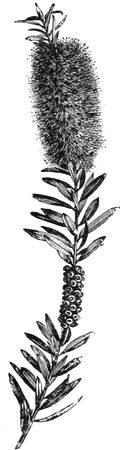
FIG. 327. CALLISTEMON SPECIOSUS.
CALLISTEPHUS (from kallistos, most beautiful, and stephos, a crown; in allusion to the appendages on the ripe fruit). China Aster. SYN. Callistemma. ORD. Compositæ. A hardy annual, requiring an open situation and a rich loamy soil. Involucre of many fringed bracts; receptacle naked, pitted; pappus double. Propagated by seed, sown in a hotbed in March, the seedlings being hardened off and transplanted in May. For culture of these much grown plants and their varieties, see Aster.
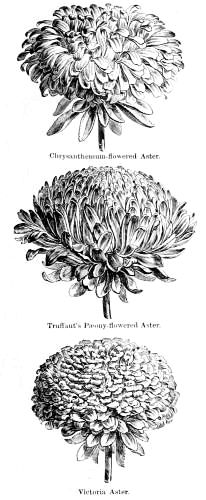
Chrysanthemum-flowered Aster.
Truffaut's Pæony-flowered Aster.
Victoria Aster.
FIG. 328. FLOWER-HEADS OF CALLISTEPHUS CHINENSIS VARS.
C. chinensis (Chinese).* fl-heads dark purple. July. l. ovate, coarsely toothed, stalked; stem ones sessile, cuneate at the base. Stem hispid. Branches with single heads. h. 2ft. China, 1731. See Fig. 328.
CALLITRIS (probably altered from kallistos, most beautiful; referring to the whole plant). ORD. Coniferæ. SYN. Frenela. Half-hardy evergreen shrubs or small trees, with long, very slender-jointed branches, and often very minute, scale-like, persistent leaves. Flowers monœcious. Fruit globular, composed of four to six—rarely eight—unequal, woody, valvate scales, with one or two seeds at the base of each. All the species are somewhat tender, in England, except in the more southern districts. They require a sandy loam compost. Propagated by cuttings, inserted under a handlight in autumn, and protected by a cold pit; or by seeds.
C. quadrivalvis (four valved). Arar-tree; Sandarach Gum-tree. fl., female catkin tetragonal, with four oval valves, each furnished with a point, and two of which bear seeds. February to May. l. flattened, articulate. h. 15ft. to 20ft. Barbary, 1815.
CALLIXENE. See Luzuriaga.
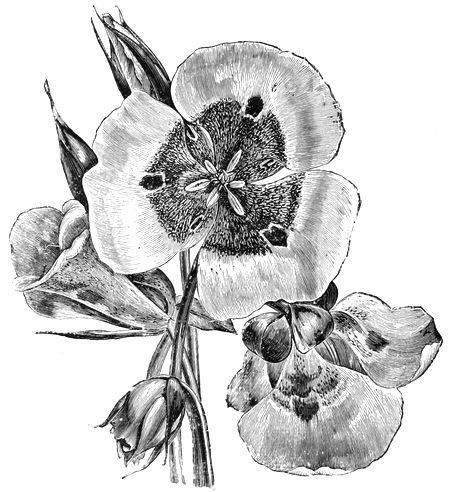
FIG. 329. FLOWERS AND LEAVES OF CALOCHORTUS VENUSTUS.
CALLOSE. Callous, hardened.
CALLOUSLY-GLANDULAR. Having hardened glands.
CALLOUSLY-SERRATED. Having hardened serratures.
CALLUNA (from kalluno, to sweep, from the use of the plant in brooms). Common Ling; Heather. ORD. Ericaceæ. A small hardy spreading shrub, very common throughout Northern and Central Europe. Corolla campanulate, four-lobed, shorter than the calyx. For culture, see Erica.
C. vulgaris (common).* fl. disposed in long, terminal, spicate racemes. July to September. l. trigonal, obtuse, very short, imbricating in four rows, having the margins revolute and the base sagittate. h. 1ft. to 3ft. Britain. There are numerous very ornamental varieties of this species, which are admirably adapted for planting in borders and clumps. The white-flowered (alba, Serlii, and Hammondi), flesh-coloured (carnea), and double-flowered varieties (fl.-pl.) are all well worth growing in shrubberies; aurea and argentea, with gold and silver coloured shoots, are also very ornamental. The value of the common form can scarcely be over-estimated for planting on barren hill sides or spaces; it affords excellent shelter for game, and food for bees.