Chapter XIII · CATHERINE DE’ MEDICI AND THE RELIGIOUS WARS
Reading edition
The lance-thrust with which Montgomery struck down Henry II in the tournament of June 29th, 1559, was to change the aspect of France. The reign so rudely interrupted in the midst of festivities had not always been happy or brilliant, but it had maintained an appearance of grandeur. The reigns of which it led the sorrowful series, could not bring it the same honour or the same profit. It was no longer the question as to who should have the first place in Europe, the house of France or that of Austria; but who in France would gain by the unchained religious passions—the Guises or the Bourbons. In future it is no longer a question of fighting the Spanish or the English; when they are mentioned, it will be to open the French frontiers to them and have them take part in the country’s struggles.—De Lacombe.b
[1559-1589 A.D.]
Voltaire—struck with the violent contrast between the misery and brilliancy of this century, the sudden rise of the arts, the refinement and chivalry of the court which glittered even in the midst of crimes—cries out: “It is a robe of silk and gold stained with blood.” The gold and silk have been shown; now appear the blood and ruin.
Henry II left to Catherine de’ Medici four young sons. Sickly from birth, and already weakened by excess, three of them rapidly succeeded to the throne, having themselves no heirs; and thus for a quarter of a century the weight of absolute power, so difficult to carry, falls into the hands of children or young men without experience. Grandchildren of one of the most brilliant of monarchs, and with the blood of the Medici in their veins, they were able to show happy qualities of spirit and great defects. They were eloquent speakers, occasionally poets, and always friends of literature and art, but with vices that endangered the state; and the crimes which resulted from their characters, at once violent and perfidious, overshadowed their gifts of mind. The oldest, Francis II, was not able to show the sad effects of these contradictions in his nature; he reigned less than a year and a half.c His successor, Charles IX, a child of ten on his accession, reigned fourteen years, but never ruled, being dominated by the baleful influence of his mother. To Charles succeeded his weak and perfidious brother Henry III, with whose troubled and ineffectual reign the house of Valois came to an end. Such are the reigning monarchs of our present epoch. But the real ruler of France during this dark period of thirty years is the mother of the kings, the scheming, pitiless Catherine de’ Medici. It is her story that we tell as we follow the fortunes of her weakly offspring, the first of whom now claims attention.a
FRANCIS II (1559-1560 A.D.)
[1559-1560 A.D.]
The law declared the king a major at thirteen years of age; at sixteen Francis II was still weak of will and under the tutelage of others. With a prince feeble both in mind and body at the head of the state, it was natural that the queen-mother should be called upon to take an active part in public affairs. The widow of Henry II had not as yet made her influence strongly felt; with all her superstition she was known to possess intelligence and a refined taste in art and in matters pertaining to her personal pleasures, but in moral sense she was notably deficient. Always kept by her husband in ignorance of public affairs, she had hitherto revealed no higher qualities than a rare constancy under affront and a marvellous ability to carry on intrigues. Now passing as she did without transition from court circles into state factions, and from minor intrigues into war, she was taken at a disadvantage and did not at once show herself equal to the requirements of her new rôle; without convictions of any kind as without scruples, she was not led to adopt the firm and open policy that would best have served the state, but carried all the artifices of the boudoir into the conduct of public affairs. Her method of government consisted in ruling men by their passions, a method which augments corruption by doubling the strength of the parties it places in opposition to each other. The many outrages which had been inflicted upon her by the triumphant Diane de Poitiers had effaced in her mind all distinction between good and evil, and there was left her but a single worthy sentiment, her affection for her children. All her efforts were directed toward keeping the power in the hands of her sons, and to fulfil this end she unhesitatingly made use of every means, from love intrigues to assassination. A policy so perverse must inevitably bring its own punishment, and the blood-stained crown of the Valois, falling from the hands of this unscrupulous Italian woman, came near to being irretrievably shattered.
The young Mary Stuart, wife of Francis II, superseded Catherine de’ Medici in power for a brief period. Henry II had wedded his son to this daughter of James V and Marie de Lorraine in order to make sure of the aid of Scotland in any future quarrel with England. Beautiful, gracious, intelligent, and witty, Mary had not yet committed those faults which were to be expiated by a long term of suffering, that ended only in death. At the brilliant court of France, surrounded by the poets, scientists, and artists that attended her every step, Mary threw herself unrestrainedly into the pleasure of exerting those rare charms of mind and person which have silenced all adverse criticism on the lips of modern historians. The influence exercised by the young queen on all around her, the empire she had gained over the mind of the king, might have operated powerfully for the welfare of the state had she been surrounded by disinterested advisers; as it was she gave herself up completely to pleasure and left the management of affairs in the hands of her uncles, the cardinal De Lorraine, and Duke Francis of Guise.
The house of Guise, a younger branch of the ducal house of Lorraine, had, although but newly established in France, rapidly risen to power. Claude, chief of the house, had obtained in recompense for his services the governorship of the province of Champagne and the elevation of his property of Guise into a duchy, his brother John being made a cardinal. Two of his sons were destined to play a prominent part in the affairs of France: the elder, Francis, had bravely defended Metz and reconquered Calais; while another, Charles, had succeeded his uncle John as cardinal and possessed as many as twelve ecclesiastical sees, among which were three archbishoprics. The young king left to the first-named, Francis, all matters pertaining to “the militia,” while Charles was given jurisdiction in civil affairs. Thus the entire administration of the state was practically given into the hands of these two brothers, the “general superintendence” over the government which Catherine de’ Medici was supposed to retain being only a high-sounding, empty title.
There were other candidates that aspired to power, some by reason of their birth and others from pure ambition—the Bourbons, for example, and the Montmorencys. The house of Bourbon had for chiefs at that time Anthony who married Jeanne d’Albret, heiress of the kingdom of Navarre, and his two brothers, Charles, Cardinal de Bourbon, and Louis, prince of Condé. These three were the nearest kindred to the Valois, and Anthony, in case of minority, could have laid claim to the regency; but since the treason committed by the constable, the Bourbons had been somewhat in disgrace, and for the time being were making no demands.
The aged and inflexible constable, De Montmorency, the chief who had met defeat at St. Quentin, showed himself less disinterested; but the king, pretexting his advanced years, gradually relieved him of the burden of affairs. Thus the two Guises remained undisputed masters of the power, the king, and the court, until a new enemy rose up to challenge their supremacy. It was forty years since Luther had begun to preach against the established church, and Europe was now divided into two communions.c
Religious Parties
In France the religious parties were political factors at the same time. The Huguenots, as they came to be called, were largely recruited from among the nobility which was hostile to the Guise party. This must be kept in mind as we enter upon the long story of crime and civil war which marks the religious settlement in France. It was particularly unfortunate that this great question of religious differences came at a time when a line of weak kings left authority the prize of faction or in the control of women.a
A conspiracy against royalty became the first act of Protestantism in France; and thus hundreds of loyal subjects and rational minds were alienated from it, and their dislike was strengthened by prejudice. The court, with some reason, henceforth declared against it an eternal war. Many of the noblesse had already joined the party of Coligny and of Condé, though the king of Navarre and the constable hesitated and held back. La Rochefoucauld, Jarnac, and the vidame de Chartres declared for them. An atrocious impertinence on the part of the cardinal De Lorraine, opportunely occurring, swelled this band of foes to the Guises. Tormented by demands, some for debts due and some for places promised, the all-powerful prelate in a fit of spleen published a proclamation by sound of trumpet, ordering all petitioners, of whatever rank, to quit Fontainebleau, where the court then was, without delay, and this under pain of being hanged. The cardinal, perhaps, meant to be facetious; for the court instantly became a desert. The host of noble suitors, proud though mendicant, could not forgive the threat, and many joined the discontented.
The party had numerous meetings in the château of Vendôme, and in other places. La Renaudie, a gentleman of Périgord, and an agent of Coligny, was employed by him to be the ostensible leader. A meeting was secretly convened at Nantes, where the Protestants and enemies of Guise united to the number of six hundred, and took counsel together. It was agreed to attack Blois, where the king then was, obtain possession of his person, and get rid of the odious Guises. Amongst such a host of conspirators secrecy was almost impossible: the duke received warning of the plot, and removed the court to the castle of Amboise. The cardinal De Lorraine was terrified; he proposed to summon the ban and arrière-ban, and gather an army against the rebels. All the anxiety of Guise, on the contrary, was that his enemies should show themselves; and for that purpose he affected confidence. Coligny and Condé both repaired to Amboise, where Guise received them without betraying the least mark of suspicion, and he appointed them to different posts of defence about the castle; each, however, watched by his own trusty partisans. The rising had been appointed for the 15th of March: it took place on the 16th, the baron de Castelnau seizing the castle of Noizé, not far from Amboise. La Renaudie was marching to join him: they hoped to surprise the court; when on a sudden the royal troops sent by Guise made their appearance, attacked La Renaudie, slew him, and besieged Noizé.
An amnesty was now published in the hope of allaying the insurrection; but, as if in contempt of it, the château of Amboise was attacked on that very night. All the vigilance and valour of Guise were required to repel the rebels. By secret information he had time to prepare for them, and they were routed. The amnesty was revoked, and no mercy was shown to the captives. Twelve hundred of them were hanged, or otherwise despatched; even Castelnau, who had surrendered on the faith of the duke de Nemours, was executed in the presence of the court. In the confessions forced from many by the torture, none of the real chiefs of the conspiracy was mentioned except the prince of Condé. History is even in doubt to decide if those chiefs were concerned in the attack: the Protestant party will not admit that they by this rash and unwarrantable act produced the civil war. Condé was brought to trial in presence of the court: he disdained to defend himself but as a knight. “Let my accuser appear,” said he, regarding Guise, “and I will prove upon him, in single combat, that he is the traitor, not I, and that he is the true enemy of the king and of the monarchy.” Guise rose to reply to this challenge: “I can no longer suffer these dark suspicions to weigh upon so valiant a prince; I myself will be his second in the combat against whoever accuses him.” Most of those present were as perplexed as no doubt the reader is, to comprehend this conduct in the duke of Guise. Some called it chivalric generosity, others the perfection of guile.
In the trouble excited by the conspiracy, the young king, for the first time, manifested an opinion of his own. He was shocked at finding himself the object of hatred, and he began to mistrust the Guises. The queen-mother, Catherine, after the example of her son, also took courage; and the chancellor Olivier, as well as Vieilleville and other courtiers, joined her party. Hence arose the first amnesty—a concession on the part of the Guises which was recompensed by the duke’s appointment as lieutenant-general of the kingdom. The executions which followed, especially that of Castelnau, which the court witnessed, shocked the princesses (the cardinal De Lorraine hoped that the sight of heretic blood would have had an opposite effect), and they, with the young queen Mary, flung themselves into the scale of mercy. Guise was unable to resist this influence; he saw that the prince of Condé must in consequence be released, and he sought to take to himself full credit for a generosity that was forced upon him. Here then Catherine de’ Medici, for the first time, appears as the leader of a party.
The continued mistrust and independence of the Guises shown on the part of the queen-mother and the young king produced an assembly of notables, summoned soon afterwards at Fontainebleau to take the affairs of the kingdom into consideration. In it the Protestant leaders, even prelates, spoke openly the apology for reformation; and Coligny demanded tolerance for the sectarians, relying upon the neutrality of the court. Guise could no longer command his temper, as he did at Amboise: mutual recrimination and menaces were heard in the assembly of peace. Both parties struggled in their discourses to convince the monarch of the justice and expediency of their counsels; but the weakness and indecision of the court were at the same time seen by both; and an appeal of equal earnestness was made by them to the people. The Protestants continually cried out for the states-general and a national council. And now the cardinal De Lorraine forgot his nature so far as to join in the cry, and make the same demand. The independent attitude of the queen rather forced the Guises to strengthen themselves by popularity.
Such appear the true reasons why the states-general were summoned to meet at Orleans, in October, 1560. Historians in general perceive in them merely a snare to catch the Protestant chiefs. They served that purpose indeed, but they had been already summoned ere Condé, just released, could have recommenced his intrigues. The arrogance and boldness of the Protestants, and of Coligny, in the assembly of notables at Fontainebleau, were revolting to Catherine and Francis. Between August, when that assembly was held, and October, the period for the assembling of the states, the Guises had completely won the court to themselves, and regained their influence. The prince of Condé attempted during that interval to seize Lyons, and convert it into a stronghold of rebellion. He failed, however; and his traitorous enterprise became thoroughly known at court. Notwithstanding this, the brothers of Bourbon, the king of Navarre and the prince, were induced to join the assembly of the states. Though full of mistrust, they still ventured on the secret favour or neutrality of Catherine, who joined in enticing them to come. They were ill received by the king. Catherine was troubled, and shed tears on beholding them, knowing them to be victims betrayed by their confidence in her. The king’s mind had been filled with the bitterest calumnies against them: he accused Condé of having attempted his life, and ended by committing that prince to prison. The king of Navarre instantly complained, and expostulated with the queen-mother; but she could not now retract the consent she had given, or unbend the mind of the young monarch. Condé was tried by a commission, and refusing to answer, was condemned to death. The day was appointed for the execution, and Catherine de’ Medici betrayed to all who approached the agony and misgivings of her mind.
Death of Francis II
Historians will maintain that this sensibility on the part of Catherine was affected; but it would seem that she was now sincere in wishing to save the life of Condé, and fortune placed this in her power. The young king was stricken with sudden illness, arising, it is supposed, from formation of an abscess in his head. The supreme authority rested with the queen-mother. The Guises urged her to execute the sentence upon Condé; but she hesitated, and resolved to save him. She determined, however, to turn her mercy to advantage; summoning the king of Navarre, she offered to spare the life of his brother, provided he signed an agreement renouncing all claims to the regency in case of the young king’s death. Navarre signed; and Francis II expired on the 5th of December, 1560.d
[1560-1561 A.D.]
France would quickly have forgotten this unfortunate young man but for two ineffaceable memories which were connected with his reign—that of the rise to power of the Guises, together with the beginning of the terrible religious wars, and the far pleasanter one of the presence on the throne of the lovely Mary Stuart. Obliged, after the death of her husband, to leave the land of her adoption and return to her native Scotland, she wept long on sailing away from the shores that had witnessed “evil luck depart from her and good fortune take her by the hand.” Leaning on the rail in the stern of the ship that was bearing her westward, she kept her brimming eyes fixed on the receding coast-line of the country she was leaving, and “remained in this attitude full five hours,” says Brantôme,e “repeating unceasingly, ‘Adieu, France! Adieu, France!’” When night came she caused rugs to be spread in the same place and laid herself down there to sleep, refusing all food. At daybreak she could still perceive a point of land on the horizon, and at the sight she cried out, “Adieu, dear France, I shall never see you again!” She was to find a crown, it is true, in the country towards which she was journeying, but there awaited her chains as well, an eighteen-year period of captivity, and instead of ascending a throne she mounted the steps of the scaffold.c
THE ACCESSION OF CHARLES IX (1560-1574 A.D.)
Charles IX, a boy ten years of age, succeeded his brother Francis. Catherine de’ Medici, according to her promise, liberated the prince of Condé; and as the king of Navarre, according to his promise, supported the queen’s pretensions, she took upon her the office of regent.d
The dangerous experiment of a meeting of the states-general was now unavoidable, and all parties paused to see what the result would be. The result was not so considerable as either side expected. The universal voice was for reform in the management of the state and diminution of taxation. Reform also in the church was strongly advocated; but the priests voted that it could only be procured by strengthening the laws against the Protestants; the third estate voted that the object was to be gained by freedom of conscience; and the nobles were almost equally divided in their votes. All, however, agreed in re-establishing the Pragmatic, and diminishing the contributions to the pope. After a session of six weeks the states-general was prorogued, and factions breathed again. Guise reconciled himself to his enemies, the constable and the marshal Saint-André; and the three put themselves under the protection of Philip of Spain in defence of the Catholic church. This gave them the name of the “triumvirate.” Condé and Coligny, on the other hand, strengthened their relations with the Huguenots. They looked in all quarters for assistance, and the Protestant prospects were not so desperate abroad as to discourage their hopes at home. In Germany, indeed, the Huguenots were at that moment triumphant. Not more than one tenth of the people had retained their allegiance to the pope.
Catherine, the queen-mother, pretending an impartiality she did not feel, condescended to listen to a controversy carried on in her presence between the doctors of the contending faiths. She was struck with the ability of the Huguenot champions, whom she had considered hitherto as mere fanatical enthusiasts, and the admiration of such an enemy is more dangerous than her contempt. From this time she brooded over plans for the extermination of a sect who could argue so well and fight so bravely, and in the meantime gave them some delusive privileges, which irritated their opponents and dissatisfied them. They were permitted to worship outside the walls of a town, but they must go to the meeting unarmed, and disperse when ordered to do so.
[1561-1562 A.D.]
It chanced that Francis de Guise was travelling with a stout escort near the little town of Vassy, in Champagne, on a Sunday in the March of 1562. The Protestants were worshipping in and around a barn beside the road, and the gallant escort drew sword upon the unhappy congregation, slew sixty of them on the spot, and wounded almost all the rest. Guise, who had been struck by a stone upon the cheek, rode on and took no notice of the outrage committed by his guard.f
CIVIL WAR (1562-1569 A.D.)
This was the signal for a war which, interrupted seven times by precarious treaties and as many times renewed, covered the land of France during a period of thirty-two years with blood and ruins. At the news of the massacre of Vassy the Huguenots everywhere took up arms; the duke of Guise seized the king’s person in his castle of Fontainebleau and carried him, with his mother, to Paris where there were but few Protestants.
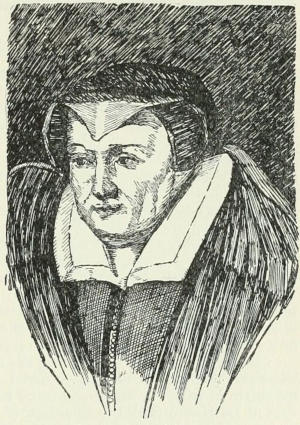
Catherine de’ Medici
“As regards the efficient and assured force of the reformers,” says Michel de Castelnan,g “it consisted of three hundred noblemen and as many soldiers accustomed to arms; besides four hundred volunteers, students and citizens, utterly without experience. What was this body, in face of the infinite number of the people, but a fly measuring forces with an elephant?” Outside of Paris, however, the Protestants thought they could count upon a tenth of the population, and the greater part of the provincial nobility was on their side.
They proclaimed Condé[73] defender of the king and protector of the realm; and at the end of a few weeks they had gained possession of two hundred towns, among which were Rouen, Lyons, Tours, Montpellier, Poitiers, Grenoble, Orleans, and Blois. The Guises had not expected such prompt action on the part of their antagonists. Though ill-prepared for war, they had the king in their hands, and strong in this advantage they declared the Calvinists guilty of rebellion and Condé of the crime of lèse-majesté; whereupon Philip II, the champion of Catholicism over all Europe, sent them a corps formed of members of those old Spanish bands that were as noted for their cold-blooded ferocity as for their valour. Condé on his side appealed for aid to the Protestant Elizabeth, who sent him an equal number of troops for the defence of Rouen, on condition that he would deliver over to her Le Havre as a pledge for the sums she had advanced. Thus was committed by the chiefs of both parties the criminal error of invoking foreign intervention in their affairs.
It was at the north, where the leaders had taken up their position and where the fighting was consequently thickest, that the fortunes of the war were finally decided. The duke of Guise, at the head of the Catholic army that Anthony de Bourbon had recently rejoined, marched directly upon Rouen, which, though scarcely tenable by reason of its position in the midst of commanding heights, offered a brave resistance. Anthony de Bourbon, king of Navarre, received during this conflict a wound of which he died. Montaigneh relates that during the siege a Protestant gentleman was apprehended who had been charged with the mission of assassinating the duke. The latter pardoned and set him free. “I will show you,” he said, “how much more merciful is my religion than that which you profess. Your faith inspired you with the project of slaying me without hearing me in my own defence, and without having received from me the least cause for offence; mine commands me to pardon you, convinced though I am that you were preparing to kill me without reason.” These were noble words, such as are sometimes spoken by ambitious individuals who aspire to every earthly glory, but are rarely borne out in their lives. The duke had not behaved with such magnanimity at Vassy and at Amboise, where he made reply to one of his victims, “My trade is not to make speeches but to cut off heads;” nor did he show greater clemency at Rouen when that city was at last obliged to surrender. “This great city,” says Castelnau,g “full of riches of all sorts, was pillaged, without regard to the religion of either side, in the space of a week, notwithstanding that the very next day after the capture the crier had announced that every company or standard-bearer, of whatever nationality, must at once leave the city on pain of death.” When all the pillaging was at an end judicial proceedings were begun.
Condé, in the hope of repairing the loss of Rouen, and reinforced by seven thousand men whom he had received from Germany, set out for Paris, the outskirts of which it was his purpose to attack. He turned first in the direction of Le Havre with the intention of joining the English troops there, but was forced by the duke of Guise to come to a stand at Dreux, on the 19th of December. There were arrayed against each other at this place fifteen or sixteen thousand men on either side. For some time the two armies were directly facing each other—“each man,” says La Noue,q “thinking in his heart that the soldiers he saw coming towards him were neither Spanish nor Italian but French, that is to say, the bravest among the brave, and that in their ranks were doubtless many of his own comrades, relatives, or friends, whom in less than an hour he must seek to kill. Those reflections lent additional horror to the situation without diminishing the courage of a soldier.” Condé penetrated to the centre of the Catholic ranks, wounding and taking captive the constable; but the Swiss restored the balance of forces, and Guise was made victor by a successful flank movement which took the prince of Condé prisoner.
The admiral Coligny made good his retreat, however, with the Germans, and rallied the fugitives. The marshal Saint-André, in endeavouring to harass him, was taken and slain. The singularity of the battle of Dreux was, that each of the two generals became prisoner to the opposite party. Guise gained both ways—not less by the removal of the constable, whose rank entitled him always to the superior command, than by the captivity of Condé. This prince was treated with the utmost generosity by his rival: they shared the same tent, the same bed; and while Condé remained wakeful from the strangeness of his position, Guise, he declared, enjoyed the most profound sleep. There were, indeed, heroic traits about the duke of Guise, that mark him to have been naturally of a generous and noble disposition. It appears that, especially when in arms and away from his brother, he could shake off the hard-heartedness, the guile, and even the ambition which in the cabinet rose to stifle every better quality.
[1562-1563 A.D.]
Guise followed up his victories by laying siege to Orleans. While he was engaged in reducing this stronghold of his enemies a Huguenot gentleman named Poltrot treacherously shot the duke with his pistol. He lingered nine days, and expired with exemplary fortitude and piety. He was a brave and great man, with such power of nerve and concentrated pride that, notwithstanding his equivocal rank in France, the stern constable himself and the princes of the blood quailed before him. His virtues were his own; his vices those of his party.
The Edict of Amboise and its Results
The death and captivity of the chiefs on both sides, Coligny excepted, necessarily brought on an accommodation. Peace was declared; and the Edict of Amboise, issued in March, 1563, granted full liberty of worship to the Protestants within the towns of which they were in possession up to that day. Thus ended the first religious war, which, in addition to the events we have recorded, deluged the entire south of France with the blood of the contending parties.
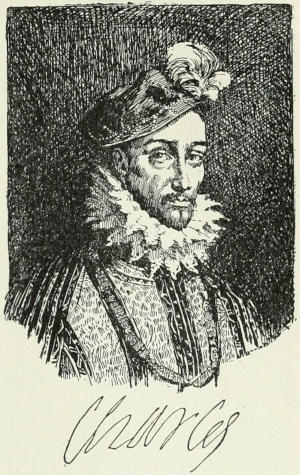
Charles IX
(From an old French print)
The conclusion of peace restored Catherine de’ Medici to the supreme authority. In order to exercise it under a less invidious title than that of regent, the parliament of Rouen, by her order, declared King Charles, now thirteen years of age, to have attained his majority. Reared by the crafty and prudent Catherine, he early acquired, in perfection, the power of dissimulation; but he never imbibed that utter indifference to both religious parties which distinguished his mother, and which allowed her to consult her own interest or the public good in leaguing with either, or in balancing and alternating between them. On the contrary, Charles, thrown among the Catholic party at an age when a bias is soon and strongly gained, amidst the bustle of war and of a camp, which pleased him, soon imbibed the zeal of the partisans of Guise. He had the sagacity to perceive that orthodoxy was much more favourable than the doctrines of the reformers to his kingly authority. A worse effect on his character was produced by sights of cruelty; for at this tender age he beheld the atrocities practised on the Protestants at the siege of Rouen, and during the campaign. The young king was thus led to adopt, in his sober counsels, the sanguinary measures that the heat of war engendered but could not excuse.
[1563-1564 A.D.]
This decision of her son in favour of the Catholics had a very great influence in finally drawing over Catherine to that party. Other causes also impelled her: the Catholics were without leaders; there was a place, therefore, for her at their head; and, in a little time, the pope and Philip of Spain both declared so strongly against the Protestants, that the queen was driven, from a principle of self-preservation, to adopt the winning side. This abandonment of her impartiality Catherine, however, delayed as long as it was in her power. After the conclusion of peace, she endeavoured to soothe Condé, and win him over to moderate demands; thus preparing the way for an accommodation. Condé was a man of pleasure, prone to indolence, in which he gladly indulged whenever an interval occurred in war or in business. Catherine held out to him her usual bait, the charms of her maids of honour; and Condé loitered, like another Rinaldo, in the toils of this Armida, until the ministers of the reformed religion recalled him from licentiousness and compelled him to marry. These stern disciplinarians were said to have hanged one of their flock for the crime of adultery. This alone was enough to alienate the courtiers of France and the demoiselles of Catherine.
The Edict of Amboise had not long been issued, when a modification of it was found necessary. That edict had allowed to the Protestants the celebration of their worship in towns which they possessed. It was found that several bishops and clergy, construing its terms in their favour, had established the new rites in their cathedrals and churches. This would have outraged the pope and the Catholic princes. Indeed, notwithstanding the clamours of the Protestants, so great a concession was not to be expected; and accordingly the privilege was withdrawn. The ancient cathedrals were not allowed to become temples of the reformed religion. New differences consequently arose: the Guises accused Coligny of instigating the murder of the duke; and the admiral arrived to answer the charge with his suite, which amounted almost to an army. Either Catherine or Charles himself took this opportunity of increasing the usual royal guard of 100 Swiss to upwards of 1,000 men. The old constable came to instigate the Parisians, and a tumult ensued, in which lives were lost.
In the following year, 1564, the young king resolved on making a progress through his dominions, especially in the south. The cardinal of Lorraine went to Rome at the same time, and Charles was met at Bayonne by his sister, the queen of Spain, and the duke of Alva. This meeting, in which the minister of Philip communicated the views of his master, completed in the mind of Charles his hatred of the Reformation, and instructed him concerning the means by which it might be eventually crushed. The Edict of Roussillon,[74] which appeared while the court was in the south, imposed new restrictions on the toleration granted by that of Amboise; so that, as Pasquier observes, “edicts took more from the Protestants in peace than force could take from them in war.” The Huguenots, therefore, despairing of impartiality or justice from the court, already began to look forward to another struggle.
[1564-1567 A.D.]
During this state of things an assembly of notables was held at Moulins. Catherine, who, notwithstanding her sagacity, very often mistook the form for the reality, insisted on a public reconciliation between the Guises and Coligny. It took place at her bidding; the cardinal and the admiral embraced; but young Henry duke of Guise showed even there, by his cold and mistrustful demeanour, that his first ideas were those of vengeance and hatred. It was in this assembly that the chancellor De l’Hôpital proposed his improvements in the administration of justice. Whilst all others, prince, noble, and functionary, were absorbed in the spirit of religious party, De l’Hôpital alone, professing at once Catholicism and tolerance, but unable to obtain attention, followed the unambitious track of judicial amelioration.
Religious troubles, similar to those of France, began to agitate the Low Countries. Philip, resolving to present a high example to France, established the Inquisition among his Belgic subjects in all its vigour; and as this only made matters worse, the duke of Alva was despatched to those provinces with an army in 1567. The French court affected to fear this course, and raised an army as if against it. When the duke of Alva, however, appeared on the frontiers of France, he was treated as a friend; and the Huguenots immediately perceived that the troops were levied, not for the defence of the kingdom, but for the oppression of themselves. They accordingly leagued and armed in secret, determined to meet the perfidy of the court with corresponding guile. Their consultations ended in a project to surprise the court at Monceaux, and get possession of the king. It failed, however, as a similar plot had previously failed at Amboise, through the postponement of a single day. The queen had warning; the Swiss were summoned; and the court retired to Meaux, and from thence to Paris, pursued and menaced by the disappointed Condé.
THE SECOND RELIGIOUS WAR
Thus commenced the second religious war, in September, 1567. “Catherine,” says Henault, “caused the first civil strife by favouring the reformers, and the second by irritating them.” She was now at least zealously hostile to them. She had been provoked by the numerous calumnies and libels which the Huguenots directed against her, and she accordingly joined in the opinions of her young son, and of his and her ally, Philip. She no longer sought an habitual adviser in the moderate De l’Hôpital, who was of opinion that the reformers were unfairly treated. The chancellor always asserted their loyalty. After their attempt to surprise Meaux, the queen asked De l’Hôpital: “Would you now answer that their sole aim is to serve the king?”—“Yes, madam,” replied he, “if you assure me that they will be treated with good faith.”
Condé took up his quarters at St. Denis. The Catholics under Montmorency were posted at La Chapelle, a village that is now the suburb of Paris on that side. The constable wished as usual to procrastinate, but the impatience of the Parisians forced him to attack. The battle was fought in the plain of St. Denis: it began with a cannonade; but the Huguenots, to avoid the destructive effects of the artillery, charged the Parisians furiously, and routed them. Their flight left the constable unsupported; Condé turned on him his victorious cavalry, and Montmorency defended his position, when Stuart, the captain of the Scotch company in the service of the Huguenots, coming up close to the constable, against whom he had cause for hatred, fired his pistol and shot him. A furious and confused mêlée, somewhat like a Homeric fight, immediately took place around the dead body of the constable—the Huguenots with savage zeal seeking to carry it off. They were beaten, however, and driven from the field in the attempt. Thus fell, in civil strife, and engaged against his own nephews, the veteran warrior of France. His years, his hardihood, and his name, have rendered him deservedly celebrated. His defence of Provence against Charles V is particularly memorable. By French historians he is characterised in terms of the highest encomium: they commend his sternness, his courage, his orthodoxy, and forget that avarice and selfishness sullied and almost neutralised all of his virtues.
[1567-1568 A.D.]
The constable’s death was a victory to Condé, who was able to offer battle to the Catholics on the following day. He denied having lost that of St. Denis. Young Charles, who was witness to a dispute on this point, asked Vieilleville who had won the battle. “Neither Catholic nor Protestant,” responded the marshal; “it is the king of Spain who has won by our discord.” The Huguenots had neither pay nor provisions, and were therefore obliged to quit the vicinage of Paris, directing their course across Lorraine towards the frontier of Germany, as they expected a body of auxiliaries from that country. They were pursued, but not much harassed in their retreat. Catherine endeavoured incessantly to decoy them into negotiations, the department of warfare which she felt herself most competent to direct. She restrained the warlike disposition of the king; arguing with truth that, from the violent animosities of the time, the leaders of armies marched to meet a certain fate, either in battle or at the hand of the assassin. The king’s brother, Henry duke of Anjou, was created lieutenant-general. Catherine, who knew the weak and yielding nature of her second son, would gladly have made him the hero of the Catholic party in preference to young Guise, whose name she dreaded.
After much privation, during a march in winter, the Huguenots fell in with their German auxiliaries; and as they now outnumbered their enemies, they marched back into France. They laid siege to Chartres, which, being stoutly defended, kept the army fixed before it, and gave the queen full opportunity for employing her favourite efforts at negotiation. Coligny saw plainly the perfidy of these overtures; but their followers and supporters, anxious for peace, obliged them to listen to terms. A treaty was concluded at Longjumeau, in March, called the Lame Peace, as well from its infirm and uncertain nature as from the accidental lameness of its two negotiators. Its terms were a medium between the Edict of Amboise and that of Roussillon.
THE THIRD RELIGIOUS WAR
The peace was, as Coligny already saw, but a trap to ensnare the Huguenot chiefs as soon as their army should be disbanded. They were on their guard, however, keeping away from the court, and far apart from each other, that at least one might escape in case of treason. Notwithstanding this resolve, Condé and the admiral found it necessary to consult together, and for this purpose met at Noyers, a little town in Burgundy. The court was soon informed of it; and orders were instantly despatched to Tavannes, and to the other governors in the south, to arrest them. Tavannes was not vigilant in the execution of their commands, and Condé and Coligny escaped. By this order the queen had thrown off the mask; though, indeed, without such an indication, the executions and murders throughout the south sufficiently proved that the Lame Peace was never intended to be observed by the Catholics. Through inconceivable difficulties, the two chiefs traversed the country, and reached Rochelle in safety, where the Protestants now found themselves obliged, for the third time, to raise the standard of revolt. Troops did not fail to join them from all quarters; but the most welcome aid came from Béarn, the queen of Navarre and her young son [the future Henry IV] arriving at the head of 3,000 of their subjects.
[1568-1569 A.D.]
This young prince, destined to run so glorious a career, was born at Pau, in 1553. His father was Anthony of Bourbon, king of Navarre, slain at the siege of Rouen. Chroniclers never forget to relate that his mother sang at the birth, and that old Henri d’Albret, the infant’s grandfather, held up the child in delight, rubbing its lips with garlic, and moistening them with wine. Excepting a short period spent at court, the boy lived the rude and healthy life of a mountaineer, and imbibed from his mother the rigid principles of the Reformation. It was in September, 1568, that he accompanied her to Rochelle.
As if to add to the horrors of civil war, winter was always chosen as the period of operations. The duke of Anjou was at the head of the Catholic army, with the marshal Tavannes for his adviser. When Condé and the Huguenots approached, the cold was so extreme as to chill the zeal of both armies. They found it impossible to engage in battle. Mutual pillage and cruelties too horrid in many instances for the pen to record were the only feats of the soldiery. During the inaction that ensued (for the winter grew to that extreme rigour which is seldom known even in France), a great part of the Huguenot army dispersed: the bourgeois and volunteers, of whom it was principally composed, each betook himself to his own home. The Catholic troops, on the contrary, were soldiers by profession, paid and disciplined. Hence, in the spring, Condé was far inferior in force to his enemies, before whom he was obliged to retire towards La Rochelle. In his retreat, the prince, having crossed the Charente, took post at Jarnac, determined to keep the river between himself and the enemy, and to dispute his passage.d
There was some preliminary manœuvring on the banks of the Charente; at last Tavannes surprised the rearguard of the admiral [Coligny] near Jarnac (March 13th, 1569). Condé, on receiving news of the attack, rushed up with three thousand cavalry, but at the moment of charging a kick from a horse broke his leg. Oblivious of this, however, as of the wound he had received in the arm the previous day, he continued to rush upon the enemy, crying out to those behind him: “Remember in what condition Louis de Bourbon does battle for Christ and his country!” This impetuous onslaught at first made a breach in the enemy’s ranks, but Condé’s horse being shot under him, he fell, and a terrific combat immediately ensued around him. An old warrior, De la Vergne, who had brought with him into battle twenty-five men-at-arms, all sons, grandsons, or nephews, made heroic efforts to protect the prostrate body of the prince, but he was himself killed, and fifteen of his followers fell with him, “all in one heap.”
Condé was in the act of giving his gauntlet to a gentleman when Montesquieu, the duke of Anjou’s captain of the guards, fired his pistol point-blank at his head. Thus perished a prince as energetic as he was brave, whose loss was irreparable to the party of which for nine years he had been the head that plans and the arm that executes. The Protestants talked of abandoning the campaign and shutting themselves up in La Rochelle, but a woman caused them to change their plan. Jeanne d’Albret, accompanied by her son Henry of Béarn and the young prince of Condé, presented herself in the midst of the discouraged army at Saintes. “My friends,” she said, addressing the soldiers, “here are two new chiefs that God sends you, and two orphans that I confide to your care.” Prince Henry,[75] the future king of France, up to his present age of fifteen years had been brought up with all the severity that went to the training of a country gentleman. Brave, intellectually brilliant, and with the faculty of carrying away his auditors by his words, he pleased all with whom he came in contact. He was appointed general-in-chief of the army, and Coligny was given him as counsellor and lieutenant.
Admiral Coligny; the Peace of St. Germain
[1569-1570 A.D.]
Coligny possessed many of the qualities necessary to a party-leader in a war such as was then waging. A Protestant of exemplary piety and austerity, he was beloved and respected by ministers and soldiers alike. He fell short of being a general of the very first rank, perhaps, and Catherine in common with the other Italians at her court did not attribute to him great depth as a politician; but he could never be made to accept defeat, which is in itself one form of power, and he had the faculty of rendering just judgment, which is another. He was a master of limitless resource, and if no particularly brilliant victory was to be expected under his leadership there was at least to be feared no irremediable defeat. In two respects his name is entitled to come down with distinction to posterity: the first of these claims is the great deed which opened his career, the defence of St. Quentin; and the second is his last political aim, the ambition to conquer the Spanish Netherlands, whither he wished to conduct his Huguenot bands that France might enjoy the double blessing of rich provincial possession and internal peace. In his deep desire to avert domestic dissensions and to assure religious liberty he had conceived still another method of accomplishing this end; namely, the Protestant colonisation of America. The very purpose which the Puritans of Great Britain brought into effect in the seventeenth century had been cherished by him. Had he succeeded, French blood and French speech might to-day dominate in the New World.
Jarnac had been nothing but a rearguard action in which the Protestants had lost no more than four hundred men. Coligny was still strong enough to defend Cognac and Angoulême; having been joined by 13,000 Germans he even assumed the offensive and inflicted a check on the Catholic army near La Roche-Abeille. But Tavannes repaired the harm done. German Catholics, Spaniards sent by the duke of Alva, Italians sent by Pius V, increased the forces of the duke of Anjou. Already pushed back to the Loire, the duke returned on his steps by means of a diversion, relieved Poitiers which Coligny had been besieging for the last six weeks, and succeeded in surprising the Protestant army between the Dive and the Thoué, near Moncontour. The position was a wretched one; six hundred Huguenot soldiers were left on the battle-field (October the 3rd).
Yet this victory of Moncontour was as useless as that of Jarnac. Charles IX, jealous of the laurels which were being gathered for his brother, came to the army, and instead of pressing the Protestants to the Pyrenees wasted his time in besieging Niort and St. Jean d’Angély. Coligny traversed the whole breadth of the south, replenishing his army as he went; and he suddenly appeared in Burgundy, at the head of all the Protestant nobility of Dauphin and Provence. A Catholic army of 12,000 men tried to stop him at Arnay-le-Duc; he held his own against them and reached the Loing, a short distance from Paris.
Catherine de’ Medici now triumphed in the council, events having proved the justness of her views. Some other means than war must be devised to gain control over a party that rose up in renewed strength after each defeat. In order to disarm the Protestants, she caused the Peace of St. Germain to be proclaimed, with terms extremely favourable to their side. They were to be allowed full liberty of worship in two towns in every province, and in all those in which the reformed religion had already been established; Calvinists were to be admitted to all kinds of office, and four fortified towns, La Rochelle, Cognac, Montauban, and La Charité, were to be given up to them as strongholds in which to place a garrison (August 8th, 1570). “A traitorous, violated peace, the perdition of those who trusted in it.”c
A TROUBLED PEACE; THE MARRIAGE OF HENRY OF NAVARRE
What were the real intentions of Catherine at the moment when she concluded the agreement of St. Germain? She had conceived a policy in 1563, which she tried to carry out by fraud from 1563-1567, then by force mingled with fraud from 1567 to 1569. She certainly had still the same views, the same desires, but no longer the same confidence. As she had firmly believed that her object was attained after the murder of Condé, the defeat of Coligny, and the triumph of her favourite son the duke of Anjou, so she was proportionately stupefied and discouraged at seeing the final victory escape her and the unforeseen powers of those moral forces which she could not understand defeat the calculations of her Macchiavellian wisdom.
It is almost certain that in 1570, when she entered into negotiations, she desired, above all, time to breathe and to look about her, and had no fixed plan; this is what appears from the diplomatic documents. There is however no doubt that she continued to meditate the ruin of Coligny, the man who was the great obstacle in her way; the idea of destroying the leaders of the party was never absent from her mind; but in 1570 her hopes on this subject were very weak and very vague. As to the general extermination of heretics planned two years in advance by this “great queen” and pursued without deviation to the dénouement with “an admirable dissimulation,” it is a romance invented by the depraved fanaticism or the cynical Macchiavellianism of Catherine’s Italian panegyrists, and accepted by the resentment of the Huguenots.
The historians of Catherine have associated Charles IX with the two years of plotting and with “the admirable dissimulation” of his mother: they have done more than the Protestants themselves to draw on the name of this unfortunate and guilty prince the immense execration which has descended on him. Here it is no longer a question of mere exaggeration, but of complete error. It was not by sentiments of morality that Charles IX was incapable of deserving the hideous praises which posterity has changed into maledictions; the lessons of the masters whom his mother had imposed upon him had destroyed in him all principles; in his eyes good faith was but folly, compassion nothing but cowardice; but the passion and inequality of his humour would not have permitted him such a long perfidy, and above all he was absolutely without bias: the grudge which he nourished against the Protestants for the attempt of Meaux was balanced by the jealous hatred he bore his brother Henry, and by his distrust of his mother and the Guises. He submitted to Catherine’s skilful domination as to a sort of fatality, but at times he chafed at the curb in anger, and he was quite as capable of proceeding to final acts of violence against the house of Lorraine or even against the duke of Anjou as against Coligny. Although Catherine held him by chains scientifically forged, he might well end by turning against her the lessons she had given him.
What should he do? Whither should he turn? He had no idea. He received the schemes of betrayal laid before him by Tavannes, the adviser of his brother who desired to become his; but immediately he gave ear to the most opposite projects.
Meantime, at court the politicians had got the better of the Catholic zealots: little was wanting in order that a bloody tragedy should exhibit this at the expense of the house of Lorraine. Even before the peace was signed, the partisans of toleration had worked to prepare a complete understanding between the court and the Protestant leaders: the Montmorencys had proposed the marriage of Prince Henry of Navarre with the king’s third sister, Marguerite of France. This marriage had been talked of almost ever since the birth of the two young people; Charles IX eagerly recurred to the idea, but Marguerite, then aged eighteen years, had made another choice; she was beginning the series of her innumerable gallantries and had surrendered to the young duke of Guise, the most brilliant cavalier in France, all possible rights over her heart. Henry of Guise, encouraged by the cardinal De Lorraine, wished to turn the victory of his love to the profit of his ambition and aspired to the hand of the princess. In the month of May, 1570, the marriage of Marguerite and Guise was regarded at court as a thing decided on: suddenly, in the middle of June, the king, the queen-mother, and the duke of Anjou turned indignantly against the bold pretensions of Guise; the king, who knew no half measures, gave orders to his brother the bastard d’Angoulême to kill the duke of Guise at the hunt. The bastard, not from repugnance to the crime, but from cowardice, missed the opportunity for action: the reproaches made to him by the king were heard by a courtier who, perhaps at Catherine’s instigation, warned Guise: the murder of Guise would have thrown the king into the arms of the Huguenots and overturned the power of the queen-mother. The young duke, forced to renounce Marguerite, found no better expedient to appease the king than to marry another woman; he espoused Catherine of Cleves, countess d’Eu, sister of the duchess de Nevers and widow of the prince de Portien.
At this price Guise was restored to favour and followed the court to Champagne where the king, in his turn, was to be married: after long negotiations the emperor Maximilian II had granted Charles IX the hand of his second daughter, Elizabeth, without further insisting on the restoration of the Three Bishoprics to the empire. This alliance with the house of Austria in no way impelled France towards Spain: it made Charles IX for the second time brother-in-law of Philip II, who, the widowed husband of Elizabeth of France, had just taken as his fourth wife his niece, the eldest daughter of the emperor; but on the other hand it gave Charles a father-in-law from whom he had to expect no counsels but those of toleration and humanity. However, Elizabeth of Austria, a gentle, simple, and modest young woman, did not have, or seek to have, any share of influence in the events of her husband’s reign. The wedding was celebrated, November 26th, 1570, at Mézières, whither the archduchess Elizabeth had been conducted by the archbishop elector of Treves, chancellor of the empire. The princes and the great Huguenots had been invited to the marriage festivities. They excused themselves, and did not quit their refuge at La Rochelle, although the admiral had written in respectful terms to the queen-mother to protest his forgetfulness of the past and his devotion.l
[1570-1572 A.D.]
Almost two years of relative quiescence followed, during which the Huguenot party gained an increasing influence at court, chiefly through the favour shown Coligny by the king. The admiral, ever mindful of the interests of his fellow-Huguenots, attempted once more to put into execution a colonisation scheme that had long been a favourite project with him. He had made an effort to establish a colony in Brazil as early as 1555; and in 1562 and again in 1564 Charles IX had given him permission to found colonies in Florida; but all of these colonies had failed, nor did anything tangible come of his present effort.
This colonisation project tended to bring France into antagonism with Spain. But another plan of Coligny’s still more directly menaced that power; this plan involved nothing less than a direct attack upon the Spanish forces in the Netherlands. Charles IX lent an attentive ear to this idea, actuated in part, perhaps, by the desire for military glory, in part by Coligny’s belief that a foreign war would be the best possible means to harmonise the political factions at home. It will be understood that the Huguenot question at this time had come to be quite as much a political as a religious problem. The antagonism between the Guise faction and the Coligny faction, which led to the appalling scenes we are now fast approaching, was based by no means exclusively—perhaps not even prominently—upon differences of opinion regarding questions of doctrine. It was essentially a personal and political rivalry that actuated the chief personages in the drama. This, of course, does not necessarily impugn the sincerity of their religious differences; it was merely that these differences were not sufficient in themselves to supply motives for the bitter and ineradicable hatred with which Catherine de’ Medici and the Guises regarded Coligny.
The fact that the negotiations for the marriage of the king’s sister Marguerite with the Protestant Henry of Navarre were carried forward, sufficiently illustrates the superficiality of the religious element as a source of political jarrings. This marriage was, indeed, opposed by the pope, who declined to give to a heretic the dispensation necessary to legalise the marriage of second cousins. None the less were the negotiations carried forward at court in open defiance of the papal decision. Jeanne d’Albret, the mother of Henry, came to Paris and was received at court with at least the outward appearance of friendliness. Her death there in 1572 was probably due to natural causes, though the usual intimations of foul play—which the partisanship of that time never neglected as an aid to practical politics, however shadowy the evidence—were not wanting. The marriage of Henry, now king of Navarre, with the not over-willing Marguerite, took place on a specially erected platform in front of the cathedral of Notre Dame in Paris on the 22nd of August, 1572. The story goes that the bride refused to make the customary affirmations, and that her brother, Charles IX, pushed her head forward with his own hands; but this most likely is an embellishment suggested by the known preference of Marguerite for another lover, and by the uncongenial wedded life that followed the spectacular nuptials.
It may well be supposed that the Huguenots looked upon the marriage of their leader with the sister of the king of France as a great political triumph. Doubtless a large number of Huguenot nobles who had long been conspicuous by their absence from court came to Paris in honour of the occasion. To many of them it proved a fatal visit, for the awful tragedy of St. Bartholomew’s day followed hard upon the wedding, turning the seeming triumph of the Huguenots into disaster and threatening actual annihilation of their party. Such being the sequence of events, it is but natural that the surviving Huguenots should have tried to trace a causal connection between the marriage of Henry of Navarre and the massacre of St. Bartholomew. It has been alleged that the real pretext for the marriage was to beguile the Huguenot nobles into visiting Paris that they might be caught, as it were, in a trap and the more readily massacred. No one doubts that Catherine de’ Medici was quite capable of such a plan. But, on the other hand, it must not be overlooked that King Charles was most anxious for the consummation of the marriage; and all historical evidence tends to exonerate him from early complicity in the plot, if plot existed. Still the fact of so many enemies being at hand may no doubt have influenced Catherine to carry into effect an idea which had at least been dear to her heart. Just how much she was influenced by this; just when the first thought of it all came to her—these are questions which Catherine herself probably could not have answered, and which it is quite futile for any interpreter of her actions to attempt to solve. Here, as so often elsewhere, the threads of design make a web too intricate for disentangling. This much, however, seems sure: the tangled mesh, whatever relations of designs and of accident in its structure, was one of which Catherine de’ Medici was the main artificer; her chief assistants being her son the duke of Anjou, and the Guises.a
THE ATTACK ON COLIGNY
[1572 A.D.]
A murderous coil had been woven around the king and the admiral. Catherine had been for some time torn between her natural timidity and her ardent desire to free herself from Coligny: at one time she had hoped to obtain the admiral’s destruction from the king; after a first success she had failed; a scene of an opposite kind drove her to the last extremities. The duke of Anjou himself has revealed these mysteries of crime: in a night of trouble and fear if not of remorse he dictated with his own lips the history of his own and his mother’s guilt. “Every time,” he says, “that the queen had conferred privately with the admiral, the queen-mother and I had found him marvellously angry and sullen, rough in countenance and aspect and still more in his answers. One day when I entered the king’s room, without saying anything to me he walked up and down with long strides, often looking at me askance and putting his hand on his dagger with so much animosity that I expected to be poniarded. I managed so dexterously that while he was walking about and with his back turned to me I retreated to the door which I opened and, with a brief reverence, I made my exit.” Charles IX was nearer striking at Anjou than Coligny; the admiral certainly did not urge him to raise the dagger against his brother, but he conjured him to despatch him with all speed to Poland that there might no longer be two kings in France. Catherine and Anjou, brought to bay, took their resolution. They secretly sent for the duchess de Nemours, widow of the great Guise, the woman in whose veins flowed the blood of Louis XI mingled with that of the Borgia. She had continually professed an implacable hatred for Coligny. Catherine declared to her that she placed in her hands the vengeance so long pursued by the house of Guise. Catherine desired to profit by the murder but to impose the execution and the responsibility on someone else. Her Macchiavellian mind went further: she did not doubt that the Huguenots would rush to arms to avenge the murdered Coligny and attack the Guises even in their palaces; the people of Paris would go to the help of the Guises, the Montmorencys and their friends to the help of the Huguenots, all the great nobles, partisans of Lorraine, Huguenots and politicians, would cut each other’s throats; the Huguenots would finally be overwhelmed by numbers, the Guises would be exhausted by their very victory; and royalty, held in reserve during the conflict, would remain mistress of a field strewn with dead.
Whatever arrière-pensées there may have been, an agreement was arrived at as to the action to be taken. Young Guise, in his furious joy, at first wished that his mother should herself kill the admiral with an arquebusade in the midst of the court; more practical means were resorted to; the blow was intrusted to a hand more expert in crime, that of the same Maurevert who had already been hired during the last war to assassinate Coligny, and who in his stead had killed one of his lieutenants under the most odious circumstances. He was sent for mysteriously and the duke d’Aumale’s maître d’hôtel concealed him in the house of a canon, a former tutor of the duke of Guise, in the cloister of St. Germain-l’Auxerrois, on the road from the Louvre to the rue de Béthisi, where the admiral was staying. Maurevert remained there three days on watch. On the morning of Friday the 22nd of August, as the admiral was returning from the Louvre on foot, walking slowly and reading a petition, a shot from an arquebuse came from behind the curtain of a window, carried off the first finger of his right hand, and lodged a ball in his left arm.
Coligny, with his mutilated hand indicating the place whence the shot had come, sent to tell the king what had occurred and to ask him to judge what fine fidelity that was, considering the understanding between him and the duke of Guise; then he returned to his hôtel, supported by some gentlemen, whilst his suite broke down the door of the dwelling in which the assassin had lain in wait; the arquebuse was found still smoking; “but not the arquebusier.” Maurevert had flung himself on a horse belonging to the duke of Guise which was held in readiness for him, and had fled by the rear of the house. He left Paris by the porte St. Antoine; two Protestant gentlemen had discovered his track and pursued him for several leagues, but without being able to come up with him.l
The king was playing at tennis when he was told that Coligny was wounded, and that the king of Navarre and the prince of Condé were coming to him to demand justice against the Guises. The circumstance both surprised and alarmed him. He threw away his racket in a passion, and after giving vent to a number of oaths, he declared he would have the assassin sought for, even in the recesses of Guise’s hôtel. Charles succeeded in satisfying the young princes that the assassins should meet with exemplary punishment, and immediately ordered the president De Thou, the provost of Morsan, and Veale, a counsellor, to commence an investigation; this calmed them in some measure, and made them give up the plan, which they had agreed on, of leaving Paris immediately.
But the king felt convinced that something more must be done. He announced his intentions of visiting the admiral in the afternoon. He could not with prudence go among the Huguenots unprotected, nor could he consistently be attended by his guards; he therefore desired that all the court should visit Coligny also.
Charles entered the admiral’s dwelling, accompanied by his mother, the duke of Anjou, De Retz, and his other counsellors, the marshals of France, and a numerous suite. He began by consoling the admiral, and then swore that the crime should be punished so severely that his vengeance should never be effaced from the memory of man. Coligny thanked his sovereign for such testimonials of his kindness, and conjured him to support with his authority the execution of the different edicts in favour of the Protestants, many points of which were violated, or misunderstood. “My father,” answered the king, “depend upon it, I shall always consider you a faithful subject, and one of the bravest generals in my kingdom; confide in me for the execution of my edicts, and for avenging you when the criminals are discovered.” “They are not difficult to find out,” said Coligny, “the traces are very plain.” “Tranquillise yourself,” said the king, “a longer emotion may hurt you and retard your cure.” The conversation then turned upon the war with Spain, and lasted nearly an hour. Coligny complained of the Spanish government being informed of whatever was decided on; and as the intimacy between the queen-mother and the Spanish ambassador was very great and caused suspicion, he spoke to the king in a low voice. The war in Flanders was a subject of great alarm for Catherine; she knew her son’s secret wishes, and she dreaded the effect which Coligny’s remarks might have upon him; she interrupted the conversation and prevailed upon the king to leave the place. Charles, who was exerting himself to efface any suspicion which might have arisen in Coligny’s mind, became vexed at the anxiety displayed by his mother; and as they were returning to the Louvre, being pressed to tell what Coligny had said, he declared, with an oath, that the admiral had said what was true—that he had suffered the authority to fall from his hands, and that he ought to become master of his own affairs. When the king and his suite retired, the admiral’s friends expressed great astonishment at his affability, and the desire he showed to bring the crime to justice. “But,” says Brantôme,e “all these fine appearances afterwards turned to ill, which amazed everyone very much how their majesties could perform so counterfeit a part, unless they had previously resolved on this massacre.”k
PREPARING FOR THE MASSACRE
Catherine and Anjou returned in consternation: “We remained,” said Anjou, “so bereft of counsel and knowledge of how to act that being, for the moment, unable to resolve on anything we retired, putting off our decision until the next day.” Meantime they despatched to the king the count de Retz, Gondi, the man who best knew how to manipulate that fiery and pliable mind, to endeavour to appease him. Retz made him uneasy, agitated him, but got nothing from him.
The king’s attitude towards the Huguenots remained the same: Charles IX launched great threats against the Guises, who were more and more compromised by the information collected by the commissioners: orders were given to arrest certain servants of their house. On the morning of Saturday the 23rd the dukes of Guise and Aumale came to seek the king and said to him, that it seemed to them that his majesty had not been well pleased with their service for some time, and that they would retire from court if their withdrawal was agreeable to him. The king “with an ill countenance and worse words,” answered that they might go whither they would, and that he would always be well disposed towards them if they were recognised as guilty of what had been done to the admiral. They left the Louvre about mid-day, mounted on horseback and with a good following took their way towards the porte St. Antoine; but they did not quit Paris, and shut themselves up in the hôtel de Guise.
Meantime the king was giving the Reformed fresh tokens of interest: he had a general list made of the Protestants who were present in Paris; he offered lodging to the Huguenot nobility about the admiral; he invited the king of Navarre and the prince of Condé to accommodate their friends at the Louvre. The security of the Protestant princes, of Téligny and almost all those about the admiral, was complete: the vidame de Chartres (Ferrières-Maligni) twice endeavoured to persuade them to leave Paris; his advice was rejected with impatience. Ambroise Paré answered for the life of the wounded man, and this great failure in crime seemed to promise the ruin of its authors.
Most of the Huguenots indulged in vain clamours against the house of Lorraine, passing and repassing “in great companies, in cuirasses, before the lodging of MM. de Guise and d’Aumale,” but they took no precautions for the night, trusting to the protection of a detachment of the king’s guard and in the tranquillity of the first night which had followed the wounding of the admiral.
In the afternoon the queen-mother and the duke of Anjou summoned the count de Retz, the chancellor Birague, Marshal de Tavannes, and the duke de Nevers to the garden of the Tuileries. Of the three advisers who helped the widow and sons of Henry II to soil the annals of France with an ineffaceable stain, three were foreigners. They arranged their plan, and then all six went to seek the king in his cabinet in the Louvre. Fatal hour, which decided for Charles IX between glory with Coligny and eternal shame with Catherine; between the redemption of his misguided youth and his eternal damnation in history. The destiny of France hung on a word, on the motion of a weak head, of a mind without compass and without curb, of one who was almost a madman. And the unhappy man was alone, abandoned, in the midst of these demons!
We have the account of this infernal council dictated by that one of the accomplices who became Henry III. A few other writings of the time almost complete our knowledge on the subject. We see this impious mother artfully distilling the poison into the shuddering soul of her son, and closing round him every other issue save that of crime. “The Huguenots,” she said to him, “are everywhere arming, not to serve you but to make themselves your masters: the admiral has sent for six thousand reiters and ten thousand Swiss; at home their leaders have an understanding with a number of towns, communities, and peoples, all agreed to reduce your authority to nothingness under pretext of the public advantage. The Catholics, on the other hand, are resolved to put an end to this state of affairs. If you refuse their advice they have decided to elect a captain-general and to form an offensive and defensive league against the Huguenots. You will be left alone between the two. Already Paris is under arms.”
“How is that? I had forbidden them to arm in the quartiers.”
“The quartiers are armed.”
In fact the demonstrations of the Huguenots and the rumour circulated by Anjou and the Guises that the marshal De Montmorency, who after the wedding had returned to his château of Chantilly for a few days, was about to re-enter Paris “with a great force,” had greatly excited the masses, and had brought out the citizen militia.
Fear began to take possession of the king. Anjou and others ardently supported Catherine. She continued, “One man is the leader and author of all this ruin and calamity; the admiral is deluding the king, making him the instrument of his ambitions and of his party, urging the state to its downfall while pretending to aggrandise it! Let the king remember the attempt of Amboise against his brother, and that of Meaux against himself when he saw himself constrained to flee before his revolted subjects!”
The memory of Meaux, as Catherine knew too well, always acted on the pride of Charles IX as a hot iron on a wound.
“The Huguenots,” she resumed, “demand vengeance on the Guises. Well, you cannot sacrifice the Guises; for they will exonerate themselves by accusing your mother and your brother! And they will accuse us with good reason. It was we who struck the admiral to save the king! The king must finish the work or he and we are lost!”
Charles IX seems to have lost his head. He was seized with a fit of blind, mad fury against all and everything; his only clear idea was that he would not “have the admiral touched”; then, sinking into a melancholy dejection, he conjured all these sinister advisers to seek some other means of salvation.
Tavannes, Birague, Nevers insisted on the death of the admiral and of all the principal leaders. Retz, if Anjou is to be believed, opposed himself, contrary to all expectation, to the execution of a design which he, more than anyone, had contributed to prepare. Was it fear or was it an awakening of conscience in this corrupt man? “You will dishonour the king and the French nation; you will plunge again into civil wars, and you will be able to speak no more of peace! You will summon again the arms of the foreigner, and calamities and ruin whose end we, and perhaps our children, shall never see.”
There was a moment of stupor amongst the conspirators. The man who had ruined the youth of Charles IX was holding out to him the plank of safety. The king was to escape!
They recovered themselves and made a simultaneous and desperate effort. “It is too late! The Guises are on the verge of denouncing the king himself with his mother and his brother! The Huguenots will not believe in the king’s innocence. They will turn their arms against all the royal family! War is inevitable! Better to gain a battle in Paris where we have all the leaders than to risk it in the open country!”
Retz was silent. The king resisted for more than an hour and a half. “But my honour!—but my friends! the admiral!—La Rochefoucauld!—Téligny—”
Catherine saw that he was panting and exhausted: “Sire, you refuse. Give us, myself and your brother, permission to take our leave of you—to go.”
He realised that Catherine and Anjou would not go far, and that the “captain-general” of the Catholics was already found. He shuddered.
“Sire, is it from fear of the Huguenots that you refuse?”
He arose; he sprang forward intoxicated and furious: “By the death of God,” he cried, “since you think good to kill the admiral, I will have it so; but kill all the Huguenots in France as well, that there may not be left one of them to reproach me with it afterwards! By the death of God give the order promptly!” And he went out like one frantic. Catherine had won—the race of Valois was devoted to the furies!
The conspirators passed the rest of the day, the evening, and a great part of the night in preparing for the enterprise. The king having gone they had discussed the heads to be proscribed. Should they strike at the princes—Henry of Navarre, a king, and the king’s brother-in-law? They shrank from this. Henry of Condé, son of him who died at Jarnac? The duke de Nevers, whose sister-in-law he had just married, had, it is said, great difficulty in obtaining his life. Catherine was aware that to kill the Bourbons would be to render the Guises too strong. Should they strike at the friends of the Huguenots, the Montmorencys? Retz, soon recovered from his scruples, advised it. Tavannes opposed it. The head of the house, who was at Chantilly, was not in their power; to kill the younger members in the absence of the eldest would be to give a leader to the civil war.
Thus it was agreed to kill only the Huguenots. All the Huguenots, as the king had exclaimed in his madness. Catherine afterwards pretended that she had the blood of only five or six on her conscience. Hypocrisy! She insisted on the deaths of only these five or six, but she foresaw and accepted the deaths of all the others. At the pass to which things had come it was no longer a question of isolated assassinations but of massacre—the massacre at least of the nobles who had come with the princes and the admiral.l
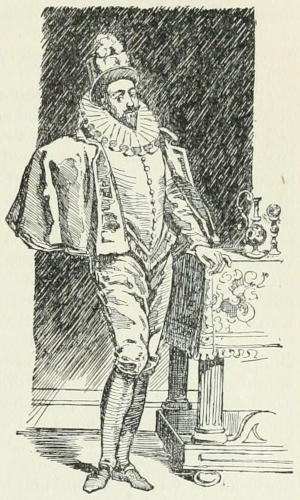
A Court Gentleman, Time of Charles IX
Everything was soon decided on; the duke of Guise was to begin the massacre by despatching the admiral directly he heard the signal given, by ringing the great bell of the palace, which was used only on public rejoicings. Tavannes in the meantime sent for the provost of the trades and some other persons of influence among the inhabitants; he ordered them to arm the companies and to be ready by midnight at the Hôtel-de-Ville. Those persons made some excuses and scruples of conscience, for which Tavannes abused them in the king’s presence. He told them that if they refused they should all be hanged and advised the king to threaten them too. The poor frightened men then yielded and promised to do such execution that it should never be forgotten. The instructions they received were that directly they heard the bell, torches were to be put in the windows and chains placed across the streets; pickets were to be posted in the open places; and, for distinction, they were to wear a piece of white linen on their left arms and put a white cross on their hats. Notwithstanding the awful crime in contemplation, the king rode out on horseback in the afternoon accompanied by the chevalier d’Angoulême, his natural brother: but the sight of his unsuspecting people had no effect upon him. The queen also showed herself at court as usual in order to avoid suspicion.
Secrecy was desirable till the last moment and no one was informed of the plan who was not necessary to its execution. But there were several persons who caused great concern and anxiety to both the king and queen. The queen of Navarre describes herself as altogether ignorant of the affair previous to the execution; and when she retired after supper to go to bed, her sister, the duchess of Lorraine, entreated her not to go. The queen-mother was angry at that and forbade her telling anything further. The duchess of Lorraine thought that it would be sacrificing her to let her go to bed; and the queen-mother said that if she did not go it might cause suspicion and observed that if it pleased God no harm would befall her.
The count de la Rochefoucauld was a great favourite with Charles, who took such delight in his company that he wished to save his life. He had passed the evening with the king, and when he prepared to go home Charles advised him to sleep in the Louvre. In vain did he press him; the count resolved to go; the king was grieved that he could not preserve him without violating his secret, and observed as his guest retired, “I see clearly that God wishes him to perish.” Ambrose Paré, his surgeon, was a person indispensable for the king’s health and comfort, and he used less ceremony with him. He sent for him in the evening into his chamber and ordered him not to stir from thence; he said, according to Brantôme,e “that it was not reasonable that one who was so useful should be massacred, and therefore he did not press him to change his religion.”
THE MASSACRE OF ST. BARTHOLOMEW, AUGUST 24TH, 1572
As midnight approached the armed companies were collecting before the Hôtel-de-Ville. They required some strong excitement to bring them to a proper mind, and in order to animate and exasperate them they were told that a horrible conspiracy was discovered which the Huguenots had made against the king, the queen-mother, and the princes, without excepting the king of Navarre, for the destruction of the monarchy and religion; that the king, wishing to anticipate so execrable an attempt, commanded them to fall at once upon all those cursed heretics (rebels against God and the king), without sparing one; and afterwards their property should be given up to plunder. This was sufficient inducement for a populace who naturally detested the Huguenots: everything being thus arranged, they impatiently waited the dawn and the signal which it was to bring with it.
The wretched king of France had gone so far that a retreat was impossible; but there is every reason to believe that even at the last moment he would gladly have obeyed the dictates of nature and have desisted from the cruel purpose. But the queen had perceived the inquietude which tormented him; she saw that if the signal depended upon him he would not have resolution enough to give it; she considered that the hour should be hastened to prevent any rising remorse from destroying her work: she therefore made another effort to inflame her son by telling him that the Protestants had discovered the plot; and then sent someone to ring the bell of St. Germain l’Auxerrois, an hour earlier than had been agreed upon. A few moments after was heard the report of a pistol, which had such an effect on the king that he sent orders to prevent the massacre; but it was then too late.
Guise, who had waited with impatience for the signal, went at once to Coligny’s house accompanied by his brother Aumale, Angoulême, and a number of gentlemen. Cosseins, who commanded the guards posted there, broke open the doors in the king’s name and murdered some Swiss who were placed at the bottom of the stairs. Besme, a Lorrainer, and Pestrucci, an Italian, both in Guise’s pay, then went upstairs to the admiral, followed by some soldiers. He was awakened by the noise, asked one of his attendants what it was: he replied, “My lord, God calls us to himself.” Coligny then said to his attendants: “Save yourselves, my friends; all is over with me. I have been long prepared for death.” They all quitted him but one, and he betook himself to prayer, awaiting his murderers. Every door was soon broken open, and Besme presented himself. “Art thou Coligny?” said he. “I am he indeed,” said the admiral; “young man, respect my gray hairs; but do what you will you can shorten my life only by a few days.” Besme replied by plunging his sword into Coligny’s body; his companions then gave him numerous stabs with their daggers. Besme then called out of the window to Guise that it was done: “Very well,” replied he, “but M. d’Angoulême will not believe it unless he sees him at his feet.” The corpse was then thrown out into the court from the window; and the blood spurted out on the faces and clothes of the princes. Guise wiped the murdered man’s face in order to recognise him, and then gave orders to cut off his head.
The ringing of the bell of St. Germain l’Auxerrois was answered by the bells of all the churches, and the discharge of firearms in different parts. Paris resounded with cries and howlings which brought the defenceless people out of their dwellings, not only unarmed, but half naked. Some tried to gain Coligny’s house in the hope of obtaining protection, but the companies of guards quickly despatched them; the Louvre seemed to hold out a refuge; but they were driven away by men armed with spears and musketry. Escape was almost impossible; the numerous lights placed in the windows deprived them of the shelter which the darkness would have afforded them; and patrols traversed the streets in all directions killing everyone they met. From the streets they proceeded to the houses; they broke open the doors and spared neither age, sex, nor condition. A white cross had been put in their hats to distinguish the Catholics, and some priests holding a crucifix in one hand and a sword in the other preceded the murderers and encouraged them, in God’s name, to spare neither relatives nor friends. When the daylight appeared, Paris exhibited a most appalling spectacle of slaughter: the headless bodies were falling from the windows; the gateways were blocked up with dead and dying, and the streets were filled with carcasses which were drawn on the pavement to the river.
Even the Louvre became the scene of great carnage; the guards were drawn up in a double line, and the unfortunate Huguenots who were in that place were called one after another and were killed with the soldiers’ halberts. Most of them died without complaining or even speaking; others appealed to the public faith and the sacred promise of the king. “Great God,” said they, “be the defence of the oppressed. Just judge! avenge this perfidy.” Some of the king of Navarre’s servants who lived in the palace were killed in bed with their wives. Tavannes, Guise, Montpensier, and Angoulême rode through the streets encouraging the murderers; Guise told them that it was the king’s wish; that it was necessary to kill the very last of the heretics, and crush the race of vipers. Tavannes ferociously exclaimed, “Bleed! Bleed! the doctors tell us that bleeding is as beneficial in August as in May.” These exhortations were not lost upon an enraged multitude, and the different companies emulated each other in atrocity. One Crucé, a goldsmith, boasted of having killed four hundred persons with his own hands.
The massacre lasted during the whole week, but after the third day its fury was considerably abated; indeed, on the Tuesday, a proclamation was issued for putting an end to it, but no measures were taken for enforcing the order; the people however were no longer urged on to the slaughter. What horrors were endured during that time can be best described by those who were present, or by contemporaries.
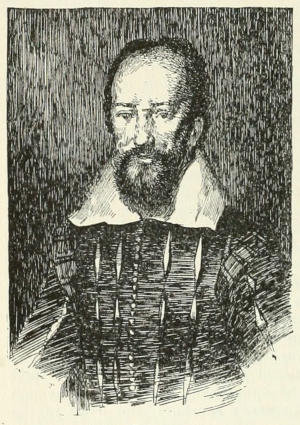
Sully
(1560-1641)
Sullyj gives the following account of his suffering: “I went to bed the night before, very early. I was awakened about three hours after midnight by the noise of all the bells and by the confused cries of the populace. St. Julien, my governor, went out hastily with my valet-de-chambre to learn the cause, and I have never since heard anything of those two men, who were, without doubt, sacrificed among the first to the public fury. I remained alone dressing myself in my chamber where a few minutes after I observed my host enter, pale and in consternation. He was of the religion, and having heard what was the matter he had decided on going to mass to save his life and preserve his house from plunder. He came to persuade me to do the same and to take me with him. I did not think fit to follow him. I resolved on attempting to get to the college of Burgundy where I studied, notwithstanding the distance of the house where I lived from that college, which made my attempt very dangerous. I put on my scholar’s gown, and taking a pair of large prayer books under my arm, I went down stairs. I was seized with horror as I went into the street at seeing the furious men running in every direction, breaking open the houses and calling out, ‘Kill! Massacre the Huguenots!’ and the blood which I saw shed before my eyes redoubled my fright; I fell in with a body of soldiers, who stopped me. I was questioned; they began to ill-treat me, when the books which I carried were discovered, happily for me, and served me for a passport. Twice afterwards I fell into the same danger, from which I was delivered with the same good fortune. At length I arrived at the college of Burgundy; a still greater danger awaited me there; the porter having twice refused me admittance, I remained in the middle of the street at the mercy of the ruffians, whose numbers kept increasing and who eagerly sought for their prey, when I thought of asking for the principal of the college, named Lafaye, a worthy man who tenderly loved me. The porter, gained by some small pieces of money, which I put into his hand, did not refuse to fetch him. This good man took me to his chamber, where two inhuman priests whom I heard talk of the Sicilian Vespers tried to snatch me from his hands to tear me to pieces, saying that the order was to kill even the infants at the breast. All that he could do was to lead me with great secrecy to a remote closet, where he locked me in. I remained there three whole days, uncertain of my fate and receiving no assistance but from a servant of this charitable man who came from time to time and brought me something to live upon.”k
EFFECTS OF THE MASSACRE
No allowable space would suffice for the records of such indiscriminate massacre. Charles, by his missives, ordered the same scene to be renewed in every town throughout his dominions. And the principal cities but too zealously responded. Fifty thousand Protestants are said to have fallen victims of the monarch’s order.[76] A few commanders refused. The viscount d’Orthe wrote back to the court, that he “commanded soldiers, not assassins.” And even the public executioner of a certain town, when a dagger was put into his hands, flung it away, and declared himself above the crime. The family of the Montmorencys, though Catholic, showed their abhorrence of these acts, and had the courage to take down the body of the admiral, which had been hung to the common gibbet, and to give it burial at Chantilly. Charles IX had not failed to visit it, while yet suspended. His followers complained of the odour. “The body of a dead enemy cannot smell otherwise than sweet,” was his reply. He now avowed that all was committed by his orders; and even held a “bed of justice” in his parliament for the very purpose. The trembling judges, with De Thou, their president, could not but applaud his zeal. As for De l’Hôpital, who had long been banished from court, and who had abandoned the friendship of Catherine since she had joined the Guises, he expected not to be spared, and ordered his domestics to throw open the gates. They disobeyed, and the murderers were unable to reach him. But De l’Hôpital did not long survive to deplore the miseries of his country. His words were, “After such horrors, I do not wish to live.” The joy of the pope, on the other hand, and of Philip of Spain, knew no bounds. The supreme pontiff went in state to his cathedral, and returned public thanks to heaven for this signal mercy.
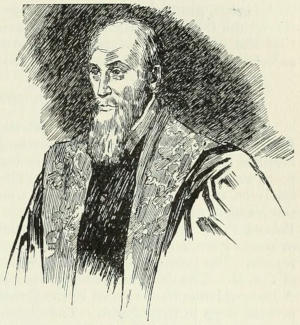
Michel De l’Hôpital
(1505-1573)
Charles had spared his sister’s husband, the young king of Navarre, and his companion the prince of Condé. It was only at the price of being converted. Death or the mass was the alternative offered to them; and both, after some resistance, yielded in appearance. On the other hand, mere abhorrence of the massacre caused many Catholic gentlemen to turn Huguenots. Amongst these was Henry de la Tour d’Auvergne, viscount de Turenne. After all, the crime, from which so much was expected, produced neither peace nor advantage. The Huguenots were, indeed, paralysed by the blow; but the Catholics were no less stupefied by remorse and shame. King Charles himself seemed stricken already by avenging fate. He was nervous and agitated. The blood he had spilled seemed ever to stream before his eyes. A continual fever took possession of him, and henceforth never ceased to consume him. The chiefs were equally languid, equally disunited. The Huguenots had time to rally, and to prepare for defence. Rochelle and Montauban shut their gates. Charles in his blindness sent La Noue, the Huguenot, to Rochelle; he became its commander. The town was at length besieged, and thousands of the Catholics fell before it; among them, not a few of the murderers who assisted in the massacre on St. Bartholomew’s eve. At length Charles, unable to conquer, and incompetent to carry on the war with vigour, granted the Huguenots a peace. Rochelle and Montauban preserved the freedom of their religion; and Charles had the pain of perceiving that the grand and sweeping crime to which he had been impelled had but enfeebled the Catholic party, instead of insuring its triumph.