Chapter VIII · DESPOTS AND TYRANTS OF THE FOURTEENTH AND FIFTEENTH CENTURIES (continued 2)
Reading edition
After a short peace, the restless and ambitious spirit of the duke of Milan again agitated Italy; and the papal dominions, as well as those of Florence, were the objects of his rapacity. After ravaging Romagna and defeating the Florentines at Anghiera, the Milanese general Piccinino was recalled into Lombardy once more to the attack of Venice. But besides her trusty general Gattamelata, the republic had secured the services of Francesco Sforza, son of Giacomuzzo, the favourite of Joanna II, queen of Naples. Francesco, endowed with the military talents of his father, after leading the forces of the duke of Milan, saw reason to abandon his patron, and devoted himself to the service of Venice. He was now opposed to Piccinino, his former companion in arms, and the annals of Italy are swelled with the splendid exploits of these great commanders. But the genius of Sforza, if not superior to, was at least more fortunate than that of his rival; and his glory was completed by a triumphant campaign, in which he discomfited Piccinino and rescued Verona and Brescia from the hands of Filippo. During a short interval of peace the duke of Milan diligently laboured to recover the friendship of Sforza, who was won over by the offer of Cremona and the hand of Bianca, the natural daughter of Filippo. But the latter years of this inconstant prince were spent in turmoil and distraction, and his new son-in-law became the object of his bitterest persecution. Again reconciled to the duke, and again exposed to his malice, Sforza still had good reason for preserving his connection with Milan, since Filippo had no legitimate issue, and his marriage with Bianca encouraged hopes of his succession to the duchy. At the close of his life the duke again invoked the aid of Sforza against the Venetians, and immediately afterwards terminated his tumultuous reign.
With him ended the dynasty of the Visconti in Milan. Without possessing the personal courage which distinguished many of his family, Filippo Maria Visconti was endowed with no common share of that keenness and subtlety which are frequently more efficacious than wisdom and valour. He has been praised for the clemency and generosity with which he treated his prisoners—no inconsiderable merit in an age full of perfidy and cruelty, when, the gates of the prison once closed upon the captive, his fate remained matter of doubt and secrecy. We have already seen his extraordinary moderation, when Alfonso of Aragon and his noble companions were led prisoners to Milan; nor are there wanting other examples of the magnanimous conduct of Filippo. But a dark stain rests upon his fame, from his unfeeling treatment of his duchess Beatrice, whose alliance and ample fortune had rendered him the most signal service, when in the outset of his reign he was beset by poverty and threatened with expulsion from his paternal inheritance. An improbable accusation of adultery with one of his domestics stretched the devoted victims on the rack; and condemned by the ravings of her imputed paramour the duchess suffered an ignominious death. In the last moments of her life Beatrice maintained a calmness which can seldom be commanded by guilt, and died with such solemn assertions of her innocence as seem to have convinced all save her obdurate husband (1418).
The House of Sforza
[1432-1447 A.D.]
Though the Milanese had long acquiesced in the hereditary succession of the Visconti, Sforza beheld his hopes endangered by the spirit of liberty which now prevailed in Milan. The late duke left no less than four wills, each constituting a different successor, and bequeathing the duchy according to the momentary dictates of his capricious temper. By one of these, Bianca, the wife of Sforza, was declared his heir; but the people rejected this attempt to dispose of them and the state, and with loud shouts of “liberty!” opposed the pretensions of Francesco. Despairing of present success, Sforza wisely resolved to temporise, and his views were soon favoured by the proceedings of Venice. Anxious to enrich herself with the spoils of Milan, that republic immediately commenced aggressions on the Milanese territory, and Sforza was called upon by the citizens to lead their army against the invaders. But while Sforza affected to defend the interests of Milan, he secretly negotiated with Venice; and at length, renouncing his allegiance to the Milanese, attacked their domains, and with the aid of the Venetians carried his conquests to the very gates of the city. In the height of his success Sforza found his prospects endangered by the perfidious policy of his ally. The senate, alarmed at his approaching power, now thought fit to intimate the necessity of suffering Milan to remain free under its new republican government, and even entered into a treaty with the Milanese for the preservation of their liberty and territory. The genius of Sforza triumphed in this emergency; he baffled the confederate hostility of Venice and Milan; and by a strict blockade of the city reduced the citizens to the last stage of famine. Within the walls a considerable party was ready to surrender into his hands; and the populace, maddened by hunger, anxiously besought their rulers to capitulate. An insurrection of a few plebeians drove the regents from the palace; and Sforza was received into the city with a burst of enthusiasm which saluted him by the title of duke of Milan.
[1447-1476 A.D.]
For four years Sforza encountered the enmity of Venice, until the Peace of Lodi in 1454 put an end to their languid warfare. He governed Milan during sixteen years with prudence and moderation; and, already possessed of a splendid territory, he wisely abstained from risking his possessions by any wanton aggression upon the other states. He availed himself, however, of the internal commotions of Genoa, who in 1435 had revolted from Filippo Visconti, and now again placed herself under the dominion of Milan. He maintained the respect of the Italian, as well as foreign powers; rendered himself generally acceptable to his people; and peaceably transmitted his duchy to his posterity. In that age of treachery and perfidy, the means by which he had obtained his power left no stigma on his reputation; it was sufficient that his bad faith and dissimulation had been crowned with success.
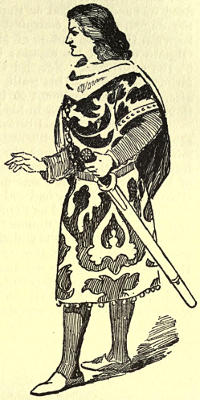
Court Costume of a Young Italian Nobleman, Fifteenth Century
On the death of Francesco Sforza, in 1466, he was succeeded by his eldest son Galeazzo Maria, a compound of ambition, lust, and cruelty. Contrary to the wishes of her brother Amadeus IX, duke of Savoy, he had espoused Bona, daughter of Duke Louis, and sister of Charlotte married to Louis XI, king of France. But the nuptial tie placed no restraint on his disorderly life; the dwellings of his subjects were perpetually invaded by his illicit passions, and the honour of many noble families was violated by his amours. His savage disposition made him no less odious; and he delighted in aggravating the punishment of death by wanton and refined tortures. At length three young men of noble birth united in the design of destroying the tyrant. Carlo Visconti, Girolamo Olgiato, and Andrea Lampugnano had been educated under the same master, and imbibed, with the love of liberty, the dangerous lesson that the assassination of a tyrant confers immortal fame. Their patriotism, however, was not unmixed with personal motives, for all had been privately injured by the object of their vengeance. The bloody deed was accomplished on the festival of St. Stephen; Galeazzo fell beneath the daggers of the conspirators, as he entered the church of the Martyr between the ambassadors of Mantua and Ferrara. In the general confusion Olgiato effected his escape; but the other two were instantly put to death by the multitude. Nor did Olgiato long elude the pursuit of justice. His father, in horror at his guilt, refused him admission within his doors; and after a short concealment in the house of a friend he was dragged to execution, and died exulting in his ill-gained immortality.
The conspirators had believed that Milan would approve their murderous act, and rejoice in her liberation. But an indolent submission possessed the minds of the people, and the vices of their oppressor appear to have been forgotten in the emotions produced by his miserable fate. The young son of the murdered duke was quietly acknowledged as his successor; and as Gian Galeazzo Maria had only attained his eighth year, his mother, Bona of Savoy, was recognised as regent during his minority. Aided by her minister and favourite, Cecco Simonetta, the duchess soon found herself sufficiently strong to counteract the sinister machinations of her husband’s brothers, who were anxious to wrest the government out of her hands. Sforzino, duke of Bari, Lodovico Sforza, surnamed Il Moro, the Moor, Ottaviano, and the cardinal Ascanio were compelled to quit Milan—the first being banished to his duchy, the second to Pisa, and the cardinal to Perugia; whilst Ottaviano, in attempting his escape, was drowned in the river Adda.c
FOOTNOTES
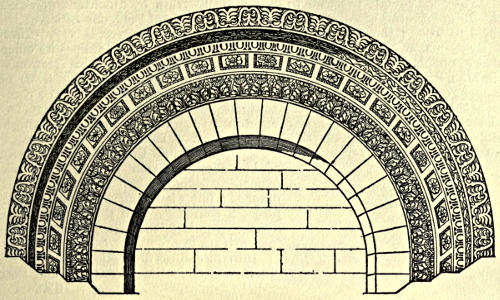
West Door Baptistry, Pisa