Chapter IX
Reading edition
ORTHOPTERA CONTINUED—BLATTIDAE, COCKROACHES
Fam. III. Blattidae—Cockroaches.
Orthoptera with the head deflexed, in repose concealed from above, being flexed on to the under-surface with the anterior part directed backwards. All the coxae large, free, entirely covering the sternal surfaces of the three thoracic segments, as well as the base of the abdomen. The sternal sclerites of the thoracic segments little developed, being weak and consisting of pieces that do not form a continuous exo-skeleton; tegmina and wings extremely variable, sometimes entirely absent. The wings possess a definite anal region capable of fan-like folding; rarely the wing is also transversely folded. The three pairs of legs differ but little from one another.
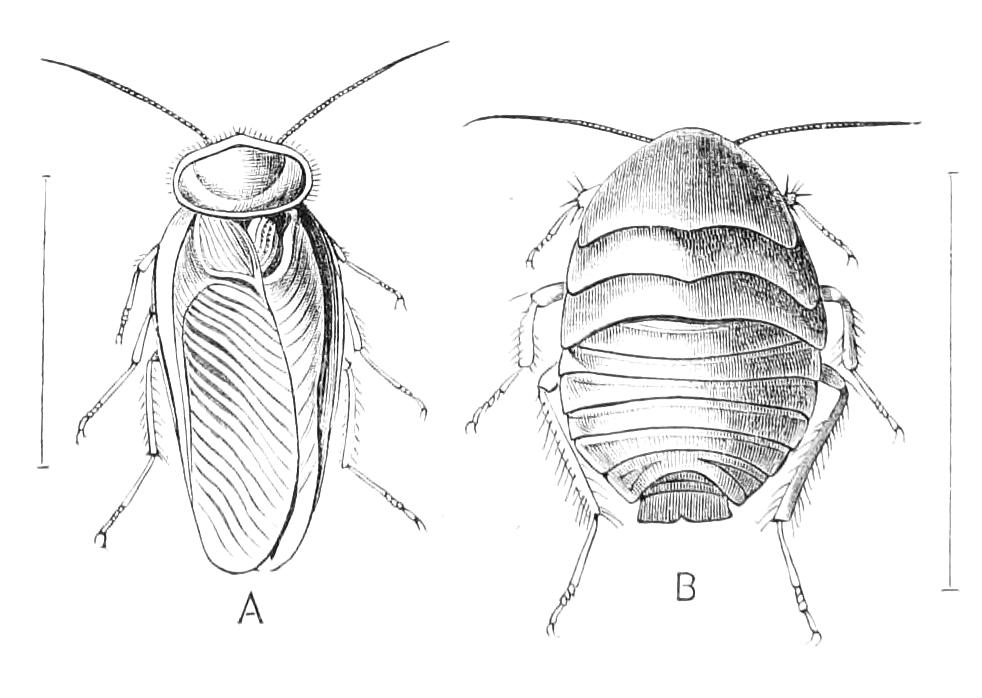
Fig. 118.—Heterogamia aegyptiaca. A, male; B, female. (After Brunner.)
The Blattidae, or cockroaches, are an extensive family of Insects, very much neglected by collectors, and known to the ordinary observer chiefly from the fact that a few species have become naturalised in various parts of the world in the houses of man. One such species is abundant in Britain, and is the "black beetle" of popular language; the use of the word beetle in connexion with cockroaches is, however, entomologically incorrect. One or two members of the family are also well known, owing to their being used as the "corpora vilia" for students commencing anatomical investigation of the Arthropoda; for this purpose they are recommended by their comparatively large size and the ease with which an abundant supply of specimens may always be procured, but it must be admitted that in some respects they give but a poor idea of Insect-structure, and that to some persons they are very repulsive.
The inflexed position of the head is one of the most characteristic features of the Blattidae; in activity it is partially released from this posture, but the mouth does not appear to be capable of the full extension forwards that is found in other Insects that inflex the head in repose. The labium is deeply divided, the lingua forms a large lobe reposing on the cleft. The maxillary palpi have two basal short joints, and three longer joints beyond these; the labial palps consist of three joints of moderate length. The under-surface of the head is formed in large part by the submentum, which extends back to the occipital foramen.
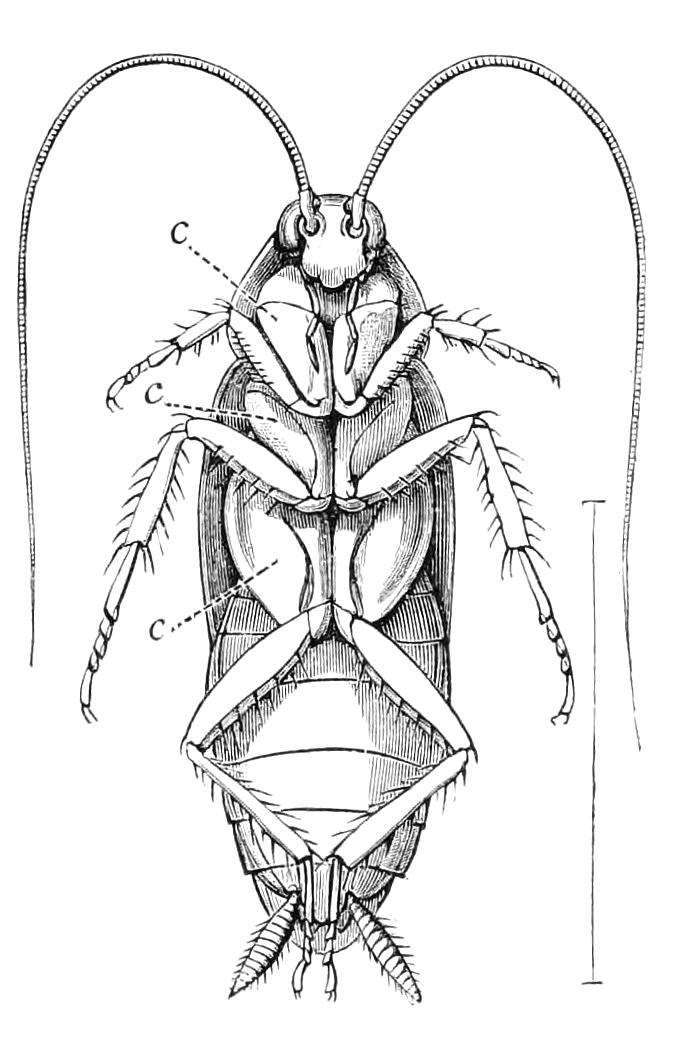
Fig. 119.—Under-surface of Periplaneta australasiae. c, Coxae.
The front of the head is the aspect that in repose looks directly downwards; the larger part of it is formed by the clypeus, which is separated from the epicranium by a very fine suture angulate in the middle; there is a large many-facetted eye on each side; near to the eye a circular space serves for the insertion of the antenna; close to this and to the eye there is a peculiar small area of paler colour, frequently membranous, called the fenestra, and which in the males of Corydia and Heterogamia is replaced by an ocellus. The antennae are very elongate and consist of a large number of minute rings or joints, frequently about 100. The head is not inserted directly in the thorax, as is the case in so many Insects; but the front of the thorax has a very large opening, thus the neck between it and the head is of more than usual importance; it includes six cervical sclerites.
The pronotum is more or less like a shield in form, and frequently entirely conceals the head, and thus looks like the most anterior part of the body; usually it has no marked angles, but in some of the apterous forms the hind angles are sharp and project backwards. In contrast to the pronotum the prosternum is small and feeble, and consists of a slender lateral strip on each side, the two converging behind to unite with a median piece, the prosternum proper. None of these pieces of the ventral aspect of the prothorax are ordinarily visible, the side-pieces being covered by the inflexed head, and the median piece by the great coxae. In some of the winged Blattidae (Blabera, e.g.) there is at the base of each anterior coxa a small space covered by a more delicate membrane, that suggests the possibility of the existence of a sensory organ there (Fig. 120, i).[146] At the base of—above and behind—the front coxa the prothoracic spiracle is situate.
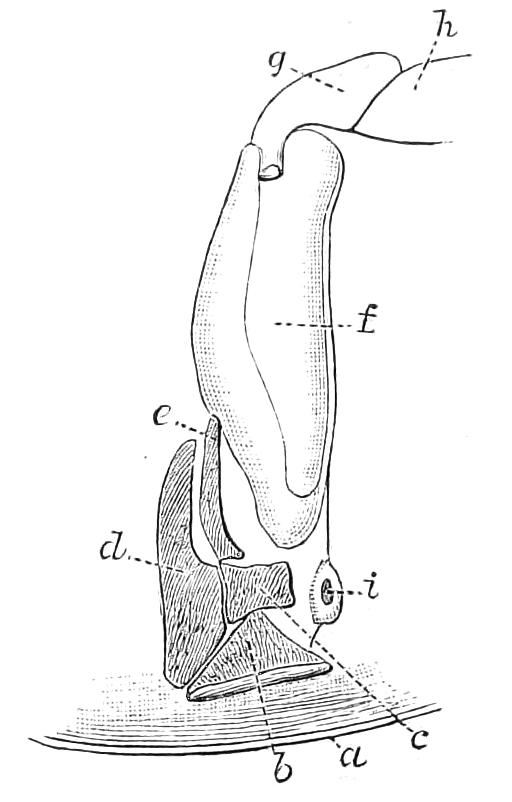
Fig. 120.—Base of front leg and portion of prothorax of Blabera gigantea. a, Under-side of pronotum; b, fold of pronotum?; c, epimeron?; d, episternum?; e, trochantin; f, coxa; g, trochanter; h, base of femur; i, presumed sense organ.
The meso- and meta-thoracic segments differ but slightly from one another; the notal or dorsal pieces are moderately large, while the sternal or ventral are remarkably rudimentary, and are frequently divided on the middle line. Connected with the posterior part of each sternum there is a piece, bent upwards, called by some anatomists the furca; when the sterna are divided the furca may extend forwards between them; in other cases it is so obscure externally as to leave its existence in some doubt.
The sterna in Blattidae are remarkable for their rudimentary structure. This is probably correlated with the great development of the coxae, which serve as shields to the lower part of the body. The pieces of the sterna are not only small, but are also of feeble consistence—semi-membranous, in fact—and appear like thicker portions of the more extensive and delicate membrane in which they are situate; they sometimes differ considerably in the sexes of the same species. The coxae have very large bases, and between them and the sterna are some pieces that are grooved and plicate, so that it is not easy to decide as to their distinctions and homology (Fig. 120). The second breathing orifice is a slit placed in a horny area in the membrane between the middle and hind coxae.
The legs are remarkable for the large and numerous spines borne by the tibiae, and frequently also by the femora: the trochanters are distinct and of moderate size; the tarsi are five-jointed, frequently the basal four joints are furnished with a pad beneath; the fifth joint is elongate, bears two claws, and frequently between these a projecting lobe or arolium; this process scarcely exists in the young of Stilopyga orientalis, the common cockroach, though it is well developed in the adult. The hind body or abdomen is always large, and its division into rings is very visible, but the exact number of these that can be seen varies according to age, sex, species, and to whether the dorsal or ventral surface be examined. The differences are chiefly due to the retraction and inflexion of the apical segments; the details of the form of these parts differ in nearly every species. It is, however, considered that ten dorsal and ventral plates exist, though the latter are not so easily demonstrated as the former. The basal segment is often much diminished, the first dorsal plate being closely connected with the metanotum, while the first ventral may be still more rudimentary; much variety exists on this point. In the female two of the ventral terminal plates are frequently inflexed, so as to be quite invisible without dissection. From the sides of the tenth segment spring the cerci, flat or compressed processes very various in size, length, and form, usually more or less distinctly jointed. Systematists call the seventh ventral plate of the female the "lamina subgenitalis," or the "lamina subgenitalis spuria," the concealed eighth plate being in this latter case considered the true subgenital plate. In the male this term is applied to the ventral plate of the ninth segment, the corresponding dorsal plate being called the "lamina supra-analis." These terms are much used in the systematic definitions of the genera and larger groups.
The males, in addition to the cerci alluded to as common to both sexes, are provided on the hind margin of the lamina subgenitalis with a pair of slender styles. These are wanting in the females, but in the common cockroach the young individuals of that sex are provided, like the male, with these peculiar organs. M. Peytoureau has described[147] the mode of their disappearance, viz. by a series of changes at the ecdyses. Cholodkovsky, who has examined the styles, considers them to be embryologically the homologues of true legs.[148] These styles are said not to be present in any shape in some species—Ectobia, Panesthia, etc.; this probably refers only to the adults. In some cases a curious condition occurs, inasmuch as one of the two styles is absent, and is replaced by a notch on the right side, thus causing an asymmetry—Phyllodromia, Temnopteryx, etc.
It has been found in several species that there are eight pairs of abdominal spiracles, making, with the two thoracic, ten pairs in all. The first of the abdominal spiracles is larger than the others, and in the winged species may be easily detected by raising the tegmina and wings, it being more dorsal in position than those following, which are in some species exposed on the ventral surface owing to the cutting away of the hind angles of the ventral plates; but the terminal spiracles are in all cases difficult to detect, and it is possible that the number may not be the same in all the species of the family. The cerci exhibit a great deal of variety. In the species with elongate tegmina and wings the cerci are elongate, and are like antennae in structure; in many of the purely apterous forms the cerci appear to be entirely absent (cf. Fig. 130, Gromphadorhina), but on examination may be found to exist in the form of a small plate, or papilla scarcely protuberant. In the males of Heterogamia they are, on the contrary, very like little antennae; in the unwinged females of this genus they are concealed in a chink existing on the under-surface of the apex of the body.
The alar organs of Blattidae are of considerable interest from several points of view. They exist in various conditions as regards size and development, and in some forms are very large; each tegmen in some species of the genus Blabera (Fig. 132) may attain a length of nearly three inches; in other cases wings and tegmina are entirely absent, and various intermediate conditions are found. In Fig. 121 we give a diagram of the tegmen or front wing, A, and the hind wing, B, to explain the principal nervures and areas. The former are four in number, and, adopting Brunner's nomenclature[149] for them, are named proceeding from before backwards mediastinal, a; radial, b; infra-median (or ulnar), c; and dividens, d. An adventitious vein, vena spuria, existing in the hind wings of certain genera is marked sp in B.
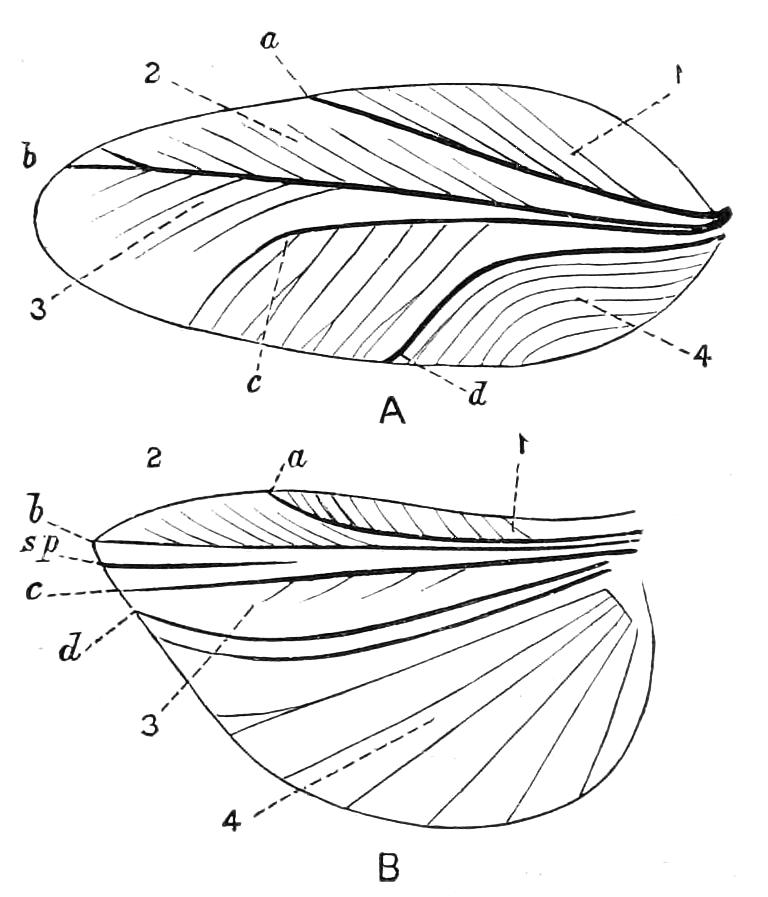
Fig. 121.—Diagram of tegmen, A, and wing, B, in Blattidae. Nervures: a, mediastinal; b, radial; c, ulnar or infra-median; d, dividens; sp, spuria. Areas: 1, mediastinal or marginal; 2, scapular or radial; 3, median; 4, anal or axillary.
The vena dividens is of great importance, as it marks off the anal or axillary field, which in both tegmen and wing has a different system of minor veins from what obtains in the rest of the organ; the veins being in the anterior region abundantly branching and dichotomous (Fig. 132), while in the anal field there is but little furcation, though the nervures converge much at the base. The mediastinal gives off minor veins towards the front only, the radial gives off veinlets at first towards the front, but nearer the tip of the wings sends off minor veins both backwards and forwards. The infra-median or ulnar vein is very variable; it is frequently abbreviated, and on the whole is of subordinate importance to the other three. These latter thus form four chief areas or fields, viz.—1, mediastinal or marginal; 2, scapular or radial; 3, median; and 4, anal. These nervures and divisions may be traced in a large number of existing and fossil Blattidae, but there are forms existing at present which it is difficult to reduce to the same plan. In Euthyrhapha, found in the Pacific Islands, the hind wings are long and project beyond the tegmina, and have a very peculiar arrangement of the nervures; the species of Holocampsa also possess abnormal alar organs, while the structure of these parts in Diaphana (Fig. 122) is so peculiar that Brunner wisely refrains from attempting to homologise their nervures with those of the more normal Blattidae. The alar organs are frequently extremely different in the two sexes of the same species of Blattidae, and the hind wing may differ much from the tegmen as regards degree of departure from the normal. So that it is not a matter for surprise that the nervures in different genera cannot be satisfactorily homologised.
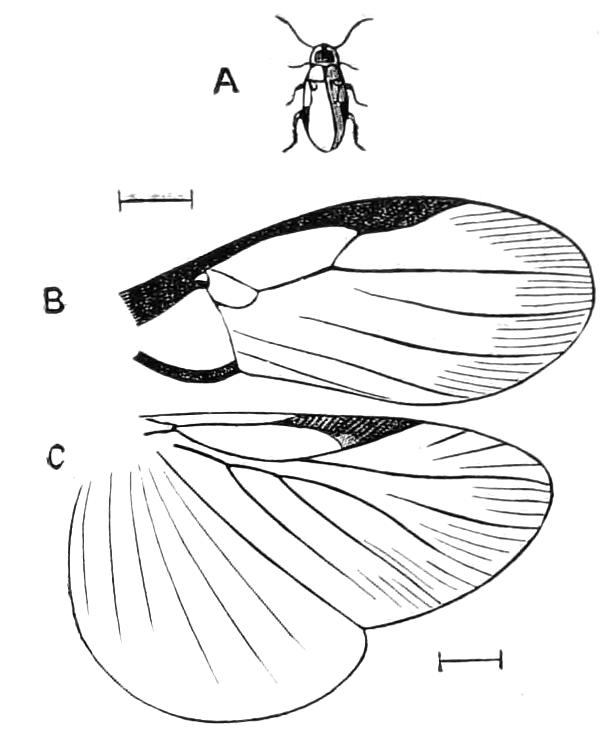
Fig. 122.—Diaphana fieberi. Brazil. A, The Insect, natural size; B, tegmen, and C, wing, magnified. (After Brunner.)
But the most peculiar wings in the family are the folded structures found in some forms of the groups Ectobiides and Oxyhaloides [Anaplectinae and Plectopterinae of de Saussure]. These have been studied by de Saussure,[150] and in Fig. 123 we reproduce some of his sketches, from which it will be seen that in B and C the wing is divided by an unusual cross-joint into two parts, the apical portion being also longitudinally divided into two pieces a and b. Such a form of wing as is here shown has no exact parallel in any of the other groups of Insects, though the earwigs and some of the Coleoptera make an approach to it. This structure permits a very perfect folding of the wing in repose. The peculiarities exhibited have been explained by de Saussure somewhat as follows. In the ordinary condition of Orthoptera the axillary or anal field (P) when the wings are closed collapses like a fan, and also doubles under the anterior part (H) of the wing along the line a a, in Fig. 123, A, the result being similar to that shown by our Fig. 124. It will be noticed in Fig. 123, A, that a small triangular area (t) exists at the tip of the wing just where the fold takes place, so that when the wing is shut this little piece is liberated, as shown in t, Fig. 124. In many Blattidae, e.g. Blabera (Fig. 132), no trace of this little intercalated piece can be found, but in others it exists in various degrees of development intermediate between what is shown in Thorax porcellana (Fig. 123, A) and in Anaplecta azteca (123, B), so that a, b of the latter may be looked on as a greater development of the condition shown in A at t. It will be noticed that the superadded part of the wing of 123, B, possesses no venation, being traversed only by the line along which it folds; but in the wing of Diploptera silpha, 123, C, the corresponding part is complexly venated. This venation, as Brunner says,[151] is not an extension of the ordinary venation of the wing, but is sui generis. It is curious that though all the degrees of development between A and B exist in various forms of the tribes Ectobiides and Oxyhaloides, yet there is nothing to connect the veined apex of Diploptera with the unveined one of Anaplecta.
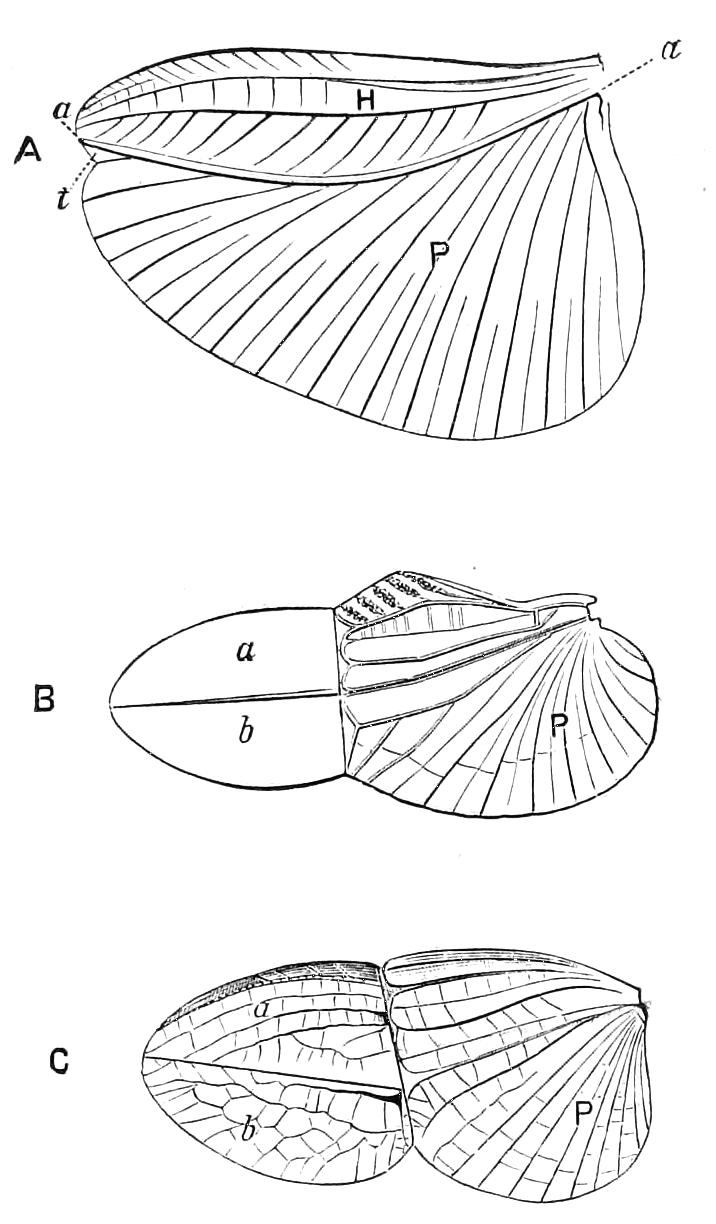
Fig. 123.—Hind wings of Blattidae. A, Thorax porcellana; B, Anaplecta azteca; C, Diploptera silpha. (After de Saussure.)
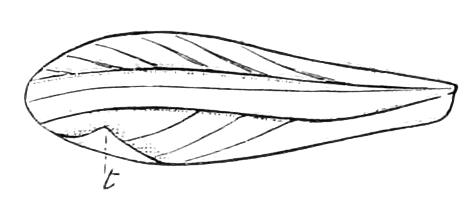
Fig. 124.—Hind wing of Blatta folded. t, Free triangular area. (After de Saussure.)
The internal anatomy of Blattids has been investigated in only one or two species. There are no great peculiarities, but some features of minor interest exist. The alimentary canal (Fig. 125) is remarkable on account of the capacious crop, and the small gut-like, chylific ventricle; eight elongate pouches are situate on this latter part at its junction with the gizzard.
The Malpighian tubules are very numerous and delicate; there are extensive salivary glands and reservoirs; and on the anterior part of the true stomach there are eight caecal diverticula. The great chain of the nervous system consists in all of eleven ganglia—two cephalic, three thoracic, and six abdominal.
The ovaries in Stilopyga orientalis consist each of eight egg-tubes, placed at the periphery of a common receptacle or oviduct, the pair of receptacles themselves opening into a common chamber—the uterus—which is surrounded by a much branching serific or colleterial gland. In this chamber the egg-case is formed from the secretion of the gland just mentioned. According to Miall and Denny,[152] there is a spermatheca which opens not into the uterus but into the cloacal chamber behind it. Lowne doubts this diverticulum being a true spermatheca. The manner in which the eggs are fertilised and their capsule modelled is uncertain.[153]
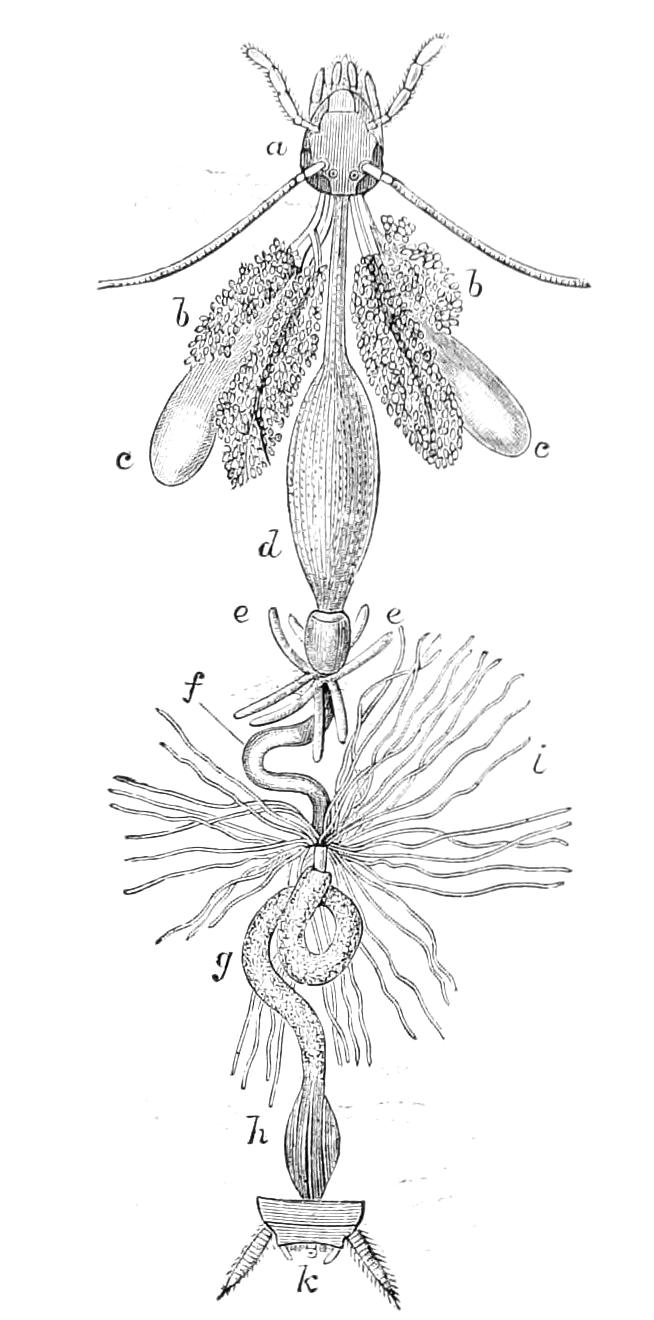
Fig. 125.—Alimentary canal of Stilopyga orientalis. (After Dufour.) a, Head; b, salivary glands; c, salivary reservoir; d, crop; e, diverticula placed below proventriculus; f, stomach; g, small intestine; h, rectum; i, Malpighian tubes; k, extremity of hind body.
The internal reproductive organs of the male are very complex in Stilopyga orientalis; each testis consists of a number (30 to 40) of vesicles placed on a tube which is prolonged to form the vas deferens. There is a very peculiar large complex gland consisting of longer and shorter utricles, opening into the vesiculae seminales, and forming a "mushroom-shaped gland."[154] This gland is much larger than the testes proper, which, it is said, lose early their functional activity in the species in question, and shrivel. There is another important accessory gland, the conglobate gland of Miall and Denny, opening on a portion of the external copulatory armour.
Although some species of Blattidae are domesticated in our houses, and their bodies have been dissected by a generation of anatomists, very little is known as to their life histories. The common "black beetle" of the kitchen is said by Cornelius to be several years in attaining the adult state. Observations made at Cambridge by the writer, as well as others now being carried on there by Mr. H. H. Brindley, quite confirm this view, the extent of growth accomplished in several months being surprisingly little, and the amount of food consumed very small. It is therefore not improbable that the life of an individual of this species may extend to five years. Phyllodromia germanica, a species that is abundant in the dwellings of the peoples of north-eastern Europe, attains its full development in the course of a few months.
We have already alluded to the fact that in the Blattidae the eggs are laid in a capsule formed in the interior of the mother-Insect. This capsule is a horny case varying much in size and somewhat less in form in the different species; it is borne about for some time by the mother, who may not infrequently be seen running about with it protruding from the hinder part of the body. Sooner or later the capsule is deposited in a suitable situation, and the young cockroaches emerge; it is said that they are sometimes liberated by the aid of the mother. Mr. Brindley has found it very difficult to procure the hatching of the young from their capsules.
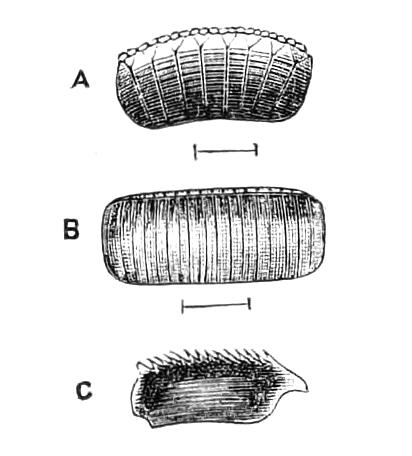
Fig. 126.—Egg-capsules of European Blattidae. A, Ectobia lapponica; B, Phyllodromia germanica; C, Heterogamia aegyptiaca. (After Brunner.)
It is known that some Blattidae are viviparous. In the case of one such species, Panchlora viridis, it appears probable that the egg-capsule is either wanting, or is present in only a very imperfect form.[155]
On emerging the young Blatta is in general form very similar to the parent, though usually much paler in colour. After casting the skin an uncertain number of times—not less than five, probably as many as seven—it reaches the adult condition, the changes of outer form that it undergoes being of a gradual nature, except that at the last ecdysis the wings—in the case of the winged species—make their appearance, and the terminal segments of the body undergo a greater change of form. What mutations of shape may be undergone by the thoracic segments previous to the final production of the wings has not apparently been accurately recorded, Fischer's opinion being evidently based on very slight observation. The little that has been recorded as to the post-embryonic development since the observations of Hummel[156] and Cornelius[157] will be found in the works of Brunner.[158] According to this latter authority, in the wingless species the terminal segments of the body have the same form in the early stages as they have in the adult state, so that this latter condition can only be recognised by the greater hardness of the integument. When tegmina or wings are present in a well-developed form in a Blattid, it is certain that the Insect is adult; and when there can be seen at the side of the mesonotum or metanotum a piece, however small, separated by a distinct suture, it may be correctly assumed that the individual is an adult of a species having only rudimentary alar organs. The adult female of the common Stilopyga orientalis shows this phenomenon.
The cockroaches are remarkable for the excessive rapidity with which they run, or rather scurry, their gait being very peculiar. The common domestic forms, when alarmed, disappear with great agility, seeking obscure corners in which to hide themselves, it being part of their instinct to flee from light. Hence they are called lucifugous, and are most of them entirely nocturnal in their activities. In the South of Europe and other warmer regions many Blattidae may, however, be found on bushes and foliage in the daytime; these, when alarmed, fall down and run off with such speed and in so tortuous a manner, that it is a very difficult matter to seize them. It is recorded that the males of the genus Heterogamia are attracted by lights, though their apterous females keep themselves concealed underground in sandy places.
We may take this opportunity of alluding to the attraction that light exerts on Insects. Many species that conceal themselves during the daytime and shun light as if it were disagreeable, are at night-time so fascinated by it that it is the cause of their destruction. The quantity of Insects killed in this way by electric and other bright lights is now enormous; in many species the individuals immolate themselves by myriads. It would appear that only nocturnal and winged species are so attracted. So far as we know, light has no fascination for Insects except when they are on the wing. The phenomenon is not understood at present.
The food of Blattidae is believed to be of a very mixed character, though Brunner considers that dead animal matter is the natural nutriment of the members of this family. It is well known that the common cockroach eats a variety of peculiar substances; its individuals undoubtedly have the somewhat too economical habit of eating their own cast skins and empty egg-capsules, but in this they only act like many other much admired Insects. S. orientalis is gregarious, and the individuals are very amicable with one another; small specimens sit on, or run over the big individuals, and even nestle under them without their displaying the least resentment. The common cockroach is a rather amusing pet, as the creatures occasionally assume most comical attitudes, especially when cleaning their limbs; this they do somewhat after the fashion of cats, extending the head as far as they can in the desired direction, and then passing a leg or antenna through the mouth; or they comb other parts of the body with the spines on the legs, sometimes twisting and distorting themselves considerably in order to reach some not very accessible part of the body.
There is very little information extant as to the domestic Blattidae found in parts of the world outside Europe, but it seems that there are numerous species that prefer the dwellings of man, even though they only tolerate the owners. Belt says[159] "the cockroaches that infest the houses of the tropics are very wary, as they have numerous enemies—birds, rats, scorpions, and spiders; their long trembling antennae are ever stretched out, vibrating as if feeling the very texture of the air around them; and their long legs quickly take them out of danger. Sometimes I tried to chase one of them up to a corner where on a wall a large cockroach-eating spider stood motionless looking out for his prey; the cockroach would rush away from me in the greatest fear, but as soon as it came within a foot of its mortal foe nothing would force it onwards, but back it would double, facing all the danger from me rather than advance nearer to its natural enemy." To this we may add that cockroaches are the natural prey of the fossorial Hymenoptera of the group Ampulicides, and that these wasps sometimes enter houses in search of the Insects.
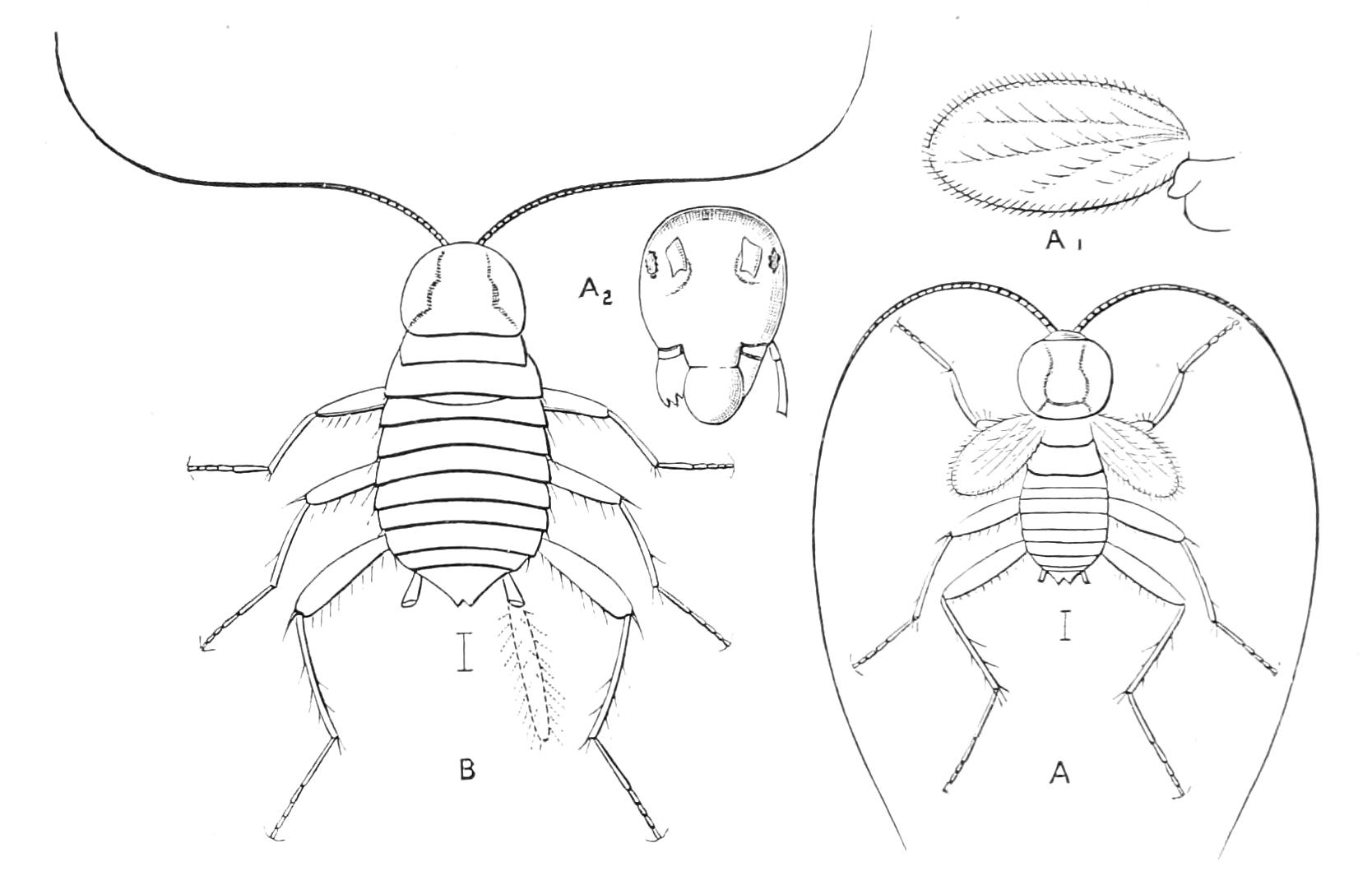
Fig. 127.—Nocticola simoni. A, male; A1, tegmen and rudiment of wing; A2, front of head; B, female. The cerci are broken, in B the right one is restored in outline. (After Bolivar.)
We have already noticed the considerable difference that exists in many cases between the sexes of the same species. This is sometimes carried to such an extent that nothing but direct observation could make us believe that the males and females are of one kin. Fig. 118 (p. 220) shows a case of this kind. Though the young as a rule are excessively similar to the adults, yet this is by no means invariably the case. In some of the more amply winged forms, such as Blabera, the young is about as different from the adult as the female of Heterogamia is from its male. In Blattidae it is always the case—so far as is yet known—that when there is a difference as regards the alar organs between the two sexes, it is the male that has these structures most developed, and this even when they can be of little or no use for purposes of flight.
Among the most interesting forms of the family are the two species of the genus Nocticola, recently discovered by M. Simon in caves in the Philippine Islands.[160] They are amongst the smallest of the Orthoptera, the male being scarcely ⅛ of an inch long. In the larval state of N. simoni the ocular organs exist as three ocelli, or facets, on each side of the head, and in the perfect state the number is increased somewhat, as shown in Fig. 127, A2. In the second species of the genus the female is quite blind (the male being still undiscovered). The fenestræ in Nocticola are absent; the tegmina and wings are totally wanting in the female (Fig. 127, B), but are present in a very peculiar condition in the male (Fig. 127, A1). There are other anomalies in the structure of these cavernicolous Insects, the cerci being apparently of peculiar structure, and the spines of the legs more hair-like than usual. The condition of the eyes is remarkable; the peculiarity in their development is worthy of study.
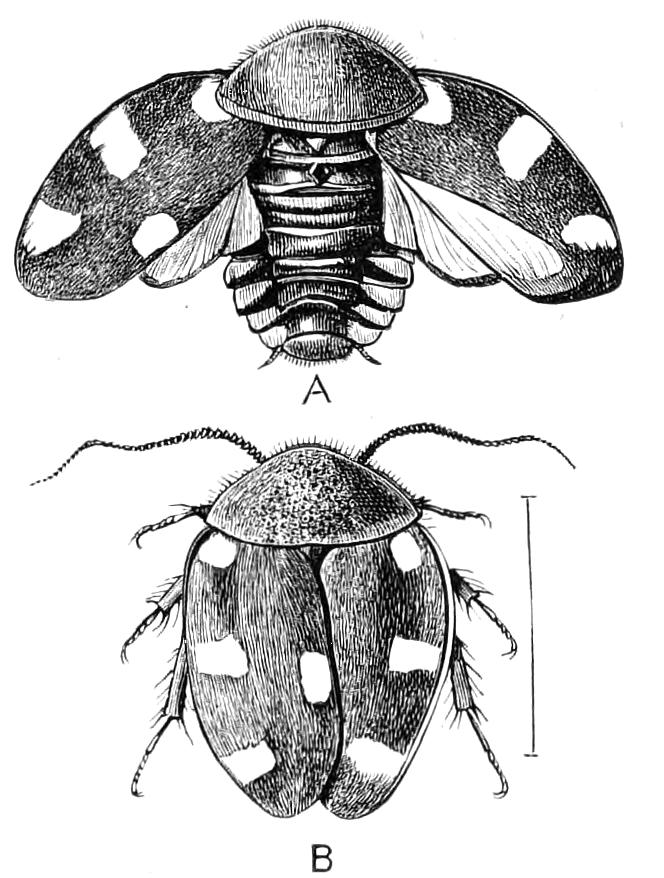
Fig. 128.—Corydia petiveriana, with tegmina extended, A; closed, B.
To those who are acquainted with Blattidae only through our domestic "black beetle" it may seem absurd to talk of elegance in connexion with cockroaches. Yet there are numerous forms in which grace and beauty are attained, and some exhibit peculiarities of ornamentation that are worthy of attention. Corydia petiveriana (Fig. 128) is a common cockroach in East India. It has an effective system of coloration, the under wings and the sides of the body being vividly coloured with orange yellow; when the tegmina are closed the upper surface of the body is of a velvet-black colour, with cream-coloured marks; these spots are different on the two tegmina, as shown in Fig. 128, A, but are so arranged that when the tegmina are closed (Fig. 128, B) a symmetrical pattern is produced by the combination of the marks of the two differently spotted tegmina. It is very curious to notice the great difference in the colour of the part of the right tegmen that is overlapped by the edge of the left one; this part of the tegmen being coloured orange yellow in harmony with the wings. The result of the remarkable differentiation of the colours of the two tegmina may be summarised by saying that on the right one the colour of a part is abruptly contrasted with that of the rest of the organ, so as to share the system of coloration of the under-wings and body, while the corresponding part of the other tegmen is very different, and completes the system of symmetrical ornamentation of the upper surface.
Many other members of the Blattidae have an elegant appearance, and depart more or less from their fellows in structural characters, with the result of adding to their graceful appearance; in such cases, so far as at present known, these Insects are brightly coloured. Thus Hypnorna amoena (Fig. 129) has the antennae banded in white, black, and red, while the overlapping part of the tegmina is arranged so as to bring the line of junction between them nearly straight along the middle line of the body, and thus produce a more symmetrical appearance than we find in other cockroaches. The head in this Insect is not so concealed as usual, and this undoubtedly adds somewhat to the effective appearance of this cockroach. This visibility of the front of the head in Hypnorna is not, as would be supposed, owing to its being less inflexed than usual. On the contrary, the head is quite as strongly inflexed as it is in other Blattidae, but the part just at the front of the thorax is unusually elongate, so that the eyes are exposed and the Insect has a larger field of vision. This interesting Insect belongs to the tribe Oxyhaloides [Plectopterinae Sauss.], in which group the most highly developed folded wings occur.
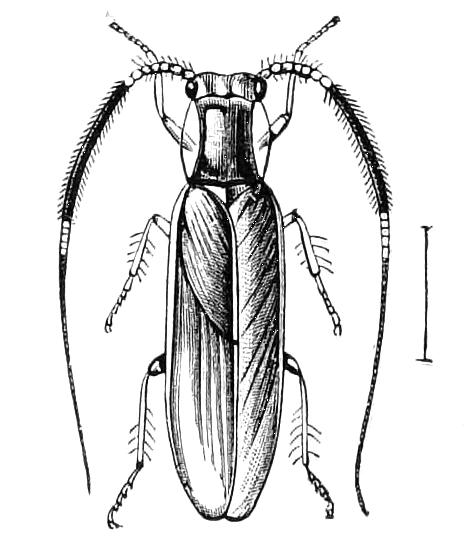
Fig. 129.—Hypnorna amoena. Central America. Tribe Oxyhaloides. (After de Saussure.)
The wingless forms never exhibit the grace and elegance possessed by some of the more active of the winged Blattidae. One of them, Gromphadorhina portentosa, found in Madagascar (Fig. 130), is a very robust Insect, and attains a length of 78 millim.—somewhat more than 3 inches. This Insect has projections on the thorax that remind us of the horns that exist in some of the Lamellicorn beetles.
Little has been yet written as to the resemblances of Blattidae to other species of their own family, or to other creatures, but it is probable that such similarities will be found to prevail to a considerable extent. W. A. Forbes has called attention[161] to the larva of a Blattid from Brazil as being remarkable for its superficial resemblance to an Isopod crustacean. Some of the wingless forms have a great resemblance to the small rolling-up Myriapods of the group Glomerides; Pseudoglomeris fornicata, of which we figure the female (Fig. 131), has received its name from this resemblance. The females of the S. African genus Derocalymma possess this Glomerid appearance, and have a peculiar structure of the prothorax, admitting of a more complete protection of the head. Brunner states that the wingless kinds of Derocalymma roll themselves up like wood-lice. In many of the forms of this tribe—Perisphaeriides—the males are winged, though the females are so like Myriapods. According to de Saussure[162] the gigantic Megaloblatta rufipes bears an extreme resemblance in appearance to the large cockroaches of the genus Blabera.
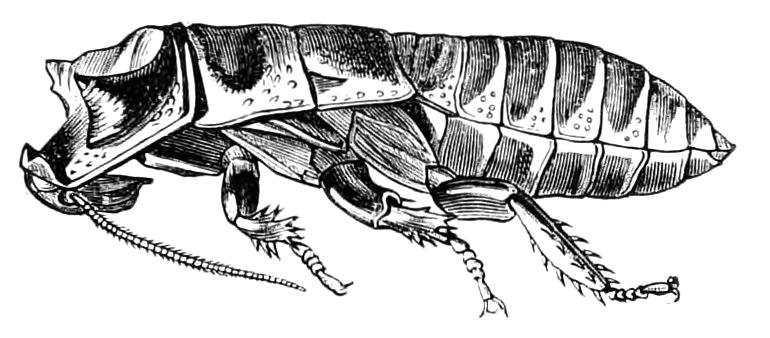
Fig. 130.—Gromphadorhina portentosa, × ⅔. Tribe Perisphaeriides. (After Brunner.)
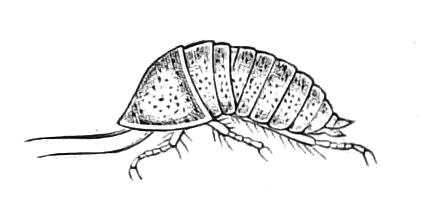
Fig. 131.—Pseudoglomeris fornicata, ♀. Burma. Tribe Perisphaeriides. (After Brunner.)
Some of the species of Holocompsa remind us strongly of Hemiptera of the family Capsidae; they have an arrangement of colours similar to what prevails in that group, and their tegmina and wings which, as being those of Blattids may be said to be abnormally formed, resemble in texture and the distribution of the venation those of the Hemiptera. These Insects are closely allied to Diaphana, of which genus we have figured a species (Fig. 122).
There is very little evidence on which to base an estimate of the number of species of Blattidae existing in the world at present. Probably the number extant in collections may amount to 1000 or thereabouts, and the total existing in the world may be as many as 5000. The species of Blattidae cannot tolerate cold, and are consequently only numerous in tropical regions. Europe possesses about twenty species, and in Britain there are only three that are truly native; these are all small Insects belonging to the genus Ectobia, and living out of doors, amongst leaves, under bushes, and in various other places. We have, however, several other species that have been introduced by the agency of man, and these all live under cover, where there is artificial warmth and they are protected from the inclemencies of the winter season. The commonest of these forms is Stilopyga orientalis, the "black beetle" of our kitchens and bakehouses. This Insect is said to have been brought to Europe from "Asia" about 200 years ago, but the evidence as to its introduction, and as to the country of which it is really a native, is very slight. It is indeed said[163] that S. orientalis has been found in peat in Schleswig-Holstein. Periplaneta americana is a larger Insect, and is common in some places; it is apparently the species that is most usually found on board ships, where it sometimes multiplies enormously, and entirely devours stores of farinaceous food to which it obtains access: it is known that sometimes a box or barrel supposed to contain biscuits, on being opened is found to have its edible contents entirely replaced by a mass of living cockroaches. Fortunately Periplaneta americana has not spread widely in this country, though it is found in great numbers in limited localities; one of the best known of which is the Zoological Gardens in the Regent's Park at London. Periplaneta australasiae is very similar to P. americana, but has a yellow mark on the shoulder of each tegmen. This has obtained a footing in some of the glass-houses in the Botanic Gardens at Cambridge and Kew; and it is said to be fairly well established in Belfast. Another of our introduced domestic cockroaches is Phyllodromia germanica, a much smaller Insect than the others we have mentioned. It has only established itself at a few places in this country, but it is extremely abundant in some parts of Northern and Eastern Europe. It has been increasing in numbers in Vienna, where, according to Brunner, it is displacing Stilopyga orientalis. In addition to these, Rhyparobia maderae and species of the genus Blabera have been met with in our docks, and are possibly always to be found there. They are Insects of much larger size than those we have mentioned. We figure the alar organs of one of these species of Blabera of the natural size: the species in this genus are extremely similar to one another. Blaberae are known in the West Indies as drummers, it being supposed that they make a noise at night,[164] but details in confirmation of this statement are wanting.
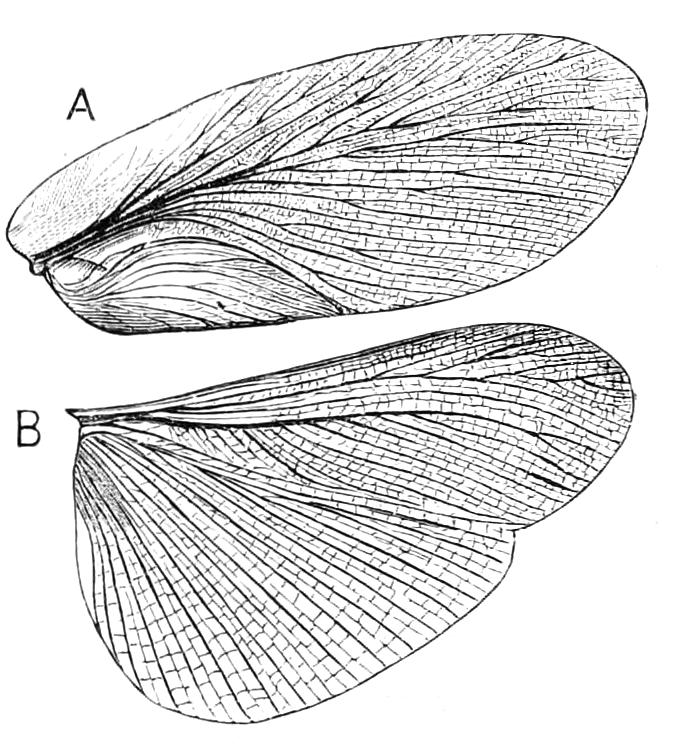
Fig. 132.—Alar organs of Blabera sp. A, tegmen; B, wing.
It is a remarkable fact that no satisfactory reasons can be assigned for the prevalence of one rather than another of these domestic cockroaches in particular localities. It does not seem to depend at all on size, or on the period of development, for the three species Stilopyga orientalis, Periplaneta americana, and Phyllodromia germanica, which are the most abundant, differ much in these respects, and replace one another in particular localities, so that it does not appear that any one is gaining a permanent or widespread superiority as compared with another. There are, however, no sufficient records on these points, and further investigation may reveal facts of which we are at present ignorant, and which will throw some light on this subject. We may remark that Mr. Brindley has found it more difficult to obtain hatching of the young from the egg-capsules of Periplaneta americana and Phyllodromia germanica at Cambridge, than from those of Stilopyga orientalis.
Although much work has been done on the embryology of Blattidae, the subject is still very incomplete. The recent memoirs of Cholodkovsky[165] on Phyllodromia germanica contain so much of general interest as to the development of the external parts of the body that we may briefly allude to them. The earliest appearance of segmentation appears to be due to the centralisation of numerous cells round certain points in the ventral plate. The segmentation of the anterior parts is first distinct, and the appearance of the appendages of the body takes place in regular order from before backwards, the antennae appearing first; the mandibles, however, become distinct only subsequent to the maxillae and thoracic appendages. There are in the course of the development appendages to each segment of the body (he counts eleven abdominal segments); the cerci develop in a similar manner to the antennae; the first pair of abdominal appendages—at first similar to the others—afterwards assume a peculiar stalked form. The abdominal appendages subsequently disappear, with the exception of the ninth pair, which form the ventral styles, and the eleventh pair, which become the cerci. The last ventral segment is said to be formed by the union of the tenth and eleventh embryonic ventral segments.
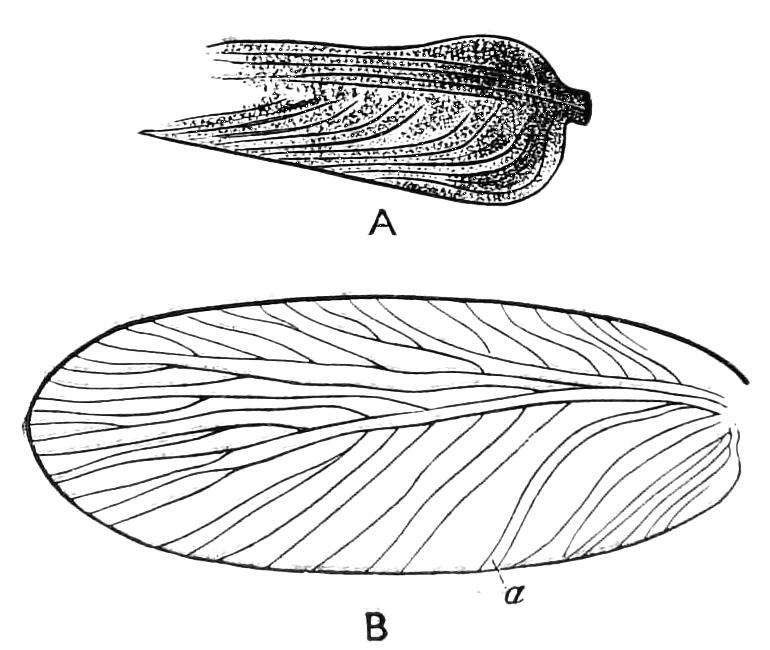
Fig. 133.—A, Tegmen(?) of Palaeoblattina douvillei; B, of Etoblattina manebachensis. (After Brauer and Scudder.)
As regards their Palaeontological forms Blattidae are amongst the most interesting of Insects, for it is certain that in the Carboniferous epoch they existed in considerable number and variety. A still earlier fossil has been found in the Silurian sandstone of Calvados; it consists of a fragment (Fig. 133, A), looking somewhat like an imperfect tegmen of a Blattid; it was described by Brongniart under the name of Palaeoblattina douvillei, and referred by him, with some doubt, to this family. Brauer has, however, expressed the opinion[166] that the fragment more probably belonged to an Insect like the mole-cricket, and in view of this discrepancy of authorities we may be pardoned for expressing our own opinion to the effect that the relic has no connexion with the Insecta. The figure given by Scudder[167] has not, however, so uninsect-like an appearance as that we have copied from Brauer. Whatever may prove to be the case with regard to Palaeoblattina, it is certain, as we have already said, that in the Palaeozoic epoch Insects similar to our existing cockroaches were abundant, their remains being found in plenty in the coal-measures both of Europe and North America. Fig. 133, B, shows a fossil tegmen of Etoblattina manebachensis from the upper Carboniferous beds of Ilmenau in Germany. It will be noticed that the disposition of the nervures is very much like that which may be seen in some of our existing Blattidae (cf. the tegmen of Blabera, Fig. 132, A), the vena dividens (a) being similarly placed, as is also the mediastinal vein on the front part of the organ. The numerous carboniferous Blattidae have been separated as a distinct Order of Insects by Scudder under the name Palaeoblattariae, but apparently rather on theoretical grounds than because of any ascertained important structural distinctions. He also divided the Palaeoblattariae into two groups, Mylacridae and Blattinariae, the former of which was supposed to be peculiar to America. Brongniart has, however, recently discovered that in the Carboniferous deposits of Commentry in France Mylacridae are as common as in America. This latter authority also states that some of the females of these fossil Blattidae are distinguished by the presence of an elongate exserted organ at the end of the body. He considers this to have been an ovipositor by which the eggs were deposited in trees or other receptacles, after a manner that is common in certain Orthoptera at the present day. If this view be correct these Carboniferous Insects must have been very different from the Blattidae of our own epoch, one of whose marked characteristics is the deposition of the eggs in a capsule formed in the body of the parent.
In the strata of the secondary epoch remains of Blattidae have also been discovered in both Europe and America, in Oolitic, Liassic, and Triassic deposits. From the Tertiary strata, on the other hand, comparatively few species have been brought to light. A few have been discovered preserved in amber.
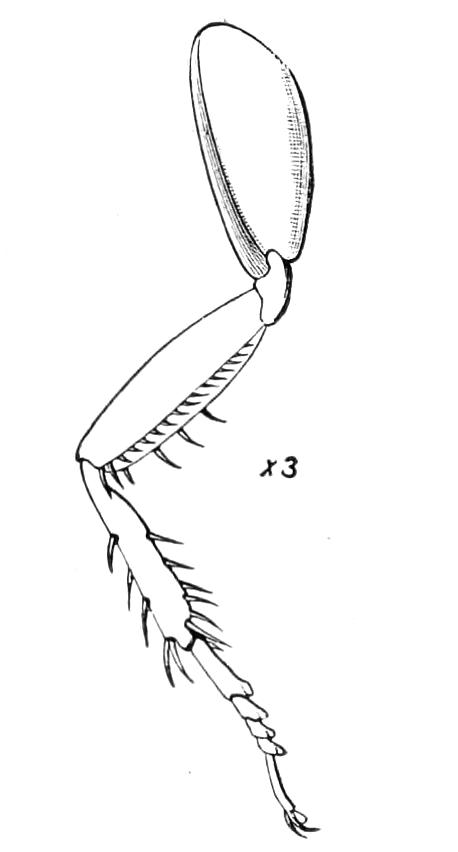
Fig. 134.—Front leg of Periplaneta australasiae.
The classification of the Blattidae is attended with considerable difficulty on account of the numerous wingless forms, and of the extreme difference in the organisation of the two sexes of many species. It has, however, been brought to a fairly satisfactory state by the reiterated labours of Brunner von Wattenwyl, and we reproduce his recently perfected exposition of their characters. His first division is made by means of a structure which is very easily observed, viz. whether the femora are armed with spines, as in Fig. 134, or not. The terms used in connexion with the wings and other parts of the body we have already explained.
Brunner's system is adopted by de Saussure,[168] who, however, proposes to replace the names Ectobiides and Oxyhaloides by Anaplectinae and Plectopterinae. He also proposes to apply the generic name Blatta to the Insect that is now so frequently called Phyllodromia germanica in zoological works. If that view be adopted, Brunner's group Phyllodromiides will be called Blattides.
Table of the tribes of Blattidae, after Brunner:—
1. Femora spiny beneath.[169]
2. The last ventral plate of the female large, without valves.
3. Supra-anal lamina of both male and female transverse, narrow. Wings, when present, furnished with a triangular apical field. Posterior femora unarmed beneath, or armed with two spines on the anterior margin. Egg-capsules furnished with a longitudinal suture. Tribe 1. Ectobiides. [Anaplectinae Saussure.]
3′. Supra-anal lamina of each sex more or less produced, triangular, or emarginate. Wings, when present, without apical field. Posterior femora with both edges spiny.
4. Supra-anal lamina of each sex triangular, not notched. Cerci projecting much beyond this lamina.
5. Pronotum and elytra smooth (i.e. without peculiarity of surface other than punctuation). The radial nervure of the wing giving off several parallel branches, pectinate on the anterior margin (except in the genus Abrodiaeta). Tarsal joints without pads. Tribe 2. Phyllodromiides. [Blattinae Saussure.]
5′. Pronotum and elytra holosericeous. Radial nervure of the wings giving off irregular branches on the anterior margin (ulnar vein many-branched). Tarsal joints furnished with pads. Tribe 3. Nyctiborides.
4′. Supra-anal lamina of males more or less four-sided, with obtuse angles, of females broad, rounded, or lobed. Cerci not projecting beyond the lamina. (Tarsal joints with distinct pads.) Ulnar nervure of the wings giving off parallel branches towards the vena dividens. Tribe 4. Epilamprides.
2′. The last ventral plate of the female furnished with valves. Tribe 5. Periplanetides.[170] (Fig. 119, Periplaneta australasiae.)
1′. Femora unarmed beneath. (In the tribe Panesthiides the anterior femora are frequently armed with two spines.)
2. Supra-anal lamina of each sex more or less produced, posterior margin notched.
3. A distinct pad between the claws. Tribe 6. Panchlorides.
3′. No pad between the claws, or only an excessively small one.
4. Wings with a folded fan-like anal field. Pronotum smooth. Tribe 7. Blaberides. (Fig. 132, Blabera sp. wings.)
4′. Anal field of the wing with a single fold. Pronotum more or less pilose. Tribe 8. Corydiides. (Fig. 128, Corydia petiveriana. Fig. 118, Heterogamia aegyptiaca.)
2′. Supra-anal lamina of each sex, short, transverse, posterior margin straight or rounded.
3. Subgenital lamina of the male somewhat produced, furnished with a single style. Tarsal claws with a distinct pad (except in the genus Paranauphoeta).
4. Anterior portion of the wings pointed, either the apical field of the wing very much produced, or the wings twice as long as the tegmina, folded in repose. Tribe 9. Oxyhaloides. [Plectopterinae Saussure.] (Fig. 129, Hypnorna amoena.)
4′. Anterior portion of wing, when present, rounded, with no apical field. Tribe 10. Perisphaeriides. (Fig. 130, Gromphadorhina portentosa; Fig. 131, Pseudoglomeris fornicata.)
3′. Subgenital lamina of males extremely small, without styles. No pad between claws. Tribe 11. Panesthiides.
To the above tribes another one—Geoscapheusides—has been recently added by Tepper,[171] for an extraordinary Australian Insect of fossorial habits, with front legs formed somewhat like those of Gryllotalpa.