Chapter XIX
Reading edition
AMPHIBIOUS NEUROPTERA CONTINUED—EPHEMERIDAE, MAY-FLIES
Fam. VII. Ephemeridae—May-flies.
Delicate Insects with atrophied mouth and small, short antennae; with four membranous wings having much minute cross-veining; the hinder pair very much smaller than the other pair, sometimes entirely absent: the body terminated by three or two very elongate slender tails. The earlier stages are passed through in water, and the individual then differs greatly in appearance from the winged Insect; the passage between the two forms is sudden; the creature in its first winged state is a subimago, which by shedding a delicate skin reveals the final form of the individual.
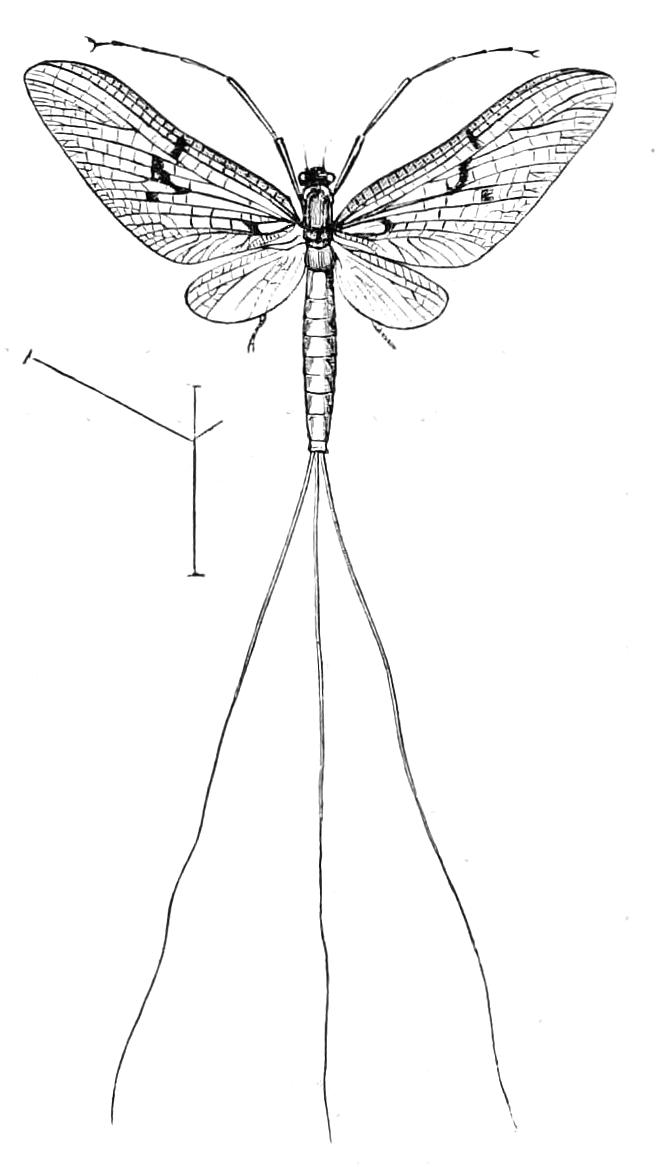
Fig. 273.—Ephemera danica, male, Britain.
The may-flies are well known—in literature—as the types of a brief and ineffective life. This supposed brevity relates solely to their existence in the winged form. In the earlier stages the may-fly is so unlike its subsequent self that it is not recognised as a may-fly by the uninitiated. The total life of the individual is really quite as long as that of most other Insects. The earlier stages and life-histories of these Insects are of great importance. The perfect Insects are so delicate and fragile that they shrivel much in drying, and are very difficult to preserve in a condition suitable for study.
The mouth of the imago is atrophied, the trophi scarcely existing as separate parts. Packard says that in Palingenia bilineata he could discover no certain traces of any of the mouth-parts, but in Leptophlebia cupida he found, as he thought, the rudiments of the maxillae and labium, though not of the mandibles. The antennae are always short, and consist of one or two thick basal joints succeeded by a delicate needle-like segment, which, though comparatively long, is not divided. The ocular organs are remarkable for their large size and complex development; they are always larger in the male than they are in the female. The compound eyes of the former sex are in certain species, e.g. Cloëon (Fig. 274), quite divided, so that each eye becomes a pair of organs of a different character; one part forms a pillar facetted at its summit, while the other part remains as a true eye placed on the side of the head; in front of these compound eyes there are three ocelli. Thus the Insect comes to have three different kinds of eyes, together seven in number.
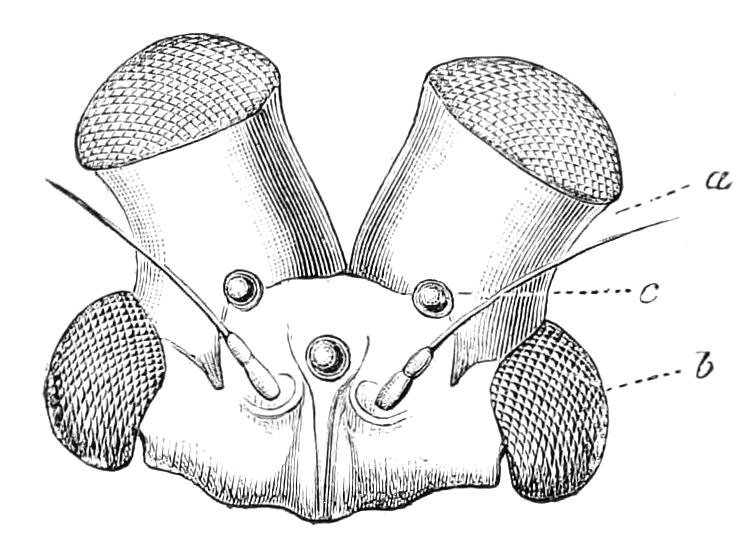
Fig. 274.—Front of head of Cloëon, male. a, Pillared eye; b, sessile eye; c, ocellus.
The prothorax is small, the pronotum being, however, quite distinct. The mesothorax is very large; its notum forms by far the larger part of the upper surface of the thoracic region, the metathorax being small and different in structure, resembling in appearance a part of the abdomen, so that the hind wings look as if they were attached to a first abdominal segment. The mesosternum is also disproportionately large in comparison with the homologous piece preceding it, and with that following it. The pleural pieces are large, but their structure and disposition are only very imperfectly understood. The coxae are small and are widely separated, the anterior being, however, more elongate and approximate than the others. The other parts of the legs are slender; the number of joints in the tarsi varies from five to one. The legs throughout the family exhibit a considerable variety of structure, and the front pair in the males of some species are remarkably long. The abdomen is usually slender, and consists of ten segments; the terminal one bears three, or two, very long flexible appendages. The first dorsal plate of the abdomen is either wanting or is concealed to a considerable extent by the metanotum. The wings are peculiar; the anterior pair vary a great deal in their width, but are never very long in proportion to the width; the hind pair are always disproportionately small, and sometimes are quite wanting. The venation consists of a few, or of a moderate number, of delicate longitudinal veins that do not pursue a tortuous course, but frequently are gracefully curved, and form a system of approximately similar curves, most of the veins being of considerable length; close to the anterior margin of the wing there are two or three sub-parallel veins. Frequently there are very numerous fine, short cross-veinlets, but these vary greatly and may be entirely wanting.
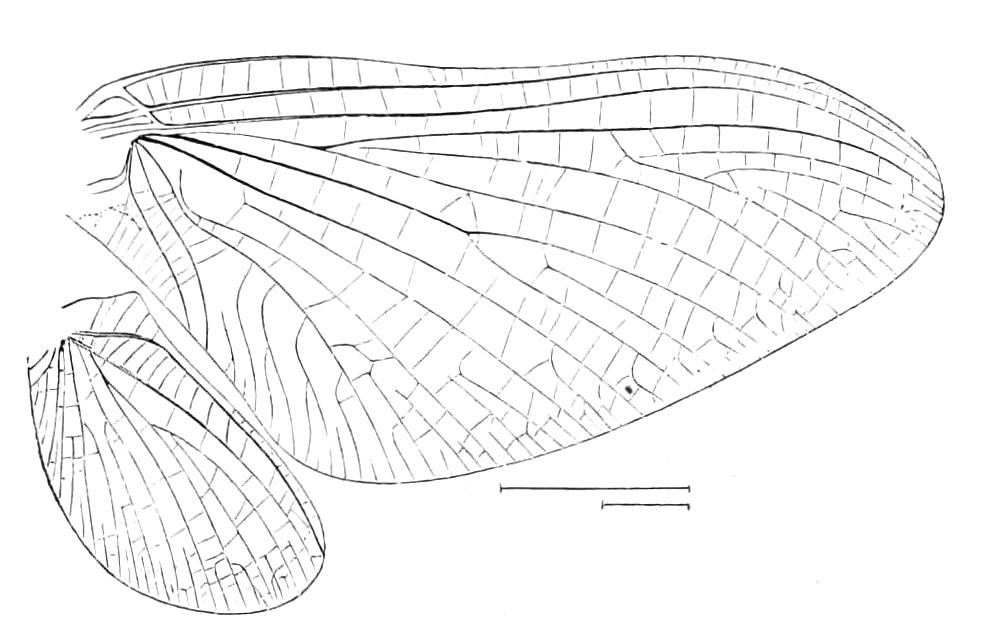
Fig. 275.—Wings of Ephemera danica. (After Eaton.)
The earlier stages of the life of Ephemeridae are, it is believed, in the case of all the species, aquatic. May-flies, indeed, during the period of their post-embryonic development are more modified for an aquatic life than any other Insects, and are provided with a complex apparatus of tracheal gills. The eggs are committed to the waters without any care or foresight on the part of the parent flies, thus the embryonic development is also aquatic; little, however, is known of it. According to Joly[350] the process in Palingenia virgo is slow. The larva on emerging from the egg has no respiratory system, neither could Joly detect any circulation or any nervous system. The creature on emergence is very like Campodea in form, possessing long antennae and tails—caudal setae. Owing to the organisation being inferior, the creature in its earlier stages is called a larvule; in its later stages it is usually spoken of as a nymph, but the term larva is also frequently applied to it. Soon the gills begin to appear in the form of small tubular caeca placed in the posterior and upper angles of the abdominal rings; in fifteen days the gills begin to assume their characteristic form, are penetrated by tracheae, and the circulation can be seen. The amount of growth accomplished after hatching between March and September is but small.
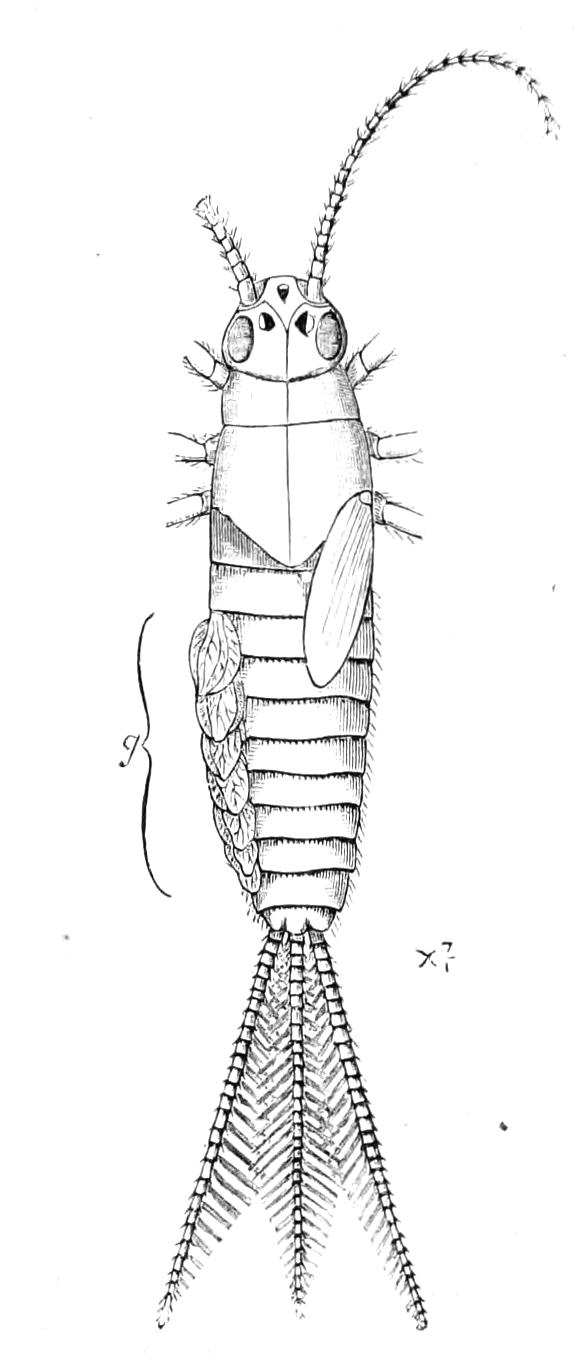
Fig. 276.—Nymph of Cloëon dipterum.[351] Wing-sheath of left side, gills of right side, removed; g, tracheal gills. (After Vayssière.)
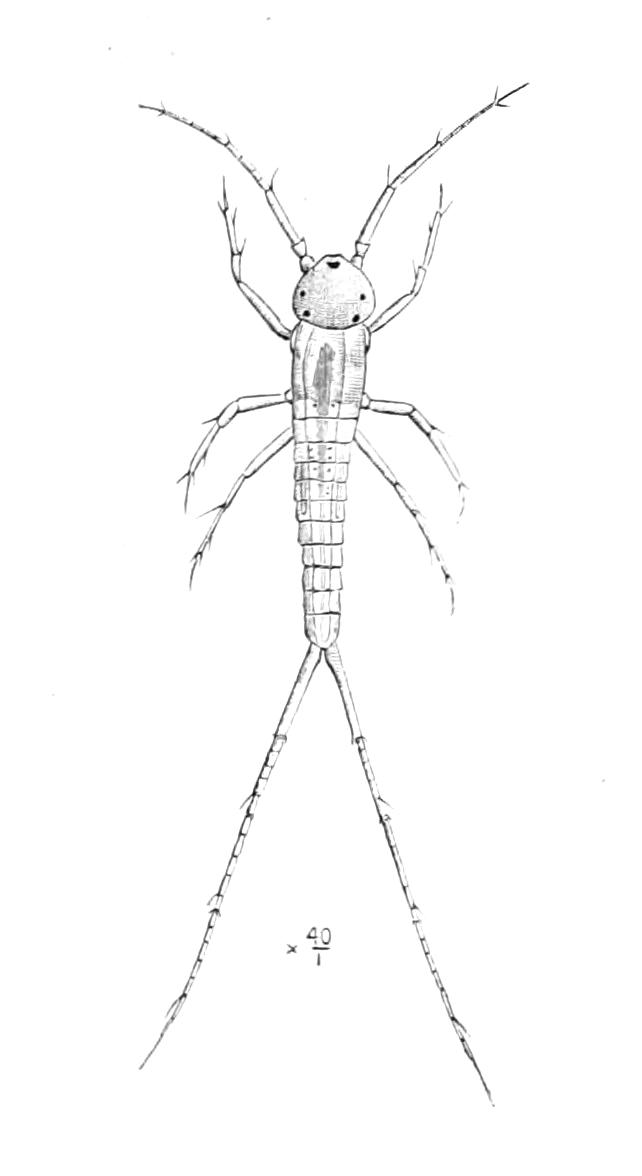
Fig. 277.—Larvule of Cloëon dimidiatum. (After Lubbock.)
The metamorphosis of Cloëon has been described by Sir John Lubbock; he informs us that the young creature undergoes a constant and progressive development, going through a series of more than twenty moults, each accompanied by a slight change of form or structure. His observations were made on captured specimens, so that it is not certain that what he calls[352] the first stage is really such. He found no tracheae in the earliest stages; the small first rudiments of the gills became visible in the third stage, when there were no tracheae; the fourth instar possessed tracheae, and they could be seen in the gills. The wing rudiments could first be detected in the ninth and tenth stages. The changes of skin during the winter months are separated by longer intervals than those occurring at other periods of the year.
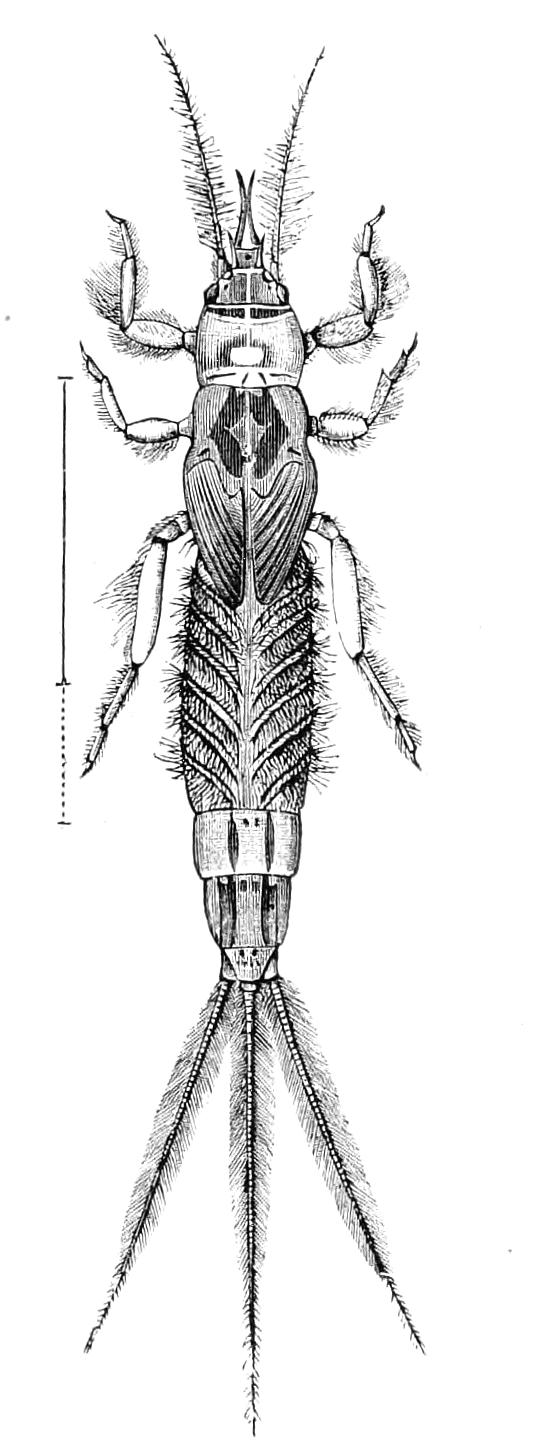
Fig. 278.—Adult nymph of Ephemera vulgata. (After Eaton.) Britain.
The nymphs differ greatly in the structure and arrangement of their tracheal gills, and display much variety in their general form and habits; some of them are very curious creatures. Pictet[353] divides them in accordance with their habits into four groups: (1) Fossorial larvae: these live in the banks of streams and excavate burrows for shelter; they are of cylindrical form, possess robust legs, abundant gills at the sides of the body, and frequently processes projecting forwards from the head: examples, Ephemera (Fig. 278) and Palingenia. (2) Flat larvae: these live attached to rocks, but run with rapidity when disturbed; they prefer rapid streams, have the breathing organs attached to the sides of the body and not reposing on the back; they are exclusively carnivorous, while the fossorial forms are believed to obtain their nutriment by eating mud: example, Baëtis. (3) Swimming larvae: elongate delicate creatures, with feeble legs, and with strongly ciliated caudal setae: example, Cloëon (Fig. 276). (4) Climbing larvae: these live in slowly-moving waters, especially such as have much slimy mud in suspension, and they have a habit of covering themselves with this mud sometimes to such an extent as to become concealed by it: example, Potamanthus.
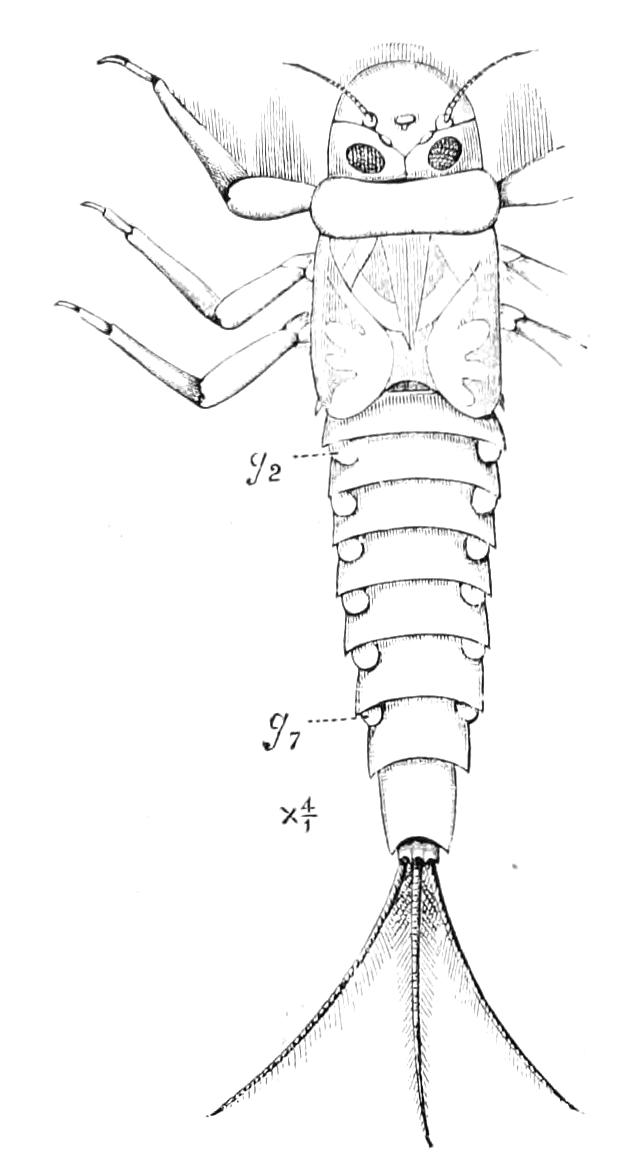
Fig. 279.—Nymph of Oligoneuria garumnica, France. g2 and g7, two of the dorsal tracheal gills. (After Vayssière.)
The anatomy of the nymphs has been treated by Vayssière,[354] who arranges them in five groups in accordance with the conditions of the tracheal gills: (1) The gills are of large size, are exposed and furnished at the sides with respiratory fringes: example, Ephemera (Fig. 278). (2) The branchiae are blade-like, not fringed, and are exposed at the sides of the body: example, Cloëon (Fig. 276). (3) The respiratory tubes are placed on the under surface of plates whose upper surface is not respiratory: example, Oligoneuria garumnica (Fig. 279). (4) The anterior gill is modified to form a plate that covers the others: example, Tricorythus (Fig. 282, B). (5) The gills are concealed in a respiratory chamber: example, Prosopistoma (Fig. 280). The last of these nymphs is more completely adapted for an aquatic life than any other Insect at present known; it was for long supposed to be a Crustacean, but it has now been shown to be the early stage of a may-fly, the sub-imago having been reared from the nymph. The carapace by which the larger part of the body is covered is formed by the union of the pro- and meso-thorax with the sheaths of the anterior wings, which have an unusually extensive development; under the carapace there is a respiratory chamber, the floor and sides of which are formed by the posterior wing-sheaths, and by a large plate composed of the united nota of the metathorax and the first six abdominal segments. In this chamber there are placed five pairs of tracheal gills; entrance of water to the chamber is effected by two laterally-placed orifices, and exit by a single dorsal aperture. These nymphs use the body as a sucker, and so adhere strongly to stones under water. When detached they swim rapidly by means of their caudal setae; the form of these latter organs is different from that of other Ephemerid nymphs. This point and other details of the anatomy of this creature have been described in detail by Vayssière.[355] These nymphs have a very highly developed tracheal system; they live in rapid watercourses attached to stones at a depth of three to six inches or more under the water. Species of Prosopistoma occur in Europe, Madagascar, and West Africa.
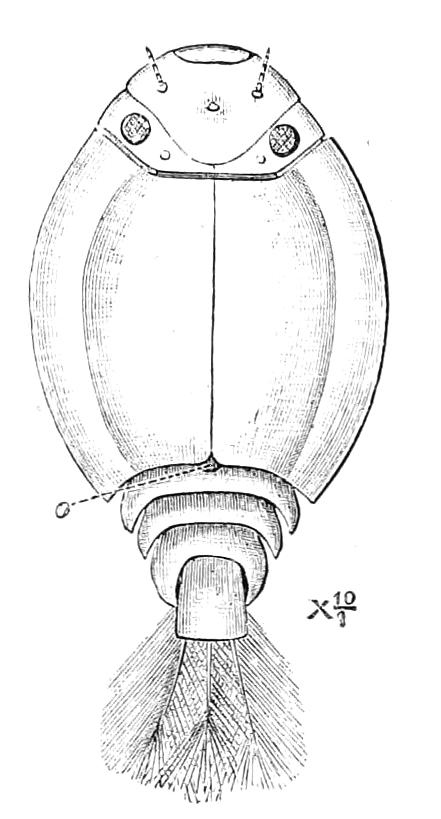
Fig. 280.—Prosopistoma punctifrons, nymph. France. (After Vayssière.) o, Orifice of exit from respiratory chamber.
According to Eaton,[356] in the nymphs of some Ephemeridae the rectum serves, to a certain extent, as a respiratory agent; he considers that water is admitted to it and expelled after the manner we have described in Odonata, p. 421.
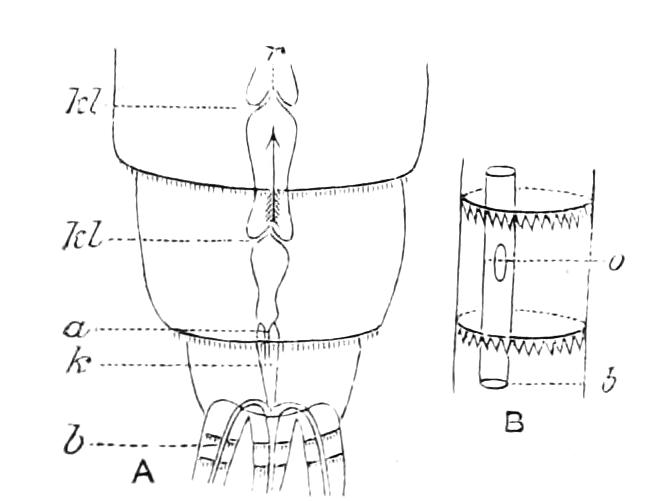
Fig. 281.—A, Last three abdominal segments and bases of the three caudal processes of Cloëon dipterum: r, dorsal vessel; kl, ostia thereof; k, special terminal chamber of the dorsal vessel with its entrance a; b, blood-vessel of the left caudal process; B, twenty-sixth joint of the left caudal process from below; b, a portion of the blood-vessel; o, orifice in the latter. (After Zimmermann.)
The internal anatomy of the nymphs of Ephemeridae shows some points of extreme interest. The long caudal setae are respiratory organs of a kind that is almost if not quite without parallel in the other divisions of Insecta. The dorsal vessel for the circulation of the blood is elongate, and its chambers are arranged one to each segment of the body. It drives the blood forwards in the usual manner, but the posterior chamber possesses three blood-vessels, one of which is prolonged into each caudal seta. This terminal chamber is so arranged as to drive the blood backwards into the vessels of the setae; on the under surface of the vessels there are oval orifices by which the blood escapes into the cavity of the seta so as to be submitted to the action of the surrounding medium for some of the purposes of respiration. This structure has been described by Zimmermann,[357] who agrees with Creutzberg[358] that the organ by which the blood is propelled into the setae is a terminal chamber of the dorsal vessel; Verlooren,[359] who first observed this accessory system of circulation, thought the contractile chamber was quite separate from the heart. The nature of the connexion between this terminal chamber that drives the blood backwards and the other chambers that propel the fluid forwards appears still to want elucidation.
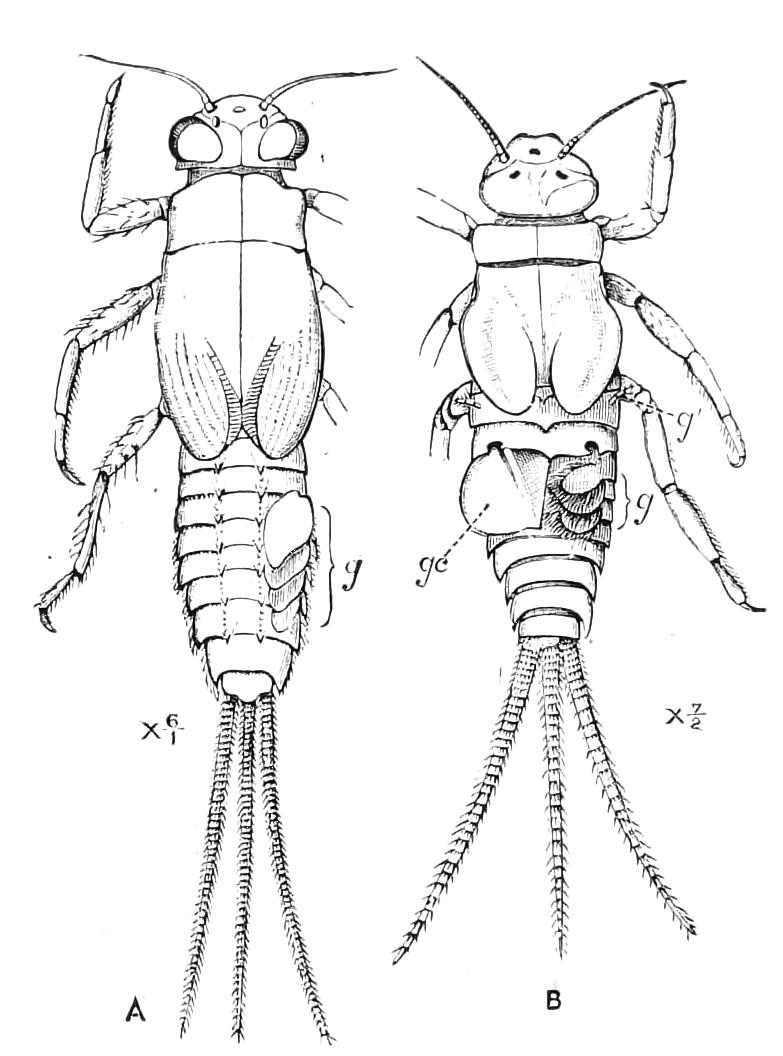
Fig. 282.—A, Nymph of Ephemerella ignita with gills of left side removed; g, gills: B, nymph of Tricorythus sp. with gill cover of right side removed; g.c, gill cover; g, g′, gills. (After Vayssière.)
The nymphs of the Ephemeridae being creatures adapted for existence in water, the details of their transformation into creatures having an entirely aerial existence cannot but be of much interest. In the nymphs the tracheal system is well developed, but differs from that of air-breathing Insects in the total absence of any spiracles. Palmén has investigated this subject,[360] and finds that the main longitudinal tracheal trunks of the body of the nymph are not connected with the skin of the body by tracheae, but are attached thereto by ten pairs of slender strings extending between the chitinous integument and the tracheal trunks. When the skin is shed these strings—or rather a chitinous axis in each one—are drawn out of the body, and bring with them the chitinous linings of the tracheae. Thus notwithstanding the absence of spiracles, the body wall is at each moult pierced by openings that extend to the tracheae. After the ordinary moults these orifices close immediately, but at the change to the winged state they remain open and form the spiracles. At the same time the tracheal gills are completely shed, and the creature is thus transformed from a water-breather to an Insect breathing air as usual. In addition to this change there are others of great importance, such as the development of the great eyes and the complete atrophy of the mouth-parts. The precise manner of these changes is not known; they occur, however, within the nymph skin. The sudden emergence of the winged Insect from the nymph is one of the most remarkable facts in the life-history of the may-fly; it has been observed by Sir John Lubbock,[361] who describes it as almost instantaneous. The nymph floats on the water, the skin of the back opens, and the winged Insect flies out, upwards and away; "from the moment when the skin first cracks not ten seconds are over before the Insect has flown away." The creature that thus escapes has not, however, quite completed its transformation. It is still enveloped in a skin that compresses and embarrasses it; this it therefore rapidly gets rid of, and thus becomes the imago, or final instar of the life-cycle. The instar in which the creature exists winged and active, though covered with a skin, is called the sub-imago. The parts of the body in the sub-imago are as a whole smaller than they are in the imago, and the colour is more dingy; the appendages—wings, legs, and caudal setae—are generally considerably shorter than they are in the imago, but attain their full length during the process of extraction. The creatures being, according to Riley, very impatient and eager to take to the wing, the completion of the shedding of the skin of the sub-imago is sometimes performed while the Insect is flying in the air.
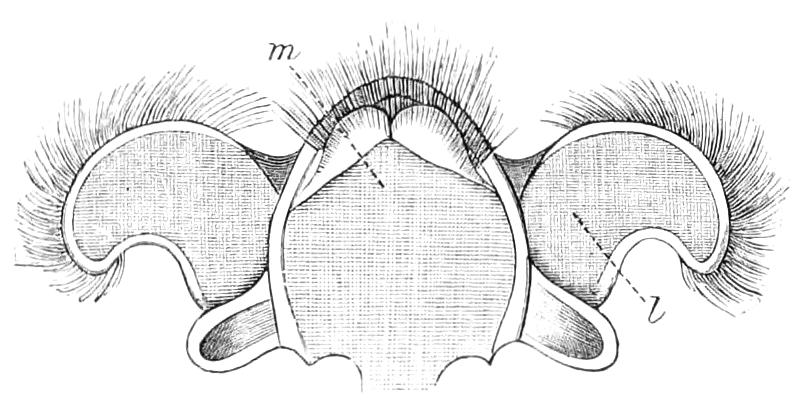
Fig. 283.—Lingua of Heptagenia longicauda, × 16. m, Central; l, lateral pieces. (After Vayssière.)
The food of young Ephemeridae is apparently of a varied and mixed nature. Eaton says[362] that though sometimes the stronger larvae devour the weaker, yet the diet is even in these cases partly vegetable. The alimentary canal frequently contains much mud; very small organisms, such as diatoms and confervae, are thought to form a large part of the bill of fare of Ephemerid nymphs. Although the mouth is atrophied in the imago, yet it is highly developed in the nymphs. This is especially notable in the case of the lingua or hypopharynx (Fig. 283); indeed Vayssière[363] seems to incline to the opinion that this part of the mouth may be looked on in these Insects as a pair of appendages of a head-segment (see p. 96 ante), like the labium or maxillae.
The life-history has not been fully ascertained in the case of any species of may-fly; it is known, however, that the development of the nymph sometimes occupies a considerable period, and it is thought that in the case of some species this extends to as much as three years. It is rare to find the post-embryonic development of an Insect occupying so long a period, so that we are justified in saying that brief as may be the life of the may-fly itself, the period of preparation for it is longer than usual. Réaumur says, speaking of the winged fly, that its life is so short that some species never see the sun. Their emergence from the nymph-skin taking place at sunset, the duties of the generation have been, so far as these individuals are concerned, completed before the morning, and they die before sunrise. He thinks, indeed, that individuals living thus long are to be looked on as Methuselahs among their fellows, most of whom, he says, live only an hour or half an hour.[364] It is by no means clear to which species these remarks of Réaumur refer; they are doubtless correct in certain cases, but in others the life of the adult is not so very short, and in some species may, in all probability, extend over three or four days; indeed, if the weather undergo an unfavourable change so as to keep them motionless, the life of the flies may be prolonged for a fortnight.
The life of the imago of the may-fly is as remarkable as it is brief; in order to comprehend it we must refer to certain peculiarities of the anatomy with which the vital phenomena are connected. The more important of these are the large eyes of the males, the structure of the alimentary canal, and that of the reproductive organs. We have already remarked that the parts of the mouth in the imago are atrophied, yet the canal itself not only exists but is even of greater capacity than usual; it appears to have much the same general arrangement of parts as it had in the nymph. Its coats are, however, of great tenuity, and according to Palmén[365] the divisions of the canal are separated by changes in the direction of certain portions anterior to, and of others posterior to, its central and greater part—the stomach—in such a manner that the portions with diverted positions act as valves. The stomach, in fact, forms in the interior of the body a delicate capacious sac; when movement tends to increase the capacity of the body cavity then air enters into the stomachic sac by the mouth orifice, but when muscular contractions result in pressure on the sac they close the orifices of its extremities by the valve-like structures we have mentioned above; the result is, that as complex movements of the body are made the stomach becomes more and more distended by air. It was known even to the old naturalists that the dancing may-fly is a sort of balloon, but they were not acquainted with the exact mode of inflation. Palmén says that in addition to the valve-like arrangements we have described, the entry to the canal is controlled by a circular muscle, with which are connected radiating muscles attached to the walls of the head. Palmén's views are adopted, and to a certain extent confirmed, by Fritze,[366] who has examined the alimentary canal of the may-fly, and considers that though the normal parts of the canal exist, the function is changed in the imago, in which the canal serves as a sort of balloon, and aids the function of the reproductive organs. The change in the canal takes place in an anticipatory manner during the nymph and sub-imago stages.
The sexual organs of Ephemeridae are remarkable for their simplicity; they are destitute of the accessory glands and diverticula that, in some form or other, are present in most other Insects. Still more remarkable is the fact that the ducts by which they communicate with the exterior continue as a pair to the extremity of the body, and do not, as in other Insects, unite into a common duct. Thus in the female there is neither bursa copulatrix, receptaculum seminis, nor uterine portion of oviduct, and there is no trace of an ovipositor; the terminations of the ducts are placed at the hind margin of the seventh ventral plate, just in front of which they are connected by a fold of the integument. The ovary consists of a very large number of small egg-tubes seated on one side of a sac, which forms their calyx, and one of whose extremities is continued backwards as one of the pair of oviducts. The male has neither vesiculae seminales, accessory glands, nor ductus ejaculatorius. The testes are elongate sacs, whose extremities are prolonged backwards forming the vasa deferentia; these open separately at the extremity of the body, each on a separate intromittent projection of more or less complex character, the two organs being, however, connected by means of the ninth ventral plate, of which they are, according to Palmén, appendages. We should remark that this authority considers Heptagenia to form, to some extent, an exception as regards the structures of the female; while Polymitarcys is in the male sex strongly aberrant, as the two vasa deferentia, instead of being approximately straight, are bent inwards at right angles near their extremities so as to meet, and form in the middle a common cavity, which then again becomes double to pass into the pair of intromittent organs.
According to the views of Exner and others, the compound eyes of Insects are chiefly organs for the perception of movement; if this view be correct, movements such as those made during the dances of may-flies may, by the number of the separate eyes, by their curved surfaces and innumerable facets, be multiplied and correlated in a manner of which our own sense of sight allows us to form no conception. We can see on a summer's evening how beautifully and gracefully a crowd of may-flies dance, and we may well believe that to the marvellous ocular organs of the flies themselves (Fig. 274) these movements form a veritable ballet. We have pointed out that by this dancing the peculiarly formed alimentary canal becomes distended, and may now add that Palmén and Fritze believe that the unique structure of the reproductive organs is also correlated with the other anatomical peculiarities, the contents of the sexual glands being driven along the simple and direct ducts by the expansion of the balloon-like stomach. During these dances the momentary conjugation of the sexes occurs, and immediately thereafter the female, according to Eaton, resorts to the waters appropriate for the deposition of her eggs. As regards this, Eaton says:[367] "Some short-lived species discharge the contents of their ovaries completely en masse, and the pair of fusiform or subcylindrical egg-clusters laid upon the water rapidly disintegrate, so as to let the eggs sink broadcast upon the river-bed. The less perishable species extrude their eggs gradually, part at a time, and deposit them in one or other of the following manners: either the mother alights upon the water at intervals to wash off the eggs that have issued from the mouths of the oviducts during her flight, or else she creeps down into the water to lay her eggs upon the under-side of stones, disposing them in rounded patches, in a single layer evenly spread, and in mutual contiguity." The eggs are very numerous, and it is thought may sometimes remain in the water as much as six or seven months before they hatch.
The number of individuals produced by some kinds of may-flies is remarkable. Swarms consisting of millions of individuals are occasionally witnessed. D'Albertis observed Palingenia papuana in countless myriads on the Fly River in New Guinea: "For miles the surface of the river, from side to side, was white with them as they hung over it on gauzy wings; at certain moments, obeying some mysterious signal, they would rise in the air, and then sink down anew like a fall of snow." He further states that the two sexes were in very disproportionate numbers, and estimates that there was but a single female to every five or six thousand males.
Ephemeridae in the perfect state are a favourite food of fishes, and it is said that on some waters it is useless for the fly-fisher to try any other lure when these flies are swarming. Most of the "duns" and "spinners" of the angler are Ephemeridae; so are several of the "drakes," our large E. danica and E. vulgata being known as the green drake and the gray drake. Ronalds says[368] that the term "dun" refers to the pseud-imago condition, "spinner" to the perfect Insect. E. danica and E. vulgata are perhaps not distinguished by fishers; Eaton says that the former is abundant in rapid, cool streams, while E. vulgata prefers warmer and more tranquil rivers.
These sensitive creatures are unable to resist the attractions of artificial lights. Réaumur noticed this fact many years ago, and since the introduction of the electric light, notes may frequently be seen in journals recording that myriads of these Insects have been lured by it to destruction. Their dances may frequently be observed to take place in peculiar states of light and shade, in twilight, or where the sinking sun has its light rendered broken by bushes or trees; possibly the broken lights are enhanced in effect by the ocular structures of the Insects. It has recently been ascertained that a species of Teleganodes is itself luminous. Mr. Lewis,[369] who observed this Insect in Ceylon, states that in life the whole of the abdomen was luminous, not brightly so, but sufficient to serve as a guide for capturing the Insect on a dark night. It has also been recorded that the male of Caenis dimidiata gives a faint blue light at night.
Nearly 300 species of Ephemeridae are known, but this may be only a fragment of what actually exist, very little being known of may-flies of other parts of the world than Europe and North America. One of the more curious forms of the family is Oniscigaster wakefieldi; the body of the imago is unusually rotund and furnished with lateral processes. In Britain we have about forty species of may-fly. The family is treated as a distinct Order by Brauer and Packard, and is called Plectoptera by the latter.
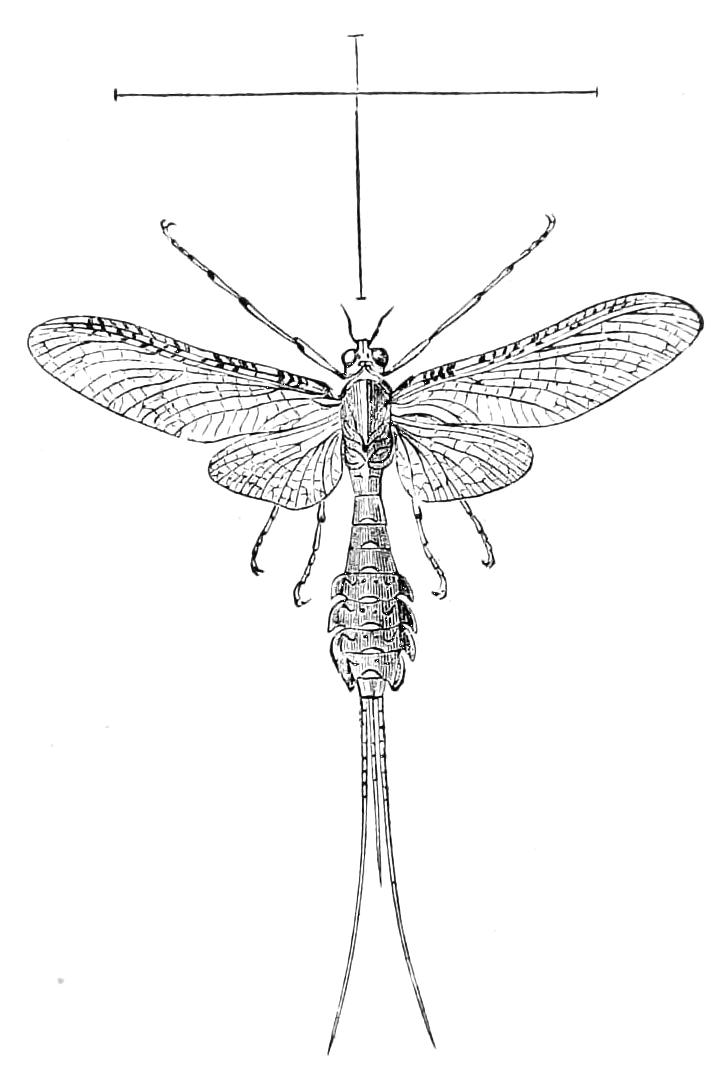
Fig. 284.—Oniscigaster wakefieldi. New Zealand. (After M‘Lachlan.)
That Insects so fragile, so highly organised, with a host of powerful enemies, but themselves destitute of means of attack or defence, should contrive to exist at all is remarkable; and it appears still more unlikely that such delicate Insects as Ephemeridae should leave implanted in the rocks their traces in such a manner that they can be recognised; nevertheless, such is the case,—indeed, the may-fly palaeontological record is both rich and remarkable. Several forms are preserved in amber. In the Tertiary bed of the old lake at Florissant, Scudder has been able to distinguish the remains of no less than six species; while in the Jurassic layers of the Secondary epoch, in more than one locality, the remains of several other species have been detected and described. Still more remarkable is the fact that in the Devonian and Carboniferous layers of the Palaeozoic period, remains are found that appear to be akin to our existing Ephemeridae. Palingenia feistmantelii from the Carboniferous of Bohemia is actually referred to a still existing genus; it is said to have been of gigantic size for a may-fly.
The families Megasecopterides, Platypterides, and Stenodictyopterides of the Carboniferous epoch (see p. 343) are all more or less closely allied to the Ephemeridae, and in addition to these Brongniart has established the family Protephemerides for some Insects that he considers to have been the precursors in the Carboniferous epoch of our existing may-flies. These ancient Insects differed in having the wings of another form from those of existing Ephemeridae, and in having the hind wings equal in size to the front pair. Besides this, these Insects had, as shown in Fig. 285, prothoracic dorsal appendages; some had also projections from the abdominal segments, considered by Brongniart to be of the nature of gills. Some doubt must exist as to this point, for we find in the imago of one of our existing Ephemeridae, Oniscigaster wakefieldi, Fig. 284, abdominal processes that are not gills.
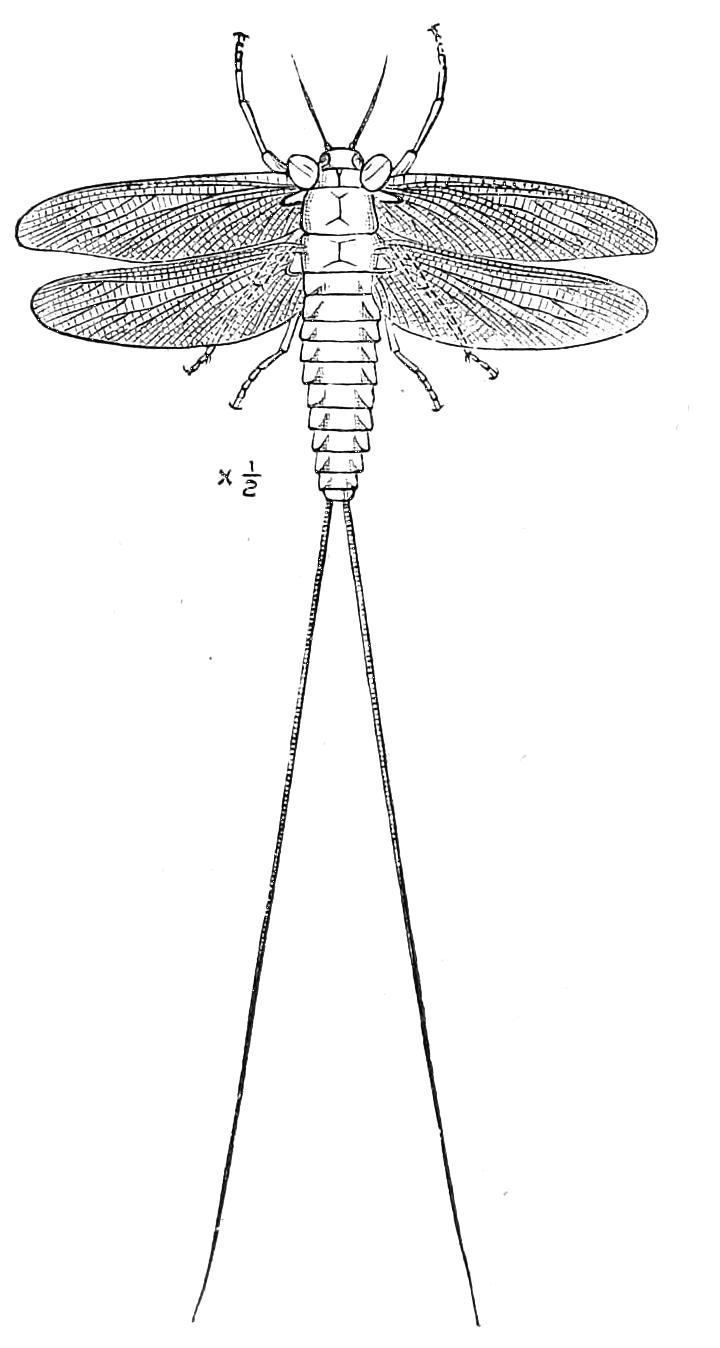
Fig. 285.—Homaloneura bonnieri; Carboniferous of Commentry. (After Brongniart.)
It is remarkable that may-flies, which now form a comparatively unimportant part of the Insect tribe, should in far distant times have been represented by so great a variety of allied forms. Our fragile, short-lived may-flies appear to be, as Scudder says, the lingering fragments of an expiring group.