Chapter X
Reading edition
ORTHOPTERA CONTINUED—MANTIDAE—SOOTHSAYERS
Fam. IV. Mantidae—Soothsayers or Praying Insects.
Orthoptera with exserted but deflexed head and elongate prothorax, the first pair of legs largely developed, raptorial, the coxae elongate, free, femora and tibiae armed with spines: second and third pair of legs simple and similar; the tarsi five-jointed, without a pad (arolium) between the claws; a pair of jointed cerci near the extremity of the body.
The Mantidae are an extensive family of Orthoptera, showing extreme variety in the shapes and outlines of the body, and characterised by the very remarkable front legs; the function of these legs being to seize and hold their prey, which consists of living Insects, Mantidae being carnivorous and highly voracious.
The labium is deeply divided, each half exhibiting a very near approach to the structure of a maxilla; there is a large membranous lingua reposing on the inner face of the lower lip. The head is quite free from the thorax, its front part being deflexed, and even somewhat inflexed, so that the mouth is directed downwards and somewhat backwards: it is very mobile, being connected to the thorax by a comparatively slender neck, which is, however, concealed by the pronotum. There are two large, prominent eyes, the antennae are frequently very slender, but they sometimes differ according to sex, and in some genera are pectinate in the male; just above and between their insertion are three ocelli placed in a triangle, two above, one below; between the antennae and the clypeus there is an interval called the scutellar space. In some forms of Mantidae the head assumes most extraordinary shapes; the eyes may become elongate and horn-like; there may be a projection between them bearing the ocelli, and attaining occasionally a great length; the scutellar space also may have a remarkable development, the whole thus forming a peculiar ornamental structure, as in Fig. 136.
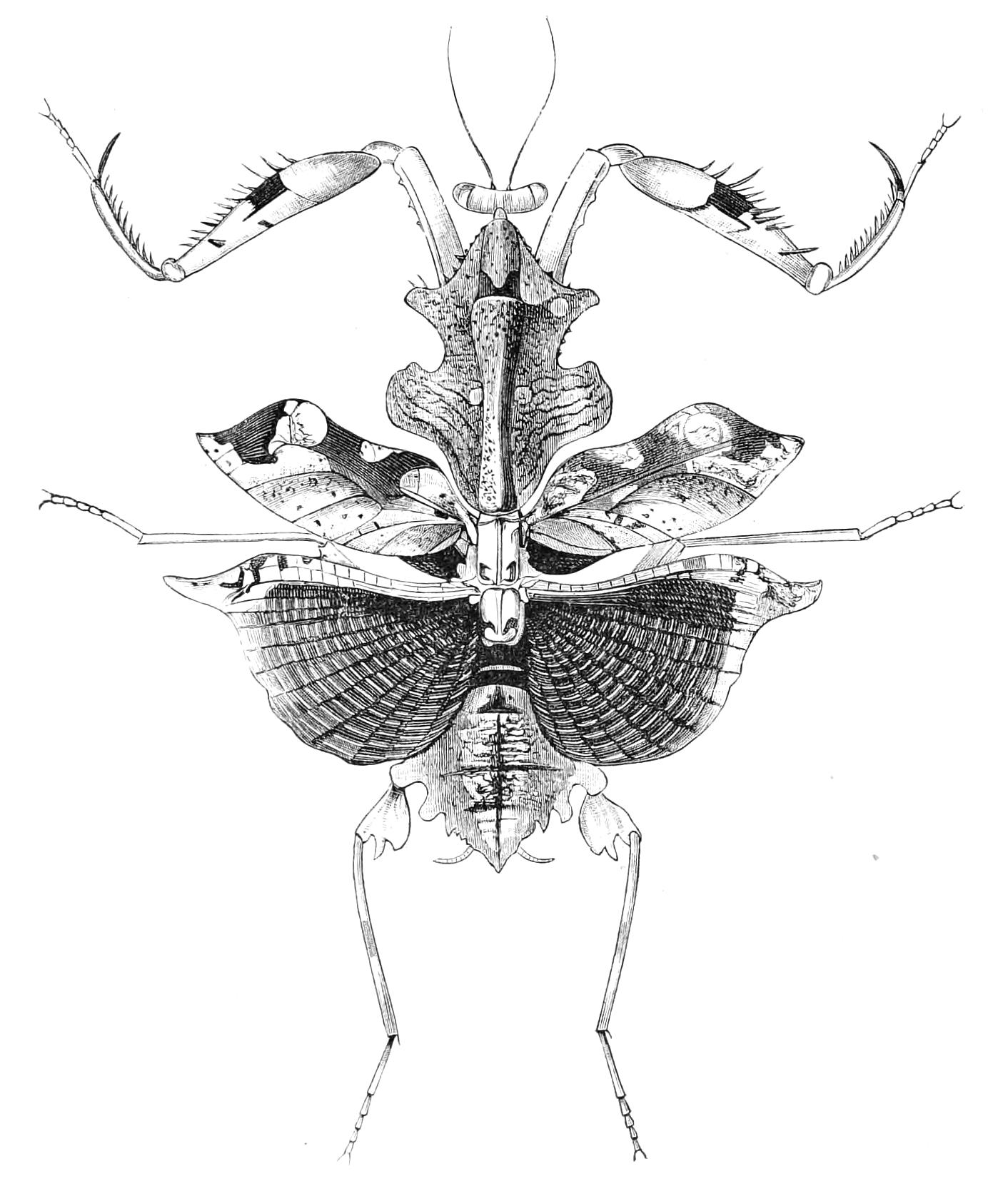
Fig. 135.—Deroplatys sarawaca, female. Borneo. (After Westwood.)
The prothorax is elongate, but there are a few genera, e.g. Eremiaphila, in which it is exceptionally short, and there are several others in which the elongate form is more or less masked by foliaceous expansions of the sides. The pronotum shows near the front a transverse depression or seam, which marks the position of an internal chitinous ridge. The anterior legs are inserted near the front of the prosternum, which extends less far forwards than the pronotum does; the posterior part of the prosternum is very elongate, and is completely separated from the anterior part by the base of the coxae and the membranes attached to them; the pronotum and sternum are closely connected at the sides till near the posterior part where they diverge, the space so formed being occupied by a membrane in which the prothoracic stigma is situated. The mesothorax is as long as broad, and the front wings are attached to the whole length of the sides; the mesosternum is a triangular piece pointed behind, and bearing very large side-pieces, to the hinder portion of which the middle coxae are attached; these latter are large and quite free, and repose on the metasternum which they cover; the mesothoracic stigma may be detected as a slit situated on a slight prominence just behind and a little below the membranous hind-margin of the tegmen. The metathorax differs comparatively little in size and structure from the mesothorax; the membranous hind wings are attached to the sides of the notum along nearly the whole length of the latter. The abdomen is moderately long; in each sex ten dorsal plates may be detected, and there is a pair of ringed cerci projecting from beneath the sides of the tenth plate. The number of ventral plates is more difficult to verify, the first one being much reduced; eight other plates can be demonstrated in the male and six in the female.
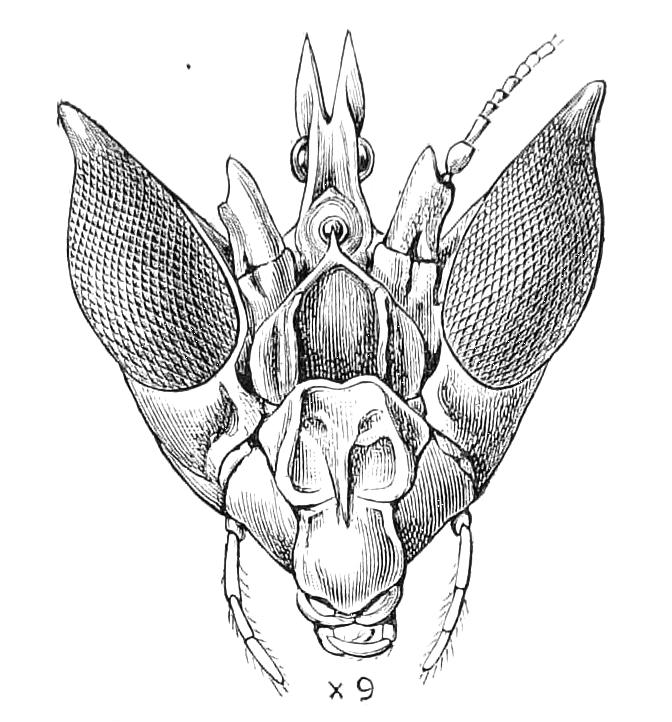
Fig. 136.—Head of Harpax variegatus, seen from the front.
The anterior legs are formed in a remarkable manner in the Mantidae, and are, in fact, the most characteristic feature of the family. Attached near the front of the thorax there is a very long coxa, to the apex of which is articulated the triangular trochanter; this bears the elongate femur, which is furnished on its lower face with sharp spines and teeth; the tibia which follows is much shorter and smaller than the femur; its lower face bears also an armature of teeth, and it is so articulated with the femur that it can be completely closed thereon, its teeth fitting in among those of the femur (Fig. 137, B); the latter has one or more longer spines overlapping the apical part of the tibia when contracted. The tarsus is slender, five-jointed, without pad. The other two pairs of legs are simple; the hinder usually a little the longer, and in some species that possess powers of leaping (Ameles), with the femora a little thicker at the base.
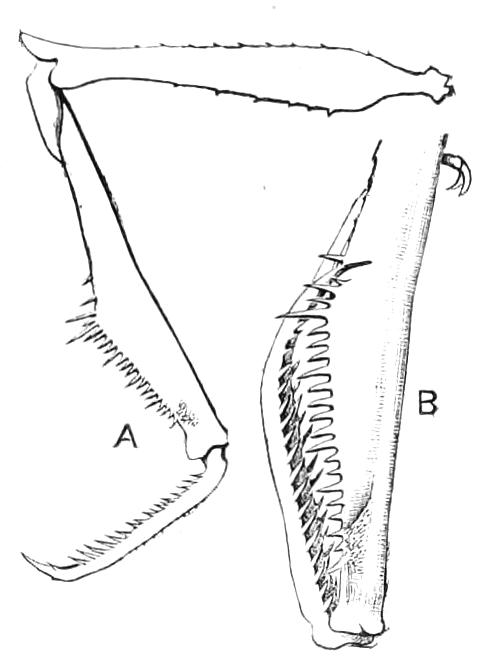
Fig. 137.—Front leg of Empusa pauperata, female: A, with tibia extended and tarsus wanting; B, more magnified (the basal parts removed), showing the mode of closure.
The alar organs of the Mantidae are as regards the nervures and areas fairly similar to those of the Blattidae. The tegmina are usually narrow, and exhibit three well-marked areas; the one in front or external (according as the wing is expanded or closed) is the mediastinal area; it is usually more elongate and occupies a larger portion of the surface of the tegmen than in Blattidae. The middle area, forming the larger part of the wing, is occupied by the branches of the radial and ulnar nervures. The third area, the anal, possesses a sort of appendage in the form of a small space of a more delicately membranous nature at the inner part of the base. The tegmina are often more or less leaf-like in texture and consistence; this character is as a rule not very marked, but there are a few species with the tegmina very like foliage, this being more marked in the female; in some, if not in all, of these cases the mediastinal area is considerably increased. One tegmen overlaps the other, as in Blattidae, but to a less extent, and the correlative asymmetry is but slight: there is frequently a pallid spot close to the main vein on the principal area, nearer to the base than to the extremity. The hind wings are more ample than the front, and of much more delicate consistence; they possess numerous veins converging to the base; the anterior part of the wing is firmer in consistence, and its veins are more numerously furcate; there are many more or less distinct minute cross-veinlets, and an elegant tinting is not infrequent. They close in a fan-like manner, transverse folding being unknown in the family.
But little has been written on the internal anatomy of the Mantidae. Dufour has described only very partially that of M. religiosa. The salivary glands are largely developed, salivary receptacles exist; the alimentary canal possesses eight elongate coecal diverticula placed on the chylific ventricle; there are about one hundred Malphigian tubules. In each ovary there are about 40 egg-tubes, and they are joined at their bases in clusters of about half a dozen; each cluster has a common sinus; these sinuses are placed at intervals along a tube, which is one of two branches whose union forms the oviduct; there are a large number of "serific glands" of two kinds in the female. The testes are unusually complex in their structure.
According to Schindler[172] the Malphigian tubes in Mantis are not inserted, as usual, at the base of the intestine, but on the intestine itself at about one-third of its length from the base. There is some doubt about this observation. Schindler considers the fact, if it be such, unique.
The eggs of the Mantidae are deposited in a singular manner: the female, placing the extremity of the body against a twig or stone, emits some foam-like matter in which the eggs are contained. This substance dries and forms the ootheca; whilst attaining a sufficient consistence it is maintained in position by the extremity of the body and the tips of the elytra, and it is shaped and fashioned by these parts. The eggs are not, as might be supposed, distributed at random through the case, but are lodged in symmetrically-arranged chambers, though how these chambers come into existence by the aid of so simple a mode of construction does not appear. The capsule is hard; it quite conceals the eggs, which might very naturally be supposed to be efficiently protected by their covering: this does not, however, appear to be the case, as it is recorded that they are subject to the attacks of Hymenopterous parasites. The time that elapses after the eggs are laid and before they hatch varies greatly according to circumstances. In France, Mantis religiosa deposits its eggs in September, but they do not hatch until the following June; while in E. India the young of another species of Mantis emerge from the eggs about twenty days after these have been deposited. Trimen has recorded some particulars as to the formation of its egg-case by a Mantis in S. Africa. This specimen constructed four nests of eggs at intervals of about a fortnight, and Trimen states that the four were "as nearly as possible of the same size and of precisely similar shape." He also describes its mode of feeding, and says that it was fond of house-flies, and would eat "blue-bottles," i.e. Musca vomitoria, but if while eating one of the latter a house-fly were introduced, the "blue-bottle" was generally dropped, even though it might be in process of being devoured. The young have to escape from the chambers in which they are confined in these egg-cases; they do so in a most curious manner; not by the use of the feet, but by means of spines directed backwards on the cerci and legs, so that when the body is agitated advance is made in only one direction. The eggs last deposited are said to be the first to hatch. On reaching the exterior the young Mantids do not fall to the ground, but remain suspended, after the manner of spiders, to the ootheca by means of two threads attached to the extremities of the cerci; in this strange position they remain for some days until the first change of skin is effected, after which they commence the activity of their predatory life.
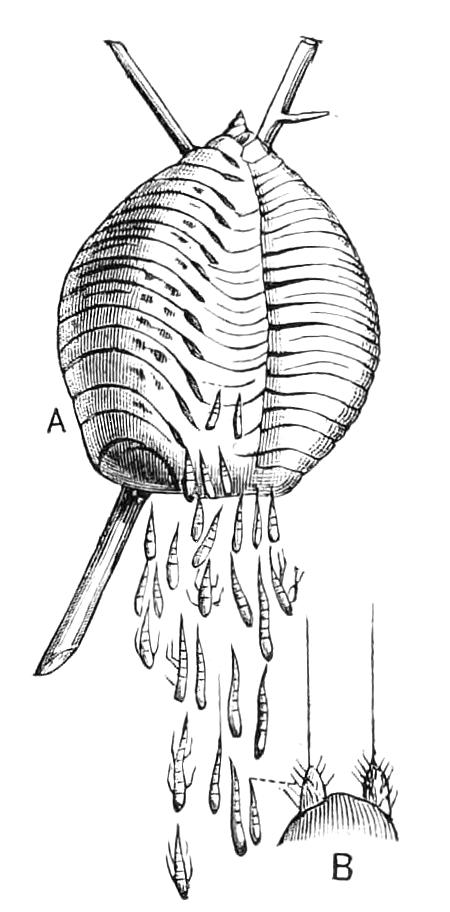
Fig. 138.—Egg-case of Mantis with young escaping: A, the case with young in their position of suspension; B, cerci magnified, showing the suspensory threads. (After Brongniart.)
Dr. Pagenstecher has given an account[173] of the development of Mantis religiosa, from which it would appear that the statements of Fischer and others as to the number of moults are erroneous, owing to the earliest stages not having been observed. When the young Mantis emerges from the egg it bears little resemblance to the future Insect, but looks more like a tiny pupa; the front legs, that will afterwards become so remarkable, are short and not different from the others, and the head is in a curious mummy-like state, with the mouth-parts undeveloped and is inflexed on the breast: there are, he says, nine abdominal segments. The first ecdysis soon takes place and the creature is thereafter recognisable as a young Mantis. Pagenstecher's specimens at first would only eat Aphididae, but at a later stage of the development they devoured other Insects greedily: the number of ecdyses is seven or eight. The ocelli appear for the first time when the wing rudiments do so; the number of joints in the antennae increases at each moult. Dr. Pagenstecher considers that this Insect undergoes its chief metamorphosis immediately after leaving the egg, the earlier condition existing apparently to fit the Insect for escaping from the egg-case. In the immature stage of the Mantidae the alar organs appear (Fig. 139) as adjuncts of the sides of the meso- and meta-notum, projecting backwards and very deeply furrowed and ribbed in a wing-like manner. According to Pagenstecher, this wing-like appearance only commences in the fifth stadium, but he has not given particulars of the conditions of these parts in the preceding instars. According to de Saussure[174] the wings of the females of some species remain permanently in this undeveloped or nymphal state.
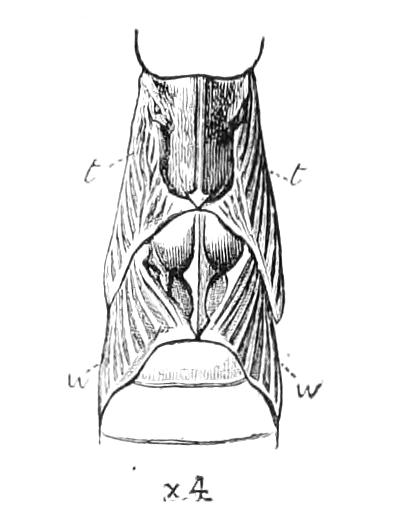
Fig. 139.—Tegmina (t) and wings (w) of immature Mantis.
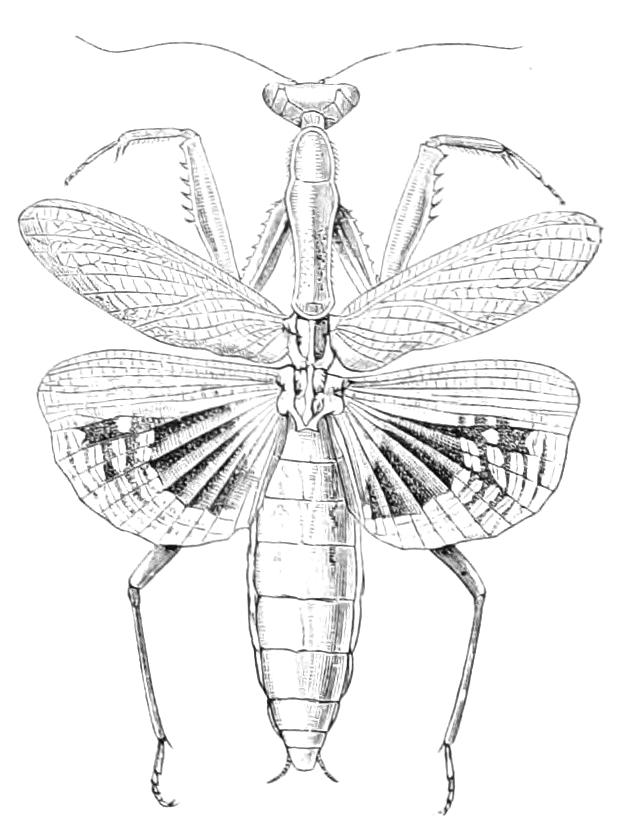
Fig. 140.—Iris oratoria, female. South Europe. Natural size.
The Mantidae, as a rule, have a quiet unobtrusive mien, and were it not for their formidable front legs would look the picture of innocence; they, however, hold these legs in such manner as to greatly detract from the forbidding appearance thereof, stretching them out only partially so as to give rise to an appearance of supplication or prayer;[175] this effect is increased by their holding themselves in a semi-erect position, standing on the hind and middle legs with the upper parts of the body directed somewhat forwards, hence they are called by various names indicating prayer or supplication, and it is said that in some countries they are considered sacred. Some of the older writers went so far as to say that a Mantis would indicate the road a child should take by stretching out one of its arms in the right direction. The traveller Burchell, speaking of a species since described by Westwood under the name of Tarachodes lucubrans, says: "I have become acquainted with a new species of Mantis, whose presence became afterwards sufficiently familiar to me by its never failing, on calm warm evenings, to pay me a visit as I was writing my journal, and sometimes to interrupt my lucubrations by putting out the lamp. All the Mantis tribe are very remarkable Insects; and this one, whose dusky sober colouring well suits the obscurity of night, is certainly so, by the very late hours it keeps. It often settled on my book, or on the press where I was writing, and remained still, as if considering some affair of importance, with an appearance of intelligence which had a wonderful effect in withholding my hand from doing it harm. Although hundreds have flown within my power, I never took more than five. I have given to this curious little creature the name of Mantis lucubrans; and having no doubt that he will introduce himself to every traveller who comes into this country [Southern Africa] in the months of November and December, I beg to recommend him as a harmless little companion, and entreat that kindness and mercy may be shown to him." This appearance of innocence and quietness must have struck all who have seen these Insects alive; nevertheless, it is of the most deceptive character, for the creature's activity consists of a series of wholesale massacres carried on day after day, the number of victims it sacrifices being enormous. The Mantis does not even spare its own kind; it is well known that the female not unfrequently devours its own mate. A very different picture to that of Burchell has been drawn by Potts, who observed the habits of a species in New Zealand.[176] He informs us that when about making an attack it approaches its intended prey with slow, deliberate movements, its anterior limbs folded in an innocent fashion, now and then raising itself or lifting the prothorax in a stealthy quiet manner, perhaps to judge accurately of its distance; when near enough, with one swift dart the victim is secured. The prey is held firmly in the formidable trap formed by the anterior leg, and is thus brought near the mouth. The Mantis usually commences its feast by taking off some portions of the head of its wretched victim, and displays an absolute indifference to its struggling or kicking; the mandibles having seized a portion of the food, the legs holding it move away, thus leaving a fragment in the mouth. Portions only of a captured Insect are consumed, much being cast away; and Mr. Potts states that he has seen one of these voracious creatures kill and devour parts of fourteen small flies within a very brief space of time. This voracity and waste of animal food is very remarkable when we recollect that many Insects have such perfect powers of assimilation that during their whole period of growth they only consume a mass of food—and that vegetable—but little larger in size than the bulk they themselves attain. This fact is well known in the case of Bruchus, Caryoborus, and other seed-feeding Insects. Burmeister has stated good grounds for believing that some of the larger Mantidae do not confine themselves to Insect diet, but attack and devour small Vertebrates.[177] He has given a circumstantial account of a case at Buenos Ayres, where a small bird was secured by the wingless female of a large Mantis, which had commenced devouring its head when the observer took possession of the creature and its booty. Dubois states[178] that when a decapitated, but living, Mantis was suspending itself to a roll of drapery by its four posterior legs, a person could detach with the fingers the left anterior leg (of the four) and the right posterior, or conversely the left posterior and right anterior, without the interference producing any action on the part of the creature; but if one of the other legs was also interfered with, which would necessarily have changed the position of the body, then immediately one of the two unoccupied legs was placed by the creature in a proper position to assure its stability. This reflex action altogether resembled in appearance a conscious action, and was as effectually performed.
The combination in Mantidae of voracious and destructive instincts with helpless and inert attitudes gives rise to the idea that these latter are adopted for the purpose of deceiving the living prey and of thus more easily obtaining the means of subsistence. It appears, however, more probable that the helpless attitudes have no such origin, but are due to the structure and form of the creature. The front legs being wonderfully well formed for raptorial purposes, have no capacity for locomotion or for supporting the Insect in the usual manner, so that the body has to be borne by the hinder two pairs of legs; at the same time the raptorial pair of limbs—which, it will be recollected, are of great size and attached to the anterior part of an unusually long prothorax—have to be held in such a position as will not derange the equilibrium maintained by the posterior part of the body; moreover, these large raptorial legs are entirely exserted, and have no trace of any articulatory cavity that might act as a mechanical aid to their support. Thus they could not be held extended without great muscular exhaustion; hence we can well believe that the sedentary and helpless attitudes of the creature are not the results of any guile.
A Mantis has been recorded as bearing a close resemblance to a Phasmid of the genus Bacillus and having only small front legs; it was suggested by Bates[179] that the Mantis would probably be found to feed on the Bacillus. Though the case is of considerable interest, no further information about it has been obtained.
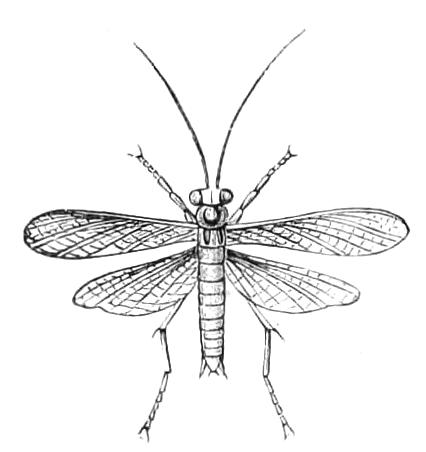
Fig. 141.—Mantoida luteola Westw., male. Santarem.
The simplest forms of the family are found in the groups Amorphoscelides and Orthoderides. From our figure of one of these (Fig. 141, Mantoida luteola ♂), it will be seen that the peculiarities of the family can scarcely be detected, the raptorial legs being very little developed and the prothorax short. The sexes, too, differ but little in these simple forms. Most of them are very rare in collections, but Wood-Mason states[180] that Amorphoscelis annulicornis is frequently found about Calcutta on the trunks of trees, to the bark of which it is so similar that it is only discovered with difficulty. In its rapid movements it resembles the cockroaches or Machilis, more than it does the more differentiated forms of its own group.
In the genus Pyrgomantis (Fig. 142, P. singularis, female) the male has the tegmina and wings of normal size, while in the female they are rudimentary.
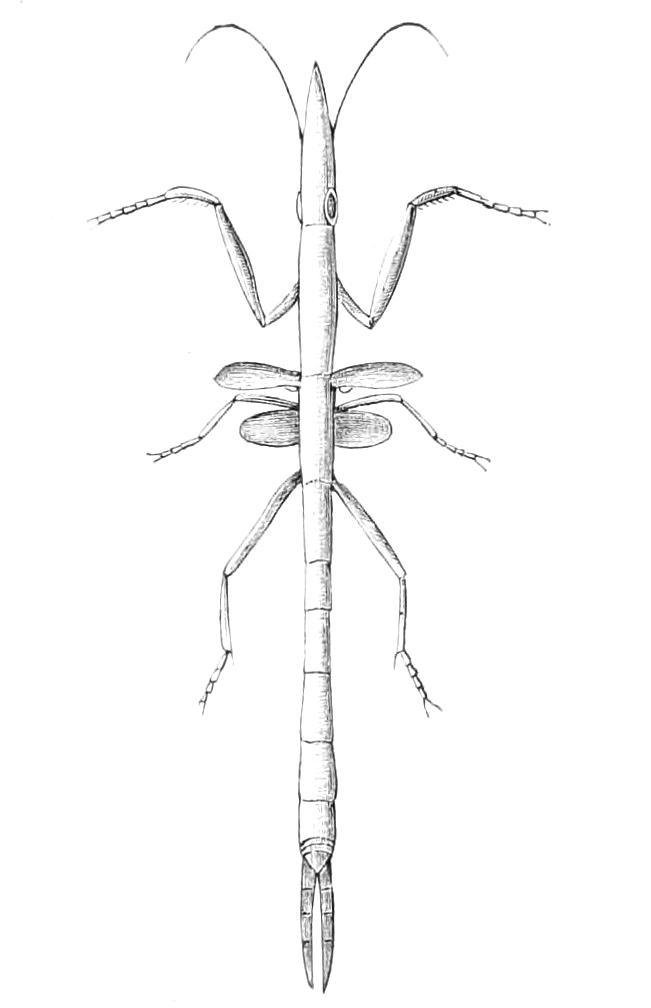
Fig. 142.—Pyrgomantis singularis, female. S. Africa. (After Westwood.)
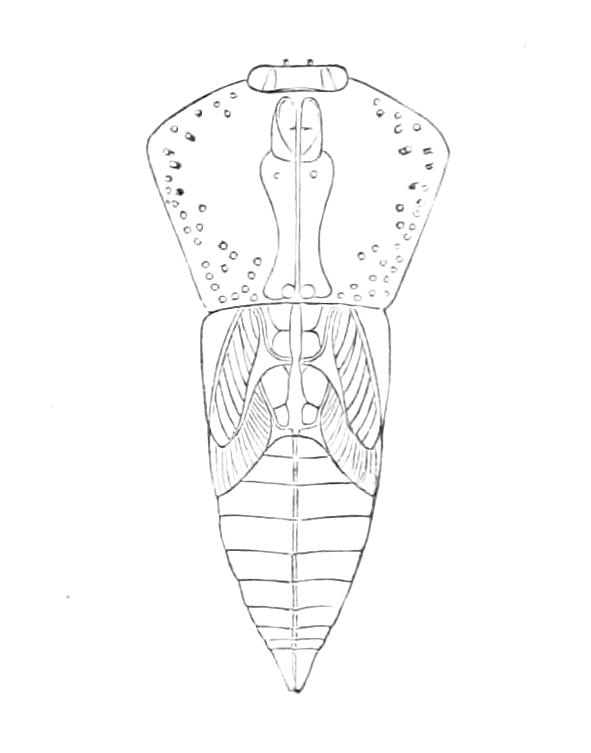
Fig. 143.—Outline of Chaeradodis cancellata ♀, nymph. (After Wood-Mason.)
The variety of shape and external appearance in this family is very great; de Saussure considers it to be a mimetic group. In certain species some parts of the body—more especially the tegmina—have very much the appearance of foliage, and usually in such cases this appearance is confined to the female, the males in this family having, as we have said, the organs of flight more transparent and colourless; in the former sex the alar organs, when present, are frequently but little adapted for flying. In some species the prothorax is expanded at the sides (Fig. 135, Deroplatys sarawaca; and Fig. 143, Choeradodis cancellata), and in such cases the outline of the natural thorax—if we may use such an expression—may be detected occupying the middle of the unusual expansion. The European Mantis religiosa varies much in colour; in some examples the tegmina are leaf-green, while in others they are brown or gray. There is some evidence extant making it probable that in some species the colour of an individual changes at different times—Colonel Bowker saying of Harpax ocellata that it "beats the Chameleon hollow in changing colour."
Some of the species of the old genus Eremiaphila (Fig. 144) are of very unusual form. De Saussure considers that some species of this genus are more highly modified than any other animals for maintaining their existence in desert regions. They are said to be found in places where no vegetation exists, and to assimilate in appearance with the sandy soil, the species varying in colour, so that the individuals agree in tint with the soil on which they dwell. These Insects are referred to the group Orthoderides, and have a short prothorax, the alar organs being unsuited for flight. What they live on is not actually known; although other Insects are the natural food of Mantids, it is said that these desert-frequenting species occur in spots where no other Insect life is known to exist. Lefebvre[181] met with these Eremiaphilas in the desert between the Nile and the Northern Oasis, El Bahryeh, but was quite unable to discover their mode of subsistence. These Insects are very rare in collections, and the information we possess about them is very meagre.
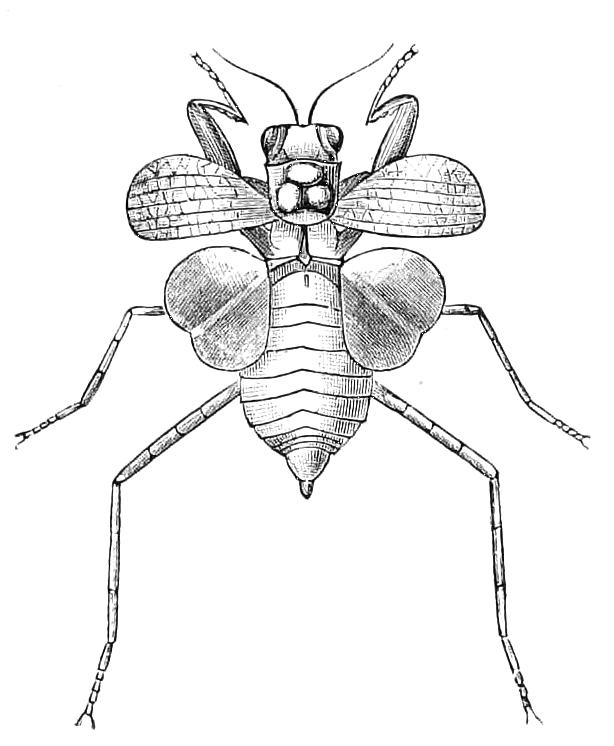
Fig. 144.—Eremiaphila turcica. (After Westwood.)
Mr. Graham Kerr found on the Pilcomayo river a species of Mantidae living on branches of trees amongst lichens, which it so exactly resembled that it was only detected by the movement of a limb; it was accompanied by a Phaneropterid grasshopper, which bore a similar resemblance to the lichens. One of the rarest and most remarkable forms of Mantidae is the genus Toxodera, in which the eyes project outwards as pointed cones (Fig. 145). These Insects offer an interesting problem for study, since we are entirely ignorant about them. Brunner places the Toxoderae in his tribe Harpagides, but with the remark that "these Insects of antediluvian shapes differ essentially from all other Mantidae."
Wood-Mason informs us[182] that the young of Hymenopus bicornis beautifully simulate blossoms of different colours. And it has been stated by Dr. Wallace, on the authority of a communication made to him by Sir Charles Dilke, that a small Mantis found in Java exactly resembles a pink Orchis-flower, and this species "was not only said to attract Insects, but even the kind of Insects (butterflies) which it allures and devours was mentioned." We do not know of what species or genus this Insect may be, but Hymenopus bicornis is a peculiar form of the tribe Harpagides, and has, together with its younger state, been figured long ago by Caspar Stoll in his quaint and interesting old book.[183] Though it has very peculiar foliaceous expansions on the two hinder pairs of legs, these dilatations are very different from those seen in the curious Gongylus gongylodes, the female of which we figure (Fig. 146). This latter, according to the information we shall quote, is also a "floral simulator." Specimens of G. gongylodes were shown to the members of the Asiatic Society of Bengal in 1877 by Dr. J. Anderson,[184] who at the same gave some information about them which we shall reproduce in full, because, incomplete as it is, it is apparently almost the sole piece of definite information we possess as to this curious Insect, or any of its congeners:—
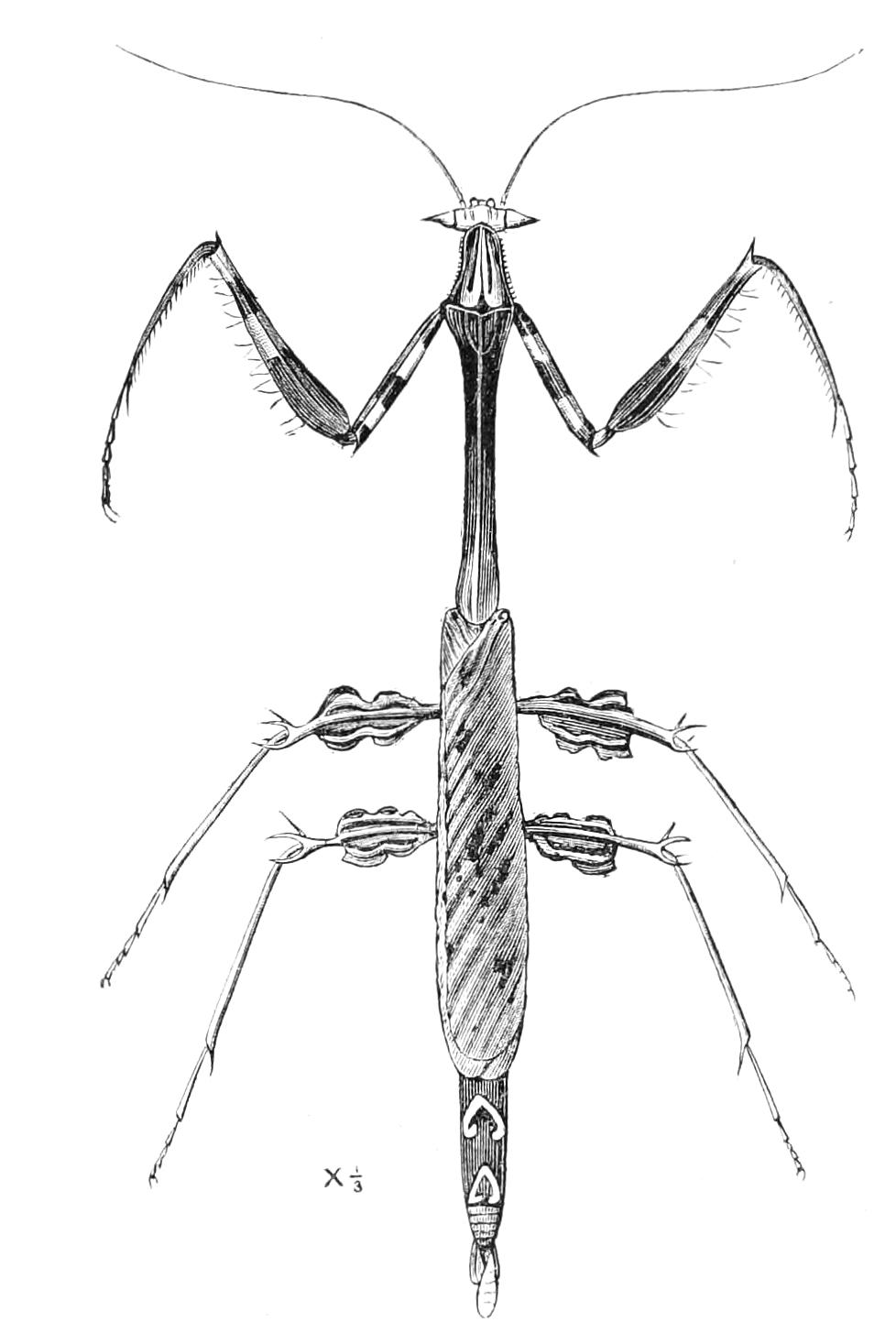
Fig. 145.—Toxodera denticulata, male. Java. (After Serville.)
"These Insects all came from the same locality, having been forwarded to Mr. Buckland by Mr. Larymore of the Central Jail at Midnapur. Mr. Larymore had procured them from the neighbouring country district, where Santál women and children had hunted them out and brought them in, hanging on branches or twigs of a bush, somewhat like a wild plum-tree. They are also said to be found upon rose-bushes, and in connexion with this it was observed that, in Midnapur, they were known as rose-leaf Insects, from the circumstance that when the Insect is more developed and furnished with wings, the foliaceous appendages are said greatly to increase in size, and exactly to resemble rose-leaves. Dr. Anderson, however, was disposed to think that more than one species might probably occur in the Midnapur district, and that these Insects with the larger foliaceous expansions might be distinct from the species now before the Society.
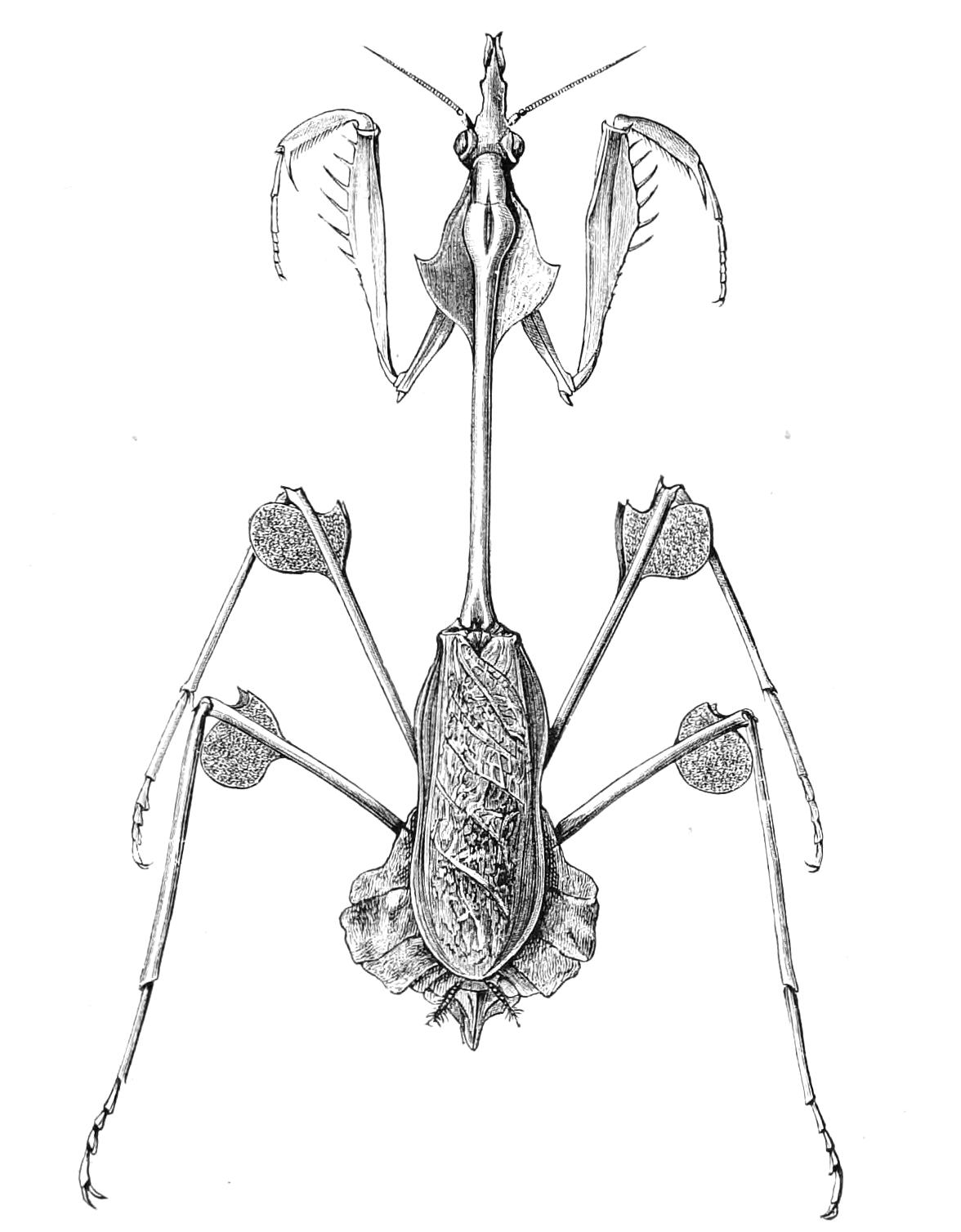
Fig. 146.—Gongylus gongylodes, female. East India.
"Mr. Buckland had made over these Insects to Dr. Anderson, and since that time they have been regularly fed upon house-flies and grasshoppers; the latter, however, appear to be rather too strong for them, and they therefore prefer the flies. They have been tried with small fragments of plaintain and custard-apple, which they not only eat, but the juice of which they seem to suck with considerable avidity, Dr. Anderson, however, thought that it was the moisture of these fruits that was the chief attraction to these Insects, for the entire character of their organisation indicated a raptorial habit.
"Dr. Anderson went on to say that he had succeeded in identifying the three larger Insects by means of a single dried specimen in the Indian Museum, which, however, was fully mature and provided with wings. These remarkable Insects proved to be the pupae of a peculiar species of Mantis which was known to Aldrovandus, who figured it more than a century and a half before the first appearance of the Systema Naturae of Linnaeus, to whom it was known as Gryllus gongylodes, and also as Mantis gongylodes; and since the time of Aldrovandus it had been figured in a variety of works on Natural History, but apparently in every instance from mature, and seemingly dried specimens, so that the colours of the Insect during life had never been correctly described.
"So much by way of introduction to these remarkable pupal Mantises, the recognised scientific name of which is Gongylus gongylodes L.
"The reason which induced Dr. Anderson to bring them to the notice of the Society had now to be pointed out. On looking at the Insects from above, they did not exhibit any very striking features beyond the leaf-like expansion of the prothorax and the foliaceous appendages to the limbs, both of which, like the upper surface of the Insect, are coloured green, but on turning to the under surface the aspect is entirely different. The leaf-like expansion of the prothorax; instead of being green, is a clear, pale lavender-violet, with a faint pink bloom along the edges of the leaf, so that this portion of the Insect has the exact appearance of the corolla of a plant, a floral simulation which is perfected by the presence of a dark, blackish brown spot in the centre, over the prothorax, and which mimics the opening to the tube of a corolla. A favourite position of this Insect is to hang head downwards among a mass of green foliage, and, when it does so, it generally remains almost motionless, but, at intervals, evinces a swaying movement as of a flower touched by a gentle breeze; and while in this attitude, with its fore-limbs banded violet and black, and drawn up in front of the centre of the corolla, the simulation of a papilionaceous flower is complete. The object of the bright colouring of the under surface of the prothoracic expansion is evident, its purpose being to act as a decoy to Insects, which, mistaking it for a corolla, fly directly into the expectant, serrated, sabre-like, raptorial arms of the simulator. It is no new fact that many Insects resemble the leaves of plants and trees, and that they manifest forms and colours which serve to protect them in the struggle for existence, but so far as Dr. Anderson had ascertained, this was the first recorded instance of an Insect simulating the corolla of a flower for the evident purpose of attracting Insects towards it for its sustenance. It is even more remarkable than this, for it is a localised adaptation for such a purpose, a portion of the Insect being so modified in form and colour that the appearance of the corolla of a plant is produced, in conjunction with the remainder of the long attenuated prothorax, which at a distance resembles the flower stem; the anterior limbs when in repose even adding to and heightening the deception."
That we should have no more precise information as to a large Insect of such remarkable habits and appearance, and one that has been known to naturalists for upwards of three centuries, is a matter for regret. Careful observation as to the habits, food, and variation of these floral simulators, and as to whether they seek for spots specially suitable to their coloration, would be of great interest. A European congener of this Insect, Empusa pauperata, has small foliaceous expansions on the legs, but its habits have not been noticed in detail.
The very curious Insect represented in Fig. 147, Stenophylla cornigera, is a member of the tribe Vatides; the form of the cerci at the end of the body is very peculiar. This extremely rare, if not absolutely unique, Insect is a native of the interior of Brazil.
Dufour has recorded that Mantis religiosa possesses the power of producing a mournful sound by rubbing the extremity of the body against the wings; it is stated that a hissing sound is produced by other species, and Wood-Mason has suggested[185] that a special structure exists on the tegmina for the purpose.
There are probably about 600 species of Mantidae known; they are distributed over all the warmer parts of the earth, but there are none in the cooler regions. Europe possesses some twelve or fourteen species, most of them confined to the Mediterranean sub-region; a single species, Mantis religiosa, is frequently found in Central France, and has been recorded as occurring as far north as Havre. Although no species is a native of Britain, it is not difficult to keep them alive here. Denny records[186] that an egg-case of a Mantis was sent from Australia to England, and that the hatching of the eggs was completed after its arrival. The young fed readily on flies, and we are informed that in the neighbourhood of Melbourne, where this Mantis is plentiful, specimens are placed by the citizens on the window-blinds of their houses, so that the rooms may be cleared from flies by means of the indefatigable voracity of the Mantis.
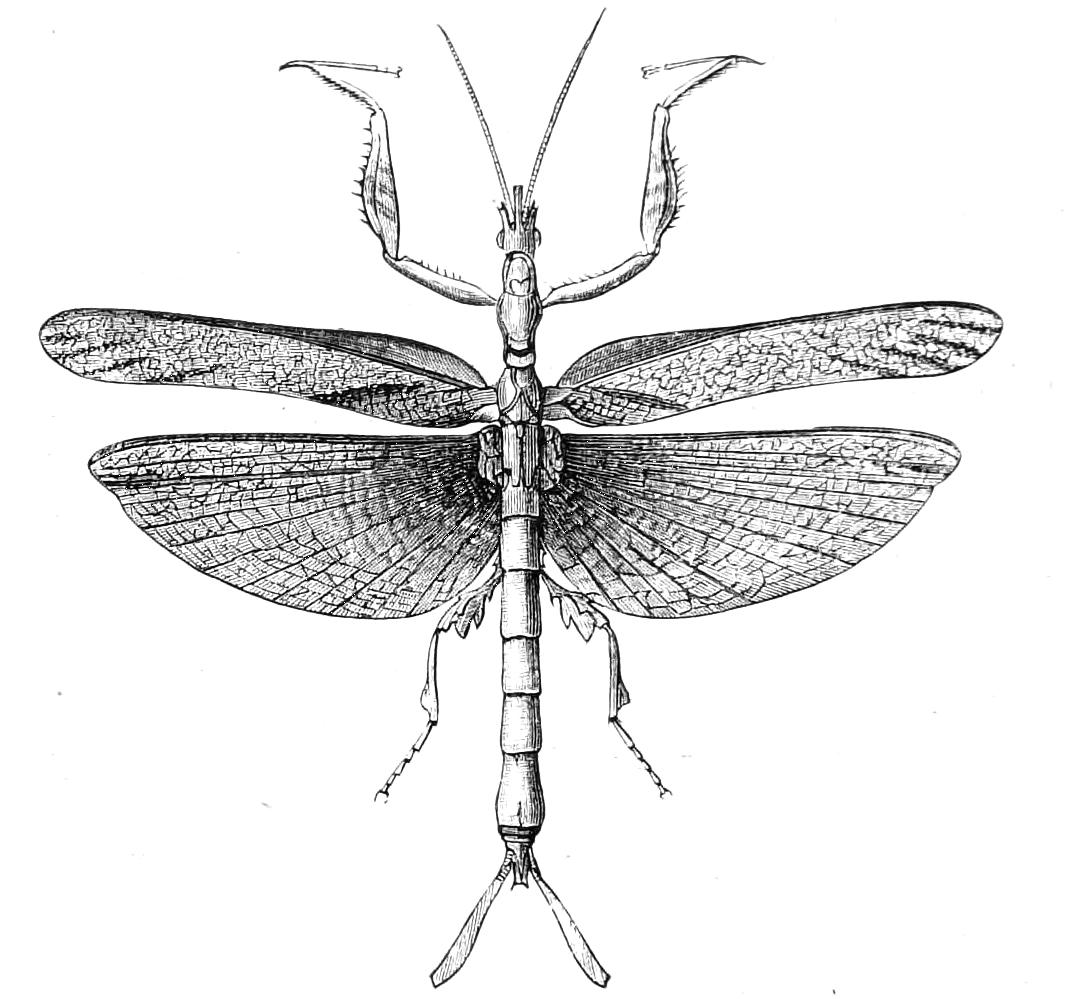
Fig. 147.—Stenophylla cornigera. Brazil. (After Westwood.)
The geological record as to Mantidae is very meagre and unsatisfactory. The genus Mantis is said to occur in amber, and Heer has referred to the same genus an ill-preserved fossil from the upper Miocene beds of Central Europe; a fragment of a hind wing found in the Jurassic strata of Siberia has been assigned to the family; and until recently Lithomantis from the Carboniferous beds of Scotland was considered to belong to Mantidae. Scudder, however, has rejected it therefrom, placing it in the Neuropteroid division of Palaeodictyoptera, and Brongniart, adding another species to the genus from the Carboniferous strata in France, proposed to treat the two as a distinct family, which he called Palaeomantidae.[187] This naturalist has, however, since renewed his study[188] of these Insects, has become convinced that they have no relations with existing Mantidae, and has consequently removed them to the family Platypterides in the Order Neuroptera.
Six tribes of Mantidae are recognised by Brunner and de Saussure.
Table of the tribes of Mantidae:—
1. Anterior tibiae with the outer edge unarmed beneath or only furnished with very minute tubercles. (Pronotum not longer than the anterior coxae.) Tribe 1. Amorphoscelides. (Fig. 141, Mantoidea luteola.)
1′. Anterior tibiae with the outer edge spinose beneath.
2. Anterior femora having the inner edge armed beneath with equal spines, or with spines in which only the alternate are smaller. Antennae of the male simple, rarely unipectinate.
3. Tibiae and also the intermediate and hind femora even above.
4. Legs and body with no lobe-like processes. (Antennae simple in each sex.)
5. Pronotum not forming any dilatation above the insertion of the coxae, its lateral margins straight or (in the genus Choeradodis) strongly dilated with the anterior margin not rounded. Tribe 2. Orthoderides. (Fig. 142, Pyrgomantis; Fig. 143, Choeradodis; Fig. 144, Eremiaphila turcica.)
5′. Pronotum dilated above the insertion of the coxae, there with the lateral margins broadened in a round manner, the anterior margin rounded. Tribe 3. Mantides. (Fig. 140, Iris oratoria.)
4′. Legs or body furnished with lobes. (Posterior femora or segments of the body with lobes, or vertex of the head conically prolonged.) Tribe 4. Harpagides. (Fig. 136, Harpax variegatus; Fig. 135, Deroplatys sarawaca.)
3′. Tibiae as well as the intermediate and hind femora carinate above. (Pronotum elongate, with the posterior part, behind the transverse groove, three times as long as the anterior part.) Tribe 5. Vatides. (Fig. 147, Stenophylla cornigera.)
2′. Anterior femora beneath, with the inner edge armed between the longer teeth with shorter teeth, usually three in number. Antennae of the male bipectinate. (Vertex conically prolonged.) Tribe 6. Empusides. (Fig. 146, Gongylus gongylodes.)