Volume 25 — WHO SENDS ALL THE CONSCIENCE-MONEY?
Reading edition
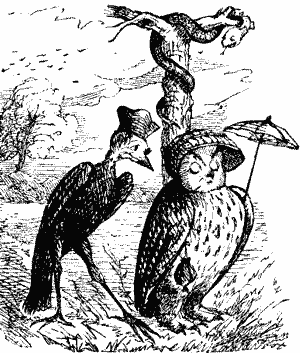
THERE is a question we would ask the reader: Did ever he meet with a person who had sent any "conscience-money" to the Chancellor of the Exchequer? We have met with many curious people in our lifetime, but we must say we never came in contact with an eccentric individual, who indulged in any peculiarity half so strange as the above. We do not believe such an individual exists. If ever there was a myth, we should say that individual is fairly entitled to call himself one. He must be the myth of all myths; unless perchance it is the Chancellor of the Exchequer himself, who sends all these conscience-moneys. We have long had a suspicion of this nature; firstly, because we never see any return of these numerous sums of money entered in the Quarter's Revenue; and, secondly, because we believe he does it to decoy others to do the same. If you notice, these conscientious offerings are generally made in favour of the income-tax. Now, the Chancellor of the Exchequer knows very well that this tax is not a popular one. He also knows that, on account of its unpopularity, there is a very large class of Her Majesty's subjects who particularly dislike paying it. Give them but a chance of evading the payment, and they do not in the least scruple availing themselves of it. We do not say whether the practice, so pursued, is honest or not, but such is the fact! The Chancellor of the Exchequer, therefore, hits every now and then upon the "conscience-money" expedient in order to reproach every man who has been a defaulter with the fact of his non-payment. It is only another way of saying to him, "Why don't you follow his example? Look at A. B.; what a noble-minded fellow he is! By some accident he has neglected to pay £50 for his share of the Income-Tax, and here, by Jove, he has sent it! Now, if you have any conscience, you will immediately do the same."
We cannot say whether any one does send anything. A few pounds may drop in occasionally, but we suspect that the majority of the sums, sent in the name of A. B., or X. Y. Z., and the other popular initials of the alphabet, are forwarded by the Chancellor of the Exchequer himself. It is a financial dodge for inducing reluctant tax-payers to do that as a matter of "conscience," which they will not do as a pleasure.
THE END OF QUACKERY.
Among the many novel systems of medicine for which the present day is remarkable, there is one distinguished by a name that, at least, seems very appropriate. It is called Coffinism. This is candid. The term, however, is so comprehensive, that it might, with great correctness, be applied to all manner of therapeutical schemes which deviate from true medical science. There is one right method of treating diseases, and there are many wrong ones; to all whereof the denomination of Coffinism is justly applicable; since it indicates, with exactness, the tendency of each of them; every improper way of attempting to cure people being a path which leads to the "bourne from which no traveller returns:" in short, which terminates in the elm box.
A Whisper in the Ear of Nicholas.
We hope we have heard the last of the Emperor of Russia's Ultimatums, or Ultimata, just as you like to call it. We trust the Emperor will bear in mind the old Latin injunction of "Ne sutor ultra crepidam", which, for his own particular Imperial use, we beg to alter into "Ne sutor ultra Ultimatum."
Cure for a Cut.—Buy a new suit of clothes.