Chapter I
Reading edition
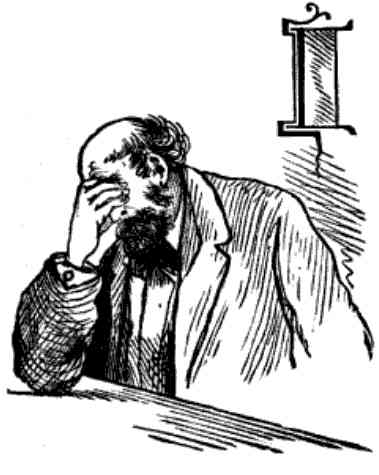
“I can no longer struggle against the current of misfortune,” exclaimed Mr. Whiting, a small merchant, who had by the pressure of hard times become somewhat involved; “I am ruined!”
“Nay, my husband, do not be distressed. Worse calamities than this might happen, and we will make the best of it.”
“But wife, I must fail; I cannot sustain myself another day.”
“You have done all you can to avert the misfortune, and if it must come, let us not repine, but bear it like Christians.”
“I will try to keep calm; but it seems hard, after weathering the worst of the storm, to be wrecked in sight of the land.”
“Perhaps your creditors will give you more time,” suggested Mrs. Whiting.
“I cannot hope it; the note which comes due to-morrow, and which I am utterly unable to pay, is in the hands of my bitterest enemy.”
“He will not distress you.”
“I know him well. He is a villain!”
“Whom do you mean?”
“Bacher.”
“God help us, if he is your creditor!”
“As near as I can learn, he bought the note on purpose to perplex me, and perhaps to obtain his revenge.”
“Why is he so bitter against you?”
“Because I exposed a swindling operation, in which he was engaged.”
“How much is the note, father?” asked a beautiful, hazel-eyed girl, who had not before spoken, but who had been listening with intense interest to the conversation between her father and mother.
“Three thousand dollars, Sarah,” replied Mr. Whiting, fixing a glance of anxiety upon the fair girl.
“Can’t you borrow it, father?”
“Alas! my child, my credit is very much impaired. My notes have been too thick in State Street for me to borrow without paying exorbitant interest; and that, I think, would wrong my creditors in case any thing should happen.”
“It is not so very dreadful to fail, is it, father?”
“It would be ruinous to me, my child. If I could pay this note to-morrow, I could get along very well. I should not have been embarrassed, had it not been for the failure of Jones. But I suppose it must be, and we must content ourselves to live a little more closely than we have been accustomed to do.”
Sarah asked no more questions, and though the conversation was continued by her father and mother, she seemed to pay no attention to it. She appeared to be musing deeply over something.
As the evening advanced, John Barnet, a clerk, who had for some months been attentive to Sarah, and who, report said, was a favored suitor, made his accustomed evening visit. Every body said that John Barnet was a nice young man, and every way worthy of so beautiful and amiable a wife as Sarah Whiting would undoubtedly make him.
If there is any thing in smiles and gentle words, the affection of the young clerk was warmly reciprocated by Sarah. They were not engaged, however, though he called at Mr. Whiting’s house from four to seven evenings in a week.
Mr. Whiting and his wife retired at an early hour in the evening, leaving the lovers “to have it out.”
As usual, John Barnet begged her to make him happy by promising to be his forever. To his utter surprise and consternation, she told him she could never be his wife, and entreated him to think no more about her. Of course, the lover pressed her for an explanation of this sudden and remarkable change in her manner towards him. But she could not even do this, and John took his leave, feeling that he had not another friend in the world.