Chapter I
Reading edition
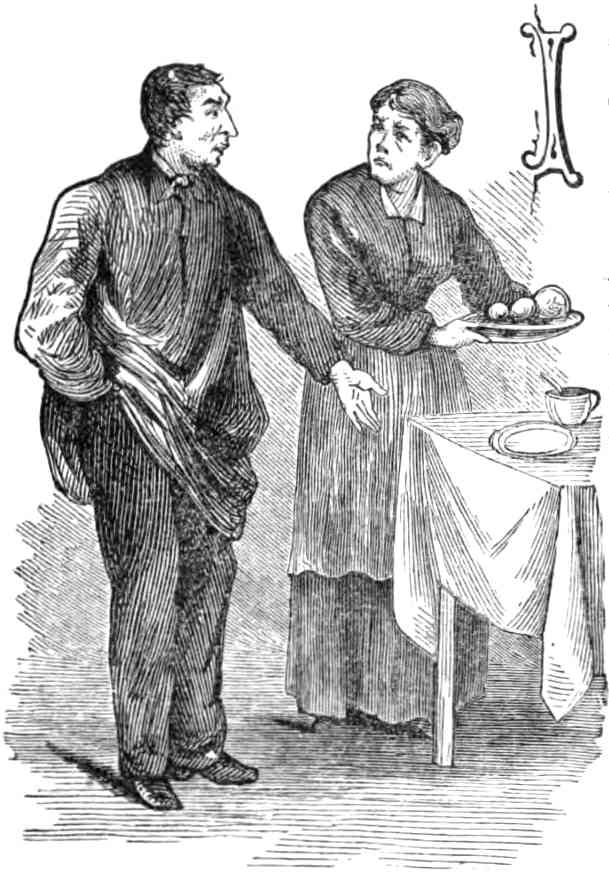
“It is folly, wife!” exclaimed Mr. Jotham Somes, a matter-of-fact, plain-spoken sort of man, to his better half. “There you have got no less than four kinds of cake, three kinds of pies, two kinds of preserves, to say nothing of knicknacks and gimcracks.”
The fact was, that Mrs. Somes was having the minister and his wife and two grown-up daughters to take tea with her. She had been engaged for three days in the preparations, and such a display of nice things was calculated to astonish the minister and his family—to give them a two-fold surprise—first, at the variety and extent of her culinary resources, and, secondly, at her folly in attempting to make a display far beyond her means.
The Someses were in comfortable circumstances. Mr. Somes was a farmer, and probably his income might have amounted to four hundred dollars per annum.
Mrs. Somes was a prudent, careful housewife, who wasted no more of her culinary skill upon her own family than was absolutely necessary; but she delighted in making a grand appearance when she had company. Mr. Somes and the boys were sometimes so ill-natured as to growl at her careful catering when the house contained no company, and it cut them to the bone to see such extraordinary preparations for the neighbors. It was “kiss the cook” when they were alone; but the board groaned with plenty when there were guests present.
Mr. Jotham Somes had just come from the sitting room where the table, with all its tempting array of viands was spread. He did not like it a bit, and after passing the time of day with the parson and his family, he proceeded to the kitchen, where his wife was just taking the hot biscuits out of the oven.
“What do you mean by folly, I should like to know?” replied Mrs. Jotham Somes, somewhat tartly.
She was a second wife, and having been redeemed from one of the advance stages of maidenhood, her temper had grown a little sour before she became a wife.
“The folly of setting a table as you have yours,” replied the husband. “I should think you were going to have the president and the royal family to take tea with you.”
“I am going to have the Rev. Mr. Meeklie and his family.”
“But I can’t afford such extravagance as this. You will ruin me.”
“I will take care of my business, if you will of yours,” returned the lady, slamming the oven door.
“Perhaps this is not my business.”
“No, I’m sure it is not.”
“Who pays for all them gewgaws and gimcracks?”
“You do, of course.”
“But it is none of my business?”
“No; I never thought before you were so confounded mean,” said the lady, her face reddening with anger.
“Mean! I’m not mean. But when you get victuals for your own family, you think almost any thing is good enough for them. We never see any pies, and cakes, and knicknacks.”
“Do you think I’m going to make pies and cakes for the men folks to eat every day?” retorted the indignant housekeeper.
“Then don’t do it for company. What is good enough for me is as good as I can afford to give my visitors.”
“I really believe if you had your way, you would have me as mean with company as the Smiths.”
“The Smiths are as good folks and as liberal as any in town; and I’ll warrant Parson Meeklie thinks a heap more of them than he does of you, with all your four kinds of cake.”
“You’re a fool, Mr. Somes!”
“I am fool enough to know that folks are not judged by the quantity of sweet cakes they put upon the table when they have company. I repeat it—there is no better folks in town than the Smiths.”
“I s’pose not; but they had nothing but cold biscuit and molasses gingerbread when we took tea there.”
“That’s as good as they can afford; but it is no better than they have every day, and I admire their independence.”
“They’re contemptible, mean folks, there!”
“Why? Because they don’t attempt to make folks believe they live better than they do? For my part, I don’t think it is any better than hypocrisy to make such a parade as you do, especially when it is hard work for me and the boys to get a decent meal of victuals.”
“Did any body ever hear the like?” groaned the lady, who had by this time arrived at that pitch of excitement when tears are more effective than words.
“Perhaps they never did; but if ever I see any thing of this sort again, they will be pretty likely to hear of it,” replied Mr. Somes, throwing off his blue frock, and commencing his preparations for taking tea with the minister.