Chapter I
Reading edition
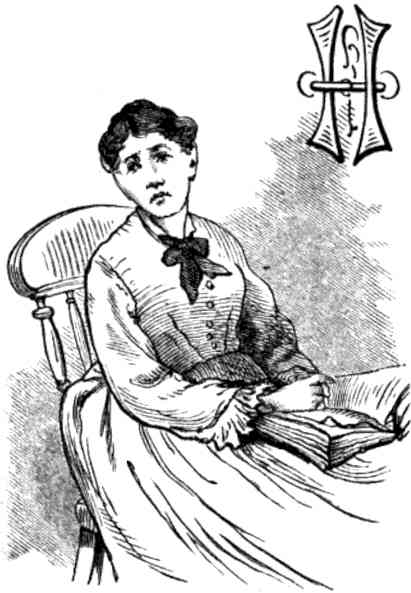
“He’s real ugly, there! He treats his wife shamefully!” exclaimed Mrs. Benson, a pretty little woman, who had been a wife just eleven months and twelve days.
“Perhaps not, my dear,” replied the young husband, quietly crossing his legs over the top of the fire frame, and puffing out a long wreath of smoke from his mouth as he removed the fragrant regalia.
“Perhaps not! Why, haven’t I seen it myself?”
“You are not acquainted with all the circumstances.”
“Pshaw! A man that can treat his wife so rudely is a perfect brute; I don’t care what the circumstances are.”
“Brown always was a good-hearted fellow, and if he is changed at all, matrimony has done it.”
“Thank you, Charles; you are very complimentary. I wonder if matrimony has changed you.”
“Why, Julia, we have not been married quite a year yet,” replied the husband, smiling.
“Indeed!”
“Brown has been married five years,” replied Mr. Benson, with admirable self-possession.
“Then you think I have not shown out what I am yet?”
“Bah! My dear, you are making quite a personal matter of it. We were speaking of Brown.”
“Brown is a brute—a hog!” said the lady, in a pet.
“What has Brown done?”
“Done? Why, good gracious! He is enough to wear out a woman’s patience.”
“I dare say, my dear; but what has he done?”
“Every thing. He is wearing his poor, patient wife out; she will die—poor, weak, sensitive thing—under such treatment.”
“No doubt of it; but you do not tell me what he has done.”
“I don’t mean to say that he beats her.”
“No.”
“Nor starves her.”
“Does he scold at her?”
“No; if he would only scold, it would be a relief to her.”
“Poor Mrs. Brown!”
“He is so cold and distant; I am sure he married her for her money.”
“Quite likely; but how is it with Mrs. Brown? Is she an angel?”
“I don’t know as she is an angel; but she bears her sorrows like an angel. The poor thing had been crying, I know, when I called there this afternoon.”
“Did she tell you what the matter was?”
“Yes; you know we were children together, and never had any secrets,” replied the young wife, with a troubled expression; for she had some doubts as to the propriety of what she had done.
“Don’t meddle with a quarrel between man and wife, Julia,” said Mr. Benson, shaking his head.
“I could not bear to see her suffering; so I asked her what the matter was.”
“I am sorry you did.”
“I could not help it, Charles; I pitied her so, and I was pretty well satisfied as to the cause of her grief.”
“And her husband illtreats her?”
“He does not love her. She says he has been two or three days without speaking to her.”
“That is bad; but who is to blame?”
“Who is to blame? Why, he, of course;” and the pretty little Mrs. Benson looked up in astonishment from the little cap she was embroidering.
“Why ‘of course’?”
“He don’t consult her tastes in regard to his dress. If she asks him to bring her home any thing from down town, ten chances to one he forgets it. He don’t seem to care for her feelings. The poor thing says she has cried for an hour in his presence, and he has sat like a log, perfectly unmoved—so different from you, Charles.”
“Perhaps Mrs. Brown is not in every respect like you, my dear.”
The young wife looked up with a smile of gratified pride. She was yet young and beautiful, and, what was far better than youth and beauty, she was good tempered, kind, and reasonable. Mrs. Brown’s case excited all her sympathies, and she proceeded to detail to her husband a list of the poor lady’s trials. But, as the reader will be better able to appreciate them by being present during the scene described, we will introduce the injured lady and her unfeeling husband.