Chapter I
Reading edition
“Talk to me about your newspapers! I tell you, neighbor Parker, they are a consarned humbug!” exclaimed Farmer Cheney.
“That’s a great mistake of yours, neighbor. For my part, I would rather live on two meals a day, than be without a good newspaper.”
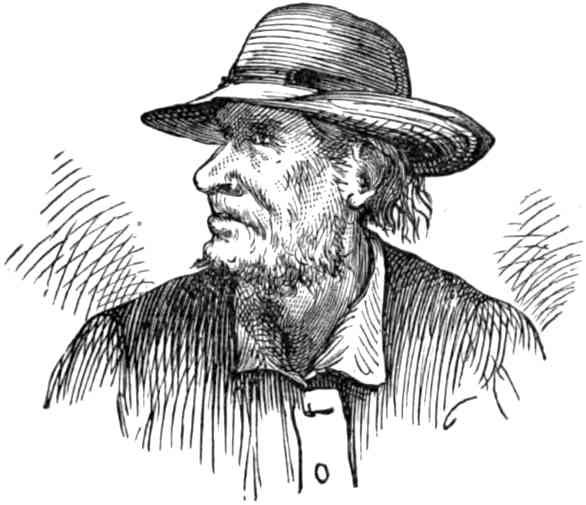
“Git out! I wonder what the world’s a comin’ to. There’s my gals have teased me to take Harper’s Magazine, till I hadn’t any peace o’ my life. But I put my foot right down; you can’t humbug me with such trash;” and Farmer Cheney complacently wiped away the tobacco juice which was streaming down from the corners of his mouth.
“You are in the wrong, neighbor Cheney.”
“No, I ain’t, nuther. Then Tom wan’t satisfied, and nothin’ would do but I must take the American Union and the Practical Farmer. But it wan’t no use; I wouldn’t have the trash in the house, say nothin’ o’ wastin’ money on it.”
“Do you ever read the papers?”
“Me! no, not I; I’ve got a better use for my time.”
“But the long winter evenings?”
“Well, we allers have corn to shell.”
“Not all winter?”
“No; but when I can’t find no work to do, I’d a nuff sight rather set in the corner, and go to sleep.”
“But your son Reuben takes the papers.”
“Yes; but I never brought him up to do any sich thing. He takes the Union and the Farmer both, and stews his brains over ’em half the time. That ain’t the wo’st on’t, nuther.”
“No evil effects have followed from it, I trust?”
“Yes, there has; there’s my youngest boy, Tom, read sunthin’ or nuther over to Reuben’s t’other day about a ‘chance for young men,’ and nothin’ll do but he must go right into it; he’s off to Boston next week. So much for havin’ newspapers round.”
“But perhaps he may improve the opportunity, and make money by it.”
“No sich thing. He’s got two hundred dollars, and when that’s all gone, he’ll be back again; see if he don’t.”
“Perhaps not.”
“Well, my mind’s made up about it; but between you and I and the side of that gate post, I wouldn’t mind givin’ Reuben the price of the papers if he only wouldn’t take ’em.”
“But Reuben has the reputation of being one of the best farmers in town.”
“That’s all true enough; but he didn’t learn how to farm it from his newspapers, let me tell you. He was brought up in the good old way, when there wan’t no books round but the Bible and the almanac.”
“You will grant that he does not follow all the old-fashioned methods?”
“Well, pooty much all; he’s got some notions of his own, though.”
“How was it about planting corn in rows, neighbor Cheney?”
“That’s one of Reuben’s notions, to plant in rows.”
“And he got seventy bushels to the acre, you know.”
“Yes; but the ashes did the business.”
“The ashes, the rows, and the cultivator, between them.”
“Well, there ain’t no doubt but what that’s the best way to raise corn. At any rate, all the neighbors foller it now.”
“It is not the old-fashioned way.”
“No; it’s Reuben’s way.”
“Where do you suppose Reuben got it?”
“I don’t know; not from your darn newspapers, though.”
“But he did.”
“Git out!”
“It is a fact.”
“Now, neighbor Parker, you don’t mean to say that them fellers in Boston, that never saw a cornfield in their life, can tell me how to raise corn,” said Farmer Cheney, a little warmly.
“They have correspondents all over the country, and the subscribers have the benefit of their united experience.”
“Don’t believe a word on’t.”
But it was no use arguing the matter, and the two farmers separated. When Farmer Cheney got home, he found a visitor a waiting him.