Chapter I
Reading edition
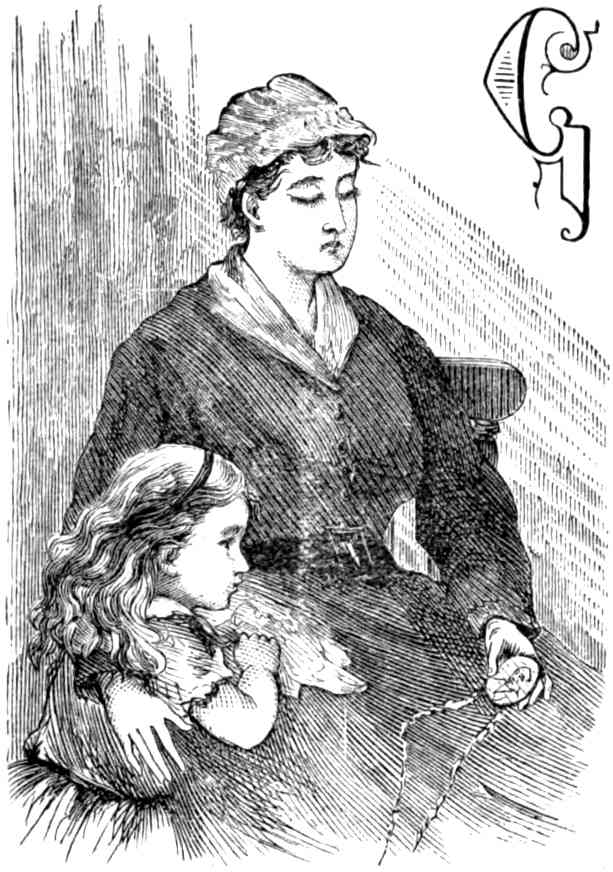
“Got his life insured! Then he will certainly die!” exclaimed Mrs. Jones, the mother of a family of three children, to her intimate friend Mrs. Brown, also rejoicing in the maternity of a promising brood of little ones. “For my part, I would no more let my husband get his life insured than I would let him cut his head off. He will certainly die.”
“That is the lot of all mortals, Mrs. Jones, and I presume my husband does not consider himself exempt from the common lot,” replied Mrs. Brown.
“You know what I mean; he will die before his time comes.”
“His time will have come when he dies.”
“How captious you are!”
“I do not understand you. The good book says that ‘no man knoweth the day nor the hour.’”
“But I never knew any man to get his life insured without dying very soon after.”
“Do you mean to say that getting a life insured is likely to hasten the end of the assured?” asked Mrs. Brown, with a pleasant smile at the superstition of her friend.
“Well, no, not exactly that; only it is a bad sign.”
“Pshaw! Do you think your husband’s barn is any more likely to be burned down because he has taken the precaution to have it insured?”
“But that is not like getting one’s life insured; it really seems to me just like trifling with serious things.”
“How absurd!”
“But it does. Only think of attempting to thwart the will of God. Insuring a life!”
“You take the wrong view of it.”
“Our minister takes the same view of it,” returned Mrs. Jones, with triumphant assurance.
“He does not understand the subject then.”
“Our minister don’t?”
“I am sure he does not.”
Mrs. Jones permitted a sneer to play upon her lips, as she paused in her sewing, and gazed at her friend.
“You don’t mean to say that you know more than the Rev. Mr. Schism, a regularly educated minister of the gospel, in good and regular standing?” continued she, scarcely able to restrain her indignation within a reasonable limit.
“I presume the Rev. Mr. Schism has confined his attention mostly to the study of theology, and knows much more about that than he does about the practical affairs of every-day life,” rejoined Mrs. Brown, somewhat warmly.
“He says that it is trifling with death to get one’s life insured; and I am sure, if my husband got his life insured, I should certainly expect he would die the very next day after he did the sacrilegious thing.”
“I think you told me the other day that Mr. Jones had put some money in the Savings Bank.”
“Only twenty dollars—all he could spare.”
“What did he put it there for?”
“What for? Why, to keep, of course.”
“Why does he wish to keep it?”
“What a fool you pretend to be!”
“Pray answer me.”
“Against a rainy day.”
“Has he no definite purpose in laying up money?”
“To be sure he has. He means to have something for his family, in case he should be taken away.”
“But isn’t this trifling with serious things? What does your minister say about it?”
“How silly you are!”
“But you are providing against such a calamity as the death of your husband.”
“It is not like life insurance.”
“Just like it, only less efficient.”
“I don’t think so.”
“Suppose your husband should die this year.”
“Don’t talk so.”
“Nay, Mrs. Jones, it is well to look these things in the face, especially when you have used your influence to prevent your husband from making a provision for you in the event of his death.”
“He is opposed to the whole thing himself.”
“Only think, if he should die this year, what would become of you and your three children?”
“Well, I suppose we should get along just as a thousand others have done under the same circumstances.”
“Think what a struggle you would have!”
“Sufficient unto the day is the evil thereof,” replied Mrs. Jones, coldly. “But here is my husband; he can speak for himself.”