Volume 2 / Part 4 — Chapter XV. Satan.
Reading edition
Public Prosecutors—Satan as Accuser—English Devil-worshipper—Conversion by Terror—Satan in the Old Testament—The trial of Joshua—Sender of Plagues—Satan and Serpent—Portrait of Satan—Scapegoat of Christendom—Catholic ‘Sight of Hell’—The ally of Priesthoods.
There is nothing about the Satan of the Book of Job to indicate him as a diabolical character. He appears as a respectable and powerful personage among the sons of God who present themselves before Jehovah, and his office is that of a public prosecutor. He goes to and fro in the earth attending to his duties. He has received certificates of character from A. Schultens, Herder, Eichorn, Dathe, Ilgen, who proposed a new word for Satan in the prologue of Job, which would make him a faithful but too suspicious servant of God.
Such indeed he was deemed originally; but it is easy to see how the degradation of such a figure must have begun. There is often a clamour in England for the creation of Public Prosecutors; yet no doubt there is good ground for the hesitation which its judicial heads feel in advising such a step. The experience of countries in which Prosecuting Attorneys exist is not such as to prove the institution one of unmixed advantage. It is not in human nature for an official person not to make the most of the duty intrusted to him, and the tendency is to raise the interest he specially represents above that of justice itself. A defeated prosecutor feels a certain stigma upon his reputation as much as a defeated advocate, and it is doubtful whether it be safe that the fame of any man should be in the least identified with personal success where justice is trying to strike a true balance. The recent performances of certain attorneys in England and America retained by Societies for the Suppression of Vice strikingly illustrate the dangers here alluded to. The necessity that such salaried social detectives should perpetually parade before the community as purifiers of society induces them to get up unreal cases where real ones cannot be easily discovered. Thus they become Accusers, and from this it is an easy step to become Slanderers; nor is it a very difficult one which may make them instigators of the vices they profess to suppress.
The child is father to the man. When Huntington, S.S., grew up, it was to record for the thousands who listened to him as a prophet his many encounters with the devil. The Satan he believes in is an exact counterpart of the stern, hard-favoured exciseman whom he had regarded as God’s employé. On one occasion he writes, ‘Satan began to tempt me violently that there was no God, but I reasoned against the belief of that from my own experience of his dreadful wrath, saying, How can I credit this suggestion, when (God’s) wrath is already revealed in my heart, and every curse in his book levelled at my head.’ (That seems his only evidence of God’s existence—his wrath!) ‘The Devil answered that the Bible was false, and only wrote by cunning men to puzzle and deceive people. ‘There is no God,’ said the adversary, ‘nor is the Bible true.’ ... I asked, ‘Who, then, made the world?’ He replied, ‘I did, and I made men too.’ Satan, perceiving my rationality almost gone, followed me up with another temptation; that as there was no God I must come back to his work again, else when he had brought me to hell he would punish me more than all the rest. I cried out, ‘Oh, what will become of me! what will become of me!’ He answered that there was no escape but by praying to him; and that he would show me some lenity when he took me to hell. I went and sat in my tool-house halting between two opinions; whether I should petition Satan, or whether I should keep praying to God, until I could ascertain the consequences. While I was thinking of bending my knees to such a cursed being as Satan, an uncommon fear of God sprung up in my heart to keep me from it.’
In other words, Mr. Huntington wavered between the petitions ‘Good Lord! Good Devil!’ The question whether it were more moral, more holy, to worship the one than the other did not occur to him. He only considers which is the strongest—which could do him the most mischief—which, therefore, to fear the most; and when Satan has almost convinced him in his own favour, he changes round to God. Why? Not because of any superior goodness on God’s part. He says, ‘An uncommon fear of God sprung up in my heart.’ The greater terror won the day; that is to say, of two demons he yielded to the stronger. Such an experience, though that of one living in our own time, represents a phase in the development of the relation between God and Satan which would have appeared primitive to an Assyrian two thousand years ago. The ethical antagonism of the two was then much more clearly felt. But this bit of contemporary superstition may bring before us the period when Satan, from having been a Nemesis or Retributive Agent of the divine law, had become a mere personal rival of his superior.
Here we have a very fair study and sketch of that judicial trial of the soul for which mainly the dogma of a resurrection after death was invented. The doctrine of future rewards and punishments is not one which a priesthood would invent or care for, so long as they possessed unrestricted power to administer such in this life. It is when an alien power steps in to supersede the priesthood—the Gallio too indifferent whether ceremonial laws are carried out to permit the full application of terrestrial cruelties—that the priest requires a tribunal beyond the grave to execute his sentence. In this picture of Zechariah we have this invisible Celestial Court. The Angel of Judgment is in his seat. The Angel of Accusation is present to prosecute. A poor filthy wretch appears for trial. What advocate can he command? Where is Michael, the special advocate of Israel? He does not recognise one of his clients in this poor Joshua in his rags. But lo! suddenly Jehovah himself appears; reproves his own commissioned Accuser; declares Joshua a brand plucked from the burning (Tophet); orders a change of raiment, and, condoning his offences, takes him into his own service. But in all this there is nothing to show general antagonism between Jehovah and Satan, but the reverse.
When we look into the Book of Job we find a Satan sufficiently different from any and all of those mentioned under that name in other parts of the Old Testament to justify the belief that he has been mainly adapted from the traditions of other regions. The plagues and afflictions which in Psalm cix. are invoked from Jehovah, even while Satan is mentioned as near, are in the Book of Job ascribed to Satan himself. Jehovah only permits Satan to inflict them with a proviso against total destruction. Satan is here named as a personality in a way not known elsewhere in the Old Testament, unless it be in 1 Chron. xxi. 1, where Satan (the article being in this single case absent) is said to have ‘stood up against Israel, and provoked David to number Israel.’ But in this case the uniformity of the passage with the others (excepting those in Job) is preserved by the same incident being recorded in 2 Sam. xxiv. 1, ‘The anger of Jehovah was kindled against Israel, and he (Jehovah) moved David against them to say, Go number Israel and Judah.’
It is clear that, in the Old Testament, it is in the Book of Job alone that we find Satan as the powerful prince of an empire which is distinct from that of Jehovah,—an empire of tempest, plague, and fire,—though he presents himself before Jehovah, and awaits permission to exert his power on a loyal subject of Jehovah. The formality of a trial, so dear to the Semitic heart, is omitted in this case. And these circumstances confirm the many other facts which prove this drama to be largely of non-Semitic origin. It is tolerably clear that the drama of Hariśchandra in India and that of Job were both developed from the Sanskrit legends mentioned in our chapter on Viswámitra; and it is certain that Aryan and Semitic elements are both represented in the figure of Satan as he has passed into the theology of Christendom.
Nor indeed has Satan since his importation into Jewish literature in this new aspect, much as the Rabbins have made of him, ever been assigned the same character among that people that has been assigned him in Christendom. He has never replaced Samaël as their Archfiend. Rabbins have, indeed, in later times associated him with the Serpent which seduced Eve in Eden; but the absence of any important reference to that story in the New Testament is significant of the slight place it had in the Jewish mind long after the belief in Satan had become popular. In fact, that essentially Aryan myth little accorded with the ideas of strife and immorality which the Jews had gradually associated with Samaël. In the narrative, as it stands in Genesis, it is by no means the Serpent that makes the worst appearance. It is Jehovah, whose word—that death shall follow on the day the apple is eaten—is falsified by the result; and while the Serpent is seen telling the truth, and guiding man to knowledge, Jehovah is represented as animated by jealousy or even fear of man’s attainments. All of which is natural enough in an extremely primitive myth of a combat between rival gods, but by no means possesses the moral accent of the time and conditions amid which Jahvism certainly originated. It is in the same unmoral plane as the contest of the Devas and Asuras for the Amrita, in Hindu mythology, a contest of physical force and wits.
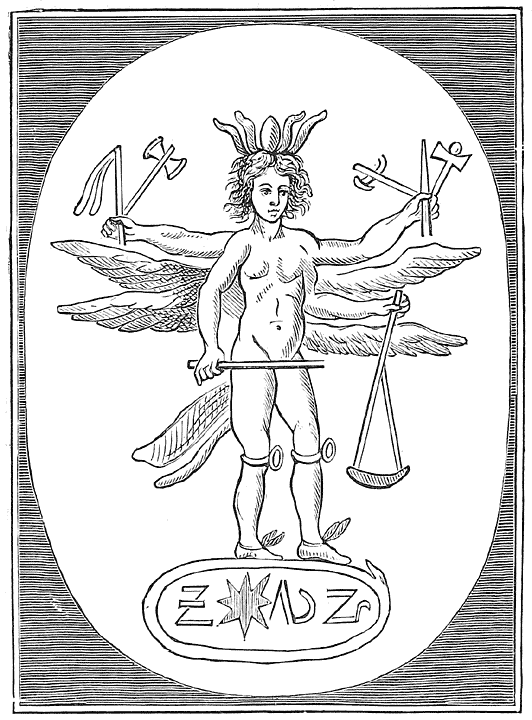
Fig. 5.—Gnostic Figure (Ste. Genevieve Collection).
Now this figure, which Calmet believed to be Satan, bears on its reverse, ‘The Everlasting Sun.’ He is a god made up of Egyptian and Magian forms, the head-plumes belonging to the one, the multiplied wings to the other. Matter (Hist. Crit. de Gnost.) reproduces it, and says that ‘it differs so much from all else of the kind as to prove it the work of an impostor.’ But Professor C. W. King has a (probably fifth century) gem in his collection evidently a rude copy of this (reproduced in his ‘Gnostics,’ Pl. xi. 3), on the back of which is ‘Light of Lights;’ and, in a note which I have from him, he says that it sufficiently proves Matter wrong, and that this form was primitive. In one gem of Professor King’s (Pl. v. 1) the lamp is also carried, and means the ‘Light of Lights.’ The inscription beneath, within a coiled serpent, is in corrupt cuneiform characters, long preserved by the Magi, though without understanding them. There is little doubt, therefore, that the instinct of Calmet was right, and that we have here an early form of the detective and retributive Magian deity ultimately degraded to an accusing spirit, or Satan.
Although the Jews did not identify Satan with their Scapegoat, yet he has been veritably the Scapegoat among devils for two thousand years. All the nightmares and phantasms that ever haunted the human imagination have been packed upon him unto this day, when it is almost as common to hear his name in India and China as in Europe and America. In thus passing round the world, he has caught the varying features of many fossilised demons: he has been horned, hoofed, reptilian, quadrupedal, anthropoid, anthropomorphic, beautiful, ugly, male, female; the whites painted him black, and the blacks, with more reason, painted him white. Thus has Satan been made a miracle of incongruities. Yet through all these protean shapes there has persisted the original characteristic mentioned. He is prosecutor and executioner under the divine government, though his office has been debased by that mental confusion which, in the East, abhors the burner of corpses, and, in the West, regards the public hangman with contempt; the abhorrence, in the case of Satan, being intensified by the supposition of an overfondness for his work, carried to the extent of instigating the offences which will bring him victims.
This devil speaks as one carrying out the divine decrees. He preaches. He utters from his chasuble of flame the sermons of Father Furniss. And, no doubt, wherever belief in Satan is theological, this is pretty much the form which he assumes before the mind (or what such believers would call their mind, albeit really the mind of some Syrian dead these two thousand years). But the Satan popularly personalised was man’s effort to imagine an enthusiasm of inhumanity. He is the necessary appendage to a personalised Omnipotence, whose thoughts are not as man’s thoughts, but claim to coerce these. His degradation reflects the heartlessness and the ingenuity of torture which must always represent personal government with its catalogue of fictitious crimes. Offences against mere Majesty, against iniquities framed in law, must be doubly punished, the thing to be secured being doubly weak. Under any theocratic government law and punishment would become the types of diabolism. Satan thus has a twofold significance. He reports what powerful priesthoods found to be the obstacles to their authority; and he reports the character of the priestly despotisms which aimed to obstruct human development.