Volume 2 — CHAPTER XXII.
Reading edition
Carolina! Carolina! Heaven's blessings attend her;
While we live we will cherish, and love, and defend her;
Though the scorner may sneer at, the witlings defame her,
Our hearts swell with gladness whenever wc name her.
Though she envies not others this merited glory,
Say, whose name stands the foremost in Liberty's story?
Though too true to herself, e'er to crouch to oppression,
Who can yield to just rule more loyal submission?
Hurrah! hurrah! the Old North State forever!
Hurrah! hurrah! the good old North State!"
William Gaston.

HE settlement of the Scotch refugees at Cross Creek (now Fayetteville), at the head of navigation on the Cape Fear Rivcr, is an important point to be observed, in considering the history of the progress of free principles in North Carolina. These settlers formed a nucleus of more extensive immigrations subsequently. They brought with them the sturdy sentiments of the Covenanters, and planted deeply in the interior of that province the acorns of civil freedom, which had grown to unyielding oaks, strong and defiant, when the Revolution broke out. The sentiment of loyalty, kindred to that of patriotism, was an inherent principle in their character, and this was first displayed when Donald M'Donald called upon his countrymen to remember their oath of allegiance to King George and his successors, and to assist the royal governor in quelling rebellion.1776 But as that rebellion assumed the phase of righteous resistance to tyranny, many of those who followed their chief to Moore's Creek, under the banner of the house of Hanover, afterward fought nobly in defense of the principles of the Covenanters under the stars and stripes of the Continental Congress. Other immigrants, allied to them by ties of consanguinity and religious faith, had already planted settlements along the Cape Fear and its tributaries, and in the fertile domain between the Yadkin and Catawba; and in those isolated regions, far removed from the petty tyrannies of royal instruments, they inhaled the life of freedom from the pure mountain air, and learned lessons of independence from the works and creatures of God around them. These were chiefly Presbyterians from the north of Ireland, commonly called Scotch-Irish, or the descendants of that people already in Virginia. Their principles bore the same fruit in Carolina, as in Ulster two centuries earlier; and long before the Stamp Act aroused the Northern colonies to resistance, the people of Granville, Orange, Mecklenburg and vicinity, had boldly told the governor upon the coast that he must not expect subservience to unjust laws upon the banks of the rivers in the upper country. There was another class of emigrants whose religious principles tended to civil freedom. These were the Unitas Fratrum—the Moravians—who planted settlements in North Carolina in the middle of the last century.1749 These, with other German Protestants, were firmly attached, from the commencement, to the principles which gave vitality to our
* In the upper part of the state, in the vicinity of the route traversed by the armies of Cornwallis and Greene during the memorable retreat of the latter, there were above twenty organized churches, with large congregations, and a great many preaching places. All of these congregations, where the principles of the Gospel independence had been faithfully preached by M'Aden, Patillo, Caldwell, M Corkle, Hall, Craighead, Balch, M'Caule, Alexander, and Richardson, were famous during the struggle of the Revolution, for skirmishes, battles, loss of libraries, personal prowess, individual courage, and heroic women. In no part of our republic was purer patriotism displayed, than there.
The Religious Element in our Government.—Origin of the Scotch-Irish.—First Printing presses in North Carolina.
Declaration of Independence a quarter of a century afterward. * We will not stop to examine the philosophy of religious influence in the formation of our civil government. It is a broad and interesting field of inquiry, but not within the scope of this work; yet so deeply are the principles of the various phases of Protestantism—the Puritans, the Scotch-Irish, ** and the Huguenots—impressed upon the Constitutions of every state in our union, that we must not, we can not, lose sight of the fact that the whole superstructure of our laws and government has for its basis the broad postulate of religious freedom asserted by the Puritans and the Covenanters—FREEDOM OF CONSCIENCE IN MATTERS OF BELIEF—FREEDOM OF ACTION ACCORDING TO FAITH—FREEDOM TO CHOOSE TEACHERS AND RULERS IN CHURCH AND STATE.
Two years after the settlement of the Highlanders under the general direction of Neil M'Neil, the first printing-press was brought into the province, from Virginia, by James Davis, and set up at Newbern.1749 This was an important event in the political history of the province. Hitherto the laws had been in manuscript, and it was difficult for the people to obtain knowledge, even of the most essential enactments. In the course of 1751, the printing of the first revisal of the acts of the Assembly was accomplished, and by the multiplication of copies, the people generally became acquainted with the laws, and learned their rights and duties. It was not until 1761 that a periodical paper was published in North Carolina, and then the want of good postal arrangements, and, indeed, the character of the paper itself, made it of little service as a messenger with news. The same year another paper was commenced, much superior in its character, and from that time the influence of the press and popular education began to be felt in that state. ***
In expectation of hostilities between the French and English in America, all of the colonies turned their attention to the subject of defenses, and pecuniary resources. Magazines were established in the different counties of North Carolina, two or three forts were erected, and emissions of bills of credit were authorized by the Legislature. When hostilities commenced, and Governor Dinwiddie asked the other colonies to assist in driving the French from Ohio, North Carolina was the only one that responded promptly, by voting a regiment of four hundred and fifty men,March 1794 and an emission of paper money where-
* The Moravians purchased a tract of one hundred thousand acres between the Dan and the Yadkin Rivers, about ten miles eastward of the Gold Mountain. They gave to their domain the name of Wachovia, the title of an estate belonging to Count Zinzendorf in Austria.—See Martin, ii., 57. Much earlier than this (1709), a colony of Swiss and Germans, under Baron De Graflenreidt, settled on the Neuse and Cape Fear Rivers. They founded a city, and called it New Berne (at present Newbern), after Berne, in Switzerland.
** Henry the Eighth of England forced the people of Ireland to accept the rituals of the Reformed Church. Elizabeth, his daughter, pursued the same policy, and reaped the abundant fruit of trouble brought forth by the discontents of the Irish people. In consequence of the failure of a rebellion against the authority of James the First, in the province of Ulster, at the beginning of the seventeenth century, nearly six counties, embracing half a million of acres, became the property of the king, by confiscation. Thither James sent Protestant colonies from England and Scotland (chiefly from the latter), hoping thereby to fix the principles of the reformation there, and thus to subdue the turbulence of the people. The Scotch settlers retained the characteristic traits of their native stock, but were somewhat molded by surrounding influences. They continued to call themselves Scotch, and, to distinguish them from the natives of Scotland, they received the name of Scotch-Irish. From the beginning they were Republicans. They demanded, and exercised the privilege of choosing their own ministers and spiritual directors, in opposition to all efforts of the hierarchy of England to make the choice and support of their clergy a state concern. From the descendants of these early Republicans came the Scotch-Irish immigrants who settled in the interior of Forth Carolina.—See History of Religious Principles and Events in Ulster Province.
*** The first periodical paper, called The North Carolina Magazine, or Universal Intelligencer, was published bv Davis, at Newbern, on a demi sheet, in quarto pages. It was filled with long extracts from the works of theological writers, or selections from British magazines. The second newspaper was called the North Carolina Gazette and Weekly Post Boy. It was printed at Wilmington, by Andrew Stewart, a Scotchman, and contained intelligence of current events. The first number was published in September, 1764. The Assembly that year passed an act for the erection of a school-house at Newbern; the first legislative movement in the province in favor of popular education. The Cape Fear Mercury was established by Adam Boyd, in October, 1767. Boyd was a zealous patriot, and was an active member of the Committee of Safety, of Wilmington.
Carolina Troops in Virginia.—Governors Dobbs and Tryon.—Opposition to the Stamp Act.—The Enfield Riot
with to pay them. This movement was made at the instigation of Governor Rowan. These troops marched to Virginia under Colonel James Jones, of Hanover; but by the time they reached Winchester, the appropriation for their pay being exhausted, they were disbanded, and only a few of them followed Washington toward the Monongahela.
The following year,1755 North Carolina voted forty thousand dollars as further aid toward "repelling the encroachments of the French." Arthur Dobbs, an aged Irishman of "eminent abilities," was then governor, but his usefulness was impaired by attempting to exercise undue authority, and in too freely bestowing offices upon his relatives and countrymen. He was a thorough aristocrat, but his feelings became much softened by surrounding democratic influences, and he held the office until succeeded by William Tryon, in 1766. Dobbs attended the meeting of colonial governors convened at Alexandria by Braddock, in April, 1755.
Impressed with the importance of frontier defenses against the Indians, he recommended the erection of forts on the Yadkin. Governor Glenn, of South Carolina, at the same time caused forts to be erected on the borders of the Cherokee country along the Savannah River. With the exception of occasional Indian hostilities, and a sort of "anti-rent" outbreak, * nothing disturbed the tranquillity of the province from that period, until two or three years after the signing of the treaty of peace at Paris, in 1763.
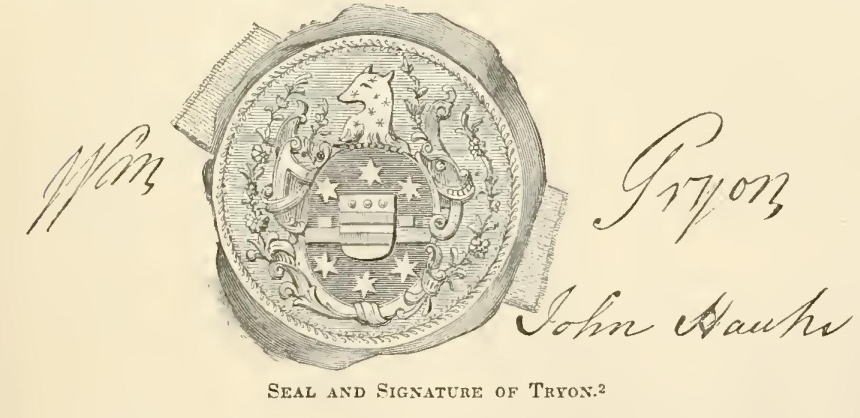
The passage of the Stamp Act produced great uneasiness in the public mind in North Carolina, as well as in the other provinces. Already the extortions of public officers in the exaction of fees for legal services had greatly irritated the people, and they regarded the requirements of the Stamp Act as a more gigantic scheme for legal plunder. The first published murmurs, as we have seen, was at Nut BushJune 1765 (see page 556) then in Granville county. At about the same time, the inhabitants of Edenton, Newbern, and Wilmington, assembled in their respective towns, and asserted their hearty concurrence in the sentiments expressed by the people of the Northern colonies unfavorable to the Stamp Act. During the summer and autumn, denunciations of the measure were boldly expressed at public meetings, notwithstanding the presence of Tryon, the lieutenant governor. Tryon had been acting governor and commander-in-chief of the province from the death of Governor Dobbs, on the first of April of that year, and now began his career of misrule in America. He was appointed governor toward the close of the year. This was the same Tryon, afterward governor of
* The outbreak alluded to is known as the Enfield Riot. It occurred in 1759. Extortion had become rife in every department of government. Deputy-surveyors, entry-takers, and other officers of inferior grade, became adepts in the chicanery of their superiors. The people finding their complaints unavailing, and that Corbin, who had the chief direction of the land-office, was increasing his fees without authority, resolved to redress their grievances themselves. Fourteen well-mounted men crossed the Chowan, a few miles above Edenton, by night, seized Corbin, took him to Enfield, and kept him there until he gave a bond in forty thousand dollars, with eight sureties, that he would produce his books within three weeks and return all his illegal fees. As soon as released, he commenced suits against four of the men who seized him, and they were committed to Enfield jail. The next day an armed posse cut down the prison doors, and released them. Corbin was obliged to discontinue his suits and pay the costs. In Mecklenburg county, in May, 1765, a number of people, with their faces blackened, forcibly compelled John Frohock, a surveyor, to leave the lands of George A. Selwyn, who possessed large tracts in that county, and who had sent him there to survey them.
** William Tryon was a native of Ireland, and was educated to the profession of a soldier. He was an officer in the British service. He married Miss Wake, a relative of the Earl of Hillsborough, secretary fur the colonies. Thus connected, he was a favorite of government, and was appointed lientenant governor of North Carolina, in 1765. On the death of Governor Dobbs, lie succeeded him in office, and exercised its functions until called to fill the same office in New York, in 1771. The history of his administration in North Carolina is a record of extortion, folly, and crime. During his administration in New York, the Revolution broke out, and he was the last royal governor of that state, though nominally succeeded in office in 1780 by General Robertson, when he returned to England. His property in North Carolina and in New York was confiscated. The public acts of Governor Tryon, while in Ameriea, are recorded upon various pages of these volumes. The seal and signature on the preceding pane are referred to on page 570.
Revolutionary Proceedings at Wilmington.—Ruins of St. Philip's Church at Brunswick.
New York, whom we have already met at the conflagrations of Danbury, Continental Village, and other places. Haughty, innately cruel, fond of show, obsequious when wishing favors, and tyrannical when independent, he was entirely incompetent to govern a people like the free, outspoken colonists of the Upper Carolinas. Fearing a general expression of the sentiments of the people, through their representatives, on the subject of the odious act, Tryon issued a proclamation in OctoberOct 25 proroguing the Assembly, which was to meet on the thirtieth of November, until the following March.
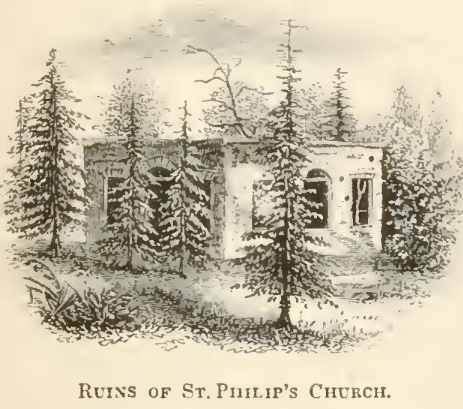
This act incurred the indignation of the people; and when, early in January, the sloop of war Diligence arrived in Cape Fear River, having stamps on board for the use of the province, the militia of New Hanover and Brunswick, under Colonels Ashe and Waddell, marched to the village of Brunswick, * and notified the commander of their determination to resist the landing of the stamps. Earlier than this, Colonel Ashe, who was the speaker of the Lower House, had informed Tryon that the law would be resisted to the last. Tryon had issued his proclamation,Jan. 6, 1766 directing the stamp distributors to make application for them, but the people were too vigilant to allow these officials to approach the vessel. Taking one of the boats of the Diligence, and leaving a small party to watch the movements of the duty sloop, the remainder of the little army of volunteers proceeded to
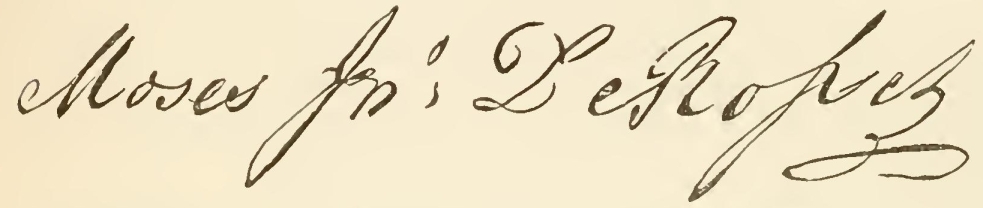
Wilmington. Having placed a flag in the boat, they hoisted it upon a cart, and with the mayor (Moses John De Rosset, Esq.) and principal inhabitants, paraded it through the streets. At night the town was illuminated, and the next day a great concourse of people, headed by Colonel
* The village of Brunswick, once a flourishing town, but now a desolation, was situated upon a sandy plain on the western side of the Cape Fear, on New Inlet, in full view of the sea, fifteen miles below Wilmington. It enjoyed considerable commerce; but Wilmington, more eligibly situated, became first its rival. Little now remains to denote the former existence of population there, but the grand old walls of "St. Philip's Church, of Brunswick," which was doubtless the finest sacred edifice in the province at the time of its erection, about one hundred years ago. I am indebted to Frederick Kidder, Esq., of Boston, who visited the ruins in 1851, for the accompanying drawing and general description of the present appearance of the church. It is situated within a thick grove of trees, chiefly pines, about an eighth of a mile from the river bank, and its massive walls, built of large English bricks, seem to have been but little effected by time. They exhibit "honorable sears" made by cannon-balls hurled from British ships in the Cape Fear to cover the landing of Cornwallis, when, in the spring of 1776, he desolated the plantation of Colonel Robert Howe, and other Whigs in the neighborhood of that patriot's estate. The edifice is seventy-five feet in length from east to west, and fifty-four feet in width. The walls are about three feet in thickness, and average about twenty-eight feet in height. The roof, floor, and windows have long sinee perished; and where the pulpit stood, upon its eastern end, a vigorous cedar spreads its branches. Nine of these green trees are within its walls, and give peculiar picturesqueness to the scene. On the top of the walls is flourishing shrubbery, the product of seeds planted by the winds and the birds. Around the church are strewn the graves of many of the early settlers, the names of some of whom live in the annals of the state. The view here given is from the east. About a quarter of a mile northeast from the church, are remains of the residence of Governor Tryon at the time of the Stamp Act excitement.
Resignation of the Wilmington Stamp Master.—Unpopularity of Tryon.—Discontents in the Interior.—"Regulators."
Ashe, proceeded to the governor's house and demanded James Houston, the stamp master. Houston appeared, and going to the market-place, he voluntarily took a solemn oath not to perform the duties of his office. The populace, satisfied with their triumph, gave three cheers, conducted him back to the governor's house, and then dispersed.
Tryon was alarmed at this demonstration of the popular temper, and endeavored to conciliate the militia of New Hanover, at a general muster, by treating them to a barbacued ox and a few barrels of beer.Feb., 1766 The insulted people cast the ox into the river, poured the beer upon the ground, and mocked the governor. The officers of the Diligence espoused the cause of the chief magistrate, and a general fight ensued. The riot continued several days, and during the excitement one man was killed. * The Stamp Act was repealed shortly afterward, and the province became comparatively tranquil.
For several years previous to the Stamp Act excitement rebellion had been ripening among the people in the western counties. The rapacity of public officers, and the corrupt character of ministers of justice, weighed heavily upon the property and spirits of the people. The most prominent evils complained of were the exorbitant charges of the clerks of the Superior Courts, whereby those courts had become instruments of oppression; and oppressive taxes exacted by the sheriffs, and the outrages committed by those officers when their authority was questioned in the least. These evils every where existed, and every petition of the people (who began to assemble for consultation) for redress appeared to be answered by increased extortions. At length the inhabitants resolved to form a league, take power into their own hands, and regulate matters. ** Herman Husband, "one of those independent Quakers who was taught in the honest school of William Penn, and refused to pull off his hat and bow before the minions of despotism," *** a man of grave deportment, superior mind, and of great influence, **** but evidently without education, (v) drew up a written complaint. It was carried to Hillsborough, during the sitting of the court,Oct. 1776 by a number of firm men, who requested the clerk to read it aloud. The preamble asserted that "The Sons of Liberty would withstand the Lords in Parliament," and it set forth that evils of great magnitude existed. It recommended a general meeting of delegates, appointed by each militia company in Orange county, to be held at some suitable place, where there was no liquor, to "judiciously inquire whether the freemen of this county labor under any abuse of power," &c., &c. The proposition being considered reasonable, a meeting was appointed to be held at Haddock's Mills, on the Eno, two or three miles west of Hillsborough. The meeting was held on the tenth,October but not many delegates attended. They discussed various topics fairly and dispassionately. Another meeting was held on the fourth of April following,1767 at the same place, and the resolutions passed at that time were almost equivalent to a declaration of independence of the civil power of the state. From that time The Regulation was a permanent and powerful body. (vi)
* Martin, 210-12. The man who was killed was Thomas Whitehurst, a relative of Mrs. Tryon. He fell in a duel with Simpson, master of the sloop of war Viper, who took the side of the colonists. Simpson was tried for murder and acquitted. Tryon charged Chief-justice Berry with partiality, and severely reprimanded him. The judge was very sensitive, and, under the impression that he was to be suspended from office, committed suicide in the most horrible manner.
** Those who associated for the purpose assumed the name of Regulators, and the confederacy was called The Regulation.
*** North Carolina Weekly Times.
**** Caruthers, 120.
* (v) The deficiency in Husband's education, and his ignorance of the proper construction of language, is evinced in a pamphlet prepared chiefly by himself, entitled "An Impartial Relation of the first Rise and Cause of recent differences in Public Affairs," which was printed for the "compiler" in 1770. The onlv copy of this rare and curious pamphlet which I have seen is in the possession of the Reverend Francis Hawks, D.D., of New York City.
* (vi) These resolutions were drawn by Herman Husband. The signers agreed to form an association to regulate public affairs in Orange county. They resolved to pay no more taxes until satisfied that they were legal; to pay officers no more fees than the strict letter of the law required, unless forced to, and then to show open resentment; to be cautious in the selection of representatives, and to petition the governor, council, king, and Parliament for a redress of grievances; to keep up a continual correspondence with each other; to defray all necessary expenses; all differences in judgment to be submitted to the whole Regulation, the judgment of the majority to be final; and closed by a solemn oath or affirmation to "stand true and faithful to this cause, until we bring things to a true regulation." These Regulators were also styled "Sons of Liberty."
Tryon's Request for a Palace.—Maneuvers of his Family.—Heavy Appropriation.—View and Description of the Palace.
It was at about this time that the pride and folly of Governor Tryon led him to make a demand upon the Assembly for an appropriation of twenty-five thousand dollars for the purpose of building a palace at Newbern "suitable for the residence of a royal governor." To obtain this appropriation, Lady Tryon, and her sister Esther Wake, * both beautiful and accomplished women, used all the blandishments of their charms and society to influence the minds of the burgesses. Lady Tryon gave princely dinners and balls, and the governor finally succeeded in obtaining, not only the first appropriation asked, but another of fifty thousand dollars, to complete the edifice.
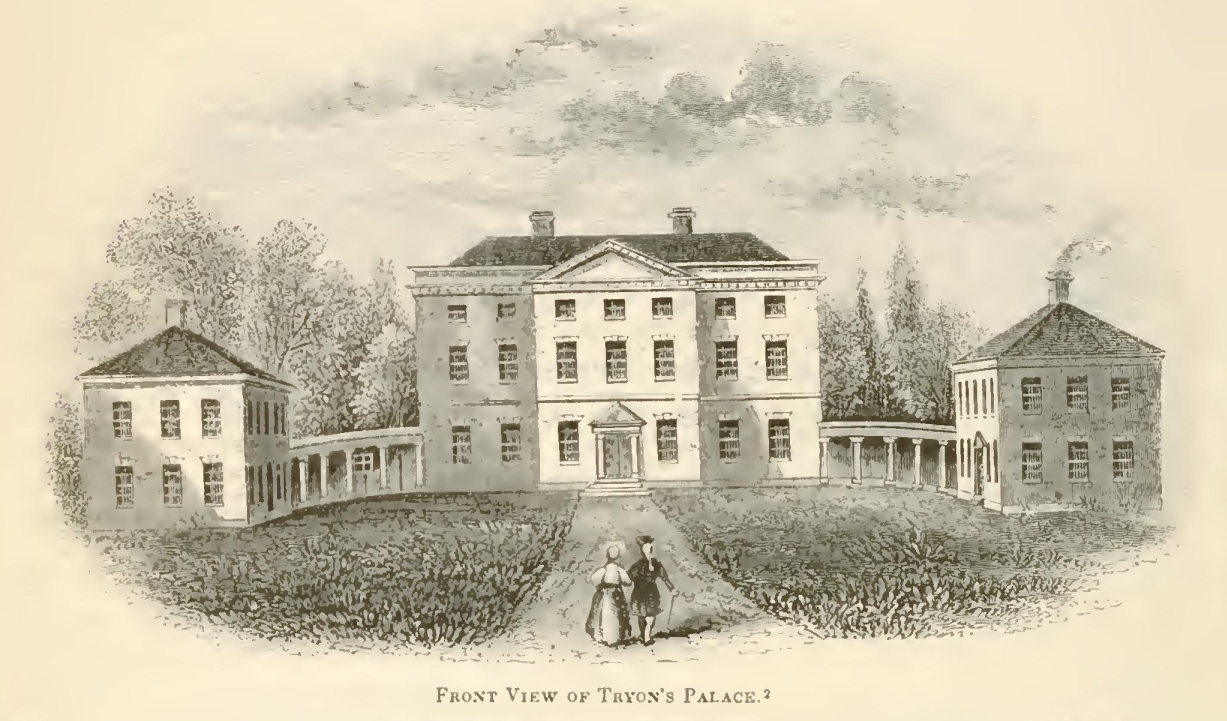
It was pronounced the most magnificent struc-
* Wake county was so named in honor of this accomplished lady. Afterward, when party zeal changed the name of Tryon county, and it was proposed to alter that of Wake also, the gallantry of the Assembly overruled their feelings of hostility to the governor and his family, and the name was retained.
** This picture of the palace I made from the original drawings of the plan and elevation, by John Hawks, Esq., the architect. These drawings, with others of minor details, such as sections of the drawing-room, chimney-breasts for the council-chamber and dining-hall, sewers, &e., are in the present possession of a grandson of the architect, the Reverend Francis L. Hawks, D.D., L.L.D., rector of Calvary Church, in the city of New York, to whose courtesy I am indebted for their use. With the drawings is the preliminary contract entered into by the governor and the architect, which bears the private seal of Tryon and the signatures of the parties, from which I made the fac simile printed upon page 567. The contract is dated January 9th, 1767, and specifies that the main building should be of brick, eighty-seven feet front, fifty-nine feet deep, and two stories in height, with suitable buildings for offices, &e., and was to be completed by the first day of October, 1770. For his services, Mr. Hawks was to receive an annual salary of "three hundred pounds proclamation money."
** The view here given was the north front, toward the town. The center edifice was the palace. The building on the right was the secretary's office and the laundry; that upon the left was the kitchen and servant's hall. These were connected with the palace by a curviform colonnade, of five columns each, and covered. Between these buildings, in front of the palace, was a handsome court. The rear of the building was finished in the style of the Mansion-House in London. The interior of the palace was elegantly finished. "Upon entering the street door," says Ebenezer Hazzard, in his journal for 1777, when he visited it, "you enter a hall in which are four niches for statues." The chimney-breasts for the council-chamber, dining-hall, and drawing-room, and the cornices of these rooms, were of white marble. The chimney-breast of the council-chamber was the most elaborate, being ornamented by two Ionic columns below, and four columns, with composite capitals, above, with beautiful entablature, architrave, and friese.* Over the inner door of the entrance-hall or ante-chamber was a tablet, with a Latin inscription, showing that the palace was dedicated to Sir William Draper,* "the Conqueror of Manilla and also the following lines, in Latin, which were written by Draper, who was then on a visit to Governor Tryon:
"In the reign of a monarch, who goodness disclos'd, A free, happy people, to dread tyrants oppos'd, Have to virtue and merit erected this dome; May the owner and household make this their loved home— Where religion, the arts, and ihe laws may invite Future ages to live in sweet peace and delight."
** The above translation was made by Judge Marlin, the historian of North Carolina, who visited the edifice in 1783, in company with the unfortunate Don Francisco de Miranda. That gentleman assured Martin that the structure had no equal in South America. The palace was destroyed by fire about fifty years ago, and the two smaller buildings, only, remain.
* Among the colonial documents at Raleigh is an account of this chimney-piece. The paper bears the date of December 6, 1769. It is one of several manuscripts deposited there by Dr. Hawks, which he found among his grandfather's papers.
Excessive Taxation.—Tryon's Proclamation against the Regulators.—His bad Faith.—Extortions of Officers.
ture in America. The pride of the governor and his family was gratified; the people, upon whom the expense was laid, were highly indignant.
The inhabitants of North Carolina were now thoroughly awakened to the conviction that both the local and the imperial government, were practically hostile to the best interests of the colonists. The taxes hitherto were very burdensome; now the cost of the palace, and an appropriation to defray the expenses of running the dividing line between their province and the hunting-grounds of the Cherokees, made them insupportable. * The rapacity of public officers appeared to increase, and the people saw no prospect of relief. Current history reports that, among the most obnoxious men, who, it was alleged, had grown rich by extortionate fees, ** was Edmund Fanning, a lawyer of ability. He was regarded as a co-worker with the government; haughty in demeanor, and if common report spoke truth, was immoral. The people, excited by their leaders, detested him, and avoided no occasion to express their displeasure. His first open rupture with the Regulators was in the spring of 176 8.April 27 Tryon issued a proclamation, half menacing and half persuasive, evidently intended to awe the Regulation and persuade the other inhabitants to avoid that association. He sent his secretary, David Edwards, to co-operate with Fanning in giving force to the proclamation among the people. They directed the sheriff to appoint a meeting of the vestry-men of the parishes and the leading Regulators, to consult upon the public good and settle all differences. Fair promises dispelled the suspicions of the Regulators, and their vigilance slumbered while awaiting the day of meeting.May 28,1768
They were not yet fully acquainted with the falsity of their governor, or they would never have heeded the fair words of his proclamation. They were soon assured of the hollowness of his professions; for, while they were preparing, in good faith, to meet government officers in friendly convention, the sheriff, at the instigation of Fanning, proceeded, with thirty horse-
* The appropriations made by the province on account of the French and Indian war had founded a heavy public debt. These, with the palace debt and the appropriation for the boundary commission, together with the unredeemed bills and treasury-notes, amounted to almost half a million of dollars. This burden upon the common industry became greater in consequence of the depreciation of the paper money of the colony in the hands of the people, at least fifty per cent, at the period in question. To sink this public debt, a poll tax of about a dollar and a half was levied upon every male, white and black, between the ages of sixteen and sixty years. This bore heavily upon the poor, and awakened universal discontent. The running of the western boundary line was an unnecessary measure, and the people were convinced that Tryon projected it for the purpose of gratifying his love of personal display. Commissioners were appointed, and at a time of profound peace with the Indians on the frontier, Tryon marched at the head of a military force, "ostensibly to protect the surveyors." He made such a display of himself before the grave sachems and warriors of the Cherokees, that they gave him the just, though unenviable title of "The great wolf of North Carolina!"
** The legal fee for drawing a deed was one dollar. Many lawyers charged five dollars. This is a single example of their extortion. Thomas Frohock, who held the office of clerk of the Superior Court in Salisbury, was another extortioner, who was detested by the people. He frequently charged fifteen dollars for a marriage license. When we consider the relative value of money at that time, it was equal to forty or fifty dollars at the present day. Many inhabitants along the Yadkin dispensed with the license, took each other "for better, or for worse," unofficially, and considered themselves as married, without further ceremony.
* Sir William was an excessively vain man. Upon a cenotaph, at his seat at Clifton Down, near Bristol, England, he had this inscription placed: "Here lies the mother of Sir William Draper."
** History of North Carolina, ii., 226.
Arrest of Regulators.—Hillsborough menaced.—Forbearance of the People.—Legal Trials
men, to arrest Herman Husband and William Hunter, on a charge of riotous conduct. These, the most prominent men among the Regulators, were seized and cast into Hillsborough jail.May 1, 1768 The whole country was aroused by this treachery, and a large body of the people, led by Ninian Bell Hamilton, a brave old Scotchman of three-score-and-ten years, marched toward Hillsborough to rescue the prisoners.
Fanning and Edwards, apprised of the approach of Hamilton, were alarmed, and released the prisoners just as the people reached the banks of the Eno, opposite Hillsborough. Fanning, with a bottle of rum in one hand, and a bottle of wine in the other, went down to the brink of the stream, urged Hamilton not to march into the town, and asked him to send a horse over that he might cross, give the people refreshments, and have a friendly talk. Hamilton was not to be cajoled by the wolf in sheep's clothing. "Ye're nane too gude to wade, and wade ye shall, if ye come over!" shouted Hamilton. Fanning did wade the stream, but his words and his liquor were alike rejected. * Edwards then rode over, and solemnly assured the people that if they would quietly disperse, all their grievances should be redressed. The confiding people cried out, "Agreed! agreed!" and, marching back toward haddock's Mills, they held a meeting at George Sally's the next day.May 21, 1768 to consult upon the public good. They drew up a petition, and sent Rednap Howell and James Hunter to lay it before the governor, at Brunswick. It was most respectful, yet Tryon, in imitation of his royal master, haughtily spurned it. He commanded the deputies to return to their houses, warn their associates to desist from holding meetings, disband the association, and be content to pay the taxes! He then graciously promised them to visit Hillsborough within a month, and listen to the complaints of the people.
Tryon and some of his council met at Hillsborough early in July. He issued a proclamation, which, for a moment, deceived the people into a belief that justice was about to bear rule, and that the infamous system of extortion was to be repressed. They were again deceived. Instead of mediator, the governor appeared as a judge; instead of defending the oppressed, he encouraged the oppressors. He went into Mecklenburg, raised a large body of troops, and marched from Salisbury to Hillsborough with the parade of a conqueror. But this display did not frighten the people. He sent the sheriff to collect the taxes; that officer was driven back to Hillsborough by the excited populace. The governor was execrated for his false and temporizing conduct, and a general rising of the Regulators was apprehended. From the eleventh of August until the twenty-second of September, when Husband and others would be tried before the Superior Court, the militia were held in readiness to oppose any insurgents, and Tryon remained until the trials were over. On the opening of the court, three thousand people from the surrounding country encamped within half a mile of the town, but, true to a promise they had made *** not to obstruct the course of justice, they were quiet. Husband was acquitted; Hunter and two others were heavily fined and imprisoned; while Fanning, who was tried under seven indictments for extortion, and was found guilty, was fined one penny on each! ***
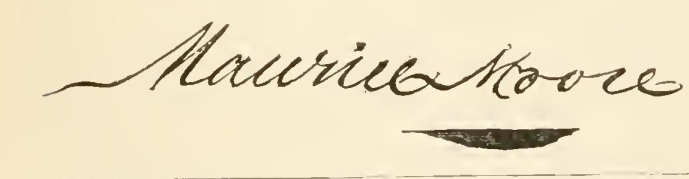
The judges upon the bench, on this occasion, were Martin Howard, chief justice, and Maurice Moore and Richard Henderson, associates. The governor, perceiving the indignation of the populace at this mockery of justice, speedily issued a proclamation of a general pardon to all the Regulators except thirteen whom he consid-
* Dr. Caruthers, in his Life of Caldu-ell, has preserved the two following verses of a doggerel poem of eight stanzas, composed on the occasion:
"At length their head man they sent out With hat in hand, at our command, To save their town from fire: To salute us every one, sir. To see Ned Fanning wade Eno, And alter that, kept off his hat, Brave boys, you'd all admire. To salute old Hamilton, sir."
** The governor had demanded that twelve wealthy men should meet him at Salisbury, on the twenty-fifth of August, and execute a bond, in the penalty of $5000, as security that the Regulators should keep the peace during the trials. This request was refused, but a promise to abstain from violence was made and faithfully kept.
*** Statement of Herman Husband. Record of the Superior Court at Hillsborough
Tryon's Return to Newbern.—Prevalence of Quiet.—New Outbreaks.—Riots at Hillsborough.
ered as the principal leaders. * By this act of apparent clemency he hoped to pacify the disturbed public mind. Satisfying himself that quiet would now prevail, he returned to his palace at Newbern, neither a wiser nor a better man.
For almost two years comparative quiet prevailed; not the quiet of abject submission on the part of the people, but the quiet of inactive anarchy. The sheriffs dared not enforce their claims, and the evident impuissance of government made the Regulators bold. Finally, many unprincipled men, who espoused their cause in order to benefit by change, committed acts of violence which all good patriots deplored.
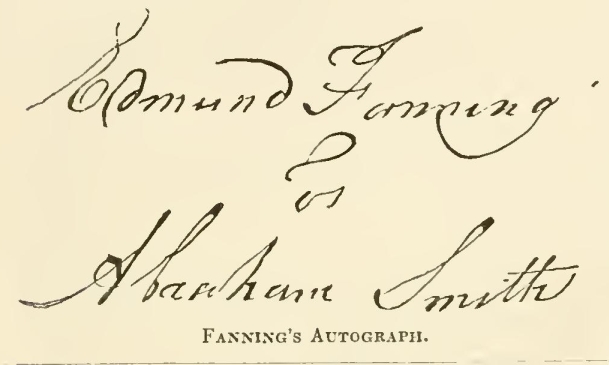
The records of the Superior Court at Hillsborough show evidence of a lawlessness, in 1770, quite incompatible with order and justice; and yet, from the character of some of the men engaged in breaking up the court at the September term of that year, it must be inferred that sufficient cause existed to warrant, in a great degree, their rebellious proceedings.5 An excited populace gathered there at the opening of the court, and committed acts which Husband and Howell, and their compatriots, would doubtless have prevented, if in their power. But reason and prudence are alike strangers to a mob. Not content with impeding the course of justice by driving the judge from the bench and the advocates from the forum, the Regulators severely beat a lawyer in the street, named John Williams, and dragged Fanning out of the court-house by his heels, beat him with rods, and kept him in confinement dur-
* The names of these "outlaws" were James Hunter, Ninian Bell Hamilton, Peter Craven, Isaack Jackson, Herman Husband, Matthew Hamilton. William Payne, Malichi Tyke, William Moffat, Christopher Nation, Solomon Goff, and John O'Neil. These were some of the "Sons of Liberty" of western North Carolina.
** While in Hillsborough, in January, 1849, 1 was permitted by the Clerk of the Superior Court, to make the Blowing extracts from the old records: "Monday, September 24th, 1770. Several persons styling themselves Regulators, assembled together in the court-yard, under the conduct of Herman Husband, James Hunter, Rednap Howell, William Butler, Samuel Divinny, and many others, insulted some of the gentlemen of the bar, and in a riotous manner went into the court-house and forcibly carried out some of the attorneys, and in a cruel manner beat them. They then insisted that the judge (Richard Henderson being the only one on the bench) should proceed to the trial of their leaders, who had been indicted at a former court, and that the jury should be taken out of their party. Therefore, the judge finding it impossible to proceed with honor to himself, and justice to his country, adjourned the court till to-morrow at ten o'clock, and took advantage of the night, and made his escape." The court, of course, did not convene on the next day, and instead of a record of judicial proceedings, I found the following entry: "March term, 1771. The persons styling themselves Regulators, under the conduct of Herman Husband, James Hunter, Rednap Howell,*.. William Butler, and Samuel Divinny, still continuing their riotous meetings, and severely threatening the judges, lawyers, and other officers of the court, prevented any of the judges or lawyers attending. Therefore, the court continues adjourned until the next September term." These entries are in the handwriting of Fanning.
* Rednap Howell was from New Jersey, and was a brother of Richard Howell a patriot of the Revolution, and governor of that state. Like his brother (who wrote the ode of welcome to Washington printed on page 245), he was endowed with poetic genius, and composed about forty songs during the Regulator movements. He taught school somewhere on the Deep River, and was a man of quite extensive influence. Like Freneau, at a later day, he gave obnoxious officials many severe thrusts, he thus hits Frohock and Fanning:
...Says Frohock to Fanning, to tell the plain truth, Says Fanning to Frohock, 'tis a folly to lie; When I came to this country I was but a youth; I rode an old mare that was blind ol an eye; My father sent for me; I wa'nt worth a cross, Five shillings in money I had in my purse. And then my first study was to steal for a horse. My coat it was patched, but not much the worse; I quickly got credit, and then ran away, But now we've got rich, and 'tis very well known And hav'n't paid for him to this very day That we'll do very well if they'll let us alone."
* In a song which became very popular, Howell thus lampooned Colonel Fanning:
"When Fanning first to Orange came, Both man and mare wa'n't worth five pounds, He looked both pale and wan; As I've been often told, An old patched coat upon his back— But by his civil robberies An old mare he rode on. He's laced his coat with gold."
* In 1771, s pamphlet was published in Boston, entitled "A Fan for Fanning, and a Touch for Tryon; containing an Impartial Account of the Rise and Progress of the so-much-talked-of Regulators in North Carolina. By Regulus." In this pamphlet, Tryon and Fauning were sufficiently scorched to need a "fan.
Outrages upon Fanning—Sketch of his Public Life.—Mock Court and Trials.—Yorke
ing the night. On the following morning, when they discovered that the judge had escaped, they beat Fanning again, demolished his costly furniture, and pulled down his house. They intended to burn it, but the wind was high, and they apprehended the destruction of other property. * These proceedings were highly disgraceful, and the harsh treatment of Fanning was condemned by all right-minded men.
When this violence was completed, they repaired to the court-house, and appointed a schoolmaster of Randolph county, named Yorke, clerk;
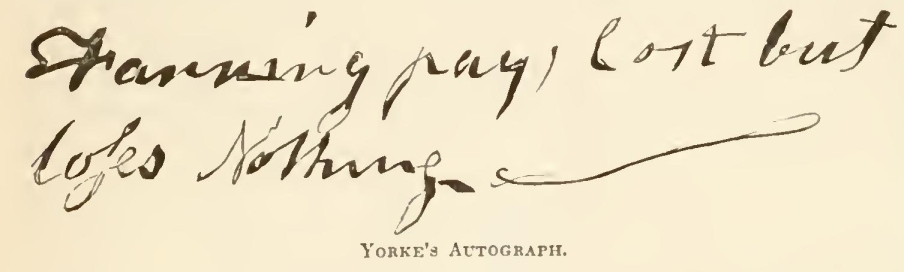
chose one of their number for judge; took up the several eases as they appeared upon the docket, and adjudicated them, making Fanning plead law; and then decided several suits.
As the whole proceedings were intended as a farce, their decisions were perfectly ridiculous, while some of the "remarks" by Yorke were vulgar and profane. **
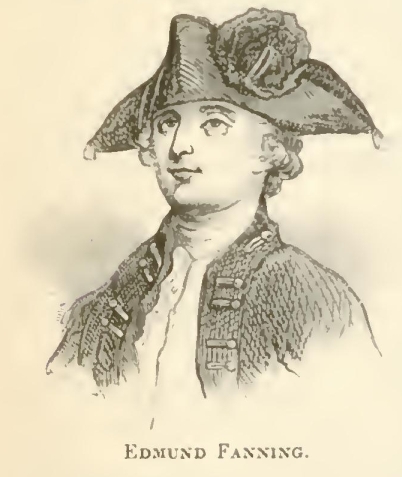
* Fanning's house was upon the site of the present Masonic Hall, a handsome brick building within a grove on King Street. On the opposite side of the street is his office, too much modernized for a drawing of it to possess any interest. Edmund Fanning was a native of Long Island, New York, son of Colonel Phineas Fanning. He was educated at Yale College, and graduated with honor in 1757. He soon afterward went to North Carolina, and began the profession of a lawyer at Hillsborough, then called Childsborough. In 1760, the degree of L.L.D.'was conferred upon him by his alma mater. In 1763, he was appointed colonel of Orange county, and in 1765 was made clerk of the Superior Court at Hillsborough. He also represented Orange county in the Colonial Legislature. In common with other lawyers, he appears to have exacted exorbitant fees for legal services, and consequently incurred the dislike of the people, which was finally manifested by acts of violence. He accompanied Governor Tryon to New York, in 1771, as his secretary. Governor Marlin asked the Legislature to indemnify Colonel Fanning for his losses; the representatives of the people rebuked the governor for presenting such a petition. In 1776, General Howe gave Fanning the commission of colonel, and he raised and commanded a corps called the Kings American Regiment of Foot. He was afterward appointed to the lucrative office of surveyor general, which he retained until his flight, with other Loyalists, to Nova Scotia, in 1783. In 1786 he was made lieutenant governor of Nova Scotia, and in 1794 he was appointed governor of Prince Edward's Island. He held the latter office about nineteen years, a part of which time he was also a brigadier in the British armv, having received his commission in 1808. He married in Nova Scotia, where some of his family yet reside. General Fanning died in London, in 1818, at the age of about eighty-one years. His widow and two daughters yet (1852) survive. One daughter, Lady Wood, a widow, resides near London with her mother; the other, wife of Captain Bentwick Cumberland, a nephew of Lord Bentwick, resides at Charlotte's Town, New Brunswick. I am indebted to John Fanning Watson, Esq., the Annalist of Philadelphia and New York, for the portrait here given. General Fanning's early career, while in North Carolina, seems not to have given promise of that life of usefulness which he exhibited after leaving Republican America. It has been recorded, it is true, by partisan pens, yet it is said that he often expressed regrets for his indiscreet course at Hillsborough. His after life bore no reproaches, and the Gentlemen's Magazine (1818), when noting his death, remarked, ''The world contained no better man in all the relations of life."
** The fae similes here given of the writing of Fanning and Yorke are copies which I made from the original in the old record book. The first shows the names of parties to the suit entered by Fanning on the record. The mock court, of course, decided in favor of the defendant, Smith, and opposite these names and the record of the verdict, Yorke wrote, with a wretched pen, the sentence here engraved: "Fanning pays cost, but loses nothing." He being clerk of the court, and the lawyer, the costs were payable to himself, and so he lost nothing. Yorke was a man of great personal courage, and when, a few years later, the war of the Revolution was progressing, he became the terror of the Loyalists in that region. An old man on the banks of the Allamance, who knew him well, related to me an instance of his daring. On one occasion, while Cornwallis was marching victoriously through that section, Yorke, while riding on horseback in the neighborhood of the Deep River, was nearly surrounded by a band of Tories. He spurred his horse toward the river, his enemies in hot pursuit. Reaching the bank, he discovered he was upon a cliff almost fifty feet above the stream, and sloping from the top. The Tories were too close to allow him to escape along the margin of the river. Gathering the reins lightly in his hands, he spurred his strong horse over the precipice. The force of the descent was partially broken by the horse striking the smooth sloping surface of the rock, when half way down. Fortunately the water was deep below, and horse and rider, rising to the surface, escaped unhurt. It was a much greater feat than Putnam's at Horse Neck.
Military Expedition against the Regulators.—Bad Treatment of Husband.—Tryon's March to Hillsborough.—His Officers.
Judge Henderson, who was driven from the bench, called upon Tryon to restore order in his district. The governor perceived that a temporizing policy would no longer be expedient, and resolved to employ the military force to subdue the rebellious spirit of the Regulators. He deferred operations, however, until the meeting of the Legislature, in December. Herman Husband was a member of the Lower House, from Orange, and there were others in that body who sympathized with the oppressed people. Various measures were proposed to weaken the strength of the Regulators; and among others, four new counties were formed of portions of Orange, Cumberland, and Johnson. * Finally, when the Legislature was about to adjourn without authorizing a military expedition, information came that the Regulators had assembled in great numbers at Cross Creek (Fayetteville), with the intention of marching upon Newbern, having heard that their representative (Husband) had been imprisoned. ** The Assembly immediately voted two thousand dollars for the use of the governor. The alarmed chief magistrate fortified his palace, and placed the town in a state of defense. He also issued a proclamation,Feb 7, 1771 and orders to the colonels of the counties in the vicinity, to have the militia in readiness. These precautions were unnecessary, for the Regulators, after crossing the Haw, a few miles above Pittsborough, to the number of more than one thousand, met Husband on his way home, and retraced their steps.
The governor soon issued another proclamation, prohibiting the sale of powder, shot, or lead, until further notice. This was to prevent the Regulators supplying themselves with munitions of war. This measure added fuel to the flame of excitement, and finally, the governor becoming again alarmed, he made a virtual declaration of war, through his council. That body authorized him to raise a sufficient force to march into the rebellious districts and establish law and order. The governor issued a circularMarch 18, 1771 to the colonels, ordering them to select fifty volunteers from their respective regiments and send them to Newbern. With about three hundred militia-men, a small train of artillery, some baggage wagons, and several personal friends, Tryon left Newbern on the twenty-fourth of April. On the fourth of May he encamped on the Eno, having been re-enforced by detachments on the way. *** General Hugh Waddel was directed to collect the forces from the western counties, rendezvous at Salisbury, and join the governor in Orange (now Guilford) county. While he was waiting at Salisbury for the arrival of powder from Charleston, a company of men assembled in Cabarras county, blackened their faces, intercepted the convoy with the ammunition, between Charlotte and Salisbury, routed the guard, and destroyed the powder.
* These were Guilford, Chatham, Wake, and Surrey.
** Tryon, who feared and hated Husband, procured the preferment of several charges against him, and he was finally arrested, by order of the council, and imprisoned for several days. The charges, on investigation, were not sustained, and he was released.
***Colonel Joseph Leech commanded the infantry, Captain Moore the artillery, and Captain Neale a company of rangers.
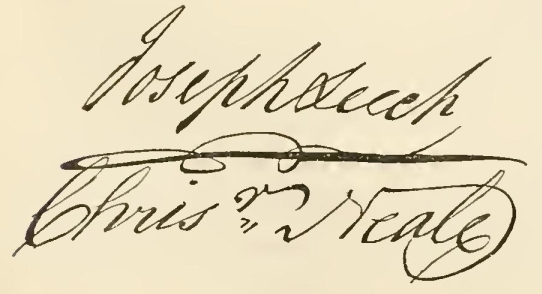
* On his way to the Eno, he was joined by a detachment from Hanover, under Colonel John Ashe: another from Carteret, under Colonel Craig; another from Johnston, under Colonel William Thompson; another from Beaufort, under Colonel Needham Bryan: another from Wake, under Colonel Johnson Hinton; and at his camp on the Eno, he was joined by Fanning, with a corps of clerks, constables, sheriffs, and other materials of a similar kind. The signatures here given, of two of Tryon s officers on this occasion, I copied from original committee reports to the Colonial Legislature, now in possession of the Reverend Dr. Hawks. Some of these officers were afterward active patriots. Several other signatures of North Carolina men given in this work, I copied from the same documents.
Dispersion of Waddel's Troops.—Tyron's March toward the Allamance.—Dr. Caldwell's Mediation.—Battle.
General Waddel crossed the Yadkin on the morning of the tenth of May,1771 intending to join Governor Tryon. He had advanced but a short distance, when he received a message from a body of Regulators, warning him to halt or retreat. Finding that many of his men were averse to fighting, and that others were favorable to the Regulators, and were thinning his ranks by desertions, he retreated across the Yadkin, hotly pursued by the insurgents. They surrounded Waddel's small army, and took several of them prisoners, after a slight skirmish. The general and a few followers escaped to Salisbury.
Tryon, informed of the disaster of Waddel, broke up his camp on the Eno, crossed the Haw just below the Falls,May 13 and pressed forward toward the Allamance, where he understood the Regulators were collecting in force on the Salisbury Road. He encamped very near the scene of Colonel Pyles's defeat in 1781, within six miles of the insurgents, just at sunset, and during the night sent out some scouts to reconnoiter. * On the fifteenth he received a message from the Regulators, proposing terms of accommodation, and demanding an answer within four hours. ** He promised a response by noon the next day.
At dawn the following morningMay 16 he crossed the Allamance, a little above the present site of Holt and Carrigan's cotton factory, and marched silently and undiscovered along the Salisbury Road, until within half a mile of the camp of the Regulators, where he formed his line in battle order. Dr. Caldwell, who was there, with many of his parishioners, now visited the governor a second time, and obtained a renewal of a promise made the night before to abstain from bloodshed; but Tryon demanded unconditional submission. Both parties advanced to within three hundred yards of each other, when Tryon sent a magistrate, with a proclamation, ordering the Regulators to disperse within an hour. Robert Thompson, an amiable, but bold, outspoken man, who had gone to Tryon's camp to negotiate, was detained as a prisoner. Indignant because of such perfidy, he told the governor some plain truths, and was about to leave for the ranks of the Regulators, when the irritated governor snatched a gun from the hands of a militia-man and shot Thompson dead. Tryon perceived his folly in a moment, and sent out a flag of truce. The Regulators had seen Thompson fall, and, deeply exasperated, they paid no respect due to a flag, and immediately fired upon it. *** At this moment Dr. Caldwell rode along the lines and urged his people and their friends to disperse; and had an equal desire to avoid bloodshed guided the will of Tryon, valuable lives might have been spared. But he took counsel of his passions, and gave the word "Fire!" The militia hesitated, and the Regulators dared them to fire. Maddened with rage, the governor rose in his stirrups and shouted "Fire! fire on them, or on me!" A volley ensued, and the cannons were discharged with deadly effect. The fire was returned, and the governor's hat was pierced by a musket-ball. He sent out a flag of truce, but the bearer immediately fell. Some young men among the Regulators rushed forward and took possession of the cannons. They did not know how to manage them, and soon abandoned them. The military now fired with vigor, and the Regulators fell back to a ledge of rocks on the verge of a ravine, not, however, until their scanty supply of ammunition was exhausted. They had no acknowledged leader;**** for as soon as it was evident
* Colonel Ashe and Captain John Walker, who were out reconnoitering, were caught by the Regulators, tied to a tree, severely whipped, and detained as prisoners. The great body of the Regulators in camp censured this cruelty and disclaimed approval.
** The Reverend David Caldwell, D.D., of Orange, many of whose congregation were with the Regulators, was the messenger on this occasion, and received from Tryon the most positive assurances that no blood should be shed unless the insurgents should be the first aggressors. Dr. Caldwell was a pure patriot, and during the war which ensued a few years later, himself and family were great sufferers for "conscience' sake."
*** Tradition currently reported that Donald Malcolm, one of Governor Tryon's aids, and who was afterward a very obnoxious under-officer of the customs at Boston, was the bearer of the flag. When the firing commenced, he retreated with safety to his person, but had the misfortune to have the buttons of his small clothes leave their fastenings. Trumbull, in his M'Fingall, with rather more wit than modesty, notices the circumstance in four lines.
* Captain Montgomery, who commanded a company of Mountain Boys, was considered the principal leader, if any might be called by that name. He was killed by the second fire of the cannon, when most of the Regulators fled. James Pugh, a young gunsmith from Hillsborough, and three others, shielded by a ledge of rocks on the edge of a ravine, did great execution with rifles. Pugh fired while the others loaded, and he killed fifteen men. He was made prisoner, and was one of six who were hung at Hillsborough.
Flight of Husband.—Defeat of the Regulators.—The Battle-ground.—Cruelty of Tryon.
that blood would be shed, Herman Husband, the soul of the agitation, declared that his peace principles as a Quaker would not allow him to fight, and he rode off, and was not seen again in North Carolina until the close of the Revolution.
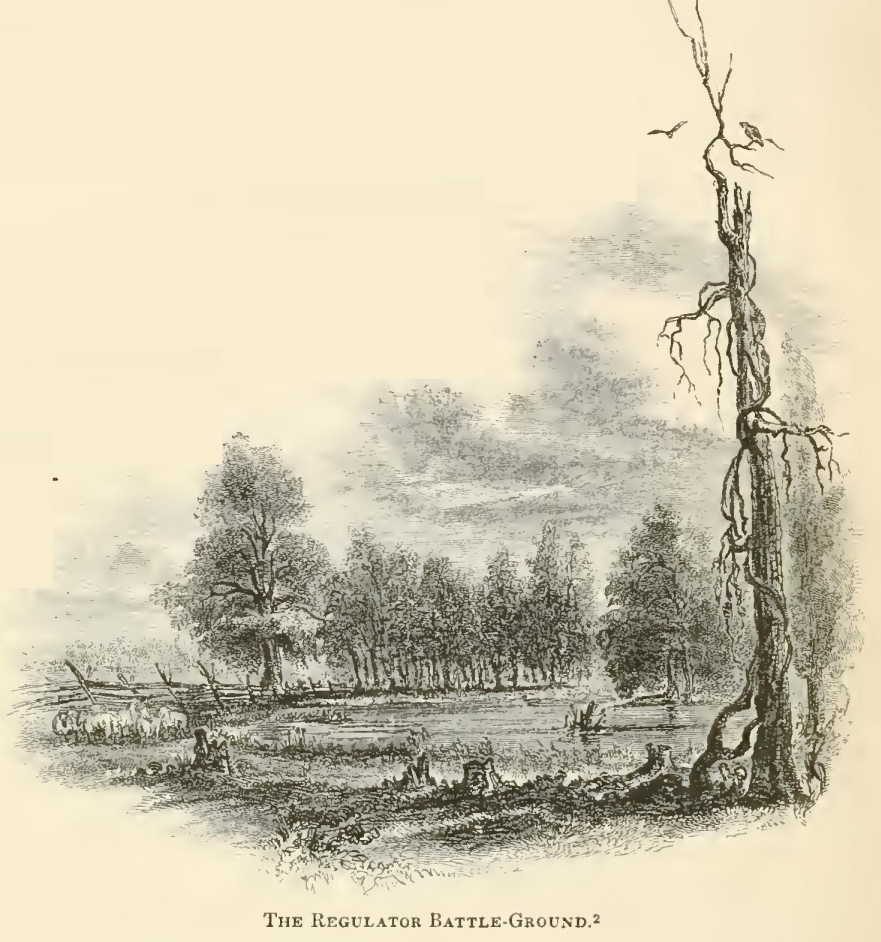
Charity must stretch her mantle to cover this delinquency of the leader of the Regulators; for why should he have urged the people to assemble for resistance unless they were to fight? All was confusion when the conflict began, and each fought for life and liberty in his own way. Although they were defeated in that early conflict—that first battle of our war for independence—they were not subdued, and many of the survivors were among the most determined opposers of Cornwallis a few years later. Nine of the Regulators and twenty-seven of the militia fell in that conflict, and a great number on both sides were wounded. * Tryon, in his report, said, "The loss of our army in killed, wounded, and missing, amounted to about sixty men."
The admitted excesses of the Regulators afford no excuse for the cruelty of Tryon after the battle on the Allamance. With the implacable spirit of revenge, he spent his wrath upon his prisoners, and some of his acts were worthy only of a barbarian. *** Having rested a few days near the battle-ground, he went on as far as the Yadkin,
* Martin, Williamson, Caruthers, Foote.
** This view is from the south side of the Salisbury Road, which is marked by the fence on the left. The belligerents confronted in the open field seen on the north of the road, beyond the fence. Between the blasted pine, to which a muscadine is clinging, and the road, on the edge of a small morass, several of those who were slain in that engagement were buried. I saw the mounds of four graves by the fence, where the sheep, seen in the picture, are standing. The tree by the road side is a venerable oak, in which are a few scars produced by the bullets.
*** Among his victims was a young carpenter of Hillsborough, named James Few. He was the sole support of his widowed mother, and had suffered greatly, it is said, at the hands of Fanning. Young Few alleged that he had not only made him feel the curse of his exactions, but had actually seduced a young girl who was his betrothed. Driven to madness, he joined the Regulators, was taken prisoner, and was hung on the night after the battle, without trial, and without witnessing friends. * Justice to the dead, and a regard for the truth of history, demand the acknowledgment that this story, like the apocryphal one that the Regulators cut off Fanning's ears, ** needs confirmation, and rests solely upon uncertain tradition. It is further related that Tryon destroyed the property of Few's mother when he reached Hillsborough! Captain Messer, who was made prisoner, was sentenced to be hanged the day after the battle. His wife, informed of his intended fate, hastened to him with her little son, a lad ten years old. She pleaded for her husband's life in vain. Messer was led to execution, while his wife lay weeping upon the ground, her boy by her side. Just as Messer was to be drawn up, the boy went to Tryon and said, "Sir, hang me, and let my father live." "Who told you to say that?" said the governor. "Nobody," replied the lad. "And why," said the governor, "do you ask that?" "Because," the boy replied, "if you hang my father, my mother will die, and the children will perish." The heart of the governor was touched, and he said, "Your father shall not be hanged to-day." Messer was offered his liberty if he would bring Husband back. He consented, and his wife and children were kept as hostages. He returned in the course of a few days, and reported that he overtook Husband in Virginia, but could not bring him. Messer was immediately bound, and, after being exhibited with the other prisoners, was hung at Hillsborough.
* Foote's Sketches of North Carolina, pages 61, 62.
** See Johnson's Traditions and Reminiscences of the Revolution, page 573.
Tryon's Prisoners exhibited in Chains.—Execution of Six of them.—Effect of the Regulator Movement—Career of Husband.
and, after issuing a proclamationMay 17, 1771 of pardon to all who should lay down their arms and take the oath of allegiance before the tenth of July, except a few whom he named, he made a circuitous route through Stokes, Rockingham, and Guilford counties, back to Hillsborough, exhibiting his prisoners in chains in the villages through which he passed. He exacted an oath of allegiance from the people; levied contributions of provisions; chastised those who dared to offend him; and at Hillsborough he offered a large reward for the bodies of Husband and other Regulators, "dead or alive." * On his march he held courts-martial for trying civil cases, burned houses, and destroyed the crops of inoffensive people. At Hillsborough he held a court-martial for the trial of his prisoners. Twelve were condemned to suffer death; six were reprieved, and the others were hung,June 19, 1771] among whom was Captain Messer, whose life had been spared a few days before by the intercession of his little child. His thirst for revenge satiated, Tryon returned to his palace at Newbern, where he remained but a short time, having been called to the administration of affairs in the province of New York. Joseph Martin succeeded him as governor, and acted with judgment. He so conciliated the Regulators that many of them were firm Loyalists when the governor was finally driven away by the Whigs.
The movements of the Regulators and the result of the battle on the Allamance, form an important episode in the history of our Revolution. Their resistance arose from oppressions more personal and real than those which aroused the people of New England. It was not wholly the abstract idea of freedom for which they contended; their strife consisted of efforts to relieve themselves of actual burdens. While the tea-duty was but a "pepper-corn tribute," imposing no real burden upon the industry of the people in New England, extortion in every form, and not to be evaded, was eating out the substance of the working-men in North Carolina. Implied despotism armed the New Englanders; actual despotism panoplied the Carolinians. Each were equally patriotic, and deserve our reverent gratitude. The defeat on the Allamance did not break the spirit of the patriots; and many, determined no longer to suffer the oppressions of extortioners, abandoned their homes, with their wives and children, went beyond the mountains, and began settlements in the fertile valleys of Tennessee. As Mr. Bancroft, in a letter to the Honorable David L. Swain, happily expressed it, "Like the mammoth, they shook the bolt from their brow, and crossed the mountains."
While the Regulator movement planted deep the seeds of resistance to tyranny, the result of the battle on the Allamance was disastrous in its subsequent effects. The people, from whom Tryon wrung an oath of allegiance, were conscientious, and held a vow in deep reverence. Nothing could make them swerve from the line of duty; and when the hostilities of the Revolution fully commenced, hundreds, whose sympathies were with the patriots, felt bound by that oath to remain passive. Hundreds of men, with strong hearts and hands, would have flocked around the standards of Gates and Greene, in Guilford, Orange, and the neighboring counties, had not their oath been held too sacred to be violated, even when it was evident that the king could no longer protect them. Loyalty to conscience, not opposition to the principles of the Revolutionists, made these men passive; for their friends and neighbors on the other side of the Yadkin, where Tryon's oath was not exacted, were among those who earliest cast off their allegiance to the British crown.
The course of Governor Martin was generally so judicious, that the people of North Car-
* Husband fled to Pennsylvania, and settled near Pittsburgh. He went to North Carolina on business soon after the close of the war, but did not remain long. In 1794 he was concerned in the "Whisky Insurrection," in Western Pennsylvania, and was appointed on the Committee of Safety with Brackenridge, Bradford, and Gallatin. Husband was arrested, and taken a prisoner to Philadelphia, where he was pardoned, through the interposition of Dr. Caldwell who happened to be there, Dr. Rush, and the North Carolina senators. He met his wife on his return home, and died at an inn before he reached his own neighborhood. Husband was a member of the Pennsylvania Legislature for some years.
Committees of Correspondence.—Difficulties between the Governor and People.—Conventions of the Patriots.
olina were not very restive, while the Northern colonies were all on fire with rebellion in 1774. Yet sympathy for the people of Boston, suffering from the effects of the Port Bill, was general and sincere, and the inhabitants of Wilmington and other towns made large contributions for their relief. When the final decision was to be made respecting allegiance to, or independence of the British crown, very many remained loyal, and the ardent Whigs required the full exercise of all their zeal to leaven the inactive population of the state. The efficient machinery of corresponding committees was put in operation early In December, 1773, the resolution of the House of Burgesses, of Virginia, recommending the appointment of committees of correspondence, was received by the Assembly of North Carolina and approved of. A committee was appointed, and instructed to be vigilant and industrious in the performance of their duties. * Governor Martin was then in New York, and the duties of his office devolved upon James Hasell, the president of the council. Hasell was rather favorably inclined toward republicanism, and opposed the patriots only so far as his official duty demanded action.
The proceedings of that short session were quite offensive to the governor and most of his council, as representatives of the imperial government, and the amity of the provincial legislation was disturbed. The governor soon returned home, and prorogued the Assembly until March following,1774 that the members might "reflect upon their proceedings, learn the sentiments of their constituents, and adopt a more loyal course." When they again met, strengthened by the approval of their constituents, they were firmer than ever in their opposition to some of the measures of government; and that the sincerity and courage of those who professed patriotic proclivities might be tested, the Yeas and Nays were taken upon the adoption of an important bill. ** A committee was appointed to address the king, and on the twenty-fifth of March the Assembly was again prorogued. Four days afterward, it was dissolved by the governor's proclamation; an act considered unconstitutional, and which highly offended the people.
During the summer of 1774, a majority of the inhabitants, in primary meetings assembled, openly avowed their approval of a Continental Congress, as proposed by Massachusetts. A general meeting of delegates from the several towns was proposed to be held at Newbern on the twenty-fifth of August. On the thirteenth of that month, the governor issued his proclamation, disapproving of the district meetings, and requiring the people to forbear sending delegates to the general convention. The people did not heed his proclamation, and the delegates met on that day. John Harvey, of Perquimans, the late speaker of the Assembly, was chosen moderator. The council convened by the governor, seeing the gathering of the people's representatives, decided that "nothing could be done." The convention expressed its firm loyalty to the king; claimed only the common rights of Englishmen; asserted the doctrine that they ought not to be taxed without their own consent; reprobated the tea and other duties; expressed great sympathy for the people of Massachusetts; condemned the Boston Port Bill, as a "cruel infringement of the rights and privileges of the people," and other measures of government as unrighteous; signed a non-importation
* The committee consisted of John Harvey (speaker of the Assembly), Robert Howe (afterward a general in the Continental army), Cornelius Harnett, William Hooper (one of the signers of the Declaration of Independence), Richard Caswell, Edward Vail, John Ashe, Joseph Hewes (another signer), and Samuel Johnson.
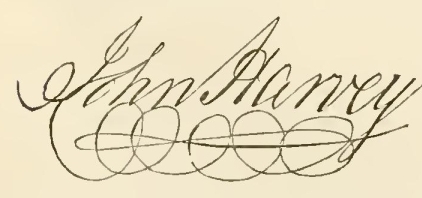
* John Harvey was an active citizen in public life, before the war of the Revolution began. He was a member of the Colonial Legislature for a number of years, and in 1766 succeeded John Ashe as speaker of the House. He presided with dignity for three years, and at the close of each session received the unanimous thanks of the House for his impartiality. He early espoused the patriot cause; was active in the first Revolutionary movements in his state, but died before the struggle had advanced far toward a successful issue.
** A bill for the establishment of Superior Courts upon a new basis, which was calculated to remove the powers of the judiciary further from the control of the people.
Approval of a General Congress, and Appointment of Deputies.—Provincial Congress.—Maneuvers of Governor Martin.
agreement, and expressed their hearty approval of the proposition for a general Congress. This approval was further manifested by the choice of deputies to represent the province in the Continental council. *
Pursuant to the recommendations of the general Congress when it convened in September, contributions were raised in all parts of the province for the relief of the people of Boston; and committees of safety were appointed in every county and chief town, to see that the articles of association adopted by the Congress were signed and faithfully observed. Activity every where prevailed among the Whigs during the winter; and when Governor Martin fixed the day for the assembling of the Legislature,April 5, 1775 John Harvey, who presided over the convention at Newbern several months before, now summoned those delegates to meet as a Provincial Congress on the same day. Governor Martin attempted, by proclamation, to prevent the meeting of the deputies, but in vain. The two bodies, composed chiefly of the same men, met at the same time, and Harvey was called upon to preside over both. The governor attempted to keep the two Assemblies distinct. He besought the legal Assembly to discountenance the irregular convention of the other deputies, chosen by the people, and expressed his determination to use all the means in his power to counteract their treasonable influence. He denounced the Continental Congress as "seditious and wicked," "highly offensive to his majesty," and in firm but respectful language urged the people to remember their allegiance and to faithfully maintain it. His appeals were of no avail, for both Assemblies were too intimately allied in sentiment to act in opposition to each other. Both bodies concurred in approving of the proceedings of the Congress of 1774, and in appointing delegates to a new one, to meet in Philadelphia in May following.May 10, 1775 The governor, perceiving the Assembly to be intractable, consulted his council, and by their recommendation dissolved it, by proclamation, on the eighth of April.
Governor Martin and the representatives of the people were now fairly at issue. The latter organized a Provincial Congress, and, assuming the functions of government, sent forth an address to the people, recommending the adoption of measures for resistance, similar to those pursued in other colonies. After transacting some other business for the public good, they quietly separated. As soon as the deputies had departed, the governor, perceiving the tide of public opinion setting strongly against him, became alarmed, and sought to intimidate the people, and at the same time to protect his person, by placing some cannon in front of the palace. He dispatched messengers to the Highlanders at Cross Creek, upon whose loyalty he relied, and others were sent into the more westerly districts to promise the Regulators exemption from the punishments to which they were still liable for past misdeeds, if they would assist the king's government against its opposers. These promises had great effect, and, strange as it may seem, many of the Regulators were active Loyalists. About this time, a letter which the governor had sent to General Gage at Boston, soliciting a supply of arms and ammunition, was intercepted. The people were greatly exasperated, and the Committee of Safety of Newbern seized and carried off six of the cannons which had been placed in front of the palace. From every quarter the governor heard of hostile preparations, and becoming alarmed for his personal safety, he fled to Fort Johnson, on the Cape Fear River, near Wilmington,June 14, 1775 whence he sent forth a menacing proclamation. ** June 16
At the beginning of July, preparations for a servile insurrection on the Tar River were
* William Hooper, of the county of Orange, Joseph Hewes, of the town of Edenton, and Richard Caswell, of the county of Dobbs were chosen deputies. They were instructed to carry out the principles embodied in the preamble and resolutions adopted by the convention, the substance of which is given in the text.
** To this proclamation the General Committee of Safety of the District of Wilmington, as appears by their proceedings, issued an answer, denying many of its allegations, and proclaiming the governor to be an instrument in the hands of administration to rivet those chains so wickedly forged for America." This answer was drawn up and adopted in the session of the committee, at the court-house in Wilmington, on the twentieth of June, 1775.
Symptoms of a Servile Insurrection.—Destruction of Fort Johnson.—Provincial Congress at Hillsborough
discovered. This plot was disclosed to Thomas Rispess, a former member of the Assembly from Beaufort, by one of his slaves. It was generally supposed that Governor Martin was an accessory in inducing the slaves to rise and murder their masters. *
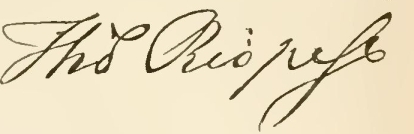
Fired with indignation by this opinion, the exasperated people determined to demolish Fort Johnson, lest the governor should strengthen it, and make it a place of reception for a hostile force and insurgent negroes. Under Colonel John Ashe, a body of about five hundred men marched to the fort, when it was ascertained that the governor had fled to the sloop of war Cruiser, lying in the river, and that Collett, the commander of the fortress, had removed all the small arms, ammunition, and part of the artillery, to a transport hired for the purpose. The militia immediately set fire to the buildings, and demolished a large portion of the walls of the fort. ** The Committee of Safety of Wilmington, at the same time, publicly charged the governor with fomenting a civil war, and endeavoring to excite an insurrection among the negroes. They declared him an enemy to his country and the province, and forbade all persons holding any communication with him. While these events were transpiring on the coast, the people of Mecklenburg county, over the Yadkin, met by representatives, and, by a series of resolutions, virtually declared themselves independent of the British crown, and established republican government in that county. This important movement will be considered in the next chapter.
Pursuant to a resolve of the late convention, delegates from the several towns in the state were summoned to meet in Provincial Congress at Hillsborough, on the twentieth of August. * When this summons appeared, Governor Martin, yet on board the Cruiser, issued a long proclamation, in which he stigmatized the incendiaries of Fort Johnson as traitors to the king; pronounced the proceedings of the Wilmington committee as base and scandalous; denounced the movement in Mecklenburg in May; *** warned the people not to send delegates to Hillsborough; denounced Colonels Ashe **** and Howe as rebels; and offered the king's pardon for all past outrages to those who should return to their allegiance. The people defied the governor's threats, and mocked his proffers of forgiveness; and on Sunday, the twentieth of August, every county and chief town in the province had a delegate in Hillsborough. They organized on Monday, (v) when one hundred and eighty-four deputies were present. One of their first acts was to declare their determination to hold the ægis of popular power over the Regulators, who were liable to punishment, and had not been cajoled into submission by the governor's promises. They also declared the governor's proclamation to be a "false, scurrilous, malicious, and seditious libel," and tending to stir up
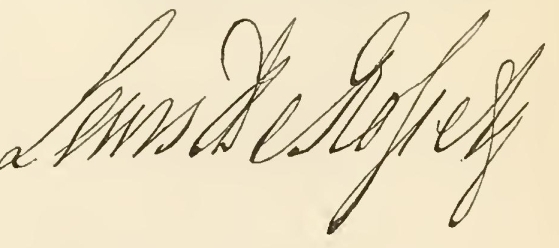
* In a letter to Lewis Henry de Rosset, the governor endeavored to vindicate himself, and denied all knowledge of the matter. He said in his letter, "that nothing could justify such a measure but the actual and designed rebellion of the king's subjects, and the failure of all other means to maintain his government." From these expressions and the language held in a pamphlet, entitled Taxation no Tyranny, written by the celebrated Dr. Johnson, together with the conduct of Lord Dunmore, of Virginia, it was evident that the inciting of the slaves to massacre their masters was a part of the programme of ministers for crushing the rebellion. *
** Fort Johnson was on the west side of the Cape Fear River, two miles above its mouth, where the present town of Smithville, the capital of Brunswick county, is situated. There is now a fortress and small garrison there.
***An account of the proceedings in Mecklenburg were published in the Cape Fear Mercury.
**** This was the same officer who accompanied Tryon to the Allamance, and was flogged by the Regulators. He resigned his commission as colonel of the militia of Hanover, under the king, and espoused the patriot cause. We shall meet him in the field hereafter.
* (v) The members of the Provincial Congress assembled in the Presbyterian Church, which stood where the present place of worship of that denomination, in Hillsborough, is located.
* "The slave should be set free," said Johnson; "an act which the lovers of liberty must surely commend. If they are furnished with arms for defense and utensils of husbandry, and settled in some simple form of government, within the country, they may be more honest and grateful than their masters."
Action of the Congress.—Military Organization.—Minute-men.—Sketch of Cornelius Harnett.
tumult and insurrections, dangerous to the peace of the king's government." It was then directed to be burned by the common hangman. They also provided for raising and equipping a military force of one thousand men for the defense of the liberties of the province. This force was divided into two regiments. The command of the first regiment was given to Colonel James Moore (one of Tryon's officers when he marched against the Regulators), of New Hanover; the second to Colonel Robert Howe, of Brunswick. In addition to this regular force, a battalion of ten companies, of fifty men each, was directed to be raised in each district, to be called minute-men, their uniform to be a hunting-shirt, leggings or spatterdashes, and black gaiters. To pay these troops and other expenses of the government, the Provincial Congress directed the emission of bills of credit to the amount of $150,000, for the redemption of which a poll tax was levied for nine years, commencing in 1777. The deputies closed their labors by agreeing to an address to the inhabitants of the British empire (which was drawn up by William Hooper), and in organizing a provisional government. * The Congress adjourned on the nineteenth of September.1775
The provincial council met for the first time on the eighteenth of October following, and appointed Cornelius Harnett, of Wilmington, president. ** Already the Continental Congress
* A provincial council was established, composed of two persons duly chosen by the delegates of each district, and one by the whole Congress. * A Committee of Safety, composed of a president and twelve members, were chosen for each district; the freeholders were also directed to choose a committee. The provincial council and the committees of safety exercised the functions of government in the management of civil and military affairs. Secret committees of correspondence were also organized. Premiums were voted for the manufacture of saltpetre, gunpowder, cotton and woolen cards, pins, needles, linen and woolen cloth, and for the erection of rolling and slitting mills, furnaces for the manufacture of steel and iron, paper-mills, salt-works, and for refining sulphur.
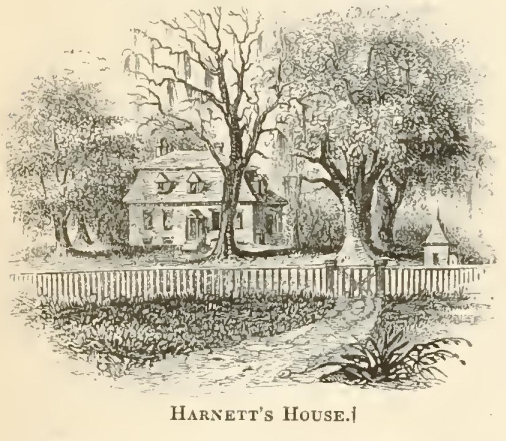
** In the Wilmington Chronicle, August 21, 1844, there appeared a very interesting memoir of Cornelius Harnett, which I have condensed. Mr. Harnett was a native of England, and was born on the twentieth of April, 1723. The precise time when he came to America is not known. He was a man of wealth and consideration, before circumstances brought him into public life. He was among the earliest in North Carolina in denouncing the Stamp Act and kindred measures, and from that period until his death he was extremely active in public affairs. He resided upon Hilton plantation, about one mile from the center of Wilmington, where he owned a large estate, and was a gentleman of leisure.
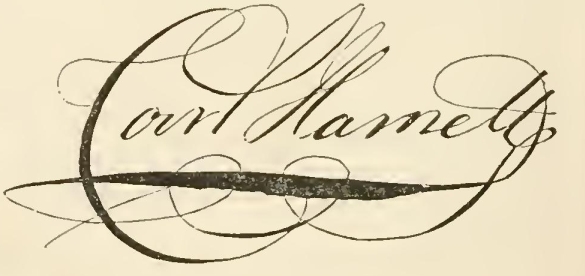
** He represented the borough of Wilmington in the Provincial Assembly, in 1770-71, and was chairman of the most important committees of that body. From one of the reports of a committee of which Harnett was chairman, I copied till accompanying signature of the patriot. In 1772, Mr. Harnett, with Robert (afterward General) Howe, and Judge Maurice Moore, constituted a committee of the Assembly to prepare a remonstrance against the appointment, by Governor Martin, of commissioners to run the southern boundary line of the province. In 1773, Josiah Quincy, the young and ardent patriot of Boston, while traveling in the South for his health, passed a night at Wilmington, at the residence of Mr. Harnett, whom he denominated "the Samuel Adams of North Carolina" (except in point of fortune). "Robert Howe, Esq., Harnett, and myself," he wrote, "made the social triumvirate of the evening." The plan of "Continental Correspondence" was a subject for discussion that evening, and Quincy returned to Boston, feeling that with such men as Pinckney, Rutledge, Gadsden, and Harnett, as leaders, the South would co-operate with Massachusetts in resistance.
* Samuel Johnson, Cornelius Harnett, Samuel Ashe, Abner Nash, James Coor, Thomas Jones of Edenton, Whitmill Hill, William Jones, Thomas Jones of Halifax, Thomas Person, John Kinchen, Samuel Spencer, and Waightstill wery, composed this first provincial council. They were to meet quarterly.
** This sketch is from a pencil drawing made in 1851 by Mr. Charles Burr. It is situated about a mile and a half from the center of Wilmington, on the northeast branch of the river. I am informed by Edward Kidder, Esq., of Wilmington, through whose kindness this and several other drawings in his vicinity have been procured for my work, that it has never been altered since Mr. Harnett occupied it. This is a view of the south point.
** In December, 1773, Mr. Harnett was placed on the Committee of Correspondence for Wilmington district. In that sphere he was the master-spirit of the Revolution upon the Cape Fear and its vicinity. In the Provincial Congress of 1775, he represented his old constituents; and when a provincial council was appointed to fill the vacancy in government caused by the abdication of Martin, he was made its president, and became, in that capacity, actual governor of North Carolina. He was a member of the Provincial Congress which assembled at Halifax in the spring of 1776, and was chairman of the committee appointed to consider the usurpations, &c., of the imperial government. He submitted a report on the twelfth of April, which contained a resolution empowering the delegates of North Carolina in the Continental Congress, to use their influence in favor of a Declaration of Independence. When, in the spring of 1776, Sir Henry Clinton, with a British fleet, appeared in the Cape Fear River, that commander honored Harnett and Robert Howe, by excepting them in his offer of a general pardon to those who should return to their allegiance, as published in his proclamation issued to the people of North Carolina from the Pallas transport. They were considered arch-rebels. When, on the twenty-second of July, 1776, the Declaration of Independence arrived at Halifax, Harnett read it to a great concourse of citizens and soldiers. When he concluded, the latter crowded around him, took him upon their shoulders, and bore him in triumph through the town. In the autumn, he was on a committee for drafting a State Constitution, and a Bill of Rights; and to his liberal spirit the people were indebted for the claim in the first document, guaranteeing the privilege of enjoying the public offices and emoluments to Dissenters and Churchmen, equally. Under the new Constitution, Richard Caswell was made the first governor of the state, and Harnett was one of his council. He was afterward elected to fill his place in the Continental Congress, and Cornelius Harnett's name is attached to the "articles of confederation and perpetual union." When the British afterward held possession of the country around the Cape Fear, Harnett was made prisoner, and died while a captive. His remains lie buried in the northeast corner of the grave-yard attached to St. James's Church, in Wilmington, and at the head and foot of his grave are two upright slabs of brown stone. On the one at the head is inscribed, "Cornelius Harnett, Died, 1781, aged 58 years."
Friendship of lhe Highlanders courted.—Called to take up Arms by Donald M'Donald.—Flora M'Donald.
had adopted measures for the defense of the province. The two battalions of five hundred men each were attached to the Continental army, and the committees of safety were requested to employ all the gunsmiths in the colony, that might be procured in making muskets. Two Gospel ministers were sent by the provincial council to explain to the Highlanders and others the nature of the quarrel with the mother country, and endeavor to win them to the patriot cause. In the mean while, Governor Martin had busy emissaries among the Highlanders and Regulators, endeavoring to unite them in favor of the king. This was an object of great importance; for if he could embody a strong force of Loyalists in the heart of the province, he could easily keep the sea-board quiet, especially after the arrival of Sir Henry Clinton with troops from the North, then daily expected. He had also received intelligence that Sir Peter Parker, with a strong squadron, bearing Lord Cornwallis with a considerable force, would sail for America at the beginning of 1776. These anticipations gave the governor pleasing hopes for the future.
While Lord Dunmore, as we have seen, was making a demonstration against the lower counties of Virginia, * Governor Martin prepared to strike a blow against the patriots in North Carolina. He gave Donald M'Donald, an influential Highlander at Cross Creek, a commission of brigadier general, and with it a large number of copies of a proclamation, with a blank left for the date, which commanded all the king's loyal subjects in North Carolina to join his standard. M'Donald had discretionary powers concerning the distribution of these proclamations. While Colonel Robert Howe, with North Carolina troops, was absent at Norfolk, in Virginia, whither he had gone to assist Colonels Woodford and Stevens against Dunmore, M'Donald set up the royal ensign at Cross CreekFeb 1, 1776 (now Fayetteville), and issued some of the proclamations. The loyal-hearted Scotchmen, not fully comprehending the nature of the difficulties, obeyed blindly; and in a few days more than one thousand of them, with many timid Regulators, in all fifteen hundred strong, gathered around the standard of the Highland chief. M'Donald was a brave veteran, and had fought valiantly for the Pretender on the field of Culloden, and his influence over his countrymen was very great.
At Cross Creek lived Flora M'Donald, the noble and beautiful girl who saved the life of Charles Edward, after the defeat of the troops at Culloden. ** She was now the wife of
* See page 534.
** The Pretender, while a fugitive among the Highlands of Scotland, was discovered by his enemies, and fled in an open boat to South Uist, an island on the west coast, where he found refuge with Laird M'Donald. His pursuers discovered his retreat, and three thousand English soldiers were sent to search every nook and dell, crag and cottage upon the island. A cordon of armed vessels surrounded South Uist, so that escape appeared impossible. But escape from the island was neeessary for the safety of the prinee. Lady M'Donald proposed that he should put on the garb of a servant-woman, and, in company with a lady as waiting-maid, leave the island. Who had the courage? Flora M'Donald, from Millburg, a beautiful girl just from school at Edinburgh, was there on a visit. Her step-father was then on the island, in command of a corps of soldiers searching for the prinee. Regardless of the certain displeasure of her father and the extreme peril of the undertaking, Flora acceded to the proposal of Lady M'Donald to save the prince; and that very night, in company with a trusty officer, she went among the crags of Carradale, to the cave where the royal fugitive was concealed. Great was the astonishment and delight of the prince when he was informed of the plan for his eseape. Within a day or two, Flora procured a passport from her unsuspecting step-father for herself, a young companion, a boat's crew, and Betsey Bourke, an Irish woman, whom Flora pretended she had procured as a spinster for her mother. The prince, attired as Betsey Bourke, embarked with Flora and her companions, on the twenty-eighth of June, 1746, for the Isle of Skye. A furious tempest tossed them about all night, and a band of soldiers prevented their landing in the morning. They finally landed near the residence of Sir Alexander M'Donald, where the prince was concealed in the cavity of a rock, for the laird was his enemy, and his hall was filled with soldiers seeking the fugitive. Flora touched the heart of Lady M'Donald, and by her aid the prince and the maiden made a safe journey of twelve miles on foot, to Potaree. There they parted forever, the prince to escape to Franee, Flora to be soon afterward carried a prisoner to London and east into the Tower. The story of her adventure excited the admiration of all classes, and as she was not a partisan of the Pretender, nor of his religious faith, the nobility interfered in her behalf. The father of George the Third visited her in prison, and so much was he interested in her that he procured her release. While she remained in London, her residence was surrounded by the carriages of the nobility; and Lady Primrose, a friend of the Pretender, introduced her to court society. When presented to the old King George the Second, he said to her, "How could you dare to succor the enemy of my crown and kingdom." Flora replied with great simplicity-, "It was no more than I would have done for your majesty, had you been in like situation." A chaise and four were fitted up for her return to Scotland, and her escort was Malcolm M'Leod, who often said afterward, "I went to London to be hanged, but rode back in a chaise and four with Flora M'Donald." Four years afterward she married Allan, the son of the Laird M'Donald, and became mistress of the mansion where the prince passed his first night in the Isle of Skye. In 1775, Flora and her husband, with several children, arrived among their countrymen in North Carolina. Full of loyalty, she encouraged her countrymen to rally in defense of the royal cause. After suffering much, they embarked in a sloop-of-war for Scotland. On the voyage, the vessel was attacked by a French cruiser, and the brave Flora, who was on deck during the action, was severely wounded in the hand. They reached their country, where Flora lived until the fifth of March, 1790. She was buried in the cemetery of Killmuir, in the Isle of Skye; her shroud was the sheet in which the prince slept while under her guidance; and three thousand persons stood and wept as her coffin was let down into the grave.
Influence of Flora M'Donald.—The Pretender saved by her.—Patriot Expedition against the Highlanders.
Allan M'Donald, and it is said used all her influence in bringing her countrymen to the standard of the Scotch general. Her husband took a captain's commission under him, and was one of the most active officers in the engagement which speedily ensued.
As soon as Colonel James Moore, of Hanover, was apprised of the gathering of the Loyalists to the banner of M'Donald, he marched with his regulars and a detachment of New Hanover militia (in all about eleven hundred men), toward Cross Creek,
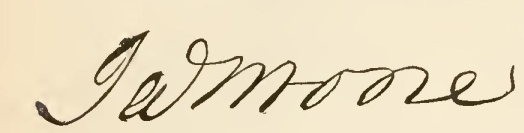
and encamped about twelve miles south of the Highlander's head-quarters.Feb 15. 1776 He fortified his camp, and by scouts and spies cut off all communication between M'Donald and Governor Martin. The Loyalist general, feeling the necessity of dislodging the patriots, marched toward their camp. When within four miles, he halted, and sent the governor's proclamation, and a friendly but firm letter to Moore, urging him to prevent bloodshed by joining the royal standard; at the same time threatening him, in case of refusal, with the treatment due to rebels against the king. After some delay, during which he sent an express to Colonel Caswell, Moore replied, that he was engaged in a holy cause, from which he could not be seduced. He besought M'Donald to prevent bloodshed by signing the Test proposed by the Provincial Congress, and menaced him with the same treatment which the general proposed to award to the patriot colonel and his followers. M'Donald was not prepared to put his threats into execution, for he was advised of the rapid gathering of the minute-men around him. Informed, in the mean while, of the expected arrival of Sir Henry Clinton and Lord William Campbell in the Cape Fear River, M'Donald resolved to avoid an engagement that might
The Highlanders pursued by Colonel Moore.—Colonels Caswell and Lillington.—Biographical Sketch of Caswell
prove disastrous, and attempt to join the governor and his friends at Wilmington. At midnight he decamped, with his followers, crossed the Cape Fear, and pushed on at a rapid pace, over swollen streams, rough hills, and deep morasses, hotly pursued by Colonel Moore. On the third day of his march, he crossed the South River (one of the principal tributaries of the Cape Fear), from Bladen into New Hanover, and as he approached Moore's Creek, a small tributary of that stream, * he discovered the gleaming of fire-arms.Feb 26, 1776 He had come upon the camp of Colonels Caswell ** and Lillington, *** near the mouth of
* Moore's Creek runs from north to south, and empties into the South River, about twenty miles above Wilmington.
** I am indebted to the Honorable David L. Swain, late governor of North Carolina, and now president of the University at Chapel Hill, for the following sketeh of the publie life of Richard Caswell. Governor Swain married a grand-daughter of Governor Caswell; and from among the family papers in his possession, he sent me the subjoined interesting autograph letter, written by Caswell, to his son, from Philadelphia. *
* Richard Caswell was born in Maryland, August 3, 1729. In 1746, he was induced, by unsuccessful mercantile speculations of his father, to leave his home, and seek his fortune in the then colony of North Carolina. Bearing letters to Governor Johnston from the governor of Maryland, he soon received employment in one of the publie offices. Subsequently, he was appointed deputy surveyor of the colony, and was clerk of the County Court of Orange in 1753. He finally settled himself in Dobbs (now Lenoir) county, where he married Mary Mackilwean, who bore him a son, William. He afterward married Sarah, the daughter of William Heritage, an eminent attorney, under whom he had studied law. He had obtained a license, and practiced the profession with great success. In 1754 he was chosen a member of the Colonial Assembly from Johnston eounty, which he continued to represent till 1771. In this and the preceding year, he was made the speaker of the House of Commons. He was also colonel of the militia of his eounty, and, as such, commanded the right wing of Governor Tryon's forees at the battle of Allamance, May 16, 1771. In 1774, he was one of the delegates to Congress, with William Hooper and Joseph Hewes, and was continued in this offiee in 1775. In September of this year, having been appointed treasurer of the Southern District of North Carolina, he resigned his seat in Congress. The estimate formed by his contemporaries of Caswell's merits in this affair, is clearly shown in the resolve passed by the Provincial Congress, on the thirteenth of April, "that the thanks of this Congress be given to Colonel Richard Caswell and the brave officers and soldiers under his command, for the very essential sendee by them rendered this country at the battle of Moore's Creek and by the further fact that, on the twenty-second of the same month, the same body appointed him "brigadier general of the militia for the District of Newbern." In November of the same year, he was chosen president of the Provincial Congress, which framed the Constitution of the state, and, in December, was eleeted the first governor under it. This office he held during the stormy and perilous period of 1777, 1778, and 1779. He refused to receive any compensation for his services beyond his expenses. In 1780 he led the troops of North Carolina, under General Gates, and was engaged in the disastrous battle at Camden. In 1782 he was chosen speaker of the Senate, and controller general, and continued to discharge the duties of both offices till 1784, when he was again elected governor of the state, and re-elected in 1785 and 1786, when he ceased to be eligible under the Constitution. The Assembly of 1787 elected him a delegate to the convention which was to meet at Philadelphia in May of that year, to form a Federal Constitution, and conferred on him the extraordinary power, in case of his inability to attend, to select his successor. William Blount was selected by him, and his name is appended to that instrument. In 1789 he was eleeted senator from Dobbs county and also a member of Lhe convention whieh, in November, ratified the Federal Constitution. When the General Assembly met, he was chosen speaker of the Senate. But his course was run. His second son, Richard, had been lost on his passage by sea from Charleston to Newbern, and the father certainly entertained the opinion that he had been taken by pirates and carried to Algiers, or murdered. This and other events threw a cloud over his mind, from which he seems never to have recovered. While presiding in the Senate, on the fifth of November, he was struck with paralysis, and after lingering speechless till the tenth, he expired, in the sixtieth year of his age. His body was, after the usual honors, conveyed to his family burial-place in Lenoir, and there interred. As a statesman, his patriotism was unquestioned, his discernment was quick, and his judgment sound; as a soldier, his courage was undaunted, his vigilance untiring, and his success triumphant. Mrs. Anne White, Governor Caswell's last remaining child, died at Raleigh, on the twentieth of September, 1851, in the eighty-fourth year of her age.