Chapter XIII
Reading edition
OLIGOCHAETA (EARTHWORMS AND THEIR ALLIES)
INTRODUCTION—ANATOMY—REPRODUCTION—BIONOMICS—DISTRIBUTION—CLASSIFICATION—MICRODRILI AND MEGADRILI
The Oligochaeta form a well-marked branch of that exceedingly large assortment of animals vaguely spoken of as worms, and embracing a number of types many of which have no near relationship to each other. From this great and unnatural group, which has survived as "Vermes" even in some quite modern text-books, we can separate off those forms which show a plain segmentation or division of the body internally as well as externally into a series of more or less similar rings, as a Class Chaetopoda. This Class, consisting of the Orders mentioned on p. 241, includes the worms which form the subject of the present chapter—the Oligochaeta, as they were originally called by Grube, on account of the fewness of their chaetae as compared with the number possessed by the majority of the Polychaeta.
Our knowledge of this group, as of so many others, dates from Aristotle, who called the earthworms the "intestines of the earth." But it is only very recently that the numerous and remarkable genera of exotic earthworms have been anatomically investigated; indeed the common British species was not really well known before the publication of the memoirs of Lankester[401] and Claparède[402] in 1864 and 1868, in spite of the elaborate quarto devoted to it by Morren,[403] the botanist, in 1826. Some of the aquatic species afforded material to Bonnet and Spallanzani for their experiments upon the powers of regeneration of the animals when cut into fragments, while the work of O. F. Müller[404] upon various Naids is a monument of careful anatomical description. Our knowledge of the aquatic Oligochaeta does not appear to have advanced so rapidly as has that of the earthworms.
External Characters.—The most salient external characteristic of this group of worms, which vary from 1 mm. to 2 metres in length, is of course the segmentation. The entire body is divided into a number of rings, which are for the most part similar to each other; a fragment of an earthworm's body could not be accurately replaced unless it had been cut from the anterior region. There is precisely the same regular segmentation in the aquatic representatives of the Order. At the anterior end of the body in the common earthworm (and in nearly all Oligochaeta) is a small unpaired lobe, which overhangs the mouth, and is usually termed the prostomium; the mouth itself is surrounded by the first segment of the body, which never bears any chaetae in any Oligochaete. The prostomium is occasionally greatly developed, and in such cases doubtless forms a tactile organ of importance. This is especially the case with the South American genus Rhinodrilus, where the lengthy prostomium can be retracted at will. The aquatic Nais lacustris (= Stylaria proboscidea) has also an exceedingly long prostomium, which cannot, however, be retracted, though it is contractile. At a certain distance from the anterior end of the body, fixed for the species, but varying greatly from genus to genus and from species to species, is the clitellum. This region of the body (popularly believed to mark the spot where a worm divided by the gardener's spade has come together again) is associated with the reproductive function, and serves to secrete the cocoon in which the creature's eggs are deposited. It has in the earthworm a thick glandular appearance. A more minute examination of the worm's body will show the orifices of the reproductive ducts and of the excretory organs which will be found described below. In addition to these, all British earthworms and a large percentage of the tropical forms have a row of pores along the back, which are between the successive segments in the median line. These "dorsal pores" open directly into the body-cavity, and are mere perforations of the body-wall, not tubes lined by a special layer of cells. Professor Spencer of Melbourne[405] has observed a giant earthworm (Megascolides australis) of Gippsland which, when held in the hand, spurts out, to a height of several inches, the fluid of the body-cavity through its dorsal pores. The burrows, he remarks, are coated over with the same fluid, which is regarded by him as a lubricant. This, however, considering that the glandular cells of the epidermis can secrete a mucous fluid, seems to be an expensive use to which to put the important fluids of the interior of the body. It is more probable that the dorsal pores are a means of getting rid of waste products. Lim Boon Keng[406] suggests that the coelomic fluid possesses a bactericidal function. The dorsal pores are missing in many earthworms, and without exception in those Oligochaeta which live in water; but these latter worms have a pore upon the head, which appears to be wanting in the earthworms. Dr. Michaelsen has thought that the head-pore serves to relieve the brain from undue watery pressure—to act, in fact, as a kind of safety-valve for the liberation of superfluous fluid.
In some foreign worms the pores of the reproductive ducts are conspicuous external features (Fig. 197); even in our British species the turgescent male apertures upon the fifteenth segment are sometimes quite obvious.
Structure of the Body-Wall.—The body-wall consists in all Oligochaeta of three recognisable sheets of tissue. Outside is the epidermis, which always consists of a single layer of cells, except in the clitellar region of earthworms. It is a point of difference between the aquatic genera and the terrestrial forms that in the former the clitellum is only one cell thick, while in the higher Oligochaeta it is made up of more than one layer of cells. The epidermis is ciliated only in the genus Aeolosoma, and there only on the prostomium. It secretes a thin layer of chitin, which is defective opposite to the glandular cells, and becomes therefore perforated by numerous pores. The structure of the epidermis of Lumbricus has been studied by Cerfontaine, whose recent account[407] of the same is the fullest and most accurate that exists.
Underneath the epidermis comes a layer of circular muscle-fibres, and underneath this again a layer of longitudinal muscles. In both layers the fibres have a softer core, outside which lies the radially striated muscular substance. The fibres are embedded in a granular matrix. It used to be considered at one time that such medullated fibres were distinctive of leeches as opposed to Oligochaeta. Their existence has been really known in the Oligochaeta since the researches of Ratzel; but Cerfontaine has fully described them, and emphasised the fact that the fibres of both circular and longitudinal coats are alike in this respect.
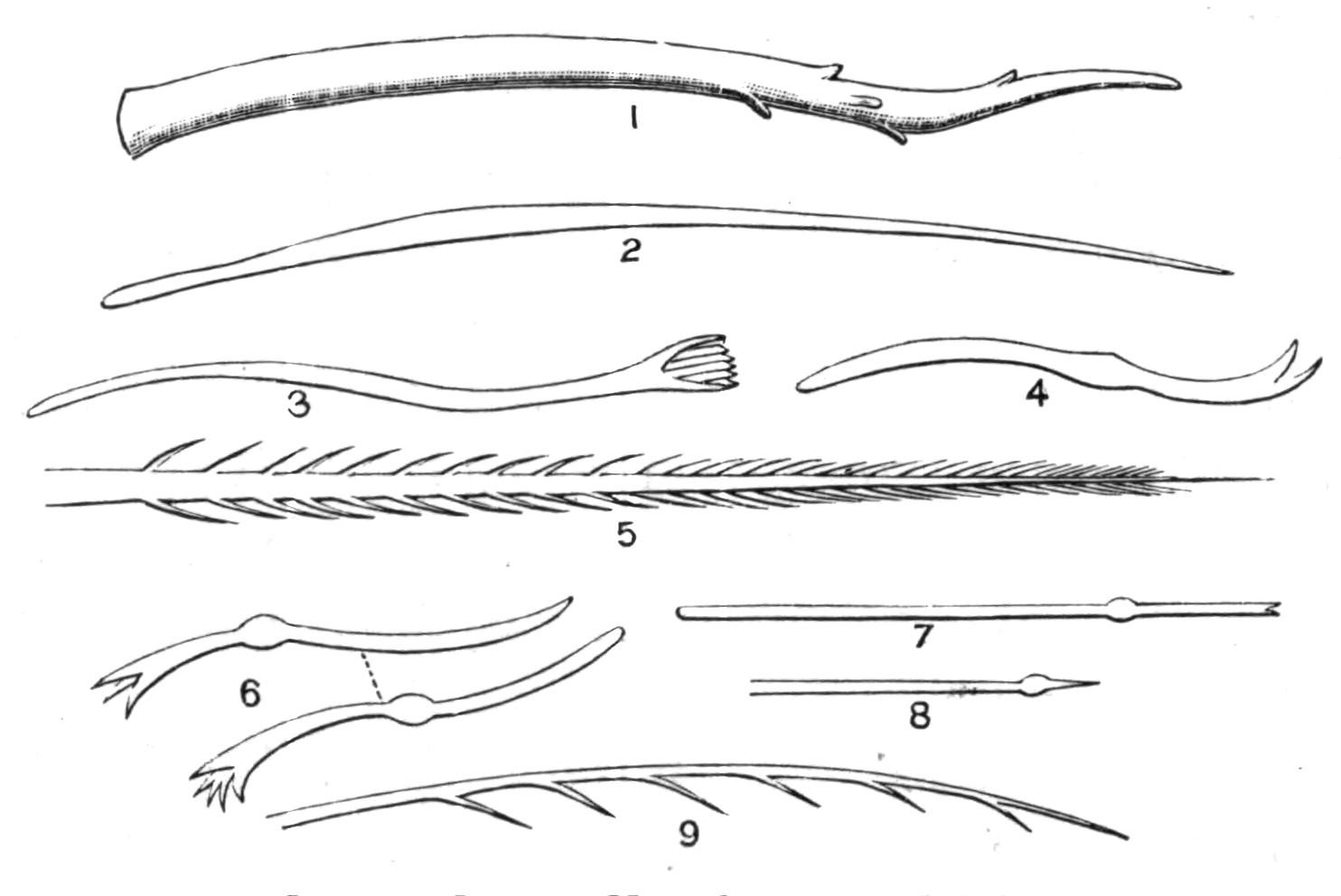
Fig. 187.—Chaetae of Oligochaeta. × 10. (After Michaelsen, Stolc, and Vejdovsky). 1, 2, Penial chaetae of Acanthodrilus georgianus; 3, Spirosperma; 4, Ilyodrilus; 5, Lophochaeta; 6, Tubifex; 7, 8, Nais; 9, Bohemilla. Figs. 3-9 are ordinary chaetae.
Chaetae.—The passive organs of locomotion in these animals are the chaetae, which are absent in only one family, Discodrilidae, and in one other genus, Anachaeta. In this latter worm the chaetae are represented by large glandular cells, which seem to correspond to the cells from which the chaetae arise in other forms. They are in this case, as in the others, cells of the epidermis. The chaetae of the Oligochaeta are not quite so variable in form as in the marine Polychaeta (see Fig. 138, p. 267). Figs. 187 and 188 illustrate some of the principal shapes which these bristles assume. The most prevalent form is an elongated S, which has been aptly compared to the mathematical sign ∫. This kind of chaeta is found in all earthworms, and in not a few aquatic genera such as the Lumbriculidae. In some of the latter and in the Tubificidae and Naids there is the same form of chaeta, which is cleft at the free end, and possibly enables the worm to grasp the leaves of aquatic plants, and otherwise facilitates progression in a laxer medium than the stiff soil frequented by the earthworms. Even earthworms, at any rate the genus Pontoscolex, have chaetae of this kind; some of the aquatic Oligochaeta have elongated and hair-like bristles, such as that of Tubifex.
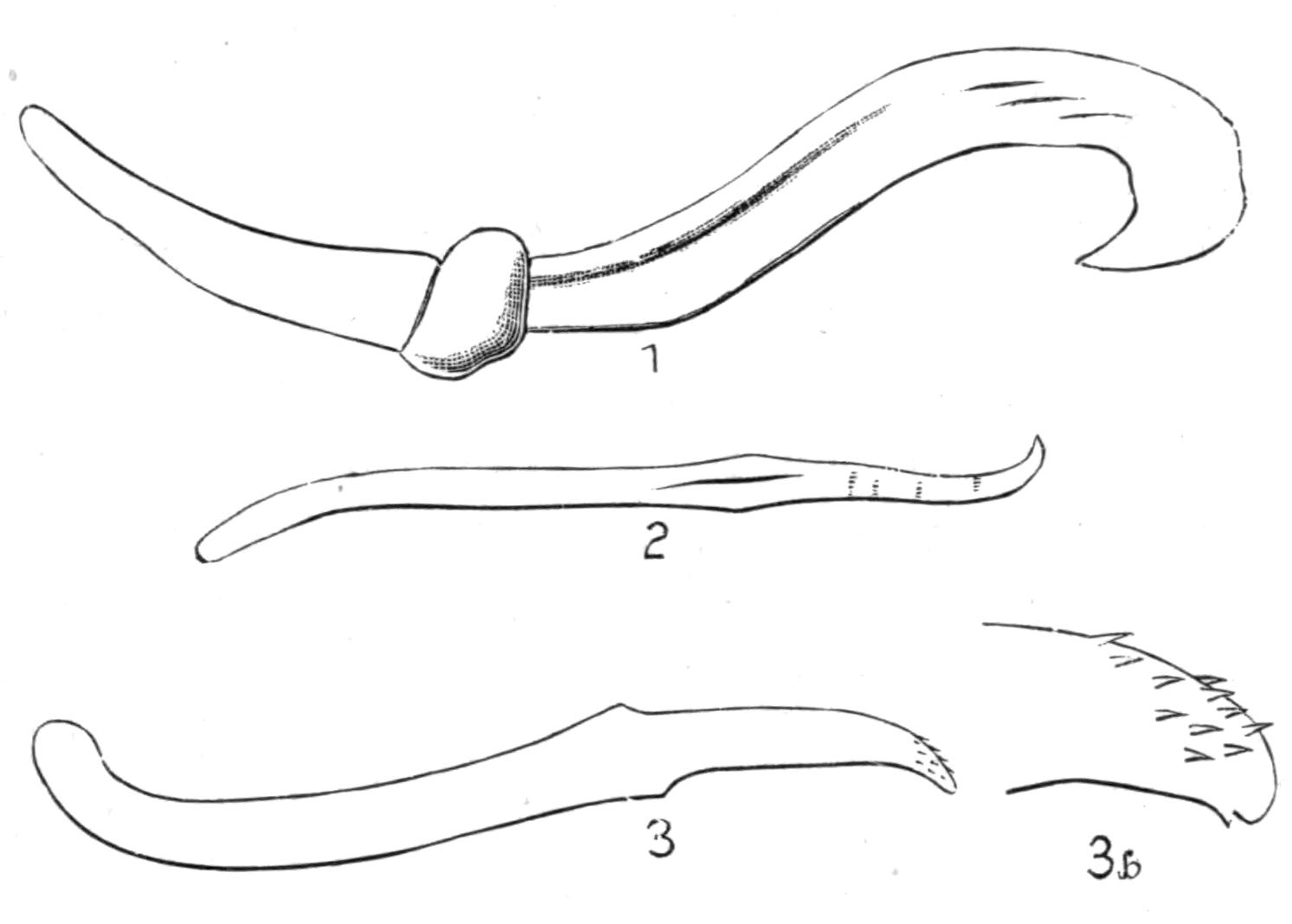
Fig. 188.—Chaetae. × 10. 1, Onychochaeta; 2, Pontoscolex; 3, Trichochaeta; 3b, the same, more highly magnified.
In the Tubificid Lophochaeta (Fig. 187, 5) the chaetae are ornamented on both sides with delicate processes, which give them the appearance of Crustacean hairs. Among earthworms the simple S-like form is sometimes complicated by the development of sinuous ridges upon the distal end. No doubt these bristles enable their possessor to get a firmer grip of adjacent objects; they are very commonly found, in the family Geoscolicidae, upon the segments of the clitellum, and permit of a firmer union during sexual congress. In no Oligochaeta are the chaetae borne upon parapodia, as is the case with the Polychaeta; but in many of the aquatic forms there are a considerable number to each bundle. In earthworms the number of chaetae varies greatly. The common earthworms of this country, belonging to the genera Lumbricus, Allolobophora, and Allurus, have only eight chaetae upon each segment of the body, and these are then, as a rule, arranged in pairs or rather couples, two of each on each side of the body. The genus Perichaeta and some of its allies have a much larger number of chaetae to each segment, disposed in a continuous row round the middle of the segment. The intermediate condition is to be seen in the genus Deinodrilus, where there are twelve in each segment, and in certain members of the genus Megascolex, where there are eight in each segment in the anterior region of the body, the number increasing in the posterior segments. The four bundles of chaetae in the Naids and Tubificids have been likened to the notopodia and neuropodia of the Polychaetes; but it does not seem certain that this comparison is justifiable. It was at one time thought that the continuous circle of chaetae of the Perichaetidae was the primitive condition; but Professor Bourne has lately found that in Perichaeta the young embryos have not got this continuous circle; it is only acquired later.
Branchiae.—The Oligochaeta were called by Cuvier the "Annélides abranches sétigères." But the epithet "abranches" is now known to be inaccurate. In fact it really was so when Cuvier wrote; for naturalists were at that time well acquainted, chiefly through the elaborate work of O. F. Müller, with the little fresh-water Naid Dero, the posterior extremity of which is provided with a varying number of branchial processes. These are furnished with looped blood-vessels and are covered externally by cilia, so that the water containing oxygen is constantly renovated. The second instance of a gilled Oligochaete was discovered in the very same family. Professor Bourne[408] of Madras found in "tanks" a Naid which he named Chaetobranchus, in which the head segments, to the number of fifty or so, are provided with long ciliated processes, which as a rule enclose the dorsal chaetae of their segments, and in addition a capillary loop. Curiously enough, this very same worm made its appearance in the Victoria regia tank at the Botanical Gardens in the Regent's Park, whither it had in all probability been accidentally imported. Two members of the family Tubificidae were the next examples of gilled Oligochaeta made known to science; one of these, Branchiura sowerbyi,[409] appeared also in the Botanical Gardens, so that its native home is unknown. It differs from Chaetobranchus in that the gills are at the posterior end of the body, and are contractile; during the life of the worm they are in continual motion. A species of the South American genus Hesperodrilus,[410] H. branchiatus, is also gilled, and, so far as can be made out from a spirit-preserved specimen, the gills are precisely of the same pattern and contractility as those of its ally Branchiura. Possibly Branchiura ought to be included in the same genus with Hesperodrilus. A worm which was originally described by Grube as Alma nilotica, should really have been placed before the three last-mentioned instances; but as this worm was only known from a fragment, and as the description was not by any means full, it was not thoroughly believed in; it was surmised that it might be a member of some marine genus, perhaps of the Capitellidae. Oddly enough, the same worm was independently described by a different name, Digitibranchus niloticus, a few years later by Levinsen. Quite recently Michaelsen has found by a reference to the original types that this worm is really gilled, and that it is specifically identical with a worm which had been given a totally different name, viz. Siphonogaster. The fact that the gills of the latter had been overlooked was readily explained by the circumstance that they are retractile, and not merely contractile. But all the species of the genus Siphonogaster, or Alma, as it ought really, following the rules of priority, to be called, have not got gills, as is the case too with the genus Hesperodrilus. The gills of Alma are branched, and there is therefore no longer any justification whatever for defining the Oligochaeta as a group of Annelids without gills. The simple gill-like processes of Chaetobranchus might have been held to be not accurately comparable to the more complex structures which we find in the marine worms.
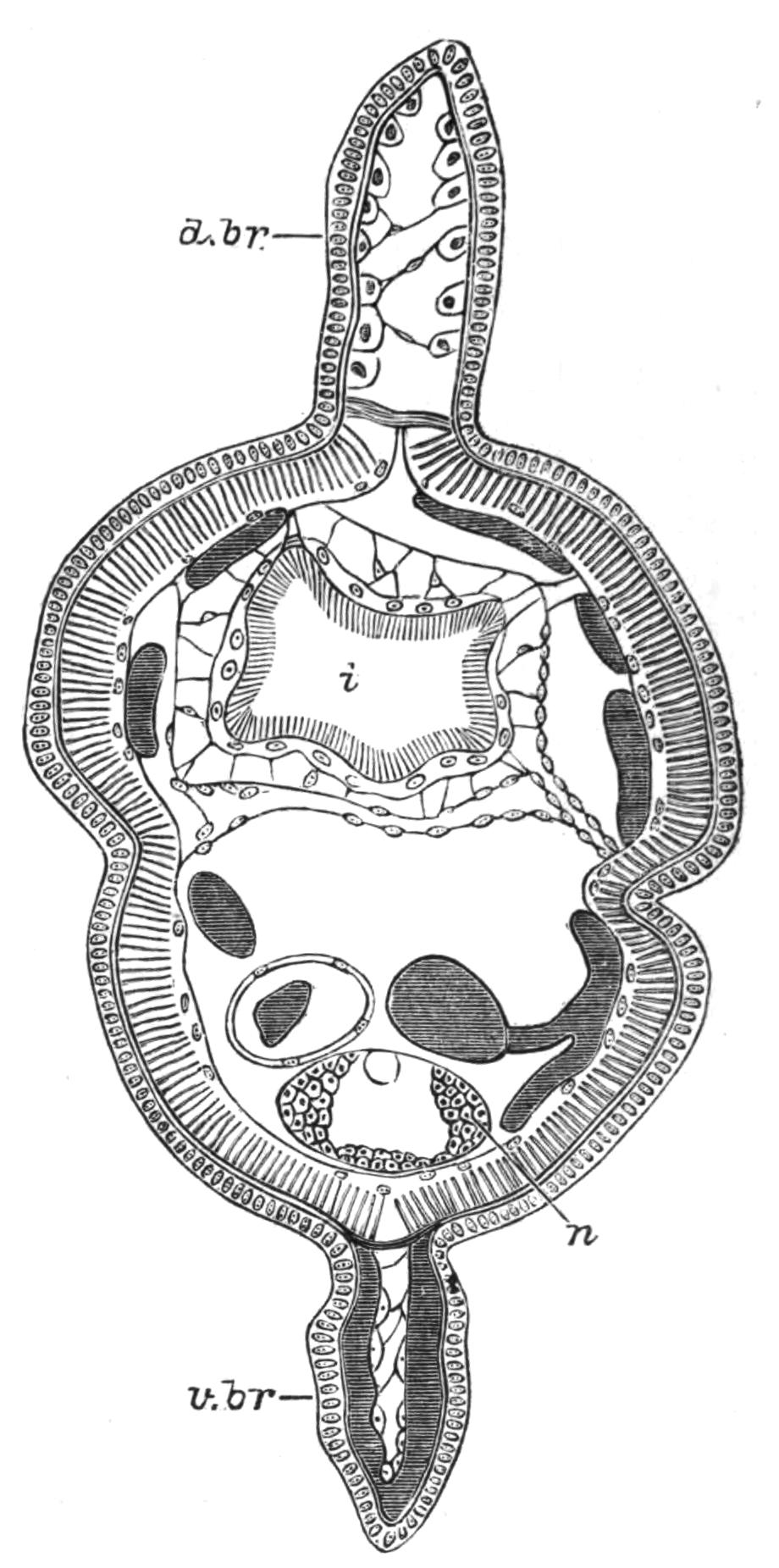
Fig. 189.—Transverse section through Branchiura sowerbyi. × 20. d.br, Dorsal branchia; i, intestine; n, nerve-cord; v.br, ventral branchia.
Nervous System.—The central nervous system of the Oligochaeta is very uniform in its structure in the entire group. The only family which is at all anomalous is that of the Aphaneura. In Aeolosoma there appears to be only a pair of cerebral ganglia, which retain the primitive position of these organs in being still in direct connexion with the epidermis. In all other Oligochaeta there are a pair of cerebral ganglia, connected by a circumoesophageal commissure with a ventral ganglionated cord. From the cerebral ganglia arises a system of nerve-fibres and nerve-cells, which represents the stomatogastric nerves of other Invertebrates.
Senses and Sense-Organs.—The only organs that can be regarded with anything like probability as sense-organs are the pigmented eyes of certain Naids and the tactile cells of many worms. The latter are usually elongated cells provided at their free extremity with a stiff process; they occur associated in groups, and often these bundles of cells have a segmental arrangement. The head end of many of the lower Oligochaeta, for instance the genus Aeolosoma, has delicate processes projecting here and there; these appear to be also of a tactile nature, and are of course connected with cells of the epidermis. The eyes of certain Naids are little more than lenticular bodies embedded in a mass of pigment. In the genus Eudrilus and in many Eudrilidae are peculiar integumental bodies, which were independently discovered by Dr. Horst[411] and myself, and compared by us to the Pacinian bodies of Mammals. Whether these structures are connected with nerves or not is doubtful. In spite of the poor development and the simplicity of their sense organs, the higher Oligochaeta at any rate can feel, and can distinguish light from darkness. Darwin[412] came to the conclusion that "light affects worms by its intensity and its duration." And furthermore, it is only the anterior end of the body which is thus affected. Of the sense of hearing these animals appear to be utterly devoid. Some kept by Darwin "took not the least notice of the shrill notes from a metal whistle, which was repeatedly sounded near them; nor did they of the deepest and loudest tones of a bassoon." But it is always necessary to discriminate between sound and vibrations passing through any solid body, which would appeal rather to a sense of touch. Here worms are most sensitive. It is quite easy, by digging with some vigour, to arouse the worms in the neighbourhood, who will crawl to the surface and away from the scene of action; a proceeding on their part which is sometimes put down to a desire to escape from their enemy the mole.
Smell appears to be another sense which is somewhat deficient. But worms are epicures, and exhibit a decided taste and preference for certain articles of diet. Like their fellow tiller of the soil, the agricultural labourer, worms have a keen relish for onions, which, however, they must recognise by the smell. They prefer green cabbage to red, celery to both, and raw meat appears to be the greatest delicacy that can be offered to them. It is only substances they are not likely to meet with, such as perfumes, tobacco, and paraffin, that produce no impression upon the worm's sense of smell.
Coelom and Vascular System.—When an earthworm is dissected the various organs are seen to lie in a fairly spacious cavity, which is interrupted and divided into a series of chambers by the mesenteries or septa which stretch across from wall to wall of the body, and correspond roughly in their position to the grooves which separate the body externally. This cavity, common to all the higher animals, is known as the coelom; it is lined by cells, which cover the intestines as well as the inside of the body-wall; and upon the intestine assume the form so characteristic of the group, namely, that of large yellow cells loaded with secreted matters, and called "chloragogen-cells" by Claparède. The coelom communicates with the exterior by means of the dorsal pores, the nephridia, and the ducts of the reproductive organs. As in all animals which possess a coelom, the reproductive tissues, ova and sperm, are developed on its walls.
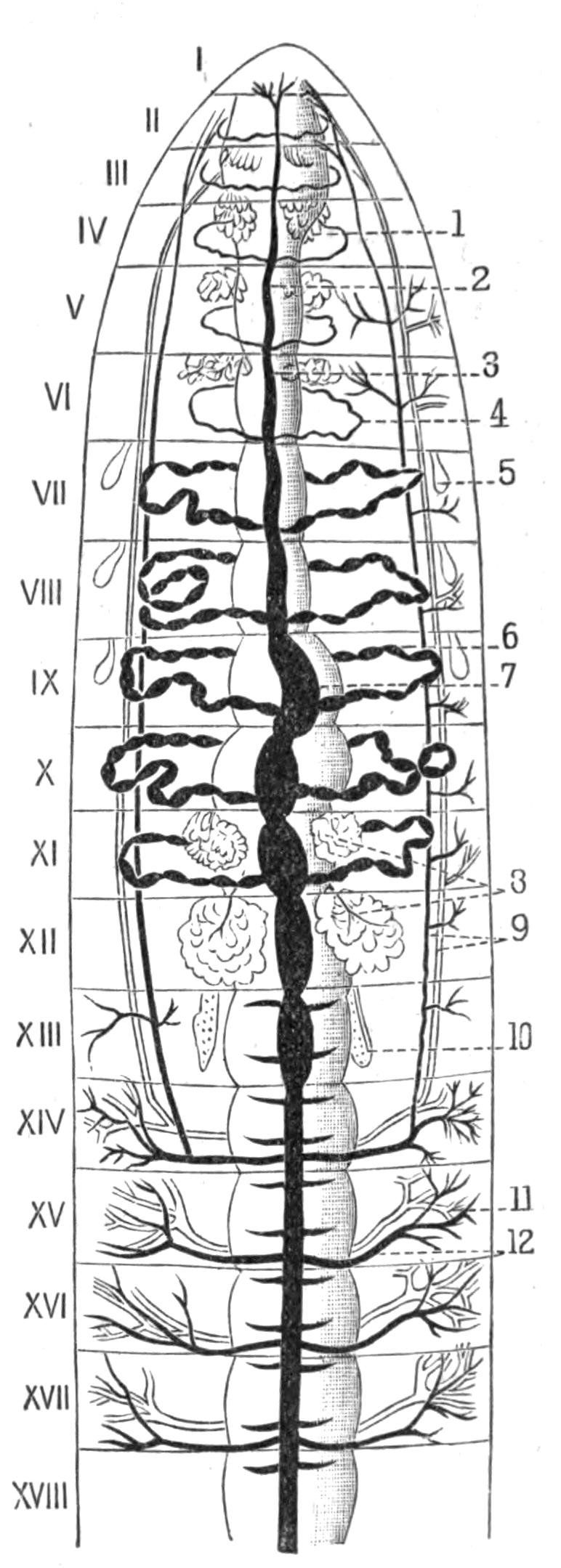
Fig. 190.—Sparganophilus tamesis; general anatomy, × 3. (After Benham.) I-XVIII, segments. 1, 4, 6, Perivisceral vessels (6 is one of the hearts); 2, 3, 7, dorsal vessel; 5, spermatheca; 8, sperm sacs; 9, intestino-tegumentary vessels; 10, ovary; 11, 12, integumentary vessels.
The vascular system of the Oligochaeta forms a system of perfectly closed vessels, which ramify into fine capillary networks in the body-wall, in the coats of the alimentary canal, and upon the other organs of the body. The main trunks are a dorsal and a ventral longitudinal, which communicate directly in the anterior end of the body by large transverse contractile trunks, the so-called hearts (see Fig. 190, 6). The dorsal vessel is also contractile, but not the ventral, or, when it occurs, the subnervian. The vascular system has many degrees of complexity in different families; it is simpler in the smaller aquatic forms. The blood is usually red, and the pigment which is suspended in the plasma is haemoglobin. The blood is corpusculated.
Excretory Organs.—There appears to be a great deal more variation in the structure of the excretory system than there is in many other groups. For a long time only Lumbricus and a few of the aquatic genera were known as regards their excretory systems. In these there is a pair of excretory organs or nephridia in nearly all the segments. These are much coiled tubes, in which it is always possible to recognise three divisions. The nephridium commences with an orifice of a funnel-like character, fringed with long cilia, and opening into the body-cavity; from this springs a tube, which immediately perforates the septum lying between the segment which contains the funnel and the following one; this tube has the peculiarity first pointed out by Claparède of being excavated in the substance of cells; the glandular part of the nephridium is a row of cells which are bored through by a continuous canal, the walls of which are here and there furnished with cilia. It often happens that the main canal gives off minute lateral ramifications, which may even form a kind of network round the principal canal. The terminal section of the nephridium is a muscular sac which opens on to the exterior by a pore, and from which the products of excretion are from time to time evacuated by contractions of its walls. This is a brief statement of the main facts in the structure of those Oligochaeta in which there is a single pair of nephridia to each segment of the body; small differences of more or less importance occur. In Chaetogaster, for example, there is no trace of a funnel; in some genera the terminal sac is much reduced or unusually extended, being even sometimes provided with a caecum of moderate dimensions. In Acanthodrilus novae-zelandiae and a few other species the point of opening of the nephridia varies from segment to segment, though it always bears some relation to the chaetae. In these species the nephridia which open more dorsally are a little different in structure from those which open more ventrally. One set have a caecum, and the other have not.
The nephridia of the terrestrial forms are enveloped by a richly developed network of blood capillaries, which is absent in the smaller aquatic genera.
A very remarkable genus, Brachydrilus, has lately been described by Dr. Benham,[413] in which each segment has two pairs of nephridia instead of a single pair. More recently, certain Australian forms, which I propose to unite on this account into a genus Trinephrus, have been discovered which have no less than three distinct and separate pairs in each segment.[414]
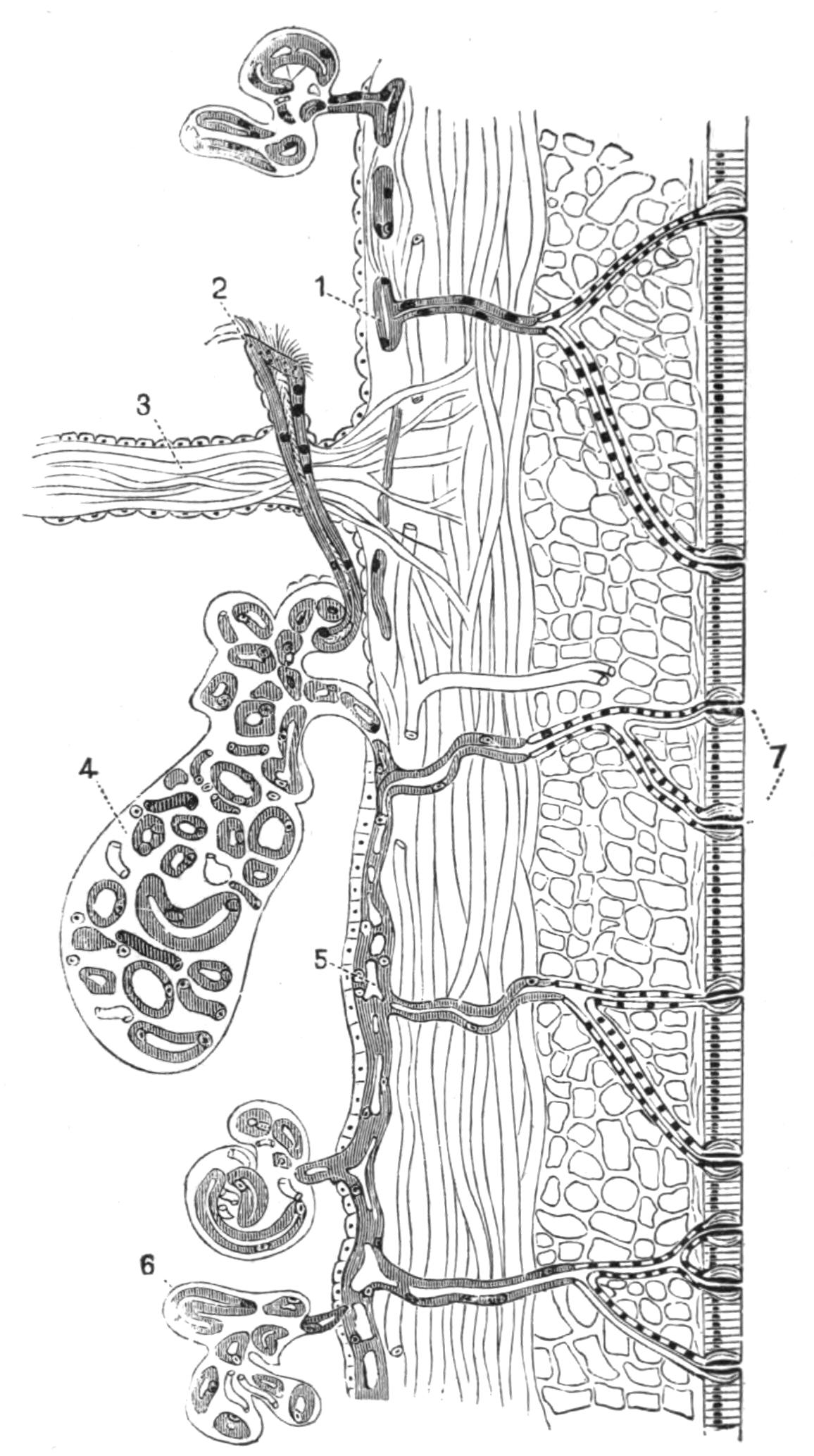
Fig. 191.—Section through body-wall of Megascolides australis, highly magnified. (After Spencer.) 1, 4, 5, 6, Coils of nephridia; 2, funnel; 3, septum; 7, external apertures.
In many Megascolicidae there is a nephridial system of a different character. In Perichaeta when dissected the nephridia appear, on account of their minute size, to be altogether absent. There is, however, in most Perichaetidae, in many Acanthodrilidae, and in many Cryptodrilidae a mass of minute tubules which cover the inside of the body-wall, and open on to the exterior by innumerable openings; there may be in a single segment one hundred or more of these external orifices, which are scattered about irregularly. It is at present uncertain whether these minute tubes are connected among themselves, thus forming a network passing through the septum and from segment to segment, or whether each tube is isolated from its fellows, and forms a distinct nephridium, of which there are many in each segment and entirely separate. This is, however, certain, that the complex nephridial systems of at any rate Octochaetus and Megascolides are derived from the multiplication of a single pair of tubes which are alone present in the embryo. In Perichaeta the minute nephridia are furnished with coelomic funnels; in Octochaetus they are not, except in the case of certain nephridia which open into the terminal section of the intestine.
Both at the anterior and at the posterior end the nephridia occasionally open into the alimentary canal. In various genera the first pair of nephridia are larger than the others, and open into the buccal cavity; it seems likely that they serve as salivary glands. A somewhat similar condition of things exists in Peripatus (vol. v, p. 17). In Octochaetus multiporus, for example, there is a large tuft of nephridial tubes in the anterior region of the body, which opens by a long muscular duct into the buccal cavity. In the same species a good many of the nephridial tubes open into the posterior section of the intestine, reminding one of the anal vesicles of the Gephyrea (p. 436) and of the Malpighian tubes of the Arthropods.
In many Eudrilidae the ducts of the paired nephridia form a network in the body-wall, which opens on to the exterior by many pores.
Alimentary Canal.—The digestive tube is perfectly straight in nearly all Oligochaeta. Only in Plagiochaeta and a species of Digaster is it twisted in the intestinal region in a corkscrew-like fashion. The mouth is under the buccal lobe (where, as in the majority of cases, this is present); the anus is mostly terminal, or rarely, e.g. Criodrilus, a little in advance of the end of the body on the ventral side. In the simpler forms three regions can be distinguished, which are themselves simple in structure. The mouth leads into a buccal cavity, which in its turn opens into the pharynx; the latter is muscular, with thick walls. The narrower oesophagus opens into the wider intestine, which opens posteriorly, as already stated. In the earthworms there is as a rule some complication. The oesophagus bears certain glandular appendages, the calciferous glands; and a part of it is modified into a gizzard. The gizzard is merely a portion of the oesophagus with very much thickened muscular walls and with a stout lining of chitin. It is not universally present among earthworms, and when present varies much in position. The rule is that one gizzard only is present. In Digaster, as is implied by the name, and in some other forms there are two in successive segments; in Trigaster, as the name also indicates, there are three gizzards; in Moniligaster and the Eudrilids Hyperiodrilus and Heliodrilus there are four to six; and a few other forms also have a considerable number of gizzards. The calciferous glands are diverticula of the oesophagus with folded and sometimes ciliated walls; their epithelium secretes calcareous particles, which are frequently of crystalline form. Darwin supposed that this secretion was provided in order to negative the humus-acids of the soil which is the food of earthworms. These organs are usually paired, but in the Eudrilidae there are unpaired as well as paired glands; the unpaired calciferous glands lie ventrally. These glands are totally wanting among the aquatic families, with the sole exception of the Enchytraeidae. In a few of these there are either paired or single glands of a very similar nature; Dr. Michaelsen has suggested that the function of these is rather absorptive than secretory. From the median unpaired gland of Buchholzia arises the dorsal vessel, which at first forms a sinus round the glandular epithelium; the epithelium, like that of the nephridia, is perforated by the ducts. In certain Oligochaeta there are some curious modifications of the calciferous glands. In Stuhlmannia and a few other Eudrilidae the oesophagus is beset with a larger number of paired structures than in any other genera of the family, where the calciferous glands are more limited in number. These glands consist of a short tube lined with epithelium opening into the oesophagus. Round this is a mass of cellular tissue, but the outlines of the constituent cells are lost; the whole is permeated with abundant blood-vessels. This layer seems to be peritoneal, and the entire gland seems to have lost its function as a secretory organ, and to have taken on some function in connexion with the vascular system. An analogous modification is to be found among the Enchytraeidae. In certain forms there is a structure known as the cardiac body; this is a chord of cells lying in the dorsal blood-vessel at the point where it springs from the intestine. It is tempting to regard this cellular rod as being the altered dorsal glandular pouch already spoken of, which is surrounded by a blood sinus.
Reproductive Organs.—All the Oligochaeta are hermaphrodite animals. But, as is the case with other hermaphrodites, the male and female organs are in many cases mature at different times, thus leading to a practical unisexuality. Many of the aquatic forms appear to have fixed times for breeding, which may be in the winter or in the summer; but the earthworms are as a rule sexually mature the whole year round. Various accessory organs are developed in the majority of cases. In all, the reproductive glands lie in successive segments and are attached to the septa, from the peritoneal covering of which they originate. Their actual position differs greatly in different genera; the position is constant only in the earthworms, where the testes are in the tenth and eleventh segments and the ovaries in the thirteenth, in exactly corresponding situations. A few earthworms have only one pair of testes. The only exception, among terrestrial forms, to the position of the generative organs is in the family Moniligastridae, which show so many other affinities to the lower forms of Oligochaeta. In this family the ovaries have moved one or two segments forward. Among the fresh-water families the position of the testes and of the ovaries is not so uniform. They are generally more anterior than in the terrestrial genera, particularly the ovaries.
One of the chief differences between the Oligochaeta and the Polychaeta is that the reproductive organs of the former have special ducts to convey their products to the exterior. In Aeolosoma, the only exception to this rule, Dr. Stolc[415] has shown some reasons for believing that certain nephridia, but slightly altered in form, serve as the conduits of the spermatozoa, whilst the ova are extruded through a pore upon the ventral surface of the body. In the Enchytraeidae the same pore for the extrusion of the ova appears to exist; but a nearer examination shows that it is really not a mere perforation of the integument, like the dorsal pores, for example, but that its internal orifice is fringed with cells which seem to represent a rudimentary oviduct; perhaps Aeolosoma typifies a last stage in the reduction. Even so high in the scale as in the genus Nemertodrilus (Eudrilidae), there is an oviduct which can only be compared with that of the Enchytraeidae. Elsewhere the oviducts are a pair of tubes with a wide, funnel-shaped, and ciliated mouth, which leads to the exterior by way of a ciliated tube of varying length.
The sperm-ducts are of an essentially similar structure; but they are commonly much longer, passing through a variable number of segments on their way to the exterior. In most earthworms there are, moreover, two of them on each side instead of only a single pair, as is the case with the oviducts. Among the Tubificidae, Naids, and other aquatic families there are only two sperm-ducts, one on each side of the body. But this is not a character of the aquatic families, for the Lumbriculidae have generally two pairs, as in the earthworms. It is, however, a rule with hardly an exception, that among the aquatic Oligochaets the sperm-ducts open, as do the oviducts in all Oligochaets, upon the segments following that which bears internally the ciliated funnel. It is only in the Moniligastridae among earthworms that the sperm-duct only traverses two segments in its course. But where it is short as regards the actual distance traversed between the two extremities, the tube itself is commonly long and coiled.
Sometimes, as in our common earthworms, the sperm-duct opens directly on to the exterior of the body, the lips of the external orifice being swollen by the development of cutaneous gland-cells. In the majority of cases the sperm-duct or ducts open near or into a glandular structure which in earthworms has been called "prostate"; in the aquatic forms, on the other hand, "atrium." As these terms are objectionable from the different way in which they have been used for structures of Vertebrates, I have suggested for both the term "spermiducal glands," indicating the identity of the structure in all Oligochaeta. The number of pairs of these glands varies, as does also their shape and size. The typical form is perhaps illustrated in the lower Oligochaeta, where there is but a single pair into which the sperm-duct or ducts of the same side open. The Naids, Tubificidae, Lumbriculidae, and Moniligastridae have a simple gland of this description on each side of the body. These glands may consist of a tuft of pear-shaped glandular cells attached to the organ at one side, as in most Tubificidae, or of a complete investment of gland-cells, as in Branchiura. Among earthworms it is only the Moniligastridae and the Eudrilidae in which the sperm-duct opens directly into the end of the spermiducal gland; in the Perichaetidae the gland is differentiated into two sections; there is a muscular duct leading to the exterior, and a lobate glandular part, which is formed by a complicated branching of a single sac such as exists in the Tubificidae; in the Acanthodrilidae and in many Cryptodrilidae the spermiducal glands are of a tubular form and are not branched, though there is the same differentiation into a duct and a secreting portion. There are in the Acanthodrilidae two pairs of these, and as many as three pairs in Dichogaster; in the latter case in three successive segments. In the Acanthodrilidae the glands are upon the seventeenth and nineteenth segments. In most Cryptodrilidae the sperm-ducts do not open into the duct of the spermiducal gland, but on to the body-wall near to its orifice, the distance varying in different genera. In the Acanthodrilidae the male pore is on the eighteenth segment, removed therefore by the distance of a segment from the aperture of either of the glands. It may be that a large series of structures which exist in Microchaeta benhami[416] and in other Geoscolecids, and which have been termed copulatory glands, are the equivalents of the spermiducal glands.
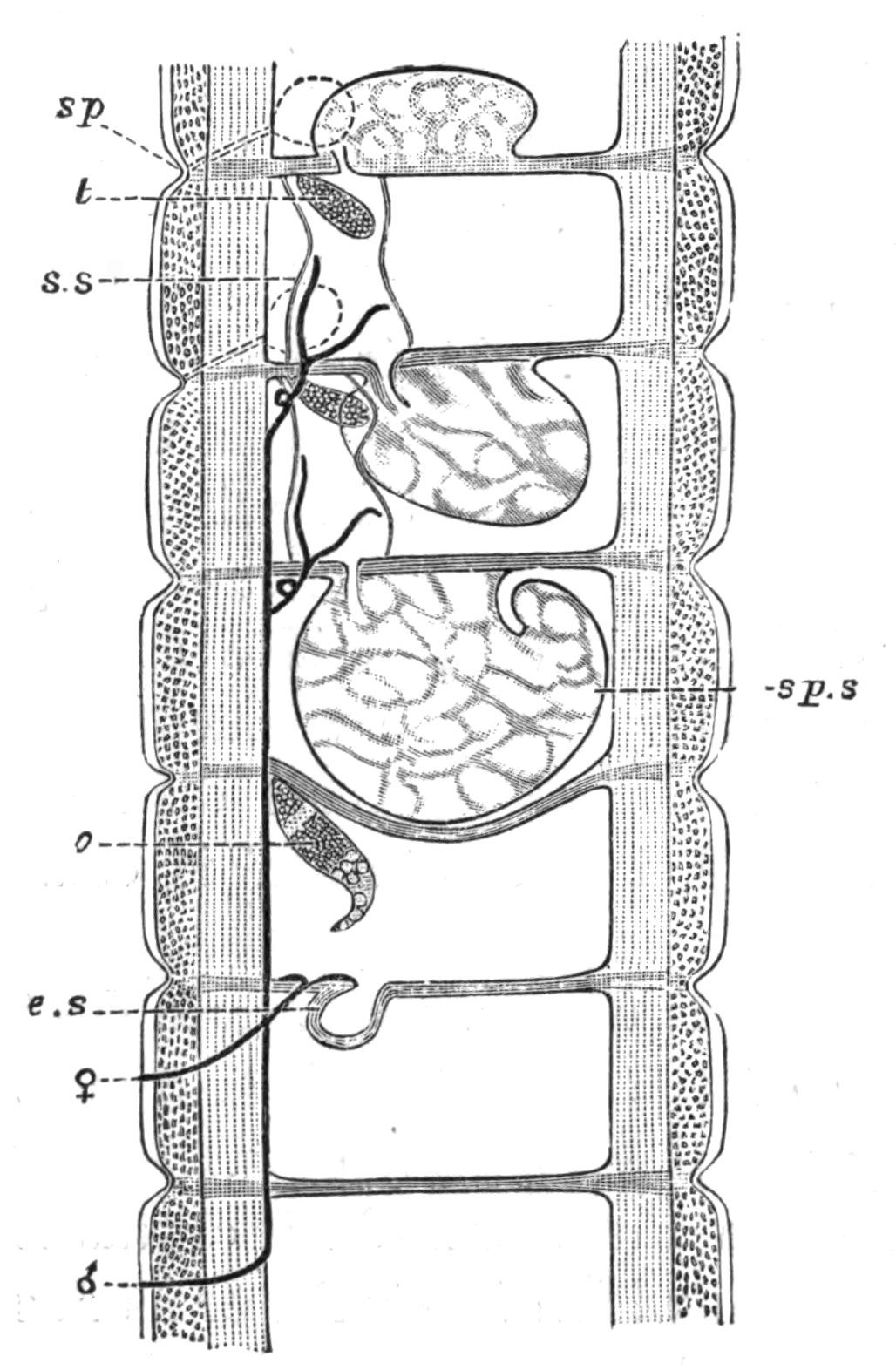
Fig. 192.—Diagrammatic longitudinal section of Lumbricus, showing the generative segments. × 3. (After Hesse.) sp, Spermathecal pore; t, testis; s.s, seminal sac; sp.s, sperm-sac; o, ovary; e.s, egg-sac; ♀, female pore; ♂, male pore.
In many earthworms there are, at the external opening of the male ducts, bundles of specially modified chaetae, which have been called, from their supposed function, penial chaetae; they are usually ornamented at the free end with spinelets or ridges, and frequently offer valuable specific characters. In the Lumbricidae and the Geoscolicidae there are modified chaetae upon the clitellum; in a few forms, such as, for example, Acanthodrilus schmardae, the spermathecae have bundles of similar chaetae in their neighbourhood, often associated with glands not unlike the spermiducal glands.
In most, perhaps in all Oligochaeta the sperm is not matured in the testes, or even in the body-cavity; it is received into special sacs which are called sperm-sacs, and there ripens. These sacs, the vesiculae seminales, have been shown to be outgrowths of the septa; their cavity is thus a portion of the body-cavity shut off more or less completely from the general body-cavity.
The reproductive organs of the Eudrilidae, and particularly the female organs, are so divergent in many particulars from those of other Oligochaeta that it is convenient to treat them separately. The testes are normal, save that they are often adherent to the posterior wall of their segment, as, however, is the case with some other earthworms. In many Eudrilidae, for instance in the genus Hyperiodrilus, the funnels of the sperm-ducts are dependent from the anterior wall of the segment which contains them; the narrow tube which follows projects into the segment in front, and is there immediately dilated into a wide chamber, which again narrows, and bending round, re-traverses the same septum; the two ducts of each side (if there are two, which is not invariably the case) remain separate and open separately into the glandular part of the spermiducal gland. There is occasionally only a single median gland; and as a general rule the two glands open by a median unpaired orifice. Penial chaetae may or may not be present.
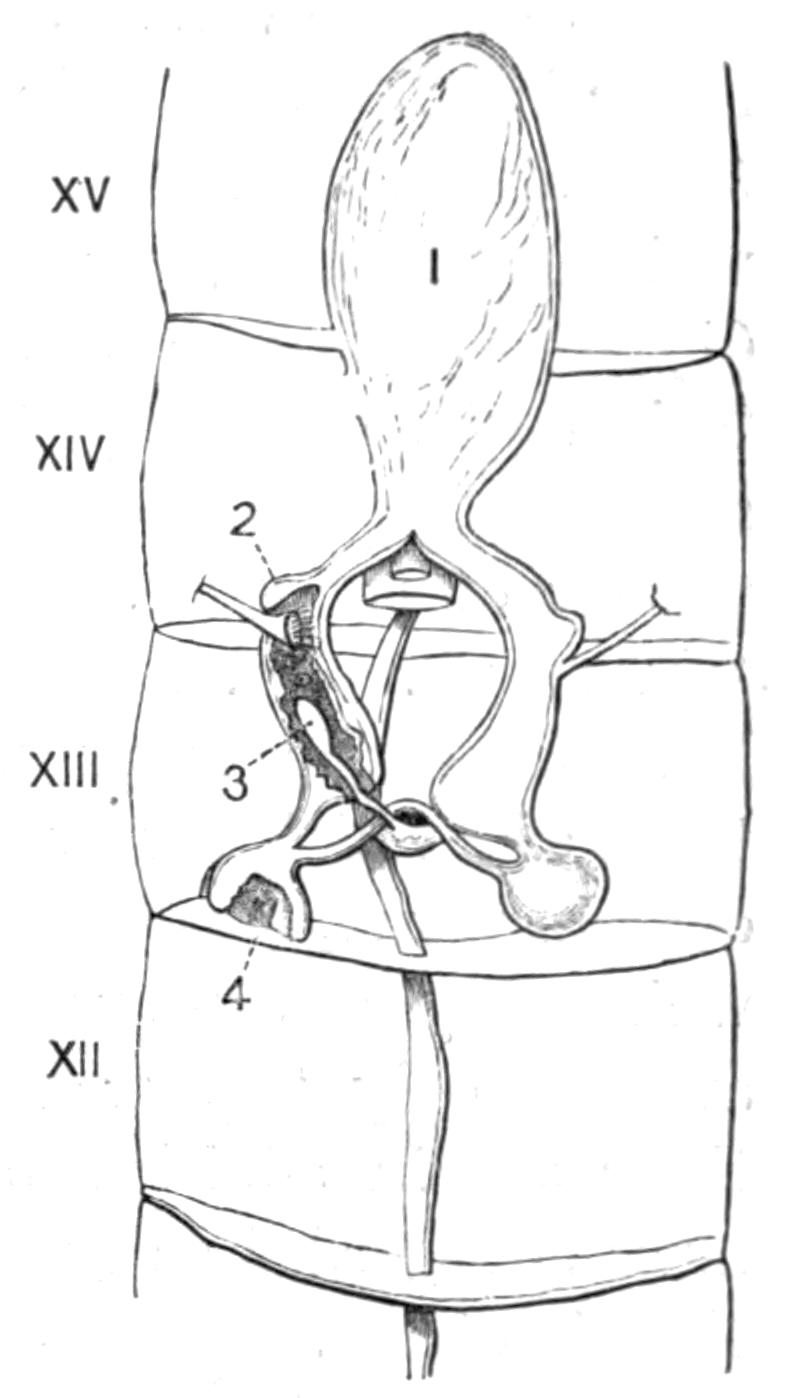
Fig. 193.—Female reproductive organs of Hyperiodrilus. XII-XV, Segments of the body; 1, spermathecal sac; 2, egg-sac; 3, spermatheca; 4, ovary.
The structure of the female organs differs considerably in detail in the different genera. But Hyperiodrilus may be taken as an instance of a genus in which these organs are as complicated as they are anywhere. The ovaries (Fig. 193, 4) are perfectly normal in structure and in position. So also are the oviducts; but both are enclosed in sacs which communicate in rather an elaborate fashion. Each ovisac is somewhat rounded in form, and the two communicate by a narrow tube; from the ovisac also arises another narrow tube, which soon dilates into a chamber lying in the thirteenth segment; this contains the mouth of the oviduct and is continuous with the egg-sac; the latter is quite normal in position. Beyond the egg-sacs the two tubes unite round the intestine and open into a large median sac, which contains sperm and may be called the spermathecal sac (1). There is, however, a true spermatheca, single and median. This opens on to the exterior in the middle of the thirteenth segment, but lies chiefly in the right-hand sac behind the ovarian portion of the same. I never found this spermatheca to contain sperm. Dr. Rosa inferred on anatomical grounds, and I have been able to prove developmentally (in Libyodrilus), that these sacs which involve the ovaries and oviducts, and which also contain sperm, are derivatives of the septa; that in fact the spaces which they enclose are coelomic. In some Eudrilids these sacs are the only "spermathecae"; in others, as in Hyperiodrilus, there are in addition blind pouches lying within them which must be regarded as true spermathecae; these are smaller in some than in others. In fact there are various transitions in the entire replacement of true spermathecae apparently homologous with those of other earthworms by pouches which are derived from the septa, and which are therefore of an entirely different morphological significance; here is an excellent case of the substitution of organs, analogous to the replacement of the primitive notochord of the Vertebrate by the vertebral column.
So far as is known, all the Oligochaeta deposit their eggs in special chitinous cases, the cocoons. They share this peculiarity with the Hirudinea. The cocoons have long been known, but were originally mistaken for the eggs themselves. The cocoons contain several eggs and a variable quantity of albumen for the nutrition of the growing embryos. In the majority of earthworms they are more or less oval with projections at the two ends, and are of a brownish colour. In others the tint is rather to be described as green. The genera Criodrilus and Sparganophilus have a cocoon which is greatly elongated. These structures seem to be undoubtedly formed by the clitellum, the earlier opinion of D'Udekem being that they were the product of certain glands developed in Lumbricus at the breeding season, which he thence called the capsulogenous glands. It is more probable that these glands, which have been up to the present but little investigated, are the seat of the formation of the albumen which is found within the cocoons. The cocoons are deposited at varying depths in the ground, or on the surface. Among the aquatic genera they are often attached to aquatic plants. The process of formation has been carefully watched by Vejdovsky[417] in the genus Rhynchelmis. The worm throws off the cocoon over its head, crawling backwards to free itself therefrom. The eggs, spermatozoa and albumen, reach the interior of the cocoon as it passes over the orifices of the respective ducts. Out of the numerous eggs which a single cocoon originally contains, only a few, sometimes only one, reaches to maturity. Among the Enchytraeidae, however, quite a large number of young emerge from a single cocoon. The development of all the Oligochaeta is direct, there being no free larval stage. It seems to be the rule for a process of fission to take place in the embryos of Allolobophora trapezoides[418] at least, according to the observations of Vejdovsky, in warm weather. In cold weather he found in each cocoon as a rule single embryos, and only 10 per cent of double embryos.
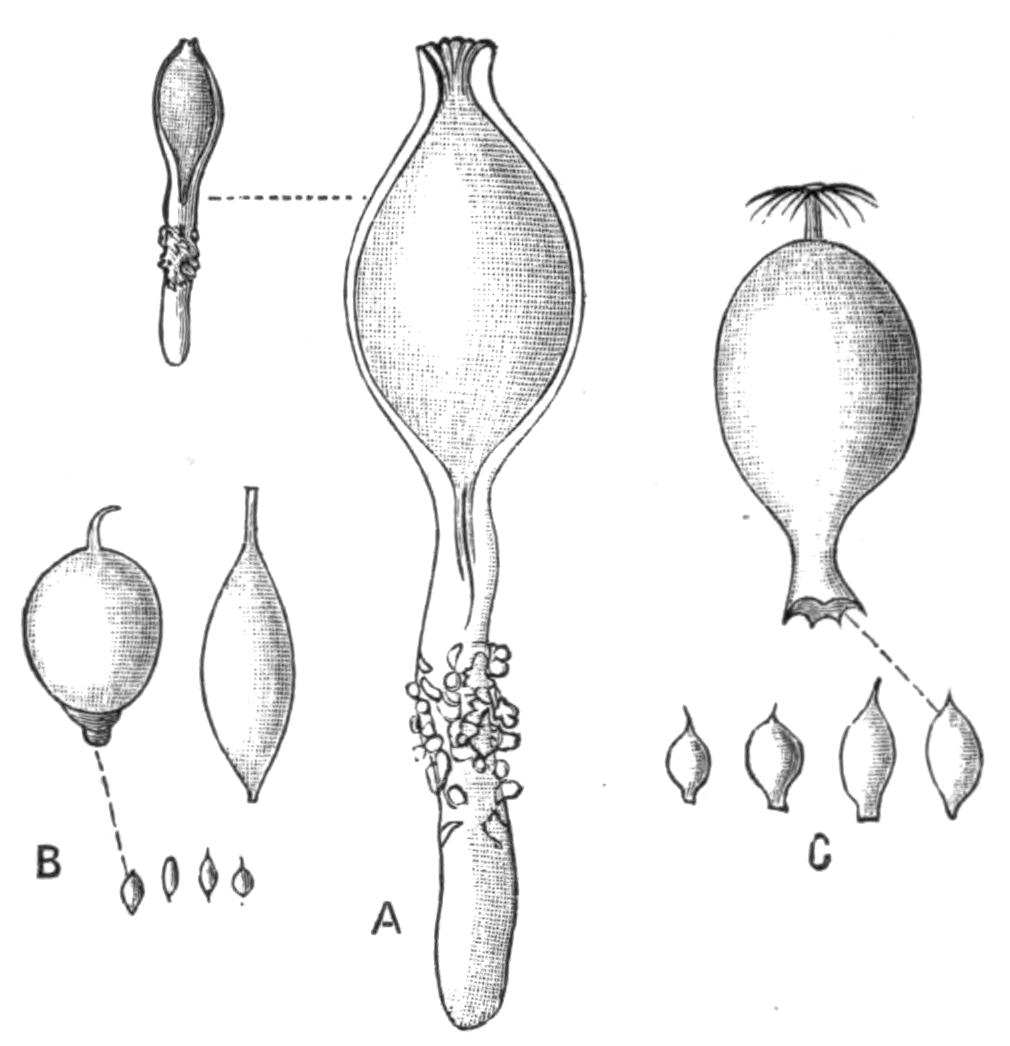
Fig. 194.—Cocoons of Lumbricidae. (After Vejdovsky.) A, Lumbricus rubellus, nat. size and × 3; B, Allurus, nat. size and × 6; C, Allolobophora foetida, nat. size and × 3.
Habitat.—Earthworms are found in almost every part of the world where they have been looked for. They occur far to the north, in Siberia and Nova Zembla,[419] while South Georgia and Kerguelen mark their southern limits. From arid tracts of country they are naturally absent, and also, which is more curious, from certain districts of North America. In the tropics these animals seem to be on the whole less abundant than in more temperate climates. But this deficiency of individuals is counterbalanced by the greater variety of generic and specific types. From tropical Africa, little explored as it has been from this point of view, no less than thirty genera, including about ninety species, have been recorded; whereas in Great Britain only four genera and seventeen species occur, and in all probability but few remain to be discovered. The vertical range of these Annelids is also considerable. Several species have been met with in Europe and elsewhere at an altitude of 10,000 feet.
For the bulk of the species the term earthworm is an accurate description of their habitat. But there are not a few which occasionally or habitually prefer other localities. The genus Allurus is equally at home in soil or in water; I have taken it in the fast-flowing river Plym in Devonshire. The genus Acanthodrilus includes a few species which have at present only been met with in water; A. schmardae comes from fresh water in Queensland, A. stagnalis from ponds in South America; A. dalei is like Allurus in that it is to be found both on land and in streams and ponds. The Enchytraeidae are just as amphibious; Criodrilus and Sparganophilus appear to be purely aquatic. A more curious locality for a creature that is so characteristically terrestrial is the margin of the sea. For a long time a species belonging to a peculiar genus Pontodrilus has been known from the shores of the Mediterranean in the neighbourhood of Nice. It lives there among seaweed above high-water mark, but it must at least occasionally be splashed by the waves. Another species of the same genus occurs on the coast of Brazil and some of the West Indian islands; Pontoscolex corethrurus and Diachaeta littoralis were described by Schmarda[420] from the shores of Jamaica. The former species is one of the most widely distributed of earthworms, and, except in this particular part of the world, has been always taken on the land far from the sea. There are also partly marine forms among the Tubificidae; Clitellio arenarius is common on our coasts.
While there are several kinds of earthworms that are thus met with in fresh water, others will live for some time submerged in water. Perrier found by experiment that various species could undergo with impunity a prolonged immersion in water, and I confirmed his experiments myself with a common species of Allolobophora. A correspondent of "Nature" stated that a certain number of species (not particularised) of earthworms in Ceylon could suffer with impunity the effects of sea-water. The importance of this fact will be again dealt with in considering the geographical distribution of the group.
Among the aquatic genera of Oligochaeta we do not as a rule meet with amphibious species. The Enchytraeidae however, as already mentioned, are an exception; so too appears to be the genus Phreoryctes, which in its structure is to some extent intermediate between the earthworms and the aquatic families.
Terrestrial and Aquatic Forms.—There are many obvious structural peculiarities which would prevent the normally aquatic worms from being thoroughly at home on dry land. The gills of Branchiura and the other gilled species would be injured, in all probability, by friction with the earth; the delicate and long chaetae of Naids and Tubifex are also most unsuited for progression through dry soil; and it is to be noted that those Oligochaeta, which, belonging to aquatic groups, are yet found away from water, have chaetae of the simple sigmoid pattern which characterises the earthworms.
There are other peculiarities found only in the aquatic species which have not so obvious a relation to their habitat. In no genus that is mainly aquatic in habit are the ova small and nearly unprovided with yolk as in Lumbricus; the ova of aquatic forms are invariably large and filled with abundant yolk.
The more delicate organisation of the aquatic Oligochaeta is not so hard to understand. The comparatively unresisting nature of the medium in which they live, water or fine mud, does not necessitate so strong a development of the layers of the body-wall as is essential to the earth-living forms, which have also thick septa in the anterior region, to protect the organs of reproduction as the strong muscular contractions of the body force the worm's way through the dense soil. With the weak structure of the integument are perhaps also correlated the simplicity of other organs of the body in the aquatic Oligochaeta. With thin body-walls, through which gases can diffuse with great ease, there would seem to be less need for the development of a system of integumental blood capillaries. These are indeed for the most part absent in the aquatic forms, being only faintly developed in a few, an example possibly of degeneration.
Earthworms and the Soil.—Darwin has explained the enormous effects which these soft-bodied and small creatures have had upon the superficial structure of the earth. Their castings, brought up to the surface, are blown about by the wind when dry, and are thus spread over the ground in a fine layer. It has been calculated that in the space of an acre .2 of an inch in thickness of earth is annually brought to the surface. It is clear therefore that in a long period of years there would be a very large effect produced. On the sides of a hill this matter brought up from below would tend to roll down the slopes when dry, and would increase the débris carried away to the sea by streams and rivers, so that continents formerly deposited under the sea may owe no small proportion of their size to the continued work of earthworms in past ages.
Darwin has also pointed out the benefits to the agriculturist which accrue from the industry of these Annelids. The soil is thoroughly mixed and submitted to the action of the atmosphere. The secretions of the worms themselves cannot but have a good effect upon its fertility, while the burrows open up the deeper-lying layers to the rain. Mr. Alvan Millson,[421] in detailing the labours of the remarkable Yoruba worm (Siphonogaster millsoni Beddard), hints that they may serve as a check upon the fatal malaria of the west coast of Africa. By their incessant burrowings and ejecting of the undigested remains of their food many poisonous germs may be brought up from below, where they flourish in the absence of sunlight and oxygen, and submitted to the purifying influence of sun and air.
Phosphorescence.—Phosphorescence has been observed in several species of Oligochaeta. The most noteworthy instance of recent times is the discovery by Giard of the small worm which he called Photodrilus phosphoreus at Wimereux. During damp weather it was sufficient to disturb the gravel upon the walks of a certain garden to excite the luminosity of these Annelids. In all probability this species is identical with one whose luminosity had been noticed some years before (in 1837) by Dugès, and named by him Lumbricus phosphoreus. According to Giard, the light is produced by a series of glands in the anterior region of the body debouching upon the exterior. This same worm has since been found in other localities, where it has been shown to be phosphorescent, by Moniez[422] and by Matzdorf[423]. It is remarkable that in some other cases the luminosity, though it exists, is very rarely seen. The exceedingly common Brandling (Allolobophora foetida) of dunghills has been observed on occasions to emit a phosphorescent light. This observation is due to Professor Vejdovsky,[424] and was made "upon a warm July night of 1881." He thinks that the seat of the light is in the secretion of the glandular cells of the epidermis, for when this and other worms are handled the phosphorescence clings to the fingers, as of course does the mucous secretion voided by the glands.
Phosphorescence has been observed also in some other families of Oligochaetes. The late Professor Allen Harker noticed a small worm in marshy ground in Northumberland which emitted a distinct light, and which was subsequently identified as a member of the family Enchytraeidae.
Geographical Distribution.[425]—In the succeeding pages some of the details of the geographical range of the Oligochaeta will be found. The present section deals with a few generalities, which appear to result from an examination of the facts.
As to the aquatic genera but little is known at present with regard to their range; they have not been widely collected in extra-European countries. What little is known points to the conclusion that while many parts of the world have their peculiar genera (such as Hesperodrilus in South America, Phreodrilus and Pelodrilus in New Zealand), some of the common European species are widely distributed. I have, for example, received Henlea ventriculosa from Kirghiz Tartary, and from New Zealand; and a New Zealand Tubifex appeared to me to be indistinguishable from the common T. rivulorum of our rivers and ponds. It is possible that these and similar instances may, at least in some cases, be due to accidental importation at the hands of man, a matter into which we shall enter later. But the aquatic genera have, many of them, facilities for extending their range in a natural fashion, which are greater than those possessed by earthworms. It has been pointed out that the chaetae of the aquatic Oligochaeta are generally hooked at the extremity and bifid, which would give them a greater chance of holding on to the feet or feathers of aquatic birds; I am not myself disposed to lay much stress on the possibilities of migration by these means, since the tender bodies of the small worms would be liable to be soon dried up by wind while in the act of migration. More likely in every way is a migration when enclosed in the cocoon. The cocoons being small, and often deposited at the edges of ponds frequented by aquatic birds, there would be many chances of their being carried away with tolerable frequency; moreover, as Dr. Michaelsen has pointed out, the cocoons of some species, particularly among the Enchytraeidae, contain a large number of embryos; so that when such a cocoon reached a foreign shore there would be a better chance of the species establishing itself there. I have referred elsewhere[426] to the singular habit of forming a temporary cyst which characterises one species of the genus Aeolosoma; this would perhaps tend to facilitate its transference in the way indicated from one spot to another.
Earthworms, on the other hand, have not such easy means of travelling from country to country; the assistance which the cocoons in all probability give to the smaller aquatic Oligochaeta cannot be held to be of much importance in facilitating the migrations of the earthworms. In the first place, the animals themselves are of greater bulk, and their cocoons are naturally larger, and thus less easy of transportation. Secondly, they are deposited as a rule upon dry land, where the chances of their sticking to the feet of birds would be less; and thirdly, they are often deposited deep in the ground, which is a further bar to their being taken up. Another possible method by which earthworms could cross the sea is by the help of floating tree-trunks; it is, however, the case with many species that they are fatally injured by the contact of salt water. There are, it is true, a few species, such as Pontodrilus of the Mediterranean coast, which habitually live within reach of the waves; but with the majority any such passage across the sea seems to be impossible.[427] On the other hand, rivers and lakes are not a barrier to the dispersal of the group. There are a few species, such as Allurus tetragonurus, which live indifferently on land and in fresh water; and even some habitually terrestrial species can be kept in water for many weeks with impunity. A desert, on the other hand, is a complete barrier; the animals are absolutely dependent upon moisture, and though in dry weather the worms of tropical countries bury themselves deep in the soil, and even make temporary cysts by the aid of their mucous secretions, this would be of no avail except in countries where there were at least occasional spells of wet weather.
The range of the existing genera and species is quite in keeping with the suggestions and facts already put forward. But in considering them we must first of all eliminate the direct influence of man. Every one who studies this group of animals knows perfectly well that importations of plants frequently contain accidentally-included earthworms; and there are other ways in which the transference of species from one country to another could be effected by man. There are various considerations which enable us to form a fair opinion as to the probability of a given species being really indigenous or imported. Oceanic islands afford one test. There are species of earthworms known from a good many, but with a few exceptions they are the same species as those which occur on the nearest mainland; in those cases where it is supposed that the animal inhabitants have reached an oceanic island by natural means of transit, it is a rule that the species are different, and even the genera are frequently different. That the bulk of them are the same seems to argue either frequent natural communication with the mainland or a great stability on the part of the species themselves. It is more probable that the identity is in this case to be ascribed to accidental transference.
Another argument comes from the distribution of the family Lumbricidae. This family forms the bulk of the earthworms of the European and North American continents. But they are also found all over the world. With one or two exceptions, such as Allolobophora moebii, from Madeira, the extra-north-temperate species are identical with those found within that region. Now, if the migration had been by natural means there would surely in the lapse of time been some differentiation of species. Furthermore, Dr. Michaelsen has pointed out that in South America the presumably European forms (i.e. Lumbricus and Allolobophora) are found upon the coast and in cultivated ground; it is inland that the presumably indigenous species are met with. This again looks very like accidental transference.
A mapping of the world in regions indicative of the distribution of earthworms produces a result which is slightly different from the accepted division. North America, Europe, and Northern Asia so far as is known agree in having as their distinctive earthworms the family Lumbricidae, which is very nearly the only one represented in these parts of the world. The majority of the species are common to the two continents; there cannot, in fact, be a separation of Nearctic and Palaearctic; we must accept the Holarctic region of Professor Newton. The Ethiopian region, on the other hand, is quite as it is in other groups, being bounded to the north by the desert of Sahara. The Neotropical region is quite distinct, and includes Central as well as South America, and the West Indian islands, even the Bermudas. It is, however, a question whether the more southern portions of the continent should not be cut off from the rest and joined with New Zealand, to form an Antarctic region. In these two countries, and also in Kerguelen and Marion Islands, the prevailing genera are Acanthodrilus and Microscolex. In America Acanthodrilus is found nowhere but in the more southern regions of the southern continent, as well as in the Falklands and South Georgia. New Zealand is characterised by other genera of Acanthodrilids besides Acanthodrilus itself; but the bulk of the species belong to the latter genus. Acanthodrilus also occurs (three species only) in Queensland and at the Cape of Good Hope. Microscolex is rather more widely dispersed, being found in other parts of America and in Europe, the island of Madeira (? accidentally imported); but it is undoubtedly chiefly concentrated in South America and in New Zealand. Apart from New Zealand, which, as already said, can only be doubtfully referred to the Australian region, the latter appears to form one with the Oriental region (to which, on account of its Perichaetidae, Japan should be added) of other writers. There is, so far as earthworms are concerned, no "Wallace's line" at all. The characteristic genera Perichaeta and Megascolex range from one extremity of the Indo-Australian region to the other. It is true that Cryptodrilus and Megascolides are limited to Australia itself (with the apparent exception of a species or two in America, for I can hardly separate Argilophilus of Eisen from Megascolides); but they are not at all well-defined genera, and indeed the generic distinctions of the whole family Cryptodrilidae are not in a satisfactory condition.
Classification.—The Oligochaeta do not shade into the Polychaeta so imperceptibly as might be inferred from the current schemes of classification. Apart from minor points, which are not universally characteristic of the two groups, though never found except in one or the other, the Oligochaeta are to be defined by the complicated reproductive system; although in a few undoubted Polychaets there is a faint approach to this in the specialisation of some of the nephridia as sperm-receptacles and even as sperm-ducts. But nowhere among the Polychaeta are there the diversified sperm-ducts and oviducts, spermathecae and sperm-sacs, that are universal among the Oligochaeta. Moreover, no Polychaet has a clitellum, which is so distinctive of the Oligochaeta, and of their near allies the Leeches. Dr. Eisig has compared the glandular modification of the integument at the mouths of the sperm-ducts in the Capitellidae to the beginnings of a clitellum. This may be the case, but it is, in my opinion, more comparable to the similar glandular spots at the male pores in earthworms. The reproductive glands in the Oligochaeta (save for a few apparently abnormal cases) are restricted to at most two pairs of each, which occur in the same individual; the Polychaeta being dioecious. There is, in short, no form known which cannot be definitely referred to either the Polychaeta or the Oligochaeta, excepting perhaps Ctenodrilus, the anatomy of whose reproductive organs is at present unknown.
It is a difficult task to classify the different families of the Oligochaeta; and to enter into the historical aspect of the matter would take too much space. I am myself disposed to divide them first of all into two main groups, for which I use Dr. Benham's[428] names of Microdrili and Megadrili.
The Microdrili are, as a rule, small and aquatic in habit; they have short sperm-ducts which open on to the exterior in the segment which immediately follows that which contains the internal aperture; the clitellum is only one cell thick; the egg-sacs are large; the epoch of sexual maturity is at a fixed period. This group, to my thinking, includes the Moniligastridae; although Professor Bourne has denied my statement with regard to the clitellum, and in this case it is not so easy to decide their systematic position.
The Megadrili are characterised by the precisely opposite characters. The sperm-ducts are longer; the clitellum is composed of many layers of cells; the egg-sacs are rudimentary; sexual maturity appears to be more or less continuous.
There is, however, a substantial agreement about the families which I here adopt, which may be fairly taken to express our present knowledge of the Order. For fuller details the reader is referred to my Monograph of the Order Oligochaeta.[429]
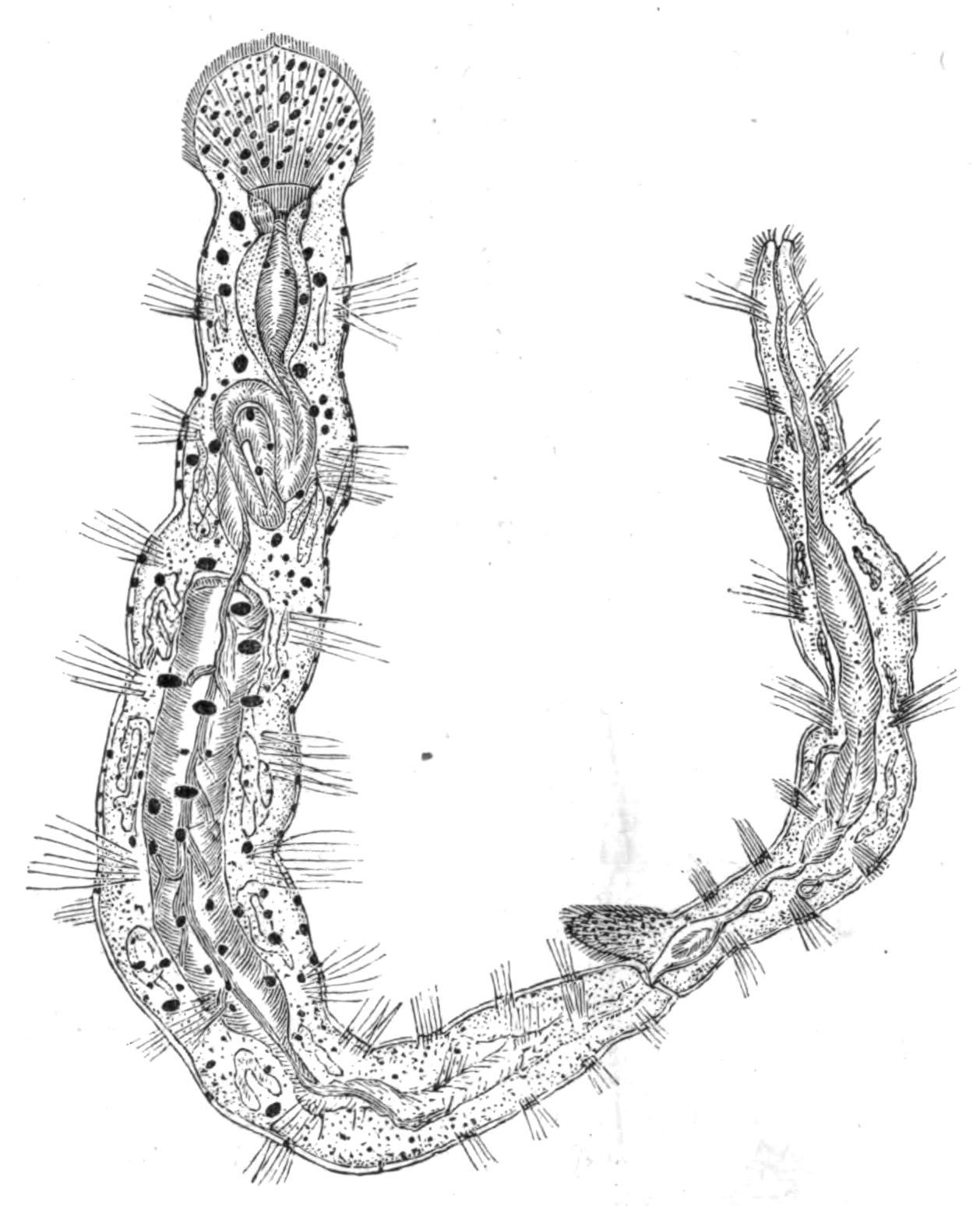
Fig. 195.—Aeolosoma hemprichii dividing transversely, × 30. (After Lankester.)
I. Microdrili.
Fam. 1. Aphaneura.[430]—This name was originally given to the present family by Vejdovsky; the family contains a single genus, Aeolosoma, of which there are some seven species. The name is taken from, perhaps, the most important though not the most salient characteristic of the worms. The central nervous system appears in all of them to be reduced to the cerebral ganglia, which, moreover, retain the embryonic connexion with the epidermis. The worms of the genus are fairly common in fresh waters of this country, and they have been also met with in North and South America, and in Egypt, India, America, and tropical Africa. They are all small, generally minute (1 to 2 mm. long), and have a transparent body variously ornamented by brightly-coloured oil globules secreted by the epidermis. These are reddish brown in A. quaternarium, bright green in A. variegatum and A. headleyi, in the latter even with a tinge of blue. In the largest species of the genus, A. tenebrarum they are olive green. In A. niveum the spots are colourless, and A. variegatum has colourless droplets mixed with the bright green ones. Fig. 195 shows very well the general appearance of the species of this genus. The body has less fixed outlines than in most worms, and the movement of the creatures is not unsuggestive of a Planarian. As the under side of the prostomium is ciliated, and as the movements of these cilia conduce towards the general movement of the body, the resemblance is intelligible. One species of Aeolosoma, at any rate, has a curious habit which is unique in the Order. At certain times, for some reason at present unknown, the worm secretes a chitinous capsule, inside which it moves about with considerable freedom; these capsules when first observed were mistaken for the cocoons of the worms; they are really homologous with the viscid secretion which the common earthworm throws off when in too dry soil, and with which it lines the chamber excavated in the earth in which it is lying. The worms of this genus multiply by fission; sexual reproduction has been but rarely observed.
Fam. 2. Enchytraeidae.[431]—This family consists at present of rather over fifty well-characterised species, which are distributed into eleven genera. It is common in this country and in Europe generally; it has been met with in Spitzbergen and the extreme north; it occurs in the American continent from the north to the extreme south; it is also an inhabitant of New Zealand. The worms of this family are nearly always of small size, sometimes minute; they never exceed an inch or so in length, and that is a rare occurrence. They are equally at home in water and in soil, some species being common to the two media; a few are marine or littoral in habit, while others are parasitic in vegetable tissues. Like most earthworms, and unlike the majority of aquatic worms, the chaetae are without a bifid termination; the body-wall, too, is comparatively thick. The perivisceral fluid is often (as in certain Naids) loaded with elliptical or rounded corpuscles. Resemblances to earthworms rather than to the aquatic families of Oligochaeta are suggested by the long distance which separates the spermathecae from the male pores (segments 5 and 12), and by the paired or unpaired glands that have been already compared to the calciferous glands so universally present among earthworms. On the other hand, the male ducts are confined, as in the lower Oligochaeta, to two segments, upon one of which the internal, upon the other the external orifice is situated, and the oviduct is reduced to a simple pore, as in Naids; but this may be merely a matter of convergence by degeneration. Perhaps the most remarkable genus in the family is Anachaeta, which has no chaetae, but in their place a large cell projecting into the body-cavity, which appears to represent the formative cell of the chaeta. The integument of this genus contains true chlorophyll, according to Vejdovsky.
A singular character, found, however, also in Rhynchelmis and Sutroa among the Lumbriculidae, is the opening of the spermathecae into the alimentary canal. This was originally discovered by Dr. Michaelsen, but has been abundantly confirmed.
Stercutus is a singular genus which was originally found in manure, and has the peculiarity that the alimentary canal is often aborted; this degeneration seems to bear some relation to the food and conditions of life.
Fam. 3. Discodrilidae.[432]—This family consists of small parasitic forms which were at one time assigned to the Hirudinea; there seems, however, to be no doubt that they are rightly included in the present Order. Branchiobdella is found upon the gills of the Crayfish, Astacus fluviatilis; the American Bdellodrilus upon Cambarus. The chief reason for the former inclusion of these worms among the leeches was due to the absence of chaetae and to the presence of chitinous jaws and of suckers; apart from these structures there is nothing whatever leech-like about the worms. Bdellodrilus has two pairs of testes in segments 5 and 6; there are two pairs of sperm-ducts, all opening, however, by a common "atrium" on the sixth segment; on the fifth open a pair of spermathecae, likewise by a common pore. The ovaries are in segment 7, and the ova escape by a pair of pores apparently like the single pore of the Enchytraeidae. The entire worm consists of only eleven segments.
Fam. 4. Phreoryctidae.[433]—This family contains only two genera, Phreoryctes and Pelodrilus. The former is widely spread, occurring in Europe, North America, and New Zealand. Pelodrilus is limited to New Zealand. Most species of Phreoryctes are distinguished by their extraordinary length and thinness, and there is frequently a tendency to the disappearance of the chaetae. The most important anatomical fact about Phreoryctes (at any rate P. smithii) is that there are two pairs of ovaries as well as two pairs of testes, and that the ducts of all are simple and very much alike. This seems to argue the low position of the family in the series.
Fam. 5. Naidomorpha.[434]—This family contains eight or nine genera, perhaps more; they are all of them aquatic and of small size, and they multiply by fission as well as sexually. The most noticeable peculiarity of the family is the "cephalisation" which occurs in the head segments. In some genera, in Pristina for example, there is no such cephalisation to be observed; but in others the dorsal bundles of chaetae commence a few segments farther back than the ventral, the segment where they commence being different and characteristic in the various genera. Thus in Dero the first four segments are without dorsal chaetae, and in Nais the first five are in this condition. There is thus a kind of "head" formed, whence the expression "cephalisation." Dero, Nais, and Pristina are commonly to be met with in ponds, lakes, etc., in this country. Bohemilla is rarer, and is to be distinguished by the remarkable serrated chaetae of the dorsal bundles. Of Dero and Nais there are a considerable number of different species; indeed it is usual perhaps to regard as distributable among three genera, Nais, Stylaria, and Slavina, the species which I am disposed to place in one genus, Nais. Stylaria is defined on this view by its extremely long prostomium, which has given rise to both its popular and technical names. "Die gezungelte Naide" was the term applied by one of its earliest investigators, and the name Stylaria proboscidea signifies the same peculiarity. But as the same inordinately long "proboscis" occurs in the South American Pristina proboscidea, belonging to a genus of which the other member does not possess so well developed a prostomium, it seems too variable a character upon which to differentiate a genus. Chaetogaster and Amphichaeta have been placed by some systematists in a separate family. The first named contains four species which are fairly common. It is one of those worms in which the chaetae are not exactly related to the segmentation of other organs, which moreover sometimes show an independence in their segmentation; thus there are more nerve ganglia in the anterior segments of the body than there are septa.
Fam. 6. Tubificidae.—The worms belonging to this family are of small size, and are all inhabitants of fresh or salt water, or the margins of pools and the sea. They differ from the last family in that asexual reproduction never occurs, and that the reproductive organs are situated rather farther back in the body. The male pores are upon segment 11, and the oviduct-pores upon the following segment. This family differs from the Lumbriculidae in the fact that there are only a single pair of sperm-ducts.
The earliest known Tubificid was the common Tubifex rivulorum, so widely dispersed in this country and elsewhere; but with it was at first confounded the somewhat similar genus Limnodrilus, which only differs in that the chaetae are all of the cleft variety, and never capilliform, as in Tubifex. The genera are mainly distinguished by the characters of the chaetae and of the male ducts. At the base of the series perhaps lies Ilyodrilus, which has many points in common with the Naids. The form of the terminal chamber into which the sperm-duct opens has the same simplicity as in that group, and the intestine is surrounded with a network of blood-vessels as in the Naids, a structure which is otherwise wanting in the Tubificidae. The development of the ova also is upon a plan which is met with in the Naids. The atrium (see p. 361) becomes more complicated in other Tubificidae. The extremity also is as a rule modified into a retractile penis. The discrete "prostate," of which we have already spoken, marks out a considerable number of genera, such as Tubifex, Limnodrilus, Spirosperma, Hemitubifex. In the marine Clitellio there is no such structure at all, and it is also wanting in the South American Hesperodrilus. In Branchiura there is a complete prostatic investment of the atrium, and in Telmatodrilus a large number of separate aggregations forming as many distinct prostates. Vermiculus, a genus consisting of but one species, found by Mr. Goodrich on the sea-shore in the neighbourhood of Plymouth, is remarkable for the unpaired character of the generative organs, a peculiarity which is shared by Stolc's genus Bothrioneuron. The gills upon the posterior segments of Branchiura sowerbyi and Hesperodrilus branchiatus have been already noticed above (p. 352). A very aberrant genus, perhaps not rightly referable to this family, is Phreodrilus,[435] from New Zealand, first collected in water from a subterranean spring. It differs from all other Tubificids except Hesperodrilus in that the spermathecae lie behind the male pores, a state of affairs which is met with in the Lumbriculidae. Another singularity of structure concerns the sperm-duct, which is wrapped in a thin-walled sac, which has every appearance of being simply the outer muscular wall of the duct. Within this are the complicated coils of the duct, and also a quantity of free spermatozoa, whose mode of ingress is difficult to understand. Many of the Tubificidae live in tubes fabricated by themselves, whence the tail end protrudes. The integument in more than one species is vascular. This integumental blood system, universal among the earthworms, appears to be restricted to the present group among the Limicolae of Claparède.
Fam. 7. Lumbriculidae.[436]—This family is not a large one, and is nearly limited in range to Europe and North America; indeed, if we omit the doubtful Alluroides, entirely to the Palaearctic region. There are only fourteen species, which are referred to eight genera. A number of dubious forms, as is the case with other families, may possibly ultimately swell this list. The type genus of the family, viz. Lumbriculus, upon which Bonnet made his experiments in section and subsequent regeneration, has only within the last year been thoroughly explored anatomically. But all the other genera are well known. The Lumbriculidae are of small or moderate size, and all of them aquatic in habitat. There are three characters which are nearly or quite universal in the genera of the family. In all of them the chaetae are only eight to each segment, arranged in couples, and are either cleft at the extremity or simple. As a rule which has but two exceptions, the genera Alluroides and Lumbriculus, there are two pairs of sperm-ducts, which, however, communicate with the exterior through a single terminal chamber on each side of the body.
The dorsal blood-vessel has in the Lumbriculidae a series of contractile and blind appendages, which were at first mistaken for caeca of the intestine itself. There are two genera of this family in North America, which are not very different anatomically from their European representatives. The genera described by Eisen are Sutroa[437] and Eclipidrilus.[438] The latter lives in cold torrents at a great height in the mountains of the Sierra Nevada of California.
Fam. 8. Moniligastridae.—This family, terrestrial in habit, is probably Oriental in range; but I have described a single species from the Bahamas which may possibly be referable to the category of accidentally introduced specimens. Our knowledge of this family is conveniently summed up in Professor Bourne's paper[439] upon the genus Moniligaster. There are some eighteen species, which range in size from an inch or so in length (M. bahamensis) to about two feet; this last measurement is that of the huge M. grandis, of which, together with many others, Professor Bourne gives coloured drawings. There is a second genus, Desmogaster, which is mainly characterised by the doubling of the reproductive organs. This was described by Rosa from Burmah. The family is noteworthy on account of the fact that every species belonging to it has at least four distinct gizzards, sometimes more; but as this multiplication of the gizzards has been also found in Heliodrilus among the Eudrilidae, and indeed elsewhere, it is insufficient to define the family. More characteristic is the fact that the sperm-ducts open on to the next segment to, or even the same segment as, that which contains their funnels; consequently the apertures of the oviducts are behind instead of in front of them. These pores are also situated in a very anterior position, the male pores being upon the tenth segment or between the tenth and eleventh, and the oviducal pores upon the following one. In these features the family presents resemblance to the aquatic Oligochaeta, from which, however, its stoutly-built gizzards, and vascular nephridia differentiate it.
II. Megadrili.
Fam. 9. Perichaetidae.[440]—The Perichaetidae comprise a larger number of species than any other family of earthworms; but it is a matter of considerable difficulty to divide the family satisfactorily into genera. The family as a whole may be defined as having numerous chaetae in most of the segments of the body.
There is no other definition which will distinguish this family from the next two families, and even this definition is not absolutely distinctive. There are Acanthodrilids which have a large number of chaetae in each segment. The only difference is that in this case—in the genus Plagiochaeta—the chaetae are implanted in twos; this is not the case in the Perichaetidae. In all Perichaetidae that are known the sperm-ducts open in common with the ducts of the spermiducal glands; they generally open into them at some distance from the common external pore. In Megascolex, Perichaeta, and Pleionogaster the nephridia are of the diffuse type so widely spread among these worms, and the spermiducal glands are lobate. Megascolex differs from the others in the fact that in addition to the small scattered nephridia there are a pair of large nephridia in each segment, and the chaetae do not form absolutely continuous circles, but are interrupted above and below. Pleionogaster has more than one gizzard but otherwise agrees with Perichaeta; it is confined to the East. Perichaeta is tropical and occurs—no doubt introduced—in Europe and America. Megascolex is Old World only, and, like Perichaeta, Australian as well as Oriental. But whereas Perichaeta is rare in the Australian region, Megascolex is common there. Perionyx and Diporochaeta are the other genera which it is possible to recognise. Both of them have paired nephridia, and neither of them have intestinal caeca, a peculiarity which they both share with Megascolex and Pleionogaster. Perionyx principally differs from Diporochaeta in that the spermiducal glands are lobate, whereas in the latter they are as in the Acanthodrilidae. Perionyx is Oriental; Diporochaeta occurs in Australia and New Zealand.
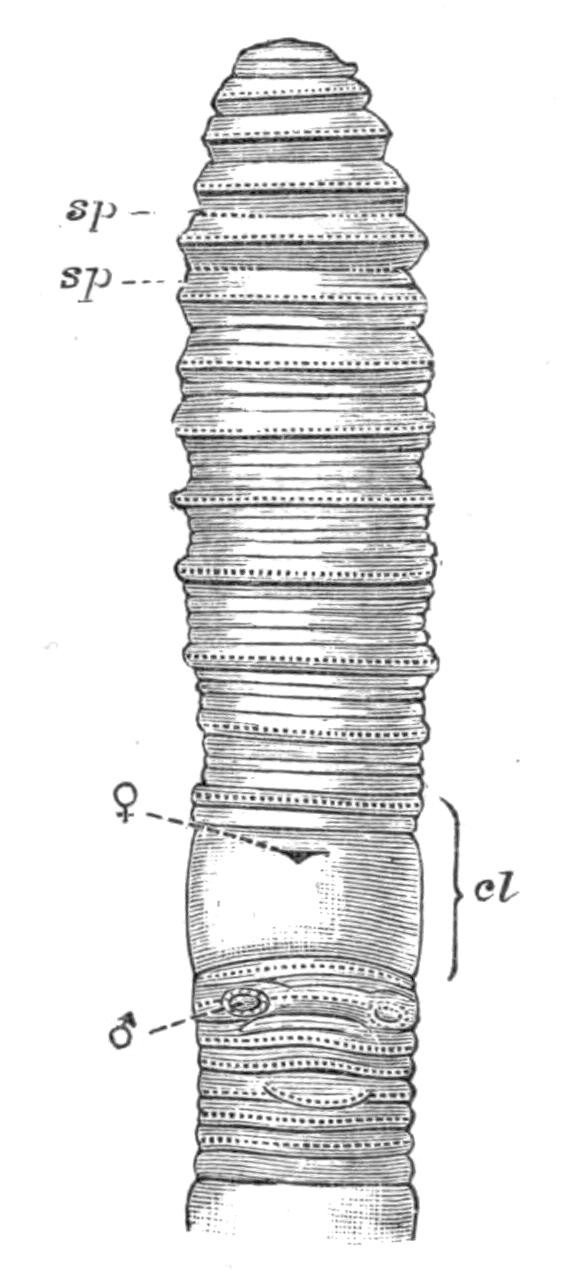
Fig. 196.—Perichaeta everetti F. E. B. × 1. sp, Spermathecal pores; cl, clitellum; ♀, female pore; ♂, male pore.
A very distinctive feature of Perichaeta—perhaps only of the genus sensu stricto—is its exceeding activity. The first specimens ever noticed in this country, or at least of whose existence printed notice was taken, were exhibited by the late Dr. Baird of the British Museum, at a meeting of the Zoological Society. He remarked in that communication upon the agile fashion in which these tropical Annelids will spring off a table when touched or in any way interfered with. Numerous other observers have seen the same manifestations, and the name of "eel-worm" has been given to these Perichaeta by gardeners. It is worth putting on record here that in a species of Acanthodrilus (A. capensis) the same irritable behaviour is visible. When a Perichaeta moves it helps itself greatly by extending, or rather protruding, the buccal cavity, which serves as a sucker, and grips the ground in front until the rest of the body is brought forward. It is possibly on account of this extra facility for movement that the genus can climb trees with such ease. A species of Perichaeta has been recorded by Mr. Willey upon an epiphyte of a palm, and Dr. Benham has found that it is a new species, to which the name of Perichaeta willeyi has been given. The Lumbricid genus (if it be admitted as a genus), Dendrobaena, was so named on account of a similar habit of climbing trees. Very singular in its habit is the not inaptly-named Perichaeta musica of Java. It is a monster of its kind, several feet in length, and during the night makes "a sharp interrupted sound," apparently by the friction of the chaetae against stones. The species figured (p. 381) is, as are a few others, remarkable for the presence of twelve or seventeen spermathecae in segments 6 and 7.
Fam. 10. Cryptodrilidae.[441]—This family is one of the largest of the Oligochaeta; there are rather over 120 different species, which can be arranged in at least sixteen genera. They are found in most parts of the world, but abound principally in the tropics. Australia may be considered to be the headquarters of the family, which form its principal earthworm-inhabitants. Peculiar to this continent, or at least mainly confined to it, are the genera Megascolides, Cryptodrilus, Fletcherodrilus, Trinephrus, and Digaster. Microscolex, though occurring in many parts of the world, is characteristic of the more southern regions of South America and of New Zealand. Tropical Africa has the genera Nannodrilus and Millsonia limited to itself, and has besides nearly all the species of the genus Gordiodrilus. This family is one which it is exceedingly difficult to define and to split up into different genera. It shades almost imperceptibly into the Perichaetidae on the one hand, and is very hard to differentiate from the Acanthodrilidae on the other. A Cryptodrilid, like any member of the genus Cryptodrilus, with complete circles of chaetae would be a Perichaetid; and as there are species of Perichaeta in which the anterior segments have only a few chaetae in each segment, it is perhaps wrong to separate the two families at all. Apart from the chaetae, there is no peculiarity in the organisation of the family Perichaetidae that is not also met with in the Cryptodrilidae. Even the highly characteristic intestinal caeca so distinctive of the genus Perichaeta itself, as contrasted with Megascolex and the other genera, occur, though more numerously, in the African Millsonia, where there are forty or fifty pairs of them. A fairly common feature in the family is the presence of two, or even three, pairs of gizzards, a character which is also met with in the genus Benhamia among the Acanthodrilidae, and occurs also in some other families. The names Digaster, Didymogaster, Perissogaster, and Dichogaster have been founded upon this character. The excretory organs may be paired (in Trinephrus there are three pairs to each segment) or of the diffuse kind. The male pores are usually upon the eighteenth segment, but not unfrequently upon the seventeenth, and are often armed with long and ornamented chaetae. Spermiducal glands are invariably present, and may be lobate or tubular. There are two groups of small-sized genera, which in their simplicity of organisation stand at the base of the series; but it is very possible that the simplification is rather due to degeneration than to primitive position. One of these groups includes the semi-marine genus Pontodrilus (with which I include the phosphorescent Photodrilus) and Microscolex. In these forms the gizzard has disappeared, or is represented by a rudimentary structure, and the male pores are upon the seventeenth segment. In the other group are the genera Ocnerodrilus,[442] Gordiodrilus,[443] and Nannodrilus, which are of even smaller size, and have in the same way the male pores upon the seventeenth segment. The species of this group are often aquatic, and there is not only no gizzard (in most of the species), but the calciferous glands have been reduced to a single pair, which lie in the ninth segment. The latter character is also found in the Acanthodrilid Kerria, which has been associated with the above named. Gordiodrilus has the peculiarity that there are, as in Acanthodrilids, two pairs of tubular spermiducal glands.
Fam. 11. Acanthodrilidae.[444]—This family is only with difficulty to be distinguished from the last. The following definition applies to all the members of the family with one exception, and does not apply to any Cryptodrilid with, so far as is known, one exception only. There are two pairs of spermiducal glands, opening upon the segments in front of and behind that which bears the apertures of the sperm-ducts.
The one exception to this definition is the species Acanthodrilus monocystis, which I formerly placed in a distinct genus, Neodrilus. Microscolex modestus is the exception among the Cryptodrilidae; in that worm the male pores are upon the segment which follows that upon which the spermiducal glands open. The Acanthodrilidae show a considerable range of structural variation. This enables them to be separated into several well-marked genera. The type genus Acanthodrilus has a pair of nephridia in each segment. It contains thirty-five species, which are all from the southern hemisphere. These species show but little variation among themselves. Benhamia is a genus that differs from Acanthodrilus in the fact that the nephridia are of the complex type, so often met with in earthworms with many external pores. The segment that bears the male pores is entirely without any traces of the ventral chaetae. Here again there are a large number of species which are nearly confined to the continent of Africa. Dr. Michaelsen is indeed of opinion that the few species found in the East Indies and America are accidental importations. I have proposed to separate some of the New Zealand Acanthodrilids into a distinct genus, Octochaetus, which is somewhat intermediate between Acanthodrilus and Benhamia. They have multiple nephridia, but only a single gizzard. Plagiochaeta of Benham, from New Zealand, is in any case clearly a distinct form. It is mainly to be distinguished by the numerous chaetae in each segment. Trigaster Benham, is West Indian. Deinodrilus (New Zealand) has twelve chaetae in each segment. Diplocardia, from North America, has the male pores on segments 18, 19, 20.
Fam. 12. Eudrilidae.[445]—This is perhaps the most remarkable family of terrestrial Oligochaeta. Its distribution is no less curious than its structure. Up to the present it is not known outside tropical Africa, with the exception of the genus Eudrilus itself, which is almost world-wide in range. As, however, but one species of Eudrilus is found out of Africa, and as that species is so common in gatherings from various tropical countries, it seems to be an instance of a species with large capacities for accidental transference from country to country. The type genus, Eudrilus, has been known since 1871, when it was originally described by M. Perrier.[446] Since that date nineteen other genera have been described from Africa by Dr. Michaelsen, Dr. Rosa, and myself. The most salient external character of the group, not universal but general, is the unpaired male and female orifices. The orifices are commonly very conspicuous (see Fig. 197).
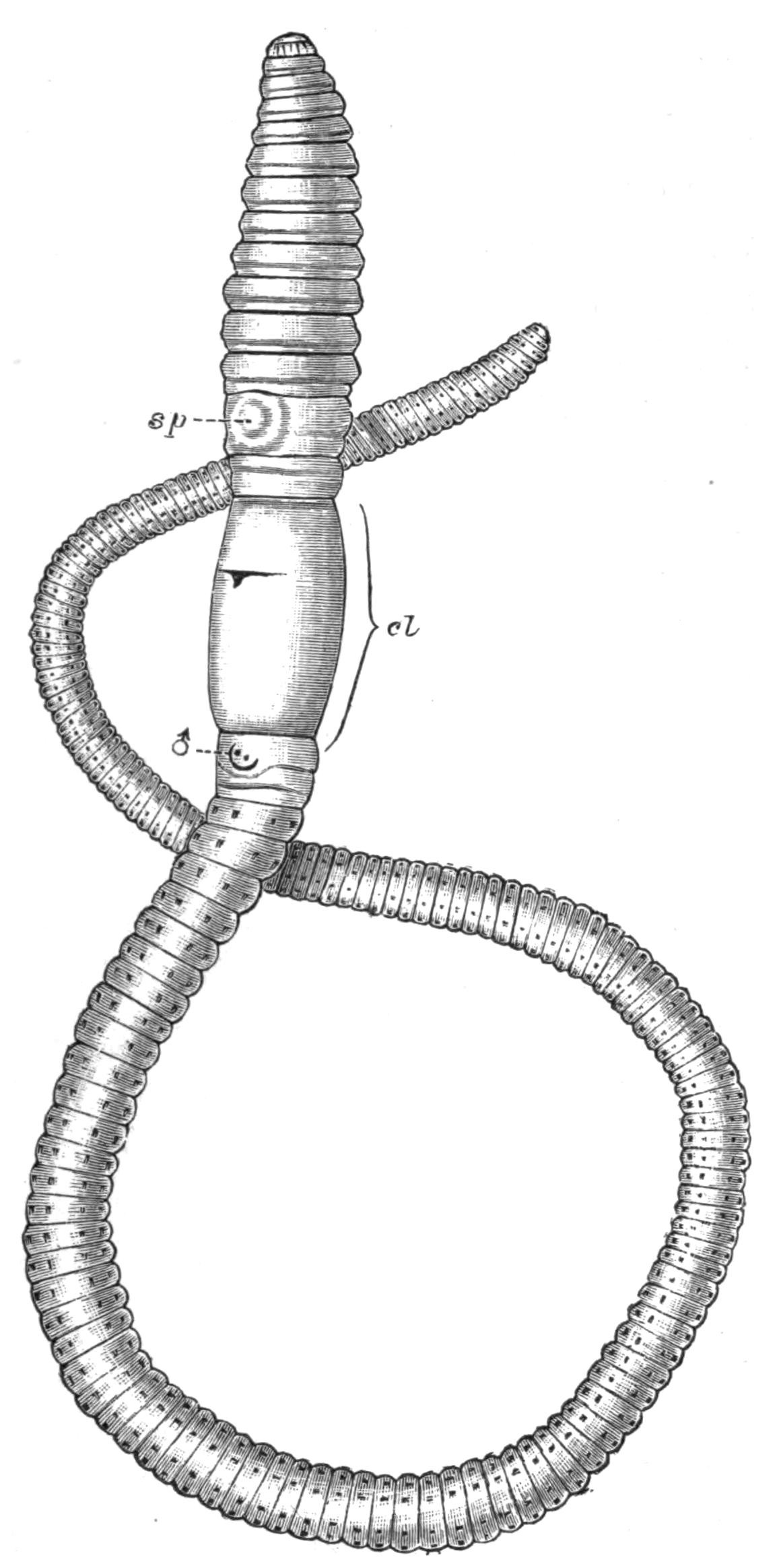
Fig. 197.—Libyodrilus violaceus F. E. B. × 2. sp, Spermathecal pore; cl, clitellum; ♂, male pore.
The peculiarities of internal structure mainly concern the reproductive organs, the differences in which from genus to genus are often very great. We have already referred to the remarkable branching of the nephridial duct in the body-wall, and to the much modified calciferous glands of Stuhlmannia and some other genera. These structural variations perhaps permit the family to be divided into two sub-families. In one there are calciferous glands of the normal type, though peculiar in that one or more are median and ventral in position, and are unpaired; there is no branching of the nephridium in the body-wall; there are always, so far as is known, the Pacinian-corpuscle-like bodies in the integument. In the other sub-family the calciferous glands, if present (they are absent, for instance, in Libyodrilus), have undergone much modification in structure; the nephridia, where they have been investigated, have been found to branch copiously in the body-wall; the peculiar integumental bodies hardly ever occur.
Fam. 13. Geoscolicidae.[447]—This family is essentially tropical, being found in South America and the West Indies, in tropical Africa, in India, and in some of the islands of the Malay Archipelago. But it also occurs (Sparganophilus and Criodrilus) in Europe and in America. A good many of the genera are aquatic. This is the case with the two already mentioned; the genera Glyphidrilus and Annadrilus of the Malay Archipelago can live in water. The family is easily definable if we take the more typical forms; but at one end of the series it fades into the next family, that of the Lumbricidae. Criodrilus is one of the genera which is difficult to place. As is the case with many Geoscolicidae, Criodrilus has ornamented chaetae not only upon the clitellum, but upon the other segments of the body. This character was until recently unknown among the Lumbricidae; it has been lately found in Allolobophora moebii and A. lonnbergi. The absence of spermathecae characterises Criodrilus as well as other Geoscolicidae; but here again the character is not by any means distinctive, for in Allolobophora constricta there is the same absence of these organs. In Criodrilus the male pores are upon segment 15, as in the Lumbricidae, but a species of Kynotus, which is certainly a Geoscolecid, has these pores upon precisely the same segment. The only point in which Criodrilus is definitely a Geoscolecid, or rather not a Lumbricid, is in the forward position of the clitellum, which begins upon the fifteenth segment, far earlier than it does in any undoubted Lumbricid. The peculiar elongated cocoon, which much resembles that of Sparganophilus, is another character which favours its Geoscolecine affinities. Dr. Michaelsen has proposed to unite Criodrilus and Alma into a family intermediate between the Geoscolicidae and the Lumbricidae.
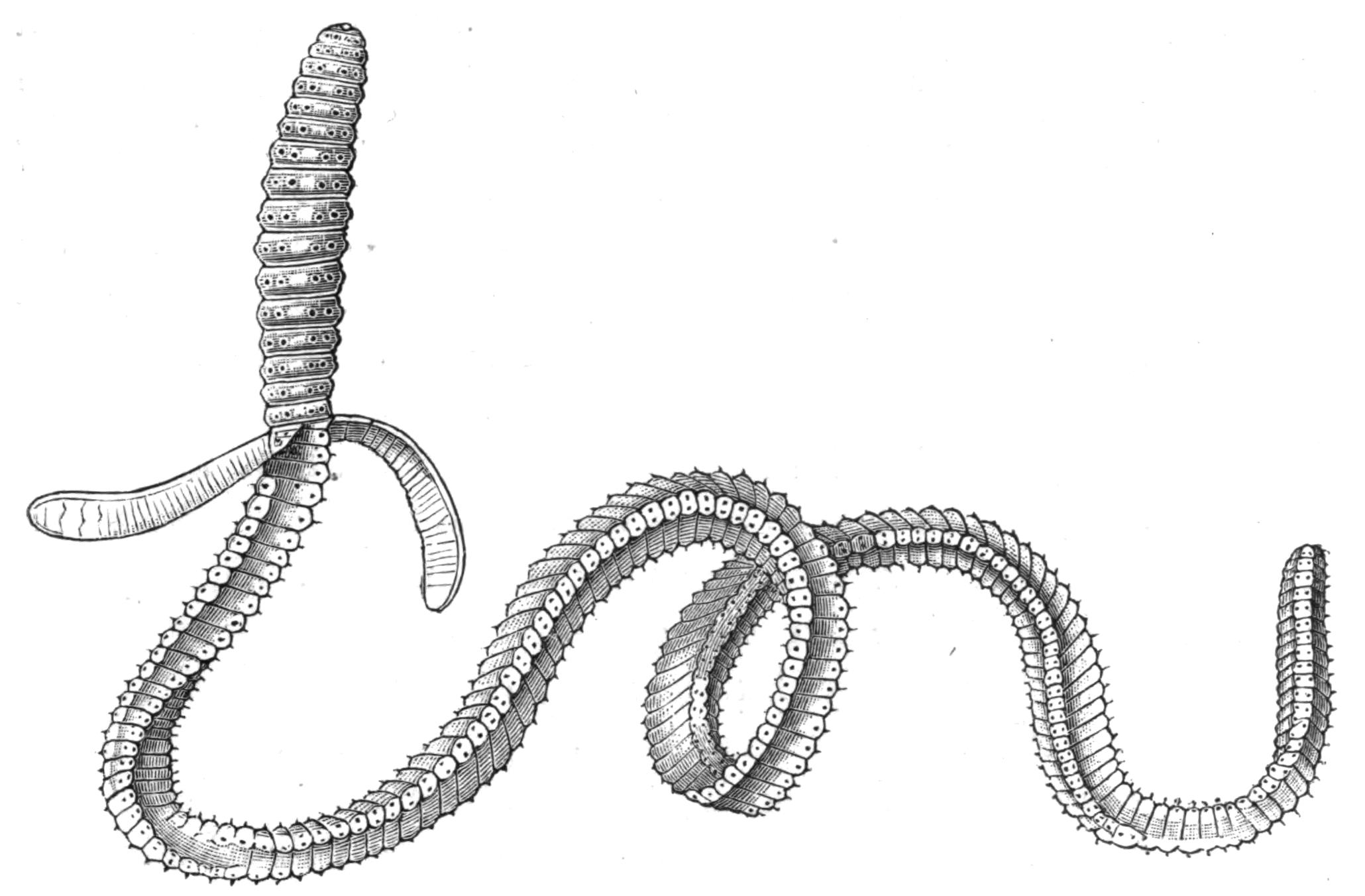
Fig. 198.—Alma millsoni F. E. B. × 1.
Perhaps the most remarkable genus in the whole family is Alma. One species lives in the Nile mud; another is the "Yoruba worm" of West Africa, whose habits have been described by Mr. Millson. The most marked character of this genus, apart from the branchiae (see p. 352) which apparently may be present or absent according to the species, is in the two enormous processes of the body-wall, which are illustrated in Fig. 198. These contain the sperm-ducts, which, however, open some way in front of the free end; they are provided on the ventral surface with a series of sucker-like structures and with peculiar chaetae. Another interesting genus is Pontoscolex, which was originally described from the sea-shore of Jamaica by Schmarda; there are only two species which are certainly characterised, though a variety from the Hawaian Islands may be a "good" species. It possesses the remarkable peculiarity that the chaetae at the end of the body are disposed in a perfectly irregular fashion, which earned for it the name of brush-tail at the hands of its discoverer, Fritz Müller. This worm, which is universal, or nearly so, in its range, doubtless having been transferred accidentally from country to country, invariably shows a light spot not far from the tail; when this is examined with the microscope it is seen that the chaetae are here absent or very small, and that the muscular structure of the body-wall is slightly different; it was thought that this spot was a zone of growth where fresh segments could be added after the fashion of some of the aquatic Oligochaeta, to which, it may be remarked, the present genus shows a curious point of likeness in the bifid character of the chaetae. It seems, however, that there are really no grounds for the supposition, and it is possible that we have here a "weak" spot, such as that in the foot of certain land snails, which readily gives way when the worm is picked up by a bird, and allows the "better half" of the creature to escape. The Bermudian genus Onychochaeta offers a very strange peculiarity in that the chaetae on the hinder segments of the body are enormously larger than those in front, and end in strong hooks; it seems likely that their function is to maintain a tight hold of the ground while the worm is leaning out of its burrow, as every one has seen the common earthworms of this country do. Onychochaeta has the same irregular arrangement of the chaetae upon the greater part of the body, as has Pontoscolex. This family, like so many others, has its giants and its dwarfs. At one extreme is the great Antaeus of South America, several feet in length; at the other the inch-long Ilyogenia of Africa. The American Urobenus has a pair of intestinal caeca like those of Perichaeta, and placed in the same segment.
Fam. 14.9 Lumbricidae.[448]—This family is to be distinguished by the following assemblage of characters.
The male pores are usually upon segment 15, and never behind that segment; the clitellum commences some way behind the male pores. The gizzard, which is invariably single, is equally invariably at the end of the oesophagus. There are three pairs of calciferous glands. The nephridia are always paired. The spermathecae never have a diverticulum.
This family only contains three well-known genera, viz. Lumbricus, Allolobophora, and Allurus. The American Bimastos may be distinct. Tetragonurus, not allowed by some, is at present unknown except as regards external characters; it differs from the other Lumbricidae in the fact that the male pores are upon the twelfth segment. In Allurus they are upon segment 13, and in the remaining genera upon the fifteenth. Lumbricus is to be distinguished from Allolobophora by its prostomium, which is continued by grooves on to the buccal segment, so as to cut the latter in half. It has also median sperm reservoirs, as well as the paired sperm sacs which are alone present in Allolobophora.
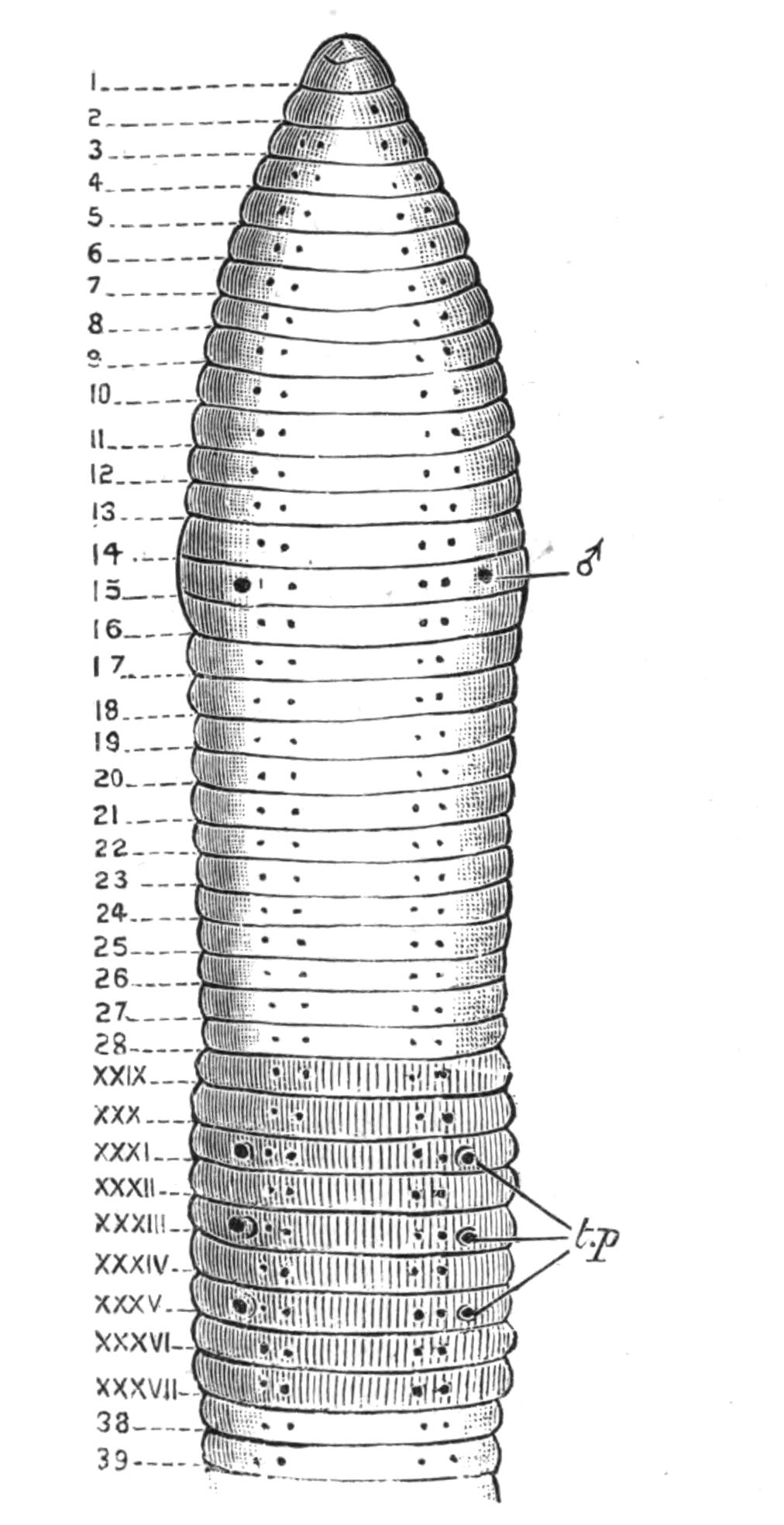
Fig. 199.—Allolobophora chlorotica Savigny. × 4. The clitellar segments are marked in Roman numerals. t.p, Tubercula pubertatis; ♂, male pore.
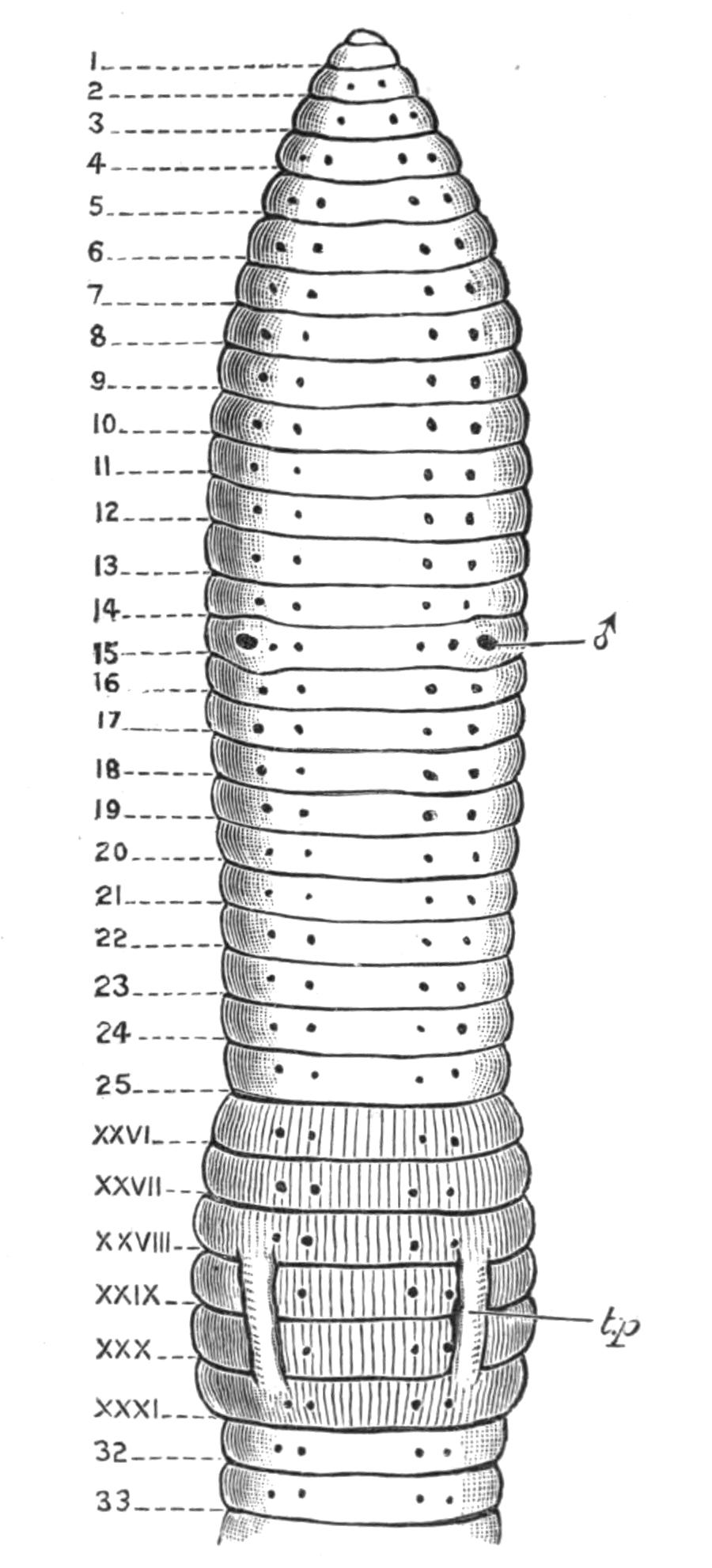
Fig. 200.—Allolobophora putris Vejd. × 5. Lettering as in Fig. 199. The black dots represent the chaetae in both figures.
This is the only family of earthworms which, so far as is known, can brave the ice and snow, and what is still more difficult to understand, the perpetually frozen undersoil of the Arctic regions. Eisen has described a number of species from Spitzbergen, and Colonel Feilden recently sent me an example of Allolobophora octoedra from Kolguiev, where Mr. Trevor-Battye also saw another specimen. The family is characteristic of the Nearctic and Palaearctic regions, and though found beyond them, is probably elsewhere an accidental importation (see p. 371). There are at least fifteen species of this family found in England and Ireland, and probably more will be identified.
There does not exist at present any comprehensive account of the British species of earthworms, though all of them are included in Dr. Rosa's recent revision of the family. Most of the British forms belong to the genus Allolobophora, which may be divided into two series according to whether the chaetae are quite close together or further apart. The extent of the clitellum and the position of those swollen eminences which appear earlier than the clitellum, and are known as tubercula pubertatis, offer further characters. In the following tables, extracted from those of Rosa, the known British species of this genus are grouped according to these three characters. With the help of these tables and Figs. 199 and 200, any of the species ought to be easily identified.
With Chaetae Distant.[449]
25 26 27 28 29 30 31 32 33 34 35 36
A. putris ··· — — — ··· — — — — — ···
A. constricta — — — — — —
A. veneta ··· — — — — — — — — —
A. octoedra — — — — — — — ···
A. cyanea (subsp. profuga) — — — — — — — — — —
A. rubida — — — — — — — — — — — —
A. mammalis — — — — — — — —
25 26 27 28 29 30 31 32 33 34 35 36
A. putris ······ —— —— —— ······ —— —— —— —— —— ······
A. constricta —— —— —— —— —— ——
A. veneta ······ —— —— —— —— —— —— —— —— ——
A. octoedra —— —— —— —— —— —— —— ······
A. cyanea (subsp. profuga) —— —— —— —— —— —— —— —— —— ——
A. rubida —— —— —— —— —— —— —— —— —— —— —— ——
A. mammalis —— —— —— —— —— —— —— ——
With Chaetae Paired.
24 25 26 27 28 29 30 31 32 33 34 35 36 37
A. rosea ··· — — — — — — — — — ··· —
A. foetida ··· ··· — — — — — — — — — ··· —
A. eiseni ··· — — — — — — — —
A. caliginosa ··· — — — — — — ··· — — — ···
A. terrestris ··· — — — — — — — — — — —
A. chlorotica ··· — — — — — — — — — — — —
A. georgii ··· — — — — — — — — —
24 25 26 27 28 29 30 31 32 33 34 35 36 37 38 39
A. rosea ······ —— —— —— —— —— —— —— —— —— ······ —— —— ——
A. foetida ······ ······ —— —— —— —— —— —— —— —— —— ······ ——
A. eiseni ······ —— —— —— —— —— —— —— ——
A. caliginosa ······ —— —— —— —— —— —— ······ —— —— —— ······
A. terrestris ······ —— —— —— —— —— —— —— —— —— —— ——
A. chlorotica ······ —— —— —— —— —— —— —— —— —— —— —— ——
A. georgii ······ —— —— —— —— —— —— —— —— ——
There are of course other points by which the different species can be distinguished. Colour in a few cases enables a species to be named at once without any further aid. One of the most striking of these cases is the Brandling, so common upon dunghills, and so dear to some anglers. This worm is ringed with brownish purple upon a yellowish ground. The greenish A. chlorotica is often found under stones, and curls itself round into nearly a complete circle when disturbed. A. cyanea, of a bluish grey colour, is one of the earthworms very commonly met with in the early morning in London and the neighbourhood. More generally, however, the colour is of a paler or darker red, verging towards and attaining brown, or even blackish brown; and is so variable that nothing in the way of identification can be attempted from the colour alone, even with the most elaborate description.