Volume 1 — LIST OF MAPS APPEARING IN THE BOOK OF HISTORY (continued 2)
Reading edition
Of another natural source of wealth, the fisheries on the coast of a country, no more need be said than that they have been a frequent source of quarrels and even of war. The recognition of the right of each state to the exclusive control and enjoyment of the sea for three miles off its shores has reduced, but not entirely removed, the causes of friction between the fishermen of different countries.
Minerals and Civilisation
Until recently, the surface of the soil was a far more important source of wealth than was that which lies beneath the surface. There were iron mines among the Chalybes on the Asiatic coast of the Euxine in ancient times; there were silver mines here and there, the most famous being those at Laurium, from which the Athenians drew large revenues, gold mines in Spain and Dacia, copper mines in Elba, tin mines in the south-west corner of Britain. But the number of persons employed in mining and the industries connected therewith was relatively small both in the ancient world and, indeed, down till the close of the eighteenth century. The immense development of coal-mining and of iron-working in connection therewith has now doubled, trebled, or quadrupled the population of large areas in Britain, Germany, France, Belgium, and the United States, adding vastly to the wealth of these countries and stimulating in them the growth of many mechanical arts. This new population is quite different in character from the agricultural peasantry who in earlier days formed the principal substratum of society. Its appearance has changed the internal politics of these countries, disturbing the old balance of forces and accelerating the progress of democratic principles.
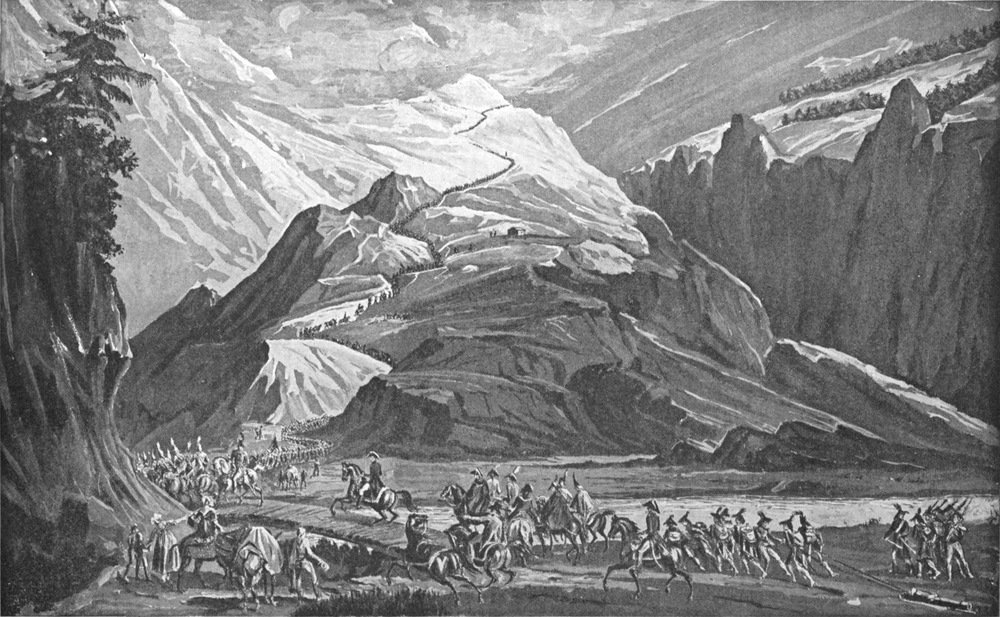
THE PLACE OF MOUNTAINS IN HISTORY: NATURE’S BARRIERS TO MAN’S EXPANSION
Without the Alps the annals of Europe must have been entirely different. The mountains were too much for the emperors of the Middle Ages, although Hannibal, the great Carthaginian general, succeeded in crossing them two centuries before Christ, a feat which Napoleon repeated 2,000 years later. Our engraving illustrates Napoleon crossing the Alps.
LARGER IMAGE
Nor have minerals failed to affect the international relations of peoples and States. It was chiefly for the precious metals that the Spaniards explored the American Continent and conquered Mexico and Peru. It was for the sake of capturing the ships bringing those metals back to Europe that the English sea-rovers made their way to the American coasts and involved England in wars with Spain. It was the discovery in 1885 of extensive auriferous strata unexampled in the certainty of their yield that drew a swarm of foreign immigrants into the Transvaal, whence arose those difficulties between them and the Dutch inhabitants previously established there which, coupled with the action of the wealthy owners of the mines, led at last to the war of 1899 between Britain and the two South African Republics.
Man’s Fight with Nature
The productive capacity of a country is, however, in one respect very different from those great physical features—such as temperature, rainfall, coast configuration, surface character, geological structure, and river system—which have been previously noted. Those features are permanent qualities which man can affect only to a limited extent, as when he reduces the rainfall a little by cutting down forests, or increases it by planting them, or as when he unites an isle, like that of Cadiz, to the mainland, cuts through an isthmus, like that of Corinth, or clears away the bar at a river mouth, as that of the Mississippi has been cleared.
Exhausting the Mineral Wealth
But the natural products of a country may be exhausted and even the productive capacity of its soil diminished. Constant tillage, especially if the same crop be raised and no manure added, will wear out the richest soils. This has already happened in parts of Western America. Still the earth is there; and with rest and artificial help it will recover its strength. But timber destroyed cannot always be induced to grow again, or at least not so as to equal the vigour of primeval forests. Wild animals, once extirpated, are gone for ever. The buffalo and beaver of North America, the beautiful lynxes of South Africa and some of its large ruminants, are irrecoverably lost for the purposes of human use, just as much as the dinornis, though a few individuals may be kept alive as specimens. So, too, the mineral resources of a country are not only consumable, but obviously irreplaceable. Already some of the smaller coalfields of Europe have been worked out, while in others it has become necessary to sink much deeper shafts, at an increasing cost. There is not much tin left in Cornwall, not much gold in the gravel deposits of Northern California. The richest known goldfield of the world, that of the Transvaal Witwatersrand, can hardly last more than thirty or forty years. Thus in a few centuries the productive capacity of many regions may have become quite different from what it is now, with grave consequences to their inhabitants.
These are some of the ways in which Nature affects those economic, social, and political conditions of the life of man the changes in which make up history. As we have seen, that which Nature gives to man is always the same, in so far as Nature herself is always the same—an expression which is more popular than accurate, for Nature herself—that is to say, not the laws of Nature, but the physical environment of man on this planet—is in reality always changing. It is true that this environment changes so slowly that a thousand years may be too short a period in which man can note and record some forms of change—such, for instance, as that by which the temperature of Europe became colder during the approach of the glacial period and warmer during its recession—while ten thousand years may be too short to note any diminution in the heat which the sun pours upon the earth, or in the store of oxygen which the earth’s atmosphere holds.
Progress of Modern Invention Man Cannot Disregard Nature
But as we have also seen, the relation to man of Nature’s gifts differs from age to age as man himself becomes different, and as his power of using these gifts increases, or his need of them becomes either less or greater. Every invention alters those relations. Water power became less relatively valuable when steam was applied to the generation of motive force. It has become more valuable with the new applications of electricity. With the discovery of mineral dyes, indigo and cochineal are now less wanted than they were. With the invention of the pneumatic tyre for bicycles and carriages, caoutchouc is more wanted. Mountains have become, since the making of railways, less of an obstacle to trade than they were, and they have also become more available as health resorts. Political circumstances may interfere with the ordinary and normal action of natural phenomena. A race may be attracted to or driven into a region for which it is not physically suited, as Europeans have gone to the West Indies, and negroes were once carried into New York and Pennsylvania. The course of trade which Nature prescribes between different countries may be hampered or stopped by protective tariffs; but in these cases Nature usually takes her eventual revenges. They are instances which show, not that man can disregard her, but that when he does so, he does so to his own loss.
It would be easy to add further illustrations, but those already given are sufficient to indicate how multiform and pervading is the action upon man of the physical environment, or in other words, how in all countries, and at all times, geography is the necessary foundation of history, so that neither the course of a nation’s growth, nor its relations with other nations, can be grasped by one who has not come to understand the climate, surface, and products of the country wherein that nation dwells.
There is no Unmixed Race left
This conception of the relation of geography to history is, as has been said, the leading idea of the present work, and has furnished the main lines which it follows. It deals with history in the light of physical environment. Its ground plan, so to speak, is primarily geographical, and secondarily chronological. But there is one difficulty in the way of such a scheme, and of the use of such a ground plan, which cannot be passed over. That difficulty is suggested by the fact already noted—that hardly any considerable race, and possibly no great nation, now inhabits the particular part of the earth’s surface on which it was dwelling when a history begins. Nearly every people has either migrated bodily from one region to another, or has received such large infusions of immigrants from other regions as to have become practically a new people. Hence it is rare to find any nation now living under the physical conditions which originally moulded its character, or the character of some at least of its component elements. And hence it follows that when we study the qualities, aptitudes, and institutions of a nation in connection with the land it inhabits, we must always have regard not merely to the features of that land, but also to those of the land which was its earlier dwelling-place. Obviously, this brings a disturbing element into the study of the relations between land and people, and makes the whole problem a far more complicated one than it appeared at first sight.
Nature’s Race Factory
Where a people has migrated from a country whose physical conditions were similar to those under which its later life is spent, or where it had reached only a comparatively low stage of economic and political development before the migration, the difficulties arising from this source are not serious. The fact that the English came into Britain from the lands round the mouth of the Elbe is not very material to an inquiry into their relations to their new home, because climate and soil were similar, and the emigrants were a rude, warlike race. But when we come to the second migration of the English, from Britain to North America, the case is altogether different. Groups of men from a people which had already become highly civilised, had formed a well-marked national character, and had created a body of peculiar institutions, planted themselves in a country whose climate and physical features are widely diverse from those of Britain.
If, for the sake of argument, we assume the Algonquin aborigines of Atlantic North America as they were in A.D. 1600 to have been the legitimate product of their physical environment—I say “for the sake of argument,” because it may be alleged that other forces than those of physical environment contributed to form them—what greater contrast can be imagined than the contrast between the inhabitants of New England in this present year and the inhabitants of the same district three centuries earlier, as Nature, and Nature alone, had turned them out of her factory? Plainly, therefore, the history of the United States cannot, so far as Nature and geography are concerned, be written with regard solely, or even chiefly, to the conditions of North American nature. The physical environment in which the English immigrants found themselves on that continent has no doubt affected their material progress and the course of their politics during the three centuries that have elapsed since settlements were founded in Virginia and on Massachusetts Bay.
Beginnings of Race History
But it is not to that environment, but to earlier days, and especially to the twelve centuries during which their ancestors lived in England, that their character and institutions are to be traced. Thus the history of the American people begins in the forests of Germany, where the foundations of their polity were laid, and is continued in England, where they set up kingdoms, embraced Christianity, became one nation, received an influx of Celtic, Danish, and Norman-French blood, formed for themselves that body of customs, laws, and institutions which they transplanted to the new soil of America, and most of which, though changed and always changing, they still retain. The same thing is true of the Spaniards (as also of the Portuguese) in Central and South America. The difference between the development of the Hispano-Americans and that of their English neighbours to the north is not wholly, or even mainly, due to the different physical conditions under which the two sets of colonists have lived.
It is due to the different antecedent history of the two races. So a history of America must be a history not only of America, but of the Spaniards, Portuguese, French, and English—one ought in strictness to add of the negroes also—before they crossed the Atlantic. The only true Americans, the only Americans for whom American nature can be deemed answerable, are the aboriginal red men whom we, perpetuating the mistake of Columbus, still call Indians.
Geography as a Basis of History
This objection to the geographical scheme of history writing is no doubt serious when a historical treatise is confined to one particular country or continent, as in the instance I have taken of the Continent of North America. It is, however, less formidable in a universal history, such as the present work, because, by referring to another volume of the series, the reader will find what he needs to know regarding the history of the Spaniards, English, and French in those respective European homes where they have grown to be that which they were when, with religion, slaughter, and slavery in their train, they descended upon the shores of America.
Accordingly the difficulty I have pointed out does not disparage the idea and plan of writing universal history on a geographical basis. It merely indicates a caution needed in applying that plan, and a condition indispensable to its utility—viz., the regard that must be had to the stage of progress at which a people has arrived when it is subjected to an environment different from that which had in the first instance helped to form its type.
THE GROWTH OF MODERN KNOWLEDGE
W
WE have now considered some of the ways in which a universal history, written with special reference to the physical phenomena of the earth as geographical science presents them, may bring into strong relief one large and permanent set of influences which determine the progress or retrogression of each several branch of mankind. Upon the other principles which preside over and direct the composition of such a work, not much need be said. They are, of course, in the main, those which all competent historians will follow in writing the history of any particular people.
But a universal history which endeavours to present in a short compass a record of the course of events in all regions and among all peoples, since none can safely be omitted, is specially exposed to two dangers. One is that of becoming sketchy and viewy. When a large object has to be dealt with on a small scale, it is natural to sum up in a few broad generalisations masses of facts which cannot be described or examined in detail. Broad generalisations are valuable when they proceed from a thoroughly trained mind—valuable, even if not completely verifiable, because they excite reflection. But it is seldom possible to make them exact. They necessarily omit most of the exceptions, and thus suggest a greater uniformity than exists.
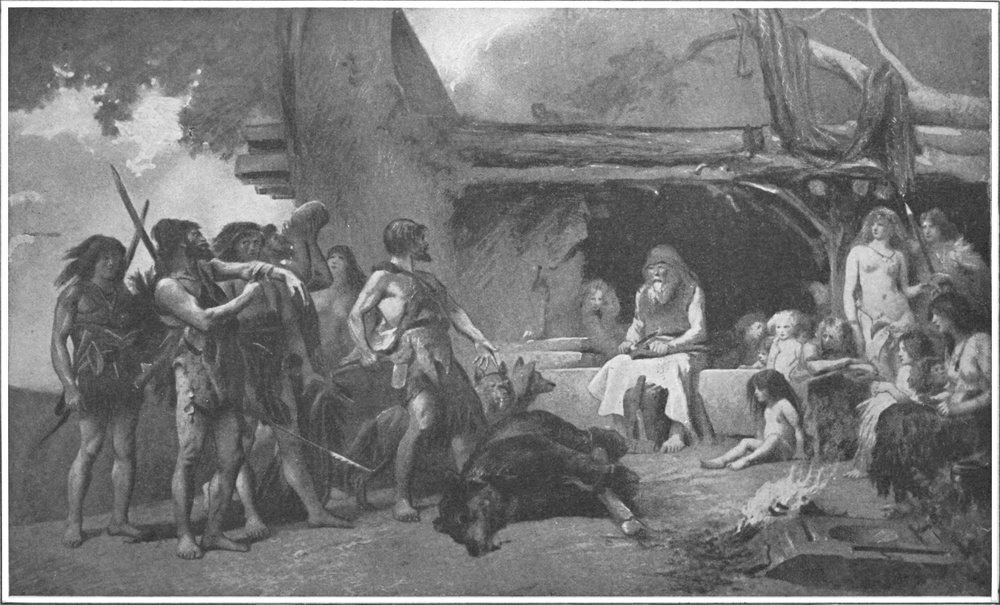
Neurdein
THE STONE AGE: HUNTERS RETURNING FROM THE CHASE
From the painting by Ferdinand Cormon
LARGER IMAGE
Need of Care in History
The other danger is that of sacrificing brightness and charm of presentation. When an effort is made to avoid generalisations, and to squeeze into the narrative as many facts as the space will admit, the narrative is apt to become dry, because compression involves the curtailment of the personal and dramatic element. These are the rocks between which every historian has to steer. If he has ample space, he does well to prefer the course of giving all the salient facts and leaving the reader to generalise for himself. If, however, his space is limited, as must needs be the lot of those who write a universal history, the impossibility of going into minute detail makes generalisations inevitable, for it is through them that the result and significance of a multitude of minor facts must be conveyed in a condensed form.
New Minds and New Facts
All the greater, therefore, becomes the need for care and sobriety in the forming and setting forth every summarising statement and general conclusion or judgment. Probably the soundest guiding principle and best safeguard against error is to be found in shunning all preconceived hypotheses which seek to explain history by one set of causes, or to read it in the light of one idea. The habit of magnifying a single factor, such as the social factor, or the economic, or the religious, has been a fertile source of weakness in historical writing, because it has made the presentation of events one-sided, destroying that balance and proportion which it is the highest merit of any historian to have attained. Theory and generalisation are the life-blood of history. They make it intelligible. They give it unity. They convey to us the instruction which it always contains, together with so much of practical guidance in the management of communities as history is capable of rendering. But they need to be applied with reserve, and not only with an impartial mind, but after a painstaking examination of all the facts—whether or no they seem to make for the particular theory stated—and of all the theories which any competent predecessor has propounded.
For the historian, though he must keep himself from falling under the dominion of any one doctrine by which it is sought to connect and explain phenomena, must welcome all the light which any such doctrine can throw upon facts. Even if such a doctrine be imperfect, even if it be tainted by error, it may serve to indicate relations between facts, or to indicate the true importance of facts, which previous writers had failed to observe, or had passed too lightly over. It is thus that history always needs to be re-written. History is a progressive science, not merely because new facts are constantly being discovered, not merely because the changes in the world give to old facts a new significance, but also because every truly penetrating and original mind sees in the old facts something which had not been seen before.
A universal history is fitted to correct such defects as may be incident to that extreme specialism in historical writing which is now in fashion. The broad and concise treatment which a history of all times and peoples must adopt naturally leads to efforts to characterise the dominant features and tendency of an epoch or a movement, whether social, economic, or political.
The Side Streams of History
Yet even here there is a danger to be guarded against. No epoch, no movement, is so simple as it looks at first sight, or as one would gather from even the most honest contemporary writer. There is always an eddy at the side of the stream; and the stream itself is the resultant of a number of rivulets with different sources, whose waters, if the metaphor may be extended, are of different tints. Let any man study minutely a given epoch, such as that of the Reformation in Germany, or that of the Revolutionary War in America, and he will be surprised to find how much more complex were the forces at work than he had at first supposed, and on how much smaller a number of persons than he had fancied the principal forces did in fact directly operate. Or let any one—for this is perhaps the best, if the most difficult, method of getting at the roots of this complexity—study thoroughly and dispassionately the phenomena of his own time. Let him observe how many movements go on simultaneously, sometimes accelerating, sometimes retarding, one another, and mark how, the more fully he understands this complex interlacing, so much the less confident do his predictions of the future become. He will then realise how hard it is to find simple explanations and to deliver exact statements regarding critical epochs in the past.
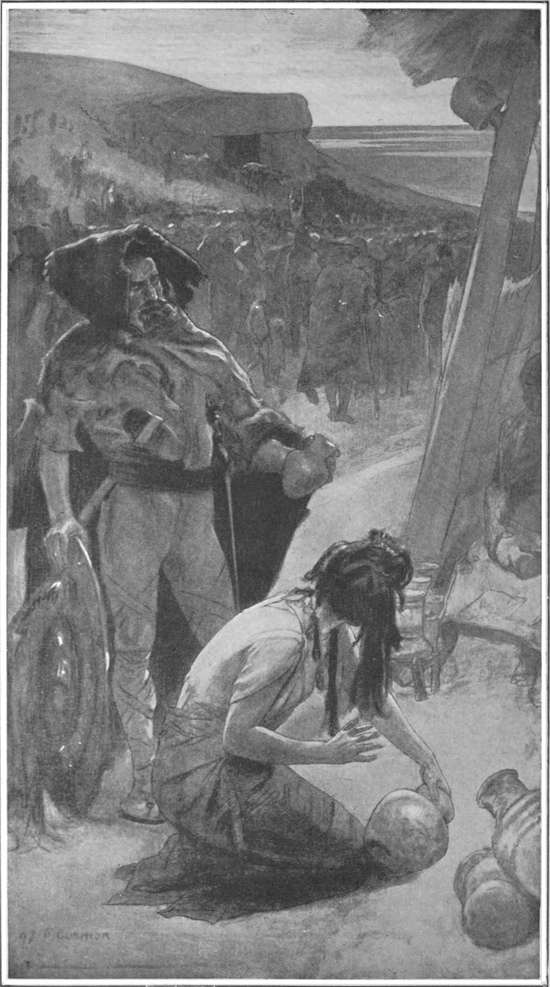
Mercier
THE FIRST INDUSTRIES: POTTERY
From the painting by Ferdinand Cormon
LARGER IMAGE
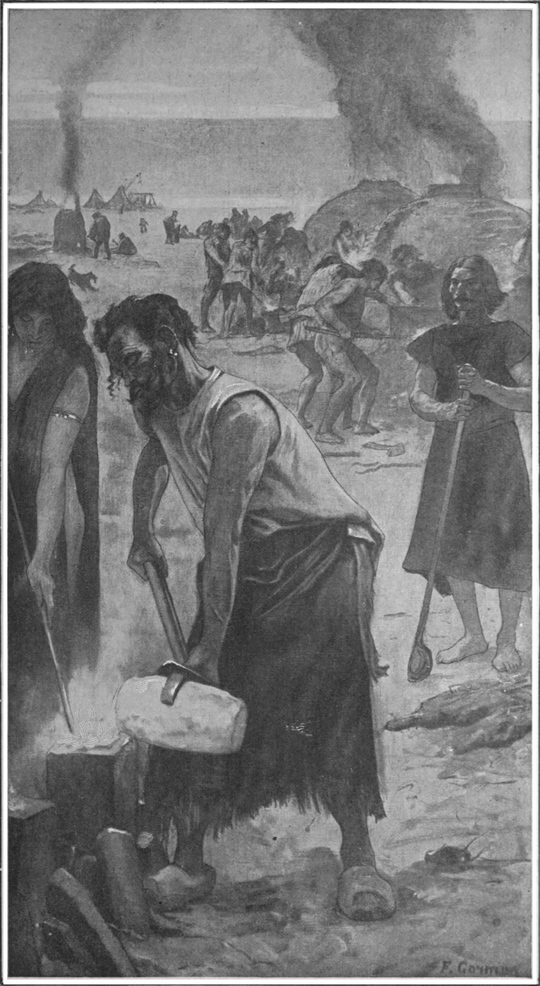
Mercier
THE FIRST INDUSTRIES: THE FORGE
From the painting by Ferdinand Cormon
LARGER IMAGE
The Main Stream of History
Nevertheless, the task of summarising and explaining is one to which the writer of a History of the World must address himself. If he has the disadvantage of limited space, he has the advantage of being able to assume the reader’s knowledge of what has gone before, and to invite the reader’s attention to what will come after. Thus he stands in a better position than does the writer who deals with one country or one epoch only for making each part of history illustrate other parts, for showing how similar social tendencies, similar proclivities of human nature, work similarly under varying conditions and are followed by similar, though never identical, results. He is able to bring out the essential unity of history, expunging from the reader’s mind the conventional and often misleading distinctions that are commonly drawn between the ancient, the mediæval, and the modern time. He can bring the contemporaneous course of events in different countries into a fruitful relation. And in the case of the present work, which dwells more especially on the geographical side of history, he can illustrate from each country in succession the influence of physical environment on the formation of races and the progress of nations, the principles which determine the action of such environment being everywhere similar, though the forms which that action takes are infinitely various.
Is there, it may be asked, any central thread in following which the unity of history most plainly appears? Is there any process in tracing which we can feel that we are floating down the main stream of the world’s onward movement? If there be such a process, its study ought to help us to realise the unity of history by connecting the development of the numerous branches of the human family.
One such process has already been adverted to and illustrated. It is the gradual and constant increase in man’s power over Nature, whereby he is emancipated more and more from the conditions she imposes on his life, yet is brought into an always closer touch with her by the discovery of new methods of using her gifts. Two other such processes may be briefly examined. One goes on in the sphere of time, and consists in the accumulation from age to age of the strength, the knowledge, and the culture of mankind as a whole. The other goes on in space as well as in time, and may be described as the contraction of the world, relatively to man.
The Great Increase of Population
The accumulation of physical strength is most apparent in the increase of the human race. We have no trustworthy data for determining the population, even of any one civilised country, more than a century and a half ago; much less can we conjecture that of any country in primitive or prehistoric times. It is clear, however, that in prehistoric times—say, six or seven thousand years ago, there were very few men on the earth’s surface. The scarcity of food alone would be sufficient to prove that; and, indeed, all our data go to show it. Fifty years ago the world’s population used to be roughly conjectured at from seven to nine hundred millions, two-thirds of them in China and India. It is now estimated at over fifteen hundred millions. That of Europe alone must have tripled within a century, and can hardly be less than four hundred millions. That of North America may have scarcely exceeded four or five millions in the time of Christopher Columbus, or at the date of the first English settlements, though we have only the scantiest data for a guess. It may now be 130,000,000, for there are over a hundred millions in the United States alone, about fifteen in Mexico, and eight in Canada, besides the inhabitants of Central America.
The Prolific Power of White People Physical & Intellectual Power
The increase has been most swift in the civilised countries, such as Britain, Germany, Russia, and the United States; but it has gone on in India also since India came under British rule (famines notwithstanding), and in the regions recently colonised by Europeans, such as Australia, Siberia, and Argentina, the disappearance of aborigines being far more than compensated for by the prolific power of the white immigrants. Some regions, such as Asia Minor and parts of North Africa, are more thinly peopled now than they were under the Roman Empire, and both China and Peru may have no larger population than they had five, or ten, or fifteen centuries ago. But taking the world at large, the increase is enormous, and will apparently continue. Even after the vacant cultivable spaces which remain in the two Americas, Northern Asia, and Australasia have been filled, the discovery of new modes of enlarging the annually available stock of food may maintain the increase. It is most conspicuous among the European races, and is, of course, due to the greater production in some regions of food, and in others of commodities wherewith food can be purchased. It means an immense addition to the physical force of mankind in the aggregate, and to the possibilities of intellectual force also—a point to be considered later. And, of course, it also means an immense and growing preponderance of the civilised white nations, which are now probably one half of mankind, and may, in another century, when they have risen from about five hundred to, possibly, one thousand or fifteen hundred millions, be nearly two-thirds.
Modern Man Stronger than his Ancestors
As respects the strength of the average individual man, the inquiry is less simple. Palæolithic man and neolithic man were apparently (though here and there may have been exceptions) comparatively feeble creatures, as are the relics of the most backward tribes known to us, such as the Veddas of Ceylon, the Bushmen, the Fuegians. Some savages, as, for instance, the Patagonians, are men of great stature, and some of the North American Indians possess amazing powers of endurance. The Greeks of the fifth century B.C., and the Teutons of the time of Julius Cæsar, had reached a high physical development. Pheidippides is said to have traversed one hundred and fifty miles on foot in forty-eight hours. But if we think of single feats of strength, feats have been performed in our own day—such as Captain Webb’s swimming across the Straits of Dover—equal to anything recorded from ancient or mediæval times. To swim across the much narrower Hellespont was then deemed a surprising exploit. Nor do we know of any race more to be commended for physical power and vigour of constitution than the American backwoodsmen of Kentucky or Oregon to-day. The swords used by the knights of the fifteenth century have usually handles too small for many a modern English or German hand to grasp.
America’s Mingled Races
Isolated feats do not prove very much, but there is good reason to believe that the average European is as strong as ever he was, and probably more healthy, at least if longevity is a test of health. One may fairly conclude that with better and more abundant food, the average of stature and strength has improved over the world at large, so that in this respect also the force of mankind as a whole has advanced. Whether this advance will continue is more doubtful. In modern industrial communities the law of the survival of the fittest may turn out to be reversed, for it is the poorer and lower sections of the population that marry at an early age, and have the largest families, while prudential considerations keep down the birth-rate among the upper middle-class. In Transylvania, for instance, the Saxons are dying out, because very few children are born to each pair, while the less educated and cultured Rumans increase fast. In North America, the Old New England stock of comparatively pure British blood has begun to be swamped by the offspring of the recent immigrants, mostly Irish or French Canadians; and although the sons of New England, who have gone West, continue to be prolific, it is probable that the phenomena of New England will recur in the Mississippi Valley, and that the newcomers from Europe who form the less cultivated strata of the population—Irish, Germans, Italians, Czechs, Poles, Slovaks, Rumans—will contribute an increasing proportion of the inhabitants. Some of these, and especially the Irish and the Germans and the Scandinavians, are among the best elements in the American population, and have produced men of the highest distinction. But the average level among them of versatile aptitude and of intellectual culture is slightly below that of the native Americans.
Now, the poorer sections are in most countries, though of course not always to the same extent, somewhat inferior in physical as well as in mental quality, and more prone to suffer from that greatest hindrance to physical improvement, the abuse of alcoholic drinks.
We come next to another form of the increase of human resources, the accumulation of knowledge, and of what may be called intellectual culture and capacity, for it is convenient to distinguish these two latter from knowledge.
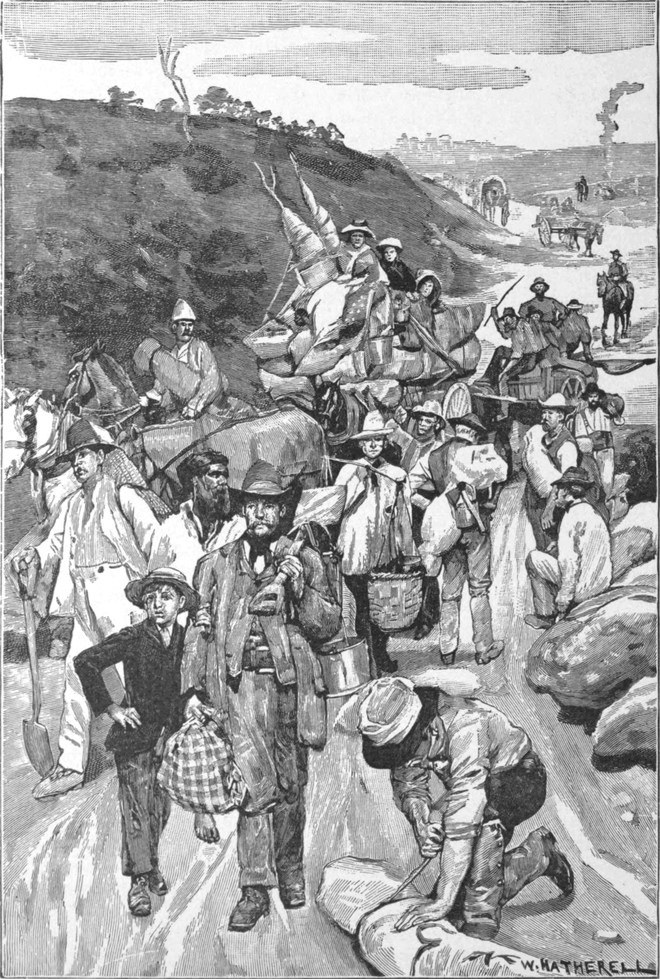
PIONEERS OF MODERN CIVILISATION
The discovery of precious metals is a great factor in progress. Seekers after gold are chief among the pioneers who help to carry civilisation into new lands.
Inventions Mean Progress
In knowledge there has been an advance, not merely a tolerably steady and constant advance, but one which has gone on with a sort of geometrical progression, moving the faster the nearer we come to our own time. Whatever may have befallen in the prehistoric darkness, history knows of only one notable arrest or setback in the onward march—that which marks the seventh, eighth, and ninth centuries of the Christian era. Even this set-back was practically confined to Southern and Western Europe, and affected only certain departments of knowledge. It did not, save, perhaps, as regards a few artistic processes, extinguish that extremely important part of the previously accumulated resources of mankind which consisted in the knowledge of inventions. It is in respect of inventions, especially mechanical and physical or chemical inventions, that the accumulation of knowledge has been most noteworthy and most easy to appreciate.
A history of inventions is a history of the progress of mankind, of a progress to which every race may have contributed in primitive times, though all the later contributions have come from a few of the most civilised. Every great invention marks one onward step, as one may see by enumerating a few, such as the use of fire, cooking, metal working, the domestication of wild animals, the tillage of the ground, the use of plough and mattock and harrow and fan, the discovery of plants or trees useful for food or for medicine, the cart, the wheel, the water-mill (overshot, undershot, and turbine), the windmill, the distaff (followed long, long after by the spinning-wheel), the loom, dyestuffs, the needle, the potter’s wheel, the hydraulic press, the axe-handle, the spear, the bow, the shield, the war-chariot, the sling, the cross-bow, the boat, the paddle, the oar, the helm, the sail, the mariner’s compass, the clock, picture-writing, the alphabet, parchment, paper, printing, photography, the sliding keel, the sounding-lead, the log, the brick, mortar, the column, the arch, the dome, till we come down to explosives, the microscope, the cantilever, and the Röntgen rays.
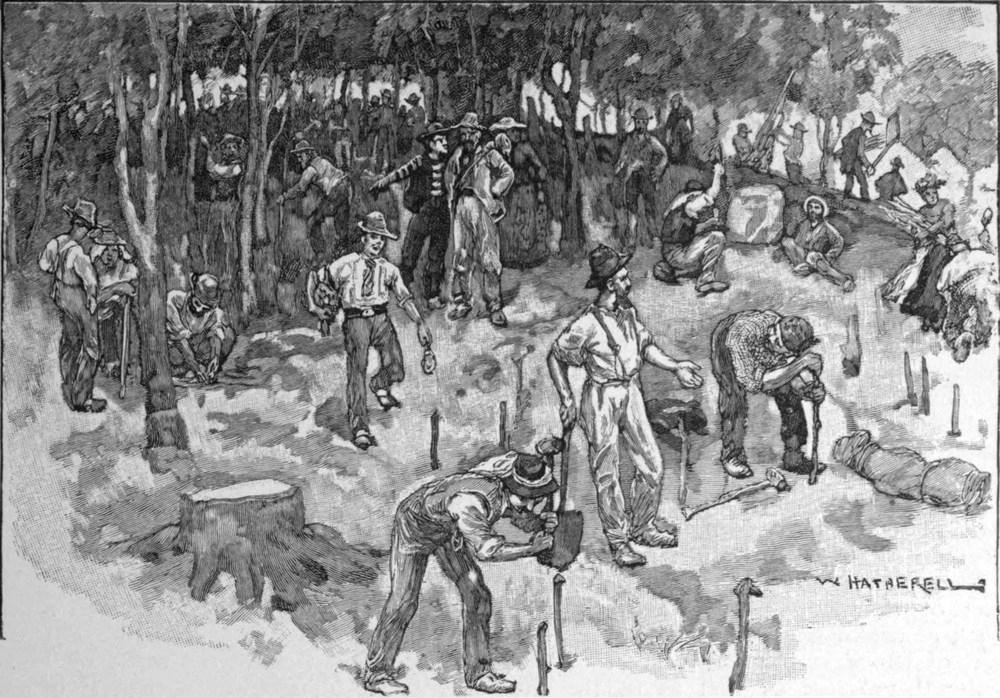
THE FIRST SETTLEMENT OF A NEW CITY
Many flourishing cities in South Africa, Australia, and America have grown up around the sites where the first gold-seekers pegged out their claims in unexploited territories and began digging for the precious metal.
The history of the successive discovery, commixture, and applications of the metals, from copper and bronze down to manganese, platinum, and aluminium, or of the successive discovery and utilisation of sources of power—the natural sources, such as water and wind, the artificially procured, such as steam, gas, and electricity—or of the production and manufacture of materials available for clothing, wool, hair, linen, silk, cotton, would show how every step becomes the basis for another step, and how inventions in one department suggest or facilitate inventions in another. Recent discoveries in surgery and medicine, such as the use of antiseptics, tend to improve health and to prolong life; and in doing so, they increase the chances of further discoveries being made.
The Prolonging of Life
Who can tell what the world may have lost by the early death of many a man of genius? One peculiar line of discovery which at first seemed to have nothing to do with practice has proved to be of signal service; the working out of mathematical methods of calculation by means of which the mechanical and physical sciences have in recent times made a progress in their practical application undreamt of by those who laid the foundations of geometry and algebra many centuries ago. It may, indeed, be said that all the sciences need one another, and that none has been without its utilities for practice, since even that which deals with the heavenly bodies has been used for the computation of time, was used by the agriculturist before he had any calendars to guide him, and has been of supreme value to the navigator. It has also been suggested that an observation of sun spots may enable the advent of specially hot seasons, involving droughts, to be predicted.
Another kind of knowledge also grows by the joint efforts of many peoples, that which records the condition of men in the past and the present, including history, economics, statistics, and the other so-called social sciences. This kind also is useful for practice, and has led to improvements by which nearly all nations have profited, such as an undebased currency, banking and insurance, better systems of taxation, corporations, and joint stock companies. With this we may couple the invention of improved political institutions.
The accumulation of knowledge, especially of scientific knowledge applied to the exploitation of the resources of Nature, means the accumulation of wealth—that is to say, of all the things which men need or use. The total wealth of the world must have at least quadrupled or quintupled within the last hundred years. Nearly all of it is in the hands or under the control of the civilised nations of European stock, among whom the United States stands foremost, both in rate of economic growth and in the absolute quantity of values possessed.
Knowledge Means Wealth
Two further observations belong to this part of the subject. One is that this stock of useful knowledge, the accumulation of which is the central fact of the material progress as well as of the intellectual history of mankind, now belongs to (practically) all races and states alike. Some, as we shall note presently, are more able to use it than others, but all have access to it. This is a new fact. It is true that most races have contributed something to the common stock; and that even among the civilised peoples, no one or two or three (except possibly the Greeks as respects ancient times) can claim to have contributed much more than the others. But in earlier ages there were peoples or groups of peoples who were for a time the sole possessors of inventions which gave them great advantages, especially for war. Superior weapons as well as superior drill enabled Alexander the Great, and afterward the Romans, to conquer most of the civilised world. Horses and firearms, with courage and discipline, enabled two Spanish adventurers to seize two ancient American empires with very scanty forces, as they enabled a handful of Dutch Boers to overcome the hosts of Mosilikatze and Dingaan. So there were formerly industrial arts known to or practised by a few peoples only. But now all inventions, even those relating to war, are available even to the more backward races, if they can learn how to use them or can hire white men to do so for them. The facilities of communication are so great, the means of publicity so abundant, that everything becomes speedily known everywhere.
Inventions are now Universal
The other observation is that there is now no risk that any valuable piece of knowledge will be lost. Every public event that happens, as well as every fact of scientific consequence, is put on record, and that not on a single stone or in a few manuscripts, but in books, of which so many copies exist that even the perishable nature of the material will not involve the loss of the contents, since, if these contents are valuable, they will be transferred to and issued in other books, and so ad infinitum. Thus every process of manufacture is known to so many persons that while it continues to be serviceable it is sure to be familiar and transmitted from generation to generation by practice as well as by description. We must imagine a world totally different from the world we know in order to imagine the possibility of any diminution, indeed of any discontinuance of the increase, of this stock of knowledge which the world has been acquiring, and which is not only knowledge but potential wealth.
When one passes from knowledge considered as a body of facts ascertained and available for use to the thing we call intellectual aptitude or culture—namely, the power of turning knowledge to account and of producing results in spheres other than material—and when we inquire whether mankind has made a parallel advance in this direction, it becomes necessary to distinguish three different kinds of intellectual capacity.
The first may be called the power of using scientific methods for investigating phenomena, whether physical or social.
No Decrease of Knowledge is now Likely
The second is the power of speculation, applied to matters which have not hitherto been found capable of examination by the methods of science, whether observational, experimental, or mathematical. The third is the power of intellectual creation, whether literary or artistic.
The methods of scientific inquiry may almost be classed with the ascertained facts of science or with inventions, as being parts of the stock of accumulated knowledge built up by the labour of many generations. They are known to everybody who cares to study them, and can be learnt and applied by everybody who will give due diligence. Just as every man can be taught to fire a gun, or steer a ship, or write a letter, though guns, helms, and letters are the result of discoveries made by exceptionally gifted men, so every graduate in science of a university can use the methods of induction, can observe and experiment with a correctness which a few centuries ago even the most vigorous minds could scarcely have reached.
Original Thinkers are still Rare
Because the methods have been so fully explained and illustrated as to have grown familiar, a vast host of investigators, very few of whom possess scientific genius, are at work to-day extending our scientific knowledge. So the methods of historical criticism—so the methods of using statistics—are to-day profitably applied by many men with no such original gift as would have made them competent critics or statisticians had not the paths been cut by a few great men and trodden since by hundreds of feet. All that is needed is imitation—intelligent and careful imitation. Nevertheless, there remains this sharp contrast between knowledge of the facts of applied science and knowledge of the methods, that whereas there is no radical difference between the ability of one man and that of another to use a mechanical invention, such as a steam plough or an electric motor-car, there is all the difference in the world between the power of one intellect and another to use a method for the purposes of fresh discovery. Knowledge fossilised in a concrete invention or even in a mathematical formula is a sort of tool ready to every hand. But a method, though serviceable to everybody, becomes eminently fruitful only when wielded by the same kind of original genius as that which made discoveries by the less perfect methods of older days. This is apparent even in inquiries which seem to reside chiefly in collection and computation. Everybody tries nowadays to use statistics. Many people do use them profitably. But the people who by means of statistics can throw really fresh and brilliant light on a problem are as few as ever they were.
Advantage of Modern over Old Thinkers
When we turn to the exercise of speculative thought on subjects not amenable to strictly scientific—that is to say, to exact—methods, the gain which has come to mankind by the labour of past ages is of a different order. Metaphysics, ethics, and theology, to take the most obvious examples, are all of them the richer for the thoughts of philosophers in the past. A number of distinctions have been drawn, and a number of classifications made, a number of confusions, often verbal, have been cleared up, a number of fallacies detected, a number of technical terms invented, whereby the modern speculator enjoys a great advantage over his predecessor. His mind has been clarified, and many new aspects of the old problems have been presented, so that he is better able to see all round the old problems.
The Living Thought of Past Ages
None of the great thinkers, from Pythagoras down to Hegel, has left metaphysics where he found it. Yet none can be said to have built on the foundations of his predecessors in the same way as the mathematicians and physicists and chemists have added to the edifice they found. What the philosophers have done is to accumulate materials for the study of man’s faculties and modes of thinking, and of his ideas regarding his relations to the universe, while also indicating various methods by which the study may be pursued. Each great product of speculative thought is itself a part of these materials, and for that reason never becomes obsolete, as the treatises of the old physicists and chemists have mostly become. Aristotle, for instance, has left us books on natural history, on metaphysics and ethics, and on politics. Those on natural history are mere curiosities, and no modern biologist or zoologist needs them. Those on metaphysics and ethics still deserve the attention of the student of philosophy, though he may in a certain sense be said to have got beyond them. The treatise on politics still keeps its place beside Montesquieu, Burke, and Tocqueville. Or, to take a thinker who like Aristotle seems very far removed from us, though fifteen hundred years later in date, St. Thomas of Aquinum discusses questions from many of which the modern world has moved away, and discusses them by methods which many do not now use, starting from premises which many do not accept. But he marks a remarkable stage in the history of human thought, and as a part of that history, and as an example of extraordinary dialectical ingenuity and subtlety, he remains an object of interest to those least in agreement with his conclusions.
Every Great Thinker Affects Others
Every great thinker affects other thinkers, and propagates the impulse he has received, though perhaps in a quite different direction. The teaching of Socrates was the starting point for nearly all the subsequent schools of Greek philosophy. Hume became the point of departure for Kant, who desired to lay a deeper foundation for philosophy than that which Hume seemed to have overturned. All these great ones have not only enriched us, but are still capable of stimulating us. But they have not improved our capacity for original thinking. The accumulation of scientific knowledge has, as already observed, put all mankind in a better position for solving further physical problems and establishing a more complete dominion over Nature. The accumulation of philosophic thought has had no similar effect. In the former case each man stands, so to speak, on the shoulders of his predecessors. In the latter he stands on his own feet. The value of future contributions to philosophy will depend on the original power of the minds that make them, and only to a small extent (except by way of stimulus) on what such minds may have drawn from those into whose labours they have entered.
Ebb-Tides of Intellectual Culture
When we come to the products of literary and artistic capacity, we find an even vaster accumulation of intellectual treasure available for enjoyment, but a still more marked absence of connection between the amount of treasures possessed and the power of adding fresh treasures to them. Since writing came into use, and, indeed, even in the days when memory alone preserved lays and tales, every age and many races have contributed to the stock. There have been ebbs and flows both in quantity and quality. The centuries between A.D. 600 and A.D. 1100 have left us very little of high merit in literature, though something in architecture; and the best of that little in literature did not come from the seats of Roman civilisation in Italy, France, Spain, and the East Roman Empire.
Some periods have seen an eclipse of poetry, others an eclipse of art or a sterility in music. Literature and the arts have not always flourished together, and musical genius in particular seems to have little to do with the contemporaneous development of other forms of intellectual power. The quantity of production bears no relation to the quality, not even an inverse relation; for the pessimistic notion that the larger the output the smaller is the part which possesses brilliant excellence, has not been proved. Still less does the amount of good work produced in any given area depend upon the number of persons living in that area. Florence, between A.D. 1250 and A.D. 1500 gave birth to more men of first-rate poetical and artistic genius than London has produced since 1250; yet Florence had in those two and a half centuries a population of probably only from forty to sixty thousand. And Florence herself has since A.D. 1500 given birth to scarcely any distinguished poets or artists, though her population has been larger than it was in the fifteenth century.
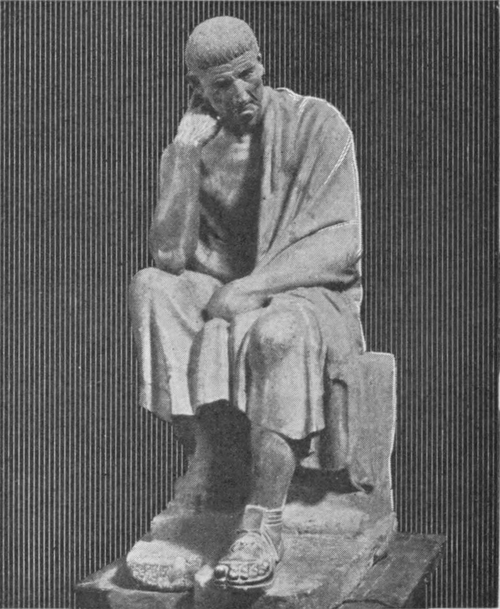
Mansell
THE MIND OF THE ANCIENT WORLD
Aristotle (B.C. 384–322) whose influence is greater in some lines than that of St. Thomas of Aquinum, who represents mediæval thought, 1500 years later.
The increase in the world’s stock of intellectual wealth is one of the most remarkable facts in history, for it represents a constant increase in the means of enjoyment. Such losses as there have been nearly all occurred during the Dark Ages; but there is now little risk that anything of high literary or musical value will perish, though, of course, works of art, and especially buildings and carvings, suffer or vanish.
The increase does not, however, tend to any strengthening of the creative faculty. There is a greater abundance of models of excellence, models of which form the taste, afford a stimulus to sensitive minds, and establish a sort of technique with well-known rules. The principles of criticism are more fully investigated. The power of analysis grows, and the appreciation both of literature and of art is more widely diffused. Their influence on the whole community becomes greater, but the creative imagination which is needed for the production of original work becomes no more abundant and no more powerful. It may, indeed, be urged, though our data are probably insufficient for a final judgment, that the finer qualities of poetry and of pictorial and plastic art tend rather to decline under the more analytic habit of mind which belongs to the modern world. Simplicity, freshness, spontaneity come less naturally to those who have fallen under the pervasive influence of this habit.
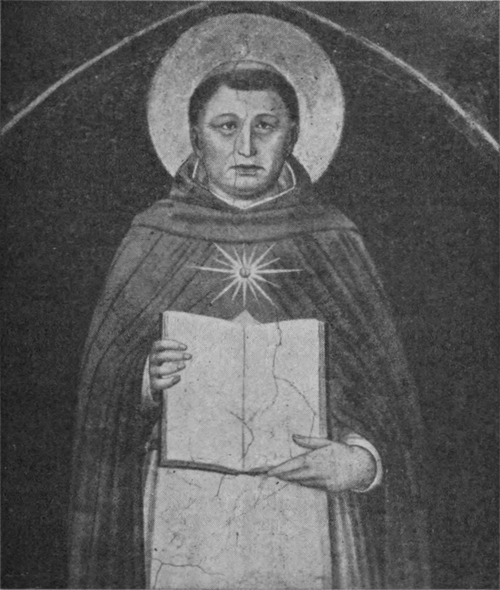
Mansell
THE MIND OF THE MEDIÆVAL WORLD
St. Thomas of Aquinum, 1500 years later than Aristotle, represents mediæval thought. St. Thomas, however, influences the life and thought of many thousands to-day.
Effect of Thought on Mankind
There remains one other way in which the incessant play of thought may be said to have increased or improved the resources of mankind. Certain principles or ideas belonging to the moral and social sphere—to the moral sphere by their origin, to the social sphere by their results—make their way to a more or less general acceptance, and exert a potent influence upon human life and action. They are absent in the earliest communities of which we know, or are present only in germ. They emerge, sometimes in the form of customs gradually built up in one or more peoples, sometimes in the utterances of one gifted mind. Sometimes they spread impalpably; sometimes they become matter for controversy, and are made the battle-cries of parties. Sometimes they end by being universally received, though not necessarily put into practice. Sometimes, on the other hand, they continue to be rejected in one country, or by one set of persons in a country, as vehemently as they are asserted by another. As instances of these principles or ideas or doctrines, whatever one is to call them, the following may be taken: The condemnation of piracy, of slavery, and of treaty-breaking, of outrages on the bodies of dead enemies, of cruelty to the lower animals, of the slaughter of prisoners in cold blood, of polygamy, of torture to witnesses or criminals; the recognition of the duty of citizens to obey the laws, and of the moral responsibility of rulers for the exercise of their power, of the right of each man to hold his own religious opinion and to worship accordingly, of the civil (though not necessarily of the political) equality of all citizens; the disapproval of intoxication, the value set upon female chastity, the acceptance of the social and civil (to which some would add the political) equality of women.
Men who Contributed to Progress Slavery was Destroyed by Sentiment
All these dogmas or ideas or opinions—some have become dogmas in all civilised peoples, others are rather to be described as opinions whose truth or worth is denied or only partially admitted—are the slow product of many generations. Most of them are due to what we may call the intelligence and sentiment of mankind at large, rather than to their advocacy by any prominent individual thinkers. The teachings of such thinkers have, of course, done much to advance them. Everybody would name Socrates and Confucius as among the men who have contributed to their progress; some would add such names as those of Mohammed and St. Francis of Assisi. Christianity has, of course, made the largest contributions. How much is due to moral feeling, how much to a sense of common utility, cannot be exactly estimated. Economic reasonings and practical experience would have probably in the long run destroyed slavery, but it was sentiment that did in fact destroy it in the civilised States where it had longest survived.
How much these doctrines, even in the partial and imperfect application which most of them have secured, have done for humanity may be perceived by anyone who will imagine what the world would be if they were unknown. They form one of the most substantial additions made to what may be called the intellectual and moral capital with which man has to work this planet and improve his own life upon it. And the most interesting and significant crises in history are those which have turned upon the recognition or application of principles of this kind. The Reformation of the sixteenth century, the French Revolution, the War of Secession in the United States, are familiar modern examples.
Intellect Mightier than Population
Putting all these forms of human achievement together—the extension of the scientific knowledge of Nature with consequent mastery over her, the scientific knowledge of social phenomena in the past and the present, the records of philosophic speculation, the mass of literary and artistic products, the establishment, however partial and imperfect, of regulative moral and political principles—it will be seen that the accumulation of this vast stock of intellectual wealth has been an even more important factor than the increase of population in giving man strength and dignity over against Nature, and in opening up to him an endless variety of modes of enjoying life—that is to say, of making it yield to him the most which its shortness and his own physical infirmities permit. The process by which this accumulation has been carried along is the central thread of history. The main aim of a history of the world must be to show what and how each race or people has contributed to the general stock. To this aim political history, ecclesiastical history, economic history, the history of philosophy, and the history of science, are each of them subordinate, though it is only through them that the process can be explained.
In these last few pages intellectual progress has been considered apart from the area in which it has gone on, and apart from the conditions imposed on it by the natural features of that area. A few words are, however, needed regarding its relation to the surface of the earth. The movement of civilisation must be considered from the side of space as well as from that of time.
Contraction of the World
Space is a material element in the inquiry because it has divided the families of mankind from one another. Some families, such as the Chinese and the Peruvians, have developed independently, some, such as the South and West European peoples, in connection with, or perhaps in dependence on, the development of other races or peoples. Hence that which each achieved was in some cases achieved for itself only, in other cases for its neighbours as well. The contributions made by different races have—at any rate during the last four thousand years, and probably in earlier days also—been very unequal; yet none can have failed to contribute something if only by way of influencing the others. Inequality in progress would seem to have become more marked in the later than in the earlier periods. Indeed, some races, such as those of Australia, appear during many centuries, possibly owing to their isolation, to have made no progress at all. They may even have receded.
When we regard the evolution and development of man from the side of his relations to space, three facts stand out—the contraction of the world, the overflow of the more advanced races, and the consequent diffusion all over the world of what is called civilisation.
By the contraction of the world, I mean the greater swiftness, ease, and safety with which men can pass from one part of it to another, or communicate with one another across great intervening spaces. This has the effect of making the world smaller for most practical purposes, while the absolute distance in latitude and longitude remains the same. The progress of discovery is worth tracing, for it shows how much larger the small earth, which was known to the early nations, must have seemed to them than the whole earth, which we know, seems to us.
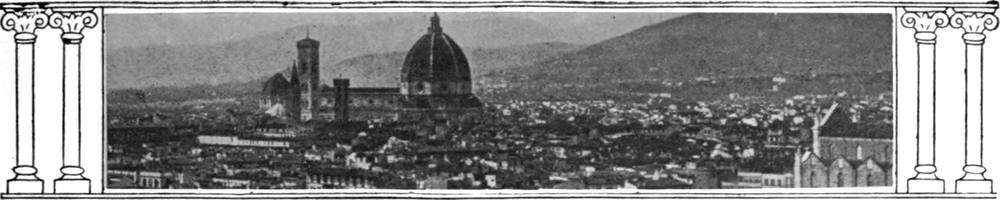
THE ARTISTIC GENIUS OF TWO CITIES
A COMPARISON OF THE NATIVE POETS & ARTISTS OF FLORENCE & LONDON
“The quantity of production,” says Mr. Bryce, “bears no relation to the quality. Still less does the amount of good work produced in any given area depend upon the number of persons living in that area. Florence between A.D. 1250 and A.D. 1500 gave birth to more men of first-rate poetical and artistic genius than London has produced since 1250; yet Florence had in those two and a half centuries a population of probably only from forty to sixty thousand. And Florence herself has since A.D. 1500 given birth to scarcely any distinguished poets or artists, though her population has been larger than it was in the fifteenth century.”
THE GENIUS OF THE GOLDEN AGE OF FLORENCE, 1250 TO 1500, FAR EXCEEDED THAT OF LONDON FROM 1250 TO THE PRESENT DAY
Poets and Artists Born in Florence from 1250–1500
Alberti, Leon Battista, 1404–1472, architect, painter
Albertinelli, Mariotto, 1474–1515, painter
Andrea del Sarto, 1487–1531, painter
Angelico da Fiesole, Fra Giovanni, 1387–1455, painter
Botticelli, Alessandro, 1447–1510, painter
Cavalcanti, Guido, 1255–1300, poet, philosopher
Cimabue, Giovanni, 1240–1302, painter
Credi, Lorenzo di, 1459–1537, painter
Dante, Alighieri, 1265–1321, poet
Donatello, 1386–1466, sculptor and painter
Ghiberti, Lorenzo, 1378–1455, sculptor
Ghirlandajo, Domenico, 1449–1494, painter
Gozzoli, Benozzo, 1420–1498, painter
Leonardo da Vinci, 1452–1519, painter, sculptor
Lippi, Fra Filippo, 1412–1469, painter
Lippi, Filippino, 1459–1504, painter
Lorenzo, Don, 1370–1425, painter
Medici, Lorenzo de, 1448–1492, poet
Orcagnia, Andrea di Cione, 1329–1368? sculptor, painter
Perugino, Vannucci Pietro, 1446–1524, painter
Pesellino, Francesco di, 1422–1457, painter
Pesello, Giuliano, 1367–1446, painter, sculptor
Pollajuolo, Antonio, 1429–1498, sculptor, painter
Pollajuolo, Piero, 1443–1496, sculptor, painter
Robbia, Andrea della, 1437–1528, sculptor
Robbia, Luca della, 1399–1482, sculptor
Rossi, Giovanni Battista de, 1494–1541, sculptor, painter
Ruccellai, Giovanni, 1475–1525, poet
Spinello, Aretino, 1334–1410, painter
Ucello, Paolo, 1397–1475, painter
Verocchio, Andrea, 1435–1488, sculptor, painter
THE LAST FOUR HUNDRED YEARS OF FLORENTINE CULTURE HAVE BEEN LESS PRODUCTIVE THAN THE PRECEDING TWO AND A HALF CENTURIES
Poets and Artists Born in Florence since 1500
Allori, Christofano, 1577–1621, painter
Bronzino, Angelo, 1502–1572, painter
Cellini, Benvenuto, 1500–1571, sculptor
Cigoli, Luigi Cardi da, 1559–1613, painter
Cortona, Pietro da, 1596–1669, architect, painter
Dolci, Carlo, 1616–1686, painter
Doni, Antonio Francesco, 1513–1574, author
Furini, Francesco, 1604–1646, painter
Ligozzi, Jacobino, 1543–1627, painter
Poccetti, Bernardino, 1542–1612, painter
Salviati, Francesco, 1510–1563, painter
San Giovanni, Giovanni da, 1599–1636, painter
Santi di Tito, 1538–1603, painter
Tacco, Pietro, 1580–1640, sculptor
Venusti, Marcello, 1515–1579, painter
The Only Great Poet Born in London from 1250–1500
Chaucer, Geoffrey, 1328–1400
Poets and Artists Born in London since 1500
Blake, William, 1757–1827, poet and painter
Browning, Robert, 1812–1889, poet
Byron, Geo. Gordon Noel, Lord, 1788–1824, poet
Defoe, Daniel, 1659–1731, author
Ford, Edward Onslow, 1852–1901, sculptor
Gilbert, Alfred, R.A., 1854– —, sculptor
Gray, Thomas, 1716–1771, poet
Hogarth, William, 1697–1764, painter
Hood, Thomas, 1799–1845, poet
Hunt, William Holman, 1827–1910, painter
Jonson, Ben, 1573–1637, poet and dramatist
Keats, John, 1795–1821, poet
Lamb, Charles, 1775–1834, essayist
Linnell, John, 1792–1882, painter
Lucas, John Seymour, 1849– —, painter
Milton, John, 1608–1674, poet
Morland, George, 1763–1804, painter
Pope, Alexander, 1688–1744, poet
Richmond, Sir William Blake, 1843– —, painter
Rossetti, Dante Gabriel, 1828–1882, poet, painter
Ruskin, John, 1819–1900, author and art critic
Spenser, Edmund, 1552–1599, poet
Stothard, Thomas, 1755–1834, painter, illustrator
Swinburne, Algernon, 1837–1909, poet
Walker, Frederick, 1840–1875, painter
Watts, George F., 1817–1904, painter, sculptor

The Small World of the Ancients
The most ancient records we possess from Assyria, Egypt, Palestine, and from the Homeric poems, show how very limited was the range of geographical knowledge possessed by that small civilised world from which our own civilisation has descended. Speaking roughly, that knowledge seems in the tenth century B.C. to have extended about one thousand miles in each direction from the Isthmus of Suez. However, the best point of departure for the peoples of antiquity is the era of Herodotus, who travelled and wrote B.C. 460–440. The limits of the world as he knew it were Cadiz and the Straits of Gibraltar on the west, the Danube and the Caspian on the north, the deserts of Eastern Persia on the east, and the Sahara on the south, with vague tales regarding peoples who lived beyond, such as Indians far beyond Persia, and pygmies beyond the Sahara. He reports, however, not without hesitation, a circumnavigation of Africa by Phœnicians in the service of Pharaoh Necho.
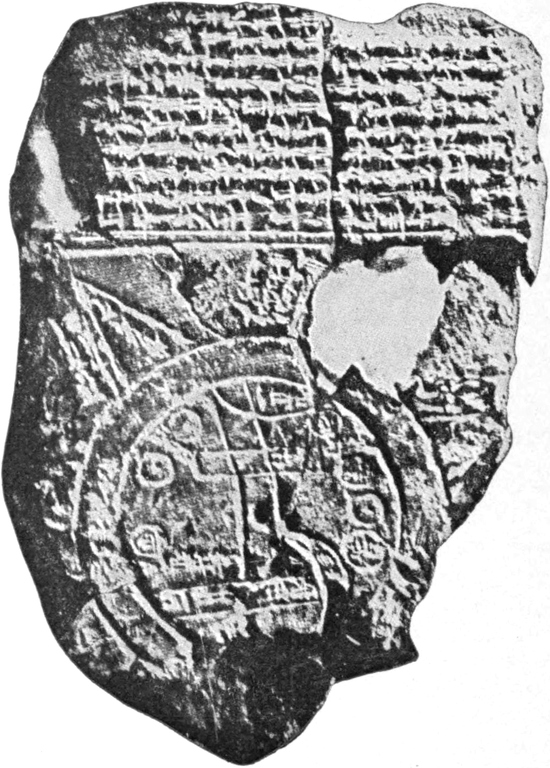
THE FIRST KNOWN MAP OF THE WORLD
This Babylonian map is probably of the eighth century B.C. The two circles are supposed to represent the ocean, while the River Euphrates and Babylon are shown inside them. The upper part of the tablet is a cuneiform inscription.
Discovery advanced very slowly for many centuries, though the march of Alexander opened up part of the East, while the Roman conquests brought the Far North-West, including Britain, within the range of civilisation; and occasional voyages, such as that of Hanno along the coast of West Africa, that of Nearchus through the Arabian Sea, and that of Pythias to the Baltic, added something to knowledge. Procopius in A.D. 540 can tell us little more regarding the regions beyond Roman influence than Strabo does five and a half centuries earlier. The journeys of Marco Polo and Rubruquis throw only a passing light on the Far East. It is with the Spanish occupation of the Canary Isles, beginning in 1602, and with the Portuguese voyages of the fifteenth century, that the era of modern discovery opens. The re-discovery of America in 1492, for it had been already visited by the Northmen of Greenland and Iceland in the eleventh century, and the opening of the Cape route to India in 1497–1498, were hardly equal to the exploit of Magellan, whose circumnavigation of the globe in 1519–1520 marks the close of this striking period. Thereafter discovery proceeds more slowly. Some of the isles of the central and southern Pacific were not visited till the middle of the eighteenth century, and the north-west coast of America as well as the north-east Coast of Asia, remained little known till an even later date. Those explorations of the interior of North America, of the interior of Africa, of the interior of Australia, and of East Central Asia, which have completed our knowledge of the earth, belong to the nineteenth century. The first crossing of the North American Continent north of latitude 40° was not effected till A.D. 1806.
The Thirst for New Territories
The desire for new territory, for the propagation of religion, and, above all, for the precious metals, were the chief motives which prompted the voyages of the fifteenth and sixteenth centuries. These motives have remained operative; and to them has been added in more recent times the spirit of pure adventure and the interest in science, together with, increasing measure, the effort to secure trade. But the extension of trade followed slowly in the wake of discovery. China and Japan remained almost closed. The policy of Spain sought to restrict her American waters to her own ships, and the commerce they carried was scanty. Communication remained slow and dangerous across the oceans till the introduction of steam vessels (1825–1830).
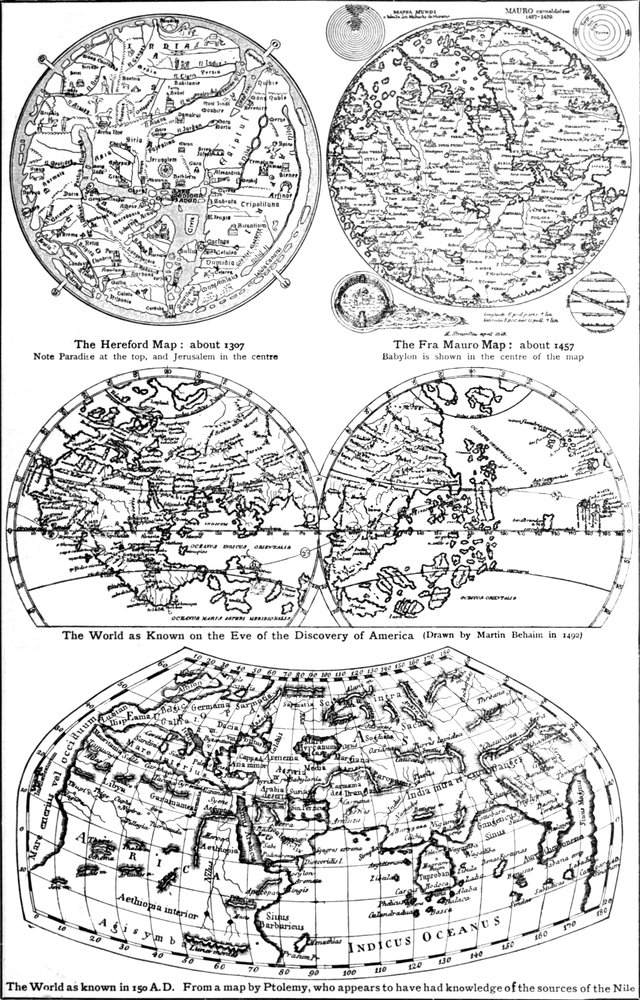
THE FIRST MAPS: SOME EARLY GEOGRAPHERS’ IDEAS OF THE WORLD
LARGER IMAGE
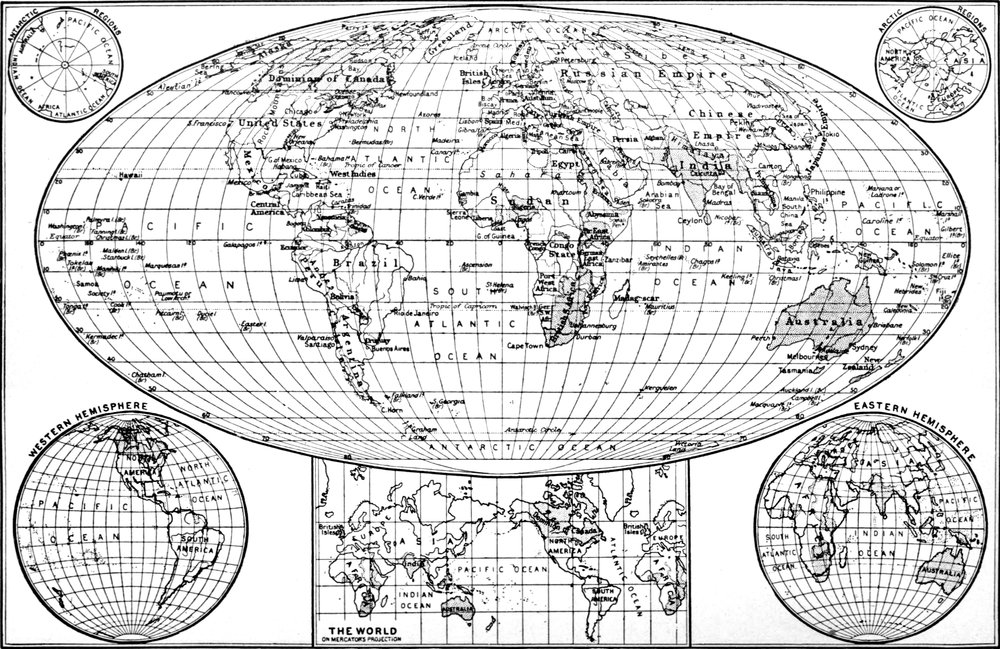
THE MODERN REPRESENTATION OF THE WORLD: SHOWN ON THREE DIFFERENT PROJECTIONS
In each case the British Empire is shaded
LARGER IMAGE
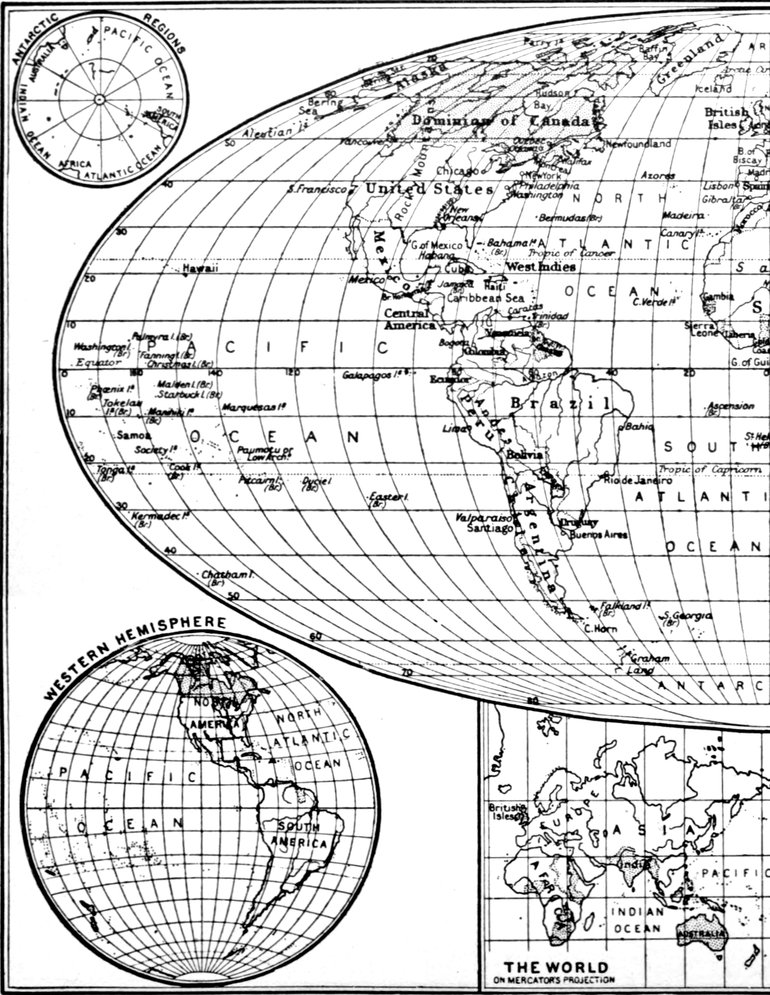
Modern Representation of the World; Western Part
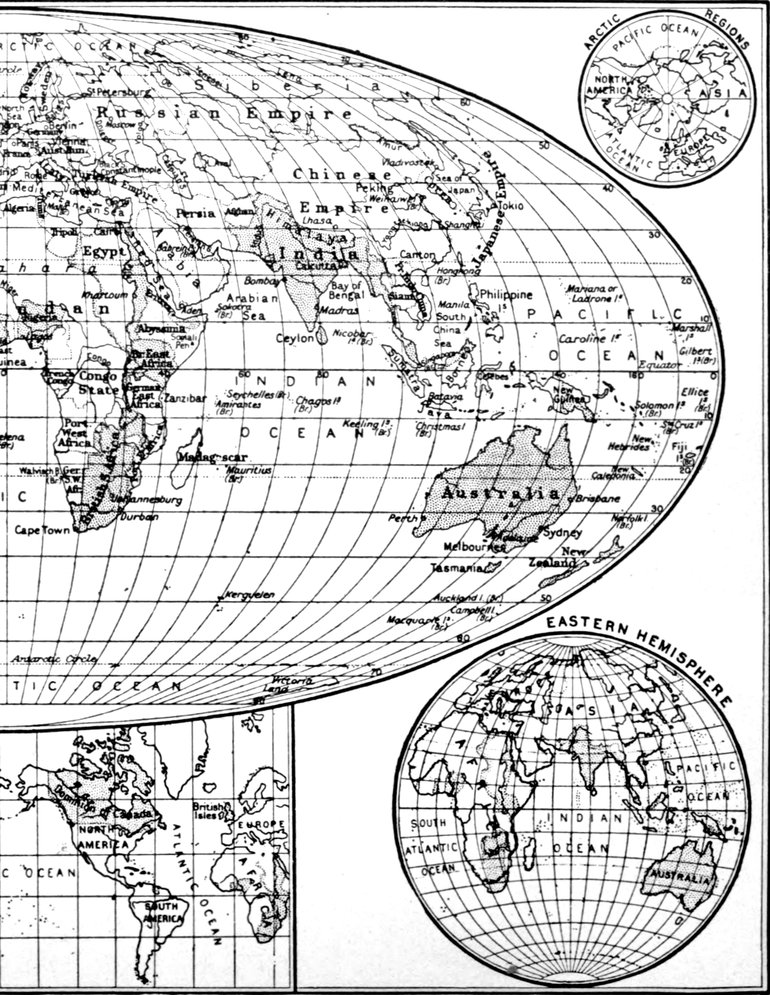
Modern Representation of the World; Eastern Part
Round the World in 40 Days!
Land transport, though it had steadily increased in Europe, remained costly as well as slow till the era of railway construction began in 1829. The application of steam as a motive power and of electricity as a means of communicating thought has been by far the greatest factor in this long process of reducing the dimensions of the world, which dates back as far as the domestication of beasts of burden, and the invention, first of paddles and oars, and then of sails. The North American Continent can now be crossed in five days, the South American (from Valparaiso to Buenos Ayres) in under two, the Transandine tunnel having now been pierced. The Continent which stretches from the Baltic to the North Pacific can now be traversed in twelve days. By means of the Trans-Siberian line and its steamship connection with the ports of Japan, it is now possible to go round the globe in less than fifty days. Indeed, the journey has recently been done in forty days. Nor is this acceleration of transit more remarkable than its practical immunity, as compared with earlier times, not only from the dangers for which Nature is answerable, but from those also which man formerly interposed.
The increase of trade which has followed in the track first of discovery and latterly (with immensely larger volume) of the improvement of means of transport, has been accompanied not only by the seizure of transoceanic territories by the greater civilised States, but also by an outflow of population from those States into the more backward or more thinly-peopled parts of the earth. Sometimes, as in the case of North America, Siberia, and Australia, the emigrants extinguish or absorb the aboriginal population.
Europeanisation of the World
Sometimes, as in the case of India, Africa, and some parts of South America, they neither extinguish nor blend with the previous inhabitants, but rule them and spread what is called civilisation among them—this civilisation consisting chiefly in a knowledge of the mechanical arts and of deathful weapons accompanied by the destruction, more or less gradual, of their pre-existing beliefs and usages. Sometimes, again, as in the case of China, and to some extent also of the Mussulman East, though political dominion is not established, the process of substituting a new civilisation for the old one goes on despite the occasional efforts of the backward people to resist the process. The broad result is everywhere similar. The modern European type of civilisation is being diffused over the whole earth, superseding, or essentially modifying, the older local types. Thus, in a still more important sense than even that of communications, the world is contracted and becomes far more one than it has ever been before. The European who speaks three or four languages can travel over nearly all of it, and he can find on most of its habitable coasts, and in many parts of the lately-discovered interior, the appliances which are to him necessaries of life. The world is, in fact, becoming an enlarged Europe, so far as the externals of life and the material side of civilisation are concerned. The dissociative forces of Nature have been overcome.
Triumph of Natural Science
Putting together the two processes, the process in time and the process in space, which we have been reviewing, it will be seen that the main line of the development of mankind may be described as the transmission and the expansion of culture—that is to say, of knowledge and intellectual capacity. The stock of knowledge available for use and enjoyment has been steadily increased, and what each people accumulated has been made available for all. With this there has come assimilation, the destruction of weaker types of civilisation, the modification by constant interaction of the stronger types, the creation of a common type tending to absorb all the rest. Assimilation has been most complete in the sphere ruled by natural science—that is to say, in the material sphere, less complete in that ruled by the human sciences (including the sphere of political and social institutions), still less complete in the sphere of religious, moral, and social ideas, and as respects the products of literature and art. Or, in other words, where certainty of knowledge is attainable and utility in practice is incontestable, the process of assimilation has moved fastest and furthest.
Nature & the Unity of Mankind
The process has been a long one, for its beginnings reach back beyond our historical knowledge. So far as it lies within the range of history, it falls into two periods, the earlier of which supplies an instructive illustration of the later one which we know better. The effort which Nature—that is to say, the natural tendencies of man as a social being—has been making towards the unification of mankind during the last few centuries, is her second great effort. The first was in progress from the time when the most ancient records begin down to the sixth and seventh centuries of the Christian era.
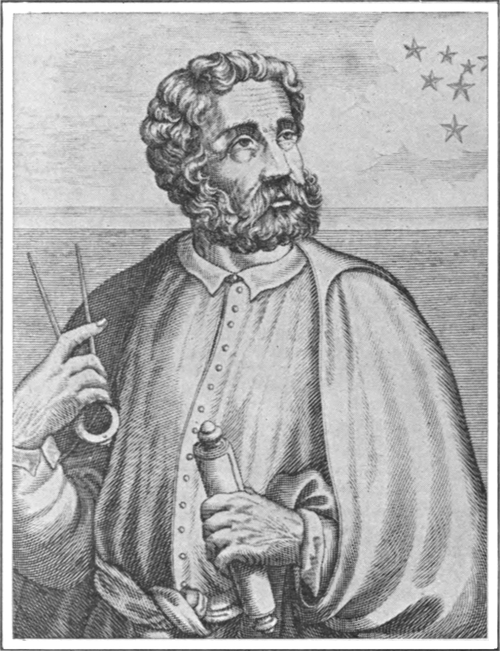
THE FIRST TRAVELLER ROUND THE GLOBE
The great exploit of Ferdinand Magellan, who circumnavigated the globe in 1519–1520, ranks among the events of world importance, and was the culminating achievement of the greatest period of discovery in the world’s history.
Greek civilisation, which itself had drawn much from Egypt, as well as from Assyria, Phœnicia, and the peoples of Asia Minor, permeated the minds and institutions (except the legal institutions), of the Mediterranean and West European countries, and was propagated by the governing energy of the Romans. In its Romanised form it transformed or absorbed and superseded the less advanced civilisations of all those countries, creating one new type for the whole Roman world. With some local diversities, that type prevailed from the Northumbrian Wall of Hadrian to the Caucasus and the deserts of Arabia. The still independent races on the northern frontier of the Empire received a tincture of it, and would doubtless have been more deeply imbued had the Roman Empire stood longer.
Christianity, becoming dominant at a time when the Empire was already tottering, gave a new sense of unity to all whom the Greco-Roman type had formed, extended the influence of that type still further, and enabled much that belonged to it (especially its religious, its legal, and its literary elements) to survive the political dominion of the Emperors and to perpetuate itself among practically independent States which were springing up. The authority of Papal Rome helped to carry this sense of unity among civilised men through a period of ignorance, confusion, and semi-barbarism which might otherwise have extinguished it. Nevertheless, we may say, broadly speaking, that the first effort towards the establishment of a common type of civilisation was, if not closed, yet arrested by the dissolution of the Roman Empire in the West. Close thereupon came the rise of Islam, tearing away the Eastern provinces, and creating a rival type of civilisation—though a type largely influenced by the Greco-Roman—which held its ground for some centuries, and has only recently shown that it is destined to vanish.
Conquest and Civilisation
The beginnings of the second effort toward the unification of civilised mankind may be observed as far back as the eleventh and twelfth centuries. Its effective and decisive action may, however, be assigned to the fifteenth, when the spread of literary and philosophic culture, and the swift extension of maritime discovery, ushered in the modern phase wherein we have marked its irresistible advance. This phase differs from the earlier one both in its range—for it embraces the whole earth and not merely the Mediterranean lands—and in its basis, for it rests not so much upon conquest and religion as upon scientific knowledge, formative ideas, and commerce. Yet even here a parallelism may be noted between the ancient and the modern phase. Knowledge and ideas had brought about a marked assimilation of various parts of the ancient world to each other before Roman conquest completed the work, and what conquest did was done chiefly among the ruder races. So now, while it is knowledge and ideas that have worked for the creation of a common type among the peoples of European stock, conquest has been a potent means of spreading this type in the outlying countries and among the more backward races whose territories the European nations have seized.
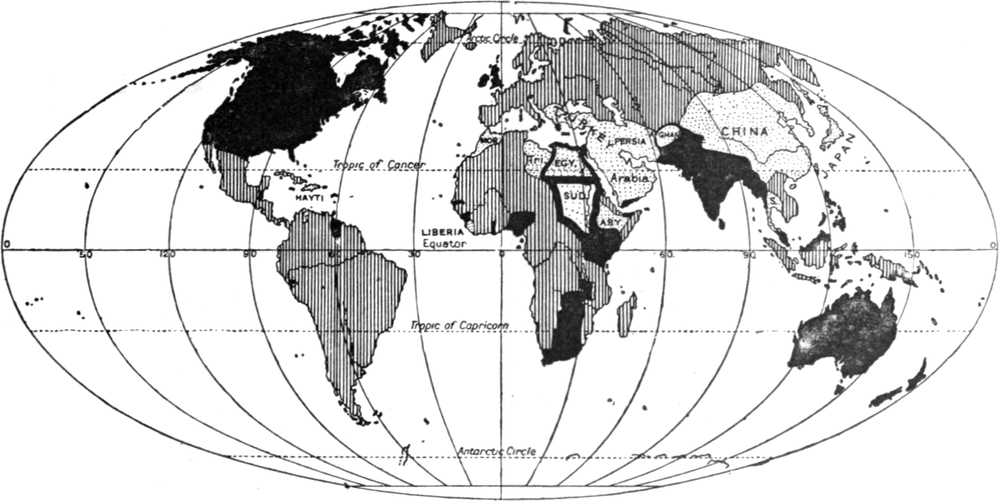
THE EUROPEANISATION OF THE WORLD
European civilisation is being diffused all over the earth, superseding or essentially modifying the older local types. The solid black portions of this map represent territory under Anglo-Saxon control; the shaded parts are under other European control, and the dotted parts under Asiatic and African control.
Language a Unifying Influence
The diffusion of a few forms of speech has played a great part in both phases. Greek was spoken over the eastern half of the Roman world in the second century A.D., though not to the extinction of such tongues as Syriac and Egyptian. Latin was similarly spoken over the western half, though not to the extinction of the tongues we now call Basque and Breton and Welsh; and Latin continued to be the language of religion, of law, of philosophy, and of serious prose literature in general till the sixteenth century. So now, several of the leading European tongues are spoken far beyond the limits of their birthplace, and their wide range has become a powerful influence in diffusing European culture. German, English, Russian, Spanish, and French are available for the purposes of commerce, and for those who read books over nineteen-twentieths of the earth’s surface. The languages of the smaller non-European peoples are disappearing in those places where they have to compete with these greater European tongues, except in so far as they are a medium of domestic intercourse. Arabic, Chinese, and in less degree Persian are the only non-European languages which retain a world importance. English, German, and Spanish are pre-eminently the three leading commercial languages. They gain ground on the rest, and it is English that gains ground most swiftly. The German merchant is no doubt even more ubiquitous (if the expression be permitted) than is the English; but the German more frequently speaks English than the Englishman or American speaks German.
Linking the Nations Together
It has already been observed that assimilation has advanced least in the sphere of institutions, ideas, and literature. The question might, indeed, be raised whether the types of thought, of national character, and of literary activity represented by the five or six leading nations are not rather tending to become more accentuated. The self-consciousness of each nation, taking the form of pride or vanity, leads it to exalt its own type and to dwell with satisfaction on whatever differentiates it from other types. Nevertheless there are influences at work in the domain of practice as well as of thought, which, in creating a common body of opinion and a sense of common interest among large classes belonging to these leading nations, tend to link the nations themselves together. Religious sympathy, or a common attachment to certain doctrines, such as, for instance, those of Collectivism, works in this direction among the masses, as the love of science or of art does among sections of the more educated class. As regards the peoples not of European stock, who are, broadly speaking, the more backward, it is not yet possible to say what will be the influence of the European type of culture upon their intellectual development.
The material side of their civilisation will after a time conform to the European type, though, perhaps, to forms that are not the most progressive; and even such faiths as Buddhism and Islam may lose their hold on those who come most into contact with Europeans. But whether these peoples will produce any new types of thought or art under the stimulus of Europe, as the Teutons and Slavs did after they had been for centuries in contact with the relics of Greco-Roman culture, or whether they will be overborne by and merely imitate and reproduce what Europeans teach them—this is a question for conjecture only, since the data for predictions are wanting.
It is a question of special interest as regards the Japanese, the one non-European race which, having an old civilisation of its own, highly developed on the artistic side, has shown an amazing aptitude for appropriating European institutions and ideas. Already a Japanese physiologist has taken high rank among men of science by being one of the discoverers of the bacillus of the Oriental plague.
DOES HISTORY MAKE FOR PROGRESS?
O
ONE of the questions which both the writers and the readers of a History of the World must frequently ask themselves is whether the course of history establishes a general law of progress. Some thinkers have gone so far as to say that this must be the moral of history regarded as a whole, and a few have even suggested that without the recognition of such a principle and of a sort of general guidance of human affairs towards this goal, history would be unintelligible, and the doings of mankind would seem little better than the sport of chance.
What is the Test of Progress? What Mankind has Achieved
Whatever may be thought of these propositions as matters of theory, the doctrine of a general and steady law of progress is one to which no historian ought to commit himself. His business is to set forth and explain the facts exactly as they are; and if he writes in the light of a theory he is pretty certain to be unconsciously seduced into giving undue prominence to those facts which make for it. Moreover, the question is in itself a far more complex one than the simple word “progress” at first sight conveys. What is the test of progress? In what form of human advance is it to be deemed to consist? Which of these forms is of the highest value? There can be no doubt of the advance made by man in certain directions. There may be great doubt as to his advance in other directions. There may possibly be no advance but even retrogression, or at least signs of an approaching retrogression, in some few directions. The view to be taken of the relative importance of these lines of movement is a matter not so much for the historian as for the philosopher, and its discussion would carry us away into fields of thought not fitted for a book like the present. Although, therefore, it is true that one chief interest of history resides in its capacity for throwing light on this question, all that need here be said may be expressed as follows:
There has been a marvellous advance in man’s knowledge of the laws of Nature and of his consequent mastery over Nature.
There has been therewith a great increase in population, and, on the whole, in the physical vigour of the average individual man.
There has been, as a further consequence, an immense increase in the material comfort and well-being of the bulk of mankind, so that to most men necessaries have become easier of attainment, and many things which were once luxuries have become necessaries.
Against this is to be set the fact that some of the natural resources of the world are being rapidly exhausted. This would at one time have excited alarm; but scientific discoveries have so greatly extended man’s capacity to utilise other sources of natural energy, that people are disposed to assume that the loss of the resources aforesaid will be compensated by further discoveries.
The Gain and the Loss
As to progress other than material—that is to say, progress in intellectual capacity, in taste, in the power of enjoyment, in virtue, and generally in what is called happiness—every man’s view must depend on the ideal which he sets before himself of what constitutes happiness, and of the relative importance to happiness of the ethical and the non-ethical elements which enter into the conception. Until there is more agreement than now exists or has ever existed on these points, there is no use in trying to form conclusions regarding the progress man has made. Moreover, it is admitted that nearly every gain man makes is accompanied by some corresponding loss—perhaps a slight loss, yet a loss. When we attempt to estimate the comparative importance of these gains and losses, questions of great difficulty, both ethical and non-ethical, emerge; and in many cases our experience is not yet sufficient to determine the quantum of loss. There is room both for the optimist and for the pessimist, and in arguing such questions nearly everybody becomes an optimist or a pessimist. The historian has no business to be either.
There is another temptation besides that of delivering his opinion on these high matters, of which the historian does well to be aware—I mean the temptation to prophesy. The study of history as a whole, more inevitably than that of the history of any particular country or people, suggests forecasts of the future, because the broader the field which we survey the more do we learn to appreciate the great and wide-working forces that are guiding mankind, and the more therefore are we led to speculate on the results which these forces, some of them likely to be permanent, will tend to bring about.
Modern Mastery of Nature
This temptation can seldom have been stronger than it is now, when we see all mankind brought into closer relations than ever before, and more obviously dominated by forces which are essentially the same, though varying in their form. Yet it will appear, when the problem is closely examined, that the very novelty of the present situation of the world—the fact that our mastery of Nature has been so rapidly extended within the last century, and that the phenomena of the subjugation of the earth by Europeans and of the ubiquitous contact of the advanced and the backward races are so unexampled in respect of the area they cover—that all predictions must be uttered with the greatest caution, and due allowance made for elements which may disturb even the most careful calculations. It may, indeed, be doubted whether any predictions of a definitely positive kind—predictions that such and such things will happen—can be safely made, save the obvious ones which are based on the assumption that existing natural conditions remain for some time operative.
A Glimpse into the Future
Taking this assumption to be a legitimate one, it maybe predicted that population will continue to increase, at least till the now waste but habitable parts of the earth have been turned to account; that races, except where there is a marked colour line, will continue to become intermingled; that the small and weak races, and especially the lower set of savages, will be absorbed or die out; that fewer and fewer languages will be spoken; that communications will become even swifter, easier, and cheaper than they are at present; and that commerce and wealth will continue to grow, subject, perhaps, to occasional checks from political disturbance.
There are also some negative predictions on which one may venture, and with a little more confidence. No new race can appear, except possibly from a fusion of two or more existing races, or from the differentiation of a branch of an existing race under new conditions, as the Americans have been to some slight extent differentiated from the English, and the Brazilians from the Portuguese (there having been in the latter case a certain admixture of negro blood), and as the Siberians of the future may be a different sort of Russians. Neither is any new language likely to appear, except, mere trade jargons (like Chinook or pigeon English), because the existing languages of the great peoples are firmly established, and the process of change within each of these languages has, owing to the abundance of printed matter, become now extremely slow. Conditions can hardly be imagined under which such a phenomenon as the development of the Romance languages out of Latin, or of Danish and Swedish out of the common Northern tongue of the eleventh century, could recur.
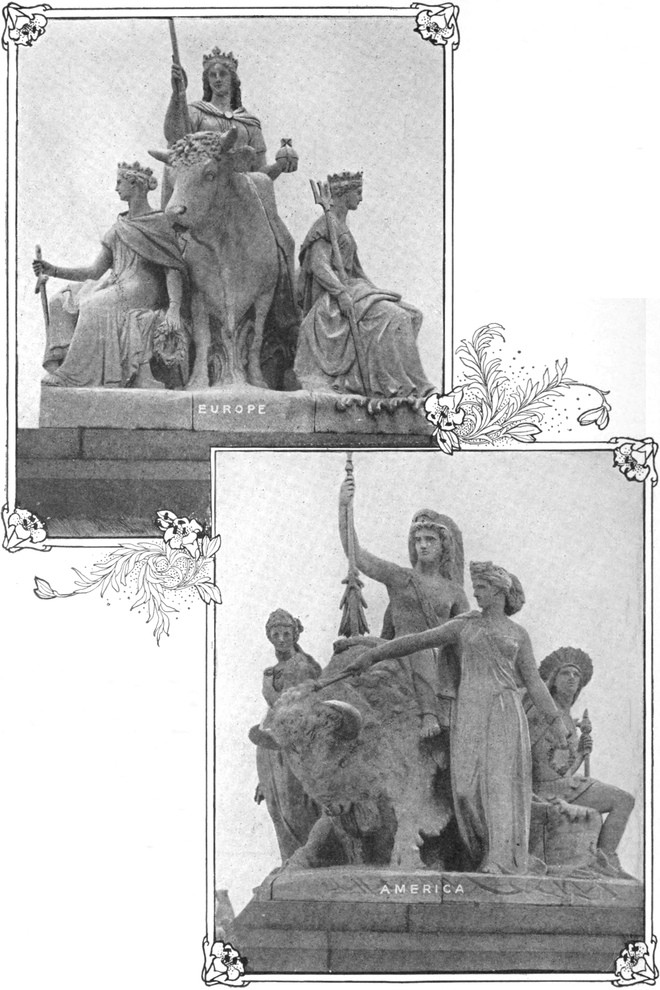
THE PEOPLES OF THE WORLD AT PEACE
From the statuary groups on the Albert Memorial.
LARGER IMAGE
It may seem natural to add the further prediction that the great States and the great religions will continue to grow and to absorb the small ones. But when we touch topics into which human opinion or emotion enters, we touch a new kind of matter, where the influences now at work may be too much affected by new influences to permit of any forecast. Conditions might conceivably come into action which would split up some or most of the present great States, and bring the world back to an age of small political communities.
So, too, though the lower forms of paganism are fast vanishing, and the four or five great religions are extending their sway, it is conceivable that new prophets may arise, founding new faiths, or that the existing religions may be split up into new sects widely diverse from one another. Even the supremacy of the European races, well assured as it now appears, may be reduced by a variety of causes, physiological or moral, when some centuries have passed.
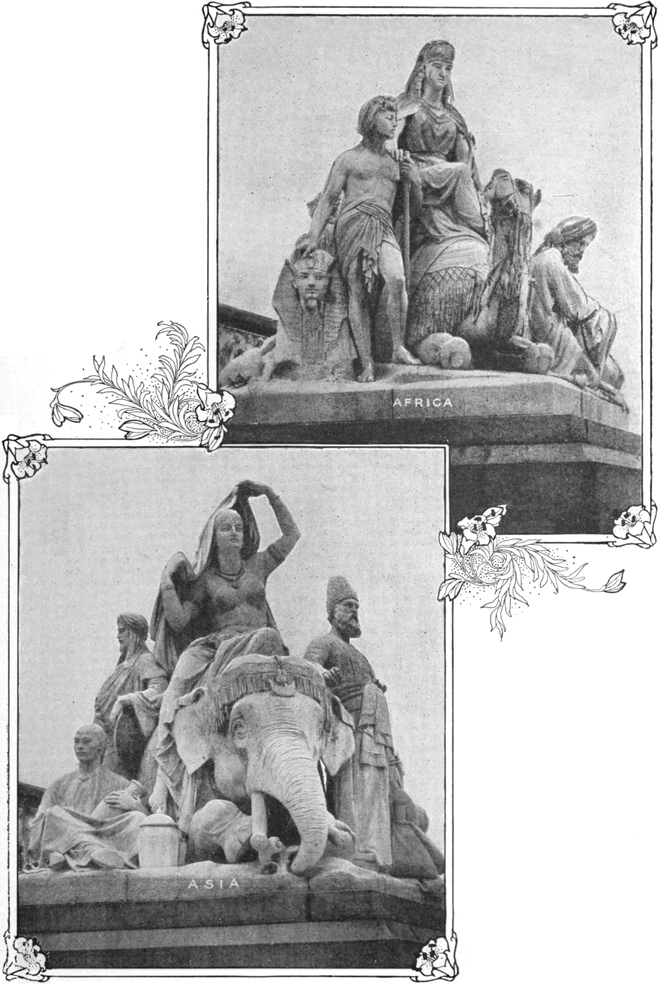
THE PEOPLES OF THE WORLD AT PEACE
From the statuary groups on the Albert Memorial.
LARGER IMAGE
Whoever examines the predictions made by the most observant and profound thinkers of the past will see reason to distrust almost all the predictions, especially those of a positive order, which shape themselves in our minds to-day.
JAMES BRYCE
SUMMARY OF WORLD HISTORY
WITH
A CHRONOLOGY OF TEN THOUSAND YEARS
By Arthur D. Innes, M.A.
W
WITHIN the memory of living men, the most advanced peoples of the world believed that the world itself had been created not 6,000 years ago. We have all learned now that the globe itself, that life—and long later mankind—came into being thousands, hundreds of thousands—it may be millions—of years ago.
How long precisely, none can tell. What we do know with certainty is that before the continents finally emerged in their present shape there was an Ice Age, immediately preceded by what is called the Drift Age, and that as early as the Drift Age man, the maker of implements, lived, and did battle with the cave bear and other monsters. Where man first came into being, how he spread over the globe, how the great races acquired their characteristics, we can only conjecture.
The Birth of the Nations
Wherever and whenever man appeared, the earliest traces show him to have been a sociable animal living in communities. The earliest unmistakable traces of civilisation, order, polity, are found in the basins of the Nile and the Euphrates, dating probably as far back as ten thousand years ago. The people who built the Pyramids had already advanced far in the knowledge which gives man the mastery over Nature; and the Pyramids were built certainly 3,000, and probably nearer 5,000, years before the Christian era. And while those pristine civilisations rose and fell in Egypt, civilisations were rising and passing away in Mesopotamia also.
In the fourth millennium there appears first a people with new characteristics—the Semitic race, gradually dominating the Mesopotamian civilisation, spreading westward in successive waves to the Mediterranean, surging into Egypt and out again; creating the Empires of Babylonia and of Assyria, and the Phœnician and Canaanite nations. And while the Semite Empires rose and fell, and Egypt held upon her ancient way, still mightier nations were coming to birth. The great Aryan or Indo-European migrations began, the Celt, the Latin, and the Hellene rolling westward by the Euxine and the Northern Mediterranean; while another group passed southward, to the East of the Semites, spreading the Aryan conquest over the greater part of the Indian peninsula.
Conflicts of Ancient Peoples
Of the doings of the great Semitic Powers in the second millennium B.C. we have some knowledge from the Hebrew records; and year by year fresh light is thrown on those records by inscriptions and tablets newly discovered or newly deciphered, Egyptian, Assyrian, or Hittite. Of the Hittite or early Syrian dominion we know little enough, except that it successfully defied the invading armies of Assyrian kings and Egyptian Pharaohs. Before 1500 the Semite conquerors of Egypt, the Hyksos, were driven out—an event associated by some authorities with the Hebrew Exodus. From this time the ebb and flow of Egyptian and Assyrian dynasties are more definitely recorded. In the closing centuries the prosperity of Tyre and Sidon reached its height, and the theocratic Hebrew nationality formed a kingdom. We become aware of Hellenic or kindred Powers in Asia Minor, at Troy, in Crete, at Mycenæ; of Achæans and Danaans in Egypt.
The First Formation of States
Before another five hundred years had passed, throughout the coasts and islands of the Ægean Sea, Æolians, Ionians, Dorians established themselves in cities, and every city rapidly grew into a highly-organised State. Over the Mediterranean, to Southern Italy, to Sicily, to Marseilles, the new Greek civilisation carried its commerce and its culture. In Italy the Latin races were in like manner forming themselves into city-states, developing conceptions of Government undreamed of by Oriental minds. Rome was founded, and acquired a leadership. Throughout the Hellenic and the Latin world the idea of civic freedom took root; the primitive monarchical systems disappeared, and, through revolutions and temporary despotisms, sometimes peaceful and sometimes violent, the States took on for the most part a Republican form.
TIME-TABLE OF THE WORLD: B.C. 8000 to 500
This Chronology, prepared as a companion to the Summary of the World’s History, sets forth in tabular form for ready reference the events dealt with in the narrative on opposite pages
B.C. 8000 B.C. 8000
Early civilisation of the Nile Basin. Egypt before the Pyramids.
7000 7000
Asiatic invasion of Egypt Pre-Semitic civilisations of the Euphrates Basin. Susa founded.
6000 6000
Invasion of Egypt by dynastic race, 5800. Mena rules all Egypt. First dynasty, 5500. Babylonian kingdoms of Sumer and Akkad. Ea founds Eridu and civilises Babylonia.
5000 5000
Egypt. The Pyramid builders. Great Pyramid built by Khufu (Cheops), 4700. Earliest monuments to kings in Babylonia, 4700.
4000 4000
Egypt invaded from the north. First, or Babylonian, Semitic wave in the Euphrates Valley. Rise of Babylonian kingdoms. Sargon and Naram-Sin, Semitic rulers of Akkad. Middle kingdom of Egypt. Revival of art. Twelfth dynasty (3400). Gudea’s rule in Babylon. Development of commerce, 3300.
3000 3000
Egypt invaded by the Hyksos, nomadic Semitic conquerors, the “Shepherd Kings.” Fifteenth Dynasty (2500). Second Hyksos movement (2250). Conquest of Babylon by Elamites. Rule of Hammurabi (Amraphel of Gen. xiv.), 2129. Second, or Canaanite, Semitic wave, extending to the Mediterranean. First Aryan migration westward over Europe, and southward; conquest of Hindostan.
2000 2000
The Hyksos dominate Egypt. New kingdom. Eighteenth dynasty, 1580. Expulsion of the Hyksos, about 1560. Rise of Assyria. The Kassite dynasty in Babylon, about 1750–1130. Hittite Empire in Syria. Latin and Hellenic entry into Europe and Asia Minor. Third (Aramæan) Semitic wave, dominating W. Asia, but absorbed in existing states.
1500 1500
FAR EAST: Beginning of definite Chinese history, with the Chau dynasty. EGYPT: Nineteenth dynasty, Sethos and the Ramesides; struggle with Hittite Empire. WESTERN ASIA: Burnaburiash, 1380. Pashe dynasty in Babylon, 1130–1000. Period of Phœnician prosperity. Rise of the United Kingdom of the Hebrews. Crete, Troy, and Mycenæ. The Ionic and Doric migrations.
1000 1000
WESTERN ASIA: The Hebrew kingdom divided into Judah and Israel or Samaria. Rise of Aramæan kingdom of Syria. Chaldean domination in Babylon. Assyrian Middle Empire. EGYPT: Twenty-second dynasty (“Shishak” king of Egypt).
900 900
EUROPE: Early monarchical governments replaced usually by aristocracies. Probable period of the Homeric poems. WESTERN ASIA: Successful resistance of Syria to Assyria. Appearance of the (Aryan) Medes in the East. AFRICA: Founding of Carthage.
800 800
EGYPT: Domination of Ethiopians or Cushites. WESTERN ASIA: Assyrian New Empire; conquest of Syria, Samaria, and Babylon. Lydian and Phrygian kingdoms in Asia Minor. EUROPE: Development of city states in Greece and Italy. Lycurgan legislation of Sparta, about 800. Rome founded as a monarchy, 753. Spread of Greek colonies along Mediterranean coasts and islands.
700 700
WESTERN ASIA:Extension of Lydian kingdom in Asia Minor 687–546. Irruption of Cimmerians from the North. Repulse of Sennacherib before Jerusalem. Decline of Assyria. EGYPT: Invasion by Esarhaddon. Expulsion of Cushites. The Saitic dynasty. EUROPE: Between 700 and 500, sporadic displacement of aristocracies by “tyrannies,” followed either by an oligarchical restoration or by democracies. Rome becomes head of the League of Latin cities. FAR EAST: Japanese history begins.
600 600
500 B.C. WESTERN ASIA:Narbonaid, King of Babylon (556–538). Overthrow of Assyrian by New Babylonian Empire; the Babylonish captivity. Rise of Media, of which Cyrus, the Persian, makes himself master. Persian Empire: Overthrow of Lydia, New Babylonia, and Egypt. Aahmes (Amasis), 570–526. FAR EAST: Confucius and Lao-Tse in China, and Buddha in India. EUROPE: Greek states consolidated. Athens: Solon 594. Pisistratidæ expelled, 510. ROME:Expulsion of the kings, about 510. The Commonwealth. Administration aristocratic: Army and legislative assembly on basis of land-ownership. Etruscan—pre-Latin—domination in Italy. 500 B.C.
In the East an Aryan Power overthrew the last of the Assyrian-Babylonian dynasties; but these Persian conquerors became assimilated to the conquered nations. Fundamentally their empire was of the same type as its predecessors. The Persian sway, however, extended not only into Egypt but over the partly Hellenised Asia Minor; and the Ionic revolt, in the first year of the fifth century B.C. brought the spirit of the East and the spirit of the West into fierce collision. The great king hurled his hosts against defiant Hellas; at Marathon and at Salamis, Athens shattered his army and his fleets. Thenceforth, for a thousand years, the West was the aggressor.
Athens and the Greek Immortals
But the rolling back of the “barbarian” tide was not the only glory that fell to Athens; in that same century the little state bore sons whose names stand in the front rank of the immortals for all time: Æschylus and Sophocles, Phidias, Pericles, Socrates, and Plato; in the next half century, Demosthenes; with others almost if not quite, on the same plane. The character of Athens, idealised, no doubt, is epitomised by Thucydides in the speech of Pericles. She was the sum of all that was best and noblest in Hellenism—its love of freedom, of beauty, of energy, of harmony, and its public spirit. Politically, the story of the period which followed Salamis is mainly one of the rivalry between Athens and Sparta; until the rise of Macedon, when King Philip made himself master of all Hellas.
The Coming-up of Alexander
Then, with the beginning of the last quarter of the fourth century, Alexander the Great blazed upon the world, toppled the empires of Western Asia before him, conquered Egypt, and swept over the great mountain-barriers into India, where Buddhism had already begun to displace the ancient Brahmanism of the first Aryans. The Greek influences did not long linger in the far East after the great conqueror’s death. His empire broke up. Asia west of the Euphrates remained, indeed, under the dominion mainly of one Grecian dynasty, the Seleucidæ; Egypt under that of another, the Ptolemies. Yet Alexander’s attempts to blend East and West failed. Orientalism abode, unconquered, ineradicable; Hellenism prevailed almost after the fashion of British domination in India to-day, in the land, but not of it.
Meanwhile, the struggle between Aryans and non-Aryans had been running a partly separate course in the West. The Phœnicians of Carthage and the pre-Aryan Etruscans, the dominant power in Italy, made a joint assault on the Greeks of Sicily and the Latins of the mainland at the beginning of the fifth century. They were beaten back, but for a century the struggle continued between Rome and Veii. The great Celtic incursion of the Gauls threatened destruction to Rome, but completed the destruction of Etruria. In the fourth century and the first half of the third century B.C. Rome was chiefly engaged in the double task of achieving supremacy, passing into actual dominion among the Latin states, and of establishing the great Senatorial oligarchy, against whose stubborn resolution the Epirote Pyrrhus hurled himself in vain.
Just sixty years after Alexander’s death began the sixty years’ struggle between Rome and Carthage, in the latter years of which the genius of Hannibal was pitted against the grim persistence of the Roman oligarchy. Carthage fell; Rome triumphed, and with her triumph entered on her career of extended conquest.
The Triumph of Rome
The organisation which had ruled the city-state itself not ill, and raised it to an immense pre-eminence, sufficed also to maintain its powers of conquest, but not its political virtue. Rome’s armies subdued the divided and disorganised realms which more or less recognised the over-lordship of Macedon; they made the Ptolemies and the Seleucidæ acknowledge their supremacy; they shattered the new barbarian hordes, which began to pour across the Alpine passes, and the African tribes of Numidia. But the lofty public spirit was gone which had made Rome so great when she was battling for life. Reformers arose, only to prove that there was no power in the constitution strong enough to enforce reform. Victorious generals with their legions behind them began to dictate legislation; Marius and Sulla, democrats or reactionaries, signalised their political successes by slaughtering hecatombs of their opponents.