HOROLOGY.
James Dafforne translation
Modes of measuring Time among the Ancients.—The Gnomon.—The Water-Clock.—The Hour-Glass.—The Water-Clock, improved by the Persians and by the Italians.—Gerbert invents the Escapement and the moving Weights.—The Striking-bell.—Maistre Jehan des Orloges.—Jacquemart of Dijon.—The first Clock in Paris.—Earliest portable Timepiece.—Invention of the spiral Spring.—First appearance of Watches.—The Watches, or “Eggs,” of Nuremberg.—Invention of the Fusee.—Corporation of Clockmakers.—Noted Clocks at Jena, Strasburg, Lyons, &c.—Charles-Quint and Jannellus.—The Pendulum.
MONG the ancients there were three instruments for measuring time—the gnomon, or sun-dial, which is only, as we know, a table whereon lines are so arranged as successively to meet the shadow cast by a gnomon,[20] thus indicating the hour of the day according to the height or inclination of the sun; the water-clock (clepsydra), which had for its principle the measured percolation of a certain quantity of water; and the hour-glass, wherein the liquid is exchanged for sand. It would be difficult to determine which of these three chronometric modes can lay claim to priority. There is this to be said that, according to the Bible, in the eighth century before Christ, Ahaz, King of Judah, caused a sun-dial to be constructed at Jerusalem; again, Herodotus says Anaximander introduced the sun-dial into Greece, whence it passed on to the other parts of the then civilised world; and that, in the year 293 before our era, the celebrated Papirius Cursor, to the astonishment of his fellow-citizens, had a sun-dial traced near the temple of Jupiter Quirinus.

According to the description given by Athena (Athenæus?), the water-clock was formed of an earthenware or metal vessel filled with water, and then suspended over a reservoir whereon lines were marked indicating the hours, as the water which escaped drop by drop from the upper vessel came to the level. We find this instrument employed by most ancient nations, and in many countries it remained in use until the tenth century of the Christian era.
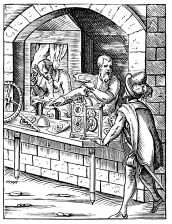
Fig. 143.—The Clockmaker. Designed and Engraved by J. Amman.
In one of his dialogues Plato declares that the philosophers are far more fortunate than the orators—“these being the slaves of a miserable water-clock; whereas the others are at liberty to make their discourse as long as they please.” To explain this passage, we must remember that it was the practice in the Athenian courts of justice, as subsequently in those of Rome, to measure the time allowed to the advocates for pleading by means of a water-clock. Three equal portions of water were put into it—one for the prosecutor, one for the defendant, and the third for the judge. A man was charged with the special duty of giving timely notice to each of the three speakers that his portion was nearly run out. If, on some unusual occasion, the time for one or other of the parties was doubled, it was called “adding water-clock to water-clock;” and when witnesses were giving evidence, or the text of some law was being read out, the percolation of the water was stopped: this was called aquam sustinere (to retain the water).
The hour-glass, which is still in use to a considerable extent for measuring short intervals of time, had great analogy with the water-clock, but was never susceptible of such regularity. In fact, at different periods important improvements were applied to the water-clock. Vitruvius tells us that, about one hundred years before our era, Ctesibius, a mechanician of Alexandria, added several cogged-wheels to the water-clock, one of which moved a hand, showing the hour on a dial. This must have been, so far as historical documents admit of proof, the first step towards purely mechanical horology.
In order, then, to find an authentic date in the history of horology, we must go to the eighth century, when water-clocks, still further improved, were either made or imported into France; among others, one which Pope Paul I. sent to Pepin le Bref. We must, however, believe that these instruments can have attracted but little attention, or that they were speedily forgotten; for, one hundred years later, there appeared a water-clock at the court of Charlemagne, a present from the famous caliph Aroun-al-Raschid, regarded, indeed almost celebrated, as a notable event. Of this Eginhard has left us an elaborate description. It was, he says, in brass, damaskeened with gold, and marked the hours on a dial. At the end of each hour an equal number of small iron balls fell on a bell, and made it sound as many times as the hour indicated by the needle. Twelve windows immediately opened, out of which were seen to proceed the same number of horsemen armed cap-à-pie, who, after performing divers evolutions, withdrew into the interior of the mechanism, and then the windows closed.
Shortly afterwards Pacificus, Archbishop of Verona, constructed one far superior to all that had preceded it; for, besides giving the hours, it indicated the date of the month, the days of the week, the phases of the moon, &c. But still it was only an improved water-clock. Before horology could really assume an historical date, it was necessary that for motive power weights should be substituted for water, and that the escapement should be invented; yet it was only in the beginning of the tenth century that these important discoveries were made.
“In the reign of Hugh Capet,” says M. Dubois, “there lived in France a man of great talent and reputation named Gerbert. He was born in the mountains of Auvergne, and had passed his childhood in tending flocks near Aurillac. One day some monks of the order of St. Benedict met him in the fields: they conversed with him, and finding him precociously intelligent, took him into their convent of St. Gérauld. There Gerbert soon acquired a taste for monastic life. Eager for knowledge, and devoting all his spare moments to study, he became the most learned of the community. After he had taken vows, a desire to add to his scientific attainments led him to set out for Spain. During several years he assiduously frequented the universities of the Iberian peninsula. He soon found himself too learned for Spain; for, in spite of his truly sincere piety, ignorant fanatics accused him of sorcery. As that accusation might have involved him in deplorable consequences, he preferred not to await the result; and hastily quitting the town of Salamanca, which was his ordinary residence, he came to Paris, where he very soon made himself powerful friends and protectors. At length, after having successively been monk, superior of the convent of Bobbio, in Italy, Archbishop of Rheims, tutor to Robert I., King of France, and to Otho III., Emperor of Germany, who appointed him to the see of Ravenna, Gerbert rose to the pontifical throne under the name of Sylvester II.: he died in 1003. This great man did honour to his country and to his age. He was acquainted with nearly all the dead and living languages; he was a mechanician, astronomer, physician, geometrician, algebraist, &c. He introduced the Arab numerals into France. In the seclusion of his monastic cell, as in his archiepiscopal palace, his favourite relaxation was the study of mechanics. He was skilled in making sun-dials, water-clocks, hour-glasses, and hydraulic organs. It was he who first applied weight as a motive power to horology; and, in all probability, he is the inventor of that admirable mechanism called escapement—the most beautiful, as well as the most essential, of all the inventions which have been made in horology.”
This is not the place to give a description of these two mechanisms, which can hardly be explained except with the assistance of purely technical drawings, but it may be remarked that weights are still the sole motive power of large clocks, and the escapement alluded to has been alone employed throughout the world until the end of the seventeenth century. Notwithstanding the importance of these two inventions, little use was made of them during the eleventh, twelfth, and thirteenth centuries. The water-clock and hour-glass (Fig. 144) continued exclusively in use. Some were ornamented and engraved with much taste; and they contributed to the decoration of apartments, as at present do our bronzes and clocks more or less costly.
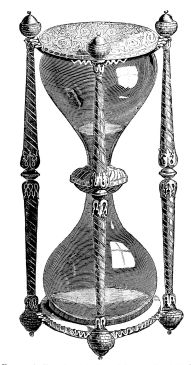
Fig. 144.—An Hour-glass of the Sixteenth Century,—French Work.
History does not inform us who was the inventor of the striking machinery; but it is at least averred that it existed at the commencement of the twelfth century. The first mention of it is found in the “Usages de l’Ordre de Cîteaux,” compiled about 1120. It is there prescribed to the sacristan so to regulate the clock, that it “sounds and awakens him before matins;” in another chapter the monk is ordered to prolong the lecture until “the clock strikes.” At first, in the monasteries, the monks took it in turn to watch, and warn the community of the hours for prayer; and, in the towns, there were night watchmen, who, moreover, were maintained in many places to announce in the streets the hour denoted by the clocks, the water-clocks, or the hour-glasses.
The machinery for striking once invented, we do not find that horology had attained to any perfection before the end of the thirteenth century; but, in the commencement of the following it received its impulse, and the art from that time continued to progress.
To give an idea of what was effected at that time, we will borrow a passage from the earliest writings in which horology is mentioned; that is, from an unpublished book by Philip de Maizières, entitled “Le Songe du Vieil Pélerin:”—“It is known that in Italy there is at present (about 1350) a man generally celebrated in philosophy, in medicine, and in astronomy; in his station, by common report, singular and grave, excelling in the above three sciences, and of the city of Padua. His surname is lost, and he is called ‘Maistre Jehan des Orloges,’ residing at present with the Comte de Vertus; and, for the treble sciences, he has for yearly wages and perquisites two thousand florins, or thereabouts. This Maistre Jean des Orloges has made an instrument, by some called a sphere or clock, of the movement of the heavens, in which instrument are all the motions of the signs (zodiacal), and of the planets, with their circles and epicycles, and multiplied differences, wheels (roes) without number, with all their parts, and each planet in the said sphere, distinctly. On any given night, we see clearly in what sign and degree are the planets and the stars of the heavens; and this sphere is so cunningly made, that notwithstanding the multitude of wheels, which cannot well be numbered without taking the machinery to pieces, their entire mechanism is governed by one single counterpoise, so marvellous that the grave astronomers from distant regions come with great reverence to visit the said Maistre Jean and the work of his hands; and all the great clerks of astronomy, of philosophy, and of medicine, declare that there is no recollection of a man, either in written document or otherwise, who in this world has made so ingenious or so important an instrument of the heavenly movements as the said clock.... Maistre Jean made the said clock with his own hands, all of brass and of copper, without the assistance of any other person, and did nothing else during sixteen entire years, if the writer of the book, who had a great friendship for the said Maistre Jean, has been rightly informed.”
It is known, on the other hand, that the famous clockmaker, whose real name Maizières assumes to be lost, was called Jaques de Dondis; and that, in spite of the assertion of the writer, he had only to arrange the clock, the parts of which had been executed by an excellent workman named Antoine. However this may be, placed at the top of one of the towers of the palace of Padua, the clock of Jaques de Dondis, or of “Maistre Jean des Orloges,” excited general admiration, and several princes of Europe being desirous to have similar clocks, many workmen tried to imitate it. In fact, churches or monasteries were soon able to pride themselves on possessing similar chefs-d’œuvre.
Among the most remarkable clocks of that period, we must refer to that of which Froissart speaks, and which was carried away from the town of Courtray by Philip the Bold after the battle of Rosbecque in 1382. “The Duke of Burgundy,” says our author, “caused to be carried away from the market-place a clock that struck the hours, one of the finest which could be found on either side the sea; and he conveyed it piece by piece in carts, and the bell also. Which clock was brought and carted into the town of Dijon, in Burgundy, was there deposited and put up, and there strikes the twenty-four hours between day and night.”
It is the celebrated clock of Dijon which then as now was surmounted by two automata of iron, a man and a woman, striking the hours on the bell. The origin of the name of Jacquemart given to these figures has been much disputed. Ménage believes that the word is derived from the Latin jaccomarchiardus (coat of mail—attire of war); and he reminds us that, in the Middle Ages, it was the custom to station, on the summit of the towers, men (soldiers wearing the jacque) to give warning of the approach of the enemy, of fires, &c. Ménage adds that, when more efficient watchers occasioned the discontinuance of these nocturnal sentinels, it was probably considered desirable to preserve the remembrance of them by putting in the place they had occupied iron figures which struck the hours. Other writers trace the name even to the inventor of this description of clocks, who, according to them, lived in the fourteenth century, and was called Jacques Marck. Finally, Gabriel Peignot, who has written a dissertation on the jacquemart of Dijon, asserts that in 1422 a person named Jacquemart, clockmaker and locksmith, residing in the town of Lille, received twenty-two livres from the Duke of Burgundy, for repairing the clock of Dijon; and from that he concludes, seeing how short the distance is from Lille to Courtray, whence the clock of Dijon had been taken, that this Jacquemart might well be the son or the grandson of the clockmaker who had constructed it about 1360; consequently the name of the jacquemart of Dijon is derived from that of its maker, old Jacquemart, the clockmaker of Lille (Fig. 145).
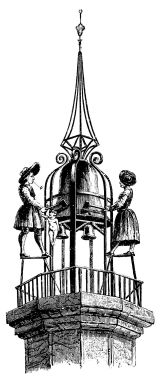
Fig. 145.—Jacquemart of Notre-Dame at Dijon, made at Courtray in the Fourteenth Century.
Giving to each of these opinions its due weight, we confine ourselves to stating that, from the end of the fourteenth century to the beginning of the fifteenth, numerous churches in Germany, Italy, and France already had jacquemarts.
The first clock possessed by Paris was that in the turret of the Palais de Justice. Charles V. had it constructed in 1370 by a German artisan, Henri de Vic. It contained a weight for moving power, an oscillating piece for regulator, and an escapement. It was adorned with carvings by Germain Pilon, and was destroyed in the eighteenth century.
In 1389, the clockmaker Jean Jouvence made one for the Castle of Montargis. Those of Sens and of Auxerre, as well as that of Lund in Sweden, date from the same period. In the last, every hour two cavaliers met and gave each other as many blows as the hours to be struck: then a door opened, and the Virgin Mary appeared sitting on a throne, with the Infant Jesus in her arms, receiving the visit of the Magi followed by their retinue; the Magi prostrating themselves and tendering their presents. During the ceremony two trumpets sounded: then all vanished, to re-appear the following hour.
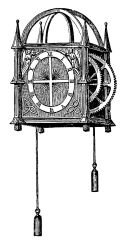
Fig. 146.—Clock with Wheels and Weights. Fifteenth Century. (Cabinet of Antiquities, Bibl. Imp., Paris.)
Until the end of the thirteenth century, clocks were destined exclusively
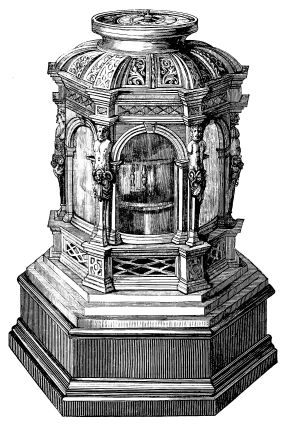
Fig. 147.—A portable Clock of the time of the Valois.
to public buildings; or they at least affected, if we may say so, a monumental character which precluded their admission into private houses. The first clocks with weights and the flywheel made for private use appeared in France, in Italy, and in Germany, about the commencement of the fourteenth century; but naturally they were at first so costly that only nobles and wealthy persons could obtain them. But an impulse was given which led to the manufacture of these objects more economically. In fact, it was not long before portable clocks were seen in the most unpretentious abodes. This of course did not prevent the production of expensive examples, either as regards ornamentation or carving, or in placing the clock on costly pedestals or cases, within which were suspended the weights (Fig. 146).
The fifteenth century has distinctly left its mark on the progress of horology. In 1401 the Cathedral of Seville was enriched with a magnificent clock which struck the hours. In 1404, Lazare, a Servian by birth, constructed a similar one for Moscow. That of Lubeck, which was embellished with the figures of the twelve Apostles, dates from 1405. It is proper to notice also the famous clock which Jean-Galeas Visconti had made for Pavia; and more especially that of St. Marc of Venice, which was not executed until 1495.
The spiral spring was invented in the time of Charles VII.: a band of very fine steel, rolled up into a small drum or barrel, produced, in unrolling, the effect of the weights on the primitive movements. To the possibility of enclosing that moving power in a confined space is due the facility of manufacturing very small clocks. In fact, one finds in certain collections, clocks of the time of Louis XI., remarkable not only for the artistic richness of their decoration, but still more so for the small space they occupy, although they are generally of very complicated mechanism; some marking the date of the month, striking the hour, and serving also as alarm-clocks.
It is difficult, if not impossible, to determine the exact date of the invention of watches. But, in truth, we ought perhaps to regard the watch, especially after the invention of the spiral spring, as only the last step taken towards a portable form of clock. It is however true, according to the statements found in Pancirole and Du Verdier by the authors of the “Encyclopædia of Sciences,” that at the end of the fifteenth century watches were made no larger than an almond. Even the names Myrmécides and Carovagius are cited as those of two celebrated artisans in such work. It was said that the latter made an alarm-watch which not only sounded the hour required, but even struck a light to ignite a candle. Besides, we know for certain that, in the time of Louis XI., there were watches very small yet perfectly manufactured; and it is proved that, in 1500, at Nuremberg, Peter Hele made them of the form of an egg, and consequently the watches of that country were long known as Nuremberg eggs.
We learn, moreover, from history that in 1542, a watch which struck the hours, set in a ring, was offered to Guidobaldo of Rovere; and that in 1575, Parker, Archbishop of Canterbury, bequeathed to his brother Richard a cane of Indian wood having a watch placed in its head; and, finally, that Henry VIII. of England wore a very small watch requiring to be wound up only every eighth day.
It is not inappropriate here to remark that the time kept by these little machines was not regular until an ingenious workman, whose name has not come down to us, invented the fusee, a kind of truncated cone; to the base of this was attached a small piece of catgut which, spirally rolling itself up to the top, became fastened to the barrel that enclosed the spring. The advantage of this arrangement is, that owing to the conical form of the fusee, the traction of the spring acting as it relaxes on a greater radius of the cone, it results in establishing equilibrium of power between the first and the last movements of the spring. Subsequently a clockmaker named Gruet substituted jointed (articulées) chains for catgut; the latter having the great disadvantage of being hygrometric and varying in tension with the state of the atmosphere.
The use of watches spread rapidly in France. In the reigns of the Valois, a large number were made of very diminutive size, to which the clockmakers gave all sorts of forms, especially those of an acorn, an almond, a Latin cross, a shell (Figs. 148 to 150). They were engraved, chased, enamelled; the hand which marked the hour was very frequently of delicate workmanship, and sometimes ornamented with precious stones. Some of these watches set in motion symbolic figures, as well as Time, Apollo, Diana, the Virgin, the Apostles, and the saints.
It may be conceived that all these complicated works required numerous craftsmen. It was therefore considered proper to unite these artisans in a community. The statutes which they had received from Louis XI. in 1483 were confirmed by Francis I. They contained a succession of laws, intended to protect at the same time the interests of members of the corporation and the dignity of their profession.
No one was admitted as master but on proof of having served eight years of apprenticeship, and after having produced a chef-d’œuvre in the
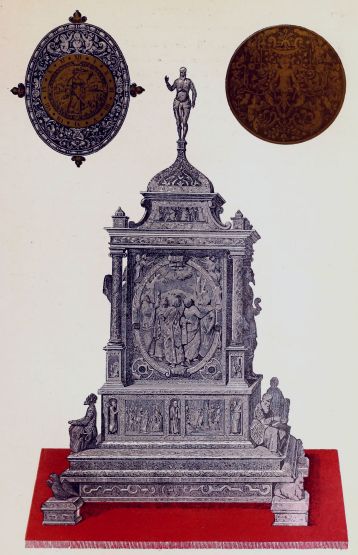
CLOCK OF DAMASCENED IRON AND WATCHES Of the Fifteenth and Sixteenth Centuries.
house, or under the supervision, of one of the inspectors of the corporation. The visiting inspectors, elected by all the members, as well as by the trustees and the syndics, were authorised when introducing themselves into the workshops, to look after the proper construction of watches and clocks; and if it happened that they found such as did not appear to be made according to the rules of art, they could not only seize and destroy them, but also impose a fine on the maker for the benefit of the corporation. The statutes also gave exclusive right to the accredited masters to trade, directly or otherwise, with all the stock, new or second-hand, finished or unfinished.
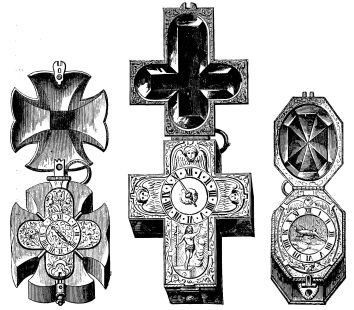
Figs. 148 to 150.—Watches of the Valois Epoch. (Sixteenth Century.)
“Under the influence of these wise institutions,” M. Dubois remarks, “the master-clockmakers had no fear of the competition of persons not belonging to the corporation. If they were affected by the artistic superiority of some of their colleagues, it was with the laudable desire to contend with them for the first places. The work of one day, superior to that of the preceding, was surpassed by that of the day following. It was by this incessant competition of intelligence and knowledge, by this legitimate and invigorating rivalry of all the members of the same industrious community, that science itself attained by degrees the zenith of the excellent and the sublime of the beautiful. The ambition of workmen was to rise to the mastership, and they attained that only by force of labour and assiduous efforts. The ambition of the masters was to acquire the honours of the syndicate—that consular magistracy the most honourable of all, for it was the result of election, and the recompense of services rendered to art and to the community.”
Having thus reached the middle of the sixteenth century, and not wishing to exceed the compass assigned to this sketch, we may limit ourselves to the mention of some of the remarkable works produced during a century by an art that had already manifested itself with a power never to be diminished.
The clock which Henry II. had constructed for the château of Anet has long been regarded as very curious. Every time the hand denotes the hour, a stag appears from the inside of the clock, and darts away followed by a pack of hounds; but soon the pack and the stag stop, and the latter, by means of very ingenious mechanism, strikes the hours with one of his feet.
The clock of Jena (Fig. 151), which is still in existence, is not less famous. Above the dial is a bronze head presumed to represent a buffoon of Ernest, Elector of Saxony, who died in 1486. When the hour is about to strike, the head—so remarkably ugly as to have given the clock the name of the monstrous head—opens its very large mouth. A figure representing an old pilgrim offers it a golden apple on the end of a stick; but just when poor Hans (so was the fool called) is about to close his mouth to masticate and swallow the apple, the pilgrim suddenly withdraws it. On the left of the head is an angel singing (the arms of the city of Jena), holding in one hand a book, which he raises towards his eyes whenever the hours strike, and with the other he rings a hand-bell.
The town of Niort, in Poitou, possessed also an extraordinary clock, ornamented with a great number of allegorical figures—the work of Bouhain,
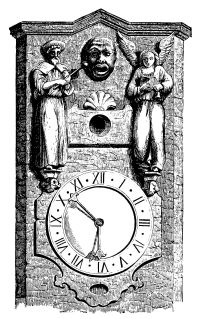
Fig. 151.—Clock of Jena, in Germany. (Fifteenth Century.)
in 1570. A much more famous clock was that of Strasburg (Fig. 152), constructed in 1573, and which was long considered to be the greatest of all wonders. It was entirely restored in 1842 by M. Schwilgué. Angelo Rocca, in his “Commentarium de Campanis,” gives a description of it. Its most important feature was a moving sphere, whereon were represented the planets and the constellations, and which completed its rotation in three hundred and sixty-five days. On two sides of the dial and below it the principal festivals of the year and the solemnities of the Church were represented by allegorical figures. Other dials, distributed symmetrically on the façade of the tower in which the clock is situated, marked the days of the week, the date of the month, the signs of the zodiac, the phases of the moon, the rising and setting of the sun, &c. Every hour two angels
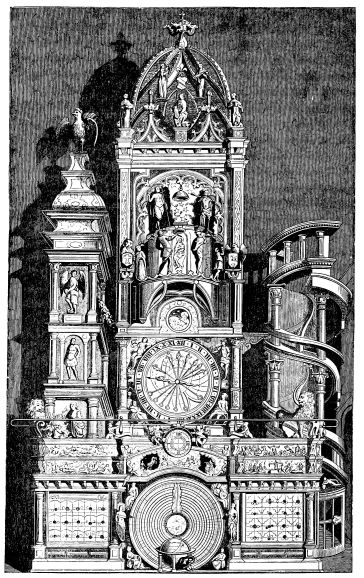
Fig. 152.—Astronomical Clock of the Cathedral at Strasburg, constructed in 1573.
sounded the trumpet. When the concert was finished, the bell tolled; then immediately a cock, perched on the summit, spread his wings noisily, and made his crowing to be heard. The striking machinery, by means of movable trap-doors, cylinders, and springs concealed in the interior of the clock, set in motion a considerable number of automata, executed with much skill. Angelo Rocca adds that the completion of this chef-d’œuvre was attributed to Nicolas Copernicus; and that when this able mechanician had finished his work, the sheriffs and consuls of the city had his eyes put out in order to render it impossible for him to execute a similar clock for any other city. This last statement is the more deserving to rank among mere legends from the fact that, independent of existing proof of the clock being made by Conrad Dasypodius, it would be very difficult to prove that Copernicus ever visited Alsace, or had his eyes put out.
A similar tradition is attached to the history of another clock still in existence, and which was not less celebrated than that of Strasburg. We refer to that of the Church of St. John at Lyons, made in 1598 by Nicholas Lippius, a clockmaker of Basle; repaired and enlarged subsequently by Nourisson, an artisan of Lyons. Only the horary mechanism now acts; but the clock is not on that account neglected by visitors, to whom the worthy attendants still repeat, in perfect faith, that Lippius was put to death as soon as he had finished his chef-d’œuvre. To show the improbability of this pretended penalty it is sufficient to remark, with M. Dubois, that even in the sixteenth century persons were not killed for the crime of making chefs-d’œuvre; and there is, besides, proof that Lippius died in peace, and honoured, in his native country.
To these famous clocks must be added those of St. Lambert at Liège, of Nuremberg, of Augsburg, and of Basle; that of Medina del Campo, in Spain, and those which, in the reign of Charles I., or during the Protectorship of Cromwell, were manufactured and placed in England, at St. Dunstan’s in London,[21] and in the Cathedral of Canterbury, in Edinburgh, and in Glasgow, &c.
Before concluding, and to do justice to a century to which we have assigned a period of decline, we are bound to acknowledge that some years before the death of Cardinal Richelieu—that is to say, from 1630 to 1640—artists of ability made praiseworthy efforts to create a new era in horology. But the improvements they had in view were directed much more to the processes of the construction of the several parts composing the clockwork of watches and clocks than to the beauty and ingenuity of the workmanship. This was progress of a purely professional character, in order to create a more ready and inexpensive supply; a progress which we may regard as services rendered by art to trade. The period of great constructions and delicate marvels was past. Ornamental Jacquemarts were no longer placed in belfries. Mechanical chefs-d’œuvre were no longer set in frail gems. The time was still far off when, laying down the sceptre of that empire on which “the sun never sets,” the conqueror of Francis I., retiring to a cloister, employed himself in the construction of the most complicated clockwork. Charles V. had as assistant, if not as teacher, in his work the learned mathematician, Jannellus Turianus, whom he had induced to join him in his retreat. It is said that he enjoyed nothing so much as seeing the monks of Saint-Just standing amazed before his alarum watches and automaton clocks; but it is also stated that he manifested the greatest despair when obliged to admit it was as impossible to establish perfect concord among clocks as among men.
In truth, Galileo had not yet arrived to observe and formulate the laws of the pendulum, which Huygens was happily to apply to the movements of horology.
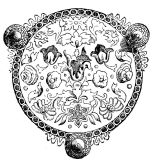
Fig. 153.—Top of an Hour-Glass, engraved and gilt. (A French Work of the Sixteenth Century.)