Front matter (continued 3)
Reading edition
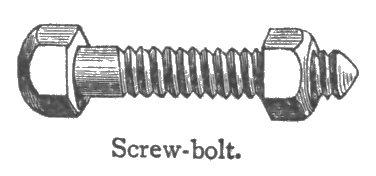
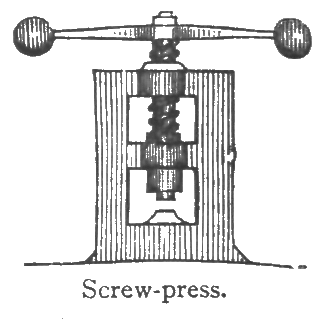
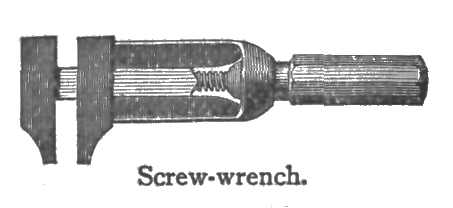
Scribbet, skrib′et, n. a painter's pencil.
Scribble, skrib′l, v.t. to scratch or write carelessly: to fill with worthless writing.—v.i. to write carelessly: to scrawl.—n. careless writing: a scrawl.—ns. Scribb′ler, a petty author; Scribb′ling, the act of writing hastily or carelessly.—adv. Scribb′lingly.—n.pl. Scribb′lings. [A freq. of scribe.]
Scribble, skrib′l, v.t. to card roughly, as wool.—ns. Scribb′ler, a machine for doing this, or a person who tends such; Scribb′ling, the first carding of wool or cotton; Scribb′ling-machine′, a coarse form of carding-machine. [Scand., Sw. skrubbla, to card.]
Scribble-scrabble, skrib′l-skrab′l, n. an ungainly fellow. [Reduplicated from scrabble.]
Scribe, skrīb, n. a writer: a public or official writer: a clerk, amanuensis, secretary: (B.) an expounder and teacher of the Mosaic and traditional law: a pointed instrument to mark lines on wood, &c.—v.t. to write: to record: to mark.—adjs. Scrī′bable, capable of being written upon; Scribā′cious, given to writing.—n. Scribā′ciousness.—adj. Scrī′bal, pertaining to a scribe.—ns. Scrī′bing; Scrī′bing-com′pass, an instrument used in saddlery and cooper-work; Scrī′bism. [Fr.,—L. scriba—scribĕre, to write.]
Scrieve, skrēv, v.i. (Scot.) to glide swiftly along. [Scand., Ice. skrefa—skref, a stride.]
Scriggle, skrig′l, v.i. to writhe: to wriggle.—n. a wriggling. [Prob. Ice. shrika, to slip; Ger. schrecken, Dut. schrikken, to terrify.]
Scrike, skrīk, v.i. (Spens.) to shriek.
Scrim, skrim, n. cloth used for linings.
Scrime, skrīm, v.i. to fence.—n. Scrī′mer (Shak.), a fencer. [Fr. escrimer, to fence; cf. Skirmish.]
Scrimmage, skrim′āj, n. a skirmish: a general fight: a tussle. [Prob. a corr. of skirmish.]
Scrimp, skrimp, v.t. to make too small or short: to limit or shorten: to straiten.—adj. short, scanty.—adj. Scrimp′ed, pinched.—adv. Scrimp′ly, hardly: scarcely.—n. Scrimp′ness.—adj. Scrimp′y, scanty. [A.S. scrimpan; allied to scrimman, to shrink, and scrincan, to shrivel up.]
Scrimshaw, skrim′shaw, v.t. to engrave fanciful designs on shells, whales' teeth, &c.—n. any shell or the like fancifully engraved.
Scrine, skrīn, n. (Spens.) a cabinet for papers, a shrine. [O. Fr. escrin—L. scrinium, a shrine.]
Scringe, skrinj, v.i. to cringe. [A form of shrink.]
Scrip, skrip, n. that which is written: a piece of paper containing writing: a certificate of stock or shares in any joint-stock company subscribed or allotted.—ns. Scrip′-com′pany, a company having shares which pass by delivery; Scrip′-hold′er, one whose title to stock is a written certificate. [A variant of script—L. scribĕre, scriptum, to write.]
Scrip, skrip, n. a small bag: a satchel: a pilgrim's pouch: (her.) a bearing representing a pouch.—n. Scrip′page (Shak.), contents of a scrip. [Ice. skreppa, a bag; Ger. scherbe, a shred.]
Script, skript, n. (print.) type like written letters: a writing: (law) an original document: handwriting.—n. Scrip′tion, a handwriting. [O. Fr. escript—L. scriptum—scribĕre, to write.]
Scriptorium, skrip-tō′ri-um, n. a writing-room, esp. that in a monastery.—adj. Scrip′tory, written.
Scripture, skrip′tūr, n. sacred writing: the Bible: a writing: a deed: any sacred writing.—adj. Scrip′tural, contained in Scripture: according to Scripture: biblical: written.—ns. Scrip′turalism, literal adherence to the Scriptures; Scrip′turalist, a literalist in his obedience to the letter of Scripture, a student of Scripture.—adv. Scrip′turally.—ns. Scrip′turalness; Scrip′ture-read′er, an evangelist who reads the Bible in cottages, barracks, &c.; Scrip′turist, one versed in Scripture.—The Scriptures, the Bible. [L. scriptura—scribĕre, to write.]
Scritch, skrich, n. a screech or shrill cry: a thrush. [A variant of screech.]
Scrivano, skriv-ä′nō, n. a writer: a clerk. [It.]
Scrive, skrīv, v.t. to describe: to draw a line with a pointed tool. [Scribe.]
Scrivener, skriv′en-ėr, n. a scribe: a copyist: one who draws up contracts, &c.: one who receives the money of others to lay it out at interest.—n. Scriv′enership. [O. Fr. escrivain (Fr. écrivain)—Low L. scribanus—L. scriba, a scribe.]
Scrobe, skrōb, n. a groove in the rostrum of weevils or curculios, or on the outer side of the mandible.—adjs. Scrobic′ulate, -d, having numerous shallow depressions.—n. Scrobic′ulus (anat.), a pit or depression. [L. scrobis, a ditch.]
Scrod, skrod, v.t. to shred.—n. a young codfish.—n. Scrod′gill, an instrument for taking fish. [Shred.]
Scroddle, skrod′l, v.t. to variegate, as pottery in different colours.—Scroddled ware, mottled pottery.
Scrofula, skrof′ū-la, n. a disease with chronic swellings of the glands in various parts of the body, esp. the neck, tending to suppurate: the king's evil.—adjs. Scrofulit′ic, Scrof′ulous, pertaining to, resembling, or affected with scrofula.—adv. Scrof′ulously.—n. Scrof′ulousness. [L. scrofulæ—scrofula, a little pig, dim. of scrofa, a sow.]
Scrog, skrog, n. (Scot.) a stunted bush: a thicket: brushwood: (her.) a branch.—adjs. Scrog′gie, Scrog′gy, covered with underwood. [Scrag.]
Scroll, skrōl, n. a roll of paper or parchment: a writing in the form of a roll: a rough draft of anything: a schedule: a flourish added to a person's signature as a substitute for a seal: in hydraulics, a spiral water-way placed round a turbine to regulate the flow of water: (anat.) a turbinate bone: (archit.) a spiral ornament, the volute of the Ionic and Corinthian capitals.—v.t. to draft: to write in rough outline.—adj. Scrolled, formed into a scroll: ornamented with scrolls.—ns. Scroll′-head, an ornamental piece at the bow of a vessel; Scroll′-wheel, a cog-wheel in the form of a scroll; Scroll′-work, ornamental work of scroll-like character. [O. Fr. escroue, acc. to Skeat from Old Dut. schroode, a shred.]
Scroop, skrōōp, v.i. to emit a harsh sound: to creak.—n. any crisp sound like that made when a bundle of yarn is tightly twisted. [Imit.]
Scrophularia, skrof-ū-lā′ri-a, n. the figwort genus of herbs, type of the Scrophulariaceæ or Scrophularineæ, a natural order containing almost 2000 known species, chiefly herbaceous and half-shrubby plants—Digitalis or Fox-glove, Calceolaria, Mimulus, Antirrhinum or Snap-dragon, Veronica or Speedwell, and Euphrasia or Eye-bright, &c.
Scrotum, skrō′tum, n. the bag which contains the testicles.—adjs. Scrō′tal, relating to the scrotum; Scrō′tiform, formed like a double bag.—ns. Scrotī′tis, inflammation of the scrotum; Scrō′tocele, a scrotal hernia. [L.]
Scrouge, skrowj, v.t.. to squeeze: to crowd—also Scrooge, Scrudge.—n. Scrou′ger, a whopper: something large. [Variant forms of shrug.]
Scrow, skrow, n. a roll: a scroll: a writing: clippings from hides. [Scroll.]
Scroyle, skroil, n. (Shak.) a scabby fellow: a mean fellow. [O. Fr. escrouelles, scrofula—L. scrofulæ.]
Scrub, skrub, v.t.. to rub hard, esp. with something rough.—v.i. to be laborious and penurious:—pr.p. scrub′bing; pa.t. and pa.p. scrubbed.—n. one who works hard and lives meanly: anything small or mean: a worn-out brush: low underwood: a bush: a stunted shrub: a worthless horse.—p.adj. Scrubbed (Shak.)=Scrubby.—ns. Scrub′ber, in Australia, an animal which breaks away from the herd: a machine for washing leather after the tanpit; Scrub′bing; Scrub′bing-board, a wash-board; Scrub′bing-brush, a brush with short, stiff bristles; Scrub′-bird, an Australian bird.—adj. Scrub′by, laborious and penurious: mean: small: stunted in growth: covered with scrub.—ns. Scrub′-grass, the scouring-rush; Scrub′-oak, a name of three low American oaks; Scrub′-rid′er, one who rides in search of cattle that stray from the herd into the scrub; Scrub′-rob′in, a bird inhabiting the Australian scrub; Scrub′stone, a species of calciferous sandstone; Scrub′-tur′key, a mound-bird; Scrub′-wood, a small tree. [A.S. scrob, a shrub.]
Scruff, skruf, n. the nape of the neck.—Also Skruff. [A variant of scuff, scuft.]
Scruffy, skruf′i, adj. Same as Scurfy.
Scrumptious, skrump′shus, adj. (slang) nice: fastidious: delightful.
Scrunch, skrunsh, v.t.. to crunch: to crush.—n. a harsh, crunching sound. [A variant of crunch.]
Scrunt, skrunt, n. (Scot.) a niggardly person.
Scruple, skrōō′pl, n. a small weight—in apothecaries' weight, 20 troy grains, ⅓ drachm, 1⁄24 ounce, and 1⁄288 of a troy pound: a very small quantity: reluctance to decide or act, as from motives of conscience: difficulty.—v.i. to hesitate in deciding or acting.—n. Scru′pler.—adj. Scru′pulous, having scruples, doubts, or objections: conscientious: cautious: exact: captious.—adv. Scru′pulously.—ns. Scru′pulousness, Scrupulos′ity, state of being scrupulous: doubt: niceness: precision. [Fr. scrupule—L. scrupulus, dim. of scrupus, a sharp stone, anxiety.]
Scrutiny, skrōō′ti-ni, n. careful or minute inquiry: critical examination: an examination of the votes given at an election for the purpose of correcting the poll: in the early Church, the examination in Lent of the Catechumens: (R.C.) one of the methods of electing a pope, the others being acclamation and accession.—adj. Scru′table.—ns. Scrutā′tion, scrutiny; Scrutā′tor, a close examiner.—v.t.. Scru′tinate, to examine: to investigate.—n. Scrutineer′, one who makes a scrutiny, or minute search or inquiry.—v.t.. Scru′tinise, to search minutely or closely: to examine carefully or critically: to investigate.—n. Scru′tiniser.—adj. Scru′tinous.—adv. Scru′tinously.—Scrutin-de-liste, a method of voting for the French Chamber of Deputies, in which the voter casts his ballot for the whole number of deputies allotted to his department, choosing the candidates in any combination he pleases—opp. to Scrutin d'arrondissement, in which method the voter votes only for his local candidate or candidates, the arrondissement being the basis of representation. [O. Fr. scrutine—L. scrutinium—scrutāri, to search even to the rags—scruta, rags, trash.]
Scruto, skrōō′tō, n. a movable trap in theatres.
Scrutoire=Escritoire (q.v.).
Scruze, skrōōz, v.t. (Spens.) to squeeze. [Scrouge.]
Scry, skrī, v.t. (Spens.) to descry:—pa.t. scryde. [Formed by aphæresis from descry.]
Scry, skrī, v.t. (Scot.) to proclaim.—n. a cry: a flock of wild-fowl.
Scud, skud, v.i. to run quickly: (naut.) to run before the wind in a gale: (Scot.) to throw flat stones so as to skip along the water.—v.t. to skelp: (Scot.) to slap:—pr.p. scud′ding; pa.t. and pa.p. scud′ded.—n. act of moving quickly: loose, vapoury clouds driven swiftly along: a swift runner: a beach flea: a form of garden hoe: a slap, a sharp stroke.—n. Scud′der, one who, or that which, scuds. [Scand., Dan. skyde, to shoot; cf. A.S. scéōtan, to shoot.]
Scuddick, skud′ik, n. (slang) anything of small value: a shilling.—Also Scutt′ock.
Scuddle, skud′l, v.i. (Scot.) to drudge.—v.t. to cleanse: to wash.—n. Scud′ler, a scullion.
Scudo, skōō′dō, n. an Italian silver coin of different values, usually worth about 4s.: the space within the outer rim of the bezel of a ring:—pl. Scu′di. [It.,—L. scutum, a shield.]
Scuff, skuf, n. (prov.) a form of scruff or scuft.
Scuff, skuf, v.i. to shuffle along the ground.—v.t. (Scot.) to graze slightly. [Sw. skuffa, to shove.]
Scuff, skuf, n. a scurf: a scale.
Scuffle, skuf′l, v.i. to struggle closely: to fight confusedly.—n. a struggle in which the combatants grapple closely: any confused contest.—n. Scuff′ler, one who, or that which, scuffles. [A freq. of Sw. skuffa, to shove, skuff, a blow.]
Scuffy, skuf′i, adj. having lost the original freshness: shabby, out of elbows, seedy.
Scuft, skuft, n. (prov.) the nape of the neck.—Also Scuff, Scruff. [Ice. skopt, skoft, the hair.]
Sculduddery, skul-dud′e-ri, n. (Scot.) grossness, obscenity, bawdry.—adj. bawdy.
Sculk. Same as Skulk.
Scull, skul, n. a short, light, spoon-bladed oar: a small boat: a cock-boat.—v.t. to propel a boat with a pair of sculls or light oars by one man—in fresh water: to drive a boat onward with one oar, worked like a screw over the stern.—ns. Scull′er, one who sculls: a small boat rowed by two sculls pulled by one man; Scull′ing. [Scand.; Ice. scál, a hollow, Sw. skålig, concave.]
Scull, skul, n. (Milt.) a shoal of fish. [Shoal.]
Scullery, skul′ėr-i, n. the place for dishes and other kitchen utensils. [Skeat explains as sculler-y, sculler being a remarkable variant of swiller, due to Scand. influence. Others refer to O. Fr. escuelier—Low L. scutellarius—L. scutella, a tray.]
Scullion, skul′yun, n. a servant in the scullery: a servant for drudgery-work: a mean fellow.—adj. Scull′ionly (Milt.), like a scullion: low, base. [Not allied to scullery. O. Fr. escouillon, a dish-clout—L. scopa, a broom.]
Sculp, skulp, v.t. to carve: to engrave: to flay.—Sculp′sit, he engraved or carved it—often abbreviated to Sc.
Sculpin, skul′pin, n. (slang) a mischief-making fellow: a name given to the Dragonet, and also in the United States to various marine species of Cottus or Bull-head.—Also Skul′pin.
Sculpture, skulp′tūr, n. the act of carving figures in wood, stone, &c.: carved-work: an engraving.—v.t. to carve: to form, as a piece of sculpture.—n. Sculp′tor, one who carves figures:—fem. Sculp′tress.—adj. Sculp′tūral, belonging to sculpture.—adv. Sculp′tūrally.—adjs. Sculp′tūred, carved, engraved: (bot., zool.) having elevated marks on the surface; Sculptūresque′, chiselled: clean cut: statue-like. [Fr.,—L. sculptura—sculpĕre, sculptum, to carve.]
Sculsh, skulsh, n. rubbish: lollypops.
Scum, skum, n. foam or froth: the extraneous matter rising to the surface of liquids, esp. when boiled or fermented: refuse: offscourings, dregs.—v.t. to take the scum from: to skim:—pr.p. scum′ming; pa.t. and pa.p. scummed.—n. Scum′mer, an implement used in skimming.—n.pl. Scum′mings, skimmings.—adj. Scum′my, covered with scum. [Scand., Dan. skum, froth; Ger. schaum, foam.]
Scumber, skum′bėr, v.i. to defecate, a hunting term applied to foxes.—n. fox-dung.—Also Scom′ber. [Prob. O. Fr. escumbrier, to disencumber.]
Scumble, skum′bl, v.t. to apply opaque or semi-opaque colours very thinly over other colours, to modify the effect.—n. Scum′bling, a mode of obtaining a softened effect in painting by overlaying too bright colours with a very thin coating of a neutral tint. [Freq. of scum.]
Scun, skun, v.i. to skim, as a stone thrown aslant on the water.—v.t. to cause to skip.—Also Scon, Scoon. [Scand., prob. skunna; Dan. skynde, to hasten.]
Scunner, skun′ėr, v.i. (Scot.) to become nauseated: to feel loathing.—n. a loathing, any fantastic prejudice. [A.S. scunian, to shun.]
Scup, skup, n. (Amer.) a swing.—v.i. to swing. [Dut. schop, a swing; Ger. schupf, a push.]
Scup, skup, n. a sparoid fish, the porgy.
Scupper, skup′ėr, n. a hole in the side of a ship to carry off water from the deck (often pl.).—ns. Scupp′er-hole, a scupper; Scupp′er-hose, a pipe of leather, &c., attached to the mouth of a scupper on the outside, to let the water run out and keep water from entering; Scupp′er-plug, a plug to stop a scupper. [O. Fr. escopir, to spit out—L. exspuĕre—ex-, out, spuĕre, to spit; or prob. from Dut. schoppen, to scoop away.]
Scuppernong, skup′ėr-nong, n. a cultivated variety of the muscadine, bullace, or southern fox-grape of the United States. [Amer. Ind.]
Scuppet, skup′et, n. a shovel.—Also Scopp′et.
Scur, skur, v.t. to graze, to jerk: to scour over.—v.i. to flit hurriedly.—Also Skirr. [A variant of scour.]
Scur, skur, n. (Scot.) a stunted horn.
Scurf, skurf, n. the crust or flaky matter formed on the skin: anything adhering to the surface: scum: a gray bull trout.—n. Scurf′iness.—adj. Scurf′y, having scurf: like scurf. [A.S. scurf—sceorfan, to scrape; cf. Ger. schorf.]
Scurrilous, skur′ril-us, adj. using scurrility or language befitting a vulgar buffoon: indecent: vile: vulgar: opprobrious: grossly abusive.—adjs. Scur′ril, Scur′rile, buffoon-like: jesting: foul-mouthed: low.—n. Scurril′ity, buffoonery: low or obscene jesting: indecency of language: vulgar abuse.—adv. Scur′rilously.—n. Scur′rilousness. [L. scurrilis—scurra, a buffoon.]
Scurrit, skur′it, n. (prov.) the lesser tern.
Scurry, skur′i, v.i. to hurry along: to scamper.—n. a flurry—also Skurr′y.—n. Hurr′y-scurr′y, heedless haste. [An extended form of scour.]
Scurvy, skur′vi, adj. scurfy: affected with scurvy: scorbutic: shabby: vile, vulgar, contemptible.—n. a disease marked by livid spots on the skin and general debility, due to an improper dietary, and particularly an insufficient supply of fresh vegetable food.—adv. Scur′vily, in a scurvy manner: meanly, basely.—ns. Scur′viness, state of being scurvy: meanness; Scur′vy-grass, a genus of cruciferous plants, efficacious in curing scurvy. [Scurf.]
Scuse, skūs, n. and v.=Excuse.
Scut, skut, adj. having a short tail like a hare's.
Scutage, skū′tāj, n. a tax, instead of personal service, which a vassal or tenant owed to his lord, sometimes levied by the crown in feudal times.—Also Es′cuage. [O. Fr. escuage—L. scutum, shield.]
Scutate, skūt′āt, adj. (bot.) shaped like a round shield: (zool.) having the surface protected by large scales. [L. scutātus—scutum, shield.]
Scutch, skuch, v.t. to beat: to separate from the core, as flax.—n. a coarse tow that separates from flax in scutching.—ns. Scutch′er, one who dresses hedges: an implement used in scutching, esp. a beater in a flax-scutching machine, &c.; Scutch′ing-sword, a beating instrument in scutching flax by hand. [Prob. O. Fr. escousser, to shake off—Low L. excussāre—L. excutĕre, to shake off.]
Scutcheon, Scutchin, skuch′un, -in, n. (Spens.) escutcheon, shield, device on a shield. [Escutcheon.]
Scute, skūt, n. a shield: (zool.) a large scale, a plate, as the dermal scutes of a ganoid fish, a turtle, &c. [O. Fr. escut—L. scutum, a shield.]
Scutella, skū-tel′a, n. a genus of flat sea-urchins.—adj. Scū′tellar.—n. Scutellā′ria, a genus of gamopetalous plants, known as skullcaps.—adjs. Scū′tellate, -d, noting the foot of a bird when it is provided with the plates called scutella.—ns. Scutellā′tion; Scutell′era, a group-name for the true bugs (Scutelleridæ).—adjs. Scutell′iform, scutellate; Scutellig′erous, provided with a scutellum; Scutelliplan′tar, having the back of the tarsus scutellate.—n. Scutell′um (bot., entom.), a little shield:—pl. Scutell′a.—n.pl. Scutibranchiā′ta, an order of gasteropod mollusca.—n. Scū′tifer, a shield-bearer.—adjs. Scutif′erous, bearing a shield: (zool.) scutigerous; Scū′tiform, having the form of a shield.—n. Scutig′era, a common North American species of centipede.—adjs. Scutig′erous, provided with a scute or scuta; Scū′tiped, having the shanks scaly, of birds. [L., dim. of scutra, a platter.]
Scutter, skut′ėr, v.i. to run hastily: to scurry.—n. a hasty run. [A variant of Scuttle (3).]
Scuttle, skut′l, n. a shallow basket: a vessel for holding coal. [A.S. scutel—L. scutella, a salver, dim. of scutra, a dish.]
Scuttle, skut′l, n. the openings or hatchways of a ship: a hole through the hatches or in the side or bottom of a ship.—v.t. to cut holes through any part of a ship: to sink a ship by cutting holes in it.—ns. Scutt′le-butt, -cask, a cask with a hole cut in it for the cup or dipper, for holding drinking-water in a ship; Scutt′le-fish, a cuttle-fish. [O. Fr. escoutille, a hatchway (Sp. escotilla), from Dut. schoot, the lap; Ger. schoss, bosom, a lap.]
Scuttle, skut′l, v.i. to scud or run with haste: to hurry.—n. a quick run: a mincing gait.—Also Scudd′le, Skutt′le. [Scud.]
Scuttler, skut′lėr, n. the striped lizard.
Scuttock. Same as Scuddick.
Scutulum, skū′tū-lum, n. one of the shield-shaped crusts of favus. [L., dim. of scutum, a shield.]
Scutum, skū′tum, n. a shield belonging to the heavy-armed Roman legionaries: a penthouse: (anat.) the knee-pan: (zool.) a large scale. [L.]
Scye, sī, n. the armhole of a garment. [Prob. sey—O. Fr. sier, to cut—L. secāre, to cut.]
Scylla, sil′a, n. a six-headed monster who sat over a dangerous rock on the Italian side of the Straits of Messina, over against the whirlpool of Charyb′dis on the Sicilian side.—n. Scyllæa (sil-ē′a), a genus of nudibranchiate gasteropods.—n.pl. Scyllar′idæ (-dē), a family of long-tailed, ten-footed marine crustaceans.
Scyllidæ, sil′i-dē, n.pl. a family of selachians, the typical genus Scyllium, including the dog-fish. [Gr. skylion, a dog-fish.]
Scymnidæ, sim′ni-dē, n.pl. the sleeper-sharks.—n. Scym′nus, a genus of lady-birds: a genus of sharks. [Gr. skymnos, a whelp.]
Scyphidium, sif-id′i-um, n. a genus of ciliate infusorians. [Gr. skyphos, a cup.]
Scyphomedusæ, sif-o-med′ū-sē, n.pl. a prime division of hydrozoans or a sub-class of Hydrozoa.
Scyphus, sīf′us, n. in Greek antiquities, a large drinking-cup: (bot.) a cup-shaped appendage to a flower.—adj. Scyph′iform.
Scytale, sit′a-lē, n. in Greek antiquities, a strip of parchment used for secret messages: the name of a coral snake.—n. Scytalī′na, a remarkable genus of eel-like fishes. [Gr. skytalē, a staff.]
Scythe, sīth, n. a kind of sickle: an instrument with a large curved blade for mowing grass, &c.—v.t. to cut with a scythe, to mow.—adj. Scythed, armed with scythes.—ns. Scythe′man, one who uses a scythe; Scythe′-stone, a whet for scythes. [A.S. síthe; Ice. sigdhr. Low Ger. seged.]
Scythian, sith′i-an, adj. pertaining to an ancient nomadic race in the northern parts of Asia.—n. one belonging to this race.—adj. Scyth′ic.
Scythrops, sī′throps, n. a genus of Australian horn-billed cuckoos. [Gr. skythros, angry, ōps, face.]
Scytodepsic, skī-tō-dep′sik, adj. pertaining to tanning. [Gr. skytos, skin, depsein, to soften.]
Scytodermatous, skī-tō-der′ma-tus, adj. having a tough, leathery integument. [Gr. skytos, hide, derma, skin.]
Scytodes, skī-tō′dez, n. a genus of spiders.—adj. Scytō′doid. [Gr. skytos, skin, eidos, form.]
Scytonema, sī-tō-nē′ma, n. a genus of fresh-water algæ.—adj. Scytonem′atoid. [Gr. skytos, skin, nēma, a thread.]
Scytosiphon, sī-tō-sīf′n, n. a genus of marine algæ. [Gr. skytos, skin, siphōn, a tube.]
Sdain, Sdeign, sdān, n. and v.t. (Spens.) same as Disdain.—adj. Sdeign′ful=Disdainful.
'Sdeath, sdeth, interj. an exclamation of impatience—for God's death.
Sea, sē, n. the great mass of salt water covering the greater part of the earth's surface: any great expanse of water less than an ocean: the ocean: the swell of the sea in a tempest: a wave: any widely extended mass or quantity, a flood: any rough or agitated place or element.—ns. Sea′-ā′corn, a barnacle; Sea′-add′er, the fifteen-spined stickle-back; Sea′-an′chor, a floating anchor used at sea in a gale; Sea′-anem′one, a kind of polyp, like an anemone, found on rocks on the seacoast; Sea′-ape, the sea-otter; Sea′-ā′pron, a kind of kelp; Sea′-arr′ow, a flying squid: an arrow-worm; Sea′-aspar′agus, a soft-shelled crab; Sea′-bank, the seashore; an embankment to keep out the sea; Sea′-bar, the sea-swallow or tern; Sea′-barr′ow, the egg-case of a ray or skate; Sea′-bass, a name applied to some perch-like marine fishes, many common food-fishes in America—black sea-bass, bluefish, &c.; Sea′-bat, a genus of Teleostean fishes allied to the Pilot-fish, and included among the Carangidæ or horse-mackerels—the name refers to the very long dorsal, anal, and ventral fins; Sea′-beach, the seashore; Sea′-bean, the seed of a leguminous climbing plant: a small univalve shell: the lid of the aperture of any shell of the family Turbinidæ, commonly worn as amulets; Sea′-bear, the polar bear: the North Pacific fur-seal; Sea′-beast (Milt.), a monster of the sea.—adjs. Sea′-beat, -en, lashed by the waves.—n. Sea′-beav′er, the sea-otter.—n.pl. Sea′-bells, a species of bindweed.—ns. Sea′-belt, the sweet fucus plant; Sea′-bird, any marine bird; Sea′-bis′cuit, ship-biscuit; Sea′-blubb′er, a jelly-fish; Sea′-board, the border or shore of the sea; Sea′-boat, a vessel considered with reference to her behaviour in bad weather.—adjs. Sea′-born, produced by the sea; Sea′-borne, carried on the sea.—ns. Sea′-bott′le, a seaweed; Sea′-boy (Shak.), a boy employed on shipboard: a sailor-boy; Sea′-brant, the brent goose; Sea′-breach, the breaking of an embankment by the sea; Sea′-bream, one of several sparoid fishes: a fish related to the mackerel; Sea′-breeze, a breeze of wind blowing from the sea toward the land, esp. that from about 10 a.m. till sunset; Sea′-buckthorn, or Sallow-thorn, a genus of large shrubs or trees with gray silky foliage and entire leaves; Sea′-bum′blebee, the little auk; Sea′-bun, a heart-urchin; Sea′-bur′dock, clotbur; Sea′-cabb′age, sea-kale; Sea′-calf, the common seal, so called from the supposed resemblance of its voice to that of a calf; Sea′-canā′ry, the white whale; Sea′-cap (Shak.), a cap worn on shipboard: a basket-shaped sponge; Sea′-cap′tain, the captain of a ship, as distinguished from a captain in the army; Sea′-card, the card of the mariners' compass: a map of the ocean; Sea′-carnā′tion, a sea-pink; Sea′-cat, a name of various animals, as the wolf-fish, the chimæra, any sea-cat-fish; Sea′-cat′erpillar, a scale-back; Sea′-cat′-fish, a marine siluroid fish; Sea′-cat′gut, a common seaweed—sea-lace; Sea′-caul′iflower, a polyp; Sea′-cen′tiped, one of several large marine annelids; Sea′-change (Shak.), a change effected by the sea; Sea′-chart, a chart or map of the sea, its islands, coasts, &c.; Sea′-chest′nut, a sea-urchin; Sea′-chick′weed, a seaside species of sandwort; Sea′-clam, the surf clam used for food: a clamp for deep-sea sounding-lines; Sea′-coal, coal brought by sea, as distinguished from charcoal; Sea′coast, the coast or shore of the sea: the land adjacent to the sea; Sea′-cob, a sea-gull; Sea′-cock, a gurnard: the sea-plover: a valve communicating with the sea through a vessel's hull: a sea-rover or viking; Sea′-col′ander, a large olive seaweed; Sea′-cole′wort, sea-kale; Sea′-com′pass, the mariners' compass; Sea′-cook, a cook on shipboard; Sea′-coot, a black sea-duck; Sea′-cor′morant, a sea-crow; Sea′-corn, the string of egg-capsules of the whelk or similar gasteropod—also Sea′-ruff′le, Sea′-hon′eycomb, Sea′-neck′lace, &c.; Sea′-cow, the walrus: the rhytina: the dugong or manatee: the hippopotamus; Sea′-crab, a marine crab; Sea′-craft, skill in navigation; Sea′-craw′fish, a prawn or shrimp; Sea′-crow, a name of various birds, as the common skua, the chough, the coot, &c.; Sea′-cū′cumber, trepang or bêche-de-mer; Sea′-dace, a sea-perch: the common English bass; Sea′-daff′odil, a plant producing showy, fragrant flowers; Sea′-dai′sy, the lady's cushion; Sea′-dev′il, a name of various fishes, as the ox-ray, the angel-fish, &c.; Sea′-dog, the harbour-seal: the dog-fish: an old sailor: a pirate: (her.) a bearing representing a beast nearly like a talbot; Sea′-dott′erel, the turnstone; Sea′-dove, the little auk; Sea′-drag′on, a flying sea-horse; Sea′-drake, a sea-crow; Sea′-duck a duck often found on salt waters, having the hind-toe lobate: the eider-duck; Sea′-ea′gle, the white-tailed eagle: the bald eagle: the osprey: the eagle-ray; Sea′-ear, a mollusc, an ormer or abalone; Sea′-eel, a conger-eel; Sea′-egg, a sea-urchin: a sea-hedgehog: a whore's egg; Sea′-el′ephant, the largest of the seal family, the male about 20 feet long, an inhabitant of the southern seas; Sea′-fan, an alcyonarian polyp with a beautiful much-branched fan-like skeleton; Sea′fārer, a traveller by sea, a sailor.—adj. Sea′fāring, faring or going to sea: belonging to a seaman.—ns. Sea′-feath′er, a polyp, a sea-pen; Sea′-fenn′el, samphire; Sea′-fight, a battle between ships at sea; Sea′-fir, a sertularian polyp; Sea′-fire, phosphorescence at sea; Sea′-fish, any salt-water or marine fish; Sea′-foam, the froth of the sea: meerschaum; Sea′-fog, a fog, occurring near the coast.—n.pl. Sea′-folk, seafaring people.—ns. Sea′-fowl, a sea-bird; Sea′-fox, or Fox-shark, the thresher, the commonest of the larger sharks occasionally seen off British coasts, over 12 feet long, following shoals of herrings, pilchards, &c.; Sea′front, the side of the land, or of a building, which looks toward the sea; Sea′-froth, the foam of the sea, seaweeds; Sea′-gage, -gauge, the depth a vessel sinks in the water: an instrument for determining the depth of the sea.—n.pl. Sea′-gates, a pair of gates in a tidal basin as a safeguard against a heavy sea.—ns. Sea′-gher′kin, a sea-cucumber; Sea′-gill′iflower, the common thrift; Sea′-gin′ger, millipore coral.—adj. Sea′-girt, girt or surrounded by the sea.—ns. Sea′-god, one of the divinities ruling over or inhabiting the sea:—fem. Sea′-god′dess.—adj. Sea′-gō′ing, sailing on the deep sea, as opposed to coasting or river vessels.—ns. Sea′-goose, a dolphin: a phalarope; Sea′-gown (Shak.), a short-sleeved garment worn at sea; Sea′-grape, a genus of shrubby plants of the natural order Gnetaceæ, closely allied to the Conifers, and sometimes called Joint-firs: a glasswort: the clustered egg-cases of sepia and some other cuttle-fish; Sea′-grass, the thrift: grasswrack: a variety of cirrus cloud.—adj. Sea′-green, green like the sea.—ns. Sea′-grove, a grove in the bottom of the sea; Sea′-gull (same as Gull); Sea′-haar (Scot.), a chilling, piercing mist arising from the sea; Sea′-hall, a hall in the bottom of the sea; Sea′-hare, a name given to the genus Aplysia of nudibranch gasteropods; Sea′-hawk, a rapacious, gull-like bird: a skua; Sea-hedge′hog, a sea-urchin: a globe-fish: a sea-egg: a porcupine-fish; Sea′-hen (Scot.), the common guillemot: the great skua: the piper gurnard; Sea′-hog, a porpoise; Sea′-holl′y, the eryngo; Sea′-holm, a small uninhabited island: sea-holly; Sea′horse, the walrus: the hippopotamus or river-horse: the hippocampus; Sea′-hound, the dog-fish; Sea′-island cott′on, a fine long-stapled variety grown on the islands off the coast of South Carolina and Georgia; Sea′-jell′y, a sea-blubber; Sea′kale, a perennial plant with large, roundish, sinuated sea-green leaves, found on British seashores, the blanched sprouts forming a favourite esculent; Sea′-kid′ney, a polyp of the genus Renilla, so called from its shape; Sea′-king, a name sometimes given to the leaders of the early Scandinavian piratical expeditions; Sea′-kitt′ie, a kittiwake; Sea′-lace, a species of algæ—sea-catgut; Sea′-lam′prey, a marine lamprey; Sea′-lark, a sandpiper, as the dunlin: a ring-plover, as the ring-dotterel: the sea-titling; Sea′-lav′ender, a salt-marsh plant: marsh rosemary; Sea′-law′yer, a captious sailor, an idle litigious ′long-shorer, more given to question orders than to obey them: the mangrove snapper: a tiger-shark; Sea′-leech, a marine suctorial annelid.—n.pl. Sea′-legs, ability to walk on a ship's deck when it is pitching or rolling.—ns. Sea′-lem′on, a doridoid; Sea′-len′til, the gulf-weed; Sea′-leop′ard, a seal of the southern seas, with spotted fur; Sea′-lett′er, -brief, a document of description that used to be given to a ship at the port where she was fitted out; Sea′-lev′el, the level or surface of the sea, generally the mean level between high and low water.—adj. Sea′-like, like or resembling the sea.—ns. Sea′-lil′y, a lily-star: a living crinoid; Sea′-line, the line where sky and sea seem to meet: lines used for fishing in deep water; Sea′-lin′tie (Scot.), the sea-titling: a sea-lark: the rock-lintie; Sea′-lī′on, a species of otary—from its barking-roar and the mane of the male: (her.) a monster consisting of the upper part of a lion combined with the tail of a fish; Sea′-liq′uor, brine; Sea′-liz′ard, a nudibranchiate gasteropod: a fossil reptile; Sea′-loach, a gadoid fish, a Motella; Sea′-long′worm, a nemertean worm; Sea′-louse, a parasitic isopod crustacean: the horse-shoe crab; Sea′-luce, the hake; Sea′-lungs, a comb-jelly; Sea′-mag′pie, a sea-pie: the oyster-catcher; Sea′maid (Shak.), a mermaid: a sea-nymph; Sea′-mall a sea-gull; Sea′man, a man below the rank of officer, employed in the navigation of a ship at sea: a sailor: a merman.—adjs. Sea′man-like, showing good seamanship; Sea′manly, characteristic of a seaman.—ns. Sea′manship, the art of navigating ships at sea; Sea′-man′tis, a squill; Sea′-marge, the marge or shore of the sea; Sea′mark, any mark or object on land serving as a guide to those at sea: a beacon; Sea′-mat, a very common genus of polyzoa; in the wrack of the seashore—also Hornwrack; Sea′-mel′on, a pedate holothurian; Sea′-mew, the common gull, any gull—also Sea′-maw (Scot.); Sea′-mile, a geographical mile, 6080 feet in length; Sea′-mink, a kind of American whiting; Sea′-monk, the monk-seal; Sea′-mon′ster, any huge marine animal; Sea′-moss, a kind of compound polyzoan: Irish moss, or carrageen; Sea′-mouse, a genus of Chætopod worms, covered with iridescent silky hairs; Sea′-mud, a rich saline deposit from salt-marshes; Sea′-muss′el, a marine bivalve; Sea′-need′le, the garfish; Sea′-nett′le, any of the stinging species of acalephæ; Sea′-nurse, a shark; Sea′-nymph, a goddess of the sea, esp. one of the Oceanids; Sea′-on′ion, the officinal squill; Sea′-ooze, sea-mud; Sea′-or′ange, a large, globose, orange-coloured holothurian; Sea′-orb, a globe-fish; Sea′-ott′er, a marine otter; Sea′-owl, the lump-fish or lump-sucker; Sea′-ox, the walrus; Sea′-ox′eye, a fleshy seashore plant; Sea′-pad, a star-fish; Sea′-pan′ther, a South African fish, brown with black spots; Sea′-parr′ot, a puffin: an auk; Sea′-pars′nip, an umbelliferous plant; Sea′-par′tridge, the English conner, a labroid fish; Sea′-pass, a passport, or document carried by neutral merchant-vessels to secure them against molestation; Sea′-pea, the beach-pea; Sea′-peach, a sea-squirt or ascidian; Sea′-pear, a sea-squirt; Sea′-pen, one of the radiate zoophytes somewhat resembling a quill; Sea′-perch, a sea-dace: a bass: the red-fish or rose-fish; Sea′-pert, the opah; Sea′-pheas′ant, the pintail or sprigtail duck; Sea′-pie, a sailor's dish made of salt-meat, vegetables, and dumplings baked: the oyster-catcher or sea-magpie: (her.) a bearing representing such a bird; Sea′-piece, a picture representing a scene at sea; Sea′-pig, a porpoise: the dugong; Sea′-pi′geon, the black guillemot; Sea′-pike, an edible American fish found on the Florida and Texas coasts, allied to the perches: the garfish or belone: the hake; Sea′-pin′cushion, the mermaid's purse: a star-fish; Sea′-pink, a sea-carnation; Sea′-plant, an alga; Sea′-poach′er, the armed bull-head; Sea′-por′cupine, any fish of the genus Diodon, whose body is covered with spines; Sea′-pork, an American compound ascidian; Sea′port, a port or harbour on the seashore: a town near such a harbour; Sea′-pudd′ing, a sea-cucumber; Sea′-pump′kin, a sea-melon; Sea′-purse, a sea-barrow: a skate-barrow; Sea′-quail, the turnstone; Sea′-rat, the chimera: a pirate; Sea′-rā′ven, the cormorant: the North American bull-head; Sea′-reed, the mat grass; Sea′-reeve, an officer in maritime towns; Sea′-risk, hazard of injury by sea; Sea′-rob′ber, a pirate; Sea′-rob′in, a common American name for fishes of the genus Prionotus, which represents in America the European gurnards: the red-breasted merganser; Sea′-rock′et, a cruciferous plant of genus Cakile; Sea′-rod, a kind of sea-pen, a polyp; Sea′-roll, a holothurian; Sea′-room, room or space at sea for a ship to be navigated without running ashore; Sea′-rose, a sea-anemone; Sea′-rose′mary, sea-lavender; Sea′-rō′ver, a pirate: a vessel employed in cruising for plunder; Sea′-rō′ving, piracy; Sea′-ruff, a sea-bream; Sea′-salt, common salt obtained from sea-water by evaporation; Sea′scape, a sea-piece; Sea′-scor′pion, a scorpion-fish: a cottoid-fish; Sea′-ser′pent, an enormous marine animal of serpent-like form, frequently seen and described by credulous sailors, imaginative landsmen, and common liars: a name applied to various marine venomous serpents; Sea′-serv′ice, service on board ship; Sea′-shark, the man-eater shark; Sea′-shell, a marine shell; Sea′shore, the land adjacent to the sea: (law) the ground between high-water mark and low-water mark; Sea′-shrub, a sea-fan.—adj. Sea′sick, affected with sickness through the rolling of a vessel at sea.—ns. Sea′sickness; Sea′side, the land beside the sea; Sea′-skim′mer, the skimmer bird; Sea′-slāt′er, the rock-slater; Sea′-sleeve, a cuttle-fish; Sea′-slug, a nudibranch, as a doridoid: a marine gasteropod with the shell absent or rudimentary; Sea′-snail, a fish of the genus Liparis, the sucker, the periwinkle; Sea′-snake, a sea-serpent; Sea′-snipe, a sandpiper: the snipe-fish; Sea′-sol′dier, a marine; Sea′-spī′der, a spider-crab; Sea′-spleen′wort, a fern—Asplenium marinum; Sea′-squid, a cuttle-fish; Sea′-squirt, any tunicate or ascidian—also Sea′-perch, Sea′-pear, Sea′-pork; Sea′-stick, a herring cured at sea at once; Sea′-stock, fresh provisions for use at sea; Sea′-straw′berry, a kind of polyp; Sea′-sun′flower, a sea-anemone; Sea′-sur′geon, one of a family of spiny-rayed Teleostean fishes living in tropical seas, esp. near coral-reefs—the name refers esp. to the members of the genus Acanthurus, characterised by a lancet-like spine ensheathed on each side of the tail; Sea′-swall′ow, a tern: the stormy petrel; Sea′-swine, a porpoise: the sea-hog: the ballan-wrasse; Sea′-tang, sea-tangle; Sea′-tan′gle, one of several species of seaweeds, esp. of genus Laminaria; Sea′-tench, the black sea-bream; Sea′-term, a word used by sailors or peculiar to ships or sailing; Sea′-thong, a cord-like seaweed; Sea′-tit′ling, the shore-pipit or sea-lark; Sea′-toad, the sea-frog: the sculpin: the great spider-crab; Sea′-tor′toise, a sea-turtle.—adj. Sea′-tost (Shak.), tossed upon or by the sea.—ns. Sea′-trout, a popular name for various species of the genus Salmo, but esp. for the common Salmo trutta; Sea′-trum′pet, a medieval musical instrument similar to the monochord: (bot.) a large seaweed; Sea′-turn, a gale from the sea; Sea′-tur′tle, the sea-pigeon: a tortoise; Sea′-umbrell′a, a pennatulaceous polyp; Sea′-ū′nicorn, the narwhal; Sea′-ur′chin, one of a class of Echinoderms, some with the body symmetrical and nearly globular (Echinus), others heart-shaped (Spatangus), others shield-shaped and flattened (Clypeaster)—in all cases the body walled in by continuous plates of lime; Sea′-vam′pire, a devil-fish or manta; Sea′view, a picture of a scene at sea; Sea′-wall, a wall to keep out the sea.—adj. Sea′-walled, surrounded by the sea.—n. Sea′-wane, wampum.—adj. Sea′ward, towards the sea.—adv. towards or in the direction of the sea.—adjs. Sea′ward-bound, outward-bound, as a vessel leaving harbour; Sea′ward-gaz′ing, gazing or looking towards the sea.—n. Sea′-ware, that which is thrown up by the sea on the shore, as seaweed, &c.—n.pl. Sea′-wash′balls, the egg-cases of the common whelk.—ns. Sea′-wa′ter, water from the sea; Sea′-way, progress made by a vessel through the waves; Sea′weed, a general and popular name applied to a vast collection of lower plant-forms growing on the seacoast from high-water mark (or a little above that limit) to a depth of from 50 to 100 fathoms (rarely deeper), and all belonging to the sub-class of the Thallophyta, to which the name Algæ has been given; Sea′-whip, any alcyonarian like black coral; Sea′-whip′cord, a common form of seaweed, sea-thong; Sea′-whis′tle, the seaweed whose bladders are used by children as whistles; Sea′-wife, a kind of wrasse; Sea′-will′ow, a polyp with slender branches like the osier; Sea′-wing, a wing-shell: a sail; Sea′-with′-wind, a species of bindweed; Sea′-wold, an imaginary tract like a wold under the sea; Sea′-wolf, the wolf-fish: the sea-elephant: a viking, a pirate; Sea′-wood′cock, the bar-tailed godwit; Sea′-wood′louse, a sea-slater: a chiton; Sea′-worm, a marine annelid; Sea′-worm′wood, a saline plant found on European shores.—adj. Sea′worthy, fit for sea, able to endure stormy weather.—ns. Sea′worthiness; Sea′-wrack, coarse seaweeds of any kind.—At full sea, at full tide; At sea, away from land: on the ocean: astray; Go to sea, to become a sailor; Half-seas over, half-drunk; Heavy sea, a sea in which the waves run high; High seas, the open ocean; In a sea-way, in the position of a vessel when a heavy sea is running; Main sea, the ocean; Molten sea, the great brazen laver of 1 Kings, vii. 23-26; Ship a sea, to have a large wave washing in; Short sea, a sea in which the waves are choppy, irregular, and interrupted; The four seas, those bounding Great Britain. [A.S. sǽ; Dut. zee, Ger. see, Ice. sær, Dan. sö.]
Seah, sē′a, n. a Jewish dry-measure containing nearly fourteen pints. [Heb.]
Seal, sēl, n. an engraved stamp for impressing the wax which closes a letter, &c.: the wax or other substance so impressed: that which makes fast or secure: that which authenticates or ratifies: assurance: the water left standing in the trap of a drain or sewer, preventing the upward flow of gas: the sigil or signature of a plant, &c., in medieval medicine: the sign of the cross, baptism, confirmation, the ineffaceable character supposed to be left on the soul by some sacraments.—v.t. to fasten with a seal: to set a seal to: to mark with a stamp: to make fast: to confirm: to keep secure: to close the chinks of: to secure against an escape of air or gas by means of a dip-pipe: to accept: to sign with the cross, to baptise or confirm.—adj. Sealed, certified by a seal: inaccessible.—ns. Seal′-engrav′ing, the art of engraving seals; Seal′er, one who seals: an inspector of stamps; Seal′ing, confirmation by a seal; Seal′ing-day (Shak.), a day for sealing anything; Seal′ing-wax, wax for sealing letters, &c.—also Seal′-wax; Seal′-pipe, a dip-pipe; Seal′-press, a stamp bearing dies for embossing any device upon paper or lead; Seal′-ring (Shak.), a signet-ring; Seal′-wort, Solomon's seal.—Seal of the fisherman, the papal privy seal impressed on wax, representing St Peter fishing.—Great seal, the state seal of the United Kingdom; Leaden seal, a disc of lead pierced with two holes through which are passed the ends of a twisted wire; Privy Seal, the seal appended to grants, and in Scotland authenticating royal grants of personal rights; Set one's seal to, to give one's authority or assent to; Under seal, authenticated. [O. Fr. seel—L. sigillum, dim. of signum, a mark.]
Seal, sēl, n. the name commonly applied to all the Pinnipedia except the morse or walrus—carnivorous mammals adapted to a marine existence; the two great families are Phocidæ (without external ears) and Otariidæ (having distinct though small external ears): (her.) a bearing representing a creature something like a walrus.—v.t. to hunt seals.—ns. Seal′-bird, the slender-billed shear-water; Seal′er, a man or a ship engaged in the seal-fishery; Seal′ery, a seal-fishing station: seal-fishery; Seal′-flow′er, the bleeding heart; Seal′ing, Seal′-fish′ing, the act of catching seals; Seal′-rock′ery, a place where many seals breed; Seal′skin, the prepared fur of the fur-seal used for women's jackets, a garment made of this.—Sealskin cloth, a cloth made of mohair with a nap, and dyed to resemble the fur of the seal. [A.S. seolh; Ice. selr, Sw. själ.]
Seam, sēm, n. (Shak.) grease, hog's lard.—v.t. to grease. [O. Fr. sain—L. sagina, grease.]
Seam, sēm, n. that which is sewed: a piece of plain sewing: the line formed by the sewing together of two pieces: a line of union: a vein or stratum of metal, ore, coal, &c.: a suture: (geol.) a thin layer between thicker strata.—v.t. to unite by a seam: to sew: to make a seam in.—ns. Seam′er, one who seams; Seam′ing-lace, a galloon, braiding, gold lace, &c. to sew upon seams in upholstery; Seam′ing-machine′, a power-tool for bending sheet-metal as required: a machine used to join fabrics lengthwise preparatory to printing, &c.—adj. Seam′less, without a seam: woven throughout.—ns. Seam′-press′er, an implement used to press down the newly-ploughed furrow: a goose or iron used by tailors to flatten the seams of cloth; Seam′-rent, a rent along a seam; Seam′-roll′er, in leather-working, a rubber for flattening down the edges of seams; Seam′-rubb′er; Seam′-set, a grooved punch used by tinmen; Seam′ster, one who sews:—fem. Seam′stress; Seam′stressy (Sterne), sewing.—adj. Seam′y, having a seam or seams.—n. Seam′y-side, the worst side or view of anything.—White seam (Scot.), underclothing in the process of making. [A.S. séam—síwian, to sew; Dut. zoom, Ger. saum.]
Seam, sēm, n. a load for a pack-horse, eight bushels of grain. [A.S. séam, a burden—L. sagma—Gr. sagma, a pack-saddle.]
Seamed, sēmd, adj. in falconry, not in good condition. [Prob. related to Seam (1).]
Sean, sēn, n. a drag-net: a seine. [Seine.]
Séance, sā′ängs, n. a sitting, as of some public body: a sitting for consideration or inquiry, esp. a meeting of spiritualists for the consultation of spirits. [Fr.,—L. sedēre, to sit.]
Seannachie, sen′a-hē, n. a bard among the Scottish Highlanders who recited the traditions of a clan.—Also Seann′achy, Senn′achie. [Gael. seanachaidh.]
Sear, sēr, n. the catch in a gun-lock by which it is held at cock or half-cock: a part of a gun-lock.—n. Sear′-spring, a spring in a gun-lock. [O. Fr. serre—L. sera, a bar.]
Sear, sēr, v.t. to dry up: to burn to dryness on the surface: to scorch: to cauterise: to render callous or insensible.—adj. dry, withered.—adj. Seared, dried up: burned: hardened.—ns. Seared′ness, hardness, insensibility; Sear′ness, dryness; Sear′wood, wood dry enough to burn. [A.S. seár, dry, seárian, to dry up; Low Ger. soor, Dut. zoor.]
Searce, sers, v.t. (Scot.) to sift through a sieve.—n. a sieve.
Search, sėrch, v.t. to look round to find: to seek; to examine: to inspect: to explore: to put to the test: to probe.—v.i. to seek for: to make inquiry.—n. the act of seeking or looking for: examination: inquiry: investigation: pursuit.—adj. Search′able, capable of being searched.—ns. Search′ableness, the state or quality of being searchable; Search′er, a seeker: an inquirer or examiner: a custom-house officer: an officer who formerly apprehended idlers on the street during church hours in Scotland: a sieve or strainer.—adj. Search′ing, looking over closely: penetrating: trying: severe.—adv. Search′ingly.—n. Search′ingness, the quality of being searching, penetrating, or severe.—adj. Search′less, unsearchable.—ns. Search′-light, an electric arc-light used on board ship and in military operations; Search′-warr′ant, a legal warrant authorising a search for stolen goods, &c.—Right of search, the right claimed by one nation to authorise the commanders of their cruisers to search private merchant-vessels for articles contraband of war. [O. Fr. cercher (Fr. chercher)—L. circāre, to go about—circus, a circle.]
Sease, sēz, v.t. (Spens.) to seize.
Season, sē′zn, n. one of the four periods of the year: the usual or proper time for anything: any particular time: any period of time, esp. of some continuance, but not long: seasoning, relish.—v.t. to mature: to prepare for use: to accustom or fit for use by any process: to fit for the taste: to give relish to: to mingle: to moderate, temper, or qualify by admixture: to inure, imbue, tinge, or taint: to preserve from decay.—v.i. to become seasoned or matured: to grow fit for use: to become inured.—adj. Sea′sonable, happening in due season: occurring in good, suitable, or proper time: timely, opportune.—n. Sea′sonableness.—adv. Sea′sonably.—adj. Sea′sonal.—adv. Sea′sonally.—n. Sea′soner, one who, or that which, seasons: a sailor, &c., who hires for the season: a loafer, a beach-comber.—Season ticket (see Ticket).—Close season, close time; In season, ripe, fit and ready for use: allowed to be killed, fit to be eaten, edible; In season and out of season, at all times; Out of season, inopportune; The four seasons, the ember or fast days of the Church on days set apart in each of the four seasons. [O. Fr. seson (Fr. saison)—L. satio, -onis, seedtime.]
Seasoning, sē′zn-ing, n. that which is added to food to give it greater relish: anything added to increase enjoyment: in diamond-cutting, the charging of the laps or wheels with diamond dust and oil.—n. Sea′soning-tub, a trough in which dough is set to rise.—adj. Sea′sonless, without relish: insipid.
Seat, sēt, n. that on which one sits: a chair, bench, &c.: the place or room where one sits, as in church, at a theatre, &c.: site: a place where anything is settled or established: post of authority: station: abode: a mansion: that part of the body or of a garment on which one sits: posture or situation on horseback: a right to sit: membership: sitting-room: a sitting: a sitting of eggs.—v.t. to place on a seat: to cause to sit down: to place in any situation, site, &c.: to establish: to fix: to assign a seat to: to furnish with seats: to fit accurately: to repair by making a seat new.—v.i. to lie down.—ns. Seat′-back, a loose ornamental covering for the back of a sofa or chair; Seat′-earth, in coal-mining, the bed of clay by which many coal-seams are underlain.—p.adj. Seat′ed, fixed, confirmed, located.—ns. Seat′-fas′tener, in a wagon, the screw-clamp for securing the seat to the body; Seat′ing, the act of furnishing with seats: haircloth: in shipbuilding, that part of the floor which rests on the keel; Seat′-lock, the lock of a reversible seat in railroad cars; Seat′-rail, a cross-piece between the legs, below the seat, of a chair, &c.; Seat′-worm, a pin-worm.—Seat of the soul, the sensorium.—Take a seat, to sit down. [A.S. sǽt, an ambush—sittan, to seat; or more prob. Ice. sæti, a seat—sat, pa.t. of sitja, to sit.]
Seave, sēv, n. a wick made of rush.—adj. Seav′y, overgrown with rushes.
Seax, sē′aks, n. a curved, one-edged sword, used by Germanic and Celtic peoples: (her.) a bearing representing a weapon like the seax. [A.S. seax.]
Sebaceous, sē-bā′shus, adj. pertaining to or secreting fat or fatty matter: (bot.) like tallow or wax, as the secretions of certain plants.—adj. Sēbac′ic, pertaining to or obtained from fat.—n. Sē′bāte, a salt formed by the combination of sebacic acid with a base.—adj. Sēbif′erous, sebaceous.—n. Sēborrhē′a, a disease of the sebaceous glands with excessive secretion—also Sēborrhœ′a.—adj. Sēborrhē′ic.—n. Sē′bum, the secretion of the sebaceous glands. [Low L. sebaceus—sebum, tallow.]
Se-baptist, sē-bap′tist, n. one who baptises himself.
Sebastomania, sē-bas-tō-mā′ni-a, n. religious insanity. [Gr. sebastos, reverenced, mania, madness.]
Sebat, sē-bat′, n. the fifth month of the Jewish civil year, and the eleventh of the ecclesiastical year, falling in part of January and February.
Sebesten, sē-bes′ten, n. a tree with plum-like fruit.—Also Sebes′tan. [Fr.,—Ar.]
Sebilla, sē-bil′a, n. in stone-cutting, a wooden bowl for holding the water used in sawing, &c. [Fr.]
Sebundy, sē-bun′di, n. a native soldier or local militiaman in India.—Also Sebun′dee. [Hind.]
Sec, sek, adj. dry, of wines. [Fr.]
Sec., sek, n. an abbreviation of secretary, secant, second; also of secundum, according to.
Secability, sek-a-bil′i-ti, n. capability of being divided. [L. secāre, to cut.]
Secale, sē-kā′lē, n. a genus of grasses including rye.
Secamone, sek-a-mō′nē, n. a genus of shrubby climbers.
Secant, sē′kant, adj. cutting: dividing.—n. a line that cuts another: a straight line from the centre of a circle to one extremity of an arc, produced till it meets the tangent to the other extremity.—n. Sē′cancy. [L. secans, secantis, pr.p. of secāre, to cut.]
Secco, sek′kō, n. (mus.) unaccompanied: plain. [It.]
Secede, sē-sēd′, v.i. to go away: to separate one's self: to withdraw from fellowship or association.—ns. Secē′der, one who secedes: one of a body of Presbyterians who seceded from the Church of Scotland about 1733; Seces′sion, the act of seceding: withdrawal: departure; Seces′sionism, the doctrine of secession; Seces′sionist, one who maintains the principle of secession.—War of Secession, in United States history, the civil war (1860-65) which resulted from the attempted withdrawal of eleven Southern States from the United States. [L. secedĕre, secessum—se-, away, cedĕre, to go.]
Secern, sē-sern′, v.i. and v.t. to separate: to distinguish: to secrete.—adj. Secer′nent.—n. Secern′ment. [L. secernĕre, secretum, to separate.]
Secesh, sē-sesh′, n. and adj. (U.S. slang) secessionist.—n. Secesh′er.
Secessive, sē-ses′iv, adj. set apart: isolated.
Sechium, sē′ki-um, n. a genus of gourds. [Prob. Gr. sēkos, an enclosure.]
Seckel, sek′el, n. a variety of pear.
Seclude, sē-klōōd′, v.i. to shut apart: to keep apart.—adj. Sēclud′ed, retired: withdrawn from observation.—adv. Sēclud′edly.—ns. Sēclu′sion, the act of secluding: a shutting out: the state of being secluded or apart: separation: retirement: privacy: solitude; Sēclu′sionist.—adj. Sēclu′sive. [L. secludĕre, seclusum—se-, apart, claudĕre, to shut.]
Secohm, sek′ōm, n. the practical unit of electrical self-induction—now more commonly Henry.—n. Sec′ohmmēter, an instrument for measuring the coefficient, of electrical self-induction. [Sec (ond) and ohm, the unit of resistance.]
Second, sek′und, adj. immediately following the first: the ordinal of two: next in position: inferior: other: another: favourable.—n. one who, or that which, follows or is second: one who attends another in a duel or a prize-fight: a supporter: the 60th part of a minute of time, or of a degree.—v.t. to follow: to act as second: to assist: to encourage: to support the mover of a question or resolution: (mus.) to sing second to: to put into temporary retirement in the army, as an officer when holding civil office (usually sēcond′).—n. Sec′ond-ad′ventist, one who lives in expectation of a second coming of Christ to establish a personal kingdom on earth, a premillenarian.—adv. Sec′ondarily, in a secondary manner or degree: (B.) secondly.—n. Sec′ondariness.—adj. Sec′ondary, following or coming after the first: second in position: inferior: subordinate: deputed.—n. a subordinate: a delegate or deputy.—adjs. Sec′ond-best, next to the best: best except one—(Come off second-best, to get the worst of a contest); Sec′ond-class, inferior to the first, as a second-class carriage.—ns. Sec′onder, one who seconds or supports; Sec′ond-flour, flour of a coarser quality, seconds.—adj. Sec′ond-hand, received as it were from the hand of a second person: not new: that has been used by another.—n. a hand for marking seconds on a clock or watch.—adv. Sec′ondly, in the second place.—ns. Sec′ond-mark, the character ″ as the mark in mathematics for a second of arc, in architecture for inches, and as a sign for a second of time; Secon′do, the lower part in a duet.—adj. Sec′ond-rate, being second in power, size, rank, quality, or value.—ns. Sec′ond-sight (see Sight); Sec′onds-pen′dulum, a pendulum which makes one oscillation per second of mean time.—Secondary education, that which is higher than primary or elementary; Secondary formation, rocks, strata, the Mesozoic strata; Secondary planet, a moon or satellite; Secondary school, a school for higher education; Second childhood, a condition of mental weakness often accompanying old age; Second coming, the second coming of Christ, or Second Advent; Second cousin, the child of a cousin; Second estate, the House of Lords; Second guard, an additional guard to a sword; Second story, in America, the second range of rooms from the first level, called in England the first floor; Second thoughts, reconsideration. [Fr.,—L. secundus—sequi, secutus, to follow.]
Secret, sē′kret, adj. concealed from notice: removed from sight: unrevealed: hidden: secluded: retired: private: keeping secrets: reserved.—n. that which is concealed: anything unrevealed or unknown: privacy: the key or principle by which something is made clear: a form of steel skull-cap: one of the prayers in the Mass, immediately following the 'Orate, fratres,' said inaudibly by the celebrant: (pl.) any prayers said secretly and not aloud: the parts of the body which are concealed.—ns. Sē′crecy, the state of being secret: separation: concealment: retirement: privacy: fidelity to a secret: the keeping of secrets; Sē′cretage, a process in dressing furs.—adj. Sē′cret-false (Shak.), secretly false, while apparently sincere.—adv. Sē′cretly, in a secret manner: privately: unknown to others: inwardly.—n. Sē′cretness, the state of being secret.—Secret service, a department of government service.—Open secret, a secret which all may inquire into. [Fr.,—L. secretus—secernĕre, secretum—se-, apart, cernĕre, to separate.]
Secretary, sek′rē-tā-ri, n. one employed to write for another: a public officer entrusted with the affairs of a department of government, or of a company, &c.: a piece of furniture for writing, with drawers, pigeon-holes, &c. (also Secretaire′).—adj. Secretā′rial, pertaining to a secretary or his duties.—ns. Secretā′riate, the official position of secretary; Sec′retary-bird a raptorial serpent-eating bird resembling the crane, found in South Africa and the East—from the tufts of feathers at the back of its head like pens stuck behind the ear; Sec′retaryship.
Secrete, sē-krēt′, v.t. to make secret: to hide: to conceal: to produce from the circulating fluids, as the blood in animals, the sap in vegetables.—adj. separate, distinct.—n.pl. Sēcrē′ta, the products of secretion.—n. Sēcrē′tion, the act of secreting or separating from a circulating fluid: that which is so secreted.—adj. Sēcrē′tional.—n. Sē′cretist, a dealer in secrets.—adjs. Sēcreti′tious, produced by secretion; Sēcrē′tive, tending to, or causing, secretion: given to secrecy or to keeping secrets.—adv. Sēcrē′tively.—ns. Sēcrē′tiveness, a phrenological organ supposed to indicate a turn for secrecy and concealment; Sēcrē′tor, a secreting organ.—adj. Sēcrē′tory, performing the office of secretion.—Secreting glands, true glands; Secreting organs, certain specialised organs of plants. [L. secernĕre, secretum.]
Sect, sekt, n. a body of men who unite in holding some particular views, esp. in religion and philosophy: those who dissent from an established church: a denomination: a school of philosophy: a party: faction: apparel: a part cut off.—adj. Sectā′rian, pertaining to, or peculiar to, a sect: bigotedly devoted to the interests of a sect, narrow, exclusive (also Sectā′rial).—n. one of a sect: one strongly imbued with the characteristics of a sect.—v.t. Sectā′rianise.—ns. Sectā′rianism, quality or character of a sectarian: excessive devotion to a sect; Sec′tarist; Sec′tary, one of a sect: a dissenter; Sectā′tor (obs.), an adherent of a school or party; Sec′tist; Sect′-mas′ter, the leader of a sect.—Sectarial marks, emblems marked on the foreheads of the different sects in India. [Fr. secte—L. secta, a school of philosophy—secāre, sectum, to cut off.]
Sectant, sek′tant, n. a portion of space cut off from the rest by three planes, but extending to infinity.
Section, sek′shun, n. act of cutting: a division: a portion: a distinct part of a book: the plan of any object cut through, as it were, to show its interior: the line formed by the intersection of two surfaces: the surface formed when a solid is cut by a plane: one of the squares, each containing 640 acres, into which the public lands of the United States are divided: (zool.) a group: the sign §, as a mark of reference.—v.t. to divide into sections, as a ship; to reduce to the degree of thinness required for study with the microscope.—adjs. Sec′tile, Sec′tive, capable of being cut.—n. Sectil′ity.—adj. Sec′tional, pertaining to a section or distinct part: local.—n. Sec′tionalism, the spirit of a class, commercial or political.—adv. Sec′tionally.—ns. Sec′tion-beam, in warping, a roller which receives the yarn from the spools; Sec′tion-cut′ter, an instrument used for making sections for microscopic work.—v.t. Sec′tionise, to render sectional in scope or spirit.—ns. Sec′tion-lin′er, a draftsman's instrument for ruling parallel lines; Sec′tion-plane, a cut surface; Sec′tioplanog′raphy, a method of laying down the sections of engineering work in railways; Sec′tiuncle, a petty sect.
Sector, sek′tur, n. that which cuts: that which is cut off: a portion of the circle between two radii and the intercepted arc: a mathematical instrument for finding a fourth proportional: an astronomical instrument: (mech.) a toothed gear, the face of which is the arc of a circle.—adjs. Sec′toral; Sectō′rial, adapted or intended for cutting.—n. a scissor-tooth. [L. sector—secāre, to cut.]
Secular, sek′ū-lar, adj. pertaining to an age or generation: coming or observed only once in a century: permanent: lay or civil, as opposed to clerical: (geol.) gradually becoming appreciable in the course of ages: pertaining to the present world, or to things not spiritual: not bound by monastic rules.—n. a layman: an ecclesiastic, as a parish priest, not bound by monastic rules.—n. Secularisa′tion, the state of being secularised.—v.t. Sec′ularise, to make secular: to convert from spiritual to common use.—ns. Sec′ularism; Sec′ularist, one who, discarding religious belief and worship, applies himself exclusively to the things of this life: one who holds that education should be apart from religion; Secular′ity, state of being secular or worldly: worldliness.—adv. Sec′ularly.—n. Sec′ularness. [L. secularis—seculum, an age, a generation.]
Secund, sē′kund, n. (bot., zool.) unilateral.
Secundarius, sek-un-dā′ri-us, n. a lay-vicar.
Secundate, sē-kun′dāt, v.t. to make prosperous.—n. Secundā′tion.
Secundine, sek′un-din, n. the afterbirth: (bot.) inner coat of an ovule, within the primine.
Secundogeniture, sē-kun′do-jen′i-tūr, n. the right of inheritance pertaining to a second son.
Seoundum, sē-kun′dum, prep. according to.—Secundum artem, artificially: skilfully: professionally; Secundum naturam, naturally; Secundum quid, in some respects only; Secundum veritatem, universally valid.
Secure, sē-kūr′, adj. without care or anxiety, careless (B.): free from fear or danger: safe: confident: incautious: in safe keeping: of such strength as to ensure safety.—v.t. to make safe: to guard from danger: to seize and confine: to get hold of: to make one's self master of: (obs.) to plight or pledge: to render certain: to guarantee: to fasten.—adj. Secūr′able, that may be secured.—n. Secur′ance, assurance, confirmation.—adv. Secūre′ly.—ns. Secūre′ment; Secūre′ness; Secūr′er, one who, or that which, secures or protects; Secūr′itan, one who dwells in fancied security; Secūr′ity, state of being secure: freedom from fear: carelessness: protection: certainty: a pledge: (pl.) bonds or certificates in evidence of debt or property.—Secure arms, to guard the firearms from becoming wet. [L. securus—se- (for sine), without, cura, care.]
Securicula, sek-ū′-rik′ū-la, n. a little ax, a votive offering in this form.
Securifer, sē-kū′ri-fėr, n. a sawfly.—adjs. Secūrif′erous; Secū′riform, axe-shaped.
Securigera, sek-ū-rij′e-ra, n. a genus of leguminous plants—the hatchet-vetch, axe-fitch.
Securipalpi, sē-kūr-i-pal′pī, n. a group of beetles.
Securite, sek′ūr-īt, n. a modern high explosive in the form of a yellowish powder.
Sed, sed, n. a line fastening a fish-hook: a snood.
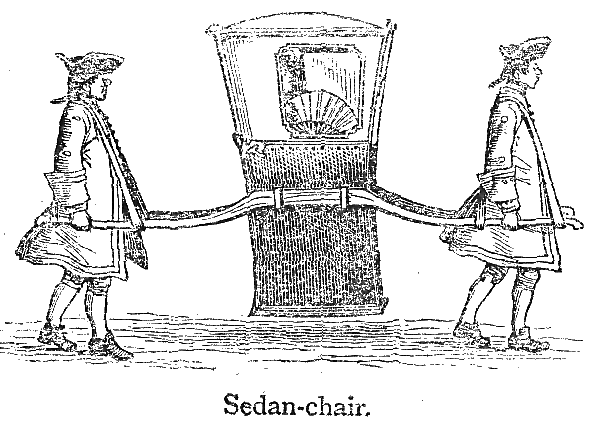
Sedan, sē-dan′, n. a covered chair for one, carried on two poles, generally by two bearers: a hand-barrow for fish. [Invented at Sedan, in France.]
Sedate, sē-dāt′, adj. quiet: serene: serious.—adv. Sedāte′ly.—n. Sedāte′ness, composure: tranquillity.—adj. Sed′ative, tending to make sedate: moderating: allaying irritation or pain.—n. a medicine that allays irritation or pain. [L. sedāre, -ātum, to seat, akin to sedēre, to sit.]
Se defendendo, sē dē-fen-den′dō, n. the plea of a person charged with slaying another, that it was in his own defence.
Sedentaria, sed-en-tā′ri-a, n.pl. the tubicolous worms: the sedentary spiders.
Sedentary, sed′en-tā-ri, adj. sitting much: passed chiefly in sitting: requiring much sitting: inactive: (zool.) not migratory: not errant: lying in wait, as a spider: not free-swimming: motionless, as a protozoan.—adj. Sē′dent, at rest.—adv. Sed′entarily.—n. Sed′entariness. [L. sedentarius—sedēre, to sit.]
Sederunt, sē-dē′runt, n. in Scotland, the sitting of a court.—Acts of sederunt, ordinances of the Scottish Court of Session. [L., 'they sat'—sedēre, to sit.]
Sedes impedita, sē′dez im-pē-dī′ta, a term for a papal or episcopal see when there is a partial cessation by the incumbent of his episcopal duties.—Sedes vacans (sē-dez vā′kanz), a term of canon law to designate a papal or episcopal see when vacant.
Sedge, sej, n. a kind of flag or coarse grass growing in swamps and rivers.—adj. Sedged, composed of sedge or flags.—ns. Sedge′-hen, a marsh-hen; Sedge′-war′bler, a reed-warbler, the sedge-wren.—adj. Sedg′y, overgrown with sedge. [Older form seg—A.S. secg; cf. Low Ger. segge.]
Sedge, sej, n. a flock of herons, bitterns, or cranes. [A variant of siege.]
Sedigitated, sē-dij′i-tā-ted, adj. having six fingers on one hand.
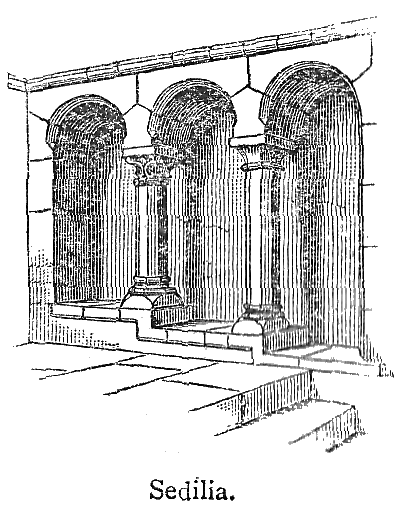
Sedilium, sē-dil′i-um, n. one of a row of seats in a Roman amphitheatre: a seat in the chancel of a church near the altar for the officiating clergyman—sometimes Sēdī′le:—pl. Sēdil′ia. [L.]
Sediment, sed′i-ment, n. what settles at the bottom of a liquid: dregs.—adj. Sedimen′tary, pertaining to, consisting of, or formed by sediment.—n. Sedimentā′tion. [L. sedimentum—sedēre, to sit.]
Sedition, sē-dish′un, n. insurrection: any offence against the State next to treason.—n. Sēdi′tionary, an inciter to sedition.—adj. Sedi′tious, pertaining to, or exciting, sedition: turbulent.—adv. Sēdi′tiously.—n. Sedi′tiousness. [Fr.,—L. seditio—se-, away, īre, ītum, to go.]
Seduce, sē-dūs′, v.t. to draw aside from rectitude: to entice: to corrupt: to cause a woman to surrender her chastity through persuasion, entreaty, under promise of marriage, &c.—ns. Sēdūce′ment, act of seducing or drawing aside: allurement; Sēdū′cer.—adj. Sēdū′cible.—adv. Sēdū′cingly.—n. Sēduc′tion, act of seducing or enticing from virtue, any enticement to evil: the act of fraudulently depriving an unmarried woman of her chastity.—adj. Sēduc′tive, tending to seduce or draw aside: assiduous.—adv. Sēduc′tively.—ns. Sēduc′tiveness; Sēduc′tor, one who leads astray. [L. seducĕre—se-, aside, ducĕre, ductum, to lead.]
Sedulous, sed′ū-lus, adj. diligent: constant.—ns. Sēdū′lity, Sed′ulousness.—adv. Sed′ulously. [L. sedulus—sedēre, to sit.]
Sedum, sē′dum, n. a genus of polypetalous plants, as stone-crop. [L., a house-leek.]
See, sē, n. the seat or jurisdiction of a bishop or archbishop: a throne.—Holy See, the papal court. [O. Fr. se, siet—L. sedes—sedēre, to sit.]
See, sē, v.t. to perceive by the eye: to observe: to discover: to remark: to bring about as a result: to wait upon, escort: to receive: to consult for any particular purpose: to suffer, experience: to meet and accept by staking a similar sum: to visit: to discern: to understand.—v.i. to look or inquire: to be attentive: to apprehend: to consider:—pa.t. saw; pa.p. seen.—interj. look! behold!—adj. See′able, capable of being seen.—n. Sē′er, one who sees or who foresees, a prophet.—See about a thing, to consider it; See one through, to aid in accomplishing or doing, esp. something difficult or dangerous; See out, to see to the end: to outdo; See through one, to understand one thoroughly; See to, to look after: (B.) to behold; See to it, look well to it.—Have soon one's best days, to be now on the decline; Let me see, a phrase employed to express consideration. [A.S. séon; Ger. sehen, Dut. zien.]
See-bright, sē′-brīt, n. the common clary.
See-catchie, sē′-kach′i, n. the male fur-seal.
See-cawk, sē′-kawk, n. the common American skunk.
Seed, sēd, n. the thing sown: the male fecundating fluid, semen, sperm, milt, spat, the substance produced by plants and animals from which new plants and animals are generated: first principle: original: descendants: children: race: red-seed: a small bubble formed in imperfectly fused glass.—v.i. to produce seed: to grow to maturity.—v.t. to sow: to plant: to graft.—ns. Seed′-bag, a bag for seeds; Seed′-bed, a piece of ground for receiving seed; Seed′-bird, the water-wagtail; Seed′-bud, the bud or germ of the seed; Seed′-cake, a sweet cake containing aromatic seeds; Seed′-coat, the exterior coat of a seed; Seed′-cod, a basket for holding seed; Seed′-cor′al, coral in small and irregular pieces; Seed′-corn, corn to be used for sowing; Seed′-crush′er, an instrument for crushing seeds to express the oil; Seed′-down, the down on cotton, &c.; Seed′-drill, a machine for sowing seed in rows; Seed′-eat′er, a granivorous bird.—adj. Seed′ed, bearing seed, full-grown: sown: (her.) having the stamens indicated.—ns. Seed′-embroi′dery, embroidery in which seeds form parts of the design; Seed′er, a seed-drill: an apparatus for removing seeds from fruit: a seed-fish; Seed′-field, a field in which seed is raised; Seed′-finch, a South American finch; Seed′-fish, roe or spawn; Seed′-fowl, a bird that feeds on grain.—adj. Seed′ful, rich in promise.—ns. Seed′-gall, a small gall; Seed′-grain, corn for seed.—adv. Seed′ily.—ns. Seed′iness, the state of being seedy: shabbiness: exhaustion; Seed′ing; Seed′ing-machine′, an agricultural machine for sowing; Seed′ing-plough, a plough fitted with a hopper from which seed is automatically deposited; Seed′-lac (see Lac, 2); Seed′-leaf, a cotyledon; Seed′-leap, a seed-basket.—adj. Seed′less, having no seeds.—ns. Seed′ling a plant reared from the seed—also adj.; Seed′-lobe, a cotyledon or seed-leaf; Seed′ness (Shak.), seedtime; Seed′-oil, oil expressed from seeds.—ns.pl. Seed′-oy′sters, very young oysters; Seed′-pearls, very small or imperfect pearls strung together on horse-hair and attached to mother-of-pearl, &c., for ornament—used also in the composition of electuaries, &c.—ns. Seed′-plant′er, a seeder for planting seed on hills; Seed′-plot, a piece of nursery-ground, a hot-bed; Seed′-sheet, the sheet containing the seed of the sower; Seeds′man, one who deals in seeds: a sower:—pl. Seeds′men; Seed′-sow′er, a broadcast seeding-machine; Seed′-stalk, the funiculus; Seed′-tick, a young tick; Seed′time, the time or season for sowing seed; Seed′-vess′el, the pericarp which contains the seeds; Seed′-weev′il, a small weevil which infests seeds; Seed′-wool, cotton-wool from which the seeds have not been removed.—adj. Seed′y, abounding with seed: run to seed: having the flavour of seeds: worn out: out of sorts, looking or feeling unwell: shabby.—n. Seed′y-toe, a diseased condition of a horse's foot. [A.S. sǽd—sáwan, to sow; Ice. sádh, Ger. saat.]
Seeing, sē′ing, n. sight: vision.—conj. since: because: taking into account.—n. See′ing-stone (obs.), a looking-glass, a divining crystal.
Seek, sēk, v.t. to go in search of: to look for: to try to find or gain: to ask for: to solicit: to pursue: to consult.—v.i. to make search or inquiry: to try: to use solicitation: (B.) to resort to:—pa.t. and pa.p. sought.—ns. Seek′er, an inquirer: one of a sect in the time of Cromwell: (anat.) tracer; Seek′-no-far′ther, a reddish winter apple; Seek′-sorr′ow (obs.), a self-tormentor.—Sought after, in demand, desired; To seek, to be sought: at a loss, without knowledge or resources, helpless. [A.S. sécan; cf. Dut. zoeken, Ger. suchen.]
Seel, sēl, v.t. to close the eyes of by sewing the eyelids together, as a hawk: to blind, hoodwink. [O. Fr. siller, ciller—cil—L. cilium, eyelash.]
Seel, sēl, n. (prov.) good fortune, happiness: opportunity, season.—n. Seel′iness.—adj. Seel′y (Spens.), silly, innocent: fortunate, happy, good: simple: trifling.—n. good fortune: bliss: (Scot.) opportunity. [A.S. sǽl, time—sǽl, propitious.]
Seel, sēl, v.i. to lean to one side, to pitch or roll.—n. a roll of a ship. [Prob. related to sail.]
Seelde, sēld, adv. (Spens.) seldom.
Seem, sēm, v.i. to appear: to have a show: to look: to pretend, to assume an air: to appear to one's self.—v.t. (B.) to befit: to become.—n. Seem′er.—adj. Seem′ing, apparent: specious: ostensible.—n. appearance: semblance: a false appearance: way of thinking.—adv. Seem′ingly.—n. Seem′ingness.—adj. Seem′less (Spens.), unseemly: indecorous.—n. Seem′liness.—adj. Seem′ly (comp. Seem′lier, superl. Seem′liest), becoming: suitable: decent: handsome.—adv. in a decent or suitable manner.—n. Seem′lyhed (Spens.), decent comely appearance.—It seems, it appears: it seems to me. [A.S. séman, to satisfy, to suit; or prob. direct from Scand., Ice. sæma, to honour, conform to.]
Seen, sēn, pa.p. of see.
Seen, sēn, adj. skilled, experienced: manifest.
Seep, sēp, v.i. to ooze gently: to trickle: to drain off.—n. Seep′age.—adj. Seep′y. [Sipe.]
Seer, sēr, n. one who foresees events: a prophet: a soothsayer.—n. Seer′ship.
Seer-fish, sēr′-fish, n. a longish scombroid fish, valuable for food.—Also Seir′-fish.
Seersucker, sēr-suk′ėr, n. a thin East Indian linen fabric.
Seesaw, sē′saw, n. motion to and fro, as in the act of sawing: a play among children, in which two seated at opposite ends of a board supported in the centre move alternately up and down.—adj. moving up and down, or to and fro: reciprocal.—v.i. to move backwards and forwards. [Prob. a redup. of saw.]
Seethe, sēth, v.t. to boil: to cook in hot liquid: to soak.—v.i. to be boiling: to be hot:—pa.t. seethed or sod; pa.p. seethed or sodd′en.—n. Seeth′er. [A.S. seóthan; Ice. sjótha, Ger. sieden.]
Seetulputty, sē′tul-put-i, n. a Bengalese grass mat for sleeping on. [Hind.]
Seg, seg, n. a castrated bull.
Seg, seg, n. sedge: the yellow flower-de-luce.—n. Seg′gan (Scot.).
Seggar, seg′ar, n. a case of clay in which fine pottery is enclosed while baking in the kiln. [Saggar.]
Seggrom, seg′rom, n. the ragwort.
Seghol, se-gōl′, n. a vowel-point in Hebrew with sound of e in pen, placed under a consonant, thus .—n. Segh′ōlāte, a dissyllabic noun form with tone-long vowel in the first and a short seghol in the second syllable.

Segment, seg′ment, n. a part cut off: a portion: (geom.) the part of a circle cut off by a straight line: the part of a sphere cut off by a plane: a section: one of the parts into which a body naturally divides itself: (her.) a bearing representing one part only of a rounded object.—v.t. and v.i. to divide or become divided.—adj. Segmen′tal, being a segment: in embryology, noting the rudimental venal organs.—adv. Segmen′tally.—adjs. Seg′mentary, Seg′mentate.—n. Segmentā′tion, the act of cutting into segments.—adj. Segmen′ted.—ns. Seg′ment-gear, a gear extending over an arc only of a circle, providing a reciprocating motion; Seg′ment-rack, a rack having a cogged surface; Seg′ment-saw, a circular saw used for cutting veneers; Seg′ment-shell, a modern form of projectile for artillery. [L. segmentum—secāre, to cut.]
Segnitude, seg′ni-tūd, n. sluggishness, inactivity, [L. segnitia, slowness, segnis, slow.]
Segno, sā′nyō, n. (mus.) a sign to mark the beginning or end of repetitions—abbreviated . [It.,—L. signum, a mark.]

Sego, sē′gō, n. a showy plant of the United States.
Segreant, seg′rē-ant, adj. an epithet of the griffin: (her.) equivalent to rampant and salient.
Segregate, seg′rē-gāt, v.t. to separate from others.—adj. separate from others of the same kind: (geol.) separate from a mass and collected together along lines of fraction.—n. Segregā′tion. [L. segregāre, -ātum—se-, apart, grex, gregis, a flock.]
Seguidilla, seg-i-dēl′yä, n. a lively Spanish dance for two: music for such a dance.
Seiche, sāsh, n. a remarkable fluctuation of the level observed on the Lake of Geneva and other Swiss lakes, probably due to local variations in the barometric pressure. [Fr.]
Seidlitz, sēd′litz, adj. saline water of or from Seidlitz in northern Bohemia, also a saline aperient powder.
Seignior, Seigneur, sē′nyor, n. a title of honour and address in Europe to elders or superiors: the lord of a manor.—ns. Seign′iorage, Seign′orage, a royalty: a share of profit: a percentage on minted bullion; Seignioral′ty, the authority or the territory of a seignior or lord.—adjs. Seigniorial (sē-nyō′ri-al), Seigneu′rial, Signō′rial, manorial.—v.t. Seign′iorise, to lord it over.—ns. Seign′iory, Seign′ory, the power or authority of a seignior or lord: a domain, a lordship without a manor, or that of manor whose lands were held by free tenants: the elders forming the municipal council in a medieval Italian republic.—Grand Seignior, the Sultan of Turkey. [Fr. seigneur—L. senior—senex, old. In Late. L. senior is sometimes equivalent to dominus, lord.]
Seil, sīl, v.t. (Scot.) to strain.—n. a strainer. [Sile.]
Seine, sān, or sēn, n. a large net for catching fish.—v.t. to catch with such.—ns. Seine′-boat; Seine′-en′gine, a steam-engine used in hauling seines; Seine′-gang, a body of men engaged in seining, with their boats and other gear; Sein′er, one who seines: a vessel engaged in purse-seining for mackerel; Sein′ing, the art of using the seine. [Fr.,—L. sagena—Gr. sagēnē, a fishing-net.]
Seirospore, sī′rō-spōr, n. one of the non-sexual spores arranged in a chain in certain florideous algæ.—adj. Seirospor′ic.
Seised, sēzd, adj. (Spens.) taken possession of.—n. Seis′in (Spens.), possession.
Seismograph, sīs′mō-graf, n. an instrument for registering the shocks and concussions of earthquakes, a seismometer.—adjs. Seis′mal; Seis′mic, belonging to an earthquake.—ns. Seis′mogram, the record made by a seismometer; Seismog′rapher.—adjs. Seismograph′ic, -al, connected with the seismograph.—n. Seismog′raphy, the study of earthquake phenomena.—adjs. Seismolog′ic, -al.—ns. Seismol′ogist, a student of earthquake phenomena; Seis′mologue, a catalogue of earthquake observations; Seismol′ogy, the science of earthquakes and volcanoes; Seismom′eter, an instrument for measuring shakings, tremors, and tiltings of the earth.—adjs. Seismom′etric, -al.—ns. Seismom′etry, the measuring the phenomena of earthquakes; Seis′moscope, a name of the simpler form of seismometer.—adj. Seismoscop′ic. [Gr. seismos, an earthquake, graphein, to write.]
Seison, sī′son, n. a genus of parasitic leech-like rotifers.
Seisura, sī-sū′ra, n. a genus of Australian fly-catchers.
Seity, sē′i-ti, n. something peculiar to one's self.
Seiurus, sī-ū′rus, n. the genus of birds including the American wagtails.
Seize, sēz,—v.t. to take possession of forcibly: to take hold of: to grasp: to apprehend by legal authority: to come upon suddenly: to lash or make fast.—v.i. to lay hold of with the claws: in metallurgy, to cohere.—adj. Seiz′able.—ns. Seiz′er; Seiz′ing, the act of taking hold: (naut.) the operation of lashing with several turns of a cord. [O. Fr. saisir (Prov. sazir, to take possession of)—Old High Ger. sazzan, to set, Ger. setzen, Eng. set.]
Seizin, Seisin, sē′zin, n. the taking possession of an estate as of freehold: the thing possessed—the same as Sasine (q.v.).—n. Seiz′or, one who takes legal possession.
Seizure, sē′zhūr, n. act of seizing: capture: grasp: the thing seized: a sudden attack.
Sejant, Sejeant, sē′jant, adj. (her.) sitting. [Fr. séant, pr.p. of seoir—L. sedēre, to sit.]
Sejoin, sē-join′, v.t. (obs.) to separate.—n. Sejunc′tion, separation.
Sejugous, sē′jōō-gus, adj. (bot.) having six pairs of leaflets. [L. sejugis—sex, six, jugum, a yoke.]
Sekos, sē′kos, n. in Greek antiquities, any sacred enclosure, a sanctuary, cella of the temple.
Sel, sel, n. (Scot.) self.
Selache, sel′a-kē, n. a genus of sharks.—adjs. Selā′chian, Sel′achioid. [Gr. selachos, a sea-fish.]
Selaginella, sē-laj-i-nel′a, n. a genus of heterosporous cryptogams, allied to club-moss.
Selah, sē′lä, n. in the Psalms, a transliterated Hebrew word (connected by Gesenius with sālāh, rest), supposed to be a direction in the musical rendering of a passage, probably meaning 'pause.'
Selandria, sē-lan′dri-a, n. a genus of saw-flies.
Selasphorus, sē-las′fō-rus, n. the genus of lightning hummers.
Selcouth, sel′kōōth, adj. (Spens.) rarely known, uncommon.—adv. Sel′couthly. [A.S. selcúth for seldcúth—seld, seldom, cúth—known, cunnan, to know.]
Seld, seld, adj. (Spens.) rare, uncommon.—adv. seldom, rarely.—adjs. Seld′seen, rarely seen; Seld′-shown (Shak.), rarely shown. [Seldom.]
Seldom, sel′dum, adv. rarely: not often.—n. Sel′domness.—adv. Sel′dom-times. [A.S. seldum, seldan—seld (adj.), rare; Ger. selten.]
Select, sē-lekt′, v.t. to pick out from a number by preference: to choose: to cull.—adj. picked out: nicely chosen: choice: exclusive.—adj. Selec′ted.—adv. Selec′tedly.—ns. Selec′tedness; Selec′tion, act of selecting: things selected: a book containing select pieces.—adj. Selec′tive.—adv. Selec′tively, by selection.—ns. Select′man, in New England towns, one of a board of officers chosen annually to manage various local concerns; Select′ness; Select′or.—Select meeting, in the Society of Friends, a meeting of ministers and elders.—Natural selection, the preservation of some forms of animal and vegetable life and the destruction of others by the ordinary operation of natural causes. [L. seligĕre, selectum—se-, aside, legĕre, to choose.]
Selene, sē-lē′nē, n. (Gr. myth.) the goddess of the moon, the Latin Luna—also Phœbe: a genus of carangoid fishes, the moon-fishes.—n. Selē′niscope, an instrument for observing the moon.—adj. Selēnocen′tric, having relation to the centre of the moon.—ns. Selē′nograph, a delineation of the moon; Selēnog′rapher, a student of selenography.—adjs. Selēnograph′ic, -al.—ns. Selēnog′raphist, a selenographer; Selēnog′raphy, description of the moon.—adj. Selēnolog′ical, pertaining to the physiography of the moon.—ns. Selēnol′ogist, a selenographer; Selēnol′ogy, selenography.—adj. Selēnōtrop′ic, turning to the moon.—ns. Selēnot′ropism, Selēnot′ropy. [Gr. selēnē.]
Selenite, sel′en-īt, n. a transparent and beautiful variety of gypsum: a salt of selenium: a supposed inhabitant of the moon.—adjs. Selenit′ic; Selenitif′erous. [Gr. selēnitēs (lithos, stone), moon-like—selēnē, the moon.]
Selenites, sel-ē-nī′tez, n.pl. a genus of coleopterous insects.
Selenium, sē-lē′ni-um, n. an element discovered by Berzelius in the refuse of a sulphuric-acid factory in 1817.—n. Sel′ēnate, a compound of selenic acid with a base.—adjs. Selen′ic, Selē′nious.—n. Sel′enide, a compound of selenium with one other element or radical—also Selē′niuret.—adjs. Selenif′erous; Selē′niuretted, containing selenium. [Gr. sēlēne, the moon.]
Selenodont, sē-lē′nō-dont, adj. having crescentic ridges on the crown, as molar teeth.
Seleucidæ, se-lū′si-dē, n.pl. the descendants of Seleucus I., surnamed Nicator, who governed Syria from 312 B.C. to 65 B.C.
Seleucides, se-lū′si-dēz, n. a genus containing the twelve-wired bird of Paradise.
Self, self, n. one's own person: one's personal interest: one's own personal interest, selfishness: a flower having its colour uniform as opposed to variegated:—pl. Selves (selvz).—adj. very: particular: one's own: simple, plain, unmixed with any other.—ns. Self′-aban′donment, disregard of self; Self′-abase′ment, abasement through consciousness of unworthiness.—adj. Self′-absorbed′, absorbed in one's own thoughts.—ns. Self′-abuse′, the abuse of one's own person or powers: self-pollution; Self′-accusā′tion, the act of accusing one's self.—adjs. Self′-accus′atory; Self′-act′ing, acting of, or by, itself, specially denoting a machine or mechanism which does of itself something that is ordinarily done by manual labour.—n. Self′-activ′ity, an inherent power of acting.—adj. Self′-adjust′ing, requiring no external adjustment.—n. Self′-admis′sion (Shak.), admission of one's self.—n.pl. Self′-affairs′ (Shak.), one's own affairs.—adjs. Self′-affect′ed (Shak.), affected well towards one's self; Self′-affright′ed (Shak.), frightened at one's self.—n. Self′-applause′, applause of one's self.—adjs. Self′-appoint′ed, nominated by one's self; Self′-approv′ing, implying approval of one's own conduct; Self′-assert′ing, given to asserting one's opinion: putting one's self forward.—n. Self′-asser′tion.—adj. Self′-assumed′, assumed by one's own act.—n. Self′-assump′tion, conceit.—adj. Self′-begot′ten, generated or originated by one's own powers.—n. Self′-bind′er, the automatic binding apparatus attached to some reaping-machines.—adj. Self′-blind′ed, led astray by one's self.—n. Self′-blood′ (obs.), direct progeny: suicide.—adj. Self′-born′, born or produced by one's self.—n. Self′-boun′ty (Shak.), native goodness.—adj. Self′-cen′tred, centred in self.—n. Self′-char′ity (Shak.), love of one's self.—adjs. Self′-clō′sing, shutting automatically; Self′-collect′ed, self-possessed: self-contained; Self′-col′oured, of the natural colour: dyed in the wool: coloured with a single tint: (hort.) uniform in colour.—ns. Self′-command′, self-control; Self′-complā′cency, satisfaction with one's self, or with one's own performances.—adj. Self′-complā′cent, pleased with one's self: self-satisfied.—n. Self′-conceit′, an over-high opinion of one's self, one's own abilities, &c.: vanity.—adj. Self′-conceit′ed, having a high opinion of one's self, of one's own merits, abilities, &c.: vain.—ns. Self′-conceit′edness; Self′-condemnā′tion, condemnation by one's own conscience: a self-condemning.—adjs. Self′-condemned′; Self′-condemn′ing.—n. Self′-con′fidence, confidence in, or reliance on, one's own powers: self-reliance.—adj. Self′-con′fident, confident of one's own powers: in the habit of relying on one's own powers.—adv. Self′-con′fidently.—adj. Self′-confī′ding, relying on one's own powers.—n. Self′-congratulā′tion, the act of felicitating one's self.—adjs. Self′-con′jugate, conjugate to itself; Self′-con′scious, conscious of one's acts or states as originating in one's self: conscious of being observed by others.—n. Self′-con′sciousness, the act or state of being self-conscious: consciousness of being observed by others.—adj. Self′-consid′ering, considering in one's own mind, deliberating.—n. Self′-consist′ency, consistency with one's self, or principles.—adjs. Self′-consist′ent; Self′-con′stituted, constituted by one's self; Self′-consū′ming, consuming one's self, or itself: Self′-contained′, wrapped up in one's self, reserved: of a house, not approached by an entrance common to others: complete in itself.—ns. Self′-contempt′, contempt for one's self; Self′-content′, self-complacency; Self′-contradic′tion, the act or fact of contradicting one's self: a statement of which the terms are mutually contradictory.—adj. Self′-contradict′ory.—n. Self′-control′, control or restraint exercised over one's self: self-command.—adj. Self′-convict′ed, convicted by one's own inner consciousness, or avowal.—n. Self′-convic′tion.—adjs. Self′-correspond′ing, corresponding to itself; Self′-cov′ered, clothed in one's native semblance.—ns. Self′-creā′tion, the act of coming into existence by the vitality of one's own nature; Self′-crit′icism, criticism of one's self; Self′-cult′ure, culture or education of one's self without the aid of teachers; Self′-dān′ger (Shak.), danger from one's self; Self′-deceit′, deception respecting one's self; Self′-deceiv′er, one who deceives himself; Self′-decep′tion, the act of deceiving one's own self; Self′-defence′, the act of defending one's own person, property, &c. (Art of self-defence, boxing, pugilism); Self′-delā′tion, accusation of one's self; Self′-delū′sion, delusion respecting one's self; Self′-denī′al, the denial of one's self: the non-gratifying of one's own appetites or desires.—adj. Self′-deny′ing.—adv. Self′-deny′ingly.—n. Self′-depend′ence, reliance on one's self.—adj. Self′-depend′ent.—n. Self′-depreciā′tion, depreciation of one's self.—adj. Self′-deprē′ciātive.—ns. Self′-despair′, a despairing view of one's prospects, &c.; Self′-destruc′tion, the destruction of one's self: suicide.—adj. Self′-destruc′tive.—n. Self′-determinā′tion, determination by one's self without extraneus impulse.—adjs. Self′-deter′mined; Self′-deter′mining.—n. Self′-devel′opment, spontaneous development.—adj. Self′-devō′ted.—n. Self′-devō′tion, self-sacrifice.—adj. Self′-devour′ing, devouring one's self.—ns. Self′-dispar′agement, disparagement of one's self; Self′-dispraise′, censure of one's self; Self′-distrust′, want of confidence in one's own powers.—adjs. Self′-ed′ucated, educated by one's own efforts alone; Self′-elect′ive, having the right to elect one's self.—n. Self-end′ (obs.), an end for one's self alone.—adj. Self′-endeared′, self-loving.—ns. Self′-enjoy′ment, internal satisfaction; Self′-esteem′, the esteem or good opinion of one's self; Self′-estimā′tion; Self′-ev′idence.—adj. Self′-ev′ident, evident of itself or without proof: that commands assent.—adv. Self′-ev′idently.—ns. Self′-evolū′tion, development by inherent power; Self′-exaltā′tion, the exaltation of self; Self′-exam′inant, one who examines himself; Self′-examinā′tion, a scrutiny into one's own state, conduct, &c., esp. with regard to one's religious feelings and duties; Self′-exam′ple, one's own example.—adj. Self′-ex′ecuting, needing no legislation to enforce it.—n. Self′-exist′ence.—adjs. Self′-exist′ent, existing of or by himself or itself, independent of any other cause; Self′-explan′atory, obvious, bearing its meaning in its own face.—n. Self′-explicā′tion, the power of explaining one's self.—adjs. Self-faced′, undressed or unhewn; Self-fed′, fed by one's self.—n. Self′-feed′er, a self-feeding apparatus.—adj. Self′-feed′ing, feeding automatically.—ns. Self′-fertilisā′tion; Self′-fertil′ity, ability to fertilise itself.—adjs. Self′-fig′ured, figured or described by one's self; Self′-flatt′ering, judging one's self too favourably.—n. Self′-flatt′ery, indulgence in reflections too favourable to one's self.—adjs. Self′-foc′using, focusing without artificial adjustment; Self′-forget′ful, devoted to others, and forgetful of one's own interests.—adv. Self′-forget′fully.—adjs. Self′-gath′ered, wrapped up in one's self; Self-glazed′, covered with glass of a single tint; Self′-glō′rious, springing from vainglory or vanity: boastful; Self′-gov′erning.—ns. Self′-gov′ernment, self-control: government by the joint action of the mass of the people: democracy; Self′-gratulā′tion, congratulation of one's self.—adj. Self′-harm′ing, injuring one's self.—n. Self-heal′, prunella: the burnet saxifrage.—adj. Self′-heal′ing, having the power of healing itself.—ns. Self-help′, working for one's self; Self′hood, existence as a separate person: conscious personality.—adj. Self′-ī′dolised, regarded with extreme complacency by one's self.—n. Self′-import′ance, a high estimate of one's own importance: egotism: pomposity.—adjs. Self′-import′ant; Self′-imposed′, taken voluntarily on one's self; Self′-im′potent (bot.), unable to fertilise itself.—n. Self′-indul′gence, undue gratification of one's appetites or desires.—adj. Self′-indul′gent.—n. Self′-infec′tion, infection of the entire organism from a local lesion.—adj. Self′-inflict′ed, inflicted by one's self.—n. Self′-in′terest, private interest: regard to one's self.—adj. Self′-in′terested.—n. Self′-involū′tion, mental abstraction.—adjs. Self′-involved′, wrapped up in one's self; Self′ish, chiefly or wholly regarding one's own self: void of regard to others (Selfish theory of morals, the theory that man acts from the consideration of what will give him the most pleasure).—adv. Self′ishly.—ns. Self′ishness; Self′ism; Self′ist; Self′-justificā′tion, justification of one's self.—adjs. Self′-kin′dled, kindled of itself; Self′-know′ing, knowing of one's own self: possessed of self-consciousness.—n. Self′-knowl′edge, the knowledge of one's own character, abilities, worth, &c.—adjs. Self-left′, left to one's self; Self′less, having no regard to self, unselfish.—ns. Self′lessness, freedom from selfishness; Self-life′, a life only for one's own gratification.—adjs. Self′-like, exactly similar; Self′-lim′ited (path.), tending to spontaneous recovery after a certain course.—n. Self-love′, the love of one's self: tendency to seek one's own welfare or advantage: desire of happiness.—adjs. Self′-lov′ing, full of self-love; Self′-lum′inous, possessing the property of emitting light; Self-made′, made by one's self; denoting a man who has risen to a high position from poverty or obscurity by his own exertions.—ns. Self′-mas′tery, self-command: self-control; Self′-met′tle (Shak.), mettle or spirit which is natural to one, and not artificially inspired; Self′-mō′tion, spontaneous motion.—adj. Self-moved′, moved spontaneously from within.—ns. Self′-mur′der, the killing of one's self: suicide; Self′-mur′derer; Self′-neglect′ing (Shak.), the neglecting of one's self; Self′ness, egotism: personality; Self′-offence′, one's own offence; Self′-opin′ion, the tendency to form one's own opinion irrespective of that of others.—adjs. Self′-opin′ionated, obstinately adhering to one's own opinion; Self′-orig′inating, springing from one's self.—ns. Self′-partial′ity, overestimate of one's own worth; Self′-percep′tion, the faculty of immediate perception of the soul by itself.—adjs. Self′-perplexed′, perplexed by one's own thoughts; Self′-pī′ous, hypocritical.—n. Self′-pit′y, pity for one's self.—adjs. Self-pleached′ (Tenn.), interwoven by natural growth; Self′-pleas′ing, gratifying one's own wishes; Self-poised′, kept well balanced by self-respect.—n. Self′-pollū′tion, self-abuse, masturbation.—adj. Self′-possessed′, calm or collected in mind or manner: undisturbed.—ns. Self′-posses′sion, the possession of one's self or faculties in danger: calmness; Self-praise′, the praise of one's self; Self′-preservā′tion, the preservation of one's self from injury, &c.—adjs. Self′-preser′vative, Self-preser′ving.—ns. Self-pride′, self-esteem; Self′-prof′it, self-interest.—adj. Self′-prop′agating, propagating one's self or itself.—ns. Self′-protec′tion, self-defence; Self′-realisā′tion, the attainment of such development as one's mental and moral nature is capable of.—adjs. Self′-recip′rocal, self-conjugate; Self′-record′ing, making, as an instrument, a record of its own state.—n. Self′-regard′, regard for one's own self.—adjs. Self′-regard′ing; Self′-reg′istering, registering itself: denoting an instrument or machine having a contrivance for recording its own operations; Self′-reg′ulated, regulated by one's self or itself; Self′-reg′ulating, regulating itself; Self′-reg′ulative.—n. Self′-relī′ance, reliance on one's own abilities.—adj. Self′-relī′ant.—n. Self′-renunciā′tion, self-abnegation.—adj. Self′-repel′ling, repelling by its own inherent power.—ns. Self′-repres′sion, the keeping of one's self in the background; Self′-reproach′, the act of reproaching or condemning one's self.—adj. Self′-reproach′ing, reproaching one's self.—adv. Self′-reproach′ingly.—n. Self′-reproof′, the reproof of one's own conscience.—adjs. Self′-reprov′ing, reproving one's self, from conscious guilt; Self′-repug′nant, self-contradictory: inconsistent.—n. Self′-respect′, respect for one's self or one's character.—adjs. Self′-respect′ful; Self′-respect′ing; Self′-restrained′, restrained by one's own will.—ns. Self′-restraint′, a restraint over one's appetites or desires: self-control; Self′-rev′erence, great self-respect.—adjs. Self′-rev′erent; Self′-right′eous, righteous in one's own estimation: pharisaical.—n. Self′-right′eousness, reliance on one's supposed righteousness: sense of one's own merit or goodness, esp. if overestimated.—adjs. Self′-right′ing, that rights itself when capsized; Self′-rolled′, coiled on itself.—n. Self′-sac′rifice, the act of yielding up one's life, interests, &c. for others.—adjs. Self′-sac′rificing, yielding, or disposed to yield, up one's life, interests, &c.; Self′-same, the very same.—ns. Self′-same′ness, sameness as regards self or identity; Self′-satisfac′tion, satisfaction with one's self.—adjs. Self′-sat′isfied, satisfied with the abilities, performances, &c. of one's self; Self′-sat′isfying, giving satisfaction to one's self.—ns. Self-scorn′, a mood in which one entertains scorn for a former mood of self; Self′-seek′er, one who looks only to his own interests.—adj. Self′-seek′ing, seeking unduly one's own interest or happiness.—n. the act of doing so.—adj. Self′-shin′ing, self-luminous.—n. Self′-slaugh′ter (Shak.), the slaughter of one's self: suicide.—adjs. Self′-slaugh′tered, killed by one's self; Self′-ster′ile (bot.), unable to fertilise itself; Self-styled′, called by one's self: pretended; Self′-subdued′ (Shak.), subdued by one's own power; Self′-substan′tial (Shak.), composed of one's own substance.—n. Self′-suffi′ciency.—adjs. Self′-suffi′cient, confident in one's own sufficiency: haughty: overbearing; Self′-suffic′ing.—ns. Self′-sugges′tion, determination by causes inherent in the organism; Self′-support′, the maintenance of one's self.—adjs. Self′-support′ed; Self′-support′ing.—n. Self′-surren′der, the yielding up of one's self to another.—adj. Self′-sustained′, sustained by one's own power.—ns. Self′-sus′tenance, self-support; Self-sustentā′tion.—adjs. Self′-taught, taught by one's self; Self′-think′ing, forming one's own opinions: of independent judgment; Self′-tor′turable (Shak.), capable of being tortured by one's self.—ns. Self′-tor′ture; Self-trust′, self-reliance; Self-view′, regard for one's own interest; Self′-vī′olence, violence inflicted upon one's self; Self-will′, obstinacy.—adj. Self-willed′, governed by one's own will.—ns. Self′-willed′ness; Self′-wor′ship, the idolising of one's self; Self′-wor′shipper; Self-wrong′ (Shak.), wrong done by a person to himself.—Be beside one's self (see Beside); Be one's self, to be in full possession of one's powers; By one's self, or itself, apart, alone: without aid of another person or thing. [A.S. self, seolf, sylf; Dut. zelf, Ger. selbe, Goth. silba.]
Selictar, sē-lik′tär, n. the sword-bearer of a Turkish chief. [Turk. silihdār—Pers. silahdār—Ar. silāh, arms, pl. of silh, a weapon.]
Selinum, sē-lī′num, n. a genus of umbelliferous plants—milk-parsley. [Gr. selinon, parsley.]
Selion, sel′yon, n. a ridge of land rising between two furrows. [O. Fr. seillon, Fr. sillon, a furrow.]
Seljuk, sel-jōōk′, n. a member of a Turkish family which, under Togrul Beg, grandson of a chief named Seljuk, overthrew the Abbaside califs of Bagdad about 1050, and gave way before the Osmanli or Ottoman princes.—adj. Selju′kian.
Sell, sel, n. a seat, a throne: (Spens.) a saddle: a saddler.—adj. Sell′iform, saddle-shaped. [O. Fr. selle—L. sella, for sedula, dim. of sedes, a seat.]
Sell, sel, v.t. to deliver in exchange for something paid as equivalent: to betray for money: to impose upon, cheat.—v.i. to have commerce: to be sold, to be in demand for sale:—pa.t. and pa.p. sōld.—n. a deception.—adj. Sell′able, that can be sold.—n. Sell′er, a furnisher: a vender: a small vessel for holding salt.—Sell one's life dearly, to do great injury to the enemy before one is killed; Sell one up, to sell a debtor's goods; Sell out, to dispose entirely of: to sell one's commission. [A.S. sellan, to hand over; cf. Ice. selja, Goth. saljan.]
Sellanders, sel′an-dėrs, n. an eruption in the tarsus of the horse. [Fr. solandre.]
Seltzer, selt′zėr, n. an effervescing alkaline mineral water brought from Nieder-Selters in Prussia.—n. Selt′zogene, a gazogene (q.v.).
Selvage, sel′vāj, n. that part of cloth which forms an edge of itself without hemming: a border: in mining, that part of a lode adjacent to the walls on either side: the edge-plate of a lock—also Sel′vedge.—adjs. Sel′vaged, Sel′vedged.—n. Selvagēē′, an untwisted skein of rope-yarn marled together. [Old Dut. selfegge, self, self, egge, edge.]
Selves, selvz, pl. of self.
Semantron, sē-man′tron, n. in the Greek Church, a long bar of wood struck with a mallet to summon worshippers. [Gr.,—sēmainein, to give a signal.]
Semaphore, sem′a-fōr, n. a contrivance for conveying signals, consisting of a mast with arms turned on pivots by means of cords or levers.—adjs. Semaphor′ic, -al, telegraphic—adv. Semaphor′ically. [Gr. sēma, a sign, pherein, to bear.]
Semasiology, sē-mā-si-ol′ō-ji, n. the science of the development of the meanings of words. [Gr. sēmasia—sēmainein, to signify, legein, to speak.]
Semasphere, sem′a-sfēr, n. an aerostatic signalling apparatus. [Gr. sēma, a sign, sphaira, a ball.]
Sematic, sē-mat′ik, adj. significant: indicative, as of danger: ominous.—n. Sematol′ogy, the science of verbal signs in the operations of thinking and reasoning. [Gr. sēma, a sign.]
Sematrope, sem′a-trōp, n. an adaptation of the heliotrope for transmitting military signals. [Gr. sēma, a sign, trepein, to turn.]
Semblable, sem′bla-bl, adj. (Shak.) resembling, similar, like.—n. likeness, resemblance.—adv. Sem′blably (Shak.) in like manner.—n. Sem′blance, likeness: appearance: figure.—adj. Sem′blant, resembling, like.—n. (Spens.) resemblance, figure.—adj. Sem′blative (Shak.), resembling, fit, suitable.—v.i. Sem′ble (obs.), to appear: to dissemble: to practise the art of imitation.—adj. like. [Fr.,—sembler, to seem, to resemble—L. similis, like.]
Semé, se-mā′, adj. (her.) strewn or scattered over with small bearings, powdered. [Fr., sown, semer—L. semināre, to sow.]
Semeiology, Semiology, sē-mī-ol′ō-ji, n. the sum of knowledge of the signs and symptoms of morbid conditions, symptomatology: the science of gesture or sign-language.—n. Semeiog′raphy, the description of the signs or symptoms of disease.—adjs. Semeiolog′ic, -al, pertaining to semeiology; Semeiot′ic, relating to signs, symptomatic.—n. Semeiot′ics, the science of signs: semeiology or symptomatology. [Gr. sēmeion, a mark, legein, to say.]
Semeion, sē-mī′on, n. in ancient prosody, the unit of time: one of the two divisions of a foot: a mark in paleography indicating metrical or other divisions:—pl. Semei′a. [Gr. sēmeion, a mark.]
Semele, sem′e-lē, n. a genus of bivalves. [Gr. Semelē, the mother of Bacchus.]
Semen, sē′men, n. the impregnating fluid of male animals, usually whitish, viscid, containing innumerable spermatozoa. [L.]
Semencine, sē′men-sin, n. santonica.
Semese, se-mēs′, adj. half-eaten. [L. semesus, half-eaten, semi-, half, esus—edĕre, to eat.]
Semester, sē-mes′tėr, n. one of the half-year courses in German universities.—adj. Semes′tral. [L. semestris—sex, six, mensis, a month.]
Semi-, sem′i, a prefix of Latin origin, meaning 'half,' and also less accurately 'partly,' 'incompletely.'—n. and adj. Semiac′id, half-acid, sub-acid.—n. Sem′iangle, the half of a given angle.—adj. Semi-an′nual, half-yearly.—adv. Sem′i-an′nually, once every six months.—adj. Semian′nular, semicircular.—ns. Sem′i-an′thracite, coal intermediate between anthracite and semi-bituminous coal; Sem′i-ape, a lemur.—adjs. Sem′i-aquat′ic (zool., bot.), entering the water, but not necessarily existing by it; Sem′i-Ā′rian, relating to the Christology of the so-called Semi-Arians (Eusebius of Cæsarea, &c.) who held a middle ground between the Arian hetero-ousia and the orthodox homo-ousia or co-equality of the Son with the Father, asserting the homoi-ousia, or similarity of essence.—n. Sem′i-Ā′rianism.—adjs. Sem′i-artic′ulate, loose-jointed; Sem′i-attached′, partially bound by affection or interest; Semibarbā′rian, half-barbarian or savage: partially civilised.—n. Semibar′barism.—adj. Sem′i-bitū′minous, partly bituminous, as coal.—ns. Sem′ibrēve, a musical note, half the length of a breve = 2 minims or 4 crotchets; Sem′ibull, a bull issued by a pope between the time of his election and that of his coronation.—adjs. Sem′icalcā′reous, partly chalky; Sem′i-cal′cined, half-calcined; Semicartilag′inous, gristly; Semicentenn′ial, occurring at the completion of fifty years.—n. a celebration at the end of fifty years.—adj. Semichō′ric.—ns. Semichō′rus, a small number of selected singers; Sem′icircle, half a circle: the figure bounded by the diameter of a circle and half the circumference.—adjs. Sem′icircled; Semicir′cular.—adv. Semicir′cularly.—ns. Semicircum′ference, half of the circumference of a circle; Sem′icirque, a semicircular hollow; Semiclō′sure, half-closure; Sem′icolon, the point (;) marking a division greater than the comma; Semicō′lon-butt′erfly, a butterfly with a silver mark on the under side; Sem′i-col′umn, a half-column.—adjs. Sem′i-colum′nar, flat on one side and rounded on the other; Sem′i-complete′ (entom.), incomplete; Sem′i-con′fluent (path.), half-confluent; Sem′i-con′jugate, conjugate and halved; Sem′i-con′scious, half or imperfectly conscious; Sem′i-conver′gent, convergent as a series, while the series of moduli is not convergent.—n. Sem′icope, an outer garment worn by some of the monastic clergy in the Middle Ages.—adjs. Sem′icor′neous, partly horny; Semicor′onate.—n. Sem′icor′onet (entom.), a line of spines half surrounding a part.—adjs. Sem′i-costif′erous, half-bearing a rib; Semicrit′ical, related to a differential equation and its criticoids.—n. Sem′icrome (mus.), a sixteenth note.—adjs. Sem′icrustā′ceous, half-hard; Semicrys′talline, imperfectly crystallised.—n. Semicū′bium, a half-bath.—adjs. Semicylin′drical, resembling a cylinder divided longitudinally; Semidef′inite, half-definite: Sem′i-depend′ent, half-dependent; Sem′ides′ert, half-desert; Sem′idetached′, partly separated: noting one of two houses joined by a party-wall, but detached from other buildings.—ns. Sem′i-diam′eter, half the diameter of a circle: a radius; Sem′i-diapā′son, a diminished octave; Sem′i-diaphanē′ity, half-transparency.—adj. Semi′-diaph′anous, half-transparent.—n. Semidiur′na, a group of lepidopterous insects including the hawk-moth.—adj. Semidiur′nal, accomplished in half a day: (entom.) flying in twilight.—n. Sem′i-dome′, half a dome, esp. as formed by a vertical section.—adj. Sem′idoub′le, having the outermost stamens converted into petals.—n. a festival on which half the antiphon is repeated before and the whole antiphon after the psalm.—n. Sem′i-ef′figy, a representation of a figure seen at half-length only.—adj. Sem′i-ellip′tical, having the form of an ellipse which is cut transversely.—ns. Sem′i-fā′ble, a mixture of truth and fable; Sem′i-faience′, pottery having a transparent glaze instead of the opaque enamel of true faience; Sem′i-fig′ure, a partial human figure in ornamental design.—v.t. Sem′i-flex, to half-bend.—n. Sem′i-flex′ion.—adj. Sem′i-flos′cular.—n. Sem′i-flos′cule, a floret with a strap-shaped corolla.—adjs. Sem′i-flos′culōse, Sem′i-flos′culous, having the corolla split, flattened out, and turned to one side, as in the ligular flowers of composites; Semiflu′id, half or imperfectly fluid; Sem′i-formed, half-formed.—n. Sem′i-frā′ter, a secular benefactor of a religious house, having a share in its intercessory prayers and masses.—adjs. Sem′i-fused′, half-melted; Semiglō′bōse, Semiglob′ular, having the shape of half a sphere.—adv. Semiglob′ularly.—ns. Sem′i-god, a demi-god; Sem′i-independ′ence.—adjs. Sem′i-independ′ent, not fully independent; Sem′i-in′finite, limited at one end and extending to infinity; Sem′i-lig′neous, partially woody: (bot.) having a stem woody at the base and herbaceous at the top; Semi-liq′uid, half-liquid.—n. Semi-liquid′ity.—adjs. Sem′i-log′ical, half-logical, partly logical; Sem′i-lū′cent, half-transparent; Semi-lū′nar, half-moon shaped, as the semi-lunar bone of the wrist; Sem′i-lū′nate, having the form of a half-moon; Sem′i-malig′nant, not very malignant, said of tumours; Sem′i-matūre′, half-ripe.—n. Semimembranō′sus, a long muscle of the back of the thigh.—adjs. Semimem′branous (anat.), partly membranous; Sem′i-men′strual, half-monthly, esp. of an inequality of the tide.—n. Sem′i-met′al, in old chemistry, a metal that is not malleable, as zinc.—adjs. Sem′i-metal′lic; Sem′i-month′ly, occurring twice a month.—n. Semi-mūte′, one who, having lost the faculty of hearing, has also lost the faculty of speech—also adj.—adj. Sem′i-nūde′, half-naked.—n. Sem′inymph, the pupa of an insect which undergoes only semi-metamorphosis.—adjs. Sem′i-obscure′, noting the wings of insects when deeply tinged with brownish-gray, but semi-transparent; Sem′i-offic′ial, partly official.—adv. Sem′i-offic′ially.—n. Sem′i-ō′pal, a variety of opal not possessing opalescence.—adj. Sem′i-opaque′, partly opaque.—n. Sem′i-op′tera, a genus of birds—the standard-wings.—adj. Sem′i-orbic′ular, having the shape of half a sphere.—n. Sem′i-or′dinate, half a chord bisected by the transverse diameter of a conic.—adjs. Sem′i-oss′eous, partly bony; Semiō′val, having the form of an oval; Semiovip′arous, imperfectly viviparous; Semipal′mate, half-webbed, as the toes of a bird.—ns. Semipalmā′tion; Semiparab′ola, one branch of a parabola being terminated at the principal vortex of the curve; Sem′iped, in prose, a half-foot.—adjs. Sem′ipedal; Sem′i-Pelā′gian, relating to the theology of the Semi-Pelagians (John Cassianus, &c.), who tried to find a middle course between the Augustinian doctrine of predestination and the Pelagian doctrine of the free-will of man.—n. Sem′i-Pelā′gianism.—adjs. Sem′i-pellū′cid, imperfectly transparent; Sem′ipen′niform, half-penniform; Sem′i-per′fect, nearly perfect; Sem′i-pis′cine, half-fish; Sem′i-plant′igrade, incompletely plantigrade: partly digitigrade; Sem′i-plas′tic, imperfectly plastic.—ns. Semiplotī′na, a group or sub-family of cyprinoid fishes; Sem′iplume, a feather of partly downy structure; Semiquad′rate, an aspect of two planets when distant from each other 45 degrees; Sem′iquāver, a musical note, half the length of a quaver: something of short duration.—adjs. Sem′i-recon′dite, half-hidden; Sem′i-rē′flex, involuntarily performed, but not entirely independent of the will; Sem′i-reg′ular, pertaining to a quadrilateral having four equal sides, but only pairs of equal angles; Sem′i-retrac′tile, retractile to some extent.—n. Sem′i-ring, a bronchial half-ring.—adjs. Sem′i-sag′ittate (entom.), shaped like the barbed end of a fish-hook; Sem′i-sav′age, semi-barbarian; Sem′i-Sax′on, early Middle English (c. 1150-1250); Sem′i-sep′tate, half-partitioned.—ns. Sem′i-sex′tile, the position of planets when they are distant from each other the twelfth part of a circle, or 30°; Sem′i-smile, a faint smile.—adjs. Sem′i-solid, partially solid; Semispher′ical, having the figure of a half-sphere.—ns. Sem′i-spinā′lis, a deep muscular layer of the back; Sem′i-square, an aspect of two planets when 45 degrees from each other; Sem′i-steel, puddled steel.—adjs. Sem′i-supernat′ural, half-divine and half-human; Sem′i-sū′pinated, placed between supination and pronation.—ns. Sem′i-tan′gent, the tangent of half an arc; Sem′i-tendinō′sus, a fusiform muscle on the back of the thigh.—adjs. Semiten′dinous, tendinous for half its length; Semitērē′te, half-round; Semiter′tian, partly tertian and partly quotidian.—n. Sem′itone, half a tone: one of the lesser intervals of the musical scale, as from B to C.—adj. Semiton′ic.—n. Sem′i-transpā′rency.—adjs. Sem′i-transpārent, half or imperfectly transparent; Sem′i-trop′ical, subtropical; Sem′i-tū′bular, like the half of a tube divided longitudinally; Sem′i-tychon′ic, approximating to Tycho Brahe's astronomical system; Sem′i-un′cial, intermediate between uncial and minuscule.—n. a method of writing Latin and Greek in use in the sixth and seventh centuries.—adjs. Semivit′reous, partially vitreous; Semivit′rified, half-vitrified; Sem′ivive (obs.) half-alive; Sem′i-vō′cal, pertaining to a semivowel: imperfectly sounding.—n. Semivow′el, a half-vowel, a letter possessing the character of both a vowel and a consonant, usually only w and y, but sometimes including also the liquids l and r and the nasals m and n.—adj. Sem′i-week′ly, issued twice a week.—Semicylindrical leaf, a leaf elongated, flat on one side, round on the other.
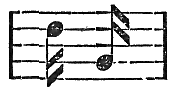
Seminal, sem′in-al, adj. pertaining to seed: radical: rudimentary.—n. (obs.) a seed.—n. Seminal′ity, the germinating principle.—v.t. Sem′ināte, to sow: to propagate: to disseminate.—n. Seminā′tion, act of sowing: natural dispersion of seed: propagation.—adjs. Seminif′erous, seed-bearing: producing seed; Seminif′ic, producing seed.—ns. Seminificā′tion; Sem′inist, one who holds that the admixture of the male and female seed originates the new individual. [L. semen, seminis, seed—serĕre, to sow.]
Seminary, sem′in-ar-i, n. the original place whence anything is derived, a nursery: a place of education, esp. in branches of knowledge to be afterwards applied in practice, as theology, &c.: a group of advanced students working in some specific subject of study under a teacher—also and more commonly Seminär′ (the German name): a seminary priest.—n. Sem′inarist, a student at a seminary: a R.C. priest educated in a foreign seminary.
Seminole; sem′i-nōl, n. one of a tribe of American Indians, originally a vagrant branch of the Creeks, now mostly confined to the Indian Territory.
Semiography, Semiology, Semiotics. See Semeiography, Semeiology, Semeiotics.
Semiotellus, sē-mi-ō-tel′us, n. a widely distributed genus of hymenopterous parasites.
Semis, sē′mis, n. a bronze coin of the ancient Roman republic, half the value of an as.
Semispata, sem-i-spā′ta, n. a Frankish dagger. [L. semi-, half, spatha, a sword.]
Semita, sem′i-ta, n. a fasciole of the spatangoid sea-urchins.—adj. Sem′ital. [L., a path.]
Semitaur, sem′i-tawr, n. a fabulous animal, half-bull, half-man. [L. semi-, half, taurus, a bull.]
Semitic, sem-it′ik, adj. pertaining to the Semites, or supposed descendants of Shem, or their language, customs, &c.—also Shemit′ic.—ns. Sem′ite; Semitisā′tion.—v.t. Sem′itise, to render Semitic in language or religion.—ns. Sem′itism, a Semitic idiom; Sem′itist, a Hebrew scholar.—Semitic languages, Assyrian, Aramean, Hebrew, Phœnician, together with Arabic and Ethiopic. [Applied by J. G. Eichhorn in 1817 to the closely allied peoples represented in Gen. x. as descended from Shem.]
Semmit, sem′it, n. (Scot.) an undershirt. [Samite.]
Semnopithecinæ, sem-nō-pith-ē-sī′nē, n. a sub-family of catarrhine monkeys.—adjs. Semnopith′ecine, Semnopith′ecoid.—n. Semnopithē′cus, the typical genus of the foregoing sub-family, the sacred monkeys of Asia. [Gr. semnos, honoured, pithēkos, an ape.]