XYZ
Reading edition
YAUPON, see Holly.
YELLOW JASMINE (Gelsemium sempervirens).
The yellow jasmine is a well-known poisonous climbing vine common to the Southern States from Virginia to Florida and west to Mexico. Its yellow flowers, in short axillary clusters, appear in early spring (February and March) and are very fragrant. The vine climbs over trees to a great height, often 30 feet or more. It yields pollen and probably some nectar. It is reported as poisonous to the bees.
“For the past nine years I have observed, commencing with the opening of the yellow jasmine flowers, a very fatal disease attacking the young bees and continuing until the cessation of the bloom. The malady would then cease as quickly as it came. The symptoms of the poisoning are: The abdomen becomes very much distended, and the bees act as though intoxicated. There is great loss of muscular power. The bee, unless too far gone, slowly crawls out of the hive and very soon expires. The deaths in twenty-four hours, in strong stocks with much hatching brood, may amount to one-half pint, often much more. My observations have been verified by dozens of intelligent beekeepers breeding pure Italians where Gelsemium abounds.”—Dr. J. P. H. Brown, American Bee Journal, Nov., 1879.
As to the effect on animals poisoned by the plant we quote Pammel as follows:
“Dr. Winslow gives the toxicological effect on animals as follows: Muscular weakness, especially in the forelegs, staggering gait and falling. These symptoms are followed by convulsive movements of the head, forelegs and sometimes of the hindlegs. The respiration is slow and feeble, temperature reduced, and there is sweating. Death occurs because of respiratory failure.”—Manual of Poisonous Plants.
With reference to the condition described by Dr. Brown, the matter was referred to T. W. Livingston, of Leslie, Georgia, who writes as follows:
“I have for many years noticed the disease described. I have seen the same disease where there was no yellow jasmine, that I knew of, but much more of it where that plant was plentiful. It may be caused by it. It was told several years ago by the Florida State Chemist, who had analyzed a sample of honey reported as poisoning some people, that the honey contained pollen grains from yellow jasmine.”—March 13, 1919.
YELLOW POPLAR, see Tulip Tree.
YELLOW STAR THISTLE, see Star Thistle.
YELLOW-TOPS, see Tarweed.
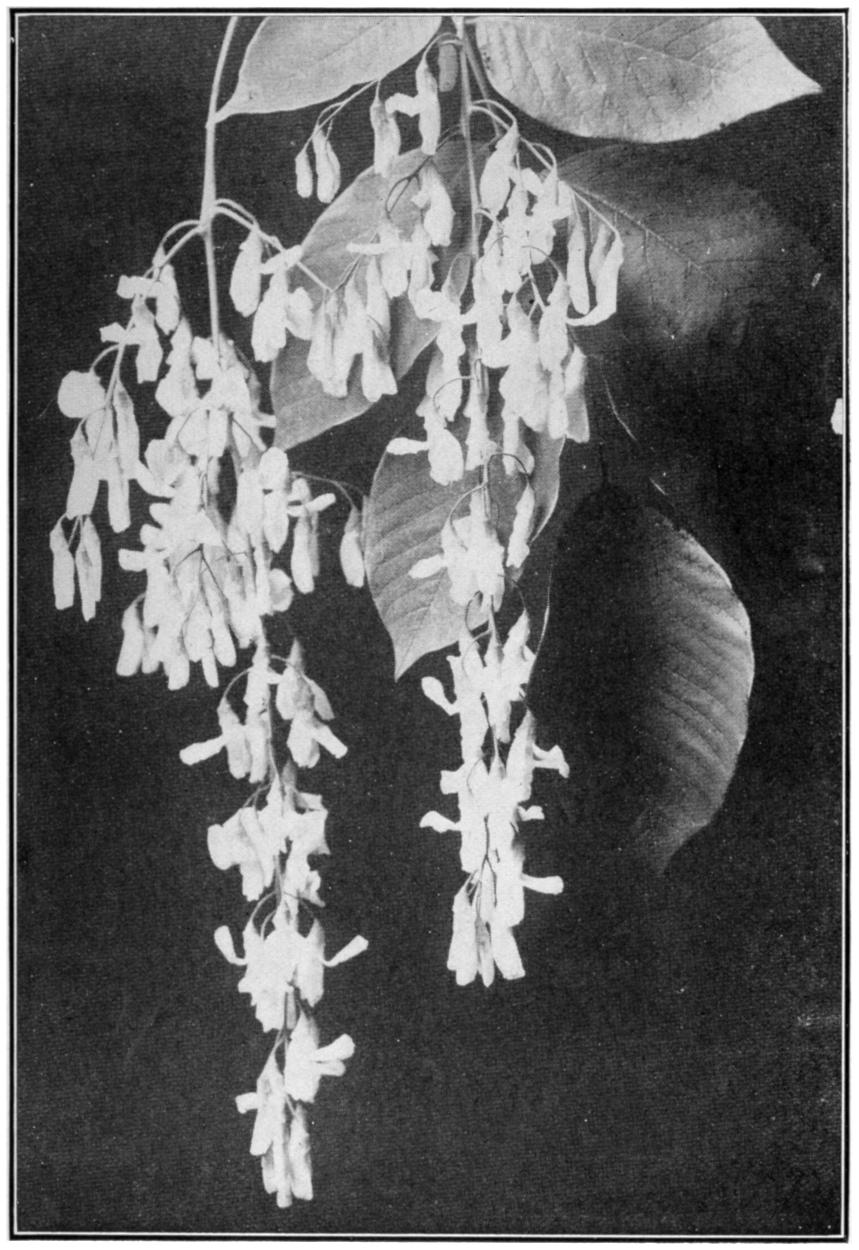
Fig. 150. Blossoms of the yellow-wood.
YELLOW WOOD (Cladrastis lutea).
The yellow wood is a tree confined to a limited range. It is found principally in Kentucky, Tennessee and North Carolina. While it may occur to some extent in the States adjoining the three mentioned, it is rare, except in very limited areas. It is recorded as occurring on shaded bluffs in the Tennessee Valley in Alabama, and may be looked for in similar situations in Mississippi, Georgia or South Carolina. The flowers are white, as may be seen from Figure 150, and appear in April and May. The panicles are sometimes a foot long. According to the notes furnished by J. M. Buchanan, the honey has a strong, distinctive flavor and is light amber in color.
The wood is heavy and hard and yields a yellow dye. It is known also as Kentucky yellow wood and gopher wood.
YERBA BUENA (Micromeria chamissonis).
Yerba buena is a trailing perennial herb with slender stem and small, white, solitary flowers. Jepson gives the range as common in woods near the coast: Humboldt County, Marin County, Berkeley, San Francisco, Belmont, Monterey and southward to southern California.
Richter states that it is considered a fair honey plant in places.
YERBA DEL PESCADO, see Turkey Mullein.
YERBA SANTA (Eriodictyon trichocalyx).
Yerba santa is a low shrub common to some parts of California. Richter lists it as important in Ventura County, where it frequently yields surplus, blooming in June and July.
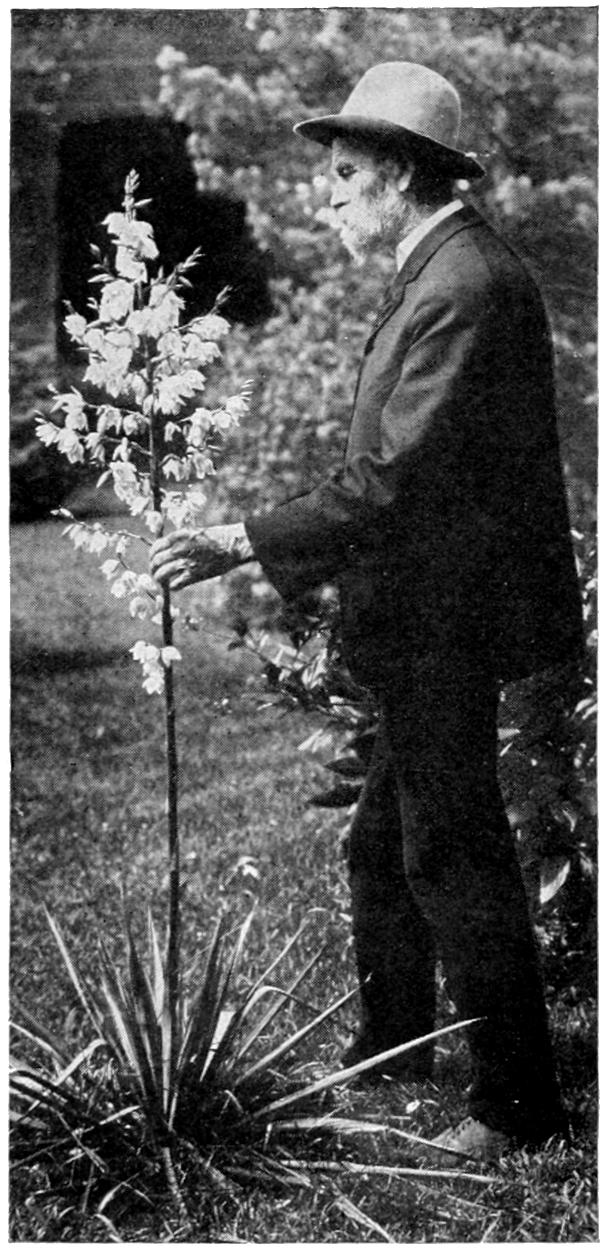
Fig. 151. Yucca filamentosa on the lawn of the late Eugene Secor.
YUCCA.
Over vast areas of the arid west there is little for the bees. A few plants stand the long continued periods of drought even where there is no irrigation, and add to the total production of the apiaries in the irrigated regions. Among the attractive plants may be mentioned the yucca, also called Spanish bayonet, Spanish dagger, Adam’s needle, mountain queen and Roman candle. There are about a dozen species, mostly from Dakota west to the Pacific and southward. They are common in Mexico and Central America. They are also to be found in the sandy sections along the Atlantic Coast from North Carolina to Florida and Louisiana.
When in bloom the plant is very ornamental. A single tall flower stalk contains many large, white or cream-colored flowers. In many localities where the plant does not grow wild, it is grown for ornament, as in Figure 151, which shows the late Eugene Secor admiring a beautiful specimen that grew on his grounds.
In “Honey Plants of California,” Richter lists Yucca whipplie as an important source of nectar, which, in localities where it is abundant, yields surplus. In that State its blooming period is June and July.
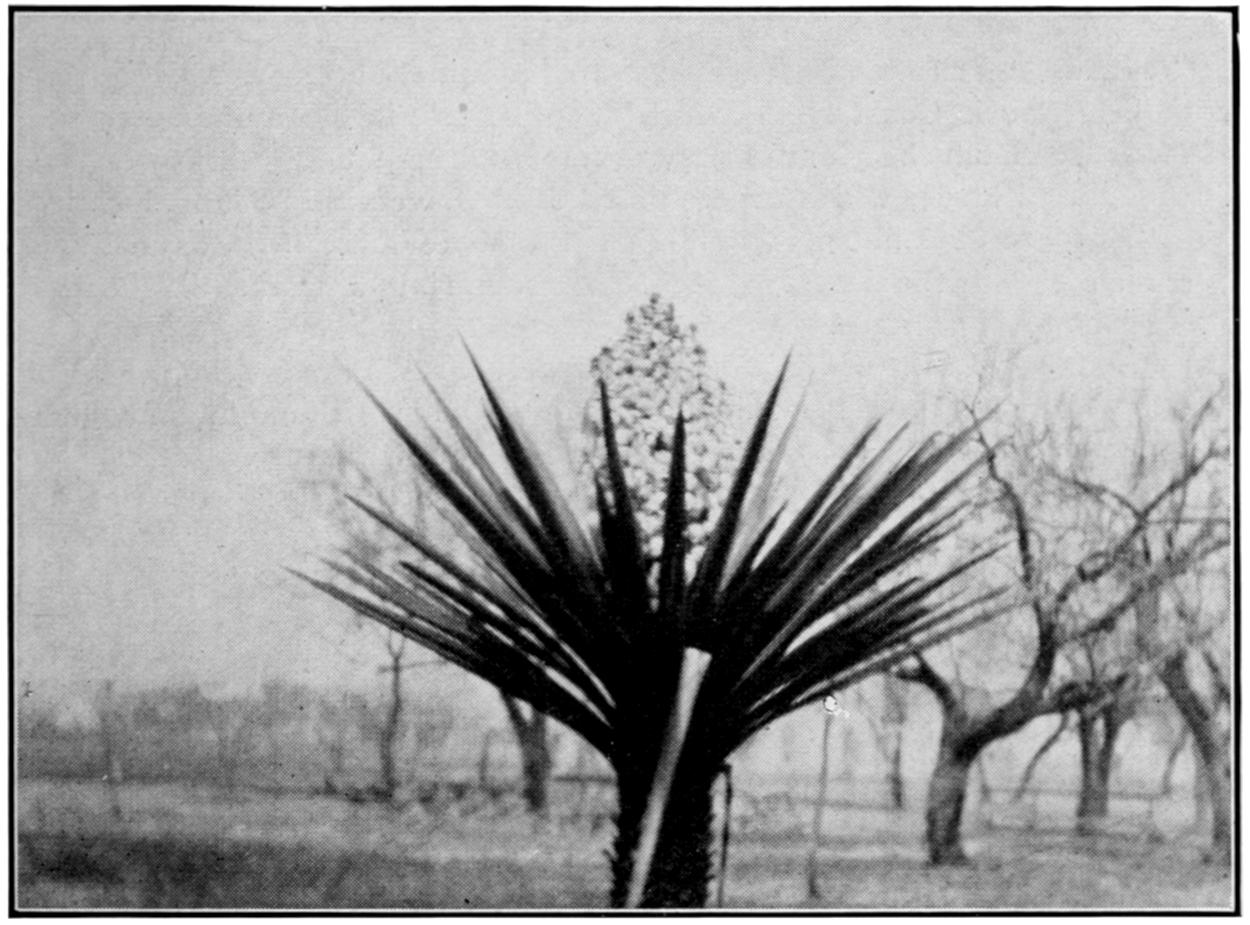
Fig. 152. The Spanish bayonet is a showy plant when in bloom.