E
Reading edition
EBONY, see Texan Ebony.
ECHINOPS SPHOEROCEPHALUS, see Chapman Honey Plant.
ECHIUM, see Blueweed.
ELDERBERRY (Sambucus canadensis).
The American elder or elderberry is a common shrub from New Brunswick west to Saskatchewan and south to Arizona and Texas. Fig. 52 shows the flower clusters of the common elder (Sambucus canadensis). Since the plant blooms late in May and June, there is usually an abundance of pollen in most localities. The bees, however, gather the pollen freely at times, and it is of value where pollen is not plentiful at this season.
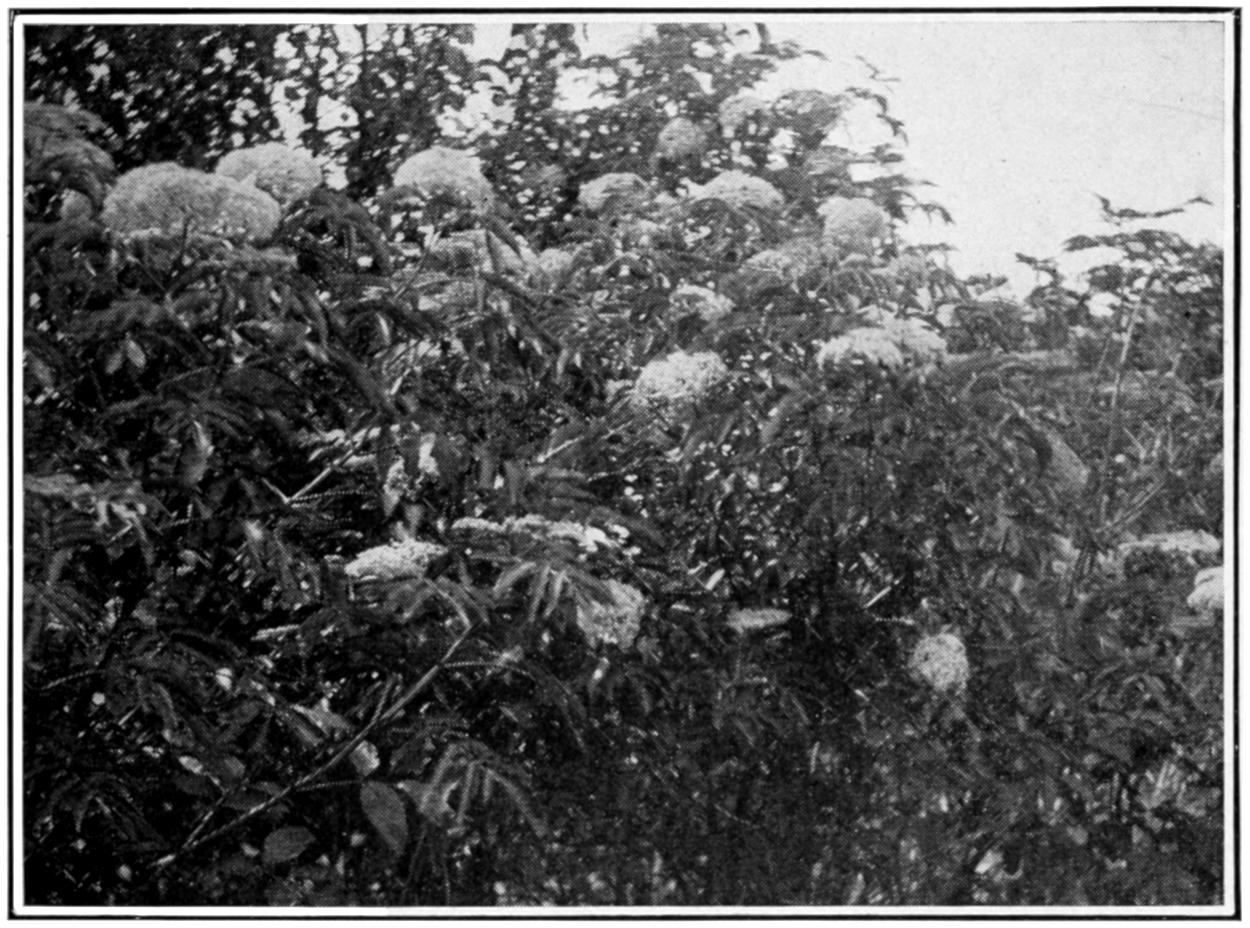
Fig. 52. The elderberry.
The berries are used for pies and wine. The flowers and bark are used to some extent for medicinal purposes.
Richter lists the blue elderberry (Sambucus glauca) as important for pollen in California, but as yielding no nectar.
ELM (Ulmus).
The elms are very attractive to the bees for pollen. The American or white elm is more especially valuable, and a large tree will attract so many bees that the humming sounds like a swarm.
There are numerous reports of nectar from elm in Texas. Scholl lists the winged elm (Ulmus alata) as giving a good yield of honey, surplus sometimes being secured from it. He described the honey as amber in color, with strong and characteristic aroma. He also lists the American elm as a source of nectar.
EPILOBIUM, see Fireweed.
ERIOGONUM, Wild Buckwheat or Flat Top.
A group of low annual or perennial plants common to the Rocky Mountain and plains States. It is a large group and numerous species are to be found from Nebraska to California. In New Mexico the Eriogonum are among the commonest plants, there being something like forty species recorded from that State. The best known is the wild buckwheat of southern California (Eriogonum fasciculatum). This is an important source of nectar in that region. The honey is said to be light amber and of good flavor. It granulates readily.
Richter lists it as the most important honey plant in many southern California localities.
In Colorado Eriogonum effusum is sometimes known as “heather.” According to Herman Rauchfuss it yields nectar nearly every year when there are late rains. It blooms in August and September and is usually in bloom for some time before the bees are attracted to it. He sometimes gets a super of comb honey per colony from this source. The honey he reports to be amber, of fine quality, and strong aroma, of which one does not easily tire.
It grows abundantly on the prairies about Denver. The plant is small and inconspicuous, with minute flowers, and is not generally recognized as a honey plant among beekeepers of Colorado.
“Wild buckwheat (Eriogonum fasciculatum) is one of the principal honey plants of southern California. In the Acton, Antelope Valley and Elsinore districts it is the main reliance. Although quite abundant at lower levels, it does not yield much nectar below 1,500 feet nor above 5,000 feet. The honey is a deep light amber, but of fine flavor, and the comb is very white. The honey has such a heavy body that it is seldom extracted.”—J. D. Bixby, Western Honeybee, May, 1917, page 116.
ERODIUM, see Pin Clover.
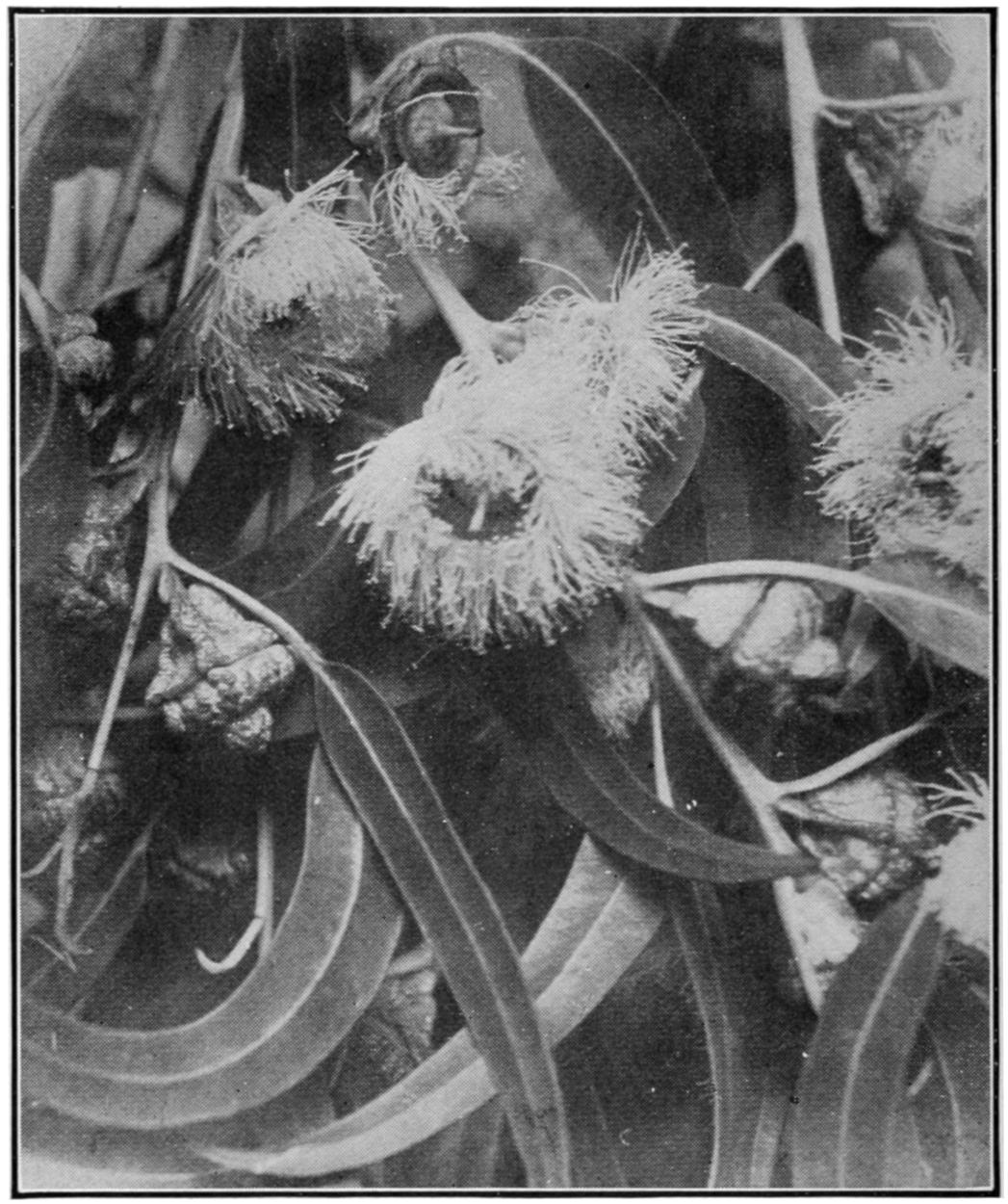
Fig. 53. Blossoms of the blue gum of California (Eucalyptus globulus).
EUCALYPTUS.
There are about one hundred and fifty different species of eucalyptus trees, most of which are native to Australia and Tasmania, where they are the most characteristic and important timber trees. Many of them secrete resinous gums, hence are called “gum trees.” A number of commercial products are derived from them. They have been widely introduced into California, and, to some extent, also into Florida, Texas and other Southern States. The various species are known as sugar gum, blue gum, mahogany gum, red gum, stringy bark, white iron bark, red box tree and various similar names. Richter lists 21 species as yielding honey in California. According to this author there is a great variation in the quality of honey from the different species. While some species seem to yield water-white honey of good quality, others produce an amber product of low value. The blue gum (Eucalyptus globulus) is said to produce “honey, amber, of acid flavor, heavy body and granulating within a few months. The blue gum is very constant in nectar secretion, even in spite of unfavorable weather, and since it is of wide distribution, considerable quantities of honey come from this source. On account of the pronounced flavor of eucalyptus honey there is little or no demand for it in the retail trade.”
On the other hand, he describes white ironbark (Eucalyptus leucoxylon) “a great honey producer, with a beautiful flavor much like vanilla extract.”
Almost all of the honey seems to be gathered from the sources which produce the poorer grade, so that the eucalyptus honey is not favorably known in the markets.
The blooming period of the different species varies so that there are some in bloom at all times during the year. The blue gum, already mentioned, blooms from December until June, while the sugar gum blooms from August to November. Several species bloom during the winter months, when they are especially valuable in sustaining the bees until the time of the main honeyflows. Fig. 53 shows the eucalyptus blossoms.
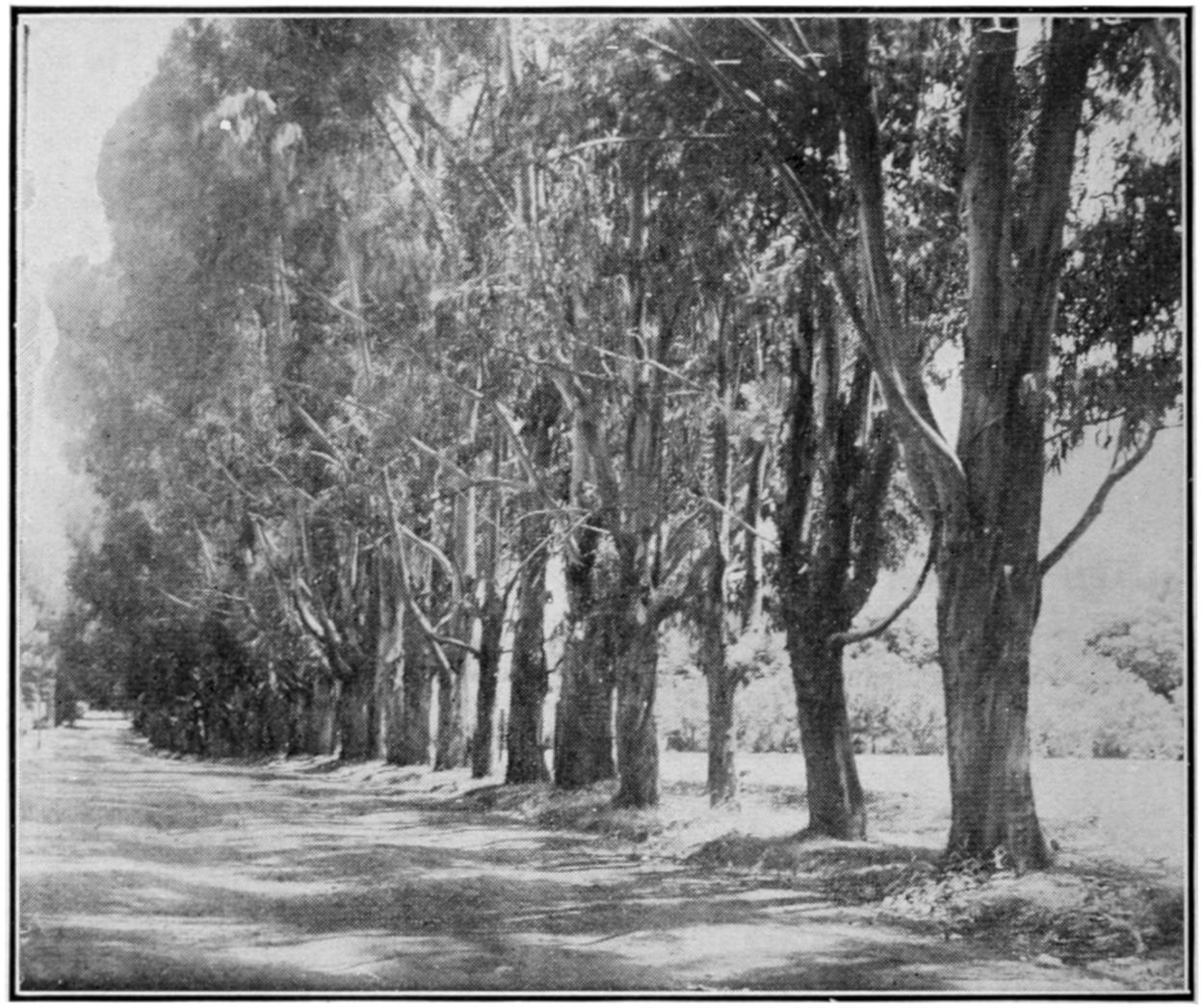
Fig. 54. Avenue of eucalyptus trees in California.
At the California short course, at Davis, in 1918, M. H. Mendleson, of Ventura, spoke as follows concerning this source:
“Every winter the gum, or eucalyptus, comes into bloom. Last winter they filled two or three stories high on eucalyptus. I got 17¹⁄₂ cents per pound for it; previously I never could get more than 4 cents, but it was seldom that I got a surplus from this source. The most eucalyptus honey I have ever known was gathered last spring.
“The scarlet bloom (Eucalyptus ficifolia) is one of the greatest honey producers I have ever known. It grows from 10 to 25 feet and has a brilliant bloom, in clusters, a beautiful sight. * * * The honey is of fine flavor, water white. You can see the nectar wave in the flower cup when you shake it. The flow sometimes lasts a month. It will stand a light frost, but not a heavy one. Our hot east winds are very hard on it, as they scorch the trees.”