R
Reading edition
RABBIT BRUSH (Chrysothamnus nauseosus hypolluca).
Richter lists rabbit brush as yielding nectar in the vicinity of Independence, California, from September till November. He states that the bees work vigorously on it, but that the honey is dark, of poor flavor and disagreeable odor, and that when the bees are evaporating it it can be smelled all over the place.
There are seventeen different varieties of rabbit brush in the southwestern desert from New Mexico to California and north to Utah and Colorado. They are described as coarse plants, usually shrubby and growing to a height of as much as six feet. They have small heads of yellow flowers. The Navaho Indians use the heads of the various species to dye wool yellow.—(Flora of New Mexico.)
RADISH or JOINTED CHARLOCK (Raphanus Raphanistrum).
The wild radish or jointed charlock is a troublesome weed in the fields of eastern Canada and United States from New England to Pennsylvania. Like many other introduced plants, it has been widely scattered with grain seeds. It has been introduced into northwestern Iowa with oats, where it is spreading in fields and waste places.
Sladen lists it as one of the important sources of nectar in Nova Scotia.
RAGGED LADY, see Red Gaura.
RAGGED SAILOR, see Centaurea.
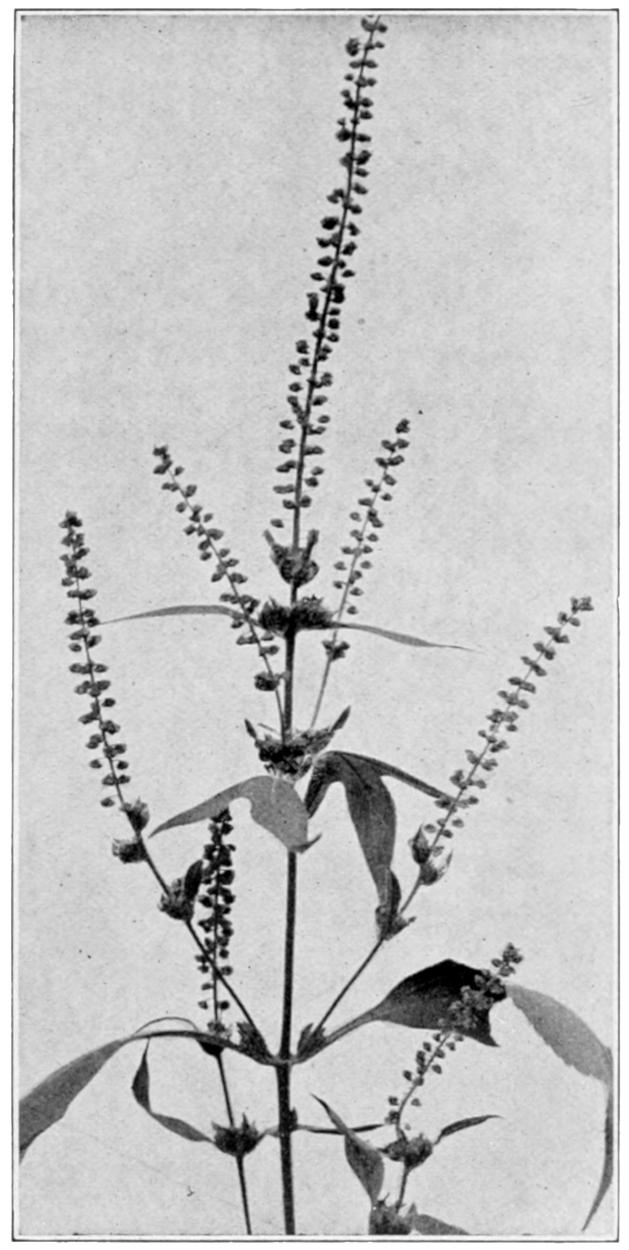
Fig. 116. Bloom of the tall ragweed.
RAGWEED (Ambrosia trifida).
Figure 116 shows the blossom and leaf of the great ragweed, often called horseweed. This is a very common roadside weed, growing to a height of 10 or 12 feet. It is common in Quebec and Ontario, west to Manitoba. In the United States it occurs from New England west to Colorado and south to the Gulf. It is also found in Cuba and Mexico. It is especially common in the rich lands of the Mississippi Valley from Minnesota to Texas.
The ragweed does not produce nectar, but furnishes large quantities of pollen in late summer and fall.
RAPE (Brassica napus).
Rape is a foreign plant related to the cabbage, which has been introduced from Europe. In the United States it is chiefly grown as a catch crop or forage for hogs and sheep and sometimes as a cover crop.
In Europe it is highly regarded as a honey plant, as the following letter from Baron Von Berlepsch, which appeared in American Bee Journal in April, 1874, will show:
“During the years between 1841 and 1858, that I was a practical agriculturist, I cultivated rape, to a large extent, and can in consequence thereof, and from knowledge otherwise gained, testify most assuredly, that in all Germany there is no plant yielding more honey than rape. I know of instances, occurring in my own experience, where a very populous colony of bees, during time when rape was in blossom, gained a weight of 20 pounds and over in one day.
“On the 10th of May, 1846, there was near me a 65-acre field in blossom. The weather was excellent, and my strongest colony, which I placed on a platform scale, gained that day more than 21 pounds in weight. I know of only one other plant that can be compared with rape as a honey-yielding plant, and that is esparet (Sainfoin).”
A Wisconsin beekeeper, writing in American Bee Journal the same year stated that rape in Wisconsin is scarcely second to linden. He described the honey as of golden color and good flavor. He further cited the fact that rape blooms about the middle of August, when there is little else, as a great advantage in cultivating it for its honey.
The few references to it in our literature indicate that it may be of more value to the beekeeper than is generally recognized.
RAPHANUS, see Radish.
RASPBERRY (Rubus). Also called THIMBLEBERRY.
The wild raspberry (Rubus occidentalis) is a very common plant in the woods of the Northeastern States. Mohr gives its natural range as New England to Quebec and Ontario, Minnesota, Nebraska, Colorado and Oregon, south to Ohio and West Virginia, and along the mountains to Georgia.
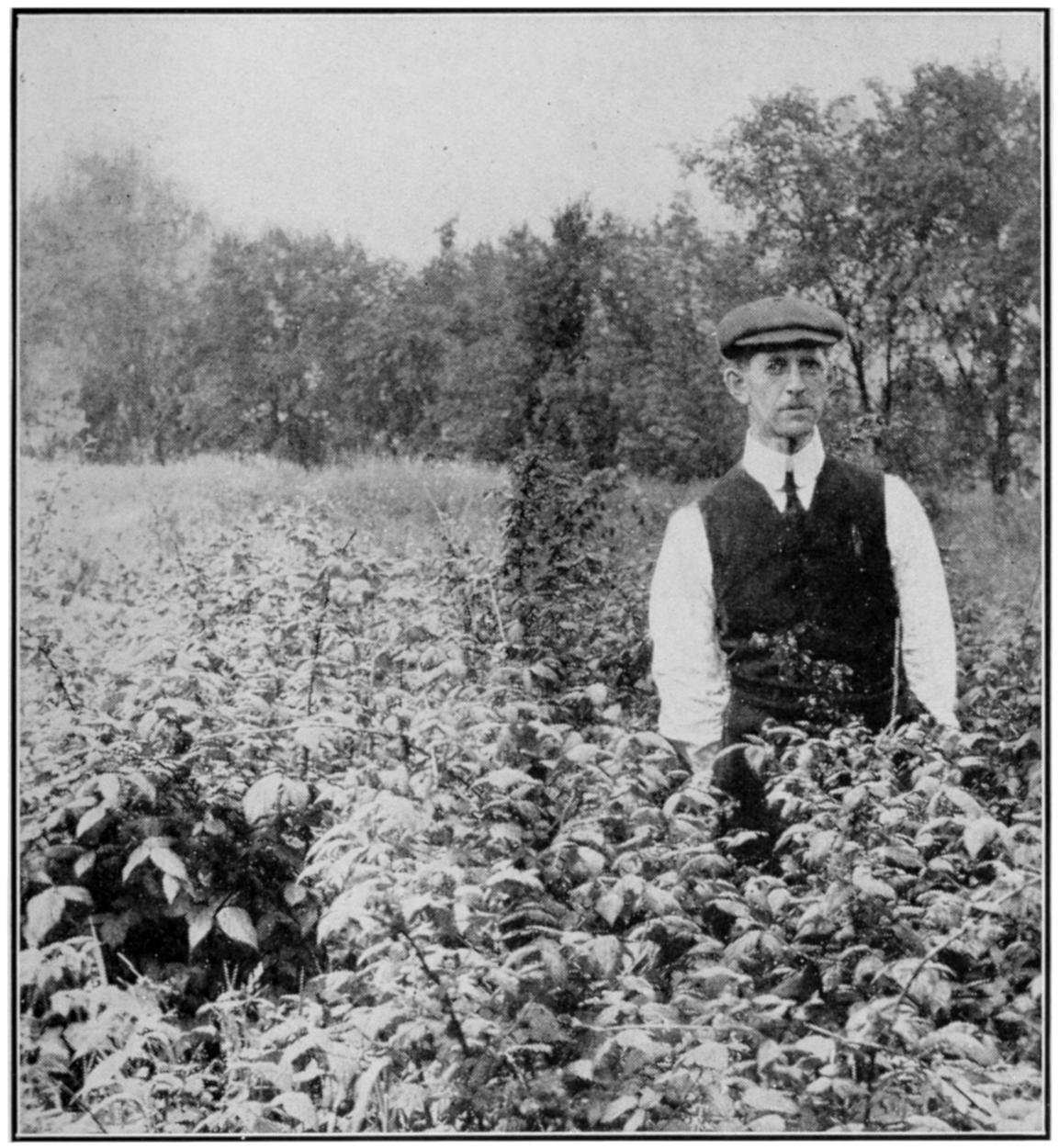
Fig. 117. Wild raspberry grows in great abundance in Ontario and other northern regions.
There are several species of wild raspberries, and probably all are good honey producers. Raspberry honey is produced extensively in northern Michigan, where the plant is abundant on cut-over lands. It blooms following the tree fruits and is usually ahead of the white clover. In localities where it is plentiful it is a most valuable honey plant and phenomenal yields have sometimes been reported from this source. A good raspberry location is very desirable. Beekeepers who chance to be near large plantations of raspberries cultivated for market are equally fortunate. The honey is white and of a superior quality. Figure 117 shows a luxuriant growth of wild raspberry as it is found in many localities in Ontario.
RATTAN VINE (Berchemia scandens).
Rattan vine, or supple-Jack, is a common climbing vine in low thickets throughout the Southern States from Virginia, Kentucky and Missouri, south to Florida and eastern Texas. The flowers are greenish yellow, usually appearing in June. The plant is slender and of vigorous growth, frequently climbing high trees.
In east Texas it is one of the important sources of surplus honey. There the plant is abundant along the streams, and is reported as yielding honey for a long period. The author has found rattan vine highly regarded in many sections of the South, especially in Alabama.
Scholl states that the honey is dark amber in color and used mostly for manufacturing purposes.
RATTLE BOX or RATTLE WEED, see Loco Weed.
RATTLESNAKE-ROOT (Nabalus altissimus).
Rattlesnake root is listed by the late A. J. Cook as “which swarms with bees all the day long,” but the author can find so few references to it that it is probably of little importance.
RED BAY (Persea Borbonia).
Red bay, or Florida mahogany, is also known as tisswood, sweet bay and laurel-tree. This tree should not be confused with the magnolia, which is also called sweet bay. (See Magnolia). The alligator pear (Persea persea) is a near relative, which has been introduced from Central America and extensively cultivated for its fruit. It has run wild in some parts of Florida.
Red bay is reported as yielding surplus honey in considerable quantity, but of poor quality along the Gulf Coast of Texas. The honey is said to be very dark, suitable for baking purposes. Beekeepers report that the plant is quite dependable, but of limited range.
RED-BERRY, see Buckthorn.
RED BOX-TREE, see Eucalyptus.
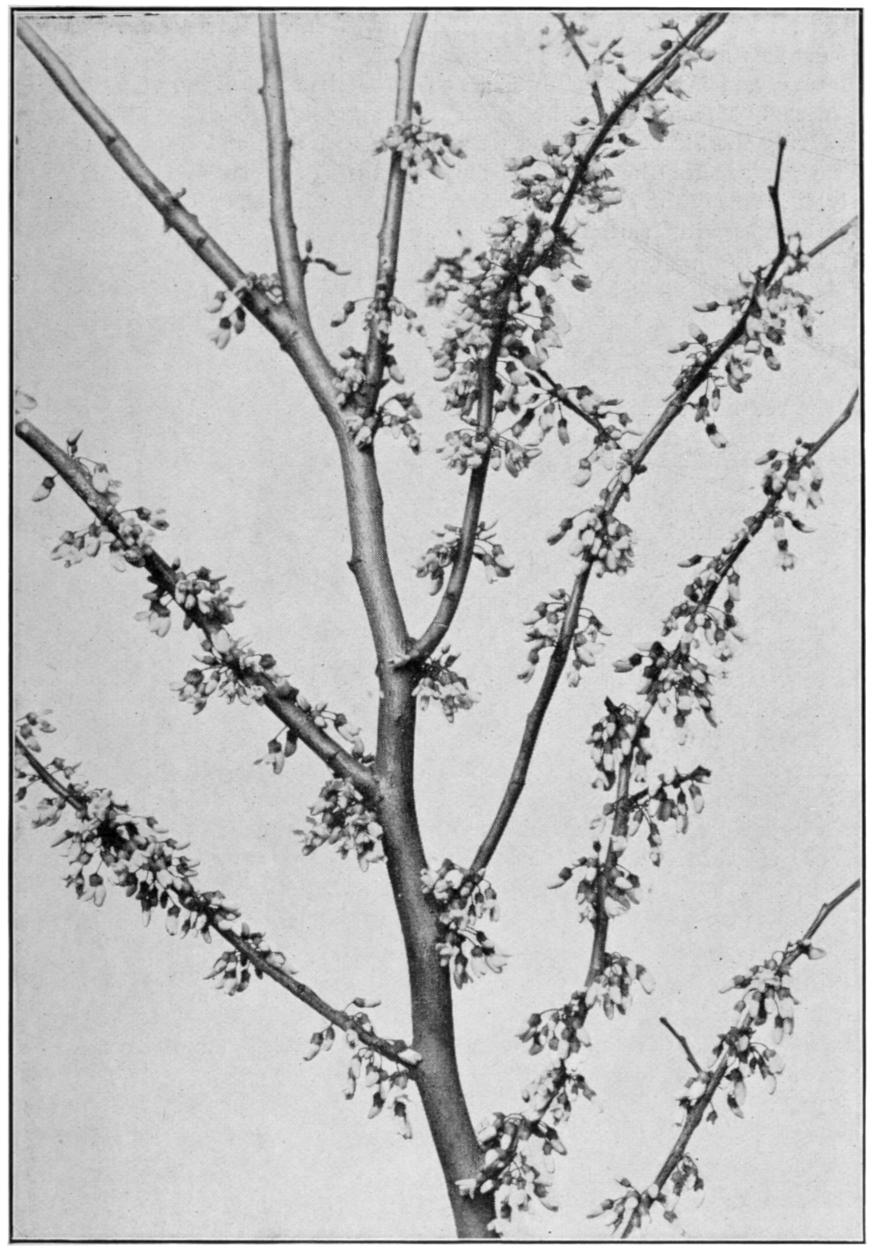
Fig. 118. The blossoms of red-bud appear before the leaves.
RED-BUD (Cercis canadensis).
The red-bud, or Judas-tree (Fig. 118) is a common shrub or small tree in the Southeastern States. It is found occasionally from western Pennsylvania to southern Michigan, southern Iowa and Nebraska south to western Florida and east to Texas. It grows along streams and in the woodlands where the soil is moist and rich. In Alabama it blooms late in February, and in southern Iowa in April. The rose-pink blossoms appearing in early spring, before the leaves are out, make the tree very conspicuous during the blooming period. Where the tree is abundant it furnishes a liberal pasture for the bees for early spring brood rearing. Blooming so early, it is rarely the source of surplus. In the northern part of its range it often blooms with fruit trees and dandelion, so that it is not as important as farther south.
There is another species in south Texas and Mexico which blooms in March, the Texan red-bud (Cercis reniformis), and one, the western redbud (Cercis occidentalis), which occurs in the mountains of California and occasionally in Utah.
The red-bud is also known as salad-tree, or June-bud.
RED CLOVER (Trifolium pratense).
There have been so many conflicting statements regarding the question as to whether or not the honeybee is able to secure honey from red clover (Trifolium pratense) that it has seemed worth while to investigate the subject with some care. There have been so many reports of honey from this source, that it is desirable to learn whether the honey did come from red clover, or whether the beekeepers have been mistaken, and some explanation of the confusion is necessary. There is no question but that the plant secretes nectar in abundance, but since the corolla tubes are much longer than the tongues of the bees, they are unable to reach it under ordinary conditions. It is a well-known fact that plants behave very differently under different climatic conditions, so an effort has been made to secure evidence from as many localities as possible, and from a great variety of conditions.
In Iowa the writer has sometimes found bees working freely on red clover in extremely dry seasons. At such times the bees were apparently getting some nectar, although it could not be detected in the hive. However, one year, Mr. C. H. True, of Edgewood, Iowa, had on exhibition at the State Fair, a generous quantity of honey which he thought was secured from red clover. It was slightly tinted with red, and had a flavor different from white or alsike clover honey. The explanation often given is that in dry seasons the florets are somewhat dwarfed, and because of the shorter tube the bee is able to reach the honey. Dr. L. H. Pammel, botanist at the Iowa College of Agriculture, has made a special study of bees and red clover under Iowa conditions. After having many measurements made, he has reached the conclusion that the effect on the length of the corolla tube, as a result of drought, is so slight that the bee would not be able to reach the nectar from this cause. He goes on record as follows:
“I have for several years closely observed honeybees and red clover, and from these observances I am still inclined to the opinion, earlier expressed, that honeybees do not get nectar from the flowers of the red clover, notwithstanding the opinion of many beekeepers in Iowa.”—Third report Iowa State Bee Inspector.
At the 1917 Convention of the Illinois Beekeepers, Mr. Frank Bishop, of Virden, reported that one season he secured an average of 100 pounds per colony from red clover. According to his statement, there was no other bloom within reach at that time. He further stated that he visited the red clover fields, investigated the matter carefully, and was fully satisfied that red clover was the source of the honey.
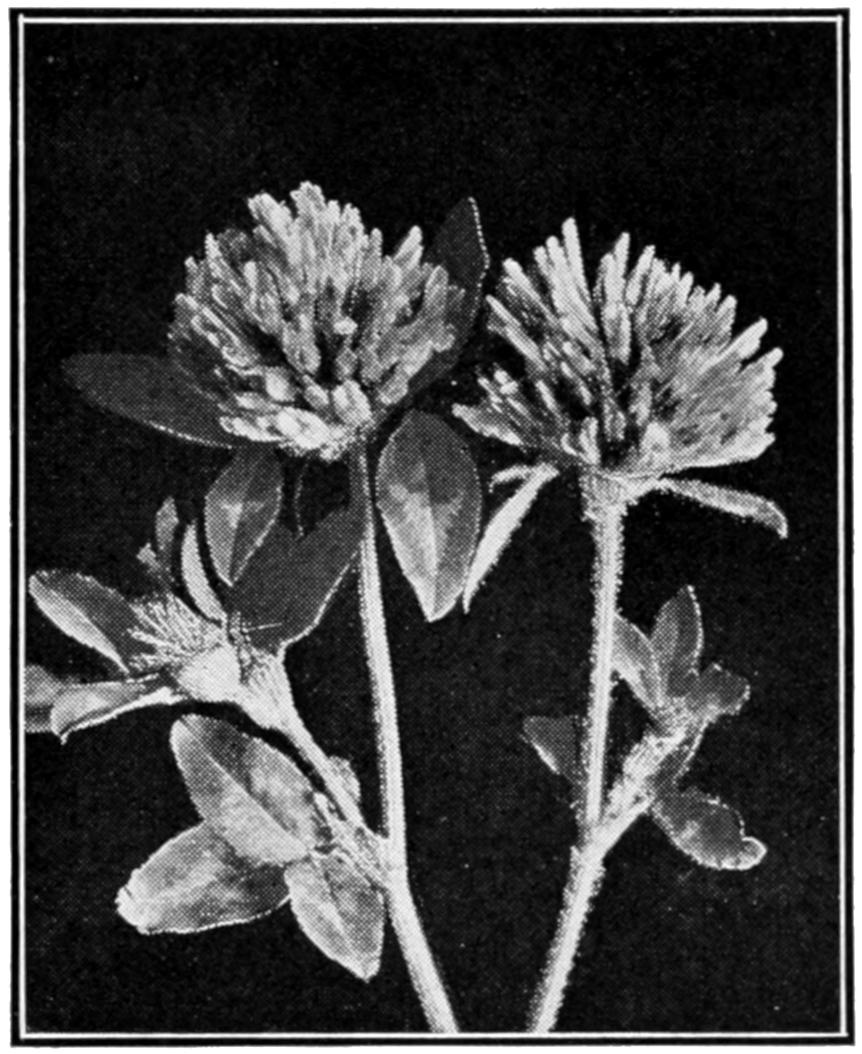
Fig. 119. Red clover blossoms.
So many reports from well-known beekeepers are to be found in our literature, that it seems worth while to quote several of them, together with the place where the reference is to be found. Mr. Wm. McEvoy, of Woodburn, Ontario, wrote to Gleanings in Bee Culture, page 468, 1907, as follows:
“In September, 1905, I extracted over 3,000 pounds of pure red clover honey, after giving the bees plenty to winter on. This honey was a light amber color, and good in flavor, and sold for the same price as honey gathered from white clover. My bees being Italians, worked well on the second crop of red clover, which was not injured by the midge in my locality, in 1905, on account of the first crop being cut early.”
Adrian Getaz, of Knoxville, Tenn., makes the following contribution to the subject in Gleanings, page 660, 1909:
“In regard to bees gathering nectar from red clover, several opinions have been advanced. Generally, it is supposed, that, owing to dryer weather, the second crop has blossoms with shorter corollas, and that the bees can reach the nectar on that account. Another theory is that the nectar is more abundant, and fills up the corollas better, and thus comes within reach of the bees. A German apiarist a few years ago undertook to settle the matter, and spent a part of the summer lying down in the clover fields to see how it was. He reported that very few insects take the nectar through the corollas; but some kinds cut a hole near the bottom and help themselves through it. The hole once made, a number of insects, including bees, take advantage of it; and if the bees do not work on the first crop, it is because there are few hole-boring insects present.”
Here follows a brief report with nothing to indicate whether the bees were seeking nectar or pollen:
“Last year was very dry and there was scarcely any white clover in blossom here; but the bees went fairly wild on the red clover, and it was the first crop, too.”—J. F. Brady, Deerfield, Minn. Gleanings, page 149, 1911.
That the subject is not new will be found by examining the files of the bee magazines of many years ago. Apparently, it has been a controverted subject since beekeeping has been followed seriously in America. In the first volume of the American Bee Journal, page 228, 1861, we find the following:
“I noticed in August and the beginning of September, while the bees were gathering honey from buckwheat, that they obtained pollen of a brownish color from some source. On investigating the matter, I found that they collected it from red clover. This somewhat surprised me, as I had never seen them gathering honey from the red clover to such an extent, particularly while other forage was plenty. * * * I have also noticed that the bees visited only those heads that were imperfect, the tubes being shorter in consequence.”
The principal interest attached to the above is the statement that the bees visited only the imperfect blossoms. On page 9 of the same volume is a statement somewhat similar, reported in one of the German journals, of Italian bees getting honey from red clover, in 1858. It is said that the season was very dry and the blossoms somewhat smaller as a result.
In 1899, page 15, American Bee Journal, we find another report of bees working on it in dry weather:
“My bees work more or less on it almost every year during hot and dry weather, but it does not produce as fine honey as white clover; when candied it is coarser grained, and has a water-soaked appearance. I wish that my bees would let it alone, for we have plenty of white clover when the red is in bloom.”—Fred Bechle, Poweshiek County, Iowa.
Again, on page 27 of the same issue, Theo. Rehorst, of Fond du Lac County, Wisconsin, reports:
“The mammoth red clover produces good honey and all our honeybees can reach the nectar, although the corolla is far longer and deeper than the common red clover. I never saw any honey from common red clover; only thin, red stuff, thin as water.”
In 1903, E. E. Hasty, of Ohio, wrote, in the American Bee Journal, that while he admitted that bees worked on red clover at times, he was extremely doubtful about their ability to get much honey from it. The same doubt has been expressed by numerous observers from time to time, the usual explanation being that the bees are gathering pollen, rather than nectar.
On page 49 of the 1903 volume of the American Bee Journal is reported an interesting case of honeydew from red clover. Since it is the only case of the kind found in all the literature consulted it is quoted quite fully:
“For about ten days my bees have been bringing in honey from the second crop of red clover. Now this is nothing remarkable, for I have seen them doing so for more than twenty years past; but recently, passing through a field of red clover in bloom, I stopped to watch them, and, to my surprise, found them working, not on the blossoms, but on the leaves. This, I confess, I had never seen before. On closer examination I found the clover leaves covered with small plant lice, and the under leaves covered with honeydew, very similar to that frequently found on the leaves of the hickory, oak and other trees, though the honey is not so dark-colored as from leaves of trees.”
On page 839 of the American Bee Journal for 1906 is found a rather convincing discussion of the subject of honey from red clover. It was at a convention of the National Association, and several men of wide reputation took part in the discussion, and testified to the fact that they had secured surplus from red clover. Hutchinson stated that he had secured 500 pounds from red clover at a time when there was nothing else in bloom, and that it was a light amber or dark white color. Messrs. Townsend, Stone, Davenport and others agreed that they had secured red clover honey, Townsend reporting as much as 2,000 pounds stored in two weeks’ time.
The subject is discussed at length in Bulletin No. 46 of the New Zealand Department of Agriculture, by Isaac Hopkins, whose experience in this connection is interesting. We quote him in part:
“In my early days of beekeeping it was a moot point whether Italian bees worked on red clover or not. At this time I had a unique opportunity of testing the matter thoroughly, an opportunity which would rarely occur; therefore, I feel myself on safe ground when dealing with Italian bees and red clover.
“For five years (1882-87), I was located on the late J. C. Firth’s estate at Matamata, where I started large bee farms. My bees, which were chiefly Italians, were near to thousands of acres of red clover. * * * Now and again we saw a few here and there gathering pollen from the blossoms, and sometimes a good deal of pollen from red clover was brought in when, no doubt, it was scarce elsewhere.
“In order to make a thorough test, I shifted, on one occasion, a number of strong two-story colonies to the center of a 700-acre paddock of red clover. The first crop had been cut for hay, and the second crop flowers were just opening. There was no ordinary bee forage anywhere near. After the fourth day, I examined the hives and found from the odor that came from them on removing the covers that some nectar had been gathered from the surrounding clover. I also observed that some clover pollen had been stored.
“There were two seasons out of the five when my bees worked more freely on the red clover than in others. In these seasons it was noticeable that myriads of small-sized moths flitted about the clover, while they were rarely seen at other times. I was much interested, and in casting about for a reason, I became satisfied, after very many tests, that the red clover was secreting at times much more nectar than usual, and it may have been that it reached a higher level in the tubes on these occasions, and so came within reach of the tongues of the bees. Be that as it may, some red clover nectar was gathered from second crop flowers in these seasons.”
While the different observers are by no means agreed as to the reason why the bees are able to get nectar from red clover on occasion, the testimony is very closely agreed upon the fact that it is only from the second crop, and in hot and dry seasons, that the bees are able to store honey from this source. So many widely-known men come forward with the positive statement that they have been able to secure surplus honey from red clover, that we can hardly question the fact that honey is sometimes stored from this plant. Whether the corollas are punctured by other insects, the tubes are shortened by drought or the nectar rises higher in the tube, remains to be proven.
RED GAURA (Gaura coccinea).
The red gaura, also called ragged lady, is common from Montana to Arizona and Texas. It is much sought by the bees for both nectar and pollen. Its nectar secretion is abundant, but it is not sufficiently common to be important. A good stimulant.
RED GUM, see Eucalyptus.
RED-HAW, see Hawthorne.
RESEDA ODORATA, see Mignonette.
RETAMA (Parkinsonia aculeata).
Retama is a small tree common throughout southern and western Texas. It has slender branches, bearing the yellow petaled flowers in axillary racemes. It is frequently mentioned as a source of nectar by Texas beekeepers. Scholl states that the bees work on it more or less all summer. Like many Texas shrubs, it has a habit, of blooming at irregular periods, from spring till September.
RHODE ISLAND—Honey Sources of.
The sources of honey in Rhode Island grouped in the order of their appearance are willows, maples and other less numerous trees, which furnish bees with the early supply of pollen and honey, so useful and so needful in building up the bee population preparatory to the harvest in which the beekeeper shares.
Next come the fruit blossoms, plum, peach, cherry, pear, apple, raspberries, huckleberries and blueberries which, when the spring is favorable, yield good crops of honey. In some places, dandelions are an important addition to the fruit bloom, though not always opening at the same time. In several parts of the State there are large areas of locust. This blooms the latter part of May, and when conditions favor, yields for about eight days a heavy water-white honey. The clovers usually follow this, but are of consequence only under favorable conditions of rainfall, save in a few sections where soil conditions afford abundant moisture.
In many sections sumacs furnish the next crop, and where they are sufficiently abundant the beekeeper may rightly look for a good crop of a very fair honey.
In some of the more swampy and less settled sections, button bush, clethra (sweet pepper bush) and clematis yield a white and highly-flavored honey, that from clematis being of the very highest quality. But the yield from these plants is irregular, in some years being almost absent.
In some of the villages and cities the European lindens are numerous and yield heavily. The bloom ceases toward the end of the clover flow, though the time of flowering of different trees in the same neighborhood varies greatly. Native linden, basswood, is now found only in a few places. The season closes with the goldenrods and asters, which yield a rich, aromatic honey which, though not acceptable to many persons, commands a fancy price from others. The crop from these two sources is not always to be depended upon, being more affected by the weather than some of the others.—Arthur C. Miller, Bulletin, State Board of Agriculture.
RHODODENDRON, see Azalea.
RHUS, see Sumac.
RICHARDIA, see Mexican Clover.
ROBINIA, see Locust.
ROCKBRUSH (Eysenhardtia amorphoides).
Rockbrush is a small shrub common to southern and western Texas, and extending into Mexico. It blooms after heavy rains, several times during the year, and yields honey in surplus quantity. It is reported frequently throughout the region south and west of San Antonio to the Rio Grande.
Colubrina Texensis, an entirely different shrub, which is common from the Colorado River to the Rio Grande and west to New Mexico, is also known by the name of rockbrush. It is reported as yielding both pollen and nectar, but not as a source of surplus honey.
ROCKY MOUNTAIN BEE PLANT (Cleome integrifolia).
The Rocky Mountain bee plant, also known as stinking clover (Fig. 120), is principally confined in its distributions to the plains region west of the Missouri River. It is also reported from north Pacific Coast States. While it is a dry land plant, it is occasionally reported from Illinois, Iowa and Minnesota. Although it is occasionally seen elsewhere, the author has not seen it in Iowa excepting on the Missouri River bluffs, where it is plentiful in some localities. This plant is reported as especially valuable in Colorado, where it is said to produce considerable quantities of honey.
It is an annual with large, showy, pink or purple flowers. At one time there was much interest in this plant on the part of eastern beekeepers who tried to introduce it by sowing seed. At the Michigan Agricultural College a small field was planted to ascertain whether it could be grown profitably for honey alone. As no plant has as yet proven to be sufficiently valuable to justify its cultivation for this purpose exclusively, it is not surprising that the Rocky Mountain bee plant did not prove to be an exception. It is acrid and pungent and said to be distasteful to animals, which seldom eat it. If the plant had any value for any purpose besides honey production, an effort to extend the area of the distribution might succeed, but the introduction of plants that are essentially weeds in their nature seldom meets with favor.
According to Frank Rauchfuss, the cleome is erratic in its yield. If there is a wet spring the seeds germinate early. When this is followed with good rains in June the plants are vigorous and spreading in their growth and each will have many blossoms. One year he extracted an average of 116 pounds per colony from a ten-days’ flow. The honey is white in color, with a greenish tinge. It has a rather sickening flavor when fresh, but improves with age. When pure it is a first quality honey. It is rare that a good crop is secured from his source.
The plant thrives best on sandy and gravelly soils.
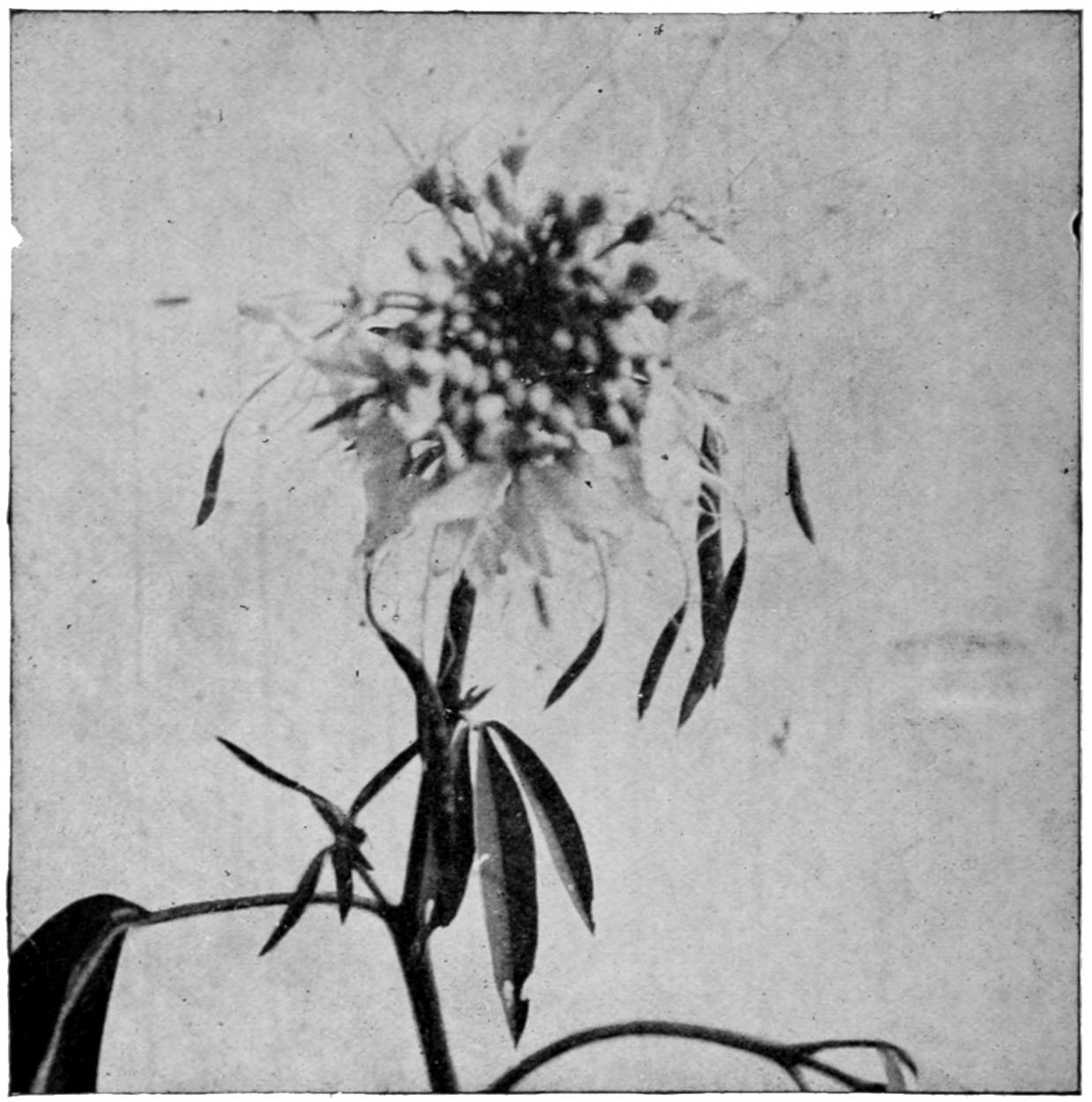
Fig. 120. Cleome, or Rocky Mountain bee plant.
ROMAN CANDLE, see Yucca.
ROSE (Rosa).
There are many species of roses of wide distribution. They yield pollen abundantly and are frequently valuable, in localities where they bloom when pollen is scarce. There are numerous reports of rose honey, but in most cases the observer has probably mistaken the object of the bees when working on the flowers. Several competent observers credit the Cherokee rose as a source of nectar. (See Cherokee Rose.)
“Some time ago quite a discussion was brought about by the assertion of Gaston Bonnier, that one never saw bees upon roses, no matter how colored or how fragrant. Dr. Miller replied that he had often seen them upon the crimson ramblers and that they even tore the buds open.
“The magazine ‘L’Abeille de l’Aube,’ in its August number quotes the different assertions which were made upon the subject since then in Europe.
“Mr. Bonnier came back with the assertion that the bees were only hunting pollen, for, according to him, there is no nectar in roses.
“Joan Ruppin, of Fountenay-Aux-Roses, saw his bees take pollen on the roses, but never any nectar.
“A. Martinot saw the bees often on the crimson ramblers and on other similar roses, never on the double flowers.
“Mr. Pitrat believes they find both nectar and pollen on the simple flowers.
“Louis Rosseil, Consul of Belgium in Athens, says that in the Island of Eubia, the bees work upon fields of roses and produce a white honey much esteemed.”—American Bee Journal, October, 1912.
Beekeepers in the Rocky Mountains of Colorado and on the Pacific Coast report that their bees get honey from roses.