O
Reading edition
OAK (Quercus).
The oaks are frequently reported as sources of nectar. The fact is that it is usually honeydew, rather than nectar, which the bees gather from oaks. Pollen is produced in abundance by these trees and all species may be regarded as valuable for pollen. (Fig. 100.) There are many species of oaks, some of which are common to any part of America where trees grow naturally. There are 24 species recorded from Alabama, 24 from New Mexico and 12 from Connecticut.
Richter gives 4 species—field oak (Quercus agrifolia), tan bark (Q. densiflora), mountain white oak (Q. douglassii) and weeping oak (Q. lobata), as sources of honey in California. Scholl gives 6 species as sources of honey in Texas, as follows: Post oak (Q. minor), live oak (Q. virginiana), red oak (Q. rubra), Spanish oak (Q. palustris), water oak (Q. aquatica), and jack or barren oak (Q. nigra).
H. B. Parks, of the Texas Agricultural College, has found that post oak yields some nectar from extra floral nectaries. This may be true of some other species.
The live oak yields honeydew in large quantity in west Texas, from the balls made by the live oak gall. George Schmidt, of Crystal City, reports an average of 25 pounds per colony from live oak balls, on the Nueces River, in 1917. The honey was dark and heavy, but of good flavor. The flow lasted till frost. There are numerous similar reports, from west Texas, of honeydew from this source, from August till late fall. During the drought of 1917 and 1918 there was little else for the bees in many Texas localities, and the live oak saved the bees from starvation.
Occasionally the bees work on white oaks in Illinois. In this case they are attracted by the presence of a soft scale (Lycanium cockerellii).
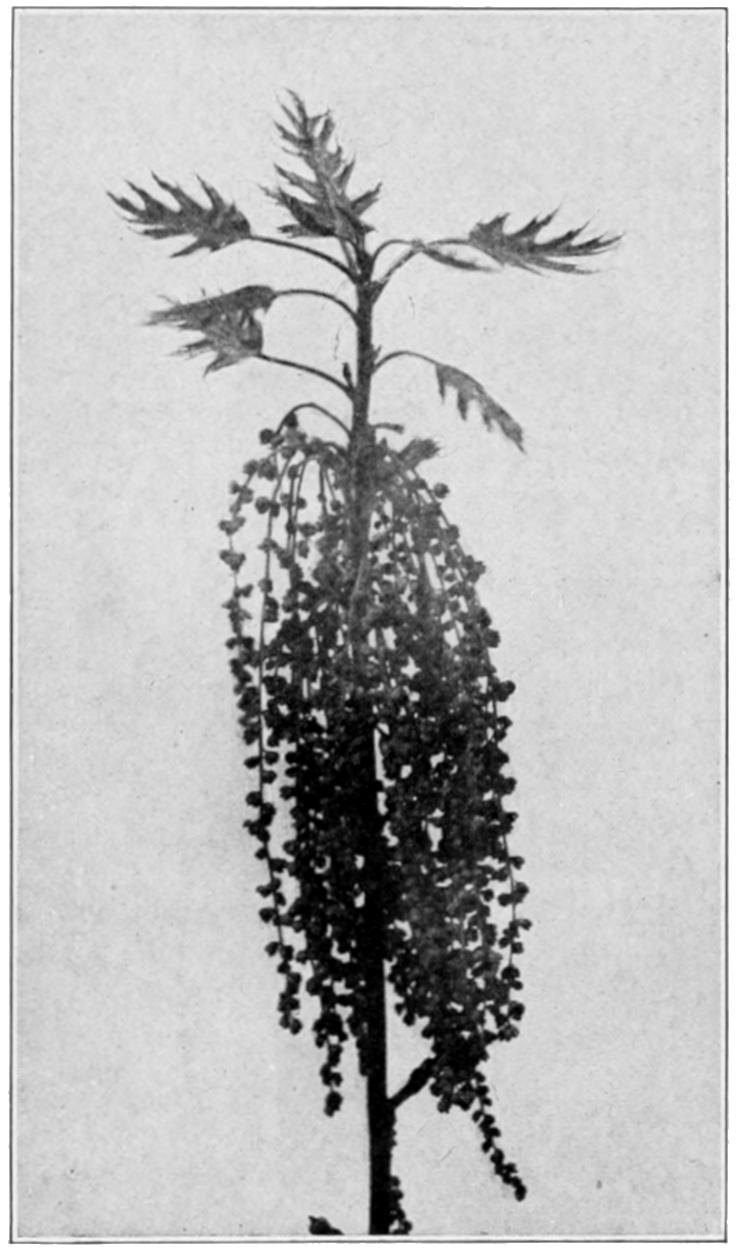
Fig. 100. Pollen bearing blossoms of red oak.
OGECHE PLUM, see Tupelo.
OHIO—Honey Sources of.
The sources of nectar in Ohio are very similar to those of many other States in the great central basin, where white and alsike clover furnish the principal surplus. There is the usual list of plants furnishing nectar and pollen for early spring, such as willows, maples, fruit blossoms, dandelions, etc. The main flow comes from white and alsike clover in June and July. In some sections buckwheat yields surplus. Basswood, which was once an important source of nectar, has been cut until few beekeepers are able to get crops of much value from it. Goldenrod and asters are important in many sections for late fall.
OKLAHOMA—Honey Sources of.
Fruit blossoms furnish nectar and pollen for early brood rearing. Dandelions and willows are also important at this season. Cottonwood yields pollen abundantly, as do other shade trees. Alfalfa horsemint, horehound, sweet clover and cotton are important sources of surplus.
Among the many minor sources may be mentioned Indian currant, button bush, asters, goldenrod, milkweeds, melons, etc.
OKRA or GUMBO.
Cook’s Manual lists okra as a honey plant. It is a well-known garden vegetable, especially popular in the South, but is seldom grown in quantity sufficient to be important to the beekeeper.
OLEASTER, WILD OLIVE, RUSSIAN OLIVE (Elaeagnus hortensis).
The Russian oleaster, known botanically as Var songorica (Fig. 101) was first introduced into this country by Professor J. L. Budd because of its hardiness and ornamental qualities. The young trees branch freely and produce an abundance of white, scurfy foliage, which makes it a most attractive and striking shrub. * * * It is one of the most fragrant of cultivated small trees. The season of blossoming varies somewhat, but with us (Iowa) is about the middle or early part of June.
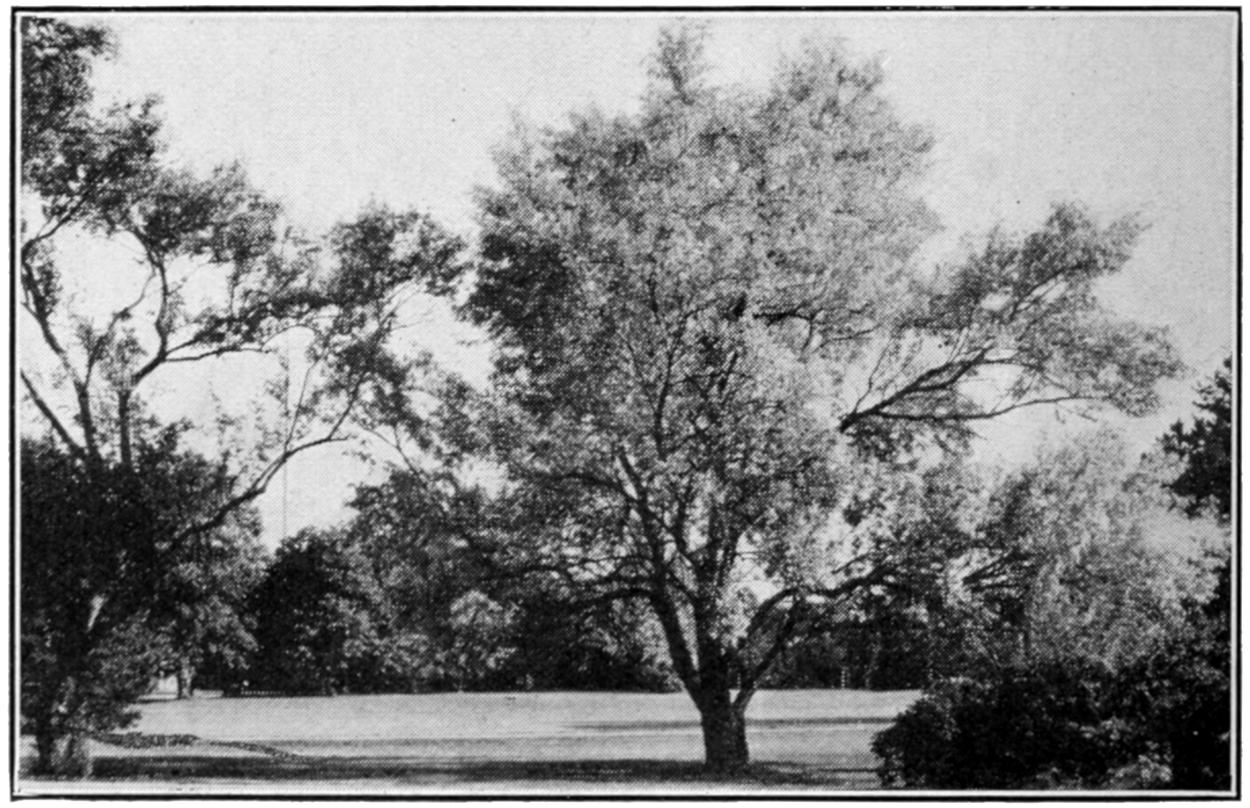
Fig. 101. Oleaster or Russian Olive.
It is one of the best of our spring honey plants. The bees visit the plant in large numbers when in full bloom from early morning until late evening.—L. H. Pammel, American Bee Journal, November, 1917.
Eleaegnus argentea, wolf willow or silverberry. It is said to yield honey on the prairies.—W. J. Sheppard, British Columbia. American Bee Journal, November, 1917.
OLIVE (Olea europaea).
The olive is generally cultivated in orchards throughout California. Richter states that his bees, within easy reach of several thousand olive trees, do not work on them, but that T. O. Andrews, of Corona, and B. B. Hogaboom, of Elk Grove, report bees working well on olive bloom. He further states that the olive tree is a well known source of honey in Spain.
ONION (Allium).
According to Richter, wild onions sometimes yield surplus honey in the vicinity of Sacramento, California. In some parts of that State, where cultivated onions (Allium cepa) are grown for seed, they are also important. The onion yields freely and the honey is said to be amber in color with a characteristic onion flavor which disappears after the honey is fully ripened. There are few localities where onions are sufficiently abundant to be important.
ONTARIO—Honey Sources of.
The principal honey plants of Ontario, in the order of their importance, are alsike and white Dutch clover, buckwheat, basswood, fireweed, wild raspberry, goldenrod, aster, dandelion, sweet clover, viper’s bugloss, Canada thistle, milkweed and boneset.
Buckwheat, basswood, sweet clover, viper’s bugloss, milkweed and boneset are confined principally to the southern part of the province. Willows and maples are important for early spring brood rearing.—F. W. L. Sladen.
OPUNTIA, see Prickly Pear.
ORANGE (Citrus aurantium).
The orange tree is a native of Asia, early introduced by the colonists into Florida. It thrives in a semi-tropical climate and its culture in America is confined to southern Florida, a few small areas along the Gulf Coast, the lower Rio Grande Valley in Texas and to California. It is sensitive to frost and the trees are easily killed by freezing.
In California, orange is one of the important sources of honey. The trees bloom in April, when many colonies are too weak to make the most of the crop. The flow is extremely rapid, as at times the nectar is secreted in such abundance that men and horses working in the orchards are saturated with it. The flow lasts about three weeks. In 1919 it continued 23 days in Tulare County. Four hundred colonies in one yard averaged more than 60 pounds per colony from orange. O. F. Darnell, of Porterville, extracted 171 pounds of orange honey from one colony in ten days, after having previously extracted 24 frames which were not weighed. A. W. Gambs, of Anderson, reported that some colonies, made extra strong by drifting bees, stored four full-depth extracting supers of fresh nectar from orange in four days.
In some of the interior valley locations the bees get fair crops from orange about four years in five. Along the coast, the fogs are unfavorable and the crop is uncertain. Good orange locations are much in demand, and many beekeepers move their bees long distances for the flow. With a larger reserve supply of honey, left in the hives for winter to enable the bees to build up early in spring, and with more careful attention to wintering, it would be possible to greatly increase the average returns from orange. This statement is based on the results of a few beekeepers who take special pains to get their bees into condition for the orange flow.
The honey from orange is white in color, heavy in body, of the finest quality, and is much in demand in the markets.
OREGON CRAB APPLE, see Crab Apple.
OREGON—Honey Sources of.
J. W. Wills, of Marion County, Oregon, lists the principal honey plants of that State in the American Bee Journal as follows:
Willow, chickweed, balm-of-Gilead, salmonberry, dandelion, fruit trees, grapes, currants, gooseberries, maples, clover, Juneberry, barberry, huckleberries, laurel, milkweed, lobelia, catnip, snowberry, arrowwood, Spanish needle and some others.
P. W. Nicolle, in Gleanings, adds that chittam (Rhamnus purshiana) is one of the principal sources. He mentions, also, salal (Gaultheria shallon) as a source of nectar. Salal is frequently mentioned as valuable in Oregon.
OREGON GRAPE (Berberis nervosa).
Oregon grape is common in the woodlands near the Coast from Marin County, California, northward. It is abundant in the forest regions of Washington. It is a shrub with prickly alternate leaves and yellow flowers in racemes. Oregon grape is reported as a source of honey of minor importance in the Northwest. Like the agarites or triple-leaved barberry of Texas, it blooms in early spring when it is of special value for stimulative purposes. Another species of barberry (Berberis Aquifolium) is common to this region, and most beekeepers do not differentiate between the two species. (See Barberry.)
OREOCARYA.
A desert plant growing on high, loose, sandy soils. Blooms in May, with a small bur following the bloom. It ranges from Wyoming to Arizona and west Texas. It yields nectar freely and an average of forty pounds per colony has been reported from this source. The honey is light amber, of inferior flavor, according to D. W. Spangler, of Longmont, Colorado, but it is extremely valuable for building up colonies in spring. Extended cultivation is rapidly reducing the area where the plant is to be found.