D
Reading edition
DAHOON, see Holly.
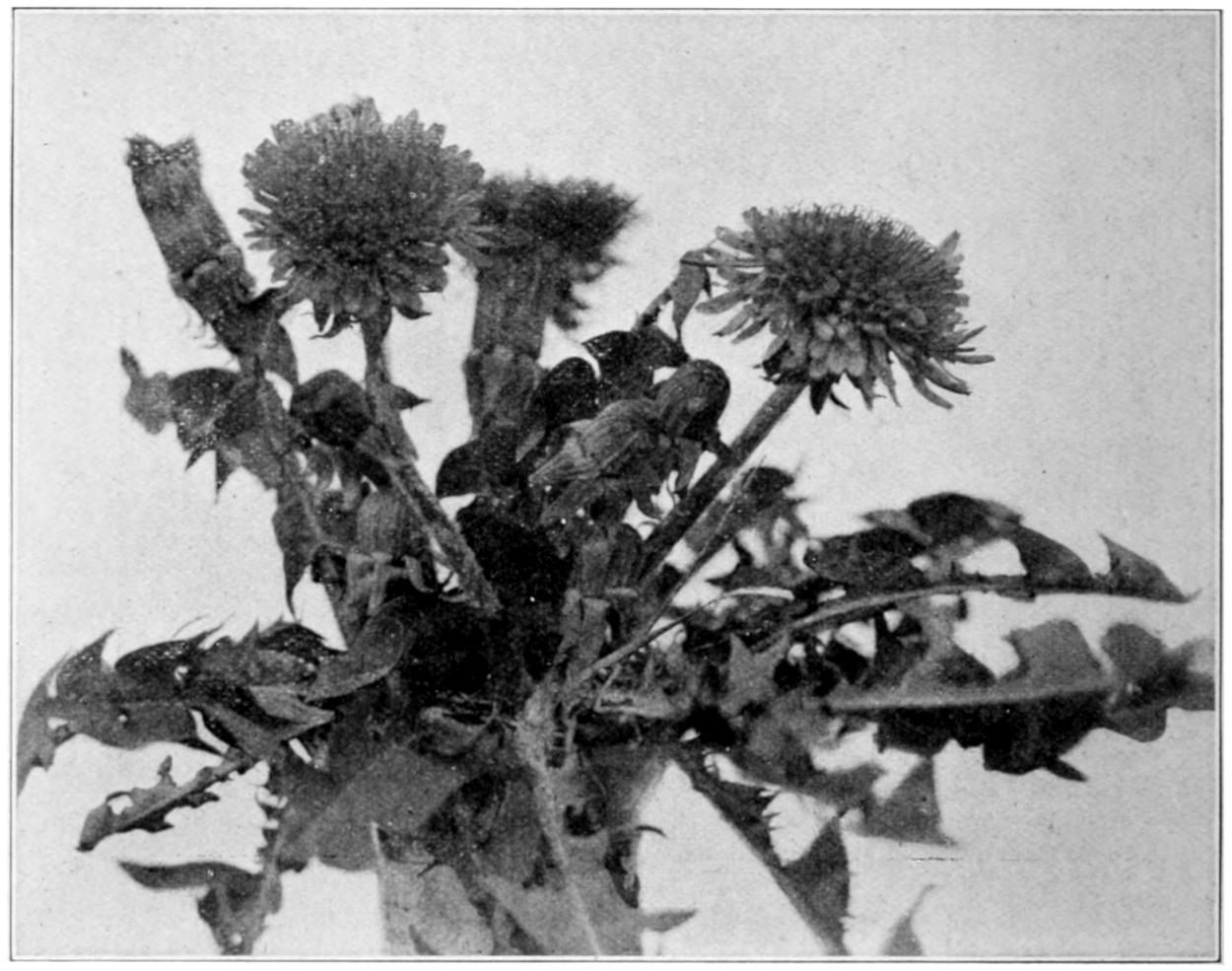
Fig. 50. The much despised dandelion is a valuable source of nectar.
DANDELION (Taraxacum officinale).
The dandelion is one of the most widely distributed plants in America. Originally introduced from Europe, it has been naturalized over practically the entire continent. As each plant will produce hundreds of seeds, which are borne for long distances on the wind, its wide distribution is not surprising. The plant is sometimes used for medicinal purposes, serving as a mild laxative and tonic. The tender shoots are very popular as a table delicacy in early spring, with those who are fond of greens. The bright yellow flowers are very showy, and if the plant was not so abundant, would be considered attractive. The warfare against the dandelion is as relentless and as continuous as the campaign against the house fly. Little is to be accomplished by digging the plants from one’s own lawn, when a whole pastureful are going to seed a mile or two away.
The beekeeper has little to complain of from these weeds, as there is nothing of greater value during the short period of bloom. While the honey gathered from dandelions is dark and strong, most of it will be consumed for brood rearing. Occasionally a small surplus will be secured from this source, but it blooms so early that surplus is unusual. Large quantities of pollen as well as nectar are produced, so that a large acreage of dandelions within reach of the apiary is much to be desired. Fig. 50 shows the plant as it appears during the period of bloom, with blossoms and unopened buds.
Hon. Eugene Secor, the beekeeper’s poet, has written a number of things regarding the intimate relation existing between bees and flowers, and for one of these, the dandelion furnished the inspiration:
“Here’s a bee, my children see! Gathering sweets for you and me, On Sir Dandy Lion’s crown; She is yellow that was brown, Yellow with the golden dust Lent to her in solemn trust; Blossoms bart’ring gold for gold. Through this dusty trader bold, Dandy Lion seeks a bride, Sends his offerings far and wide With his trusty friend, the bee, And with Honey pays the fee.”
DATE-PLUM, see Persimmon.
DEER CLOVER, see Wild Alfalfa.
DEER’S EARS, see Monument Plant.
DELAWARE—Honey Sources of.
Clover, tulip-tree, willows, maples, fruit bloom, dandelion, heartsease, buckwheat, blueberry, huckleberry, boneset and asters are among the well-known sources of honey in Delaware. Beekeeping is not highly developed in this State and few pay serious attention to honey production.
DEVIL’S CLAW, see Acacia.
DEVIL’S SHOESTRING, see Bluevine.
DEWBERRY, see Blackberry.
DIERVILLA, see Bush Honeysuckle.
DOCTOR-GUM, see Poisonwood.
DOGBANE (Apocynum).
When not in bloom the dogbane resembles the milkweed. There are several species found in Europe, temperate Asia and North America. In the United States there are two common species, Apocynum cannabinum, known as Indian hemp, Canadian hemp or Choctaw root, and Apocynum androsaemifolium, the spreading dogbane.
Dogbane can be distinguished from milkweed by the finer stem and smaller leaves. The stems are unusually reddish in color. By Fig. 51 it will be seen that the flowers are very different. At times the bees work on this plant very freely. It is especially abundant in some localities along the Missouri River in Kansas and Missouri.
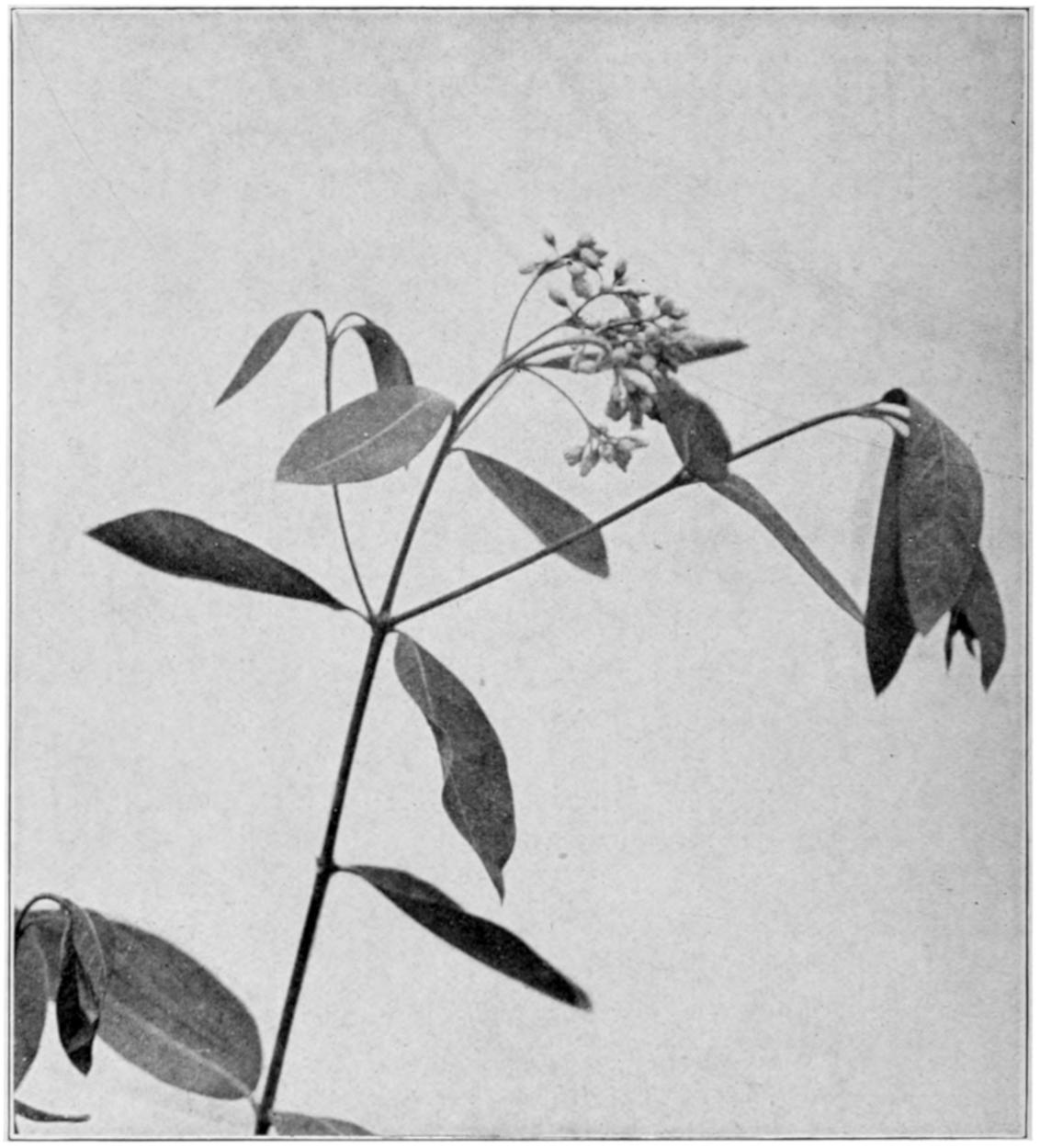
Fig. 51. Dogbane.
DOGWOOD (Cornus).
The dogwoods or flowering cornels are a large group of shrubs with showy flowers. Some species are common over all of Eastern America, from Nova Scotia and New Brunswick south and west to Texas. The group is not important to the beekeeper, although occasionally some honey is reported from them. W. C. Brass reports that in central Arkansas smooth dogwood (Cornus femine), locally called spicewood or buckbrush, is very abundant, and the bees work upon it industriously during May. He reports, however, that it is uncertain in its value, the bees not working upon it every year. H. B. Parks reports that the bees work upon the red dogwood (Cornus paniculata) in Missouri, but the author never knew them to work on this species in Iowa.
Scholl lists Cornus asperifolia as yielding nectar freely in Texas, though the species is not plentiful.