G
Reading edition
GAILLARDIA, see Marigold.
GALLBERRY (Ilex glabra). See also Holly.
The gallberry, in some localities better known as inkberry, is usually heard of as a honey plant only in the South. However, it occurs as far north as Nova Scotia, on the seashore, and along the coast from Massachusetts to Virginia and Florida, and west to Louisiana. It is a common shrub in the low pine barrens of the Gulf States. It is a small evergreen shrub with small, dark leaves. It is an important honey plant in southern Georgia, where it is widely distributed over the sandy lands, especially of the coastal plains. It is important, also, in the Carolinas. It grows in dense thickets and rapidly extends over newly cleared lands. Fig. 57.
“As a honey plant perhaps it has no equal in the southeast. We have never failed to get a surplus from it, even during the most unfavorable weather conditions. It begins to bloom the first of May and continues for 24 to 28 days. During this time bees disregard other bloom, working it up to about 8 o’clock for the pollen; then the flow comes on for the remainder of the day. * * * It is a great bloomer; even the stems are rolls of bloom. * * * We have never taken off a large crop of this honey, as 147 pounds of surplus is the best crop we have ever had from one colony. The honey is a light amber color, has a heavy body, a very mild taste, and is highly flavored. The demand for this honey is so great that we cannot furnish our local markets, consequently very little is shipped from the southeast to other markets.
“We have raised tons of this honey and have never seen a pound of the pure article, well ripened, that granulated.
“It has been said that it is impossible to overstock a good gallberry location. We do not know that this statement is true, but we have never heard of one being overstocked. We have had bees in a location where there were 362 colonies, with the same result as with 100 colonies. Good gallberry locations are nearly numberless and large quantities of this fine honey are wasted every year in localities where there is not a bee to gather it. The gallberry should be included in the list of the best honey plants.”—J. J. Wilder, Cordele, Ga. Gleanings, page 1200, September, 1907.
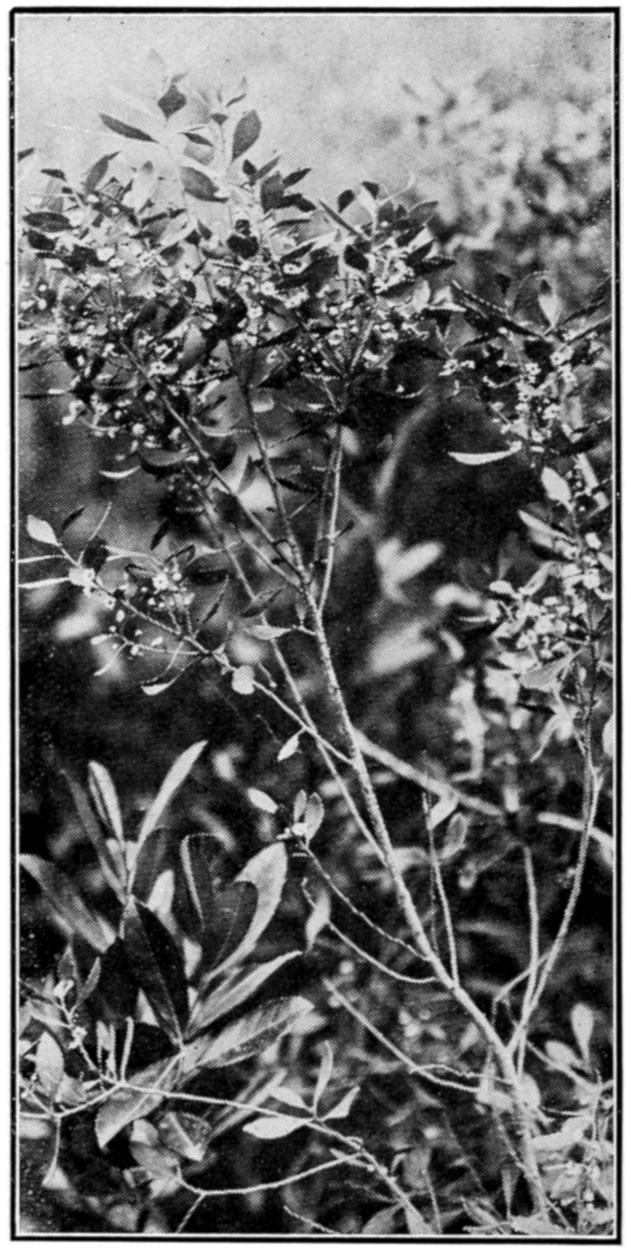
Fig. 57. Gallberry.
GAURA.
There are several species of gaura of wide distribution. Although frequently mentioned as honey plants, they are seldom of sufficient abundance to be important.
Scholl reports that Gaura filiformis occasionally yields surplus in Texas, when conditions are favorable. The red gaura is reported as of value in Colorado. (See Red Gaura.)
GELSEMIUM, see Yellow Jasmine.
GEORGIA—Honey flora of.
The earliest blooming of our spring forage plants is the alder (alnus), which commences about the middle of January and lasts, some seasons, till the middle of February. It yields little or no honey, but during its time of bloom, its pollen-laden catkins are covered with bees. The amount of pollen that this plant affords is immense; and it comes in a time when breeding should be most encouraged.
In some sections of the South, particularly on light, sandy soils, there may be found some yellow jasmine (Gelsemium sempervirens). As its flowers possess very decided toxical properties, it is not a very desirable plant to have within range of one’s bees. It blooms after the alder. While our native black bees are very seldom seen working upon it, the Italians, in some seasons, will work upon it quite briskly. I am inclined to think, from close observation, that it is mostly pollen they gather from it, though in some seasons it does yield some honey.
The wild plum (in some sections known as the hog plum) usually commences to bloom the last of February and lasts for two or three weeks. This is peculiarly a southern tree, and grows to great perfection nearly everywhere. Whole acres are often covered with it, forming a dense thicket, thus affording the bees rich pasture.
In March we have the peach, the apple (which continues into April), the mock orange, or evergreen wild cherry (Cerasus carolinaensis), the huckleberry, strawberry, and a few other plants of minor consideration. Further south they have the titi, the saw palmetto and the orange, all good forage plants.
The willow, wild cherry, hawthorn, blackberries, raspberries, locust, holly and tulip tree (Liriodendron tulipifera) bloom in April. The two latter are most valuable for honey. The holly blooms for about two weeks—the height of its flowering is about the first week in May. The tulip tree blooms for three weeks. This is the poplar tree of the south.
In May we have the black gum (Nyssa multiflora) and the persimmon, both excellent for forage. The blooms of these trees are dioecious, that is, the male flower is found on one plant and the female flower on another. Bees are very seldom seen working on the female tree, while on the male bloom they work in a continuous swarm.
In May, also blooms the bay (Magnolia glauca). This tree flowers for at least one month, and extends into June. It affords some of our best and most abundant forage. The Magnolia grandiflora, linden and China berry (Melia azedarach) bloom also in May. The magnolia blooms for six weeks, the linden from six to ten days, and the China tree for two weeks.
Sourwood, the varnish tree (Sterculia platanifolia), Japan privet (Ligustrum) and a few other plants of less note embrace the principal forage in June.
I have now enumerated the chief honey-producing plants that go to make up our spring honey harvest. Take one season with another, our bees commence to lay up surplus about the last of April and continue until the first or middle of June. After this date but little honey is gathered from the holly, persimmon, black gum, bay and sourwood. Of course, some seasons there is considerable honey gathered from other sources. The color of the honey is usually a little dark, but of excellent flavor.
There is comparatively little forage during the summer months of July and August. The button bust (Cephalanthus occidentalis), sumach, Asclepias tuberosa (known as pleurisy root and butterfly weed), and Yucca alnifolia (Spanish bayonet), are the most important. The cotton plant, which generally commences to bloom about the first of July, yields largely of pollen, but very little honey. Sumach is a rich mellifluous plant, but the warm, dry atmosphere evaporates the secretion very rapidly, so that the bees can only work on it very early in the morning, while the dew is on. The Spanish bayonet plant no doubt furnishes some nectar. It generally swarms with flies, various sorts of wild bees, and now and then a few honeybees will visit it.
Bees are generally able to gather sufficient stores during July and August to keep up brood rearing and the strength of the colony until the blooming of the autumn forage.
The first to bloom of the fall pasturage is the Chrysopsis graminifolia of Nuttall, a perennial, composite. This plant is often taken for a species of dog fennel, but it is altogether distinct. It is indigenous to the south from Florida to North Carolina, which seems to be its northern limit. It is a yellow flowering weed that commences to bloom in August and keeps on till frost.
The goldenrod and the asters bloom till killed by frost. I esteem both these plants very highly for their honey-producing qualities. In some seasons I have hives filled with aster honey alone.—Dr. J. H. P. Brown, Augusta, Ga. American Bee Journal, Page 500, 1880.
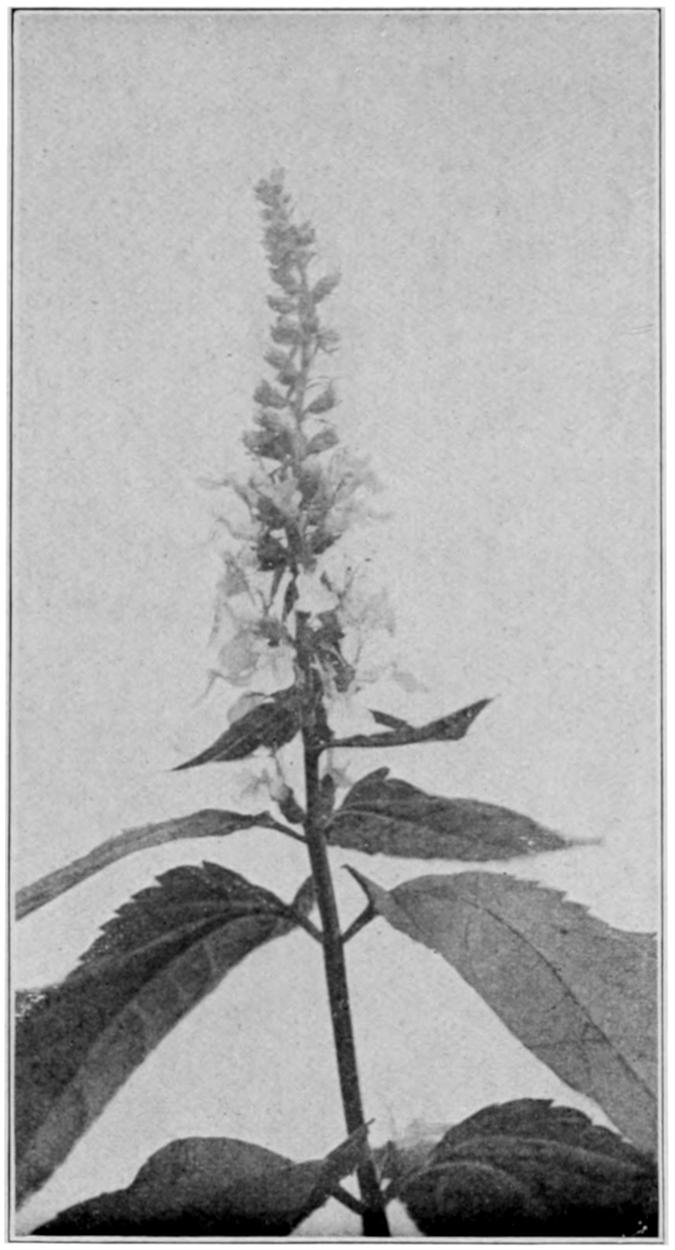
Fig. 58. Germander, or wood sage.
GERMANDER or WOOD SAGE (Teucrium canadense).
The germander, also known as wood sage, is found in open woodlands and thickets from Nova Scotia to Nebraska, and south to Florida and Texas. It is common in the Central States, and is much sought by the bees. The blooming period is long. In 1915 the bees were working on this plant in the writer’s garden for nearly two months. Apparently this plant does not secrete nectar very freely, yet it is an excellent plant to keep the bees at work when they might otherwise be robbing. The writer does not recall ever having seen a locality where it was sufficiently abundant to amount to very much by itself, though it is a valuable addition to the other honey-producing flora. Fig. 58 shows the blossoms and leaves, which bear some resemblance to catnip.
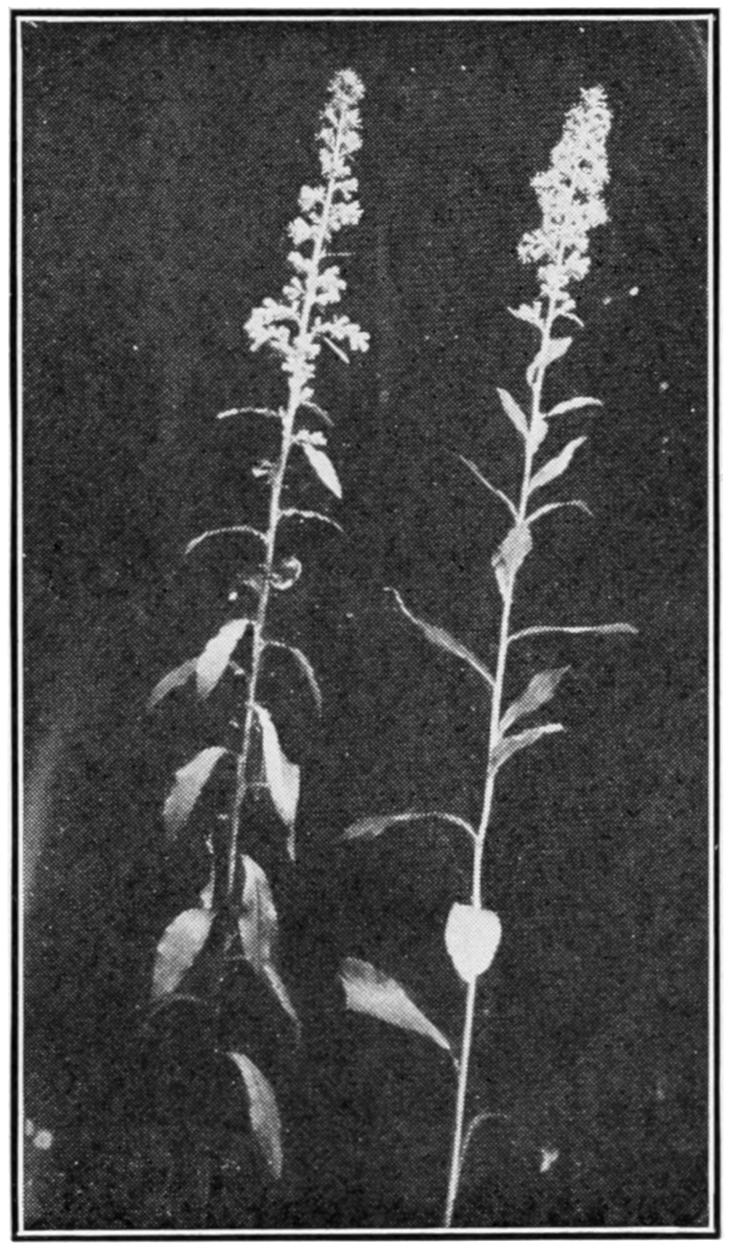
Fig. 59. Solidago squarrosa.
GIANT HYSSOP (Agastache nepetoides).
Giant hyssop is a tall perennial herb with flowers crowded on a terminal spike, flowering in summer. It is common in woodland borders from New England to Minnesota and south to North Carolina and Texas. Lovell lists it as blooming about six weeks and much visited by honeybees. Probably nowhere important.
GILIA.
Jepson lists 18 species of gilia as common to California. The late Prof. A. J. Cook, writing of gilia in the American Bee Journal stated that all the gilias are good honey plants. He mentioned Gilia capitata as the source of quantities of sky-blue pollen. He mentions the fact that several species yield pollen of a blue color. It is probably a source of minor importance, since it is seldom mentioned except incidentally in the literature.
GOLDEN GLOW, see Coneflower.
GOLDEN HONEY PLANT (Actinomeris squarrosa).
The golden honey plant is common from New York to Michigan and Nebraska, and southward to the Gulf States. This plant is closely related to the crownbeard and is sometimes classified as a verbesina. It grows in rich bottom lands and in the borders of woods and fields, reaching a height of 4 to 8 feet. The yellow flowers are very attractive to the bees and, where sufficiently common, are a valuable source of nectar.
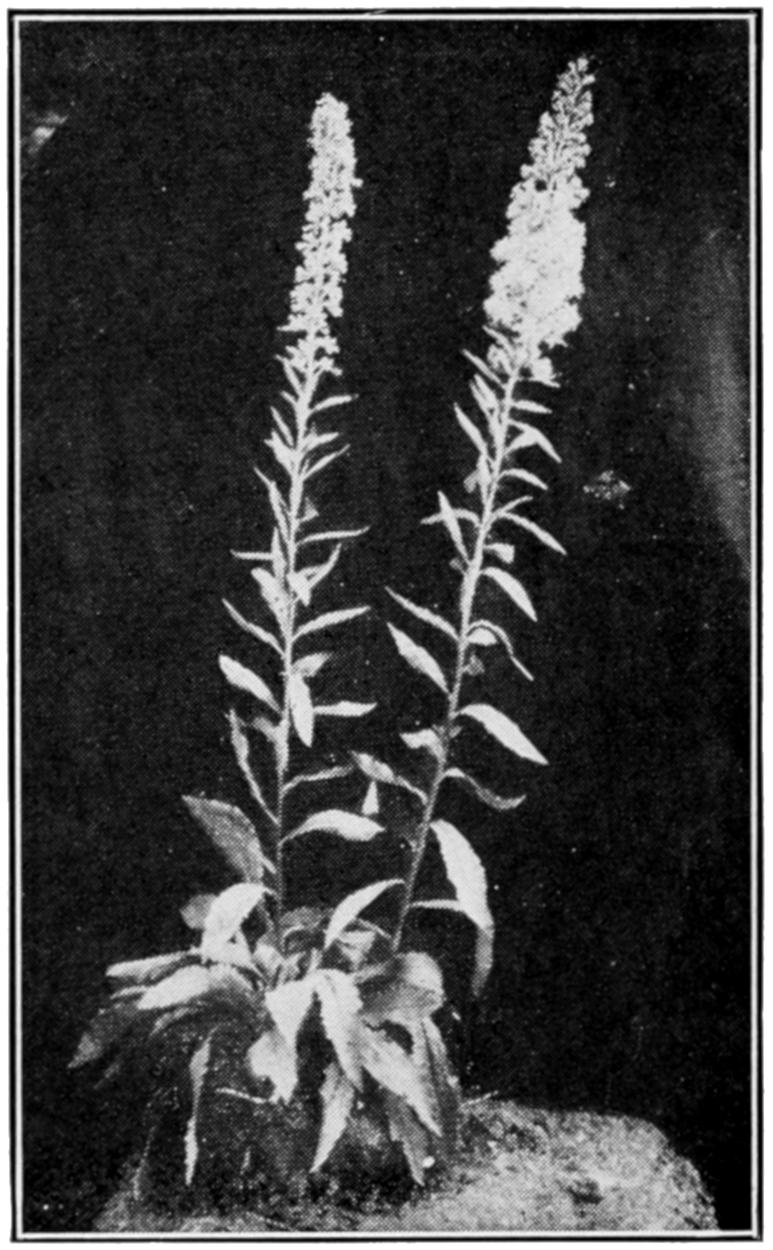
Fig. 60. Solidago puberula.
GOLDENROD (Solidago).
Of the eighty species of goldenrod all but three or four belong to North America. It is one of our most widely distributed native plants. Some species seem adapted to nearly every condition from Canada to Mexico and from the Atlantic Coast to California. There is a wide difference, however, in the value of the different species to the beekeeper, and it is no easy task to get reliable information regarding the range of conditions under which it secretes nectar abundantly, nor is there much recorded information concerning the particular species which are most valuable for this purpose. It is a well-known fact that the secretion of nectar with any plant is greatly influenced by soil and climatic conditions. Some of our most valuable honey plants have been reported as producing no nectar when introduced into Australia.
It is very probable that when we have studied the matter carefully we will find that the same species of goldenrod varies as much in its nectar secretion under different conditions as we know to be the case with alfalfa.
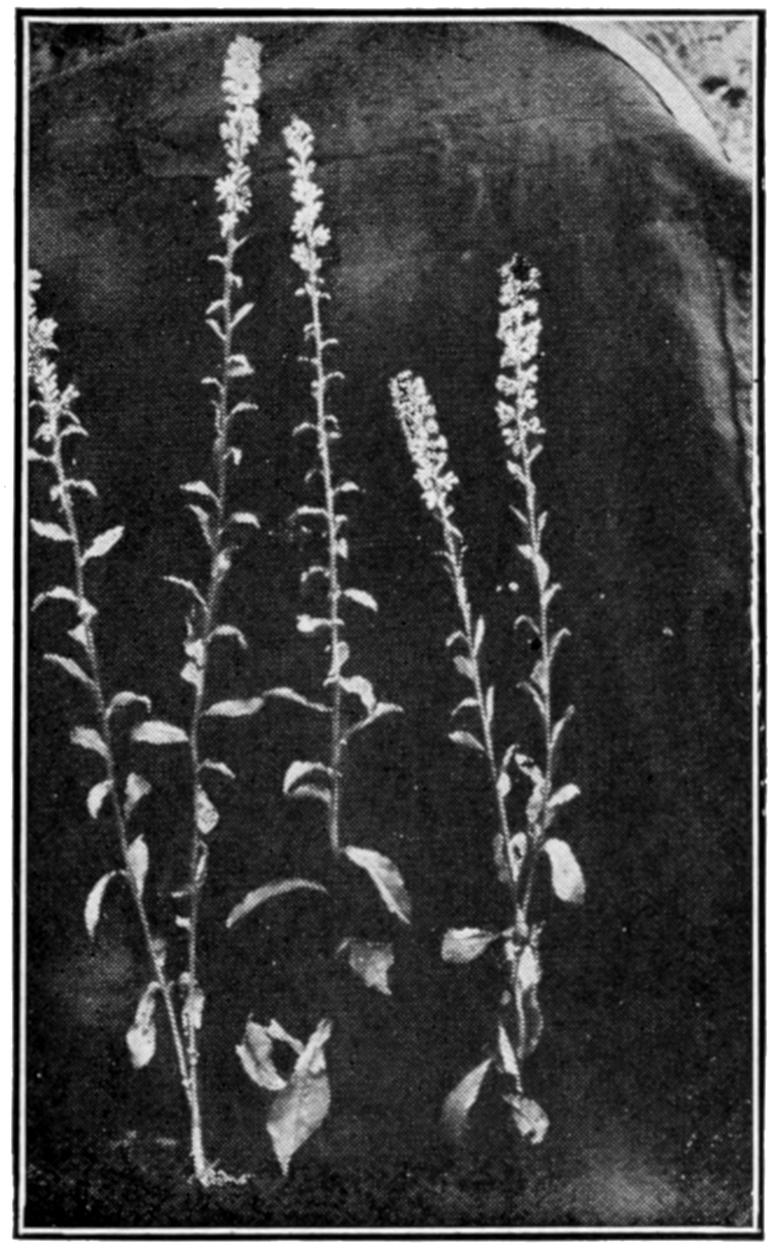
Fig. 61. Solidago hispida.
Lovell is of the opinion that all species of goldenrods secrete nectar in some localities. This is quite probable, although there is very little honey from goldenrod in Iowa from any species. Along the upper Mississippi, in the northeastern counties, a few beekeepers report honey from goldenrod. In other sections of Iowa beekeepers report that they have never seen a bee on the plant. Dr. L. H. Pammel, botanist at the State Experiment Station, reports nine species of goldenrods common to that State. He lists S. serotina, S. canadensis and S. graminifolia as furnishing some honey here. If Lovell is right about all yielding nectar under some conditions, then all are of interest to the beekeeper, and it remains a question of learning the conditions under which each species develops most favorably. If all do not yield nectar, it is important that we learn to distinguish between the species which are valuable honey plants and those which are troublesome weeds.
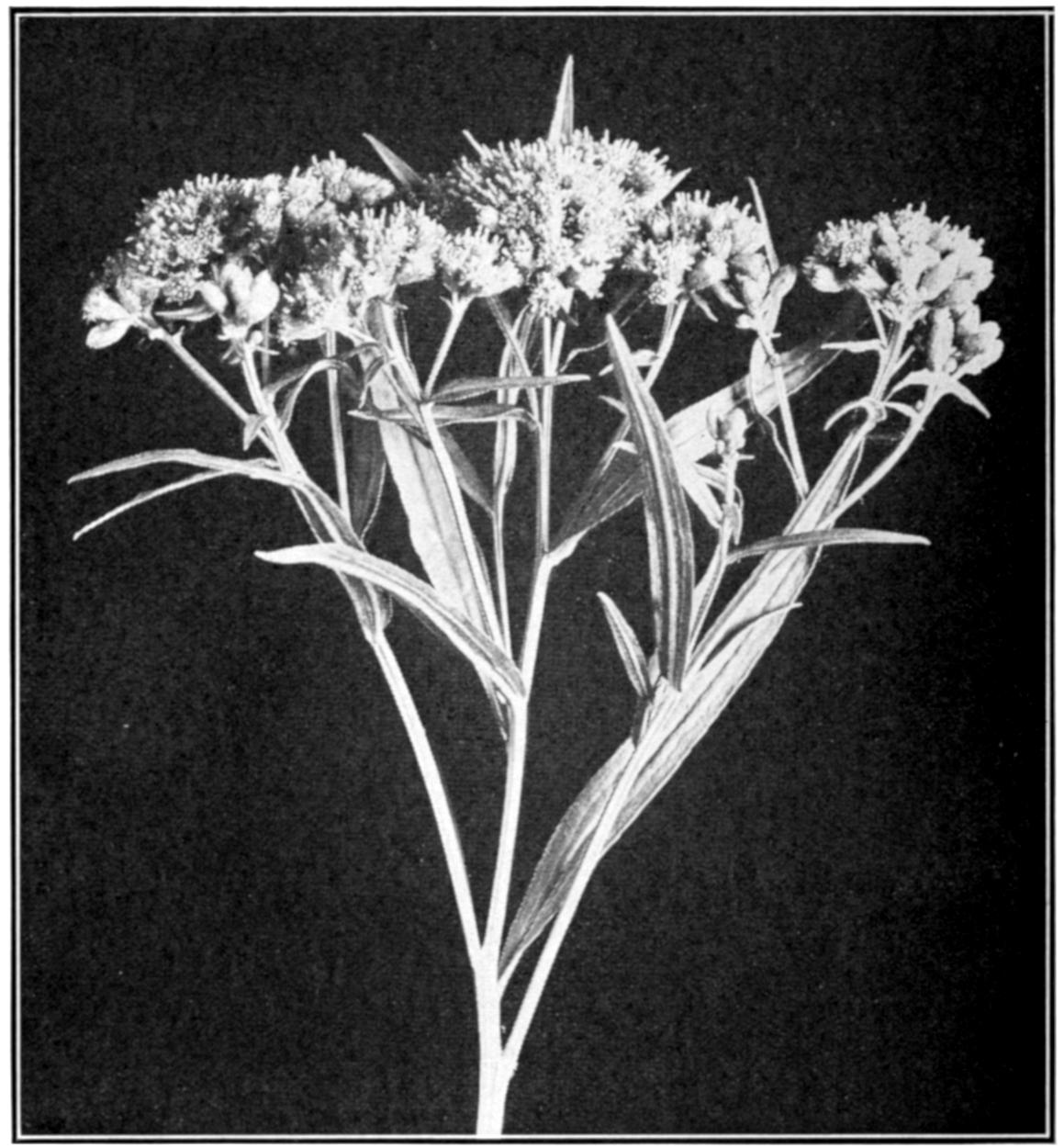
Fig. 62. Bushy goldenrod (Solidago graminifolia), a fine honey plant in New England.
Richter lists only two species of this plant as important in California. The western goldenrod (S. occidentalis), he mentions as common in wet places such as marshes and river banks, from August to October, yielding an amber honey. S. californica, the common goldenrod of the coast, he describes as common on dry plains and hillsides or mountains throughout the State, from August to December. He lists it as a fair honey plant.
Scholl reports goldenrods as common to all parts of Texas, and states that the honey yield is good in favorable seasons when it is not too dry. He reports a long season, from April to November, but gives no list of the species furnishing nectar in that region.
Sladen reports finding eleven species of goldenrods about Ottawa. He finds that individually the canadensis group (Fig. 64) produce comparatively little nectar, but their great abundance makes them important collectively.
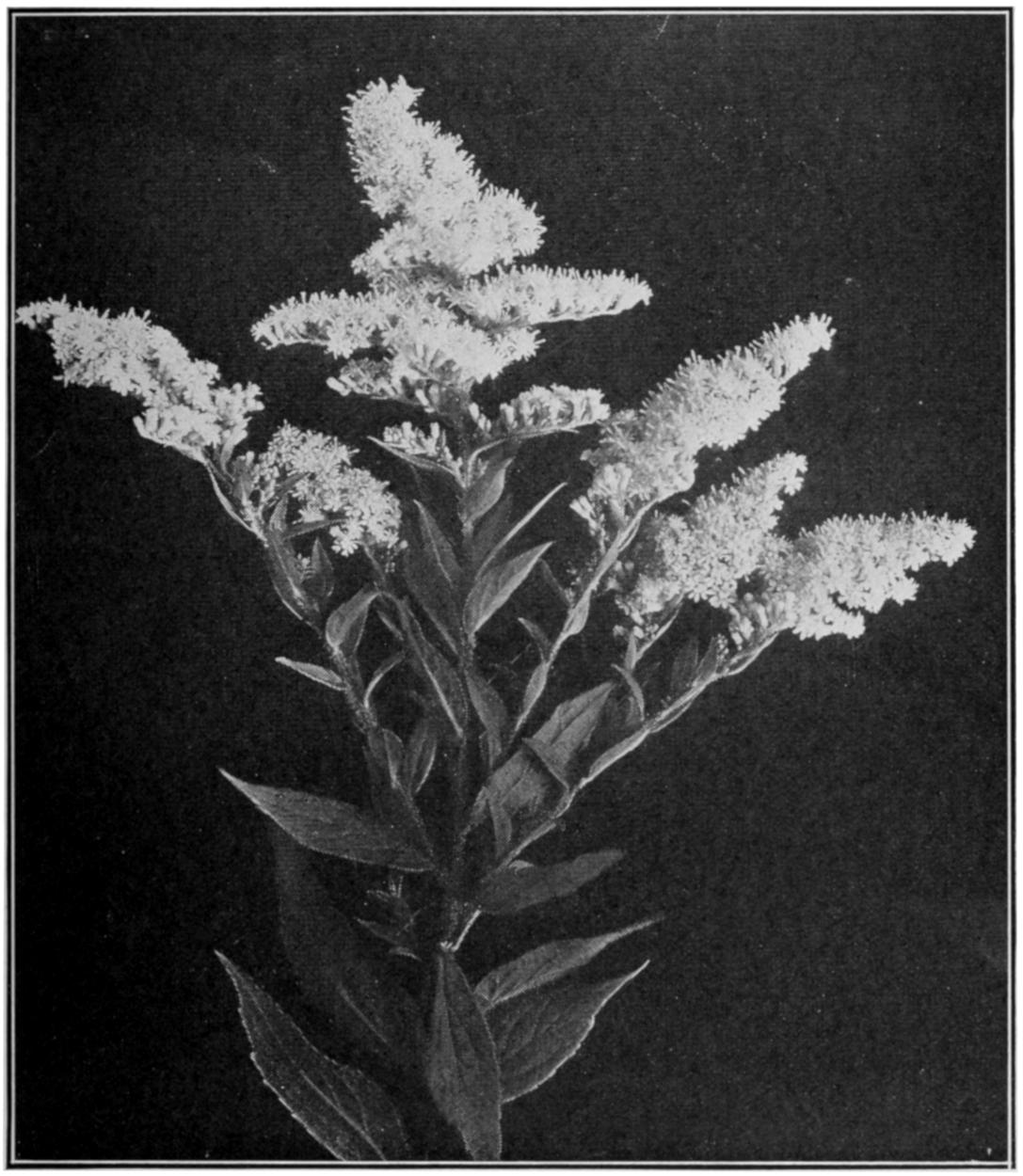
Fig. 63. Tall, hairy goldenrod (Solidago rugosa), one of the best for honey.
Sladen also notes the variation of the plant under different conditions and says that the nature of the land determines the presence and abundance of the best species. He reports that in the wet lands of Charlotte County, N. B., especially in the Honeydale district, they, together with asters, furnish the principal source of nectar, and that they are valuable generally as a source of surplus in coastal districts of New Brunswick and Nova Scotia. The same is said of eastern Manitoba. He places the yield at from 50 to 80 pounds per colony in localities where the best species of goldenrod and asters abound. The honey is usually of good quality, ranging in color in the different districts from white to dark amber. That gathered in swampy districts is usually bright golden. Evidently goldenrod honey is seldom stored separate from aster in localities from which these reports are made.
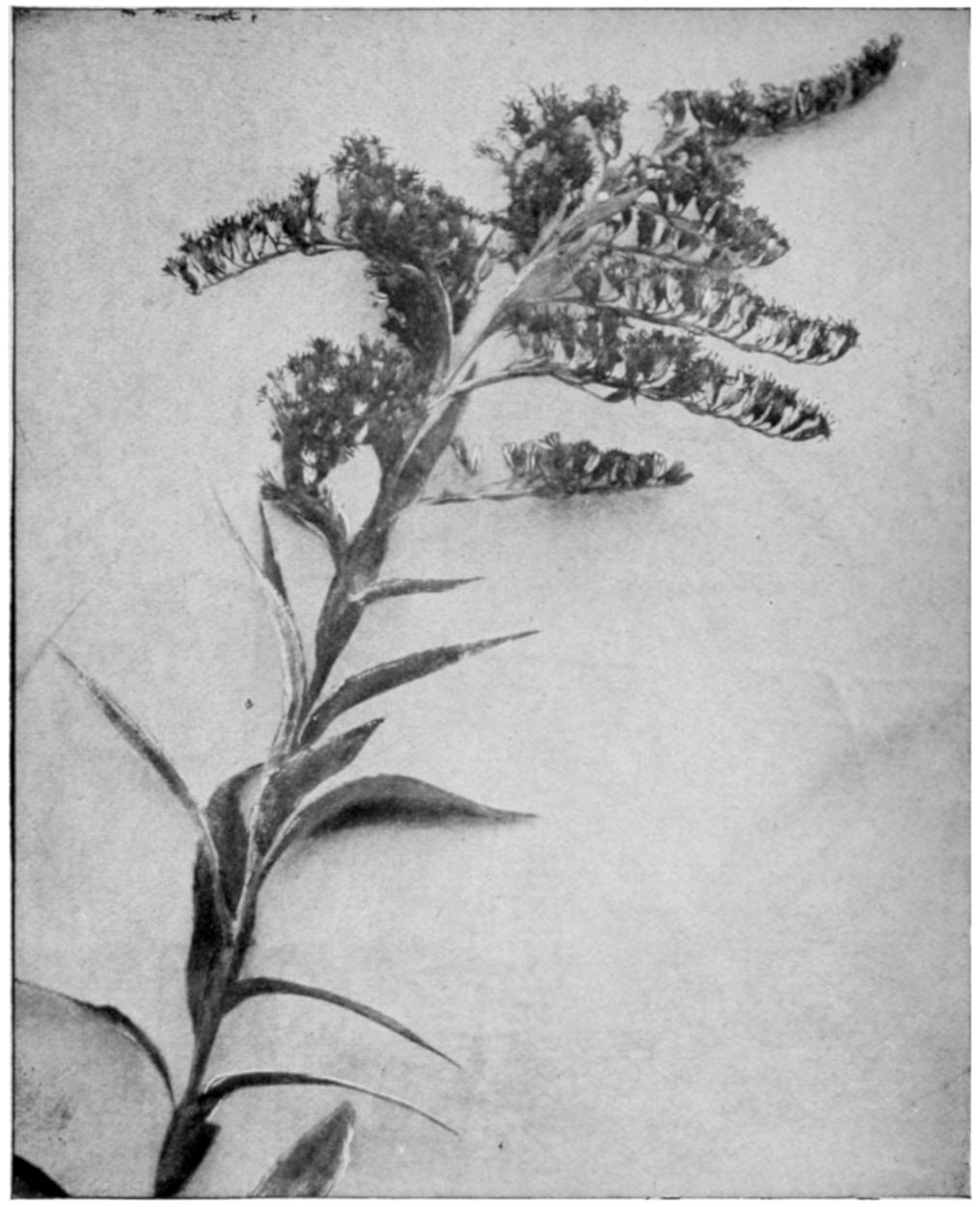
Fig. 64. Common or Canada goldenrod (Solidago canadensis).
Mr. Sladen describes three types of locations in which the plants may be found in Canada:
1. Open swamp or bog, where S. uglinosa and S. rugosa are found. The former begins blooming in August, while the latter blooms until mid-September, so that there is more than a month of flow from these plants. Although the bogs are independent of rain during the honey flow, fine weather and moderate warmth are necessary to a crop.
2. Sandy or gravelly barrens or plains. On the coast, as well as inland, on such lands are found S. puberula (Fig. 60), while inland are to be found in addition, S. squarrosa (Fig. 59) and the less important S. hispida (Fig. 61). Good rains in early August, followed by fine and warm weather, bring best results.
3. A restricted area centering in Cumberland County, Nova Scotia, in which S. Graminifolia is a troublesome weed (Fig. 62.)
He further reports that the roadside goldenrods of old Ontario are not heavy producers of honey under ordinary conditions.
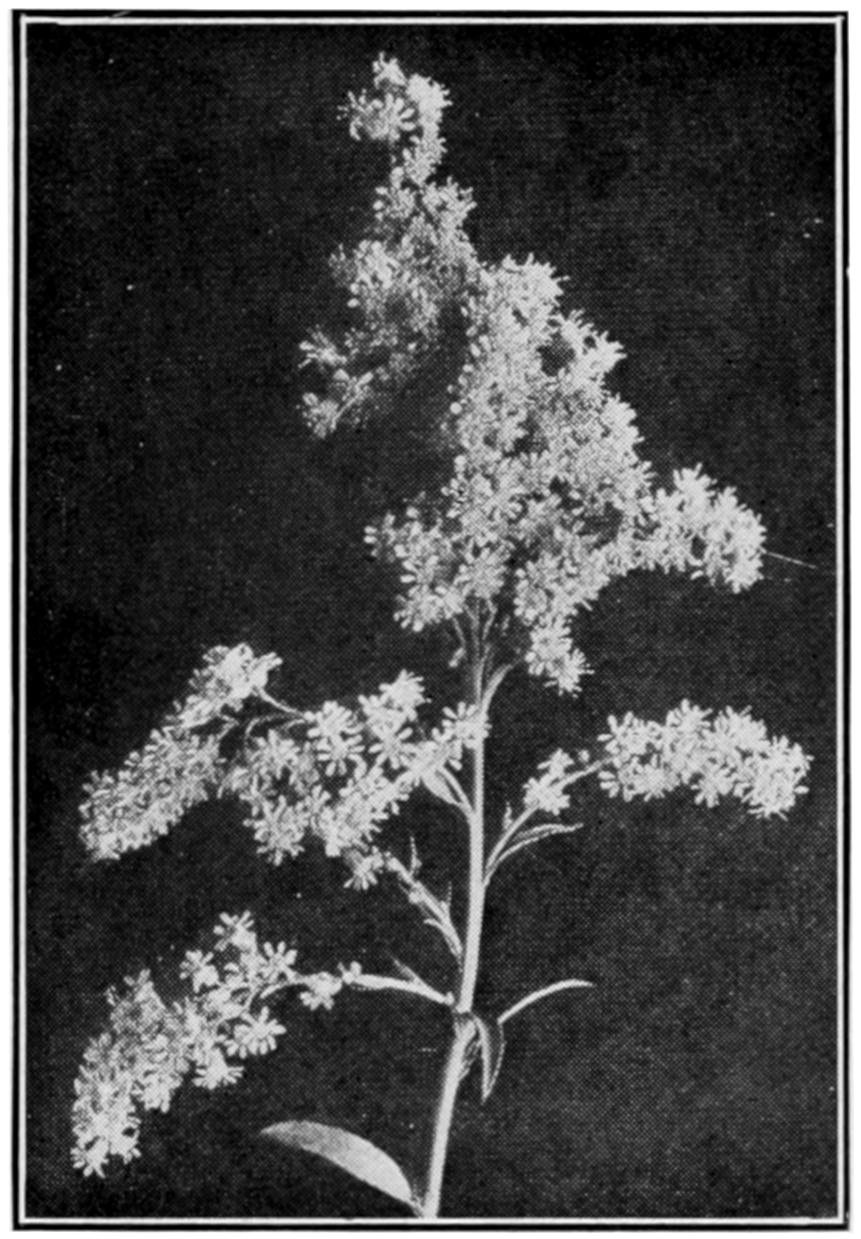
Fig. 65. Early goldenrod (Solidago juncea).
In an article on the Honey Flora of New England, which appeared in the April, 1916, American Bee Journal, Lovell states as follows:
“If I were compelled to stake the existence of bee culture in New England on a single genus of plants I should select the goldenrods. There are many species, and they all yield nectar and pollen. They begin to bloom in midsummer and continue to bloom in October. They are very common and there are species adapted to the seashore, the fields, the rocks and the woods. I have never known the flow of nectar to fail, and a great quantity of heavy, yellow honey is stored annually.”
Mr. Lovell has kindly sent me his field notes on these plants. There is a large amount of interesting information which space will not permit inserting here. The notes include the study of six species, all of which produce some nectar in Maine. He describes the tall, hairy goldenrod S. rugosa (Fig. 63) as the latest to blossom and the most valuable as a honey plant. It is found in damp thickets and on moist land. While in bloom the bees work it very diligently and the honey is stored rapidly. The apiary is filled with a sour odor, which, in the evening, is noticeable at a distance.
Goldenrod honey, according to him, is deep golden yellow in color, thick and heavy, with a more decided flavor than white clover honey. When extracted it granulates in a month or two, but the bees winter on it perfectly.
Next in importance he places the bushy goldenrod (S. graminifolia) (Fig. 62). This is common in fields, open woodlands and hedgerows. The odor is faint, but the nectar is clearly visible in the flowers. He reports as many as six honeybees at work at one time on a single flower cluster. It will be noted that this is one of the species which Doctor Pammel mentions as yielding nectar in Iowa. Sladen also cites it as important in Canada.
Graenicher collected 135 different species of insects on this species in Wisconsin.
The cream-colored goldenrod, sometimes called white goldenrod (S. bicolor), is of special interest because of the fact that it is the only one of the group which is not yellow in color. Although it produces nectar, I can find no record which indicates that it is of much importance as a honey plant anywhere. Lovell says that it is of little value in Maine.
The early goldenrod (S. juncea) (Fig. 65), is the first to bloom in Maine and is very abundant in old fields. The bees visit it freely, but apparently do not get much honey from it.
Graenicher states that he has collected 182 different species of insects on this plant, in Wisconsin, which indicates the presence of considerable nectar in that locality.
General Reports
In searching through the beekeeping literature for reports on honey from golden rods I seldom find the particular species mentioned. There are numerous reports of honey from goldenrod, but this is as far as the report usually goes.
“Two colonies of bees taken to a sandy plain forty miles north of Ottawa, August 25, each gathered, in three weeks, about 40 pounds of surplus honey from S. puberula and S. squarrosa. It is estimated that at least three-fourths of the honey came from S. puberula, which was much more abundant than S. squarrosa. The honey is of a light color and the flavor and aroma are pleasant and distinctly suggestive of goldenrod.”—Sladen, in 36th report, Ontario, B. K. A.
“You ought to see the bees work on it. They store lots of honey from it. Last year I had five or six nuclei which did not have any stores at all on the first of September, but when I went to feed them for winter I found they had twenty pounds of nice honey gathered from goldenrod. They all came through the winter in good condition.”—Kentucky. Gleanings in Bee Culture.
“The goldenrod is one of our main sources for a fall flow. The bees usually fill one or more supers from it.”—Connecticut. Gleanings in Bee Culture.
“My bees have gathered lots of goldenrod honey this fall, and at times the odor has been offensive to the neighbors.”—Vermont. Gleanings in Bee Culture.
“Smartweed and goldenrod grow here, but do not furnish any honey. Never saw a bee on them.”—Iowa. American Bee Journal.
GOOSEBERRY (Grossularia).
Gooseberries are native American shrubs with stems covered with sharp thorns or spines. There are several species widely distributed. They are very attractive to the bees and are of some importance, especially where grown in large plantings for market. The wild varieties are common in open woodlands in nearly every section of the country.
GOLDEN WATTLE, see Acacia.
GOPHER WOOD, see Yellow Wood.
GORSE or FURZE (Ulex europaeus).
Figure 66 is a spiny evergreen shrub with yellow flowers that is common in Europe, where it is said to be used to some extent for fuel and fodder. There are few references to it in this country. In California it is said to bloom during all seasons, although much more freely in spring. Richter reports it as a very good honey plant on the hills of Marin County.
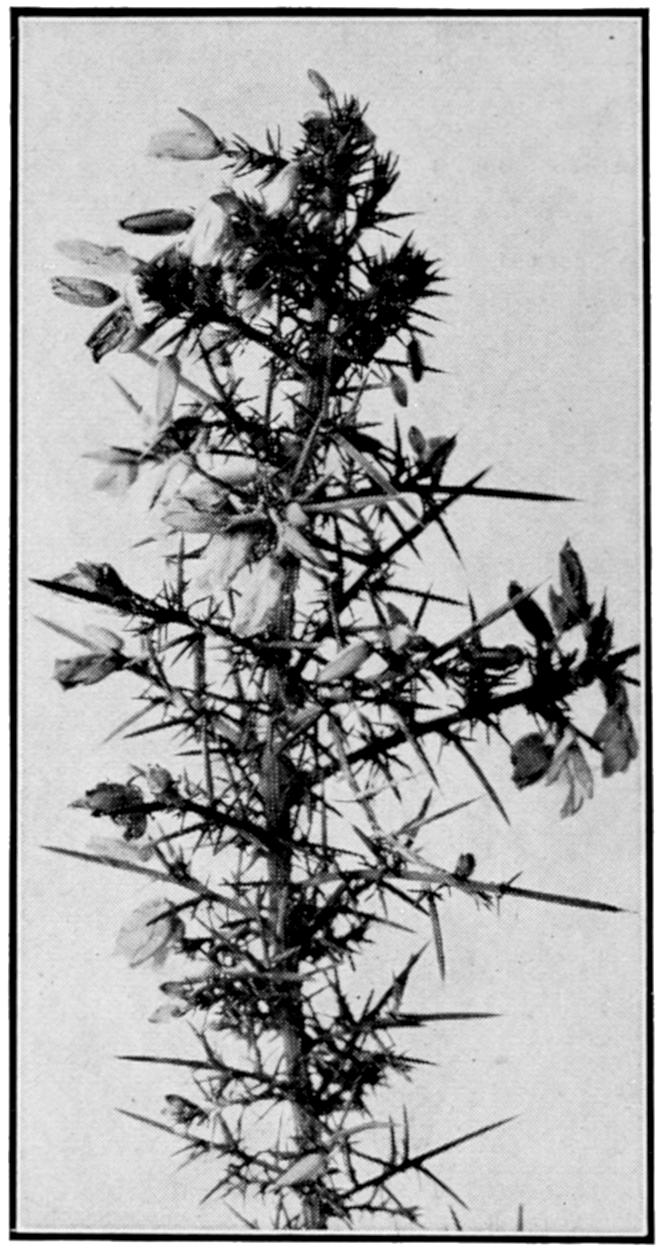
Fig. 66. Gorse or furze.
GRANJENO, see Hackberry.
GRAPE (Vitis).
The grape family is represented by wild species in all parts of the temperate regions of both hemispheres, and by cultivated species in nearly all parts of the world. There are about thirty species of wild grapes, and where sufficiently common they are very attractive to the bees. In many localities cultivated grapes are grown in large acreage. The nectar yield is not as abundant as with many plants, but is of some value where the vines are largely grown. Quantities of pollen are gathered from this source. At times honeydew is gathered from the leaves.
Scholl lists the mountain grape (Vitis monticola) as giving a fairly good honey yield and furnishing pollen for early brood rearing. Richter lists the California wild grape as yielding some honey.
Bees and Grapes
Of the disagreements between fruit growers and beekeepers, probably those growing out of the tendency of the bees to suck the juice from cracked grapes have been most serious. Many unfortunate misunderstandings have resulted from such circumstances, though the injury was as great to the beekeeper as to the fruit grower, in many cases.
This condition arises from a combination of circumstances which does not often occur in the average locality. In the first place, the bees do not seek the grapes when there is plenty of nectar in the field, and, beside, they are unable to reach the juice unless the grape has first cracked open through unfavorable weather conditions or has been injured by birds, wasps, or other agency. Grape growers, seeing the bees at work in the vineyards, have often accused the bees of injury to the fruit. The fact of the matter is that the bee is unable to puncture the fruit, and only sucks the juice from such fruits as have already been broken open and are already damaged.
Wet weather often causes ripening grapes to crack open to such an extent that they would be of little value, even though no insect touched them thereafter. In dry weather, also, birds sometimes pierce the skins, apparently in search of moisture from lack of an available water supply. Some authorities say that at such times a liberal supply of water in open vessels near the vineyard will stop the injury from the birds. The English sparrow is accused of injury to grapes to a larger extent than most birds.
The grape-berry moth infests a great many grapes in some localities. In fact, entomologists state that in some localities as high as 50 per cent of the crop is injured by this insect alone. The fact that the honeybee sucks the juice from the berries which have already been opened by wet weather, grape-berry moths or other causes, does not greatly injure the grape grower, for such fruit is of little value.
The writer has visited the raisin districts of Southern California and discussed this condition with the raisin growers. The accompanying picture (Fig. 67) shows a bunch of raisin grapes that had been sucked dry by the bees. In that locality rains are very infrequent when the raisins are being dried. They are spread out in thin layers in crates and the crates left in the sun, or piled up one above another, till fully dry. Previous to the writer’s visit there had been an unexpected rain, and some raisins were allowed to get wet. As a result they cracked open, and there being just then no available nectar for the bees, they swarmed over the raisins and sucked them dry, as shown in the picture. The grower admitted, however, that the raisins had been so badly damaged by the rain as to be of little value.
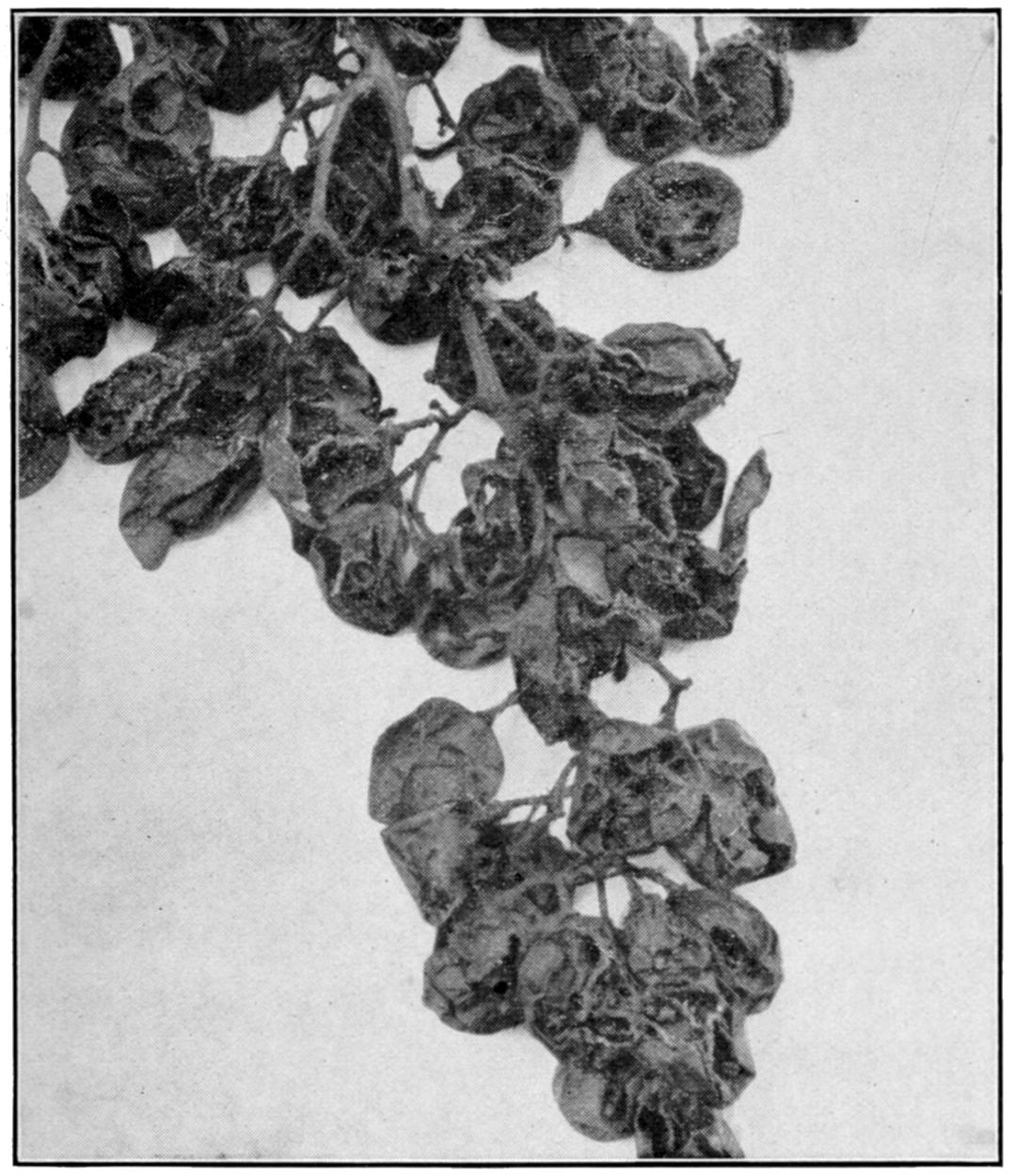
Fig. 67. Raisin grapes sucked dry by bees after the skins have been broken by rain.
The thing which few grape growers seem to understand, is that it is unfortunate, indeed, for the beekeeper in northern regions, whose bees fill their hives with this grape juice. In the north there are long periods during the long winter months when the bees are unable to leave the hive. Since the bee is only able to void her excrement while on the wing, there is a large accumulation of feces during such long confinement. If the bees have only the best white honey for food the tax is severe at best. When they have fruit juice, honeydew or other food containing a large amount of waste matter, the intestines become so distended that the bees die for lack of opportunity of a cleansing flight. Grape growers will in many cases be surprised to learn that thousands of bees die from having filled their combs with fruit juice instead of honey. Of course, the wide-awake beekeeper will remove this material from the hive and give them good honey or sugar syrup instead, if it is possible to do so. This, however, involves a large amount of labor, and the gathering of the juice from the grapes, instead of being an advantage to the beekeeper, is a serious inconvenience to him. In southern California, where there is no winter confinement, there is no particular injury to the bees, other than spoiling the grade of any honey with which it may happen to be mixed.
The late Charles Dadant, who was one of the most widely known beekeepers of the past generation, on one occasion had a difficulty with some growers who could not be made to understand that he was not getting rich at the expense of his neighbors, when his bees were attracted to their grapes. He decided that the only way to convince them that the interests of the beekeeper and the grape grower were mutual, was to grow the largest acreage of grapes in the neighborhood. This he proceeded to do, and after he became the largest grower of grapes in his community there was no longer any criticism, for they could readily see that he had too much at stake in his grapes to permit him to be prejudiced in favor of the bees.
That bees are valuable in securing the fertilization of the blossoms of some varieties of grapes, there is little question.
GRAPE FRUIT (Citrus decumana).
Nowhere in America is the grape fruit cultivated in such extensive orchards as is the case with the orange and lemon. It is recognized as a valuable source of honey, but not equal to either of the foregoing. It is an evergreen tree similar in habit to the other citrus fruits, and the area devoted to its cultivation is being extended in various districts.
Bees are very efficient pollenizers of grape fruit blossoms. The Atwood grape fruit ranch, one of the largest in Florida, is provided with two apiaries, brought there at the request of the manager of the ranch. They hold that the trees bear a larger number of fruits since the bees have been kept in close proximity.
GRASSES.
There are many grasses which are attractive to the bees for pollen. Timothy or herd’s grass produces pollen in great abundance and the bees are often observed gathering it. Occasionally some honeydew may be gathered from the grasses also, but no honey.
GREASEWOOD (Adenostema fasciculatum). CHAMISE.
Greasewood is an evergreen bush or shrub of spreading habit about two to ten feet in height. Jepson describes it as “the most abundant and characteristic bush of the higher coast ranges and Sierra Nevada, commonly gregarious and occupying, to the exclusion of other shrubs, extensive and especially abrupt slopes and mountain ridges. It often forms a distinct zone between the foothills and the yellow pine belt.”
Richter lists it as eagerly sought by the bees in several California counties, though no mention is made of it as a source of surplus honey.
GREENBRIAR (Smilax).
There are several species of greenbriar, some of which are common from Canada to Texas. They grow along watercourses and in open woodlands and the stems are covered with stiff and hard thorns. Scholl lists one species as yielding nectar in Texas. The author found reports to the effect that bees gather honey from greenbriar in McLennan County, Texas. At the same time it was stated that no honey was gathered from it in other nearby sections. The plant seems to be of doubtful value and is not sufficiently abundant to be important.
GRINDELIA, see Gum Weed.
GROUNDSEL, see Butterweed.
GROUND LAUREL, see Arbutus.
GUAIACUM, see Soapbush.
GUAYACAN, see Soapbush.
GUM, see Tupelo, also Eucalyptus.
GUM-ELASTIC or SHITTIM-WOOD (Bumelia lanuginosa rigida).
Gum-elastic is the common name in south Texas for the Arizona buckthorn, a small tree occurring from western Texas to Arizona. It has a short stem with stiff and very spiny branches. It is frequently mentioned as a source of honey in southern Texas.
There are reports to the effect that it sometimes yields a surplus along the Trinity River and that the honey often sours in the combs after being sealed.
GUM TREE, see Eucalyptus, also Tupelo.
GUM WEED or GUM PLANT (Grindelia squarrosa).
The gum weed, also called rosin weed, is a common plant from Wyoming and Colorado south to Arizona, New Mexico and Texas. It occurs sparingly eastward to Minnesota and Missouri. The bright yellow flowers exude a milky resinous gum, which gives rise to its name, “gum weed.” It is also widely known as rosin weed (Fig. 68). It blooms in August and is much sought by the bees. The honey is yellow and of inferior flavor. It is often mixed with light honey in the super and the grade spoiled as a result. In Colorado it is well known by the name of “rosin weed.” There the comb-honey producers complain that it often spoils the quality of their product through being mixed with the honey from alfalfa and sweet clover. Honey from gum weed candies very quickly, so quickly in fact, that Colorado beekeepers say that the bees have to hurry home with the load to prevent it becoming candied in their sacs. Comb honey which candies cannot readily be restored, hence in localities where gum weed is abundant the beekeeper may find it to his advantage to produce extracted honey. Even this does not solve the problem entirely, since the gum weed honey candies in the combs so readily as to make it difficult to extract. There are few reports of large surplus from this source. In most cases it is mixed with other honey and only in such quantity as to make it rather a nuisance than otherwise. The tendency to candy in the combs makes it undesirable for winter stores.
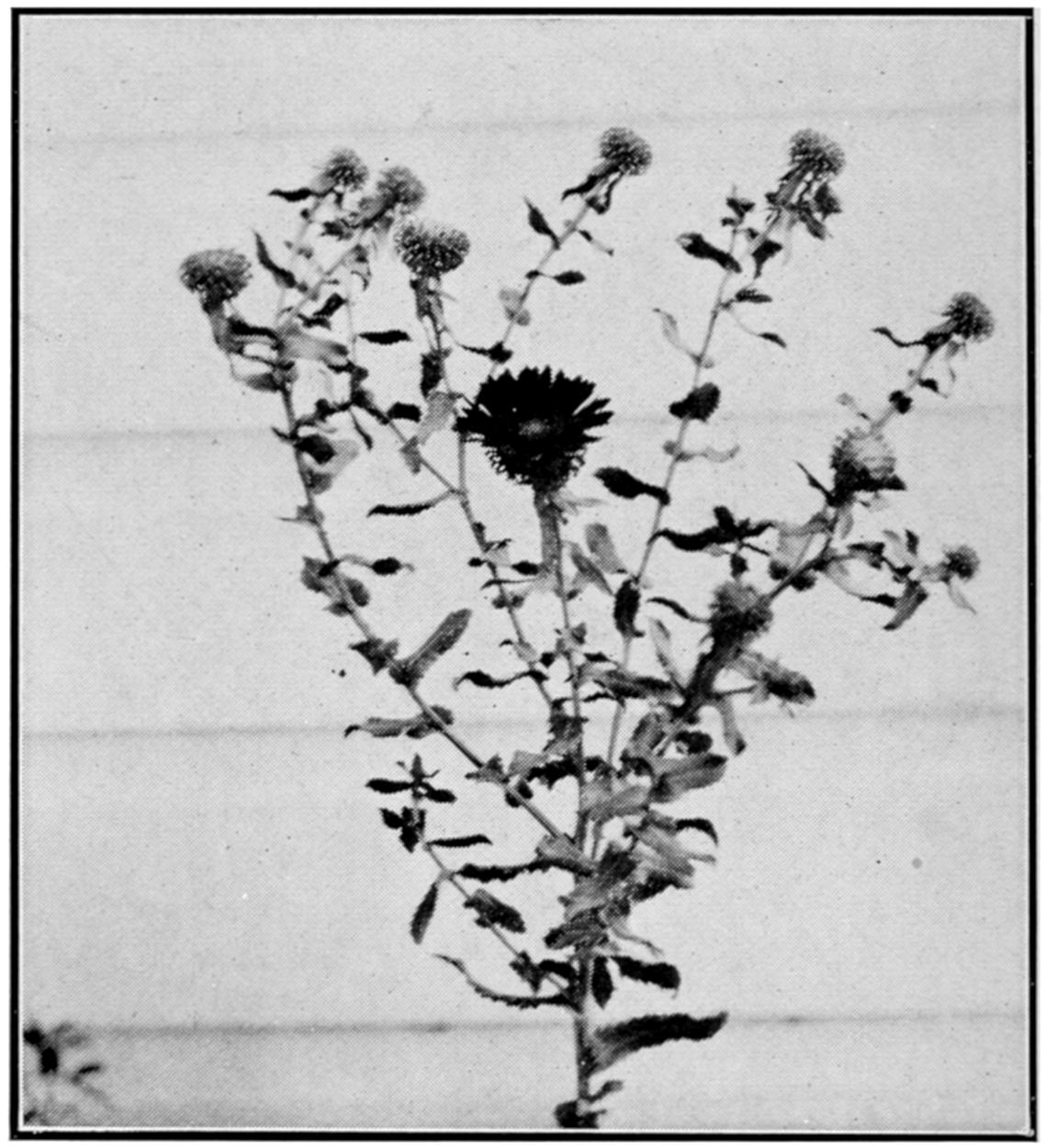
Fig. 68. Gumweed, or rosin weed, of the Great Plains.