F
Reading edition
FALSE INDIGO (Amorpha fruticosa).
False indigo is a tall shrub common to low lands along streams from Pennsylvania west to the plains. It grows in thickets and is very attractive to the bees. It is of special importance in Nebraska and Kansas. In the Arkansas Valley beekeepers report that bees get both nectar and pollen in considerable quantity, though it is seldom mentioned as a source of surplus. Nebraska beekeepers value it because it fills in the period between fruit bloom and white clover.
FARKLE-BERRY or SPARKLE-BERRY (Vaccinum arboreum).
The farkle-berry or sparkle-berry is also known as winter huckleberry and tree huckleberry. It is a tall shrub 6 to 25 feet in height and common from southern Illinois and Missouri east to North Carolina and south to Texas and Florida. In parts of Arkansas it is one of the main sources of honey. W. C. Brass writes that in Lonoke County, near the center of the State, it is very abundant and takes the place of clover further north. It blooms in May and the bees roar on the sparkle-berry bushes like swarming time. It belongs to the group of plants to which the blueberries belong and most of these are good honey plants.
FIDDLE NECK, see Phacelia.
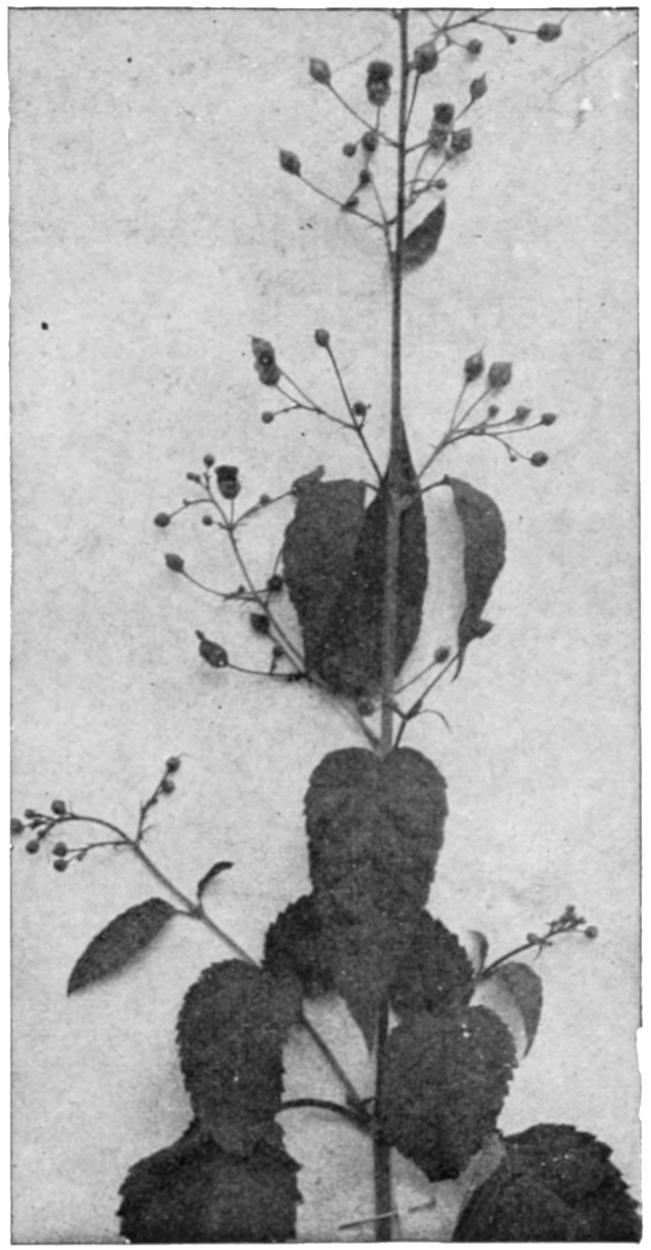
Fig. 55. Figwort, or Simpson honey plant.
FIGWORT (Scrophularia marilandica).
Simpson honey plant, or figwort, is another widely distributed plant. It is common in the woods from Maine to the Rocky Mountains and south to the Gulf. It is also said to occur on the Pacific Coast. The same, or a similar plant occurs in Europe and Asia.
It is a tall growing plant from 3 to 6 feet high, with numerous small branches. The stem is four angled, with rather long-pointed leaves. The flowers are very numerous and quite small, as will be seen by the picture, Fig. 55. It blooms in the late summer and is freely visited by the bees.
FILLAREE, see Pin Clover.
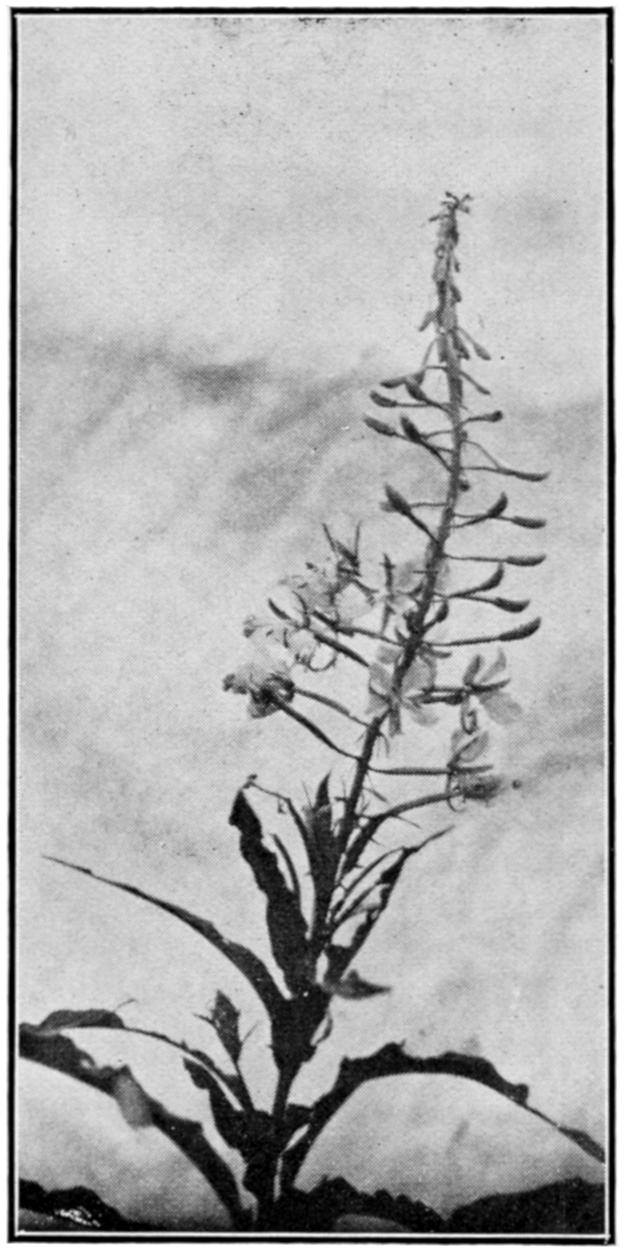
Fig. 56. Blossoms of fireweed.
FIREWEED or WILLOW HERB (Epilobium angustifolium).
Fireweed is a common plant in the woodlands of the Northern States and of Canada. It is a tall herb with attractive pink blossoms on a long terminal spike, as shown in Fig. 56. It springs up following forest fires and covers the burned district with a dense growth. The blooming period is long, lasting from July till frost, as new blossoms appear as the older ones fade. It is important as a source of honey in much of eastern Canada, Minnesota, parts of Michigan. Wisconsin and on the Pacific Coast, where it is also valuable in Oregon, Washington and parts of Montana. It is gradually crowded out by other growth. A locality may yield great crops of fireweed honey for two or three years and then little surplus be gathered from it for many years. The author has visited beekeepers in Northern Michigan who count on an average of fifty pounds or more per colony, with as high as 125 pounds, in locations where fireweed was yielding. As fireweed disappears in that locality, raspberry and milkweed follow, and these are also good sources, so that the location does not suffer from the change.
Honey from fireweed is very light in color and of high quality. The late W. Z. Hutchinson, who wrote much concerning beekeeping in the forest region of northern Michigan, styled it as the whitest and finest-flavored honey with which he was acquainted.
As the timber is removed, settlement gradually clears the land, and the wild growth gives place to cultivated fields and pastures. Most of the fireweed country is also good clover territory, so that the beekeepers need not fear the development of the country.
FLAT TOP, see Eriogonum.
FLEA WEED, see Blue Curls.
FLORIDA—Honey Plants of.
Wild Pennyroyal in southern half of the State.
Titi, in pine swamps in northern portion, gives surplus only in west Florida.
Black Tupelo, in same territory as titi, bad weather makes the yield uncertain.
White tupelo in low swamps over west Florida; main source in swamps along the Appalachicola and Chipola rivers in Calhoun County.
Orange from the north central portion to the southern end of the peninsula.
Andromeda, central and northwestern part of the State, not important.
Gallberry or holly grows in almost all parts of Florida, but does best in north part of the State.
Saw or scrub palmetto thrives on sandy soils, doing best on moist hummocks.
Black mangrove grows on lands overflowed daily by salt water along the east coast, but yields best on east side.
Partridge pea grows in great abundance in the high pine lands of the northern half of the State.
Cabbage palmetto reaches its greatest height on the coasts and keys of the southern section. Yields heavily when it does yield.
Manchineel, on southern coast and keys as far north as Palm Beach.
Dogwood, along the keys and southern coast.
Pigeon cherry, same range as the two preceding.
In addition there are a number of such fall flowers as wild sunflowers, asters, goldenrods and thoroughwort.
Four-fifths of all the surplus honey produced in the State comes from the blossoms of nectar-producing trees or shrubs, not flowering plants.—E. G. Baldwin in Gleanings in Bee Culture, March and April, 1911.
FLORIDA MAHOGANY, see Red Bay.
FLOWERING RASPBERRY, see Salmon Berry.
FRUIT BLOOM.
All the orchard fruits are of more or less value to the beekeeper, and few differentiate between them when speaking of the sources of early nectar. In localities where a great variety of fruit is grown, the blooming period is longer than where there are large orchards of one kind. In most localities the beekeepers depend upon fruit blossoms for building up their colonies in spring, and when the weather is unfavorable at this time, feeding is often necessary to carry the bees until the next honeyflow. Apples, peaches, pears, plums, apricots and cherries all secrete nectar abundantly and, given strong colonies of bees and favorable weather, large quantities of surplus honey should be gathered from these trees. If it were possible to bring the bees through the winter as strong as in the fall, there is no estimating the amount of honey that would be gathered from the early blooming orchard fruits.