W
Reading edition
WA-HE-YA (Huajillo), see Acacia.
WAHOO, see Hop-Tree.
WAKEROBIN, see Trillium.
WALNUT (Juglans).
The black walnut is a well-known forest tree in the eastern United States. Its usual range is from Ontario and New England west to Nebraska, and south to Florida and Texas. The wood is very valuable for the manufacture of gunstocks, furniture, etc., and is becoming somewhat scarce. The tree leaves out later than most forest trees, not developing its foliage until May or June. Figure 143 shows the pollen-bearing blossoms. These blossoms are long catkins borne on the wood of the preceding year. The blossoms appear before the leaves. Quantities of pollen are produced, and, at times, the bees seek the trees in such numbers as to make a continuous roar. The walnut blooms after the maples and willows, and is not as valuable as earlier blooming trees, because it comes at about the same time that the dandelions are in bloom. May is the month of blossoming in most northern localities.
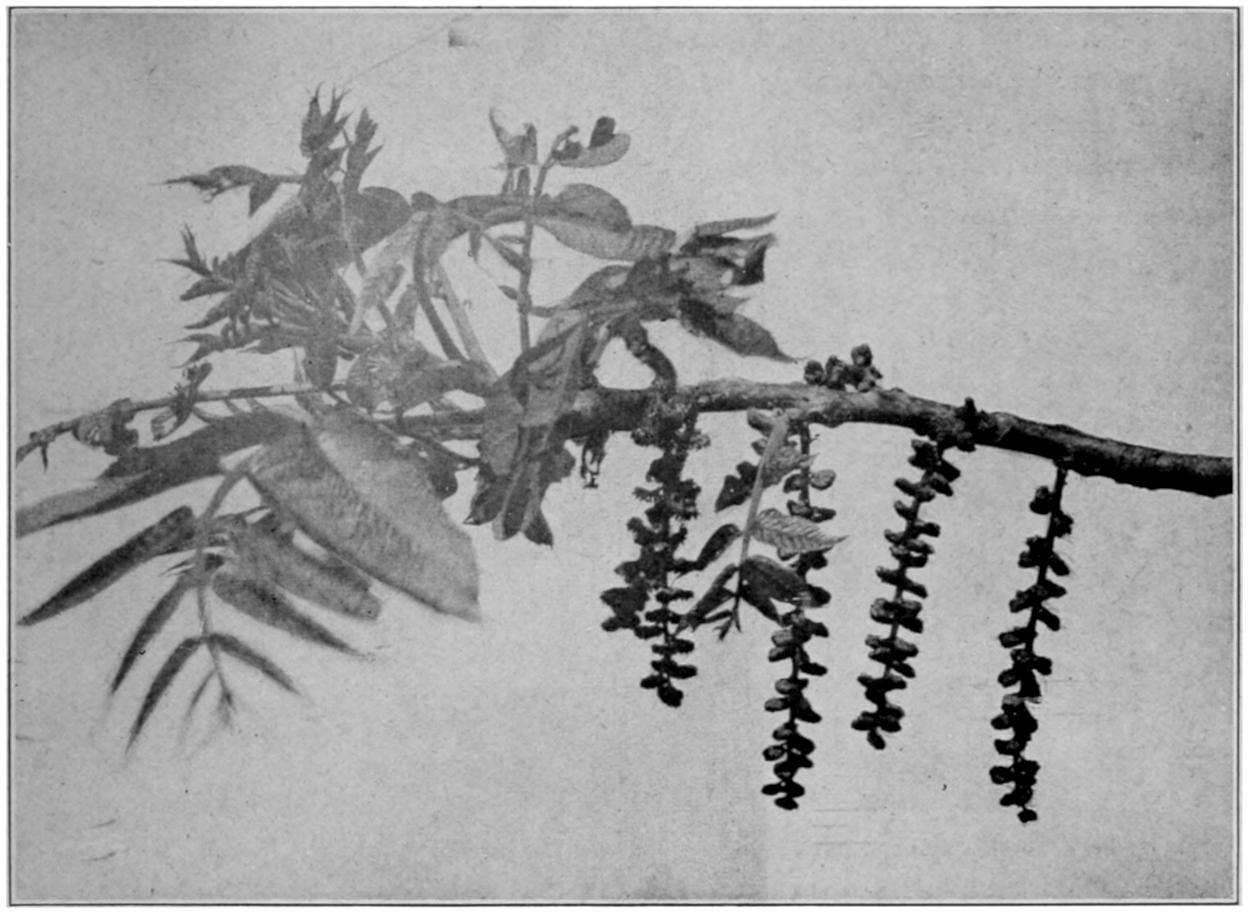
Fig. 143. Pollen-bearing bloom of black walnut.
The white walnuts or butternuts of the Eastern States, and the English walnuts, Japaneses walnuts and California walnuts grown in the warmer parts of the country, especially in California, are relatives of the black walnut, and probably equally valuable for pollen.
WASHINGTON—Honey Sources of.
Alfalfa, sweet clover. Sweet clover is quite generally distributed over all irrigated alfalfa districts. The Yakima Valley is the largest of these districts and supports at least 25,000 colonies. If it were not for spray poison this district could support 50 per cent more. Sweet clover is being introduced in many other sections of the State, Spokane County, for example. New irrigation projects will increase the beekeeping area considerably in many sections of the arid portion of this State.
Fireweed (Epilobium angustifolium). This plant is second only to the above as a honey plant. It is found in great abundance on all burned-over land west of the Cascade Mountains. It is also found in more or less abundance on burned sections on the east side. Due to the fact that there is much less rainfall it is not as reliable as a source of nectar as it is on the west side of the State.
White clover is important on old cleared off land on west side. Also important in Stevens, Pend Oreille, Klickitat, Spokane and Whitman Counties. Of minor importance in most other counties.
Alsike clover. Important in a few localities on the west side and in the northeast part of the State, where conditions are favorable.
Vine maple (A. circinatum). Very abundant on the west coast from about King County south. A good yielder of an excellent amber honey. Blooms so early, about April, that few colonies are in a condition to store much surplus.
Oregon maple (A. macrophyllum). An important honey plant on the west side, from about King County south.
Dwarf maple (A. glabrum). In most timbered sections of the State. Honey value unknown.
Willow. Willows are abundant in almost every locality and are of great value for spring feeding.
Chittam (Cascara sagrada). Abundant in most sections of the west side and reported to be an important honey plant. It is being killed off in many sections, due to the harvesting of the bark for medicinal use.
Locust. Locust has been planted extensively in many of the irrigated sections of the State, where it furnishes an abundance of nectar at a time when it is badly needed by the bees. A surplus is gathered in many sections of Walla Walla County. A water-white honey of excellent flavor.
Dandelion. Abundant in all sections where there is sufficient moisture. As in most sections of the country, it is of great importance.
Cat’s ear (Hypochaeris radicata). Sometimes called California dandelion. Abundant west of Cascades. Supplies considerable nectar of amber color. In many sections it darkens the fireweed honey, and for that reason beekeepers like to avoid it, if possible.
Goldenrod. Abundant in all sections of the State where there is sufficient moisture. There are a number of species, but the writer has never seen a bee working on it in this State. This is due, in most cases, doubtless, to the fact that more desirable nectar is available.
Gum-weeds (Grindelia). Present in most parts of the State. Doubtless of some value.
Mustard. Important on west side in some localities.
Snowberry (Symphoricarpos racemosus) and other species. Also called buck-brush, wax berry, wolf berry. Abundant on the west side and in the northeast part of the State. Common in many parts. Seems to yield well where abundant. Quality of honey unknown.
Milkweed (Asclepias). Two species are found on the east side. Neither has been seen on the west side, and is not reported as occurring there by Piper and Beattie.
Dewberry (Rubus macropetalus). Abundant in logged-off sections. Of considerable importance as a honey plant.
Alder (A. oregona and A. sinuata). Common on the west side in particular, especially the former.
Madrona (Arbutus menziesii). Common all over the west side, except in heavy timber. Supplies nectar, but importance unknown.
Helianthus. Two species occur. A small, early species, not determined; has been reported as important on the east side, where it grows with little moisture. The species is doubtless H. annuus, which is the only one listed by Piper and Beattie. The other species is doubtless an introduced species from the east.
Indian hemp (Apocynum pemilum). Northeastern Washington. Important minor plant.
Phacelia (P. heterophylla) was found abundant in Kittitas County, where it was yielding considerable nectar. Reported that the honey is amber. P. tanacetifolia has been introduced into northern Idaho at Coeur d’Alene in a very limited way, where it yields considerable nectar, considering its abundance.
Horehound and catnip. Both plants are found in considerable abundance in all parts of the State where there is sufficient moisture. Both seem to yield considerable nectar.
Huckleberry. Several species of huckleberries are found in the State and are very abundant in many sections, as, for example, Mason County. They have been reported as honey plants, but their relative value is unknown.—H. A. Scullen.
WATER-GUM, see Tupelo.
WATERMELON (Citrullus citrullus).
Where grown on a commercial scale the watermelon is the source of some honey. The bees visit the blossoms eagerly for both pollen and nectar. Important only in a few localities.
WATER PEPPER, see Heartsease.
WATERWEED (Jussiaea californica).
The California waterweed is common to wet lands in the lower Sacramento and San Joaquin Valleys, where, according to Richter, it is the source of considerable ill-tasting honey.
WATTLE, see Acacia.
WAXBERRY, see Snowberry.
WEATHER AND HONEY PRODUCTION.
It is a well-known fact that nectar secretion is very sensitive to weather conditions. However, the same conditions are not most favorable for all plants.
J. L. Strong, a beekeeper of Clarinda, Iowa, kept a careful record of weather conditions in connection with the daily gain or loss of a colony on scales for 29 years, from 1885 to 1914. In his locality, in southwestern Iowa, white clover is the principal source of honey. While the bees begin the season with the willows, maples, fruit bloom and dandelion, there is little surplus stored until the blooming of clover. Leslie A. Kenoyer, of the Iowa College of Agriculture, made a careful study of the Strong records and prepared a bulletin outlining his conclusions. While the records kept by Mr. Strong for a long period give material for fairly accurate conclusions regarding the effect of the weather on nectar secretion in white clover, it can hardly be expected that the same conclusions will apply to all other plants. (Bulletin 169, Agricultural Experiment Station, Ames, Iowa.) From the foregoing the following conclusions are extracted:
Rain.
Abundant rain seems essential to stimulate plants to the vigor necessary to nectar production and to furnish the water contained in the secretion.
Some honey years are poor because of excessive rain. In June, 1902, there was 11.64 inches of rainfall. June, 1911 represents the opposite extreme, with .76 inch, and was also poor. Abundant rain in advance of the honeyflow is of great importance, particularly in the month of May. When there is 5 inches or more of rain in May an abundant honey harvest seldom fails.
It is also shown that a heavy fall of snow during the previous winter tends to favor a good yield of honey. The abundance of snow provides both available moisture and protection to the clover plants during the cold months.
A rainy day is, of course, unequal to a clear one for honey production, and the fact is shown that best yields are gathered on the days just preceding and following the rains. A gradual increase in honey stored is apparent each day following a rain, until the fourth day, when it begins gradually to decline.
Wind.
An average of results for 200 days shows that south winds are slightly more favorable, probably due to the warmer and clearer weather. East winds are shown to be somewhat unfavorable, probably due to the clouds and rains which frequently accompany them. (This does not apply everywhere.)
Temperature.
It is generally recognized among beekeepers that hot weather is most favorable for nectar secretion. The above records show that the hot months do yield better than the cooler ones, this being especially noticeable in the months of May and September, which are often too cool in Iowa for best production. It was found that little honey was stored at a temperature below 70 degrees and that 90 per cent of the entire amount gathered was at temperatures between 80 and 100 degrees. Days attaining a maximum between 80 and 90 degrees are the best yielding days, being slightly better than those with higher temperatures. A variation in the temperature seems to favor nectar secretion. Mr. Kenoyer was able to show experimentally that low temperatures favor the accumulation of nectar. Days, then, with a wide range of temperature favored the bees.
A cold winter previous to the honeyflow cannot be said to be beneficial, yet it is shown that it is not detrimental. A warm March, however, often favors a good season. This is explained as due to the favorable conditions for building up the colonies of bees in spring as well as to the increased vigor of the clover plants through lack of severe weather at the start of the growing season.
Kenoyer’s Conclusions.
“Mr. Kenoyer concludes that, 1. June yields 56 per cent of the annual hive increase in honey, with about half the remainder gathered in July. 2. A large June increase indicates a good year. 3. There is an evident alternation between good and poor years. 4. A good year has a rainfall slightly above the average, the honey season being preceded by an autumn, winter and spring with more than the average precipitation. 5. A rainy May scarcely fails to precede a good honey season. 6. South wind seems favorable and east wind unfavorable. 7. The yield shows a gradual depression preceding and a gradual increase until about the fourth day following a rainy day, after which it remains fairly constant until about the fourteenth day following a rain. 8. Good honey months average slightly higher in temperature than poor, this being especially true of the spring and fall months. 9. Clear days are favorable to the production of honey. 10. Yield is best on days having a maximum temperature of 80 to 90 degrees. 11. A wide daily range of temperature is favorable for a good yield. 12. A low barometer is favorable for a good yield. 13. The fluctuations in the yield for a producing period seem to be closely correlated to the temperature range and the barometric pressure, acting jointly. 14. A cold winter has no detrimental effect on the yield of the succeeding season, but a cold March reduces it. 15. A winter of heavy snowfall is, in the great majority of cases, followed by a larger honey yield.
WEST VIRGINIA—Honey Sources of.
Willows, pollen and some nectar.
Red maple, pollen and some nectar.
Arbutus, slight value.
Peach, important for nectar.
Cherry, important for nectar and pollen.
Redbud (Judas tree), contributing nectar and pollen.
June berry, slight value.
Hawthorn, or haw, pollen and nectar.
Apple, occasional surplus.
Dandelion, valuable pollen and nectar.
Azalea (pink), some nectar and pollen.
Huckleberry, nectar and pollen.
Tupelo, pepperidge, sour or black gum, valuable source of nectar, yields surplus.
Wild raspberry, valuable for surplus.
Tulip-tree or poplar, extremely valuable as a surplus plant.
Black locust, important surplus plant.
Sumac, yields nectar abundantly.
Strawberry, important in nectar.
Alsike clover, very valuable to beekeepers, increasing in popularity.
Holly, important source of pollen.
White clover, chief surplus in certain sections.
Chestnut, some nectar and pollen.
Chinquapin, yields, but of poor flavor.
Basswood or linn, heavy yielder of excellent surplus.
Sourwood, very important, yields extra abundant.
Swamp milkweed, surplus in some localities.
Sweet clover, dependent for surplus.
Blue devil, or viper’s bugloss, important.
Buckwheat, excellent yielder in certain years.
Goldenrod, contributory.
Asters, yield surplus.
Willowherb, yields surplus in abundance.
—Chas. A. Reece, Bulletin No. 33, W. Virginia Department of Agriculture.
WHITE ALDER, see Pepperbush.
WHITE BRUSH (Lippia ligustrina).
White brush is a very common shrub throughout south Texas. It has some resemblance to the Indian currant of the Northern States, except that it is larger in size. It has long sprays of fragrant white flowers which appear several times during the year, following rains. According to H. B. Parks, it yields little honey during the regular blooming period of spring, but during the rain-induced bloom, in late fall, it yields heavily.
In the lower Rio Grande Valley, beekeepers reported to the author that the blooming period is short, but that it usually yields well, while the bloom lasts. In many localities similar reports are received. Most beekeepers regard the honey as of good quality, but the plant not dependable. In seasons when there are frequent heavy rains considerable honey is harvested, as it blooms after every heavy rain.
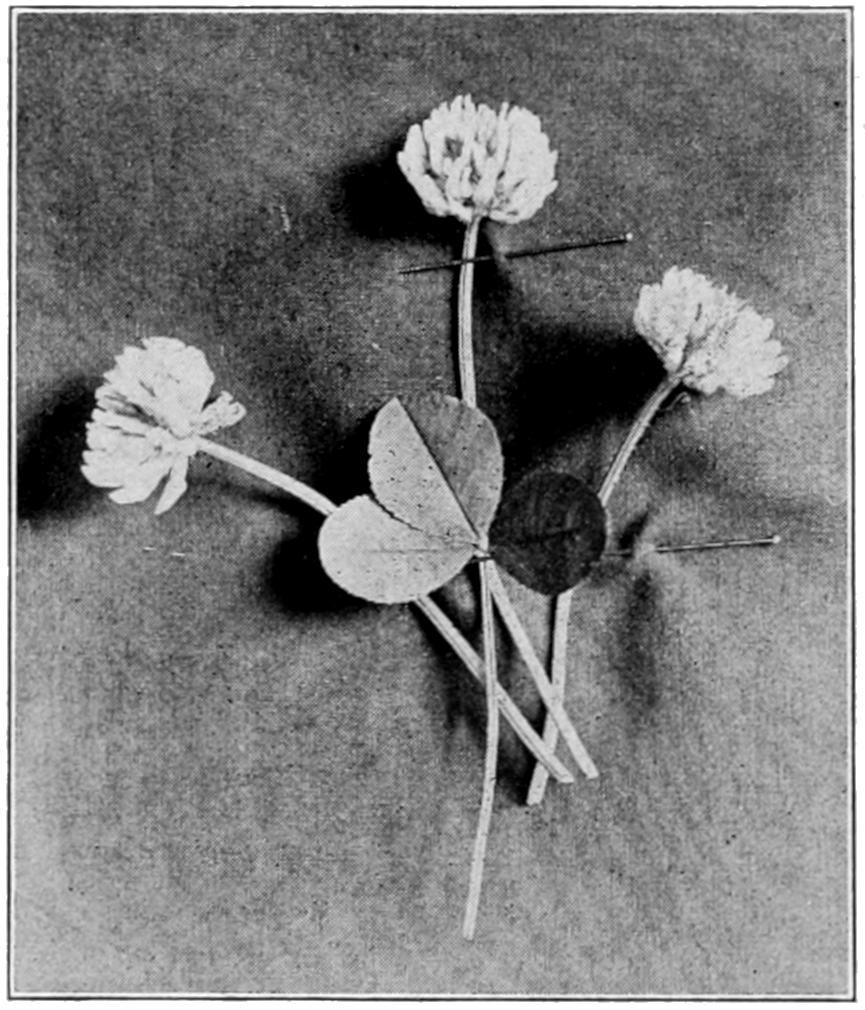
Fig. 144. Blossom and leaf of white clover.
WHITE CLOVER (Trifolium repens).
White clover undoubtedly holds first place as a honey plant in America. It is important as a source of nectar from Maine to Nebraska and south to Kentucky and Missouri. In all the Northeastern States it is one of the principal sources of nectar and, in many localities, it stands alone as the source of marketable surplus. Remove white clover, and beekeeping would be a poor dependence in a large portion of this great area. Alsike is similar in yield and quality of its honey, but it is not so widely spread. The white clover plant is a perennial and establishes itself in pastures, along roadsides and in waste places everywhere. It is a good lawn plant and holds its own with bluegrass in a way that few plants will do.
It yields more heavily in the northern part of its range. One Minnesota beekeeper reports that a yield of less than 200 pounds per colony from white clover is uncommon. The author kept bees in southern Iowa for many years, and it was a rare season when the yield in that locality totaled 200 pounds per colony. In northern Iowa the average yield is much better than in the southern part of the State.
Best yields come in seasons following a year of excessive rainfall. In wet years the conditions favor the rooting of thousands of new plants, which are ready to produce a crop of nectar the following summer. Most readers of beekeeping literature are familiar with Dr. C. C. Miller’s phenomenal crop harvested in 1913. From 72 colonies of bees he harvested more than 19,000 finished sections of honey, or more than an average of 266 sections per colony. His best colony produced 402 sections of white clover honey. The crop was due to a favorable season, combined with expert management. The flow was unusually long, lasting from early June to late August.
White clover yields best when the weather is hot, with plenty of moisture in the soil.
Honey from white clover is of the best quality. It is mild in flavor, light in color and commands the highest prices in most markets. It is the one honey of high quality produced in sufficient quantity to fill a distinct demand for long periods of time.
Most people prefer white clover honey to the somewhat more spicy flavors of alfalfa or sweet clover, though in color they are similar. Alfalfa grown in southern California is of a different color and flavor from that grown in the Mountain States of Idaho, Utah, Colorado, etc.
WHITE IRON BARK, see Eucalyptus.
WHITE SNAKE-ROOT, see Boneset.
WHITEWOOD, see Basswood, also Tulip-Poplar.
WILD ALFALFA or DEER CLOVER (Lotus glaber).
Wild alfalfa is also known as wild broom, deerweed and tanglefoot. In California it is regarded as an important source of honey over a large part of the State. It is a plant growing two to three feet high, with a woody stem at the base. The flowers are yellow, later turning red. Some years the plant is very abundant, then it dies out for a time, so that it varies greatly from year to year. The blooming season is from June to September.
We quote Richter as follows:
“A very erratic honey producer. Some years, in some sections, yielding twice as much as the sages; this is true for either the coast or the valley side of the coast ranges, yet a good wild alfalfa flow on the east coast does not necessarily mean such is the case on the west side. Beekeepers report wild alfalfa honey as being white, light amber and at times with a characteristic greenish tinge. This is one of the main honey plants of the Coalinga district. This plant, according to Mr. Z. Quincy, of Ramona, upon reaching its second year of growth, after a mountain fire, is said to give us a great amount of nectar.”
WILD BALSAM APPLE, see Wild Cucumber.
WILD BERGAMOT, see Horsemint.
WILD BUCKWHEAT, see Eriogonum, also Bindweed.
WILD CHERRY (Prunus serotina).
The wild cherries are widely distributed over the North American Continent, and beekeepers who live in timbered sections may expect to find one or more species within reach. The photograph shown herewith, Figure 145, is of the wild black cherry, which is a large tree with reddish-brown branches and oblong taper-pointed leaves. This tree is common in the woods of Newfoundland, Ontario and Manitoba, south to Florida and Arizona. There is a smaller tree with very similar flowers, the choke cherry (P. virginiana) to be found over much the same territory, while the western choke cherry, or western wild cherry (P. demissa), ranges from Dakota, Kansas and New Mexico west to California and British Columbia.
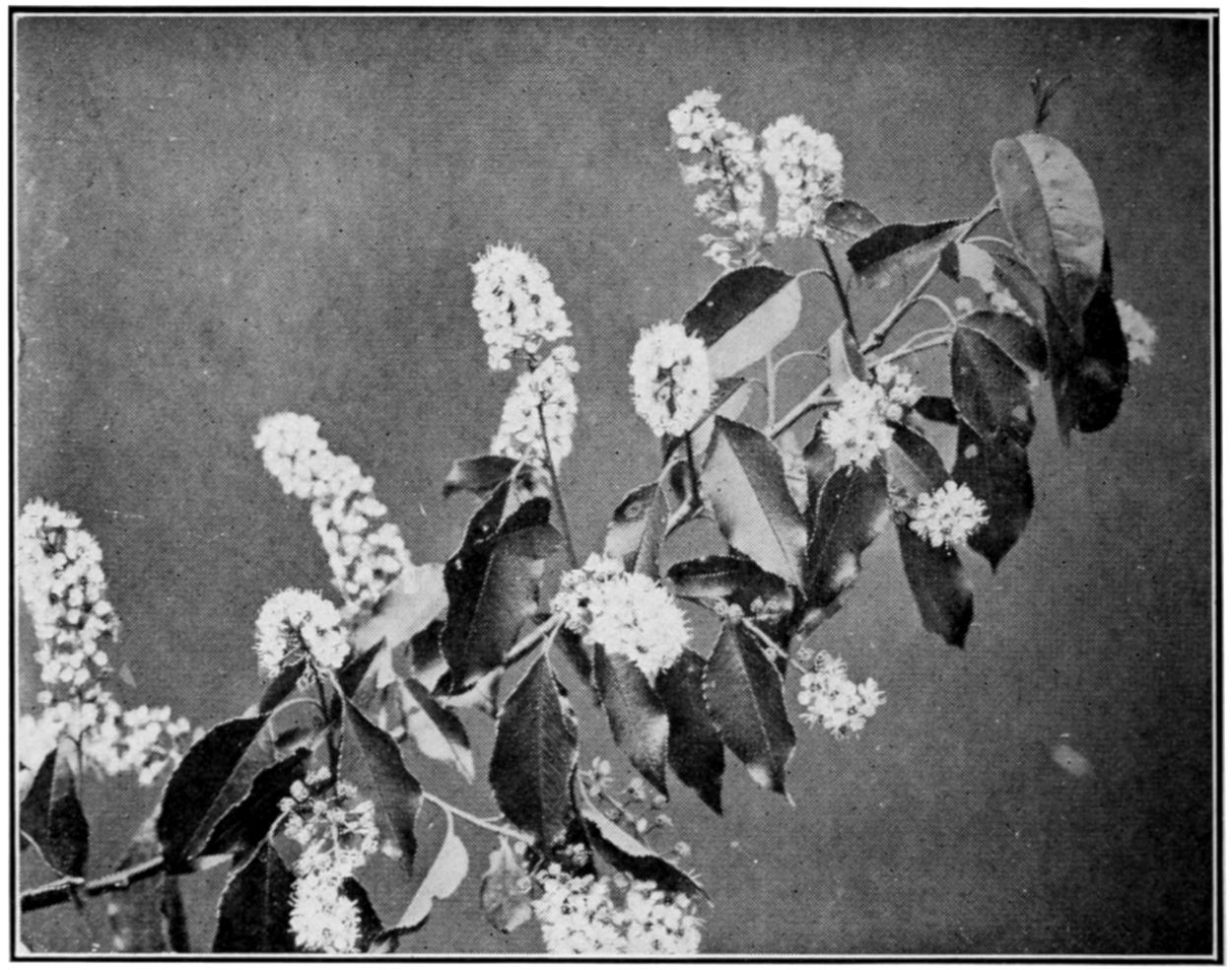
Fig. 145. Blossoms and leaves of wild cherry.
The larger tree P. serotina, is also said to occur in Mexico, Peru and Columbia. There is also a varietal form known as the mountain black cherry, found in southwestern Virginia, Georgia and Alabama. It is found on the open rocky summits of the higher altitudes. This form is a tree 25 to 35 feet high, with very rough bark and drooping branches. The wild red cherry, or pigeon cherry (P. pennsylvanica) is common in the Northwestern States, and secretes nectar freely.
Both leaves and seeds of all these forms are poisonous, although the fruit is edible. There seem to be well authenticated cases of poisoning of cattle from eating the leaves, and of children dying from swallowing the seeds. Pammel, in his book of poisonous plants, gives an extended description of the chemical action in such cases. The poisonous property of all species of cherry leaves, according to authorities quoted there, is due to prussic acid. The poison does not exist as such in the growing plant, but by the action of moisture and a vegetable ferment which exist in the plant, a complicated chemical reaction takes place when the leaves are separated from the stem. Wild cherry bark is used to some extent in medicine.
Wild cherries are not often reported as valuable sources of nectar. Richter lists the western choke cherry as a source of honey in California, and Lovell mentions the wild red cherry in the Eastern States. The writer has a sample of wild cherry honey sent to him from the apiary of W. S. Pangburn, of Jones County, Iowa, having a distinct cherry taste and bright yellow color. After two years it shows no trace of granulation, although subject to all changes of temperature of Iowa climate, both summer and winter. All but few of the samples of honey in the collection have candied under similar conditions.
Since in the Northern States it blooms after the domestic fruits and just before the opening of white clover, it should prove of considerable value where present in quantity.
WILD CHINA (Sapindus drummondi). See also CHINA TREE.
The wild China tree, also known as chinaberry, soapberry, or umbrella tree, is a common shade tree in the Southeastern States. It is also found in the Southwestern States to some extent. In Alabama it is a conspicuous feature of the grounds about the homes of rich and poor alike, quantities of the amber colored berries hanging after the leaves have fallen. It is cultivated to a less extent in Texas and California as an ornamental. It also occurs commonly in New Mexico and Arizona. The Spanish name for this tree is “jaboncillo.”
It is frequently mentioned as a honey plant in the Southern States, but is probably not sufficiently common in many places to be important. It is sometimes confused with the China tree (Melia azedarach), which see.
WILD CRAB APPLE, see Crab Apple.
WILD CUCUMBER (Echinocystis lobata).
The wild cucumber, or wild balsam apple (Fig. 146) is a climbing vine common along streams from New England to Texas. It is also commonly cultivated as a shade for arbors and porches. The plant is an annual and comes from the seed each year. There are few localities where it is sufficiently abundant to be of value to the beekeeper, and it is seldom mentioned among honey plants. However, in a few localities along the Mississippi River it is reported as quite an important source of nectar in mid-summer. On river bottoms it is sometimes to be found in great abundance. The honey is reputed to be white and of good flavor.
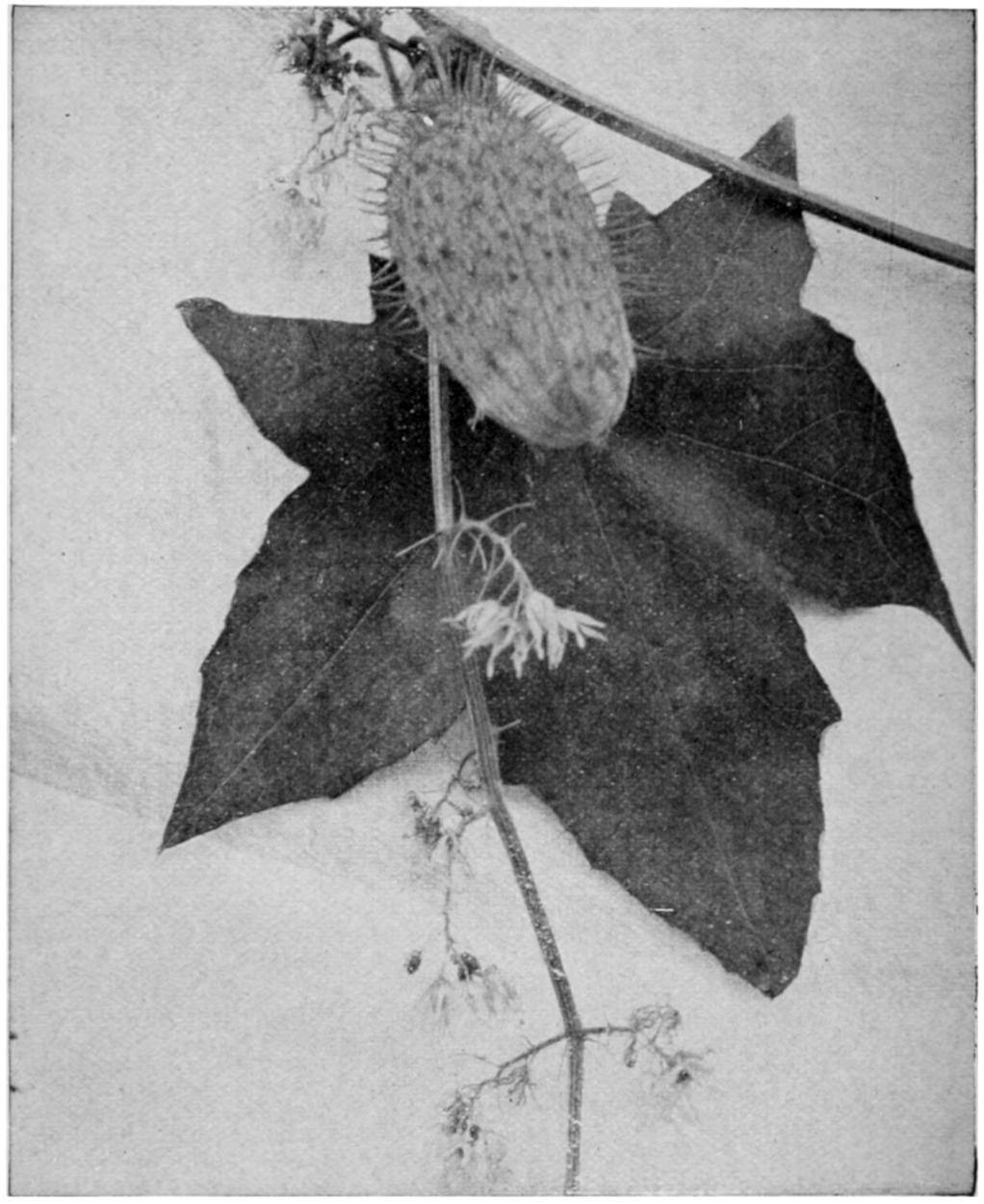
Fig. 146. Blossom, fruit and leaf of wild cucumber.
WILD CURRANT, see Currant, also Barberry.
WILD HOLLYHOCK (Sidalcea malvaeflora). CHECKER-BLOOM.
The wild hollyhock is common in the valleys and plains of California, where it is of some importance as a honey plant. It is reported as of special importance in the Imperial Valley. Related species occur in New Mexico and north to Utah.
WILD LIME-TREE, see Tupelo.
WILD OLIVE, see Oleaster.
WILD PARSNIP (Pastinaca sativa).
The wild parsnip, introduced from Europe, has spread over a wide area from the Atlantic to the Pacific coast. (Fig. 147). It is common along railroads and highways everywhere. The small yellow flowers, which are borne in clusters like an open umbrella, are attractive to a large variety of insects. The nectar, apparently, is never very abundant, hence it is not an important source of honey, although the plant is sometimes very plentiful. (See Parsnip).
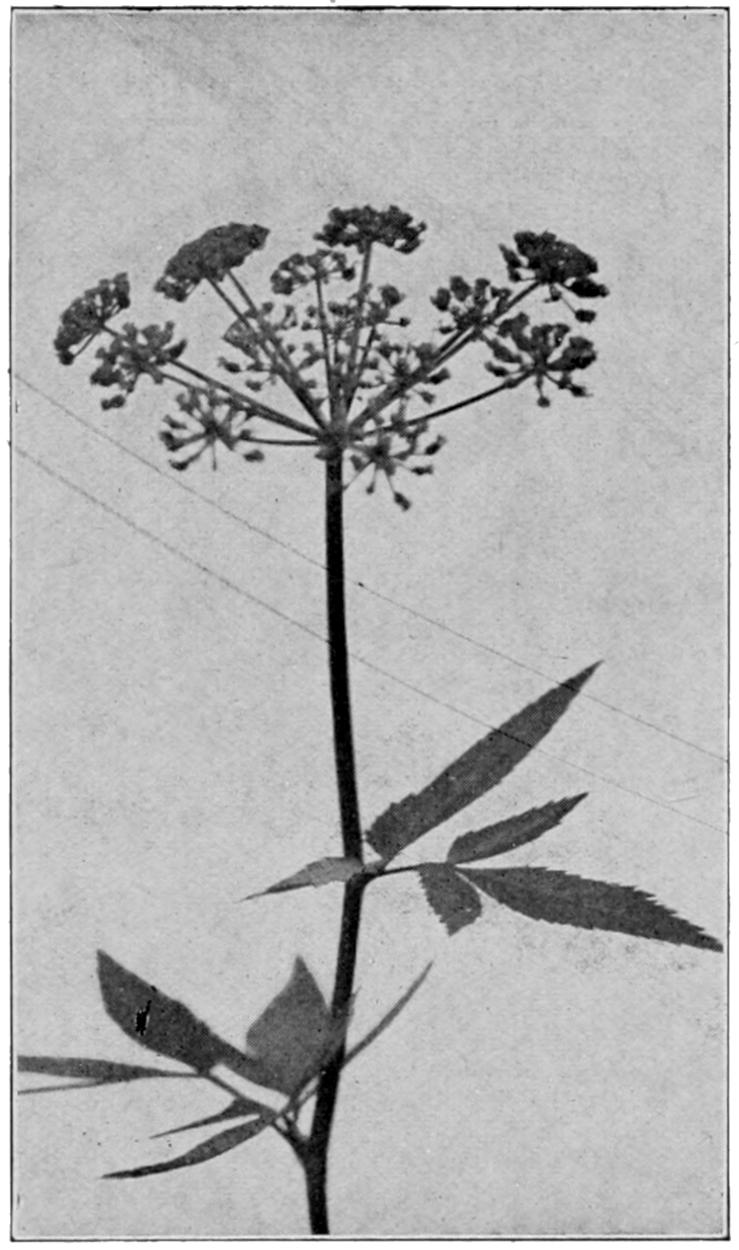
Fig. 147. Wild parsnip.
WILD PENNYROYAL (Satureja rigidi).
Wild pennyroyal (Fig. 148) is a square-stemmed plant of the mint family that grows abundantly on the sandy pine lands of the south half of Florida. It begins blooming in December in the southern part of its range, and blooms till early in March. Weather conditions are too uncertain during the winter months to favor storing much surplus honey. However, according to Poppleton (Review, Jan., 1893), it is the source of some surplus, and from it the bees are stimulated to begin heavy brood-rearing about Christmas. In an occasional season a fair amount of surplus was secured, sometimes as much as 50 pounds per colony. The honey is said to be light in color, good flavor and heavy body—a first-class article.
Blooming as it does in the winter months, it is invaluable to the beekeeper whose bees have access to it. If no surplus is secured, it serves to fill the hives with bees and honey at an important season and to prepare for the later crops to follow.
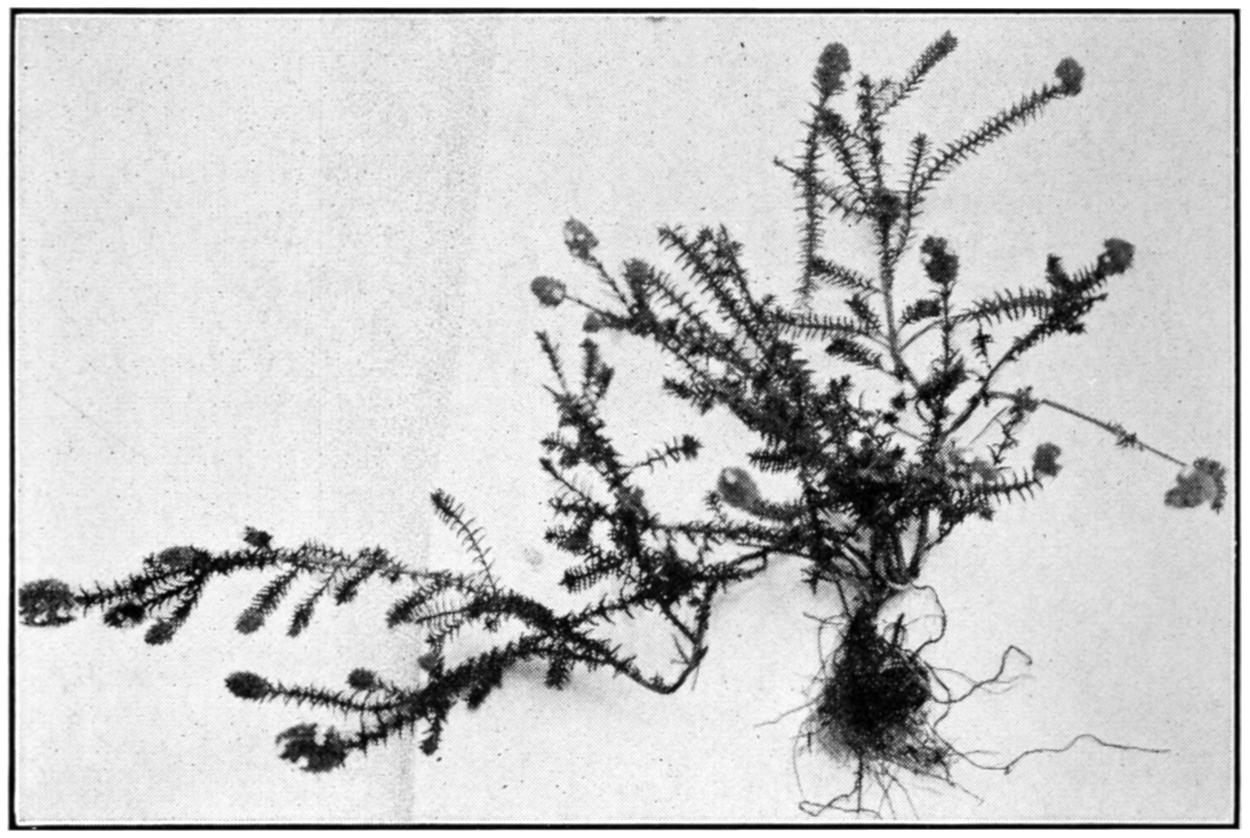
Fig. 148. Wild pennyroyal.
WILD RADISH, see Radish.
WILD SUNFLOWER, see Sunflower.
WILD SWEET POTATO VINE, see Bluevine.
WILD THYME, see Thyme.
WILLOW (Salix).
In the Northern States the blooming of the pussy willow (Salix discolor) is among the first signs of spring. It is a small tree, growing along streams and on wet lands. Furnishing as it does about the first honey of the season, as well as pollen in abundance, it is highly regarded by the beekeepers.
There are about 160 species of willows, mostly confined to the cooler and temperate regions of North America. Some species extend their ranges into the Arctic regions, where the vegetation is sparse. While the number of varieties is not so great in the Southern States, it is regarded as valuable in the Gulf States and in California. As an example of the comparative abundance of willows North and South, it may be mentioned that four species are recorded for Alabama and eighteen for Connecticut. The willows bloom too early in the spring in the Northern States for the bees to store surplus from this source, but both nectar and pollen are supplied for early brood-rearing.
In Richter’s “Honey Plants of California” I find reference to numerous localities where surplus has been secured from the willows. It is said to be “a dark amber and bitter honey.” In a few other southern localities surplus yields from willow are reported. The flowers on one tree will be staminate and on another pistillate. Unlike most plants, the organs of both sexes are not found on the same plant.
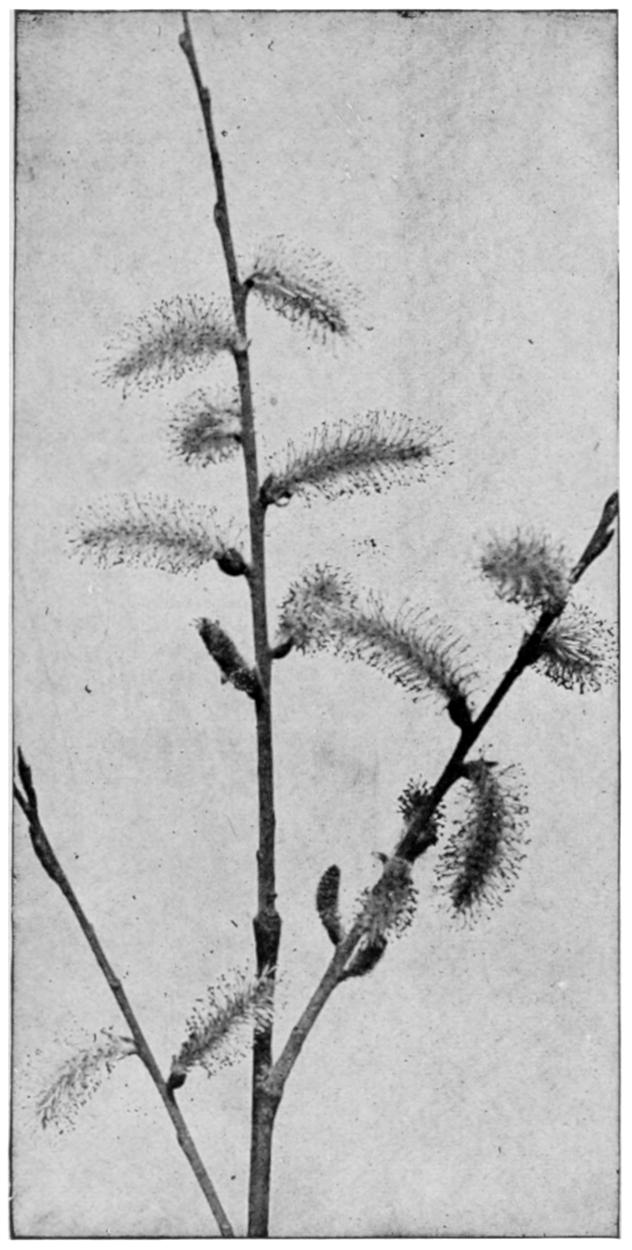
Fig. 149. The pussy willow is one of the first trees to bloom in the North.
WILLOW HERB, see Fireweed.
WINTER HUCKLEBERRY, see Farkle-Berry.
WISCONSIN—Honey Flora of.
The more important honey plants of Wisconsin, named in the order they bloom, are: Dandelion, May 1 to June 1; white and alsike clover, furnishing most of the surplus honey, June 1 to August 1; basswood or linden, July 1 to July 20; sweet clover, July 15 to August 15; willow herb, or fireweed, buckwheat, goldenrod, Spanish needle, asters and many fall flowers, in late summer and fall.—N. E. and L. V. France, Bulletin 264, Agr. Ex. Sta. Wisconsin.
WISTERIA.
The wisteria is a climbing vine widely grown as an ornamental. There are several varieties introduced from the Old World. They are attractive to the bees, but probably nowhere sufficiently common to be of much value.
WOLF BERRY, see Oleaster.
WOODBINE, see Virginia Creeper.
WOOD SAGE, see Germander.
WOOLY WHITE DROUGHT WEED, see Turkey Mullein.
WYOMING—Honey Sources of.
Alfalfa and sweet clover yield large amounts of surplus honey in irrigated valleys. Willows, gum-weed, cleome, dandelion, etc. are minor sources.