XXVI.—DOMESTIC AND PET ANIMALS; FLOWERS. (Wall-Cases 57-58.)
Reading edition
The upper part of Wall-Cases 57, 58 contains a number of representations of domesticated and pet animals. The series includes cattle, goats, pigs, dogs, cats, pigeons and poultry. Often, but not always, the animal is associated with some human actor, as when the child rides on a dog, pig, or goat, or when the large cock tries to peck at the bunch of grapes in a child's hand (No. 659).
More than one of the pigeons wears a bulla round its neck (No. 660) to avert the evil eye (see p. 136), and a cock is decked with a wreath of ivy leaves (No. 661). On a vase (No. 662) a girl has tied a string to the hind leg of a tortoise, and dangles it before her dog; on another (No. 663) two children are making a dog jump through a hoop. In a relief already mentioned (p. 198, No. 603) the dog seeks the notice of its studious mistress, little Avita. In the scene of the music school (No. 643 in Case 55) the boy plays with the cat behind the master's chair. Another form of amusement is illustrated by the kylix, No. 664. A boy is seated, and holds on his knee a cage containing a bird, probably a quail. Quail-fighting was a very popular amusement at Athens, where odds were freely betted on the result of the encounter. The wooden instrument, seen above the boy, would be used to provoke the quails to fight with one another. The game of quail-striking (ὀρτυγοκοπία) was another variety of sport with quails. In this the object was to prove the endurance of the quail by striking it with the fingers or pulling out its feathers. A Roman lamp (No. 665; fig. 256) gives an interesting view of an itinerant with his troop of performing animals. On his right is an ape, on his left a cat climbing a ladder. Above are two hoops for the animals to jump through.
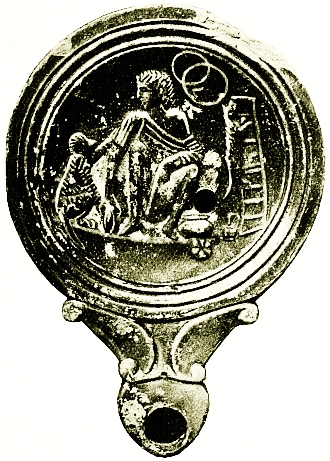
Fig. 256.—Itinerant with Performing Animals (No. 665). 2:3.
(659) Cat. of Terracottas, C 539; (662) Cat. of Vases, IV., F 101; (665) Cat. of Lamps, 679; (666) Petrie, Hawara, p. 47.