IV.—SHIPPING. (Wall-Cases 94-97.)
Reading edition
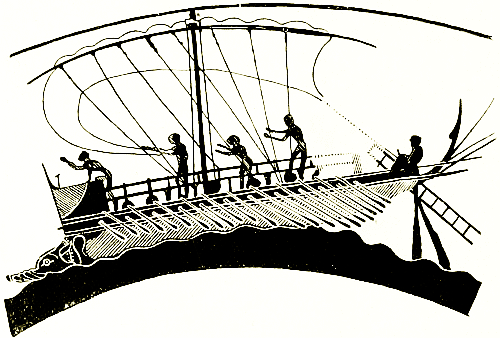
Fig. 23.—Early Greek Warship (No. 70).
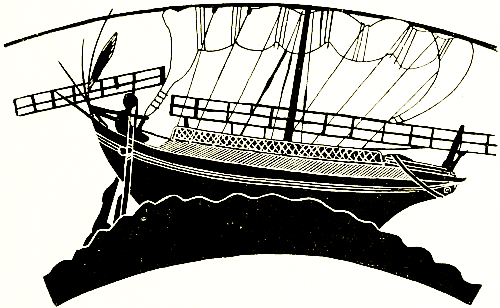
Fig. 24.—Early Greek Merchant-Ship (No. 70).
The use of triremes (ships with triple arrangement of oars) did not become common among the Greeks till the earlier part of the fifth century B.C. This was the typical Greek warship of the period of the Peloponnesian war, and the arrangement of the rowers in it has given rise to much controversy. The crew (according to one view) consisted of two hundred rowers, sixty-two on the highest tier (θρανῖται), fifty-four on the middle (ζυγῖται), and fifty-four on the lowest (θαλαμῖται), as well as thirty who were apparently stationed on the highest deck (περίνεῳ). The best ancient representation of the rowers in a trireme is that given on a relief in Athens, of which a cast is shown here (No. 74; Case 94). The upper oars pass over the gunwale, the second and third lines (if these are oars) through port-holes. In the trireme the ram was of the greatest importance, and much attention was devoted to strengthening it. An excellent illustration of the prow of a trireme is to be seen in the terracotta vase from Vulci (No. 75; fig. 26). Here are an upper and a lower ram, each armed with three teeth; the curved ornament above the ram has been broken away. The projections on either side of the handles of the vase, decorated with a woman's head, would serve as a protection to the oars. The eye on the side is a prominent decoration in Greek ships. It is seen on the ship painted on the vase B 508 in Case 95 (No. 76), from which the diver is preparing to jump, and has survived even to the present day, for eyes are still found painted on the bows of Mediterranean fishing boats. The eyes are often supposed to be a defence against the evil eye, but the exact position they occupy on each side of the prow is suggested by the almost inevitable analogy between the prow of a vessel and the head of an animal. Roman ships did not differ very materially from Greek ships, but a special class of swift ships with two banks of oars was adopted from Liburnian pirates who inhabited the islands off Illyria, and these ships were called Liburnian galleys. A figure-head in bronze from a Roman ship, found in the sea off Actium, is shown in Case 96 (No. 77). It represents Minerva, and probably belonged to some ship sunk in the great battle between Octavian and Antony in 31 B.C.
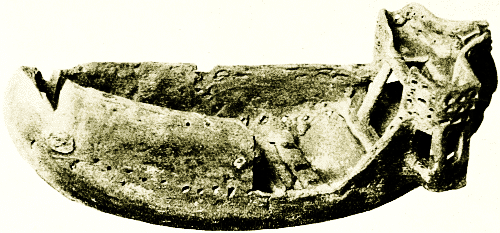
Fig. 25.—Terracotta Model of Merchant-Ship (No. 71). L. 12 in.
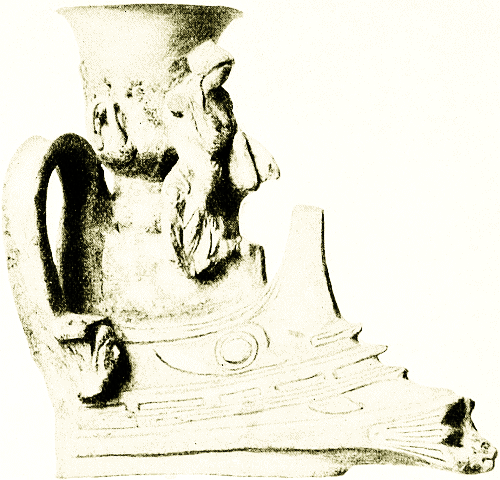
Fig. 26.—Vase in the Form of a Prow of a Trireme (No. 75). L. 8 in.
A fragment of a relief from a sarcophagus shows a Roman trireme, with a figure of a swan in relief on the prow (No. 78).
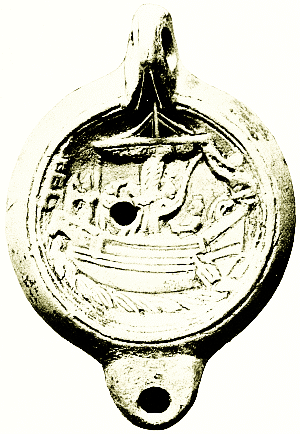
Fig. 27.—Roman Ship entering a Harbour (No. 79). Diam. 4 in.
Some lamps placed in Cases 96, 97 give interesting pictures of Roman harbours. In one (No. 79; fig. 27), a ship is seen entering the harbour, which is indicated by a light-house on the left. Of the crew of six, one is seated high on the stern, blowing a trumpet to announce the ship's approach; before him is the steersman, and next come three men furling the sail. The man in the bows is preparing to let down the anchor. Another lamp (No. 80; fig. 28) shows a harbour with buildings on the quay. A fisherman in a small boat holds a rod and line in his right hand, and a fish which he has just caught in his left. Before him is a man on shore just about to cast a net into the water. In the third lamp (No. 81) Cupid is seen in a boat, hauling in his net from the water.
A marble laver (No. 82), originally decorated with a relief of Asklepios, Hygieia and Telesphoros, has been subsequently sculptured with votive dedications for a fair voyage. On the left, Poseidon stands on a ship, with a suppliant before him, on the right is a ship running before the wind. The inscriptions invoke good voyages for Theodoulos and Pedius Psycharios.
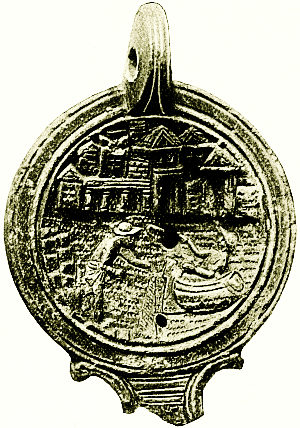
Fig. 28.—Roman Fishermen in a Harbour (No. 80). Diam. 3⅝ in.
(70) Cat. of Vases, II., B 436; Daremberg and Saglio, fig. 5282; (71) Excavations in Cyprus, p. 112, fig. 164, No. 12; (72) ibid.; (74) Cat. of Sculpture, III., 2701; (75) Cat. of Terracottas, D 201; (76) Cat. of Vases, II., B 508; (77) Cat. of Bronzes, 830; Torr, Ancient Ships, pl. 8, 41; (78) Daremberg and Saglio, fig. 5277; (79) Cat. of Lamps, 1140; (80) Cat. of Lamps, 527; (81) Cat. of Lamps, 634.
On ancient ships generally, see Torr, Ancient Ships, and art. Navis in Daremberg and Saglio; W. W. Tarn in Journ. Hell. Stud., XXV., pp. 137, 204 ff.; A. B. Cook in Camb. Comp. to Gk. Stud., 3 ed., p. 567 ff.