V.—RELIGION AND SUPERSTITION. (Wall-Cases 98-106.)
Reading edition
The wide subjects of Religion and Superstition are naturally represented in a fragmentary way in the few cases devoted to them in this collection. They are roughly classified in the following description, into groups, viz.:—
(1) Implements and methods of worship.
(2) Votive offerings.
(3) Superstition and Magic.
Implements and methods of worship.
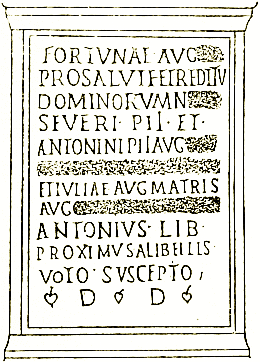
Fig. 29.—Altar Dedicated for the Safe Return of Septimius Severus and his Family (No. 84). Ht. 2 ft. 7 in.
An interesting example (No. 84) of the practice of dedicating altars to members of Roman Imperial houses is furnished by the inscription (fig. 29) in the lower part of Case 98. It formed the front of a marble altar, and is dedicated to the Imperial Fortune by a freedman named Antonius, who was in charge of the "Department of Petitions," for the safe return of the Emperor Septimius Severus, his wife Julia Domna, and his sons Caracalla and Geta. But so far as Geta was concerned, the Imperial Fortune was not propitious. He was murdered by his brother Caracalla, and his name was erased from this, as from all other inscriptions throughout the Roman Empire, by Caracalla's edict. The date of the inscription is about 200 A.D.
In Case 102 is an altar (No. 85) dedicated to the Bona Dea of Anneanum (a town in Etruria) by C. Tullius Hesper and Tullia Restituta. The Bona Dea was a goddess specially invoked by women. Hence we may suppose that it was Tullia Restituta more particularly who showed her thankfulness by this dedication.
No. 88 (fig. 30) is a bronze representing an attendant leading a pig to sacrifice. The pig (as well as the sheep and the bull) was a favourite sacrificial animal among the Romans. At the lustral ceremony of the suovetaurilia, the bull, sheep, and pig were driven round the farmer's fields to keep them free from blight and disease. Certain deities, notably Persephone and the Bona Dea, had swine as their special victims. In Case 105 will be seen a terracotta votive pig (No. 89) found in the precinct of Demeter and Persephone at Knidos.
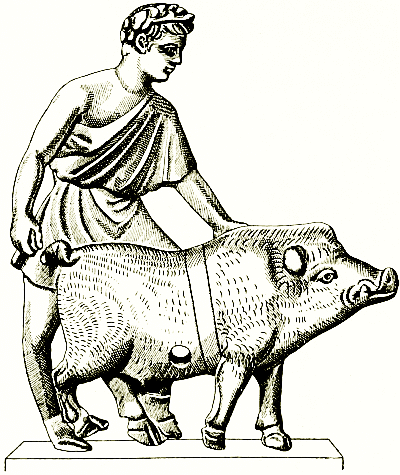
Fig. 30.—Attendant Driving Pig to Sacrifice (No. 88). Ht. 4 in.
In Case 98 is an elaborate model in terracotta of a temple laver from Cyprus (No. 90). In Case 100 is a terracotta model of a sacred table (No. 91, fig. 31), set with a service of vessels for the sanctuary.
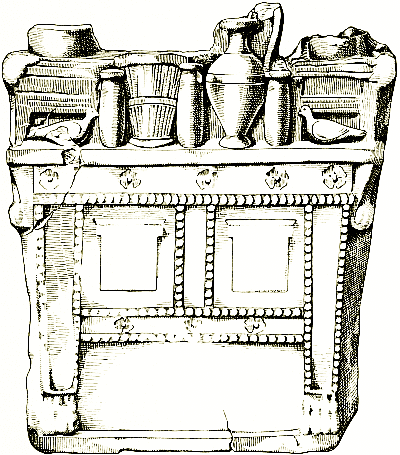
Fig. 31.—Table with Service of Vessels (No. 91). 2:3.
A series of implements terminating in a hand bent at the knuckles (No. 93), and a pair of tongs on wheels (No. 94), are probably meant for manipulating embers.
Miscellaneous.—A small silver model of a temple key is shown in Case 100. The small alabaster statuette of a goddess with turreted crown (No. 95) is of special interest from the fact that her mouth and breasts are pierced, evidently with the object of allowing some fluid, such as milk or wine, to flow from them for the edification of her votaries. A jar (No. 96) contained perhaps the honey syrup, used in Egypt for feeding the sacred crocodiles.
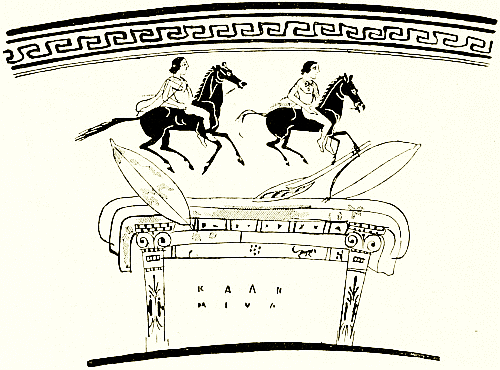
Fig. 32.—The Dioscuri coming to the Theoxenia (No. 98).
Religious Rites.—Prayer.—The fifth century kylix (No. 97) shows the gesture of the raised right hand, often used in prayer. The young athlete, whose oil-flask hangs behind him, is probably praying before the altar. That athletes entered upon their tasks with extreme seriousness is clear from the oath taken by them before the image of Zeus in the Council House at Olympia, when they swore upon the cut pieces of a boar that they would be guilty of no foul play. In the Greek view athletics and religion were very closely connected.
The Lectisternium, or Theoxenia, was the ceremony in which a banquet was set, and the gods were invited to attend. It is illustrated by the drawing of a lekythos (No. 98) from Kameiros in Rhodes (about 500 B.C.), which represents the two gods Castor and Pollux descending from heaven on horseback to take part in the festival of the Theoxenia (fig. 32). This feast, indicated by the couch on which they were to recline, was given in honour of the twin gods. Such a festival well illustrates the perfectly human interests which the Greeks attributed to their deities.
Compare with this vase the cast (No. 99) of a relief in the Louvre, from Larissa. A man and his wife, the dedicators of the relief, are represented as having set out a couch, a banquet of cakes, and an altar. The Twins descend, heralded by Victory. Beside the relief is a fragment of a lamp (No. 100) incised with a dedication to the Dioscuri, that is, to Castor and Pollux. Here also is the inscribed base (No. 101) of a statuette dedicated to the Dioscuri by Euarchos (sixth century B.C.).
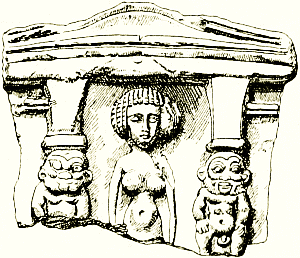
Fig. 33.—Aphrodite within a Shrine (No. 104). Ht. 2½ in.
Augury.—Passing now to Italic religious ceremonies, we may notice the archaic bronze statuette of an augur (No. 102), whose function it was to draw omens from the aspect of the heavens or the flight and cries of birds. He wears a cloak drawn veil-wise over his head, a common religious garb, and in his right hand holds the lituus or curved wand used for the ceremonial dividing of the heavens into quarters. In connection with this statuette mention should be made of an early Greek inscription (No. 103) in the bottom of Cases 95-96. It was found at Ephesus, and is probably of about the same period as the statuette, the sixth century B.C. It gives rules for drawing lucky or unlucky omens from the flight of birds. The principal signs are the flight from right to left or vice versa, and the raising or lowering of the bird's wing.
Shrines.—In Cases 100, 101 a series of terracotta shrines is exhibited. They were doubtless for household use, employed in much the same way as modern images of the Madonna. No. 104 (fig. 33), from the early Greek settlement of Naukratis, in the Nile Delta, shows Aphrodite within a shrine supported by figures of the Egyptian god Bes, a characteristic combination of Greek and Egyptian elements. No. 105, from Amathus, in Cyprus, is also semi-Egyptian in character, and shows a deity surmounted by a winged solar disk. Another shrine from Naukratis (No. 106) contains the sacred Apis-bull of the Egyptians. No. 107 is an example of a shrine containing a baetylic image, that is, a stone worshipped as sacred. A cone resembling the one here shown was worshipped in the temple of Aphrodite at Paphos in Cyprus. In front, a small lead model shrine (No. 108) of later date, from Sardinia, represents Aphrodite just risen from the sea-foam and wringing out her hair. The circular shrine (No. 109; fig. 34) is of Roman date, from Eretria in Euboea. Its form and more especially the indication of overlapping scale-plates on the roof remind us strongly of the famous temple of Vesta at Rome.
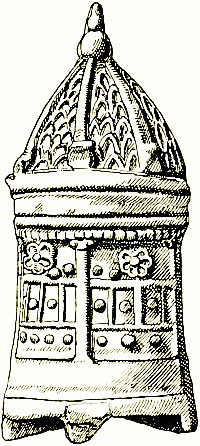
Fig. 34.—Terracotta Model Shrine (No. 109). Ht. 4 in.
In Case 101 is a bronze tablet with an iron chain and staple (No. 110). The tablet, apparently of about 200 B.C., is inscribed on both sides, and seems to give a list of statues of deities, some, such as Vezkei, peculiar to the Samnites, others, such as Ceres and Hermes, of widely spread worship. It is a most important monument of the Oscan dialect, a language spoken by the early Italic tribes whose chief centre was the mountainous country above Campania. It was found at Agnone (Bovianum Vetus) in the Samnite territory.
Votive Offerings.
A votive offering is a present made to a deity, in order to secure some favour for the future, to avert anger for a past offence, or to express gratitude for a favour received. This last purpose includes offerings made in fulfilment of a vow, the vow being a kind of contract between the individual and the god. This comes out most clearly in the Roman expression voti reus—"condemned to pay a vow"—applied to those whose prayer had been granted, and who now had to fulfil their promise made in time of stress and difficulty. Votive offerings cover the whole field of life, and may include persons, lands, buildings, or objects specially appropriate either to the god or to the person who makes the dedication.
Very frequently the vow was made by some person stricken with disease, and it is to such a cause that we owe the numerous votive offerings representing some part of the human body.
The constant streams of these offerings made the ancient temples depositories of all kinds of objects, ranging from jewels of great price and high artistic merit to the roughest terracotta figure. In the Gold Ornament Room (Case 19) is a magnificent gold pin of the Ptolemaic period inscribed with a dedication to Aphrodite of Paphos, showing that the offering was the result of a vow made by Eubule, the wife of Aratos, and one Tamisa. Overcrowding led to periodical clearances of objects of the least intrinsic value. To prevent things dedicated returning to the uses of common life, they were frequently broken and thrown into heaps. This accounts for the masses of débris, consisting chiefly of terracottas and vases, which have been found within the precincts of great sanctuaries.
The vast accumulations of treasure in the various temples naturally demanded careful cataloguing, labelling and supervision on the part of the temple officials (see examples of marble labels from the sacred enclosure of Demeter at Cnidos). From time to time elaborate inventories were drawn up, and (after the manner of ancient documents) inscribed on stone. Such inventories have been discovered in large numbers at Delos, Athens, and elsewhere. An example is shown in the lower part of Case 97, being an inventory (No. 111) of various garments dedicated to Artemis Brauronia, who had a shrine upon the acropolis of Athens. We know that it was the custom of women after childbirth to dedicate garments to Artemis, and in particular to Artemis Brauronia. That the garments were often anything but new is shown by the fact that several are described as "in rags." A typical extract from the inscription may be given: "A purple dress, with variegated chequer pattern. Dedicated by Thyaene and Malthake." The entries range in date from 350 to 344 B.C.
The principal objects here exhibited as illustrating the ancient custom of dedication may now be mentioned. In Wall-Case 96 is an inscription of the fifth century B.C. (No. 112) found in the ruins of the temple of Poseidon on Cape Taenaron in Lakonia. It records the dedication by one Theares of a slave named Kleogenes to the temple-service of Poseidon. The names of an ephoros, probably an official of the temple, and of a witness are added. In some cases the dedication of a slave to a god is equivalent to enfranchisement.
Among votive offerings specially appropriate to the god, we have already mentioned the reliefs dedicated for a good voyage (No. 82) and the Theoxenia relief (No. 99). The pedestal (No. 112*), with an inscription that it was restored "whether sacred to god or goddess," is a parallel to the altar inscribed with a dedication "to an unknown god," which caught the eye of St. Paul when he was viewing the antiquities of Athens.
In the bottom of Case 102 is the base of a statuette (No. 113; fig. 35) found at Curium in Cyprus. It bears an inscription, written both in Greek and in the native Cypriote syllabic characters: "Ellooikos, the son of Poteisis, dedicated this as a vow to Demeter and the Maid." The inscription is of the fourth century B.C., and is of special interest on account of its bilingual character. Two other large objects in marble of a votive character are exhibited in the bottom of Cases 103 and 104 respectively. The chest-like stool (No. 114) was offered by a priestess named Philis to Persephone, the basket (No. 115) by one Xeno to Demeter and Persephone. The basket is dedicated with peculiar fitness to the goddesses of corn and fruit, for it was in such woven baskets that the ears of corn were ingathered, while the chest is also closely associated with Demeter and Persephone, who are frequently represented seated on it. Both of these last objects were found by Sir Charles Newton in the precinct of Demeter at Knidos in Asia Minor.
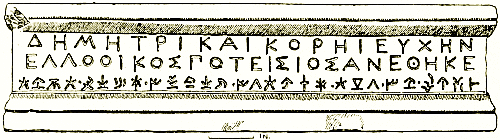
Fig. 35.—Base with Dedication to Demeter and Persephone (No. 113).
We now turn to the votive offerings personal to the donor, and we find that not infrequently, where the object itself is perishable, or otherwise unsuitable as an offering, a sculptured representation takes its place.
Two curious examples of such dedicatory tablets (Nos. 116, 117) are seen in the casts placed in the upper and lower parts respectively of Case 101. The originals, from Slavochori, probably the site of the ancient Amyklae near Sparta, are in the Hall of Inscriptions. The first was dedicated by Anthusa, daughter of Damaenetos, a ὑποστάτρια or under-tirewoman in the service of a temple, possibly that of Dionysos, for we know that this god had a temple near Amyklae, which none but women might enter. On the relief is a series of objects connected with the toilet, such as a mirror, a comb, a box of cosmetics, a case containing a sponge, a pair of slippers, etc. Possibly the dedicator was in charge of objects of this nature. The other relief, from the same place, was dedicated by a priestess named Claudia Ageta, daughter of Antipater, and shows a very similar series of objects. Both these reliefs are of Imperial date.
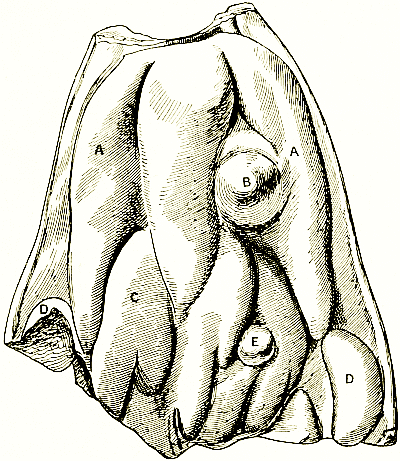
Fig. 36.—Terracotta Model of the Internal Organs (No. 122). 1:2.
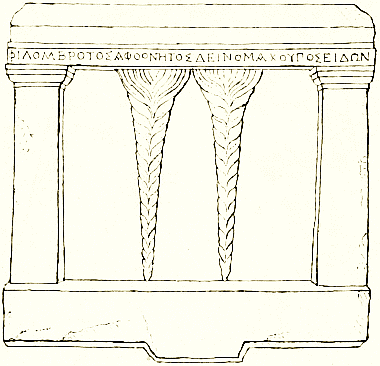
Fig. 37.—Sculptured Locks of Hair Dedicated to Poseidon (No. 123). Ht. 13½ in.
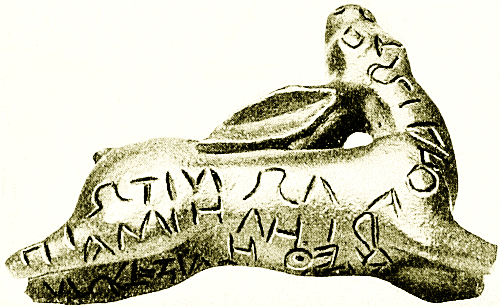
Fig. 38.—Bronze Votive Hare (No. 124). L. 2¾ in.
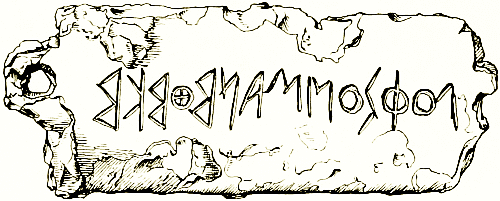
Fig. 39.—Tablet, with Dedication by Lophios (No. 125). 1:2.
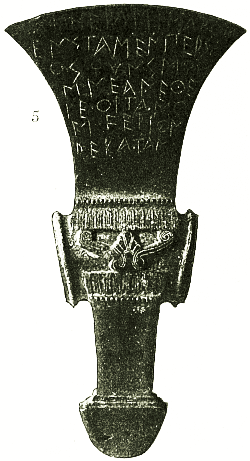
Fig. 40.—Bronze Votive Axe-head (No. 127). Ht. 6½ in.
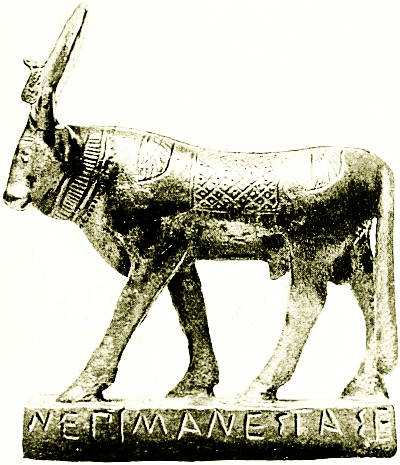
Fig. 41.—Bronze Votive Bull (No. 128). Ht. 4 in.
The two bronze wheels in Case 103 each bear a votive inscription. The earlier (No. 130), said to have been found near Argos, was perhaps an offering to the Dioscuri (Castor and Pollux, the divine patrons of athletic contests) by Eudamos, a victor in a chariot race. The other (No. 131; fig. 42) comes from the temple of the Kabeiri at Thebes, and is dedicated by Xenon and Pyrrhippa to Kabeiros and the Child. The bronze bell (No. 132, fig. 43) is from the same temple, and was likewise offered by one Pyrrhias to Kabeiros and the Child. The Kabeiri were deities of a mystic and subterranean character, who at Thebes apparently became closely connected with Dionysos, the wine-god. That a large element of burlesque entered into their worship can be seen from the vases discovered on the site of their shrine (Second Vase Room, B 77 and 78).
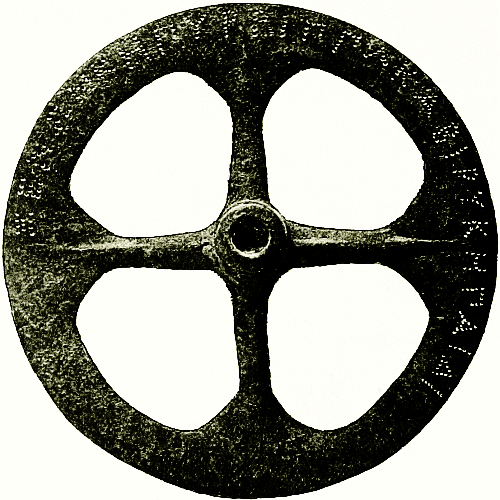
Fig. 42.—Bronze Wheel Dedicated to Kabeiros and the Child (No. 131). Diam. 3⅞ in.
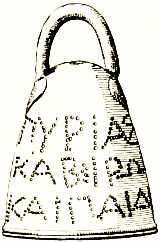
Fig. 43.—Bronze Bell Dedicated to Kabeiros and the Child (No. 132). 1:2.
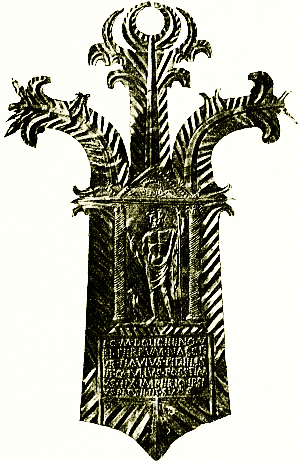
Fig. 44.—Silver Plaque Dedicated to Jupiter Dolichenus (No. 133). Ht. 9½ in.
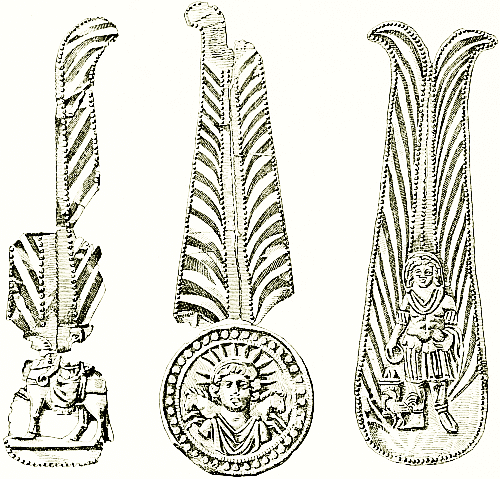
Fig. 45.—Silver Plaques Dedicated to Mithras (No. 136). 1:3.
In Case 106 note the series of lead figurines (modelled on both sides). They represent warriors with helmet, cuirass, shield, sword, and greaves. These figurines (No. 144), probably of the seventh to sixth centuries B.C., were found at Amelia (Ameria) in Umbria. It is probable that they are of a votive character, though it has been suggested that they are the prototypes of the modern tin soldier. Very similar figurines have been discovered near Sparta, on the site of the Menelaon, and more recently on the site of the temple of Artemis Orthia by members of the British School at Athens.
Superstition and Magic.—As the simple faith in the gods decayed in the Greek and Roman worlds, compensation was largely sought in the dark rites of superstition and magic. The antiquities in Cases 105, 106, indicate some of the forms which such superstition took. Prominent among them was the practice of writing down curses on lead or talc with a view to the injury of those against whom the writer conceived that he had a grudge. These tablets were called in Latin defixiones, because they were supposed to fix down, as it were, the hated enemy. The imprecations written on them usually run in formulae, and the gods implored to work the ruin are naturally those of the nether regions. In later times especially, all manner of obscure and barbarous demons are introduced. The examples of these tablets here exhibited probably belong to the last three centuries before Christ. They come from various quarters—Knidos, Ephesus, Curium in Cyprus, Kyme in S. Italy, and Athens. Those found by Sir Charles Newton at Knidos may be taken as typical. In one case a certain Antigone, in order to clear herself from the charge of having attempted to poison Asklepiades, invokes curses upon herself if the accusation be true. In another, Artemeis devotes to Demeter, Persephone, and all the gods associated with Demeter, the person who withholds garments entrusted to him. These tablets (No. 145) appear to have been nailed to the walls of the sacred precinct of Demeter, where they were found. In the case of a tablet from Athens, the iron nail, which fastened it to the wall is still preserved.
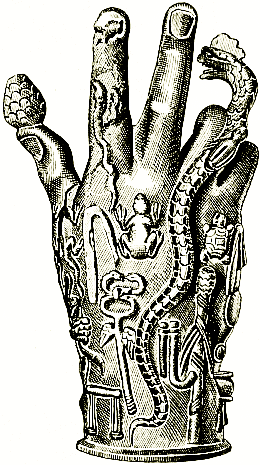
Fig. 46.—Bronze Magic Hand (No. 148). Ht. 5¾ in.
On the shelf above will be noticed a number of bronze hands (No. 148; fig. 46). They are right hands, represented with the thumb and first two fingers raised. On them are numerous magic symbols in relief, such as the snake, the lizard, and the tortoise. The hand illustrated (fig. 46) is covered with such signs, prominent among which are the serpent with the cock's comb, the pine-cone, the frog, and the winged caduceus. One of the hands bears the inscription "Zougaras dedicated me to Sabazius in fulfilment of a vow"; another "Aristokles, a superintendent, to Zeus Sabazius." Sabazius was a Phrygian and Thracian deity, whose worship was widely spread in the Roman world. There can be no doubt that these hands were intended to avert the evil eye. Sometimes the hands have instruments connected with the ecstatic worships of the East depicted upon them, such as the Phrygian flutes, the cymbals, or the sistrum. Case 106 contains several specimens of the last-named instrument. It was composed of a handle and loop-shaped metal frame, across which passed several movable metal rods. When the sistrum was shaken the curved ends of the rods came into violent contact with the sides of the frame and produced a metallic clang. The sistrum was used by the Egyptians in their religious rites, and particularly in the worship of Isis. With the introduction of that worship into Italy in the first century B.C., the Romans became familiar with it. Apuleius, a writer of the second century after Christ, mentions silver and gold sistra, as well as bronze. A silver example is here shown (No. 149). The decoration is often elaborate, a favourite ornament for the top being the group of the wolf suckling Romulus and Remus, or the recumbent figure of a panther.
To the same class of amulets as the votive hands must be assigned the terracotta model of a mirror, covered over with numerous objects of magical virtue (No. 150). Several of these are well-known attributes of deities, e.g. the thunderbolt, the trident, the club, the crescent, and the caduceus. The object of these amulets seems to have been to propitiate the deities whose symbols are represented on them.
Implements and methods of Worship.—(83) B.M. Inscr., 955; (84) C.I.L., VI., 180; (85) C.I.L., VI., 30689; Mus. Marbles, X., pl. 53, fig. 1; (86-87) Cat. of Lamps, 1407, 1408; (91) Cf. Mazois, Pompei, III., p. 22; Daremberg and Saglio, fig. 5; (92) Helbig, Homerisches Epos, 2nd ed., p. 353; (95) Athen. Mittheilungen, xxvi, p. 325; (96) Class. Rev., II., p. 297; (97) Cat. of Vases, III., E 114; (98) Cat. of Vases, II., B 633; (99) Guide to the Casts, 327; (100) Cat. of Lamps, 159; (101) B.M. Inscr., 1033; (102) Forman Sale Cat., 1899, No. 55, pl. 2.; (103) B.M. Inscr., 678; (105) Excavations in Cyprus, p. 112; (106) Cat. of Terracottas, C 614; (107) Excavations in Cyprus, p. 113; (110) Cat. of Bronzes, 888.
Votive Offerings.—(111) B.M. Inscr., 34; (112) B.M. Inscr., 139; (113) Excavations in Cyprus, p. 64; (114) Cat. of Sculpture, II., 1311; (115) Cat. of Sculpture, II., 1312; (116-120) Cat. of Sculpture, I., 799-812; (121) Cat. of Bronzes, 891; (123) Cat. of Sculpture, I., 798; (124) Cat. of Bronzes, 237; (125) B.M. Inscr., 165; Cat. of Bronzes, 261; (126) B.M. Inscr., 1102; (127) ibid., 1094; (128) Cat. of Bronzes, 3208; (130) ibid., 253; (131) B.M. Inscr., 958; (132) Cat. of Bronzes, 318; (133-135) Bonner Jahrb., CVII (1901), p. 61 ff., pls. 6, 7; (137) Cat. of Bronzes, 904; (138) ibid., 899; (139) ibid., 887; (140) ibid., 897; (141) ibid., 895; (142) ibid., 906; (144) Cf. Tod and Wace, Sparta Mus. Cat., p. 228; B.S.A., XII., p. 322 ff.
On votive offerings generally, cf. Rouse, Greek Votive Offerings, passim.
Superstition and Magic.—(145) Newton, Discoveries at Halicarnassus, Cnidus, and Branchidae, p. 719 ff. On these defixiones generally, see Audollent, Defixionum Tabellae, Paris, 1904; (146) Cat. of Bronzes, 3191-3194; cf. Daremberg and Saglio, Dict. des Ant., s.v. Clavus; (148) Cat. of Bronzes, 874-876; cf. Arch.-ep. Mitt., II., p. 44 ff.; (150) Cat. of Terracottas, E 129; Journ. Hell. Stud., VII., p. 44 ff.
For Greek religion, see Harrison, Prolegomena to the Study of Greek Religion; for Roman, Warde Fowler, The Roman Festivals.
στὰς ἀπάνευθε πυρῆς ξανθὴν ἀπεκείρατο χαίτην, τήν ῥα Σπερχειῷ ποταμῷ τρέφε τηλεθόωσαν.