XXIII.—GAMES. (Table-Case J.)
Reading edition
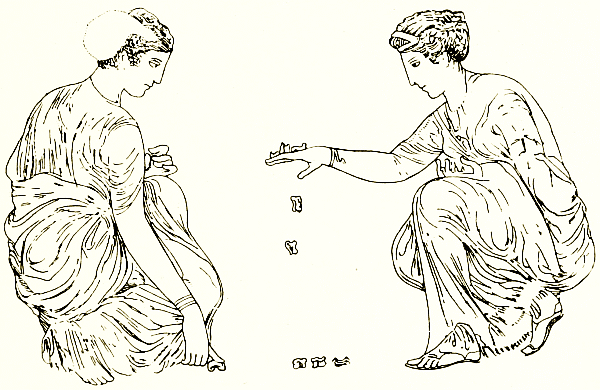
Fig. 242.—Two Women Playing at Knucklebones.
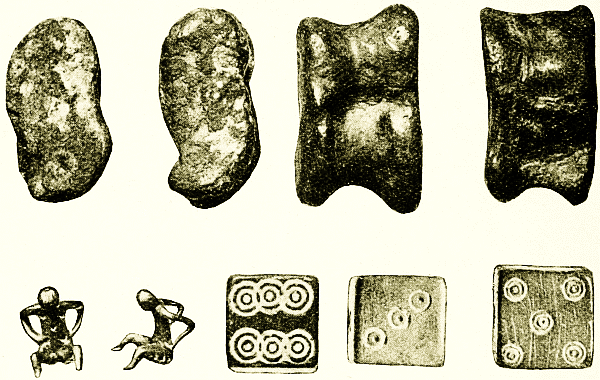
Fig. 243.—Knucklebones and Dice (Nos. 621-3). 1:1.
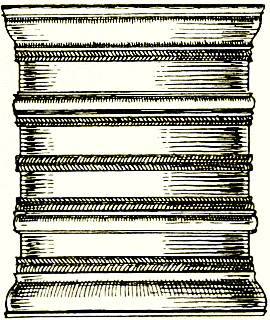
Fig. 244.—Bronze Dice-Box (No. 624). 4:5.
Dice of exceptional form are the twenty-sided one, inscribed with the Greek letters Α to Υ (No. 625), a fourteen-sided one inscribed with Roman numerals (No. 626), and an uninscribed fourteen-sided crystal die from Naukratis. With these may be mentioned the triple teetotum (No. 627) and the four-sided triple die, one side of which has been left plain (No. 628).
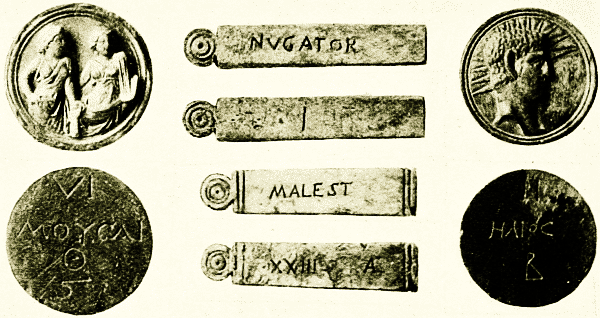
Fig. 245.—Ivory Pieces from Games (Nos. 630-631). 2:3.
Of the rules governing other games, represented here by several pieces, we are entirely ignorant. The plaster pawns (No. 629) found at Panticapaeum (Kertch) in the Crimea, probably belonged to some game analogous to our draughts. An interesting set of pieces is that of the ivory discs (No. 630; fig. 245), which bear on their obverse a design in relief e.g. two Muses and the head of the Sun-god, and on their reverse a number, from 1 to 15, in both Greek and Latin figures, as well as a word descriptive of the design on the obverse. Thus the two illustrated have on their reverse
VI
ΜΟΥϹΑΙ
Θ
ϛ
and
II
ΗΛΙΟϹ
Β
At the top of Cases 57-58 is an oblong marble board (No. 632), inscribed with six words of six letters each. It was found in a tomb near the Porta Portese, Rome. The words are—
CIRCVS PLENVS CLAMOR INGENS IANVAE TE |̅ ̅ ̅ ̅ ̅ ̅? te(nsae)
"Circus full," "Great shouting," "Doors bursting (?)."
Each word is separated from that opposite it by a flower within a circle. Many such stones are known, always with six words of six letters, so that it seems clear that they were used as boards for a game, possibly the duodecim scripta already mentioned. The pieces used were probably the so-called "contorniates," bronze discs of coin form, with designs in relief on either side within a raised rim and a circular depression. Two examples of these contorniates (in electrotype) are exhibited below the stone board (No. 633). The pieces are of late Imperial date, of about the time of Constantine. Many have subjects closely connected with the circus, a fact which harmonizes well with the inscription on the board described. One of the two exhibited has a head of Alexander and a representation of a chariot race, the other a head of Nero and a water organ (see below, p. 216).
(630) Cf. Röm. Mitt., 1896, p. 238 ff.; Rev. Arch., 4th Series V. (1905), p. 110 ff.; (631) Röm. Mitt., 1896, p. 227 ff.; (632) Cf. Num. Chron. (4th Series), VI., p. 232 ff.; Notizie degli Scavi, 1887, p. 118.
On ancient toys and games generally, see Becq de Fouquières, Les jeux des anciens; Daremberg and Saglio, s.v. Ludus.
Νικήσας τοὺς παῖδας, ἐπεὶ καλὰ γράμματ' ἔγραψεν, Κόνναρος ὀγδώκοντ' ἀστραγάλους ἔλαβεν.
ἕξ, ἕν, πέντε, δύο, τρία, τέσσαρα κῦβος ἐλαύνει.
τὰ δεσποτῶν γὰρ εὖ πεσόντα θήσομαι, τρὶς ἕξ βαλούσης τῆσδέ μοι φρυκτωρίας.
Cum steterit nullus vultu tibi talus eodem, Munera me dices magna dedisse tibi.
Me quoque per talos Venerem quaerente secundos, Semper damnosi subsiluere canes.