VI.—ATHLETICS. (Wall-Cases 107-108.)
Reading edition
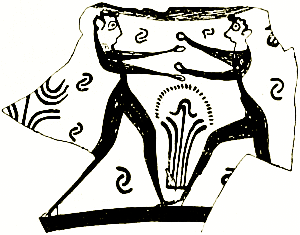
Fig. 47.—Boxers of the late Mycenaean Period (No. 151).
Athletic and pugilistic contests were already developed on Greek soil before the Homeric Age. Thus we have a steatite vase from Crete (see Cast in First Vase Room) with boxers in all positions. A pair of boxers (of about 1100 B.C.) from a vase found at Enkomi in Cyprus is shown in fig. 47 (No. 151). In the Homeric poems athletic contests frequently occur, but only as isolated and unorganized events, without rules or system. It was only at a much later date that the games were organized on lines corresponding to those of modern sport. At Olympia, the great festivals were said, according to tradition, to have begun in 776 B.C., and it was from that year that the Greeks calculated their dates, reckoning by the periodical return of the meeting every fourth year.
The victorious athlete was held in high honour by his native city. The prize at the games was indeed of no value—at Olympia it was a crown of wild olive—but on his return home the victor entered the city in triumph, feasts were held and odes were sung in his honour, he was maintained for the remainder of his life, and his statue was set up in the place where his victory had been won.
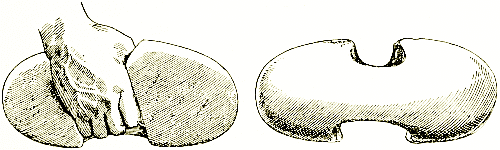
Fig. 48.—Stone Jumping-Weight (No. 154*). L. 11½ in.
We will first deal with the events of the pentathlon in order:—
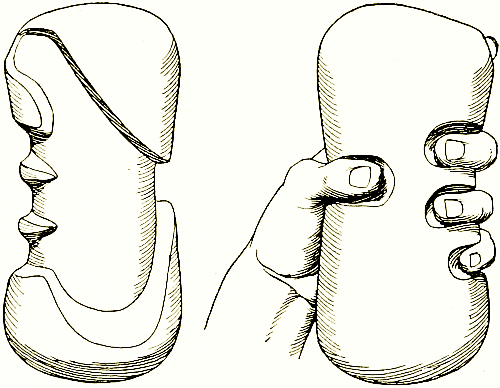
Fig. 49.—Stone Jumping-Weight (No. 155). L. 7½ in.
The Foot Race.—A somewhat conventional foot race of armed hoplites is shown on the vase B 143. This is a Panathenaic amphora, that is, one of the two-handled vases, won, as the inscription on the other side states, at the games at Athens. They always bear on one side a figure of the patron goddess Athena, on the other a representation of the contest in which they were won. Many examples may be seen in the Second and Fourth Vase Rooms.
Throwing the Diskos.—This was one of the oldest and most popular contests at the great festivals. It was already known in Homeric times, and we read of Odysseus using a disc of stone, and of one of iron hurled at the funeral games in honour of Patroklos; but all existing examples are in bronze except a lead disc at Berlin which cannot have been used in athletics. The diskos was used, not like the modern quoit, with the object of hitting a mark, but with a view to throwing as far as possible, as in the modern contest of putting the weight.
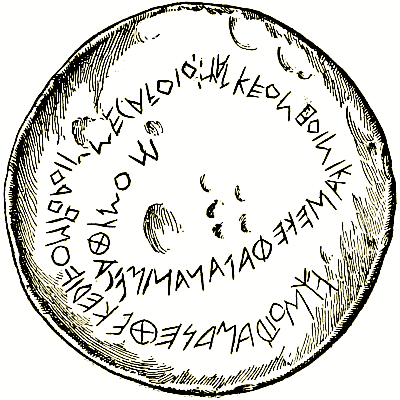
Fig. 50.—Diskos of Exoidas (No. 157). Diam. 6⅜ in.
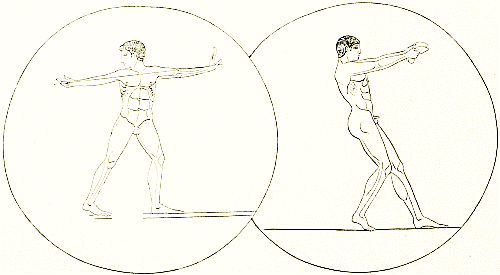
Fig. 51.—Engraved Bronze Diskos (No. 158). Diam. 8¼ in.
Javelin-Throwing and Wrestling.—These sports are frequently shown on the Panathenaic vases already described (p. 60). Other games of a varied character also occur, and we find such contests as tilting from horseback at a suspended shield, the torch-race, and races in full armour depicted. A specimen (B 134 in the Second Vase Room) shows four athletes engaged in four out of the five contests of the pentathlon (cf. also B 361 (No. 159) in this Case).
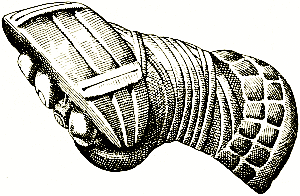
Fig. 52.—Later Boxing-Glove (No. 161). 1:2.
Boxing, one of the most ancient contests (see above, fig. 47), was long practised at the games with gloves of ox-hide, which was torn into long strips and bound round the hand. Such wrappings, like modern boxing-gloves, were intended rather to protect the wearer than to injure his opponent. At a later date, probably in the fourth century B.C., a more dangerous glove was introduced, in the form of a pad of thick leather bound over the fingers. This new form must have inflicted severe wounds; it is apparently used by the two African boxers in terracotta seen in this Case (No. 160). But in the decline of the Roman Empire, when the brutality of the spectators had to be satisfied at all costs, a still more cruel glove was invented, which had a heavy addition in metal, and must have been an appalling weapon. See the fragment in terracotta (No. 161, fig. 52). A cast from a terracotta relief (No. 162) shows a statue of a victorious boxer.
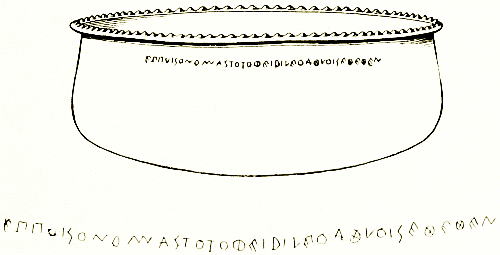
Ἐπὶ τοῖς Ὀνομάστου τοῦ Φειδίλεω ἄθλοις ἐθέθην.
Fig. 53.—Prize Vase from the Games of Onomastos (No. 163). 1:6.
The other objects in this case are less directly connected with athletics; the most noteworthy is a large bronze caldron (No. 163, fig. 53), of about the sixth century B.C., which was found at Kyme, in South Italy, and was given as a prize at games held in that district. It is inscribed: "I was a prize at the games of Onomastos." He was doubtless a wealthy citizen at whose expense the contests were arranged, a form of public service very common in Greek cities. A piece of corrugated tile (No. 164) comes from the floor of the palaestra (wrestling place) at Olympia.
(151) Cat. of Vases, I., 2, No. C 334; (153) cf. Jüthner, Ant. Turngeräthe, p. 3 ff.; (154) Furtwängler, Olympia, IV., (Die Bronzen), p. 180; (156) Cat. of Bronzes, 2691; (157) ibid., 3207; B.M. Inscr., 952; (158) Cat. of Bronzes, 248; (160) Cat. of Terracottas, D 84, 85; (162) ibid., D 632; (163) I.G., xiv. 862; (164) Adler, Olympia, II. (Baudenkmaeler) p. 115.
On Greek athletics generally, see Greek Athletic Festivals, by E. N. Gardiner.
ἐνίκα ἅλμα, ποδωκείην, δίσκον, ἄκοντα, πάλην.
Ἐχσοΐδα(ς) μ' ἀνέθηκε Διϝὸς Ϙούροιν μεγάλοιο ⁝ χάλκεον ὧι νίκασε Κεφαλᾶνας μεγαθύμους.