VIII.—CHARIOT-RACING AND THE CIRCUS. (Wall-Case 110.)
Reading edition
Chariot-racing was one of the oldest of Greek sports, and is described in the Iliad as one of the contests held at the funeral of Patroklos. At that time the two-horse war-chariot was used in the race, and a special type of racing-car does not seem to have existed.
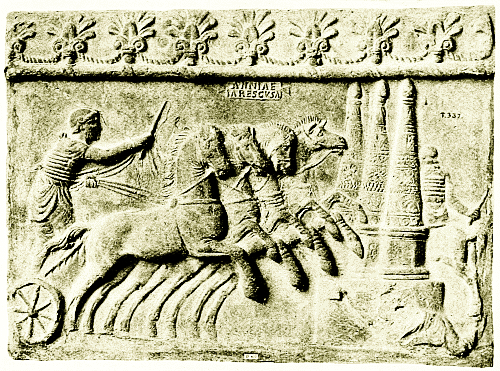
Fig. 62.—Roman Racing-Chariot Turning the Post (No. 179). L. 16 in.
The introduction of chariot-races in the great athletic contests was a concession to the wealthy inhabitants of prosperous cities. To enter a chariot with a team of four horses, which was now the usual number for the great race at Olympia, demanded almost as large a proportionate expenditure as to run a horse for the Derby to-day. Rich men in Greece Proper found rivals in the tyrants of Sicily and Cyrene, who ruled over cities with large revenues and districts providing good opportunities for successful horse-breeding.
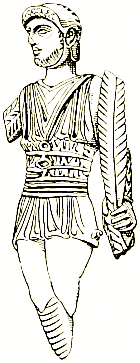
Fig. 63.—Ivory Statuette of a Charioteer (No. 180). 5:8.
At Olympia four-horse chariots raced for the first time in 680 B.C., chariots with two horses not until 408. Between those dates a race for horsemen was started, and won on the first occasion by a native of Thessaly, which, owing to its rich plains, was celebrated in antiquity for a magnificent breed of horses. A winner in the horse-race is depicted on the vase No. 178 (exhibited in Case 107), about to receive a wreath and a tripod as his prizes, while a herald proclaims: "The horse of Dysneiketos wins."
The Romans probably derived their custom of chariot-racing from the Greeks, as also the plan which, with some alterations in detail, they adopted for their circus. In the early days of Rome the marshy valley between the Palatine and Aventine Hills was the place chosen for the games, and remained so through the succeeding centuries, during which the course was gradually surrounded with an immense building; this in the fourth century after Christ held not far short of 180,000 people.
In the later Roman Empire the charioteers were hired by factions, which were distinguished by different colours, and excited violent enthusiasm among all classes of Roman society. The passion survived the introduction of Christianity, and was perhaps even more violent at Constantinople than at Rome; it was said that the inhabitants of the new capital of the Empire divided their interests between a passion for chariot-racing and theological discussion. Successful charioteers were transferred from one faction to another like modern football-players. Records exist of the number of victories gained by famous whips, and of the proportion won under the different colours.
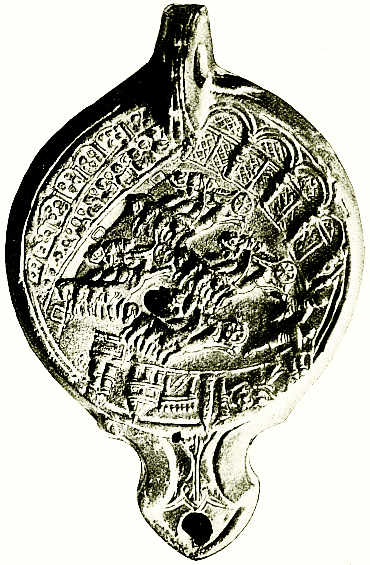
Fig. 64.—Lamp Showing Chariot-Race in Circus (No. 181). Diam. 3¾ in.
A sort of bird's-eye view of the whole circus, with a race in progress, is given on the lamp No. 181 (fig. 64), on which we see on one side the carceres or barriers with folding-doors from which the chariots started; on the other a stand with rows of spectators, while in the lower part of the design is the spina, or central rib of the circus, crowded with various structures. Not less instructive is the scene on the terracotta relief (No. 179), though only one chariot is there represented (fig. 62, above). Two lamps (Nos. 182, 183) illustrate respectively the return of a victorious horse (fig. 65) and a victorious four-horse chariot. The former is accompanied by men bearing palm-branches and a tablet probably inscribed with the name of the successful competitor.
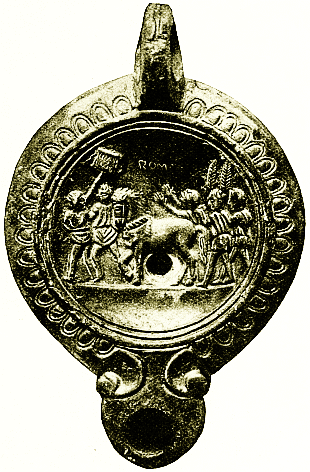
Fig. 65.—Victorious Horse (No. 182). 33⁄5 in.
The cast No. 184 is taken from a mould in the Terracotta Room (No. E 79) for the central panel of a large lamp. Its chief figure is a successful charioteer, crowned with a bulky wreath.
(178) Cat. of Vases, II., B 144; (179) Cat. of Terracottas, D 627; (181) Cat. of Lamps, 626; (182) ibid., 788; (183) ibid., 671; (184) ibid., 1398.
For the circus in general see Daremberg and Saglio, s.v.
Two interesting sarcophagus reliefs, with scenes in the circus, are shown in the Roman Gallery (Cat. of Sculpture, III., 2318, 2319).