XVII.—AGRICULTURE. (Wall-Case 52.)
Reading edition
Farming, the rearing of live stock, the cultivation of corn, vines and olives were practised by the earliest civilisations of the Aegean, and of Greece.
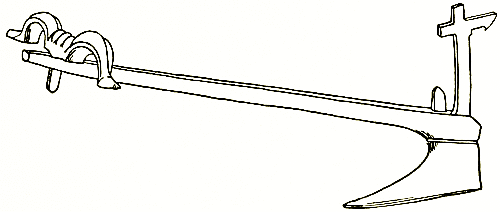
Fig. 209.—Bronze Votive Plough.
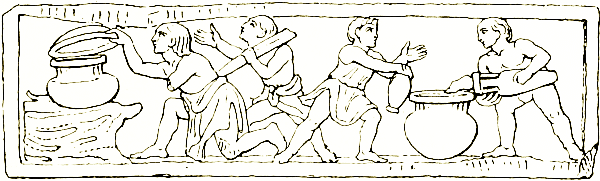
Fig. 210.—Wine being Decocted (No. 518). L. 1 ft. 9 in.
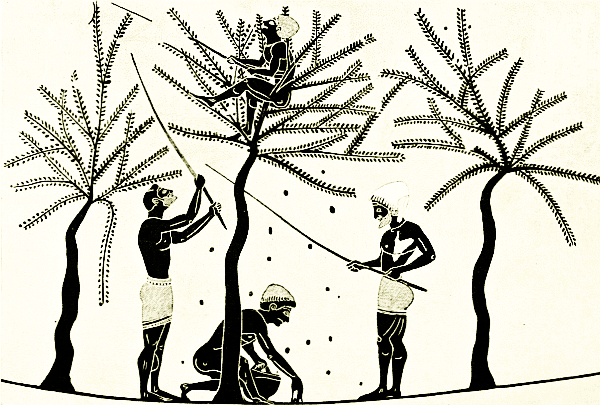
Fig. 211.—Men Gathering Olives (No. 521). Ca. 1:2.
The ploughman was followed by the sower, who is represented on the vase mentioned above (No. 514) with a basket from which he scatters the seed in the furrow. At harvest-time a sickle was used to cut the grain, of which instrument two iron specimens are shown in the Case, from Lycia in Asia Minor (No. 515). Winnowing the grain was accomplished either by means of a shovel or a basket of peculiar shape (λίκνον, vannus); on a terracotta relief in the Museum (D 525, Case 75, Terracotta Room Annexe) the infant Dionysos is being rocked in one of these objects instead of a cradle, by a Satyr and a Nymph.
Of fruit crops the vine and the olive were by far the most important in the Greek and Roman world, and great attention was paid to their cultivation. The operations involved in the manufacture of both wine and oil find many illustrations among ancient works of art. The gathering of grapes is illustrated by a Roman terracotta relief (No. 516) exhibited in the Case, where a Satyr is picking grapes from a vine. Another relief of the same class (No. 517) depicts the treading out of the grapes in the wine-press, also by Satyrs, two of whom are balancing themselves by holding a ring between them while they tread the grapes in an oblong trough to the tune of flutes. An elderly Satyr brings up fresh supplies in a basket. The massive bronze rings commonly known as "athletes' rings" may have been used at the wine-press (No. 517*).
The must or new wine was partly used for drinking as soon as ready, partly decocted into a sort of jelly (defrutum), and partly stowed in cellars in large casks or jars (dolia); in the latter case after being fermented for nine days it was covered up and sealed. The commoner kinds were drunk direct from the dolia, the finer sorts drawn off into amphorae and stored up. On the marble reliefs here given (No. 518; fig. 210) we have a representation of the conversion of the must into defrutum: two men are attending to a caldron placed over a fire, while a third is pouring wine from an amphora into another caldron, and a fourth is waiting to fill a jug from the same. In the lowest part of the Case is exhibited the upper part of an amphora with long neck and two handles (whence the frequent term diota), as an example of those used for the storage of wine. The terracotta figure of a man carrying a wineskin and one of these diotae (No. 519), and a Roman lamp depicting slaves carrying casks of wine, should also be noted (No. 520).
In order to extract the oil from the pulp of the fruit, it was necessary to use a press of some kind, such as we see on the terracotta relief here exhibited (No. 522; fig. 212), of the first century B.C. Here the press consists of flat stones between which layers of olives are placed; to the uppermost stone is fastened a long pole, which serves as a lever, and is being worked by two Satyrs; round the press a rope is wound many times. Compare the large vase in the Hall of Inscriptions (Cat. of Sculpture, 2502).
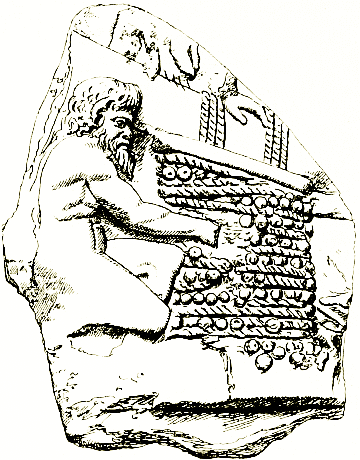
Fig. 212.—Satyrs at Oil-Press (No. 522). Ht. 7 in.
The remaining objects in this Case are mostly illustrative of men or beasts of burden engaged in agricultural and kindred occupations, such as the goat-herd depicted on a Roman lamp, to whom the name of Titurus is applied, with reference to Virgil's first Eclogue (No. 523; fig. 213). The bronze figure of a donkey (No. 524) with panniers recalls the ornament of Trimalchio's dinner-table described by Petronius, and may have served a similar purpose. Model panniers, and terracottas of a donkey and a camel with the panniers laden with rural produce, should also be noted. Several model carts from Amathus, in terracotta, are either flat-bottomed, for general use, or in vase-shape, for the transport of wine or other liquids (No. 525).
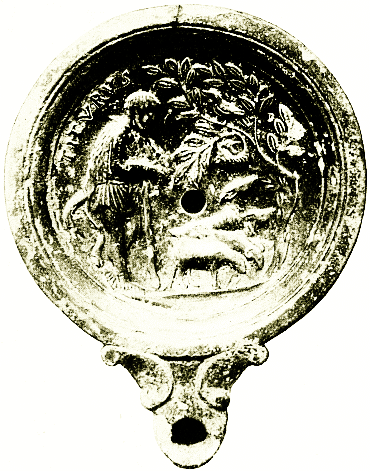
Fig. 213.—Goatherd with Flock (No. 523). Diam. 3¾ in.
(512) Excavations in Cyprus, p. 15, 1477; (516, 517) Cat. of Terracottas, D 542, D 544; (518) Cat. of Sculpture, III., 2212; (520) Cat. of Lamps, 1142; (521) Cat. of Vases, II., B 226; (522) Cat. of Terracottas, D 550. Cf. Daremberg and Saglio, s.v. Torcular; (523) Cat. of Lamps, 661; (524) Cf. Daremberg and Saglio, s.v. Clitellae; (525) Excavations in Cyprus, p. 112.