Pictorial Story of the Airship
Reading edition
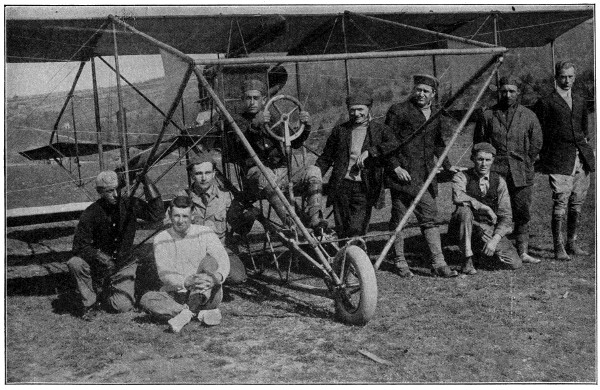
A “Pusher” of Several Years Ago, With Many of the More Prominent Air-men
Courtesy of The Curtis Aeroplane Co.
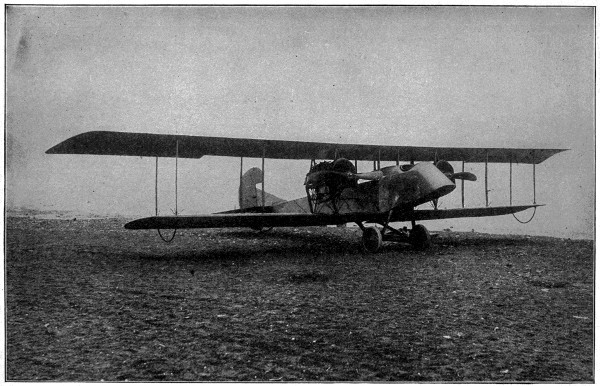
Courtesy of The Curtis Aeroplane Co.
Up-to-date Twin Motored Military Type Tractor—200 H. P.
Copyright by Underwood & Underwood, N. Y.
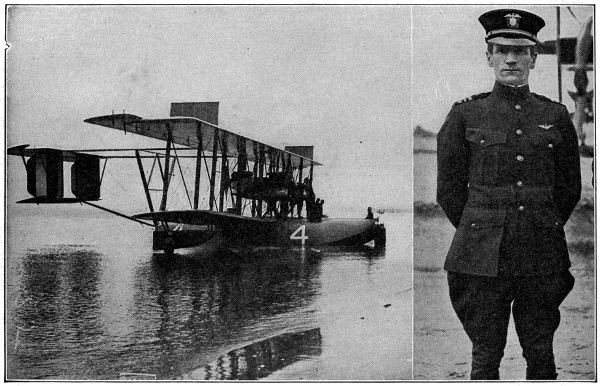
The First Plane to Cross the Atlantic
The honor of being first to make the journey from America to Europe by airship fell to Lieut.-Commander A. C. Read, who piloted the U. S. seaplane, NC-4, from Newfoundland to Lisbon, Portugal, with a stop at the Azores. The photo shows Lieut.-Commander Read and the seaplane, NC-4, in readiness for their long trip, which began May 16, 1919, and ended May 27th.
Copyright by Underwood & Underwood, N. Y.
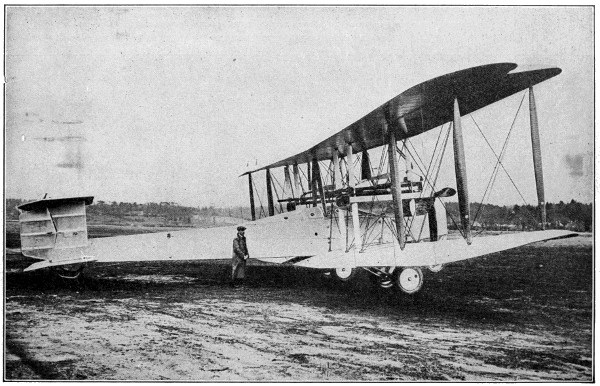
The First Flier to Cross the Ocean Without Stop
In this Vickers-Vimy aeroplane, Captain Alcock and Lieutenant Brown made the first non-stop flight across the Atlantic on June 15, 1919, traversing 1,650 nautical miles in 16 hours 12 minutes.
Large image (1000 x 587 px, 180 kB).
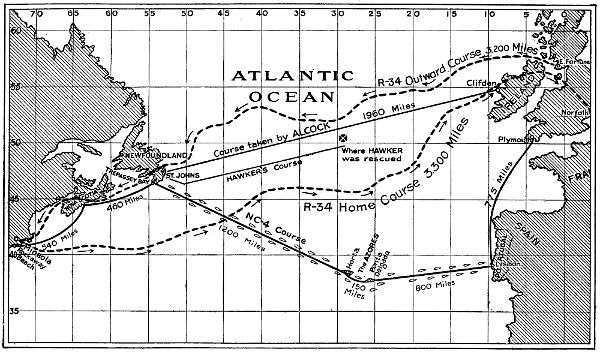
Chart of the Transatlantic Fliers
This shows graphically the course of the transatlantic aviators. The U. S. navy seaplane was first to make the flight, leaving Newfoundland May 16, 1919, flying to the Azores in 15 hours, to Lisbon in 131⁄2 hours, and to Plymouth in 13 hours. Hawker, in a Sopwith aeroplane, left Newfoundland May 18th, and covered half the distance to Europe, but was compelled to descend. He was picked up by a steamer. Captain Alcock and Lieutenant Brown made the first non-stop flight June 15th; and the British dirigible, R-34, made the first round-trip, leaving Scotland on July 2d.
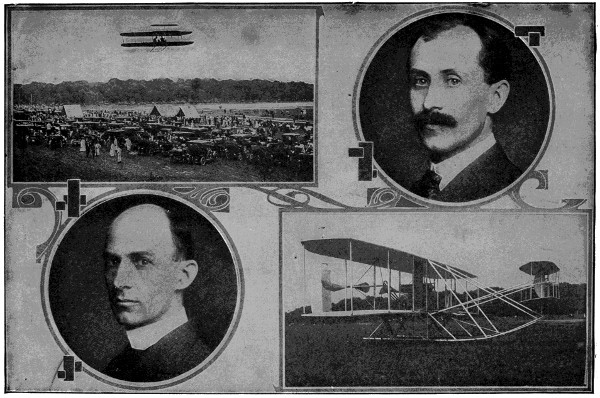
The Wright Brothers and their Famous Aeroplane
The machine is shown in action and resting on the ground. The pictures were taken during the army test flights at Fort Myer, Virginia.
Copyright by Western Newspaper Union.
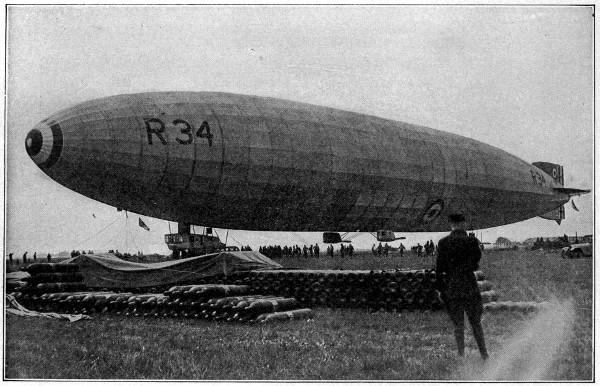
From Britain to America and Back by Balloon
The great British dirigible, R-34, was the first lighter-than-air vessel to cross the Atlantic. She left East Fortune, Scotland, July 2, 1919, under command of Major Scott, and covered 3,200 miles to Mineola, Long Island, in 4 days 12 hours 12 minutes. The return journey was made in 3 days 3 hours 3 minutes. Note the piles of hydrogen gas bottles needed to replenish the gas supply.
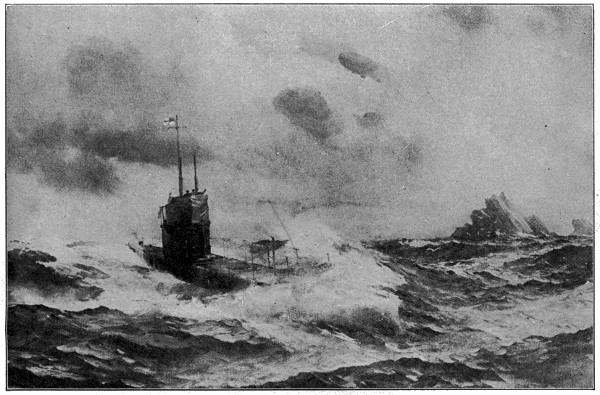
Hide and Seek in the Baltic
A Zeppelin flying over a British submarine in the stormy sea.
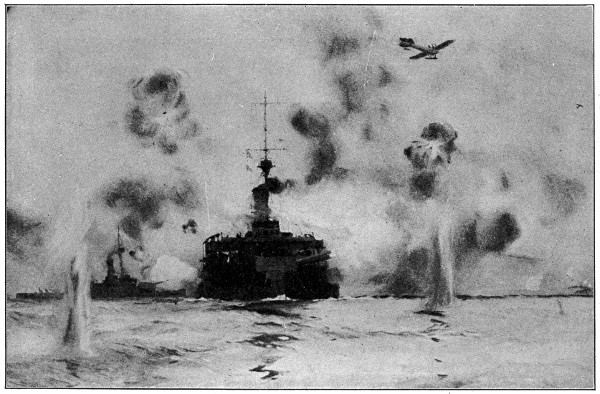
A Battle of Four Elements
British monitors shelling the German land batteries near Nieuport. German submarines were actively engaged in trying to torpedo these monitors and the British monoplane was useful for giving the range to the ship and reporting the accuracy of the shots.
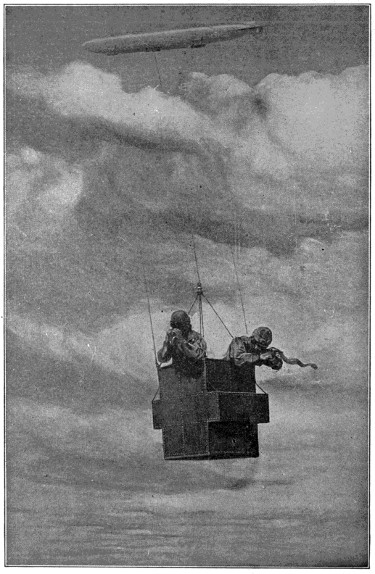
Zeppelin Device for Dropping Bombs
An armored car is suspended by three cables from the Zeppelin airship to a distance of several thousand feet below the monster aircraft, which is concealed in the clouds above. (Sphere copr.)
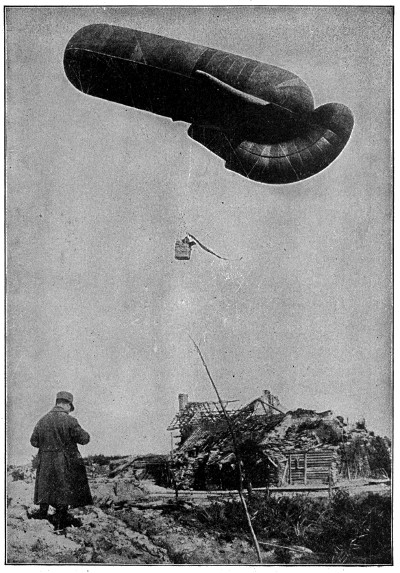
A Belgian Military Observation Balloon
The car of this balloon is equipped with wireless, which is used to send word of the gun positions of the enemy, movements of troops, ranges for the gunners and much other valuable information. A cable holds the balloon captive.
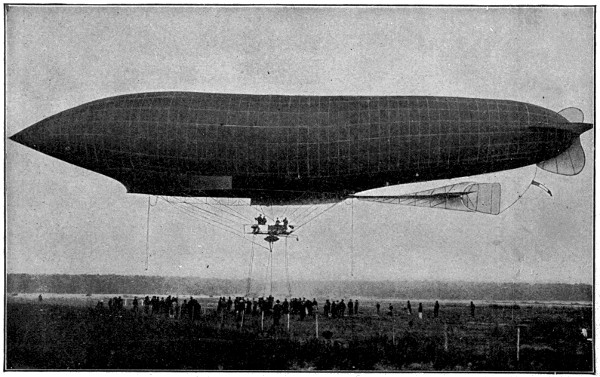
The French Dirigible Airship, “La Patrie”
Copyright by Underwood & Underwood, N. Y.
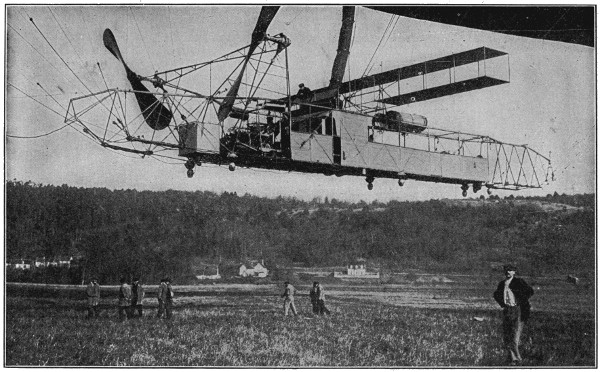
The Dirigible “Russia”
The great dirigible balloon “Russia,” one of the fleet of Russian aircraft engaged in the European War. The photograph shows the hanging car of the “Russia.” The captain’s bridge is in front above the engine room, which is forward on the lower deck. Two propellors are in front. The cabin is just behind the pilot’s seat.