Chapter VII
Reading edition
NEORNITHES CARINATAE CONCLUDED
BRIGADE II–LEGION II (CORACIOMORPHAE CONCLUDED)
ORDER: PASSERIFORMES
Order XIV. PASSERIFORMES.
This Order contains about five thousand five hundred species, being more than half the birds yet known. Their classification is attended with much difficulty, and the anatomy of many more forms must be investigated before anything approaching a satisfactory–not to say final–scheme can be proposed. The earlier taxonomers often based their systems largely on European genera, and were therefore obliged to interpose others, or even to recognise new Families, as their knowledge extended, among the many new discoveries, to various American and Australian forms.
The foundation of recent arrangements of the group, depending on the number or position of the song-muscles, was laid between 1845 and 1847 by Johannes Müller, who divided the then generally accepted Order Insessores into three tribes: (1) Oscines or Polymyodi [Song-birds, or those with many (usually five or seven) pairs of song-muscles]; (2) Tracheophones [where the bronchi take no part in the formation of the voice-organ]; and (3) Picarii [corresponding in the main to Nitzsch's Picariae]; the two former of which included most of the Passerine forms. Simultaneously with Müller, Cabanis proposed a system grounded on similar principles; while in 1867 Huxley recognised of his group Coracomorphae the divisions Polymyodae, Tracheophonae, and Oligomyodae [birds with few song-muscles]. About ten years later Garrod, who was followed between 1880 and 1882 by W. A. Forbes, divided the Passeres into Desmodactyli, with a band joining the muscles of the hallux to the front toes, and Eleutherodactyli, where the hind toe is free. The former contained only the Eurylaemidae; the latter the Mesomyodi (where the syringeal muscles join the bronchial semi-rings in their middle or lateral portion), and the Acromyodi (where they are attached to the extremities). The subdivisions need not be discussed here; but it should be noticed that, as opposed to Müller, the attachment, and not the number, of muscles was the point relied upon. Want of space forbids an account of the subsequent labours of Mr. Sclater,[264] Professors Newton[265] and Fürbringer,[266] and others; but the last-named no doubt influenced considerably the views of Dr. Gadow, mainly accepted below. This author[267] takes into consideration not only the attachment, but also the disposition of the muscles of the syrinx, and distinguishes his Passeriformes as (1) Passeres anisomyodae, where the syringeal muscles are unequally inserted, either in the middle, or upon the dorsal or ventral end only, of the bronchial semi-rings; (2) Passeres diacromyodae, where some of the muscles are attached to the dorsal, and some to the ventral ends. The former of these groups may be subdivided into A. Subclamatores and B. Clamatores; the latter into C. Suboscines and D. Oscines. Even the groups (1) and (2) are expressly stated not to rise to the rank of Sub-Orders, while the Oscines and other equivalent divisions are of hardly more than Family value.
The great number of species in the Order Passeriformes makes it necessary to treat the various sections less fully than has been the case in the foregoing portion of the work, while the Families are not, of course, on the same level here as elsewhere.
1. Passeres anisomyodae.
A. Subclamatores.
Fam. Eurylaemidae.–The Broad-bills, a curious Old World group, have been by various authors regarded as allied to the Rollers or to the Flycatchers. They are distinguished from all other Passerine forms by the fact that the hallux is connected with the front toes by a vinculum or band joining the deep plantar tendons, and is thus incapable of independent motion. The beak is very broad, while it is comparatively small in Calyptomena; Corydon, and to a less extent Eurylaemus and Sarcophanops, have a decided terminal hook to the maxilla. The metatarsus is scutellated in front and smooth behind (laminiplantar); the hallux is weak; the third and fourth toes are distinctly united, the claws are very short. The moderate wings have ten primaries in Calyptomena, eleven elsewhere, Eurylaemus having the eleventh very small; the secondaries are nine or ten; the tail of twelve rectrices is usually long and rounded, but is graduated in Psarisomus, short and square in Calyptomena. The adults have no aftershaft or down, the tongue is sagittate, and Sarcophanops has naked orbits. The plumage in Calyptomena viridis of the Indo-Malay countries is bright green, with a large black post-auricular and a yellow pre-ocular spot, three black bars on the wing-coverts, and blackish wing- and tail-quills. The duller female has no black spots or bars. The dense frontal feathers project forward over the beak. C. whiteheadi of Borneo has a black throat. These somewhat inactive birds inhabit thin jungles, utter soft whistles, and feed on fruit; the rest of the Family eat little but insects, though Cymborhynchus macrorhynchus, the Rain-bird of the Malays, enjoys berries.
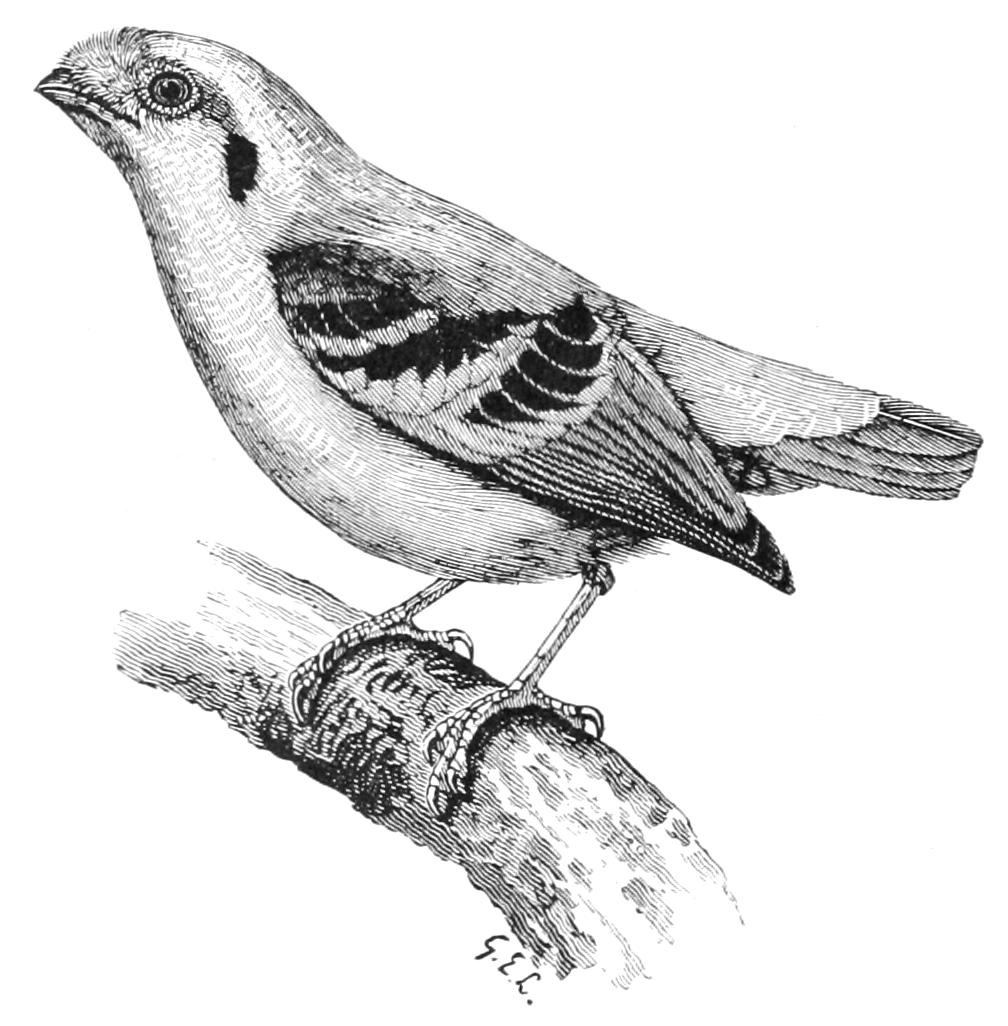
Fig. 98.–Broad-bill. Calyptomena viridis. × 7⁄16.
Eurylaemus javanicus is blackish, with yellow markings on the back, tail, and wings; the head, neck, and under parts being vinous purple, with a black crescentic chest-band, which is absent in the hen. Corydon sumatranus is black, with a white alar bar and a buffish-white throat and fore-neck. They cover much the same area as Calyptomena. Cymborhynchus shews black and crimson colours, while the beautiful Psarisomus dalhousiae, found from the Eastern Himalayas to Borneo, has a green back and under surface, black and blue head and wings, yellow face and throat, and blue tail becoming black below. Serilophus contains two grey-brown species with chestnut rumps, ranging from Sikkim to Tenasserim. Sarcophanops is peculiar to the Philippines.
The quiet and solitary Broad-bills inhabit forests, thickets, and gardens, flying little, sitting sluggishly on the branches, taking insects on the wing, and uttering whistling or metallic notes. They make large roughish oval nests, with a large entrance near the top often protected by an overhanging roof, while a sort of tail is commonly added; these are suspended from low branches or plants close to water; the materials being twigs, roots, tendrils, moss, or leaves, felted together and smoothly lined with green foliage, flags, bamboo-spathes, or grass, sometimes renewed when dry. From three to five eggs are laid, pale yellowish in Calyptomena, white or rarely spotted with red in Psarisomus, and pinkish, buff or white elsewhere, with markings varying from black to rufous.
B. Clamatores.
This group includes the Pittidae, Philepittidae, Xenicidae, Tyrannidae, Oxyrhamphidae, Pipridae, Cotingidae, Phytotomidae, Dendrocolaptidae, Formicariidae, Conopophagidae, and Pteroptochidae.
Apparently the furcula is U-shaped; the tongue varies; the aftershaft is small, if present; the down is sparing or absent.
Fam. I. Pittidae.–The members of this Old World Family, nearly fifty in number, range from India to North China, East Australia, New Guinea, and New Britain; while one species is West African. They are stout, strong-billed forms, with short rounded wings and tail, the long metatarsus being more or less scutellated all round; the primaries number ten–the outer being decidedly long–the secondaries eight, the rectrices twelve. The plumage exhibits vivid scarlet, blue, and green tints, in addition to yellow, purple, black, brown, and white; elongated neck-feathers occur in Anthocincla, erect frontal plumes in Coracopitta. The tail in Pitta is nearly square, but is pointed in Eucichla, and Coracopitta. The habits seem to be fairly uniform, all the species haunting thickish jungle or dense scrub, whether in the rock-strewn glens of India, or the damp Malayan, Australian, and Papuasian forests. The birds are more often heard than seen, though the plaintive, oft-repeated double whistle of the smaller forms, or the mournful, triple cry of the larger, is seldom audible in the mid-day heat, both being recognisable by the long-drawn final syllable.
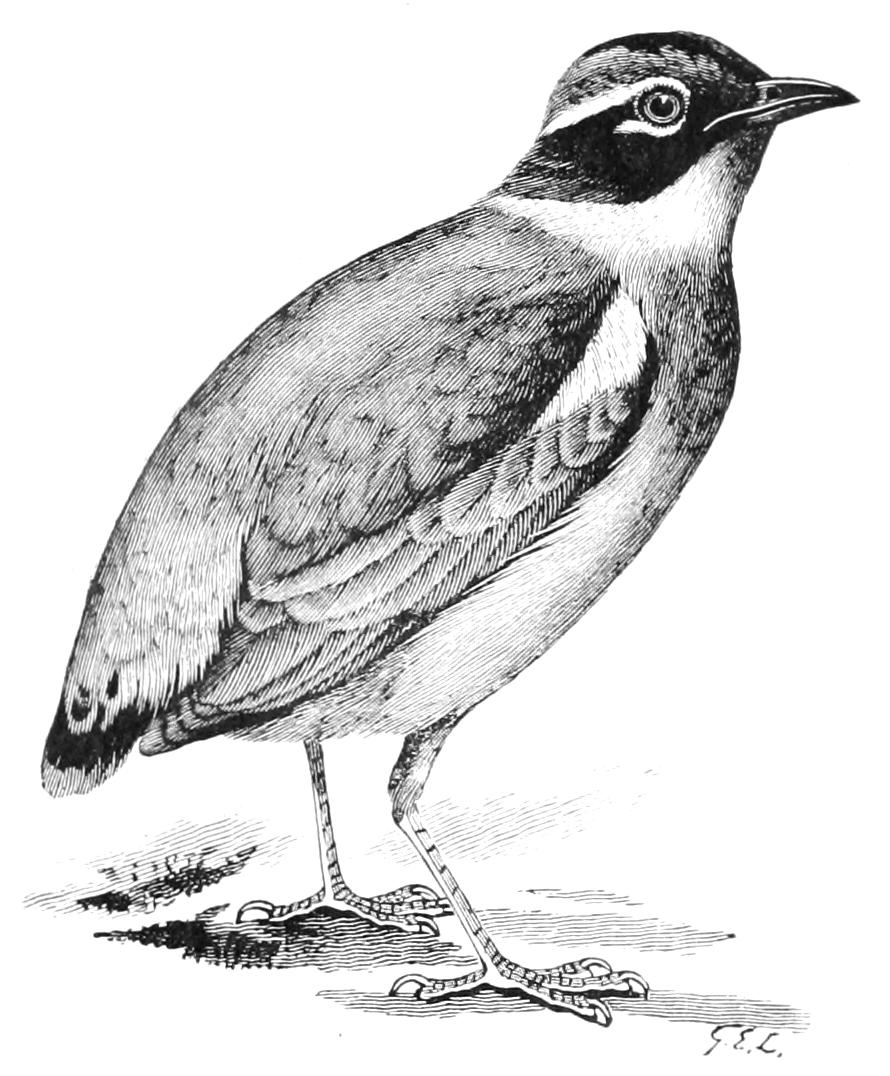
Fig. 99.–Pitta brachyura. × 3⁄7.
They are chiefly terrestrial, and jump from rock to rock or branch to stump with great agility; their apparently leisurely movements being really so quick that a mere glimpse is usually obtained through some opening in the foliage, while their habits are consequently difficult to observe. The quiet watcher may, however, hear the birds pattering over the beds of leaves, and see them hunting for molluscs and insects, or digging for worms and ants, but the slightest movement causes them to depart with long rapid hops, exchanged under pressure for a low, direct noiseless flight of short duration. Pittas are habitually, though not invariably, solitary, and are especially shy when breeding. P. moluccensis ascends the trees to call, P. oatesi occasionally whistles at night, while P. novae guineae flirts its tail like a Wagtail. The exposed nest, with its lateral entrance, is frequently placed on the ground at the foot of a tree or shrub, but sometimes amongst undergrowth or in very low forks; it is a rounded fabric of twigs, roots, bark, moss, leaves, and grass, often cemented with earth; the larger species making a clumsier and looser structure, the smaller a more compact mass. Unspotted eggs are rare, the usual colour being creamy-white with brown, reddish, grey, or purplish-black spots or scrawls; the number is from three to six. Anthocincla phayrii and Pitta cucullata are said occasionally to build a platform of sticks before their doorway, and the latter a projecting roof over it. The former species, which inhabits Burma, is brown with a black coronal streak, black and white superciliary stripes, white throat, and pink vent; Pitta caerulea is bright blue above, with black occiput and nape, but an otherwise ashy head; it is greyish-buff below, with a partial black collar. The female has a brown back, and a buffish head, with black cross-bars and collar. This very large form ranges from Tenasserim to Sumatra and Borneo; the smaller P. cyanea of Bhutan, Burma, and Siam is somewhat similar, but has a scarlet nape, and bluish under parts with black bars. P. maxima of Gilolo is glossy black, with blue wing-coverts, a white alar bar, green edges to the secondaries, white lower surface, black chin, and crimson belly. P. granatina of Borneo is purplish-black, with scarlet occiput and nape, blue superciliary stripe, some blue on the wing, purplish throat, and scarlet belly. P. baudi of the same island is crimson above, with blue crown and tail, black nape, and white alar bar; the lower parts being black, with purple and blue abdomen: the female is dull brown below. P. cyanoptera, reaching from Burma and Borneo to South China, is dull green above, with a dark central stripe and a black margin to the brownish crown; the black wing shews a white bar, and azure on the coverts; the tip of the black tail and the rump are blue; the lower surface is buff, with crimson on the belly. Several species have green under parts, a blue pectoral band, or no blue on the rump and wings. P. angolensis inhabits West Africa, P. nympha North China and Tsu-shima Island, P. iris and P. strepitans Australia; the latter reaches New Guinea, where it meets, among other forms, the entirely black Coracopitta lugubris, as well as P. mackloti, which extends to New Britain.
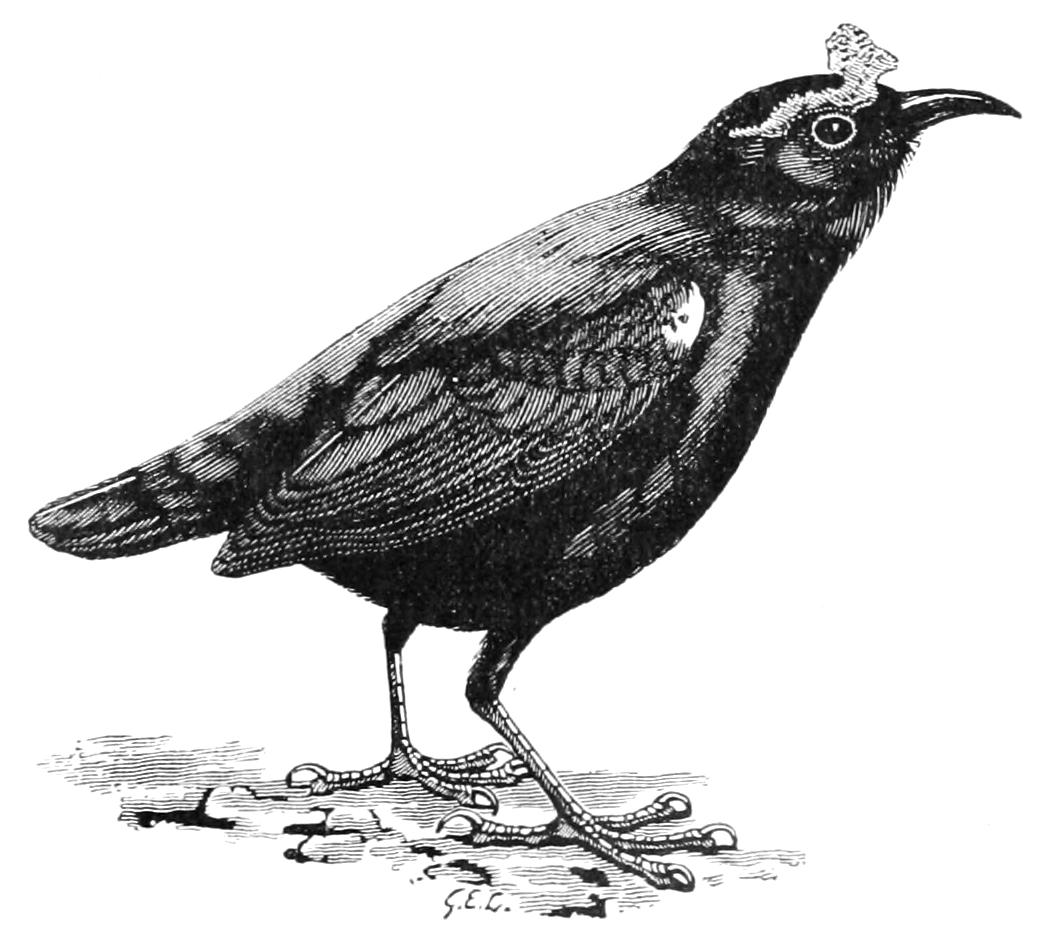
Fig. 100.–Philepitta jala. × ⅜.
Fam. II. Philepittidae.–This contains only the two species of Philepitta, peculiar to Madagascar, which have bare orbits surmounted by a green caruncle in the male, and metatarsi with a regular series of scales behind (taxaspidean). P. jala is black, with yellow at the bend of the wing; the female is olive-green with yellow markings below. P. schlegeli is green above and yellow below in both sexes, the male having a black head, the female white streaks on that part. The outward form and habits recall those of Pitta, but the latter are more arboreal. The young are apparently spotted, unlike those of the Pittidae, which resemble the adults.
Fam. III. Xenicidae.–This contains the genera Acanthidositta and Traversia, each with one species, and Xenicus with two; they are remarkable New Zealand forms, in which the weak syringeal muscles only reach the lowest tracheal ring. The slender metatarsi are almost smooth, the claws acute and elongated; the short rectrices number ten, and the tenth primary is nearly equal to the next; the secondaries are eight. The tongue is lanceolate and horny. The stout-billed, long-legged Xenicus longipes has dark green upper parts, a brown crown, a yellowish rump and sides, black cheeks, whitish superciliary stripes and throat, and silky, bluish-grey under parts. The female is chiefly brown. X. gilviventris is olive-brown on the back and cheeks, and purplish-brown beneath, with some rufous and a black spot on the wing. Both forms inhabit the South Island, and are called "Bush-Wren" and Rock-Wren respectively. The former frequents dark sub-alpine forests, restlessly searching the trees for insects, their chrysalids and larvae, and uttering a weak note or a trill. It is seldom seen on the ground, yet flies but little, as might be expected from its short, rounded wings. The compact domed nest of moss, placed in low forks or in tree-roots, contains five or six white eggs with pink blotches; when built in holes it is open. The other species lives among débris high up the hills, being almost entirely terrestrial, skulking round the boulders, and eating dragonflies, lepidoptera, and insects generally, with scraps of fat from any traveller's camp. The nest of roots, twigs, and leaves, lined with feathers, is placed in crevices, and contains some five white eggs. The similar Traversia lyalli of Stephens Island is said to be nocturnal. Acanthidositta chloris, the Rifleman, is dull green above with yellower rump, and fulvous white below; the moderate wings are blackish, with green edgings and yellow bars; the eye-stripe is white; the short rounded tail is black with light tip. The female has an olive upper surface with brown markings, a yellow rump, and buffish under parts. This species inhabits the hill-forests of both the main islands of New Zealand, where it actively searches the trees for food with quivering wings, and utters a feeble "cheep." The more or less bottle-shaped nest, placed in holes in trees, buildings, and so forth, is formed of bents, roots, and feathers, and contains from three to five white eggs.
Fam. IV. Tyrannidae.–This comprises some four hundred species, chiefly of an olive or black-and-grey coloration, which is occasionally relieved by bright scarlet as in Pyrocephalus, orange-red as in Muscivora, or yellow as in Todirostrum; but these hues are not necessarily common to whole genera. Agriornis and Megarhynchus are exceptionally large forms, but the majority are small, and in habits and appearance resemble the Old World Flycatchers, or even Shrikes. From the former, however, they are easily distinguished by their normal outer primary and the exteriorly scutellated back of the metatarsus (exaspidean). Dr. Sclater[268] recognises four Sub-families, Taeniopterinae, Platyrhynchinae, Elaineinae, and Tyranninae.
The curved bill, varying in length and stoutness, is compressed and bristly at the gape in the Taeniopterinae, hardly bristly in the Elaineinae, depressed and decidedly bristly in the Platyrhynchinae and Tyranninae; while the culmen is most strongly hooked in the larger species, being much curved in Oncostoma, particularly broad and flat in Platyrhynchus, Megarhynchus, Muscivora, Todirostrum, and Euscarthmus, swollen and very wide in Rhynchocyclus. In the first and last of the Sub-families the metatarsus is strong and often long; in the remainder it is comparatively weak; Centrites has an extremely elongated hallux, correlated with Lark-like habits. The wing is usually short, but is often long in the Taeniopterinae and Tyranninae; the outer of the ten primaries are at times acuminate in Tyrannus, Hapalocercus, Cnipolegus, and Taenioptera, whereas in Colopterus and Alectrurus these quills are unusually reduced. The secondaries are nine. The tail, normally of twelve rectrices, varies much in length, and is very deeply forked and graduated in Milvulus, Muscipipra, and three members of Tyrannus, moderately divided in Contopus and certain species of Taenioptera, and so forth; it is not infrequently nearly square; while it is long and rounded in Capsiempis and the like; long and graduated, with only ten narrowly-barbed feathers in Culicivora; of the same shape in Cybernetes; and excessively reduced in Orchilus ecaudatus. Copurus possesses two very long median rectrices; the male of Alectrurus tricolor has the two fairly long outer feathers with their inner webs abnormally developed, and that of A. risorius has them enormously lengthened and broadened.
The Taeniopterinae, which are generally black, grey, and white, frequent the open parts of wooded districts, river-sides, or exceptionally marshes, in South America, a few of them extending north of Panama; the Elaineinae and Platyrhynchinae are olive, grey, brown, and yellow, and inhabit dense forests from South Mexico to Patagonia, Ornithion imberbe ranging as far north as Texas; the Tyranninae–with many large species–normally exhibit olive, grey, yellow, or white in varying proportions, and include most of the Nearctic genera, such as Contopus, Empidonax, Myiarchus, and Tyrannus, as well as many Neotropical forms, and the entirely Antillean Blacicus and Lawrencia. Erectile crests occur in some cases in Tyrannulus, Cnipolegus, Colopterus, Pseudotriccus, Lophotriccus, Machetornis, Muscivora, Empidonax, Anaeretes, Elainea, Pyrocephalus, Myiobius, and Mitrephanes; white eye-rings are found in Euscarthmus zosterops, E. orbitatus, and Capsiempis orbitalis; a fleshy yellow caruncle surrounds each eye in Lichenops; and in the breeding male of Alectrurus risorius the throat and cheeks shew bare orange skin.
The following are examples of the coloration, which is often similar in both sexes. Tyrannus pipiri, the King-bird of temperate North America, ranging to Peru in winter, is dark grey, with a concealed orange patch on the black crown, black and white wings and tail, and white under parts. Pyrocephalus rubineus, of South America north of Buenos Aires, is dark cinereous with crimson head and lower surface, the female being grey above, and chiefly white below with grey stripes. Muscivora regia of Guiana and Amazonia is brown, with a scarlet crest tipped with purplish, and has ochraceous under parts with brownish bars. The crest is yellower in the hen. Megarhynchus pitangua, of Central and South America to Paraguay, is brown, with yellow lower surface, a black head, white superciliary streaks joining on the nape, a concealed orange coronal patch, and a white throat. Elainea pagana, ranging from South Mexico to Brazil, is dull olive above, and greyish-white below with yellow belly; a spot on the crown and two alar bars being white. Cyanotis azarae of La Plata, Chili, and West Peru has bronzy-green upper and yellow lower surface, with a partial black band beneath and a crimson vent; the head is black with a crimson spot, the wings and tail are black and white. Todirostrum cinereum of Central America and eastern South America is greyish above and yellow below, with black crown, wings, and tail, the primaries having yellow edges and the tail a white tip. Taenioptera dominicana, of South-East Brazil and Argentina, is white with the wings and tail mainly black; Cnipolegus unicolor of Upper Amazonia is uniform black.
Tyrants are active and restless birds, chiefly met with near rivers or marshes, where they are constantly seen sitting alone on the branches of trees, bushes, dead thistles, and giant pampas-grasses, or more rarely, as in the Chat-like Muscisaxicola, on clods and boulders; thence they dart, like Flycatchers, upon their prey. Centrites frequents bare plains and loves the ground; Serpophaga and Sayornis haunt streams, and flirt the tail like a Wagtail; Fluvicola, Alectrurus, and Cyanotis inhabit reed-beds, and climb about the bending stems in Tit-like fashion; the Taeniopterinae are mainly terrestrial, and often form flocks, Myiotheretes running and flying like a Thrush, and even accompanying bands of Plovers; Machetornis searches the backs of cattle for insects, and dusts itself like a Lark. Many members of the family are decidedly shy, but the majority are otherwise, and in especial the Tyranninae, which are excessively bold and pugnacious when breeding, attacking even the Carrion-Hawk (Milvago), and bullying their smaller relatives. In a fair number of species the sexes are usually observed apart; in others they are as invariably in company. The range extends to ten thousand feet or more in the Andes, Muscisaxicola macloviana being found at that altitude, as well as down to the sea-coast in Patagonia; while in some cases semi-migratory movements take place at certain times of year. The powers of wing are commonly great, especially in the agile King-bird and its congeners; Taenioptera and Agriornis can fly as well as hop; Centrites, though of terrestrial habits, moves swiftly or circles easily in the air; Pitangus and Empidonax minimus quarter the ground for food with undulating movements. Pyrocephalus rubineus soars with upraised vibrating wings to a considerable height, with many a rise and fall; Alectrurus tricolor goes slowly and vertically up with rapid pulsations of the pinions, and then comes slanting down; while the graceful Scissor-tail (Milvulus) twists and turns about in the air, alternately opening and shutting its long forked rectrices, or whirling aloft at will to dart earthwards again like a rocket.
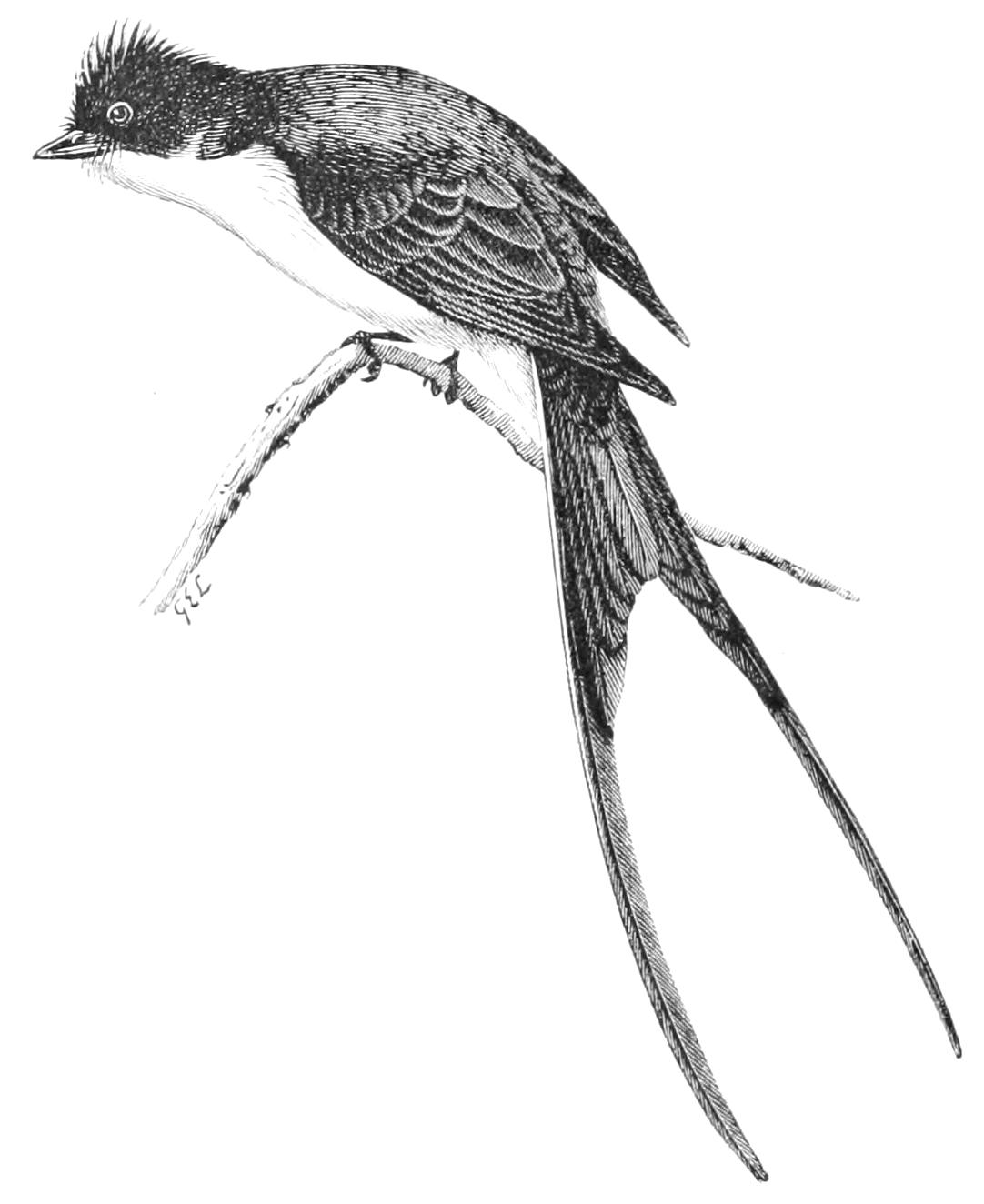
Fig. 101.–Scissor-tail. Milvulus tyrannus. × 2⁄7.
The usual note is shrill, piercing, and often harsh or angry, as in Tyrannus, Myiarchus, and Machetornis; it is loud, grating, and rarely mellow, in Pitangus and Cybernetes; a low plaintive whistle or pipe is uttered by Myiotheretes, Cyanotis, and most of the Taeniopterinae, Sayornis having a ringing cry, supposed to resemble "Phoebe," which name it bears in North America, and Fluvicola and Cnipolegus giving vent to clicking sounds. Many species twitter, chirp, or chatter, while Pyrocephalus rubineus, Hapalocercus flaviventer, Ornithion imberbe, Contopus ardesiacus, and Empidonax flaviventer are stated to have a pleasant trill approaching a song. These notes may be uttered by the birds either when soaring in the air or when stationary. The food normally consists of insects, caught upon the wing with an audible snap of the bill; but Taenioptera often, instead of hawking from a perch, pounces upon crawling beetles, grasps them in its claws, and devours them upon the earth. Pitangus bolivianus and some other forms even eat mice, young birds, small snakes, lizards, fishes, frogs, spiders, molluscs, worms, and insect-larvae, beating the larger creatures upon a branch to kill them. Elainea strepera, Myiarchus crinitus, and some species of Tyrannus, will eat berries and seeds. A bulky nest is often fashioned of rough twigs, moss, grass, straws, wool, hair, and rags; which may be open as in Tyrannus, or domed as in Pitangus bolivianus, and placed in trees in either case: or it may be beautifully felted with moss, lichens, and spiders'-webs, and lined with hair and feathers, as in Elainea and Serpophaga. Sayornis commonly makes a foundation of mud pellets, adding coarse materials above with feathers for bedding, the fabric being fixed to rocks or buildings. Again, many species build slight or fairly compact nests of grass, twigs, and softer materials in bushes, forks, or outgrowths of trees. Copurus, Taenioptera, Machetornis, and Myiarchus commonly use old holes of Woodpeckers; Todirostrum and Fluvicola often make hanging purse-like structures; Cyanotis attaches its conical nest of papery reeds to the stems of those plants; Serpophaga frequently suspends its domicile to twigs, roots, or grasses overhanging water; Alectrurus, Lichenops, Hapalocercus, and Centrites build in rush- or grass-tufts, and Muscisaxicola under stones. Taenioptera and Machetornis, moreover, will lay in the "ovens" of Furnarius, or in the nests of Anumbius acuticaudus (pp. 486, 487). Muscivora mexicana makes a curious hanging spindle-shaped nest, surrounded by loose materials. The eggs are usually whitish, salmon- or cream-coloured, and may be unspotted, or dotted and ringed with red, purple, or brown; those of Pyrocephalus rubineus have black and grey markings, those of Machetornis dense brown stripes or spots, those of Myiarchus tangled purple or red-brown lines and marblings, while those of Centrites niger are plain bluish-green.
Fam. V. Oxyrhamphidae.–The members differ from the Tyrannidae in the straight bill, and the serrated outer web of the tenth primary of the male. The sole genus Oxyrhamphus has three greenish forms, with red crests, and black-spotted yellow or white lower parts.
Fam. VI. Pipridae.–The Manakins, often considered a sub-section of the Cotingidae, are for the most part small thick-set birds, though Heteropelma and some other genera have greater dimensions. The seventy or more species may be divided into the Sub-families, Piprinae, with brilliant males, and Ptilochlorinae, where the sexes are usually dull-coloured and similar;[269] the former ranging from South Mexico to North Argentina, the latter to South-East Brazil. The curved bill is generally short and wide at the base in the Piprinae, with an indistinct terminal notch; but is somewhat elongated, much compressed, decidedly notched, and usually provided with rictal bristles in the Ptilochlorinae. The metatarsus is exaspidean (p. 473)–though nearly smooth in Metopothrix and Masius–and is comparatively slender in most of the Piprinae, stronger in the Ptilochlorinae, Piprites, and Ceratopipra; the outer and mid-toes being partially united. The exterior of the ten primaries is always short, while the wing is much elongated in Chloropipo; the secondaries are nine or ten. In the males of some forms the remiges differ from those of the females; thus the shafts of the primaries are thickened and pointed in Chiroxiphia, similar but incurved in Helicura and Chiromachaeris, with much attenuated barbs in the latter; in Ptilochloris the seventh primary is modified and bends outwards. In Machaeropterus the wing-bones are flattened; the secondaries have thick stems bending inwards towards the tip, and shew reduced vanes, save the eighth and ninth, while the sixth and seventh have the shaft terminally developed into a horny excrescence. The tail is usually short and square, but is long in Chloropipo and Metopia, rounded in the latter and Masius, graduated in Metopothrix and Heterocercus. The outer of the twelve feathers are much elongated in Cirrhopipra, being acuminate in C. heterocerca, curved and filiform in C. filicauda; the two median rectrices are lengthened in Helicura; while in three species of Chiroxiphia they are also long, or even linear in C. linearis. Frontal crests occur in Metopia, Masius, and Metopothrix; vertical crests in Pipra serena, P. suavissima, and four species of Chiroxiphia; Ceratopipra has a peculiar extended nuchal tuft, Chiromachaeris an elongated beard.
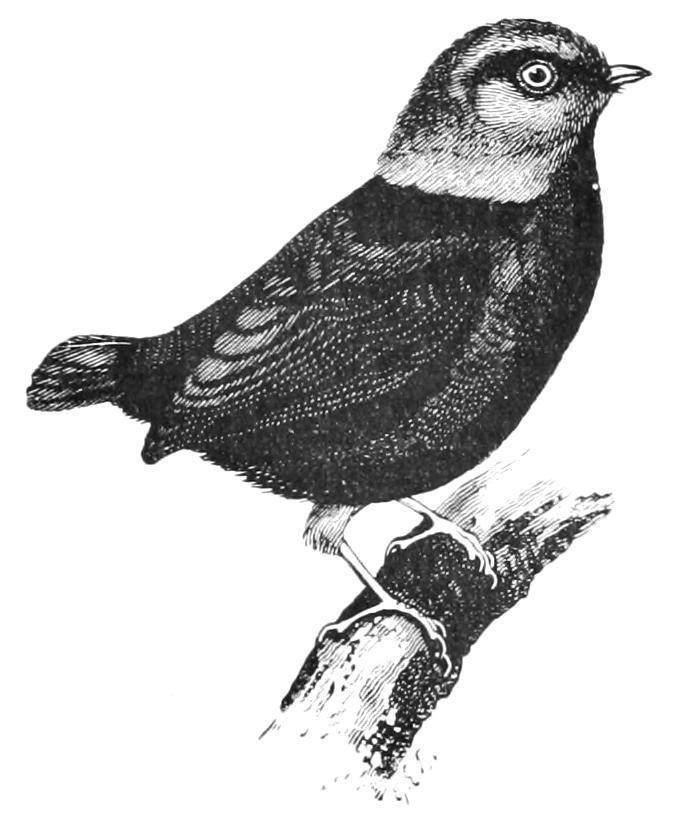
Fig. 102.–Manakin. Pipra mentalis. × ½.
As examples of coloration we may take the following:–Chloropipo flavicapilla has a yellow head, neck, and under parts, a green back, and brownish wings; Xenopipo atronitens is uniform black; Ceratopipra cornuta, black with scarlet head, neck, and thighs; Cirrhopipra filicauda similarly coloured, with yellow forehead and lower surface. Pipra leucocilla is black with a white crown; P. velutina has a blue cap, P. suavissima an erect white vertical crest, lilac rump, and orange mid-abdomen. Machaeropterus regulus exhibits green upper parts, a scarlet crown, slaty wing- and tail-quills, and white, green, and rufous under surface. Chiroxiphia pareola is black, with blue mantle and crimson crest; Chiromachaeris aurantiaca is also black, with orange nuchal band, cheeks and breast, green rump, and yellow abdomen. The females are green, with yellowish or whitish tints below. Ptilochloris squamata is in both sexes olive-green, with blackish cap and wings, and yellowish under parts marked with black; others again of the Ptilochlorinae are chiefly olive or rufous,[270] three species of Heteropelma having concealed coronal patches of yellow.
Manakins as a rule inhabit deep forests, or thick undergrowth near marshes, where they incessantly creep about the branches like Tits, and take short flights after passing insects. Chiroxiphia caudata is called in Brazil the "Fandango-bird," from the fact that one individual often sits and sings, while its fellows dance up and down to the music. Two males of C. linearis have been seen skipping before a female, and uttering meanwhile their cry of "to-le-do." Chiromachaeris makes a sound like a whip cracking, followed by a continuous rattle–possibly caused by the wings; but this noise seems peculiar to the genus, the usual cry being loud and whistling. Fruits of all sorts, especially berries and seeds, and occasionally insects, form the food. Chiromachaeris manacus and Chiroxiphia caudata hang loose, shallow nests of grass–the latter with slight additions of wool, hair, tendrils, and leaves–from the forks of low shrubs; the two eggs being reddish-or yellowish-white, thickly blotched with red or brown.
Fam. VII. Cotingidae.–This group, divided by Mr. Sclater[271] into the Sub-families Tityrinae, Lipauginae, Attilinae, Rupicolinae, Cotinginae, and Gymnoderinae, contains more than a hundred species; but the Attilinae are sometimes placed in the Tyrannidae or the Formicariidae, Iodopleura and Calyptura in the Pipridae. The range extends from South Mexico to Argentina, Carpodectes being restricted to Costa Rica and Nicaragua, Phoenicocercus, Haematoderus, and Gymnocephalus to Guinea and Amazonia, Doliornis to Central Peru, Tijuca, Phibalura, and Calyptura to South Brazil.
The bill varies from strong, elongated, compressed, and curved, as in Tijuca, the Tityrinae and Attilinae, to short and broad, as in Phibalura, Querula, and Chasmorhynchus; the culmen being particularly elevated in Gymnoderus, and much hooked in the Attilinae. The metatarsus, scutellated in front, and usually covered with small round scales behind (pycnaspidean), is especially strong in Pyroderus and Rupicola, partly feathered in the latter, and posteriorly corrugated in Lipaugus; while Attila and other kindred forms have the outer toes somewhat connected. The wings may be long, as in Carpodectes and Iodopleura, or short as in Phoenicocercus and Calyptura; the ten primaries, of which the outer is small, are much reduced and twisted in Chirocylla–particularly in the male; in that sex of Rupicola some have the inner web cut away at the tip, while the external secondaries have the outer vanes filamentous; the Tityrinae have the ninth primary abbreviated and often scimetar-shaped; the seventh has a terminal horny process in the male of Phoenicocercus. The secondaries are ten or eleven. In Xipholena the greater coverts are stiff and elongated. The tail of twelve rectrices is usually moderate and square; though very short in the Cotinginae, long in Tijuca, deeply forked in Phibalura, and nearly hidden by its coverts in Cotinga amabilis. Bristles surround the gape in the Lipauginae and Attilinae, but vary elsewhere; Rupicola has a large compressed crest, Cephalopterus (Fig. 103), one like an umbrella, Phoenicocercus, Doliornis, Heliochera, Calyptura, and Phibalura moderate tufts. Wattles and naked areas occur in Chasmorhynchus and Cephalopterus; some species of Tityra have the lores and orbits bare; Gymnoderus has the sides of the head and the whole neck, Gymnocephalus the entire head unfeathered.
The plumage is ordinarily plain rufous, green, or grey; the females being nearly always dull, though many of the males are very brilliant. Among these Tityra exhibits black and white hues, Hadrostomus is chiefly grey or black, with a rosy band below in three cases, Pachyrhamphus is green, black, yellow, rufous, or grey, sometimes varied with white. Lathria streptophora has a pink collar, Aulia irregular black spots below. Phoenicocercus carnifex is dark brown, with scarlet crown, rump, most of the tail and under parts; Rupicola crocea, the well-known Cock of the Rock, is bright orange, with brown and white wings and partly blackish rectrices; Phibalura flavirostris is black and yellow with concealed scarlet crest; Tijuca is black, with yellow on the wing; Ampelion is green, relieved by brown, black, and yellow; Pipreola is green, with black, scarlet, yellow, or orange markings on the throat or breast; Cotinga exhibits splendid blue and purple tints; Xipholena pompadora has an unusual reddish-purple hue, coupled with almost white wings. Carpodectes is snowy white, with leaden-coloured or yellow bill; Heliochera has black, grey, white, or yellow coloration, with a chestnut crest; Iodopleura shews a lilac tuft on each side of the breast; and Calyptura is chiefly greenish-yellow, with a scarlet, black-edged crest. Of the peculiar Gymnoderinae, Haematoderus, which has elongated head-, neck-, rump-, and breast-feathers, is crimson with brown wings and tail, the female having brown on the back; Querula is dull black with a red collar of lengthened plumes; Pyroderus is black with crimson throat and fore-neck. Cephalopterus ornatus, the Umbrella-bird, is entirely black, with a huge expanded umbrella-like crest of bare-shafted incurved feathers, and a long flattened and feathered gular wattle; C. penduliger has this appendage extraordinarily long and cylindrical; C. glabricollis a bare orange throat with a terminal tuft on the red outgrowth. Chasmorhynchus niveus is white, with a spiral erectile process on the forehead, thinly covered with white feathers: C. nudicollis has the cheeks and throat naked and bristly, but lacks the excrescence; C. variegatus is white, with a brown head, black wings, and bare papillose throat; C. tricarunculatus is chestnut, with a white head bearing three caruncles, on the forehead and at the gape. In this genus the females are green above and chiefly yellow below. The bill may be orange or red in the Family, while Gymnoderus alone has large white powder-down patches on the flanks.
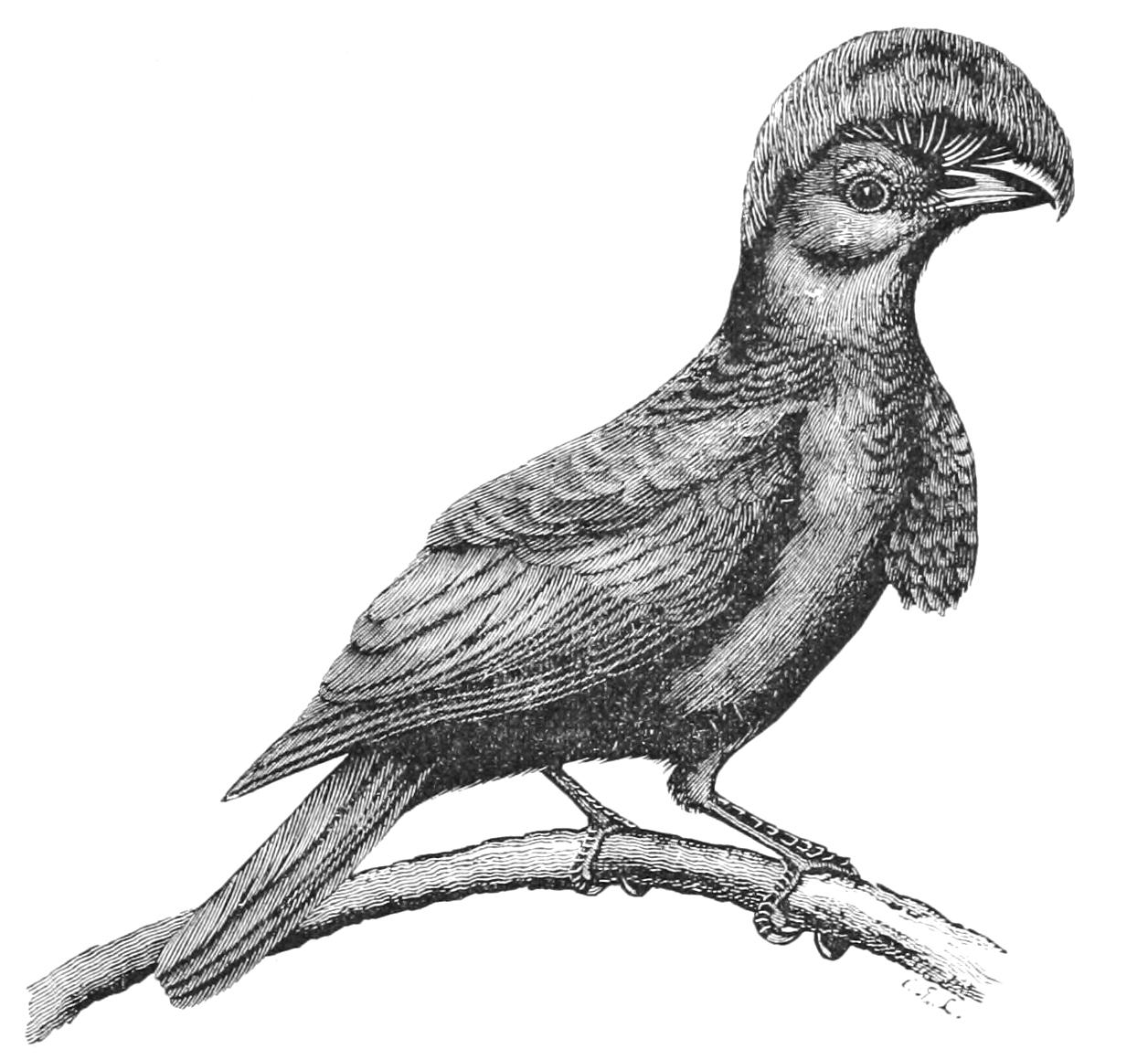
Fig. 103.–Umbrella-bird. Cephalopterus ornatus. × ⅕.
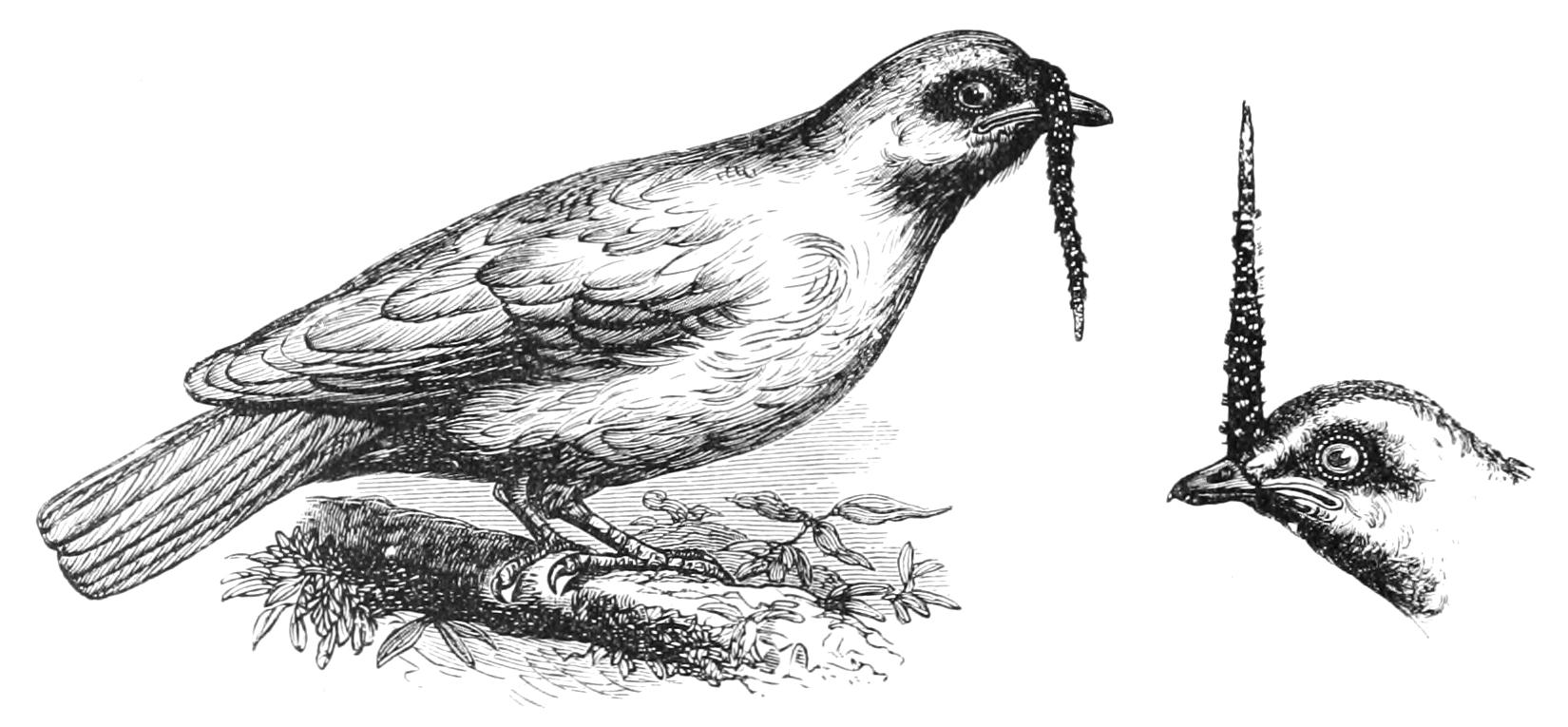
Fig. 104.–Bell-bird. Chasmorhynchus niveus. × 2⁄7. (From Waterton's Wanderings.)
The habits of these woodland birds are comparatively little known, but most of them frequent high trees, though some prefer low bushes; such forms as Lipaugus and Heteropelma haunt dense forests, Pipreola and Phibalura more open situations, while small flocks often occur at considerable elevations, Heliochera reaching ten thousand feet. Cephalopterus ornatus loves islands in rivers, Chasmorhynchus and Xenopsaris marshy glades or even sedge-growth. The flight, usually of short duration, is heavy and noisy in Pipreola and elsewhere, Swallow-like in Phibalura; insects are often captured on the wing, and not only these but spiders, molluscs, and even lizards, are occasionally sought upon the ground. Berries, seeds, and the like, however, constitute the chief food. Cephalopterus and Hadrostomus, at least occasionally, beat their prey upon a branch before swallowing it. The members of this Family are usually somewhat shy and dull, but the males of Rupicola were observed by Schomburgk to dance in turn with outspread wings before an assembled flock, strutting and parading with frequent leaps. This bird is credited with a voice like a monkey; Chasmorhynchus niveus is termed Campanero or Bell-bird from its clear, bell-like note, uttered with the caruncle erected, while its congeners have also ringing cries; Cephalopterus gives vent to long deep "lowings" at sunrise and sunset. Tityra semifasciata utters frog-like sounds, Pachyrhamphus a loud whistle, and other species notes resembling those of Tanagers, Tyrants, or Wrens. Rupicola fastens a nest of mud, surmounted by twigs and lined with moss, to projections of rocks in damp, sunless caves, laying two buff eggs with reddish-brown and lilac spots; Pyroderus orenocensis deposits similar eggs on platforms of sticks placed in tree-forks; Tityra semifasciata lines holes in decayed limbs with dry grass to receive its white eggs; Hadrostomus niger, H. homochrous, and some species of Pachyrhamphus, hang big nests of such materials as leaves, plant-stalks and wool, with side entrances, from low branches; the two to four eggs, where known, being chocolate, faintly marked or unspotted; Phibalura fixes a cup of lichens in the crotch of a large tree, laying twice annually two greenish-blue eggs with neutral markings; Cephalopterus is said to make a rough nest of sticks; and Pipreola riefferi to deposit pale salmon-coloured eggs, sparingly spotted with reddish-brown.
Fam. VIII. Phytotomidae.–The Plant-cutters constitute a single genus Phytotoma, of four Finch-like species, having strongly serrated bills and pycnaspidean (p. 479) metatarsi. The primaries number ten, the secondaries nine, the rectrices twelve. P. rara of Chili is brown and black, with red crown and lower surface, white margins to the wing-coverts, and red-banded lateral tail-feathers; the female has yellowish-brown under parts streaked with black, and a brown crown. P. raimondii of North-West Peru is somewhat like, but has only a narrow red frontlet; P. angustirostris of Bolivia is greyer, with white on the secondaries and tail, and a browner breast; the hen being chiefly greyish, with black striations above and spots below; P. rutila of Argentina and North Patagonia is very similar. Flocks or pairs of Plant-eaters are found in dry open situations, the former often consisting solely of the comparatively unsuspicious males; they sit aloft on bushes, but hide when alarmed. The flight is whirring with sudden short undulations; the food consists of seeds and other fruits, tender shoots, buds and leaves; while the voice is decidedly harsh, the alarm-note of the male resembles the bleating of a kid, and the female's cry is cricket-like. The slight, shallow nest of twigs and fibres is placed in thick bushes, and contains four bluish-green eggs, flecked with brown. The birds are said to cut plants off close to the ground without apparent object.
The four Families that follow are often classed as Tracheophonae, and have loud voices owing to their tracheal syrinx (p. 22).
Fam. IX. Dendrocolaptidae.–This group, with over 200 species, occupies the Neotropical Region, excluding the Antilles, and is divided by Mr. Sclater[272] into the Sub-families Furnariinae, Synallaxinae, Philydorinae, Sclerurinae, and Dendrocolaptinae.
The extremely variable bill is short and straight in Geobates and Henicornis, Warbler-like in the Synallaxinae, stouter and Shrike-like in the Philydorinae, extremely strong in Hylexetastes, short and incurved in Xenerpestes and Phacellodomus, short with upturned genys in Glyphorhynchus, Xenops, and Pygarrhicus, very long, thin, and decurved in Xiphorhynchus, very long, but only slightly curved in Nasica, and so forth. It is much hooked in Ancistrops. The endaspidean[273] metatarsus may be long and slender, as in Sylviorthorhynchus; stronger, as in the terrestrial Furnariinae and Sclerurinae; or shorter, as in the scansorial Dendrocolaptinae, which usually have large toes and sharp claws. The scales are almost obsolete in Furnarius and Lochmias; the outer and middle toes are partially connected in the Sclerurinae and Dendrocolaptinae. The wings, which have ten primaries and about nine secondaries, are long in Pseudocolaptes, moderate in Xenerpestes, short and rounded in Lochmias, and frequently decidedly abbreviated. The variable tail, normally of twelve rectrices, is often graduated; the shafts of the quills are stiffened and spiny in the Sclerurinae and Dendrocolaptinae, the latter of which climb and feed in Woodpecker fashion; in the Synallaxinae it is generally long, with pointed but comparatively soft feathers; in the Philydorinae it is short, Anumbius having particularly sharp rhachides. It is also short, though rounded, in Xenerpestes, Coryphistera, and Limnophyes, similar but longer in Clibanornis, while it has the shafts projecting beyond the vanes in Homorus, Oxyurus, and Sittosomus. Schizoeaca and Synallaxis have only ten rectrices, and Sylviorthorhynchus apparently possesses but six, the outer being very short and the inner excessively long with narrow decomposed webs. Limnornis, at least, has the tongue bristly towards the end.
The coloration is chiefly brown of various shades, often with the tail chestnut–or, rarely, the body, as in Homorus; spots, striations, or cross-bars, of white, fulvous, or black occur frequently, and Margarornis has pearl-like markings below. The rump or under parts may be white, and the throat occasionally exhibits a black, rufous or yellow patch, or the breast a chestnut band; while black, rusty, brown, or grey caps are not uncommon, that of Siptornis albiceps being white. The bill may be red, or exceptionally the feet white, as in Furnarius leucopus. Crests are found in F. cristatus, Synallaxis semicinerea, Coryphistera, and Homorus. The sexes, as far as known, are similar. The large Drymornis bridgesi is over a foot long, but many forms are not half that size, and most are comparatively small.
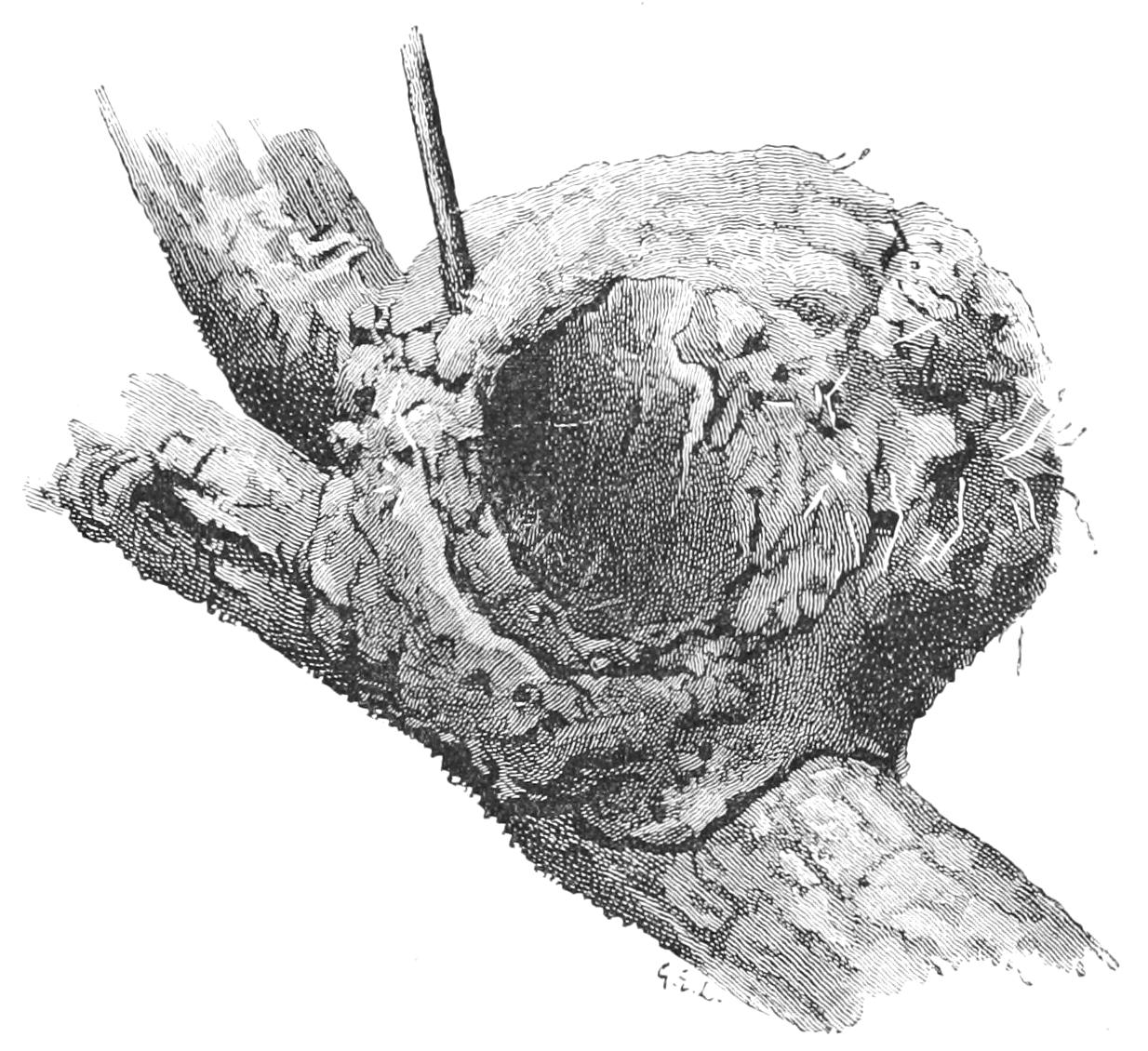
Fig. 105.–Nest of Oven-bird (Furnarius). × ⅕.
The habits are extremely diverse. Geositta cunicularia flits along low and swiftly, like a Wheatear, with the tail in motion, or crouches and runs before the pedestrian, uttering a note resembling piti-piti, varied by a ringing trill. It frequents bare spots, and bores oblique tunnels in biscacha burrows, sandy banks, or mud walls, ending in cavities lined with soft grasses, where it lays five white eggs. The food consists of seeds, insects, and their larvae, the bill being commonly used to dig. Lochmias nematura fills a similar hole with a large-domed nest of twigs and roots, lined with leaves, which contains two white eggs. The Oven-birds (Furnarius) run or hop unconcernedly among the wayfarers with the head thrown back, or pause with one foot uplifted; they utter incessant and loud, but not unmelodious, cries with the beak outstretched, which are even heard at night.[274] Worms, insects and their larvae are sought upon the ground, and both sexes incubate, the pairs keeping together throughout the year. The curious nest (Fig. 105) is placed in exposed situations on branches, in forks of trees or shrubs, on posts, rocks, or house-roofs; it has thick walls, almost unbreakable when dry, of clayey mud and dung mixed with a little hair or dry grass, a lining of the same materials underlying the three to five white eggs. This massive structure has an inner chamber with an outer passage running partly round it, and is generally the work of several months, the materials being only procurable in damp weather. The above refers at least to Furnarius cinnamomeus, F. minor, and F. rufus (the "Hornero" or Baker); but White[275] states that F. figulus builds a stick nest, and E. Bartlett[276] that F. torridus deposits four creamy white eggs on twigs and bents in holes in banks. Upucerthia, resembling Geositta in general habits, ranges to an altitude of nine thousand feet. The lively Cinclodes recalls both the Wheatear and the Dipper, as it runs with upturned tail from stone to stone, takes short, low flights, or hunts for crustaceans, molluscs, and insects in the water, equally happy on the streams of the Andes, or the desolate lake-sides of Patagonia. The note is a sharp trill, while three white eggs are laid on a bed of grass and fur in holes. Sclerurus frequents damp forests, scratching among the leaves, and crouching, when startled, on some trunk. Phloeocryptes flies weakly, but hops actively about reed-beds in pursuit of flies, uttering reiterated grating notes; it attaches its Wren-like nest of grass or rushes and mud, lined with feathers, moss and hair, to a few of the reed-stems, and builds a projection over the entrance. The two or three oval eggs are glossy blue. The shrill-voiced Leptasthenura clings to the branches in search of insects like a Tit, and lays from three to six pointed white eggs on soft materials in holes in trees, sometimes utilizing nests of Furnarius rufus, Siptornis sordida, and other species. Synallaxis, usually seen in pairs searching for food upon the bushes, has a persistent harsh double call or a cat-like cry; it forms a loose, oval structure, which would fill an ordinary wheel-barrow, of thorny sticks and twigs in forks of trees, lining it with hair, feathers, woolly leaves,and the like, and often capping it with more leaves. This generally possesses a lower chamber connected by a vertical or horizontal passage with the entrance, itself protected by a tubular fabric; while more than one nest is often found in the same tree. The three or four eggs are pale greenish-blue or whitish. Siptornis sordida appears to have similar habits, but several of its congeners run like mice; or conceal themselves in herbage or holes, the marsh-loving species uttering very whirring notes. S. sulphurifera fabricates a domed nest of grass among rushes, and lays two white eggs; that of S. maluroïdes is open, and lined with feathers and wool, though the site is similar; that of S. striaticeps resembles the last-mentioned, but is placed in a tree-fork and contains four or five white eggs. S. hudsoni arches the grass over a hollow in the ground in open spots, and deposits five pale buff eggs on a little powdered dung; its flight is Pipit-like, and its cry melancholy. Phacellodomus, usually found in hot dry valleys, is sluggish, and has a shrill, harsh voice; the nest, containing four white eggs, being hung from the end of a branch, and recalling that of Synallaxis. Xenops, Sittosomus, Picolaptes, Xiphorhynchus, Pseudocolaptes, and many other forms are denizens of damp forests, and run up the tree-trunks spirally like Creepers, searching for prey and tapping the bark as Woodpeckers do; the cries are plaintive or noisy, and the white eggs, apparently two in number, are laid in holes. Large insects are sometimes battered upon the branches. Anumbius acuticaudus, the "Thorn-bird" or "Firewood Gatherer," makes a bulky nest some two feet high of thorny sticks, and places it in isolated trees. From an entrance near the top a spiral or zigzag passage leads to a lower cavity lined with grass, hair, feathers, and wool, where five pointed white eggs are deposited; while sometimes an upper roosting chamber is added. This bird utters ticking chirps or trills, and feeds mainly upon the ground, regaining the branches with difficulty. Homorus lophotes, the "Cachalote," with its strikingly white eyes and blue beak, haunts plains with scattered trees or bushes, being decidedly shy and quick of foot, though weak of flight; it eats insects, and turns up the earth with its bill or claws. Rasping cries are often emitted in concert; while the nest–even larger than that of Anumbius–is a loose mass of similar structure, placed on some low branch or in a bush, the three or four white eggs occasionally shewing through the bottom. Drymornis, again, has Woodpecker-like habits, whereas Limnornis and Limnophyes creep about dense reed-beds, and only appear now and then to utter jarring or chattering sounds.
Fam. X. Formicariidae.–The so-called "Ant-birds"–not known to live on ants–are plentiful in the forests of northern South America, whence the numbers decrease to Central America, Chili and Argentina. Of the two hundred or more species none inhabit the Antilles, but three occur in Trinidad and one in Tobago. Mr. Sclater[277] allows as provisional Sub-families the strong Thamnophilinae, the weaker Formicariinae, and the long-legged Grallariinae.
The beak is strong, compressed, hooked, and terminally toothed in the Thamnophilinae, being exaggerated in Batara, large and swollen in Cymbilanius, and exceptionally hooked in the former genus and Pygoptila; Cymbilanius, Neoctantes, and Clytoctantes have the genys upturned. In the Formicariinae the bill is weaker and but slightly hooked, being very long and thin in Rhamphocaenus; in the Grallariinae it is usually elevated and compressed, though broad in Pittasoma. The taxaspidean metatarsus (p. 471) is moderate or short in the Thamnophilinae, and remarkably long in the Grallariinae, where it may be very strong, as in Pittasoma; among the Formicariinae it is short and thick in Rhopoterpe and Formicivora, long and thin in Psilorhamphus and Formicarius, and so forth. In Phlogopsis, Psilorhamphus, Rhamphocaenus, Heterocnemis, Myrmeciza, Hypocnemis, Pithys, and Gymnopithys the scutes are nearly fused. The outer and middle toes are joined towards the base. The wings, which have ten primaries and nine secondaries, are normally short and rounded, though longer in Rhopoterpe; the tail is commonly long and broad in the Thamnophilinae, varies greatly in the Formicariinae, and is very short and square in the Grallariinae. It may be rounded or graduated in the first two Sub-families, and Terenura has it remarkably thin; Cercomacra, Formicivora caudata, and F. ferruginea have only ten rectrices in place of the usual twelve. Thamnomanes has well-developed rictal bristles, Rhamphocaenus has the nostrils in a groove and partly covered by a membrane.
The sexes are similar, and mainly reddish-brown, in Rhamphocaenus, Phlogopsis, and the Grallariinae; but generally the males are black and white, black, grey and brown, or uniform black; and the females ferruginous, more or less relieved by black and white. Cross-bars, spots, and striations are not uncommon, the white often shewing as a band on the tail, an edging to the wing-coverts, or exceptionally, as in Pygoptila margaritata, as round spots on both wing and tail; while the yellowish lower parts of Myrmotherula pygmaea, Herpsilochmus rufimarginatus and three species of Terenura exhibit the brightest tints found in the Family. Black or dark-hued caps are not infrequent; crests occur in Batara, Pithys, and many members of Thamnophilus; the rump-feathers are often dense and elongated, as in Thamnistes, Pygoptila, Chamaeza, Cercomacra, and Thamnomanes; those of the flanks are much developed in Thamnocharis; those of the lores are short and erect in Pyriglena. Bare red or bluish orbits are found occasionally; Gymnocichla has most of the head naked and blue; and the irides may be red, white, or brown. Batara is quite fourteen inches long, Myrmotherula pygmaea about three.
The usually shy and retiring Formicariidae either skulk among dense undergrowth in hot tropical forests, or frequent more cultivated districts; they creep about silently, singly or in pairs, seeking spiders, insects and their larvae, on the twigs and foliage of trees, or on parasitical plants or grasses; while they habitually keep near the ground, though sometimes joining flocks of other birds in their higher flights. Many carefully search the lower surface of the leaves for food with the head downwards, and occasionally eat seeds. The Grallariinae appear to be entirely, and the Formicariinae to a great extent terrestrial, hops being the characteristic mode of progress; the tail is commonly carried erect or in motion, as in the case of Formicarius, and is often much abraded by the thorny thickets. Thamnophilus albinuchalis and some other species choose dry situations, but generally the vicinity of water is preferred. The ordinary note in the Family is deep and powerful, and is said to have the effect of ventriloquism; it consists of monotonously repeated sounds, like ke-ke-ke or ko-ko-ko, varied by more rasping tones or trills. The nest, a slight shallow structure, generally hung from the lower twigs of a tree or bush, is composed of straws, fibres, roots, and hair, or occasionally of leaves, moss, and wool; it contains two or three white, bluish, or rufous-brown eggs, usually spotted, streaked, or zigzagged with red-brown, but more rarely with grey.
Fam. XI. Conopophagidae.–These curious birds, and their equally remarkable allies the Pteroptochidae, differ from all other Passeres in having two incisions posteriorly on each side of the sternum. The Conopophagidae, extending from Colombia to Bolivia and Brazil, include the genus Conopophaga, and probably Corythopis. The head is large, the bill depressed in the first-named, longer and more compressed in the last; the exaspidean metatarsus (p. 473) is thick and long in the one, with broad curved hind-claw, but is thinner, with straighter and weaker hallux, in the other. The outer and middle toes are basally connected. The wings are moderate and rounded, as in the next Family; the tail is very short in Conopophaga, which has long, lax rump-feathers. The general coloration is brown, with a white mark behind the eye in the last-named genus; the head may be black, or chestnut with black sides; the throat black; the breast banded with chestnut, black or grey; or the central abdomen white. Corythopis has black striations below.
Fam. XII. Pteroptochidae.–This group ranges from Costa Rica to Patagonia, occurring up to an altitude of nine or ten thousand feet. The bill is comparatively long and thin in Scytalopus and Merulaxis, stronger in Liosceles, Pteroptochus, Hylactes, and Rhinocrypta, being much arched in the last-named; the culmen expands into a peculiar oval plate in Acropternis and Triptorhinus; while a membrane partially covers the nostrils. The taxaspidean metatarsus (p. 471) is generally elongated and strong, with long claws, the hallux being long and incurved in Hylactes, and similar but straighter in Acropternis; the whole foot is shorter in Rhinocrypta, more slender in Pteroptochus, while the scutes are fused in front in Liosceles. The short, rounded wings have ten primaries and eight secondaries; the tail varies in length, and may be graduated, as in Merulaxis and Acropternis, or short and more even, as in Triptorhinus. Hylactes has fourteen rectrices in place of twelve. The colour is blackish, dark grey, or brown, often barred or scalloped with black; the crown, rump, breast, or belly are at times chestnut or rufous, the lower parts varied with white, or even banded with orange. Merulaxis has long, stiff loral plumes, Rhinocrypta lanceolata a crest, and several forms elongated rump-feathers. In Acropternis the back and abdomen are ocellated with white. The sexes are nearly similar.
These peculiar birds are commonly shy and retiring, hopping actively about with erect tails, or running like mice, but rarely flying, except between the boughs and the ground. They are decidedly difficult of observation, though they follow up the pedestrian under cover, betraying their position by their scolding cries. Many species, such as Hylactes tarnii, the "Guid-guid," Pteroptochus rubecula, the "Cheu-can," and Triptorhinus paradoxus, the "Cheu-gui," inhabit damp, gloomy forests; others often frequent dry plains, or stony and bushy hill-sides, as H. megapodius, "El Turco," and P. albicollis, the "Tapaculo"; while Scytalopus magellanicus prefers thick woods, but also haunts grass-lands in the Falkland Islands. Rhinocrypta lanceolata, the "Gallito," or Little Cock, lives in thickets and hedges, and struts in the open like a Fowl. The food, chiefly obtained upon the ground, consists of insects, seeds, and buds. The noisy and generally harsh notes vary considerably, Hylactes tarnii yelping like a dog, Pteroptochus albicollis sometimes uttering a sound like a coo, Triptorhinus paradoxus a reiterated frog-like croak, Rhinocrypta lanceolata a hollow chirrup or a scolding cry. The nest, commonly situated near the ground, is said in some cases to be made of sticks; Rhinocrypta forms a domed structure of grass in a bush, and lays four eggs; Scytalopus magellanicus is recorded as using a mass of moss upon a bank to contain its set of two; Hylactes and Pteroptochus are reported to nest in burrows. The eggs are white, at least in the first three.
2. Passeres diacromyodae.
C. Suboscines.
This group contains only the two Families Menuridae (Lyre-birds) and Atrichornithidae (Scrub-birds), each with one genus, Menura and Atrichornis respectively. The former possesses three pairs of vocal muscles, the latter only two pairs;[278] Menura, moreover, has a peculiarly long sternum, constricted towards the middle, while Atrichornis has but rudimentary clavicles, being thus unique among the Passerine forms.
Fam. I. Menuridae.–Lyre-birds have a stout bill; very long and powerful metatarsi, with robust elongated straight claws; and somewhat short rounded wings, with eleven primaries and ten secondaries. The tail has sixteen rectrices, and in the males of two species has the exterior pair of feathers curved like a lyre, with very narrow outer and very broad inner webs; the next six pairs have very distant barbs and no barbules, except towards the base; while the two median plumes have narrow inner and no outer webs, and after crossing below, curve boldly outwards. The tongue is sagittate, the furcula U-shaped, the after-shaft rudimentary; the adults have no down. M. superba of New South Wales and South Queensland, some thirty-three inches long, is dull brown, with a slaty tinge above, and more rufous throat, wings, and tail-coverts; while the outer rectrices exhibit regular notch-like transparent or blackish markings on the chestnut inner webs, caused by the absence of barbules. The naked orbits are bluish or lead-coloured. The female has a long, broad, normal tail, the median feathers exceeding the rest. M. victoriae, of Victoria, is darker, with more boldly marked outer rectrices. M. alberti, of Queensland, and the Richmond and Clarence River districts of New South Wales, is redder above, and has the tail less lyrate, the outer feathers being shorter, with no transparent notches.
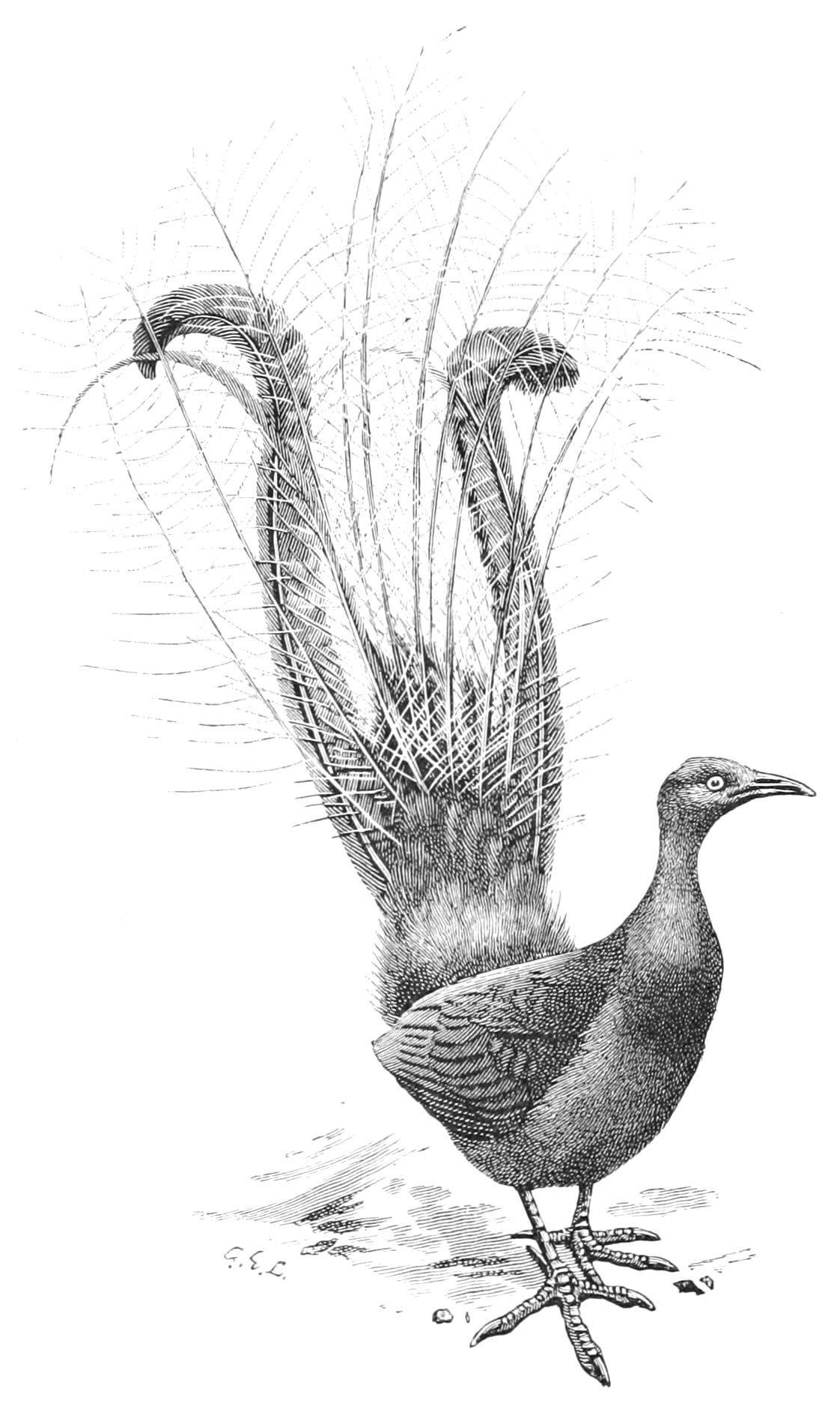
Fig. 106.–Lyre-Bird. Menura superba. × ⅒.
Lyre-birds haunt precipitous sandy gullies in thick forests with tangled undergrowth, whether inland or near the coast; and, though able to fly, live chiefly upon the ground, whence they leap, when scared, to branches even ten feet high. They run with the tail horizontal, and scratch among fallen leaves for insects–especially coleoptera–myriapods, worms, and molluscs; the solitary individuals or pairs which are usually observed being particularly shy. Each cock has a walk or playground, and scrapes little hillocks or hollows for dancing places, where he struts or pirouettes with erect tail and drooping wings, scratching, pecking, and singing at intervals. Apparently, however, he is not polygamous. The normal cry is a loud, liquid, gurgling sound; but the Pheasants, as the Colonists term them, are clever mockers, imitating a cock's crow, a hen's cackle, a dog's bark or howl, the Laughing Jackass's note, or even the setting of a saw. The tail-feathers are said to be shed after breeding, and to be fully developed only by the fourth year, when males begin to sing. The oval, domed nests, placed on ledges of cliffs, on tops of old stumps, in forks of trees, or by fallen logs, are loose bulky masses of sticks, bark, grass, leaves, ferns, and moss, lined with roots and the bird's feathers. The one large egg has a stone-grey, brown, or dark purple ground-colour, blotched, dotted, and streaked with purplish or blackish-brown. The chicks are said to be covered with black down in M. victoriae, white in M. alberti, and brownish in M. superba; and to remain six weeks in the nest. The hen sits with her tail curled sideways or forwards. The flesh is dark, tough, and unpalatable.
Fam. II. Atrichornithidae.–Atrichornis has a large bill; moderate scutellated metatarsi; extremely short wings with eleven primaries, the outer of which is very small, and some eight secondaries; and a long, broad, graduated tail with twelve rectrices. The tongue is sagittate, the aftershaft rudimentary, and no down is present on adults. A. clamosa of Western Australia, about eight and a half inches in length, is brown above, barred with dusky, and reddish-white below, with a black pectoral patch; A. rufescens of New South Wales has the lower parts like the upper. The females appear to be unknown. These very shy birds haunt dense scrub, or grassy and bushy tracts, being very difficult of observation; they mimic the notes of other species cleverly, and also utter a peculiar noisy cry. They scratch in the ground, probably for insect-food.
D. Oscines.
Of this group, or the true singing birds, the anatomy is even less worked out than that of the Suboscines, and consequently the relationships are in many cases extremely doubtful. The Hirundinidae stand distinctly apart, with no other Families near them, though some similarity of habits, and possibly of structure, may be recognised in certain Muscicapidae (especially if Artamus be included among them), and to a less extent in a few Sturnidae; yet almost as much resemblance may be perceived in some Tyrannidae, which (not being Oscinine) can have no affinity to the Hirundinidae. The likeness is therefore probably one of analogy only, and, if so, of no taxonomic value. Here again it must be stated that the Oscines hardly attain more than the rank of a Family, and that in the Passeriformes the Families have not the same value as in the foregoing Orders.
The Alaudidae are generally recognisable by the casing of their metatarsi (p. 496), but in other respects they seem to shew an affinity to the Motacillidae (Anthinae) on the one hand, and to the Fringillidae on the other. The wing-characters, on which reliance was formerly placed, prove to be wholly untrustworthy.
As to the rest of the "Families" of Oscines, it is impossible to indicate their probable relations by placing them in sequence, or even at present to group more than a few of them with any degree of assurance. Some have not yet been defined at all, and few of them sufficiently for anyone to be confident as to their limits. Thus in the Muscicapidae hardly any two systematic ornithologists will agree as to which genera should be included and which excluded. If restricted to Old World forms, there is still no defined boundary between them and the Campephagidae, while there is perhaps even less distinction between them and the Sylviidae (or Sylviinae, if these last be included among the Turdidae). Moreover, by some taxonomers the Mniotiltidae have been referred to the Muscicapidae, and though there is an obvious distinction between them in the number of the primaries, the instance of the Alaudidae (already mentioned) shews that this may be of very slight importance.
Some other "Families" may perhaps be grouped with less risk of error. The Troglodytidae, Certhiidae, Sittidae and Paridae are possibly such; but the limits of the last-named are certainly not laid down, and it would be hard to give a good reason either for admitting or refusing to admit into it genera like Liothrix or Chamaea, while the puzzle is still greater in regard to some forms from Australia and New Zealand.
The two latest writers on the subject, Dr. Gadow and Professor Newton, abstain from offering any scheme of Classification of the Oscines, the latter limiting himself to the declaration, already expressed by the late W. K. Parker, that the Corvidae should stand as the highest group. As regards their predecessors it will be enough here to enumerate the "Families" in the order in which they were arranged by Dr. Stejneger[279] in 1885, and Dr. Sharpe[280] in 1891; the scheme of the last author, however, being reversed to harmonize with the plan of the present volume, in which the lower groups are assigned priority. The order of Dr. Stejneger, which is based on both anatomy and morphology, is that subsequently followed, but his Families are not invariably adhered to.
Dr. Stejneger. Dr Sharpe.
Alaudidae. Hirundinidae.
Motacillidae. Muscicapidae.
[H]Enicuridae. Campophagidae.
Timaliidae. Pycnonotidae.
Leiotrichidae. Timeliidae.
Muscicapidae. Mimidae.
Turdidae. Troglodytidae.
Cinclidae. Cinclidae.
Troglodytidae. Turdidae.
Chamaeidae? Sylviidae.
Mimidae? Vireonidae.
Hirundinidae. Ampelidae.
Campephagidae. Artamidae.
Dicruridae. Laniidae.
Ampelidae. Regulidae.
Artamidae? Paridae.
Laniidae. Zosteropidae.
Vireonidae? Dicaeidae.
Paridae. Nectariniidae.
Oriolidae. Meliphagidae.
Paradiseidae. Certhiidae.
Corvidae. Mniotiltidae.
Sturnidae. Motacillidae.
Meliphagidae. Alaudidae.
Nectariniidae. Fringillidae.
Dicaeidae. Coerebidae.
Certhiidae. Tanagridae.
Coerebidae. Ploceidae.
Mniotiltidae. Icteridae.
Tanagridae. Oriolidae.
Ploceidae. Dicruridae.
Icteridae. Eurycerotidae.
Fringillidae. Eulabetidae.
Sturnidae.
Ptilonorhynchidae.
Paradiseidae.
Corvidae.
As regards structure, the Oscines have one posterior incision or fenestra on each side of the sternum; the furcula is U-shaped; the tongue is variable, as is the syrinx (pp. 13, 21, 22, 467); the nostrils may be pervious or impervious; an after-shaft is nearly always present, though comparatively weak; down occurs sparingly on the blind young, and is absent, or only found on the unfeathered spaces, in adults. The primaries number ten or eleven; the secondaries nineteen, twenty, or even more; the rectrices normally twelve. The form of the bill, wings, and tail are discussed under the different Families; the metatarsus exceptionally is smooth in front, but is ordinarily scutellated, while behind it is smooth and generally compressed, except in the Alaudidae, which, having it scutellated posteriorly, are termed scutelliplantar, as opposed to laminiplantar (with one horny growth behind). The hallux is the strongest toe.
Of fossil forms of Oscines, Osteornis (Protornis) of the Lower Eocene of Glarus in Switzerland may be Passerine; Palaegithalus (Sylviinae) and Laurillardia (Sturnidae) have been found in the French Upper Eocene; Palaeospiza (Fringillidae) in the Oligocene of Colorado; Motacilla, Turdus, Lanius, Corvus, Fringilla, and Loxia in the French Miocene or in the Breccia of Italy; Scolephagus and Corvus in the Pliocene of Oregon; Palaeocorax in the Chatham Islands; an extinct Foudia (Fringillidae) in Réunion.
Fam. I. Alaudidae.–The Larks inhabit the Palaearctic, Indian, and Ethiopian Regions, only one genus (Otocorys), with many races, being found in America, and one (Mirafra) in the Australian Region. Of the former, O. peregrina, occurs as far south as Bogota, while the latter is found in Australia and Flores. M. hova is peculiar to Madagascar, M. javanica to Borneo and Java, Spizilauda deva to India. Alauda arvensis, the Sky-Lark, and Lullula arborea, the Wood-Lark, alone breed in Britain: but Otocorys alpestris, the Shore-Lark, is a regular winter-visitor to our shores; while Galerita cristata, the Crested Lark, Calandrella brachydactyla, the Short-toed Lark, and Melanocorypha sibirica, the White-winged Lark, occur occasionally. The Sky-Lark has been introduced into Long Island, N.Y., Australia, and New Zealand.
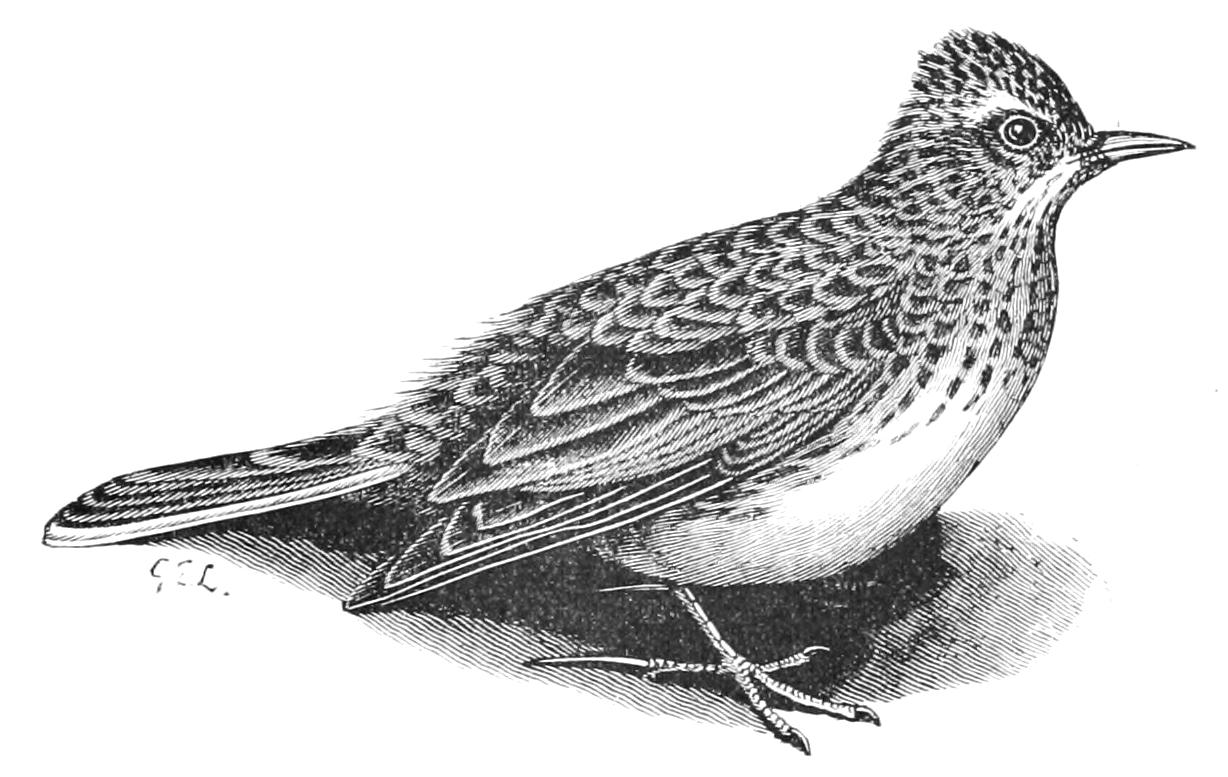
Fig. 107.–Sky-Lark. Alauda arvensis. × ½.
The bill is long and curved in Certhilauda and Alaemon, shorter and slender in Alauda, similar but more robust in Galerita, abbreviated and conical in Calandrella, Pyrrhulauda, and Melanocorypha, and extraordinarily stout in Rhamphocorys, with a gap between the maxilla and mandible. The metatarsus is elongated, and may be more slender as in Certhilauda, or stouter as in Galerita and Melanocorypha; the hind-claw is generally much lengthened and straight, but may be short and curved, as in Calandrella, Pyrrhulauda, and Alaemon. The wing varies much in length, many forms having the outer primary almost aborted, though in Mirafra and elsewhere it is of fair size; the inner secondaries are nearly as long as the primaries in Calandrella. The tail is moderate or short, and may be rounded, nearly square, or emarginate. The normal coloration is light-brown with darker longitudinal streaks, the under parts being whitish and frequently spotted anteriorly; desert forms, however, often have uniform pale buff or rufous plumage–for example, Galerita isabellina and Ammomanes. Melanocorypha yeltoniensis is nearly black in the male; others of the same genus have a black gorget; the black-cheeked Rhamphocorys, Alaemon alaudipes and Melanocorypha sibirica exhibit white wing-patches; while Otocorys has a projecting black tuft on each side of the occiput, black cheeks, lores, and bands on the crown and breast, the rest of the face and throat, or even the lower parts, being yellowish. Tephrocorys cinerea and Mirafra apiata have a rufous crown and breast respectively. Pyrrhulauda is chiefly black below, and varies above from grey to chestnut, relieved by black and white. Ordinarily the sexes in Larks are similar. Crests are not uncommon.
Certhilauda, Alaemon, and Ammomanes inhabit deserts or arid plains, Alaudula raytal frequents sandy islets, and Otocorys often selects uplands; but most forms only require open country, being chiefly ground-birds and seldom found near woods. Lullula, however, loves heaths and the outskirts of copses, and Mirafra bushy spots. Larks often flock together, and are not usually shy, since they will even enter villages; the desert species are particularly quick runners, while the flight is exceptionally weak in Ammomanes, Calandrella, and some others, though as a rule sufficiently strong. Perching is not an uncommon habit, Lullula and Mirafra habitually settle on trees or tall bushes, and several forms squat to avoid detection. In general dusting takes the place of washing. The food consists of insects and their larvae, seeds, worms, small molluscs, crustaceans, or even berries. Most Larks soar while uttering their pleasing trills, and plaintive calls are often heard; Lullula has a more flute-like song, Pyrrhulauda utters a shrill chirp. Galerita cristata and Melanocorypha calandra imitate other birds successfully when caged. The cup-shaped nest of bents, lined with finer grasses, fibres, or hair, is placed in herbage or in some depression in the soil–wool, cotton, rags, or even sticks being exceptionally added; but two or three species of Mirafra build a domed structure, occasionally placed on bare rocks or roofs of houses. The eggs are generally whitish, closely spotted or zoned with purplish-grey or brown; some specimens, however, are thickly freckled with yellowish or marked with reddish. The number varies from two in Pyrrhulauda, and about three in Ammomanes, to five, six, or even seven. Both sexes incubate in some cases, while two or more broods are often reared in the season. Thousands of Sky-Larks are netted annually for the table.
Fam. II. Motacillidae.–This group comprises the Sub-families Motacillinae, or Wagtails, and Anthinae or Pipits. The bill is thin and more or less elongated, with a slight notch, the culmen being decidedly curved in Oreocorys. The metatarsus is very long in Wagtails, variable but shorter in Pipits; it is usually slender, with the hind claw well developed and slightly curved; though it is stout, with very long hallux, in Macronyx, Xanthocorys, and Neocorys. The wing is commonly elongated and pointed, with the inner secondaries reaching nearly to the end of the primaries, but it is shorter and more rounded in some species of Anthus. The tail is very long in Wagtails, but moderate in Pipits, being generally somewhat emarginate.
Wagtails range over the Old World, but are lacking in Australia and Polynesia; two species extend to the extreme north-west of America, one is accidental in Greenland, and one is restricted to Madagascar. Pipits are almost cosmopolitan, though not found in Polynesia; only two forms, however, inhabit North America, while one is peculiar to New Zealand, and another to Australia; Anthus bogotensis is exclusively Andean, A. antarcticus occurs in South Georgia, A. bertheloti occupies Madeira and the Canaries.
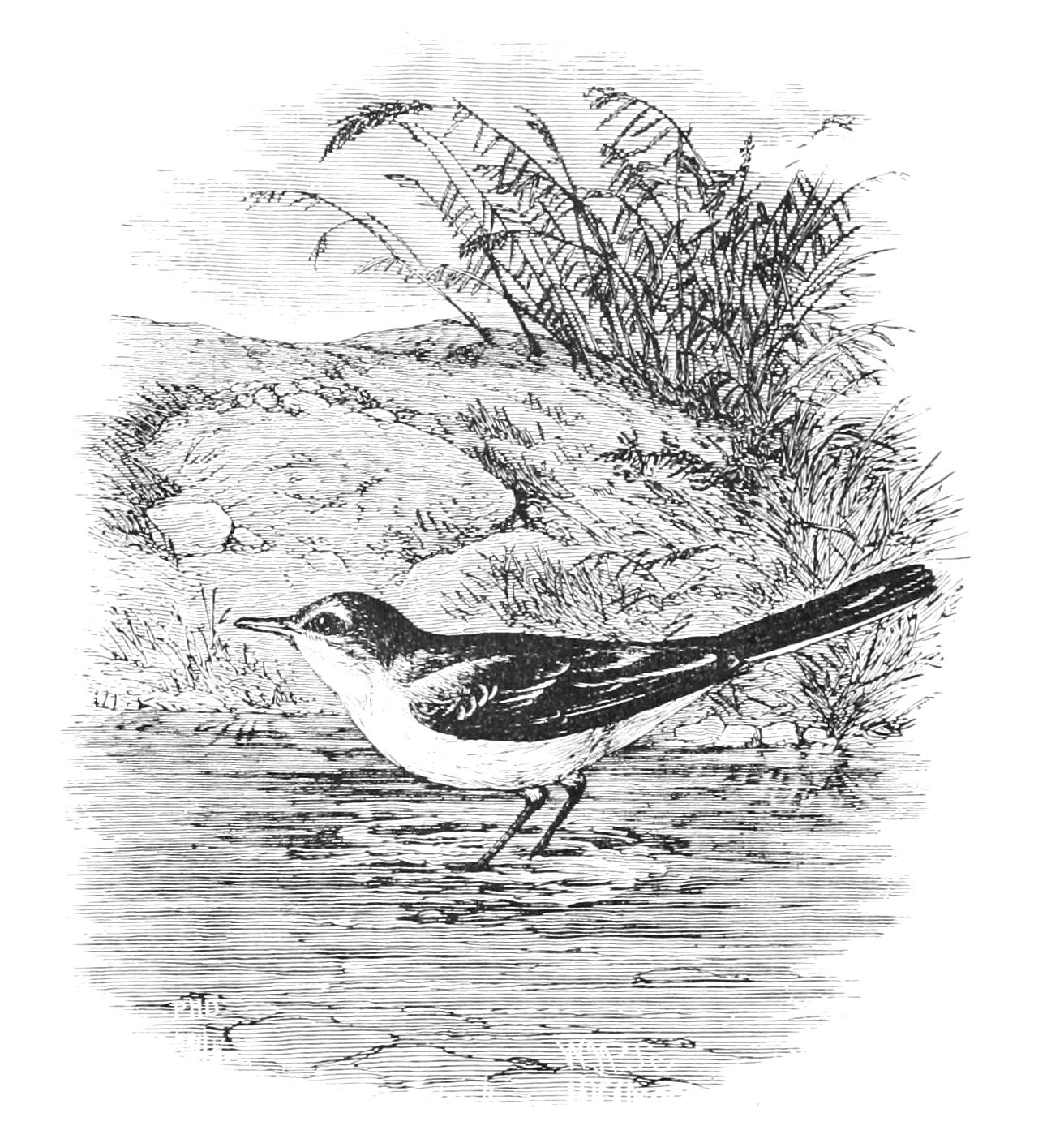
Fig. 108.–Yellow Wagtail. Motacilla raii. × ⅜. (From Natural History of Selborne.)
Wagtails are generally black and white, grey and white, grey with yellow breast (or even head), greenish with yellow lower parts and greyish or black heads, or almost entirely yellowish. Most Pipits are brown above, with dark streaks, and light edges to the feathers, and are buff, whitish, or rufous below, with triangular brown spots. The outer rectrices are usually more or less white, as are sometimes part of the others. Limonidromus, however, is an olive-brown Wagtail with two black crescentic marks below, Anthus chloris a Pipit with a yellow patch on the breast. A. rosaceus has yellow axillaries; A. tenellus, has the wings, tail, cheeks, and under surface chiefly yellow, with a black pectoral band. The curious genus Macronyx, to its mainly brown coloration adds orange, yellow, or pink lower parts with a black gorget, while it shews a marvellous resemblance in other respects to Sturnella (p. 580)–M. crocea to S. magna, M. ameliae to S. defilippii. The bill and feet are usually black in Wagtails; the former is brown, with paler mandible and yellowish gape in Pipits, where the feet are brown, yellowish, or reddish. The females are duller, and in the Motacillinae the young are usually browner.
Wagtails frequent streams and stagnant waters, as in the case of the Pied, White, and Grey Wagtails, Motacilla lugubris, M. alba, and M. melanope; or they haunt fields of corn and meadows, as in the Blue-headed and Yellow Wagtails, M. flava and M. raii. All the above breed in Britain, but the White and Blue-headed species rarely. The Grey and the Yellow Wagtails both have yellow breasts, but the former has a grey, the latter an olive, back.
Pipits prefer open places with rough herbage, as for instance the Meadow-Pipit, Anthus pratensis; rocky shores, as the Rock-Pipit, A. obscurus; or open parts of woods and banks, as the Tree-Pipit, A. trivialis. These nest commonly with us, while the Red-throated Pipit, A. cervinus, the Tawny Pipit, A. campestris, Richard's Pipit, A. richardi, and the Water-Pipit, A. spipoletta, visit us occasionally. Flocks are rarely seen, but a few individuals often congregate on the sea-beaches in winter; the flight is easy, though jerky, and not protracted; that of Wagtails being distinctly undulating. Neocorys soars like a Sky-Lark, and the Tree-Pipit in particular hovers above his perch while singing. The songs of the last-named, and of Motacilla vidua are more Finch-like; that of Neocorys Lark-like; those of other species shrill, and less frequent than their repeated call- or alarm-note of chit-chit (Pipits) or chis-sic (Wagtails). The food consists of seeds, insects, worms, small molluscs and crustaceans, usually procured upon the ground, Wagtails hunting for flies round cattle, and being very commonly seen wading. Pipits make their nests almost entirely of grass, Anthus correndera and A. rufulus occasionally adding an overarching cover; Wagtails use moss, grass, and roots, with a bedding of hair and feathers. The four to six eggs are bluish white or brownish, with grey, blackish, or brown spots in the Pied Wagtail and its similarly coloured allies, yellowish-white with yellowish and greenish-brown markings in others of the Sub-family; in Pipits they are commonly greyish or yellowish-white with brown and grey mottlings, sometimes covering the whole shell; while in the Tree-Pipit they vary from grey with dark brown spots and streaks to reddish-white, with rich brown, claret-colour, or bright red markings or close frecklings. A black line or two is a common feature throughout the Family. Wagtails choose for nesting sites ledges of rocks, crevices, holes in trees or walls, tops of pollarded willows, stony banks, or–in the Yellow Wagtail group–hollows in the soil among herbage. Pipits prefer the ground, or even spots shaded by trees, as in the Tree-Pipit.
Fam. III. Henicuridae.–The Fork-tails, a group of doubtful affinity, generally placed near the Motacillidae, extend from the Himalayas and the hills of South and West China to Burma and the Great Sunda Islands, one of the species–some dozen in number–reaching Samarcand westwards. They are black and white birds, with stout, straight, and usually elongated bills, long, strong metatarsi without scutellation, moderate rounded wings, extraordinarily long forked and graduated tails–except in Henicurus scouleri, where the shape is square and the feathers short–and well-developed rictal bristles. The outer pair of rectrices are white. H. ruficapilla has an orange-chestnut crown and hind neck, nearly the whole back being chestnut in the female; that sex of H. velatus has a brown head; two species have the upper parts spotted with white, and two the back slate-coloured. Several of them have crests. The bill is black, the feet whitish. These active unsuspicious birds haunt forest-streams or hill-torrents, and hunt for molluscs, insects and their larvae, near or in the water. They often wag the tail when perched on stones or branches. The large nest is formed of fibres, roots, and moss, and is placed on rocks or tree-stumps; the three or four eggs are greenish-white, with scattered brownish spots.
Fam. IV. Timeliidae.–In this Old World assemblage are included by Dr. Sharpe[281] many genera rather referable to the Turdidae, Pycnonotidae, Troglodytidae, and Paradiseidae; but the Family may be taken to contain most of that author's Crateropodes and Timeliae,[282] the Tit-like Liotriches, and perhaps Clitonyx, Chaetobias, and Myiophoneus. The whole question, however, is very doubtful, and no decision can yet be arrived at. The supposed diagnostic points are the rounded wings curved to fit the body, the lax, soft plumage, the comparatively large outer primary, the similarity of the unspotted females and young, and the Thrush-like bill. This bill, however, may be very strong and hooked, as in Myiophoneus and Gampsorhynchus; stout, deep, and wide, with festooned maxilla, as in Paradoxornis; similar but smaller, as in Chleuasicus and Suthora; short and blunt, as in several of the Liotriches; extremely elongated, slender and decurved, as in Pomatorhinus; or extraordinarily so, as in Xiphorhamphus. It is not infrequently notched. The metatarsi are typically strong or even clumsy, and vary considerably in length; in Liothrix, however, they are slender; while Cholornis has only two anterior toes (p. 10). The tail, often broad and much graduated, may be very long, as in Sibia, or no longer than the upper coverts, as in Oligura; the rectrices being obliquely truncated in Siva, curved outwardly in Liothrix, and frequently pointed or somewhat spiny. Elongated rictal bristles are not uncommon; several species have crests, that of Grammatoptila being exceptionally large; rigid shafts occur in the head- and mantle-feathers of Acanthoptila, on the forehead in Dumetia, Timelia, and Chaetops; hair-like plumes decorate the back of Macronus; the inner secondaries are much produced in Cinclorhamphus; the cheeks are bare in Aethocichla.
The sexes are commonly alike, the plain rufous coloration being often relieved by black, white, and grey; Liothrix and Clitonyx, however, shew tints of red or yellow; Myiophoneus of purple, blue, and black, and in some cases maroon; Brachypteryx of indigo. Hyperergus is partly olive-green, while Trochalopterum chrysopterum and T. phoeniceum exhibit respectively golden and crimson hues, not to mention other instances.
Many of the forms are found from the Indian Region to New Guinea, New Caledonia, and New Britain, one reaching Fiji and two New Zealand; others occur in the Ethiopian countries, whence a species of Argya extends to Morocco and Tripoli, and a second to Arabia and the Jordan. Crossleyia, Bernieria, Mystacornis, Xanthomixis and Oxylabes are peculiar to Madagascar.
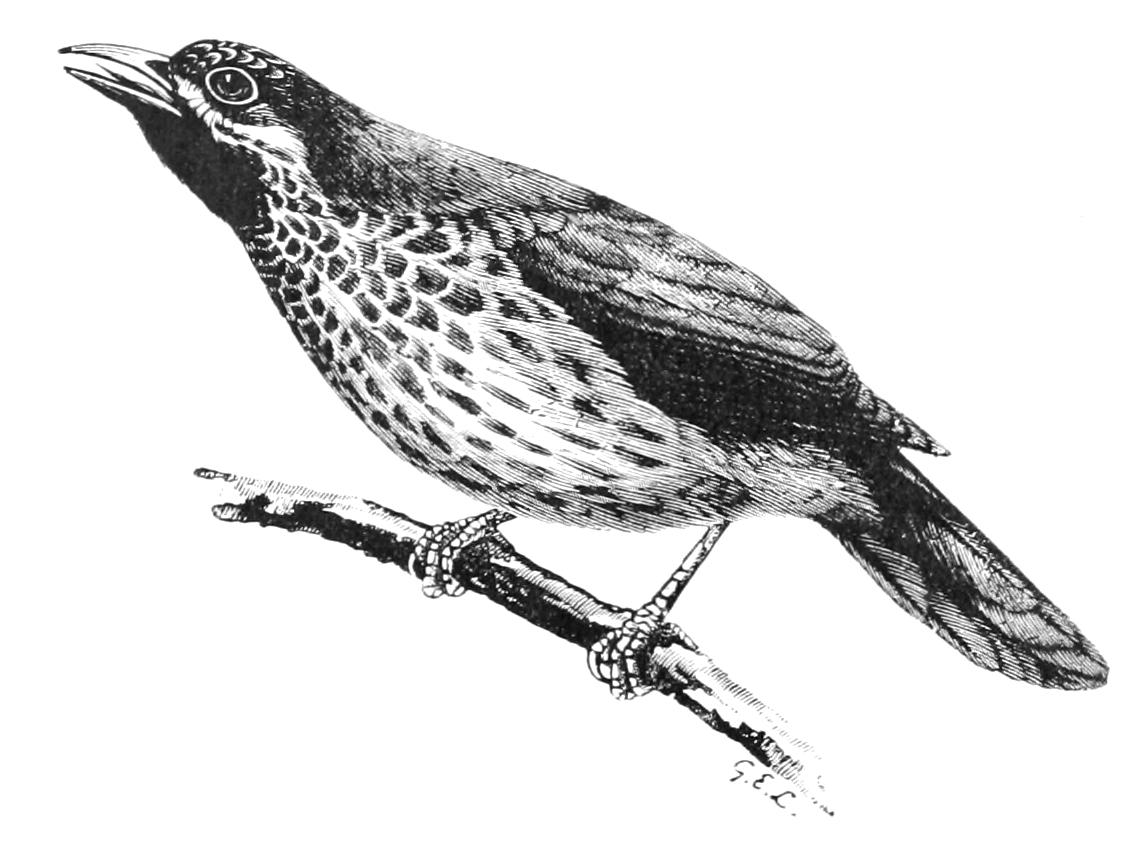
Fig. 109.–"Babbling Thrush." Timelia maculata. × 5⁄11.
Most members of the Family inhabit woods near water with thick undergrowth, or more rarely stony hills, scrubby gullies, and rocky torrents; Cinclorhamphus haunts grassy plains; Crateropus kirki prefers reeds. The majority are decidedly terrestrial, skulking warily among the bushes and grass, either singly or in small companies, while some are inquisitive and active. The flight is low, short, undulating, and laboured; but the birds hop and climb well, bounding over the ground or clinging to the trees. The Japanese and Chinese "Hill-Robin" (Liothrix lutea) and its allies are more arboreal, as are Paradoxornis, Suthora, and so forth. Orthonyx is said to dance like a Lyre-bird (p. 493). Many species scratch up the soil or dead leaves in search of insects and their larvae, which, with seeds, constitute the chief food; fruit, however, or even small reptiles, crabs, worms, and molluscs are occasionally eaten. The tail is often carried erect; Cinclosoma rises with a whirring noise; Cinclorhamphus hovers in the air. Several members of the Family are comparatively silent, Sittiparus and Alcippe twitter, Stachyridopsis utters clear, bell-like tones, Timelia slowly repeated cries, Myiophoneus a fine whistle; but usually harsh chattering or screaming noises alternate with chuckles, croaks, clucks, or a laughing chorus. Psophodes is called the "Coach-whip bird," from its notes ending like the crack of a whip. The habits of Clitonyx are said to resemble those of the Meliphagidae. The nest is commonly a rough structure of leaves, moss, herbage, and the like, often lined with roots, which is placed in low trees, bushes, reeds, grass, holes in trees, or banks, by Garrulax, Argya, and Turdinus; in crevices of rocks, by Chaetops; or on crags near torrents, by Myiophoneus. It may consist of somewhat softer materials, frequently bedded with fur, wool, or feathers, as in Crateropus, Paradoxornis, and Trochalopterum–several pairs of the last-named occasionally using the same tree; or it may be a domed mass of grass, leaves, bark, and moss, situated on or near the ground, as in Timelia, Orthonyx, Pomatorhinus, Pellorneum, and Rhopocichla. Lioptila and some of its nearest allies build a mossy cup, adorned with cobwebs, in high firs or other trees. The eggs of Crateropus and Argya are deep greenish-blue, glossy and spotless; those of Garrulax are similar, or pale blue or white; those of Dryonastes light blue; those of Pomatorhinus, Stachyris, Orthonyx, and Xiphorhamphus white; those of Paradoxornis whitish, with yellow-brown and purple markings. The ground-colour is frequently greenish-blue, olive, brown, salmon, creamy, or white, and shews scattered or dense spots, streaks, freckles, blotches, or even hieroglyphics, of reddish, purplish, chocolate, olive, grey, or occasionally black. The coloration, however, is by no means constant in each genus, while the number varies from two to five or six. The Australian Pomatorhini fashion large domed nests, after the manner of Magpies, of twigs lined with bark and feathers, and add a spout-like entrance, while several are commonly found at the ends of the branches of the same tree; their buff or purplish eggs, clouded with brown and purple, and streaked with black hair-lines, number from four to ten.
Fam. V. Pycnonotidae.–The Bulbuls, often included among the Timeliidae, have a fairly long bill, usually somewhat stout and curved, which is Finch-like in Spizixus, very long and thin in Phyllostrephus, and so forth. The maxilla is generally notched, being minutely serrated in Andropadus, and decidedly hooked in Tricholestes, Aethorhynchus, and Trichophoropsis; while strong or weak rictal bristles are ordinarily present. The abbreviated metatarsi lack scales in several genera. The wings are normally short, rounded, and concave–though more pointed in Hypsipetes and Irena (if these really belong to the Family), Hemixus, Alcurus, and Ixocincla or even long in Tylas–the secondaries are much elongated in Aethorhynchus. The tail is sometimes square or graduated, but is commonly rounded, being rarely forked, as in Hypsipetes; in Irena and Micropus the coverts are much lengthened, while they nearly equal the rectrices in I. crinigera. Crests occur frequently, the constituent feathers in Alcurus being obtuse, in Criniger long and pointed, in Otocompsa somewhat recurved. Most of the Family are characterized by long, fluffy rump-plumage and conspicuous nuchal or dorsal hairs, the latter reaching their highest development in Tricholestes. The feathers hide the nostrils in Irena and Spizixus; Poliolophus has a yellow circumocular wattle, and several species of Pycnonotus possess fleshy eyelids of black, red, or grey.
The usual coloration is olive-brown, olive-green, or olive-yellow, commonly with wholly or partially yellow, white, greyish, or even orange, rufous, and buff under parts; Hypsipetes perniger is entirely black, Micropus melanoleucus black with white wing-spots, and many species are mottled with yellowish or white. Trachycomus has a yellow cap of decomposed bristly feathers; while elsewhere the head or the throat is often more or less black, brown, chestnut, grey, and rarely yellow or white. The tail and rump may be rufous, yellow, or orange, occasionally barred with black; and white or yellow markings frequently adorn the wings. Otocompsa shews crimson or scarlet ear-tufts, and crimson or yellow under tail-coverts; certain species of Pycnonotus have the latter scarlet, orange, or yellow; Rubigula has loose, stiff, scarlet plumage on the throat, and an orange under surface. Chloropsis is green and yellow, relieved by orange, blue, purple and black, and exhibits a conspicuous blue, purple, or emerald shoulder-patch, except in C. cyanopogon and C. flavipennis; Aegithina and Aethorhynchus are green, black, and yellow; while Irena (the Fairy Blue-bird) is either brilliant turquoise, with black wings, tail, and under parts, or purple-blue, varied by cobalt above, with or without a black mantle and under surface. The bill and legs range from brown, black, or plumbeous, to coral red, orange, yellow, or whitish. The sexes are similar, except in Aegithina, Aethorhynchus, Chloropsis, and Irena.
From their headquarters in the Indian and Indo-Malay countries, the Pycnonotidae extend to China, Hainan, Formosa, and the Moluccas, Hypsipetes even reaching Japan; they also occupy the whole Ethiopian Region, with Madagascar and the neighbouring islands. To these latter Ixocincla and Tylas (p. 533) are peculiar; while Pycnonotus, Criniger and Xenocichla inhabit both of the above Regions, and the first is found from Morocco to the Cyclades, Rhodes, Cyprus, and Palestine.
Bulbuls are gregarious arboreal birds of feeble flight, rarely seen upon the ground, where they move with awkward shuffles or short hops. The majority are sociable, and frequent gardens, orchards, forests, and low jungles; they feed chiefly upon fruits, including berries and seeds, but also upon insects, which Aethorhynchus, Aegithina, and Chloropsis in especial seek among the leaves and branches of the trees. The ordinary note is a mellow cheerful whistle, becoming a pretty song in such species as Pycnonotus haemorrhous, and P. xanthopygus, the Ceylon and Palestine Nightingales; chattering and chirping sounds are, however, often heard, while Criniger, Phyllostrephus and Hypsipetes habitually utter reiterated jarring or croaking cries, particularly when roosting in company. The flimsy, or occasionally bulky, nests of twigs, fibres, grass, moss, and cobwebs are placed in low trees, bushes, creepers, or bamboo-clumps; Aegithina, Chloropsis, and Irena generally laying two or three white or greenish eggs with brown streaks or spots, and the remaining forms from two to four, of a pinkish white or salmon colour, with markings of various reds and purples. The nest of Iole is suspended by the rim like that of an Oriole. The Perso-Arabic Bulbul of poets is probably Daulias hafizi, a true Nightingale.
Fam. VI. Muscicapidae.–The Old World Flycatchers are a group of somewhat vague definition, Hemipus appearing closely allied to the Laniidae, Cryptolopha to the Sylviinae, Lioptilus to the Timeliidae. Connexion with the Turdinae is implied by the more or less spotted plumage of the young, though the metatarsus is usually scutellated anteriorly. Typically the bill is broad and flat, with stiff rictal and prominent nasal bristles; it is extremely wide, with the culminal ridge strongly developed in Machaerorhynchus, Myiagra, Bias, and Smithornis; Sisura has it longer and more slender; Chelidorhynx short, with a pronounced hook; and the diminutive Smicrornis exceptionally small; while many species have it much less robust. The feet, usually weak, may be stronger, as in Chloropeta; the wings, ordinarily elongated and pointed, and especially so in Hemichelidon, are at times abbreviated and rounded, as in Niltava, whereas the secondaries in Platystira and Newtonia nearly equal the primaries, of which the outer is very short. The tail is also short in Diaphorophyia, but is usually moderate or long, and frequently much graduated, as in Rhipidura (Fantail), Elminia, and Terpsiphone, the males of the last having the two median feathers twice the length of the body. Terpsiphone, Cyanomyias, Bias, Trochocercus, and so forth, have fine crests, shorter in the female; while fleshy wattles, round or above the eye, of scarlet, blue, or yellow, are found in Terpsiphone, Zeocephus, Diaphorophyia, Platystira, and Arses. The bill is sometimes reddish or blue, and the inside of the mouth green or yellow, as in certain Birds of Paradise.
The males of our summer visitors, the Spotted and Pied Flycatchers, Muscicapa grisola and M. atricapilla, are respectively brown with whitish under parts streaked with dusky, and black and white; the hen-bird being similar in the former case, but in the latter olive-brown, with the frontlet, wing-patches, and lower surface buff instead of white. M. (Erythrosterna) parva, which is brown with grey head, and has a reddish-orange fore-neck that becomes rufous in the female, occurs accidentally in Britain. Platystira is glossy bluish- or greenish-black above with white markings, and white beneath with a black pectoral band, the female having greyer upper parts, and sometimes a maroon chest; Erythromyias is black and white, with an orange-rufous breast or back; Pseudogerygone is olive-green, brown, or grey above–dark crimson in P. rubra–with an admixture of black, buff, rufous, yellow, or white, and has similar or yellow tints below; Chasiempis is brownish, relieved by black, white, and bay; Culicicapa is greenish-yellow with a bright yellow lower surface, the head being grey in one species. The hen-bird in these four genera, where known, resembles the male. That sex of Niltava is blackish or purplish, varied with rich cobalt, especially on the neck, the under parts being orange-rufous or purplish-grey; the female is chiefly olive, often with a blue or lilac neck-patch. Malurus commonly shews a fine mixture of blue, purple, and velvety-black, with a little brown and white; one of its members is chiefly brown, but has a blue tail, and a lilac crown with black centre; a second is vermilion, black and brown above, and black below; a third has crimson in the place of vermilion; a fourth is bluish-black and white. The hen-birds are mainly brown, often with a blue, or even a green, tail. Piezorhynchus has two metallic black species, while P. chrysomelas is orange-yellow and black; Metabolus is almost white, with black face and throat; and lastly, Terpsiphone (or Tchitrea), well known on Chinese and Japanese screens and fans, contains several long-tailed and finely crested white birds, with glossy greenish-black head and throat, and with black markings on the wings and tail in T. paradisi, the Paradise-Flycatcher. The female is rich bay above, with similar head, but grey cheeks and throat. In other species the males are said to be maroon, cinnamon, chestnut, blue-grey, or glossy-black above. T. mutata of Madagascar may be dimorphic. Nuchal collars, elongated silky flank-feathers, and spots or stripes below, are not infrequent in the Family.
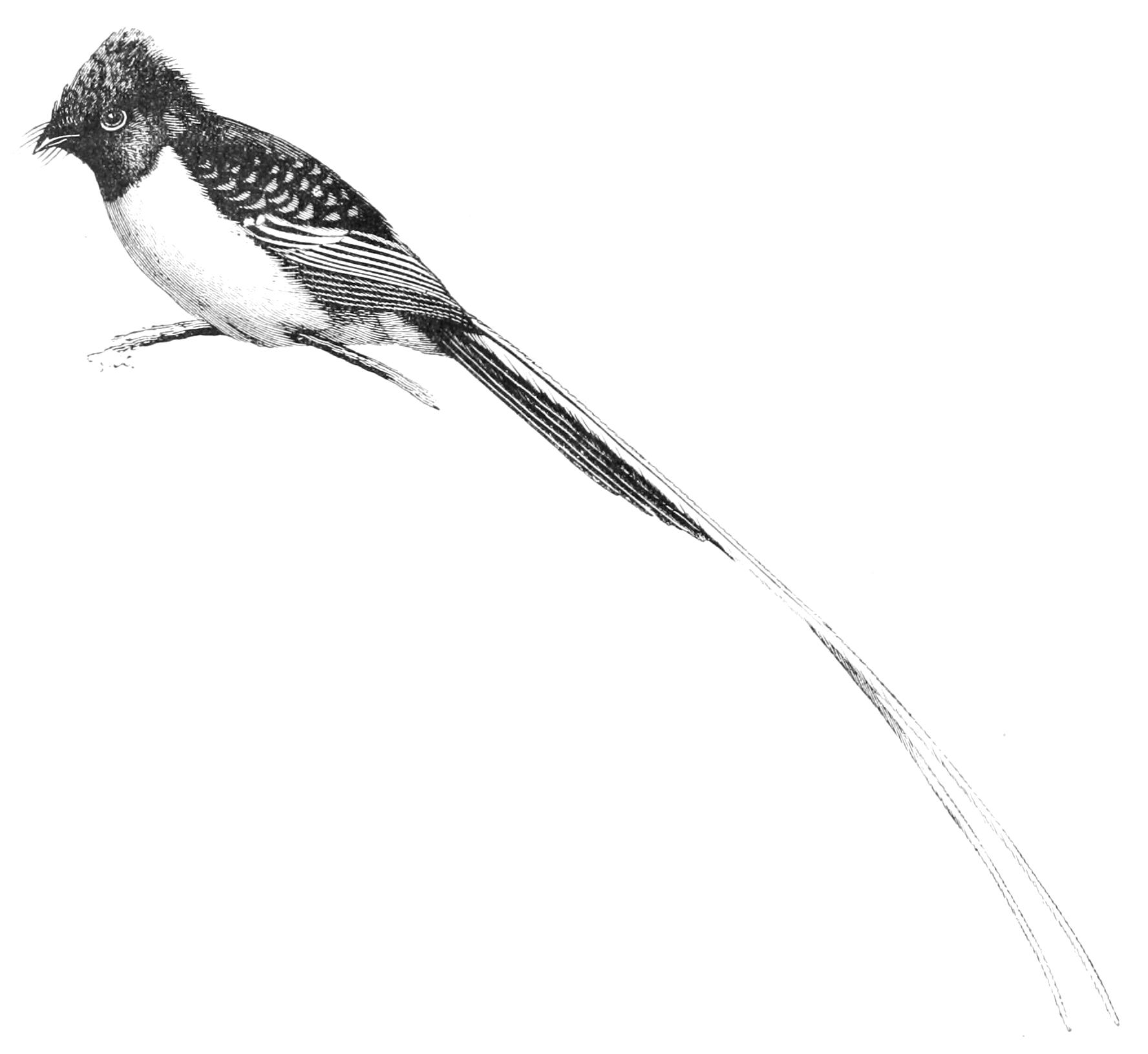
Fig. 110.–Paradise Flycatcher. Terpsiphone paradisi. × ⅓.
Flycatchers are common in the Ethiopian, Indian, and Australian Regions; and several species are Palaearctic, four or five reaching Europe. Most of them are migratory, the Spotted Flycatcher nesting northwards to Tromsö and Archangel, the Pied Flycatcher nearly as far. They love wooded districts, and Gerygone even gloomy forests; while they are usually silent and solitary, feeding on little but insects, which are habitually caught upon the wing with an audible snap of the bill, though also procured upon the boughs or by darting to the ground. The graceful, undulating, or zigzag flight, and the sudden dash into the air, followed by a quick return to the perch, are especially characteristic, as is a frequent quivering of the wings and tail; Rhipidura motacilloïdes is Wagtail-like in habits; while Sisura inquieta, the "Grinder" of Australia, runs along the river-sides, or hovers like a Kestrel, making a grinding sound in the air, whence it descends vertically to secure its prey. Other species of Rhipidura pick flies off cattle, and rise and fall perpendicularly in the air, opening the fan-shaped tail or tumbling completely over. Malurus runs quickly, or bounds along with rapid hops. Most Flycatchers are tame, but several are pugnacious; Lanioturdus is stated to be gregarious; Parisoma creeps about thick bushes; Smicrornis clings to the branches like a Tit; Niltava and other forms eat berries and the like in late summer; Eopsaltria and Gerygone are very fond of insect-larvae. The voice is usually faint, but is harsh in Terpsiphone, Smithornis, and Batis, croaking in Piezorhynchus and Lanioturdus; Sisura whistles; Gerygone, Malurus, and our Pied Flycatcher, have pleasing Redstart-like songs; while that of Microeca, which often soars aloft when singing, is said to resemble the strain of the Chaffinch. The neat nest, usually formed of grass, moss, leaves, bark, fibres, or hair, and not infrequently decorated with lichens or cobwebs, is placed in low forks or cavities of trees, if not among creepers or outgrowths on banks, Terpsiphone preferring higher situations. Gerygone builds a covered pear-shaped structure, with or without a protecting porch, of like materials, lined with fur or feathers, and suspends it in shrubs; Malurus and Smicrornis make rounder fabrics; while that of Ochromela is somewhat similar, but is composed of grass and ferns, and usually placed in low vegetation. The eggs, in number from two to six, are greenish- or buffish-white, with red, brown, or rarely grey, spots and blotches; exceptionally they are uniform light blue, as in Muscicapa atricapilla; white, as in Chelidorhynx; apple-green, green-blue, or whitish, with reddish-brown, yellowish, or lilac markings, as in Eopsaltria; or white, with red or purplish spots, as in Malurus, Chasiempis, and Gerygone.
Fam. VII. Turdidae.–This group is here divided into five Sub-families, (1) Turdinae or Thrushes and their allies; (2) Myiodectinae; (3) Sylviinae or Warblers; (4) Polioptilinae; and (5) Miminae or Mocking-birds. The first and third of these are often considered separate Families, but they are so closely connected by the Saxicoline and Ruticilline forms that they can hardly lay claim to such rank, while the Accentorinae and Regulinae of certain authors seem unnecessary. The Miminae shew some affinity to the Wrens (Troglodytidae).
Sub-fam. 1. Turdinae.–In this section the bill is usually rather long and stout, being notched but hardly curved, with few, if any, basal bristles; it is somewhat hooked in the so-called genus Geocichla–where it is much lengthened in five species, and abbreviated in G. princii; large, broad, and arched in Turnagra (a doubtful member of the Family); comparatively short and slender in Sialia, Ruticilla, Erithacus, Saxicola, and so forth; more robust in Accentor. The metatarsus is long in Catharus, Calliope, and Notodela, but is usually moderate, being particularly strong in Geocichla, Nesocichla, Zoothera, and Turnagra; in Saxicola, Erithacus, and Daulias it is at once slender and elongated. Generally the anterior scales are fused together, forming an ocreated covering (p. 10), but the opposite sometimes occurs, as in Accentor, Nesocichla, and Thamnobia. Typically the wing is fairly long and broad, with abbreviated outer primary, the next feather being emarginated in some species of Myrmecocichla; but in Dr. Sharpe's group Thamnobiae,[283] it is generally abbreviated and more rounded, in Sialia it is pointed. The tail may be long and wide, as in Turnagra, or comparatively short, as in Monticola and Pratincola, but is usually of medium length; it is normally square or rounded, though emarginated in Sialia, and much graduated in Copsychus and Cittocincla, while in Cossypha natalensis it has pointed feathers. Turdus (Geocichla) varius, T. horsfieldi, and T. hancii have fourteen rectrices.
The coloration is ordinarily plain black or brown, more or less varied with grey, white, rufous, or chestnut, occasionally in the form of a collar; many Thrushes, moreover, exhibit the characteristic white breast spotted with brown. The bill is frequently orange or yellow. As examples of the genus Turdus we may take our native Blackbird, Mistletoe- and Song-Thrushes T. merula, T. viscivorus, and T. musicus; our summer visitor the Ring-Ousel, T. torquatus; our winter immigrants the Redwing and Fieldfare, T. iliacus and T. pilaris; the American "Robin," T. migratorius; and the Ground-Thrushes ("Geocichla,") with their light patch under the wing. The sexes are commonly alike, but black or grey males have usually brownish females. A bushy crest occurs in Catharus.
Of some ten Rock-Thrushes (Monticola), M. saxatilis occurs exceptionally in Britain. It has a cobalt and blackish-blue head, neck, and upper back, a nearly white mid-back, brown remiges, chestnut lateral rectrices and lower surface. M. cyanus is almost entirely blue. The browner hens are generally spotted and barred below. Cochoa viridis is green and black, with blue-green under parts, and blue on the head, tail, and wings; C. purpurea has the bright colours replaced by purplish-brown and lavender; C. azurea is mainly rich blue, becoming purple below. The females are duller. Blue-birds (Sialia) are bright blue, often with chestnut breast or back, the males being the most brilliant; Grandala caelicolor is indigo, with blackish wings and tail.
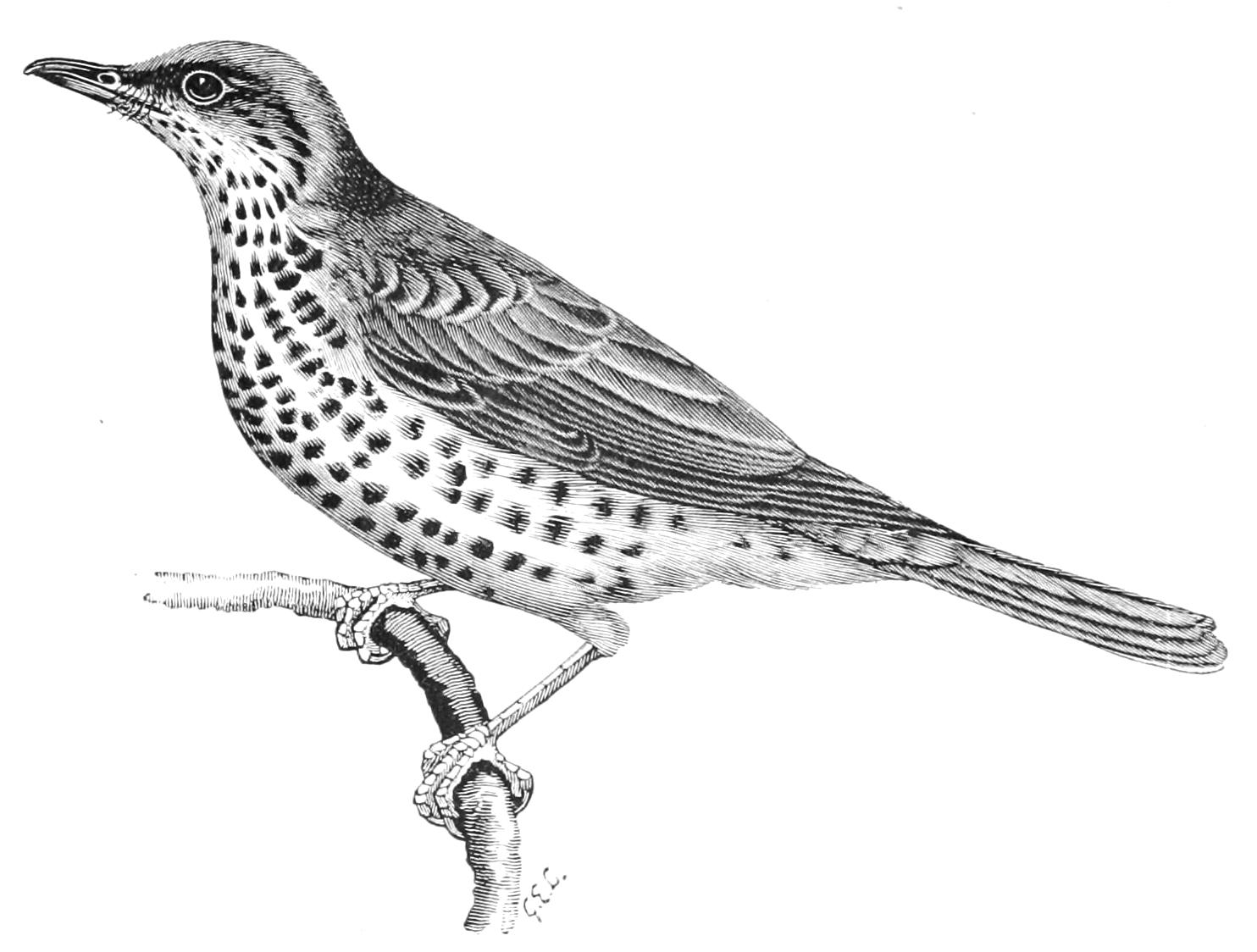
Fig. 111.–Mistletoe Thrush. Turdus viscivorus. × 7⁄11.
In Saxicola (Wheatear) the rump-region is white, except in some seven species, where it is entirely or partly chestnut or buff; the plumage exhibits various combinations of jet black, chestnut, brown, grey, and white, the black shewing especially upon the breast, quill-feathers, throat, lores, or ear-coverts. The females may be similar to the males or browner. Pratincola rubetra, our Whinchat, is mottled with brown and buff above and is buff below, having a superciliary streak and wing-bar of whitish; P. rubicola, the Stonechat, is blacker on the back, and has the head and throat black, but the breast rufous, while the hen lacks the black head. Other species have white rumps or tails, and the breast or even most of the plumage black. Oreicola has three black members with white under parts; Myrmecocichla eight, which are grey or brown, relieved by black, white, and buff. The Australian and Pacific Robins (Petroeca), of very doubtful affinity, are blackish or greyish, with scarlet or pink breasts, and some white above; one having a red head. Our Redstart, Ruticilla phoenicurus, is grey, with brown wings, chestnut breast, rump, and lateral rectrices, black face and throat; the hen being brownish above and buff below, with less brilliant chestnut tints. The Black Redstart is dark grey, with brighter rufous rump and tail, black lower parts, and a white wing-patch; brown replacing the grey and black in the female. Some species are blacker above, one has a chestnut back and no black throat, another has both rump and tail black, and three have blue on the forehead and crown, one of these again having a white gular mark. R. moussieri, linking the Redstarts to the Chats, is black, with orange-rufous rump, tail, and lower surface, a white alar spot, and white extending from the forehead to the face. The Robin,[284] Erithacus rubecula, needs no description; the Persian E. hyrcanus hardly differs; the similar Japanese Robin, E. akahige, has a grey belly; the Corean E. komadori is orange-chestnut above, black and white beneath. The Blue-throat, Cyanecula suecica, is brown, except for a white superciliary streak, bay tail-coverts, and a bright blue throat with a central rufous spot, to which succeed black, white, and rusty bands, and a whitish belly. C. wolfi lacks the gular spot, C. leucocyana has it white. Calliope camtschatcensis, C. pectoralis, and C. tschebaiewi, are brown or dark grey, with grey or black breasts, white abdomens, some black and white on the face, and glossy scarlet throats. Daulias luscinia, our summer visitor the Nightingale, and the larger eastern D. philomela are russet-brown in both sexes, with redder rump and tail, and whitish lower parts. D. hafizi of Persia is intermediate (cf. p. 506).
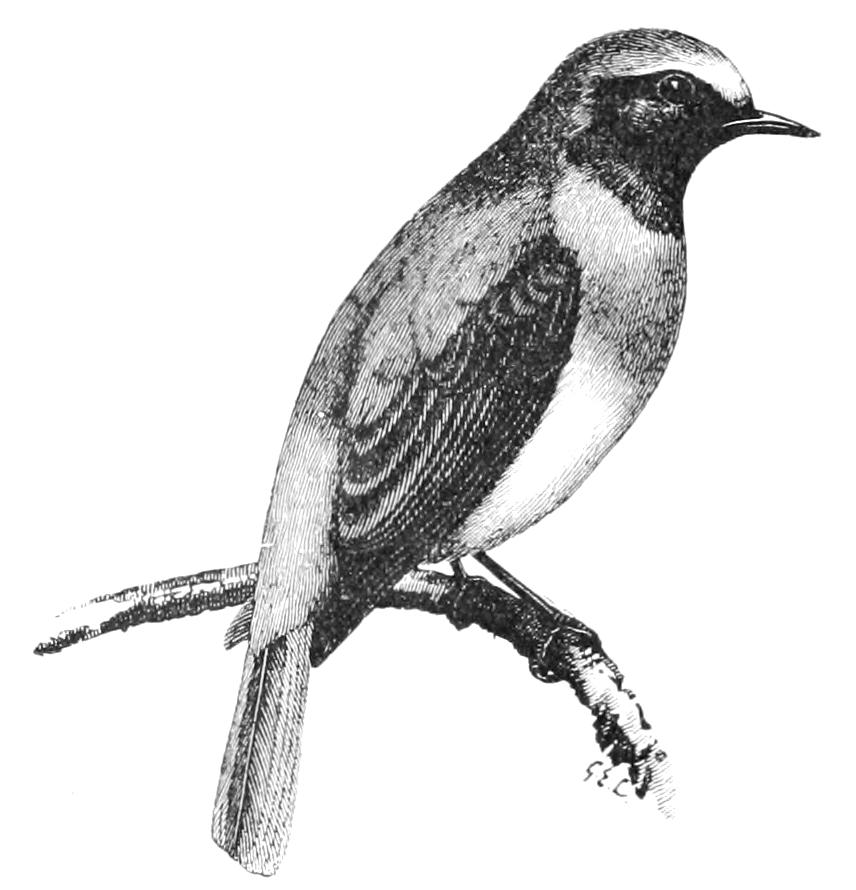
Fig. 112.–Redstart. Ruticilla phoenicurus. × ½.
Our Hedge-sparrow, Accentor modularis, is brown streaked with blackish, and shews bluish-grey on the head, throat, and breast; but the Alpine Accentor, A. collaris, which rarely visits Britain, has a white throat spotted with black, and flanks mottled with chestnut; while their congeners exhibit rufous lower parts or pectoral bands, black throats, or whiter wings and tails. Ephthianura is grey, brown, black and white above, with the crown, rump, and breast crimson in one species and yellow in two; of the latter one has a black mark on the breast, as has a fourth form with a white lower surface.
In the Thamnobiae the sexes are alike, or the females duller. The colour, as in Callene and Copsychus, may be dull blue and cobalt, purplish- or bluish-black, or bluish-grey, often with white rump; or, as in Cossypha and Thamnobia, grey, brown or blackish, with orange-chestnut or rufous rump, tail, and abdomen. Stripes of black and white often adorn the face, the ruddy hue occasionally tinges the breast, nape, or wing, while a blue alar patch or a white head occur exceptionally. Cittocincla is intermediate in coloration; Alethe is chiefly chestnut or rufescent-olive above, but grey and white or creamy buff below, with orange crown in two cases. Turnagra has brown upper parts with reddish tail, and the lower surface either grey with white throat, or whitish with dusky stripes; Cichladusa is similar, or has buff under parts, with black spots and gular crescent. All the above frequently exhibit white on the wings or tail. Lamprolia is velvety-black, with blue spangles on the head and neck, and white rump-region; Tarsiger is either blue above, varied with black, white, olive, or yellow, and with more or less orange below, or lacks the blue entirely. Aedonopsis and Phaeornis are brown, with grey and white under parts.