Chapter V · (continued 3)
Reading edition
The tibia is often partly bare, and the metatarsus is extremely variable; the legs are longer in Himantopus than in any other bird of its size, and long also in Recurvirostra, Cursorius, Dromas, the Parridae, and so forth, while Haematopus, Aegialitis, Scolopax, Glareola, Chionis, Tringa, and the Thinocorythidae are instances of the contrary. Both the front and back of these members are scutellated in most Scolopacinae and Tringinae, but the Charadriinae differ considerably in this respect; in Glareola the fore-part only is transversely scutellated, in Cursorius, Dromas, the Thinocorythidae and Parridae the whole of the surface, while in the Chionididae and Oedicnemidae both aspects are reticulated. The anterior toes are ordinarily free, or have the third and fourth digits slightly connected; but Dromas and Recurvirostra have them partly webbed, as to some extent have Himantopus, Totanus semipalmatus, and a few other forms, while in Phalaropus the metatarsus is much compressed, and the toes have lobed margins. The hallux, normally set rather high, is frequently aborted, as in Charadrius, Ibidorhynchus, Calidris, Cursorius and Oedicnemus; in the Thinocorythidae and Glareola it is very small, in Dromas larger; in the Parridae all four digits are on a level and abnormally long, as are the claws, so that the birds walk easily on floating vegetation. The nail of the mid-toe is pectinated in the Glareolidae, recalling that of the Caprimulginae (Night-jars). The digits are often somewhat fleshy, Oedicnemus moreover, has an enlarged tibio-tarsal joint.
The wings are usually long, having a bilobed appearance owing to the equality of the inner secondaries and outer primaries; Himantopus, Dromas, Glareola, and the Thinocorythidae have them much elongated, Phegornis and some other forms very short, while in Vanellus the expanse is most noticeable. In this genus, Lobivanellus, Hoplopterus, the Chionididae, and the Parridae, is found a carpal spur, often large and sharp; Metopidius, and, apparently, Hydralector have the radius dilated into a sub-triangular lamina[184]; Hydrophasianus has peculiar filamentous appendages to the first and fourth primaries; Scolopax minor has the three exterior of the normal eleven primaries particularly attenuated. The secondaries in the Limicolae vary from ten to twenty.
The rectrices are usually twelve; though Rhynchaea and the Parridae have ten, while Scolopax stenura and S. megala possess twenty and twenty-six respectively, the outer of which are exceedingly stiff and narrow–not to give further instances. The tail in Glareola is deeply furcate and Swallow-like, in Hydrophasianus it has the four median plumes very long and decurved in the breeding season; but it is often quite short, as in Scolopax. The form may be slightly forked, as in Chionis; somewhat graduated or cuneate, as in the Thinocorythidae, Totanus hypoleucus, and Oedicnemus; rounded, as in Cursorius; or almost even, as in Vanellus.
The tongue is rather long and pointed, being, however, rudimentary in Numenius; the nostrils are pervious, except in the Thinocorythidae, Glareolidae, and perhaps Dromas, and have at times a leathery operculum in Plovers; the syrinx is tracheo-bronchial, the furcula U-shaped; Parra has a decidedly muscular gizzard, and the Thinocorythidae possess a globular crop. The convoluted trachea of Rhynchaea, the papillae on the orbits of Chionis, the caruncles on the face of Machetes, and the loral wattles of Lobivanellus are fully described below. The aftershaft is very small in the Parridae, rather large elsewhere. In adults the down is sparing; in the young it is short, thick, and commonly of a yellowish hue, with brown longitudinal stripes; though it may be grey, as in Chionis and Haematopus; mottled with reddish and white, as in Snipes; or with black, orange, yellow, and white, as in Phalaropes.
The plumage is usually plain brown or grey, with an admixture of white, or less commonly chestnut; Vanellus, Lobivanellus, and Cursorius chalcopterus, however, exhibit metallic hues, and Chionis is white. Red or yellow beaks or feet adorn many forms. Crests occur in certain species of Vanellus, Hoplopterus, and Lobivanellus; the male of Machetes (Ruff) is most remarkable for its lateral head-tufts and fine neck-frill, developed for the breeding season; Numenius tahitiensis has peculiar bristly-pointed flank-feathers. In Scolopax the large eyes are set unusually far back in the skull. The sexes are generally similar, but in Eudromias,[185] Phalaropus, and Rhynchaea the female is brighter than the male, as well as larger, the latter fact holding true of a considerable number of the Tringinae and Scolopacinae, and of the Parridae, though a special study of the subject is still needful. In several species the breeding plumage differs remarkably from that of winter.
The Limicolae often flock together in the cold season, but are by no means uniform in their habits, and divergencies will be noticed under the various genera. They run well, often bobbing the head up and down, and fly strongly, wheeling round sharply in the air; while some Snipes rise in zigzag fashion. Typically waders, many, if not all of them, can swim on emergency, but few habitually do so, like Phalaropes. Exceptionally they perch on trees, or soar. Swamps, river-sides, and in winter the sea-coast, are the general haunts; but Coursers, Stone-Curlews and "Seed-Snipes" frequent arid or stony localities, Dromas sandy islets or shores, Chionis maritime rocks. Vanellus cayennensis and Parra jacana are said to indulge in dances, while Lapwings and other species feign to be wounded if their young are in danger. The food consists of crustaceans, molluscs, worms, and insects; rarely of small fish or eggs of other birds; but not uncommonly of vegetable matter, on which the Thinocorythidae entirely subsist. The usual note is shrill, but the "scape, scape" of the Snipe, the melancholy whistle of the Curlew, the yelp of the Godwit, the reiterated scream of the Oyster-catcher, and the sweet song or trill of Temminck's Stint and of the Green Sandpiper should be noticed among the exceptions. Usually four pyriform eggs, varying from brownish or olive-green to stone-colour, with double markings of lighter and darker shades, are arranged in a hole scraped in the ground, with or without lining, the small ends pointing to the centre. Those of Oyster-catchers and Stone-Curlews are more oval, while the Dotterel and some other species lay only three, and Stone-Curlews two. The Parridae amass a considerable pile of water-plants, Chionis usually breeds in holes among rocks, the Green and the Wood-Sandpiper often use deserted nests of other birds. The young run almost from the shell, the Stone-Curlews and Dromas, which lays a white egg in sandy burrows, being to some extent exceptions. The male performs most of the duties of incubation in Rhynchaea, Phalaropus, and apparently the Dotterel, Bar-tailed Godwit, and Purple Sandpiper–if not elsewhere; while the Ruff is well known to be polygamous. Stone-Curlews and Woodcocks are certainly somewhat crepuscular, and the drumming of the Snipe (p. 291) must be mentioned in passing. Nearly all Limicoline birds are migrants, and may frequently be heard overhead at night, when on passage. The flesh is generally excellent.
Fam. I. Charadriidae.–Sub-fam. 1. Charadriinae.–The Dotterel (Eudromias morinellus), breeds on the fells and tundras of Northern Europe and Asia, as well as on the mountains of Scotland, Transylvania, Styria, and Bohemia–if not still in the English Lake District; in winter it migrates to Palestine and North Africa. The colour is ashy-brown, with black crown and nape, towards the latter of which the white superciliary streaks run down; the throat is whitish, the fore-neck brown, divided by a white gorget from the orange-chestnut lower breast; the abdomen is black, the lateral rectrices are tipped with white. The young are more rufous above, and grey and white below. Three olive eggs with brown blotches are laid in a depression of the mossy ground, the parents being tamer than most Plovers at the nest. E. veredus inhabits Mongolia, wintering in the Sunda Islands, the Moluccas, and Australia; E. australis is confined to the last country; E. (Zonibyx) modestus, the only four-toed species of the genus, ranges from Tarapacá and Buenos Aires to Tierra del Fuego and the Falkland Islands. Charadrius pluvialis, the Golden Plover, breeds on the higher British moorlands, and reaches from Northern Europe to the Lena in Asia, overlapping about the Yenisei C. fulvus, with grey instead of white axillaries, which extends to Bering Sea and–as the stouter, shorter-toed race C. dominicus–to Greenland. Both the latter have occurred in England. The plumage is black, densely spotted with yellow above, the forehead and superciliary streaks are white, as are the sides of the body. In winter the under parts are nearly white. At that season the various species migrate southwards as far as Cape Colony, India, Australia, New Zealand, Polynesia, and Chili. The loud clear whistle of the Golden Plover is a characteristic sound in summer on our sub-alpine hills, where the bird deposits four rich olive-brown eggs in a hollow in the herbage; it is very wary at the nest. The Grey Plover, Squatarola helvetica, with a distinct hind toe and black axillaries, is browner than the foregoing three-toed species in summer, and greyer in winter; it visits us from autumn to spring, but breeds in the far north of Eastern Europe, Asia, and America, reaching Cape Colony, Ceylon, and Tasmania on migration. Erythrogonys cinctus of Australia, and the long-billed Oreophilus ruficollis of South America from Peru and Argentina to Patagonia and the Falklands, are nearly allied forms; while the rufous New Zealand Charadrius (?) obscurus apparently somewhat resembles the Dotterel in its habits and eggs.
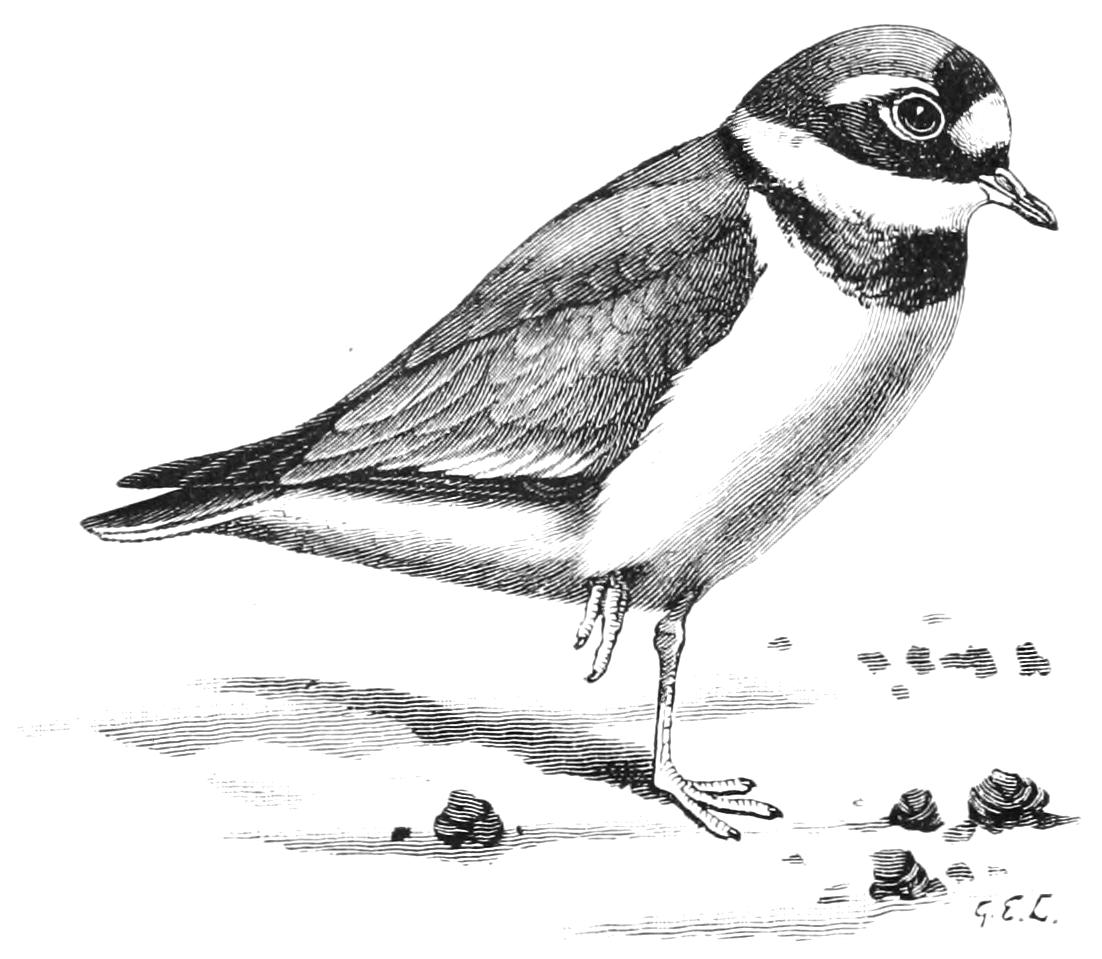
Fig. 57.–Ringed Plover. Aegialitis hiaticola. × ⅖.
Aegialitis hiaticola, the Ringed Plover, Sand-Lark, or Stone-runner, mistakenly called the "Ring Dotterel," which is common on the British coasts and even inland, extends from Smith's Sound eastwards to Bering Strait, and migrates to South Africa, North India, or accidentally, Australia. It breeds as far south as the Atlantic Islands, North Africa, and Turkestan. The plumage is light brown, with white forehead, post-ocular streak, upper neck, alar bar, outer rectrices, and under surface; the crown, lores, cheeks, and a collar–broader in front–being black. The young lack the black crown. The habits and "peeping" cry hardly require description. When nesting on the warrens of the Eastern Counties it is called the Stone-hatch, because it there lays its black-spotted drab eggs in a hole paved with small stones. Ae. curonica, the Little Ringed Plover, which strays to Britain, the Färoes, and Iceland, breeds on inland waters from Scandinavia to Japan; reaching southwards to North Africa, Turkestan, and China, and on migration to the Gaboon, Mozambique, Ceylon, and New Guinea. It is distinguished from the last species by the shafts of all the primaries, except the outer one, being dusky. Ae. cantiana, the Kentish Plover, which still nests in Kent and Sussex, occupies Europe–though very locally–North Africa, and Central Asia to China and Japan; it comparatively seldom breeds inland, and is found in winter as far as South Africa, India, and Australia. The collar is incomplete in front, the female has no black crown, while the black legs distinguish it from the Ringed Plover. Ae. semipalmata, with a distinct web between the outer and middle toes, replaces the latter in North America, ranging in winter to Peru and Brazil; whereas Ae. placida represents it in China, Japan, and India. The place of the Kentish Plover is taken in western North America by Ae. nivosa–with white lores instead of black–which migrates to Chili. Ae. vocifera, termed "Kill-deer" from its cry, inhabits North America, and extends in winter to northern South America, while it has been shot even in the Scilly Islands; the lores are brown, and the fore-neck exhibits two black bands. It nests in the interior on grass or ploughed fields. In Ae. monachus of Southern Australia, the breeding male has a perfectly black head; in Ae. asiatica of Central Asia, which has wandered to Britain, the head is brown, and the breast shews a black-edged chestnut band, somewhat similar to that in Ae. bicincta of the Australian Region, and other species; Ae. bifrontata of Madagascar has grey lores, and two black bands on the breast. Space fails to mention all the species of this large three-toed genus; but Ae. (Thinornis) novae zealandiae of the New Zealand area, Ae. falklandica of America from Chili and Argentina southwards, and Ae. sanctae helenae, the "Wire-bird" peculiar to St. Helena, should be noticed.
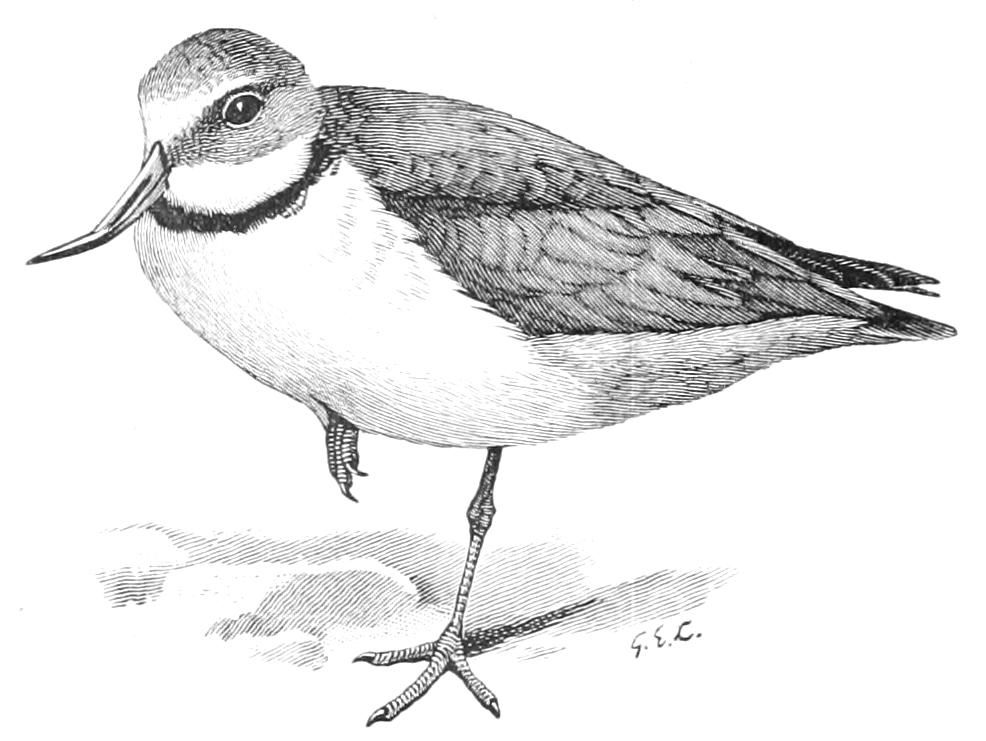
Fig. 58.–Wry-bill. Anarhynchus frontalis. × ⅖.
Anarhynchus frontalis, the Wry-bill of New Zealand, is grey, with a black gorget and whitish lower parts; the habits are as in Aegialitis, but the laterally-twisted bill enables the bird to pick up insects from around stones with the greatest ease.
Thirteen species may perhaps be included in Lobivanellus (Wattled Lapwing); but here, as in the next genus, Vanellus, there are many diversities of opinion. The two groups are fairly similar in habits, nests, and eggs. Some have a hallux, some not. L. pectoralis of Australia and Tasmania, L. indicus, ranging from Arabia and Mesopotamia to Cochin China, L. cinereus of China and Japan, which migrates as far as Bengal, L. melanocephalus of North-East Africa, L. superciliosus, extending from West Africa to Lake Tanganyika, and the crested L. (Sarciophorus) tectus, found from Senegal to East Equatorial Africa and Arabia, have small loral wattles; L. (Lobipluvia) malabaricus of India, Ceylon, and Burma, L. miles, reaching from Timor Laut to New Guinea and Australia, L. cucullatus of Sumatra, Java, and Timor, L. lobatus of Australia, accidental in New Zealand, L. lateralis of the southern, and L. senegalensis of the northern Ethiopian Region, with L. albiceps of West Africa and the Upper Congo, have large wattles, and, except the first, a wing-spur. L. lobatus is olive-brown above, with black crown, nape, and wings; the cheeks, tail-coverts, and lower parts are white; the tail is white with black tip; the bill, wattles, and spurs are yellow, the feet purplish-red.
Vanellus comprises the true Lapwings; it is a closely allied genus to the last, and varies as to the possession of a hind-toe. V. cristatus, the English Peewit or Green Plover, has the upper parts and motile crest bottle-green, with a purple and copper gloss; the throat and upper breast black; the cheeks, sides of the neck, base of tail, and under surface white; the upper and lower tail-coverts bay. The slow flapping flight and shrill cry are as familiar to us as are the cock's aerial evolutions, and the habit of tumbling on the ground with an apparently broken wing to decoy intruders from the brood. This species frequents alike cultivated ground, marshes, and wastes, depositing its four olive eggs with black markings in a scraping in the soil lined with a little dry herbage; towards autumn it feeds in large flocks upon the shore, being semi-crepuscular, as might be expected from the large eyes. Breeding in most of Europe, Northern Asia, and even North Africa, it strays to Greenland and Jan Mayen, occurs plentifully in Japan, and at times in Alaska, and migrates as far south as Barbados, North India, and China. The somewhat similar Téru-téru (V. cayennensis),[186] with long crest and large blunt yellow spur, occupies the east, and the larger V. chilensis the west and south of South America; V. resplendens inhabits the Andes of North Chili, Peru, and Ecuador; V. coronatus South and East Africa; V. melanopterus, the latter and Arabia; V. inornatus West and South-East Africa. The long legged Chettusia gregaria, which, like the next genus, possesses a hallux, has occurred in Britain and South-West Europe, but breeds from South-East Europe to Lake Saisan, and migrates to North-East Africa, India, and Ceylon. C. leucura, of similar range, winters in North-East Africa and North India. Defilippia crassirostris of North-East, and D. leucoptera of South-East Africa, with very long toes and much white on the wing, are nearly akin to the above. Hoplopterus spinosus, the three-toed Spur-winged Lapwing of Egypt and the northern Ethiopian Region, which wanders to South-East Europe and Persia, is a crested black and white species with a brownish back. The Arabs call it "Zic-zac" from its cry, while it attacks birds on the wing with its spur. H. speciosus occupies South Africa, H. cayanus most of South America, H. ventralis ranges from North and Central India to Hainan.
Strepsilas interpres, the Turnstone, has the head, rump, tail, and remiges black and white, the upper parts varied with chestnut and black, the breast black, the belly white, and the feet orange, with the hind toe turned inwards. In winter the coloration is chiefly grey and white. From its extensive migrations, it is possibly the most cosmopolitan of Birds, while it breeds in Northern Europe, Asia, and America, and as near us as Denmark, though not proved to do so in Britain. In autumn and spring this lively little species frequents our muddy shores or seaweed-covered rocks, often turning over the pebbles in search of food; the note is a twitter or whistle; the nest a slightly-lined excavation under shelter of some maritime shrub or stone, containing four grey-green eggs, marked with olive-brown. S. melanocephalus, of the Pacific coast of North America, lacks chestnut tints. Aphriza virgata, the Surf-bird, a brownish species with white alar bar, rump, and abdomen, found from Alaska to Chili, may perhaps be placed here. The position of the scarce Patagonian Pluvianellus sociabilis, which is chiefly grey above and white below, is equally doubtful. Both species lack the hallux. Haematopus ostralegus, the Oyster-catcher, inhabits Europe and Central Asia, extending–as the form H. osculans–to China and Japan; in winter it reaches Senegambia, Mozambique, Ceylon, and South China. From the black head, neck, and mantle, white lower back, underparts, wing-bar, and base of tail, it is called the Sea-Pie; while a habit of opening mussels with the long wedge-shaped bill gives it the name of Mussel-picker. Oyster-catcher seems a misnomer, but worms, crustaceans, and so forth vary the diet. It frequents shores and inland rivers, depositing three, or rarely four, oval drab eggs, with blackish and grey markings, on sand, shingle, or rocks. The scream in the breeding season is often quite deafening, but at other times these wary birds are seldom noisy. Their flight is powerful, and they can swim and dive. The bill is orange and the feet flesh-coloured in this species, as well as in H. longirostris of the Moluccas, Papuasia, Australia, and New Zealand, with longer bill and entirely black primaries. H. leucopus of Chili, Patagonia, and the Falklands, has a black lower back and pale feet; H. palliatus (with its races frazari, galapagensis, and durnfordi), ranging from Nova Scotia and California to Patagonia, has a brown mantle. Of the perfectly black or brownish-black species, H. niger, of both coasts of the North Pacific, has pale flesh-coloured feet; H. moquini, of the Ethiopian Region, the Canaries, and Madeira, has them deep red; H. ater, found from Peru to Patagonia and the Falklands, has the scarlet bill compressed and upturned; H. unicolor of Australia and New Zealand has the feet brick-red. This genus has three toes, as has the remarkable Ibidorhynchus struthersi, with long decurved red bill and greenish-grey feet, found from Turkestan to China, and in the Himalayas. The front of the head is black, margined laterally with white; the upper parts and neck are grey, with white on the wings and outer rectrices, and black undulations on the tail, which has the tip and coverts mostly black; the under parts are white with a black gorget. The bill is black in the young. The note is whistling, the habits are like those of an Oyster-catcher, while islands in stony or sandy rivers furnish breeding sites.[187]
Himantopus contains the extraordinarily long-legged Stilts, of which H. candidus visits Britain and Northern Europe, but breeds only in the southern parts, including Hungary. It also nests in India and Ceylon, and in Africa–though chiefly in the north. In the cold season it reaches Timor, New Zealand, and elsewhere. The head, long neck, lower back, and under surface are white, the remaining parts greenish-black; the iris is carmine, the legs are pink. Females are browner above, while immature males have the crown and nape black or brownish. The note is clear and reiterated, the habits are Plover-like, but the nest, placed on mud or in grass-tufts, is more substantial than in those birds, and contains four olive eggs with black scrawls or blotches. Whether searching the shallows for insects or other food, hovering overhead with dangling feet, or flying with them outstretched, the appearance is equally remarkable. H. mexicanus of temperate North America, migrating to Peru and Brazil, has a black occiput and nape; H. knudseni of the Sandwich Islands has the sides of the neck also black; H. brasiliensis of southern South America has the nape only black, with a white collar below; H. leucocephalus of Australia and New Zealand, which visits the Malay Islands, the Philippines, the Moluccas and Papuasia, is similar, but the black does not reach the eye; H. melas of New Zealand is uniform black. H. (Cladorhynchus) pectoralis of Southern Australia has webbed feet like the four-toed Avocets, though itself three-toed like other Stilts, from which a bay pectoral band distinguishes it. Of the Avocets with their curious up-curved beak, Recurvirostra andina, of the Chilian Andes, alone resembles the Stilts in possessing a black mantle. R. avocetta, which bred in England until at least 1824, now ranges from Denmark and Holland to Mongolia and South Africa, though decidedly local; in Asia it migrates southwards to Ceylon and Hainan. The plumage is white, with the crown, nape, inner scapulars, and part of the wings black, the legs light blue. It is called Cobbler's Awl, from its long, flexible bill, or Yelper, from its loud clear cry. Its general habits and slight nest recall those of Plovers, though the eggs are larger; while it seeks for aquatic creatures, in shallows or pools left by the tide, with a curious scooping sidelong action of the beak. R. americana, with a pale rufous head and neck, inhabits temperate America, extending in winter to the West Indies and Guatemala: A. rubricollis (novae hollandiae), with those portions chestnut, ranges from Australia, where it breeds, to New Zealand.
Sub-fam. 2.–The Tringinae of the present work–four-toed unless otherwise stated–are often separated into the groups Phalaropodinae, Totaninae, and Tringinae proper; the first being remarkable for the Coot-like digits with lobed webs. Phalaropus fulicarius, the Grey Phalarope, which visits us in winter, and has even reached Chili and New Zealand, breeds in Spitsbergen, Iceland, Greenland, Arctic America, and Asia. It is blackish and chestnut above and rufous below, with a little white on the face, wings, and tail; but the plumage differs remarkably in winter, the upper parts becoming grey with a black nuchal patch, and the lower white. As in all the genus, the female is said to court the male, which is duller, and performs most of the duties of incubation. The eggs are larger and rounder than in the next species, the nest less concealed. P. (Lobipes) hyperboreus, the Red-necked Phalarope, with more tapering bill, breeds in Scandinavia, Russia, and Siberia, as well as from Alaska to Greenland, Iceland, Shetland, Orkney, and the Hebrides; it rarely migrates to Western Europe, but reaches India, New Guinea, Guatemala, and Peru. It has dark grey and rufous upper parts, a white alar bar, throat, and belly, a grey breast, and chestnut sides of the neck nearly meeting in front. By winter the red tints have vanished and the white has increased. This attractive little bird is often so tame that it will feed at the feet of an intruder, or will even proceed to settle itself on its small and rather deep nest, placed in some tuft of herbage; the four eggs are greenish-olive with black markings. When disturbed from them it flies around with a shrill reiterated "tweet." It breeds in swamps or by hill-lakes, and can swim well, but is not found so far out to sea as the Grey Phalarope. P. (Steganopus) wilsoni, of temperate North America, migrating as far as Patagonia and the Falklands, is a larger, longer-billed bird, with a white nape and a black stripe down each side of the head and neck.
Tringa alpina, the Dunlin or Oxbird, is familiar to most autumn visitors to our flatter coasts. Breeding not uncommonly in Britain, though chiefly in the north, it is found in the colder parts of both the Old and the New World, while exceptionally its eggs have been obtained in Southern Spain; in winter it extends to the Canaries, Zanzibar, India, China, California, and the West Indies. When first they arrive on the shore the large flocks are remarkably tame, and allow even gunners to walk among them, as they forage with head bent down over the mud or sand, or rise with a cheeping cry, only to alight again at close quarters. The slight nest, placed amongst heather or short grass on some moory hill-pasture or seaside marsh, contains four greenish-white eggs with brown or rufous spotting. The plumage exhibits a mixture of rufous, grey, and black above, and is chiefly white beneath, with a large, black, pectoral patch; the decurved bill and the feet are black. Most of the rufous and all the black disappear in winter. T. minuta, the Little Stint, a miniature Dunlin with no black on the breast, and a short, straight bill, visits Britain regularly on passage, and breeds from the coasts of Northern Norway and Russia to Arctic Asia, a red-throated species or race (T. ruficollis) occurring east of the Lena; in winter the birds reach South Africa, the Indian Region, Australia, and Tasmania. T. minutilla, the darker American Stint, with olive feet, which occupies the Arctic New World, has been obtained in England, and migrates at least as far as Ecuador and Brazil; the very similar Eastern Asiatic T. subminuta reaches Bering Island, and winters southwards to the Indian Region and Australia. The habits and eggs of the Little Stint resemble those of the Dunlin, but the latter are smaller; the note, too, is more like the twitter of a swallow. T. temmincki is greyish-brown above and more buff below, with dark markings throughout, white belly, alar bar and four outer rectrices. In winter the dusky markings vanish, and the birds resemble miniature Common Sandpipers. They frequently visit Britain, and breed in Northern Europe and Asia, chiefly beyond the limits of forest growth; migrating southwards to Senegambia, North-East Africa, India, the Malay countries, and China. Temminck's Stint has a hovering, butterfly-like flight, and habitually perches on posts and the like, uttering a continuous trilling note or song; the four buff or greyish-green eggs with their brown spotting are deposited on a little herbage among sedge or grass. T. subarquata, the Curlew-Sandpiper, is grey, black, and rufous, with chestnut under surface and black bars on the white rump, both these parts becoming white in winter; the bill is long and decurved. As far as is yet known, the breeding-quarters lie in the far north of Asia, eggs having recently (1897) been taken near the mouth of the Yenesei: but the bird occurs in Arctic Europe in spring and autumn, and visits our shores irregularly in company with other small waders in autumn, wandering occasionally to Eastern America and Alaska, and migrating to Cape Colony, India, and Tasmania. T. fuscicollis, Bonaparte's Sandpiper, with white upper tail-coverts, but dusky rump and short bill, inhabits Arctic America, reaching the whole of South America in winter, and even straying to Britain. It has also occurred in Franz Josef Land in summer. It somewhat resembles the Dunlin in appearance, and the Purple Sandpiper in habits. The closely allied T. bairdi of nearly all America, which breeds towards the North, is distinguished by the median tail-coverts being brownish; it has once been observed in South Africa. Another dark-rumped species is T. maculata, the Pectoral Sandpiper, blackish-brown and rufous above, and buff with dusky streaks beneath, the belly being white. It has occurred several times in Britain, but inhabits the "Barren Grounds" from Alaska to Hudson's Bay, and migrates as far as Patagonia. Four greenish-buff eggs with brown blotches are deposited in dry grassy spots. The male is especially remarkable for his habit, apparently unique in the Family, of inflating the oesophagus during his courting performances, until it hangs down like a bag; meanwhile he takes short flights or rises with stiffened wings in the air, uttering a muffled booming note.[188] The Old World form, T. acuminata, extends from East Siberia to Alaska, migrating to the Malay Archipelago, New Guinea, Australia, and New Zealand; it differs in its white chin and distinctly streaked flanks. T. maritima or striata, the Purple Sandpiper, is brownish-grey above, with rufous spotting on the blacker mantle, and some white on the wing; the throat and breast are greyish with dusky streaks, the abdomen is white. In winter, when the upper parts are purplish-black and the breast is unspotted, it occurs from Scandinavia and temperate America to the Mediterranean and the Bermudas, arriving in Britain later than its congeners, and frequenting spray-washed, seaweed-covered rocks in search of small molluscs. It is usually tame, can swim well, and utters a soft low note. The eggs, often of a very green ground-colour, are deposited in mossy or grassy places on hill-tops, from the Färoes northwards, though in the more Arctic regions of Europe and Eastern America the bird breeds at the sea-level. It nests in Franz Josef Land, but is rare in Asia. The Prybilof Island form has been called T. ptilocnemis, the Alaskan T. couesi. T. canutus, the Knot, possibly, but not probably, named after Canute, has in summer a reddish head and neck, black, cinnamon, and white upper parts, chestnut under surface, and white tail-coverts barred with black. The plumage varies greatly according to age and season, but the winter adult is grey above and white with dusky flecks below. While no absolutely identified eggs exist, this species undoubtedly breeds on the North Georgian or Parry Islands, Melville Peninsula, Grinnell Land, Smith's Sound, and Lady Franklin Bay, but apparently not in Arctic Europe, though possibly in Asia. Large flocks migrate to our shores, and some individuals reach Brazil, Damara-Land, the Indian Region, Australia, and New Zealand; they are tame on arrival and used to be netted for the table in England. In Arctic America Saxifraga oppositifolia and Algae vary the diet of insects and molluscs, but other Sandpipers are known to eat plants. The East Siberian T. crassirostris, with no chestnut beneath, migrates to Japan, the Indian Region, and Australia.
Ereunetes pusillus, called the Semipalmated Sandpiper from its partly webbed toes, resembles the western form of the Little Stint in coloration; it breeds in the extreme north of America, and has reached Patagonia in winter. Eurynorhynchus pygmaeus, the Spoon-billed Sandpiper, on the other hand, is coloured like the eastern red-throated Little Stint, but is especially remarkable for its large, broad, shovel-shaped bill. The breeding grounds are not known, but it has been obtained on both sides of the North Pacific, and on migration in Japan, China, India, and Burma. Calidris arenaria, the Sanderling, easily recognisable by the want of a hind-toe, is rufous and black above, and white below, having a chestnut throat spotted with black. It reaches us in August, while some individuals remain throughout the winter, being at that season uniform grey with white under surface. The eggs, which have a peculiar greenish tint, and are like those of the Curlew in miniature, have been taken in Greenland and Arctic America, but, except perhaps in Iceland, never yet in Northern Europe or Asia. Sanderlings are almost as cosmopolitan as Turnstones, and on migration are commonly observed running at the edge of the surf, uttering a weak, shrill cry. Limicola platyrhyncha, the Broad-billed Sandpiper, has a wide flat beak with the pointed tip slightly decurved; the upper plumage is mottled with dark brown, rufous, and white; the breast is reddish-white, spotted with brown; the abdomen white. It occasionally visits Britain, and breeds on the fells of Norway, the fens of Lapland, and thence eastwards to Russia, but is rarely met with in Asia until the Sea of Okhotsk is reached; in winter, when it becomes grey above and white below, it resorts to North Africa, Madagascar, Ceylon, the Philippines, the Moluccas, and China. It soars like a Snipe, utters a rapid, double note, and is somewhat skulking. The parent sits very closely on the eggs, in which the greenish or buff ground-colour is commonly nearly hidden by chocolate or rufous markings. Tryngites rufescens, the Buff-breasted Sandpiper, which has wandered to Britain and Heligoland, breeds in the extreme north of America, and just reaches East Siberia; in winter it ranges to Peru and Argentina. Light brown and black above, and reddish-buff with a few black spots below, the distinctive black marblings beneath the quills are well seen as the bird, according to its habit, runs along with one wing raised.
Here may be mentioned Aechmorhynchus cancellatus (parvirostris), of Christmas and Paumotu Islands in the Pacific, which is rufous-brown with white under surface mostly barred with brown; and Prosobonia leucoptera, Latham's White-winged Sandpiper, from Tahiti and Eimeo, with brown head and mantle, chestnut rump and lower parts, white wing-patch and superciliary streak–species of doubtful affinity, which are both presumably extinct.
The large genus Totanus is more inland in its haunts during the breeding season than Tringa. T. calidris, the Redshank, is resident in Britain, and ranges through Europe, the Mediterranean, and Asia south of lat. 60° N., migrating to South Africa, the Indian Region, and Japan. The upper parts are light brown with darker bars and streaks, the primaries being black; the rump, secondaries, tail, and lower surface are white, but the two latter are barred with blackish and flecked with brown respectively; the feet are orange-red, or yellowish in the young. In winter the colour is ashy-grey, with nearly white under parts. This bird breeds in salt marshes or swamps, not uncommonly far inland, and deposits four buff eggs with reddish or purplish-brown spots in grass or rush-tufts, making little or no nest, but drawing the herbage together over the spot to conceal it. Both parents usually rise a long way ahead of the intruder, and fly wildly round, uttering their shrill whistling cry of "pitotoi." Redshanks are especially wary on the coast in winter, and, like Curlews or Lapwings, are the bane of the shooter; they can swim and dive, and not uncommonly perch on trees; the food, procured on sandy spots or sea-weed-covered rocks, consists of molluscs, crustaceans, worms, and aquatic insects. T. fuscus, the Dusky or Spotted Redshank, a scarce visitor to our shores, breeds in Europe and Asia, chiefly north of the Arctic Circle, and has a similar winter range to its congener. It generally nests in forest-clearings some way from water, and lays fine greenish eggs, blotched with varied browns. The female sits very closely. Less noisy than its kindred, unless accompanied by young, it flies comparatively strongly, perches on trees, and recalls the Greenshank by its habits. The plumage is black, with white spots above, white rump and barred tail; in winter it resembles that of the Redshank, and the crimson legs become orange-red. T. flavipes, the Yellowshank, which has wandered to England, inhabits the colder parts of North America, and migrates as far as Patagonia; it is black, grey-brown, and white above, and white with dusky markings below, the legs being bright yellow. T. melanoleucus, of the same districts, is similar, but larger. T. guttifer is a rare North Pacific species, recorded in winter from Calcutta and Burma. It is not unlike T. glottis, the Greenshank, which ranges over Northern Europe and Asia, and extends in winter to Cape Colony, the Indian Region, and Australia. This bird has wandered to America, and breeds in the hill-districts of Scotland, resembling the Dusky Redshank in its selection of dry nesting sites, habit of perching, and so forth. It is, however, much more noisy, uttering a strident note, or one dimly recalling a Woodpecker, while it lays large, buffish-white eggs with rich brown blotches. It sometimes eats small fish, as does its congener T. incanus. The plumage is grey and black above in summer and grey in winter, with white rump and tail, the latter being barred with dusky; the white breast is spotted with brown in the breeding season; the slightly up-turned beak is blackish; the legs are olive. T. stagnatilis, the Marsh Sandpiper, a miniature Greenshank of somewhat similar winter range, occupies South Europe and Central Asia. T. glareola, the Wood Sandpiper, is olive-brown above, with small whitish spots and white rump; the white cheeks, fore-neck, and breast are heavily streaked with brown; the tail-feathers and axillaries are also white with black bars and brown flecks respectively, the feet are olive. The nest has once at least been found in Britain, whence the bird ranges over North Europe and Asia; it has apparently bred in Spain and Italy, and migrates to Cape Colony, the Indian Region, and Australia. In this species and the following the note is shrill and often tremulous, while the former occasionally, and the latter habitually, lays its greenish eggs with reddish-brown spots in deserted nests of other birds near inland waters, instead of on the ground. T. ochropus, the Green Sandpiper, which is less spotted above, has much wider black tail-bars, and blackish axillaries with white chevrons. It has been suspected of breeding in Britain, and occupies a similar though somewhat more northern range than the last-named, but does not reach Australia. T. solitarius, with almost uniform brown median rectrices, inhabits temperate, and migrates to tropical, South America; it has been shot in the littoral marshes of western England. T. (Symphemia) semipalmatus, largest of the genus, the Willet of temperate North America, which extends to Brazil in winter and wanders to Europe, is brownish-grey with black mottlings, the outspread wing shewing a white patch, and the white under parts brownish streaks. In the cold season all the dark markings vanish. T. (Heteractitis) incanus, having uniform grey upper, and white under surface, closely barred in summer with dusky, is found through the Eastern Pacific Islands, and on the mainland from Alaska to the Galápagos. T. brevipes, with white-banded upper tail-coverts, occurs from Kamtschatka and East Siberia to the Malay Islands and Australia. Both breed to the northward.
Machetes pugnax, the Ruff–with its consort the Reeve–was formerly well-known in England from the large numbers netted or snared for the table. Our nesting birds are now reduced to a few pairs, but considerable numbers visit us on passage, while they breed through northern Europe and Asia, and migrate to South Africa, the Indian region, and Japan, wandering rarely to Iceland and Eastern America. The Ruff's nuptial plumage, which varies extraordinarily and individually, may be chiefly black, white, chestnut, buff, grey and white, and so forth, often with metallic hues or concentric barring. A tuft of stiff curled plumes springs from near each ear, the feathers of the face are replaced by yellowish or pinkish tubercles, and an ample distensible ruff overhangs the breast. Males regain the same colours annually, but after breeding become like the females, which are dark brown and buff, and one-third smaller. The polygamous tendencies and habit of "hilling," i.e. sparring on some slight eminence for the Reeves, have been frequently described;[189] the note, though seldom heard, is said to resemble ka-ka-kuk; the food includes seeds, insects, and worms; the nest, placed among herbage in the drier parts of a swamp, contains four greenish, snipe-like eggs, with rich brown blotches. The Ruff performs many antics while courting, but leaves all the work of building, incubation, and the care of the young to his mate.
Bartramia longicauda, which accidentally visits Britain, Continental Europe, and even Australia, inhabits North America, and migrates southward to Chili and Argentina. It is light brown above, varied with black, buff, and white, the long wedge-shaped tail and the under surface of the wing are barred, the rufous lower parts spotted, with black. The throat and belly are white. In winter it is a shy bird, crouching, running with jerks of the tail, or taking short flights; it utters a soft whistle, and lays pinkish-yellow eggs with brown spots in a slight nest on cultivated lands.
Actitis hypoleucus, the Common Sandpiper, breeds in many parts of Britain, and ranges from the Arctic Circle in Europe and Asia to the Atlantic Islands, the Mediterranean, the Himalayas, and Japan; it leaves us before winter, however, and migrates to most of the Ethiopian, Indian, and Australian Regions. The coloration is greenish-brown above, with dusky markings, and some white on the wings and tail; the breast is grey with dark streaks, the belly white. In winter the upper parts are more uniform. Rapid pebbly streams with islands, or flat stretches of sand are the birds' favourite resorts, where their shrill whistle and somewhat Wagtail-like habits make them very conspicuous; they fly, run, perch, or swim with equal ease. The nest, usually partly sheltered by rough vegetation or drifted rubbish, contains four reddish-buff eggs with brown and lilac spotting. A. macularius, the Spotted Sandpiper of North America generally, found in winter southwards to Amazonia and Brazil, is smaller, with round black spots beneath in summer; it lacks the nearly white eighth and ninth secondaries of its congener.
Terekia cinerea, with the up-curved beak of a Greenshank, but the habits and eggs of the last genus, breeds from Archangel eastward to the Pacific, leaving these haunts for the Indian Region to winter, when it is also found in South Africa and Australia. It is grey and black above, with white on the secondaries, and black scapulars, and white below streaked with dusky.
Micropalama himantopus, the long-legged Stilt-Sandpiper, inhabits the extreme North-East of America, migrating to Peru and Argentina. It has black, rufous, and greyish-white upper parts, white tail-coverts, and under parts with blackish bars; in winter the back is grey, while the bars nearly disappear beneath. The habits, nest, and eggs are much as in other Sandpipers.
The Godwits (Limosa) have long legs and bills, the latter being slightly up-curved. L. belgica, the Black-tailed Godwit, nested regularly, up to about 1824, in the eastern counties of England, and, like the Ruff, was netted for eating. It now breeds from Iceland, the Färoes, and Holland to Siberia and Amurland, the smaller eastern form being sometimes denominated L. melanuroïdes; the winter range reaches to the Atlantic Islands, Abyssinia, Ceylon, the Malay Islands, Japan, Australia, and Polynesia.
The breeding plumage is reddish-brown and black above, with rufous crown, neck, and breast, marked with dusky; the rump and terminal portion of the tail are black, the basal portion, tail-coverts, alar bar, and belly white: in winter the upper parts are brownish, the lower grey. The American representative, L. hudsonica, occupies the barren grounds of the north, and migrates to Patagonia and the Falkland Islands; it has black instead of nearly white axillaries. Though rarer in Britain than the succeeding species during the passage in autumn and spring, small flocks of fairly tame Black-tailed Godwits then frequent our muddy shores and sands–especially in the south; the summer note, or yelp, is louder than the winter cry. Four elongated pear-shaped eggs, of a dull olive shade with brown markings, are deposited in a slightly lined hollow in some grassy marsh. The males of Godwits constantly incubate. L. lapponica, the shorter-legged Bar-tailed Godwit, inhabits the countries from Finmark eastward to about the Taimyr Peninsula, where it meets the race L. uropygialis, which extends to Alaska. The western form migrates to the Gambia, Somaliland and North India, the eastern through Japan and China to the Malay Archipelago, Australia, New Zealand, and Oceania, rarely occurring in south-western North America. In summer the mantle is rufous-brown and black, the head and under parts are chestnut, with dark markings from the crown to the sides, the rump is white with a few dusky streaks, the tail and axillaries are white barred with brown: in winter the upper surface is chiefly grey, and the lower white. L. uropygialis has the rump also barred. The nest of the Bar-tailed Godwit is usually in comparatively dry spots, or even on forest-clearings, the eggs being brighter green and more finely marked than those of the Black-tailed species. L. fedoa, the Marbled Godwit of northern North America, which winters southwards to Central America and the West Indies, is distinguished by its large size and buff axillaries.
The almost cosmopolitan genus Numenius is remarkable for its prolonged decurved bill, and its elongated legs. N. arquata, the Curlew or Whaup, breeds freely on the moorlands of Britain, and extends throughout Northern Europe and Asia to Lake Baikal; after breeding it visits the Atlantic Islands, the whole of Africa, and the Indian Region.
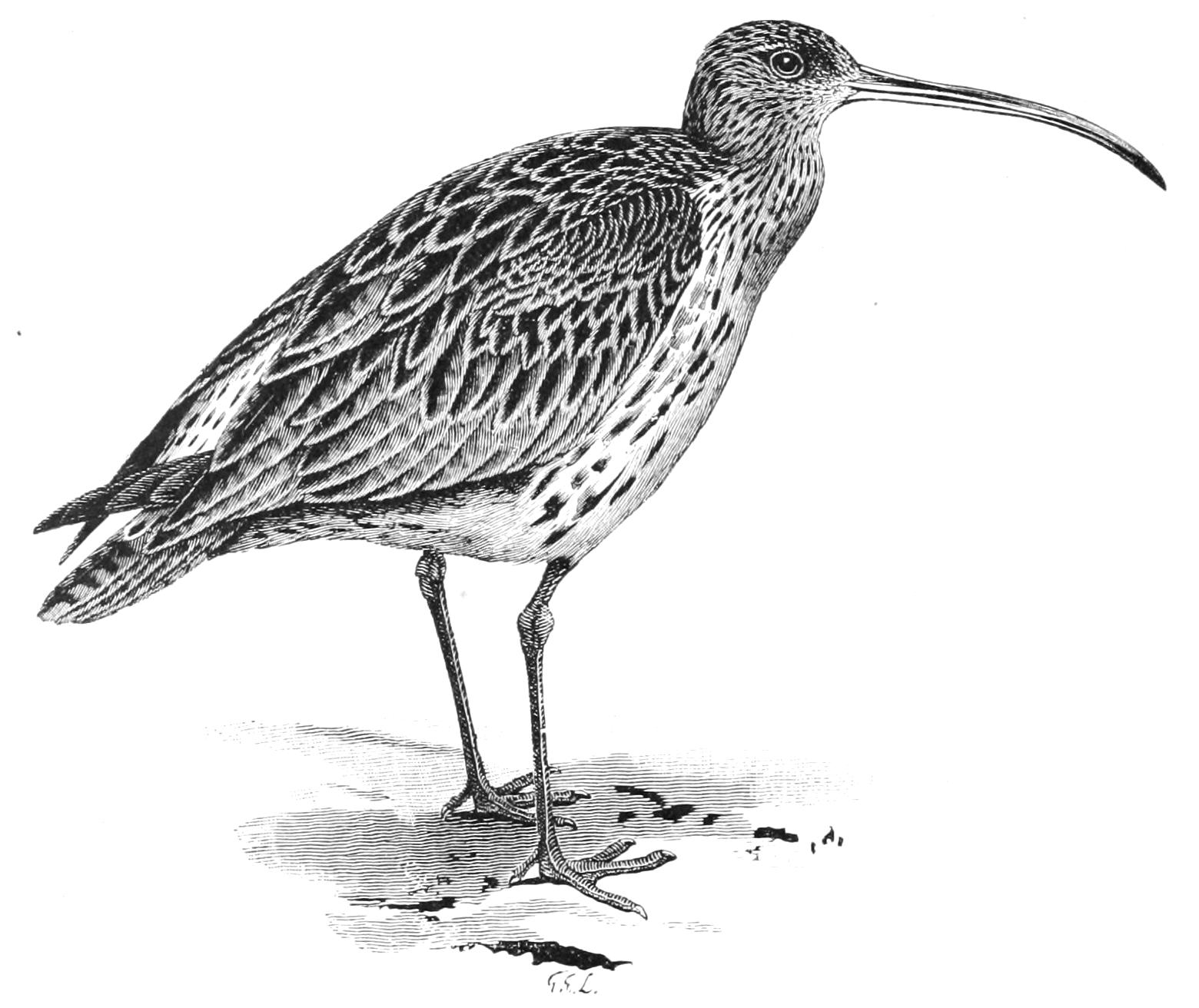
Fig. 59.–Curlew. Numenius arquata. × ⅕.
The plumage is pale brown with darker streaks, the rump, tail, and axillaries being white, and the two latter barred with dark brown; the belly is white, the breast nearly so in winter. Found on our shores from autumn to spring, its wary habits are as well-known as its wild rippling note; the food consists of insects, worms, berries, and so forth; while four large pear-shaped olive-and-brown eggs are deposited in an ample depression formed on boggy or heathery ground. N. cyanopus, a distinct East Siberian form, met with in Australia and occasionally from New Guinea to Borneo in winter, has the rump-region brown and black. N. tenuirostris, of the Mediterranean and South Russia, resembles the Curlew, but is much smaller; N. longirostris of temperate North America, migrating to Central America and the Antilles, has cinnamon axillaries–like all the New World members of the genus–and a dark rump. The remaining species, or Whimbrels, have a pale central streak down the crown, less distinct in N. borealis, the Eskimo Curlew, which has rufous axillaries barred with brown, and a rump like the back. This bird wanders to Britain, but breeds in the extreme north of America, and in winter reaches the south of that Continent. N. phaeopus, the typical Whimbrel or May-bird, nests in the Shetlands and perhaps still in the Orkneys and North Ronay in the Hebrides; in summer it takes the place of the Curlew in the Färoes and Iceland, strays to Greenland, and occupies Northern Europe and Asia; while it visits the Azores, the whole of Africa, the Indian Region, and Australia in winter. Specimens from Eastern Asia, with more streaked rumps, have been separated as N. variegatus. In general plumage and habits the Whimbrel resembles the Curlew; it is, however, much smaller, the cry consists of sharper and more quickly repeated notes, and the parents, though anxious, are less shy at the nest. They often descend in a gyrating fashion, closing one wing. N. hudsonicus, of Arctic North America, which winters throughout South America, and has once occurred in Spain, resembles N. borealis in its cinnamon axillaries, but is larger and less ruddy beneath. N. tahitiensis, common in the Pacific Islands, and probably breeding in Alaska, is recognisable by the bristly-pointed flank-feathers; N. minutus, ranging from East Siberia in summer to the Malay Islands and Australia in winter, has the back of the metatarsus as well as the front scutellated.
Sub-fam. 3. Scolopacinae.–Macrorhamphus griseus, the Dowitcher, breeding in the extreme north of North America, and its larger and brighter western race, M. scolopaceus, are rufous birds with darker variegations, the lower back and tail being white, but the latter and its upper coverts shewing blackish barring. The bill is widened towards the tip, while in winter the plumage is grey and white. One form or the other has strayed to Britain, Western Europe, and Eastern Asia, the range on migration reaching Brazil and Chili. The habits resemble those of Redshanks. M. taczanowskii, with black-mottled rump, occupies East Siberia, and winters in India, Borneo, and thence to China.
Scolopax rusticula, the well-known Woodcock, brown, grey, and buff in colour, with blackish vermiculations and blotches above and bars below, has two transverse buff stripes on the black hind-crown. It inhabits Northern and Central Europe and Asia–with the Atlantic Islands and Japan–and migrates to the Mediterranean, Persia, India, Ceylon, and China, or even strays to eastern North America. Breeding freely in Britain, where large additional flocks arrive in autumn, it frequents leaf-strewn woods in which marshy spots or rivulets alternate with dry ground; the food consists of worms, small molluscs and insects, the first being obtained by probing the soil with the long sensitive beak. The flight is rapid and steady, the note–not uttered when flushed–is whistling; while during incubation a curious habit prevails among the cocks of "roading" or traversing fixed routes at twilight, and uttering hoarse notes. The nest is a depression, usually lined with dry leaves; the four eggs, much larger and rounder than those of the Snipe, are creamy-buff with pale brown, grey, and lilac markings. The young are often carried by the parents between their thighs, the bill probably aiding to steady them. Woodcocks are now seldom snared or netted in England. S. saturata of Java and North-West New Guinea is a darker bird with almost uniform black primaries, and a white abdomen with dusky bars. S. rochusseni of the Moluccas has partly bare tibiae, like many Snipe, and a nearly plain buff breast. The Woodcock of eastern North America is Philohela minor, which has the three outer primaries curiously attenuated.
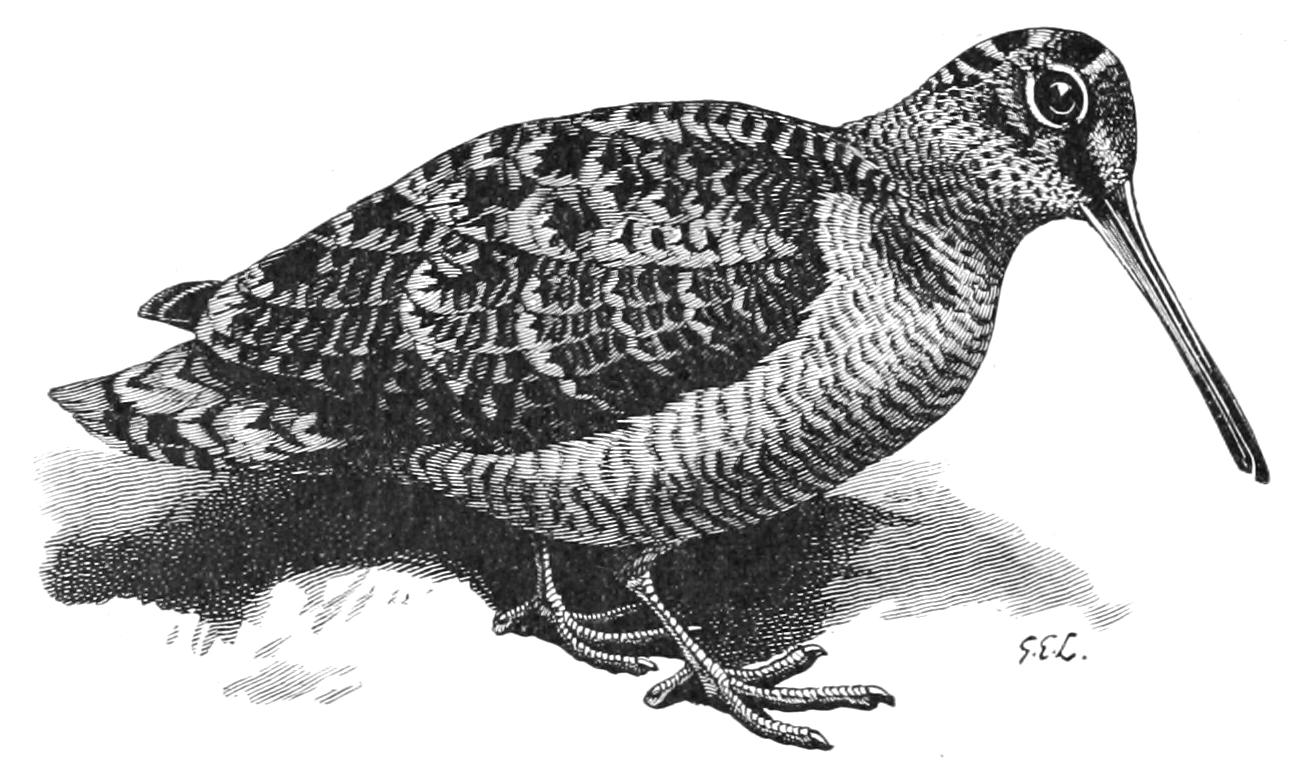
Fig. 60.–Woodcock. Scolopax rusticula. × 2⁄7.
The genus Gallinago differs from the above in having longitudinal stripes on the head. G. caelestis, the Common or Full Snipe,[190] breeds in Northern and Central Europe and Asia, and even in North Italy; it is recorded from Greenland and the Bermudas, and migrates to the Atlantic Islands, the Gambia, the Upper Nile, and the Indian Region. Its brown, black, and buff plumage, with three buff streaks on the head, is well-known, while there are normally fourteen rectrices. G. sabinii is merely a dark form. As regards its autumnal influx and food the Snipe resembles the Woodcock, but the cry of "scape-scape" and twisting flight on rising, remain to be mentioned, while the alternate zig-zag rise and fall of the bird when circling in the air near its nest, with the curious drumming or bleating noise produced at each descent must not be omitted. The method of production of this sound is still uncertain, but is either due to the vibration of the wings, or more probably to that of the webs of the outer rectrices. The slight nest is formed in a tuft of herbage in some marshy place, the four pointed eggs being olive, with spots and oblique blotches of brown. Snipe occasionally perch on trees or squat upon the ground until touched. The very similar G. delicata (wilsoni), breeding northwards from the northern United States, and migrating to northern South America, has usually sixteen rectrices, as have the six following species. G. major, the Double or Solitary Snipe, nests as far south in Europe as Holland and Poland, and reaches the Yenesei; it is known from the Tian-Shan Mountains, Turkestan, and Persia, and winters even in Natal and Damara-Land, visiting Britain annually on passage. It rises silently and heavily when flushed, is to some extent nocturnal, and drums when on the ground. The three outer tail-feathers are chiefly white.[191] G. frenata, ranging from Argentina and Tarapacá to Venezuela and Guiana; G. nobilis of Colombia and Ecuador, G. paraguaiae, reaching from Amazonia and Bolivia to the Falklands, G. macrodactyla (bernieri) of Madagascar, and G. aequatorialis (nigripennis), of the Ethiopian Region generally, conclude this section of the genus. G. australis is similar to our Snipe, but larger; it breeds in Japan, and migrates through Formosa to Australia; G. nemoricola, the Wood-Snipe of the hills of India and Burma, has the lower parts distinctly barred; G. solitaria, breeding at considerable elevations from Turkestan to Assam and Japan, and wintering in those countries and China, exhibits distinct white streaks above. In the three last-named species the rectrices number about eighteen, in the next six they may be as few as fourteen. South America furnishes five forms somewhat like Woodcocks in their habits and eggs, namely, G. gigantea of Brazil and Paraguay, the largest of the Snipes; G. undulata of Guiana; G. jamesoni, ranging from Colombia to Bolivia; G. imperialis of the former country; and G. stricklandi of Chili and Patagonia. All these recall the Common Snipe by their coloration, as does the small short-winged G. aucklandica, which, with its different races, occupies the Auckland, Snares, Chatham, and Antipodes Islands, and has visited New Zealand. G. stenura, the Pin-tailed Snipe, with twenty-six rectrices, the eight outer of which on each side are stiff and attenuated, breeds from the Yenesei to the Pacific, and winters in the Indian Region; G. megala, with twelve of its twenty tail-feathers narrowed, inhabits East Siberia and passes through Japan to China, the Philippines, Borneo, and the Moluccas in winter. G. (Limnocryptes) gallinula, the Jack Snipe, found in Britain from autumn to spring, breeds from Scandinavia to Siberia, and migrates to North Africa, the Indian Region, and Japan. The upper parts show a greenish and purple gloss, while it has only twelve rectrices. Like G. major, it frequents drier spots than the Common Snipe, and rises without a sound in the shooting season, the flight being butterfly-like; the habits in summer are similar to those of the last-named species, and the eggs even larger for its size.
Of the so-called Painted Snipes the female of Rhynchaea or Rostratula capensis has a brown head with chestnut cheeks and collar, a brownish-green back with blackish freckling, scattered golden-buff ocelli and streaks on the upper parts, a black fore-neck, a white under surface and ring round the eye. The male is duller, without the chestnut tints. This species inhabits the whole Ethiopian and most of the Indian Region, as well as Egypt, Arabia, and Japan; the larger R. australis, with only a chestnut patch on the nape, occupies Australia. R. semicollaris of Chili and Patagonia, which visits Peru and Brazil, shews no chestnut collar, but has black upper wing-coverts with round white spots; the sexes being alike. In mature females of the Old World forms the trachea extends in a loop or loops over the furcula, or even over the pectoral muscles.[192] The habits of these birds are Snipe-like, but the flight is slower, and the hen's note purring; the whitish eggs with plentiful black spots are somewhat Plover-like, while R. semicollaris apparently lays only two. The Indian species is said to hiss at intruders, with its wings and tail expanded into a disc.
The short-winged Phegornis mitchelli, which lacks a hallux, is brown above, and white with very close dusky bars below; the head is black, save for a white band which surrounds the occiput; while a neck-collar is formed by a fine orange patch behind and a white area in front. It inhabits the Andes from Peru to Chili.
Fam. II. Chionididae.–This group–with Dromas–possibly connects the Charadriidae and the Laridae. The peculiar bill and short, entirely reticulated metatarsus have already been mentioned (pp. 268-269), while both sexes are pure white, the downy young being grey. Chionis alba, the "Kelp Pigeon" of the Falklands, which inhabits the Straits of Magellan, New Year Island, South Georgia and Louis-Philippe Land, and has once been shot in Ireland, has the bill pinkish or yellowish with a black tip and flat sheath; the bare face is covered with whitish papillae, and the feet are bluish. C. minor, of Kerguelen Land, Prince Edward and Marion Islands, and the Crozets, has the sheath protuberant, the bill and facial caruncle black, and the feet pinkish. There is said to be a blunt black carpal spur, less prominent in the female. Both species are often found at sea, flying strongly, or sailing with outspread wings; but on land their appearance, gait, and manner of courting are curiously like those of Pigeons. The note is a gentle chuckle; the food consists of mussels–which they break with ease–crustaceans, sea-weed, and even eggs of other birds; their own eggs, two or rarely three in number, are of the Oyster-catcher type, but commonly redder in the markings, so that they recall those of the Razor-bill or Tropic-bird. When the flocks separate into pairs for breeding, they are tame and inquisitive, while they fashion a nest of dried plant-stems in hollows among rocks, or occasionally in Petrels' burrows.
Fam. III. Glareolidae.–Of these Old World forms Sub-fam. 1, Glareolinae, includes the genera Glareola, Cursorius, Pluvianus, and perhaps Ortyxelus, the first two having the middle claw pectinated, and Glareola a short, stout bill with wide gape, a forked tail, and long pointed wings. G. pratincola, the Pratincole, which occasionally visits Britain by way of Western France, breeds in Southern Europe and North Africa, and extends to Sind and the Tian-Shan Mountains in Asia, migrating to other parts of India and to South Africa. It is brown above, with blacker wings and tail, the secondaries having white tips, and the rectrices white bases and coverts; the throat is buff, surrounded by a black line, the breast brownish, the abdomen white; the axillaries and inner under wing-coverts are chestnut, the bill and feet blackish, with red base to the former. G. orientalis, found from Mongolia to Ceylon, the Malay Archipelago, and North Australia, has the tail less forked and little white on the secondaries; G. ocularis, of Madagascar, recorded from Mauritius and East Africa, has a pale chestnut breast, and the outer pair of rectrices white with broad black ends; G. melanoptera (nordmanni) of South-East Europe and West Asia, migrating to South Africa, has black axillaries and under wing-coverts, as have the long-legged G. grallaria (isabella) with slightly forked tail and chestnut flanks, which breeds in Eastern Australia and occurs from New Guinea to Borneo, and the small grey-backed G. lactea of India, Ceylon, and Burma, with much white on the wings. The other species have reddish feet, fading to yellow; G. cinerea, ranging from the Niger to the Congo, possesses a rufous nuchal collar and white axillaries; G. nuchalis of the White Nile, and the hardly separable G. emini of Foda in Equatorial Africa, have a white collar and grey axillaries; G. megapoda, extending from Liberia to the Niger, shews a rufous collar and grey axillaries. The last five forms, and G. ocularis, have the tail merely emarginated. Pratincoles have a shrill, screaming note and Swallow-like flight, insects, on which they feed, being ordinarily captured on the wing; but the general habits are those of Plovers, the birds running very fast, and the parents often swooping down upon an intruder, or cowering on the ground to draw attention from their brood. They frequent sand-banks, lagoons, bare plains, or coast-lands, laying two, three, or rarely four oval greenish-buff or greyish eggs, with purplish-black, brown, and grey marblings, without any nest, on the sun-baked mud.
The genus Cursorius, or Courser, inhabits the hotter portions of the Old World. C. gallicus, the Cream-coloured Courser, which visits Britain and the southern half of Europe irregularly, is met with in the Canary and Cape Verd Islands, North Africa, and the countries from Arabia to Northern India. The brown bill is thick and decurved, the whitish legs are long; the plumage is buff, with slaty nape, black remiges, axillaries, under wing-coverts, and subterminal tail-bar; the face is white with a black post-ocular streak. Seldom found in flocks, this bird frequents dry sandy plains and deserts, crouching to avoid notice, running with extraordinary speed if approached, but rarely rising on the wing. The flight, however, is at times protracted. The food consists almost entirely of insects, such as grasshoppers, yet it includes small molluscs; the note is harsh; while two, or exceptionally three, round stone-coloured eggs with grey and brown markings are deposited on the bare ground. The axillaries and under wing-coverts are greyish-buff in C. somalensis, of Somaliland, but brownish-grey in C. rufus, of South Africa, which has a black abdominal patch. C. temmincki (senegalensis), of most of the Ethiopian Region, and C. coromandelicus, of India and Ceylon, are similar, but have the nape black and white, the latter possessing white tail-coverts.
In the remaining species (Rhinoptilus of some authors) the bill is almost straight. C. bicinctus of South Africa is mottled with brown above, having much chestnut on the wings, white tail-coverts, and buff under parts crossed by two black pectoral bars. C. bisignatus, ranging from East Africa to Benguela, and C. hartingi of Somali-Land, are hardly more than races of the above. C. cinctus of East Equatorial Africa, and the barely separable C. seebohmi of South-West Africa, are easily recognised by the four bands on the white lower surface, the highest and lowest being brown, and the two intermediate black, with a streaky buff space between them. C. chalcopterus, of the Ethiopian Region generally, and C. albifasciatus with a more distinct white alar bar, are plain brown birds with metallic purple hues on the black primaries, white post-ocular streak and throat, and white belly surmounted by a black band. C. bitorquatus, of the districts near Madras, differs in shewing below three successive bands or gorgets, one of rufous and two of brown, separated by white. Though all Coursers agree in general habits, the last three seem to prefer bushy ground, and C. rufus will perch in trees.
Pluvianus aegyptius, apparently allied to Cursorius, inhabits West and North-East Africa, wandering to Palestine and South Europe, and being even recorded from Sweden. The head, nape, and long mantle-feathers overhanging the grey back are glossy black; the wings and tail are black and white varied with grey, the lower parts rufous-white with a black pectoral band, while a line of white encircles the crown. This bird, called "Zic-zac" from its noisy chattering cry (cf. p. 276), is usually seen skimming swiftly over the water, or running and feeding along the shores. The yellowish stone-coloured eggs, with umber and grey markings, are commonly found buried in the sand, but so are those of the Ringed Plover in wind-swept spots. Probably this species, and not Hoplopterus spinosus, is the τροχίλος of Herodotus, the Crocodile-bird of later writers, which enters the Crocodile's mouth to feed.
Here may possibly be placed the mottled rufous, black, and white Ortyxelus meiffreni of West and North-East Africa.[193]
Sub-fam. 2. Dromadinae.–This contains only Dromas ardeola, the curious Crab-Plover, with its straight, hard compressed bill, long legs, webbed toes, and pectinated middle claw. It is white, with the elongated dorsal feathers and most of the wings black, the tail chiefly grey. Found from the Red Sea to Natal, and through the Indian Ocean to the Bay of Bengal, it haunts sandy islands or sandbanks on the coast, flying, running, or walking with equal ease. This bird feeds on small crustaceans, and breeds in company, depositing a single large white egg on the bare sand in a deep burrow, where the young remain for a considerable time.
Fam. IV. Thinocorythidae.–The so-called South American Seed-Snipes are a generalized group of somewhat Fowl-like birds, with long wings and short legs. Thinocorys rumicivorus, of Peru, Bolivia, Chili, Argentina, and Patagonia, is yellowish-brown and black above, with whitish tips to the dark remiges and rectrices, and creamy white below with a black pectoral band, which sends a streak upwards to bifurcate round the white throat. The female has a less extensive band, and an ashy-brown fore-neck. T. orbignianus, of Peru, Chili, and Bolivia, differs in its grey breast with no central streak; it has a black border to the throat, and a grey nape, which is absent in the female. Attagis gayi, of the same countries, has grey and rufous upper parts with black spots and vermiculations, and pale cinnamon under parts, with a greyish fore-neck shewing fine black lines. A. chimborazensis of Ecuador is blacker above and darker below; A. malouina, of the Straits of Magellan and the Falkland Islands, has a white lower surface and a rufous chest with round black spots. These forms usually frequent hill-country, and to the north of their range even haunt the higher Andes, living on vegetable substances, and especially seeds of docks and other plants. They run with great celerity over the stony ravines or grassy plains, but they often squat or creep away from intruders; when flushed they rise sharply with twisting flight like the Snipe, and utter a similar cry. On the ground they make curious hollow or whistling noises, the flocks answering one another as they sit, and being very hard to distinguish, from their earthy coloration. The nest of Thinocorys is a depression slightly lined with grass, and contains some four drab or pinkish-buff pear-shaped eggs, thickly speckled with chocolate and purplish-grey, which the female is said to cover when she leaves them, while the male anxiously keeps watch from some neighbouring stone.
Fam. V. Oedicnemidae.–Of these birds, which lack the hind toe, Oedicnemus scolopax, the Stone-Curlew, or Norfolk Plover, a summer visitor to the warrens of East Anglia, and the downs or stony flats of the South of England, ranges from our shores and the Atlantic Islands through temperate Europe and North Africa to Lake Saisan and Burma in Asia. This largest of European Plovers is light brown above and buff below, with blackish streaks throughout; the throat, belly, a line below the eye, and two narrow alar bars are white, the remiges otherwise black, the tail brown, black, and white. The feet, base of the bill, and very large iris are yellow. This skulking semi-nocturnal species flies strongly, though it prefers to squat or run, and takes to the wing reluctantly; towards winter it is gregarious, as are so many of the Charadriiformes. The mournful whistling cry, more mellow than that of the Golden Plover, is chiefly heard at twilight, when the bird feeds upon worms, insects, molluscs, or even reptiles, frogs, and mice. Two oval stone-coloured eggs, blotched or scrawled with black, are laid on bare ground or among stones, and in India sometimes under bushes; while the newly-hatched young are decidedly torpid, contrary to Limicoline custom. Other species with streaked breasts are Oe. senegalensis, of West and North-East Africa, with only one white wing-bar; Oe. vermiculatus, of East and South Africa, with vermiculated upper parts; Oe. capensis, of much the same districts, with coarse blotches and bars above; and the large Oe. grallarius of Australia with a broad brown stripe down each side of the neck. Oe. affinis of North-East Africa is barely distinct from Oe. capensis. The forms with almost uniform breasts, and a black patch or line over the eye, are Oe. bistriatus,[194] ranging from Mexico to North Brazil, with mottled, and Oe. superciliaris of Peru with vermiculated, back; as well as two fine birds separated as Aesacus. Ae. recurvirostris, of India, Ceylon, and Burma, has a stout, slightly recurved bill and nearly plain upper surface; Ae. magnirostris, extending from the Andaman Islands to the Philippines, Australia, the Solomons, and New Caledonia, differs in its straight bill and blackish lores. The former breeds on sand-banks up rivers, the latter on sea-beaches, both feeding upon crustaceans and molluscs. Some of the Family occasionally frequent low hills, and Oe. bistriatus is kept to destroy insects in Nicaragua.
Fam. VI. Parridae.–Of the extraordinary long-toed Jaçanas, Parra jacana, ranging from Ecuador and Guiana to Bolivia and Argentina, has a red frontal lappet, bilobed posteriorly, a red wattle at each side of the gape, an orange bill, olive feet, and a well-developed yellow carpal spur. The plumage is chestnut, with greenish-black head, neck, and under parts, maroon sides, and yellow remiges, the wing- and tail-quills being tipped with brownish-black. P. melanopygia of Panama and Colombia is darker and more maroon above; P. nigra, of those countries and Venezuela, is entirely greenish-black, except for the wings; P. gymnostoma (variabilis), found from South Texas to Costa Rica, with Cuba, Porto Rico, and Haiti, has the frontal lappet trilobed, lacks the rictal wattles, and in colour resembles P. melanopygia, though the maroon extends to the belly. The young in this genus are chiefly bronzy-brown above and buffish-white below; and the nestlings–at least in P. gymnostoma–are curiously marked with tawny, black, buff, and white. Metopidius indicus, occurring from India to Cochin China, and in Sumatra, Java, and Celebes, has a large blue frontal shield, small blunt spurs, and no rictal wattles; the bill is pink, blue, and green; the feet are slaty. The head, neck, remiges, and under parts are greenish-black, varying to purple, the chin and superciliary streak are white, the mantle is bronze, the lower back maroon, and the tail chestnut. The young are much greener above than in the last genus. M. albinucha of Madagascar and M. africanus of most of the Ethiopian Region have a smaller shield, loosely connected behind, which is grey in the former, leaden blue in the latter, as are the bill and feet. The cinnamon-brown plumage is varied in the first-named by a black occiput and throat and white nape, in its congener by a white neck, black nape, and golden upper breast. The tail is chestnut and the primaries black. The very small Microparra capensis, of South and South-East Africa, has no shield or wattles, and is greyish-brown, becoming orange on the crown, rump, and tail; the nape and upper mantle are purplish-black, the wings blackish with a white alar bar, the under parts white with golden sides to the neck. The bill and feet are brownish, the spur in this genus and the next being as in Metopidius. Hydralector gallinaceus, ranging from Borneo and Celebes to New Guinea and Australia–if H. novae guineae be not separated–is chiefly black; the back being greyish-olive, the throat and abdomen white, the cheeks, with the sides and front of the neck, golden. A red lappet with an erect central protuberance covers the forehead; the bill is red, yellow, and black; the legs are red and olive. Young birds are mainly reddish-brown, with white below. Hydrophasianus chirurgus, of most of the Indian Region, is bronzy-brown above and purplish-black below, with no fleshy outgrowths, but a large, sharp spur. The head is white with black occiput, the neck golden behind and white in front, with an intervening black lateral stripe; the wings are mainly white, with curious filamentous appendages to the attenuated blackish outer primaries; the four median feathers of the dark brown tail are enormously elongated and decurved. The winter and immature plumage is almost entirely bronzy-brown, with white under surface crossed by a black gorget; but the young have a rufous head.
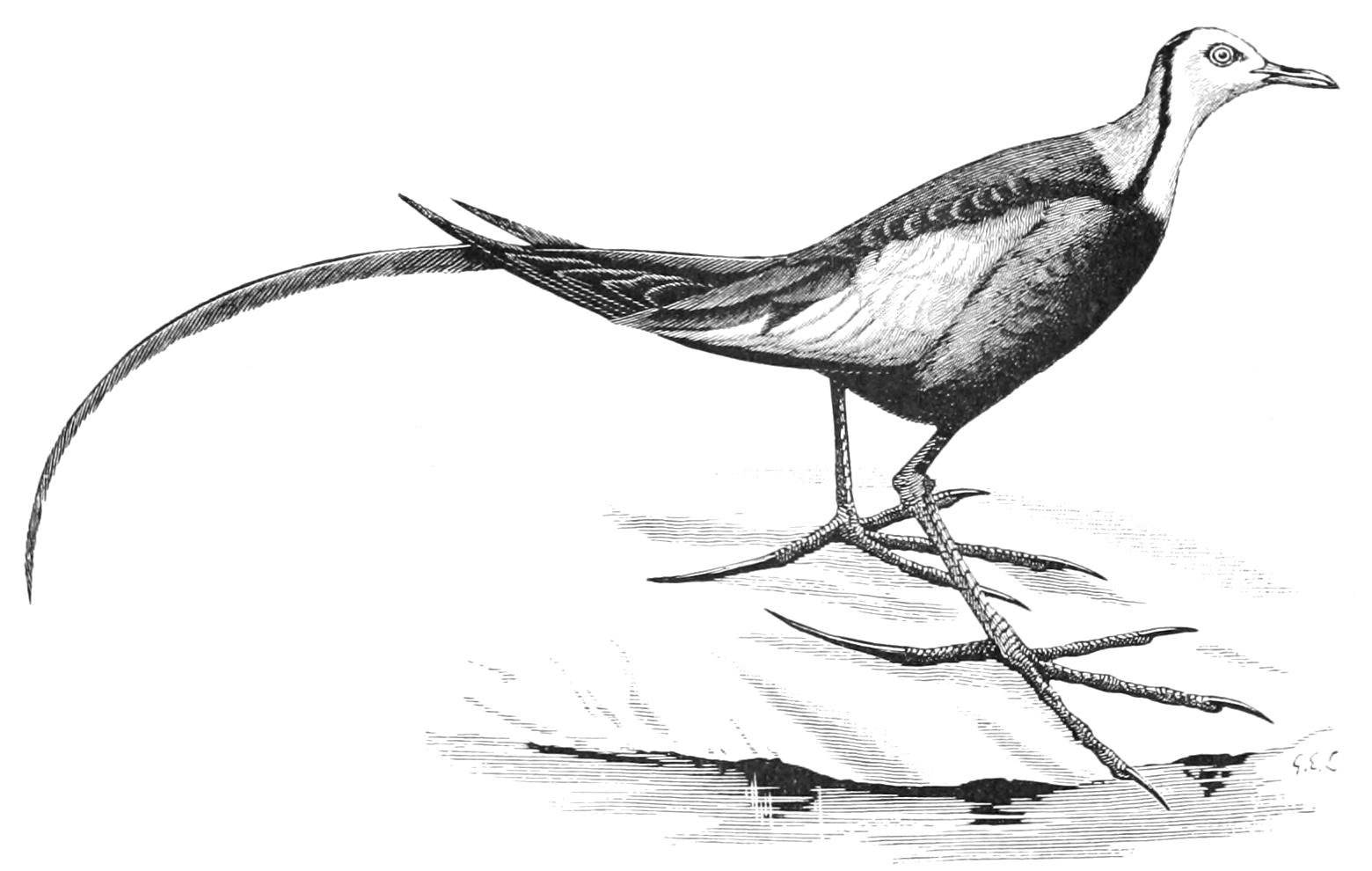
Fig. 61.–Indian Jaçana. Hydrophasianus chirurgus. × ¼.
All the members of this Family frequent lakes and swamps, whether inland or near the coast, Hydrophasianus chirurgus occurring at considerable elevations; while at least that species, Parra jacana, and Metopidius indicus, are gregarious in winter. On their favourite lagoons, bordered by a dense fringe of aquatic plants, these active birds may be seen gracefully striding or running upon the floating leaves of water-lilies and like plants, as their long toes easily enable them to do. When danger threatens they crouch or submerge themselves partially, Hydralector being perhaps the best diver, where all are good. Tame when unmolested, they rise reluctantly, scuttling over the water with trailing legs after the fashion of a Moor-hen, or fluttering and gliding in turn to the nearest shelter at a good pace. On the ground the gait is easy. Small parties of Parra jacana are said to gather together when feeding, and to utter quick, excited cries, while going through a singular performance or dance, with outstretched, agitated wings and alternate slow and fluttering movements.[195] Some species are especially quarrelsome; Microparra has a habit of bobbing its head up and down like a Plover; the male of Parra jacana is particularly sedulous in warning the female from the nest; and both parents commonly "sham wounded" to protect their young. The cry is loud and harsh, or mewing in Hydrophasianus; the food consists of insects, molluscs, seeds, and roots; the nest is a small cup, or not uncommonly a large mass, of aquatic herbage, placed in grass or rushes, or on floating vegetation. The four beautiful eggs are more or less pear-shaped, and are glossy buff, olive, green, or brown, thickly covered with fantastic scrawls, and occasionally with black or brown blotches. Metopidius indicus, however, is said to lay as many as ten, while those of Hydrophasianus are plain brown or green.
A fossil Limicoline form, Palaeotringa, occurs in the Cretaceous rocks of New Jersey; France furnishes Limosa and Tringa from the Eocene, Camascelus (allied to the Plovers) from the transition beds, Milnea (near Oedicnemus), Tringa, Himantopus, and Numenius from the Miocene. The same formation in both France and Germany provides Helornis (akin to Limicola), and Totanus; the Pliocene of Italy the latter; Gallinago is found in the Chatham Islands; Charadrius in North America.
Fam. VII. Laridae.–This consists of four Sub-families (1) Stercorariinae or Skuas, (2) Larinae or Gulls, (3) Rhynchopinae or Skimmers, and (4) Sterninae or Terns. Mr. Saunders[196] is, however, probably right in distinguishing a second Family, Stercorariidae; and possibly a third, Rhynchopidae, might be admitted.
In the Larinae the strong, horny bill is of moderate length, though exceptionally small in Rhodostethia, the maxilla being curved, but hardly hooked; in the Stercorariinae there is a distinct hook, and the base is covered by a cere, said to be hard or soft according to the season, and possibly, shed after the manner of certain Auks.[197] In the Sterninae the beak is nearly straight and pointed, while comparatively slender; in the Rhynchopinae, the maxilla, which moves vertically with ease, is much shorter than the mandible, and both are compressed anteriorly until they resemble truncated knife blades. The tibia is generally partly bare; the metatarsus is fairly long in the first two Sub-families, and is scutellated in front, being usually smooth behind, though rougher in Pagophila; the anterior toes are fully webbed, with claws which vary from weak to moderate, or even to strong and hooked, as in the Stercorariinae. The elevated hallux is joined by a membrane to the inner toe in Leucophaeus, and is rudimentary or absent in Rissa. In the Sterninae and Rhynchopinae the metatarsus is short–especially in the latter, where the web between the inner and middle digits is deeply incised, as are both webs in Hydrochelidon and Gygis; the claws are long, slender, and curved. The pointed wings, excessively lengthened in the two last-mentioned Sub-families, have eleven primaries, of which the outer is particularly small, and from fifteen to twenty-three secondaries. The tail may be nearly even as in Larus, deeply forked as in Sterna generally, less excised as in Xema, Hydrochelidon, Naenia, and Rhynchops, graduated or cuneate as in Rhodostethia, Anous, and Gygis; all the twelve feathers being rounded or acute: in the Stercorariinae the two central rectrices project beyond the others, being decidedly pointed in Stercorarius crepidatus and S. parasiticus, but rounded and twisted in the shaft until the webs are vertical in S. pomatorhinus. The furcula is U-shaped, the syrinx tracheo-bronchial, the tongue lanceolate, the nostrils are pervious; an after-shaft is present, while both adults and young have abundant down, that of the latter commonly shewing a mixture of white, with grey, yellowish, slaty, or brown. Naenia has elongated plumes at the gape, and a few Terns have slight nuchal crests.
Gulls and Skuas are widely-ranging and essentially marine birds, even those species which nest inland being commonly observed near salt water, and seeking the coast when incubation is over. They are always inclined to be gregarious, and are more or less resident in Britain, but the undoubted influx of birds from abroad in autumn makes it difficult, or even impossible, to determine their exact status in every case. Their untiring and easy flight is only second to that of the larger Petrels; the majestic style of the Great Black-backed Gull, and other forms, being a great contrast to the wavering but graceful movements of the Kittiwake or Bonaparte's Gull. All walk well, though sedately, swim to perfection, and rise easily both from land and water, usually breaking into a run before taking to the wing from the ground; while they almost invariably alight with uplifted pinions. The wild characteristic note varies less than in most large groups, that of the bigger species being harsh and querulous, that of the smaller laughing or screaming; the lesser Skuas give vent to a curious mewing cry, and the Great Skuas to a similar but deeper sound. At the breeding-quarters the utterances are naturally more agitated and shrill, and the parents hang excitedly above a visitor's head. The food consists mainly of fish, molluscs, crustaceans, and worms, but is varied in the stronger forms by small mammals, young birds, and eggs: the Great Black-backed Gull undoubtedly attacks lambs and weakly ewes; carrion is not uncommonly devoured; and Larus maculipennis acts as a scavenger at Buenos Aires, besides clearing the country of grasshoppers, and robbing the Cayenne Lapwing of its insect booty. Skuas give chase to their smaller kin, and force them to disgorge the fishes they have just caught, while even Solan Geese are sometimes victimized; Larus scopulinus, moreover, which robs the Oyster-catcher of New Zealand, is a further instance of parasitic habits. Insects and their larvae, turnips, berries, and grain are also eaten by these omnivorous but useful creatures. Their main sustenance is naturally derived from the ocean, or its oozy shores; but flocks are commonly seen on pastures and arable lands near the beach, or following the plough further from the sea, though not being of the species which breed in the interior, nor driven inland by stress of weather. At times Gulls almost, if not quite, disappear below the water when swooping on their prey, and Kittiwakes have been said to pursue it beneath the surface. A common habit is that of preening and washing the plumage in company at favoured spots, while one that is less well-known is that of casting up the indigestible parts of the food in pellets, as do many other birds. The nesting sites are very frequently precipitous rocks and stony islands, but inland marshes and lakes accommodate many species, while in certain localities trees as high as thirty feet are selected. Skuas breed on moors or hills near the sea in Scotland, on the fells of Scandinavia, and on the tundras and barren grounds of the Arctic Regions, the nest being a mere depression in the herbage or moss; the remainder of the tribe generally collect a mass of grass, moss, flags, sedges, heather, twigs, or sea-weed, though a mere hollow in the soil or sand often serves their purpose. The eggs vary in number from two in the case of the Ivory Gull and the Skuas to three or exceptionally four; they are brown, drab, or green, with blotches and spots of brown, black, grey, and lilac, and recall those of Plovers. Both sexes have been said to incubate in Larus minutus and Rissa brevirostris; the young are comparatively helpless for a few hours or perhaps days, and are at first fed by the parents.
Terns resemble Gulls in many of their habits, but are more cosmopolitan, and decidedly migratory in Britain; they are essentially marine, yet some species breed on inland waters in summer. Particularly slender and graceful, these long-winged birds may usually be distinguished by their irregular or hovering flight, and are known as Sea-swallows; while their method of beating up and down maritime streams or shallows, singly or in pairs, in search of fish, is quite peculiar to themselves. At such times they make constant plunges into the water, often completely immersing their bodies, or occasionally discontinue their operations to engage in trivial and seemingly amicable quarrels. The note, though hoarse in some cases, is usually a squealing or grating sound, the latter especially when disturbed; the food consists of fish and crustaceans, insects–said to be sometimes taken on the wing–frogs, newts, locusts, grasshoppers, caterpillars, leeches, molluscs, and medusae. Terns are wary but bold, commonly circling around a wounded companion until several are shot; the Noddies (Anous), however, are much more sluggish and silent. On the ground all move with comparative ease. The nest of Hydrochelidon is a mass of water-weeds placed on some tussock in a wet inland swamp; that of Anous, when situated on trees, bushes, or rocky ledges, is composed of twigs, sea-weed, and like materials; but most species merely make a hole in the sand or soil, with little or no lining. Depressions on level rocks, the surface of prostrate plants, and heathery, grassy, or muddy flats are often utilized as alternatives, while colonies are usually formed. Two or three olive, reddish-brown, green, or stone-coloured eggs, with blotches, spots, scrawls, or oblique streaks of black, brown, grey, or lilac, are deposited; the Noddy and Sooty Terns, however, have a single white egg with red markings, and Gygis one, which is buff, marbled, spotted, or often scrolled with brown and grey, and is laid on any slight cavity of a branch, a broad leaf-stalk, or a coral reef. The nesting habits of Naenia are unknown, but it frequents rocky, cavernous shores.
Rhynchops has a peculiarly low flight, rapid and gliding, with many a turn and twist, which has gained it the name of Skimmer. The food, often sought towards evening, appears to consist of small fish and crustaceans; it is procured by keeping the bill wide open, with the long mandible ploughing through the water or mud, and leaving a distinct furrow in its track. The cry is a low harsh scream or shrill twittering note. A hollow in some sandy river-bank or island serves to contain the three or four grey, green, buff, or white eggs, with blotches and streaks of purplish-grey and dark brown. The female is said to sit only at night or in stormy weather, and the young to be unable to fly for several weeks,[198] but the remaining habits resemble those of Terns.
The sexes in the Laridae are invariably similar, the plumage being grey and white, or more rarely blackish or brown, details of which will be found below. The young are duller, being mottled with brown or black in immature Gulls. The frequent black or brown heads, often lacking at certain ages or times of year, the seasonal changes generally, the neck-collar of Xema sabinii and Rhodostethia, and the rosy tint on the breast in the latter species, Larus franklini, and Sterna dougalli may be noticed in passing. The members of the Family range in size from the Glaucous to the Little Gull; the largest Tern being the Caspian, and the smallest, as its name indicates, the Least Tern.
Sub-fam. 1. Stercorariinae.–Of this widely spread but curiously distributed group, Megalestris catarrhactes, the Great Skua or Bonxie, a fine rufous-brown species, with a white wing-patch which is very conspicuous in flight, breeds in Shetland, the Färoes, Iceland, and possibly north of Hudson Strait, occurring in South Greenland and Norway, and reaching New England and Gibraltar in winter. It nests in colonies, though each pair occupies a distinct area, which the parents defend with exceptional boldness, swooping down swiftly with a heavy rush, and dropping the feet when at close quarters, as if to strike an intruder. Unlike their smaller kin, which will attack a man from any side and hit him with their wings, these birds commonly aim directly at the face, and their onslaught, if not averted, is really dangerous, while they only just clear the head when threatened with a stick. The two eggs, deposited in a depression in the herbage, are dull brown or greenish, with somewhat indistinct umber markings. The food consists chiefly of fish, which the smaller Gulls are forced to disgorge, while Kittiwakes and the like are themselves occasionally devoured in default of other prey. M. chilensis, spotted with chestnut above, and more rufous below, occupies America south of Rio de Janeiro and Callao; the sooty-brown M. antarctica–the stouter-billed Port Egmont or Sea Hen–replacing it from the Falklands to the Australian and New Zealand seas, and reaching northwards to the Comoros and Madagascar. In the Antarctic Victoria Land occurs a paler form, M. maccormicki.
Stercorarius pomatorhinus, the Pomatorhine Skua, breeds on the tundras of Siberia and possibly from Greenland to Bering Sea, migrating to Britain and as far as South Africa, North Australia, and Peru. The plumage is brown, with blacker head and gorget, white breast, and acuminate white neck-feathers tipped with yellow. The projecting median rectrices with their vertically twisted vanes are mentioned above (p. 301). Uniform brown specimens may be immature. S. crepidatus, the Arctic Skua, is smaller, and nests as far south as Northern and Western Scotland, but properly occupies Arctic and sub-Arctic Europe, Asia, and America; in winter, it reaches South Africa, Australia, New Zealand, and Brazil. The elongated rectrices are not twisted, but are pointed, while a uniform dark phase–the true S. richardsoni–is common to both sexes. S. parasiticus, Buffon's Skua, distinguished from the last-named by its extremely prolonged rectrices and greyer upper surface, breeds on the Scandinavian fells and throughout the Arctic tundras and barren grounds, migrating as far south as Gibraltar and lat. 40° N. in America. The habits of the members of this genus are similar to those of Megalestris, but their quicker flight enables them to rob even Terns, and the mewing cry is most peculiar, while the eggs are intermediate in style between those of Whimbrels and Gulls. These small Skuas often destroy Lemmings.
Sub-fam. 2. Larinae.–Rissa tridactyla, the Kittiwake, breeds from the circumpolar regions southwards to the Kuril Islands, the Gulf of St. Lawrence, and North-West France; in winter it reaches western North America, the Bermudas, the Canaries, the Mediterranean, and the Caspian. The feet are black, the hind-toe is absent or rudimentary. From Larus canus, which it closely resembles when flying, it can be distinguished by the absence of white spots at the ends of the primaries. The young bird, or Tarrock, is much variegated with dark grey or black, and has a blackish tip to the tail, as is the case in most fresh-water Gulls. Many fine colonies inhabit the loftier cliffs of Great Britain, the nests of sea-weed and grass being closely crowded together, and the eggs exhibiting softer colours than is usual in the Sub-family. The darker R. brevirostris of Bering Sea has red feet.
Pagophila eburnea, the Ivory Gull, seems truly circumpolar, while it accidentally visits Britain, Northern Europe, and New Brunswick. It is pure white, with black feet, the young shewing grey and black variations. It will eat whale- or seal-offal.
Leucophaeus scoresbii, of South Patagonia, the Falkland Islands, and the neighbouring Antarctic seas, has a crimson bill, coarse red feet, with somewhat excised webs, a dark hood in immature examples, and a white tail. Gabianus pacificus of Australia and Tasmania is somewhat like Larus marinus, but has a very short stout bill and a black-banded tail.
In the genus Larus, as throughout this Family, the arrangement followed is that of Mr. Howard Saunders,[199] much of whose admirable work is here incorporated. His first section comprises species with a white tail but no hood, the young having the head striated. Of these, L. glaucus, the Burgomaster or Glaucous Gull, and L. leucopterus, the Iceland Gull, are the only members of the group with nearly white primaries, the former being larger, with proportionately shorter wings. In summer the former is circumpolar, and the latter occurs from Jan Mayen to Greenland and perhaps the west side of Baffin Bay; in winter both visit Britain, but the latter only reaches the Gulf of Gascony, and Boston in America, whereas its ally extends to the Mediterranean, the Caspian, Japan, California, and the Bermudas. At this season the head shows brown markings; while the young are entirely mottled, though they apparently become creamy white just before assuming the grey mantle. L. glaucescens of the North Pacific, L. nelsoni of North-West America, and L. kumlieni of Cumberland Sound have the quills chequered with grey, and connect the above with the following or blacker-quilled group.
L. argentatus, our Herring Gull, has a blue-grey mantle; the black primaries shew white tips and "mirrors" or round white marks, as well as a grey wedge on the inner web; the feet are flesh-coloured, the orbits yellowish. In winter the head is streaked, and in the young the plumage is mottled with brown. This species extends over Northern Europe and most of North America, ranging to the south of those countries in the cold season; its representative in the Mediterranean and Central Asia is L. cachinnans, with yellow feet and red orbits, and in Arctic Siberia L. vegae, chiefly differing from the last-named in its pinkish legs. L. audouini of the Western Mediterranean has blackish feet, and a crimson bill with black band. L. canus, the Common Gull, found throughout Northern Europe and Asia, and migrating to the Mediterranean, the Nile, the Persian Gulf, and China, has white mirrors on the first three primaries, yellow bill, and greenish-yellow feet. It has occurred in Labrador, and breeds in North Britain on islands, lakes, and flat stacks, though rarely, if ever, on cliff-faces; the shrill note is more like that of the Herring Gull than the harsh cry of our Black-backs. The smaller and darker L. brachyrhynchus occupies North-Western America, reaching California in winter; the paler L. delawarensis, with a subterminal black band on the yellowish bill, frequents lakes and marshes in North America, and breeds towards the north; L. californicus, with little black on the beak, inhabits western North America.
Of the Black-backed Gulls, L. marinus, the Great Black-back, largest of the Family except L. glaucus, is found from Arctic Europe to North-East America, migrating as far as the Mediterranean, the Canaries, and Florida; it has a grey wedge on the primaries like the Herring Gull, and pinkish feet. Somewhat scarce in Britain in summer and comparatively non-gregarious, it is noted for its fierceness, and will even attack sheep. The smaller L. dominicanus, with olive feet, ranges from lat. 10° S. in South America to South Africa and New Zealand, with the corresponding Antarctic Seas; L. schistisagus of the North Pacific being intermediate between this and the next species. L. fuscus, the Lesser Black-back, found both on our shores and inland, has yellow feet; its main range covers North Europe, excluding Iceland; but it even breeds in Morocco and on the Red Sea, extending in winter still further southwards. The similar L. affinis of North Russia and West Siberia, with coarser feet, migrates to Somaliland, India, and occasionally other districts; the very stout-billed L. occidentalis represents our species on the Pacific coast of North America.
Mr. Saunders's next section contains five Gulls resembling the last group in having no hood and a white tail; but here the young have the head and tail-coverts unspotted. To this belong L. bulleri of New Zealand, the Chatham and Auckland Islands, with black bill and feet, which haunts inland rivers; and also four marine forms with crimson bill and feet. These are L. scopulinus of New Zealand, the Chatham and Auckland Islands; the larger L. novae hollandiae of Australia, Tasmania, and New Caledonia; the South African L. hartlaubi, found in Madagascar; and L. gelastes, ranging from North-West Africa and the Mediterranean to the Caspian and Sind, which lays its Tern-like eggs on sand-banks.
The third section differs in having a subterminal black band on the tail, and, in the young, an irregularly striated hood. L. crassirostris, of the Chinese and Japanese Seas, has the base of the tail and the under parts white, the bill yellow, banded with red and black, the feet yellowish; L. belcheri, of Peru and Chili, has a blackish mantle and stouter beak; L. heermani of western North America has the tail black except for a white tip, a grey lower surface, red bill, and black feet; L. modestus, also of Peru and Chili, differing in its decidedly grey tail and black beak.
The last-named is a connecting link with the fourth section, containing the Hooded Gulls; that is, those with hoods in mature plumage, but no marked hood in the young. Of these, all except the first three have the mantle grey and the head more or less white in winter; they are rather small birds, which chiefly inhabit the north, commonly breed in marshes, and utter a shrill querulous cry.
L. fuliginosus of the Galápagos, and L. leucophthalmus of the Red Sea and Gulf of Aden, are deep lead-coloured above with black head; but the former is grey below with no admixture of white, while the latter has a white nuchal collar, as has the much browner L. hemprichi, extending from East Africa to Bombay. L. cirrocephalus of Brazil, Argentina, and West and Central East Africa, which occurs in Peru and Natal, has a pale grey head; whereas a brown hood distinguishes L. brunneicephalus of Central–and in winter Southern–Asia, L. maculipennis, ranging from Brazil to Patagonia and Chili, L. glaucodes of Chili, Patagonia, and the Falklands, and L. ridibundus, the British Black-headed or Peewit Gull, which occupies Europe and temperate Asia, migrating to North Africa, India, and China. These four differ considerably in the pattern of the primaries,[200] but all have red bill and feet. The colonies of our marsh-breeding species supply large quantities of eggs for eating.
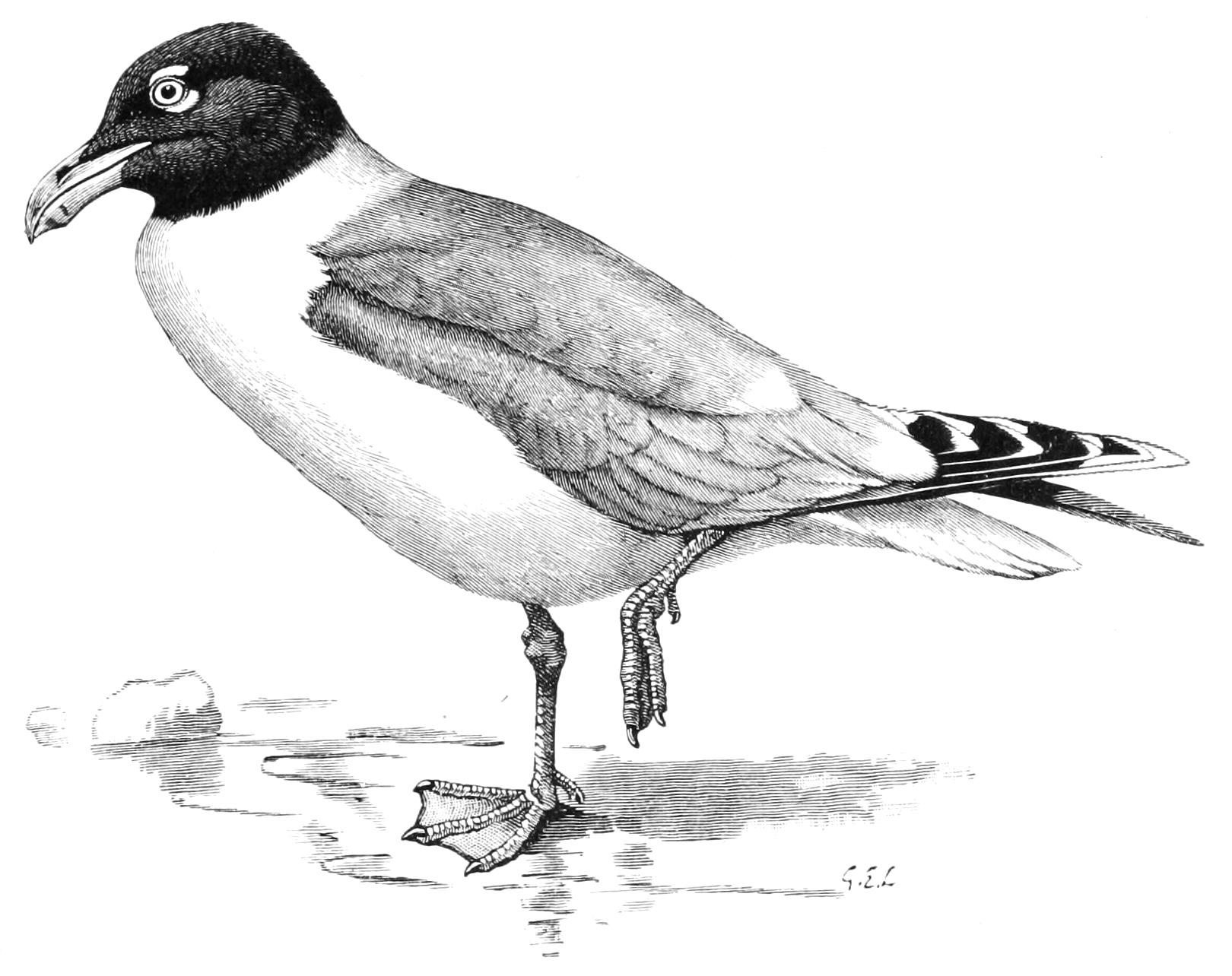
Fig. 62.–Great Black-headed Gull. Larus ichthyaëtus. × 2⁄13.
Of the black-hooded, grey-mantled forms, which have as a rule red bill and feet, L. atricilla, the Laughing Gull, of the Atlantic coast of North America and Western Mexico, alone has black outer primaries; this species and L. franklini, of the interior of sub-Arctic America, having exceptionally dark mantles, and the latter pinkish under parts. Both migrate south in winter. L. philadelphia, Bonaparte's Gull, of all North America, which, like its two following congeners, strays to Britain, has the bill black; L. melanocephalus, of the Mediterranean and Black Seas, has a jet black head, a partly red bill, and nearly white quills; the very large L. ichthyaëtus ranging from the Black Sea and the Levant to Tibet, and wintering in Southern Asia, has the bill almost orange. L. saundersi, a slender-legged stout-billed bird, inhabits the rivers and coasts of China and Mongolia; L. serranus of the Andes from Ecuador to Chili being a near ally. L. minutus, the Little Gull, frequenting marshy districts in sub-Arctic and temperate Europe and Asia in summer, and reaching the Mediterranean in winter, is quite the smallest of the genus.
The lovely Rhodostethia rosea, or Wedge-tailed Gull, of the North Polar seas, supposed to breed on islets north of Asia and America if not of Franz Josef Land, is easily distinguished by its small black bill, red feet, black collar, and rosy lower parts. One specimen is on record in Britain. Xema sabinii, or Sabine's Gull, which nests on maritime marshes from Greenland westward to the Taimyr Peninsula, wanders to Britain, France, the Bermudas, and Texas, and annually visits Peru; it may be recognised by its plumbeous head, black collar, and forked tail. Of the larger collarless X. furcatum, with a white basal band on the maxilla, the only five examples known are from the Galápagos and Peru.
Sub-fam. 3. Rhynchopinae.–Of this group the curiously compressed beak and the habits have already been described (pp. 301, 304). The sole genus Rhynchops, or Scissor-bill, contains five species, of which R. nigra is black, with white forehead, cheeks, and lower parts; the wing-quills being also broadly tipped, and the tail-feathers varied, with white. The bill and feet are red, with a black end to the former. In winter the nape is whiter, while the young are buff and blackish above. Breeding from New Jersey to Florida, this bird strays to New Brunswick and migrates to Trinidad, occurring also in South-West Mexico. R. intercedens of South Brazil and Argentina, and the larger R. melanura, of the North and West of South America, have nearly uniform brown rectrices, but the latter has little white on the secondaries. R. flavirostris, extending from Senegal to Damara-Land, and from Egypt and the Red Sea to Nyassa-Land, has a red and orange beak; R. albicollis, of India and Lower Burma, differs from it in having the back of the neck white.