Chapter V
Reading edition
NEORNITHES CARINATAE CONTINUED
BRIGADE II–LEGION I (ALECTOROMORPHAE). ORDERS: TINAMIFORMES–GALLIFORMES–GRUIFORMES–CHARADRIIFORMES
Order VIII. TINAMIFORMES.
The primitive Neotropical Order Tinamiformes, with the Sub-Order Tinami, and sole Family Tinamidae or Crypturidae, is classed here in accordance with Dr. Gadow's carefully-weighed decision;[142] yet the position must not be considered absolutely certain, most systematists placing it near the Ratitae. The complete fusion of vomer and palatine bones is unique among Birds, though partially noticeable in Dromaeus and Apteryx; the conformation of the skull, the single head of the quadrate, the separation of the ischium and ilium, the absence of a pygostyle, the reduced tongue, the functionless tail, the gait and bearing are Struthionine features; but other points of structure, the pterylosis and the habits generally, are Galline.
The furcula is U-shaped; the sternum long and slender with well-developed keel; the head small; the neck thin and elongated with short plumage; the beak fairly strong, varying in length, and composed of more than one piece, the culmen being flattened and usually arched; the moderate metatarsus is transversely or hexagonally scutellated, and may be rough or smooth behind, while the hallux–wanting in Calopezus and Tinamotis–is elevated, and the anterior toes are long or short, with moderate claws. The short wings are concave and rounded, with ten primaries and from thirteen to sixteen secondaries; the abbreviated tail possesses ten very weak feathers, hidden by the coverts in Tinamus, Nothocercus, and Crypturus, and hardly distinguishable from them in Rhynchotus, Nothoprocta, and Nothura, the coverts themselves almost forming a train in the male of Taoniscus. Calodromas has twelve rectrices. The tongue is small and triangular, the crop is large and globular, the after-shaft is rudimentary or wanting; powder-down feathers occur near the rump, and the down of the adults is sparing, while that of the nestlings, which run from the shell, is simple, as in Ratite birds, and of a buffish-brown or chestnut colour, often relieved by black markings and white streaks.
Like Partridges in appearance, and varying from the size of a large Fowl to that of a Quail, Tinamous are essentially ground-birds, and rarely perch, some species being solitary and others forming coveys; they haunt the undergrowth of thick forests, dry bushy and grassy flats, or–exceptionally–rocky mountains. The flight is strong and extremely swift, accompanied by quick vibrations of the wings, occasionally varied by a gliding motion; so reckless moreover is the pace that individuals are frequently killed by striking against the first obstacle they meet on rising. To flush them, however, is often a vain attempt, as they run with amazing rapidity, and are readily concealed by the surrounding vegetation. The voice–a trill or mellow whistle of several notes–differs somewhat according to the species, and may be heard even in winter; the food consists of seeds, berries, roots, bulbs, spiders, insects and their larvae, maize- and potato-crops being at times seriously damaged. A hole is scraped under shelter of a tussock or bush, and scantily lined with dry leaves or herbage, to receive the eggs, deposited in some districts almost throughout the year; these are oval, and so wonderfully burnished as to be totally unlike those of any other bird. They vary, according to the species, from reddish-chocolate, wine-purple, or liver-colour to dark blue, bluish-green or primrose, and number from four or five to sixteen; though the smaller figures are perhaps the most reliable, as larger sets, though not uncommon, may be the produce of more than one hen. As in the Turnicidae, and to some extent in the Ratitae, the male alone incubates, sitting about three weeks, and feigning disablement to decoy intruders from the nest. The flesh is very delicate, and good sport may be had with some species near the holes where they daily dust themselves.
As will be seen from the following examples, the general coloration is rufous or slaty-brown, which may be relieved by buff, or barred with blackish above and even below; the under parts being often greyer, with whitish throat and belly. The sexes do not differ greatly, but the female is, if anything, the larger bird. Some six forms occur in Mexico, while of the remainder Tinamotis ingoufi extends the range to Southern Patagonia.
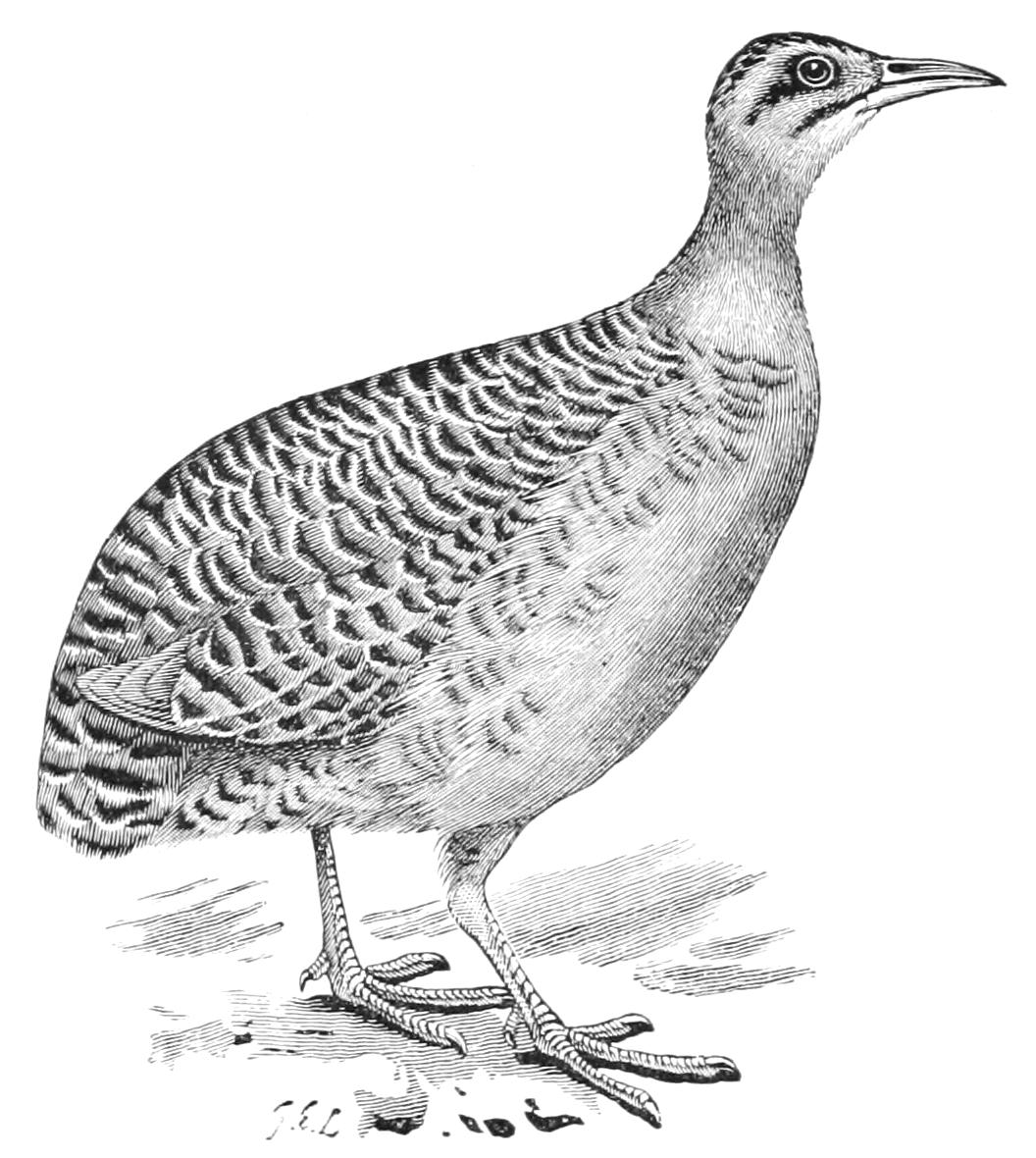
Fig. 42.–Great Tinamou. Rhynchotus rufescens. × ⅕
The genus Tinamus has ten members, T. tao, of South America north of Bolivia and Brazil, being greyish-olive, with slaty breast and buff abdomen, wavy blackish markings on both surfaces, black primaries, black head and neck with white spots and bands on the sides, and still whiter throat. Of the thirty or more species of Crypturus, C. tataupa, extending from Peru and Bolivia to Brazil and Argentina, is plain chestnut-brown, with blackish crown, grey cheeks, neck, and breast, whitish throat and belly, buffish flanks with black crescentic bars, red beak, and pinkish feet. It haunts dense undergrowth in forests, even near habitations, and frequently sits bent forward with its "tail" expanded over its back; its melody consists of several notes at diminishing intervals, merging into a hurried trill, which is terminated by a reiterated sound like chororó; its eggs are of a reddish chocolate-colour. Rhynchotus rufescens of the same countries except Peru, the "Perdiz grande" of Argentina, which is represented in Bolivia by the similar R. maculicollis, is grey-brown, with blacker crown, rufous cheeks, neck, and breast, and chestnut primaries; the back being barred with whitish and black, and the flanks with brown and white. This somewhat solitary bird threads the tall grasses of the Pampas like a Rail, and, if unable to escape by squatting or running, will fly for some thousand yards, and thrice repeat the effort before becoming exhausted, the rapid whirring of the pinions sounding like a vehicle driven quickly over stones. The song, as it may almost be called, consists of five or six flute-like notes, several individuals sometimes joining in chorus towards evening, when they are decidedly active. The eggs, which are dark purple, have been hatched in confinement, and attempts at naturalization have been made in Essex and Herts. Nothoprocta contains eight members, N. pentlandi of the Bolivian and Argentine Andes having the crown and back grey, barred with black and buff, and streaked with white, the remiges blackish and buff, the cheeks and breast grey, the throat, mid-abdomen and pectoral spots whitish, the flanks grey, black and white. Its powers of flying and running are comparatively small, and it will remain stationary for hours among stones or bushes in ravines, escaping observation by its dull hue. The note is a full-toned whistle; the food consists of seeds, fruits, and insects; the eggs are reddish-brown. Of seven species of Nothura, N. maculosa, the "Perdiz comun," found from South Brazil to Argentina, is yellowish-brown above, barred with black and streaked with whitish, the throat being white, the wings marked with fulvous, and the lower parts rusty with brown breast-spots and curved flank-bands. It is a fearless, solitary, and somewhat sluggish denizen of grassy plains, which does not avoid habitations, and may be knocked down with a whip or stone, feigning death when captured; the note resembles that of Crypturus tataupa without the final intonation; the eggs are wine-purple or liver-coloured. N. darwini, the shy "Perdiz chico" of Patagonia, is greyer. Calodromas (Calopezus) elegans, the Martineta, ranging from South Uruguay to Patagonia, has a grey and black head and neck with long recurved crest, elevated in excitement, two white bands on each side of the head, rufous and black upper parts, whitish throat and marks on the primaries, and buffish under surface with crescentic black bars and spots. It frequents dry bushy table-lands, often in coveys of twenty or thirty, which run squealing in single file before intruders, and utter, in summer only, a long plaintive whistle, or chorus of notes like those of Rhynchotus, but weaker. The flight, accompanied by a wailing sound, is broken by intervals of gliding; the four to sixteen eggs are deep green or yellowish. The remaining genera are Nothocercus with five, Taoniscus with one, and Tinamotis with two species.
Order IX. GALLIFORMES.
The Galliformes, or Gallinaceous Birds, constitute a large and fairly homogeneous Order, situated between the Tinamiformes and the Gruiformes, if we assume the former to be classified in accordance with the views of Dr. Gadow, and not to be placed nearer to the Ratitae; the Gruiformes again linking themselves to the Laro-Limicoline section of the Charadriiformes, and so forth. Opisthocomus, however, though decidedly Galline, shows considerable resemblance to the Cuckoo-tribe.[143] The present Order may be divided into the Sub-Orders Mesitae, with the Family Mesitidae; Turnices, with the Turnicidae or Button-Quails, and the Pedionomidae; Galli, with the Megapodiidae or Mound-builders, the Cracidae or Curassows, and the Phasianidae or Game-birds, Fowls, and the like; and finally Opisthocomi, with the Family Opisthocomidae, containing but one species, the exceptionally curious Hoatzin. Among the Galli, the Megapodiidae and Cracidae together compose Professor Huxley's group of Peristeropodes or Pigeon-footed forms, where all the toes are in one plane; the Phasianidae standing alone in his Alectoropodes, or Fowl-footed division, where the hallux is elevated above its fellows.
Excluding Mesites, of which comparatively little is known, all the members of the Order agree in having a more or less globular crop, and a somewhat scanty supply of down in the adults, with a more uniform coating in the young, which becomes thinner in Opisthocomus; they may be distinguished from the Gruiformes, except Rhinochetus, by their impervious nostrils, while the Tinamiformes differ in the compound structure of their bills, the primitive sternum, and the invariably weak rectrices.
Sub-Order Mesitae. Fam. I. Mesitidae.–This consists of a single genus, Mesites, from Madagascar, originally referred by Isidore Geoffroy Saint-Hilaire to the neighbourhood of the Pigeons, and by subsequent writers to that of the Passerine, Ardeine, or Ralline birds.[144] W. A. Forbes[145] classed it next to Eurypyga and Rhinochetus; but Dr. Gadow, as may be seen from above, places it in the Galliformes, considering it to be a connecting link between that Order, the Tinamiformes, and the Gruiformes.
In this curious form the bill is long and slender; the legs are rather weak, with the uniformly scutellated metatarsus shorter than the partially bare tibia; while the toes, which are without webs, are on the same level. The keel of the sternum is short, the anterior extremity hardly reaching beyond the middle of the breast-bone, and the clavicles are quite rudimentary. The wing is rounded, and has ten primaries and six secondaries; the tail is strong and well-developed, with fourteen (or sixteen) rectrices. Mr. E. Bartlett tells us that the quills of the soft feathers of the back and rump are so delicate that the plumage curls forward immediately upon the bird's death.[146] The after-shaft is absent, the pervious nostrils are long and linear, the lores and bluish orbits are naked. No less than five pairs of powder-down patches have been ascertained to exist, of which two couples are dorsal, one adjoins the upper pectoral muscles, and two are ventral. M. variegatus is cinnamon, with black and tawny markings, the lower parts being white with black spots and reddish flanks. The female is mostly rufous below. M. unicolor is not distinct. Hardly anything is known of the habits, but the nest is said to be upon the ground.
Sub-Order Turnices.–This consists of the two Families, Turnicidae and Pedionomidae, each with one genus, Turnix or Hemipodius, and Pedionomus respectively; the last-named, moreover, has but one species. Ortyxelus meiffreni (p. 295), may belong here.
Fam. II. Turnicidae.–In this group the bill is short, but commonly less stout than that of the Phasianidae, which it otherwise resembles; the metatarsus is long, slender, and scutellated, the hallux is absent, the claws are small, curved, and sharp. The wings are broad and rather short, with ten primaries and about fifteen secondaries; the abbreviated tail contains twelve soft rectrices, which are not so long as the upper coverts in Turnix ocellata, while in T. sylvatica and several nearly-allied species the median feathers are somewhat elongated and acute. The furcula is U-shaped, and the crop is almost absent, but an after-shaft is present; the pointed tongue, the impervious nostrils, and the tracheo-bronchial syrinx calling for no special remark. Where the sexes differ, the female is almost always the larger and brighter-plumaged bird, the colours being black, brown, buff, chestnut, and white in varying admixture, and becoming less distinct with age.
These small, solitary, and non-migratory forms often escape observation through their shyness, as they run strongly, and are flushed with the greatest difficulty, dropping quickly into cover after a short awkward flight; they frequent dry, grassy plains and localities covered with low trees or dense bushes, and utter a pleasant ringing or triple grating cry, with a mournful call-note at dawn and sunset.[147] The food consists of seeds and insect-larvae; the well-concealed nest is little more than a hole lined with dry grass, though sometimes domed with similar materials; the three to five eggs, shaped somewhat like peg-tops, are buff or greyish, with spots of pale grey, purplish, or dark brown. Two broods are raised in a season, and it is a noticeable fact that the comparatively dull-hued male performs all, or nearly all, the duties of incubation, sitting very closely, and feigning lameness when surprised with the young, which run from the shell. The adults frequently fight, but the sex of the combatants is uncertain.
The genus Turnix includes some twenty "Hemipodes," the Bustard- or Button-Quails of Anglo-Indians, which range from South Europe, Arabia, and Africa to India, China, the Liu-Kiu Islands, and Formosa, as well as to Australia, New Britain, and New Caledonia. The female is described below, unless otherwise stated. T. taigoor, reaching from India, Ceylon, and the Malay Peninsula to the Liu-Kiu Islands and Formosa, is brown above, with black bars and vermiculations, and buff margins to many of the feathers; the forehead and sides of the head and neck are white spotted with black, the mid-throat and chest are black, a whitish stripe divides the crown, and the under parts are buff, banded with black on the sides of the chest and on the breast. The whole chest is barred in the male, the centre of the throat being white. Darker birds apparently inhabit wetter districts.[148] T. pugnax of Ceylon and the Great Sunda Islands is a rufous-naped race. T. fasciata, with a rufous collar, but grey and black upper surface, inhabits the Philippines and Paláwan; T. rufilata, of Celebes, has the throat barred with black, and a rufous vent-region, T. powelli of the Lesser Sunda Islands being similar. The males lack the rufous collar and barred throat. T. sylvatica, of South Europe and Africa generally, has in both sexes dull reddish upper parts, barred with black and relieved by white, grey, and buff, which cause a scaly appearance; the browner wings shew white spots, the centre of the crown and throat are white, the sides of the head, neck, and breast whitish with black spots, the mid-chest and abdomen ruddy and buff respectively. T. dussumieri, the smallest species known, occurring in India, Pegu, Hainan, and Formosa, differs in the wide yellowish margins of the scapulars, a feature found also in the blacker T. nana and T. hottentotta of Africa, wherein the sides are barred. The former ranges from lat. 10° S. to the Great Karroo, and the latter southward of that district. T. blanfordi is found east of the Bay of Bengal to Siam and Manchuria, T. tanki in India and eastward to Tipperah, T. albiventris in the Andamans and Nicobars; all being greyish above varied with black, and having the nape rufous in the female only. T. maculosa of Celebes, Southern New Guinea, and Australia, and T. saturata of New Britain and the Duke of York group are similar, but exhibit yellow-edged scapulars; the latter possessing no rusty collar, but having a white throat in the male. T. ocellata of Luzon is a large greenish-brown species vermiculated with black; in which the neck and breast are bright ruddy, the crown is blackish banded with white, the throat and cheeks are chiefly black, and the wing-coverts show black ocelli with whitish margins. The male has the middle of the throat white and no rufous collar. T. nigricollis of Madagascar is grey, black, reddish, and buff above, with much black and white on the head; and is uniform grey below, with black mid-throat and more or less ruddy sides. The throat is white in the male. The female of T. melanogaster of East Australia has both throat and breast black, with white markings on the latter, the male reversing the colours. Other Australian forms are T. varia, with chestnut nuchal collar, black, white, and rufous upper, and grey and buff under parts; T. castanonota, with vinous red upper surface; T. pyrrhothorax, chiefly greyish above and rusty buff below; and T. velox, reddish-chestnut in colour with nearly white lower parts. In these four the sexes are alike. T. leucogaster inhabits Central Australia.
Fam. III. Pedionomidae.–Pedionomus torquatus differs in structure from Turnix by the presence of a small hind-toe. The lax upper plumage is, in the female, reddish-brown with black barring and buff margins to the feathers, the lower parts being pale buff marked with black. A broad white collar spotted with black surrounds the neck, while a rust-coloured nape and chest distinguish the above sex from the male, where the collar is brown and buff. This curious bird, somewhat smaller than a Quail, inhabits grassy plains in Southern and Eastern Australia, preferring the wilder districts. The habits are much as in Turnix, but the nest seems never to be domed, the four eggs being of a light stone-colour, thickly freckled and blotched with brown and grey.
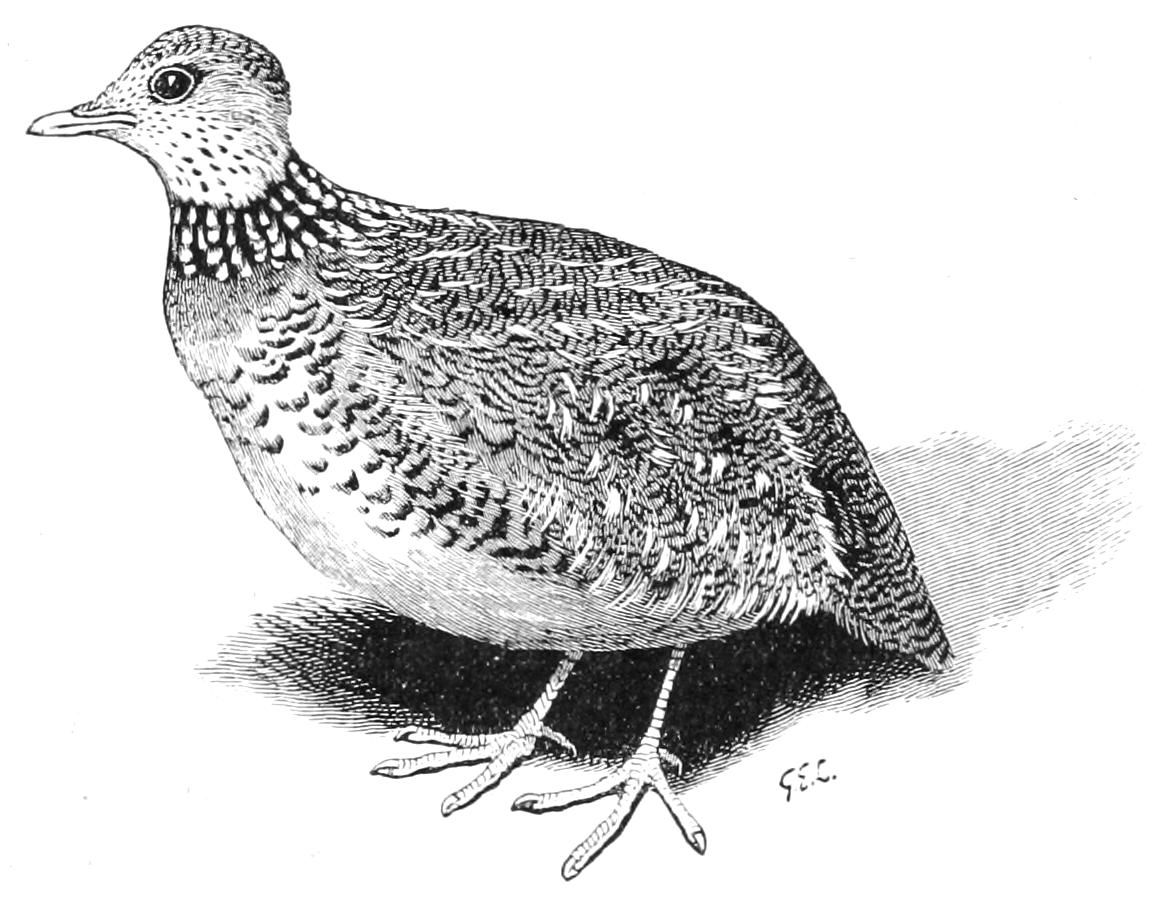
Fig. 43.–"Plain-Wanderer." Pedionomus torquatus. × ½.
Fam. IV. Megapodiidae.–The Megapodes, or Mound-builders, commence the section Peristeropodes (p. 186) of the Sub-Order Galli. The bill is short, stout, and arched, though rather slender in Megapodius; the feet are exceptionally strong, and enormous for the size of the birds, Lipoa having the smallest; while the metatarsi are usually scutellated, but are reticulated anteriorly in Megacephalon, which has comparatively short and blunt claws. The abbreviated wings have ten primaries and some six secondaries. The tail is long and rounded in Talegallus and Lipoa, with upper coverts extending to the tip in the latter; it is short but still rounded in Megapodius; long and obcordate when expanded in Catheturus, Aepypodius, and Megacephalon. The rectrices number twelve in Megapodius, sixteen in Lipoa, Talegallus, and Aepypodius, eighteen in Megacephalon and Catheturus. Aepypodius possesses an erect fleshy frontal crest and a pendent caruncle at the base of the fore-neck, or even a pair of lateral outgrowths near the nape; Catheturus has a vascular neck-wattle: and Megacephalon a rounded bony casque with a tubercle behind each nostril. The fleshy growths are yellow or reddish, the horny black. In Aepypodius, Catheturus, and Megacephalon the naked head is clothed with hair-like feathers or papillae; Lipoa and some species of Megapodius have a short dense crest; others have the head almost entirely feathered, others again nearly bare except the occipital and nuchal region, as in Talegallus. The naked skin may be red, yellow, orange, purplish, grey, or pale blue; the bill and feet are black, brown, olive, yellow, red, orange, horn- or parti-coloured. The furcula is Y-shaped, the syrinx tracheo-bronchial, the tongue sagittate, the gizzard muscular, and the aftershaft small. The size varies from that of a Turkey to that of a large Pigeon, the sexes being invariably similar.
Megapodes are shy terrestrial birds found in hill-valleys, among thickets near rivers or the sea, or on gravelly and sandy beaches. Upon the ground their gait is not ungraceful, while they run well, and only take to the wing when hard pressed; if disturbed they usually seek the lowest branches of the neighbouring trees, hopping gradually to the higher limbs; the flight is heavy, but can carry them from island to island. Always difficult of observation they are rarely seen in company, yet the larger breeding mounds are no doubt used by more pairs than one. Hoarse croaks or clucks are uttered in the day-time, mewing notes or noisy cackles at night; the food consists of fallen fruit, seeds, berries, worms, snails, insects, and even crabs. The brownish-red, salmon-coloured or whitish eggs, at least as large as those of the domestic duck, are deposited either in mounds constructed of soil and vegetable matter, or in holes made in sandy or shingly ground; the decaying vegetation or the sun's heat producing the effect of an artificial incubator, and making parental aid needless. The young extricate themselves readily from the superincumbent soil, being hatched in a feathered condition, and flying almost immediately. The flesh is dark and usually unpalatable.
Though mainly confined to the Australian Region, where it extends eastwards to Ninafou and Samoa, the Family reaches westward to the Nicobars, and northward to the Philippines and Ladrones, replacing the Pheasants within these limits–save for the Philippines–just as the Cracidae do in Neotropical countries. No species is yet recorded from Sumatra or Java, and confirmation is needed in the case of the main island of Borneo.
Megacephalon maleo of North Celebes and the Sanghir Islands is glossy blackish-brown, with salmon-pink breast and belly, a vaulted tail, a black casque of cellular tissue, and dusky bill and feet. The Maleo, as it is called, inhabits hilly country, but resorts in hundreds to sloping gravelly beaches to breed, holes being scratched or dug just above high-water mark, some four or five feet in diameter. In these from two to eight pale brownish-red eggs are laid, about six inches apart–at intervals, it is said, of a fortnight or so–several females occasionally using one cavity.
Aepypodius bruijni of Waigiou is brownish-black, with chestnut rump and breast, dusky bill and feet; a fleshy papillose crest adorns the head, and three wattles–one median and two lateral–occur on the neck, all probably red in life. Ae. arfakianus of New Guinea is black above and brownish below, with no lateral wattles.
Catheturus lathami, the "Brush Turkey" of Eastern Australia, is blackish-brown with greyish under surface, shewing conspicuous light margins to the feathers. It has a bright yellow neck-wattle, reddish head and neck, black bill and brown feet. This species forms mounds of earth and decayed leaves, sometimes as much as six feet high and fourteen feet in diameter at the base, and covers the coarse outer layers with fresh leaves and sticks. The central portion is hollowed out like a cup, successive layers of eggs being deposited from the circumference inwards in concentric circles, and the earth gradually filled in above them. Several females sometimes utilize the same mound, each being said to lay an egg every second day. These eggs, placed with the small end downwards, number from twenty to nearly forty, and are of a long pointed oval shape and of a white colour with minute granulations. The site is usually a level clearing among scrub, whither the materials are conveyed by being repeatedly thrown backwards by the feet, while the cock possibly assists in building.[149] Talegallus cuvieri, of Western New Guinea, Salwatti, Mysol and Gilolo, is black with whitish throat; the naked parts are red-brown, the bill and feet reddish-orange and yellow respectively. T. fuscirostris, of South and East New Guinea, with the Aru Islands, differs in its grey-black bare areas and brown bill; T. jobiensis, of Jobi Island and East New Guinea, has the bill, feet, and naked skin red. The habits resemble those of Catheturus: the mounds, which reach an internal temperature of 93° F., are sometimes eleven feet high; the eggs are reddish with a chalky incrustation.
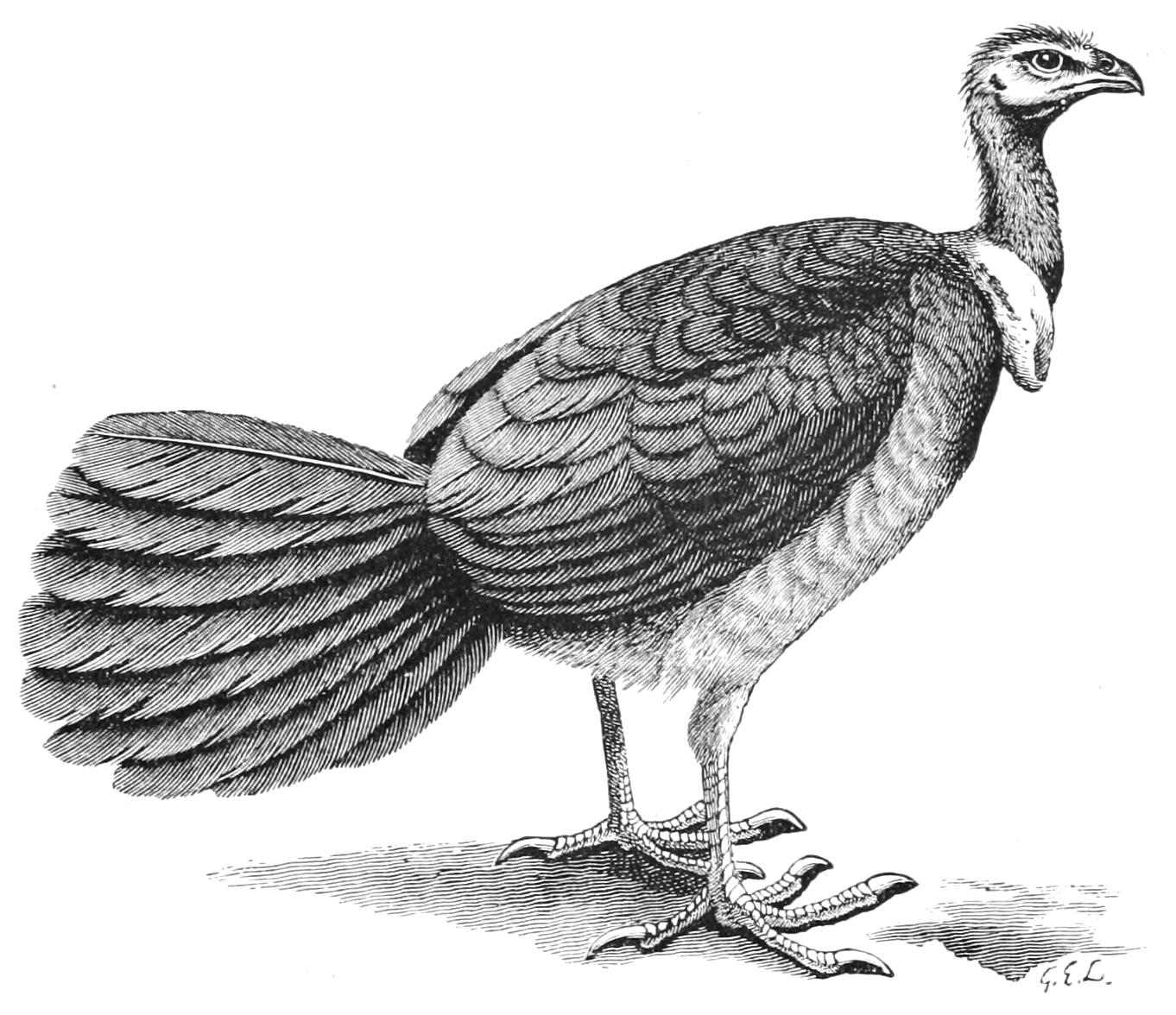
Fig. 44.–"Brush Turkey." Catheturus lathami. × ⅙.
Lipoa ocellata, the Native Pheasant or Mallee Hen of South and West Australia, has grey and brown upper parts, with black, buff, and white markings, which form eyes on the wings and back. The breast is grey with a median black and white line, the remaining lower parts being whitish with a rufous tinge. The naked parts are pale blue, the bill and feet brown. This bird frequents both open parts of the "brushes" and dense thickets, while in manners it differs but little from the members of the last two genera. The mounds–usually in close proximity–are, however, smaller as a rule, and are stated to be used by single hens, a fact no doubt true in many cases. The six to eight eggs, which are pinkish-white, but become red-brown in a few days, are very fragile, as in other Megapodes. The natives say that an egg is deposited daily, the discrepancy between Lipoa and Megacephalon being in this respect very remarkable, but conflicting assertions are only what may be expected where several females lay together, and further investigation should easily decide the question.
The genus Megapodius contains some fifteen species, about the size of a small fowl, in which the coloration varies from olive or chestnut-brown to blackish or grey above, and from red-brown to pale or dark-grey below, the bill being reddish, greenish, or yellowish, and the feet black, red, orange, yellow, or horn-coloured. M. pritchardi, of Ninafou, alone has white bases to the primaries, and M. wallacii, of the Moluccas, exhibits bright chestnut bands on the upper surface. M. duperreyi (tumulus), which ranges from the Kangeang Islands and Lombok to New Guinea and North-East Australia, fashions mounds, occasionally ten feet high, in dense scrub, laying pale coffee-coloured eggs in long burrows bored laterally, and not in symmetrical circles, as does Catheturus. M. layardi, of the New Hebrides, frequents damp wooded ravines, and is said to deposit its red-brown eggs among leaves in hollows. M. cumingi, found from the islands north of Borneo and Paláwan to the Philippines and Celebes, builds mounds of sand, leaves, and so forth, near the sea, the chalky eggs having a salmon hue. M. eremita, extending from the Solomon Islands almost to New Guinea, buries its eggs a couple of feet deep in open sandy spots, kept clear and fenced into allotments by the natives in Savo and Guadalcanar; while M. nicobariensis, of the Nicobars, appears to flock more than other Megapodes, and to lay its eggs at long intervals. M. tenimberensis, of the Tenimber Islands, M. sanghirensis of the Sanghir group, M. bernsteini of the Sula Islands, M. forsteni and M. freycineti, ranging from the Moluccas to Western or even Northern New Guinea, M. macgillivrayi of the Louisiade and D'Entrecasteaux Archipelagos and Eastern New Guinea, M. geelvinkianus, of the west of the latter with its islands, and M. laperousii, of the Pelew and Ladrone groups, are like their congeners in habits and appearance. Chosornis praeteritus is an extinct form from Queensland.
Fam. V. Cracidae.–These birds are almost identical in structure with the Megapodiidae, though sharply contrasted in their arboreal habits and their style of breeding. They may be divided into the Sub-families (1) Cracinae or Curassows, (2) Penelopinae or Guans, and (3) Oreophasinae. Of the first of these, where the maxilla is higher than it is broad, the genus Crax has a soft cere, and nostrils in the middle of the bill, with the addition in many cases of frontal excrescences and wattles; Nothocrax, Pauxis and Mitua have the beak horny and the nostrils basal, Pauxis, moreover, being distinguished by a large knob on the forehead, and Mitua by its short, highly-compressed bill with swollen culmen. The remaining Sub-families have the maxilla depressed and broader than it is high; Penelope, Penelopina and Pipile exhibit bare throats with a median wattle, Ortalis a mere band of bristly-shafted feathers down the middle, and Aburria a feathered throat and vermiform wattle, while Chamaepetes shews neither wattle nor bare skin, and Oreophasis, the sole tenant of the Oreophasinae, a naked crown, surmounted by a cylindrical helmet. The males of Crax, Pauxis, and Mitua, and both sexes of Penelope jacucaca, have the trachea looped, and sometimes extended to the posterior end of the keel of the sternum; other forms lack the convolutions, but in several the state is unknown.
The range covers Central and South America, excluding the Greater Antilles, Chili and Patagonia, but one species (Ortalis vetula) even reaches as far north as Texas.
These handsome birds, from three feet to a foot and a half in length, frequent forests near the coast or wooded ravines on rivers, attaining at times an elevation of several thousand feet. They are often tame and show great curiosity, Ortalis being commonly gregarious and pugnacious; some forms, moreover, rarely seek the ground and are only to be seen perched among the branches, but others haunt the undergrowth in the mid-day heat, and Nothocrax is asserted to take refuge occasionally in hollow trees. The food consists of leaves and fruit, ordinarily procured in the morning or evening, while various species scratch among the débris like Pheasants. The flight is generally heavy and rapid, Chamaepetes in particular descending with a noisy rush and stiffened wings; the alarm-note is loud and harsh, and in Penelope cackling, but the more usual triple cry is clear and ringing, while Ortalis utters a softer call, and vociferates in rattling chorus. The carelessly-constructed nest of twigs, grass, moss, and leaves is of considerable size, and is placed on the horizontal branch of a tree, in a bush, or on a stump, the two to five eggs–smaller than those of a hen–being white, with a hard granulated shell. The young soon climb and hop about the boughs like the adults, of which the flesh is considered a delicacy. Several species are readily domesticated, but rarely breed in confinement. Hybrids with domestic fowls have been recorded. Except where mentioned below the sexes are alike.
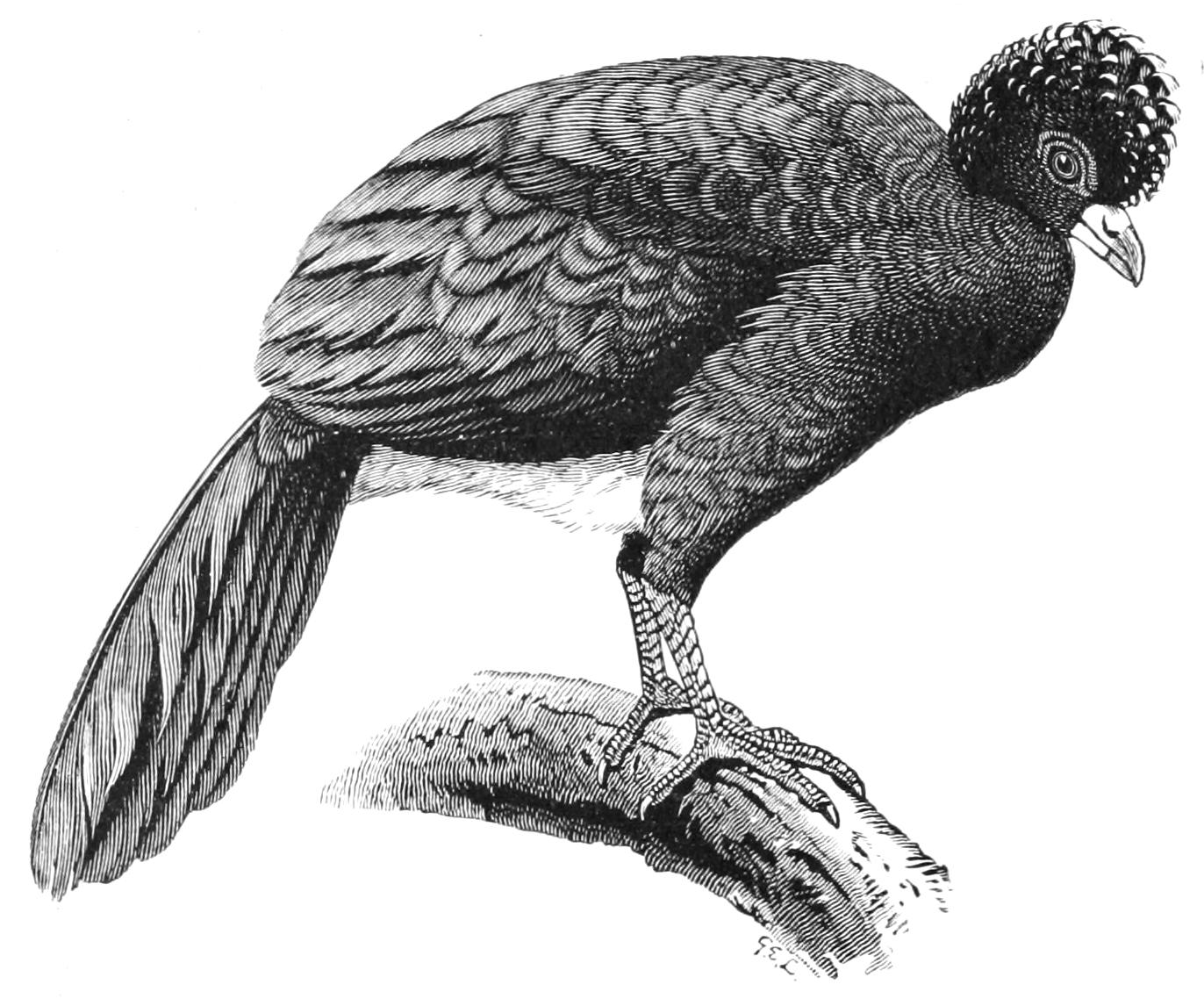
Fig. 45.–Crested Curassow. Crax alector. × ⅐.
Sub-fam. 1. Cracinae.–Crax alector is black with a purplish gloss, the belly being white, the naked lores and orbits black, the cere and base of the bill yellow, the tip bluish, and the feet horn-coloured. Throughout the whole genus, which is Central and South American, the female has a curly crest barred with white. The remaining nine species differ in being greenish-black, and–except C. fasciolata–have a frontal knob, with or without a basal wattle on each side of the mandible, the colour of these parts varying from scarlet or yellow to pale blue or purplish-black. The tail may be tipped with white; the females often exhibit white barring above, and have the plumage relieved by buff and chestnut. Nothocrax urumutum, ranging from British Guiana to the Upper Amazons, is chiefly chestnut above vermiculated with black, and cinnamon below; the wings and tail being blackish with buff markings, the throat chestnut, the long crest black, the naked lores and orbits yellow and purplish, the bill scarlet, the feet flesh-coloured. The female has the lower parts mottled with dusky. Mitua mitu of British Guiana, Brazil, Peru, and Bolivia is blue-black, with chestnut belly, white-tipped tail, red bill and feet; the crest being well-developed. M. tomentosa, of the first two countries only, has a shorter crest and chestnut-tipped tail, whereas M. salvini of Ecuador has a white belly. Pauxis galeata, the Cashew-bird, inhabiting Venezuela, Colombia, and Peru, is glossy greenish-black with white abdomen and tip to the tail; the frontal knob, supposed to resemble a Cashew nut, being dull blue. The female shows a large admixture of chestnut and buff.
Sub-fam. 2. Penelopinae.–The fifteen species of Penelope are brown or olive-green, more or less varied with chestnut and rufous, or washed with purple or bronze; the feathers, moreover, have often whitish margins, the head in P. pileata, and the outer primaries in P. albipennis becoming almost white. The wattled throat is generally feathered in P. (Stegnolaema) montagnii, but naked elsewhere, the colour being given as carmine in P. cristata, where the feet are red. The orbits are also bare, the crest is moderate, and the metatarsus in some cases is partly feathered. Two members of the genus inhabit Central America. P. obscura, the Pavo del Monte, alone reaches Northern Argentina, where Crax fasciolata, Pipile cumanensis, and Ortalis canicollis, the Charata, also represent the Family. Penelopina nigra, of the Guatemalan highlands, is greenish-black, barred and mottled with brown and buff in the female; the naked orbits are purplish, the bare throat, large wattle, bill and feet red. Ortalis contains about seventeen forms, some hardly worthy of specific rank, of which five occur from South to Central America and one–O. vetula, the Chiacalaca–extends to Texas. O. ruficauda is found in Tobago and the Grenadines. The coloration is brown or olive, with little or no metallic gloss, but relieved by chestnut, rufous and grey; the breast and belly being occasionally white or buff, the naked orbits and sides of the throat apparently reddish, and the feet pinkish, grey, or blue. Pipile cumanensis, of South America northwards from Bolivia and Brazil, with Trinidad, is greenish-black; a white crest of pointed feathers reaches the sides of the neck, some white shews on the wings and chest; the cere, naked orbits, lores, throat and wattle are blue, the feet red. P. jacutinga of South-East Brazil and Paraguay has a purplish gloss above, and a red wattle; P. cujubi of the Lower Amazons a brown crest margined with white. Aburria carunculata of Colombia and Ecuador is greenish-black, with a scantily-feathered throat and long thin wattle. Chamaepetes goudoti, of the same countries and Peru, is bronzy-brown with greyish head and rufous under parts; the Costa Rican and Veraguan C. unicolor being nearly uniform greenish-black. In both these genera the orbits are more or less naked.
Sub-fam. 3. Oreophasinae.–Oreophasis derbianus, the splendid Faisan of the Volcan de Fuego in Guatemala, is greenish-black with dense velvety plumage extending from the forehead to the nostrils; the white lower parts become brownish at the sides and vent, and shew dark streaks; a white band crosses the tail; and a red cellular casque covered with hair-like feathers surmounts the head. The bill is pale yellow, the feet are vermilion.
Fam. VI. Phasianidae.–Of really distinct Sub-families this group may be said to possess three, (1) the Numidinae, or Guinea-fowls, (2) the Meleagrinae, or Turkeys, and (3) the Phasianinae, or Pheasants, Partridges, and Grouse; it is, however, customary to class the Grouse apart as Tetraoninae, though a difficulty at once arises in drawing the line of demarcation. For example, Huxley[150] considered Caccabis, Francolinus and Coturnix Galline, i.e. Phasianine; Dr. Gadow[151] makes them Tetraonine; while Mr. Ogilvie Grant[152] agrees with the former, but does not make these genera the link between the sections. Mr. Grant's view may be conveniently followed, but the division is in any case arbitrary. As a matter of further convenience a Partridge group (Perdicinae) may be formed, and the "American Partridges" may stand apart as Odontophorinae.
Passing mention should be made of the economical importance of this Family as a factor in our food-supply, whether in the wild state as game, or in the domesticated as poultry; for almost inconceivable numbers of birds are bred, exported, or used for eating in their native countries, while the value of domestic fowls' eggs can best be estimated by imagining the consequence of a failure in the production. Man's custom herein is no doubt guided by the ease with which most of the species are secured or reared, and by the great development of the pectoral muscles or "flesh of the breast."
The body is decidedly heavy, the head usually rather small, and the neck fairly long. The bill is comparatively short and stout–especially in Ithagenes, Dendrortyx, and elsewhere–but may be more elongated, as in Lophophorus and Euplocamus; the maxilla being curved, and overhanging the mandible, which exhibits two serrations on each side in the Odontophorinae. The metatarsus is strong and relatively short in Grouse and many Partridges, but in Pheasants and similar forms it is much longer; the feathering descends to the toes in the Tetraoninae, except Bonasa and Tetrastes, the digits themselves being clothed in Lagopus, naked and pectinate at the sides in the remaining genera. No other members of the Family shew pectinations or have the metatarsus feathered, save Lerwa, where it is half covered. The hallux, invariably elevated, has only a rudimentary claw in Rollulus, Melanoperdix, and Caloperdix; Arboricola, Dactylortyx, and Cyrtonyx, on the contrary, have particularly long and somewhat straight claws. Spurs are of frequent occurrence on the feet of the males, though rare in the females, some species possessing as many as three pairs; they are never found in the Tetraoninae or Odontophorinae, and are represented by mere knobs in Acryllium (Numidinae). The wings are short and rounded, with ten primaries and from twelve to nineteen secondaries, both decreasing in length as they near the middle of the wing, which has thus a bilobed appearance when expanded. The primaries usually increase in length before decreasing, but in some cases the exterior quill is the longest, while in Falcipennis two or three of the outer feathers are sickle-shaped, and in Argus the secondaries are enormously developed. The tail is extremely variable, being long and rounded in Lophophorus; long and sharp-pointed in Phasianus and Centrocercus; moderate, broad, and rounded in Lagopus, Odontophorus, and so forth; similar but more truncated in Meleagris; short in most Partridges; and exceptionally abbreviated in many Quails. The coverts far exceed the tail in the Peacock, forming its splendid train, while they are much elongated in Chrysolophus, and to some extent in Coturnix, Excalphatoria, and Ceriornis (Tragopan). In Pedioecetes the two middle rectrices surpass the rest and terminate abruptly; in Lyrurus the exterior feathers fork outwards; in Crossoptilon and Gennaeus the median plumes curve over the others; and in Lobiophasis not only is this the case, but the rhachis extends beyond the webs, which are much reduced on the outer side of the lateral quills; in Argusianus and Rheinardtius the middle pair is extraordinarily lengthened. The whole tail is compressed or "vaulted" to a greater or less degree in Gallus, Chrysolophus, Lophura, Acomus, Gennaeus and Crossoptilon. Excalphatoria is remarkable for possessing only eight rectrices; ten are found in Microperdix, and occasionally in Synoecus and Coturnix; but the usual number is from twelve to twenty-four, while Lobiophasis has thirty-two in the male and twenty-eight in the female. The nostrils are concealed by the feathering in the Tetraoninae alone, the aftershaft is large except in Pavo, the furcula is Y-shaped, the tongue sagittate, the syrinx tracheo-bronchial. The globular crop and muscular gizzard are decidedly characteristic, yet Argusianus has been said to lack the former, and Centrocercus the latter. In the male of Tetrao urogallus and both sexes of Guttera the trachea has a loop, which in the latter case passes through a cavity in the head of the furcula.
The plumage is of the most varied description, the winter coat of Lagopus being commonly white, the males of Lyrurus, Tetrao, and Melanoperdix nearly black, while the prevailing colours in Chrysolophus pictus are orange and red, in Gennaeus nycthemerus black and white, in Rollulus dull green and maroon, in Gallus orange, red, purple, green, black, and white, in Phasianus metallic green, orange, and brown. In the Numidinae white or bluish spots mark the blackish ground-colour; in the American Grouse black, brown, yellowish-buff and white occur in varying proportions; while the Partridges and Quails exhibit, as a rule, still more sober tints of brown, relieved by dull red or buff. Peacocks, again, show a combination of beautiful metallic blues and greens with copper and buff, rarely found elsewhere in the Family; nor must Lophophorus, Lophura, Lobiophasis, and Ceriornis be left out of consideration. The ocelli or "eyes" on the Peacock's train hardly require mention; Polyplectron has similar adornments on both the tail and the upper parts in the male, on the tail alone in the female; Argusianus on the secondaries and rectrices in the male, Meleagris ocellata on the latter in both sexes. The feathers of the crown are curled in Crossoptilon, Pavo, and Lophophorus sclateri, and fine crests are by no means uncommon; the component plumes being more or less racquet-shaped in Lophura and Lophortyx, and in Pavo cristatus consisting of webs at the end of bare shafts. The crests of Chrysolophus and Gennaeus are recumbent, those of Rollulus and Rheinardtius upright; while, among others, the full head-tufts of Ithagenes and most species of Lophophorus, with the comparatively short ornaments of Haematortyx, Ceriornis, and Callipepla are worth notice. Crossoptilon, Pucrasia, and Phasianus have elongated ear-coverts or feathers behind the ear, the white plumes of the first-named being especially remarkable and common to both sexes; an erectile cape surmounts the nape in Chrysolophus; Meleagris has a peculiar patch of long bristles on the breast, Bonasa a ruff on the sides of the neck; Gallus and Acryllium have hackles or lanceolate feathers in various parts, moulted–in the former at least–during the summer. All these decorations are absent or less pronounced in the females, which are, as a rule, dull in colour.
The head is entirely naked in Meleagris, and is covered with caruncles, an erectile process hanging from the forehead; a pair of long fleshy horns above the eyes distinguish Ceriornis, which has in addition a large wattle on the throat; a comb of similar substance is accompanied by a single median or two pairs of lateral wattles in Gallus; while the sides of the face, the orbits, or the fore-neck, are bare in many genera. The male of Lobiophasis has the head nearly naked, with no less than three pairs of wattles; though the female has but one rudimentary pair of the latter, and only the cheeks unfeathered. In all these cases the skin and outgrowths are red or blue. The head and neck are bare in the Numidinae, except for a crest in Guttera, a crescentic nuchal band of feathers in Acryllium, and a line of plumage down the crown in Phasidus; wattles occur at the angles of the gape in Guttera and Numida, both these and the naked skin being blue and red throughout the Sub-family, save in Phasidus, where the latter is yellow, and in Agelastes, where it is red and white. The bony casque of Numida is red or horn-coloured. The Tetraoninae have merely a little red or yellow skin over the eye. In females all the fleshy outgrowths are much smaller or absent, throughout the Family.
Air-sacs of orange skin lie below the side-feathers of the neck in the males of Centrocercus, Dendragapus, and Tympanuchus, and become visible when inflated; they are supposed to produce the booming ventriloquistic sound, uttered in the breeding season. Bonasa has a naked space in a similar position, but its drumming is stated to be caused by the wings. Pedioecetes can hardly be said to have air-sacs, yet it also drums, while the exact nature of the corresponding sounds made by Tetrao urogallus and Lyrurus tetrix is uncertain. The "gobble" of the domestic Turkey is a parallel instance, in so far as it is uttered during excitement.
The members of this Family, which range in size from the splendid Capercaillie (T. urogallus) to the small Quail-like Excalphatoria sinensis, are all weighty birds for their bulk, rising heavily and noisily, and travelling with low and steady, though often laboured, flight; in many cases the pace is extremely rapid, but comparatively short distances are covered before alighting. On the whole, they are certainly partial to dry localities, which may, however, be prairies and heaths, as in many Grouse, wooded or open country generally, as in Pheasants, or stony hill-sides, as in Tetraogallus, Ammoperdix, and some species of Lagopus and Caccabis; yet a few seem to prefer the vicinity of marshes, and others are constantly met with at considerable elevations. The great facility with which game-birds run, their frequent custom of lying until they are almost trodden upon, and that of combining into coveys or packs consisting of two or more broods, are too well-known to need lengthy description here. The strutting and parading of the cocks of the larger species is fully noticed below, while the habit common to most forms of dusting themselves, instead of washing, is also noticeable. Many are almost entirely terrestrial, a love for trees being in fact exceptional; nevertheless, instances might easily be adduced of roosting on branches or taking refuge there when disturbed, and though Lagopus, Francolinus, and Perdix are notoriously averse to perching, the writer himself has seen five or six Red Grouse sitting on low trees, within half an hour. Tetrao, Lyrurus, Phasianus, Pavo, and Meleagris well exemplify the polygamous habits not unfrequent in the Family, the males in such cases usually deserting their mates during incubation; Coturnix and Ortyx, moreover, are stated to be not invariably monogamous. The nest is nearly always on or close to the ground, and is formed of a few twigs, grass, moss, feathers, and leaves; the hole, usually scraped as a commencement, being sometimes barely lined. Polyplectron, as a rule, deposits two eggs, but the number in most species is much greater, from sixteen to twenty being not uncommonly found, or even more where two hens lay together–a fairly ordinary practice in the group. The colour in Grouse is yellowish or reddish, either with rufous spots or close blotches of black, purple, or orange-brown; in the Pheasant and Partridge it is uniform olive, and in the Odontophorinae pure white, with or without brown or red markings. Further information is given below. Few Galline birds, besides the American Partridges, breed twice in a season. The male has been observed to incubate in Ortyx, and in this genus and Odontophorus domed nests are on record, while many species lay their eggs in depressions under over-arching tufts of heather or grass. Incubation lasts from eighteen to twenty-eight days, the young running almost from the shell. The note is shrill in Guinea-fowls, Partridges, and Quails, somewhat whistling in Polyplectron and Tetrastes, and generally consists of two or more syllables; but in view of subsequent details, it is sufficient to particularize the "cok-cok-cok" of the Grouse, the crow of the Pheasant and the Cock, the cluck and cackle of the Hen, the scream of the Peacock, and the gobble of the Turkey. The food is chiefly vegetable, and includes shoots, buds, leaves, grass, bulbs, seeds, berries and other fruits, with a certain amount of grit; but worms, molluscs, ants and their cocoons, insects and their larvae, swell the list. Juniper twigs or berries are supposed to give a flavour to the Hazel Grouse, pine tips to the Capercaillie, whereas the "Sage-brush" of America (Artemisia tridentata) bestows its name upon the Sage-cock (Centrocercus), and makes its flesh bitter and unpleasant. The Pheasant scratches in the ground for provender, as do Turkeys and Fowls, while Lophophorus, Catreus, Crossoptilon, Gennaeus, Pavo, and so forth, dig for roots with the bill. American Grouse, after eating Kalmia shoots, are actually poisonous.
Pugnacious habits are prevalent in the Family, and naturally attain their height in the courting season; but chief of all in this connection is the genus Gallus, which will fight at any time of year, being highly valued by the boatmen of Burma for the sport it provides. These wanderers commonly keep a cock tied by the leg in their vessels, or possess a decoy-bird to attract its wild relatives. Game-birds are easily naturalized or domesticated owing to their terrestrial habits; they hybridize readily even in a state of nature, the offspring being often fertile; such species, moreover, as the Pheasant, Partridge, and Red-legged Partridge will frequently use a nest in common. Occasionally the female assumes a plumage like that of the male; for example, in the Pheasant, where such individuals are called "Mules," and are stated to be barren. Further questions of great interest are the moult, the Grouse disease, the shedding of the claws in the Ptarmigan, and of the horny fringes of the toes in the Tetraoninae generally, besides such points as the loss of the Peacock's train in summer, and the innumerable phases of plumage of the Red Grouse, Ptarmigan, and "Bob-white" (Ortyx), none of which can be usefully discussed in a limited space.
The range of the Family is nearly cosmopolitan; but the Meleagrinae only occur in the United States and Central America; the Numidinae in Africa, with Madagascar and the neighbouring islands; and the Phasianinae in the Palaearctic and Indian Regions as far eastward as the Philippines, China and Japan, and–in the case of Gallus–Celebes. The Perdicinae are found in the Palaearctic, Indian and Australian Regions, though becoming decidedly scarce in Oceania; the Odontophorinae occupy temperate and tropical America to Bolivia and Brazil southwards; while the Tetraoninae are holarctic, the New World genera being more numerous than those of the Old World, and Lagopus alone being common to both hemispheres.
Sub-fam. 1. Numidinae.–Of the curious-looking Guinea-fowls, or Pintados, Acryllium vulturinum of East Africa has a long, wedge-shaped tail, and elongated hackles on the mantle, chest, and lower neck; the upper neck and head being naked and blue, with a crescentic nuchal band of short chestnut feathers, and each metatarsus possessing four or five knobs in the male. The hackles are black and white, mostly fringed with blue; the remaining upper parts and the flanks are black spotted with white, having a purple wash on the latter; the breast and belly are cobalt, marked with black centrally. Guttera contains four black species with light blue spots, which show much white on the secondaries. A full and usually curly black crest adorns the crown; the bare head and neck, with its posterior flap of skin, is blue or purplish, and the throat is red, except in G. pucherani of East Equatorial Africa, where the hind-neck only is blue, and G. eduardi (verreauxi) of South Africa, with no bright colours on the head, neck, or throat. The latter, and G. cristata of northern West Africa, have rudimentary blue wattles at the gape, coupled with a black collar, which in G. eduardi extends to the breast and assumes a chestnut shade. G. plumifera, ranging from Cape Lopez to Loango, has larger wattles and a thin erect crest; G. pucherani has the outgrowths red. This genus and the next have no spurs. Numida, remarkable for the bony casque surmounting the naked head and neck, possesses seven or more members of clumsy build, with white spots on the black plumage. N. meleagris of West Africa and several of its islands, introduced in Ascension and the Greater Antilles, which is the origin of our present domestic stock, has the broad gape-wattles and bare tracts red, save for a blue hind-neck; the small conical helmet is yellowish, and a wide grey ring divides the neck from the body. N. coronata of eastern South Africa, N. reichenowi of East Africa, N. cornuta of western South Africa, N. marungensis, found from Benguela to Tanganyika, N. mitrata of East Africa, Madagascar, and the islands in the vicinity, and N. ptilorhyncha of North-East Africa, lack the collar and differ from each other in the shape of the large helmet, which may be upright or inclined backwards. N. ptilorhyncha has the naked parts blue, and a bunch of horn-coloured bristles at the base of the maxilla; N. coronata, N. mitrata, and N. reichenowi have a reddish casque, a scarlet top to the head, and blue cheeks and neck; the wattles being red in the last, but blue tipped with red in the first two, as in N. cornuta, where the helmet is vermilion. N. marungensis has a stouter, shorter helmet than N. coronata, which it much resembles. Agelastes meleagrides of West Africa is black vermiculated with whitish, and has a zone of white feathers at the base of the neck; the bare skin of the head is red, of the neck white. The male has a strong spur on each metatarsus, as has Phasidus niger, ranging from Cape Lopez to Loango, which is brownish-black with a band of feathers from the base of the bill to the occiput; the naked head is in this case yellow, becoming orange on the neck.
As regards habits, Numida meleagris may represent the group. This wild suspicious bird is found in flocks of a dozen or even a hundred, not invariably of its own species, which frequent thick bushes, tall grass, or rocky river-sides; it runs swiftly and with perfect ease, occasionally travelling twenty miles a day; while, though the short wings and heavy body preclude extended flights, it travels with considerable power. When disturbed it usually seeks the trees, in which it roosts at night, and under which it shelters from the sun. The food consists of grass, seeds, roots, bulbs, berries, and insects, the ground being often torn up in the search; the noisy cry is hoarse and discordant, or sharp and metallic; the nest is a depression with little or no lining, placed in or under a tussock, and contains from twelve to twenty yellowish eggs with undecided rusty spotting. Phasidus is not gregarious. The rock-loving Numida ptilorhyncha attains an altitude of nine thousand feet.
Sub-fam. 2. Meleagrinae.–Of the Turkeys,[153] there are only two species, Meleagris gallipavo and M. ocellata. The former has three races–distinguished by the tail and its upper coverts being tipped with white, buff, and chestnut respectively–the united range extending from Southern Canada to Mexico through the Eastern and South-Western States. They are coppery-bronze, with purplish-green and golden sheen and black markings; the remiges being brown barred with white, and the tail black and brown with broad dark sub-terminal band. The reddish head and neck are nearly bare, shewing wrinkled warty skin and a pendent erectile process on the forehead; a bunch of long black bristles decorates the chest of the male, which has a stout spur on each metatarsus. The bill and feet are red. M. ocellata of Yucatan, British Honduras, and Guatemala, has black plumage, tipped with brassy-green, and fringed with greenish-copper, that becomes redder below; the rump region is steel-blue, and brilliant ocelli of green-blue margined with copper mark the ends of the greyish rectrices and their coverts. The frontal caruncle and the head are blue, with red tip and excrescences respectively, while the pectoral tuft is absent.
The wild Turkey is wary and extremely quick of foot, spending the day chiefly upon the ground and roosting high in the trees; it frequents wooded country, and feeds upon plants, seeds, nuts and other fruits, with lizards and insects. In spring the males fight viciously, and show off before the assembled hens; strutting around with erect, outspread tails and drooping wings, while uttering puffing and gobbling noises. Each cock having secured a mate or two, breeding takes place, after which the sexes separate, but combine again in autumn and wander widely in search of food. A hole, scraped under some log or tuft of herbage, and lined with dry leaves, receives the yellowish-white eggs with red-brown spots; the number varying from ten to eighteen, or even more if several hens co-operate.
Sub-fam. 3. Phasianinae.–Among these a detailed description is unnecessary of the fine blue, green, and rufous plumage of the Peacock (Pavo cristatus), or of the green, purple, copper, and gold ocelli on its elongated train of erectile tail-coverts; but other striking points are the bare-shafted crest and naked white face; while the comparatively dull-coloured Pea-hen lacks the train of the male and the spur on each metatarsus. In the wild state these birds are shy, and run particularly fast, while they occasionally fly in small flocks; they inhabit the hill-forests or ravines near water-courses in India and Ceylon, roosting in large trees, making a slight nest on the ground, ruined buildings, or more rarely branches, and laying from four to about ten yellowish or reddish eggs, sometimes faintly spotted with rufous. The cry is a harsh mewing squeal, or a "cok-cok-cok" when flushed; the food resembles that of the Turkey, but is at times varied by fish or flesh; and, as in that bird, the males are said to dance or strut around when courting, each securing three or four consorts. Peafowl are supposed to indicate the proximity of tigers, and are sacred to various Indian castes, while foolish superstition considers the eyed feathers unlucky! Introduced to England at some very early date, they were formerly thought a great delicacy for the table. P. nigripennis, the "Japanned Peacock," is a species, or perhaps variety, with deep blue wing-coverts and other slighter differences, the female being almost entirely greyish-white; P. muticus, a valid species from the Indo-Chinese countries and Java, is distinguished by the golden-green neck and chest and the blue and yellow skin of the face; the crest feathers being here fully webbed.
Argusianus argus, the Argus Pheasant, has a short black crest; black, rufous, and buff plumage with white barring on the nape and tail-coverts; and enormously developed secondaries and median rectrices, covered respectively with large reddish-yellow and small white ocelli, which are margined with black; the naked cheeks and throat are blue, the bill is bluish-white, the feet are red. It inhabits the forests of the Indo-Malay mainland and Sumatra, the cock being said only to meet the hens occasionally, and to reserve an open spot for courting purposes, where he shows himself off by dancing before them with the tail and secondaries expanded into a large fan. This bird flies little, but runs with celerity, having a loud cry, feeding on vegetable matter and insects, nesting like the Pea-fowl, and laying similar eggs. A. grayi of Borneo shows white on the mantle and much red on the breast, A. bipunctatus is only known from an imperfect primary. The females lack the ocelli and elongated tail. A. (Rheinardtius) ocellatus, of the Tonkin highlands, is brown with reddish markings and minute white dots; it has a hairy occipital crest, and exhibits fine red spots, with black white-eyed central rings, on the very long median rectrices and their upper coverts.
In Polyplectron (Peacock-Pheasant) the male has two or even three spurs on the metatarsus. P. chinquis of the Indo-Chinese countries is brown, with whitish dots above and mottlings below; the head is black and white with naked yellowish sides; the upper plumage is adorned with large, round, metallic, purple-green ocelli, ringed successively with black, brown, and buff, of which the tail and its upper-coverts exhibit one on each web. P. germaini of Cochin China has close-set light brown specks above, and a red face; P. bicalcaratum of the Malay Peninsula and Sumatra has the latter similarly coloured, with black and buff upper surface, a narrow purplish crest, and lateral rectrices with an "eye" only on the outer web; P. schleiermacheri of Borneo has the crest curled forward, and blackish under parts with a white median band; whereas P. nehrkornae of Paláwan, and the doubtfully distinct P. napoleonis, are entirely black below. As regards the duller females, P. chinquis and P. germaini have obscure ocelli on both webs of the lateral tail-feathers, the other species on the outer web only; moreover, P. chinquis, P. schleiermacheri, and P. nehrkornae have none on the tail-coverts, the latter lacking the black blotches on the mantle found in P. bicalcaratum and P. schleiermacheri. P. (Chalcurus) inocellatus of Sumatra is brown and buff, with purple and black tints on the tail. Little is known of the habits, except in P. chinquis, which is apparently monogamous, and frequents thick hill-forests up to an altitude of five thousand feet. It feeds like the Peafowl, has a fine whistling call varied by a soft cluck, and will take refuge in trees, though preferring to escape on foot. The cock carries his outspread tail on one side, while the hen uses hers to shelter the young. The fairly substantial nest of twigs and leaves, usually containing two brownish eggs, is placed on the ground.
Of the four species of Gallus, G. ferrugineus (bankiva), the Red Jungle-fowl–Bhund Moorg of the natives of India–shewing much resemblance to the "Black-breasted Game" breed, is the origin of our domestic stock.[154] It has a vaulted tail with long drooping median feathers, a serrated red comb, naked red face and throat, with a wattle on each side of the latter, a spur on each metatarsus, and ear-lappets, which are whitish in Indian examples, but red in Burmese and Malay. The crown and the hackles of the mantle and rump are orange-red, the back is chiefly purplish-red, and the wings, tail, and under parts are glossy greenish-black, with yellowish outer margins to the primaries and brownish to the secondaries. Between June and September the hackles and long tail plumes are replaced by short black feathers. The hen has little comb, no wattles, spurs, or elongated rectrices; the crown is reddish and the mantle yellowish, both with black stripes; the wing- and tail-quills are brown and rufous; the remaining plumage being reddish-brown, deeper on the fore-neck and brighter on the chest, with black mottling above. This Jungle-fowl ranges from North-Eastern and Central India to Hainan, and from Sumatra to the Philippines, Celebes, and Timor; frequenting thickets and forests up to five thousand feet, but often flocking to cultivated country, where it feeds upon leaves, seeds, insects, and especially grain. Pugnacious towards its kin[155] it is timid with man, running with great speed or taking refuge in trees; the flight consists of alternate periods of flapping and sailing, while the cluck of the hen and the crow of the cock resemble those of domestic fowls, though the latter is less prolonged. The nest is a hole lined with leaves, grass, or plant-stems, containing from seven to twelve buff eggs; polygamy being apparently rare. G. sonnerati, the Grey Jungle-fowl of Southern, Central, and Western India, is distinguishable by the dilated shafts of the neck-hackles, with their wax-like yellow tips or spangles; G. lafayettii (stanleyi) of Ceylon by the yellow comb with red margin, and the red breast. The former utters a broken crow, the latter a double note, the eggs in both cases being spotted, and occasionally whitish in ground-colour. G. varius of Java, Lombok, and Flores, is greener, with truncated neck-feathers, an unserrated comb, and a single median wattle of red, yellow, and blue-green. The hens of G. sonnerati and G. lafayettii have white breast-plumage, barred and fringed with black, the former shewing black mottlings instead of bars on the secondaries; that of G. varius has a buff breast and a blackish back. In these three species crosses with domestic fowls are said to be usually sterile.
Chrysolophus pictus, the brilliant Golden Pheasant, has the crown and full recumbent hair-like crest golden, the fine erectile cape of truncated nape-plumes orange with blue-black bars, the mantle dark green and purple, the rump golden, the primaries brownish, the secondaries purplish with chestnut and black coverts, the larger tail-coverts and the vaulted tail with its two very long median rectrices black, with brown spots or stripes, the scapulars and under parts scarlet, and the cheeks and throat rufous. There are generally two spurs on each metatarsus, and the bare orbits are yellowish. The female is brown, relieved by black and buff, and has a shorter tail, no crest or cape. This bird, difficult to naturalize in Britain, but easily domesticated, inhabits wooded mountains in South and West China and East Tibet, meeting in the last two countries the equally beautiful Lady Amherst's Pheasant (C. amherstiae), which has dark green crown, mantle, throat, and chest, blood-red crest, white cape with blue-black bars, black and buff rump, glossy green and brown wings, white breast and abdomen, and black and white tail with scarlet and orange tips to the coverts. The orbits are blue in both sexes, the female being otherwise as in C. pictus.
The original Pheasant of Britain–probably introduced by the Romans–was Phasianus colchicus, ranging from the Caspian to South-East Europe; but the Ring-necked species (P. torquatus) of Manchuria, East Mongolia, Corea, Tsu-sima, and Eastern China, imported towards the end of last century, has interbred with it so freely that typical examples are now exceptional. The latter form has a white collar and slaty lower back with dark green barring; while the former has the rump feathers buff, with black mottlings and purplish-red tips. The females, hardly separable from one another, lack the red face-wattles, the long ear-tufts, and the pair of spurs of the male. The above-mentioned colour of the lower back and the comparatively broad black basal tail-bands, are the distinguishing points of a section, which comprises P. torquatus, P. elegans of West China, P. vlangali of Tsaidam, P. strauchi of Kansu, P. decollatus of Western and Central China, P. satscheunensis of Sa-tscheu, P. formosanus of Formosa, and P. versicolor of Japan. Another section, more akin to P. colchicus, contains P. tarimensis and P. zerafshanicus of the Tarim and Zerafshan Valleys, P. persicus of Persia and Transcaspia, P. principalis of North-East Persia and North-West Afghanistan, P. shawi of East Turkestan, P. chrysomelas of the Amu-Darya, and P. mongolicus, extending from the Syr-Daria to Mongolia. All these races have the crown greenish, and differ chiefly in the colour of the scapulars, breast, rump, and abdomen; a white collar occurring in P. torquatus, P. mongolicus, P. satscheunensis, and P. formosanus, while P. versicolor is green below. Where two forms meet hybrids are not uncommon. In P. soemmerringi of Japan, P. ellioti of South-East China, and P. humiae of Manipur and Upper Burma the crown is red-brown, the first species having the lower back maroon with gold reflexions, the two others a black and white rump, with white and chestnut belly respectively. P. reevesi of North and West China has the crown white encircled by black, the nape and throat white with a subjacent black collar, the remaining upper parts yellowish-red and black, with white and rufous on the wings, the breast black, white, and chestnut, the abdomen black, the tail is extremely long.
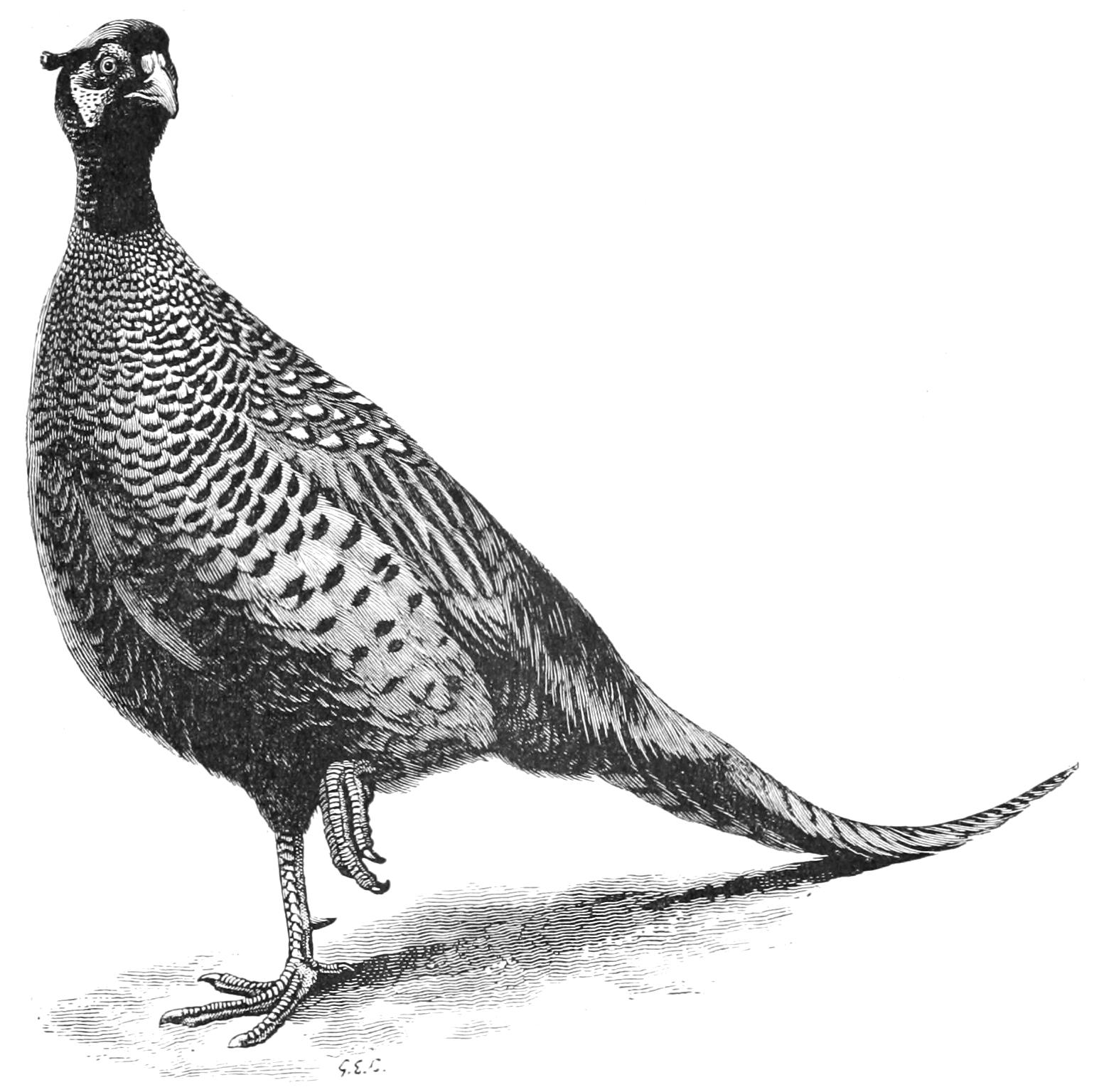
Fig. 46.–Pheasant. Phasianus colchicus. × ⅐.
Space is wanting to describe the various females, or to discuss the sport that Pheasants afford; but the swift flight, the powers of foot, the polygamous and pugnacious habits, the olive-coloured eggs, and the immense numbers reared artificially, must be noticed.[156] P. reevesi, Reeves's Pheasant, P. versicolor, the Green Pheasant, and P. soemmerringi, the Copper Pheasant, have also been introduced into Britain, the two latter and P. torquatus into Oregon, P. colchicus into the Eastern United States; New Zealand has received both P. colchicus and P. torquatus, St. Helena and Ascension P. torquatus only–the former island as early as 1513.
Catreus wallichi of the Himalayas has a brown head with fine white-tipped crest; a grey neck, yellowish and whitish upper parts, black and buff primaries, and a rufous rump, all with black barring; the under surface is light buff with black marks, the naked orbits are red. The male has a pair of spurs and very long median rectrices; the female being brown mottled with black and buff, having a smaller crest, a shorter tail, and at times rudimentary spurs. Considerable flocks frequent the grassy forest-hills up to an altitude of eight thousand feet, lying very closely in the day-time, though running with great speed when disturbed, and flying heavily for a short way; they feed towards evening on roots, seeds, berries, grubs, and insects, reiterating the peculiar call, whence they are named Cheer. The slight nest, generally sheltered by a bush or tussock at the base of a hill, contains from nine to fourteen whitish or pale drab eggs, sometimes sparingly spotted with red-brown.
Pucrasia contains six species or local races of "Pukras" or Koklas Pheasants, with long, black, erectile ear-tufts in the male, which has a spur on each metatarsus, but no naked cheeks. P. macrolopha of the Western Himalayas has a well-developed buff crest, a greenish-black head and neck with a white patch on each side of the latter, grey upper parts and whitish flanks with black shaft-stripes, brownish wings marked with buff, chestnut under parts and median feathers of the elongated, wedge-shaped tail, and blackish lateral rectrices with white tips. The black and rufous hen has a white throat, a short crest, and no ear-tufts or spurs. P. castanea of North Afghanistan and Kafiristan has the mantle chestnut, P. nipalensis of the Central Himalayas black varied by grey and reddish; P. meyeri of South Tibet and the Upper Mekong possesses a yellow nuchal collar; P. darwini of East China has grey bases to the outer tail-feathers; P. xanthospila exhibiting both. These monogamous birds attain a somewhat higher elevation than the Cheer, and utter a loud, deep crow; but otherwise the habits are the same. The five to nine pointed eggs are buff, speckled or blotched with red-brown.
Gennaeus[157] has a long vaulted tail, a fine crest, naked sides to the face covered with red skin or wattles, and metatarsi with a single spur in the male. In G. albicristatus of the Western Himalayas the crest is white, the head and upper parts being black with purple and blue reflexions and white margins to the dorsal feathers, the primaries and abdomen brown, and the breast whitish. The female is reddish-brown, with delicate black markings on the grey-margined upper feathers, and shews white below and on the wing-coverts. G. leucomelanus, with blue-black crest, inhabits Nepal; G. muthura (melanotus), without white on the lower back, occurs in Sikkim and Bhutan; G. horsfieldi, with black breast, extending from East Bhutan to North Arakan and Upper Burma. All the above species have the tail black, or rarely vermiculated with white; but in G. lineatus of Burma, Siam, and Tenasserim, and the very similar G. andersoni of Upper Burma and West Yunnan, it is banded alternately with black and white, and the median rectrices are even whiter. G. edwardsi inhabits Annam. G. nycthemerus, the Silver Pheasant of South China, embroidered as a badge on mandarins' dresses, and introduced into England early in last century, has an extremely long white tail, obliquely marked with black on the lateral feathers, a purplish-black crown, crest and lower surface, white back of the neck and upper parts with crescentic black lines on the latter, and naked red face. G. swinhoii of Formosa is easily distinguished from its allies by the bronzy-crimson scapulars, white crest, upper back, and median rectrices; the remaining plumage being bluish- or purplish-black with a glossy dark green band upon the wing. The female is mottled with rufous, black, and buff, and has a short crest, while that sex of the Silver Pheasant is browner, and exhibits white on the outer tail-feathers. These "Kalleges"–a name strictly applicable to the first four species only–frequent thin forests in low valleys, and are but slightly gregarious; they perch on trees, and fly short distances when flushed; the note is a shrill crow, a whistling chuckle or a "chirrup;" the food is as usual in Pheasants. The pugnacious male is said to strut with outspread tail, and to drum with his wings while courting; the nest, formed of dry herbage in a depression of the soil, contains from nine to fourteen creamy or reddish-buff eggs.
The "Eared" or Snow-Pheasants (Crossoptilon) have a vaulted tail with decomposed webs to the long decurved median feathers, fine white ear-tufts, and lax hairy plumage, shorter and curled on the crown. The naked papillose cheeks and the metatarsi are red, with a pair of stout spurs on the latter in the male. C. tibetanum of West China and East Tibet is white, with black crown, dark brown remiges, and greenish- or purplish-black rectrices. C. leucurum of East Tibet has the tail white with blue-black tip, as has C. manchuricum of Manchuria and North China, in which the mantle, nape, and breast are blackish-brown, with a faint white band between the ear-coverts, found also in C. auritum of West China and Koko-Nor, and well defined in C. harmani of Tibet. The last two have the nape, back, and under parts grey-blue. These elegant birds haunt lofty mountain-woods until cold weather comes on; they are comparatively tame, feed on leaves, shoots, roots, fruit, worms, and insects, and lay–at least in the case of C. manchuricum–from twelve to sixteen drab eggs. The plumes are worn by Tartar and Chinese warriors.
Lobiophasis bulweri of Borneo is a splendid bird with maroon nuchal collar and chest, brown remiges, white tail, and black plumage elsewhere with blue margins to most of the feathers. The stiff spine-pointed rectrices number twenty-eight in the hen and no less than thirty-two in the cock, the whole tail being compressed and the median plumes decurved; in the male the skin of the naked front of the head is blue, as are two caruncles present behind the ears, two smaller processes on the lores, and two wattles at the gape. The rufous, buff, and black female has only the sides of the face bare, with diminutive lateral wattles on the throat. This species skulks in the jungles, and prefers running to flying, having many of the habits of a fowl, though ranging up to two thousand feet; the eggs are stone-coloured.
The magnificent Firebacks (Lophura) have, so far as is known, similar habits to the members of Gennaeus, though they are stronger on the wing, and utter mellower notes in their forest retreats; the tail is vaulted, the cheeks exhibit patches of rugose blue skin–red in L. diardi–while the male has a pair of spurs and an erect crest with bare-shafted plumes. L. nobilis of Borneo is purplish-blue with fiery chestnut rump-region, golden lower breast, black head, throat, and wings, the four median rectrices being entirely buff and the lateral black with buff markings; L. vieilloti of Siam, the Malay Peninsula, and Sumatra has the lower breast black, and the two middle rectrices white, L. ignita of China differing in its chestnut-spotted flanks; L. diardi (praelata) of Siam, Cambodia, and Cochin China has a grey and black mantle, neck, and breast, a golden buff lower back, and crimson-tipped rump-feathers. The females have the mantle red-brown or chestnut, and outer rectrices of the latter colour in L. vieilloti, but black in L. nobilis; in L. diardi the black wing-coverts have wide buff bars. This sex of L. ignita seems to be unknown. Acomus has naked cheeks, but no crest or wattles; the tail is vaulted, and a pair of spurs is found in both sexes. A. erythrophthalmus of the southern Malay Peninsula and Sumatra is chiefly purplish- or bluish-black with fiery golden lower back, rich buff tail, and white wing-markings; A. pyronotus of Borneo exhibits white shaft-stripes on the breast; A. inornatus of West Sumatra, of which the male only has been discovered, has black plumage margined with dark blue-green, therein somewhat resembling the hens of its congeners, which are black glossed with purplish-blue. In habits this genus apparently resembles Lophura.
Lophophorus contains four gorgeous species of almost unsurpassable brilliancy, among which the Monal, constantly misnamed the Impeyan Pheasant, is best known. The tail is rounded, each metatarsus is provided with a spur in the male, and bare blue skin surrounds the eye. The Himalayan Monal (L. refulgens) has a crest like that of the Peacock, uniform in colour with the purplish-green head; the neck is purple, coppery, and green, the mantle golden-green, the lower back white, and the tail chestnut; the wing- and tail-coverts being green or purple with blue and green reflexions, the under parts black, and the remiges dusky. Its habits differ somewhat from those of other Pheasants, a preference being shown for grassy hill-forests not far from the snow-line; it roosts in trees, though generally found on the ground during the day, and is not very wild, trusting to its speed of foot in open spots, but readily taking to wing in the woodlands. The flight is rapid and powerful, while the male is said to soar without perceptible movement of the pinions; the usual cry is a loud melancholy whistle. The long stout beak serves to dig up roots for food; but grain, fruit, grass, and insect-larvae are also eaten. The nest, or sheltered unlined excavation in the soil, contains from four to six oval cream-coloured eggs, closely spotted or blotched with reddish-brown. The cocks are reported to be non-pugnacious, and the hens semi-gregarious while breeding. L. impeyanus of South Kashmir, the true Impeyan Pheasant, differs in its golden-green lower back and under parts; L. l'huysi of Sze-chuen and Koko-Nor has an ordinary crest, and white spots on the blue, green, and black tail; L. sclateri of North-East Assam has a curly crown with no crest, and white-tipped rectrices; the two latter forms being black beneath and white on the lower back. The slightly-crested females are black, buff, and white; the lower back is black and buff in L. refulgens, whitish mottled with brown in L. sclateri, and white in L. l'huysi.
Of Tragopan (Ceriornis) there are five species, remarkable for the fleshy blue horn above each eye and the large gular wattle in the male, who erects the former and inflates the latter when courting. The fore-part of the head and throat are naked or merely hairy, while the crested cock-bird possesses a pair of short spurs, rarely present in his mate. C. satyrus, the Horned Pheasant of the Central and Eastern Himalayas, has the crown and throat black, the occiput, neck, and lower parts orange-red with stiff chest-plumes, the back brown, the remiges and rectrices black and buff. Most of the body-feathers exhibit black-margined white spots, and the outer wing-coverts additional red marks; while the wattle is orange barred with blue. C. melanocephalus of the Western Himalayas has a longer crest tipped with red, none of that colour on the occiput, the breast black and red, and a purple wattle with flesh-coloured sides, blue margin and spots. C. temmincki of Central and South-West China has the crest and under parts red, the wattle blue barred marginally with red, and the characteristic spots grey without black rings. C. blythi of North-East Assam and Manipur has the wattle yellow tinged with blue, and a plain grey breast; whereas C. caboti of South-East China has the latter region buff. The hens are black and buff with whitish spots. These shy solitary birds occupy the higher hill-forests, being apparently monogamous, though found in small companies at times; they run slowly, take refuge in trees, and fly with a whirring sound. They roost aloft, but feed constantly upon the ground, eating grubs, insects, roots, flowers, fruits, and especially seeds or herbage; the note is a deep monotonous "bellowing" or "wailing sound." The fleshy excrescences are said to be chiefly developed in the breeding season, when the male, who possibly assists in incubation, struts before his consort like a Turkey. A nest is sometimes formed of twigs, grass, and feathers to contain the seven or eight whitish eggs with dull lilac spots or red freckles. Tragopans are mistakenly termed "Argus" by sportsmen in India.
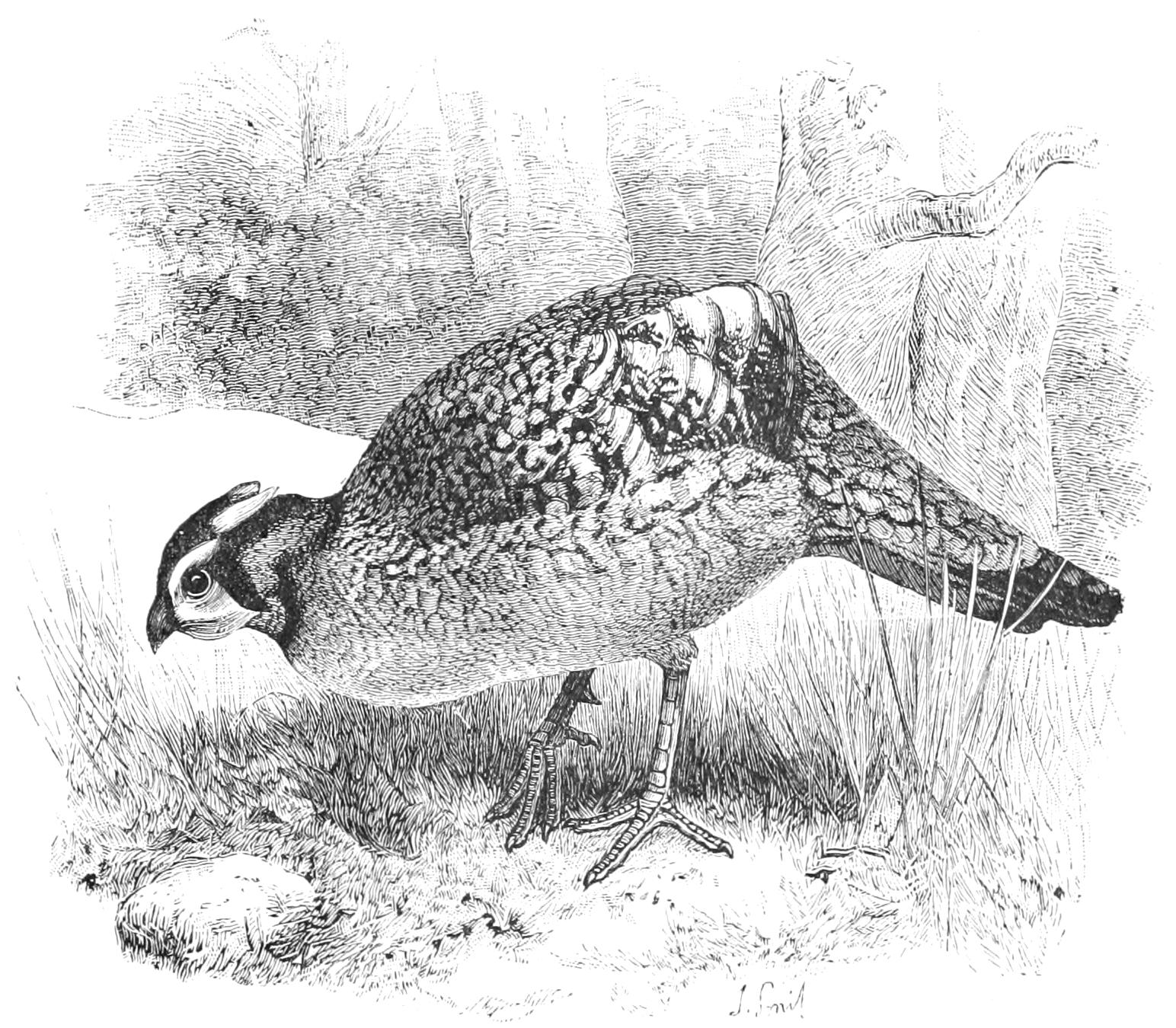
Fig. 47.–Cabot's Tragopan. Ceriornis caboti. × ⅙. (From Nature.)
In Ithagenes, or Blood-Pheasant, the bill is short and stout, the tail fairly long and rounded, the plumage soft and acuminate; the orbits are naked and red, and each metatarsus is armed with two or more spurs, generally absent in the female. I. cruentus of the Eastern Himalayas and Tibet has a full buff crest, black forehead and lores, lead-coloured back and wings, brownish remiges and rectrices with white tips to the latter, and a green wash on the wing-coverts and rump. The cheeks, throat, and much of the upper and under tail-coverts are crimson, the breast is yellow-green with crimson streaks. I. geoffroyi of East Tibet and West China has a grey head and throat; I. sinensis of Mongolia and North China is similar, with rufous for green on the wing-coverts. Females are grey, brown, and buff. Found in flocks of twenty or thirty at altitudes between ten and fourteen thousand feet, these bold birds have limited powers of flight, great speed of foot, and a weak cackling note; they bury themselves occasionally in the snow, as do certain Grouse (p. 238), and feed on grass, insects, berries, and shoots of juniper or pine.
If a Sub-family Perdicinae be admitted, it may be commenced[158] with the little known Ophrysia superciliosa of North-West India, a soft-plumaged greyish-brown species with black and white markings on the head; next to which comes Galloperdix, the Spur-Fowl, with a large bare eye-space, and two or three spurs on each foot in the male, reduced to a single pair in the female. G. spadicea of India, which has been introduced into Madagascar, has a brown crown, and chestnut plumage elsewhere, with grey margins to the feathers, and black vermiculations on the wing-coverts and rump; the female being mottled with black. G. lunulata, another Indian form, has the crown black with white streaks, the breast buff with black spots, and black-ringed white ocelli on the mantle; G. bicalcarata of Ceylon has both mantle and crown black with white stripes, and the breast whiter. These birds frequent thick jungles near the coast, or hills up to seven thousand feet, and are extremely wild, though hard to flush; they resort to trees in emergencies, and roost in them at night; the note is a harsh or plaintive whistle; the food consists of grain, insects, and their larvae. Four, five, or even ten whitish or buff eggs are deposited on a few dry leaves below some sheltering shrub. The cocks are stated to fight as viciously as Jungle-Fowl. Bambusicola fytchii, the Bamboo-Partridge, found from North-East India to China, has the crown and ear-coverts red-brown; the upper parts olive-brown, varied in places with black and buff, and longitudinally marked with chestnut, except towards the rump; the wing- and tail-quills reddish mottled with buff; the superciliary stripe, throat, and breast buff, the chest brown with chestnut and white blotches, the flanks spotted with black. B. thoracica of South China and B. sonorivox of Formosa have grey superciliary stripes, and the latter grey ear-coverts. The females only differ from the males in rarely possessing a pair of spurs. These species do not form coveys, but haunt long grass and bamboo-thickets on the hills, being difficult to put up, and uttering screaming noises; they readily challenge their neighbours to fight, roost in trees, and lay from seven to twelve creamy-brown eggs under shelter of a tussock or bush. Ptilopachys fuscus of the northern Ethiopian Region has brown plumage with white margins, and vermiculations or darker barring in many parts, the mid-breast being buff and the naked orbits red. The sexes are similar. Small parties or pairs frequent rocky hill-sides up to nine thousand feet, and are very pugnacious; they carry the tail folded, as do domestic fowls, have a sharp call-note and lay whitish eggs.
In Excalphatoria the short tail of eight soft feathers is entirely hidden by the coverts. E. sinensis, the Chinese or Painted Quail, the smallest of the Phasianidae, is brown above with black marking and rufous streaks, a bluish shade appearing in places, and chestnut patches shewing on the wing-coverts; the throat and sides of the neck are black and white, the black forming a central patch below the chin; the remaining lower parts are slate-blue with a median chestnut patch on the breast. It is found from India and Ceylon to Formosa, and in Celebes; a darker race occupying the Philippines, many of the Malay Islands, and Australia. E. lepida of New Britain, New Ireland, and the Duke of York Islands has no chestnut on the wing, and little below; E. adansoni, of Africa south of lat. 5° N., is slaty-brown above, and has chestnut scapulars, wing- and tail-coverts with grey shaft-stripes. The females have white throats and rufous breasts barred with black. The Australian form, or Least Swamp-Quail, abounds in marshes, the Indian frequents dry ground as well, the coveys being composed of single broods, which feed mainly upon seeds. The flight is very brief, the nest a mere pad of grass, on which lie five or six olive-drab eggs, scantily spotted with purple or red-brown. Synoecus australis, the Swamp-Quail of Australia, Tasmania, and South-East New Guinea, is reddish-brown and grey above, with more or less distinct black mottlings; the throat is whitish, the under surface is buff, with black chevrons in younger birds. The female lacks the grey tints, and is more coarsely barred with black. Gould describes the habits and call as resembling those of the Common Partridge, but they are better exemplified by those of Excalphatoria, while the eggs vary from ten to fourteen, and are creamy or greenish-white, generally closely freckled with brown. S. raalteni of Timor and Flores has a rufous throat.
Of the true Quails six species may be admitted. Coturnix communis, the Common Quail, though essentially a migrant in the north, ranges throughout Europe, Asia, and Africa, and breeds not uncommonly in Britain, having also been introduced into the Eastern United States; while another African race (C. capensis auctt.) only differs in its reddish throat. The crown is dark brown with a light streak down the centre and above each eye; the upper parts are brown and black with buff longitudinal stripes, becoming mottlings on the remiges; the throat is white with a black median patch connected with the ear-coverts by two upcurved lines: the breast is reddish-buff, the abdomen yellowish-white, the flanks are mottled or barred with brown. The short tail of ten or twelve feathers lies entirely below the coverts. The hen-bird has black pectoral spots and a perfectly white throat. C. japonica of East Asia and Japan, occasionally found in Bhutan and Burma, has a plain brick-red throat, the sides of which and the chin exhibit lanceolate feathers in the female. Hybrids between this species and the Common Quail occur where their ranges overlap; individuals, moreover, present great variation. C. coromandelica of India and the Burmese countries, C. delegorguii of the Ethiopian Region, C. pectoralis of Australia and Tasmania, and the nearly extinct C. novae zealandiae of New Zealand, have the outer webs of the primaries uniform brown in both sexes; the males of the first two have the throat as in C. communis, with a black patch on the breast, and buff and chestnut under parts respectively; the third has the throat plain brick-coloured; and the fourth still brighter red. The females have no throat-mark, the hen of C. delegorguii being blackish-brown above, and that of C. pectoralis shewing black chest-bands, which in C. novae zealandiae cover most of the feathers. That Quails can traverse long distances is evidenced by the migration of large flocks in spring and autumn; but, as a rule, their flight is short, and they rise with great reluctance, though with considerable velocity. The trisyllabic note of the male is rendered "wet-my-lips" by country-folk; the food consists of seeds, slugs, and insects, sought among the grassy flats in general frequented. From seven to fifteen yellowish or white eggs, with dark brown blotches or marblings, are deposited in a hollow lined with bits of herbage, in standing corn or grass, the hen sitting very closely and feigning lameness to draw attention from the young. The male appears to be usually monogamous, while the broods or "bevies" do not form coveys. Two of these broods are said to be occasionally reared in a season, but how far such statements are due to the destruction of the first complement of eggs must remain doubtful, as in the case of so many other birds that breed on the ground.[159]
Melanoperdix nigra, of the Malay Peninsula, Borneo, and Sumatra, is glossy black with browner primaries, the female being chestnut, with black markings and a whitish chin. It inhabits the lowlands and lays five eggs. Rollulus roulroul is a most remarkable form with a frontal tuft of long black bristles. In the male the fore-part of the head is black, separated by a white band from the full hairy crest of maroon, which covers the occiput; the upper parts are dark green glossed with blue, the wing-coverts being maroon, and the quills brown and buff. The tail and under parts are black, a blue tint shewing on the breast; the base of the black bill, the feet, and the naked orbits are scarlet. The female has a blackish head with moderate crest, a grass-green body with chestnut wing-coverts edged with maroon, and a black bill. These birds inhabit the dense forests of the Malay Peninsula, Tenasserim, Siam, Borneo, Sumatra, and Java, up to an altitude of a few thousand feet; they hunt in small parties for seeds, berries, and insects, are very shy, quick of movement and hard to flush, and utter a mellow whistle. Caloperdix oculea of similar range to Rollulus–unless we separate C. borneensis with more chestnut throat–has the crown, neck, and under parts rufous-chestnut, the back and tail black with crescentic white anterior and reddish posterior markings, the wing-coverts brown with round black spots, the quills brown and buff, the face and throat buff, a white supra-aural stripe, and black flanks with whitish bars. The male is only distinguished by possessing a pair or two of spurs. This bird haunts dense uninhabited forests, and eats insects, seeds, and berries. Haematortyx sanguiniceps, of the mountain-forests of Northern Borneo, is brownish-black; the slightly-crested head, the throat, upper breast and under tail-coverts being crimson with black tips to the last-named, and the metatarsi possessing three pairs of spurs. The rump-feathers have partly expanded shafts. The female has the throat rufous, the upper breast deep chestnut, and no spurs. Arboricola contains nearly twenty species with almost naked throats, ranging from Northern India to the Indo-Chinese countries, Borneo, Sumatra, Java, and Formosa. The following may be taken as examples of this genus, the sexes being usually alike. A. torqueola of the Himalayas has a chestnut crown, red, black, and white nape, olive and black upper parts, varied with chestnut and buff on the wings, black cheeks, throat, fore-neck, and superciliary stripe, a white line down the sides of the throat, a white band surmounting the grey breast, and grey flanks with chestnut and white markings. In the female the crown is brown and black, the throat, cheeks, and so forth, rufous with black spots, the chest-band rusty-red. A. ardens of Hainan, of which the male only is known, is easily recognised by the peculiar shining orange-scarlet patch of stiff hair-like feathers on the fore-neck. A. javanica of Java has the head rufous with brownish crown, a black band surrounding the eyes and crossing the occiput, another encircling the base of the neck, joined to the former by a black line down the rust-coloured nape, and a third running from the throat to the sides of the neck. The upper parts are dark grey barred with black, the wings exhibiting chestnut and olive tints; the chest is grey; the remaining lower parts are chestnut. A. chloropus of Lower Burma and Cochin China has the crown and nape brown, the superciliary stripe, throat, and lores black and white, the fore-neck buff with black spots and margin, the upper parts and chest brown and black with rufous on the wings and rump-region, the breast red, the abdomen, sides, and black-barred flanks buff. In this genus the orbital and even the gular skin is crimson or purplish, the feet are commonly red, the bill rarely so. The various species form coveys, which frequent grassy hill-jungles and wooded ravines up to more than ten thousand feet; they are usually unsuspicious, and run before an intruder, but occasionally perch in trees, and fly rapidly when forced to rise; the single whistling note is loud but mellow; the food consists of leaves, roots, berries, seeds, grubs, and molluscs; the four white eggs, sometimes speckled with grey, are deposited with little or no nest, at the foot of a tree, or under a tussock among thin scrub.
Microperdix and Perdicula, the Bush Quails of Anglo-Indians, have a blunt tubercle on each foot in the male. M. erythrorhyncha of South and West India has the crown and cheeks black; a white frontal band continued down the sides of the head; brown upper parts, with round buff black-centred spots on the back, and black and buff markings on the wings and tail; a white throat bordered by black; and a grey-brown chest and rufous breast, with black spots on the former and the flanks. The bill and feet are red. In the female the crown is brown, the throat and cheeks being rufous. M. blewitti of Central India is only slightly different; but M. manipurensis of Manipur has a chestnut throat, becoming grey in the hen. These active Quail-like little birds haunt the lower mountain-thickets up to perhaps eight thousand feet, forming small coveys, feeding on seeds and insects, and fashioning a slight nest under some sort of cover, to contain from ten to fourteen pointed creamy-brown eggs. Perdicula asiatica of India and Ceylon is brown above, with wavy black dorsal barring, and black and buff markings on the wings and tail; the superciliary stripes and throat are chestnut with whitish margins; the under parts white with black bars; the feet red. The female is uniform buff below. P. argoondah of India has dull brick-red in place of the chestnut, and a whitish throat in the hen. It has been introduced into Mauritius. The habits are much as in Microperdix, but the nest is sometimes more elaborate, and the reddish-white or olive-coloured eggs, with possibly a few faint spots, number from five to seven. Margaroperdix madagascariensis of Madagascar, imported into Mauritius and Réunion, has a black head with reddish-brown sides to the crown, a white stripe from above each eye running laterally down the neck, two others from the gape down the margin of the throat, rufous and black upper parts, with buff bars upon the wings and rump-region, and white shaft-streaks except upon the quills. The red-brown chest and black under surface are both margined with grey, and the latter is spotted with white; the flanks are chestnut, black, and white. It is called "Tro-tro," "Timpoy," or "Tsipoy" by the Malagasy, and inhabits grassy hills, flying rapidly for short distances, and laying from about fifteen to twenty eggs. Natives say that if you break these eggs you cause the death of your father, if you spare them that of your mother![160]
The genus Perdix contains the Common Partridge (P. cinerea), so valuable for purposes of food and sport, of which it is needless to describe the plumage; yet attention may be drawn to the dark chestnut horse-shoe mark on the grey breast, nearly obsolete in most adult females, and the broad ruddy bars on the sides and flanks. The hen may be invariably distinguished by wide-set buff bands on the black scapulars and adjoining wing-coverts, which in the cock are light brown with black vermiculations and chestnut blotches. The latter sex, moreover, has grey instead of brown sides to the neck.[161] Great variation is noticeable in the coloration, specimens from dry soils exhibiting the richest hues, while some are occasionally obtained with a white horse-shoe mark, and a particularly dark variety has even been denominated Perdix montana. Hybrids are recorded with the Red-Legged Partridge and Red Grouse, but such are quite exceptional. Unknown in Shetland, the Partridge has been introduced with moderate success into the Outer Hebrides and Orkneys; but in the Highlands of Scotland the character of the country is often unsuitable, nor is the bird very plentiful in Ireland. From Scandinavia it occurs southward to the Douro valley and Naples, though rarer in Northern Europe, and choosing higher ground than the Red-legged species in the south; eastward it reaches through Asia Minor and Persia as far as the Altai Mountains. Pairing even in February, it does not nest until about April, the numbers of individuals reared being naturally much affected by subsequent excess of wet or drought. The better the cultivation the larger the stock, though grassy heaths, gorse-coverts, tangled hedge-rows and thickets also provide excellent harbour. Very rarely do Partridges desert the open for woods, or perch in trees, though during the hot hours they shelter in fields of turnips, clover, and so forth, emerging at other times to feed on the grain, seeds, leaves, and insects found among short vegetation or stubble. Cover is naturally eschewed when wet. They often trust to their powers of foot for escape, or crouch motionless upon soil that matches their plumage, while the whirring noise with which they rise is familiar to all, as is their heavy rapid flight at starting, and their easy gliding motion afterwards. The well-known crowing note is most commonly heard towards evening. The nest, a circular cavity lined with grass, is placed among short herbage, often near a road, the drab-coloured–or, exceptionally, bluish–eggs varying from nine to twenty or more in number. Both parents tend the young and employ many devices to mislead an intruder; at night the family parties roost upon the ground, and later in the year pack into larger coveys. The methods of sportsmen and poachers cannot be discussed at length in our limited space, but the general adoption of driving, instead of shooting over dogs–due to improved systems of farming–should not be left unnoticed.