Chapter V · (continued 4)
Reading edition
Sub-fam. 4. Sterninae.–The Terns may be commenced with the snow-white Gygis candida, which ranges from the islands east of Brazil to Ascension, St. Helena, Madagascar and its vicinity, the Indian Ocean, the Malay countries, Australia, the Ladrones, the Sandwich Islands and Polynesia generally. The form and habits have been already noticed (pp. 301, 303). The smaller slender-billed G. microrhyncha seems to be peculiar to the Marquesas.
Anous stolidus, termed with its congeners the "Noddies" from their stolid indifference at times to man, chiefly frequents tropical and sub-tropical regions, and has occurred once in Ireland. It is sooty-brown, with whitish forehead, grey head, black bill and lores, and reddish-brown feet; A. galapagensis of the Galápagos being entirely sooty-black above. A. (Micranous) leucocapillus, with a weaker bill and a white crown, has a somewhat more restricted range; A. (M.) tenuirostris, with grey lores, ranges from the neighbourhood of Madagascar to Australia; A. (M.) hawaiiensis, with lighter upper parts, occurs around the Sandwich Islands. These species make a large flat nest of twigs, leaves, grass, and sea-weed, on trees, bushes, or even on the ground, laying one buffish-white egg with scattered red-brown markings. Several pairs often use one tree. A. (Procelsterna) cinereus, extending from Australia to Chili, and A. (P.) caeruleus of Central Polynesia, are nearly grey above, but the former is white beneath. The egg is ordinarily deposited with little or no nest on a bare rock or on sand.
In all the rest of the Sub-family the tail is forked instead of graduated, though less markedly in Naenia inca of Peru and Chili, which is leaden-grey, with curling white plumes below the eye, red bill and feet.
The genus Sterna contains the more typical Terns or Sea-Swallows, of which the coloration–unless subsequently mentioned–is grey above, and white or lighter grey beneath and on the tail. S. trudeaui of Brazil, Argentina, and Chili, which strays to the United States, and S. melanauchen, ranging from the Amirante and Seychelles Islands to the Liu Kiu group and Polynesia, are the only two species with the crown white in place of black in the breeding season; the former bird has a black streak through the eye, the latter a band from the lores to the nape.
S. minuta, the Lesser Tern, breeds in many parts of Britain, and extends from about lat. 60° N. in Europe to the Mediterranean, the Caspian, and North India, migrating to South Africa, Burma, and Java. It has a white forehead and belly, black lores, orange feet, and yellow bill with black tip. The two or three whitish or drab eggs, marked with grey and black, differ strikingly from those of the Common Tern and its allies. The larger S. sinensis occurs from Bengal and Ceylon to Japan, New Guinea, and Australia; the greyer-rumped S. antillarum, the Least Tern, from northern South America to California and New England, or exceptionally to Labrador and West Africa; S. saundersi, with nearly black outer primaries, from East Africa to Burma. S. superciliaris, with yellow beak, is peculiar to eastern South America; S. lorata, with grey belly, to Peru and Chili; S. nereis, with white lores, to Australia, New Zealand, and New Caledonia; S. balaenarum, with black forehead and base of bill, to Southern Africa.
S. fuliginosa, S. anaestheta, and S. lunata are the Sooty Terns, so-called from their dark upper surface; the second being browner and the third greyer than the typical species, wherein alone the young differ from the adults in having brown lower parts instead of white. The forehead is white, the bill and feet are black, while immature birds show whitish markings above. These Terns frequent the tropics, but S. lunata only occurs from the Moluccas to Laysan, the Sandwich Islands, and elsewhere in Polynesia. S. fuliginosa has been obtained three times in England, occasionally on the Continent of Europe, and in America northwards to Maine. The single egg, like that of the Noddy, but with finer red, grey, and lilac markings, is laid on sand or flat rocks; descriptions of the colony, or "Wideawake Fair," on Ascension having been given by several writers.[201] S. aleutica of Alaska, Bering Sea, and Japan, with a slate-grey mantle, white forehead and rump, connects the above with the next section.
The remaining species, with white foreheads, are the large S. bergii, ranging from East and South-West Africa to Japan and Polynesia, excluding New Zealand, and S. bernsteini of the Seychelles, Rodriguez, Diego Garcia, and Halmahera, both of which have elongated nape-feathers and a yellowish bill, but grey and white rumps respectively. S. frontalis, of the New Zealand and Australian Seas, has a black bill.
Of large forms, with black foreheads, black feet, and lengthened nuchal plumes, S. cantiaca, the Sandwich Tern, breeding from Britain and the Mediterranean to the Caspian, and from New England to Honduras and both coasts of Guatemala, possesses a black bill. It migrates to Cape Colony, Sind, and Brazil. The large S. maxima, and the similar but smaller S. elegans, have the beak red; the former extending from about lat. 40° N. in America to Peru and Brazil, and in winter to West Africa; the latter from California to Chili. S. eurygnatha, found from Venezuela to Patagonia, only differs in its yellow bill; but S. media, ranging from the Mediterranean and East Africa to Australia, has the tail grey instead of white. In this section the richly marked eggs have often a creamy ground.
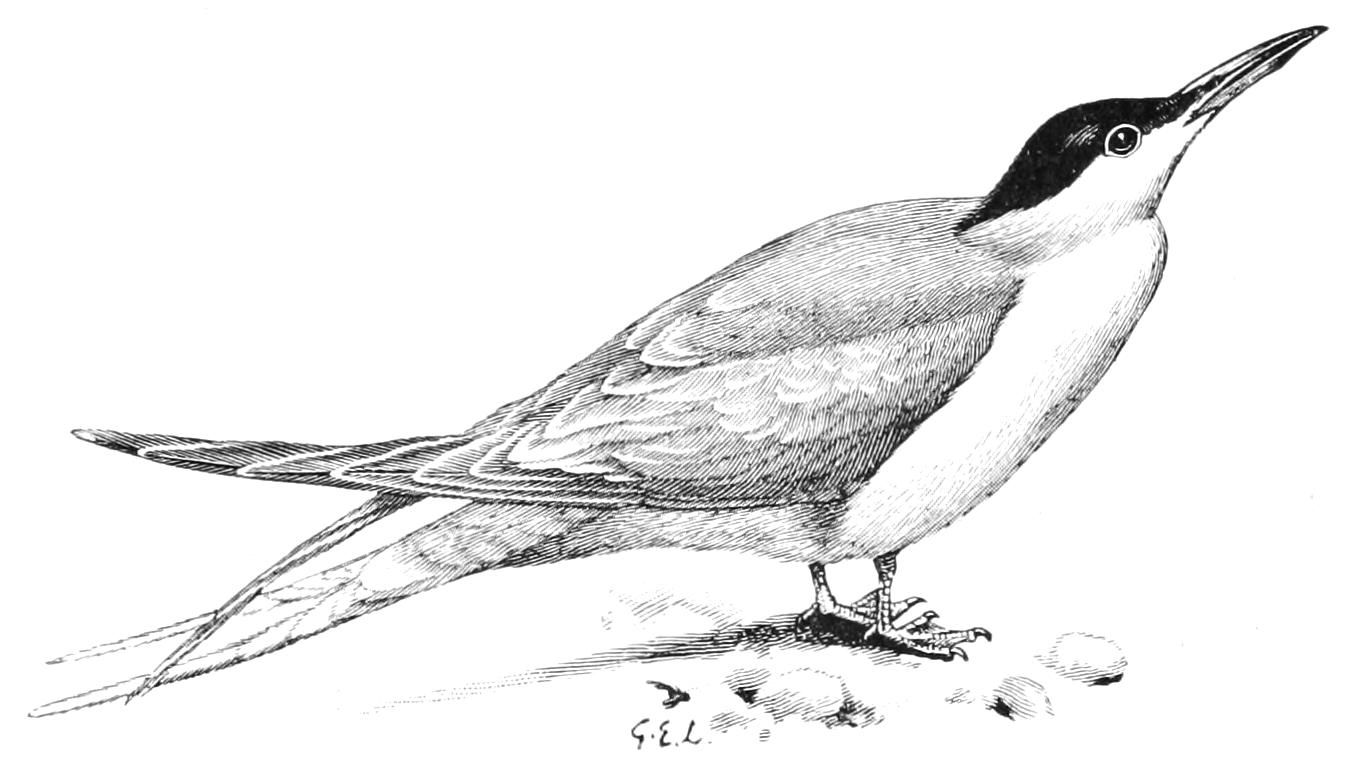
Fig. 63.–Common Tern. Sterna fluviatilis. × ¼.
One only of the smaller species allied to the last group has blackish bill and feet, namely S. longipennis,[202] occurring from Lake Baikal and Ceylon to Kamtschatka, Japan, and New Guinea. Of the remainder the Common, Arctic, and Roseate Terns breed in Britain, though the Roseate is decidedly scarce there. S. fluviatilis, the Common Tern, occupying the coasts and inland waters of Europe, temperate Asia, and temperate America–chiefly on the eastern side in the last case–and migrating to South Africa, India, Ceylon, and Brazil, has red feet, and red bill with horn-coloured tip, the lower parts being vinaceous grey. S. macrura, the Arctic Tern, frequenting the northern regions of Europe and America from lat. 82° to 50°, and 42° N. respectively, has the bill entirely red, the metatarsus comparatively short, and the breast French grey. The two or three brown-spotted eggs vary from olive to green, and are frequently ruddier than those of the Common Tern. S. dougalli, the Roseate Tern, differing in the nearly black bill, the white tips to the inner webs of the primaries, and the evanescent pink tinge on the under parts, is widely distributed from lat. 57° N. in the Atlantic to New Caledonia, but is apparently wanting in the Eastern Pacific. Its cry is peculiarly grating. S. albigena, ranging from the Red Sea to the Malabar coast, is much darker, and has orange feet; while S. hirundinacea, extending from Brazil and Peru to the regions south of Cape Horn, S. vittata of St. Paul's, Amsterdam, Inaccessible, Tristan da Cunha, and Kerguelen Islands, and S. virgata of Kerguelen Island and the Crozets are closely allied forms, of which the last two are said to lay a single egg. S. albistriata, with but slightly elongated outer rectrices, yellow bill and feet, inhabits New Zealand and strays to Norfolk Island; S. forsteri, with white under parts, orange bill, and reddish feet, inhabits most of North America. S. melanogaster of India, reaching northwards to Afghanistan and Bhutan, has a black belly.
Of forms with much stouter bills than Sterna, Seena aurantia, of India, the Burmese countries and Yunnan, has the bill and feet orange; Hydroprocne caspia, the Caspian Tern–largest of the Sub-family–has a very short tail, red bill, and black feet. The latter occupies most of the world, except tropical South America and the Pacific Islands, visiting Britain, and breeding as near to it as Sylt. Gelochelidon anglica, the Gull-billed Tern, with a long metatarsus, reddish-black beak and feet, occurs in Britain and is found through the temperate and tropical parts of the Old and New Worlds, but not in South Africa, and rarely in Western America. Phaëthusa magnirostris, of the warmer portions of North America, has a short tail, yellow bill, and olive-yellow feet.
The genus Hydrochelidon, or Marsh Tern, is distinguished by a short tail, a comparatively small bill, and feet with much indented webs. The note is shrill; the food consists of aquatic insects, varied by frogs, newts, and small fish: the nests, placed in close proximity on swamps or pools, are formed of water plants and are sometimes mere floating masses of them; the three eggs are often very dark olive or brown. H. nigra, the Black Tern or Blue Darr, ranges from Europe south of lat. 60° N. and the Mediterranean to Turkestan, wintering as far as Loango and Abyssinia. It bred in the east of England up to 1858, since which date a nest is quite exceptional, while its two congeners are only chance visitors. The colour is lead-grey, with blacker head, black bill and reddish-brown feet. The darker race H. surinamensis inhabits temperate America from Alaska and Canada southwards, migrating to Chili and Brazil. H. leucoptera, the White-winged Black Tern, is found in Central and Southern Europe, temperate Asia and North Africa; reaching accidentally to America, and in winter from Cape Colony to Australia and New Zealand. It is chiefly black, with white carpal region, rump, tail, and vent, the bill and feet being red. H. hybrida, the Whiskered Tern, has a similar range, but breeds also from India to Australia. The main colour is slate-grey, the head and nape being black, the bill and feet red, and a white streak marking each cheek. In the winter and immature plumage the under parts are entirely, and the head partially white, throughout the genus.
Of fossil Laridae Halcyornis occurs in the Lower Eocene of England, Aegialornis[203] in the Upper Eocene of France; while the Lower Miocene of the latter country, the Middle Miocene of Germany, and the Pliocene of Oregon furnish Larus.
Fam. VIII. Alcidae.–The Sub-order Alcae contains only this Family, or the Auks, wherein the body is heavy and compact, the head large, the plumage close and elastic. The stout bill varies extraordinarily, as will be seen under the various species. The abbreviated metatarsus is reticulated, usually with a row of scutellae in front; the long anterior toes are fully webbed, the hallux is absent or rudimentary, the claws are stout, acute, and slightly curved. The wings are very short, and the Great Auk was absolutely flightless; but most species fly strongly and rapidly to varying distances, the pinions not being flipper-like as in the Penguins, to which these birds have no affinity; like them, however, they commonly sit upright upon the metatarsus, and walk awkwardly from the feet being placed so far back, while they swim and dive to perfection. The primaries are eleven, the secondaries from fifteen to nineteen. The short tail may be rounded as in Uria, or graduated with pointed rectrices as in Alca; the quills numbering twelve, except in A. impennis, which has eighteen. The furcula is U-shaped, the syrinx tracheo-bronchial, the tongue lanceolate; the nostrils–covered with feathers in Alca, Uria and Mergulus, and with a horny membrane elsewhere–are pervious. An aftershaft is present, and down is plentiful on both adults and nestlings, being in the latter fluffy, and of a black, grey, or brown colour, sometimes relieved by white. Elongated feathers, crests, and horny outgrowths are common, as described below.
Auks are entirely pelagic birds, breeding from the Polar Seas southwards to Japan, Lower California, Maine, and the Berlengas off the Tagus, while wandering further in winter; but the North Pacific may certainly be considered their headquarters. In the case of the British species a small proportion remain near shore after the autumn, but it seems to be quite uncertain where the majority spend the colder months. The members of this Family can hardly be called gregarious, except in the breeding time, when vast flocks arrive with great regularity, or even to an exact day. In England this occurs at the end of March or beginning of April, the latter part of August or the first week of September being as punctually observed for departure. Except for purposes of procreation, or during violent storms, individuals are rarely seen on land, as might be expected from the clumsy style of gait; yet Puffins and Black Guillemots are fairly good walkers, and the former fly particularly straight and swiftly. Auks either splash along the surface of the waves before diving, or plunge suddenly, and when immersed use their wings much as if flying. The usual voice is a harsh-toned croak or grunt, but in addition Simorhynchus is said to chatter, Cyclorhynchus to whistle; Ptychorhamphus utters a musical ringing sound, the Little Auk a wild cry, and Black Guillemots a shrill, plaintive note. Fish, crustaceans, worms, and the like, with chance ship-refuse, compose the diet; the birds frequently disgorging it when scared, and sometimes in order to feed the young.
The great pear-shaped egg of the Guillemots proper, and the more oval one of the Razorbill, is deposited on some bare ledge of a cliff, on a stack, or on an island rock. In the case of the latter bird the egg is usually in a crevice, being white or buff with black or brown markings, and generally, if not invariably, green inside. Guillemots' eggs vary from white or buff to brilliant green or blue, and are spotted, streaked, or covered with intricate wavy patterns of black, brown, or rufous; the same bird probably always producing similar specimens. The Black Guillemots lay two greenish-white eggs with blotches of brown, rust-colour, and grey, under close-packed boulders or in holes low down in cliffs; that of the Little Auk is pale bluish-green, with or without faint rufous stains, and is found in similar, but commonly much higher, situations; Synthliborhamphus and various other forms use burrows in the turf, like Petrels, as an alternative to chinks in rocks; but the first-named produces two buff eggs, spotted with brown and grey, while the remainder lay only one, which is either white, or very indistinctly marked. Of these, Puffins fashion a considerable nest of dry materials. In some instances at least, both sexes incubate, the period being nearly five weeks. When hatched in holes the young remain there for a considerable time, otherwise they are soon assisted by their parents to reach the sea. Where unmolested, Auks are sufficiently tame; Puffins, Razorbills, and so forth, however, bite severely if handled, and the first-named will fight with each other to the death.
As will be seen, the colour of both sexes in summer is black or dusky, varied by white, and occasionally brown; the winter plumage being duller and less decorative, and resembling the garb of the young. The size varies from that of the Great Auk to that of the Least or Knob-billed Auklet, the Family being confined to the Palaearctic and Nearctic Regions.
Lunda cirrata, the Tufted Puffin, ranging from South California to Japan, and straying to Eastern America, is sooty above and greyish below; the sides of the head being white anteriorly, a "rosette" of naked red skin adorning the gape, and a nuptial tuft of long straw-coloured feathers hanging from above each eye. The feet are red, and become flesh-coloured in winter. The highly compressed bill is red in front and yellowish behind; while its base consists of three portions, separated from each other and from the transversely grooved fore-part by furrows, which deepen until the pieces become detached and expose a soft brownish skin, that hardens again towards spring. Fratercula arctica, the Puffin, occupies in vast numbers many of the precipitous coasts and islands of Britain, laying its large, dull white, granulated egg–faintly marked with brown and speedily begrimed–in a rock-crevice, or a burrow, often made by the bird itself. The upper parts and gorget are black, the cheeks greyish, the lower surface white, the rosettes yellow, and the feet orange-red. The base of the huge compressed and grooved bill, blue, yellow, and red in colour, is shed in nine pieces towards winter, when the cheeks become white, the rosettes reddish, and a blunt, fleshy, horn-like appendage on the upper eyelid also disappears. This species breeds northwards in the Atlantic, from the Bay of Fundy and the Berlengas off the Tagus, and (as the larger form F. glacialis) eastwards to Novaya Zemlya, migrating a little further south: in the Pacific, F. corniculata, with longer horns and more developed deciduous bill-sheath, takes its place.
Cerorhyncha monocerata, the Rhinoceros Auklet of the North Pacific and western North America, has a stout, curved orange and black bill, with a large compressed horn between the nostrils, and an accessory piece on the mandible; the upper parts are dusky, the lower whitish with plumbeous cheeks and throat, while a row of narrow white feathers decorates each side of the head. In winter the horny processes disappear, but not the plumes. Ptychorhamphus aleuticus, Cassin's Auklet, of the Pacific coast of North America, is black above and white below, with a lead-coloured throat, a white iris, and a bill which is mainly black, and becomes wrinkled in summer. Cyclorhynchus psittaculus, the Parrot Auk of the North Pacific, has an extraordinary compressed orange-red beak, to which the blunt decurved maxilla and narrow up-curved mandible give a rounded appearance; the upper parts and the throat are dusky; the lower surface, the iris, and a row of filaments behind each eye are white, as is the throat in winter. Three species of Simorhynchus, from the North Pacific, have a stout orange-red or purplish bill, a white iris, and black upper parts. S. cristatellus, the Crested Auklet, has several deciduous plates at the base of the beak, including a round piece at each side of the gape; the lower parts are grey; a tuft of dusky plumes curls over the forehead, and a line of narrow white feathers stretches across the ear-coverts–both being permanent: in winter the bill is horn-coloured. S. pygmaeus, the Whiskered Auklet, is without conspicuously deciduous plates, but has an additional patch of white plumes, reaching from the beak above and below the eye at all seasons. S. pusillus, the Least Auklet, has on the short maxilla a small compressed basal tubercle, which is shed in winter, but exhibits no crest. The scapular region shews a good deal of white; filamentous white feathers grace the forehead, lores, and ear-coverts; and dusky spots mark the lower parts, in summer only. Synthliborhamphus antiquus, of the Pacific north of Vancouver Island and Japan, but accidental elsewhere, has a short, compressed, yellow and black beak, with plumbeous upper and white lower parts; the head and throat are black with a white line on each side of the occiput, the upper back is streaked with white. In winter all the stripes vanish, and the throat is white. S. wumizusume, of the Eastern Asiatic seas southward to Japan, has a nuptial crest of long narrow plumes, but no streaks on the back. In the cold season the whole malar region and throat are white. Brachyrhamphus marmoratus of the North Pacific, reaching California in winter, has a small slender black bill, dusky upper parts barred with rufous, and white under parts varied with brown; B. kittlitzi, of the Aleutian Islands east to Unalashka, Kamtschatka, and North Japan, is thickly spotted with buff above; B. hypoleucus and B. craveri of Lower California are plain slate-coloured with white lower surface, the former having white and the latter grey wing-lining. The first two species have a white nuchal collar and irregular white markings above in winter, with nearly white lower parts.
Cepphus grylle, the Black Guillemot of the Atlantic northwards from Britain and Maine, and of the Arctic coasts of Europe, is black with a white wing-patch, the feathers of which are black at the base; in winter the plumage is white, relieved above and sometimes below by black, and the red feet become pinkish. The compressed pointed bill is always black. C. mandti, occupying, as it seems, the North Polar seas generally, and breeding as far south as Labrador, has a more slender bill, and no black wing-patch. C. columba, ranging from Bering Strait and Japan to California, has a large wedge-shaped black mark on the white wing-patch; C. carbo, of North-East Asia, Japan, the Kuril and Bering Islands, shews no white except round the eye. All these forms wander southwards in winter. The Black Guillemot or Tystie still breeds in the Isle of Man, and sparsely on the East of Scotland and Ireland, in the north and west of which countries it is not uncommon. It is remarkably tame when it breeds in the wilder districts, uttering a plaintive cry, and making its way to land in the face of an intruder. The two whitish or greenish eggs, beautifully spotted with black, brown, and grey, are deposited among large boulders, or in holes at the bases of cliffs, without any nest.
Of the last group of Auks, with feathered nostrils, Uria troile, the well-known Common Guillemot, Willock, or Murre, breeds numerously in Britain, where the cliffs are suitable; it extends from Bear Island near Spitsbergen to the Magdalen Islands in America and the Tagus in Europe, occurring on migration southwards to the New England States and the Canaries. The plumage is dusky above and white below, with a brownish head and white alar bar. The throat, cheeks, and a few feathers on the head are white in winter; the long pointed bill and feet are blackish. The Ringed Guillemot is a mere variety with a white ring round the eye and a streak behind it; but U. californica, with stouter bill, from the Pacific coast of North America, may be considered a sub-species. U. brünnichi, distinguishable by its blacker crown, and deeper beak with a white edge to the maxilla, ranges from the Gulf of St. Lawrence and Iceland to the Arctic Seas of both worlds in summer, moving further south in winter; the North Pacific race being denominated U. arra. Descriptions of the colonies of Guillemots in the icy seas, and of the smaller but equally crowded stations in Britain, have been too frequently given to need repetition here; but it may be mentioned that during incubation, which lasts about a month, the parent holds the egg between its thighs, and not unfrequently carries it off a ledge, when suddenly scared. On flat-topped stacks these eggs (p. 316) often lie in the closest juxtaposition.
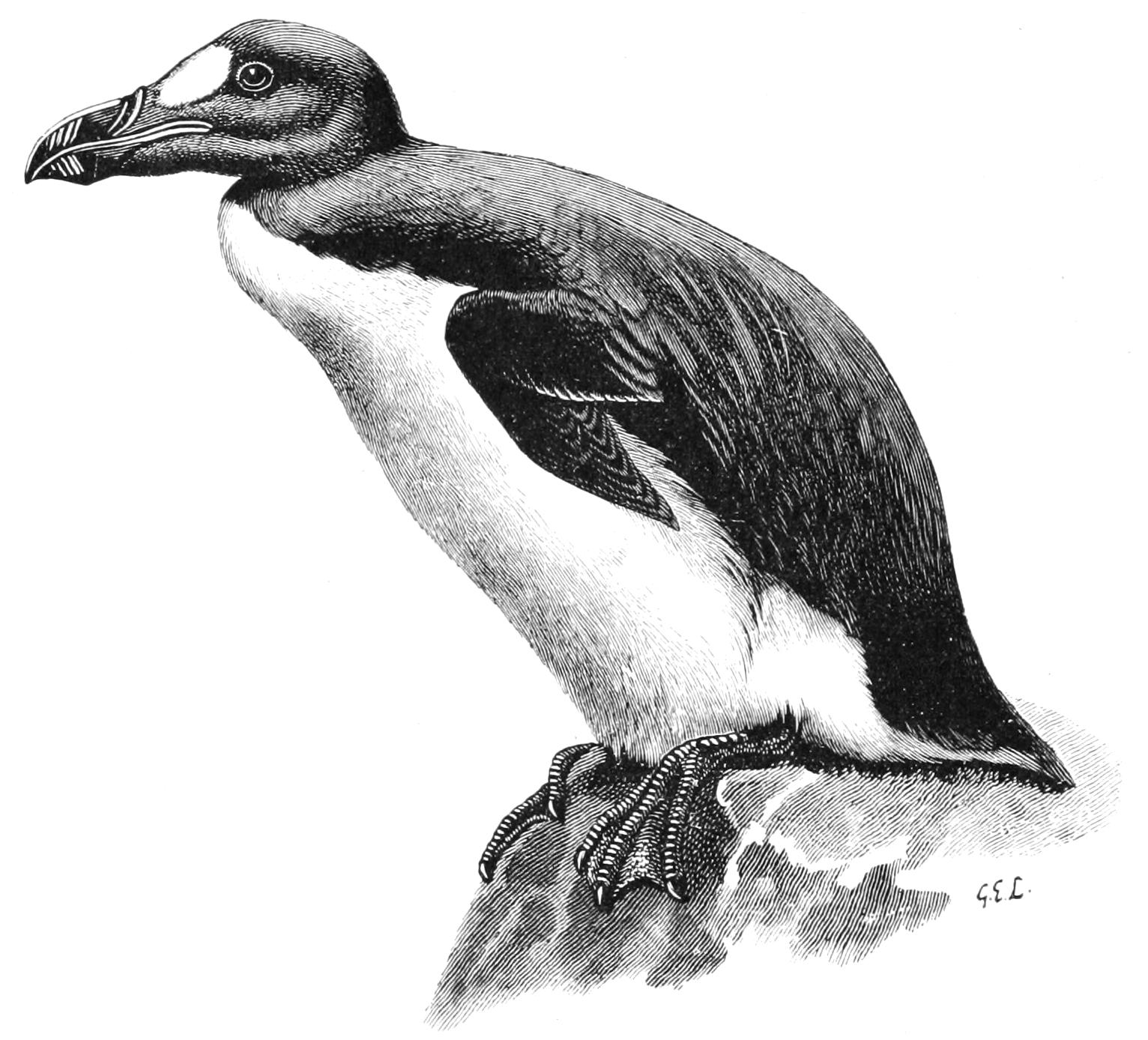
Fig. 64.–Great Auk. Alca impennis. × ⅙. (After Hancock.)
In Alca the black bill is deep and highly compressed, with a curved culmen; and shews oblique or transverse grooves, which are wanting in the young. A. torda, the Razorbill, less common in Britain than the Guillemot, ranges from Jan Mayen and Greenland to Maine and Brittany, visiting North Carolina and the Canaries in some winters. It is greenish-black with brown throat-region and white lower parts, a white line stretching from the top of the beak to the eye, and another crossing both mandibles in the adult only. The tips of the secondaries are white, forming an alar bar, the feet are black. The throat and cheeks are white in the winter and immature plumage. A. impennis, the extinct Great Auk or Garefowl, inhabited the North Atlantic, chiefly in the neighbourhood of Iceland and Newfoundland, but apparently never reached north of the Arctic Circle. Remains have been found in the kitchen-middens of Denmark, North and West Scotland, and North and South Ireland; in a cave on the coast of Durham; and abundantly on Funk Island in the Newfoundland Seas, where the bird was called "Penguin"; that name being subsequently transferred to the Spheniscidae. The last two living examples were obtained at the isle of Eldey, off Iceland, in 1844, while 1812, 1821, and 1834 are the last dates of capture in Orkney, St. Kilda, and Ireland respectively, allowing for a possible instance in St. Kilda (Borrera) in 1840. This species, extirpated chiefly by the persecution of fishermen, but subsequently by collectors, resembled a flightless Razorbill, though double the size; it had no white stripes on the head or bill, but shewed a large white patch before each eye. The huge egg was white or buff, with scattered round spots or plentiful fine scrawls of black or brown; about seventy of these eggs, and a somewhat greater number of birds, existing at present in collections.[204]
Mergulus alle, the Little Auk or Rotche, occurring on migration in Britain, and occasionally in the Canaries, Azores, and New Jersey, breeds from Greenland and the Kara Sea to North Iceland. It is black above and white below, with a spot over the eye, streaks on the scapulars, and an alar bar also of white; the throat is black in summer only. The short, broad, arched bill is black, the feet are brownish. The single greenish- or bluish-white egg, often shewing faint rufous markings, is deposited in a deep crevice of a cliff, or among boulders on beaches.
As regards fossil forms, Uria has been found in the Miocene of Maine and North Carolina, and in the Pliocene of Tuscany.
* * * * *
Of the second or Pteroclo-Columbine group of Charadriiform Birds (p. 268) the Old World Sub-Order Pterocles contains only–
Fam. IX. Pteroclidae, or the Sand-Grouse, equally interesting as regards their structure and their habits. Originally considered akin to Grouse, they have since given rise to much discussion; Dr. Gadow's view–here adopted–being that they are highly specialized forms, analogous to the Galli in their digestive organs, but homologically constituting a link between the Limicolae and the Columbae.[205] From the Pigeons they certainly differ remarkably in the condition of the chicks, which are covered with brown, creamy, and black down, and run almost immediately from the shell; yet they agree with them in most points of osteology, myology, and pterylosis, while the eggs recall those of Rails, and the flight resembles that of a Plover.
The body is compact; the bill short, arched, and fairly stout; the metatarsus abbreviated and feathered anteriorly, or entirely in Syrrhaptes. In this genus, moreover, the hallux, much reduced elsewhere, is totally absent; and the short front toes are enclosed in a sort of casing, which is covered as far as the thick claws with hairy plumage, the whole forming a padded foot unique among Birds. The long pointed wings have sixteen or seventeen secondaries, and eleven primaries, of which the outer has its shaft produced into a thin filament in Syrrhaptes paradoxus; the wedge-shaped tail has sixteen rectrices, the median pair being elongated and pointed in that genus and Pteroclurus (Pin-tailed Sand-Grouse), if the latter be allowed to stand. The furcula is U-shaped, the syrinx tracheo-bronchial, the tongue lanceolate; there is a small aftershaft, and a large crop; while the down of the adults is sparingly distributed.
Sand-Grouse are true desert-birds, affording excellent instances of protective coloration in their buff or brownish tints, slightly varied with grey, black, orange, and white; Pterocles fasciatus and P. lichtensteini, however, prefer bushy and rocky ground to bare, sandy, or stony plains. Gregarious yet monogamous, they are shy and wary, but very pugnacious among themselves; their flight is swift, strong, and noisy; their powers of walking and running good, though rather clumsy, owing to the extremely short legs. All the species lie closely until flushed, and are fond of basking in the sun on their sides, in holes scraped out for the purpose. Migration probably prevails to some extent throughout the Family, while the irruptions of Syrrhaptes paradoxus into Europe (p. 324) are quite unparalleled. The cry, often uttered upon the wing, is a piercing whistle, or a twittering or clucking sound; though that of Syrrhaptes appears to be hoarser, and has been syllabled as "truck-turuck" and "caga-caga" in S. paradoxus and S. tibetanus respectively. The alarm-note is of a croaking nature. The food consists of seeds, tender shoots, bulbous grass-roots, and insects, or even of berries, peas, and beans; while the birds flock to drink at certain favourite spots, and are variously stated to take continuous or interrupted draughts. The nest is a mere hollow in the soil, frequently lined with a little grass; the three oval, but peculiarly cylindrical, eggs vary from whitish to buff, or greenish in Syrrhaptes, and are marked with brown, reddish, and violet. Both sexes assist in incubation, which lasts from twenty-five to twenty-eight days. Opinions vary as to the edible quality of the flesh.
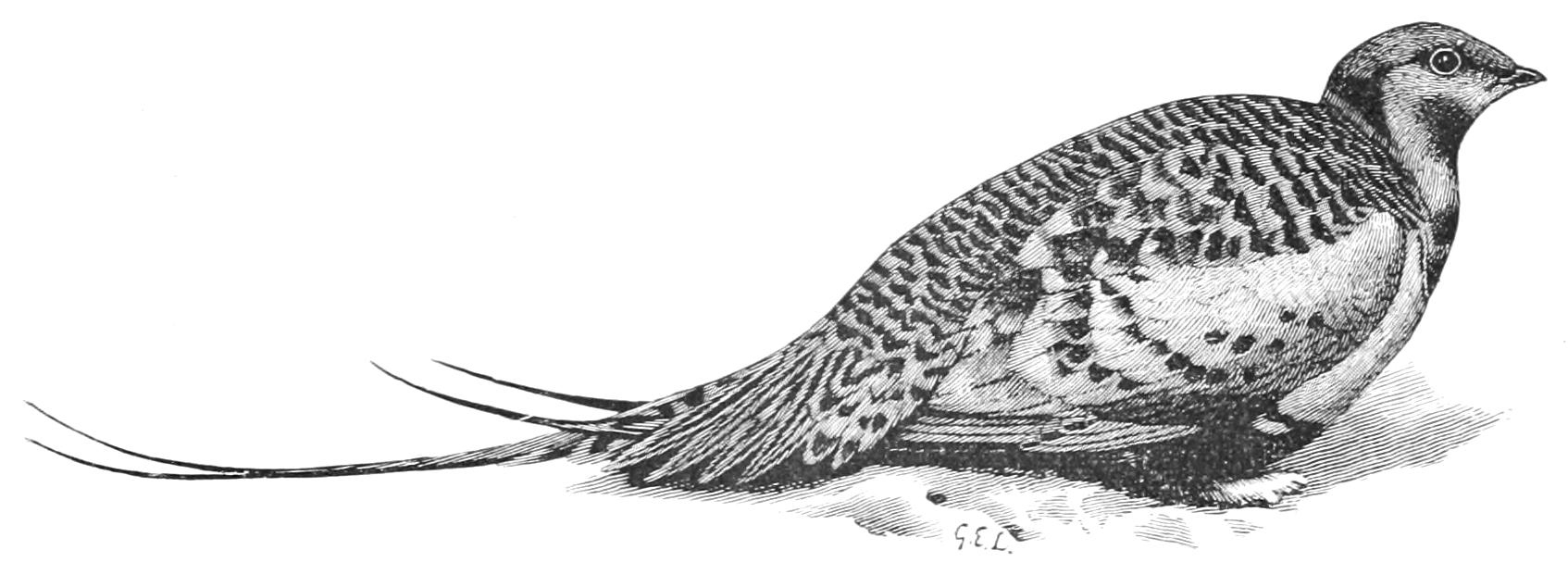
Fig. 65.–Pallas's Sand-Grouse. Syrrhaptes paradoxus. × 3⁄10.
Pterocles arenarius, ranging from the Canary Islands, North Africa, and Madagascar to South Europe and Central Asia, has dark grey upper parts, with orange-yellow markings, except on the white-tipped primaries and tail; the chestnut throat surmounts a black patch, which is succeeded by a breast of the same dove-colour as the head, crossed by a black band; the belly being black also. The bill is horn-coloured, the feet are greyish. The female is buff, barred above and spotted below with black; her throat is yellowish-white, and the black areas on her lower surface are as in the male. P. decoratus of East Africa, P. bicinctus and P. variegatus of South Africa, P. coronatus and P. lichtensteini, extending from the Sahara and Kordofan respectively to North-West India, P. gutturalis of East Africa, P. personatus of Madagascar, P. fasciatus of India–the only species peculiar to Asia–and P. quadricinctus, found from Senegambia to Abyssinia, are fairly similar to the above, though chiefly sandy in some cases.
Pteroclurus alchata, absurdly termed "Perdrix d'Angleterre" in France, and Rock-Pigeon in India, is grey above, with yellow tips to the dorsal feathers; it has black, brown, and greyish-white wings, shewing chestnut and yellow on the coverts; yellowish rump and long median rectrices barred with black. The cheeks are orange, the throat is black with a little yellow beneath, the upper breast is chestnut-red, bordered by a black line above and below, the remaining under parts are white, the bill and feet brownish. The female differs in her white throat, and in her upper surface irregularly marked with buff, grey, and black. This species occurs in South Europe, North Africa, and South-West Asia; P. namaqua inhabits South Africa; P. exustus ranges from Senegal to the Pangani River in East Africa, and through Palestine to Central Asia and India; while P. senegallus extends from the Sahara to Palestine, Arabia, and North-West India.
Syrrhaptes paradoxus, Pallas's Sand-Grouse, has buff upper parts barred with black; mainly blue-grey wings and tail, with black and chestnut markings on the former, and white tips to the lateral rectrices; dull yellow crown and cheeks; orange nape and throat; greyish-buff neck and breast, white abdomen and metatarsal plumage, an interrupted black gorget, and a broader black band towards the belly. The female has less elongated median tail-feathers, black streaks on the buff head, a black bar across the throat, and is duller generally. S. tibetanus, with entirely white belly, the largest of the Family, extends from the Sutlej and South Kashmir to Koko-Nor; but its congener reaches from the Lower Volga or the Kirghiz Steppes to the north of Lake Baikal and North China, while some erratic impulse of uncertain origin causes it to invade the plains of China and the whole of Europe at irregular intervals. One specimen was obtained at Sarepta on the Volga in 1848, and again in 1860, when flocks visited Pekin; in 1859 a few examples occurred on the Continent, and between July and November three wandered to Britain; while in 1863 some 700 individuals reached our shores by May 21, straying as far as Ireland, but vanishing towards autumn. Several pairs bred on the sand-hills of Holland and Jutland. In 1872 and 1876 small parties visited us; and in 1888 another and incalculably larger invasion took place, which extended farther southward than that of 1863, and after entering Europe before the beginning of April, occupied Britain between May 6 and May 15, to remain there throughout that year and the succeeding. Besides breeding in Denmark, Holstein, and no doubt elsewhere on the Continent, two pairs nested in 1888 in the east of Yorkshire, and one or more on the Culbin Sands in Moray, whence in 1889 Professor Newton received on August 8 a chick of two or three days old. This was exhibited at the Newcastle Meeting of the British Association, and subsequently figured in The Ibis.[206] Doubtless the above were not the only cases of reproduction in England, and it was hoped that a protective Act, which came into force in February 1889, would lead to permanent colonization; but by 1890, or, according to some, 1892, all the birds had disappeared.
As a fossil, Pterocles occurs in the Eocene and Miocene of France.
* * * * *
The Sub-Order Columbae must certainly be divided into the Families Dididae for the Dodo and Solitaire, and Columbidae for the Pigeons, while a third, Didunculidae, may be added to contain the Tooth-billed Pigeon of Samoa, to which Otidiphaps of Papuasia is possibly allied. For convenience sake we may accept four Sub-families of the Columbidae, namely (1) Gourinae, (2) Peristerinae, (3) Columbinae, and (4) Treroninae, though the arrangement is somewhat arbitrary. Dr. Gadow[207] segregates Caloenatinae, but not Peristerinae, while he and Count Salvadori[208] agree in considering Didunculus merely on a level with these subdivisions.
Throughout the group the body is compact, while the bill varies from stout to slender, being swollen and hardened at the decurved tip, which forms a hook in the Dididae and Didunculidae. The base of this feature is covered with a soft skin or cere, containing the nostrils; Globicera, Vinago calva, and Ptilopus insolitus have a fleshy or bony knob at the posterior part of the culmen, said to be most prominent in the breeding season; and Didunculus has the mandible toothed and truncated. The metatarsi, reticulated in the Gourinae, but scutellated elsewhere, are usually partly feathered, especially in Fruit-Pigeons; some species of Columbigallina, however, have them naked; Drepanoptila has them entirely covered; and in many domestic breeds the plumage extends over the toes, which are all on the same level, and possess moderate claws. The skin is more or less expanded on each side of the digits. The rounded wings are commonly long, but are short in Ground-Pigeons, and aborted in the flightless Dididae, the primaries numbering eleven and the secondaries from ten to seventeen; the former are bifurcated at the tip in Drepanoptila, attenuated in some members of Ptilopus, Oxypelia, Peristera, and Leptoptila, while one or more of the three outer feathers is not uncommonly scalloped. The tail varies considerably in form and dimensions, being wedge-shaped in Sphenocercus, rounded in Zenaida, Phabotreron, and Megaloprepia, acuminate in Ectopistes, long and graduated in Oena, Macropygia, and Reinwardtoenas, and so forth. The rectrices range from twelve to twenty, sixteen being the normal number in the Gourinae, twelve in the Columbinae, and fourteen in the Treroninae. The neck-feathers may be bifurcated, as in Alectoroenas, Columba guinea, and occasionally in Turtur, or those of the breast, as in some species of Macropygia, Ptilopus, and Phaenorrhina; the neck, moreover, is hackled in Caloenas and Lopholaemus, and the body-plumage is generally narrow with widely-separated barbs in Chrysoenas. Five members of Phlogoenas have a patch of stiff feathers over the crop; while the splendid decomposed crest of Goura is exceptionally striking, and more ordinary tufts grace the head in Lopholaemus, Coryphoenas, Lophophaps, Ocyphaps, and elsewhere. The forehead is sometimes nearly bare, as are the lores and eyelids in Gymnophaps; naked red or yellow orbits are found in Gymnopelia, Reinwardtoenas, Macropygia, Turacoena, Didunculus, and Columba gymnophthalma, not to mention other instances; while the tendency reaches its height in the huge circumocular wattles of several fanciers' races. In Serresius a feathered "saddle" extends over half the culmen.
The furcula is U-shaped, being much reduced in the Dididae; the syrinx is remarkable for the asymmetrical union of the sterno-tracheal muscles; the tongue is lanceolate; the impervious nostrils are linear in the Columbidae and Didunculidae, oblique in the Dididae. The crop is more highly developed than in other Families. The gizzard of Caloenas is remarkable for an indurated horn-like patch on each side of the epithelial lining, that of Carpophaga latrans has the interior beset with similar conical prominences, correlated with a diet of hard fruit. Phaenorrhina has these cones still more developed, and Ptilopus agrees with Drepanoptila in possessing four pads in the above organ instead of two, the regular number in Birds. The after-shaft is rudimentary or absent, the adults have no down, the young are hatched blind and naked, and remain for a long time in the nest. The plumage is commonly dull blue or brown, with an iridescent sheen; but remarkably brilliant purple, red, yellow, and green hues manifest themselves in forms such as Ptilopus, Chrysoenas, and Caloenas from the islands of the Eastern Seas, the headquarters of the Family. Though smaller, the female usually resembles the male; but Turturoena, Oena, and Peristera are examples of diversity, while immature examples are duller than adults. Goura approaches the size of a goose, whereas Columbigallina is little larger than a sparrow. Of domestic Pigeons the Rock-Dove is undoubtedly the origin, but the breeds are now infinite in their variety.[209]
Omitting the abnormal Didine Birds, the habits of the members of this group are fairly uniform, the majority of them inhabiting wooded country; while even those like Phaps, Lophophaps, and Geophaps, which occupy the arid plains of Australia, are to be found at times where vegetation is plentiful; and in all cases the proximity of water seems indispensable. Fruit-Pigeons frequent trees, and the most typical Columbine forms are found in woods or among rocks, though the smaller Doves naturally prefer the lower bushes. Wood-Pigeons towards winter, and Passenger-Pigeons when nesting–not to mention other instances–gather in large flocks; in some cases, however, the parties only number about half a dozen, and more solitary habits are by no means uncommon. The flight is strong, rapid, and direct, though the Ground-Pigeons remain a comparatively short time upon the wing, and some species prefer to run unless forced to rise, Oena being an especially good walker. The well-known "homing" powers of trained birds, the curious backward somersaults of the Tumbler, and the sudden rise and clap of the wings so noticeable in the Wood-Pigeon when courting, merit a passing mention. Every member of the Family perches, and many delight to bask in the sun. The note is always of the nature of a coo, but is especially loud and deep in Myristicivora, Megaloprepia, and some members of Carpophaga, guttural in Haplopelia, mournful in Peristera and Zenaidura, harsh and trumpet-like in Goura; the voice of the Turtle-Dove suggests a purr, while Tympanistria and Starnoenas possess powers of ventriloquism. The food of the Wood-Pigeon is grain, beech-mast, acorns, turnips, and tender shoots of plants; that of Fruit-Pigeons consists of figs, palm-nuts, grapes, and so forth, plucked from the tree, and in the case of Myristicivora bicolor and Globicera myristicivora, largely of the mace which encases the nutmeg; Ground-Doves and other small forms subsist mainly on seeds of grasses; and it may be safely inferred that in most cases the diet varies considerably. Turturoena is stated to eat Cicada larvae; Leucosarcia those of Diptera; Goura and Otidiphaps worms, snails, and insects. Pigeons, unlike birds generally, take continuous draughts of water, immersing the bill to the base. The nest is usually a slight platform of sticks, placed aloft on a branch or in a bush; but our Rock-Dove and Columba phaeonota of South Africa breed in caves or holes in rocks; the Stock-Dove prefers hollow trees, rabbit-burrows, and the like; Geophaps the bare soil; and so forth. Phaps, Peristera, and Zenaida nest either on the ground or in bushes, but the latter appear to be almost invariably chosen by Ground-Doves like Columbigallina and Geopelia. The white eggs are two, or exceptionally three, in number; the Dodo, however, laid only one, and so do Caloenas, Ectopistes, Didunculus, and some species of Carpophaga and Columba, as well as Goura, where it is larger than that of a tame Duck. Societies, such as those of Ectopistes and Caloenas, are most unusual. Some Pigeons breed three times a year, the male commonly assisting in incubation, which lasts from fourteen to twenty-eight days. The members of this Family are shy, but readily tamed; yet the Collared Turtle-Dove is perhaps the only really good cage-bird. Most of them are excellent for the table, Leucosarcia, Geophaps, Goura, and the Treroninae being accounted particularly delicate, while the Wood-Pigeon and the domestic breeds speak for themselves. The great damage, however, done to crops, such as turnips, peas, or barley, by the flocks counterbalances their economic value to a considerable extent, the most typical forms being undoubtedly the worst offenders.
Fam. X. Dididae.–This consists of three extinct species–Didus ineptus, the Dodo of Mauritius, D. borbonicus of Réunion (Bourbon), and Pezophaps solitarius, the Solitaire of Rodriguez.
The Dodo, familiar to all by name, if not by pictures, was an immense Pigeon-like bird bigger than a Turkey, with an aborted keel to the sternum and the wings also aborted. The coracoid and scapula met at an obtuse angle, as in many other flightless species. The huge blackish bill terminated in a large horny hook, the cheeks were partly bare, the short yellow legs were stout, scaly, and feathered on the upper portion; the plumage was dark ash-coloured, with whitish breast and tail, yellowish-white wings, and black tips to their coverts. The short rectrices formed a curled tuft, and the first four primaries were directed backwards.
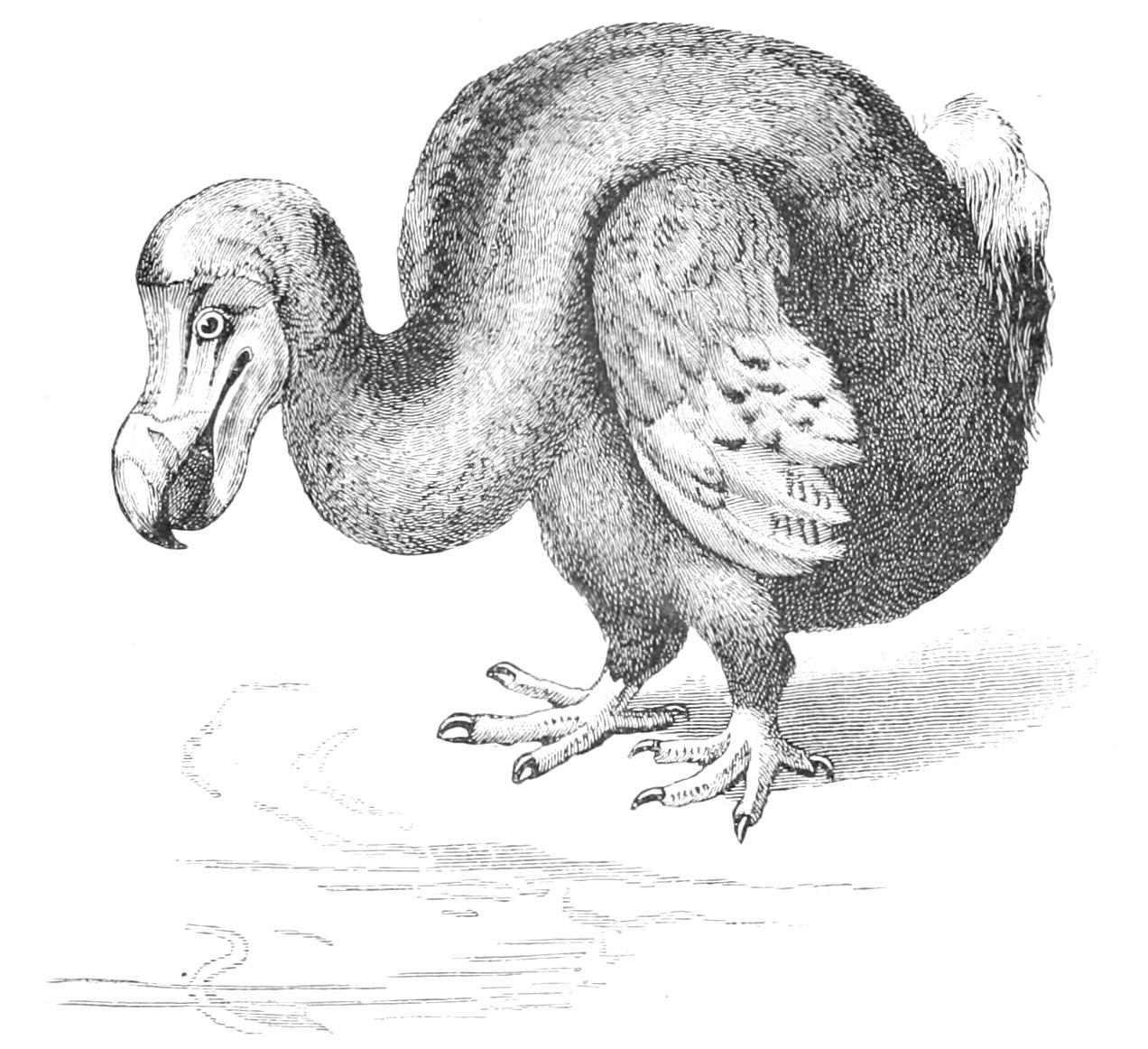
Fig. 66.–Dodo. Didus ineptus. (After Savery's Vienna picture.)
This uncouth and unwieldy species, of which a full account will be found in the works mentioned below,[210] which have been largely utilized here, was noticed as early as 1598 by the Dutch, who called it Walghvogel, or Nauseous Bird, from their dislike of its flesh, and the island, where it was then found abundantly, Mauritius. The earliest representation was given in 1601 by De Bry, who stated that an example was brought alive to Holland. Other Dutch fleets subsequently visited the island, and several sketches of the Dodo were made, while one of the captains records that it was indifferently called Dodaars or Dronte. Roelandt Savery of Courtrai (1576-1639) painted the Dodo–probably from life–more than once, pictures by him still existing in Berlin (1626), Vienna (1628), the Hague, Pommersfelden, Stuttgart, and London, the last-named belonging to the Zoological Society. The British Museum also possesses an undated picture, another is at Haarlem, a third at Oxford; while one by Goiemare at Sion House (dated 1627), and one said to be by Hoefnagel in the library of the late Emperor of Austria (circa 1620) were possibly taken from living birds. In 1628 Englishmen appeared on the scene, Emanuel Altham having sent a specimen home alive to his brother, while Herbert, accompanying the same fleet, mentioned the Dodo and figured it. About 1634 an example was given to the Anatomy School at Oxford by a Mr. Gosling, and some four years later Sir Hamon Lestrange saw a captive bird in London. Finally, we may note that individuals existed in Mauritius until 1681, as proved by the journal of Benjamin Harry.
In 1865 the discovery of a large quantity of remains in the Mare aux Songes, by Mr. G. Clark, enabled Owen and others to confirm the suggestion of the Danish naturalist, Reinhardt, of the Dodo's affinity to the Pigeons; while in 1889 M. Sauzier, acting for the Government of Mauritius, sent to the late Sir Edward Newton a series of bones from the same spot, enabling the first correctly restored and properly mounted skeleton to be returned for the museum of that island, and the important paper, noticed above, to be published by the last-named and Dr. Gadow. Nearly perfect specimens exist at Cambridge, in the British Museum, and at Paris.
The Dodo is said to have inhabited forests, to have swallowed pebbles, to have uttered a cry like that of a gosling, and to have laid one large white egg on a mass of grass. Hogs and other imported animals seem to have conduced to its extermination, as well as the hand of man.
Didus borbonicus had white plumage, varied with yellow, the first four primaries being directed forwards and downwards. It is mentioned by Tatton (1625), Du Bois (1669), and Carré (1699); while Bontekoe (1646) gave a figure apparently intended to represent it, and another by Pierre Witthoos (ob. 1693) was in existence a few years ago. It was originally called the Solitaire, but this name was also applied to Pezophaps solitarius of Rodriguez by the Huguenot exile Leguat, who described and figured the latter about 1691. Pezophaps was subsequently briefly noticed by D'Heguerty (1751) and again by Pingré (1761), who heard that it still existed in inaccessible districts; while it is also mentioned in an anonymous manuscript discovered at Paris, written perhaps about 1729. Remains came into the hands of Desjardins in 1789 (not fully recognised until 1832), and others were forwarded to England; but much the most important finds were those of the late Sir Edward Newton in 1864, followed up by Mr. Jenner in the succeeding years, and of Mr. H. H. Slater in 1874.[211] In 1875 two complete skeletons were obtained, and fairly perfect specimens of those of each sex are at Cambridge, with others elsewhere.
This Solitaire was larger than a Swan, the male standing about 2 feet 9 inches, and the female 2 feet 3 inches high; the colour of the former was brownish-grey, but the latter varied from the hue of "fair hair" to brown, and had a whitish breast. The slightly-hooked, elongated beak had a feathered ridge or peak at the base of the culmen, the neck was elongated and straight, the legs were longer and weaker than in the Dodo, the wings were rudimentary, the hind part (pelvis) was rounded, the tail was hardly noticeable, and the thigh-feathers were thick, and curved like shells at the end. A spherical mass of bone, "as big as a musket-ball," was developed on the wings of the males; and they used it, in addition to the beak, as a weapon of offence, while they whirled themselves about twenty or thirty times in four or five minutes, making a noise with their pinions like a rattle. The mien was fine and the walk stately, the birds being seen singly or in pairs; the nest was a heap of palm-leaves a foot or more high, the single large egg was incubated by both parents. The food is said to have consisted of seeds and leaves, and a stone as big as a hen's egg was often found in the stomach.
Fam. XI. Didunculidae.–Didunculus strigirostris, the Manu-meà or Red Bird of the islands of Upolu, Savai, and Tutuila in the Samoan group, is glossy greenish-black, with chestnut back, rump, wing-coverts, tail and under tail-coverts, but browner wing-quills and abdomen. The hooked and toothed bill is orange, the feet are reddish, and the naked orbits red. The sexes are similar, the young entirely brown. First made known by Strickland on the strength of its discovery in the autumn of 1839 by Peale during the United States Exploring Expedition under Commander Wilkes, it has since been met with by several travellers and missionaries, three living specimens having been exhibited in the Gardens of the Zoological Society of London. By 1863 it was regarded as nearly extinct on Upolu, where it was formerly abundant, though it still held its own on Savai; but in 1874 an increase was reported from the latter island, which was attributed to a change of habits, the birds having become arboreal instead of terrestrial.
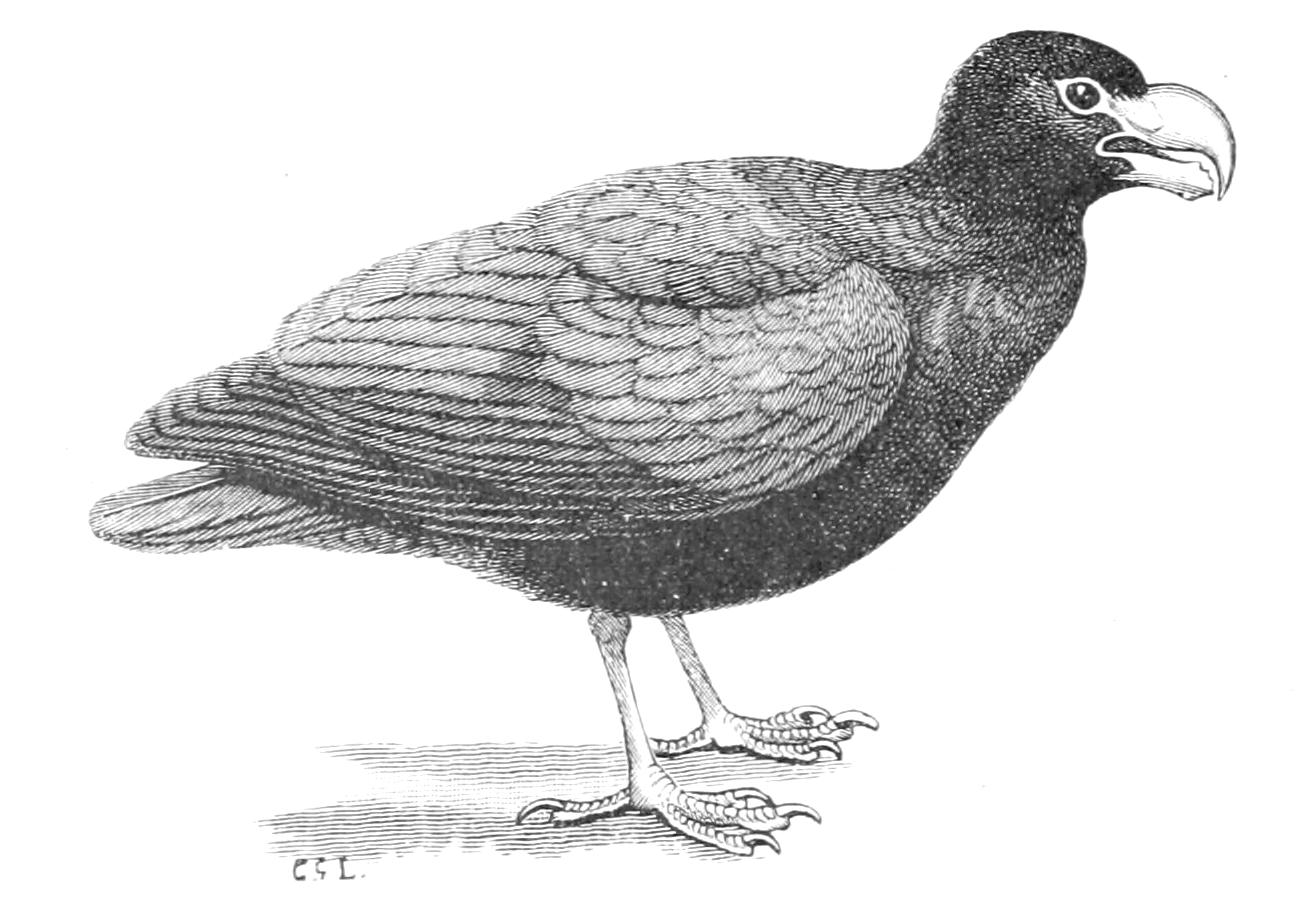
Fig. 67.–Manu-meà or Tooth-billed Pigeon. Didunculus strigirostris. × ¼.
The oldest accounts, derived from native sources, stated that Didunculus was essentially a ground species, living on thickly-wooded mountain-sides in flocks of about a dozen, and feeding on berries, plantains (bananas), and yam fruit, while it roosted on low stumps, and bred on the ground, being rather shy, and taking to flight noisily with much flapping of the wings. Mr. Whitmee[212] and others, however, tell us that it now feeds almost exclusively on high trees, roosting aloft, and building in the forks. But as early as 1852 Lieutenant Walpole[213] asserted that the bird bred among rocks, perched and fed on trees, and flew from wood to wood, or even from island to island, so that it is not impossible that its supposed affinity to the Dodo led writers astray, and that its fondness for the ground was greatly exaggerated. No doubt danger from introduced cats and rats would force the nest to be placed higher.
The Tooth-billed Pigeon was usually found in pairs or small parties, and was in great request for food among the natives, who, moreover, kept individuals tethered to sticks as pets, while the chiefs erected small huts in which to feed the flocks. They were often attracted by decoys, and caught with bird-lime. The habits are diurnal, or somewhat crepuscular; the note apparently varies from deep and guttural to low and plaintive; and breeding takes place from May to September, the single egg being white. The birds are decidedly pugnacious in captivity, and occasionally nibble their food in Parrot fashion.
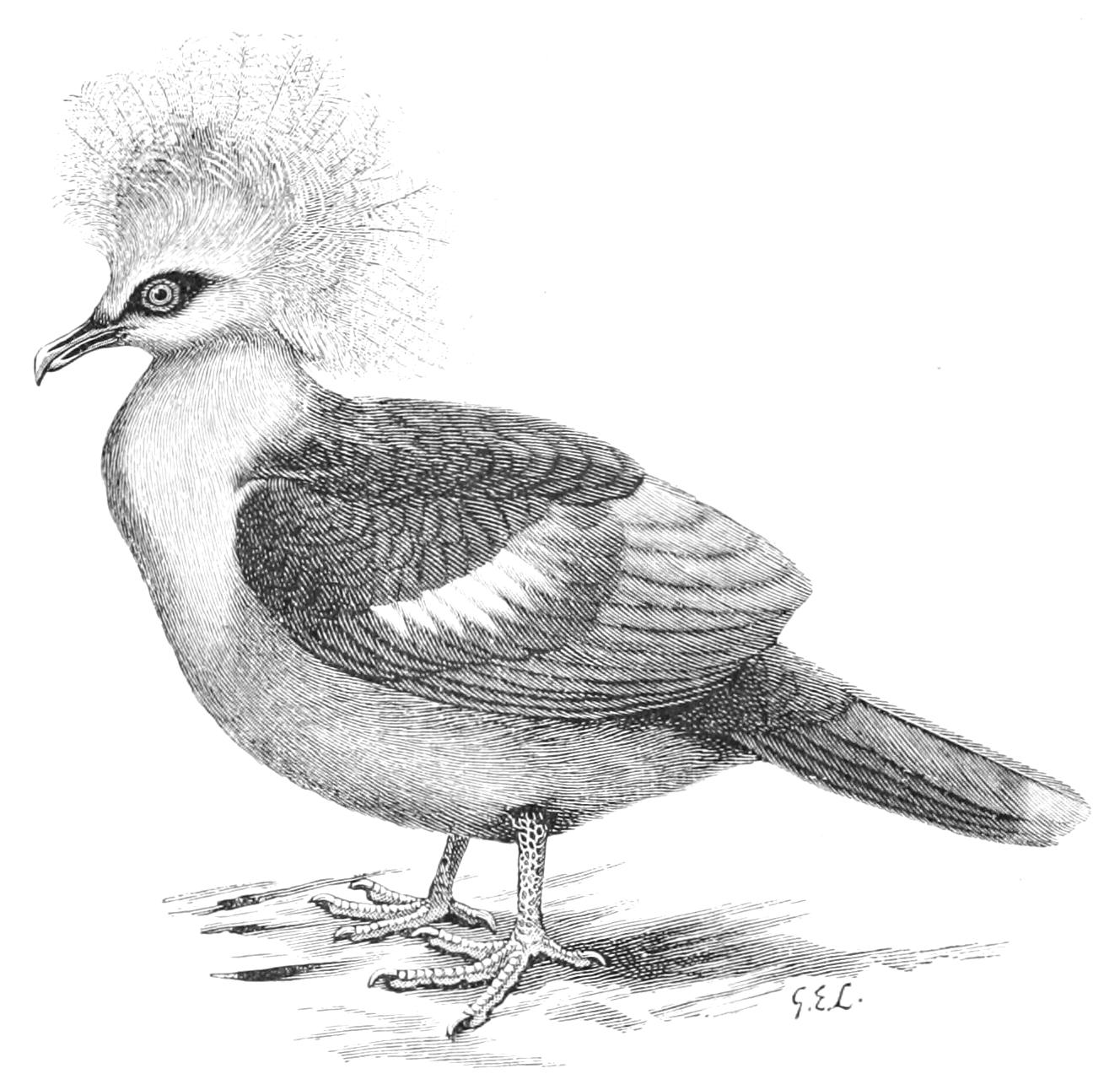
Fig. 68.–Crowned Pigeon. Goura coronata. × ⅑.
Fam. XII. Columbidae.–If we omit the Arctic and Antarctic countries, this group forms a remarkably cosmopolitan Family, though with an irregular distribution. Roughly speaking, there are recognised some dozen Palaearctic, and still fewer Nearctic species, with about seventy Neotropical and forty Ethiopian; India possesses about thirty, the Malay Archipelago perhaps a hundred and twenty, New Guinea and the Moluccas a hundred. Many island forms occur in Polynesia, but Australia can barely claim twenty, the New Zealand seas only furnish two, and the Sandwich Islands none.
Sub-fam. 1. Gourinae.–This contains seven species of Goura–G. coronata of Western New Guinea, Waigiou, Batanta, Salawatti, and Mysol, G. cinerea of the Arfak Mountains, G. sclateri of Central and Southern New Guinea, G. albertisi of South-East New Guinea, G. scheepmakeri, probably from South-West New Guinea–all of which have the erect crest-feathers with entirely decomposed webs–G. victoria of Jobi and Mysori, and G. beccarii of Central and North New Guinea–which have them with spatulate tips. The first of these, discovered by Dampier in 1699, is bluish-slate-coloured, with darker wings, and some black on the chin and sides of the head; a broad chestnut band crossing the back, one of white shewing conspicuously on the wing, and one of grey terminating the tail. The other species differ in the amount of chestnut above, the wing-bar being grey and the breast chestnut in some cases. These birds are found near open or cultivated lands, ranging from the coast regions to an altitude of a thousand feet; they feed in small flocks, and eat seeds, berries, and other fruits, buds of plants, worms, and insects. The usual note is long, harsh, and trumpet-like, the love-call a short mournful coo. When disturbed they take to cover, and pitch upon low branches, where they also roost; in the heat of the day they lie in the shade with outspread wings and tail; and in the courting-season the cocks fight savagely for the hens. The nest, a careless platform of sticks, contains one large white egg.
Sub-fam. 2. Peristerinae.–This ranges over both the Old and the New World, Zenaida, Peristera, and their closest allies being confined to the latter, while Turtur, Phaps, and so forth belong to the former.
Group (a).–Caloenas nicobarica, which extends from the Nicobar Islands through the Malay Archipelago to the Solomons, is a metallic-green bird, with bronzy reflexions and blackish head, neck, and upper breast, most of the remiges being black, and the tail with its coverts white. The long narrow neck-hackles, the roughly-scaled legs, and the black knob at the base of the bill are also remarkable features. Partly but not entirely terrestrial, it walks at a great rate, feeds mainly upon the ground on seeds, utters a croaking note, often builds in societies on trees, and lays one white egg. C. pelewensis, of the Pelew Islands, is smaller and bluer.
Group (b).–This section of the Sub-family contains several robust forms, with fairly long, stout legs, and short, rounded wings. Otidiphaps nobilis of Western New Guinea and Batanta, O. cervicalis of South-East New Guinea, and O. insularis of Fergusson Island, are greenish-black, chestnut, and purple, with the bill red, the feet reddish with rough yellow scales, and the nape green, grey, and black respectively. They have no less than twenty rectrices, while the first two have an occipital crest. These Pigeons, said to resemble Megapodes in habits, frequent hills or dense thickets, often near the sea-coast, but are difficult of observation, owing to their shyness; they run swiftly with erect outspread tail, perch on low boughs, and have a harsh cry, varied by a plaintive note; the food consists of fruits, roots, and snails. The nest, containing one egg, is said to be placed at the foot of a tree. Starnoenas cyanocephala, of Cuba and the Florida Keys, is brown above and purplish-rufous below, with a blue crown surrounded by black, a black throat with a white basal line, a white stripe across each cheek, and red bill and feet varied with bluish. This bird, the "Perdiz" of the Cubans, frequents wooded hills and has somewhat gallinaceous habits; the food consists of seeds, berries, and snails, the hollow note having the effect of ventriloquism. Another long-legged, terrestrial genus from New Guinea is Eutrygon; E. terrestris being olivaceous lead-coloured, with rufous outer margins to the brown remiges, while E. leucopareia has a reddish hue on the wing-coverts. Leucosarcia picata, the white-fleshed Wonga-wonga of Eastern Australia, is blue-black with white forehead, pectoral band, and central abdomen. It inhabits the brushes, and feeds chiefly upon the ground on seeds, fruits, and insect-larvae; the flight is of short duration and the habits somewhat Pheasant-like; the nest is in a tree. Phlogoenas contains a score of members ranging from the Philippines and Timor to the Society Islands. P. luzonica of Luzon has purplish upper parts, a greyish-blue head, and yellowish-white lower parts, with a patch of stiff red decomposed feathers over the crop; the inner webs of the remiges are more or less rufous, a characteristic found also in Chalcopelia, Columbigallina, Scardafella, and Leptoptila, from very different parts of the world. P. rufigula, of New Guinea and the islands to the north-west, has the crop-patch yellowish-ochre; P. tristigma of North Celebes is perhaps most striking of all, with its yellow breast and forehead, green head, purple nape, and green and purple tints on the brown upper back; P. stairi of the Fiji and Tonga Islands has a greenish-grey head and brownish upper surface, with brilliant violet-purple on the wings and a vinous breast, while the female differs in being olive-brown, with the head and breast dull cinnamon. P. kubaryi of the Caroline group is almost entirely violet-purple above, the head being grey, the forehead, sides of the neck, throat, and breast white. Geotrygon with some dozen and a half species extends from South Mexico to Paraguay, several of them being peculiar to the West Indies. G. montana, the "Mountain-Partridge," ranges from Key West and Cuba to Paraguay. It has a purplish-rufous upper surface, while the lower parts are whitish-fawn colour, with a purplish breast. The female is olive with a tinge of gold above, and chiefly buff below, with browner breast. G. chrysia of Haiti, Cuba, the Bahamas, and the Florida Keys has reddish-brown upper parts, with reflexions of brilliant purple, green, and gold, and vinaceous-white lower parts. G. violacea of Central America and Brazil, G. cristata, the Mountain-Witch, of Jamaica, G. linearis of Colombia, and other species, bear a general resemblance to the above. These birds frequent thickly-wooded districts or mountainous tracts, where they feed upon the ground on seeds, fallen berries, snails, and slugs. They often have recourse to running, yet the flight is rapid and whirring; the note is a moaning coo, the nest a slight structure on bushes, trees, or even the ground. Osculatia purpurea and O. sapphirina are two beautiful Ecuadorian Pigeons, of which the former has a rich purple crown and occiput, a purplish-violet mantle with duller wings, a violet rump, a bronzy-green hind-neck, a white forehead, throat, and abdomen, a greyish breast, and white cheeks with a black transverse stripe below. The latter has the crown grey, the occiput golden-green. Leptoptila (Engyptila of some authors), distributed from Texas to Argentina, contains about seventeen somewhat similar forms, which have olive-brown upper parts, with red, green, and dove-coloured reflexions, and usually pinkish-white or greyish under parts. The wing-quills almost invariably shew some cinnamon on their inner webs, while in L. rufinucha, the region of the nape is rufous. The White-bellied Pigeon of Jamaica (L. jamaicensis) is an unsuspicious bird which habitually lives on the ground in woods, eats seeds and fruits, runs, walks, or flies for short distances, and sometimes uses straw instead of sticks for its nest. The genus Haplopelia is restricted to the Ethiopian Region, H. larvata of South Africa, H. bronzina of Abyssinia and Shoa, H. principalis of Prince's Island, H. simplex of St. Thomas, H. johnstoni of Nyassa-Land, and H. inornata of the Cameroons, being all much alike. The first-mentioned–common in woods near Cape Town–is plain brown, with green and purple gloss on the crown and nape, a white forehead and throat, and vinaceous breast with coppery reflexions. It is the Cinnamon or Lemon Dove of the colonists, and feeds chiefly on berries, obtained upon the ground.
Group (c).–The third section of the Peristerinae is confined to the Old World, and shews metallic blue or green wing-spots or patches. Ocyphaps lophotes, the swift Crested Bronze-wing of the interior of Australia, is found in flocks, especially near water, and has a remarkable habit, when alighting, of erecting its long, black crest and elevating its tail until they almost meet. It is a grey bird, possessing bronzy-green wing-coverts tipped with white, a metallic purple gloss on the secondaries, and peacock-blue outer rectrices. Lophophaps plumifera of North-West Australia, which has a western race, L. ferruginea, and a southern, L. leucogaster, is a terrestrial species, frequenting creeks in the desert, and running on the ground like a Quail. The nest is a mere hole in the ground lined with a little grass; the eggs are said to be creamy-white. The Plumed Bronze-wing, as it is called, has the general plumage and full crest pale cinnamon, the throat white, with a black median stripe, a black gorget, a crescentic band of grey on the chest with a black line below, and a few purple spots on the secondaries. Geophaps scripta, the Partridge Bronze-wing or Squatter of North-West and East Australia, has a peculiar habit of squatting on the ground or on the branches of any tree in which it takes refuge. It is light brown above and grey below, with curious black and white markings on the sides of the head and throat; the wing-coverts have pale tips, and the innermost of the greater series greenish-purple outer webs. G. smithi of North-West Australia is browner. From the same parts comes Petrophassa albipennis, which frequents rocks, though its nest has not yet been recorded; it is a reddish-brown bird with greyer head, grey centres to the feathers, and concealed purplish spots on the wing-coverts; the throat is black and white, the primaries brown with white bases. Histrioniphaps histrionica, of the interior and North-West of Australia, has brown upper and grey under parts; the head is finely varied with jet-black and pure white, the secondaries shew patches of metallic-purple, and the primaries have white tips and partly rufous inner webs. The female is much duller. It is essentially a Ground-Pigeon, and breeds on the bare soil of the plains; but the flight is much stronger than might be expected, as is also the case with Geophaps. Phaps chalcoptera and P. elegans, of Australia and Tasmania, in their mode of life resemble the preceding, though the latter species is the more terrestrial, while both usually build in low trees or bushes. P. chalcoptera, the Common Bronze-wing, is extremely handsome, the greyish-brown upper surface being relieved by a purple band on the crown and most brilliant bronze and green spots upon the wing; the breast is pinkish, the throat white, and the forehead white with a wash of yellow. The inner webs of the remiges are partly rufous. P. elegans, the Brush Bronze-wing, is a shorter-winged bird, with chestnut throat and grey breast. Henicophaps albifrons of New Guinea and the adjacent western islands has the forehead whitish, the neck and under parts rich reddish-purple, the back blue-black, the wings glossed with golden-green and bronze, and their coverts margined with chestnut. The beak is longer and stouter than in the allied forms, and the bird is partly arboreal. Calopelia puella of West Africa is a fine cinnamon-coloured bird, with blue head and iridescent green spots on the wings. Of Chalcophaps, ranging from India, Burma, and South China, through the islands to Australia and the New Hebrides, Count Salvadori makes two divisions, though the species are little more than local races. Of the first of these, with golden-green mid-back and scapulars, C. indica, the Emerald Dove or Beetle-wing, may be taken as typical; the head is blue with white forehead and sides, the upper back is purplish, the wing-coverts golden-green, the lower back bronzy with two grey bars, the rump nearly black, and the under parts purplish-pink. The female is brown and somewhat redder below, with grey forehead. This species covers nearly the whole range of the genus, but only stretches eastward to Geelvink Bay in New Guinea. C. chrysochlora reaches from Timor to the New Hebrides; C. sanghirensis occurs in Great Sanghir Island; C. natalis in Christmas Island, Indian Ocean. C. stephani, of Celebes and Papuasia, and C. mortoni, of the Solomon Islands, constitute the second division, where the mid-back and scapulars are reddish-cinnamon. These Pigeons frequent bushy districts, feed on the ground on seeds and fruits, run fast, and fly swiftly for short distances. They have a mournful note, breed on low trees, and make a fairly compact nest of roots, grass, or twigs. Chalcopelia afra inhabits Africa south of Abyssinia and Senegambia. It has olive-brown upper parts, with two black stripes across the lower back, and a few large spots of brilliant purple and green on the wing; the under parts are pinkish, and the inner webs of the primaries and their coverts bright rufous. C. chalcospilus, with the spots golden-green, is probably a variety. They inhabit bushy country in pairs, the flight, food, note, and nest being similar to those of Chalcophaps. Tympanistria bicolor is a similar but greyer bird, with the purple spots almost black and the lower parts white; it inhabits Southern Africa, Madagascar, the Comoros, and Fernando Po. The very long-tailed Oena capensis is pale brown above and white below, with black face and throat, grey crown, two black bands across the lower back, and steel-blue patches on the wings. The inner webs of the primaries and their coverts are cinnamon. The female has a white face and throat. It is a bird of rough bushy country, which is seldom found in flocks, utters a deep plaintive note, and breeds in low trees. This species walks with the utmost rapidity, and feeds upon the ground on seeds of grasses and grain. It is found in tropical and Southern Africa, in Madagascar, and at Aden and Jeddah.
Group (d).–The most typical Peristerinae constitute a fourth section, usually with metallic wing-spots, restricted to America. Metriopelia melanoptera and M. aymara range from Ecuador and Peru respectively to Chili and the borders of Argentina. The former is greyish-brown above and vinaceous below, with black wings and tail, the latter has golden spots on the wing-coverts. They are found in small flocks in the valleys of the Andes, and in winter on the coast, being called by the natives "Tortola cordillerana," or "Cordillera Dove." Peristera cinerea is bluish-grey in the male, with lighter under parts, black remiges and outer rectrices, some velvety black spots being very conspicuous on the wings and scapulars. The female is brown, with cinnamon wing-spots. This species ranges from South Mexico to Paraguay; while P. geoffroyi, with white-tipped lateral tail-feathers and a grey breast, inhabits South-East Brazil; P. mondetoura, with chestnut breast, occurs from South Mexico to Peru. They frequent wooded and hilly districts, forming small flocks and uttering a cry resembling "huup-huup." Oxypelia cyanopis, of the interior of Brazil, and Uropelia campestris, of that country and Bolivia, link the above genus to Columbigallina, which contains six species. C. passerina extends from the southern United States and the West Indies to Peru and Paraguay; C. minuta occupies a similar range, except for the United States; and C. cruziana reaches from Ecuador to North Chili–all with naked feet; C. buckleyi inhabits Ecuador and Peru; C. talpacoti, most of South America north of Paraguay; C. rufipennis ranges from Mexico to the north of South America, these three having the metatarsi feathered laterally. C. passerina is olive-grey, with violet spots on the wing and purplish coverts; the feathers of the forehead and under parts being vinous, with dull brown centres to the latter, and those of the hinder portion of the head bluish, with dusky margins, which cause a scaly appearance. The female lacks the purple and red tints. C. minuta, the most diminutive Pigeon known,–though Oena would be smaller but for its tail,–is uniform below. The other species differ but little, though only C. rufipennis has, like the above, the under surface of the wing cinnamon. Flocks of the Ground-Dove or Tortolita, as C. passerina is called, are found amongst open woods and pastures, running about with elevated tails, and feeding chiefly upon the ground on seeds, berries, peas, and grain; if disturbed, they betake themselves with low and noisy flight to a tree; but they are usually very tame, and may often be heard uttering their mournful notes on the roofs of outbuildings. The nest, placed in low bushes or on the ground, is carefully constructed and lined with grass, two or three broods being reared in the season. The hen is said to feign disablement at its nest like a Plover, while the birds apparently dust themselves in gallinaceous fashion. Columbula picui, distinguished by a blue band on the wing-coverts, occurs in South America from Bolivia and Chili eastward.
Group (e).–The fifth section of the Peristerinae exhibit no metallic spots or lustre, while the wings are rounded and the tail is rather long. Gymnopelia erythrothorax, of the mountains of Peru, Bolivia, and North Chili, is brown, with vinaceous head and breast, and remarkably large naked orbits of orange margined with black. Scardafella has crescentic black edges to the feathers, the upper parts being brown and the lower pinky white, while the primaries have cinnamon inner webs. S. squamosa, of Brazil, Venezuela, and Colombia, has a white wing-patch, absent in S. inca, extending from Texas to Nicaragua. These "Scaly Doves," as they are called, seem to be essentially terrestrial. Geopelia humeralis, of Australia and Southern New Guinea, is brown above, with black scale-like markings, a rufous nape, a bluish forehead and chest, a pinkish breast, and a white mid-belly. The remiges are rufous on the inner web. G. cuneata, of Australia only, has small white wing-spots, and no black marginal markings on the feathers. G. tranquilla, of the same country, G. striata, ranging from South Tenasserim to the Philippines and the Moluccas–introduced into Madagascar, the Mascarene Islands, and St. Helena–and G. maugei, found from the Timor group to the Ké Islands, are distinctly banded with black and white, the first round the neck only, the other two on the breast also. These long-tailed species, resembling miniature Turtle-Doves, frequent grassy plains, thickets, or swampy river-sides in small flocks, and flit tamely from tree to tree, alighting with upturned tail; the coo is rarely loud; the food consists of seeds and berries, usually obtained upon the ground; the nest, placed rather low, is of twigs or grass.
Group (f).–Turtur contains twenty-eight Old World forms, reaching eastward to Japan, the Ladrones, and the Moluccas. In habits resembling the members of the genus Columba, they are browner in coloration, and about three quarters of the size; while some exhibit lateral patches of dark feathers tipped with blue, grey, or white on the neck, the plumage whereof in other species is bifurcated and spotted with rufous or white. Many have a black nuchal collar, and a few somewhat fawn-coloured upper parts; the lower surface is more or less vinaceous, and the rectrices, except the two median, are tipped with white or grey. The following may exemplify the range of this sixth section of the Peristerinae:–Turtur communis, the Turtle-Dove of Europe, winters in Northern Africa and Western Asia; T. douraca or risorius (our common cage-bird), extends from Turkey to India and Japan; T. orientalis, accidental in Europe, only from India to Japan; T. tigrinus from the Malay countries to the Moluccas; T. dussumieri from Borneo to the Ladrones; T. semitorquatus, T. isabellinus, and so forth, inhabit Africa; T. picturatus Madagascar, T. aldabranus, T. comorensis, T. coppingeri, T. abbotti, and T. rostratus the neighbouring Islands. The African T. senegalensis is found in the Canaries, and several introduced species occur in Madagascar or Mauritius.
Group (g).–The seventh section of the Peristerinae is characterized by metallic spots near the ear-coverts and an iridescent gloss on the sides of the neck. Melopelia leucoptera, found from Texas to Costa Rica and the West Indies, and the very similar M. meloda of Peru and Chili, have a white wing-patch. One of the notes resembles a cock's crow. Nesopelia, of the Galápagos, links these closely to Zenaida, with six members, found from the Florida Keys, Yucatan, and the Antilles, through South America to Patagonia. Z. amabilis, the Pea- or Mountain-Dove of the islands from the Florida Keys to Antigua, is reddish-olive, with vinous head and breast, two peacock-blue ear-spots, black blotches on the scapulars and wing-coverts, black remiges, and a white band across the secondaries. Chiefly terrestrial, it roosts and nests either on trees or on the ground, the flight being swift, and the note very soft. Zenaidura carolinensis, the Mourning-Dove of North America, including Southern Canada, is not unlike the above, but has the crown, sides of the body, and edges of the wings blue, and in the male the breast purplish. Small flocks often frequent the neighbourhood of houses, while the flight is strong, the note guttural and melancholy, the food of grain, berries, acorns, shoots of plants, and apparently worms. The nest is placed indifferently on the earth or aloft.
Sub-fam. 3. Columbinae.–Ectopistes migratorius, the well-known Passenger-Pigeon, breeds in eastern North America, chiefly in Canada and the adjoining United States, and wanders to the Pacific and Cuba. Its immense colonies are seemingly a thing of the past, though as lately as 1888 a northward flight crossed Michigan, where in 1878, at Petosky, the "roost," or area occupied, is said to have been twenty-eight miles long by three or four broad. The trees were often laden with nests, and during a stay of five weeks several millions of birds are stated to have been captured, chiefly by means of nets and decoys; though earlier authors, such as Wilson, mention many different methods of slaughter. The parents were very noisy, and covered vast distances in search of food; but, save for the sharp call-note, and the single egg, the other habits were as in most arboreal Pigeons.
Coryphoenas crassirostris, of the Solomon Islands, a slate-coloured species with brownish head and crest, resembles in its very stout bill and long graduated rectrices Reinwardtoenas reinwardti, ranging from Celebes to Papuasia, and R. browni, of the Duke of York Island and New Britain. In the two last-named the head is grey, the under parts are white, and the naked orbits red, the former having the back chestnut, the latter black. Closely allied are the two dozen Pheasant-like members of Macropygia, with elongated wedge-shaped tails, from the Indian and Australian Regions, which have rich chestnut, purplish-brown, or cinnamon plumage, with darker shading and iridescent sheen, chiefly confined to the upper surface. The head is usually lighter, the under parts are often buff or vinaceous, and the irides parti-coloured; the naked orbits vary in tint. Inhabiting bushy country or hills up to about eight thousand feet, they fly but short distances, feeding upon the ground on seeds and berries, and uttering a loud monotonous note. M. tusalia, the Cuckoo-Dove, occurs from North India to West China; M. leptogrammica inhabits the Malay Countries; several other species carry the range to the Moluccas; M. tenuirostris occupies the Philippine and Sulu Islands; M. phasianella the eastern half of Australia; M. doreya and so forth New Guinea and its islands; M. rufa the New Hebrides; M. rufo-castanea the Solomons. The two last-named have bifurcated breast-feathers.
Turacoena menadensis, of Celebes, the Togian and Sula Islands, is slate-black with golden-green occiput, neck, and breast, white face and throat, and naked red orbits; T. modesta, of Timor, has the orbits yellow, and lacks the white. Turturoena delegorgii, of Natal, is slaty-black, with a chestnut mantle surmounted by a white band, lilac and green reflexions on the occiput, neck, and chest, vinous under parts, and bare pink orbits. The female is brownish-grey, having a cinnamon head and nape glossed with green, but no white collar. T. sharpii, of East Equatorial Africa, differs in its green crown and nuchal region; T. iriditorques, found from the Gaboon to Liberia, lacks the white band, and has the lateral rectrices tipped with buff; Nesoenas mayeri, of Mauritius, is reddish-brown, with pink head, neck, and lower surface.
The cosmopolitan genus Columba contains nearly sixty members, of which comparatively few inhabit the Palaearctic and Nearctic Regions; the general coloration is blue, relieved by black and rufous, or a metallic red and green sheen. Want of space forbids a description of every form, and the following are in no definite order: but C. palumbus, C. laurivora, C. bollii, C. trocaz, C. leucocephala, and so forth, are Wood-Pigeons; C. livia, C. schimperi, C. affinis, C. intermedia, and C. leuconota are true Rock-Pigeons; C. oenas and its nearest allies being somewhat intermediate. C. rufina, extending from Guatemala to Peru and Brazil, and C. speciosa, ranging further north to Mexico, are especially ruddy; C. ianthina, of Japan and the Liu-Kiu Islands, is unusually metallic; C. grisea, of Borneo and Sumatra, is mainly light grey; C. polleni, of the Comoro Islands, olive-brown; C. arquatrix, of Eastern and South-Western Africa, is flecked with white above and below; C. speciosa, only on the hind neck; C. guinea, of Western and North-Eastern Africa, has bifurcated neck-feathers and triangular white wing-spots; C. leucocephala, of the Florida Keys, Bahamas, Antilles, and Honduras, and C. leucomela, of East Australia, have the crown, and the latter the neck and under parts white; C. leuconota, the "Snow-Pigeon" of Kashmir, Yarkand, and Tibet, has the neck, lower back, and breast white; C. palumbus, our Ring-Dove, Wood-Pigeon, Cushat, or Queest, the habits of which are universally known, extends through the Palaearctic Region from Madeira and the Azores to Persia; it differs from the smaller and darker Stock-Dove (C. oenas), of the same Region eastward to Turkestan, by the white patches on the sides of its neck and the white wing-bar. C. livia, the Rock-Dove, from which our domestic races have sprung, is easily distinguishable from other British species by the white rump and the two black alar bands. The breeding habits of our native birds, and the damage done by flocks of Wood-Pigeons, partly composed of immigrants, have already been mentioned (p. 328). Columba laurivora and C. bollii, which lays but one egg, are peculiar to the Canary Islands; C. trocaz to Madeira, C. torringtoniae to Ceylon, C. palumboïdes to the Andamans and Nicobars, C. metallica to Timor, C. gymnophthalma, apparently to Curaçao, Aruba, and Bonaire, and several forms to Samoa, the Liu-Kiu, Bonin, Fiji, and other groups. C. araucana reaches the Straits of Magellan.
Gymnophaps albertisi, of New Guinea, is grey, with whitish breast, purplish-chestnut under parts elsewhere, and naked red orbits.
Sub-fam. 4. Treroninae.–This includes the Fruit-Pigeons in the widest sense, natives of the Old World, of which the bigger are contained in the first eight genera. Hemiphaga novae zealandiae, of New Zealand, is green, with brilliant coppery reflexions, brownish-purple back, and white abdomen; H. spadicea, of Norfolk Island, and H. chathamensis, of the Chatham group, have greyer wing-coverts and green nape. Lopholaemus antarcticus, of Eastern Australia, is grey, with a fine rufous crest, black remiges, black rectrices banded with grey, and bare reddish orbits; the neck-feathers being hackled as in Caloenas. In Myristicivora the general plumage is white, but M. bicolor, of the Malay Archipelago, has black wing-quills and tip to the tail; the similar M. spilorrhoa of Australia and Papuasia, the yellower M. subflavescens of New Ireland, and the blacker-tailed M. melanura of the Moluccas, have black spots near the vent; M. luctuosa, of Celebes and the Sula Islands, has the remiges nearly grey.
Phaenorrhina goliath, of New Caledonia and the Isle of Pines, is slaty-black, with maroon patches on the wing-coverts and abdomen, black quills, and a broad chestnut tail-bar.
The forty to fifty species of Carpophaga range from India to Hainan and Fiji. C. concinna, found in the Moluccas, Tenimber, Ké, and Aru Islands, is metallic bronzy-green with grey head and lower surface; C. aenea, extending from India and Ceylon to Hainan and Flores, has more vinaceous lower parts and greener tail; C. latrans, of Fiji, is nearly brown above; C. zoeae, of Papuasia, has a chestnut mantle and black pectoral band. C. griseipectus, of the Philippines, has a grey back with blackish-green spots, and a chestnut lower breast; C. basilica, of the Halmahera group, has a pinkish-white head and upper breast, a rufous lower breast, and a broad grey tip to the tail; C. cuprea, of Southern India, is brown, with white throat, greyish-pink head, neck, mantle, and under parts; C. poecilorrhoa, of North Celebes, is glossy greenish-black above with grey head, mantle, and chest, and brown breast with ochre markings; C. pinon, of New Guinea and the Western Papuan Islands, is slaty-grey with a white forehead, a ring of white feathers round the naked red orbits, and a purplish-chestnut lower breast. Large flocks commonly gather after breeding. The seven species of Globicera, remarkable for a fleshy knob at the base of the bill, may be represented by C. pacifica, ranging from New Guinea to Samoa, and C. rubricera, of New Ireland, New Britain, New Hanover, and the Duke of York Island. The former has a grey head, bronzy-green upper parts, bluer remiges and rectrices and pinkish lower surface, the knob being black. The latter has a vinous head, grey mantle, chestnut abdomen, and red knob. Serresius galeatus, of the Marquesas Islands, noted for the feathered skin or "saddle" covering half the culmen, is deep glossy green, with dark grey head and under parts. All these Fruit-Pigeons feed and build on lofty trees, and seldom, if ever, descend to the ground–possessing short legs and broad-soled grasping feet; they have a powerful rapid flight and utter varied notes, occasionally deep and booming like a wild beast's roar; they eat vast quantities of fruit, and some are very fond of mice; while they normally lay two eggs, but exceptionally one.
The five splendid species of Megaloprepia occupy the Northern Moluccas, Papuasia, and Eastern Australia. M. magnifica of the latter country has a greenish-grey head and neck, golden-green upper parts with an oblique yellow band on the wing-coverts, rich purple breast and abdomen, and yellow vent. M. formosa of the Halmahera group lacks the yellow on the wings and has, in the male only, a crimson patch on the greenish breast. The other three species are barely separable. The habits resemble those of Carpophaga, the note being peculiarly hoarse.
Alectoroenas comprises four remarkable forms from Madagascar and the neighbouring islands, of which A. nitidissima of Mauritius has become extinct within historic times, three specimens being still extant at Port Louis, Paris, and Edinburgh respectively. This species, called "Pigeon hollondais" from its colours, which are those of the Dutch flag, is indigo-blue, with white head and neck, vermilion tail-coverts and tail edged with black, and red carunculated orbits, lores, and forehead. A. madagascariensis, of Madagascar and Nossibé Island, has most of the neck slaty-grey, but the head blue, and the tail crimson with a wash of blue and green at the base, while the naked skin only surrounds the eyes. A. pulcherrima of the Seychelles, to which the name of "Pigeon hollondais" has been transferred, has the neck and breast grey, the upper parts, including the tail, black with blue reflexions, the crown crimson, the orbits, lores, and forehead wattled. A. sganzini of the Comoro Islands differs in having a grey head and only the orbits bare. Throughout the genus the long, loosely webbed and bifurcated neck-feathers resemble hackles in appearance. The members are, according to circumstances, tame and stupid, or shy and wary; they are arboreal and fly powerfully, while they feed on dates, figs, berries and grain, the flocks being very destructive to rice-crops. Drepanoptila holosericea, of New Caledonia and the Isle of Pines, with its feathered white metatarsi and fork-tipped primaries, is green, with grey wing- and tail-bars, white throat and yellow abdomen, the last being divided from the breast by a yellowish-white and a black band.
Of the smaller Fruit-Pigeons, which differ but little in habits from the larger, the lovely genus Chrysoenas is confined to Fiji. C. luteovirens has an olive-yellow head, and a bright yellow abdomen and collar; the remaining plumage being yellow, more or less tinged with green, especially on the wings and tail. The feathers of the neck and back are narrowly lanceolate and the tail-coverts long. The female is green, with a yellow wash below, and has nearly brown remiges. C. victor is bright orange, with olive-yellow head and throat and browner wing-quills; the coverts almost conceal the tail, but the long decomposed body-feathers are not especially narrow. The female is green, with yellowish head and orange-margined remiges. C. viridis is dark green, with a golden hue on the back and breast, the head being almost yellow, as are the edges of the quills. The female is green, with grey vent-region. The seventy or more brilliantly coloured members of the genus Ptilopus range from the Malay Peninsula to the Marquesas; New Guinea and Polynesia accounting for a large majority. The following are some of the most striking. P. jambu of the Malay Peninsula, Sumatra, Borneo, Bangka, and Billiton has the front half of the head crimson, the upper parts bright green, the primaries black, margined with bluish-green, the tip of the tail yellowish, and the under parts white, with a purplish-brown streak down the throat, a rosy smear on the breast, and a red-brown anal region. The female has dull purple on the head and a greyish-green breast. The following three species have bifurcated breast-feathers. P. dupetit-thouarsi of the Marquesas has the crown whitish, encircled by a yellowish line, the upper surface green with yellow margins to the wing-quills and tip to the tail, the scapulars and inner secondaries spotted with blue, the under parts yellowish-green, with a cherry-coloured patch surrounded by orange on the breast, the throat and vent pale yellow. P. swainsoni of Eastern Australia, straying to South-East New Guinea, has a rose-lilac forehead and crown with a yellow margin behind, bright green upper parts with yellow edges to the wing-quills and peacock-blue tips to the inner secondaries and scapulars, a yellow tip to the tail, a pale yellow throat, a dull green breast with silvery grey tips to the feathers, and a lilac band dividing this from the orange abdomen. The female is rather brighter green. P. superbus of the Moluccas, Papuasia and North Australia, has a purple cap, rufous-orange nape and sides of the neck, rich green upper surface, with deep blue spots on the scapulars and wings and a patch of the same colour at the bend of the latter, black primaries with yellow margins, a whitish throat, and a purple and grey breast, separated from the white abdomen and green and white vent by a broad violet-black band. The female has green upper parts, with blue spots on the wing-region and one on the occiput, and a grey and green breast. P. insolitus of New Ireland, New Britain, and the Duke of York Island, with its curious orange frontal knob, is green, with grey lesser wing-coverts and inner secondaries, a grey-tipped tail, an orange abdomen, and a yellowish vent-region. P. aurantiifrons of Papuasia has a yellowish-green head with orange forehead; a white throat; grey neck, upper breast, tip of the tail, and spots on the scapulars and wing-coverts; the remaining plumage being chiefly green. P. nanus of the same districts, the smallest of the Sub-family, is bronzy-green with a greyish band on each side of the breast, a yellow vent, and a purple abdominal patch, lacking in the female. Phabotreron is a group of similar species confined to the Philippines. P. amethystina is bronzy-brown with an amethystine nape and lower surface, the cheeks are crossed by a black line over a white one, the throat is reddish, the tip of the tail grey. The lines on the cheeks and a rounded tail are characteristic of the genus.
The remaining members of the Treroninae are of a greenish or yellowish coloration, generally varied with patches or bands of dull purple, red, orange, or lilac–nearly or quite absent in the females, except in Vinago, where the sexes are similar. This genus is Ethiopian, while the others reach from India eastward to Japan, Formosa, and the Moluccas. Osmotreron contains a dozen and a half species, of which the following may serve as examples. O. vernans, ranging from the Malay countries to Cochin-China, the Philippines, and Celebes, has a greyish head and throat, vinaceous-purple neck, dull green upper parts, yellowish-green lower surface with an orange pectoral patch, rufescent upper and chestnut under tail-coverts; the wing-quills are black with yellow margins to the coverts, and the grey tail exhibits a black subterminal bar on the lateral feathers. The small O. olax of the Malay Peninsula, Sumatra, and Borneo, has the back maroon, the head and neck grey. O. pompadora of Ceylon has the forehead and throat yellow, the mantle maroon, and the median rectrices green. O. aromatica of Bouru differs in having no yellow forehead, and the bend of the wing blackish.
Treron nipalensis and the very closely allied T. nasica are found from Bengal and Nepal to the Indo-Malay Islands, the Philippines, and Cochin-China; they have grey heads, chestnut mantles, black wings with yellow edges to the coverts and secondaries, cinnamon under tail-coverts, grey lateral rectrices banded with black, and green plumage elsewhere. Butreron capellii, of the Malay Peninsula and neighbouring islands, has the head and upper parts greyish-green, the wings nearly as in the last species, the throat and abdomen yellowish-green, the breast orange, and the under tail-coverts chestnut.
Crocopus, with its three similar members, extends from India and Ceylon to Cochin-China. C. chlorigaster has a grey head and tail, a yellowish-green neck and under surface, a grey band across the mantle, a yellow alar bar, an olive-green back and rump, a purple patch at the bend of the wing, and rufous and white lower tail-coverts.
Half a dozen species of Vinago range from Senegambia and Abyssinia to Madagascar and Cape Colony. V. waalia, found from West to North-East Africa, has a greenish-grey head and neck, olive upper parts, blackish-brown remiges with yellow outer margins, a rich vinous patch on the wing-coverts, a slaty-blue tail, a bright yellow breast, and a buff abdomen. V. calva, of the Ethiopian Region northward of Angola and the Zambesi, has a curious bare forehead and frontal swelling, a yellowish-green head, neck, and lower surface, and a grey collar at the base of the hind-neck. V. crassirostris is confined to St. Thomas and Rollas Islands, West Africa; V. australis to Madagascar. Sphenocercus, with some eight members, having wedge-shaped tails and a general resemblance in colour, reaches from North India, Sumatra, Borneo, and Java, to Japan and Formosa. S. sphenurus, of the Himalayas and the Burmese countries, has the head, neck, and under parts greenish-yellow with a rufous tinge, the back purplish- and bluish-green, the rump and wing-coverts olive with a maroon patch on the latter, and the remiges slaty-black with yellow margins. S. sieboldi is peculiar to Japan, S. sororius and S. formosae to Formosa, S. permagnus to the Liu-Kiu Islands.
Comparatively few fossil forms of the Columbidae have been discovered, but Columba occurs in the Lower Miocene of France and in Malta, while Lithophaps ulnaris and Progura gallinacea are recorded from the Queensland Drifts, and Alectoroenas? rodericana is an extinct species from Rodriguez.