Chapter VII · (continued 3)
Reading edition
Fam. XXV. Drepanididae.–According to the latest views, namely those of Dr. Gadow,[302] this group contains only the curious forms below, which are all peculiar to the Sandwich Islands. In most of them the semi-tubular tongue is dorsally frayed out into a single brush, but in several thick-billed species it is but slightly tubular, and is split or frayed. The non-serrated beak varies greatly, being elongated and arched in Vestiaria; very long and curved with projecting maxilla in Drepanis and Hemignathus; and similar, but with the upcurved or straight mandible only about half as long as the maxilla in Heterorhynchus. In Himatione, Oreomyza, Loxops, Palmeria, Ciridops, and Chrysomitridops it is much shorter and little decurved; in Psittacirostra, Loxioïdes, Chloridops, and Rhodacanthis it is stout, Finch-like, and hooked, being enormously developed in the last two; in the extraordinary Pseudonestor it is Parrot-like. In Loxops the mandible is twisted indifferently to either side, possibly by constant use. Over the nostrils an operculum is often present; but bristles of all kinds are absent. The scutes of the moderate metatarsus shew a tendency to fusion; the wings are of medium length, with a hardly visible outer primary. The tail is rather short and nearly square, having pointed rectrices in Vestiaria and Drepanis; and exhibits a tendency to forking. Fluffy feathering constantly characterizes the back, flanks, or axillary region. There is a more or less decided crop, as in many Finches. In some species the females appear to have shorter bills.
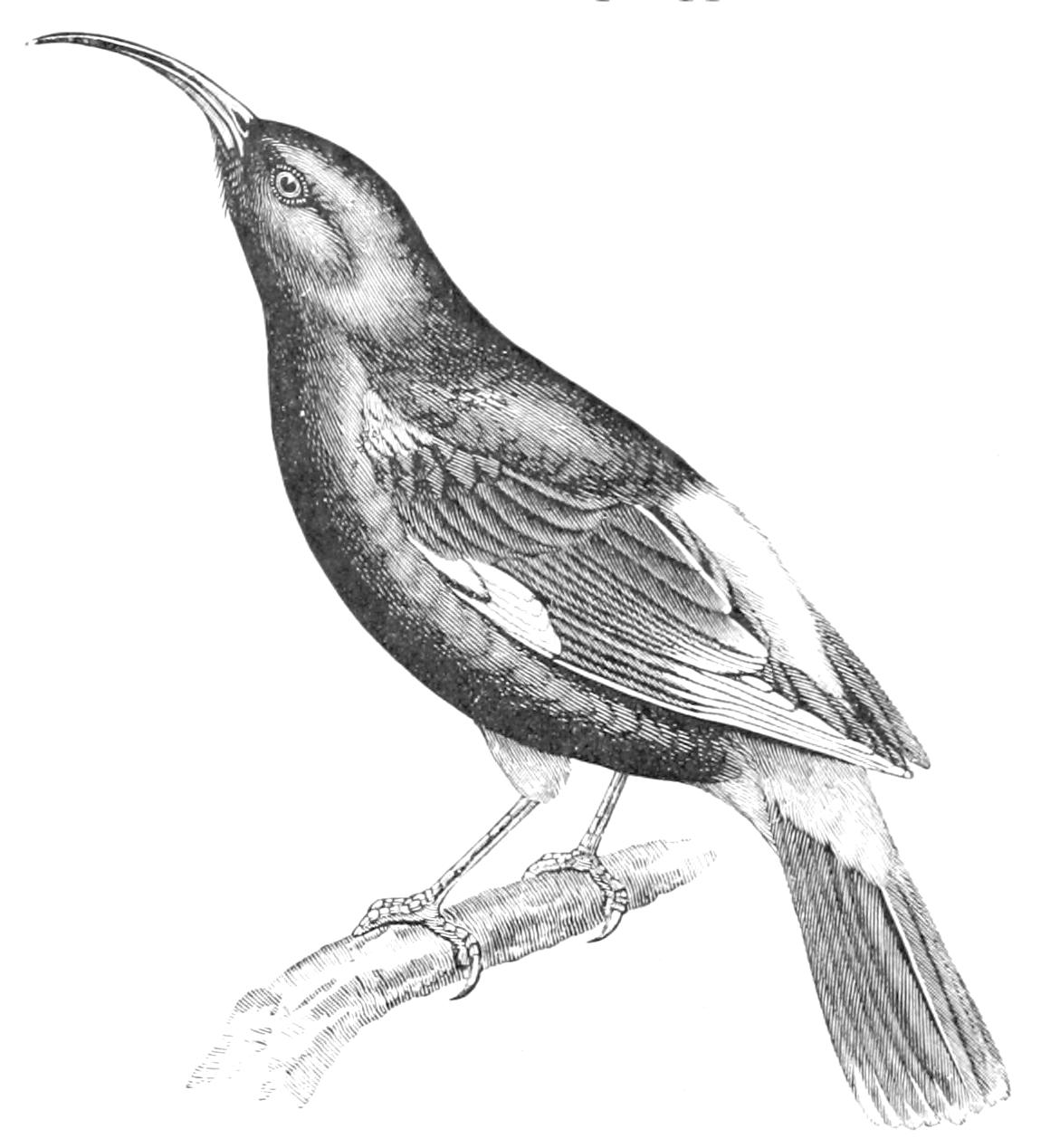
Fig. 133.–Mamo. Drepanis pacifica. × ½. (After Wilson and Evans, Aves Hawaiienses.)
Drepanis pacifica is black, with golden rump, upper and under tail-coverts, tibiae, and bend of wing, a little white shewing on the wings and tail; D. funerea is almost entirely black. Vestiaria coccinea is vermilion, with black remiges and rectrices, and some white on the wing-coverts; the bill and feet being red. Hemignathus and Heterorhynchus are greenish-olive above, with black lores, brownish remiges, and usually yellowish or creamy lower surface; but the head is occasionally yellow. Palmeria dolii has blackish plumage with scarlet or orange tips, a brilliant scarlet-orange nape, an orange space round the eye, similarly coloured tibiae, a grey throat, and a dirty white crest curving over the culmen. Himatione is generally yellow-green, with browner wings, yellow under parts, and sometimes black lores; the very closely allied Oreomyza may be duller or greyer, with buff and white below. H. sanguinea is crimson, with black and red wings, and black tail. Loxops, which in one species is dimorphic, is scarlet or orange, with brown on the remiges and rectrices; Chrysomitridops is yellowish-olive, with yellow crown and lower surface, black on the wings and tail, and bluish bill. Psittacirostra is greenish with yellow head; Rhodacanthis is reddish-orange with browner back, or in one case yellow head, while the female is green. Ciridops is red, with black throat, tail, and most of the wings, grey nape and cheeks; it approaches Cyanospiza ciris (p. 585) in colour.
Hens are ordinarily duller (often brownish or green), except in Vestiaria and Himatione sanguinea; the young are greenish-yellow relieved by black in Vestiaria, brown and buff in Palmeria and Himatione sanguinea, and assume the red or orange gradually.
These forms now chiefly haunt high damp hill-forests, though Vestiaria still occurs near the coast; they fly comparatively little, but spend much of their time creeping quietly and rapidly over the trunks and branches of acacia, "ohia," "mamane," and other trees, where they hunt for insects below the bark or on the leaves. None habitually seek the ground. The long-billed species delight in probing the decayed wood, and insert their mandibles into the crevices in search of food, which consists partly of lepidopterous larvae and spiders. Fruit is largely eaten, pods being split to obtain seeds, and honey is sucked either for its own sake or for the insects it attracts. The stomach at times contains grit. Most forms have a sweet song, the call-note being a reiterated "tweet" or metallic chirp; Rhodacanthis, moreover, whistles. Himatione virens makes a nest of roots and decayed leaves in trees, Loxops aurea apparently does the same; the former lays whitish eggs freckled and streaked with purplish-brown, but little is known of the reproduction. The splendid feather-cloaks of the Hawaiian kings, the "leis" (wreaths), waist-bands, and mask-decorations, were of old chiefly composed of the plumage of the "Mamo" (Drepanis pacifica), and the Iiwi (Vestiaria coccinea); but when the former became scarce, the lighter yellow tufts (p. 565) of the O-o (Acrulocercus) were utilized to pay the feather tax, though the cloaks were still called "Mamo." Himatione sanguinea was also laid under contribution, as was in later times the domestic cock.
Fam. XXVI. Meliphagidae.–The Honey-eaters, seldom bigger than a Thrush, are remarkable for their extensile quadruple or multiple tongue, which is frayed out latero-dorsally. They occupy the Australian Region, from which Ptilotis limbata alone crosses Wallace's line (p. 16) to Bali, and often have very restricted ranges. Two Sub-families may be recognised, Myzomelinae and Meliphaginae. The thin curved bill is commonly long, with prominent culmen and wide base; Melithreptes and Plectrorhynchus, however, have it short, and the latter straight. The maxilla is nearly always notched and serrated, several species of Philemon exhibiting a basal protuberance. The metatarsi may be long, as in Acrulocercus, or abbreviated as in Manorhina, the short anterior toes being partially connected; the wings are variable in length, Melithreptes possessing comparatively small secondaries, Anthornis an abruptly narrowed second primary. The tail also varies in size; it is much rounded in Melidectes and Meliphaga, square in Acanthorhynchus, emarginated in Anthornis, and particularly long and graduated with pointed rectrices in Acrulocercus and Chaetoptila–A. nobilis having the median pair produced and spirally twisted, A. apicalis the ends upturned. Pogonornis has strong rictal bristles.
The Myzomelinae are usually habited in scarlet and black, as in the Soldier-bird of Australia (Myzomela sanguinolenta), with or without white or yellowish below; some, however, are chiefly or entirely olive or greyish-brown, while the females generally differ from the males, and the former occasionally shew red when the latter do not. A second genus, Acanthorhynchus, or Cobbler's Awl, is brown, chestnut, buff, black, and white. In the Meliphaginae the sexes are commonly alike, and exhibit a mixture of brown, olive, yellow, black, white, grey, rufous, and buff; the under parts frequently, and the upper rarely, being streaked or spotted. Metallic hues are rare, but Anthornis has a purplish gloss on the head. Leptornis, Entomyza, Philemon, Melitograis, and Pycnopygius are instances of dusky or olive coloration with lighter lower surface; Prosthemadera and Certhionyx leucomelas are black and white; Plectrorhynchus is brown and white; Meliphaga is yellow and black, spotted and barred below. The Hawaiian Acrulocercus is black or brownish, with a little white on the wings or tail, and possesses yellow axillary tufts and under tail-coverts, save in A. braccatus, where the tufts are grey-buff, the tibiae are yellow, the throat is barred with white, and the lower parts are streaky. A. bishopi has yellow ear-tufts. Their close ally, Chaetoptila, of the same islands, is light brown and yellowish above, with white spots, and a black cheek-stripe; the under surface being white with brown streaks, and the rump and flanks ochreous. The neck- and breast-plumage is lanceolate and decomposed. Many species of Ptilotis have white or yellow ear-tufts; the male of Pogonornis possesses white erectile post-ocular feathers; that of Prosthemadera two gular patches of curled white filamentary plumes, which give it the name of Parson-bird, as well as pointed white feathers curving forward from the sides of the neck. In two members of Meliornis white fan-like shields spring from the cheeks; Glycyphila albifrons has a white circum-ocular ring; while many forms have peculiar cheek-feathers, fluffy chests, rumps or sides, and lanceolate or bristly plumage on the neck, cheeks, or throat. Naked blue, green, scarlet, yellow, lilac, pink, or whitish areas on the head, and pendant rictal or facial wattles, are frequent, especially in Meliphaga, Ptilotis, Entomyza, Philemon, Melidectes, Acanthochaera (Wattle-bird) and Melirrhophetes. The bill and feet vary from black to red, yellow, blue, or green.
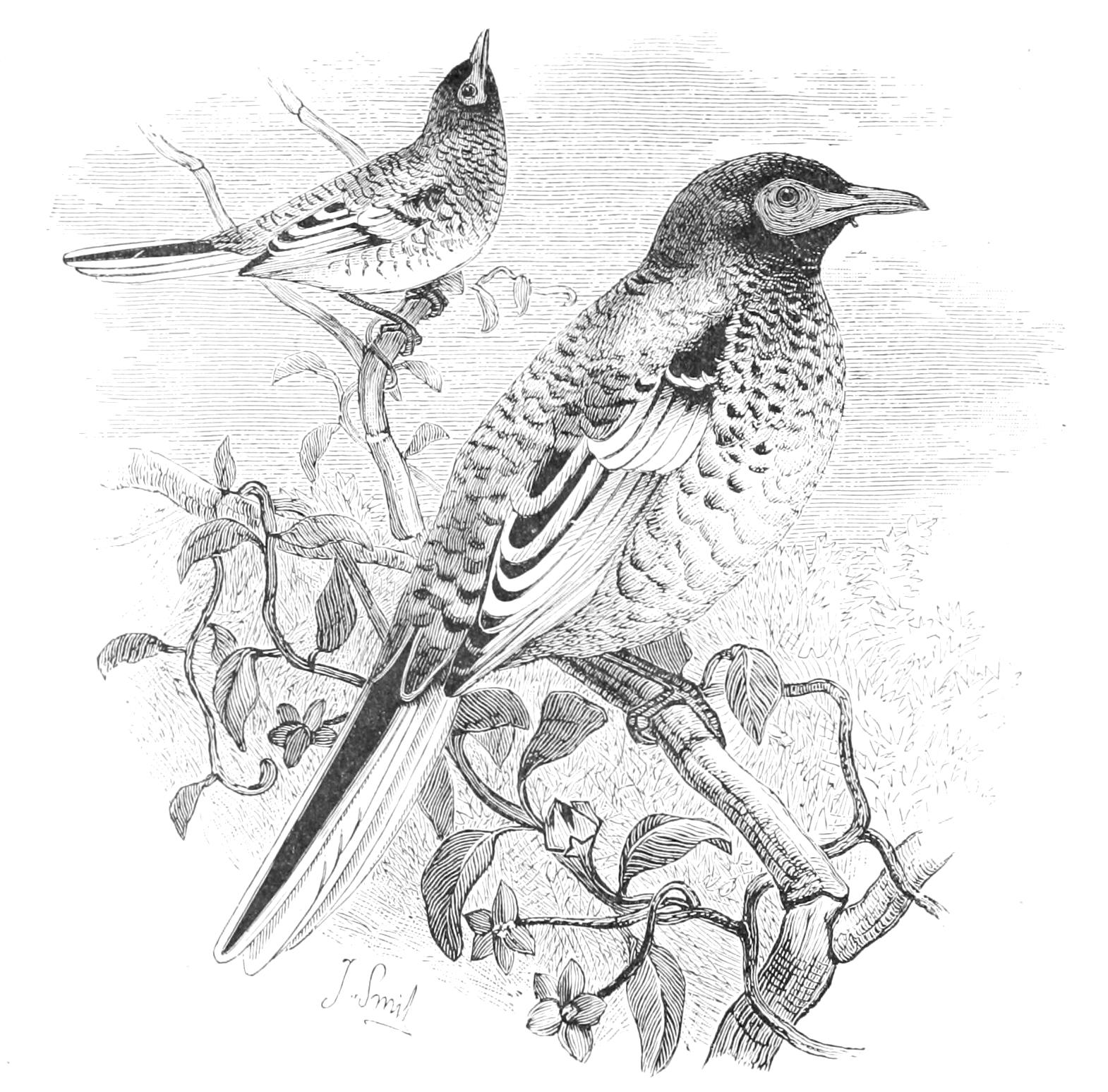
Fig. 134.–Warty-faced Honey-Eater. Meliphaga phrygia. × ½. (From Nature.)
The habits are fairly uniform, though certain species are comparatively shy. Small flocks often gather together, the haunts being dense forests, or open wooded country whether inland or littoral; some forms prefer the tree-tops, others low bushes and shrubs. These active, pugnacious birds dart about in zigzag fashion, or take powerful undulating flights, the tail meanwhile being frequently thrown back or expanded; at times they hover, or fall from aloft with closed wings.
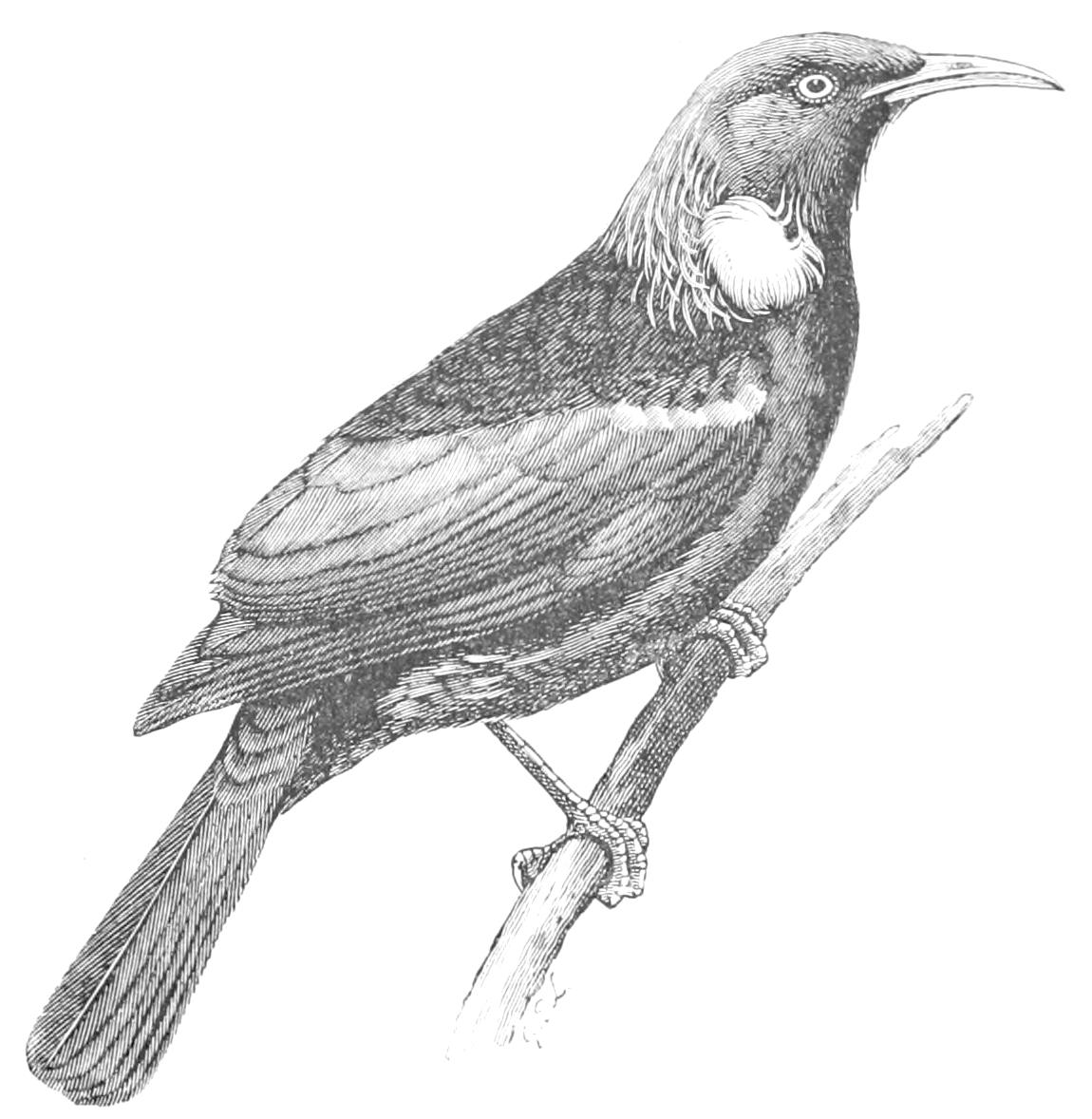
Fig. 135.–Tui. Prosthemadera novae zealandiae. × ⅓.
Constantly seen hopping among the boughs, or climbing and hanging to the twigs, in search of the insects which constitute so much of their diet, they occasionally feed upon the ground–especially in the case of Ptilotis; while Meliornis and Entomophila will dart after their prey like Flycatchers. Figs and bananas, with other fruits and buds, are also eaten; honey is sucked from the flowers of Eucalyptus, Acacia, Epacris, and the like, in considerable quantities, the insects it attracts being perhaps the chief object; and Philemon batters large insects upon the branches before swallowing them. The voice is commonly loud, rich, and shrill, but varies from a whistle or a pipe to a chirp; some species, however, are more quiet, others give vent to slow, plaintive cries, quickly reiterated notes, or comparatively harsh sounds. The Tui, or Parson-bird, utters a wild song, laughs, coughs, sneezes, and mimics generally; Acrulocercus gets the name of O-o from its harsh double call; Pogonornis that of Stitch-bird from its clicking cry, though it also whistles; while Philemon corniculatus is sometimes called "Four-o'clock," "Poor Soldier," or Pimlico, from its note. Anthornis, the New Zealand "Bell-bird," usually heard in chorus, has a voice like the tinkling of a silver bell.[303] The nest, normally a slight structure of twigs, roots, bark, grass, and spiders' webs, lined with woolly materials, fur, or feathers, is placed in bushes, trees, or even tall grass, and generally has the rim woven over a supporting fork. A few species, however, including the New Zealand forms, Pogonornis, Anthornis, and Prosthemadera, build a solid fabric of twigs and rough materials among the branches. The eggs, two, three, or rarely four in number, are buffish-white, salmon-coloured or, exceptionally, olive, with spots, freckles, zones, and occasionally lines, of red-brown, rufous, bright red, blackish and grey. Two or three broods are reared annually. Entomyza cyanotis, the Blue-eye, re-lines deserted birds' nests, or utilizes the top of that of Pomatostomus; Glycyphila modesta and G. fasciata make hanging domed fabrics. The mimicry between Philemon–called Friar-bird, Monk, or Leather-head, from the bare head and ruff of some species–and Mimeta has been already noticed (p. 543). Cloaks are fashioned from the Stitch-bird's feathers, as well as from those of the O-os (p. 564).[304]
Fam. XXVII. Zosteropidae.–The "White-eyes," so denominated from the white ring usually surrounding the eye, form a single genus, Zosterops, of doubtful position. They range through parts of the Ethiopian Region, with Madagascar and the Comoros, and occupy most of the Indian and Australian Regions, whence they reach to Amur-land and Japan. The straight or slightly curved bill has the maxilla serrated and nearly always notched; the metatarsus is of medium length; the outer and middle toes are partially united; the wings are rather short with little or no exterior primary; the tail is moderate, broad and square, or even emarginated. Dr. Gadow[305] pronounces the protractile tongue to be forked and smooth in Z. lateralis; Mr. Beddard[306] finds the margins folded, and the tip frayed out in Z. simplex and Z. japonica. The sexes are alike, the coloration being principally olive and yellow, relieved by brown, grey, fawn, or white. The habits are similar to those of the Meliphagidae; the eggs, however, are pale blue. Z. caerulescens, the New Zealand "Blight-bird," destroys the "American Blight" (Schizoneura lanigera), a scale-insect.
Fam. XXVIII. Nectariniidae.–The Old World Sun-birds, recalling the non-Passerine Humming-birds by their brilliant metallic coloration, are actually given the latter name in India, whence they extend through Southern Asia to Papuasia and North Australia. They also occupy the whole Ethiopian Region, while Cinnyris osea inhabits Palestine, C. brevirostris Baluchistan and South Persia, and an undetermined species the Muskat district in Arabia. Promerops is a doubtful member of the Family.[307]
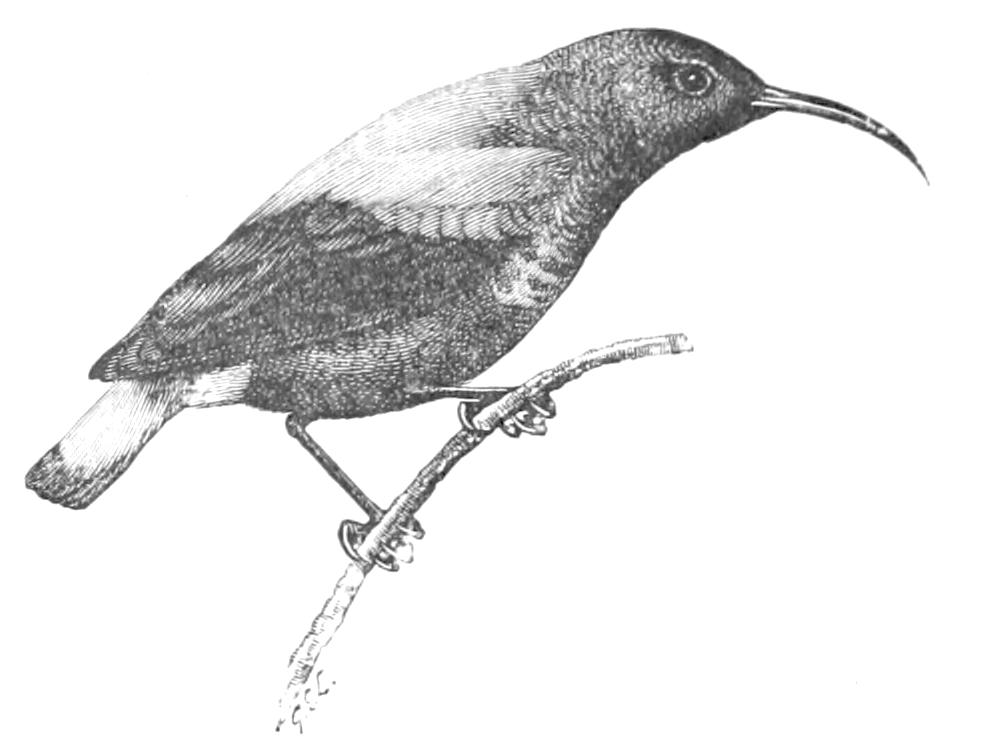
Fig. 136.–Splendid Sun-bird. Cinnyris splendidus. × ½.
The long slender bill, without bristles of any kind, is much produced and curved in Neodrepanis; both mandibles being terminally serrated, except in Promerops and Chalcoparia, of which the former has the maxilla notched. The extensible tongue is bifid, with each half frayed out medio-ventrally, save in Promerops, where it is a semi-canal with dorso-laterally frayed edges. The metatarsi are moderate, the claws curved and acute. Arachnothera has both the bill and the feet stouter. The more or less rounded wings are of medium length; the tail varies from square or nearly so to graduated, and has two narrow elongated median rectrices in the males of Hedydipna, Nectarinia, Anthobaphes, Aethopyga, Urodrepanis and Drepanorhynchus. That of Promerops is extraordinarily long and graduated in both sexes. Arachnothera chrysogenys has the loral region naked, and the male of Neodrepanis bluish circum-ocular wattles.
It is impossible to describe shortly the diverse coloration of the various species; some shew much green, black, brown, or olive; nearly all exhibit brilliant, if not metallic, red, blue, lilac, copper, yellow, or orange tints; a few are chiefly purple; many are longitudinally streaked below; in others the breast is white, or exhibits red or orange bands, while the fore-neck may be vermilion striped with lilac. The sides of the back frequently possess long downy feathers, and pectoral tufts are common. In Arachnothera both sexes are greyish or greenish, relieved by a little yellow or orange. Females, however, are usually sombre, the young being similar. The bill is black or brown, the feet vary in hue.
These small graceful forms, restless, though not shy, are rarely seen in companies, but usually in pairs; they frequent groves and forests up to an altitude of about a thousand feet, resorting to more open country and gardens when the shrubs are flowering. The food consists mainly of insects–sometimes taken on the wing–with their larvae and spiders; while the birds hop actively about, and cling to the branches and trunks of trees, like Tits or Creepers, or even to bushes and grass. They rarely hover before flowers as Humming-birds do, though frequently sucking honey. When feeding or singing the wings are often opened and shut alternately. The quick, direct flight is accompanied by rapid pulsations of the pinions, and the males chase their rivals angrily. The shrill, but pleasing and varied notes recall those of the Willow-Warbler. The pear-shaped or oval nests, woven or attached by cobwebs to the ends of boughs, to the under surfaces of leaves, or more rarely to reed-stems, are composed of grass, moss, roots, and the like, lined with hair, feathers, and down, and usually have a projecting porch. Beneath are attached as decorations leaves, twigs, lichens, shreds of bark, paper, and cloth, wood-borings, or caterpillars' excreta. Arachnothera magna, at least occasionally, builds an open nest. The two or three eggs are commonly greenish- or brownish-grey, with purplish, reddish-brown, yellowish, or dusky dots and spots; some, however, are whiter, with blackish markings, dark zones, or hair-streaks; while those of Arachnothera magna are brownish, very thickly speckled with purplish-black. Promerops cafer makes a cup of grass, fibres, and softer materials in forks of bushes, and lays creamy eggs like those of Buntings, with wavy lines or irregular blotches of dark brown or purplish.
Fam. XXIX. Dicaeidae.–The "Flower-peckers" inhabit the Indian and Australian Regions as far eastwards as the Low Archipelago, a few possibly kindred species occupying West Africa. The bill is usually short, broad, and depressed, but is especially slender in Pholidornis, stout and Finch-like in Prionochilus; while both mandibles shew minute terminal serrations. Feathers cover the nostrils in Pardalotus, and in life Lobornis has three small white rictal outgrowths. The tongue is separated into four semi-tubular fringeless projections. The metatarsus is never long; the wings are fairly so; the tail is generally short and even, but is rounded in Prionochilus vincens, longer in most Papuasian forms, and sometimes graduated, as in Pristorhamphus. Many species exhibit vivid combinations of blue or purple with black, relieved by a scarlet or an orange head, rump, or chest-patch, the lower surface being yellow, greyish, or greenish-white; some, however, replace the blue shades by green, brown, or olive; others are quite plain; and Melanocharis unicolor is perfectly black. The Diamond-bird (Pardalotus) has scattered white dots above, and scarlet or yellow tips to the primary coverts; Dicaeum often shews a longitudinal black band below; while bars and streaks occur not infrequently. The bill is blackish, or in Dicaeum erythrorhynchum reddish. The female is almost invariably duller.
These small birds frequent woods and gardens, the little flocks often haunting lofty trees near rivers; they hop briskly among the boughs, dart from bush to bush, creep about and cling like Tits, and utter a long, low warble, or in Pardalotus a harsh monotonous piping note. The food consists of insects, varied by spiders, fruit, buds, seeds, and perhaps honey. Dicaeum and Prionochilus suspend from some twig a domed, pear-shaped nest of white cottony material, frequently covered with grass or moss, and decorated with caterpillars' excreta; Pardalotus chooses old Swallows' nurseries, or holes in trees and walls, or even tunnels a short way into banks, making within a spherical fabric of roots, grass, bark, and feathers. The two to five eggs are commonly white, but in Prionochilus (Piprisoma) squalidus they are redder, with dense brown-pink or claret-coloured blotches or specks.
Fam. XXX. Certhiidae.–The Creepers, a small, though widespread group, occupy most of the Palaearctic and Nearctic Regions; Africa from Benguela to Mashona-Land; Australia and New Guinea. The bill is long and generally decurved, but shorter and straighter in Climacteris; while nasal and rictal bristles are absent. The metatarsi are of medium length and slender, though stouter in Salpornis; Tichodroma and Climacteris have the scutes fused; and the toes–especially the hallux–have long, curved claws. The wings vary from moderate and rounded to elongated and pointed; the tail is usually short and square, or very nearly so, but has stiff, graduated, acuminate feathers in Certhia. The coloration of both sexes is brown, black, rufous, buff, grey, and white, except in Tichodroma, which exhibits crimson wing-patches on its grey, black, and white plumage. Bars and spots are frequent, particularly beneath.
The majority are tame birds, inhabiting thinly wooded districts, often close to dwellings; but the European and Asiatic Tichodroma muraria, which has strayed to Britain, haunts mountain cliffs, and, when on migration, walls also. They utter shrill cries, or, more commonly, low reiterated notes, which in our Creeper (Certhia familiaris) are varied by a sweet and fairly loud song; the food consists of insects and their larvae, ants, and spiders. Beginning at the bottom of a trunk the birds work actively but jerkily upwards in zigzags or spirals, flitting from the higher branches to the base of another tree; sometimes, however, they take protracted, undulating flights, or accompany flocks of Tits in winter. Certhia uses the rigid rectrices as Woodpeckers do (p. 457), though the soft-tailed forms also climb well, while Climacteris is exceptional in spending much time hopping or shuffling along the ground. Seeds of conifers occasionally vary the diet. The nest, composed of twigs, with the addition of grass or moss, and lined with bast, hair, wool, or feathers, is placed behind loose bark, under tiles, in crevices of trees or walls, in piles of bricks, hollow branches, or even the base of large birds' habitations. The three to nine eggs are ordinarily white with red and lilac spots; but in Climacteris the ground-colour is sometimes reddish, in Salpornis the spots are blackish. The last-named fixes a cup-shaped fabric of leaves, bark, and cobwebs to some horizontal bough.
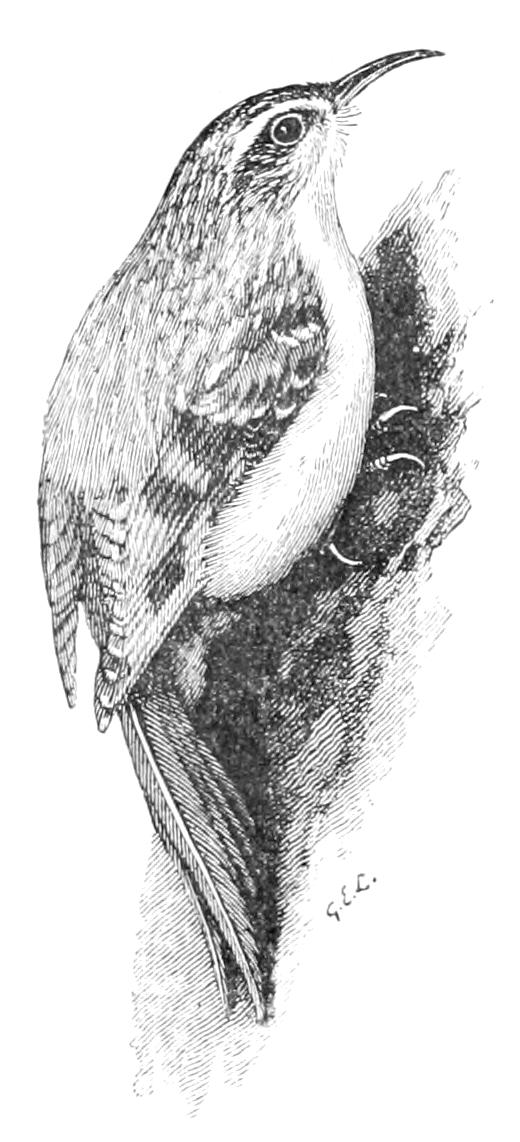
Fig. 137.–Tree Creeper. Certhia familiaris. × 7⁄12.
Fam. XXXI. Coerebidae.–The Quit-quits have the extensible tongue bifid, and frayed out terminally. The bill may be conical, but is usually slender, with a notch and sometimes with rictal bristles, while the long maxilla is hooked in Diglossa and Diglossopis; the metatarsi, wings, and tail are moderate, the last being sometimes forked. These small, active, and restless birds frequent bushy places and the outskirts of forests, from South Florida to the Bolivian Andes and South-East Brazil, several species being peculiar to the Antilles, and Certhidea to the Galápagos. Though companies are seldom formed, the flight and habits are Tit-like, and individuals are often seen hopping about or clinging to the branches in search of the insects which, with fruit, form the usual food. They probe the flowers in company with Humming-birds, and probably suck the honey, while some forms dart after flies like Flycatchers. Several have a fine voice, but the common note is a feeble "quit-quit." The domed nest, made of grass, moss, roots, and fibres, occasionally has a projecting porch, and is frequently lined with down or feathers; the two to four eggs being white or greenish-blue, with dull-red or yellowish-brown blotches or specks. In the Antilles Certhiola weaves a domed structure of similar materials, hair, and spiders' webs, between the outermost twigs of bushes. Many nests are built without being used.
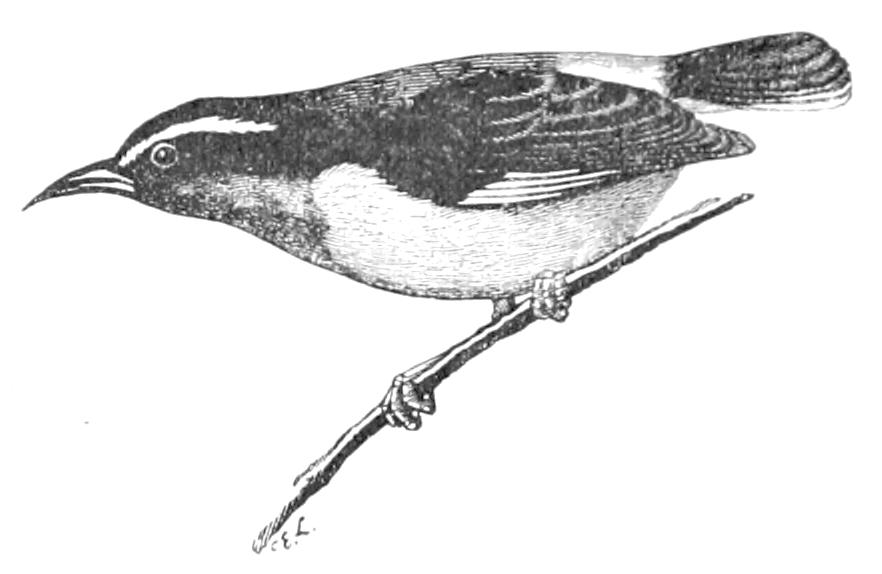
Fig. 138.–Sugar-bird. Certhiola flaveola. × ½.
The coloration varies from black, grey, or purplish, relieved by rufous and white, to brilliant blue, purple, or green, with the quills only black, or with further yellow, chestnut, and exceptionally scarlet, decorations. Uniform black, or olive and brown hues are unusual, save in females, which, however, are often bright green, with the addition of a little blue or yellow.
Fam. XXXII. Mniotiltidae.–The "American Warblers," almost replacing the Sylviinae in the New World, are a somewhat heterogeneous assemblage of rather small birds, of which Granatellus is perhaps Tanagrine. They frequent localities of all descriptions in North and South America, being commonest in the middle portions. Teretistris is peculiar to Cuba, Leucopeza to St. Lucia and St. Vincent; Ergaticus occupies the Central American highlands, while two or three species wander to Greenland.
The bill is usually slender and straight, but varies in length and curvature, that of Setophaga and Myiodioctes being broad and depressed with bristly gape, that of Icteria (doubtfully referred here) very stout and compressed, and so forth. Other species also exhibit bristles, or have notched beaks. The tongue is frequently bifid and fringed in Dendroeca, and in D. (Perissoglossa) tigrina is semitubular. The metatarsi are naturally longest and strongest in the more terrestrial forms, such as Geothlypis and Siurus; Icteria has partly feathered legs, Mniotilta particularly long toes. The wings may be concave and roundish, as in Leucopeza and Geothlypis, or elongated and pointed, as in Protonotaria and Peucedramus; the moderate tail is square, rounded, or emarginate, or, as in Setophaga, broad and graduated. The general coloration is olive-green, grey, or slaty-blue, with yellow or rarely orange under parts; chestnut marks, white wing-bands, and the like, occasionally relieving the plumage. The head is often particularly dark or streaky. Mniotilta exhibits black and white stripes; Ergaticus shews chiefly crimson and white; Granatellus is grey, black, and white above, but red and white with black collar below. Setophaga, the "American Redstart," is mainly red and black, or red and plumbeous; Cardellina is grey, black, and white with crimson cheeks and throat; Siurus has olive-brown upper, and whitish under parts, with dusky striations. The bill is black or brown, commonly with pinkish, yellowish, or bluish mandible.
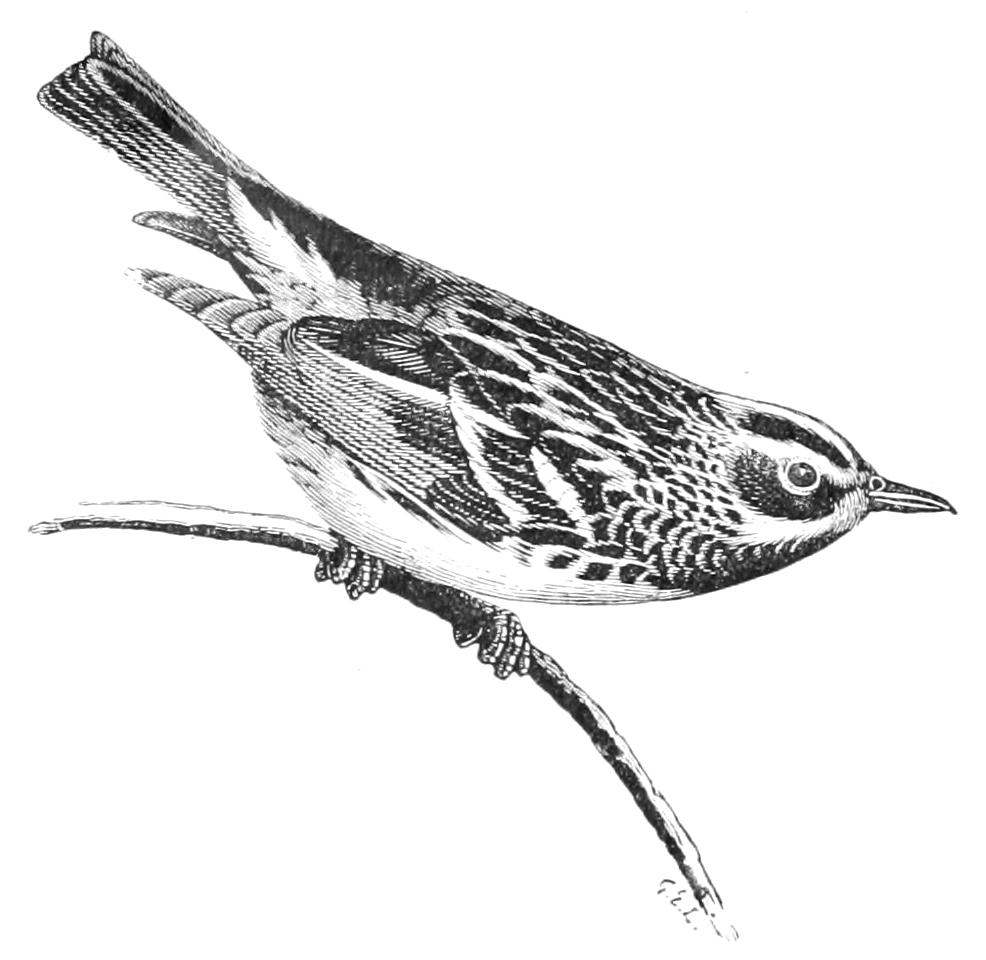
Fig. 139.–Black-and-White Warbler. Mniotilta varia. × ½.
These active, restless, and often shy birds either seek their food, consisting chiefly of insects and their larvae, worms, spiders, and even molluscs, upon the ground or upon the bark of trees. Many forms resemble Tits in their actions; Mniotilta and others ascend the trunks spirally like Creepers; Setophaga and its allies–and exceptionally Dendroeca–sally after insects like Flycatchers; D. palmarum and Siurus run along with the tail in motion, the former recalling a Titlark, the latter gaining, from its appearance and habit of wading, the name of Water-Thrush. The flight is usually swift, easy, and graceful, yet brief and frequently undulating; Myiodioctes and Setophaga flit about alternately opening and closing the rectrices. Fruits, including conifer- and grass-seeds, vary the diet. Small parties collect in winter. A few species, such as Basileuterus, Setophaga, Myiodioctes, and Siurus have fine clear songs, but the usual utterances are feeble warbles, sweet whistles, reiterated "chirrups," or mournful trills. The majority build their cup-shaped nests in trees, bushes, and thickets generally, Dendroeca in some districts choosing a fir; they are made of grass, bark, leaves, roots, moss, hair, fur, lichens, and spiders' webs, or even twigs, sedges, and feathers, and contain from two to six creamy or, exceptionally, greenish or purplish eggs, more or less spotted or blotched with red-brown, grey, and lilac, or sometimes, as in Myiodioctes, scrawled with black.
Fam. XXXIII. Tanagridae.[308]–The Tanagers form a New World group, hardly distinguishable from the Fringillidae, except by their more feeble conformation and their exposed nostrils. The coloration is often particularly gorgeous, but their habits are comparatively little known. The bill varies much in length and thickness, the hooked tip being highly developed in Lamprotes and Sericossypha, while Procnias has a wide Swallow-like gape. The metatarsi are short and stout; the toes are large, with sharp curved claws in Lamprotes and Sericossypha; the wings are moderate and somewhat pointed, being unusually long in Procnias; while the tail may be very short as in Euphonia, but is rarely long and graduated as in Cissopis, and only occasionally forked.
These birds are characteristic of the forests and wooded country of the Neotropical Region, whence four species of Pyranga extend to the United States, and two reach Canada and British Columbia respectively; several forms, moreover, are peculiar to the Antilles. They are chiefly of small size, Euphonia possessing the least and Pitylus or Saltator the largest members of the Family; the sexes are commonly similar, but the female is often duller, or even quite different from the male, as in Rhamphocoelus and Pyranga. A short crest occurs rarely, as in Eucometis and Stephanophorus. The prevailing colours are black and red or uniform red in Pyranga, Phlogothraupis, and most species of Rhamphocoelus and Calochaetes; blue or purplish-black and yellow in Buthraupis, Iridornis, and their nearest allies; blue and black in Procnias and Pseudodacnis; orange or yellow, with black and white in Spindalis and Lanio; black and white in Lamprospiza and Cissopis; olive and brown in Chlorospingus; chestnut and brown in Orchesticus; grey, olive, yellow, or green, with more or less blue in Thraupis (Tanagra). Buarremon and several other forms are comparatively dull; Tanagra (Calliste) exhibits a beautiful mixture of all the above hues; Euphonia is also varied, but lacks scarlet tints; Chlorochrysa is brilliant green, relieved by orange, chestnut, blue, and black. The bill may be red, black, yellow, leaden or horn-coloured. Roughly speaking, Tanagra contains sixty species, Euphonia, Chlorospingus, and Buarremon each over thirty.
The flight of these bold, lively, and restless birds–often met with in small parties–is Finch-like and not uncommonly brief; the song, frequently heard in chorus, is mellow and pleasing, accompanied by chattering, whistling, and chirping notes; the diet consists of insects and fruits, even the latter being occasionally snatched upon the wing; while worms, larvae, and molluscs are eaten, and some species scratch for food among fallen leaves. The nests are usually shallow fabrics of grass, roots, fibres, moss, and lichens, lined with hair or down; twigs, broad leaves, or fern-stems being commonly added below: they are sometimes placed in forks of trees or bushes, if not at the ends of branches; sometimes in masses of creepers, or even upon the ground; that of Pyrrhuphonia is domed, while that of Rhamphocoelus brasilius is built in tall grass in marshy places. The two to four eggs are white, bluish, greenish, grey, salmon-coloured, or rich brown, being at times uniform, but generally blotched, spotted, freckled, lined, or scrolled with brown, lilac, red, purple, or black. Procnias is said to lay three or four white eggs in holes in trees or in the soil, upon a bed of roots and plant-stems.[309]
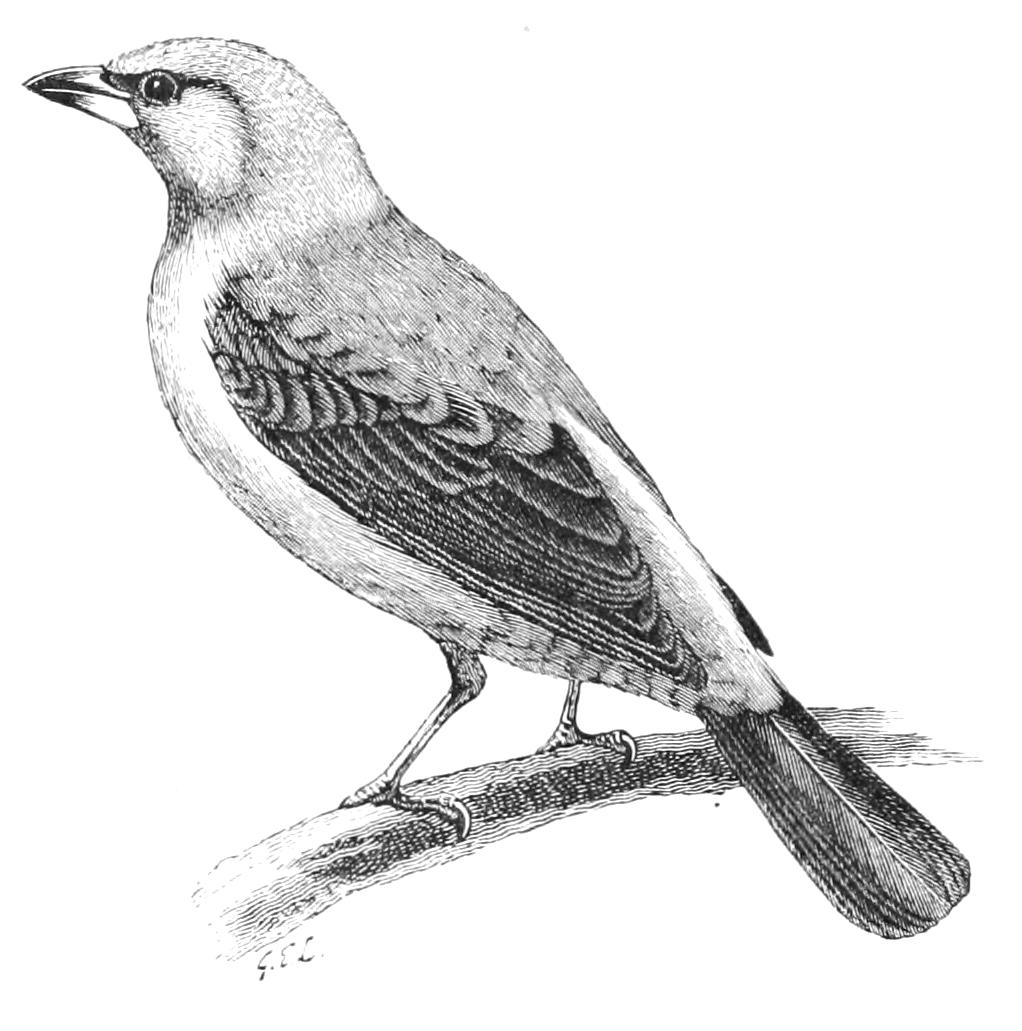
Fig. 140.–Brazilian Tanager. Rhamphocoelus brasilius. × 9⁄20.
Fam. XXXIV. Ploceidae.–The Weaver-birds, closely allied to the above, and hardly to be distinguished from the Fringillidae except by the tenth primary being distinctly developed, may be divided[310] into the Sub-families Viduinae, occurring in the Ethiopian, Indian, and Australian Regions, in which this quill is small and falcate, and Ploceinae, peculiar to Africa and its islands–with the exception of the genera Ploceus and Ploceëlla of the Indian Region–in which it is larger. The former group includes the long-tailed Widow-birds, the red-beaked Wax-bills, and so forth; the latter the more typical Weaver-birds; Africa furnishing by far the greatest number of species. The bill is normally strong and conical, but is unusually long and slender in Emblema, and particularly stout with ridged culmen in Amblyospiza; the maxilla may be toothed, as in Pyrenestes, or festooned, as in Spermestes. The metatarsus is moderate, and the hind claw sometimes lengthened, as in Icteropsis. The rounded or pointed wings have very long secondaries, and the tail shews a slight fork; while in the breeding season the four median rectrices in the males of Vidua and several allied genera are extraordinarily elongated, being then either broad or tapering, and reduced to threads at the extremity, or bare-shafted with racquet tips.[311] Crests are uncommon, hair-like plumes on the nape more frequent, while Pyromelaena and Urobrachya have a neck-frill in summer.
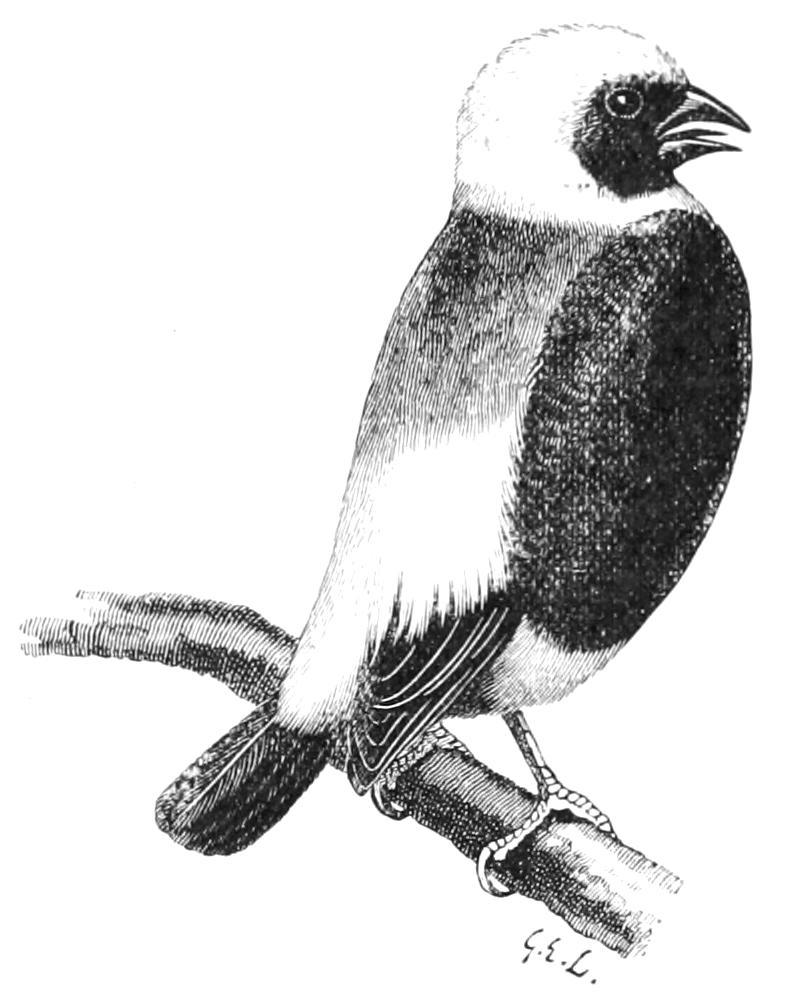
Fig. 141.–Weaver-bird. Pyromelaena flammiceps. × 7⁄12.
The coloration of these rather small birds is most striking, though the females are usually much duller than the males, which have in some cases a sober winter garb. Vidua principalis is black and white; Penthetria ardens is black with scarlet gorget; Philetaerus socius is brown, buff, black, and white; Zonaeginthus bellus is brown above, with transverse black lines and crimson rump, but silver grey below with black bars; Hypochera ultramarina is entirely purplish-blue; Sporaeginthus amandava, the Amadavat, is chiefly crimson with white dots; Munia oryzivora, the "Java Sparrow," is blue-grey and black with white cheeks. M. punctulata, the Cowry- or Nutmeg-bird, is brown, with white streaks above and spots below, a yellow rump, and a white middle to the under parts. Poëphila mirabilis, one of the Grass-finches, shews a beautiful combination of pale green, blue, lilac, scarlet, yellow, black, brown, and white; Neochmia phaëton is crimson, brown, and black; Foudia is generally crimson and black; Hyphantornis cucullatus is golden-yellow, black, and chestnut; Ploceus baya is yellow and brown; Textor albirostris is entirely black. The bill is not uncommonly coral-red, as in Estrelda and other "Wax-bills;" but it varies from red to horn-coloured in Vidua, and may be whitish, as in Textor albirostris, as well as black, grey, rose-tinted, brownish, orange, or nearly blue. The feet may also be red, brown, purplish, dusky, or flesh-coloured.
Weaver-birds are generally tame, and often approach habitations; the larger species frequenting woods and gardens, open country, sugar-cane fields, or reed-beds, but many of the smaller preferring grassy flats, bushy places, or even stony hills. They are usually social, and frequently pugnacious. The flight, though somewhat brief and heavy, is fairly rapid; Chera and Vidua rise with arched tail, and hover with flapping wings, at times soaring almost out of sight to descend again with great velocity. Sycobrotus climbs especially well, Donacicola hangs to the reeds like a Bunting, and indeed it is doubtful whether the Australian forms are not really generalized Finches. The usual utterance is a harsh churr, a shrill piping cry, a chattering or a twittering noise, often preceded by a single mournful note; but some species sing fairly well in chorus. The food, generally procured upon the ground, consists mainly of seeds, but is varied by insects–occasionally taken on the wing,–fruits, and flowers; while the birds play havoc with rice and other crops, often clinging to the stems until they have eaten every grain from the head.
The nest is almost invariably a large mass of roughish grass or flags, bristling with the thicker ends of the stalks; it is usually lined with finer stems, but sometimes with feathers, down, and wool, while sticks, twigs, roots, and the like may be added exteriorly. The fabric is normally "retort-shaped," that is to say, globular with a "spout" or tubular passage, which curves downwards either from the middle or from the top of one side; but some of the structures resemble flasks placed horizontally; others have little or no spout, or hang by a sort of rope; and occasionally the materials do not quite meet above. Weaver-birds, especially the more typical species, commonly build in colonies, the most remarkable instance being that of Philetaerus, where an umbrella-shaped mass of sticks and straw is formed among the branches of a tree, and in its flat under surface holes for as many as three hundred nests are excavated. Textor makes a somewhat similar joint fabric. In certain cases the hen is said to sit in the roughly-fashioned shell, and to receive the thin ends of the straws from her mate, as he, clinging to the outside, pushes them through with his beak; she then passes them through to him again, and so the process is repeated in true webster fashion. An inner partition is often made to prevent the eggs from rolling out. The structures are placed in trees or bushes, frequently overhanging water, in sugar-canes, reeds, foundations of Eagles' eyries, or–especially by the smaller species–in long herbage. Exceptionally they are found under eaves. Ploceipasser mahali makes two "spouts," Ploceus baya counterpoises its pensile nursery with lumps of clay. The males add to the fabric after their consorts begin to incubate, and are asserted to make nests to sit in; the hens occasionally lay together, though the cocks are not proved to be polygamous. Munia, Stictospiza, Sporaeginthus, and in fact most Indian and Australian forms, deposit from five to seven dull white eggs; Ploceus lays two of a like description; Ploceëlla two, which have a whitish or greyish ground with brown frecklings; the Ethiopian species about five, either plain white, blue, or green, or of the same colours, spotted and blotched with red or purplish-brown. In nests of Hyphantornis and Pyromelaena very diverse specimens are often found.
Fam. XXXV. Icteridae.–This New World group comprises the "American Orioles" or "American Starlings," which are certainly not Orioles, though analogous to the Starlings, and allied through Dolichonyx to the Buntings. From the Fringillidae they are distinguished by the more elongated bill, which has no notch, and by the absence of rictal bristles. Dr. Sclater[312] recognises five Sub-families: Cassicinae, with long, straight, and often large bills, widening to a frontal shield; Agelaeinae, where they are conical with flattened culmen, being shortest in Dolichonyx and Molobrus; Sturnellinae, where they are more slender; Icterinae and Quiscalinae, where the culmen is rounded, the length and curvature varying more than elsewhere. Aphobus and Curaeus have grooved mandibles, Gymnostinops a naked space at their base, Clypeïcterus a horny swelling there. The legs are stout, being long in the terrestrial Agelaeinae, Sturnellinae, and Quiscalinae, and not much shorter in the Icterinae and Cassicinae; Dolichonyx has the middle toe, and the Sturnellinae the hallux elongated. The wings are long or moderate, being often pointed with far-extended outer secondaries in the Sturnellinae. The tail varies in length and form, but is much graduated in the Quiscalinae (Boat-tails), which usually carry it in flight with the outer feathers uppermost; it has acuminate rectrices in the Sturnellinae, Leistes, and Dolichonyx, while in the last-named it is forked. Cassiculus, Eurycorystes, and some species of Ostinops have crests, the male of Cassidix a neck-frill, Lampropsar erect frontal plumes, the Sturnellinae bristly crown-feathers, Hypopyrrhus, Curaeus, and Aphobus lanceolate feathers on the head. Gymnomystax possesses naked orbits.
The Cassicinae, or Cassiques, are sometimes uniform black, sometimes black relieved by chestnut, yellow, green, or scarlet; the bill being frequently white, instead of the usual black or brown. The Agelaeinae are generally black, varied with red and yellow, Dolichonyx oryzivorus, the Bobolink, being, however, black, brown, buff, and white, with a duller plumage in winter. The Sturnellinae are brown, variegated with black; having scarlet or canary yellow under parts, and in Sturnella magna, the "Meadow-Lark," a black gorget. The Icterinae (all but one of which belong to the extensive genus Icterus) are glossy black, with yellow, bay, or orange patches–especially upon the rump and lower surface–and often some white on the wing. The Quiscalinae are black, occasionally with metallic gloss, and scarlet or brown markings. The females are commonly similar to the males, especially in the Cassicinae, but are sometimes comparatively sombre. Agelaeus phoeniceus, the "Red-winged Starling," several males of which have been captured in Britain, Icterus baltimore, the "Baltimore Oriole" and Quiscalus versicolor, the "Crow-Blackbird," are good examples of their respective groups. The curious resemblance of Sturnella and Macronyx has already been mentioned (p. 500).
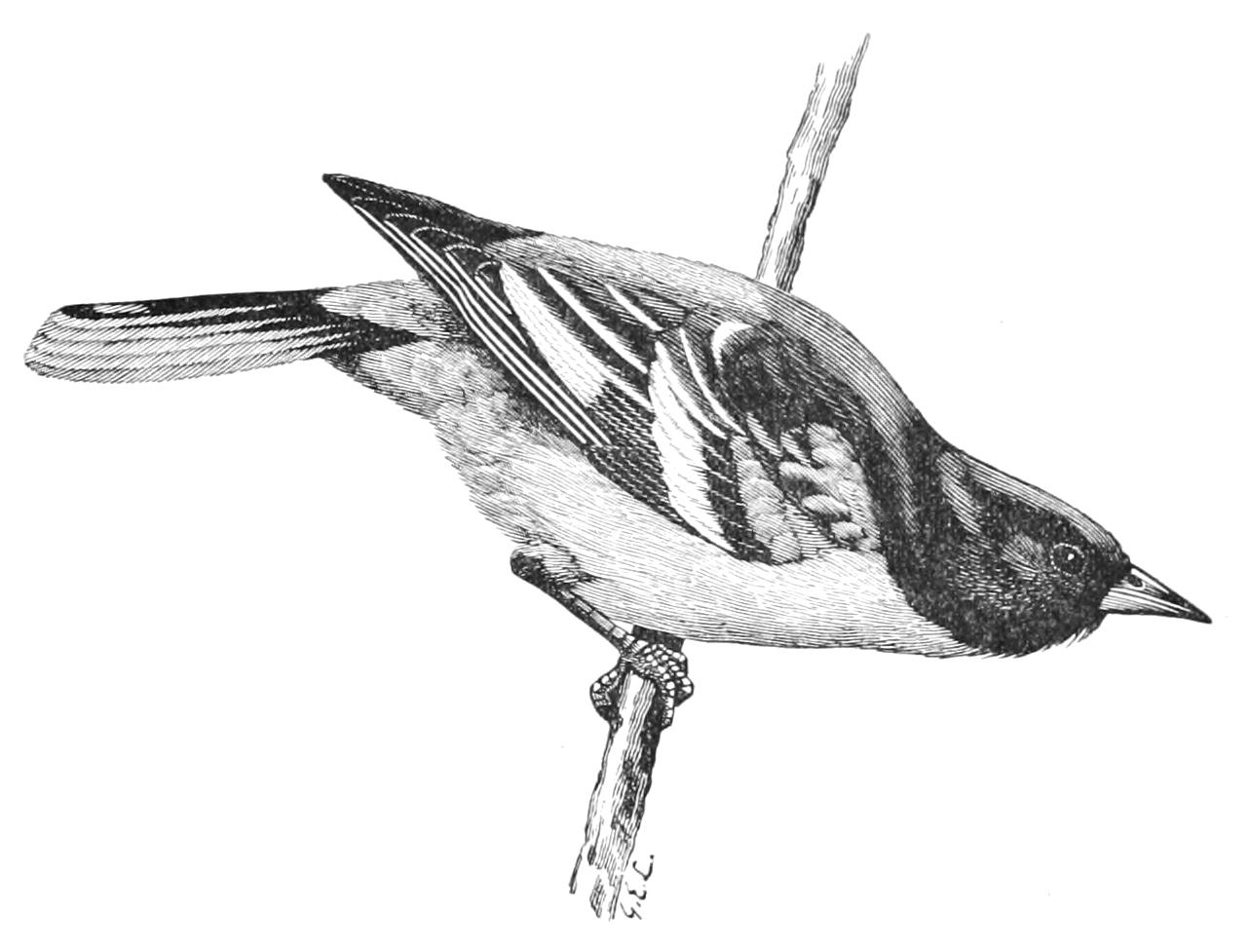
Fig. 142.–"Baltimore Oriole." Icterus baltimore. × ½.
Some of the Family are large birds for Passeres, Gymnostinops, for instance, being the size of a Rook; they are commonly gregarious, and frequent forests or wooded country, the Agelaeinae and Sturnellinae in particular preferring open grassy places and marshes, and all seeming fond of the neighbourhood of water. The Cassicinae only range from South Mexico to Paraguay and Bolivia; but the other Sub-families occupy most of America, except the extreme north, the Quiscalinae extending to Chili and Argentina, the Sturnellinae to Patagonia. Several species are peculiar to the Antilles. The flight is sufficiently strong and swift, flocks of Agelaeus and Quiscalus performing evolutions like Starlings; while these forms, Dolichonyx, Scolephagus, Xanthocephalus, and others roost in huge companies on migration. These lively, active, and fairly tame birds differ considerably in habits, Dolichonyx sitting continually on fences, clinging to plant-stems, or hovering in the air, Sturnella sailing or fluttering with jerky movements, the Icterinae and Cassicinae being particularly accustomed to perch, and many forms walking well or even gracefully. The members of the genus Icterus have melodious voices, those of I. vulgaris and I. baltimore being especially rich and varied; they are therefore favourite cage-birds. Dolichonyx, perhaps the finest of American songsters, often sings in chorus; Sturnella produces tuneful, wild, but not powerful notes; the Cassicinae utter loud discordant cries or sweeter strains; while many forms chatter, chuckle, squeak, scream, or whistle more or less harshly, whether in the air, in the trees, or on the ground. The food in the breeding season consists almost entirely of insects, their larvae, and small molluscs; but fruit is also eaten, and havoc wrought in maize- and corn-fields, Quiscalus even pulling up the shooting blades. The terrestrial species often scratch amongst the soil, but the Icterinae and Cassicinae rarely feed upon the ground.
The Agelaeinae build cup-shaped nests of grass, sedge, or rushes, sometimes lined with hair, in bushes or reeds, generally in damp or marshy spots; and lay five or six white, drab, greenish, bluish, or reddish eggs, with purple, black, red, or brown blotches, dots, and lines: the Quiscalinae deposit similar eggs in rougher structures of twigs, grass, and the like, placed in tree-forks or bushes. Both these groups often form societies. Sturnella hides its deep fabric in grass or rushes, the eggs being speckled rather than spotted; the Icterinae, or "Hang-nests," usually weave pensile nests of plant-stems, tendrils, grasses, or even rags, lined with wool, down, and so forth, which are rarely domed, and generally contain five or six eggs of a more delicate colouring than those of their kindred, varied by marblings, zigzags, streaks, and spots of brown, purple, black, or red. The Cassicinae commonly join in colonies and hang their elaborate, purse-like nurseries of grass or palm-fibres, Tillandsia, Bromelia, or lichens, lined with feathers, from branches above water; the two to five eggs are plain white, or greenish- bluish- or reddish-white, blotched, dotted, dashed, or scrawled with purplish- or reddish-brown and black.[313]
The gregarious Cow-birds (Molobrus), included in the Agelaeinae, lay eggs varying from white to pinkish, greenish, bluish, or brownish, often spotted or streaked with red, brown, and grey; one or more of these are by most species foisted in Cuckoo fashion upon other birds, the young of which disappear at an early date. It is a curious fact that M. rufo-axillaris is ordinarily parasitic on its congener M. badius, which itself seizes and uses other birds' nests. Many eggs are destroyed by the males, or are dropped promiscuously by the females, several of the latter often laying together. Cow-birds perch on cattle or follow the plough for insects, and utter ringing screams in concert.[314]
Fam. XXXVI. Fringillidae.–The Finches are small birds very closely allied to the Tanagridae and the Ploceidae; while the Buntings are here included in the Family, though often separated as Emberizidae. The most evident points of distinction in the last-named are the considerable deflection of the posterior portion of the angular gape and the bony knob often present on the palate; a gap, moreover, commonly occurs between the edges of the maxilla and the mandible. Extreme forms are thus easily recognised, but it seems almost impossible to draw an exact line of demarcation, even when the more Lark-like nest of Buntings and their streaky eggs are taken into consideration. The Fringillidae predominate in the Palaearctic Region, but are fairly plentiful elsewhere, except in the Australian Region, whence few are as yet recorded; many forms, however, have very limited ranges; while some are peculiar to certain islands, as Geospiza, Camarhynchus, and Cactornis to the Galápagos, Passer jagoënsis to the Cape Verds, Chaunoproctus to the Bonin Islands and Telespiza to the Laysan group, Nesospiza to Tristan da Cunha, Melopyrrha to Cuba, Rhynchostruthus and Passer insularis to Socotra.
The bill is usually stout and cone-shaped, often with a notched maxilla, occasionally with a ridged culmen; it is enormous in Geospiza, Camarhynchus, Chaunoproctus, and some other forms, and highly developed in Coccothraustes, Pyrrhula, and elsewhere; but is at times either remarkably short, or longer and more slender, as in Cactornis, Chrysomitris, and Carduelis. Frequently it is curved, with overhanging tip, while a peculiar crossing of the mandibles at their extremities marks the genus Loxia. An excessive summer growth has been especially noticed in Redpolls, which is worn down by hard food in winter. The beak is seldom abnormal in Buntings. The metatarsus is moderate; but in Calcarius, Plectrophenax, Nesospiza, and Chamaeospiza the hind claw is elongated, as is the mid-claw in Phonipara. The wings, which have a minute outer primary, vary from very long, as in Hesperiphona, to short as in Passer, and from pointed, as in Plectrophenax, to rounded as in Ammodramus; the secondaries are shaped like a bill-hook in Coccothraustes, while the inner are much lengthened in Emberiza fucata. The tail is fairly normal, but may be long or decidedly short, square, round, graduated, or forked; the rectrices are unusually acute in Spiza, Coryphospiza, and Emberizoïdes. Many species possess a crop. Bristles generally occur at the gape, and the nostrils are concealed by feathers or by a membrane.
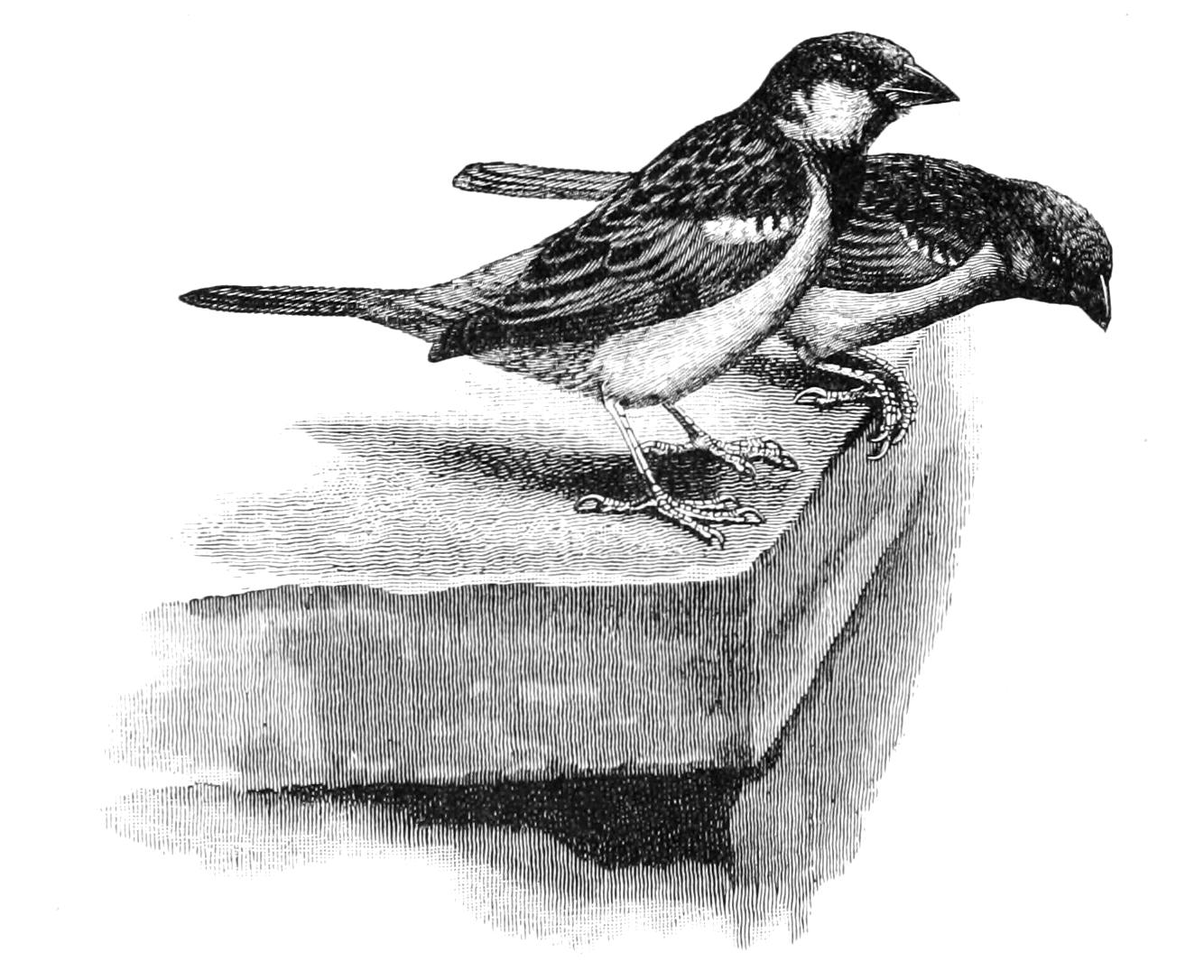
Fig. 143.–House-Sparrow. Passer domesticus. × ⅖. (From English Illustrated Magazine.)
The sexes may be similarly coloured or very different, the hues being commonly sober, but sometimes particularly brilliant. Cardinalis, Paroaria, Gubernatrix, Melophus, Pyrrhuloxia, Schistospiza, Lophospingus, and Tiaris have fine crests; Catamblyrhynchus exhibits stiff crown-feathers. The feet are usually dull, but occasionally pinkish, as in Embernagra and Pycnorhamphus; the bill may be blackish, yellowish, dusky, or even red, as in Cardinalis (except one form). Of British species, the Greenfinch (Ligurinus chloris), the Goldfinch (Carduelis elegans), the Sparrow (Passer domesticus), the Chaffinch (Fringilla coelebs), the Brambling (F. montifringilla), the Linnet (Linota cannabina), the Redpoll (Aegiothus rufescens), the Bullfinch (Pyrrhula europaea), the Reed-Bunting (Emberiza schoeniclus), the Corn-Bunting (E. miliaria), and the Yellow Hammer (E. citrinella) hardly need description; while several others occur more rarely in our islands or breed with us in limited numbers, such as the Hawfinch (Coccothraustes vulgaris), which is bay, black and white; the Siskin (Chrysomitris spinus) and the Serin (Serinus hortulanus), which are chiefly greenish-yellow; the Pine-Grosbeak (Pyrrhula enucleator) and the Crossbill (Loxia curvirostra), which are mainly red in the adult male, and respectively yellow and greenish-orange in the female; the Ortolan Bunting (Emberiza hortulana), which is brown, green, and yellow; and the Snow-Bunting (Plectrophenax nivalis), with its black, chestnut, and white plumage, that becomes black and white in summer. The Rose-Finches (Carpodacus) of the Eastern Palaearctic, the Nearctic, and the Indian Regions exhibit fine crimson or rosy tints; the Central and South American Pheucticus, and the Western North American Hesperiphona, much black and yellow; the Cardinals (Cardinalis), of North America, Venezuela, and Trinidad, bright red with black forehead and throat; Paroaria, which replaces the last-named genus southwards, somewhat like colours. Guiraca of most of America, except the extreme north and south, is mainly blue; Cyanospiza cyanea, ranging from the Eastern United States to Panama, is even more brilliant; while the Painted Bunting (C. ciris), of similar range, shews a beautiful combination of blue, red, brown, and yellowish-green. Volatinia of Central and South America is black; Geospiza, Camarhynchus, and Cactornis are the same, or decidedly dull; Petronia brachydactyla and Passer simplex, of the deserts from North Africa to Persia, resemble the sand in tint. The wild Canary (Serinus canarius) of Madeira, the Azores, and the Canaries–not to be confounded with the Cape Canary (S. canicollis)–is greenish above with brown striations, and yellowish below. Finally, many sober-hued North American genera, such as Pipilo, Peucaea, and Junco, lead up to the brown-streaked Bunting forms.
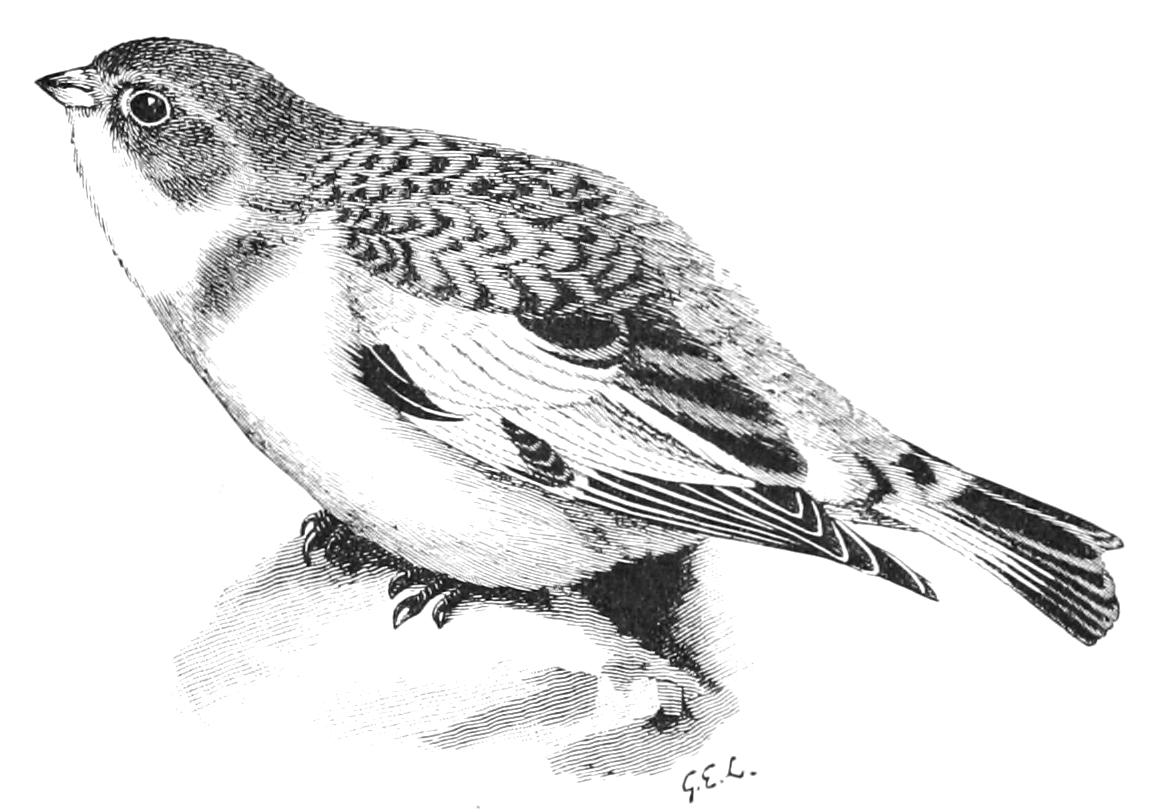
Fig. 144.–Snow-Bunting. Plectrophenax nivalis. × ½.
The crimson tints exhibited by the adult male Linnet, when in breeding plumage, afford a well-known instance of seasonal change of colour. It is in consequence indifferently called the Red, Brown, or Grey Linnet.
The members of this Family generally frequent wooded districts and open grassy spots, Finches on the whole preferring the former, Buntings the latter; a few occupy sandy deserts; Petronia haunts rocks; Ammodramus resorts to the shore. This bird clings to the reeds like a Tit, a habit well-known to be shared by various other marsh-loving species. Camarhynchus and Geospiza accompany flocks of Doves to dry bushy and rocky spots near the sea in the Galápagos. The majority are active and lively birds, social and seldom shy, which flock in winter to feed or roost; while the pugnacity of the Sparrow is rather exceptional. They not only dust themselves in dry spots, but bathe freely. Montifringilla breeds in mountainous places, Leucosticte and Plectrophenax in similar situations, or on rocky Arctic shores. The flight is ordinarily strong and rapid, some species of Sycalis, Phrygilus, and Calamospiza soaring, and descending with outspread wings; Cactornis climbs with ease about the prickly pear (Opuntia), while many Finches hop well, and others run readily and swiftly. The song is often exceptionally fine, as in the Canary, Linnet, Cardinal, American Song-Sparrow (Melospiza), Chondestes, Zonotrichia, and elsewhere; the Bullfinch in the wild state has a plaintive pipe; while the chirp of Sparrows may be contrasted with the Cricket-like strain of Petronia brachydactyla, the whistling cry of the Snow-finch (Montifringilla nivalis), the long-drawn note of the Corn-Bunting, or the sibilant sound at times made by the Crossbill. The food consists mainly of seeds, but other fruits, buds, leaves, insects and their larvae, are also eaten, not to mention peas, crocus flowers, and the like; Crossbills and some other forms cleverly extract the seeds of fir-cones, Camarhynchus and Geospiza scratch about upon the ground, and Cactornis devours seeds and flowers of the Opuntia. The nest varies from the huge, untidy domed mass of straw and feathers fashioned by Sparrows to the small compact cup of moss, wool, hair, down, lichen, and such materials, formed by the Goldfinch, Redpoll, or Chaffinch; Hawfinches and Bullfinches make shallow structures chiefly composed of twigs and lined with roots; the British Buntings build with grass and horse-hair if possible; Phonipara and other species sometimes make covered fabrics; Sycalis pelzelni occasionally utilizes nests of other birds. The site may be in a tree, bush, rock, building, or on the ground, some forms nidificating under cover, some in the open. Sparrows have black, grey, and white eggs; those of the Linnet, the Goldfinch, and their allies are blue, bluish-white, or greenish, with reddish or brownish spots; those of Buntings are whitish, greenish, or ruddy, with brown, blackish, or rufous marks, ordinarily including streaks and scrawls; those of Petronia brachydactyla are white with blackish blotches; those of the Hawfinch green with olive and umber spots or lines; those of the Snow-finch white; those of Spiza guiraca and some other American species plain bluish or greenish.
With the Fringillidae this volume ends, according to the Classification which has been here adopted; but it may be well to take the opportunity of again reminding the reader that the "Families" of Oscines are not of equal rank to those of the Orders which precede them; and that, as regards the arrangement of these "Families," few writers will be found to agree; the truth being that there never can be a perfectly satisfactory linear system, since affinities point in so many different directions. When all these affinities have been finally investigated by anatomists, if ever that time should come, they may very possibly necessitate an alphabetical arrangement of the groups, with indications of their various relationships under each head.