Chapter V · (continued 2)
Reading edition
P. daürica (barbata), of Asia east of the Altai and Tian-shan Ranges, exhibits lanceolate feathers on the sides of the throat, like Coturnix japonica, and a black "horse-shoe" mark on the golden-buff breast; the latter part in P. hodgsoniae, of South Tibet and the extreme north of India, being white with wide bars and a large basal patch of black; P. sifanica of North-West China and North Tibet lacks the black patch, and has less black on the sides of the head and throat. The two last-named birds reach the snow-line at about eighteen thousand feet; the first of them at least having a nest and eggs like the Common Partridge. Rhizothera longirostris, of the Malay Peninsula, Borneo, and Sumatra, has long sharp curved beak and powerful whitish metatarsi, provided with a pair of stout spurs in each sex. The upper plumage is rich brown with black and buff markings; a grey shade pervades the neck and lower back, and chestnut tints the cheeks, throat, and wings; the under parts are grey, merging posteriorly into buff. The hen has a chestnut fore-neck, and is less grey above. R. dulitensis of Borneo is similar.
The genus Pternistes contains the naked-throated Ethiopian Francolins. P. nudicollis of South Africa is brown above with black shaft-stripes, the mantle being greyer, the superciliary stripes and face black, the sides of the neck and lower parts black with white streaks. The female has a grey and rufous chest, the male a pair of sharp spurs. The bare orbits and throat are crimson, the bill and feet orange-red. P. humboldti of East Africa and P. afer (rubricollis) of western South Africa resemble the above, but have two pairs of spurs. P. cranchi differs in having the neck, mantle, and under surface mottled with black and white, the breast and abdomen shewing chestnut markings; in the similar P. boehmi the naked throat is yellow. These two species occur west and east of Lake Tanganyika respectively; the female being less black and white above and less chestnut below in the former, while the sexes are alike in the latter. P. swainsoni of South Africa is distinguishable by its rusty abdomen with black and chestnut blotches, the latter colour being absent in the hen; P. rufipictus of East Equatorial Africa has white neck-feathers, margined with brown and black. P. leucoscepus of North-East and the darker P. infuscatus of East Africa exhibit broken stripes of brown and white down the whole body, with yellowish-red orbits and throat; the sexes are alike save for the spurs in the male. In many districts the members of this genus, as well as the Francolins proper, closely akin to them in appearance and habits, are denominated "Pheasants." They haunt grassy places and brushwood, often on hills near water; the coveys feeding in the open on bulbs, seeds, berries, and insects, and roosting upon trees, preferably those that are leafless. Flying little, but running at a great pace, they utter harsh notes in the morning and evening, and lay six or more creamy or pinkish eggs, frequently with chalky spots, in a grass-lined cavity sheltered by coarse herbage.
Francolinus, inclusive of Ortygornis, Scleroptila, Chaetopus, and Clamator of some writers, contains forty or more species, ranging over the Ethiopian Region, and from Arabia, Cyprus, and Asia Minor to Persia, India, and South China. The coloration is rich and varied, and the sexes are commonly alike, while hybrids undoubtedly occur. Apart from a special study, a general idea is given by the following descriptions. F. vulgaris, the Black Partridge, ranging from Cyprus, Palestine, and Asia Minor to Assam, formerly occurred in Spain, Italy, Sicily, Greece, several of the Mediterranean Islands, and North Africa.[162] It has the whole plumage blackish, with buff markings on the crown, wings, and mantle, white ocelli on the upper back and flanks, white barring on the lower back and tail, a white patch below the eye, and chestnut collar and under tail-coverts. The bill is black, the feet are orange with a small blunt spur. The collar of the brownish female is confined to the nape, and the throat is white. In F. levaillanti of South Africa, the "Redwing" of English colonists, both sexes have the crown brown, edged with black and white, which continues down the nape and widens at its base; a black and white band outlines the throat and forms a patch below it, while the rest of the head is rufous. The upper parts are black, brown, and buff, with pale chestnut remiges; the under parts are of the last colour, varied with buff and black, and barred with brown on the flanks. Spurs are occasionally wanting. F. adspersus of western South Africa is very distinct, both male and female being brown above, with fine black and grey mottlings and black lores; the head, neck, and lower surface are white, with narrow black bars. The spurs are long and sharp. F. albigularis of West Africa is grey-brown, with rusty crown, white throat, buff under parts, and bright bay patches on the wing-coverts, the upper back and neck exhibiting white streaks edged with black. The lower back is blotched with black, the spurs are moderate.
Of some five Asiatic species, F. sinensis–introduced into Madagascar, Mauritius, and Réunion–alone reaches eastward of Assam to China; whereas F. pondicerianus has been imported into Rodriguez and the Amirante Islands.
Francolins are found in family parties rather than coveys, and prefer localities near water, though these may consist of rushy swamps, cultivated lands, stony slopes, or maritime plains. Dry situations are, however, favoured, a sufficiency of cover being the chief requisite, and an altitude of six thousand feet being occasionally attained. Some forms roost upon the ground and apparently never perch, others–especially in South Africa–resort habitually to trees at night or when disturbed; but probably the style of country and the amount of persecution account for this difference, while the decrease of the commoner species in certain parts emphasises the fact that they are an easy prey to gunners and other foes. These birds run with great rapidity, and are extremely difficult to flush, still more so for a second time; when forced to rise they do so with a whirring noise, and fly off heavily but swiftly, to pitch again as soon as possible. Reposing in the shade during the hot hours, they feed in the morning and evening, at which times the loud, shrill cry of three bell-like notes, or the "hysterical laugh," may be heard in all directions. The diet consists of insects, shoots of plants, berries, seeds, and bulbs, the powerful bill being used for digging. The well-concealed nest resembles that of a Partridge, the six to fourteen eggs, found in autumn as well as spring,[163] are olive-brown or buff, occasionally with small brown spots or a few white shell-markings.
Ammoperdix bonhami of South-West Asia is a desert form of an isabelline colour, with blue-grey crown and throat, black forehead and superciliary stripes, white lores and ear-coverts, a few black markings near the rump, chestnut hues on the tail and flanks, and longitudinal black bars on the latter. A. heyi, ranging from Nubia to the Jordan Valley and the Persian Gulf, has no black on the head, the frontal band being white, and the cheeks and mid-throat chestnut. The rufous and buff females of the two species are indistinguishable. They inhabit wastes and stony ravines up to four thousand feet, in pairs or small coveys; crouching, to avoid detection, on the ground, which matches their colour; flying like Quails; and uttering a reiterated double whistle. The eight to twelve eggs, of a plain drab tint, are deposited among stones or under tussocks, with hardly any nest.
Caccabis rufa, the Red-legged or French Partridge, introduced into England from France, and inhabiting Western Europe generally from Belgium and Switzerland to the Balearic Islands, Corsica, Elba, and South Italy, occurs in the Atlantic Islands, but not in Africa. The crown is grey, a black band outlines the throat and reaches past the eyes to the forehead, the upper parts are reddish-grey or brownish, and the tail is partly chestnut. The abdomen is bright buff, the chest grey with black margins to the feathers; chestnut, white, and black stripes adorn the flanks; the bill, feet, and orbits are red. The male is only distinguishable by having rudimentary spurs. C. saxatilis, the Greek Partridge, has the chest plain and the flanks without white. It inhabits the Alps, Apennines, Carpathians, Balkans, and Sicilian hills; the eastern race, C. chukar, ranging from the Ionian Islands to Aden, Persia, Mongolia, and China, and being naturalized in St. Helena. C. magna of Tibet shews a double gorget of black and reddish. C. petrosa, the Barbary Partridge, has a chestnut crown and collar, with white spots on the latter; it occupies North-West Africa, Sardinia, several of the Canary Islands, and Gibraltar. C. spatzi of South Tunis differs slightly. C. melanocephala of South-West Arabia has a black crown, bluish upper parts, flanks marked with black and white, and a black mark down the fore-neck. The members of this genus frequent cultivated country, grassy desert-hills, and scrub-covered ground, up to sixteen thousand feet; they are unsuspicious in quiet parts, but such is not the case in England. They run and fly far and fast, but are exceptionally hard to flush, trusting almost entirely to their feet, and occasionally when hard pressed resorting to trees. The loud note may be syllabled chuk-chuk-chukar-chukar; the food consists of leaves, fruits, seeds and insects; the nest is a scantily-lined excavation, containing from seven to fourteen yellowish-white eggs with reddish specks or blotches. The pugnacious males are used by the Cypriots to attract their wild kindred; but in Britain they have been said–probably in error–to drive away the Common Partridge.
Tetraogallus tibetanus, the Tibetan "Snow-Cock" or "Snow-Pheasant," is dark grey above, with buff markings towards the wings and rump, and black vermiculations; the under parts are white, with a grey pectoral band and black streaks posteriorly. There is a yellowish naked patch behind the eye, the bill is orange, and the feet are red. The sexes are similarly coloured, but the male has a pair of strong blunt spurs. The range extends from East Turkestan to West China, where T. henrici occurs, with a grey chest. T. himalayensis, found from the Himalayas to the Hindu Kush and the Altai Mountains, has the pectoral band and a patch on each side of the head and nape chestnut, the chest white with black bars, the orbits yellow, the bill dusky, and the feet orange. T. caspius, extending from the Taurus to Transcaspia and South Persia, has the upper breast grey with black spots, and lacks the chestnut on the head; T. caucasicus of the Caucasus has the occiput and nape rufous, and the chest black and buff; T. altaicus of the Altai range has the last spotted with white, but no white bases to the secondaries as in the two preceding forms. These large active birds haunt stony hill-sides above the forest-zone and near the snow-line, being gregarious, yet keeping in pairs; they are wild and wary, fly straight and swiftly, utter shrill whistles or cackling notes, and feed upon insects, buds, roots, grass, moss, and fern. From six to nine yellowish or olive eggs with reddish or purplish spots, generally one-third larger than those of the Capercaillie, are laid in a hollow in the soil, sheltered by a stone or overhanging tuft.
Tetraophasis obscurus of East Tibet is in both sexes brownish-grey above, with blackish markings anteriorly, olive tints on the mantle, and buff on the wings; the throat and some blotches on the flanks are chestnut, the breast is grey with black spots, the abdomen grey and buff, the tail mainly black and white. The male has two stout spurs. T. széchenyii of Central Tibet has the throat fawn-coloured, and the whole of the under parts blotched with chestnut. The habits are apparently somewhat similar to those of the last genus. Lerwa nivicola, the "Snow-Partridge," ranging from the Himalayas to Western China, has black upper parts with white cross-bars, which become rufous buff on the mantle and wings; the under surface is chestnut, with black and white markings only shewing towards the belly. A pair of spurs distinguishes the cock from the hen. This species inhabits broken grassy or heathery sides of mountains in the midst of snow, up to an altitude of at least fourteen thousand feet; it is tamer than the Snow-Pheasant, flies equally well, and nestles under jutting rocks. The coveys feed on moss, seeds, and insects, and utter a short double Grouse-like note or a harsh whistle.
Sub-fam. 4. Odontophorinae,[164]–The "American Partridges," are Quail-like birds, rarely attaining the size of a Red Grouse, and readily distinguished from their kin by the doubly-toothed mandible and the lack of spurs. The sexes are alike, if not otherwise stated.
Of some four species of Dendrortyx, ranging from South Mexico to Costa Rica, D. macrurus, of the former country, has a black head and throat, with a long white streak above and below each eye, and a rufous tip to the short, full occipital crest. The neck and back are chestnut and grey; the rump, wings, and tail are browner with black mottlings; the breast is greyish with rufous streaks. The bill, feet, and naked orbits are coral-red. Callipepla squamata, of the South-Western United States and Mexico, has a grey-brown head, with white-tipped crest and buff throat; the wings, rump, and tail are brownish-grey with white inner margins to some of the scapulars and secondaries; the mid-breast and belly are fawn-coloured. The remaining plumage is grey, with black margins to the feathers which cause a scaly appearance, and shews dusky triangular spots beneath. Oreortyx pictus of the Western United States possesses two very long black occipital plumes; olive-brown upper parts with white edges to the scapulars and outer secondaries; slaty head, neck, and lower surface, with chestnut throat and abdomen, of which the former is laterally margined with white; a white band from the chin to the lores; and chestnut flanks, barred with black and white. Lophortyx californicus, of the same countries, has the head and crest of two club-shaped feathers black, a yellow forehead, olive-grey upper parts, a black throat outlined with white, buff mid-breast, and chestnut belly, each feather of the last two being edged with black. A white band connects the eyes and continues behind them, while white streaks grace the sides and flanks. The female lacks the black and white pattern on the head, and has whitish lower parts with yellow-brown throat. Two other species extend the range to Mexico, Philortyx fasciatus of South Mexico has an olive-brown upper surface, washed with rufous on the crown and the greyer neck and mantle, and barred or blotched with black and buff on the lower back, wings, and tail; the blackish crest is tipped with red; the throat and lower parts are white, with a few median spots and pronounced black bars on the chest, sides, and flanks, where the feathers have rusty margins. Eupsychortyx cristatus of Curaçao and Aruba has half a dozen congeners, ranging through Central and northern South America. It has a buff crest, crown, and throat; black and white nape and cheeks; reddish-grey upper parts mottled and blotched with black and buff; and rufous lower surface, barred with black, and spotted on the chest, sides, and flanks with white. In the female the black on the head is replaced by buff. Ortyx virginianus of the Eastern United States is rufous and grey above with black blotches, the crown is blackish, the sides of the head are transversely striped with black and white, the white throat is margined with black, the lower parts are reddish-white with black chevrons. The hen-bird has a buff throat, and shews little black on the cheeks. This genus contains eight members, often called Colins, which range as far south as Mexico and Cuba. The three species of Cyrtonyx extend from the Southern United States to Guatemala; they all have full crests, highly-developed wing-coverts, and very short, soft tails. The sides of the head and neck exhibit a peculiar black and white pattern, while those of the body are grey, ocellated with white or varied with chestnut. The females lack the pattern on the head. As an example, C. montezumae is rufous above, barred with black, and streaked with buff and white; the breast being chiefly chestnut and the abdomen black. Dactylortyx thoracicus of Central America has brown upper parts, with black blotches and rufous and buff mottlings; the superciliary stripes, cheeks, and throat are chestnut, with a black patch on each side of the last; the under surface is reddish-grey with white shaft-stripes. In the hen the chestnut is replaced by whitish. The crest is not so full as in Odontophorus, of which some fourteen species extend from South Mexico to Bolivia and South Brazil. O. guianensis, ranging from Panama to Bolivia and Amazonia, has the head and throat mainly chestnut, the neck and mantle grey, the lower back reddish-brown–all except the grey portions being marked with buff and black; the mid-throat is grey, the under parts orange-brown, with dusky barring on the chest and sides. The naked orbits are reddish; the bill is black, the feet are rather lighter, as in the Sub-family generally. Rhynchortyx spodiostethus of Veragua and Panama has the crown brown, the rest of the head chiefly rusty-red, the mantle grey and brown, the lower back buff relieved by grey and black, the wings more chestnut, the lower parts dark grey, with white and buff centres to the throat and breast respectively, and black-barred flanks. R. cinctus of Veragua has a rufous chest and olive-brown cheeks.
As an instance of the habits we may take Ortyx virginianus, called Bob-white from the shrill triple whistle of the male, which resembles "Ah-bob-white." It is a wary denizen of open woods and pastures, found in coveys, and roosting on the ground, though habitually taking refuge in trees, where it crouches upon the branches. It runs very swiftly, but rises, when hard pressed, with a whirring noise to fly for a short distance. The food consists of succulent shoots, seeds, berries, acorns, beech-nuts, and insects; the nest is imbedded in grass or placed at the foot of a tree, and is made of a little herbage, which may even arch over it; the white or drab eggs number from nine to eighteen. The male is said to assist in incubation, two broods being occasionally reared in a season. The female utters a clucking sound, and will feign lameness when with her brood.
Other forms prefer pine-forests, rocky ground, or dry sandy flats overgrown with cactus and sage-brush; their cries being in some cases louder or more guttural, while the eggs may be blotched or spotted with reddish-brown. Nests have even been recorded low down in trees. Ortyx virginianus has been introduced into the West Indies and the Old World, though unsuccessfully in the latter; Lophortyx californicus into Europe, the Sandwich Islands, and New Zealand, in the last two of which it is firmly established. In America, moreover, some species seem to have lately extended their range. Hybrids are occasionally found.
Sub-fam. 5. Tetraoninae.–Bonasa umbellus, the Ruffed Grouse, which inhabits the greater part of North America, is remarkable for the frills of black or chestnut feathers surmounting a bare space on the sides of the neck, and for the partially naked metatarsi. Both sexes are rufous or greyish above, with buff and black markings, a short blackish crest, and a black subterminal tail-bar; the under parts being buff, relieved by brown and white. Great variation, however, is shown, and sub-species may be easily differentiated. When undisturbed, the "Pheasant" or "Partridge," as it is variously called by local sportsmen, is tame, and prefers undulating wooded country in the neighbourhood of cultivation, though it is also found in proximity to the hills. The habits resemble those of the following species, but the food is somewhat more varied, and includes beech-nuts, chestnuts, and acorns. In spring the cock often struts upon some log, and drums after the manner of other American grouse; but the habit is not confined to that season, nor is the sound produced by inflated neck-sacs, but by the wings. The absence of the hens, moreover, suggests that the performance is not amatory. From eight to fourteen or more eggs are laid, of a whitish or buff colour, with or without round reddish spots. B. sylvestris, the Hazel Grouse–the Gelinotte of the French–is a smaller and darker bird, with white markings on the wings, and a black throat surrounded by a white line, which reaches to the forehead. There is no ruff, and the female differs from the male in her whitish throat. It inhabits hill-forests in Europe and Asia up to three thousand feet, extending southward to Northern Spain, North Italy, Transylvania, China, and Japan, but not occurring in Britain. The food consists of shoots and buds of birch and hazel, seeds, berries, and other fruit, worms, insects, and their larvae. The flight is noisy, but not protracted, the birds resorting to trees and squatting on the branches. The usual note is a melancholy whistle, followed by a chirping sound. The slight nest contains from six to fifteen yellowish eggs, spotted with a little rufous, which are deposited early in spring, as is commonly the case in the Family. B. griseiventris and B. severtzovi are the representative forms in the Government of Perm in Russia, and the districts from Koko-Nor to South Mongolia respectively. The Old World species, sometimes denominated Tetrastes, are monogamous, and do not "drum."
Different races of Pedioecetes phasianellus, the well-known Prairie Chicken, occupy America as far southwards as North California, New Mexico, Wisconsin, and Illinois. Both male and female shew black, red-brown, and yellowish tints above, with white streaks on the scapulars and spots on the wings, the lower surface being white with dusky markings. The short tail, with two elongated, but truncated median rectrices, gives it the name of Sharp-tailed Grouse. This shy denizen of the woods and prairies extends almost to the Arctic barren grounds in spring, that season being remarkable for the conduct of both sexes, which meet to hold regular dances on elevated spots, aptly compared to the hills of Ruffs. No doubt the cocks are the chief performers, but they are said to be monogamous, though their actions resemble those of their polygamous allies. The flight is strong and rapid, with alternate periods of flapping and sailing; the note is a triple whistle or a "cack-cack-cack." The food includes shoots of plants, grass, berries, and insects, the last-named being the chief diet of the young, as in the case of many other American Grouse. About fourteen eggs are deposited in a cavity scraped amidst rank herbage, and but slightly lined; their colour is brownish with darker spots, or occasionally creamy with marks of red.
Centrocercus urophasianus, the Sage-Cock of the Western United States and the adjoining portions of British America, has the upper parts mottled with black, grey-brown, rufous, and buff, the lower parts black, relieved by a white chest. The tail is long and wedge-shaped, with attenuated feathers; the sides of the neck and lower throat possess stiff spiny plumage, and the former bare orange air-sacs, as in the species next to be mentioned. The female lacks the black spots on the white throat. This bird, the largest of the New World Tetraoninae, is generally unsuspicious, and runs ahead of the traveller uttering cackling or clucking notes; when hard pressed it rises with fluttering action, and flies off rapidly to a considerable distance. The food consists chiefly of "sage-brush" (Artemisia tridentata), but other leaves and flowers, seeds, berries, grain, and insects vary the fare. The habits at the mating-time resemble those of Dendragapus and Tympanuchus, while the eggs, from seven to seventeen in number, may be found placed in an excavation of the bare soil, or resting on a slight lining; they are drab or olive in colour, with roundish brown spots. What seems to be the ground colour is easily rubbed off before incubation commences, a fact noticeable in other Galline birds and Plovers. The Sage-Grouse reaches a considerable elevation, as does the sage-brush, which gives its name to the bird.
Tympanuchus americanus, the Prairie-hen, found in the districts drained by the Mississippi and its confluents, and thence northwards to Ontario, is brown above, barred with buff and black, and chiefly paler brown below, marked with white. The small crest is tipped with white, and a tuft of long, stiff, black feathers covers the inflatable yellow air-sacs on the sides of the neck, the sacs being absent and the tufts shorter in females. In spring parties assemble after daybreak on dry knolls, and conduct their love affairs after the fashion of the Dusky Grouse (p. 236), a booming noise being audible from afar, and the skin of the neck being expanded below the erected tufts. The cocks are most pugnacious when the pairing-time is nearly over. Shoots of plants, berries, grain, acorns, and insects constitute the food. The flight is powerful and rapid, but individuals often run and squat. For a Grouse the nest is considerable; and from eleven to fourteen, or even twenty, creamy or olive-coloured eggs are deposited, with very small reddish-brown spots. T. cupido, the Heath-Hen of the eastern United States, now only found on the island of Martha's Vineyard, off Massachusetts, has smaller neck-tufts of pointed feathers, and more conspicuous whitish marks on the scapulars. T. pallidicinctus, the Lesser Prairie-Hen, ranging from Texas to Kansas, is barred with brown, margined on each side with black.
Dendragapus obscurus, the Dusky, Blue, or Pine-Grouse of the Rocky Mountain districts, has black upper parts mottled with grey and a little brown, and pure grey under surface; the female having a considerable admixture of buff, and the male possessing air-sacs like those of Tympanuchus. A darker race, D. fuliginosus, extends the range to Sitka and California. Another northern form, which lacks the broad grey tail-band, is termed D. richardsoni. These birds frequent wooded ravines up to nine thousand feet, preferring the neighbourhood of water, and feeding as do their allies. The characteristic booming noise, common to this species and others, may be heard throughout the day in spring, the male choosing some horizontal bough or convenient spot of ground whereon to display himself with drooping wings, expanded tail, and inflated air-sacs. Rarely can an observer gain a view, so misleading is the ventriloquistic effect of the sound. The nest, commonly placed beneath a branch or near a tussock, is a mere depression in the soil lined with herbage, leaves, or fir-needles. The eight to twelve eggs are creamy-buff, with round brown dots.
Canachites (Canace) canadensis, the Canada Grouse or "Spruce-Partridge," found from Alaska and British America to the north-eastern United States, is black, with lead-coloured bars above, and a white pectoral band below, the tail having a chestnut tip, which is wanting in the browner C. franklini of the north-western Rocky Mountains. In the female the grey is chiefly replaced by orange. It is a tame species, and flies but a short distance before alighting on some tree. The food consists of "spruce" buds and larch needles, with berries of Vaccinium (bilberry, cranberry, etc.), Empetrum (crowberry), and so forth. It is not polygamous; but a most curious account of the cock's habits of showing off and drumming is given by Bendire.[165] The hen constructs a nest of dry moss, leaves, and twigs upon the ground, under shelter of some overhanging bough, and lays from eight to eighteen reddish-buff eggs with brown spots. Falcipennis hartlaubi, a very similar species, distinguished by slender sickle-shaped outer primaries, occurs in North-East Siberia, Kamtschatka, and Saghalien.
Tetrao urogallus, the Capercaillie, apparently not uncommon in Scotland until 1770, and exterminated in Ireland about the same date, was reintroduced at Taymouth Park, Perthshire, in 1838, and is now fairly plentiful in Central North Britain. Failure has attended similar attempts in Ireland. The discoveries of bones in Teesdale and near Torquay shew that this bird's range once extended to Yorkshire and Devonshire, while similar finds have been made in Aquitaine and Denmark. At the present day it inhabits sub-alpine pine-forests from Scandinavia, the Pyrenees, North Italy, and Greece to Lake Baikal and the Altai Mountains, being represented in the Urals by a sub-species, T. uralensis. The male is almost entirely blackish-grey above, with somewhat darker tail, and black below with greenish chest. The female is smaller, and is mottled with brown, buff, black, and white, merging into rufous on the breast, which is barred with black. A variable amount of white occurs beneath in both sexes. The brown hair-like feathers on the legs are longest in winter, a fact true also in the Ptarmigan and elsewhere. A cross between the hen Capercaillie and the Black-Cock is known in North Europe as the Rackelhahn (T. medius).[166] The "lek" or "spel," as the love-performance is called, has been described in detail by many authors;[167] it takes place in spring, and occasionally in autumn, when the excited male struts with drooping wings and erect outspread tail before the assembled females, uttering curious noisy cries, to which they reply with softer plaintive notes. He is said to be deaf during the "play." At times he takes up a position on some lofty bough with the evident intention of challenging his rivals, who quickly respond to the provocation; ere long they join in combat upon the ground, leaping and rushing upon one another in their blind rage, and using bills, wings, and claws as weapons of offence. The flight of the Capercaillie is heavy though strong. The food consists chiefly of young pine-shoots, which are apt to give the flesh a flavour of turpentine, but includes berries, insects, and worms. About a dozen yellowish-white eggs, freckled with dull orange, are deposited in a hole scraped for the purpose near the foot of a tree, a slight lining being sometimes added. T. parvirostris (urogalloïdes) of North-East Siberia, with comparatively slender bill and purplish-green head, and T. kamtschaticus of Kamtschatka, are distinguished by their white-tipped scapulars.
Lyrurus tetrix, the Black Grouse, called according to the sex Black Cock or Grey Hen, ranges over Europe north of the Pyrenees and Apennines, as well as through Northern Asia to the Tian-Shan Mountains and Pekin. It inhabits the wilder moorlands of the north and west of England, being much less plentiful in the Midlands, and very rare in the east. It has, however, been introduced into Norfolk, and unsuccessfully into Ireland, while it has been restored to Surrey, Sussex, and Berks, and still occurs in Wilts, Dorset, Hants, Somerset, Devon, and Cornwall. In Scotland it frequents most suitable districts, but does not reach Orkney, Shetland, or the Outer Hebrides. The male, remarkable for his lyrate tail with its outwardly curved rectrices, is black with steel-blue reflexions, exhibiting a little brown in parts, a white bar on the wing, and white under tail-coverts. The female is rufous and buff, barred and spotted with black, and shewing but little white. This bird is usually found on broken ground or in open woodlands, where it conceals itself among long heath, bracken, or grass. The polygamous cocks meet at dawn in spring to fight for the hens, parading before them in great excitement with depressed outspread tails, while uttering a drumming or cooing noise. At other times the call-note is loud and clear. The flight is powerful but heavy; the food includes berries, seeds, grain, shoots, buds, and insects. The nest is merely a scantily-lined hollow, situated at the foot of a tree, or in heather and the like, often near plantations. The six to ten eggs have a yellowish ground-colour, with scattered orange-brown blotches, the markings being larger than in the Capercaillie. In some winters these Grouse allow themselves to be snowed up, as occasionally do other species. L. mlokosiewiczi of the Caucasus has the rectrices only slightly curved, and black under tail-coverts. Hybrids between the Black Cock and the Willow Grouse are called Riporre in Scandinavia.
Lagopus scoticus, the Red Grouse or Muirfowl, the only bird entirely confined to our islands, differs from its congeners in never becoming white in winter. It varies considerably in coloration,[168] but is usually considered a local form of the Willow Grouse (L. albus) of the north of Europe, Asia, and America. The male in both summer and winter is more or less chestnut-brown above, with black markings and a reddish head; the lower parts are similar, but are usually spotted with white. In autumn the brown of the upper parts becomes buff, and the lower surface is barred with buff and black. Mr. Ogilvie Grant[169] recognises three types of plumage in the male, a red form with no white spots, from Ireland and Western Scotland; a blackish variety comparatively rarely found; and another largely spotted with white below or even above. Intermediate specimens constitute the bulk of our birds. The female exhibits, moreover, a buff-spotted and a buff-barred form; but in summer she is typically black above with concentric buff markings, and buff below with black bars. Her autumn plumage, which continues throughout the winter, is black, spotted with buff and barred with rufous.
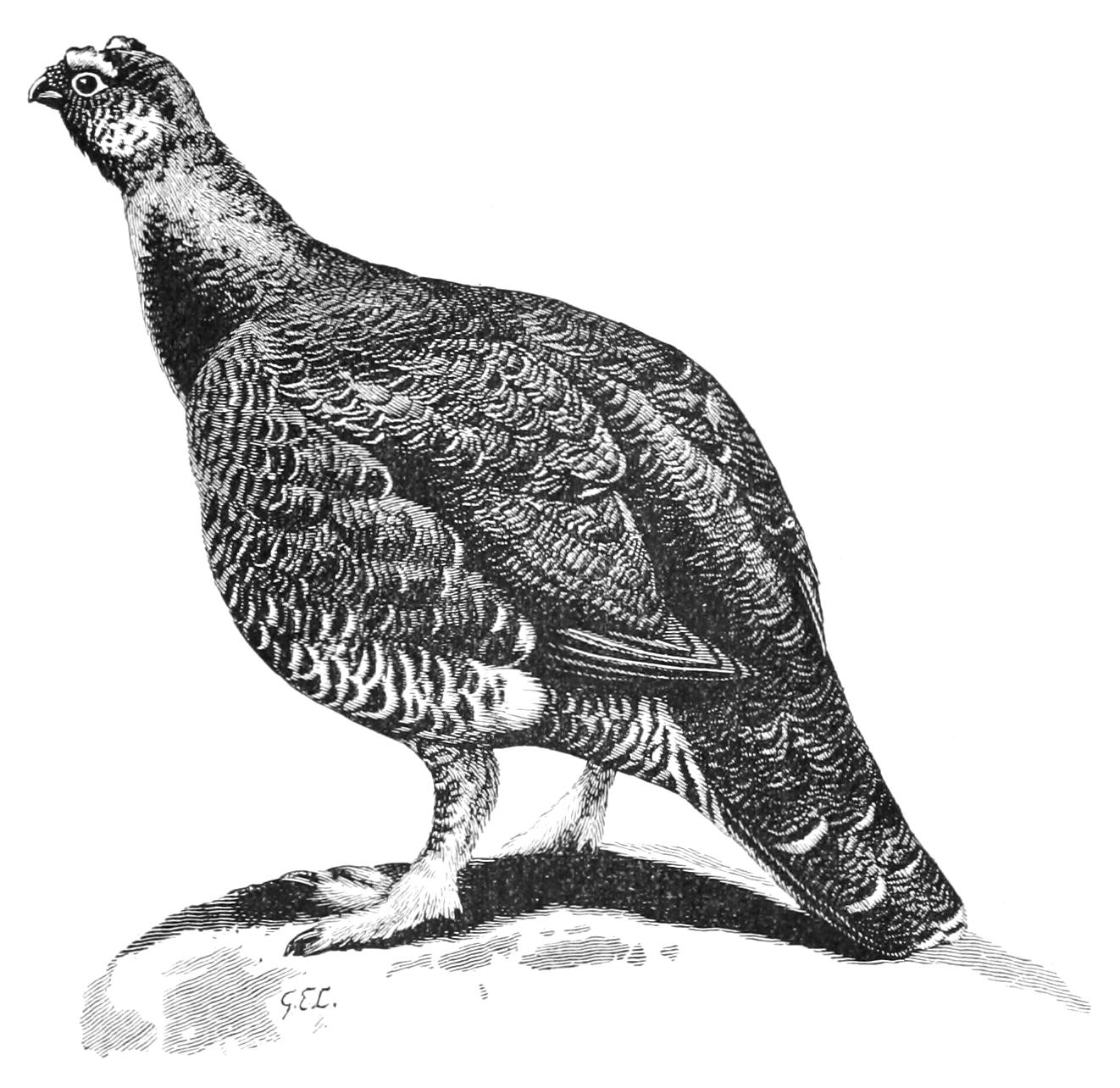
Fig. 48.–Red Grouse. Lagopus scoticus. × ¼.
Little need be said of the habits of this well-known species, nor will space allow of a description of the methods of killing it by driving and so forth; but it may be observed that it utters a clear ringing note, us well as the familiar cok-cok-cok, and feeds upon grain and tender shoots of ling (Calluna) and heather (Erica), besides other plants. The nest of moss, grass, and the like is placed amidst heather, and contains from six to ten, or even more, yellowish-white eggs, thickly blotched and spotted with fine red-brown, purplish, or black. In England the Red Grouse is found as far south as Derbyshire and Shropshire, in Wales to Glamorgan; while unsuccessful attempts have been made to introduce it into Surrey and elsewhere. In Ireland it is rather thinly distributed, but in Scotland it reaches the Orkneys, and an occasional brood has been known to be reared in Shetland, where a few pairs were turned down between 1858 and 1883. It has also been acclimatized in Southern Sweden. Lagopus albus, the Willow Grouse of Northern Europe, Asia, and America, termed the "Dal-riporre" in Scandinavia, is completely white in winter, except for the lateral rectrices, which are chiefly black; in summer it resembles the Red Grouse, but is distinguished by the white wing-quills. The female is smaller. The habits are similar to those of the last-named, but a preference is shewn for willow- and birch-scrub; shoots of these trees or of Vaccinium, with various moorland berries, furnishing the food. A performance recalling the "lek" of the Capercaillie is said to be given by the male in spring, a fact also true of the succeeding species.[170] L. mutus, the Ptarmigan or Fjeld-riporre, is in summer blackish-brown with grey and rufous markings, the median tail-feathers, abdomen, and most of the wings being white. The back becomes grey in autumn. The female is reddish-buff, barred with black. In winter both sexes are white, with black and white rectrices, and in the male with black lores. Nearly all the so-called Ptarmigan in English poulterers' shops are Willow Grouse. The haunts are on the higher parts of mountain-ranges, where stony ground abounds, but somewhat lower altitudes are sought after the breeding season. The food consists of shoots and berries; the cry is croaking, and best heard in misty weather. From five to ten eggs, with blacker markings than those of Red Grouse, are deposited in a hole scraped in the earth, with little or no lining, the nest being commonly quite exposed, though equally often under shelter of a boulder. Ptarmigan are decidedly difficult to see among the similarly-coloured stones. In Scotland they occur on most of the higher hills from Arran northwards, though no longer in Dumfries and Galloway; while abroad they occupy Northern Europe, with the Pyrenees and the Alps, and possibly Northern Asia. In the lighter L. rupestris the adult male never has a black breast or a grey back in autumn. This form occurs in North Asia and North America, with Greenland, Iceland, and Japan, many local races having been described as distinct species or sub-species; while the larger L. hyperboreus (hemileucurus), with a white base to the tail, inhabits Spitsbergen; and L. leucurus, with entirely white rectrices–the smallest member of the genus–ranges along the Rocky Mountains from British Columbia to New Mexico.
Of fossil forms Coturnix and Palaeortyx occur in the Upper Eocene of the Paris Basin, Taoperdix in the calcareous deposits of Languedoc of the same age; Palaeortyx is again found with three species of Palaeoperdix, in the Middle Miocene of France, while Phasianus is not only recorded from this formation, but from the Upper Miocene of Oeningen and the Pliocene of Attica, in the latter of which Gallus accompanies it. Meleagris has been discovered in the Miocene of Colorado, and the Post-pliocene of New Jersey; Gallus in the Pliocene of France, Palaeotetrix and Pedioecetes in that of Oregon; and, finally, bones of Lagopus have been brought to light in the French Plistocene, and those of Tetrao urogallus at Kent's Hole near Torquay and in the caves of Teesdale in England.
Fam. VII. Opisthocomidae.–The curious and highly specialized Hoatzin (Opisthocomus cristatus) has been the subject of much discussion among systematists, as the outcome of which it is necessary to adopt for it a special Sub-Order Opisthocomi. Buffon classed it with the Curassows, P. L. S. Müller and Gmelin placed it in the Linnean genus Phasianus; but Illiger recognised a genus Opisthocomus, while Huxley and Garrod fully admitted its claim to higher rank than that of a Family. The habits are to some extent Ralline, and certain points of structure indicate a considerable affinity to the Cuculi.
The sternum is utterly unlike that of any other species, the anterior portion of the keel being aborted, and the posterior correlated with a flattened area of thick naked skin, on which the bird mainly rests. These modifications are no doubt connected with the extraordinarily large crop, which is supported by the furcula and the fore-part of the breast-bone, being received in a cavity of the pectoral muscles; the whole organ is decidedly muscular, and contains two divisions with a partial constriction between them. The body is long and thin, the bill is strong with basal serrations on the maxilla; bristles surround the gape, and the eye-lids have distinct lashes–a rare fact among birds. The reticulated metatarsi are fairly stout; the toes are long; the hallux being unusually developed and the claws slightly curved. The short rounded wings have ten primaries and nine secondaries. The nearly even tail is elongated, with ten stiff feathers. The plumage in both sexes is olive above with white markings, and dull rufous below; the long loose crest and the tip of the tail are yellowish, and a patch of bare bluish-black skin surrounds the eyes. The tongue is sagittate, the furcula is Y-shaped and ossifies anteriorly with the coracoids, an aftershaft is present, the down of the adults is sparing, while a small amount–of a reddish-brown colour–is observable in the newly-hatched young. The syrinx has one pair of muscles inserted on the distal end of the trachea.
The Hoatzin or "Anna," which is about the size of a Pigeon, ranges from Colombia to the Lower Amazons and Bolivia, where it haunts the sides of lagoons, creeks, and rivers covered with a thick growth of low trees or bushes, which project over the stream or the mud left bare by the tide. In these tangled solitudes it skulks during the heat of the day, while at other times it may be observed squatting upon the branches, mainly supported on the patch of hardened skin already mentioned. When disturbed the bird flies off awkwardly for some forty yards with a violent flapping motion, or progresses by leaps from bough to bough, erecting its crest and expanding its wings and tail. The note is sharp and shrill, and has been described as a hissing screech. The food consists of leaves and fruit of the prickly Drepanocarpus lunulatus, of the Aroid Montrichardia arborescens, of Avicennia nitida, and of a species of Psidium. The conspicuous nest, placed on low trees or shrubs, is a loose platform of spiny twigs and sticks with a softer lining, which contains from three to five yellowish-white eggs of a Rail-like appearance, spotted with reddish-brown and lilac. The young, which can see and run as soon as they are hatched, have a claw on both index and pollex, by means of which they creep about the thickets and hook themselves over the branches, assisted by the bill and feet. They can also swim and dive. A strong musky odour is given off by the adults, whence they are termed "Stinking Pheasants" in Guiana. The male has been asserted to be polygamous.
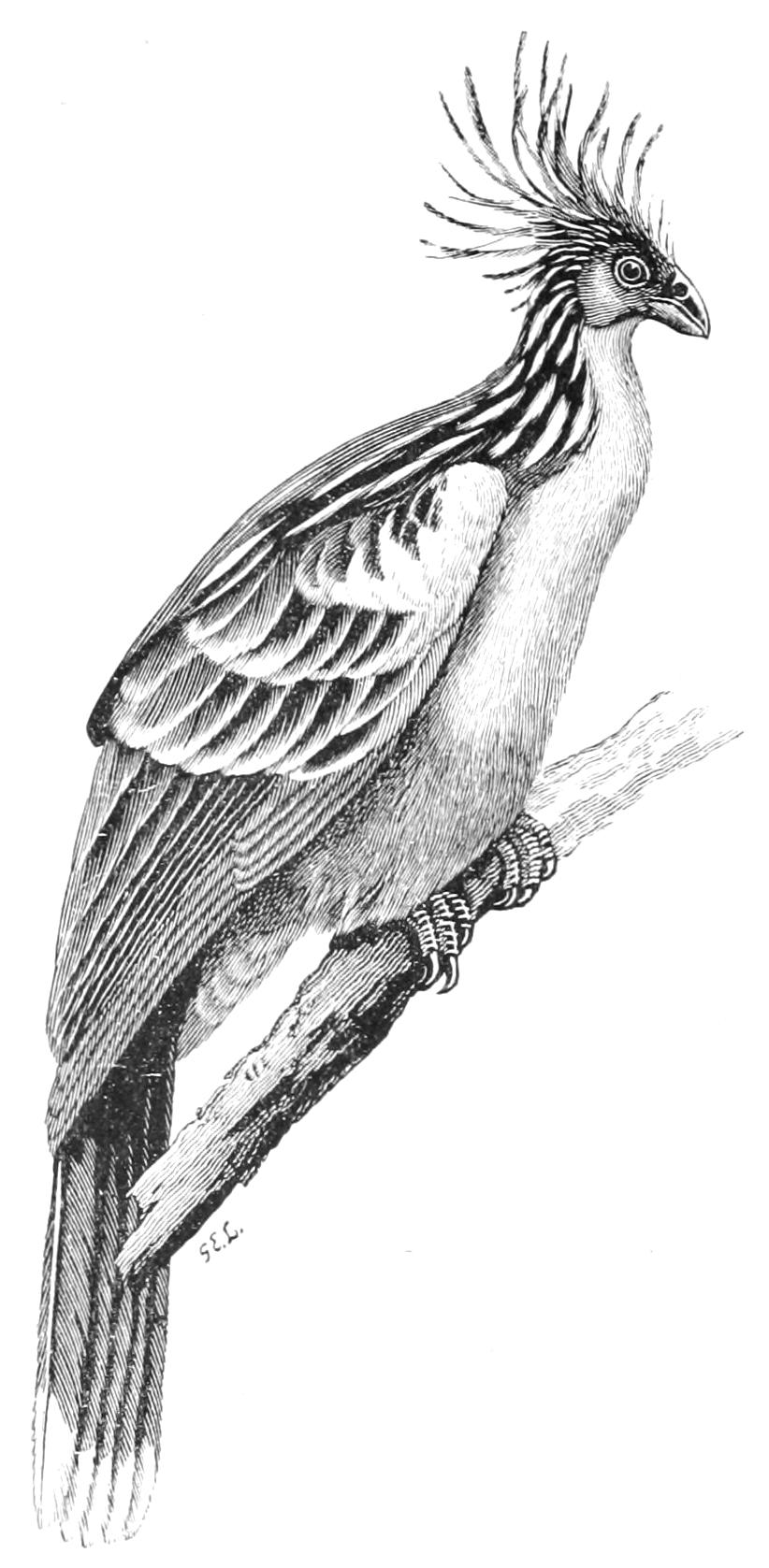
Fig. 49.–Hoatzin.
Opisthocomus cristatus. × ⅕.
Order X. GRUIFORMES.
The Gruiformes, which lie between the Galliformes and the Charadriiformes, compose a somewhat heterogeneous Order, which includes forms so different as the Rallidae (Rails), Gruidae (Cranes), Aramidae (Limpkins), Psophiidae (Trumpeters), Cariamidae (Seriemá and Chuñia), Otididae (Bustards), Rhinochetidae (Kagu), Eurypygidae (Sun-Bitterns), and Heliornithidae (Finfoots). Of these a large number are Waders, but the Land-Rail, the Wekas, the Kagu, the Bustards, and others, cannot be classed in this category. All agree in having no true crop, a tracheo-bronchial syrinx, and an elevated hallux; while the front toes are never completely webbed, though nearly so in Heliornis; the nares, moreover, are pervious, except in Rhinochetus. In the last-named the condition of the newly-hatched young is unknown, in Heliornis they are said to be naked at first, but in the remainder of the group they are covered with simple down. In structure the nine Families differ widely, a fact which would seem a strong argument against combining them under one head; but the aggregate of such points must be considered, and in any linear system the relationships within every Order cannot possibly be equally close. The present arrangement does not differ greatly from that adopted by Mr. Sclater,[171] wherein he accepted the names Alectorides and Fulicariae, used by Nitzsch, but made the former to consist of the Aramidae, Eurypygidae, Gruidae, Psophiidae, Cariamidae, and Otididae, and the latter of the Rallidae and Heliornithidae. Some writers, both modern and ancient, have placed the Otididae in the Limicoline group.
Fam. I. Rallidae.–The Rails constitute a somewhat generalized and very homogeneous Family, found in almost all parts of the world. The body is peculiarly compressed–enabling them to move with ease in dense vegetation–while the keel of the sternum is especially reduced in those flightless forms for which the group is remarkable. The strong bill varies in dimensions, being long in typical Rails, shorter and thicker in Crakes, decidedly curved in Himantornis, and reaching its maximum size among the Gallinules in Porphyrio and Notornis, where it is subconical. A horny shield is present upon the forehead in Megacrex, Habroptila, the Gallinules and the Coots, which is usually rounded or truncated posteriorly, but is reduced to a point in Porphyriops. This excrescence is in most cases red, but is sky-blue, light green, or dusky in Porphyriola, green in Tribonyx, blackish in Megacrex, white, yellow, or brown in Fulica. The lower part of the tibia is bare; the anteriorly scutellated metatarsus is seldom short, though occasionally very stout; the toes are long and slender with the elevated hallux weakest; the claws are fairly long, curved, and sharp. Somewhat shorter digits are found in Tribonyx and Pareudiastes, Fulica has broad lobes of skin along the front toes, while Porphyriops and Gallinula have narrow entire membranous margins to them. The wings are generally short and rounded, with ten or eleven primaries, and from eleven to sixteen secondaries, all the feathers being obtuse; but in many species these members are imperfectly developed, and their coverts actually hide the quills in such cases as Ocydromus and Notornis. This retrograde tendency is clearly evidenced in the "Island Hen" of Tristan da Cunha (Gallinula or Porphyriornis nesiotis) and the Mountain Cock of Gough Island (G. comeri), which flutter along without flying; in the Moho of Hawaii (Pennula ecaudata), Ocydromus and Notornis of New Zealand, and Habroptila wallacii of Halmahera; not to mention Eulabeornis, Porzanula, Nesolimnas, Cabalus, Pareudiastes, and the extinct Aphanapteryx, Aptornis, Diaphorapteryx, and Erythromachus. In several flightless forms, as in the Dodo, the angle between the scapula and the coracoid is obtuse. The tail has from ten to fourteen rectrices, the usual number being twelve; these are short and usually soft, frequently with decomposed webs, and may be concealed by the coverts, as in Megacrex, Amurolimnas, and Pennula. Its form varies from narrow and pointed to comparatively broad and rounded. A large caruncle rises behind the frontal shield in Gallicrex and Fulica cornuta, two knobs being found there in F. cristata: the wing, moreover, is often armed with a sharp spine. The nasal grooves are commonly long and deep; the pervious nostrils being in the hard sheath of the bill in Gallinules, and partially covered by a bony or horny growth in Rallicula, Pareudiastes, and Thyrorhina. The furcula is U-shaped, the tongue lanceolate, the aftershaft very small. Down is plentiful in both adults and young, that of the nestlings being commonly black, while the chicks of our Moor-Hen and Coot have the head adorned with red and blue. Rails, not being born blind, run from the shell, and swim at once.
Ralline birds are under ordinary circumstances non-gregarious, and inhabit tangled marshes or damp localities near rivers and lakes; but many, and especially the flightless forms, have a predilection for dry plains, as for instance Pennula of Hawaii, Ocydromus of New Zealand, Cabalus of the Chatham Islands, Habroptila of Halmahera, Tricholimnas of New Caledonia, and Pareudiastes of Samoa. Crex pratensis of the Palaearctic Region also haunts dry lands. Fulica gigantea occurs only on the lakes in the Andes of Chili, Bolivia, and Peru. Some species are partly crepuscular, and in Britain the Spotted Crake is certainly little heard except towards evening. Rails walk easily with bobbing head and jerking tail, while they prefer running to flying, as the flight is laboured and requires continuous action of the wings. As may be readily seen in the case of Coots and Moor-Hens, some difficulty is experienced in rising from water, the feet trailing along the surface for several yards; but, when once fairly launched in the air, the legs, which at first hang down, are drawn up below the tail, and a steady pace is maintained for considerable distances. Most species swim and dive with facility, and will even remain with only the bill above water; perching and climbing, too, are common habits. Generally speaking, the members of this Family are silent birds, though they may be constantly heard calling towards dusk; the more or less melancholy notes are less varied than in many other groups, but may be harsh and sonorous, or loud and clear. The groaning noise uttered by the breeding Water-Rail, the somewhat frog-like sound made by the Moor-Hen, the continuous craking of the Corn-Crake, the "cackling" of the Clapper-Rail, the shrill whistle of the Wekas, the rasping cry of Ocydromus sylvestris, the deep trumpeting of the Purple Gallinule, and the clearer call of the Coot are some of the most notable exceptions. The food consists of worms, molluscs, insects and their larvae, green herbage, tubers, roots of aquatic plants and seeds; Porphyrio and Tribonyx cause serious damage to potato-, rice-, and corn-crops: while the former bird is said to have a curious habit of holding the larger edibles in its claws and nibbling them like a Parrot. Some of the stronger species occasionally prey on mice, lizards, young birds, and eggs. The nest may be a large mass of aquatic plants or dry flags, as in the Coots, or a similar but smaller structure, as in the Gallinules; the former being commonly founded under water, though raised above it, whereas the latter is generally near the bank or–exceptionally–at the height of a few feet in a tree or bush. Rails and Crakes make a more or less substantial fabric in sedges, grass, clover, and so forth, Creciscus and Porzanula a spherical mass with an entrance at the side; but Pareudiastes, Cabalus, and Ocydromus are stated to breed in most cases in burrows. Gallicrex occasionally fashions its nest on floating leaves, and the writer has seen a Moor-Hen's nest in a similar situation. The eggs, from two to ten or more in number, are generally white or cream-coloured with red-brown, olive, or blackish markings, and often with faint lilac spots; those of the Coot are stone-drab with small black specks; those of Cabalus modestus are white with a few indistinct rufous and grey flecks; those of Zapornia parva and Porzana bailloni are instances of a thick olive-brown mottling. The adults are stated sometimes to carry their young in their claws.
Exceptionally the plumage of the Rallidae is nearly black, as in Limnocorax, Fulica, and Habroptila; slightly browner, as in Gallinula; blue or greenish-blue as in Porphyrio: but the coloration is normally sober, with a tendency to olive, brown, or chestnut. This may be relieved by stripes of white, especially on the flanks; the under parts may be nearly red as in Creciscus levraudi; and both surfaces may be spotted with white as in the male of Corethrura pulchra, or flecked and barred with it, as in Rallus maculatus. The sexes are usually alike, but Rallicula, Zapornia, Gallicrex, and Corethrura are instances of the contrary.
Space, however, is wanting to give in detail a description of every form, which is the less necessary in view of their general similarity; but the following examples will enable a fair idea to be gained of the group.
Rallus aquaticus, the Water Rail of Europe and Central Asia, which winters in North-West India and North Africa, is olive-brown above with darker streaks, and lead-coloured below, the flanks being barred with black and white. The genus is found in most parts of the world, with the apparent exception of North-West Africa and the Australian Region. Rallus elegans, the King-Rail, R. longirostris (crepitans), the Clapper-Rail, and R. virginianus are well-known North American species, while R. madagascariensis is confined to Madagascar.
In Hypotaenidia, which ranges from India and South China to the Pacific Islands generally, the whole lower parts are barred with black and white, except in H. striata and H. mülleri, where these markings are restricted to the sides and abdominal region, and in H. brachypus, where the belly is plain.
Cabalus modestus and Nesolimnas dieffenbachi of the Chatham Islands are curious little brown forms with no visible tail, closely allied to the next genus, which they resemble in being flightless, and apparently in general habits. Ocydromus contains the Wood-Hens, or Weka Rails, of New Zealand, of which O. greyi of the North Island is tawny above with dark shaft-stripes or bars, and grey below with fulvous fore-neck and sides. O. carli of the South Island is more cinnamon in hue; O. australis, also of the South Island, is less grey below, and usually has barred flanks; O. fuscus of the south-west of the South Island is blacker than the first-named; O. hectori is a paler race of O. australis. These Rails are semi-nocturnal, and sometimes excavate burrows, in which, or in the scrub, they pass much of the day; the localities preferred are dry woods, ravines, and sandy shores, O. fuscus obtaining the name of Kelp-Hen from the stretches of sea-weed that it frequents. This species feeds on sea-molluscs, but its congeners will eat young birds, lizards, caterpillars, worms, insects, and berries. The cry is a sharp whistle, often preceded by a growl, the birds being very tame when unmolested. They are pugnacious, inquisitive, and thievish, stealing articles from tents or houses, attacking fowls, or sucking their eggs. Their own eggs are from five to seven, both these and the nest, which is generally in a burrow, much resembling those of other Rails. Ocydromus sylvestris, of Lord Howe Island, is nearly uniform rufous above and brownish below, with barred wings and tail; it lays similar eggs upon the ground.
The dusky Tricholimnas lafresnayi of New Caledonia is remarkable for its soft hair-like plumage, and the purplish-brown and black Gymnocrex rosenbergi of Celebes for its bare yellowish orbits.
Aramides includes eight species found in Central and South America, of which A. ypecaha may be taken as a representative. It is olive-green above, with chestnut nape, black rump and tail, and greyish below with white throat and vinous belly; the bill is yellow, the feet are scarlet. Cautious when danger threatens, it is sufficiently audacious to attack poultry; among its native swamps it usually walks in stately style or struts on the branches of trees, though it can run quickly; while it lies closely when surprised on open ground, dashing up with the whirring flight of a Partridge. The alarm-note is powerful, unearthly shrieks being uttered during both day and night. Companies are described by Mr. Hudson as meeting to dance about with expanded wings and open beaks.[172] Somewhat similar in colour to certain members of the last genus is Megacrex inepta of South New Guinea, one of the largest Rails known, which is usually seen running swiftly along water-courses; while the black Habroptila wallacii of Halmahera loves forests. The curious Himantornis haematopus of West Africa is brown, with black and rufous mottlings above, whitish throat, stout green and black bill, and red feet. Dryolimnas cuvieri of Madagascar, Mauritius, and Aldabra Island, and Canirallus kioloïdes of the first-named and West Africa must be briefly mentioned, as must Rallina reaching from India to North-East Australia, which has half a dozen small brown species, with chestnut on the head and chest, and black and white barring below.
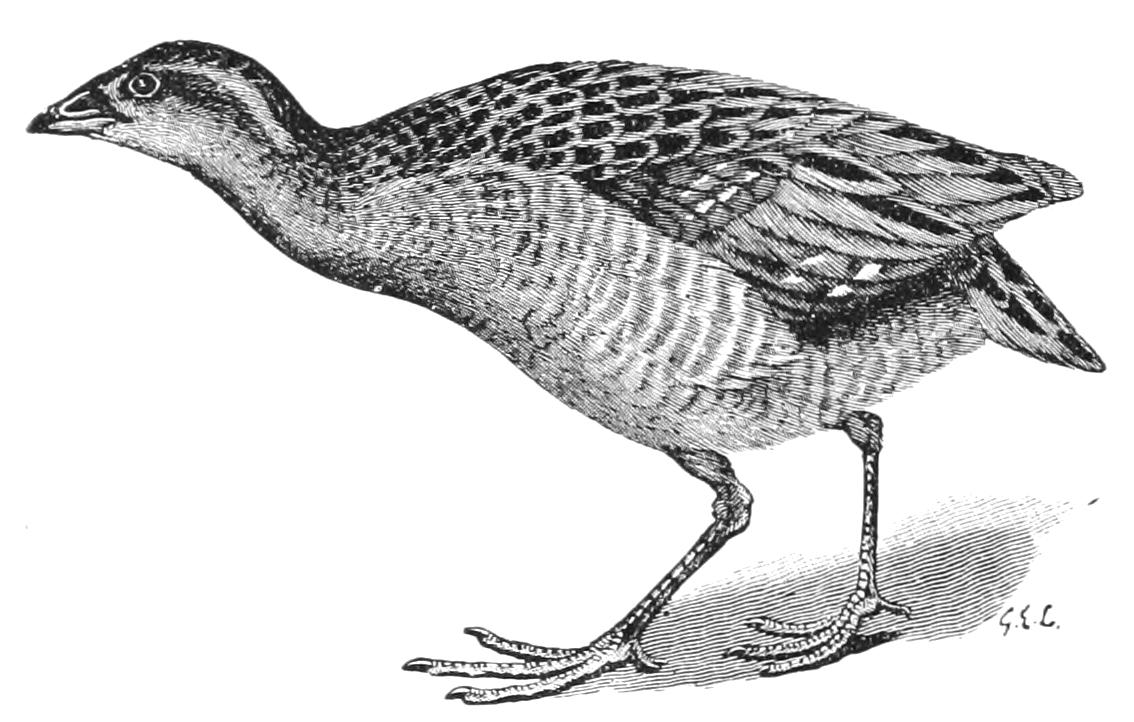
Fig. 50.–Land-Rail. Crex pratensis. × ¼.
Crex pratensis, the widely-ranging Corn-Crake or Land-Rail, extends from most of Europe to the north of Central Asia, wintering in Africa, and occurring accidentally in North America, or even Greenland and Australia. Zapornia parva, the Little Crake, Porzana maruetta, the Spotted Crake, and P. bailloni, Baillon's Crake, are somewhat similar British Birds, the two latter of which have bred in our islands, P. maruetta still doing so in some districts. This species is brownish-olive with white flecks above and below, grey belly, and flanks showing black and white bars. Of its dozen congeners, covering nearly the whole globe, P. carolina, the Sora Rail of North America, is particularly well-known. In the Ethiopian genus Corethrura, extending to Madagascar, the males are blackish, spotted or streaked with white, and have fine chestnut heads, necks, or even breasts, the female being dusky with rufous mottlings: in Rallicula of New Guinea the chestnut extends over most of the body. Porzanula palmeri of Laysan, an interesting little flightless form with a soft chirping note, which the first discoverer caught with a hand-net, makes its nest under grass-tussocks. Closely allied to Porzana is Creciscus, a genus of a dozen species ranging from the United States to the Galápagos, Chili, and Paraguay; two at least of them being remarkable for building a spherical nest with a side entrance in coarse herbage or low bushes, while one is said to make a sort of ladder to reach a platform before its porch.[173] Limnocorax niger of the Ethiopian Region is a glossy black bird with red feet and greenish bill, which walks upon the leaves of water-lilies and such plants, like a Jaçana.
Amaurornis, inhabiting the Oriental Region and extending to New Britain, links the foregoing genera to the Gallinules. A. phoenicura is a dark greyish bird with white under parts and chestnut flanks, the other three species being duller.
Tribonyx mortieri, the "Native Hen" of Victoria, South Australia, and Tasmania, and T. ventralis of considerably wider range, are respectively ruddy- and olive-brown forms, with blackish tail and vent, slaty lower surface, and white flank-marks. They appear at times in flocks, which arrive and depart with equal suddenness, destroy the settlers' crops, strut about like fowls, and in many respects resemble Moor-Hens in habits, nests, and eggs. The legs are unusually powerful.
Gallinula extends over the greater part of both hemispheres, and is represented in Europe, Asia, and Africa by our common Moor-Hen (G. chloropus), dark olive-brown above and grey below, with white lower tail-coverts, white flank-stripes, red frontal plate, and scarlet garter on the tibia. G. galeata of most of the New World differs in the posteriorly truncated shield, but G. sandvicensis of the Sandwich Islands is barely separable. The smaller African G. angulata, G. tenebrosa of Australia and New Guinea, and G. frontata of the two last-named countries, the Moluccas and Borneo, complete the group; unless G. pyrrhorhoa of Madagascar and G. dionysiana of St. Denys be accounted distinct from G. chloropus. The flightless G. (Porphyriornis) nesiotis of Tristan da Cunha and G. comeri of Gough Island have already been mentioned. Gallicrex cinerea, the "Water-Cock" of the Indian Region, which reaches Japan, is dull black, with lighter edges to the feathers above, a yellow and red bill, and red frontal shield. A pinkish fleshy horn springs from the forehead, said to become very small in winter, and to be wanting in the female, which is varied below with white and buff. It has a loud booming cry, and fights like a domestic Cock, but otherwise resembles the Gallinules in habits.
Porphyrio comprises some dozen fine species with blue plumage, found in Africa and Madagascar, and from the Mediterranean to South China and Polynesia; several individuals, probably escaped from captivity, being recorded from Britain. P. caeruleus (veterum) is purplish-blue above with blacker remiges and rectrices, and purplish-black below with bright blue cheeks, throat, and chest, and white under tail-coverts; the bill, shield, and feet are red. It is chiefly a Mediterranean bird, but reaches Mesopotamia. Others of its congeners are greener or blacker. The habits, nest, and eggs are like those of the Coot, whereas the next genus–in the writer's opinion inseparable–appears more akin in manners to the Moor-Hen. Porphyriola alleni occurs in Africa, with Madagascar and Rodriguez, and strays to the Canary Islands and South Europe; P. martinica ranges from Florida, Texas, or even New England, to the West Indies and Brazil; P. parva, from the last-named to Amazonia and Guiana. Porphyriops crassirostris and P. melanops occupy South America.
Notornis mantelli of New Zealand,[174] now probably extinct, was olive-green above with only a tinge of blue; the head, neck, and under surface being dark purplish-blue, the bill, shield, and feet red. It was practically a gigantic Porphyrio with very stout legs, short wings, and soft tail, which was unable to fly, but ran with great swiftness, being solitary and retiring. Its native name Moho is that also given to other Rails in New Zealand, and Pennula ecaudata in Hawaii; it therefore may only mean "Rail." The white N. alba of Lord Howe and Norfolk Islands certainly exists no longer.
Fulica includes twelve species, of which the majority are South American, though the genus extends over most of the globe; Polynesia possesses only F. alai of the Sandwich Islands, but three of the members reach Patagonia. F. atra, our grey-black Coot, with flesh-coloured bill, white shield and greenish legs relieved by an orange garter, ranges through Europe and Asia, and to North Africa and the Philippines southwards; its habits are well-known, while the lobed toes are noticed above. The smaller F. lugubris of Sumatra, Java, and Celebes is hardly distinct; the North American F. americana and the Australian F. australis are very similar; the Andean F. gigantea is extremely large; while the red frontal caruncles of the Bolivian F. cornuta and of the African and South-European F. cristata have already been mentioned.
Of fossil Rallidae an extraordinary number are found, ranging from the possibly toothed Telmatornis of the American Cretaceous rocks, Gypsornis, Orthnocnemus, Elaphrocnemus, and Tapinopus of the French Upper Eocene, and Rallus of both Eocene and Miocene of the same country, to Fulica minor of the Pliocene of Oregon. Of more recently exterminated forms we have Tribonyx (?) roberti from Central Madagascar, the long-billed flightless Aphanapteryx broecki and Fulica newtoni from the Mare aux Songes in Mauritius, Porphyrio caerulescens from Réunion, and the "Poule Rouge" (Erythromachus leguati) from Rodriguez. In New Zealand are found the large Aptornis defossor and A. otidiformis, with two species of Notornis; in the Chatham Islands Diaphorapteryx hawkinsi and Ocydromus insignis–all six flightless; in the latter islands, too, an extinct Fulica (Palaeolimnas) occurs, and in Norfolk and Lord Howe Islands Notornis alba, as above. Queensland furnishes Porphyrio mackintoshi, P. reperta, Tribonyx effluxus, Gallinula strenuipes, G. peralata, and Fulica prior. The Sandwich Islands may possibly yet contain Rallus sandvicensis and Pennula ecaudata, further instances of flightless species, but this is improbable.
Fam. II. Gruidae.–The Cranes are very old forms, superficially somewhat like Herons, and often confounded with them in local parlance–as is the case in Scotland and Ireland. They are among the largest of Waders, and are scattered over most of the globe, except the Malay islands, Papuasia, and Polynesia; but in the Neotropical Region they are mere migrants from the north, never found south of Mexico. Their headquarters are in North-East Asia, while America possesses only three species, and Australia one.
These long-necked and long-legged birds have a moderate bill, straight and rather compressed, which varies from slender to stout, with a lateral groove on each side of the mandible and nasal furrows about halfway down the maxilla; in Balearica this feature is comparatively short. The metatarsus is scutellated in front, reticulated behind; the tibia is partly bare; the toes are short and stout, the anterior being more or less connected at the base by a membrane; the hallux is small, much elevated, and furnished with a sharp hooked claw. The wings are described by different writers as long or moderate, but are certainly ample and rounded, with about thirty-three quills, of which eleven are primaries; the decomposed inner secondaries exceed the last-named, and are either lanceolate and drooping, or broad and erectile, while in Bugeranus and Tetrapteryx they are extraordinarily extended. The short tail has twelve rectrices. Anthropoïdes has long silky auricular plumes, Balearica a bristly crest and a naked gular wattle, Bugeranus a feathered lappet on each side of the throat, Antigone australasiana a pendulous pouch, and most species, as will be seen below, a partly bare carunculated head. The tongue is lanceolate, the nostrils pervious; while, except in Balearica, the trachea of the adult is convoluted within the keel of the sternum, but enters it behind the clavicles,–which are often ancylosed with it,–and not in front of them, as in certain Swans, the development varying according to the species and the age. In Anthropoïdes the cavity of the keel is open laterally. The furcula is Y-shaped, the aftershaft is very small, the down is uniform in both adults and young.
Cranes are inhabitants of morasses and plains, being especially fond of the neighbourhood of lagoons, tanks, and fields of corn or rice; yet they are also found in boggy openings in forests, on sandy flats, or even on the sea-shore. They are gregarious after the breeding season, when they often collect into flocks of immense size, which pass the night together and traverse vast distances in company. The northern species all migrate southwards in winter. Erect and tall, they may be seen striding swiftly along with head thrown back, or strutting around their mates; while in spring they often stand in rows and proceed to stalk about in single file, or dance to meet one another with nodding heads, necks advanced, and wings widely outspread. Thereafter they bow towards the ground, jump in the air, and perform graceful antics of all descriptions. The chosen spot for these dances is commonly near water. The male courts his spouse in somewhat similar fashion, and twigs or feathers are often tossed in the air in sport, to be caught again ere they touch the ground. Rising from a level spot appears to be a difficult matter, the birds running awkwardly for a few yards, and labouring heavily with their wings to gain their purpose; when once in the air, however, the flight is steady and swift, with head and legs outstretched, though this is varied by countless elegant evolutions and gyrations, as they rise higher and higher until they become mere specks in the heavens, and finally disappear from sight. The characteristic utterance is a harsh guttural or resonant trumpeting sound, uttered on the ground with the head thrown back and the bill open, or repeated incessantly at great elevations; but the Whooping Crane has a clear, piercing cry, the Asiatic White Crane a feeble but mellow whistle, and the Crowned Cranes a plaintive but fairly sonorous set of notes. The varying calibre of the voice has been thought to be connected with the convolutions of the trachea mentioned above, the young giving vent to a weak pipe or trill. Virgil's lines concerning the noise made before rain, and the flight, are well-known to Latin scholars. The food consists of grain, pulse, acorns, shoots, flowers, roots, tubers, bulbs, and the like, with the occasional addition of small mammals and birds, reptiles, amphibians, worms, insects, and even fish; the members of this Family, however, dislike wading, and only swim under compulsion. Feeding chiefly in the morning and evening, when they post sentinels, as Rooks do, they often stand or doze upon one leg, with the head drawn back upon the shoulders. Cranes, which are said to pair for life, return to the same breeding haunts annually, where they either construct a large fabric of reeds, rushes, and aquatic herbage, or use straw and small twigs for their nest. The conical pile, with its moderate depression on the top, is commonly placed in shallows, fresh materials being added if the water rises. Several species, on the other hand, merely scrape a hole in marshy ground, on dry plains, among standing corn or grass, or on sandy beaches, while occasionally reed-beds are selected. The eggs, two, or rarely three in number, are generally creamy white, olive-brown or buff, with reddish-brown, red, or purplish-grey spots and blotches; those of the Indian Sarus Cranes have a bluish- or greenish-white ground, while those of the Crowned Cranes are not uncommonly plain bluish-white. The male is said to incubate in some cases, and both parents tend the young carefully for a considerable time, though the latter run from the shell; the female sits with her head drawn in upon her shoulders, and is usually loth to leave her charge. When wounded these birds are very dangerous, fighting boldly with bill and wings. They are very palatable when fed on grain, the breast in particular resembling beef-steak. Cranes are easily domesticated, and, in certain districts of India, in Japan, and among the Kalmuks, they are held in reverence, though elsewhere they are often killed for the sake of their decorative plumes.
Grus communis, the Common Crane of Europe and Northern Asia, which used to breed in Britain until the end of the sixteenth century, and reaches North Africa, India, and China on the winter migration, is ashy-grey, with white cheeks, nape, and sides of the neck, black primaries and inner secondaries; the crown being bare, with blackish bristles and red warty skin. G. lilfordi of East Siberia is a lighter race. G. canadensis is a smaller species, hardly different from G. mexicana, the "Sandhill Crane" of the United States, which is slaty-grey, with a brownish wash. G. monachus, another similar form from Eastern Asia, has all the head white except the bare portion. G. nigricollis of Koko-nor has the feathered part of the head, the upper neck, the wings, tail, and inner secondaries black; G. japonensis of North Eastern Asia is white, with grey-black throat and fore-neck, the dark colour extending to a point on the hind-neck. G. (Limnogeranus) americana, the Whooping Crane of the United States and Mexico, is pure white with black primaries, the bristly head, lores, and cheeks being bare, and covered with warty red skin. G. (Sarcogeranus) leucogeranus, the Asiatic White Crane, is entirely white, except for the black primaries, and has all the front of the head bare, the red skin extending beyond the eye, and showing a few scattered hairs. This bird ranges at certain seasons to South-East Europe. G. (Antigone) collaris of India and the Caspian is light grey, with brownish-black primaries, a white ring round the lower neck, and white inner secondaries; the grey-green crown is bare, the occiput and upper neck are red and papillose, with black bristles on the latter. The Burmo-Malay G. sharpii is distinguished by the absence of white; while both enjoy in common the name Sarus. G. (A.) australasiana, the "Native Companion" of East Australia, has the neck feathered, and possesses a red and green gular pouch, covered with the same black hairs as the face, the general coloration resembling that of its congeners. G. (Pseudogeranus) leucauchen, the "Tan-cho" or national Crane of the Japanese, part of the crown and the cheeks bare, warty, and red, with black hairs. often seen in their clever drawings, is grey, with white hind-crown, nape, throat, and inner secondaries; the rest of the wing-quills and the tip of the tail are black, the fore-part of the crown and the cheeks bare, warty, and red, with black hairs.
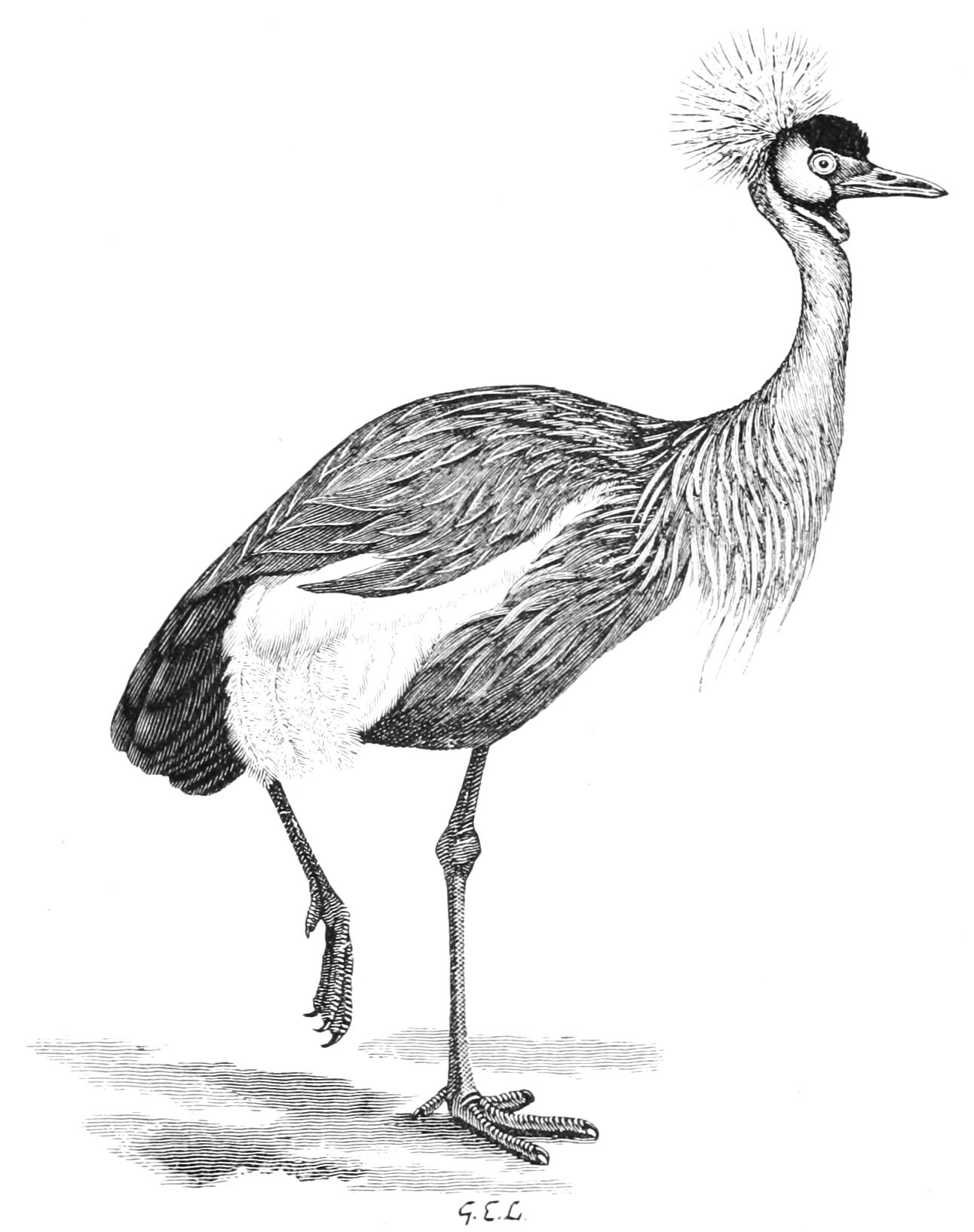
Fig. 51.–Crowned Crane. Balearica pavonina. × ⅛.
It is found westward to Lake Baikal, and southward in winter to the Yangtse basin. G. (Bugeranus) carunculata, the Wattled Crane of South Africa, is slaty-coloured, becoming blacker towards the tail, and browner towards the mantle; the cheeks and the whole neck are white, with elongated chest plumes; a lappet, with white feathering, hangs from each side of the throat; and the fore-part of the head is covered with bare red papillose skin. G. (Tetrapteryx) paradisea, the "Stanley" Crane of the same districts, is leaden blue, with black ends to the inner secondaries, and a white crown; the head is entirely feathered, and the chest plumes elongated as in the next species. G. (Anthropoïdes) virgo, the "Demoiselle" Crane, inhabits South Europe, and extends to Central Asia and North China, migrating to Northern Africa and India in winter. It is silvery-grey, with white ear-tufts, black sides of the head, neck, chest, primaries, and tips to the inner secondaries. Balearica pavonina, the Crowned Crane of the northern Ethiopian Region, is greenish-black above and dark grey below, most of the feathers being lanceolate; the neck is delicate grey all round, the secondaries are chestnut–the inner being somewhat decomposed; white and yellow shew on the wing-coverts; a spreading tuft of twisted yellow and white bristles with black tips surmounts the occiput, while the sides of the face are bare–white above and pink below, and the throat is covered with black down. There is a very small throat-wattle in this form, but B. chrysopelargus, the Kaffir Crane of South Africa, has it much larger and chiefly red, differing moreover in its greyer plumage, and white cheek-patch with only a border of crimson above. In B. gibbericeps of East Africa, the bare skin of the face extends almost to the nape.
In Cranes the sexes are alike; but the young are browner, with rusty or buff tips to the feathers, or even with downy instead of more or less naked heads, as in adults. Immature birds lack the elongated plumes. The bill is usually greenish-grey, brown, or black, at times with a little red, but it is yellow in Limnogeranus; the feet vary from greyish- or bluish-black to dull green or flesh-colour; the iris is generally crimson, orange, or yellow.
The Upper Eocene of Hampshire furnishes the fossil Geranopsis as well as Grus, the Italian Eocene Palaeogrus, that of Wyoming four species of Aletornis; Grus occurs, moreover, in the Miocene of France, the Pliocene of Attica and the United States, while G. primigenia of the French and Italian Plistocene, with G. melitensis of the Zebbug cave in Malta, complete the list.
Fam. III. Aramidae.–In this group, as in the Psophiidae (p. 257), the osteology and pterylography are Crane-like, the digestive organs and style of plumage Rail-like; a link being thus formed between the two Families. The long, hard bill is slender and compressed, with slightly curved tip; the tibia is partly bare, the metatarsus scutellated. The wing has eleven primaries and some dozen secondaries. The long tongue is said to end in horny filaments, the trachea is sometimes convoluted in males, the nostrils are pervious.
Aramus pictus, the Clucking Hen or Limpkin of the Greater Antilles, South Florida, and Central America, is chocolate-brown with white flecks; the upper parts are glossed with bronzy-purple, the bill is greenish. A. scolopaceus, the Carau, Courlan, Lamenting Bird, or Crazy Widow, ranging from Guiana to Argentina, has only the head and neck streaked. Generally solitary or found in family-parties, these birds conceal themselves by day among reeds or damp forest-vegetation; they rise with difficulty after a preliminary run, and take low, brief flights, the legs hanging down and the wings flapping slowly, while the latter are elevated for a descent. They walk quickly and in stately fashion, limping and jerking the tail; at night they roost on trees. The resonant, melancholy wail is varied by a clucking note, or by an angry cry when breeding. The shallows of streams or marshes are diligently searched for molluscs, which the formation of the beak enables the bird easily to open or break, but small reptiles, insects, and worms are also eaten. The flat nest of herbage, placed among reeds, contains from ten to twelve white eggs, as large as those of a Turkey, clouded with pale brown and purple.[175]
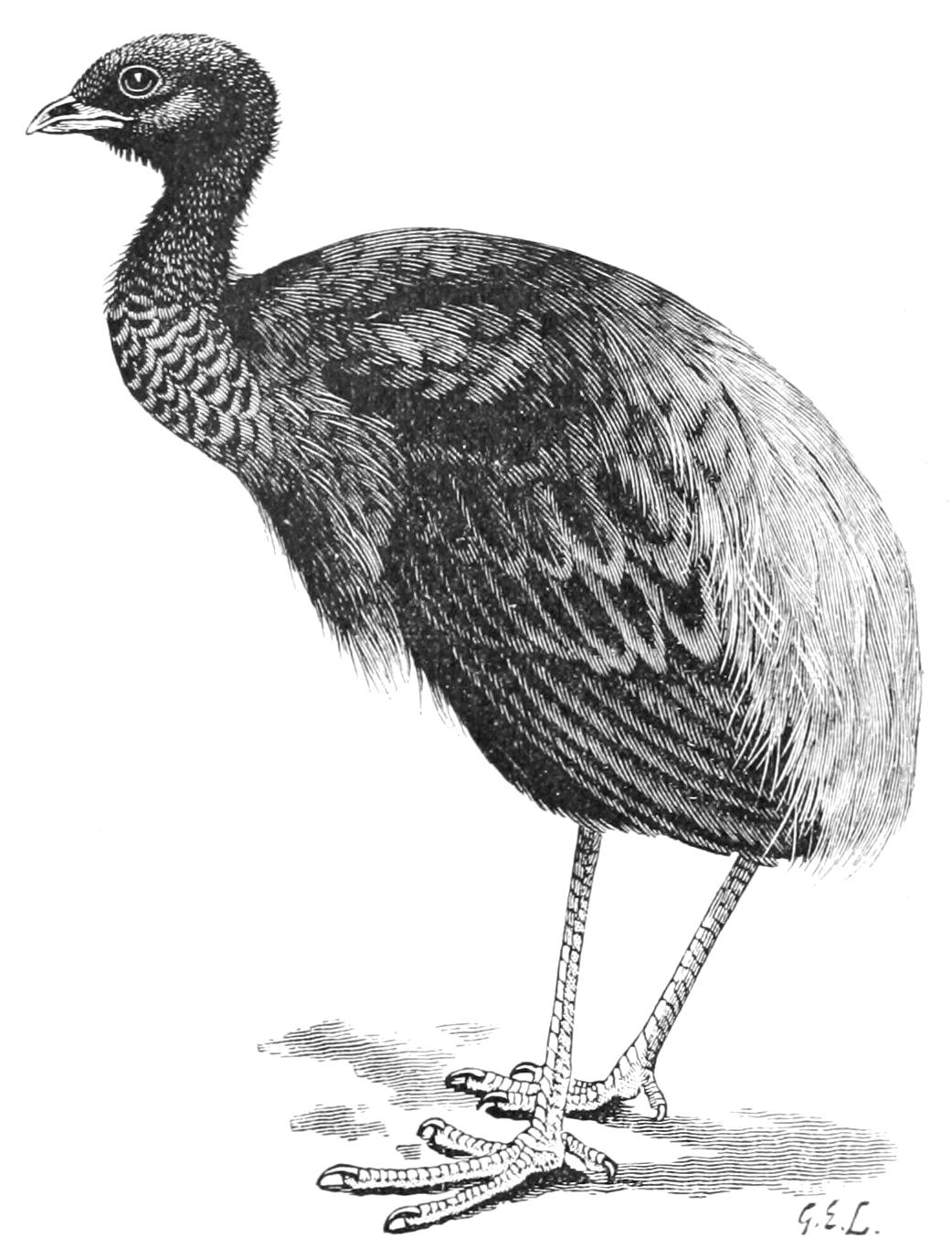
Fig. 52.–Trumpeter. Psophia crepitans. × ⅙.
Fam. IV. Psophiidae.–The so-called Trumpeters form a single genus of six species inhabiting tropical South America, and somewhat resemble long-necked and long-legged Fowls, the beak being gallinaceous and the tibia partly bare. The long metatarsi are scutellated in front; the wings and tail are short, the ten primaries, just equalling the twelve secondaries. The nostrils are pervious. The downy nestlings are chestnut streaked with grey.
Psophia crepitans, the Agami, ranging from British Guiana to Amazonia, is a black bird with velvety plumage on the head and neck, and lax feathering below; a golden-green and violet sheen adorns the lower fore-neck, a rusty brown patch crosses the back and wing-coverts, the bare orbits are pinkish, the beak is greenish or greyish, and the legs are variously stated to be bright green or flesh-coloured. P. napensis of Ecuador has the sheen on the neck dull purple, P. leucoptera of Peru and Upper Amazonia lacks the brown above, and has the inner wing-coverts and inner secondaries white, these feathers being ochraceous in P. ochroptera of the right bank of the Rio Negro. P. viridis of Amazonia–from Pará up the right bank of the Rio Madeira to the Rio Mamoré–perhaps identical with P. obscura, has the back and inner secondaries glossed with green. The sexes are similar.
These birds love moist forests, and sometimes form flocks of three hundred individuals; they are so sociable and easily tamed that the natives use them to protect poultry. They perch, but seldom fly, and run swiftly with a peculiar gait, while they swim on an emergency. The deep-toned ventriloquistic, but not strictly trumpeting, cry is uttered with widely opened beak; the food consists of fruit, corn, and insects. The nest, said to be at the foot of a tree, contains creamy- or greyish-white eggs, like those of a Bantam.
Fam. V. Cariamidae.–These birds have given rise to much discussion, and have been placed by several authors in the Accipitres, near the Secretary-Bird, which they somewhat resemble in their erect carriage, general appearance, and habits. The beak is short, broad, and slightly hooked, the neck is rather long, the legs decidedly so; the tibia is partially bare, the metatarsus is entirely scutellated, the claws are sharp and curved. The wings are short, with fourteen elongated secondaries and ten primaries; the long, graduated tail has twelve rectrices. The nostrils are pervious. The internal anatomy and pterylosis are Gruine, an aftershaft is present, and the downy young are either grey and brown (Cariama) or rufous and black (Chunga). Cariama cristata, the Seriemá, or Crested Screamer (p. 110), extending from Pernambuco to Paraguay and Matto Grosso, is ochreous-grey above with zigzag umber markings, and whitish below with brown stripes. Vertical feathers on the lores form a conspicuous crest, while those of the neck and throat are long and loose; interrupted white bands cross the remiges, and the bases and tips of the lateral rectrices. The iris is yellow, the beak and feet are red, the naked orbits greenish. The female is yellower, and exhibits less crest. Chunga burmeisteri, the Chuñia of Tucuman and Catamarca in Argentina, is smaller and darker, with shorter legs and little crest; it has a broad white superciliary streak, and two wide black bars on the tail-feathers, except the median pair. The bill and feet are black, the iris is grey.
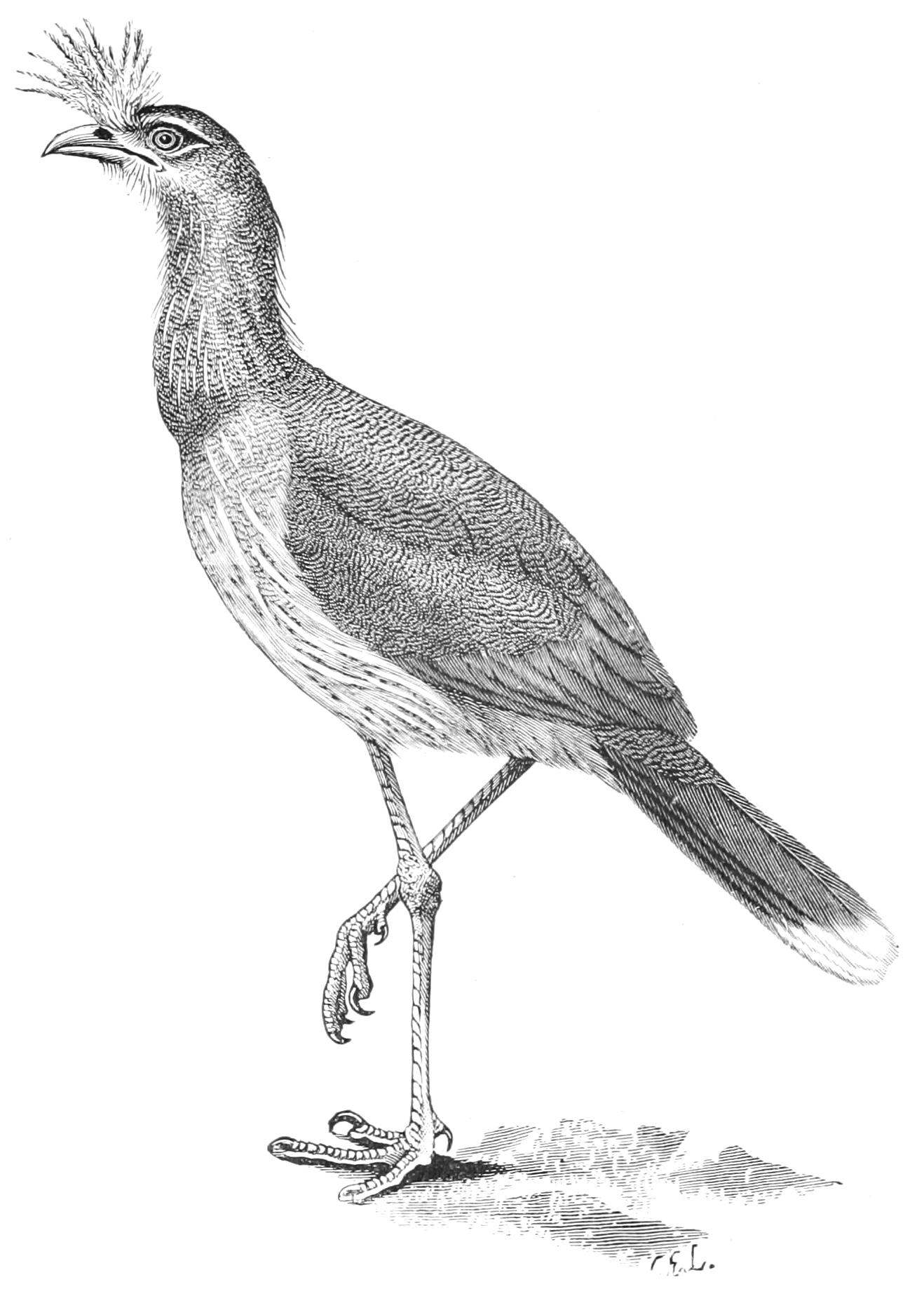
Fig. 53.–Seriemá. Cariama cristata. × ⅐.
Both species are chiefly diurnal, the former frequenting the high grass of the open "campos" in pairs and parties of five or six, the latter forests or bushy districts; they roost on trees, stalk about in stately fashion, stoop when running, and fly a little when hard pressed. The barking or screaming cry is chiefly heard towards dusk; the food consists of small mammals, snakes, lizards, snails, worms, insects and their larvae, as well as berries, Chunga preferring the insect diet. Easily domesticated, and in Brazil protected by custom, these birds will guard their owners' fowls; while the male at times incubates and shews off to the females in spring, like a Bustard. Cariama builds a nest of twigs in low trees or bushes; Chunga generally chooses the ground; but in either case the young soon leave their quarters; the two eggs have a pale ground-colour with rufous blotches, as in so many Rails. The Seriemá has been hatched in the Zoological Society's Gardens in London.
The fossil Phororhachos and certain others of the so-called Stereornithes (p. 44) probably belong here.
Fam. VI. Otididae.–The Bustards are here admitted as a Family of the Gruiformes, though many writers have preferred to refer them to the Limicolae, and the question is by no means finally settled. The head is flat, the neck thick, the bill somewhat blunt and depressed, being either short, as in Otis and Trachelotis, or longer, as in Neotis and Lissotis. The metatarsus varies much, the length for instance being comparatively great in Houbaropsis, and small in Otis tetrax, while both surfaces are covered with reticulated scales; the short, stout toes have flattish nails, and the hallux is absent, as in many Limicoline forms. The wings are moderate, with the secondaries almost equal to the primaries, the latter–which are acuminate in Sypheotis–being eleven in number, and the former about twenty; the tail, of medium length, has a more or less rounded outline, and possesses from fourteen to twenty rectrices. Ornamental plumes are characteristic of this group, and take the form of decided crests on the crown and nape, or on the latter alone, in all the genera except Otis, Neotis, Lissotis, Trachelotis, and Sypheotis; the last-named, however, has elongated cheek-feathers with bare shafts and spatulate webs. The plumes of the throat and fore-neck are lengthened and shield the breast in Houbaropsis and Eupodotis, those of the sides of the neck form a ruff in Houbara; while Otis is remarkable for the prolonged ear-coverts, and for the tuft of long bristly feathers on each side of the base of the mandible in the male.
The nostrils are pervious, the tongue is sagittate, the furcula is Y-shaped, and often ancylosed with the sternum, the syrinx is tracheo-bronchial. An after-shaft is present, and the down, which is uniform in the young only, is in them mottled with black and lighter tints. A most remarkable phenomenon, moreover, is the gular pouch, opening under the tongue, found in the male of some examples of Otis tarda during the breeding season. This pouch becomes very small or vanishes altogether at other times of the year, and seems to be restricted to adult birds. Similar, but smaller, processes have been observed in Eupodotis kori, E. edwardsi and, it is said, Otis tetrax; while dilatations of the oesophagus have been recorded in E. australis and Neotis denhami.
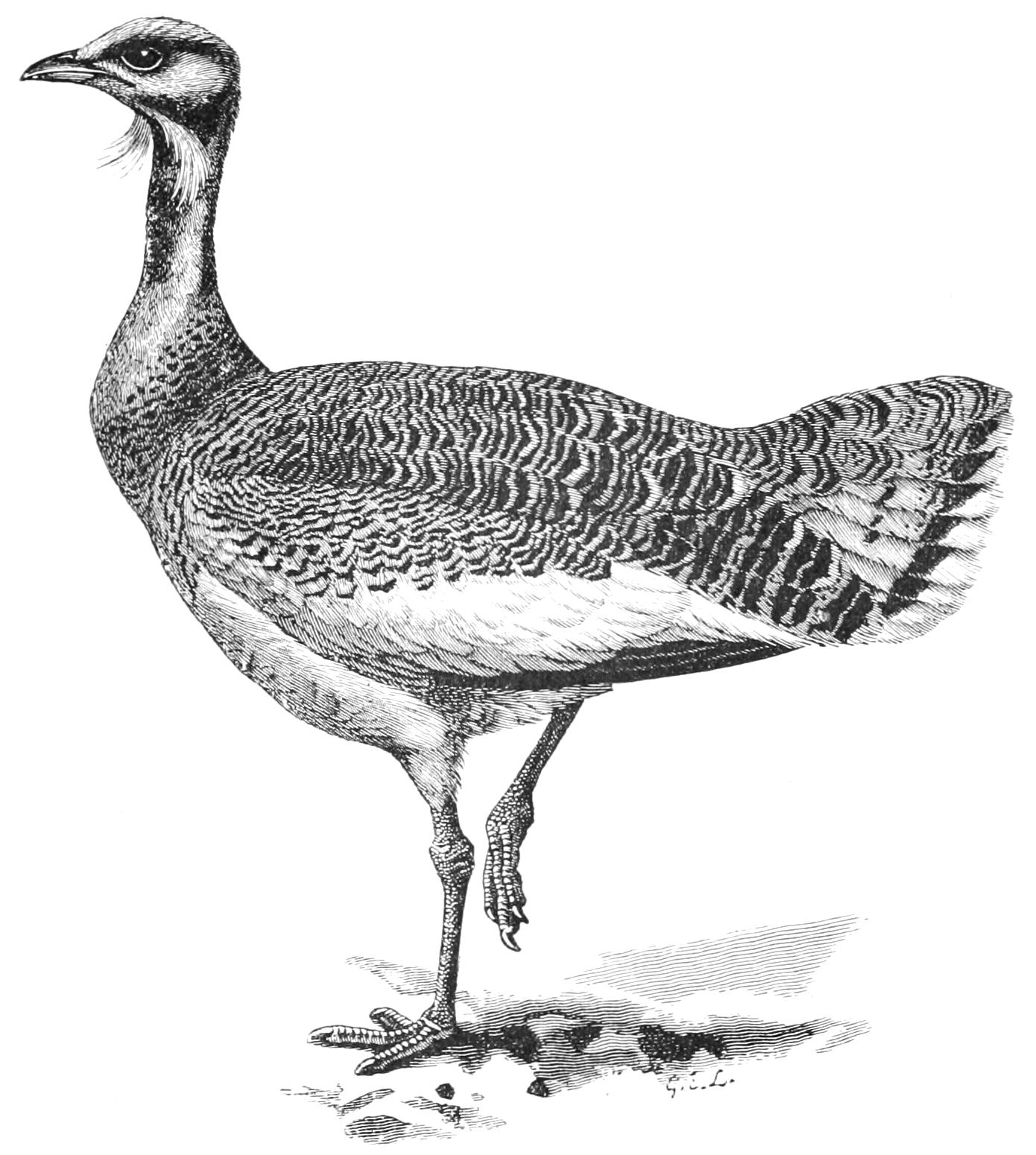
Fig. 54.–Great Bustard. Otis tarda. × ⅑ or ⅒.
Otis tarda, the Great Bustard, which, as a native, only became extinct in Norfolk about 1838, used to extend from East Lothian to Dorset, but is now merely an occasional visitor to Britain. The upper parts are mottled with rufous, buff, and blackish-brown, the head is blue-grey, with long white bristles at the base of the mandible, the lower surface is white, relieved in the male by a tawny gorget for a short time during the breeding season. The primaries are black, most of the secondaries and wing-coverts white. Some other Bustards seem to have a similar vernal change of plumage. The female is smaller and has no bristles. O. tetrax, the Little Bustard, a straggler to our shores, is somewhat like the last species in colour, but has the cheeks and throat grey, bordered by a white line, and below this comes a broad black collar divided in front by a median white band in the nesting time. The female is brown and black, with white breast and no collar. The remaining members of the Family vary considerably in pattern of colour, being spotted, streaked, or vermiculated above, and being occasionally very dark; the head and the lower parts, moreover, are not uncommonly quite black, or the latter may be greyish-blue, as in Trachelotis coerulescens. The bill and feet are usually yellow, more seldom greyish or dusky. Females and young exhibit a more uniform mixture of brown, black, and buff, while rufous bases to the feathers are characteristic of the group.
Bustards are Old World birds, reaching eastwards to Australia, where Eupodotis australis is called the "Native Turkey." E. edwardsi inhabits the plains of India, E. arabs extends from Arabia to North Africa, and E. kori from the East to the South of that continent. Otis ranges over South and Central Europe, and thence to North Africa, inhabiting also Mid-Asia to North-West India, the Yangtze-Kiang River and Japan. Houbara undulata, the African Ruffed Bustard, reaches from the Canaries,[176] through the Mediterranean basin to about Armenia; its congener H. macqueeni, which strays westward to Britain, being resident in Persia, North India and Central Asia. Houbaropsis bengalensis and Sypheotis aurita are the Florican and Lesser Florican of India; Lophotis, Compsotis, Heterotetrax, Neotis, Lissotis, and Trachelotis inhabit the Ethiopian Region. The members of the Family are to some extent migratory, and perhaps the Great Bustard was partly so of old in Britain.
The members of this Family flock in winter, and occasionally form small parties at other seasons, the males being very possibly polygamous, though the fact is hardly proved. Typically inland birds, they haunt dry grassy and sandy plains, or cultivated ground where the crops are low, yet sometimes they choose more bushy flats, or stony tops of elevated ridges. Their flight is prolonged and often rapid, though invariably heavy, the neck and legs being outstretched; the Great Bustard rises from the ground slowly, the Little Bustard with a rattling noise, but they are frequently loth to leave it, crouching to escape detection on the similarly coloured soil. They stalk about rapidly and run with ease, being shy, wary, and far-sighted, while they are more easy to approach when they resort to water. The quill-feathers are said to be lost after breeding.[177] In spring the pugnacious cocks strut around the hens, swelling out their plumage, and inflating the gular pouch when it is present; the head meanwhile is thrown backwards, the wings droop, the tail is usually erected and outspread, and booming or crooning utterances with leaps diversify the performance. At times the notes are described as scolding, drumming, craking, and clucking, or resemble "cok-cok" or "prut-prut." The diet consists chiefly of juicy plants, such as young corn and turnips, clover and plantains, but it includes berries and seeds, insects and their larvae, molluscs, myriapods, frogs, or even small reptiles and mammals. The Gom-Paauw[178] (Eupodotis kori) is so-called from its love of mimosa gum. The eggs, varying from two to four or five in different species, are deposited in an excavation in the soil–sometimes lined with grass–under shelter of a bush, tussock, or growing crop; they are oily-green, olive, drab, red-brown, or exceptionally bluish-green, and are generally blotched, clouded, or zoned with purplish or dull red. The hen sits very closely. Bustards can be circumvented by riding round them in constantly diminishing circles, and they are also captured with Falcons.[179]
A fossil Otis is recorded from the Miocene of France and Germany.
Fam. VII. Rhinochetidae.–This contains only one species, Rhinochetus jubatus, the Kagu of New Caledonia, a very old and generalized form, somewhat bigger than an ordinary fowl, which was originally referred to the Herons and then to the Cranes, but is undoubtedly nearly allied to the latter, and approximates rather closely to Eurypyga.[180]
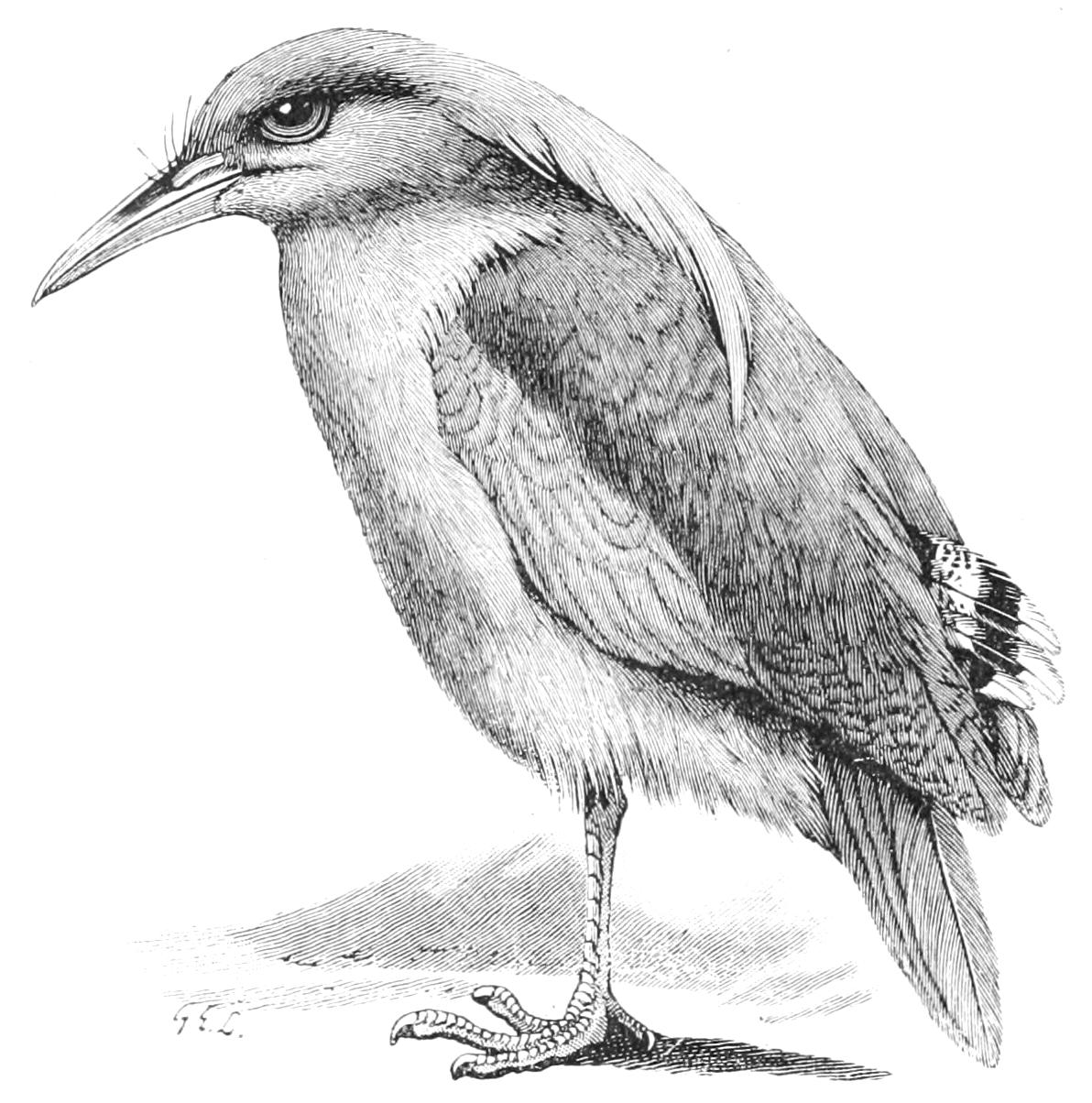
Fig. 55.–Kagu. Rhinochetus jubatus. × ⅕.
The head and eyes are large; the neck is strong; the bill is Heron-like, but somewhat flat above, with a wide nasal groove. The sternum is weak and narrow, having no posterior notch; the furcula is U-shaped; the legs are moderately long and slender, the toes Rail-like, with curved claws; the tibia is half bare, the metatarsus scutellated, with smaller scales behind. The wings are moderate, broad, and rounded, though less developed than in Eurypyga, the primaries being ten in number, and the secondaries–of which the inner exceed the primaries–thirteen; the tail is fairly long and ample, with twelve rectrices. The aftershaft is large; the nostrils are impervious, contrary to the rule in the Order, being severally overhung by a peculiar rolled-up membrane, said to protect them when the beak is thrust into the soil; the tongue is lanceolate. Powder-down patches are profusely distributed over the whole body, except towards the remiges and rectrices. The plumage is slaty-grey, with indistinct dark bars on the wings and tail; but when the former are expanded, rufous and white bands appear, varied by black markings; while a long, erectile whitish-grey crest adorns the occiput and nape. The bill and feet are orange-red. In adults down covers the whole surface. Possibly the chicks remain a considerable time in the nest, but this is by no means certain; those of Eurypyga do so, it is true, but those of Cranes and Rails do not. Immature specimens are more rufous, with black bars above.
Though formerly the Kagu was not rare in its native island, it is now restricted to the wilder portions, where it is to be met with among the rocks of craggy ravines or near stagnant waters, sleeping throughout the day and issuing from its concealment towards evening. It walks quickly, yet in a stately manner, often coming to a standstill or crouching, and remaining motionless for a long period; but it can also run rapidly with the head and neck outstretched, and the body carried after the manner of a Rail. The habits in confinement, however, make it somewhat doubtful whether the bird is as nocturnal as is asserted, for in the daytime it is quick and lively in its motions, chasing its fellow-captives, dancing round with the tip of its outspread wing or tail held fast in its bill, tossing about dry leaves or pieces of paper, spreading out its wings and thrusting its beak into the ground, kicking with its legs, and finally tumbling about as if in a fit. The note is guttural and rattling, or almost a scream; the food consists of molluscs, worms, and insects, sought for among the grass or in crannies, while the bill is often plunged into the soil, and worms pulled out, shaken and swallowed. When in quest of food the bird often paws the earth with gentle strokes, and snails are usually beaten upon the ground to break the shell. It will bathe in captivity, and is said to like wet weather in its native haunts. The nest is unknown, but eggs laid at the Zoological Society's Gardens in London are reddish-buff with brown and grey markings, and recall those of the Woodcock or Corncrake.[181]
Fam. VIII. Eurypygidae.–Two species of Eurypyga are comprehended herein, namely, E. helias of the countries from Venezuela to Bolivia and Central Brazil, and E. major of Central America, Colombia, and Ecuador. These are, like the Kagu, very ancient types, but whereas that bird shows some affinity to Scopus, these trend rather towards Nycticorax, both being, however, essentially Gruiform. The neck is long and thin, the bill rather slender, with grooves on the maxilla and mandible: the whole leg and foot are as in Rhinochetus, but shorter, weaker, and reticulated behind; the wings and tail are even more ample, while the number of primaries and rectrices are the same, but the secondaries are only eleven, and the inner feathers comparatively short. The nostrils are pervious, the tongue is lanceolate, the furcula is U-shaped, the after-shaft is diminutive, and the powder-down patches are abundant, though writers differ as to their extent. E. helias–as Prof. Newton says in his excellent account[182]–is not to be described in a limited space otherwise than generally; it has a black head, with a white stripe above and under each eye, and a white throat: the remaining plumage "being variegated with black, brown, chestnut, bay, buff, grey, and white–so mottled, speckled, and belted either in wave-like or zigzag forms, as somewhat to resemble certain moths. The bay colour forms two conspicuous patches on each wing, and also an antepenultimate bar on the tail, behind which is a subterminal band of black. The irides are red; the bill is greenish-olive; and the legs are pale yellow." E. major is larger and more uniform in colour. Both adults and nestlings have copious down, that of the latter being lightish brown with lines and spots of darker brown and white. The sexes are similar.
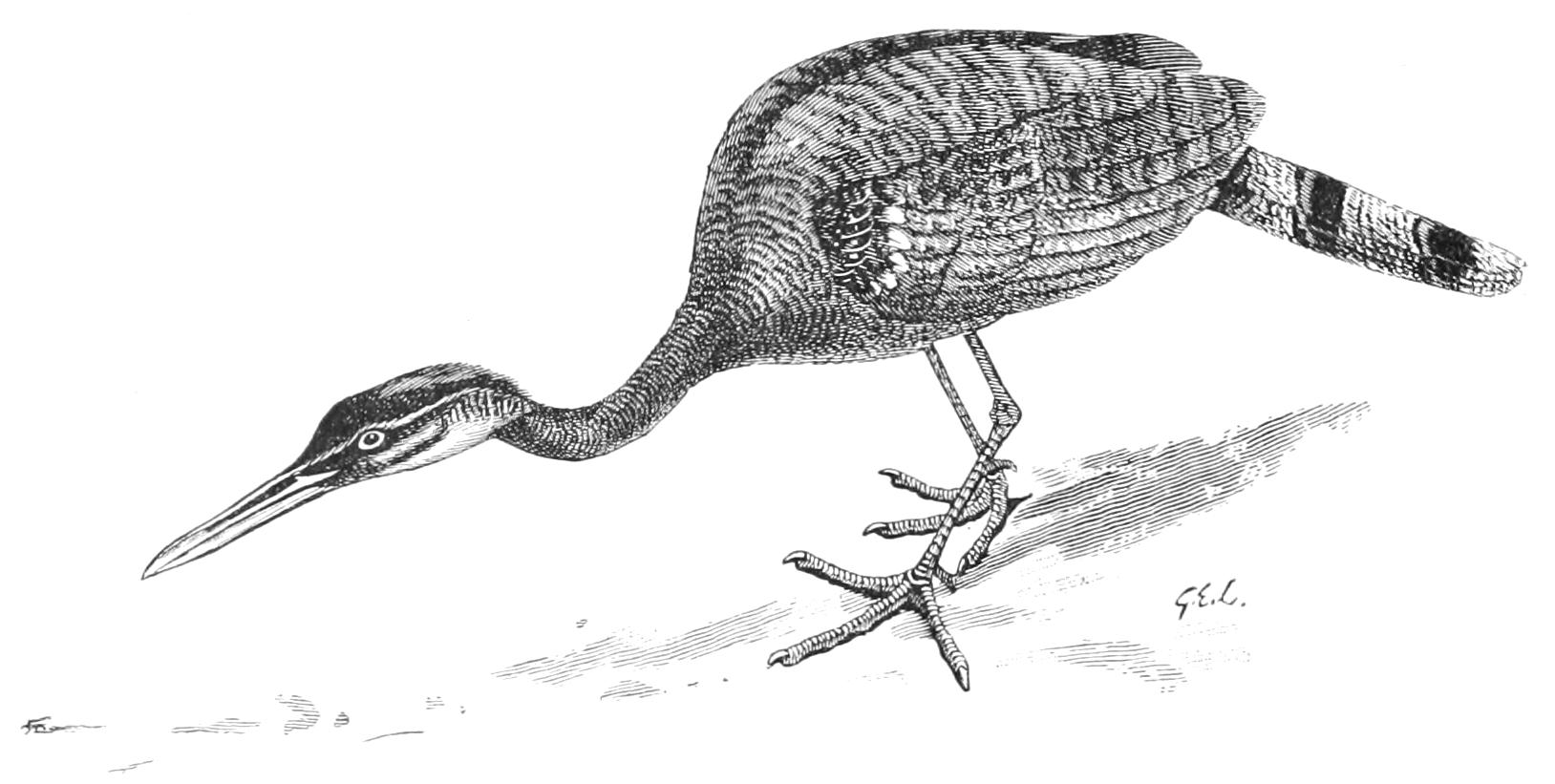
Fig. 56.–Sun-Bittern. Eurypyga helias. × ¼.
The "Sun-Bittern," to use its common but misleading name, is found on the larger rivers, where the banks are wooded and swampy; it is shy but easily tamed, and, according to Bates, is kept in captivity by the Brazilians. It walks quietly and circumspectly with horizontal body and outstretched head, and probably flies but little. Like the Kagu, it executes a fantastic dance, but in this case the wings and tail form a semicircle which nearly conceals the body. The note is a soft or plaintive long-drawn whistle, the food consists mainly of small fish and insects, which the bird spears by darting out its head quickly. The nest, said to be made of sticks, grass, and mud, with a lining of the latter, is placed on low branches, and contains several eggs similar to those of the Kagu, but smaller. Both parents incubate and attend to the young, which have several times been reared in the Zoological Society's Gardens in London.[183]
Fam. IX. Heliornithidae.–The Finfoots, comprising three genera and four species, now generally coupled with the Rallidae, have been placed near the Divers and Grebes by several authors. The head is small, the neck thin, the bill Rail-like and fairly stout; the metatarsus, which is scutellated anteriorly and reticulated posteriorly, is short, twisted outwards, and deeply grooved; while the toes have short, sharp claws, and broad scalloped webs, extending in Heliornis to most of their length. The long pointed wings have twenty-one remiges, of which eleven are primaries, and are armed with a curved spine; the tail consists in Podica of eighteen elongated, stiff, ribbed rectrices, which are narrow and pointed, and in Heliopaïs and Heliornis of rather soft, short, rounded feathers. The plumage is close, but not glossy as in Grebes; there is no after-shaft, the U-shaped furcula ancyloses with the sternum, the tongue is lanceolate, and the nostrils are pervious.
These birds, which frequent the swamps or rocky streams of inland woods, are very shy; their flight is heavy, and they rise with difficulty from the surface of the water, aiding themselves by their feet. They swim and dive well, and will remain half-submerged for hours, or will sit upon a low branch over a stream, dropping down and scrambling up the bank when disturbed, or hiding at its base. They are said, moreover, to run swiftly on land. The note of Heliornis fulica is like a dog's bark; the food is in all cases of small fish, crustaceans, insects, and seeds. The nest and eggs are unknown, but in the species just mentioned the nestlings are stated to be naked. This form, about thirteen inches long, which ranges from Guatemala to Paraguay, is olive-brown above, the black head and nape being separated by a white band down each side of the neck from a blackish line which encloses the white throat; the chest is buff, the sides are brown, the remaining underparts whitish; the bill is red, the feet are yellow, banded with black. Podica senegalensis of West Africa, and the doubtfully distinct P. petersi, reaching from the Lower Congo to South East Africa, are larger forms, with round ochreous spots above, and red feet. Heliopaïs personata, extending from Assam to Sumatra, has a black throat, orange bill, and light green feet.
Order XI. CHARADRIIFORMES.
The Charadriiformes are here taken to consist of five Sub-Orders. Of these the Limicolae contains the Families Charadriidae (Plovers, Sandpipers, Snipes, and so forth), Chionididae (Sheath-bills), Glareolidae (Pratincoles, Coursers, and Crab-Plover), Thinocorythidae (Seed-Snipes), Oedicnemidae (Stone-Curlews), and Parridae (Jaçanas); the Lari possesses one Family, Laridae (Gulls, Terns, and Skuas); the Alcae only the Alcidae (Auks); the Pterocles, the Pteroclidae (Sand-Grouse); but the Columbae may be divided into Dididae, Didunculidae, and Columbidae. The first three may again be combined into a Laro-Limicoline group, and the last two into a Pteroclo-Columbine, in accordance with their affinities.
In structure the Limicolae are sufficiently uniform to be considered simultaneously.
The bill furnishes a useful means of subdividing the Charadriidae. It is hardest in Haematopus, Ibidorhynchus, Strepsilas, and so forth, being in them bony throughout. In Charadrius, Aegialitis, Lobivanellus, Vanellus, and the like, it has a hard tip, but is comparatively flexible towards the base. These may compose Sub-family (1) Charadriinae. In Totanus, and its nearest allies, it is still hard at the tip, but more flexible at the base. In Tringa, and similar genera, it ceases to be hard at the tip, and is slightly endowed with nerves. These may constitute Subfamily (2) Tringinae. In Scolopax, Gallinago, and Rhynchaea it becomes highly nervous at the tip, and therein differs from that of all other birds. These form Sub-family (3) Scolopacinae. In Himantopus and Recurvirostra the bill is so attenuated as hardly to be called hard at the tip, but it has no nerves there. The form of the beak varies greatly, being asymmetrical and twisted to the right in Anarhynchus, up-curved from the middle in Avocetta, wedge-like in Haematopus, much flattened in Tringa platyrhyncha, spade-shaped in Eurynorhynchus, arched in Numenius, and strongly decurved in Ibidorhynchus. In the Chionididae a horny sheath covers the base of the maxilla, and is indicated by faint lines in the young; in Glareola the bill is short, curved, and very deeply split, making a wide gape; in Dromas it is hard, deep, and compressed; in Cursorius thick and little bent; in the Thinocorythidae Fowl-like; in the Oedicnemidae short, stout, and blunt; in the Parridae narrow and pointed, with a skinny frontal plate, and occasionally with rictal wattles. The nasal grooves are very long in Ibidorhynchus, Totanus, Scolopax and elsewhere.