Chapter IV · (continued 2)
Reading edition
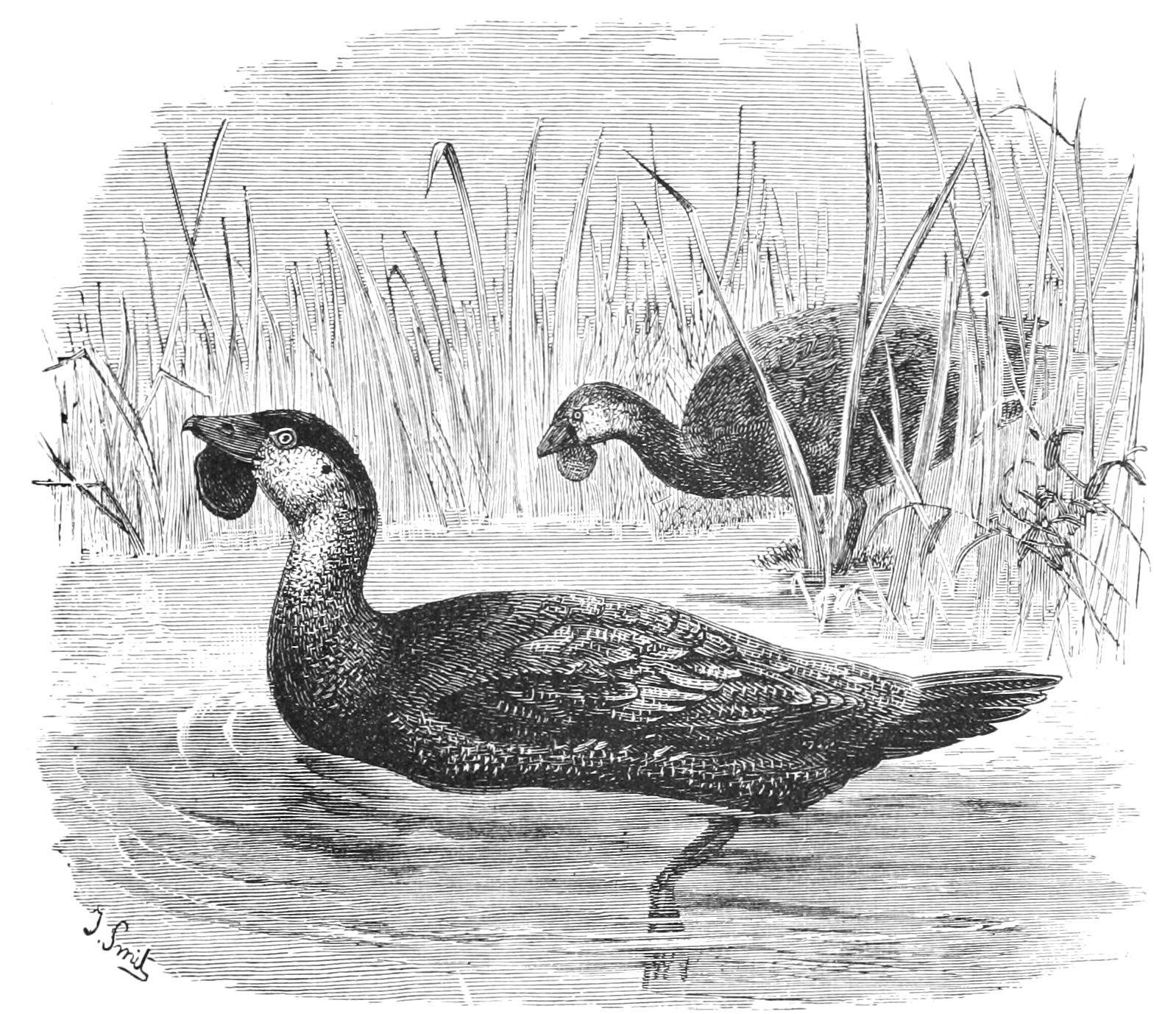
Fig. 33.–Musk Duck. Biziura lobata. × ⅐. (From Nature).
Sub-fam. 3. Erismaturinae.–Biziura lobata, of Tasmania and Australia–except the north–is brown with buff mottlings, the bill and its leathery appendage being greenish-black and the feet dusky. The smaller female has less chin-lobe. This species frequents the sea as well as lakes, roosts in trees, and when diving remains long submerged; the food consists of mussels, leeches, and aquatic worms; the note resembles the dropping of water. The nest, placed on a stump or in a bank, contains two olive eggs; the musky smell of the sitting female having suggested the name of Musk Duck.
Erismatura contains seven "Lake Ducks," inhabitants of fresh-water lagoons, which dive like Grebes, and remain with only the bill exposed; they are often tame, and when disturbed splash along the surface like a Moor-hen, to settle again almost immediately; in swimming the spiny tail is carried erect, suggesting a comparison to a "two-peaked saddle." The note is said to be a curious inward sound; the food is of fish, molluscs, and insects; while the nest, built in rushy places, contains up to ten coarse-grained white eggs.[113] E. leucocephala, ranging from the Mediterranean to Southern Siberia, and in winter to North-West India or, exceptionally, to Holland, is rufous-brown with black vermiculations and bars, black crown and neck-ring; the rest of the head and neck being white, the bill blue, the feet dusky. E. jamaicensis, of Central and temperate North America, E. ferruginea, of Bolivia and Peru, E. aequatorialis, of Ecuador, E. maccoa, of South and East Africa, E. vittata, of southern South America, and E. australis, of South and West Australia and Tasmania, are brown with greyer belly mottled with dusky; the head and neck being black, except for the white cheeks and chin in the first-named and the chin only in the second and third. E. aequatorialis has white instead of rufous under tail-coverts; E. maccoa has white axillaries as opposed to grey in E. vittata; E. australis is much deeper chestnut. The females are decidedly duller. E. (Nomonyx) dominicus, of Central, Southern, and, accidentally, Eastern North America, has the feathers of the back black in the middle and a white speculum. Thalassiornis leuconota, of South and East Africa with Madagascar, is variegated with black and ochreous yellow, the rump being white, the wings, tail, and feet brownish, the bill blue-grey. It dives much, flies little, and lays about four greenish eggs.
Sub-fam. 4. Fuligulinae.–Somateria mollissima, the Eider Duck, breeds commonly in Northern Britain, and thence to the Taimyr Peninsula eastwards and the Coppermine River westwards, birds from North-East America being separated as S. dresseri; while S. v-nigrum, differing in its black V-shaped throat mark, occupies North-East Asia and North-West America. In winter the first-named strays as far as South Europe and the United States; the second has occurred in Holland. The male Eider has white upper parts and buff chest, black lower back, abdomen, and crown, the last showing a white streak; the wing- and tail-quills are brown, the stiff nape-feathers green, while the plumage extends in a peak on the culmen. The female is brown, with blackish bands or stripes and two white alar bars. The bill and feet are olive-green. S. spectabilis, the King-Eider of the Northern Arctic Regions, rarely wandering in winter to Britain, France, New Jersey, and California, has the head blue-grey with green and white cheeks, and a black chevron on the throat; the remaining portions being black except for the buff breast, white neck, upper back, lesser wing-coverts, and a patch on each side of the rump. The feet and the bill, with its vertical black-edged disc at the base, are orange. The female is redder than in the Eider, with a more feathered culmen. These species are essentially maritime, only coming to shore to breed; they are semi-gregarious, and form a nest of grass and rubbish, a quantity of down underlying the five to eight oily-green eggs. Eider-down is chiefly procured from Iceland, Greenland, and protected islands in Norway. The flight is low and heavy, the food consists of mussels, starfish, and other sea creatures. Arctonetta fischeri, the Spectacled Eider of Alaska, is chiefly white, with dark grey rump and under parts; the head being varied with green and decorated with pendent bristly plumes on the occiput, stiff frontal and loral feathers, and a satin-like quadrangular patch outlined with black on each side. The tail- and wing-quills are brown, except the falcate inner secondaries; the feet are brownish, the bill is orange in the male. The female is fulvous and black with bluish beak. Heniconetta stelleri breeds on the Arctic shores mainly between the Taimyr Peninsula and Alaska, and has strayed to Britain and even France. The head, falcate scapulars, and inner secondaries are white with blue-black outer webs to the two latter, the rest of the wing-quills and tail brown; the back, throat, neck, and a spot on each side of the breast purplish-black; the lores and short occipital tuft green, the lower parts mostly tawny. The female is brown with darker markings, and duller wing-bar. Camptolaemus labradorius, the extinct "Pied Duck" of the North Atlantic coast of America, was black, with white head, neck, chest, scapulars, and most of the wings except the primaries; it had a black stripe down the crown and stiff cheek-feathers. The brownish female shewed a white speculum.
Oedemia nigra, the Scoter or Black Duck, which nests in North Scotland, ranges over Northern Europe and Asia to the Taimyr Peninsula, sometimes reaching the Azores and the Mediterranean in winter. It is black, with a yellow nasal patch and a swollen base to the culmen, the female being dark brown with greyish face and throat, and no protuberance or yellow mark. Oe. americana of North-East Asia and North America, migrating to Japan, California, and New Jersey, has the knob yellow with red sides, while the female is grey-brown. Oe. fusca, the Velvet Scoter, extends from Scandinavia to West Siberia, and occurs exceptionally in Greenland, visiting us in winter, though rarely reaching Spain and the Adriatic; it is black with a white speculum and mark under each eye, the bill being orange with black posterior swelling and lateral line, and the feet dull crimson-red. The brownish female has the white speculum, but a brown bill. The very similar Oe. deglandi, of North-East America, has the base of the maxilla entirely feathered, as has the still blacker Oe. carbo, of North-East Asia. Oe. perspicillata, the Surf-Scoter, accidental in Britain and North-West Europe, inhabits the far north of America and the Asiatic coasts of Bering Straits, wintering down to Jamaica and California. The black plumage is relieved by white patches on the crown and nape; there is a black mark on each side of the crimson, scarlet, and orange bill, the feet are crimson, orange, and black. The brown female has yellowish-orange feet. Scoters are gregarious birds, usually found some way from land except when breeding; the flight is strong; the note guttural, but softer in spring; the food consists of fish, molluscs, and crustaceans. They nest near fresh-water lakes and pools, among heather or grass, and lay from five to eight yellowish-white eggs.
Cosmonetta histrionica, the Harlequin Duck of Iceland, North-East Asia, Arctic America, and possibly the Urals, which reaches Japan, the United States, and exceptionally Britain and elsewhere in winter, is grey-blue, curiously marked with black and white on the head, neck, wings, and chest; the superciliary streaks and flanks are chestnut, the speculum being purple, the bill plumbeous, the feet brown. The female is brown with whitish cheeks and mottlings below. The habits of tumbling and diving in rocky torrents have been well described by Mr. Belding;[114] the nest is in banks or under boulders, and contains seven or eight buff eggs. Harelda glacialis, the Long-tailed Duck of the Arctic Regions, which appears to breed in Shetland, and in winter even reaches the Mediterranean and China, but more commonly the Caspian, Lake Baikal, Japan, and the middle United States, is at that season white with brownish patches on the sides of the neck, brown-black back, wings, central rectrices, and chest. In summer the crown, neck, and scapulars become brown, with rufous edges to the dorsal plumage. The bill is pinkish and black, the feet are bluish. The female is brown, with white ocular region, neck-ring, and lower parts. This noisy species is called, from its musical chattering note, "Calloo" in Shetland and "Old Squaw" in America; it flies very swiftly and nests near water, laying from six to twelve oblong grey-green eggs.
Clangula glaucion, the Golden-Eye, not yet proved to breed in Britain, though it does so in North Germany, the Caucasus, Siberia, and Maine, besides the Arctic Regions generally, is found in winter to the Mediterranean, and thence to North India, China, Japan, Mexico, and Cuba. The glossy head is green, with a slight crest and white cheek-patches; the upper parts are black with white on the wings and scapulars, the lower surface being white, the bill black, the iris golden, the feet orange. The female has the head and back brown, the chest grey. Similar to Fuligula in general habits, the Rattlewing, as it is often termed from its noisy flight, is more partial to inland waters in winter, while for breeding it prefers hollow trees, or nest-boxes set up by Lapps and Finns, the ten or twelve eggs being bright green. C. islandica, the ordinary species in Iceland, differing from C. glaucion in its purplish head, inhabits Arctic America also, and winters in the United States, rarely straying to Britain or the rest of Europe. C. albeola, the Buffel-head, of North America, which has visited the Commander Islands and Britain, has the head purplish-green with a large white occipital patch, the iris brown and the feet pinkish. It breeds to the northward, the eggs being whitish.
Tachyeres cinereus, the Logger-head or Steamer Duck, of Chili, the Falklands, and Straits of Magellan, is grey in both sexes, with lighter head, rufous throat, white secondaries and belly, orange-yellow bill and feet. The narrow median rectrices are curled up, the wings very short; while the adults apparently lose the power of flight. Darwin well describes the noisy splashing action, the rapid and flapping swimming movements, the weak diving powers, the strong beak adapted for extracting shell-fish, and the voice like that of a bull-frog.[115] From seven to nine eggs are laid among herbage or low bushes.
Fuligula marila, the Scaup, of Northern Europe, Asia, and America, which migrates to the Mediterranean and Black Seas, North India, China, and Guatemala, has the head, neck, and chest greenish-black, the back vermiculated with black and white,[116] the wings and tail dusky, the speculum and under parts white, the bill and feet plumbeous. The female is chiefly brown above, with white round the base of the bill. F. affinis, of North America, has the head purplish; F. cristata, of the whole Palaearctic area, breeding freely in Britain and apparently in the Abyssinian highlands, while wintering in India, Japan, China, the Malay Archipelago and Polynesia, is distinguished by an occipital crest, and in the male by a black back. F. novae zealandiae, of New Zealand, the Auckland and Chatham Islands, has a purple and green gloss above, a few white dots on the back, and rufous-brown abdominal feathers, the latter being brown and white in the female. F. collaris, of North America generally, has a violet tinge on the black portions, a chestnut collar, a blue-grey speculum, and white under parts barred with dusky; the bill shows two whitish bands; the female has white lores and throat.
Nyroca ferina, the Pochard, which breeds not uncommonly in Britain, ranges from Iceland to Japan, and in winter to North Africa, India, and China; it has a chestnut head and neck, a black gorget, and upper parts finely freckled with black and white; the speculum is grey, the quill-feathers and rump are black, the lower parts greyish-white; the bill is black, banded with dull blue, and the feet are bluish. In the female, or Dunbird, the head, neck, and chest are dull reddish and the back browner. N. americana, of North America, has a purple shade on the head and neck, a white belly, and no black at the base of the bill. The female has a grey-brown head. The larger N. vallisneria, the Canvas-Back of the same country, which breeds in the north-west, has the crown and comparatively long bill black. The female has some white on the head and neck, and is vermiculated with white on the back. N. baeri, of Eastern Asia, has a green-black head and neck, but is chiefly brown, with a black-edged white speculum and whitish wing-quills, the female being duller with a chestnut cheek-patch. N. africana, the White-eyed Duck of British Lists, breeds from Central Europe to the Mediterranean basin, and from the Ob Valley to Cashmere, wintering southwards to the Canaries, Abyssinia, and Arrakan. It has a chestnut head, neck, and chest, a white spot on the chin, blackish-brown upper parts, a brown collar, a black-edged white speculum, a little white on the primaries, and white lower surface, the bill and feet being plumbeous and the irides white. The female is duller with browner head. N. innotata, of Madagascar, has a darker head and no chin-spot. N. australis, of most of the Australian Region, is not dissimilar, but has a brown tip to the white speculum and some brown on the belly. N. brunnea, of South and East Africa, is brown, mottled with grey above, the head and upper neck being dark purplish-chestnut, the lower neck black, the speculum white with a black posterior band. Some white shows on the primaries, and the bill and feet are plumbeous. The female has white at the base of the bill, on the throat, and behind the eye. N. nationi, of Peru, is hardly distinct.
The majority of these two genera are wary sea-birds, though breeding inland; they feed at dawn or dusk on aquatic plants and seeds, molluscs, insects, and even small fish and frogs, chiefly obtained by diving, wherein they are great adepts. Vallisneria spiralis, a plant largely eaten by the Canvas-Back, accounts for its specific name and possibly for its flavour. The note is a grating or guttural sound, varied by a low whistle; the nest is generally close to water, and contains from six to thirteen green eggs. N. africana, N. australis, and Fuligula novae zealandiae are rather more skulking species with weaker flight, rarely found at sea.
Metopiana peposaca, of South America, northward to Chili and South Brazil, is black with grey vermiculations above and on the belly, the cheeks and upper neck are purplish, the speculum and inner primaries chiefly white, the bill and its swollen base carmine, the feet yellow. The female is brown, with whitish under parts and grey on the wing. It frequents marshes on the Pampas, has a rapid heavy flight, utters a long hoarse note, and lays a dozen creamy eggs.
Netta rufina, the Red-crested Duck, found from the Mediterranean to the Caspian and Turkestan, or to India in winter, rarely occurs in Britain or North Europe, and is recorded once from America; it is chiefly greyish-brown above and blacker below, with a large crest on the chestnut head, white speculum and sides, red beak and feet. The crestless female is duller, with whitish cheeks and throat.
Sub-fam. 5. Anatinae or typical Ducks.–Heteronetta atricapilla, of South Brazil, Uruguay, Chili, and Argentina, is dark brown above with black head and rufous vermiculations, and white below with dusky markings; the tips of most of the wing-feathers are white, the bill is blackish with basi-lateral flesh-coloured spots, the feet are brownish. The female's head is brown. Stictonetta naevosa, of West and South Australia and Tasmania, is brown with freckles and spots of white in either sex. Marmaronetta angustirostris, ranging from South Europe and North Africa to India, and occurring in the Canaries, is greyish above, with brown and buff marblings, and whitish below with brown bars. It flies low, utters a croaking whistle, and lays ten or eleven buff eggs in isolated tussocks. Both sexes of Malacorhynchus membranaceus, the Pink-eyed Duck of Australia and Tasmania (p. 111), are grey-brown with lighter dots, and some white on the face, wing, and tail; the under parts are whiter with brown bands, while behind each blackish eye-patch is a pink mark, situated below a dark line running to the occiput and down the nape. The bill is greenish, and the feet are emerald-coloured or yellowish. This species is a fearless denizen of still waters, with a habit of laying its six rich buff eggs in old Herons' nests, in holes in trees, or on flat branches.
Spatula clypeata, the Shoveller, which now breeds in many parts of Britain, extends from about the Arctic Circle to North Africa, Central Asia, and the United States, wintering southward to Casamance, Somaliland, Ceylon, Borneo, China, Japan, Colombia, and the West Indies, and visiting the Hawaiian islands, the Gilbert Group, and Australia. It is dark brown, relieved by a green head, white neck, chestnut breast and belly; the longer scapulars being black with white median stripes, the wing-coverts pale blue, the speculum green with white anterior border, the bill plumbeous, the feet orange. The female is red-brown with duller wings, while the bill of the young shows the spoon-shaped form in about three weeks. S. rhynchotis, of Southern Australia, Tasmania, and the New Zealand area, has a dark brown crown, and blue-grey neck, with a white lateral line, the chest being whitish and the lower parts chestnut, both with black bands; S. platalea, ranging from Peru and Paraguay to Patagonia and the Falklands, is reddish with round black spots, having a black crown and rump; whereas S. capensis, of South Africa, has a grey-brown head and neck, and brown mantle and under parts with darker mottlings. The wings and scapulars are similar in all the above, except in S. capensis, where the latter are dark blue-green. The females hardly differ from each other, but that of S. rhynchotis is darker, that of S. platalea has a shorter bill, while in both sexes of S. capensis the speculum has a blue tinge. Shovellers are somewhat silent birds with a peculiar habit of swimming and feeding in circles over spots where Diving Ducks are submerged[117]; the diet includes herbage, worms, molluscs, crustaceans, and insects; the eggs are pale green.
Querquedula circia, the Garganey, which breeds (p. 126) regularly in East Anglia, ranges through most Palaearctic countries, and extends in winter to North Africa, a great part of the Indian Region, and the Moluccas; it has a brown crown, back, and chest, the last-named with darker crescents, a chocolate neck with white flecks, a white streak above the eye, bluish-grey wing-coverts, green speculum with white margins, and long black and white scapulars. Q. discors, its North American representative, reaching Ecuador and Peru in the cold season, is redder, with lead-coloured head, a white crescent before the eye, and brighter wing-coverts. The brownish females have a dull speculum. Q. versicolor, of America south of Paraguay, and Q. puna, of Peru, Bolivia, and Chili, have plumbeous wing-coverts; Q. cyanoptera, of western and southern South America, has the head and lower surface chestnut.
The flightless Nesonetta aucklandica, of the Auckland group, hardly differs in colour from Elasmonetta chlorotis, of the New Zealand area, which is brown waved with black and rufous above, chestnut and reddish with black spots below, the speculum being green and black, the gorget whitish. The female is rufous brown.
Dafila acuta, the Pintail or Sea-Pheasant of the northern regions generally, reaching North Africa, Ceylon, the Sandwich Islands, Panama, and elsewhere in winter, has a brown head and nape, a white line down each side of the neck, grey upper parts vermiculated with dusky, long black scapulars and rectrices mostly edged with white, a purple-green speculum margined in turn with black and white, a cinnamon bar on the wing-coverts, and a white breast. The female is greyish with brown speculum and ochraceous barring above, the markings being oblique on the tail. It now breeds in Scotland. D. eatoni, of Kerguelen Island and the Crozets, has a grey breast; D. spinicauda, ranging from Peru and South Brazil to Patagonia and the Falklands, has a rufous head and blackish speculum, the sexes being nearly alike, as in the next genus. Poecilonetta bahamensis of the Bahamas, Antilles, and South America, P. galapagensis of the Galapagos, and P. erythrorhyncha of South and East Africa with Madagascar, are somewhat similar birds, having reddish plumage spotted with black, whitish cheeks and throat. In the first two the tail is buff, in the third the bill is chiefly pink, the speculum in all being much as in Dafila.
Nettion crecca, the Teal, extending from Britain over most of Europe and temperate Asia, and nesting even in the Azores and Kuril Islands, winters in North Africa, India, Ceylon, Siam, China, and Japan, and wanders to North America. The head is chestnut with a green eye-patch enclosed by a buffish line, the upper parts are vermiculated with black and white, the speculum is black, green, and purple with a whitish border, the chest is buff with black spots, the under parts are white. N. carolinense of North America, which strays to Europe–including Britain, has a white crescent on each side of the breast. N. formosum of East Siberia, met with in winter in China, and accidentally in India, Italy, and France, has the head varied with black, green, buff, and white, a bluish wash on the back and chest, a speculum of buff, green, and white. In these three species the female is mottled with brown and rufous, and has a duller speculum. N. castaneum of Australia and New Zealand, recorded from Celebes and Java, the doubtful N. gibberifrons of the Malay Archipelago, N. albigulare of the Andamans, N. bernieri of Madagascar, N. capense of South and East Africa, N. flavirostre of America south of Southern Brazil and Chili, N. andium of Ecuador and Venezuela, N. georgicum of South Georgia, N. punctatum of South and East Africa with Madagascar, N. brasiliense of South America generally, and N. torquatum of Paraguay, Uruguay, and Argentina, complete the genus. Teal are fresh-water Ducks, feeding chiefly at night on water-plants, seeds, worms, and insects; they are rather silent, and have not the rattling spring-note of the Garganey. The nest is in both cases usually placed at some distance from water in grass, rushes, or heather, the eight to ten eggs being greenish in the Teal and cream-coloured in the Garganey.
Mareca penelope, the Wigeon, which breeds in Scotland, and ranges across North Europe and Asia to Alaska, occurring in winter as far south as Madeira, Abyssinia, Borneo, or even Polynesia, and occasionally on the American coasts, has a rufous head with buff crown, blackish throat and quill-feathers, white upper parts vermiculated with black, white wing-coverts and lower surface, and a green speculum with a black edge. The female is mottled with brown and rufous above, and has a grey-green speculum, and buffish lower parts. This species, which has a whistling cry, whence it is termed "Whew," feeds chiefly by day on grass-wrack and the like when frequenting the mud-flats in winter; the nest is among dry heather or rushes, and contains from seven to ten greenish-buff eggs. M. americana, of North America generally, has a whitish head with black spots, which cover the crown in the female only. M. sibilatrix, reaching from Chili and Paraguay to Patagonia and the Falklands, is chiefly black and white with blue-green nape and black speculum.
Chaulelasmus streperus, the Gadwall, which breeds in East Anglia and South Spain, and is apparently spreading thence, occurs in the subarctic regions of both Worlds, and migrates to Shoa, India, China, Mexico, and Jamaica. C. couesi of the Fanning group may be distinct. The head and upper neck are light brown with dusky spots; the back is blackish with grey markings, the rump black; the lower parts are white with black crescents on the breast; the wing-coverts grey, chestnut, and black. The female is dark brown varied with rufous. The speculum is white. The habits are as in most fresh-water Ducks, the eggs being buff.
Eunetta falcata of East Asia and Japan is a fine bird with chestnut crown, bronzy-purple cheeks, green occipital crest, white neck ringed with green, grey and black upper parts, and lower surface waved with black and white. The white-margined speculum is green, the long thin sickle-shaped inner secondaries are black and white, and a patch on each side of the tail is buff. Both upper and under tail-coverts exceed the rectrices. The female resembles that of the Gadwall, but has a black speculum.
Anas boscas, the Mallard or Wild Duck, ranges from about the Arctic Circle to the Azores, North Africa, Cashmere, and the United States, being found southward in winter to India and Panama. The head is green with a white collar, the upper parts are grey and brown, the rump is black, the speculum purple with margins of black and white, the breast chestnut, the four curly central rectrices being black. The female is brown and buff with a green speculum. In the habits there is little that is peculiar, but the eggs are greenish. The coloration in the remaining species is usually dusky, nor do the sexes differ greatly. A. wyvilliana inhabits the Hawaiian, and A. laysanensis the Laysan Islands; A. melleri Madagascar; A. obscura, with its two local forms A. fulvigula and A. maculosa, Eastern North America; A. diazi and A. aberti Mexico; A. luzonica the Philippines; A. superciliosa the Malay Archipelago and Australian Region; A. poccilorhyncha, with red, yellow, and black bill, India, Ceylon, and Burma; A. zonorhyncha, where the bill is yellow and black and the feet reddish, Eastern Asia; A. undulata and A. sparsa, also with yellow and black bill, but black and orange feet respectively, South and East Africa; A. specularis, Chili and Patagonia; and A. cristata, with a pendent nuchal crest, America from Peru southwards.
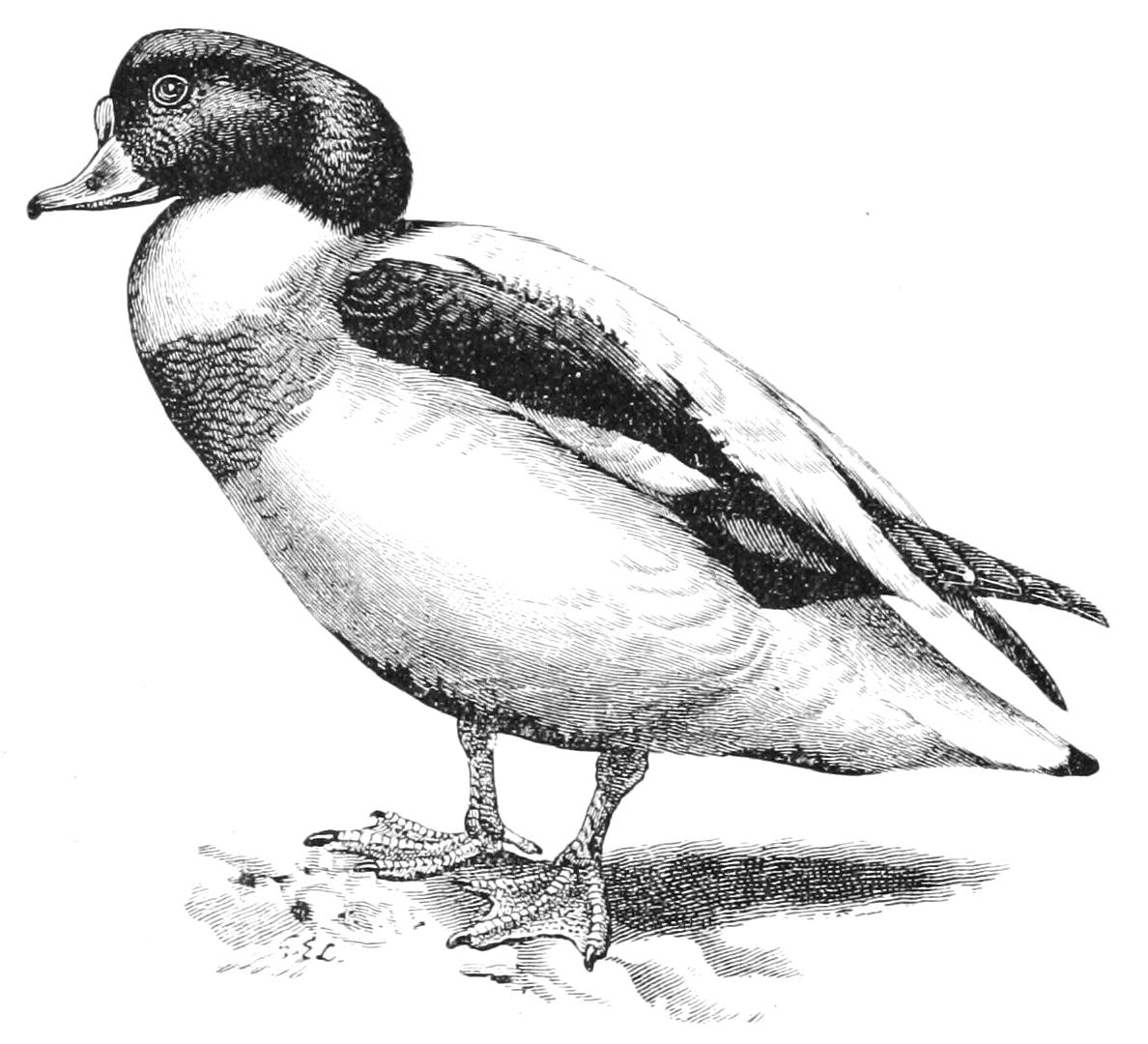
Fig. 34.–Sheld-Drake. Tadorna cornuta. × ⅐.
Tadorna cornuta, the Sheld-Drake or Bargander, which ranges from Britain across Europe and temperate Asia to Japan, and migrates to the Mediterranean basin, North India, and South China, has the bill and the basal knob–wanting in the female–red, the feet pink, the head glossy green; it shews a white collar on the lower neck followed by a broad chestnut band; blackish outer scapulars, remiges, and tip of the tail; a patch of chestnut on the inner secondaries, a green speculum, and a brown line down the under parts, the remaining portions being white. This bird frequents sandy coasts and muddy flats throughout the year, nesting in burrows, or rarely among rocks, masonry, or bushes, and laying some ten shiny white eggs. The flight is powerful and heavy; the note is a shrill whistle or barking quack; the food consists of aquatic plants, molluscs, and insects. T. radjah, of Australia, Papuasia, and the Moluccas, is white in both sexes, with blackish scapulars, back, rump, primaries, and rectrices; the mantle is vermiculated with chestnut, the similarly-coloured pectoral band is barred with black, the speculum is green with black posterior margin, the bill and feet are whitish. It breeds commonly in holes in trees, on which it is quite at ease. Casarca rutila, the Ruddy Sheld-Drake or Brahminy Duck of South Europe, North Africa, and temperate Asia, which has strayed to Britain and winters in India, Burma, and Formosa, has a buff head, separated from the orange-brown body by a black collar in summer, white wing-coverts, black wing- and tail-quills, purple and green speculum, and black bill and feet. The female is lighter, with no collar. It frequents fresh water, grazes on corn and grass like a goose, and breeds in holes of any sort. C. cana of South Africa differs in its grey head, rufous collar, and black vermiculations above, the female having the front of the head white. C. variegata of New Zealand is black relieved by grey, the neck being brown, the anal region and inner secondaries chestnut, the wing-coverts white, the speculum green. The hen-bird has the head white, the lower neck, back, and under parts chestnut, varied with black and white. C. tadornoïdes, of South and West Australia and Tasmania, has a glossy green head, white collar, rufous lower neck and chest, black body with fulvous mottlings, white wing-coverts, chestnut inner secondaries, and green speculum, the head of the female being brown.
Chenalopex aegyptiaca, the "Egyptian Goose," found in Palestine and Africa, is rusty or buffish-grey, marked above with black, and with red, white, green, and black on the wing. The nape and collar are rufous; the breast shews a maroon patch, the bill is pink and black, the feet are pink. It has a loud, harsh cry, feeds on land, and lays rather small creamy eggs in cavities of rocks, on trees, or even among rushes. C. jubata, of Amazonia and Guiana, is grey, with greenish-black back, wings, and tail, ruddy mantle and belly, purplish-green wing-coverts, and white speculum. The sexes are alike in this genus and the next.
In Dendrocycna, containing the Tree-Ducks, which occur mostly in the tropics, the main colour is chestnut or dusky-brown, with dark nape and black rump or belly; but the head may be lighter, the throat or wing-coverts varied with white, or the flanks barred with black and white. D. viduata, of the Ethiopian and Neotropical Regions, has the front of the head white; D. autumnalis, of Central America, and D. discolor, its greyer representative in northern South America, have red bills and whitish feet; D. arborea, of the Bahamas and Antilles, has strongly spotted lower parts, as has the larger D. guttata, of Mindanao, Celebes, New Guinea, and the Moluccas; D. fulva, of the Ethiopian, Neotropical, and Indian Regions, has white upper and under tail-coverts; D. javanica, of the latter area only, has them chestnut above and fulvous white below; D. arcuata, ranging from the Malay Archipelago to Fiji, has the breast chestnut barred with black; D. eytoni, of Australia, which has strayed to New Zealand, has it yellowish-brown. These birds fly slowly and heavily, and perch regularly on trees, where they sway awkwardly about upon the branches; the note is a clear whistle or a chattering sound; the food consists mainly of fish and water-plants, sought at all times of day. In winter the flocks cause great damage to corn or rice near the lagoons and other waters they frequent. The nest, placed in hollow trees, stumps, long grass, or deserted habitations of other birds, contains from six to twelve white eggs.
Sub-fam. 6. Chenonettinae.–Chenonetta jubata of Australia has a brown head, long black feathers on the hind-neck, greyish upper parts with black tail, rump, and edges to the scapulars, a green speculum with white borders, a breast mottled with black, grey, and whitish, and a black abdomen. The female is paler, with dull speculum and white belly. It lays its creamy-white eggs in the bush districts in hollow trees, perching even on the tallest of them, and uttering a barking note. Cyanochen cyanoptera, of Abyssinia and Shoa, is grey-brown in both sexes, with black wings relieved by lead-blue coverts, and green speculum tipped with white. Chloëphaga hybrida, the Kelp Goose of Patagonia and the Falklands, which lives and breeds on the beach, is white, having a black bill with basal yellow spot, and yellow feet. The female is brownish-black with white rump, tail, and anal region, and black lower parts barred with white; the neck shews narrow white bands on its sides, the black and white wing has the greater coverts green, and the bill is flesh-coloured. C. melanoptera, of Western America from Peru southwards, is distinguished by brown and white scapulars, black primaries and tail, green and purple wing-coverts, red bill and feet; the female being similar. C. magellanica, the Upland Goose, coextensive in range with C. hybrida, is white, barred with black above; the rump, four median rectrices, and wings being grey-black, with green and white on the wing-coverts, and white secondaries; the bill and feet are dusky. The female is rufous and black, with similar wings but yellow feet. C. inornata, of Chili, Argentina, and Patagonia, differs in having black pectoral bands and a grey head in the female. C. poliocephala, of the same countries, with plumbeous, and C. rubidiceps, of the Falklands, with cinnamon head, have in both sexes chestnut and black plumage, the wing being as in C. magellanica, the bill black, the feet black and orange. C. melanoptera will nest in holes in cliffs.
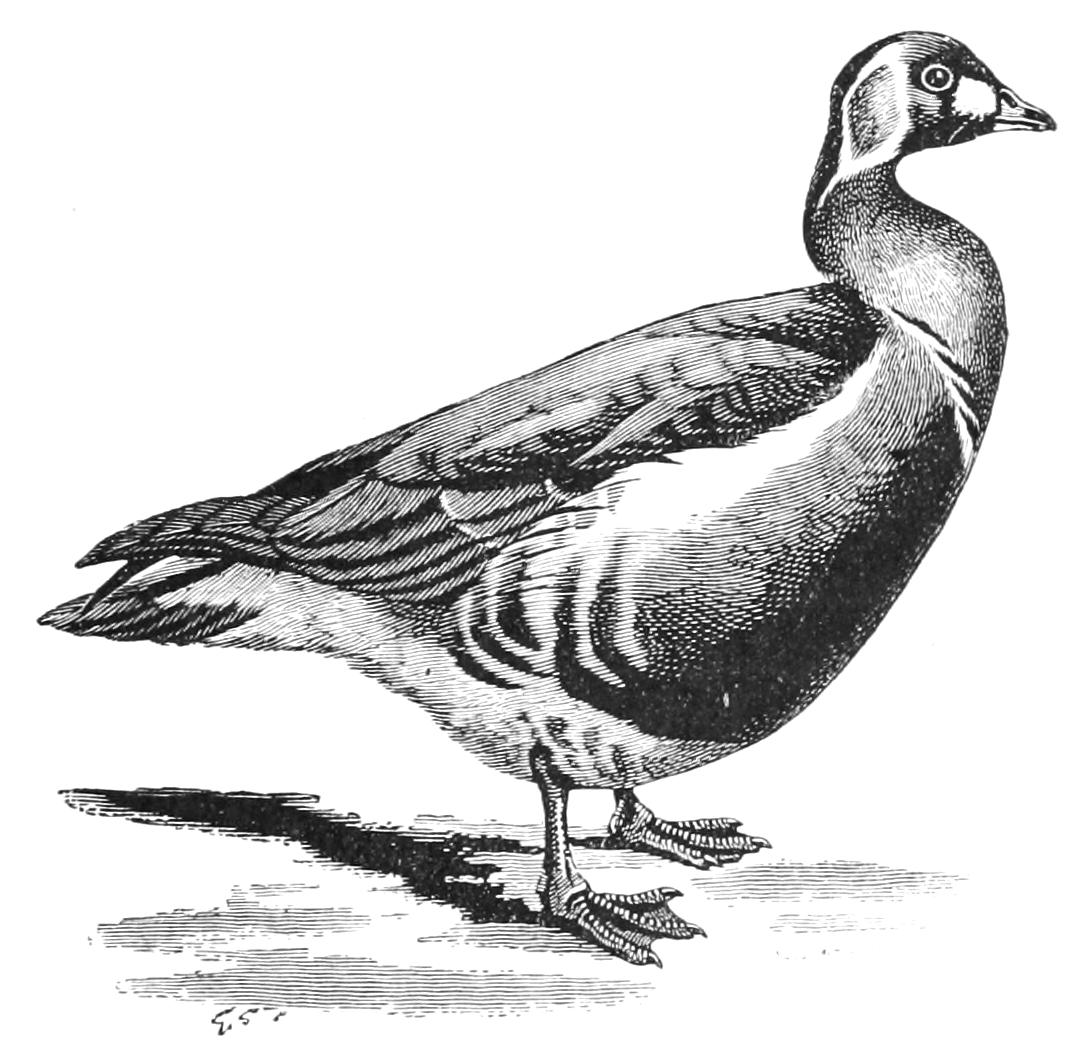
Fig. 35.–Red-breasted Goose. Bernicla ruficollis. × ⅐.
Sub-fam. 7. Anserinae.–In this group the female resembles the male. Nesochen sandvicensis, of the Sandwich Islands, has a black head and throat, brown plumage barred with whitish and black, and buff sides of the neck with black stripes. It inhabits craters and "lava-flows" on hills, and is fond of berries. The members of the genus Bernicla, or Black Geese, are grey and black, with a varying amount of white, and have black bills and feet. B. brenta, the Brent Goose, our commonest winter species, is brownish-black, with darker head, neck, and breast, white tail-coverts and lateral neck-patches. It is found in the Arctic Regions, and migrates as far as the Mediterranean and the Mississippi. It feeds by day in shallows on grass-wrack, laver, crustaceans, and insects, has a loud note, and lays about four cream-coloured eggs. From western Arctic America to the Lena occurs the form B. nigricans with white collar and black belly. B. leucopsis, the Bernacle Goose, migrating to the same districts as B. brenta, abounding on our west coasts in winter, and occupying in summer Arctic Europe and Greenland, where it is supposed to breed, has nested in one place in Norway. The front of the head is white, the crown and neck are black, the mantle is lavender-grey marked with black and white, the under parts are greyish. Unlike the Brent Goose, it feeds at night. B. canadensis, of temperate North America, wintering down to Mexico, has a triangular white patch on each side of the black head, and is comparatively large; B. hutchinsi is a smaller and more Arctic form, B. minima and B. occidentalis north-western races of the same. B. ruficollis, the Red-breasted Goose of West Siberia, which migrates southwards, strays to Britain, and is portrayed in the paintings of Egypt, is black, with white loral patch, rump, sides and belly, the ear-coverts, fore-neck, and chest are chestnut outlined by white, and the two wing-bands are grey.
Philacte canagica, the Emperor Goose of North-East Asia and North-West America, is blue-grey with black and white bars, the head and nape being white tinted with orange, the throat brownish, the bill purplish-blue with white nail, and the feet orange.
Cycnopsis cycnoïdes, the Chinese Goose of East Asia, is mainly grey-brown above and whitish below, with rufous edges to the feathers; the head and neck are white with a brown band down the crown and nape; the bill is black, or in the domesticated form red with a frontal knob; the feet are orange.
Anser cinereus, the Grey-Lag, which nests in North Scotland and as far south as Spain and Kashgaria, ranges from Iceland to China, the Eastern race being called A. rubrirostris; A. albifrons, the White-fronted Goose, is found in Britain and most Palaearctic countries in winter, and chiefly eastward of Norway in summer; A. segetum, the Bean Goose, another of our hibernal visitants, breeds from Scandinavia to Amurland, and migrates southward to Madeira, North Africa, China, and Japan; A. brachyrhynchus, the Pink-footed Goose, extends over North Europe, and is common with us in the cold season; A. indicus inhabits Central Asia and North India. A. middendorffi (grandis) of East Siberia is a large form of the Bean Goose; while the small A. erythropus, once shot in Britain, has a similar range to the White-fronted Goose, of which both it and the big A. gambeli of North America may be considered sub-species. The general coloration in this genus is grey-brown; in the Grey-Lag the bill and feet are flesh-coloured with white nail, in the White-fronted Goose orange, the latter having a white forehead and white breast with black bars. In the Bean and Pink-footed Geese the nail is black, but the bill and feet are orange-and-black and pink respectively. A. indicus is lighter, with brown hind-neck, and two black crescents on the back of the white head. All these Grey Geese feed chiefly by day among green corn, stubble, peas, beans or clover, retiring at night to sand-banks or mud-flats in winter; the note, often syllabled "honk-honk," is at times almost a cackle, whence the flocks or "skeins" are called "gaggles." The nest, placed in herbage or heather, is of grass, moss, twigs, or aquatic plants, and contains five or more whitish eggs.
Chen hyperboreus, the "Wavy" of North-East Asia and North-West America, with its larger Eastern American race, C. nivalis, and C. rossi of Arctic America–which wander south in winter, while the first has occurred in Britain and North Europe–are white, with black primaries, purplish-red bills and feet; C. rossi having a warty base to the maxilla. C. caerulescens, of eastern North America, is grey-brown, with white head, bluish rump and wing-coverts. The food consists of rushes, insects, and berries.
Sub-fam. 8. Cereopsinae.–Cereopsis novae hollandiae, the Cape Barren Goose of South-East Australia and Tasmania, is grey-brown, with large yellow cere, chiefly reddish-orange feet, black toes and beak. More terrestrial than its nearest kin, it lays similar eggs. The very large extinct Cnemiornis, of the superficial deposits of New Zealand, was a close ally, with aborted keel to the sternum and short wings useless for flight.
Sub-fam. 9. Plectropterinae.–Aex sponsa,[118] the Summer Duck of North America and Cuba, accidental in Jamaica and the Bermudas, has the upper parts mainly glossy green, with purple cheeks, black neck-patches, and white stripes on the face and neck; the breast is chestnut with white spots, the throat and belly are white, the wing-coverts partly blue, the flanks brown, black, and white; the bill is black, white, yellow, purplish, and scarlet; the feet are yellow. It has a long occipital crest. The female is grey-brown with metallic gloss, a white throat and eye-space, plumbeous and black bill, and brownish feet. This inland species feeds on insects, seeds, leaves, and acorns, and lays buff eggs in holes in trees. Aex galericulata, the Mandarin Duck of East Asia, is somewhat similar, but has a neck-ruff of narrow chestnut feathers streaked with whitish, a chestnut and black "fan" formed by the decurved innermost secondary, a copper, purple, and green crest, and a red-brown bill. The female is brown, grey, and white.
Nettopus pulchellus, of Australia, New Guinea, and the Moluccas, has the upper parts and neck-collar dark green, the head browner, the remiges and rectrices black with a white wing-bar, the cheeks and lower parts white, the sides marked with green crescentic bands, and the bill and feet black. N. coromandelianus, extending from the Indian Region to Celebes, has a white neck, a brown band across the breast, and the flanks freckled with grey; N. albipennis, of East Australia, is similar but larger; N. auritus, of West and South Africa with Madagascar, has a sea-green patch on each side of the occiput, the lower part of the neck and the flanks being rufous. The females are much duller. These Pigmy Geese frequent small lakes and dive admirably; the note is a cackle; the nest, placed in holes in trees or ruins, if not among grass, contains from six to twelve white eggs.
Pteronetta hartlaubi, of West Africa, is chestnut with black head and blue wing-coverts in both sexes. Rhodonessa caryophyllacea, of India and Burma, is rich brown dotted with whitish, the head and nape being pink, the speculum salmon-coloured, the bill reddish-white, the feet blackish. It lays round white eggs.
Asarcornis scutulata, ranging from East Bengal to Java, has a black and white head, black mantle and under surface, greenish-olive upper parts, with black and white on the wings, a blue-grey speculum, reddish bill and feet. Sarcidiornis melanonota, of India, Ceylon, Burma, and the Ethiopian Region, is black with metallic hues above, and white below; the head and neck are black and white, the rump is grey, the tail brown, the feet, bill, and its basal comb or caruncle black. S. carunculata, of Brazil, Paraguay, and North Argentina, differs in its black rump. The comb is largest in the breeding season, and is wanting in females. These Wattle-Ducks perch on trees and breed in cavities of the trunks, laying a dozen or more white eggs. The note is harsh and the flight slow. Cairina moschata, the Muscovy–or more correctly Musk–Duck of ornamental waters, extends from Mexico to Argentina; the crested head, neck, and lower parts are brownish-black; the upper surface is glossy green, with purple on the back and white wing-coverts; the bill is black and white; the feet are black; and the frontal and orbital caruncles of the male red. It inhabits forest-swamps, roosts in trees, eats maize, mandioc roots, and herbage, and nests in holes in trees or between forking branches. Plectropterus gambensis of Mid-Africa, P. rüppelli of the North-East, P. niger of the South-East, and P. scioanus of Shoa, the four hardly separable Spur-winged Geese, are metallic black, with more or less white on the sides of the head, lesser wing-coverts, throat, and abdomen; the feet, bill, frontal knob, and caruncles on the forehead when present being red. The female has no knob. They frequent marshes, appear to prefer running to flying or perching, and lay about eight whitish eggs.
Sub-fam. 10. Anseranatinae.–This contains only Anseranas semipalmata of Australia and Tasmania, a white bird with black head, neck, mantle, wings, and tail, reddish beak, and yellow feet. It haunts swamps, walks easily, and deposits some five white eggs.
Sub-fam. 11. Cygninae.–In this group the sexes are similar. Coscoroba candida, of southern South America, is white, with black tips to the primaries, pinkish bill and feet. It feeds on land, has a loud trumpeting cry, and a less noisy flight than the true Swans, from which it differs in its feathered lores. Chenopis atrata, the Black Swan of Southern Australia and Tasmania, occasionally domesticated in England, is brownish-black, with white remiges, black feet, pink lores, and pink bill banded with white, the scapulars and inner secondaries being curled.
Cygnus musicus, the Whooper, which used to breed in Orkney, and ranges from Iceland through Arctic Europe and Asia, migrating to the Mediterranean, Nepal, China, and Japan, and straying to Greenland, is white with black feet and bill, the basal half of the latter being yellow, while that colour extends still further on the sides. The flight is accompanied by a rushing sound, the note is trumpet-like or whistling, the food consists of aquatic plants, the five or more white eggs are laid upon a pile of herbage near water. The smaller C. bewicki, where the yellow on the bill does not reach the nostrils, inhabits the Arctic districts from the White Sea to the Pacific, wandering in winter to Britain, the Mediterranean, South Siberia, China, and Japan. C. columbianus of North America, said to have occurred in Scotland, has merely a yellow spot before the eye; C. buccinator, of the interior of North America, has a black bill; while C. olor, the Mute or Tame Swan, with its variety the Polish Swan, has the fore-part of it orange. C. olor ranges from South Sweden and Denmark through Central Europe and Asia, migrating a little southwards. C. melanocoryphus, reaching from South Brazil and Chili to Patagonia and the Falklands, has the head and two-thirds of the neck black, with white eye-streak; the bill is plumbeous with red base and knob, the feet are pinkish. The protuberance is wanting in the young, which are marked with rusty, and have the head brown. Of other species immature birds are greyish or dusky, with flesh-coloured and black beak, except in C. olor, where it is plumbeous. In habits Swans are much alike, though the notes differ somewhat, and the Mute Swan merely hisses or croaks in captivity; the latter and the Black Swan are noted for the graceful curve of the neck and their greenish eggs; while the wing-feathers and scapulars are habitually puffed out when on the water. Swans were "Royal Birds" in mediaeval England, and a licence was necessary to keep them, but for this subject and that of the "Swan-marks" on the bill, as well as for accounts of decoys, hybrids, and domestic races in the Family, the reader must be referred to the works of Professor Newton,[119] Count Salvadori,[120] and other authors.
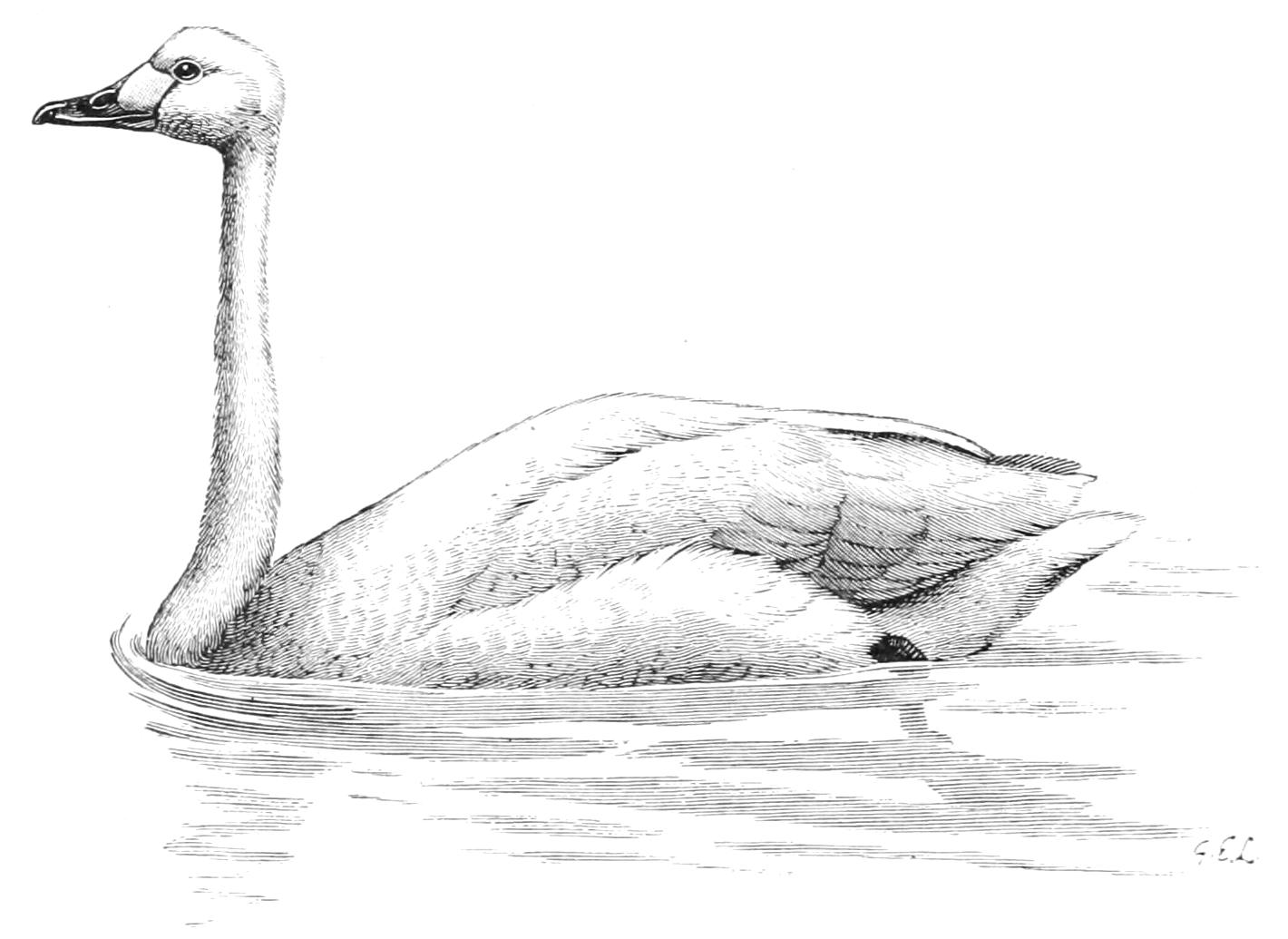
Fig. 36.–Bewick's Swan. Cygnus bewicki. × ⅒.
Fossil remains of this group are found throughout the Miocene of France, Switzerland, Germany, and Italy, referred to Anser and Anas, with Chenornis graculoïdes; the Pliocene of Oregon has furnished Branta, Cygnus, and Anser, that of Italy Anas and Fuligula; the Plistocene of Malta Cygnus and Palaeocycnus, that of Brazil Chenalopex. The superficial deposits of New Zealand contain Cnemiornis, mentioned above, as well as Chenopis and Biziura; the Queensland drifts the last-named, and, it is said, Anas, Dendrocycna, and Nyroca; the Mare aux Songes of Mauritius Anas and Sarcidiornis. Centrornis majori is a remarkable form from Central Madagascar, found at a depth of twelve to fifteen feet with another species Chenalopex sirabensis.[121]
Order VII. FALCONIFORMES.
Next to the aquatic Anseriformes may be placed the large and important terrestrial Order Falconiformes, with its Sub-Orders Cathartae and Accipitres. The former contains the New-World Vultures (Cathartidae or Sarcorhamphidae), possessing striking differences of structure from their allies;[122] the latter, the Secretary-Bird (Serpentariidae), the Old-World Vultures (Vulturidae), the Carrion-Hawks, Hawks, Eagles, Falcons and their kin (Falconidae), and the Ospreys (Pandionidae). All agree in the strong "raptorial" bill with basal cere, the U-shaped furcula, the large crop, the carnivorous habits, the great powers of flight, the superior size of the female, and the long nest-occupation of the young; but the Cathartae differ in having pervious nostrils, no syringeal muscles, less flattened metatarsi, and so forth.
Fam. I. Cathartidae.–These Vultures range from tropical to temperate America, and are often of immense size; the bill is strong, hooked, but blunt; the feet are clumsy with small scales; the scutellated toes, of which the mid-digit is longest and the hallux somewhat elevated, are unfit for grasping; the claws are obtuse and little curved. The ample wings have eleven primaries and from twelve to twenty-five secondaries; the moderate tail is even or rounded, with twelve rectrices, or fourteen in Pseudogryphus. The head and long neck are commonly bare, but the latter may be covered with stubbly down, which in Gyparchus papa extends to the occiput; the naked skin is often brightly coloured and accompanied by caruncles, while the crop is bare in Sarcorhamphus and Gyparchus. The eyes are prominent, the cere is horny and sometimes very long, the tongue thick and fleshy, the aftershaft absent. The sexes are alike in plumage, with evenly distributed down, and the nestlings soon develop a white or rufous covering.
Though, generally speaking, predaceous, the members of this Family only attack disabled animals, or often act chiefly as scavengers, whence the smaller forms are commonly found near the abodes of man and even in towns. The larger species sail high above the earth with easy, long-sustained, and majestic flight, accompanied by little movement of the pinions, as they circle over the plains or mountain-sides in search of prey. In this quest experiments have shewn that they are little guided by smell; rather does some individual, aided by its marvellously keen sight, spy the carrion from afar, its motives being instantly divined by its immediate neighbour; a third bird is next attracted; and so the tidings spread, until a greedy crowd meets to dismember the carcass, to fight over the morsels, and then to sit stupid and gorged, with drooping wings, on or near the ground. Except when feeding, the Cathartidae are non-gregarious, though "Turkey-Buzzards" and "Black Vultures" roost in company; the latter are said to take to the wing with ease, eschewing the preliminary hops of their allies; while all walk well. The voice is a hoarse sound or hiss, owing to the absence of syringeal muscles. The nest of sticks is placed in trees, cavities of rocks, hollow stumps, or on the ground, and may be bulky or of the slightest description; the one or two eggs are white, buff, or greenish, with or without reddish-brown and grey blotches. The parents regurgitate food–at least occasionally–for the nestlings, and eject foul-smelling matter when disturbed.
Sarcorhamphus gryphus, the Condor, only equalled in size among birds that fly by a few Old-World Vultures, and appearing still larger in clear mountain air, ranges down western South America and up to the Rio Negro on the east of Patagonia. The head and neck are bare, with dull red skin, wrinkled in folds on the latter; while an oblique ruff of white down surmounts the black plumage, which shews white edges to the wing-coverts and secondaries. The male has a fleshy crest extending from the mid-cere to the crown, a large wattle on the throat, and a small caruncle below; the irides being in that sex brown, in the female garnet-red. The bill is white with brown base. Smaller and browner examples occur in Ecuador, but larger appendages mark those of Chili and Patagonia. In the southern portion of their range Condors are found down to the sea-level, but Mr. E. Whymper[123] states that in Ecuador they frequent the Andes up to sixteen thousand feet, and rarely descend to the plains. Stupid and voracious, they can be lassoed while feeding, and, though they will attack old horses, calves, lambs, goats, deer, and dogs, especially when dazzled by the sun, they seldom risk an assault on mankind. The nest, of a few sticks, is placed on steep cliffs, and contains two white eggs.
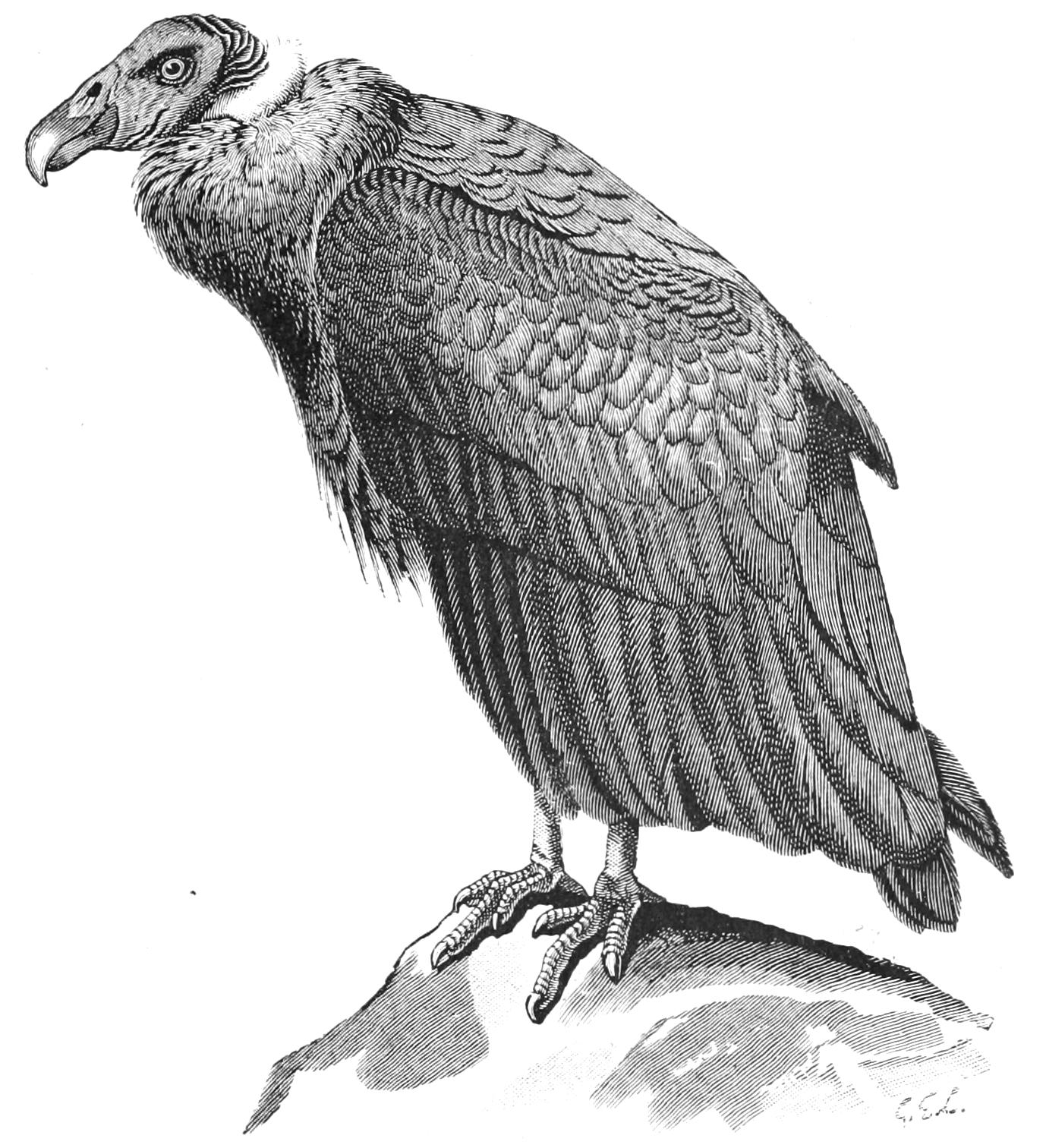
Fig. 37.–Condor. Sarcorhamphus gryphus ♀. × ⅛-⅑.
A young bird was hatched in London after fifty-four days' incubation, but apparently nearly a year is taken to gain full powers of flight. Gyparchus papa, the King Vulture, of tropical America, save the West Indies, has a small fleshy crest on the cere in both sexes, but no wattles, though the skin of the sides of the head is wrinkled; the occiput is hairy, and a ruff of broad plumbeous feathers surrounds the neck. The rump, tail, and most of the wings are black; the remaining plumage being creamy white, the bare throat and back of the neck yellow, the skin of the head and neck elsewhere orange and red with blue patches near the ears, the bill orange and black, the irides white. This bird haunts woods near rivers and marshes, especially towards the coast, and feeds on snakes and carrion, from which it drives all other species; in flight, habit of gorging, and eggs, it resembles the Condor. Little smaller is the Californian Vulture (Pseudogryphus californianus), formerly extending to the Fraser River in British Columbia, in which the long flat head and neck are bare, smooth, and orange-coloured, the bill being whitish and the irides carmine. The plumage is dull black with a whitish wing-band, due to the margins of the greater coverts and secondaries; lanceolate feathers form a basal ruff round the neck, and extend over the lower parts. The habits are similar to those of the foregoing, but the loose nest of sticks, placed in cavities of trees or crags, contains one rough greenish-white egg. The genus Rhinogryphus or Cathartes ("Turkey-Buzzard") includes R. aura, of temperate and tropical America, reaching to Tierra del Fuego and the Falklands, in which the head and upper neck are naked, smooth, and crimson; and R. burrovianus, found from Mexico to Brazil, where they are orange and the nape is feathered; the yellow-headed R. perniger, of Amazonia, being hardly separable. All are black with whitish bill, red irides, and a tuft of bristles in front of the eye; but the first has brown-margined feathers and metallic sheen above. In common with Catharista, they have the cere very long. During the day-time these quarrelsome scavengers, ubiquitous but necessary, haunt the house-tops and roadways of towns and villages, whence they retire at night to groves or forests in company; otherwise their habits are those of Vultures generally. They have been said to pair for life, while they deposit two whitish eggs with red-brown and lilac markings in some hollow of a crag, tree, or log, often on or near the ground, adding little, if any, bedding. Catharista atratus, the "Carrion Crow" or Black Vulture, which ranges from Argentina and Chili to the West Indies and Carolina, and occasionally further north, is most plentiful near the coast; the fearless demeanour, flight, manner of feeding, nesting habits and eggs, resembling those of Turkey-Buzzards, though the wing-action is more laboured, and the gait shuffling. Audubon says that the males strut and gesticulate like Turkeys when courting, while incubation lasts about three weeks. The colour is black, the naked head being dusky and the upper neck somewhat corrugated; the bill is blackish with light tip, the irides are brown.
Fossils referred to this Family are met with in North and South America.[124]
The points wherein the Cathartae differ from the Accipitres having been already noticed (p. 137), it only remains to discuss in detail the several families comprised in the latter Sub-Order.
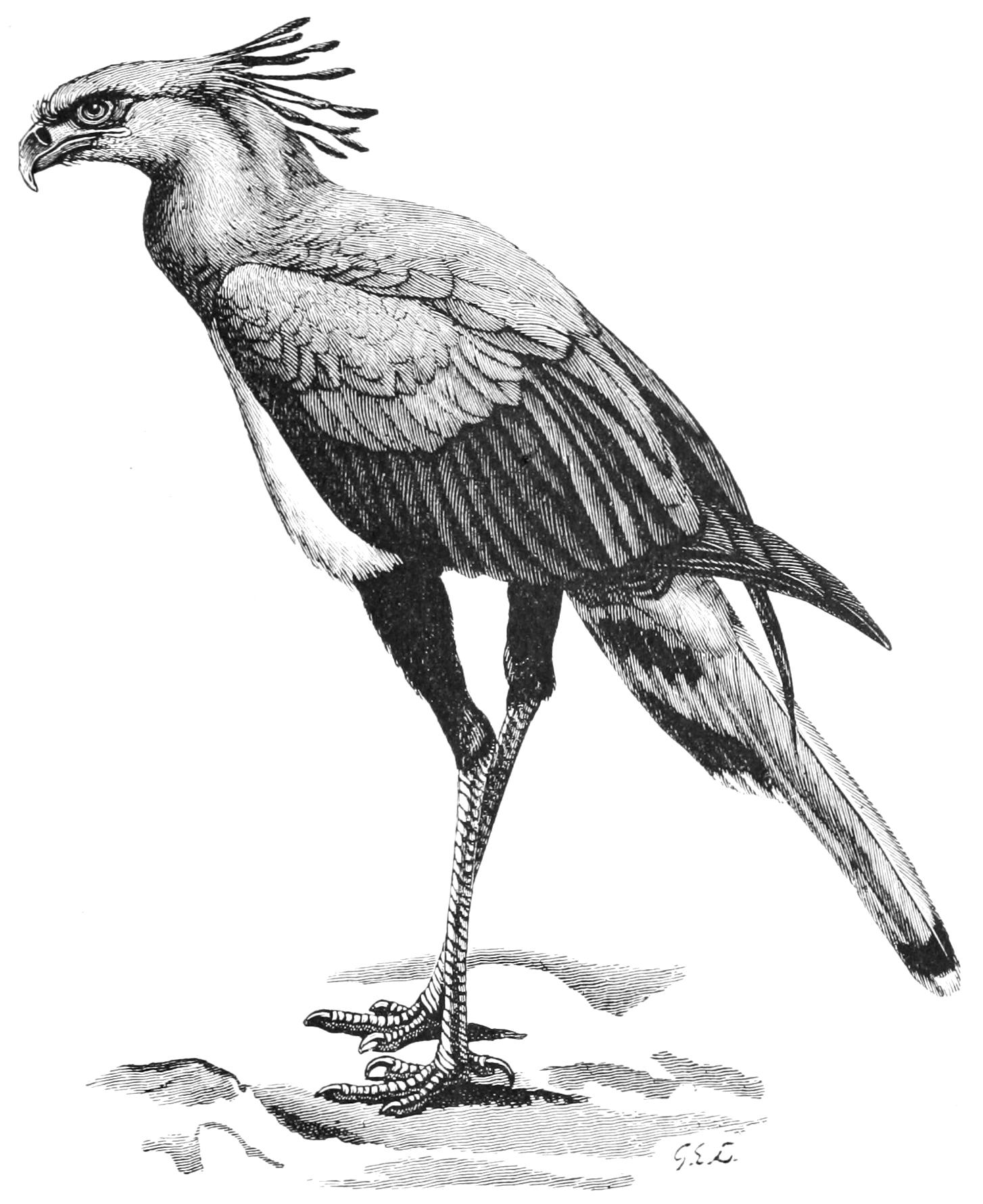
Fig. 38.–Secretary-Bird. Serpentarius secretarius. × ⅑.
Fam. II. Serpentariidae.–This contains only Serpentarius secretarius, the African Secretary-Bird–now generally recognised as an Accipitrine form–which is most common in the south, though extending northwards to the Gambia, Khartum, and Abyssinia. It was first accurately made known in 1769, from an example living in the menagerie of the Prince of Orange, by Vosmaer, who was told that at the Cape of Good Hope it was called "Sagittarius," or Archer, from its habit of striding like a bowman about to shoot, and that this name had been corrupted into "Secretarius." Subsequently–about 1770–a pair was brought alive to England.[125] The appellation is evidently, however, derived from the nuchal tuft, which bears a fancied resemblance to the pen of a clerk stuck above his ear. Standing some four feet high on very long legs, this bird gives the impression of a Heron or Crane, and is a striking object on its native plains. The short strong beak is greatly arched, and is not toothed, the neck is elongated, the body comparatively small, and the metatarsus boldly scutellated all round, the short straight toes with their blunt claws being joined anteriorly by small membranes. The ample wings have eleven pointed primaries and seventeen secondaries; the graduated tail of twelve rectrices has the two obtuse median feathers drooping and much prolonged. Down is evenly distributed over the adults, and an aftershaft is present. The general colour is bluish-grey, with black wing-quills, lower back and vent; the loose pendent crest on the occiput and nape contains ten plumes in pairs, the longer being black and the shorter grey with black ends; the tail is grey, subterminally barred with black and tipped with white, which sometimes shews on the short close flank-feathers. The long cere, naked sides of the face, and feet are yellow, the irides hazel. The sexes are similar.
In South Africa these useful birds–favoured by a protecting law–are often brought up tame about the homesteads, where they kill reptiles and keep off feathered intruders, though they occasionally tax the poultry-yard themselves; the food consists of small mammals, birds, lizards, and tortoises, but above all of snakes and insects. When the Secretary attacks a reptile, it advances on foot and delivers a forward kick with its powerful leg, striking simultaneously with the knobbed wings, which shield its body; then it retreats with a bound, as the hissing snake makes a vicious lunge; but soon, watching its opportunity, breaks through its opponent's guard and stands triumphant with crest erect, before swallowing the disabled foe.[126] If, however, the snake touches the bird's flesh, the result is reversed; and so well, according to Mr. Atmore,[127] does the latter know this, that it plucks out instantly any feather that the fangs have reached. Possibly reptiles are occasionally killed by being carried aloft and dropped. Usually seen stalking easily along, this graceful species can almost out-pace a horseman, while it will fly when hard pressed, or soar to a considerable height. The huge nest, occupied from year to year, is placed in a bush or tree, and is composed of sticks and clay with a lining of wool and hair, the two or three eggs being white with rusty markings. In six weeks the downy white young are hatched, which remain some four months in the nest, often uttering a harsh cry. The legs of both nestlings and adults are very fragile, and snap if they trip while running.
A fossil form (S. robustus) has been recorded from the Lower Miocene of Allier in France.
Fam. III. Vulturidae.–The Old-World Vultures have a strong hooked bill–exceptionally slender in Neophron–which may be sinuate, but has no tooth. They possess a horny cere; a comparatively short, stout, reticulated metatarsus, often partly feathered; scutellated toes on a level, with bluntish slightly curved claws, and a short membrane between the outer and mid digits. They lack the bony ridge found over the eye in the Falconidae. The somewhat pointed wings are long and broad, with eleven primaries and from seventeen to twenty-five secondaries; the moderate tail, ordinarily of twelve feathers, is rounded, but varies to wedge-shaped in Neophron, where, as in Gyps, there are fourteen rectrices. The plumage is compact; the crop prominent; the head and neck are bare or sparsely-haired in Otogyps and Pseudogyps, more or less downy in Vultur, Lophogyps, and Gyps, and partly feathered in Neophron; while a ruff of down or plumes covers the shoulders. The nostrils are circular in Vultur, horizontally elongated in Neophron, oval and vertical elsewhere; the fleshy tongue may show bristly or upcurved margins, and the syrinx has two pairs of tracheo-bronchial muscles. Uniformly distributed down and an aftershaft characterize the adults, while the white woolly nestling of Gyps is said to be hatched naked.[128] Except as regards Neophron, the habits resemble those of the Cathartidae, the carrion diet producing a most offensive odour. The plumage of the sexes is the same.
Vultur monachus (cinereus), the Black Vulture, has its headquarters in the Mediterranean Region, whence it extends to the Gold Coast, Nubia, the Lower Danube, North India and China, and has strayed to Denmark. Not unlike the more sociable Griffon Vulture in general habits, it shows a preference for wooded country, constructing a bulky shallow nest of sticks, grass, and wool almost invariably on trees, and laying one, or rarely two, white eggs blotched with dark red. The plumage is brownish-black, with a ruff of lanceolate feathers below the bare neck, and black down on the crown and throat. The naked skin and cere are of a livid flesh-colour, the feet yellowish; the bill is black, the iris brown. Lophogyps occipitalis, of East and South Africa and Senegal, is dark brown with blacker remiges and rectrices, and some white on the wings; the reddish head and neck are bare, except for white down on the crown, which thickens towards the occiput; the ruff is brown, the abdomen and crop are white, the feet pinkish; the bill is orange with bluish cere, the iris brown. Otogyps auricularis, of North-East and South Africa, called the "Eared Vulture" from the fleshy lappets (of the same pinkish colour as the naked head, cere, and feet) on the sides of the neck, is brown, with blackish wings and tail, varied by white down on the thighs and chest; a brown ruff covers the hind-neck, while the bill and irides are yellow. O. calvus, the smaller Pondicherry- or King-Vulture of India, Burma, and Siam, is black. These birds usually hunt in pairs, driving all intruders except Eagles from their prey: they construct immense stick nests, often used in successive years, on thick bushes or trees; straw, leaves, and the like being added for lining, and one white egg, often with red-brown markings, deposited. Gyps fulvus, the Griffon Vulture, which has occurred in Germany, Poland, and once in Britain, breeds from the Spanish Pyrenees through Southern Europe and Northern Africa, reaching lat. 50° N. in Russia, and extending eastward to North India, by way of Turkestan, where it overlaps the larger form G. himalayensis. It is fawn-brown above and streaky buff below, with nearly black wings and tail, the adults having a downy white ruff, represented in the young by a brown collar; the head is thinly covered with white hairs, the beak is horn-coloured with blue-black cere, the feet are plumbeous, the irides orange. This active though cowardly species is often seen basking on rocks at mid-day; it flies or hovers with easy movements, and can soar until it almost disappears in the sky. It has a growling note. The nest, a mass of sticks and grass of variable size, is placed on cliffs, and contains one or even two white eggs, sometimes with rusty markings. Incubation lasts forty days, the young remaining three months in the nest. G. kolbi of South Africa is much paler; G. rüppelli, of the north-east and south of that continent, has a yellower head and browner back; G. indicus of India and the Indo-Malay mainland; from which G. pallescens is hardly separable, has a barer head and comparatively thin bill; the former breeds in trees in place of rocks. Pseudogyps bengalensis, the White-backed Vulture, ranging through India and down the Malay Peninsula, is black above, but brownish below, with the thin downy ruff and lower back white; the bill is greyish, the cere, feet, naked head and neck are black, the irides brown. This bird snorts, hisses, or even roars, and walks easily, though awkwardly. It nests in company on trees, and often lines the large stick-fabric with foliage, as do so many other Raptorial forms; the greenish-white eggs, seldom marked with red, vary much in bulk. P. africanus, of North-East and West Africa, is decidedly browner.
The genus Neophron contains the smallest Vultures, N. percnopterus being called, from its frequent occurrence on Egyptian hieroglyphs, the Egyptian Vulture or Pharaoh's Hen. It has wandered thrice to Britain and also to North Europe, while it breeds from Savoy and Provence to Madeira, the Canaries, the Cape Verds, North Africa, and India, meeting in the last-named the smaller N. ginginianus; in winter it visits South Africa, where it is called the "White Crow." The plumage is white, with black primaries and partially brown secondaries; a ruff of lanceolate feathers extends up to the occiput, the naked head and neck are yellow, the tip of the bill alone being black; the feet are pink, the irides crimson. Often seen striding sedately along in search of animal and vegetable refuse or dung, this species also follows the plough and devours worms, grubs, insects, reptiles, and frogs; while from its alleged habit of breaking bones left by other Vultures, it is called Quebranta-huesos or "bone-smasher" by the Spaniards.[129] The flight is slow and easy, the voice a croak. The flat nest of sticks, lined with soft materials, and especially rags, is placed on a crag or tree, and contains two white eggs with red-brown or claret blotches. N. pileatus of South Africa–which has a larger north-eastern and western form–is brown, with black wings and tail, downy whitish nape, purplish naked areas, dusky bill and feet, and brown irides.
Of fossil forms there are recorded Gyps melitensis[130] from the Plistocene of Malta, and Vultur from that of France.[131]
Fam. IV. Falconidae.–This group may be divided into the Sub-families (1) Gypaëtinae for the Lämmergeiers; (2) Polyborinae for the "Carrion Hawks"; (3) Accipitrinae for the Hawks, with Circus, Polyboroïdes, and so forth; (4) Aquilinae for the Eagles; (5) Buteoninae for the Buzzards and Kites; and (6) Falconinae for the Falcons.
Though the skull is small in Circus and some other forms, it is usually large and broad, being considerably elongated in the Aquilinae. The short stout bill is strongly curved, and terminates in a hook, which is often nearly perpendicular, and is specially prominent in Rostrhamus, Leptodon, Harpyhaliaëtus, Pithecophaga and Thrasaëtus; the basal third is straight in Eagles, while the edges of the maxilla are lobed or festooned to a variable extent, and in the Falconinae are distinctly toothed, or even bidentate in the case of Spiziapteryx, Harpagus, and Baza. A bony ridge over the eye conduces to the fierce aspect, especially in the larger species. The feet are robust and well-fitted for grasping, and are enormously developed in Thrasaëtus; the metatarsus is much flattened, and may be scutellated or reticulated, though the scales are usually smaller behind; the tibia generally exceeds it in measurement, but in Accipitrine forms is nearly equal, giving them a long-legged appearance. Elongated bare metatarsi are characteristic of Circus, Polyboroïdes, and the Polyborinae. The claws are sharp and curved, especially in Rostrhamus; a short membrane connects the middle and outer toes, and the inner also in the Polyborinae; while their under surface is more or less padded, and exhibits rugose spicules below in Busarellus, similar to those in Pandion. The powerful wings may be long and pointed, as in the Kites, Falcons, and Harriers; moderate and somewhat rounded, as in the Eagles and Buzzards; or short and narrow, as in Hawks. Falconers term the long-winged forms "noble," the short-winged ignoble. The tail, usually of medium size, but sometimes very short, as in Helotarsus and Gypohierax, is decidedly elongated in the Accipitrinae and Polyborus, and also in Milvus, Lophoictinia, Elanoïdes, and Nauclerus, where it is forked–very deeply in the two last: it may be wedge-shaped, as in Uroaëtus, Thalassaëtus, Harpyhaliaëtus, and Gypaëtus; rounded, as in Elanus and Haliaëtus; nearly even, as in Buteo and Aquila; or emarginated, as in Ictinia and Rostrhamus. Normally there are twelve rectrices, but Thalassaëtus has fourteen. The colour varies greatly with age, and it often takes four years or more to attain maturity, the markings commonly changing from longitudinal to transverse; but the sexes are usually alike, though the Kestrel, Merlin, Red-footed Falcon, and many Harriers are well-known exceptions, the last having generally blue-grey males and brown females. The occipital feathers are elongated in several of the Polyborinae, and a full crest occurs in many genera, Lophoaëtus, Thrasaëtus, Harpyhaliaëtus, Helotarsus, Morphnus, and Lophoictinia being especially noticeable; Circus has a facial ruff, coupled with exceptionally large aural apertures; the feathers of the neck may be lanceolate, as in Haliaëtus, or those of the nape, as in Aquila; and the plumage commonly over-hangs the metatarsus, which is feathered to the toes in various Aquiline forms, and in Archibuteo. The nostrils are circular in the Falconinae, oval or nearly linear elsewhere, with a central tubercle in the last-named and the Polyborinae, seldom found in the other Sub-families: they are generally in or near the cere, which is almost always fleshy. An aftershaft is present; the down in adults is uniform; that of the nestling being woolly and varying from white to grey, buff, brown, or black. The feet are yellow, red, or brown; the bill is ordinarily dark, and the cere yellow; Gypaëtus, however, has all these parts bluish-grey, with a crimson sclerotic membrane (equivalent to the "white of the eye") round the orange iris, the latter being yellow or orange in the Accipitrinae, brown in the Falconinae, and varying to red elsewhere. The syrinx has two pairs of tracheo-bronchial muscles; the tongue is thick and often concave; and Nitzsch[132] has recorded single or paired powder-down patches on the lower back of Elanoïdes, Elanus, Regerhinus, and Circus, with similar but scattered down-feathers in Gypaëtus.
The members of this Family range in size from the mighty Lämmergeier to the tiny Finch-Falcon (Microhierax); but they have many habits in common, though Polyborus and Milvago are somewhat terrestrial and vulturine, and a few species have crepuscular tendencies. They are decidedly non-gregarious, though the Polyborinae, Erythropus, and Rostrhamus form partial exceptions; they pair very early in the year, if not for life, the larger forms in especial breeding almost before winter is over. Birds of the mountains, the plains, and the woods, they can bear the cold of the icy regions or the heat of the Equator, but towards either pole the number of species decreases perceptibly. The sight is exceptionally keen, and the flight generally powerful and rapid; Eagles and Buzzards indeed move heavily to all appearance, as they circle or sail around with flapping action, but the spectacle of the former in chase of a grouse will quickly disillusion the observer. Kites are still more versatile upon the wing, nor are the Polyborine forms always deficient in this respect, while the dash and speed of Hawks and Falcons in their different styles is proverbial.[133] Harriers and the like may be seen buoyantly quartering the ground for hours, poising themselves almost motionless aloft, or gliding in circles to great heights; and the hovering or stationary position on the wing, which gives the name of "Windhover" to the Kestrel, is more general than might be supposed throughout the Family. Taken as a class, few birds can fly so well or so untiringly, though Vultures, Cranes, Storks, Albatroses, and the larger Gulls have even greater powers of endurance; they can, moreover, perch with great facility, and, while seldom running or walking fast, can move with freedom upon the ground, where they generally progress by means of hops, and aid themselves with their wings. Many of the Falconidae are very quarrelsome, and use their talons as weapons of offence, this trait being emphasized at the nesting-quarters, whence feathered intruders are rigorously excluded. The cry is shrill, but varies in depth; in the Peregrine Falcon it is a succession of short notes, in Eagles it resembles a yelp, in Buzzards a cat's mew, in Kites a whistle, and so forth; whereas in Melierax it may almost be called a song. The diet varies considerably, and consists of mammals, birds, reptiles, fish, frogs, tortoises, crabs, molluscs, and insects. Gypohierax, Aquila, Haliastur, Milvago, and Polyborus certainly eat carrion, and the last will attack newly-born lambs–a grievance made the most of by sheep-farmers in the case of Eagles; while the larger forms kill fawns, monkeys, foxes, hares, and other creatures of considerable size. Buzzards keep down rabbits, and hunt rats and mice as assiduously as Harriers and the Kestrel; the latter devours quantities of insects, as do also some of the Polyborinae; and the so-called "Honey" Buzzard (Pernis) gains its name from its fondness for grubs of bees or wasps. Kites work havoc among poultry; the Golden Eagle, and still more the Peregrine Falcon, among moor-fowl; the last two proving an advantage in Scotch deer-forests, where the noisy grouse disturb the stags, but being in peril of extermination on the moorlands; yet it is questionable whether more good than harm is not done by the destruction of weakly game. The Osprey and Sea-Eagle eat little but fish, though they are not alone in that habit, while Rostrhamus lives almost entirely on fresh-water molluscs. Most members of the Family do not alight to capture their prey, but seize it with their sharp talons either sitting or on the wing, the chief exceptions being the carrion- and insect-eaters; it is often conveyed to some favourite spot of ground or rock to devour, smaller objects being transported in the bill and the bigger torn to pieces and stripped before being swallowed. Large bones may be broken up, slender bones bolted entire; but hard substances are always ejected subsequently as pellets, after the manner of Owls (p. 401), the nature of the diet being readily detected from these castings. Exceptionally curious habits are credited to Gypaëtus and Gypoictinia, as will be seen below. After a meal, quiescence is the rule, but none of the tribe gorge like Vultures. The predilections of species or even of individuals determine the situation of the nest, Eagles and other large forms preferring rocks in mountain-glens, lofty cliffs, or trees, for their bulky fabric of sticks, heather, and the like, which is lined with softer substances, and often bedded with foliage. The larger Falcons frequently select ledges on sea-girt or inland crags, and merely scrape a hole in the soil; but they, in common with the lesser Falcons, also utilize deserted habitations of Crows and so forth, or even lay their eggs on level ground or upon crumbling masonry; while the American "Sparrow-Hawk" (Tinnunculus sparverius) commonly appropriates old holes of Woodpeckers. Harriers, Rostrhamus, and other forms choose sites in reed-beds, gorse-coverts, fern, rough grass, or corn, and eschew hard materials; Hawks usually construct a flat platform of branches lined with thinner twigs. The eggs are generally bluish-, greenish-, or yellowish-white, with fine blotches, streaks, and spots of red, brown, or claret, chiefly towards the larger end; but in Falcons they are more or less covered with ruddy or orange markings, which often obliterate the ground-colour. Unspotted specimens are not uncommon, and in the case of Harriers we have an instance of a plain bluish coloration, a few rusty stains being exceptionally visible. Alternative sites are frequently tenanted, or former nests repaired. Incubation is often of considerable duration, and the young remain long in the nest–four months, it is said, in the Lämmergeier; the longevity, too, of Eagles is notorious, a span of a hundred years having been actually recorded. Unconscious mimicry is shewn by Accipiter pileatus, which assumes the garb of Harpagus diodon near Rio Janeiro.
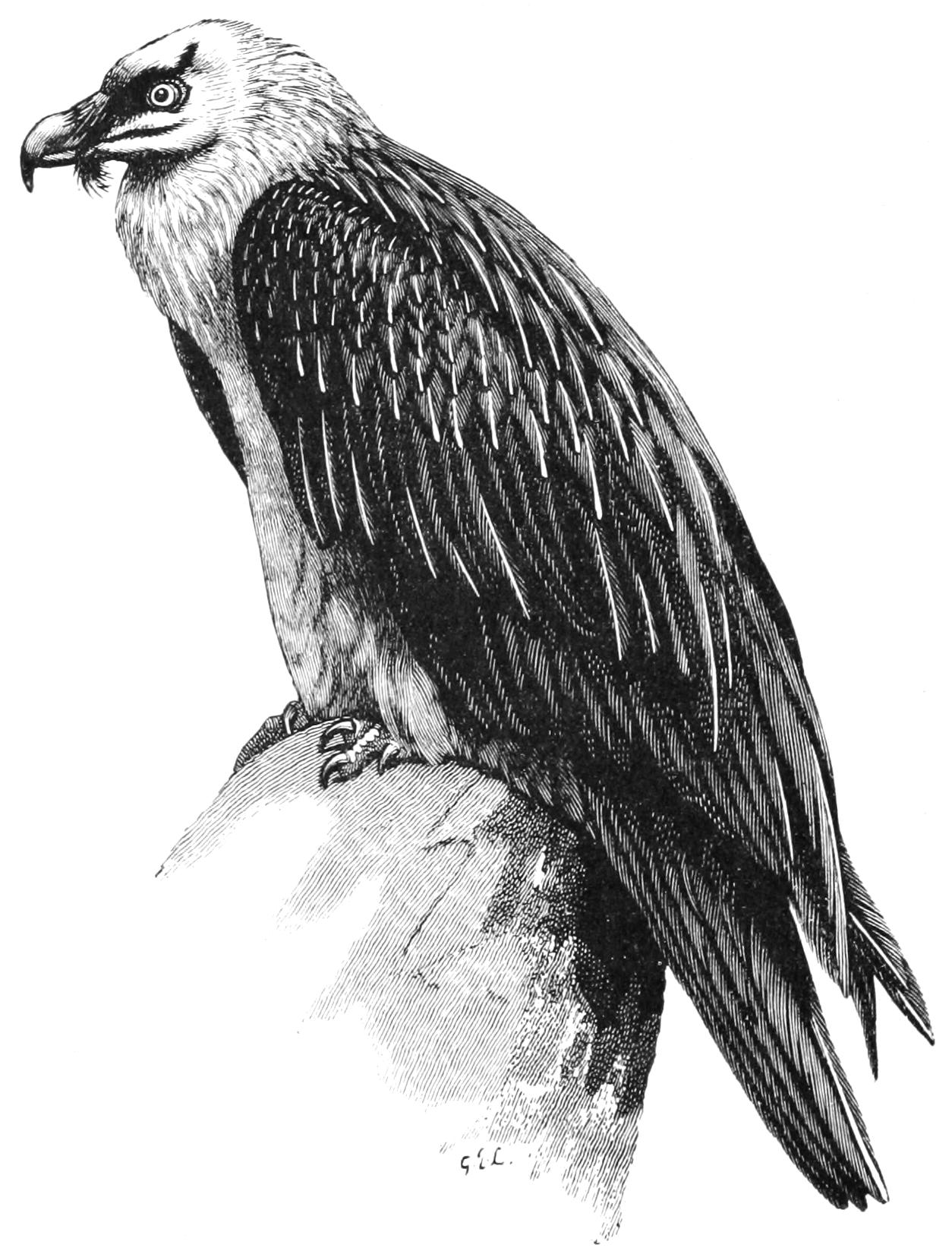
Fig. 39.–Lämmergeier. Gypaëtus barbatus. × ⅛-⅑.
Sub-fam. 1. Gypaëtinae.–This group apparently links the Vulturidae to the Falconidae, but seems nearer to the latter. Gypaëtus barbatus, the magnificent Lämmergeier, is greyish-black with white streaks, and has a white crown, cheeks with a black band bifurcating at the eye to meet above, and pale tawny lanceolate plumage on the neck and lower parts. Dense black bristles cover the nostrils and lores, and a black tuft, which gives the name of Bearded Vulture, projects below the mandible. The sclerotic membrane is crimson (p. 147). The young are chiefly brown and buff. From Portugal and Mauritania this species extends through the lofty mountains of South Europe to the Himalayas and North China, though practically exterminated in Switzerland and Carinthia; G. ossifragus (meridionalis), with no black stripe below the eye, represents it in North-Eastern and Southern Africa. Avoiding its own kin, the Lämmergeier often breeds near Griffon Vultures; the large nest of sticks, lined with wool and hair, begun very early in the year, being placed in some cavity of a cliff or on a precipitous ledge, and containing one egg–or rarely two–which appear pale orange owing to the confluent markings. The flight is majestic and powerful; the cry weak and querulous, with a croak when irritated. In parts of Spain and India, natives assert that this bird preys only on carcases; but in Macedonia it is said to carry off lambs, kids, and fowls, and no doubt occasionally it kills small mammals and birds, though all statements should be carefully criticised, as it usurps the name of "Grifo" or Griffon in Spain, and that of Golden Eagle in India; while conversely any Eagle is pointed out in the Alps as a Lämmergeier. It has been credited with a habit of scaring young animals over the cliffs by descending with a sudden rush, but its nature is cowardly, and it does not seem to attack man; yet marvellous tales have been told of its strength and daring, some of which may in part be true, though the evidence is hardly convincing. Like Neophron, it is said to carry bones up into the air, letting them fall to break them, while land-tortoises are similarly treated in North Africa, and possibly this species is responsible for the death of the poet Æschylus, on whose bare head a tortoise is alleged to have been dropped.[134] Gypohierax angolensis, somewhat approaching the Vulturidae, is white, with the secondaries, most of the scapulars, the tips of the primaries, and the base of the tail black; the bare skin of the sides of the face and the feet are flesh-coloured, and the beak is grey-blue. Rare in East and South Africa, though common in the West, it is generally seen on lagoons, rivers, or sea-shores, sunning itself on some elevation, or skimming the water with laboured flight in search of fish. It will attack animals and eat garbage.
Sub-fam. 2. Polyborinae.–Of the American "Carrion Hawks," Polyborus tharus is dull black, with whitish neck, back, breast, and tail, more or less barred with dusky, and broad blackish tips to the rectrices. The bare red skin of the cheeks and throat imparts a vulturine look, belied, however, by the almost gallinaceous feet. It inhabits South America from Ecuador and Guiana southwards; but thence the very similar P. cheriway ranges to Florida and Lower California, P. lutosus occurring in Guadelupe Island off the latter. The Carancho or Cáracara, as P. tharus is called, resembles in habits the "Turkey-Buzzards" (Rhinogryphus), with which it consorts, though somewhat shy and quarrelsome. Semi-gregarious, and audacious if unmolested, it passes the hot hours in the shade, and roosts in company at night; while the powerful and graceful flight, with its alternate sailing or flapping movements, though not rapid, enables it to soar in spirals to a great altitude. It walks or runs with ease. The far-reaching grating note is usually uttered with the head thrown back; the food of refuse and carrion is supplemented by young lambs or alligators, birds, frogs, reptiles, land-crabs, worms, and insects. When on a tree, bush, or cliff, the large shallow nest, often renewed yearly, is made of sticks and lined with grass, leaves, roots, wool, or scraps of any sort; but, when on the ground or in swamps, reeds and herbage are commonly utilized. The three or four eggs ranging from white with red blotches to cinnamon with a few black marks.
Ibycter, Phalcobaenus, and Senex are kindred Neotropical genera of a greenish-black colour, with a variable amount of white on the tail, lower parts, and even the wings and nape; the cheeks and throat are naked and red in the first, and orange in the second, while the cheeks only are yellow in the third. Phalcobaenus has a slight crest, P. carunculatus a fleshy orange caruncle at the base of the bill, Senex rufous thighs. Ibycter ater occurs in Amazonia, I. americanus from Guatemala and Honduras to Brazil, Phalcobaenus megalopterus from Chili to West Peru, P. carunculatus in Ecuador and New Granada, P. albigularis in Patagonia, while Senex australis is the "Johnny Rook" of the Falklands. Close allies are Milvago chimachima and M. chimango, ranging from Panama to Paraguay, and from about lat. 20° S. to Tierra del Fuego respectively; the former is brown, with creamy head, neck, tail, and under-parts, and rectrices barred with brown; the latter has the head rufous and black, the lower surface streaky-looking yellowish-brown, the tail greyer. The lores and naked orbits are pinkish.
These forms are similar in manners to Polyborus, but Milvago is more terrestrial, and chiefly frequents grassy plains; it is moreover less energetic, and has an easy and loitering though protracted flight, with a custom of uttering its whistling or mournful notes in chorus, the head being thrown back as in the Carancho. The nest of sticks, lined with grass, hair, and wool, may be on trees, in grass, or rushes, Senex preferring sea-girt cliffs; the eggs, from two to five in number, are cream-coloured, or reddish with darker markings, and vary as in Polyborus. Human beings are very rarely molested by "Carrion Hawks," though birds seem to fear them greatly.
Sub-fam. 3. Accipitrinae.–First of this group may be placed six genera of "Harrier-Eagles," classed as Circaëtinae by the late J. H. Gurney,[135] of which Herpetotheres cachinnans, ranging from South Mexico to Bolivia and Paraguay, is the only American representative. It is a crested bird, of a brown colour above, relieved by creamy buff, which extends over the whole under surface, the nape and face being mostly black. It eats snakes, and sits aloft bobbing its head while uttering a gruff "ha-ha." Of the African genus Circaëtus one species, C. gallicus–Jean-le-blanc of the French–extends from Southern and Central Europe to Palestine, India, North China, Timor, and Flores. It is dark brown above, and white with blackish-brown streaks and bars below, the secondaries and tail having white tips, and the latter three dusky cross-bands. This sluggish but bold denizen of the plains may be seen perched on trees, quartering the ground with heavy flapping flight, or anon poising itself aloft on motionless wings, the harsh noisy cry being varied by a twittering note. Snakes form its favourite food, while frogs and fish from the shallows, small mammals, birds, lizards, crabs, and insects add to its daily fare. The bulky nest of sticks, bedded with grass or green leaves, is situated on trees, bushes, or even rocky ledges; a single bluish-white egg–or exceptionally two–being deposited. The female sits very closely, and both parents sometimes attack intruders. C. cinereus, of most of the Ethiopian Region, has the chest brownish-black and the belly white; C. fasciolatus of Natal, and the similar C. beaudouini of Senegal and North-East Africa, have the former part fulvous-brown, and the latter barred with dusky; C. cinerascens of the east and west of that continent is much greyer below, with narrower bars. Helotarsus ecaudatus of the whole Ethiopian Region is black, with maroon back and tail, and a broad grey band across the secondaries; the wide crest, short rectrices, red cere, lores and feet, rendering it most remarkable. H. leuconotus is hardly more than a creamy-backed variety. It sails aloft in powerful style, and dashes like lightning upon the snakes, mammals, and lizards, which form its prey; the nest of sticks is placed in trees or rocks, and contains, it is said, from two to four white eggs. The crested Eutriorchis of Madagascar, and Dryotriorchis of the Gold Coast, short of wing but long of tail, should probably be placed here. A fine broad crest also adorns Spilornis, of which genus some seven members occur in the Indian Region, and the Celebes group. S. undulatus (cheela), extending from India to China, has the head black and white, the remaining plumage brown, with whitish markings above, round white spots below, and a broad light band across the white-tipped tail. S. sulaënsis of the Sula Islands differs in being barred beneath; S. holospilus of the Philippines has the whole body spotted. These arboreal forms live upon snakes, frogs, insects, and birds, the last of which they hunt in pairs, converging gradually on the victim from each side: the note is mournful; the small nest of twigs, lined with grass or leaves, is placed in trees; the two eggs are rufous or white with red markings.
The slender Polyboroïdes typicus, of most of the Ethiopian Region, combines the appearance of a Harrier with that of a typical Hawk; it is grey with white tips to the black remiges and rectrices, and shews black and white bars on the lower breast and abdomen. A whitish band crosses the tail, while the naked cheeks and cere are yellow. P. radiatus of Madagascar is more silvery. Resembling the following group in habits, these birds prefer grasslands, especially when newly burnt, take comparatively short flights, and rest more frequently on trees or stumps. They are said to be able to bend the tibio-tarsal joint either way.
Circus, ranging over nearly the whole world, comprises some seventeen species, in most of which the sexes differ in coloration–an unusual fact in Raptorial forms. They are graceful and soft-plumaged, with long legs, wings, and tail, the partial facial ruff creating a likeness–superficial and not warranted by structure–to the owls. Non-arboreal and by nature shy, they may be seen hovering or circling aloft, or systematically beating over the flats with buoyant untiring flight, the pinions flapping slowly and regularly, and exposing a broad surface to the air. They can, however, move with rapidity, and approach their breeding-quarters with a fine downward sweep, an exceptionally bold cock sometimes almost striking an intruder. The cry, chiefly heard during incubation, is shrill; the food consists mainly of small mammals, but partially of birds, reptiles, fish, frogs, insects, or even eggs; the nest, placed among reeds, corn or herbage, in gorse-coverts or on heathery or grassy slopes, is, according to circumstances, a pile or layer of the surrounding vegetation lined with the finer portions, and contains from three to six bluish-white eggs, rarely blotched with rufous. Nesting-sites in trees are on record. Three species still breed in Britain, C. cyaneus, the Hen Harrier, C. cineraceus, Montagu's Harrier, and C. aeruginosus, the Marsh Harrier or Moor Buzzard. The first two are much alike and easily confounded, the female in both being brown above and buffish with dark streaks below, while the tail is crossed by five umber bars. The male, which is bluish-grey with white rump and abdomen in the Hen Harrier, but is streaked beneath with rufous in the more slender Montagu's Harrier, is commonly considered a different species from the female by rustics, who call it the "Kite." These forms range over Europe, Asia, and North Africa; but whereas the first-named reaches about lat. 69° N. in summer, and occurs from Morocco and Abyssinia to Canton in winter, its congener is not found so far north, and migrates down to Cape Colony, Ceylon, and Burma. C. aeruginosus, now nearly exterminated in Britain, extends from South Scandinavia and Archangel to Japan, and to the Transvaal and Ceylon in the cold season. The upper parts are brown with blackish primaries, the remainder of the wings and the tail being grey; the lower surface is buff with brownish stripes. Old males have the head nearly cream-coloured, while the irides in the female are rather hazel than yellow. The North American C. hudsonius is very near C. cyaneus; South America possesses C. cinereus, and, on the east, C. maculosus; C. swainsoni reaches from South-East Europe to India and China, with Africa in winter; C. ranivorus and C. maurus occupy South Africa; C. spilonotus and C. melanoleucus East Asia, the latter being coloured black, white, and grey; C. assimilis (jardinii)–marked with chestnut above, and spotted with white below–inhabits Australia and Tasmania; C. gouldi (approximans) the same countries, New Zealand, and Fiji; C. wolfi New Caledonia, C. spilothorax Papuasia, C. humbloti Madagascar, and C. maillardi (with its variety macrosceles) that island, Réunion, and Anjuan (Joanna).
Micrastur, a genus found in Central and northern South America, somewhat resembles Accipiter, being brown or blackish above, relieved by rufous or grey and white, and white or reddish below with or without cross-bars. Geranospizias ranges further south, G. caerulescens, which is slaty-blue, with a few white bands beneath, reaching South Brazil and Bolivia, while the Central American G. niger is nearly uniform black. The thighs are closely feathered, and the tibio-tarsal joint is said to act doubly. Five species of Melierax or "Singing Hawk," reside in the Ethiopian Region, especially in the south, where M. canorus is plentiful. This form is ash-coloured with black primaries, black and white tail, and white belly with greyish bars. The habits are bold, the flight is rapid, the food consists of small mammals, birds, reptiles, and locusts. The haunts are in rocky places or bush country; the nest of sticks, lined with wool and feathers, is placed in a tree, and contains from three to five whitish eggs. The mellow whistling or piping song is heard chiefly in the morning and evening, the wide-spread African Asturinula monogrammica alone of the Family vying with it in sweetness.
Astur comprises forty or more members, several of which have exact counterparts in the genus Accipiter.[136] The more robust build, shorter legs, and stouter toes serve as distinctions; but it must be noted that short wings, long legs, and bill without a notch mark all Accipitrine as opposed to Falconine forms. The descriptions below will be sufficient to shew the coloration, as the species, except A. novae hollandiae, are very similar. Inhabitants of the woodland and river-side, they are nearly cosmopolitan, though absent in parts of the Neotropical Region and in New Zealand; while several islands have peculiar races. A. palumbarius, the Goshawk, called of old the "Gentle Falcon," is now seldom observed in Britain, though once it nested in Scotland; it ranges throughout Europe and Asia to Morocco, and thence to the Himalayas and Japan, or slightly further south in winter. It is ashy-brown above, with four dark bands on the white-tipped tail, and is closely barred with brown and white below. Daring and rapacious, with marvellous power of steerage, it follows the abruptest turns of its victims with the greatest ease, gliding after them in a low, persistent style, termed by falconers "raking." The food consists of small mammals and birds, but A. badius and A. tachiro will eat frogs, and the latter limpets; the large flat nest of sticks, rarely lined with roots, is placed in trees, the bluish-white eggs, numbering from three to five, being occasionally marked with rust-colour. The barely separable North American A. atricapillus exhibits very close bars below; the crested A. trivirgatus, ranging from India and the Great Sunda Islands to Formosa, is slaty-grey, having a rufous chest, a white throat with black median streak, a tail with four brown bands, and white under parts barred with rufous and brown; A. badius, the Shikra, extending in its various sub-species from Central Russia, Servia, and Greece to China, and many parts of Africa, is blue-grey with five or six blackish tail-bands, a less distinct throat-streak, and salmon-coloured lower surface with narrow white cross-bars. A. trinotatus of Celebes is blackish-grey, with lighter head, white spots on the median rectrices, uniform vinous breast, white throat and vent; the young are ferruginous-red above with black markings. Most remarkable of all is A. novae hollandiae of Southern Australia and Tasmania–with its smaller race A. leucosomus of Papuasia and the Cape York district–pure white in colour, with black bill, yellow cere and red irides, which some writers consider a permanent albino of A. cinereus. A. hensti and A. franciscae are confined to Madagascar, A. brutus and A. pusillus to Mayotte and Joanna Islands of the Comoros respectively. Nisoïdes moreli, also from Madagascar, a bird with stout bill and white irides, closely approaches Astur.
Accipiter is a genus of some thirty species, which rival Goshawks in spirit and daring; they inhabit nearly the whole world, but hardly extend to Polynesia. The flight is quick and vigorous, with rapid turns; the prey being captured with a dash as the birds skim through the wooded country they frequent; while it is subsequently devoured on the ground, as is customary among Accipitrine forms. The large flat nest of twigs, occasionally lined with roots or leaves, is placed on a tree or rocky ledge; about four to six bluish-white eggs, usually with heavy blotches or spots of red-brown, being laid in the central depression. Very puzzling are the changes of plumage, though by no means confined to this genus; but the longitudinal spots below in the young are said generally to change with age to transverse bars, as is the case in the most typical Falcons.[137]
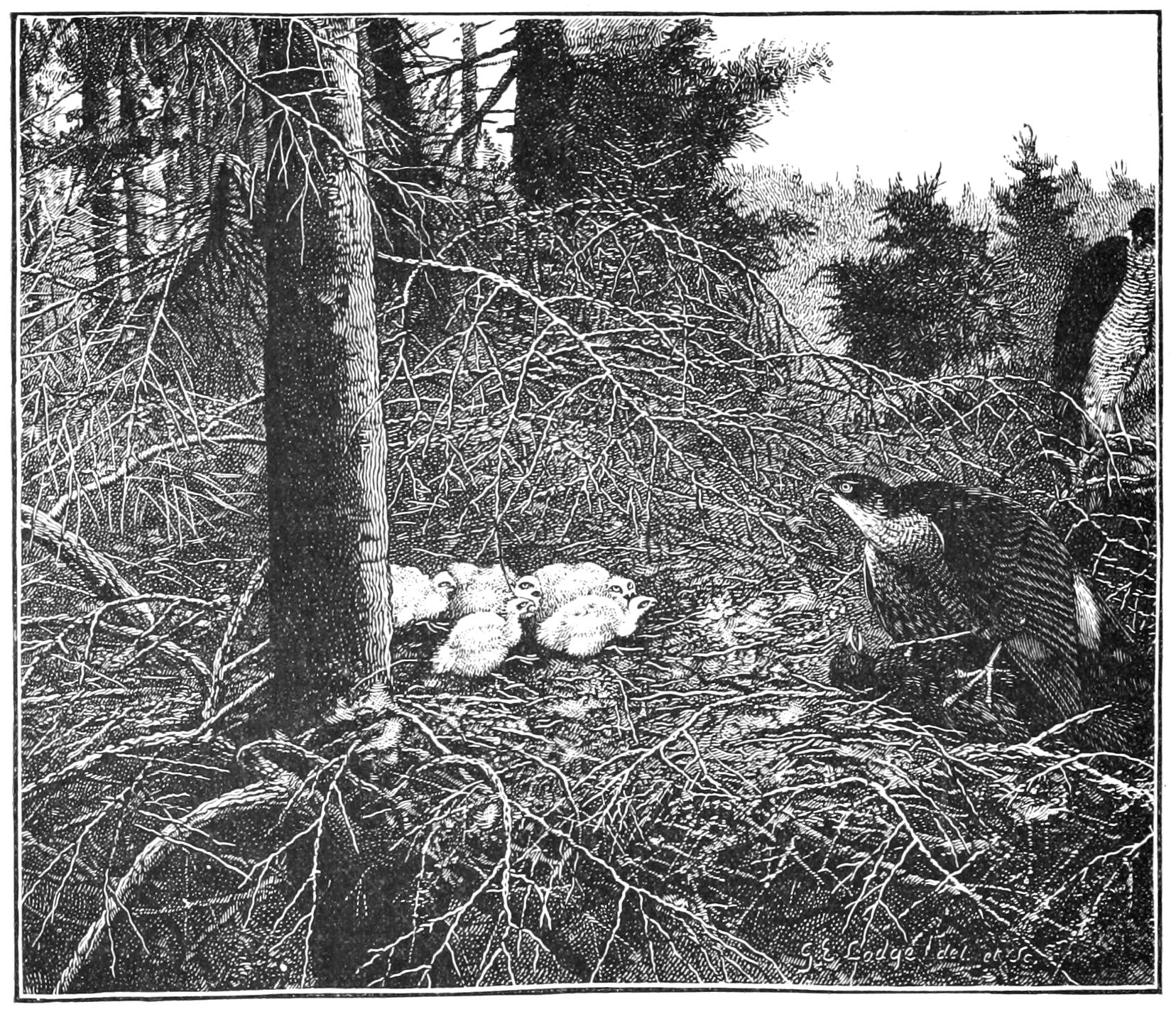
Fig. 40.–Nest of Sparrow-Hawk. Accipiter nisus. (From Poachers.)
The coloration is well shewn by Accipiter nisus, the Sparrow-Hawk, which breeds throughout Europe, North Africa, and Asia north of the Himalayas; extending further south in winter, but represented in South Africa by A. rufiventris and A. ovampensis with white-spotted rectrices. It is bluish-grey above, with white mottlings on the nape and rufous cheeks, the white-tipped tail exhibiting from three to five dark bands, and the buffish-white under parts red-brown bars. Other species are blacker or browner, or more rufous below; A. rubricollis and A. erythrauchen of the Moluccas have the nape red; the latter, A. rhodogaster of Celebes, A. virgatus of India and East Asia (including A. nisoïdes), A. hartlaubi of the Gaboon, and A. ventralis of Venezuela, Colombia, and Ecuador, have nearly uniform ruddy under parts; A. erythrocnemis of Brazil and Bolivia, and A. chionogaster, ranging from Guatemala to Venezuela are almost white beneath; A. bicolor of Central and South America having grey-blue for the white. A. melanoleucus of North-East, West, and South Africa is deep black, with brown bars on the rectrices, and some white on the tail-coverts and breast; A. pectoralis of Brazil is brownish-black above, slightly relieved by white, the tail being greyish with black bands, the collar and chest rufous, the fore-neck and abdomen white, streaked and barred respectively with black. A. minullus inhabits South Africa, A. madagascariensis Madagascar, A. cirrocephalus Australia, Tasmania, and Papuasia, A. chilensis Chili, A. guttatus Paraguay and Bolivia, A. pileatus Brazil, A. collaris New Granada; while the very robust A. cooperi occupies North America southwards to Mexico, and A. fuscus the same country to Panama. In A. subniger (tinus), of Central and South America, and some other species, the young are red above. Erythrotriorchis radiatus of East and Central Australia, a rufous bird with dark markings, which lays an egg like that of a Sparrow-Hawk, may perhaps be placed here, as may Megatriorchis doriae of New Guinea, in which the blackish upper parts have lighter transverse stripes, and the white under parts longitudinal dusky streaks.
Sub-fam. 4. Aquilinae.–The long-legged Morphnus guianensis, ranging from Panama to Amazonia, is black, with three ashy tail-bars, brown head and chest, and white rufous-banded abdomen; the fine crest is brown with black tip, the wing- and tail-coverts are varied with white. This bird haunts thick woods near water, and in habits appears to resemble the next two genera, which have similar soft plumage, short wings and long tails. M. taeniatus of Ecuador has broader and blacker bars below. Harpyopsis novae guineae of New Guinea, and Thrasaëtus harpyia, the Harpy, extending from Mexico, to Paraguay and Bolivia, have blackish-grey upper parts with a tendency to darker transverse markings; the tail shews six black bars; and the white under parts exhibit a greyish zone on the chest. The former species is, moreover, relieved by white above, while a bifurcated grey crest surmounts the white head and neck of the latter. Marvellous stories have been told of the fierceness and strength of the last-named, but despite its huge bill and legs, it seems never to attack man, though defending itself with spirit when wounded. Found in low-lying forests and near rivers, it may be seen wheeling in circles with slow heavy flight, or digesting its meals on low boughs of trees. The diet consists largely of mammals, including fawns, monkeys, foxes and peccaries; the nest is in high trees or cliffs. The Indians are very proud of a living specimen, while the down is used for decoration, and the feathers for arrow-making. Harpyopsis devours wallabies.
Pithecophaga jefferyi, a fine forest Eagle from the Philippines, with extremely deep and compressed bill, seems to belong here.[138]
The true Eagles–fierce but seldom courageous–inhabit wild mountains, plains, or forests; resembling Buzzards in their slow heavy flight, and rarely uttering their shrill cry or yelp. The prey is generally secured by a pounce; and carrion, if fairly fresh, is eaten. The nest of sticks or twigs, lined with grass, green foliage, fur or wool, especially the two first, contains from one to three large white eggs, with or without red or brownish markings.
The various species of Spizaëtus, Limnaëtus, Lophotriorchis, Lophoaëtus, Neopus, and Nisaëtus, with comparatively short wings, long tails, and large claws, are sometimes denominated Hawk-Eagles. Not usually shy, they are essentially denizens of wooded country, where some prefer the hilly districts, others the neighbourhood of streams; the food is extremely varied, including in different cases, monkeys, bucks, lambs, goats, hares, rabbits, birds as large as bustards and geese, lizards, frogs, or even fish; while the flight is more graceful and Falcon-like than in the genus Aquila, the note clearer and sharper. The moderately large nest is composed of sticks, and usually lined with green leaves or branchlets; the one or two eggs are white, ordinarily with light reddish-brown markings. Spizaëtus coronatus of South and West Africa is blackish above, with a little white on the tail-coverts and remiges, and brownish tips to the triply-barred rectrices, the buff lower parts being broadly banded with black. S. tyrannus, extending from Guatemala to Brazil, is black beneath; S. ornatus, of Central and South America as far as Paraguay, has the nape and sides of the neck and chest tawny. These birds have an occipital crest, as have some members of the hardly separable Limnaëtus, of which L. caligatus, of India and the Malay countries, deep brown in colour, with ashy inner webs to the remiges, will serve as an example. L. nipalensis and L. cirrhatus inhabit India with Ceylon, and the former Formosa and Japan; L. philippensis the Philippines; L. alboniger Malacca and Borneo; L. lanceolatus Celebes and the Sula Islands; L. gurneyi New Guinea and the Moluccas; L. (Lophotriorchis) kieneri India, Malacca, Borneo, and Batchian; L. isidori north-western South America. Lophoaëtus occipitalis, of Africa south of the Sahara, is brown, except for a few white marks above, and has shortly-feathered white metatarsi. Here the crest is extremely long, but in the nearly black Neopus malayensis, ranging from India to the Moluccas, it is much shorter. Spiziastur melanoleucus, extending from Guatemala to Brazil, is brownish-black, with white head, neck, and lower surface, the tail has four darker bands, and black marks shew towards the crest. In this species the inner claw and hallux are greatly developed. Nisaëtus pennatus, the "Booted Eagle" of South Europe, Africa, and thence to India and Ceylon, so called from the feathered legs, is brown above, with a white shoulder-patch, white tip to the barred tail, and various buffish markings; the head, neck, and under parts are fawn-coloured, with brown streaks except on the abdomen. N. fasciatus, Bonelli's Eagle, has a similar range, but reaches China, and not South Africa; it lacks the shoulder-patch, but is streaked on the abdomen. N. morphnoïdes inhabits Australia and New Guinea, N. spilogaster and N. bellicosus Southern Africa, the last being slaty-black above, and having a plain brown chest.