Chapter IV · (continued 3)
Reading edition
The typical Eagle, the bird of Jove, the emblem of Rome and of St. John, was some species of Aquila. A. chrysaëtus, the Golden or Black Eagle, is exceptionally shot in England in winter–especially in the north; but it is the Sea Eagle that occurs most frequently. In North Britain the former has bred in increasing numbers since protection has been given in deer-forests, where it kills the grouse which startle the stalker's game; a few pairs remain in North and West Ireland; while in times past it ranged to the Peak of Derbyshire or even Snowdon. Abroad it occupies most of Europe, North Asia to India and China, North Africa, and North America to Mexico. Powerful and fierce by nature, and ready to attack animals of considerable size, it never molests man under ordinary circumstances; both parents, it is true, circle anxiously round when the young are in danger, but should the nest contain eggs, the hen, which sits closely, vanishes at once on leaving them. She does not reappear until all risk seems past, while the cock is seldom sighted at the eyry, though usually seen in the vicinity. The prey consists of antelopes, wolves, foxes, fawns, lambs, hares, rabbits, marmots, geese, ducks, grouse, and so forth, with carrion, if sufficiently fresh; the ground is often quartered at a low elevation, and wonderfully rapid in the chase is the flight of this apparently slow and ponderous bird, aided by its extraordinarily keen powers of vision. Solitary individuals may occasionally be approached by stalking, but in Britain they are generally wary, owing to constant disturbance; they may, however, often be seen circling aloft or winging their way to great distances, while they can hardly be distinguished from Buzzards in misty weather even by experienced keepers. Captures are made with the talons, but Eagles are comparatively seldom trained for Falconry; yet the present species has been so used in Europe, as well as by the Kirgiz Tartars, who call it "Bergut" or "Bearcoot." The cry is shrill and yelping. The nest is commonly placed in a tree, though in Scotland such sites are seldom utilized nowadays, a projecting rock on the side of some bare mountain-glen or a sea-girt crag being selected instead. Here a cavity, rather than a ledge, is chosen, and a huge mass of sticks or heather is collected, with a bedding of hair, fur, wool, moss, dry fern and an occasional feather, or more commonly of tufts of Luzula sylvatica, garnished with an odd pine-shoot. Two or three eyries are often used in turn, the pile increasing on each occasion. At times the spot can be reached without a rope by a skilful climber, and in some countries nests have been found upon the ground. The two or three eggs–four being quite exceptional–are generally marked with red-brown, crimson, purplish or grey, but, though fine blotches are usual, one if not more of the set is frequently white. They are laid very early in spring and–as in other Birds of Prey–not always on successive days. The Golden Eagle is distinguished from the Sea-Eagle (p. 163) by the feathering reaching to the toes, which have only the last joint scutellated, and the remainder reticulated: the adult is normally blackish-brown, with tawny lanceolate nape-plumes and tail mottled with grey; the young have white bases to the rectrices. The colour, however, varies much.
Aquila clanga, the Spotted Eagle of British lists, and its smaller form, A. pomarina, range across Europe, except the most northern portions, and extend to North Africa, India, and North China, their respective distributions being somewhat uncertain. The colour is brown, with pale nape and light margins to the feathers of the wings and rump; the manners are those of Eagles generally, but the food includes frogs, reptiles, and grasshoppers, in addition to small mammals and birds. A. hastata of India is hardly separable, and the African A. wahlbergi is very similar, as is the larger A. nipalensis, the Steppe Eagle of the former country, Eastern Europe, Eastern Asia, and, exceptionally, North Africa, a plain brown bird with a fulvous nuchal patch. It commonly builds its nest upon the ground. A. adalberti, the White-shouldered Eagle of Portugal, Spain, and North-West Africa–often wrongly called "Imperial,"–preys upon lizards, snakes, hares and rabbits, which it usually spies from a perch on some bare tree-top. It is black, with brownish neck, greyish base to the tail, and a broad white shoulder-patch, whereas A. mogilnik, the true Imperial Eagle, ranging from Central Europe and North-East Africa to India and China, differs in having the head and neck creamy yellow, and only the scapulars white. A. rapax (naevioïdes), the Tawny Eagle of most of Africa, rarely found in Europe, is remarkable for the parti-coloured feathers of purplish-brown and rufous on the upper parts; otherwise it is brown, slightly streaked with fulvous below. The smaller A. vindhiana and A. fulvescens of India are very like it, while A. verreauxi of Abyssinia and South Africa is jet black with white rump and lower back. Uroaëtus audax of Australia and Tasmania is black, and has a wedge-shaped tail, the bright chestnut nape being streaked with black, and the head with white.
Of the Sea Eagles, characterized by very large bills and nearly bare metatarsi, the biggest is the fish-eating Thalassaëtus pelagicus, brown in colour, with white cuneate tail, rump, thighs, and patch on the wing-coverts. It inhabits the coasts, lakes, and rivers of North East Asia, the Liu-Kiu Islands and Japan, rarely wandering to America. T. branickii of Corea is slaty-black, with only the tail and its coverts white. Haliaëtus albicilla, the Erne or Sea-Eagle, of which a few pairs remain in Shetland and the west of Scotland and Ireland, used to breed at least as far south in England as the Isle of Man and the Lake District, while in winter immature or even adult specimens still frequently occur in various parts. Generally distributed over the Old World from Greenland to Kamtschatka, it breeds also in the Danube valley, Turkey, Greece, and Egypt, migrating to the Canary Islands, North Africa, Japan, China, and occasionally the Commander Islands. It is brown with white tail, the full plumage not being attained for nearly six years; but very old examples become whitish on the head and neck. In most of its habits it resembles the Golden Eagle, though the note is shriller, and the food consists largely of fish, seized in the talons as it swoops down; it is said to be very destructive to lambs, and, as it eats carrion, it is readily poisoned. In Britain the eyries are now in precipitous sea-cliffs, but of old inland rocks and trees were utilized, as is the case abroad, while in Egypt nests have been found upon the ground in marshes; the two or three white eggs, laid early in the year, are rarely marked with rufous. The representative American species H. leucocephalus, the Bald Eagle, has the head, neck, rump, and tail white, and ranges from the North to California and Mexico. H. leucocoryphus, with the middle of the tail and the cheeks white, extends from South-East Europe to East Siberia, China, and Burma; H. leucogaster, a greyer bird with white head, neck, under parts, and end of the tail, occurs from India and China to Australia and the Friendly Islands; H. vocifer with white head, neck, breast, and tail, but chestnut belly, occupies the Ethiopian Region; H. vociferoïdes of Madagascar is intermediate between the last-named and H. leucocoryphus. The river-haunting Polioaëtus ichthyaëtus, of the Indian Region and Celebes, is brown, with grey head and neck, white abdomen and tail, the latter broadly tipped with brown; P. plumbeus, of similar range, lacks the white base of the tail. The huge nest is placed in a tree and is often lined with green leaves, the two or three eggs being white; the note is loud and plaintive, and the food consists chiefly of fish.
Sub-fam. 5. Buteoninae, or Buzzards and Kites.–In this group the Rough-legged Buzzards (Archibuteo) are separated from the genus Buteo on account of their feathered metatarsi. A. lagopus, well-known in Britain from the numbers which frequently appear in autumn, is alleged to have bred once in Yorkshire, while in Northern Europe it is common, extending thence to about the Lena in Asia, and migrating in winter to South Europe, Turkestan, and even Natal. At the same season a darker sub-species A. sancti johannis, which breeds north of the United States, occurs southwards to Mexico. The former bird is cream-coloured, with brown markings of various depth, becoming more streaky below; the tail shews a white base and three or four dark cross-bars, of which the sub-terminal is very broad. In Scandinavia, when there is a plague of lemmings, it is as valuable an ally as the owls; the habits being identical with those of Buteo. A. ferrugineus of western North America has the upper surface and thighs ferruginous with brown streaks, the head, neck, and tail whiter, and the under parts nearly pure white. A. hemiptilopus (strophiatus) of Nepal and Tibet is nearly uniform brown with a white pectoral band.
Buteo is a genus of some thirty species, which together inhabit nearly the whole globe, except the Australian region; the only form thence recorded seeming to be B. solitarius of the Sandwich Archipelago–the Pandion solitarius of Cassin and so-called Onychotes gruberi of Mr. Ridgway. All may be represented both in appearance and manners by B. vulgaris, the Common Buzzard, which breeds not uncommonly in a few wild districts of Britain, chiefly towards the west, and is found on migration in other parts. Abroad the range includes the Atlantic Islands, West and Central Europe, whence it strays at times to Eastern Europe, Asia Minor, and North Africa; the resident bird of those countries, however, is B. desertorum. The colour above is brown, with slight white marks and twelve dusky bars on the tail, the lower surface being yellowish-white with brown streaks; but varieties are very frequent in the genus, and these may be either darker or exhibit creamy tints, a trimorphic tendency of which the Sandwich Islands form is a notable instance. The English name Puttock and the Welsh Cetn appear to be applied indiscriminately to the Common Buzzard and the Kite. The flight is powerful, though slow and heavy, nor is it uncommon to see individuals circling in the air or poising themselves aloft on motionless wings; when quartering the ground the movements are not unlike those of Harriers, but the style is more steady, and the operations less protracted. Much of the food consists of small mammals, and especially rodents; it includes, however, small birds, reptiles, frogs, beetles, and grasshoppers; and many gamekeepers now recognise the bird's utility by protecting its breeding-quarters. Its congener B. jakal is even more useful, and destroys large or venomous snakes. Furthermore, the custom of darting upon the prey from some post of vantage remains to be noticed. The nest, commonly situated in trees, is equally often in rocks; those selected not being necessarily lofty, but frequently mere outcrops on the sides of hill-valleys, in which case access is easy even without a rope. The materials used are much the same as in the case of the Golden Eagle, but finer; a like fancy being shewn for green foliage, though ivy and so forth take the place of pine-shoots, as being more readily obtainable. The eggs are white or greenish, commonly blotched or spotted to a greater or less extent with dark brown, red, or lilac; the hen sits very closely, the cock meanwhile soaring above the intruder's head, and uttering his characteristic cat-like mew. B. desertorum, of all Africa, South-East Europe, and the countries to India inclusive, which has been recorded three times in England, is smaller and more decidedly rufous than B. vulgaris, though hardly distinguishable when immature; while the bigger B. ferox of similar range, though apparently limited in Africa to the North, is closely allied; as are B. plumipes, extending from India to Japan (of which B. leucocephalus is a large and probably distinct form) and B. swainsoni of North America, which migrates as far south as Patagonia, and has almost uniform upper parts and chest. B. borealis, the "Red-tailed Hawk," occupying with its various races the whole of North America, has a rufous tail with lighter tip and usually a single blackish band, the breast being sooty-black or white, with or without a reddish tinge; B. albicaudatus, reaching from Texas to Brazil, is slaty-grey, with rusty markings on the mantle, white under parts and tail, the latter showing grey bars and a wide subterminal black cross-belt; while B. abbreviatus, found from the southern United States to northern South America, is almost black, with three broad grey and white zones across the rectrices. B. augur and B. auguralis, both from North-East and West Africa, with B. jakal of South Africa, have the upper parts black, some grey on the wings, and the tail chestnut except near the end. The first has a black throat with white streaks and white lower surface, the second a red-brown chest and black spots on the belly, the third is black below with a whitish pectoral patch. Finally, omitting several American species from want of space, B. brachypterus–a miniature Common Buzzard–is peculiar to Madagascar, B. galapagensis to the Galapagos, B. exsul to Masafuera, B. poliosomus to Chili, Patagonia, and the Falklands.
Parabuteo unicinctus, ranging from the southern United States to Chili and Argentina, a sluggish carrion eater, is sooty-brown with rufous on the wing-coverts and thighs, and a white base and tip to the tail. Buteola brachyura and B. leucorrhoa of tropical America, separated from Buteo by a central tubercle in the nostril, are black above; the former being white below and having four dark bars on the ashy tail, the latter only shewing white at the base of the black rectrices, which are crossed by one grey bar.
Asturina, placed near Astur by some authors, includes two species with Buzzard-like habits, that build slight nests and lay greenish-white eggs. A. plagiata, found from the South-West United States to Panama, is grey, barred with black on the primaries and with white below, while a white median band crosses the rectrices, of which the coverts are black and white. A. nitida, reaching from Panama to south-east Brazil, differs in having white bars above. Rupornis magnirostris of Colombia, Guiana, and Amazonia–hardly separable from Asturina–has three black belts on the tail and is rufous instead of grey beneath; R. ruficauda of Central America, R. pucherani of Brazil, Paraguay, and Argentina, and its Bolivian race R. saturata, have the chestnut remiges and rufous rectrices crossed with blackish, and the under surface as in the first-named, but the second is browner and shows a creamy patch on the primaries; R. nattereri, of Peru and Brazil, combines the chestnut primaries with an ashy and black tail; R. ridgwayi, of Haiti, is chiefly rufous and brown above, and slate-coloured with white bands below. R. pucherani is very noisy and eats fish.
Butastur teesa (with its sub-species indicus) ranges from Japan and China to New Guinea and India; it is reddish-brown, varied with white on the nape and rump, the tail and lower parts being rufous, with black and white bars respectively. B. liventer, found from Burma to Celebes, is ashy below; B. rufipennis of North-East Africa, has streaks in place of bars. The pugnacious Indian form has a mewing cry, feeds upon small mammals, lizards, frogs, and crabs, and builds its nest almost entirely of twigs, laying some three bluish-white eggs. Geranoaëtus melanoleucus of western and southern South America, the so-called Chilian "Sea-Eagle," is black with grey wings and white belly, both barred with dusky; the flight is vulturine with spiral gyrations, the note is piercing; the food consists of carrion from the beach, small mammals, birds, and grasshoppers. The nest, placed in a tree or crag, is composed of sticks and grass, the two white eggs being blotched with pale red. It is often seen inland.
Leucopternis is a genus of eleven members, of which L. ghiesbreghti, of Central America, is snowy-white, with most of the wings and a zone on the tail black. The other forms, whereof three inhabit Brazil, are black or slate-coloured above with white markings, the lower surface being grey in L. plumbea of Ecuador and Panama and L. schistacea of Colombia and Amazonia, but barred with black and white in L. princeps, of Costa Rica. Urubitinga zonura, a black bird with white tip and base to the tail, ranges from Mexico to Chili and Argentina; U. anthracina, found from Arizona and Texas to northern South America, has in addition a white belt across the rectrices.
The crested Harpyhaliaëtus coronatus, extending from Bolivia and Brazil to Patagonia, a powerful and savage bird with a taste for carrion, is chocolate-brown, with grey on the wing, and a tail like that of the last species; H. solitarius, darker in colour and doubtfully distinct, reaching Mexico northwards. Heterospizias meridionalis, of northern South America to Bolivia and Paraguay, is mottled with rufous, grey, and black, and has two white bands on the tail. Buteogallus aequinoctialis, of Guiana and Colombia, is black relieved with rusty above, and reddish with black bars below, the remiges being chiefly chestnut, and the tail indistinctly barred with white. Busarellus nigricollis, of Guiana and Brazil, is brighter chestnut with black streaks, the head being buffish, the lower throat, primaries, and most of the tail black. It has a harsh cry, and loves sitting on stumps near water, while the rugose soles of the feet assist it to secure the fishes and molluscs on which it–as well as Buteogallus–feeds.
Of the forms with comparatively weaker feet, Haliastur indus, the "Brahminy Kite" or "Pondicherry Eagle," reaching from the Indian Region to Australia and New Guinea, is chestnut with darker wings, the white head, neck, and lower parts being streaked with black; H. sphenurus, of the two latter countries and New Caledonia, named by colonists the "Whistling Kite," is ashy-brown, with rufous head and ochraceous breast striped with brown. The note is shrill, the flight easy and buoyant, the food composed of garbage, small mammals, birds, lizards, frogs, crustaceans, insects and their larvae; while fish are secured by grasping them with one foot during gliding movements along the surface of the water. The Australian species attacks poultry, but is of great utility in devouring caterpillars during insect-plagues. The nest of twigs, lined with grass, roots, hair, or green leaves, is adorned with rags and the like, the two or three eggs being greenish-white, rarely with rusty markings.
Milvus ictinus, the Red Kite or Fork-tailed Glead of the Old World, ranging from the Atlantic Islands–except, perhaps, the Azores–through most of Europe to Palestine, Asia Minor, and Northern Africa, but leaving the northerly districts in autumn, is red-brown above and rusty-red beneath, the lower surface and the whitish head being streaked with dark brown.
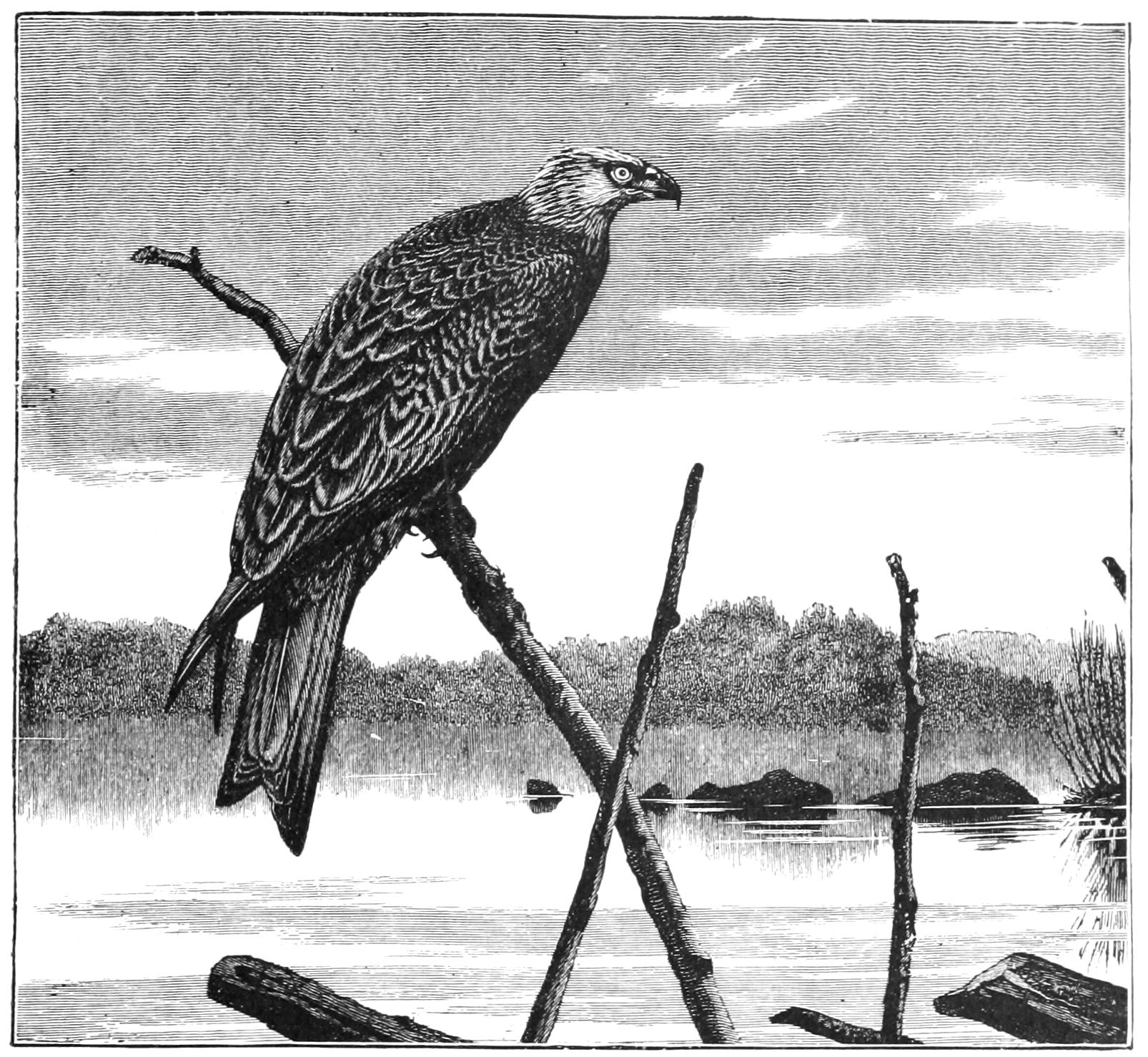
Fig. 41.–Red Kite. Milvus ictinus. × ⅛. (From Bird Life in Sweden.)
It is still known to breed in certain parts of Northern and Western Britain, though no longer the ubiquitous scavenger of the streets, so common even in London three or four centuries ago. Bold thefts of poultry from farmyards and linen from drying-grounds then counterbalanced its utility, but none the less may we regret the almost total extermination of this fine tenant of the air, caused by the increase of fire-arms and the discovery that its tail-feathers make the choicest salmon-flies. Not unlike a Buzzard when aloft, the shrill whistling note, when heard, constitutes a clear mark of distinction; while the broad wings and long deeply-forked tail bestow such graceful ease of motion and perfect steerage power as few birds can claim, whether for soaring and circling aloft, quartering the ground for booty, or hovering over the water to fish. It is not always, however, that the forked character of the tail is apparent, for when fully open it looks square, just as a square tail seems rounded. This species is somewhat gregarious and sluggish, and feeds on offal, small mammals, birds, reptiles, fish, amphibians, insects and their larvae. The nest is a mass of sticks, rags, paper, and rubbish generally, placed in a tree or rarely in a rock; the three, or exceptionally four, eggs being like those of the Buzzard, but duller and with more lilac tints. Milvus migrans, the Black Kite, once recorded in England, extends throughout Central and Southern Europe, and probably to China, breeding in North-Western and migrating to Southern Africa. The upper parts are dark brown, the under parts rufous, and the head whitish, the two latter being streaked with dusky; the bill is black and the tail moderately forked. Barely separable from this bird are Milvus aegyptius of Africa, Madagascar, South-East Europe, and West Asia, with yellow bill; M. affinis, of Papuasia and Australia, possibly reaching Ceylon; M. melanotis, extending from India to Lake Baikal, China, and Japan; and the smaller M. govinda of somewhat similar range. The third and fourth have a white patch beneath the primaries. The last-named, or Pariah Kite, is the scavenger of Hindostan, and is even bolder than its congeners; the habits, however, are similar, as are those of the Australian Lophoictinia isura, separated from Milvus on account of its square tail. This species has a fine crest, and differs, moreover, in its browner crown and greyer rectrices with whitish coverts.
Gypoictinia melanosternon of Australia has a black head and lower surface, chestnut occiput, nape, and thighs, and brownish- or rufous-black upper parts, the wings and rounded tail being marked with greyish white. Like a Kite in manners, it eats snakes and lizards, and is said to destroy Bustard's and Emeu's eggs.[139] Elanoïdes furcatus, the lovely Swallow-tailed Kite, caught once in England, and ranging from the Middle United States to Brazil, is black, with purple and green reflexions, white head, neck, rump, inner secondaries and under parts, bluish bill and feet. With splendid powers of wing, it may be seen gliding rapidly through the air, skilfully quartering the ground, or circling aloft with its long forked tail outspread, to perform doublings and evolutions of every description. It catches bees or other insects in one claw and eats them as it flies, or snatches up a lizard, snake, or frog, to be devoured at leisure, small birds and grubs varying the diet. Flocks are often seen, which hang round a wounded individual like Terns. In the nest and eggs this species and the last resemble their kin, though using no rubbish in building. Nauclerus riocouri, of inter-tropical Africa, a miniature Elanoïdes, is grey, with white face and lower surface.
Gampsonyx swainsoni, of Trinidad, Guiana, Colombia, Peru, and Brazil, is grey, with yellow face, white collar, under parts and tips to the secondaries; a black patch relieving each side of the breast and one of red the upper back. The tail is rounded in this and the succeeding genus. Elanus caeruleus, the Black-winged Kite, straying to South-West Europe, but properly ranging from the South-East to India, Ceylon, and all Africa, is ashy-grey above with a black patch on the wing-coverts; the face, lateral rectrices, and all the lower plumage being white, and the irides red. A sub-species, E. hypoleucus, occupies Borneo, Java, the Philippines, and Celebes. E. scriptus of Australia, E. axillaris, extending thence to Java, and the hardly separable E. leucurus of tropical and sub-tropical America, are marked with black on the under wing-coverts, while the first has black axillaries also. These buoyant birds are fond of perching, but soar with ease, quartering the plains like Harriers, or hovering with uplifted wings to dart down upon their prey of insects, snakes, small mammals, and more rarely birds. The cry is mournful; the small nest, of sticks, grass, and moss, is placed in trees; the three, four, or even eight white eggs being heavily blotched with red. Ictinia mississippiensis, the Mississippi Kite, found from the Southern United States to Guatemala, and represented from Mexico to Paraguay by the black-winged I. plumbea, is lead-coloured, with black notched tail and rufous inner webs to the primaries; its manners correspond to those of Elanoïdes, but the eggs are white.
That most abnormal form Rostrhamus sociabilis, the Awl-billed or Everglade Kite, ranging from Florida and Cuba to Bolivia and Argentina, is slaty-black, with white base and tip to the brownish emarginate tail, orange cere and feet, and crimson irides. The extraordinarily slender bill with long terminal hook no doubt assists greatly in extracting from their shells the molluscs, such as Ampullaria, on which this species entirely subsists, while its long legs and sharp talons help to secure the prey in the muddy swamps it frequents. Mr. Gibson[140] tells us that it is to some extent gregarious, and is often seen slowly beating over the marshes, or poised aloft with its broad expanded tail alone in motion, a "creaking" or "neighing" alarm-note being apparently the only cry. Twenty or thirty nests are commonly built close together, and are slight platforms of twigs or plant-stems, with a lining of aquatic herbage, supported on the reeds or bushes a few feet above the water. The two or three eggs are whitish with reddish- or yellowish-brown and grey blotches. The breeding-quarters are constantly changed.
Machaerorhamphus alcinus, of Tenasserim, Malacca, Borneo, Sumatra, and New Guinea, is especially remarkable for the wide gape of the short bill, which recalls that of the Caprimulgidae. All the tail-coverts are unusually elongated, a fine crest of pointed feathers adorns the occiput, and the plumage is black with a chocolate tinge, the throat and middle of the chest being white, with a broad black streak down the former. M. anderssoni, of Damara-Land, the Cameroons, and Madagascar, known to have crepuscular tendencies and to feed partly on bats, is smaller, and has a white abdomen; M. revoili, of Somali-Land, is intermediate.
Pernis apivorus, the Honey-Buzzard, which still breeds occasionally in Britain in June, when the dense foliage easily causes it to be overlooked, inhabits Europe generally, and probably extends to Japan, migrating in winter to Madagascar and South Africa. The extremely complex phases of plumage make it uncertain whether it shares the Indian Region with the similar but crested P. ptilorhynchus (cristatus), from which P. tweeddalii, of Sumatra, is doubtfully separable. The upper parts are brown, with greyish head and three or four dark bands on the tail, the lower white with brown spots and bars. White mottlings usually shew above, and the female has the crown brown. The shortly-feathered lores distinguish Pernis from Buteo. Our woodland species feeds upon the ground, and devours bees, wasps, and grubs–though not honey–from the comb, together with small mammals, birds, slugs, and worms; the cry is shrill, but seldom heard; the nest, composed of sticks lined with leaves, contains two or three whitish eggs with rich purplish-red or brown markings. P. celebensis differs in the rufous chest, which exhibits black streaks, that are continued to the white throat with its black longitudinal band; the adult closely resembles Limnaëtus lanceolatus, both being peculiar to Celebes. Henicopernis longicaudatus, of Papuasia, is brown barred with black above, and white streaked with blackish below, the tail shewing five black bands; H. infuscatus, of New Britain, is a darker race. Regerhinus uncinatus, and the larger R. megarhynchus, found from Central America to Bolivia and Brazil, are dusky slate-coloured with a white tail-bar; R. wilsoni, of Cuba, has a yellow bill; R. (Leptodon) cayennensis is glossy black, with grey head, wing and tail-bands, and white lower surface. Immature birds are brown, with rufous and white streaks or bars below.
Sub-fam. 6. Falconinae.–The true Falcons are remarkable for a notched maxilla, while Harpagus and the crested Baza, aberrant members of the group, and sometimes classed with the Kites, exhibit two "teeth." B. lophotes, of India, Ceylon, and the Malay countries, is greenish-black above, varied with white and chestnut on the wings; the fore-neck being white, and the breast shewing a band of black above one of chestnut, which is barred with buff towards the black vent. B. verreauxi, occurring from the Zambesi to Natal, is dark brownish-grey, with four black bars on the white-tipped tail, and rufous bands across the white breast and under wing-coverts; B. cuculoïdes, of West Africa, having the latter plain rufous. The somewhat similar B. subcristata occupies North-East Australia, B. rufa inhabits the Moluccas and Papuasia, B. timorlaensis Timor-laut, B. erythrothorax Celebes and the Sula Islands, B. magnirostris the Philippines, B. borneensis Borneo, B. leucopais Paláwan, B. sumatrensis Sumatra, Tenasserim, and Sikkim, B. ceylonensis Ceylon and South-East India, B. madagascariensis Madagascar, and B. reinwardti, with grey-barred breast, the Moluccas, Timor, and Papuasia. Comparatively little is known of the habits of these shy forest forms, which occasionally soar, feed upon the ground on chamaeleons, grasshoppers and other insects, build small nests, and lay about three whitish eggs with brown markings. Harpagus diodon, of British Guiana and Brazil, is grey, with brown wings and tail barred with whitish, white throat with a black streak, rufous thighs and under wing-coverts. H. bidentatus, extending from Panama to Brazil and Peru, has chestnut under parts, H. fasciatus being hardly separable.
Of the tiny eastern "Finch-falcons," Microhierax fringillarius, inhabiting the Malay Peninsula and Great Sunda Islands, is bluish-black, with rufous throat and abdomen, the breast, forehead, a stripe down each side of the neck, and partial bars on the wings and tail being white. It is a bold dashing species, which feeds upon insects and birds–even as large as quails, and lays four white eggs in holes in trees upon a bed of chips, leaves, and insect-débris. M. latifrons, of Borneo and the Nicobars, has a much wider frontal band; M. melanoleucus of Assam and Cachar, M. erythrogenys of the Philippines, and M. sinensis of China are quite white below; but the second has black thighs and the third a white nape, a character shared by M. eutolmus, ranging from India to Cambodia, wherein the throat and abdomen are chestnut. Poliohierax semitorquatus, little bigger than the foregoing, inhabits North-East and South Africa, the male being blue-grey with white forehead, cheeks, nape, rump, under parts and markings on the remiges and rectrices; P. insignis of Borneo and Siam is larger, with black shaft-stripes, but no white collar. The females have the mantle, and in the last-named the crown, chestnut. The African species rarely soars, but haunts low trees and bushes, occasionally flocking, and feeding on mice, small birds, lizards, and coleopterous insects. Spiziapteryx circumcinctus, of Chili and Argentina, is brown above and whitish below, with numerous dark streaks; the white eyebrows meet at the nape, and white spots and bands mark the remiges and lateral rectrices.
Dissodectes ardesiacus, of Arabia, North-East and West Africa, is slate-coloured with dark shaft-stripes, the wing-quills being brown and the tail interruptedly barred with whitish. D. dickinsoni of Benguela, the Shiré and Rovuma valleys, is brown with pale head and white rump; D. zoniventris of Madagascar has dark bands on the mantle and on the white under parts. Hieracidea (Harpa) novae zealandiae, the Quail Hawk of New Zealand and the Chatham Islands, is dark brown with rufous and grey barring above; the crown and nape being blacker, the tail shewing eight whitish bands, and the creamy-white lower surface and fulvous thigh-region exhibiting streaks of brown. It may be seen soaring over the plains and lower hills, hovering with expanded tail, or pouncing like an arrow on the rodents, birds, and lizards which form its food. Insects too are captured on the wing, and poultry fiercely attacked. The cry is screaming; the eggs resemble those of the Peregrine Falcon, and are deposited in hollows scraped on rocky ledges, or occasionally in rough nests among thick creepers. A smaller and bolder race has been termed H. ferox or brunnea, the Bush-Hawk. H. berigora of Australia and New Guinea has brown upper parts, with rufous markings that become bands on the white-tipped tail, creamy under parts streaked with brown, and chestnut thighs. H. orientalis of the same countries lacks the red tints, H. novae guineae of New Guinea is less spotted. These three Kestrel-like birds love swampy districts, and devour small mammals, birds, frogs, lizards, newts, insects, and even carrion; being valuable allies in caterpillar-plagues, but farmyard pests at ordinary times. The nest of sticks, lined with bark or leaves, is placed in trees, the three or four whitish eggs are blotched with reddish-brown.
The nearly cosmopolitan genus Tinnunculus (Kestrel), so called from its querulous "bell-like" note, is separated from Falco rather by pattern of colour than structural considerations. T. alaudarius, the most plentiful of the British Falconidae–which is occasionally seen in winter near its breeding-quarters, though chiefly a summer immigrant–ranges from the Atlantic Islands and lat. 68° N. in Europe, through Asia to Japan and China, reaching Fantee and Mombasa in Africa, and having been once recorded from Massachusetts in America. The sub-species neglectus, japonicus, and saturatus are darker than the type; wherein the male is chiefly bluish-grey above, and buff with black spots and streaks below; the chestnut back being spotted with black, and the white-tipped tail having a broad subterminal black band. The female has rufous upper parts, with dark bars continued down the tail. The Kestrel or Wind-hover is a shy arboreal bird of somewhat crepuscular tendencies, generally observed circling gracefully aloft in readiness to drop upon its prey, or "hovering" with rapid vibrations of the long wings, the tail expanded and the head to windward. Small mammals and coleoptera furnish most of the food, a few birds–very seldom game–lizards, frogs, worms, grasshoppers, and insect-larvae varying the diet. Its great utility is now generally recognised, while sensible keepers should be fast learning that all Hawks and Owls are not vermin. It rarely builds its own nest, but occupies deserted habitations of Crows, Pies, and other birds, relined sparingly with twigs and grass, or scrapes a cup in the soil of some ledge or cavity of a cliff. At times hollow trees, ruins, and chalk-pits are chosen, or even level ground in the fens–pellets of bones, feathers, fur, and beetles' elytra commonly marking the spot. The four to six eggs are creamy-white, blotched or thickly mottled with bright or dull red. T. cenchris, the Lesser Kestrel, with white claws, and unspotted back in the male, has four or five times wandered to England, and ranges from the Pyrenees, Styria, and the Orenburg district to Bokhara and North Africa. It sometimes occurs further north, and in winter reaches Cape Colony; the Indian and Chinese race, distinguished as T. pekinensis, having strayed to the Transvaal. T. sparverius, the "Sparrow-Hawk" of America from the Great Slave Lake to Colombia, which occasionally feeds on snakes, and breeds in Woodpeckers' holes, has two sub-species, T. cinnamominus of Central and South America and T. caribbaearum of the Antilles. T. dominicensis (sparverioïdes) inhabits Cuba and St. Domingo, and occurs in Florida; T. isabellinus ranges from Georgia to northern South America; T. alopex from Nubia to Bogos-Land; T. rupicolus and the more northern T. rupicoloïdes occupy South Africa; T. gracilis the Seychelles; T. punctatus Mauritius; T. newtoni Madagascar; T. moluccensis the Moluccas and the Sunda Islands; T. cenchroïdes Australia and Tasmania. It is remarkable that no Kestrel inhabits Jamaica or Bourbon, though Cuba and Mauritius are respectively so near them.
Erythropus vespertinus, the Red-footed Falcon, which wanders to Britain, but breeds from Eastern Europe and Algeria to Krasnoiarsk, where it meets the Eastern Asiatic E. amurensis, is lead-grey in the male, with browner tail, chestnut thighs and vent region; the female being barred with blackish above, and having the head, nape, and under surface rufous. The cere, orbits, and feet are red. Both forms migrate to South Africa, keeping more to the west and east respectively; the latter, which crosses India and Burma, being distinguished in the male by white under wing-coverts, and in the female by the absence of rufous on the head, neck, and brown-spotted breast. In general habits like Kestrels, these birds are more gregarious, and breed in company.
Hypotriorchis subbuteo, the Hobby, nests sporadically in England, and extends thence to North Africa and Japan, occurring in the Canaries and migrating to South Africa, North India, and China. Both sexes are slate-coloured, having buff lower parts with black streaks, reddish vent, white throat and sides of the neck, and a black stripe down the latter. This bold and dashing little Falcon, easily recognisable by the extremely long wings, which give it a Swift-like appearance, is usually seen poised aloft, or rapidly pursuing the insects and birds which form its food. The note is shrill; the three to five eggs resemble closely freckled pinkish specimens of those of the Kestrel, and are deposited late in the season in disused birds' nests. The statement that it broods on the eggs of the Kestrel needs further proof. H. eleonorae, the largest Old World species of the genus, occupying the Mediterranean basin from Spain and the Atlas to the Levant, while straying to Mauritius, is uniform sooty-black; but some individuals never become sooty, and immature examples precisely resemble the Hobby. The habits are like those of its congener, but the two or three eggs are larger, and are laid in holes in cliffs, or upon the bare soil on stony flats of desolate islands. The very similar H. concolor ranges from the Red Sea to Madagascar; H. cuvieri inhabits the Ethiopian Region; H. ophryophanes is described from Colonia; H. severus extends from India and Ceylon to New Britain, but not to Australia; H. lunulatus from Flores to the Duke of York Island, with Australia and Tasmania; H. fusco-caerulescens and H. rufigularis from Mexico to Argentina, the former moreover reaching the southern United States and Patagonia. The powerful H. diroleucus–perhaps referable to the genus Falco–occurs from South Mexico to Peru and Brazil.
Aesalon regulus, the Merlin, called the Stone-Falcon from its habit of perching on rocks, is a lively and interesting little species, daring yet confiding, which preys chiefly upon small birds, and flies less swiftly than the Hobby, though both are used for Lark-hawking. The shrill note is chiefly heard at the breeding-quarters, which in Britain are generally on steep hill-slopes, especially where stony outcrops break the heather or grass; from four to six eggs–duller and less blotched than those of the Kestrel, being deposited in a hole scraped in the bare ground. Abroad–and exceptionally in Scotland–old nests in trees or rocky ledges are utilized, and the bird is perhaps occasionally its own architect. Fairly common north of Derbyshire its summer range extends over the moorlands from Shetland to Devonshire, and includes Ireland, while it visits the sea-coast in autumn. It occurs accidentally in Greenland, and reaches thence to the Pyrenees and the Alps, being found across Northern and Central Europe and Asia, and migrating to North Africa, North India, and South China. The male is slaty-blue with rusty nape and under surface, and is streaked with dusky throughout; the throat is white, as is the tip of the tail, which, besides six imperfect bars, shows a broad sub-terminal black band. The dark brown female has the lower parts white, the rectrices exhibiting eight light bars. In the very similar Ae. columbarius, the "Pigeon Hawk" of North America, extending to Venezuela and Ecuador, the tail-bars in the respective sexes are four and six. This species and the following usually build in trees, using twigs, roots, grass, and moss for their nests. Ae. (Chicquera) typus, the Indian "Turumti," is a larger bird, both male and female being grey above and white below, with red head and dark barring nearly throughout, while Ethiopian Ae. (C.) ruficollis is slightly less striped.
The most typical member of the Family is Falco peregrinus, the almost cosmopolitan Peregrine Falcon, of which the sub-species F. melanogenys and F. ernesti, the commonest forms from the Sunda Islands to China and Fiji, are more closely barred below, though not so broadly as F. cassini of the extreme south of America. The colour is slaty-grey above with darker transverse markings, the head and a stripe down each side of the neck being blackish, and the under parts ruddy-white banded with black. Young birds are browner, and are streaked instead of barred. Barely separable is the smaller and darker F. minor of South Africa, the Comoro Islands, and Madagascar, with its larger race F. punicus, found from Morocco along both sides of the Mediterranean to Asia Minor. F. barbarus, also of the Mediterranean region, but chiefly confined to Africa north of the Niger, and the Soudan, is distinguished by its red nape, brightest in the larger sub-species, F. babylonicus, which occurs from Babylonia to North India. The Peregrine Falcon, often erroneously called Goshawk in Scotland–a fact accounting for many British records of the latter–is for its size the most powerful of the Family; and, being one of the "noble" or long-winged forms, is much used in Falconry, wherein the male is termed "Tiercel" and the female "Falcon," as in many other species; while Hunting Hawk, "Blue Hawk," and, for the young, "Red Hawk," are names common to both sexes.
Far the most daring of our Birds of prey, the fierceness and courage are especially shewn in defence of its nestlings, both parents dashing angrily at an intruder, and, though rarely touching him, swooping down in unpleasant proximity, as he clambers along some narrow ledge or swings upon his rope. Should, however, the hen-bird, which sits very closely, have fresh eggs, she disappears on leaving them, though her consort flies wildly to and fro at some little distance, reiterating his shrill cry. Exceptionally savage adults may even strike the person; nevertheless, Skuas and certain Owls are decidedly more dangerous, whereas the ordinary Eagle is mild in comparison. The food consists of ducks, guillemots, pigeons, grouse, and partridges, varied by rabbits and so forth; yet, in spite of the undoubted damage caused to game, preservers would be wise to spare a due proportion of individuals in view of their utility in killing off the more weakly and diseased birds. The two to four eggs, usually finely blotched or thickly mottled with rich red on a creamy ground–though one is often paler or yellowish–are deposited in a hollow scraped on some bare or grassy ledge of a sea-girt or inland cliff; but occasionally nests in trees are utilized, or broken ground in northern regions. Two or more sites are often tenanted in turn. Long distances are traversed in search of food, the survivor of a pair mating again marvellously quickly, considering the comparatively scanty supply of partners.
F. peregrinator (atriceps), the Shaheen or Royal Falcon, of India, Ceylon, and Tenasserim, distinguishable by the deep ferruginous under surface and the general absence of barring, is much prized by natives for hawking, as is the docile but delicate and less courageous Lanner (F. feldeggi or tanypterus) by the Bedouins. The latter is buffish-brown, with ruddy crown and nape, a grey tinge towards the rufous-barred tail, and fawn-coloured lower parts with brown spots; it ranges from Loango and Unyamuesi in Africa as far as South Europe and Persia, and lays four eggs–lighter than those of the Peregrine–in rocks, ruins, or disused birds' nests, the Dashoor Pyramid being a well-known site. F. biarmicus, a close ally from South Africa, is nearly spotless below.
Of the genus Gennaea or "Desert Falcon," G. sacer (lanarius or milvipes), the Saker, found from North Africa and East Europe to North China, has brown upper parts mottled with fulvous, whitish crown, nape, and lower surface streaked with brown, and white markings across the tail. A swift and fairly bold denizen of open country, it is used for bustard-, gazelle- or heron-hawking by Indians and Arabs, while it also preys on hares, birds, and lizards. It deposits three or four rather pointed white eggs, blotched or spotted with various shades of red, in a nest of sticks and grass, normally placed in a tree. G. jugger, the Luggur of India and Afghanistan, differs in being greyer above and less streaked below, with rufous crown and nearly uniform tail, whereas G. mexicana (polyagrus), the Prairie Falcon of Mexico and the western United States, has the head brown. G. hypoleuca, of Australia, is grey and black, with barred tail, and dusky shaft-streaks on the whitish lower parts; G. subnigra of the same country being almost plain blackish-brown.
Much controversy has arisen concerning the noble Arctic Falcons (Hierofalco), especially those occupying Siberia and Northern America; it seems, however, most probable that three grey forms inhabit the latter and two the former region. In H. candicans, the Greenland Falcon, the prevailing colour is white at all ages, transversely marked above and spotted below with blackish; it occurs in North Greenland, Spitsbergen, Arctic Siberia and America, the Commander Islands, and Amur-land. H. gyrfalco, the Gyr- or Jer-Falcon[141] of Arctic America, Greenland, Scandinavia, Northern Russia, and possibly North Asia, is like a large Peregrine Falcon, but is greyer above and whiter below; H. islandus, the Iceland Falcon, of South Greenland, Iceland, North Siberia, and Arctic America is paler, having the whitish head streaked with dusky. H. labradorus, of Labrador, is dark throughout. All these species move southwards towards winter, the first three visiting Britain and the Greenland Falcon even Southern France. They are still valued in Falconry; but, though more powerful, they lack the spirit and dash of the Peregrine Falcon. The food consists of lemmings, grouse, sea-fowl, and the like; the nest of sticks, lined with softer materials, is placed on rocks or trees, and contains three or four whitish eggs mottled or completely covered with yellowish or cinnamon markings.
Fam. V. Pandionidae.–This group is especially remarkable for the reversible outer toe–recalling that of the Owls, the want of an aftershaft, and the long closely-feathered tibiae. The strong short beak is arched and decidedly hooked; the powerful feet are roughly scaled; the toes nearly equal, with no connecting membranes, but with spicules beneath; the claws sharp, curved, and rounded; the wings long; the tail comparatively short. The other structural details are as in the Falconidae. The downy young are dusky, varied with rufous; the lower breast, the abdomen, a central stripe down the back, and several on the head, being white.
Pandion haliaëtus, the Osprey or Fish-Hawk, nearly cosmopolitan in range, though local everywhere, and absent from many of the Pacific Islands, New Zealand, Iceland, Greenland, and America south of Brazil, is dark brown above, with the short crest, head, nape, and lower parts white; the crown being streaked with blackish, and a brown band–which becomes in the male a series of spots–crossing the chest. The bill is dusky, the cere and feet are bluish, and the irides yellow. The smaller Australasian P. leucocephalus and the American P. carolinensis barely attain sub-specific rank. A migrant to Britain, this bird formerly bred at Ulleswater, and not uncommonly in Scotland, where two or three pairs still remain. Of old it often occupied rocky islets or ruins in Highland lochs, but the nest is usually placed in other countries on trees or sea-cliffs, and exceptionally on the ground; trees being the favourite site in America, in which country colonies are sometimes formed, consisting of even three hundred pairs. The bulky flattish pile of sticks and turf, lined with moss, grass, or seaweed, is invariably placed near water, and contains three, or rarely four, whitish eggs, beautifully blotched or overspread with dark brown, crimson, or claret-colour, varied with orange, buff or grey, New World specimens being usually duller. Surface-swimming fish form the food, and magnificent indeed is the spectacle when an Osprey, after poising itself vertically aloft, descends with terrific dash and splashing plunge to rise again with its captured prey grasped in its roughened toes. The graceful flight is varied by many evolutions and spiral ascents, while the loud piercing scream is chiefly heard at the nesting-quarters.
Of fossil Falconine forms, excluding existing species, Lithornis vulturinus is found in the London Clay (Lower Eocene); from the Upper Eocene of France comes Palaeocercus cuvieri and Falco–the former possibly from England also; from the Lower Miocene of France Teracus littoralis, Palaeohierax gervaisi, Aquila, Buteo, and Milvus; from its Middle Miocene Haliaëtus and Aquila. Aquila also occurs in the American Pliocene of Nebraska and Oregon; Falco in the Italian; from the drifts of Queensland we have Necrastur alacer and Taphaëtus branchialis; from the Argentine Pampean of Lujan and the Post-Pampean of Monte Hermoso respectively Asthenopterus minutus and Foetopterus ambiguus; while the superficial deposits and swamps of New Zealand furnish a sub-fossil Circus and the giant Harpagornis moorii; and the Mare aux Songes of Mauritius Astur alphonsi.