Chapter VI · (continued 2)
Reading edition
The furcula, when complete, is U-shaped; the tongue is fleshy, and somewhat horny below; the nostrils, placed towards the front of the cere, are rather large, and usually concealed by bristles; the syrinx is bronchial; the after-shaft is absent or rudimentary; down occurs in the adults only on the unfeathered spaces, but in the nestlings forms a woolly coating, which may be brown or dusky, as in the Snowy Owl, white as in the Screech-Owl, yellowish or grey, as in many species.
The sexes are alike, the female being larger than the male. The young resemble the adults, but, at least in certain cases, are more rufous or buff; further information is, however, needed as to the successive stages. All Owls exhibit a certain similarity, while their ample plumage creates an erroneous impression of bulk; the feathers–most compact in Surnia–are soft, with an admixture of hairs and with weak, brittle shafts, to which facts the noiseless flight is largely due. An erectile tuft decorates each side of the crown in Bubo, Asio, Scops, and Ketupa; but the most striking outward characteristic is the ruff of several series of small, stiff-shafted, recurved feathers, originating from a fold of the skin round the cheek, which support the larger feathers of the overlying disc around the eye. The latter is very complete in Strix, Syrnium, and Asio, being in the first-named rather triangular than circular; but in Surnia, Speotyto, Bubo, and Scops, not to mention other cases, it is far less perfect.
Syrnium cinereum, one of the largest members of the Family, is thirty inches long, though Bubo possesses species that are perhaps more powerful; on the other hand, Micrathene whitneyi and Glaucidium cobanense measure about five inches. Omitting the white or yellowish-white forms, the coloration of Owls may be stated to be a mixture of black, brown, rufous, grey, yellow, and white, while barring is frequent on the wings and tail. The pattern is always difficult to describe, nor can more than an indication of it be given in the space available below. Permanent rusty-red and grey phases occur in many species, or more rarely a brown phase; such species as exhibit two of these being termed dimorphic, though dichromatic would better express the meaning. The bill is blackish, dusky, or yellowish. The moult in the Strigidae appears to be very gradual.
Owls are an exceptionally cosmopolitan group of birds, a large proportion of the genera being common to both hemispheres; Ketupa, Scotopelia, Ninox, Heteroglaux, Sceloglaux, Carine, Photodilus and Heliodilus are, however, peculiar to the Old World, Speotyto, Gymnasio and Micrathene to the New. The Short-eared Owl (Asio accipitrinus) is found at various seasons throughout the globe, except, it would seem, in West Africa, Australia, the Moluccas, Papuasia, and Oceania; it occurs even in the Sandwich, Galápagos, and Falkland Islands. The Screech-Owl (Strix flammea) has an even wider range, but is not met with in Norway, the north of North America, or New Zealand. Authorities differ as to the genera and species to be recognised, but certainly many more of the latter are now known than the one hundred and ninety at which Dr. Sharpe put the total in 1875.[232]
The members of this Family frequent districts of the most varied description, whether they be wooded highlands, rocky ravines, or cultivated lowlands; the Snowy Owl (Nyctea scandiaca) nests chiefly on the fjelds and barren lands towards the North Pole; while the Burrowing Owl (Speotyto cunicularia), which is equally at home on the sandy plains of North or South America, is exceptional as an instance of gregarious habits in the group. The majority, being nocturnal, are ill at ease in sunlight, a fact which may explain the apparent discrepancy between their habitual shyness and their bold conduct at the nest or when wounded; many are then positively dangerous, and prove worse adversaries than Falcons or Eagles. In the perpetual day of the Arctic summer the Snowy Owl and the Hawk-Owl (Surnia ulula) cannot of course be nocturnal, while to a limited extent various species of Bubo, Scops, Ninox, Glaucidium, Carine, Nyctala, and Asio may be seen abroad in the hours of light; so that in many cases sight may aid in the capture of prey as much as hearing.
The noiseless flight is buoyant, but usually slow and somewhat wavering, with frequent beats of the wing; occasionally it is more direct, and in Surnia ulula almost Hawk-like. Owls apparently prefer to perch with the first and fourth toes behind, and on a level surface to stand with three toes in front; their gait on the ground is awkward, and being arboreal birds–with the exception of Speotyto and Sceloglaux–they rarely walk to any extent.
The food consists of small mammals, such as lemmings, rats, voles, and mice; of insects, with perhaps beetles in especial; and to a less degree of birds, reptiles, bats, worms, slugs, and snails. The stronger forms even capture young fawns, rabbits, hares, large grouse, and so forth, Ninox connivens being a great enemy of the young of the Koala (an Australian marsupial); while the Snowy, Mottled, Screech-, and Wood-Owls occasionally take fish, which, with crabs, constitutes the chief diet of Ketupa. The manner of procuring sustenance varies with the object sought. Insects are frequently caught upon the wing, but ordinarily the ground is quartered after the manner of Harriers, and a pounce made upon the prey, which is secured in the long curved talons. The smaller creatures are swallowed entire or carried in the bill; the bigger are conveyed, hanging between the feet, to some convenient spot, where they are torn to pieces and sometimes plucked. Bones, fur, feathers, beetles' elytra, and the like are ejected as round or cylindrical pellets, which commonly lie thickly around the nests or feeding-places, and clearly shew the nature of the food.
The note varies from a loud hoot to a low, muffled sound or a clear, musical cry; the utterance of both young and adults being in some cases a cat-like mew, while the Screech-Owl snores when stationary. The "hoot" is said to be produced by closing the bill, puffing out the throat, and then liberating the air, a proceeding comparable to that of the Bitterns (p. 88). On the whole the voice is mournful and monotonous, but occasionally it resembles a shrill laugh. If a nest be made, it is commonly placed in a hole in a tree or on a ledge of rock, but many species simply deposit their eggs on the débris naturally found in cavities.
To descend to a few particulars, the Snowy and Short-eared Owls, certain other species of Asio, and in some cases the Eagle-Owls (Bubo) breed upon the ground, often near some sheltering tuft, and use little or no bedding; Speotyto collects a mass of grass, dry leaves, feathers, and rubbish in burrows; the Wood-Owls (Syrnium), the Long-eared Owl (Asio otus), and several other forms utilize deserted nests of Pies, Crows, Squirrels, and the like, commonly adding a fresh lining; the first-named alternatively choose holes in trees or in the ground; while Carine glaux has been known to breed in ant-hills. The Screech-Owl (Strix) and most of the smaller members of the Family deposit their eggs in crevices in rocks or banks, in natural cavities in trees, or even at the junction of two large branches; towers, lofts, dovecots, and belfries being well-known sites for the former. Apparently none of the above excavate their own holes in the wood, or do more than clear them out; a few, however, decorate the nests they usurp with green foliage, as do so many Buzzards and Eagles. The habits sometimes undergo a decided change, as when the Short-eared Owl in the Aleutian Islands, and the Screech-Owl in Texas and India take to fairly deep burrows.
The Strigidae are exceptionally early breeders; for instance, Long-eared Owls' eggs have been found in England at the end of February, and those of Bubo virginianus in that month in the United States; it is true the Screech-Owl is later in this country, but this does not seem to be the case with its American race. Where fresh sets are found late in the year, the first have generally been destroyed, and a second brood is uncommon, though the contrary holds true during vole- or lemming-plagues, when food is unusually abundant; at such times, moreover, the number of eggs is abnormally large for the species. The usual tale varies from two to ten, while the bigger forms as a rule do not deposit so many. Much has been made of the fact that the Screech-Owl (with the Eagle-Owl and other forms) lays at considerable intervals of time; but this is certainly not always true, and in many cases the varying size of the embryo is easily accounted for by supposing the parent to sit as soon as the first egg is deposited. On the other hand, occasional breaks certainly occur in the laying, and pairs of eggs are often produced almost simultaneously; yet the bird has no regular habit of allowing the subsequent eggs to be hatched by the warmth of the oldest nestlings; and the reader may be reminded that in other groups, such as the Harriers and Divers, a very similar inequality in the development of the eggs may be observed. Exceptionally the white shell is said to be tinted with blue or yellow, or to be even marked with lilac and brown in Bubo coromandus.[233] The shape is normally oval or nearly spherical, but longer or even pointed specimens are not uncommon, while the larger the size the less glossy is the texture. The male is generally to be found near at hand if the nest is disturbed, and undoubtedly assists in some cases in incubation, which lasts about four weeks. The hen hisses when caught in a hole, and invariably sits closely; while both parents frequently remain near an intruder, and "click" their beaks at him in exactly the same manner as the pugnacious nestlings do.
Owls are constantly mobbed by other birds, especially when dazed by sunlight, the Little Owl being used as a lure on the Continent. They migrate to a greater or less extent, the autumnal visits of the Short-eared Owl being especially well-known in Britain; yet the Snowy Owl often remains in the far north in winter. The flesh is not generally reckoned palatable, but Bubo, Asio, Nyctea, Carine and Scops at least are eaten by the natives of various countries; superstition, however, usually prevents the murder of an Owl, which is usually supposed to entail evil, though in a few places good luck. In Andalucia the Scops- and Screech-Owls are believed to be the devil's birds, and to drink the oil from the lamps in saints' shrines; the Malagasy consider the members of the Family embodiments of the spirits of the wicked; and country folks' belief in their connection with death and the churchyard dates back at least to the time of Shakespeare, who makes one of his characters call the owl's hoot or screech a "song of death." Many species are well-adapted for aviaries, and breed freely; and the Little Owl (Carine noctua) has done so when liberated in Britain.
Sub-fam. 1. Striginae.–Strix flammea, the nocturnal White, Screech-, or Barn-Owl, is orange-buff above, with brown, grey and white markings, but is white below and on the complete facial discs. The dark grey phase has the white parts tinged with orange and a few distinct blackish spots beneath. The legs are entirely, and the toes partially, covered with bristly feathers. As mentioned above (p. 400), the bird is almost cosmopolitan, if we disregard the sub-species proposed. It is rare in northern Scotland. It lays its four to six dull white eggs, without any nest, in hollow trees, crevices in masonry or rocks, towers, belfries, lofts, and so forth, and has been known to breed in holes in banks or cliffs in America, between forking branches in the Philippines, and on the ground in Madagascar. The eggs are not uncommonly deposited at considerable intervals. The food consists chiefly of small rodents, though birds, bats, insects, and even small fish are eaten; the note is a weird screech, while young and old make a snoring noise at the nesting place. When this bird frequents dovecotes it destroys the rats which prey upon the eggs and young of pigeons, and is itself practically harmless. According to Dr. Sharpe[234] the following may also be admitted as valid species: S. novae hollandiae of Australia, S. tenebricosa of that country and New Guinea, S. capensis of South Africa, and S. candida, the Grass Owl, ranging from India to China, Formosa, North Australia, and Fiji. S. castanops of Tasmania may perhaps be added, and S. aurantiaca of New Britain is certainly distinct, but may not belong to this genus.
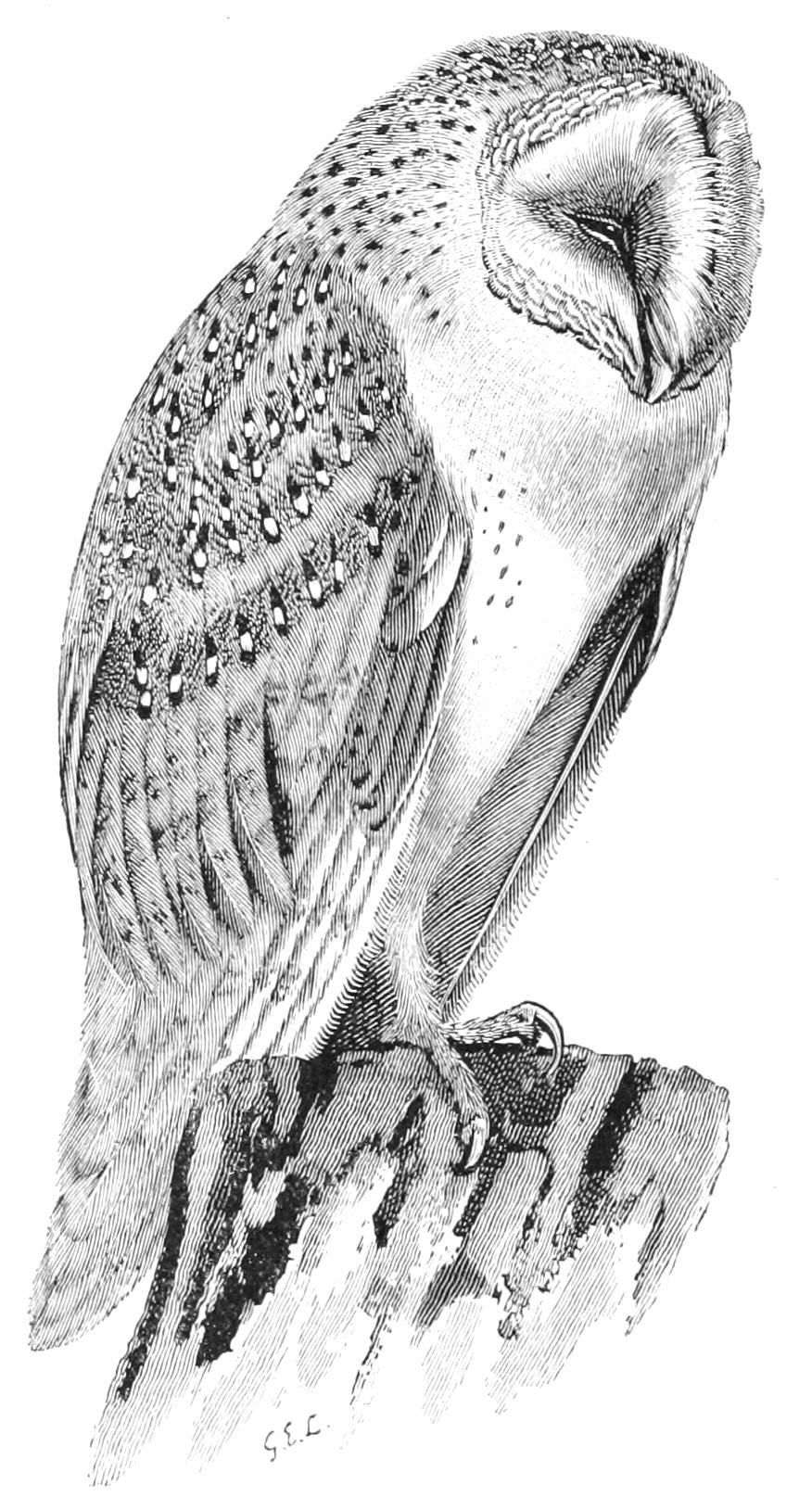
Fig. 85.–Screech-Owl. Strix flammea. × ⅖.
Heliodilus soumagnii of Madagascar is cinnamon-rufous above, with a few black spots on the head, and bars on the wing and tail; it is lighter below and pinker on the face. The toes are bare.
Sub-fam. 2. Buboninae.–Photodilus badius, found from the Eastern Himalayas to Ceylon, the Burmese Countries, Borneo, and Java, is a somewhat similarly coloured bird to the last-named, and utters a single reiterated note. The habits are unknown.
Nyctala tengmalmi, Tengmalm's Owl, inhabits the forests of Northern and Central Europe, Siberia, and Arctic America; it has brown upper parts barred and mottled with white, and whitish lower surface banded and streaked with brown; the facial discs are fairly complete, the legs feathered to the end of the toes. Only partially nocturnal, it utters a soft whistle or bell-like note, feeds on small rodents, birds, and beetles, and lays from four to six, or exceptionally ten, eggs in holes in trees. Its only congener, N. acadica, called the Saw-whet Owl from its grating cry, occurs in America from Mexico northwards.
Syrnium aluco, the Tawny, Brown, or Wood-Owl of Great Britain–not found in Ireland–ranges through most of Europe and Northern Africa to Palestine, and it is said to Tibet; the colour above is grey and brown, with white spots on the wing-coverts and tip to the tail; the lower parts being rufous-white, mottled and streaked with brown. The perfect facial discs are greyish, the legs are feathered to the claws. A rufous phase is even more common in this country. It is an arboreal and entirely nocturnal species, which makes the woodlands ring with its note in the autumn gloaming, and less frequently in the morning; the sound resembling hŏo-hŏo-hŏo-hōo once or twice repeated, rather than the Shakespearean tu-whit, to-who. Surface-swimming fish vary the usual diet. From the middle of March onwards three or four large oval eggs are deposited in hollow trees or deserted nests of other birds; or even in caves, lofts, and rabbit-burrows, though trees may be near to hand; sometimes a scanty lining of twigs, grass, down, feathers, or fur is added. This genus, with about thirty species, extends over nearly the whole globe, except Madagascar and the Australian Region; some of the best known members being the northern S. lapponicum, the Lapp Owl, and its American race S. cinereum–much larger and greyer birds than S. aluco, with curious concentrically marked facial disks–and the whiter broadly streaked S. uralense of Northern and Central Europe and Siberia, which is said at times to bleat like a goat. India furnishes S. nivicola and S. newarense of the Himalayas, S. ocellatum and S. indranee, the last-named extending to the Malay Peninsula; S. sinense occurs in that district Burma, Cochin China and Java, S. leptogrammicum in Borneo. S. nebulosum of eastern and S. occidentale of southern North America extend to Mexico; whence S. virgatum, S. perspicillatum, S. albigulare and other species range to the middle of South America. S. rufipes is a native of Chili and Patagonia. Finally, S. nuchale inhabits Western, S. woodfordi Southern and North-Eastern Africa.
Asio otus, the Long-eared Owl, is buff, streaked, mottled and vermiculated with brown and grey, especially on the upper parts, which appear almost brown. The buff facial discs are complete; the feathering of the legs extends more or less over the toes; the two long head-tufts are erectile. It occurs throughout Europe, in Asia ordinarily north of the Himalayas, in China, Japan, the Atlantic Islands, and North Africa, being replaced in America southwards to Mexico by the sub-species A. americanus (wilsonianus). A. accipitrinus, the Short-eared Owl, one of the most widely distributed of birds, inhabits or visits nearly the whole globe (p. 400). It is lighter and less streaky than the last form, with much shorter tufts. A. mexicanus, ranging from Mexico to Brazil, A. madagascariensis, peculiar to Madagascar, A. capensis of that island and most of Africa, which strays to Spain and Arabia, A. stygius, found from Mexico and Cuba to Brazil, and its Jamaican representative, A. grammicus, complete the genus. The last three have comparatively bare toes. The Long-eared Owl resembles the Wood-Owl in general habits, and even, it is said, breeds at times upon the earth; but it almost invariably relines deserted habitations of other birds or of squirrels with a scanty supply of twigs, grass, fur, down, or feathers, and lays from four to six oval eggs from the end of February onwards. Pies' nests are in great request, especially those of the preceding season. This somewhat silent species utters a single hoot, or else a mewing cry, often erroneously attributed to the young alone; the parents sit on the tops of trees when the nursery is disturbed, and click their beaks, just as the nestlings do. The Short-eared or Marsh-Owl makes a nest of the surrounding substances, with a few feathers, among heather, sedge, or marshy herbage, sometimes sheltered by some tussock or bush, and normally deposits from four to eight eggs; but during the vole plague on the Scottish Borders in 1890-92, when these birds abounded, they produced as many as thirteen each. In Unalashka a similar structure is made in holes in banks. Should the sitting parent be disturbed, it commonly utters a harsh scream, and hovers or circles around with continued cries, which summon its mate, if near; at other times little noise is made, though this species is unusually diurnal. If quartering the flats for food its flight is sufficiently powerful; but if suddenly flushed it is wavering or zig-zag, as is well seen in autumn, when the bird is named "Woodcock-Owl" in Britain, from its arriving at the same time as Woodcocks.
Micrathene whitneyi, of the South-Western United States and Mexico, is grey, mottled with brown and a little rufous; the lower parts being whiter, and some white also shewing on the nape, wing-coverts, and throat. It breeds in holes in cacti and the like. The genus Glaucidium, or Pigmy-Owl, comprises some twenty members, distributed over most of the globe, except the Australian Region, while one inhabits Europe. The coloration is blackish- or ashy-brown, greyish, or rufous; browner and redder phases often occurring in the same species. The upper parts exhibit the usual dark mottlings, and yellowish or white markings; the under surface is lighter; a whitish collar sometimes occurs above, or a dusky gorget below. The facial discs are rather imperfect, the toes may be thickly feathered or only hairy. The habits of G. passerinum of Northern and Central Europe are apparently representative of these forms, which are, according to circumstances, shy or fearless, though strong and rapacious for their size; they capture birds bigger than themselves, bats, rodents, moths, and large insects generally. By preference arboreal, and denizens of hilly woodlands, gardens, and orchards, they doze in trees during the day; yet they are not entirely nocturnal, and may be seen after sunrise pursuing their prey with rapid, jerky flight, very different to that of the more slowly-flapping crepuscular species. The note varies from a loud clear whistle to a short hissing or longer gurgling sound; the three to five roundish eggs are laid in hollow trees. The largest form, G. cuculoïdes, found from the Himalayas to Siam, does not attain twelve inches (G. whitelyi of China and Japan being barely separable), while G. cobanense of Guatemala is only five inches long, and is the smallest Owl known. G. radiatum inhabits India, G. brodiei the Himalayas, G. castanonotum Ceylon, G. sylvaticum Sumatra, G. castanopterum Java, G. pardalotum Formosa, G. perlatum most of the Ethiopian Region, G. capense South Africa; G. gnoma ranges from British Columbia to Guatemala, G. ferox (with its races) from Texas to Bolivia and Brazil; G. siju occupies Cuba, G. jardinii New Granada and Venezuela, G. pumilum Brazil, G. nanum Chili and Patagonia.
Sceloglaux albifacies, the Laughing Owl of New Zealand, is rufous-brown, with the middle of the feathers dark, and a few marks of white and buff above; the tail is barred with fulvous, the fairly perfect facial discs exhibit radiating brown streaks; the toes are hairy. For an Owl this peculiar species has the head small, the wings short, and the metatarsi long; it strides along or hops at a considerable rate on the ground, and flies only at night, uttering a peculiar shrill laugh or a loud barking call-note. It is fast becoming extinct in its bleak mountain-haunts, where it conceals itself by day–and also nests–in dry crevices of rocky gullies; it lays from one to three eggs at considerable intervals, if we may judge from captive specimens. The female is smaller than the male, who occasionally incubates. As the Maori rat of New Zealand is extinct, the food now consists of the introduced Mus decumanus, with insects, birds, and so forth.
In the genus Ninox the prevailing colours are grey, brown, and rufous, relieved by a little black and white, the question of dichromatism not being yet settled. The facial discs are somewhat imperfect. The thirty or more species extend from Madagascar, India, and Ceylon to Japan, Australia, New Zealand, and the Solomon Islands, having their headquarters in the Moluccas and Papuasia; but, with the exception of Scops, there is perhaps no group in the Family where the status of the members is more doubtful. They are sometimes termed Hairy or Hawk-Owls, though the true Hawk-Owl is Surnia ulula. N. scutulata, ranging from India to Japan, Formosa, Ternate and Flores, frequents forests and gardens, sallying forth at dusk, darting upon insects from its perch on some dead branch, uttering a reiterated double note, and laying its eggs on dried leaves in hollow trees. N. strenua, N. connivens, and N. boobook are Australian species, of which the first is a powerful bird with a hoarse, mournful voice, mainly nocturnal, but wakeful and speedy in the daytime. It frequents lonely forests and thick "brushes" on hills, being less widely distributed than the more diurnal N. connivens and N. boobook. The latter may be seen in sunlight capturing birds or insects in the woods, but the note of "boobook," or "buck-buck," from which it gets its native name, is only heard at night. The colonists compare the cry with "cuckoo," and believe that the Cuckoo visits Australia and there assumes nocturnal habits. The flight is rapid and Woodcock-like, the three eggs are deposited in holes in trees, with no nest. N. (Spiloglaux) novae zealandiae, of New Zealand, called from its cry "More-pork,"[235] is dark brown above with white spots on the scapulars and wing-coverts, and is tawny with brown streaks below. By day it hides in trees or crevices of rocks, and appears at dusk to prey on rats, mice, birds, lepidoptera, beetles, and crickets. Besides the usual note, a shrill scream or croak is not unfrequently heard; the young make a snoring noise, and adults click the beak when angry. Two or three eggs are laid in hollow trees or under boulders. Of other species N. maculata is restricted to Tasmania and Norfolk Island, N. albaria to Lord Howe Island, N. obscura and N. affinis to the Andamans and perhaps the Nicobars, and N. natalis to Christmas Island, Indian Ocean; while from the Philippines and Celebes to the Solomons the numbers increase greatly, and many islands have their own peculiar forms.
Gymnoglaux nudipes of the Antilles, remarkable for its unusually bare metatarsi, is brown above and white below, with rufous barring throughout; G. lawrencii of Cuba having the leg-feathers less extended, and being spotted with white on the more uniform upper surface. Speotyto cunicularia, the Burrowing Owl, a comparatively long-legged and short-winged bird with incomplete facial discs and unfeathered toes, is umber-brown varied with yellowish and white, the lower parts becoming lighter. From the confines of British Columbia it extends through the Western and Southern United States, a few of the Antilles, and the greater part of the Neotropical Region, several fairly distinct races having been described. Large communities in North America occupy the burrows of prairie-dogs, rats, ground-squirrels, or badgers; in South America those of the biscacha, the Patagonian hare, and even of armadillos and large lizards; but they are said to make their own holes, if necessary. The homes seem usually to be shared by the separate pairs with the original owners, and sometimes with intruders such as rattlesnakes; while a nest of grass, feathers, and rubbish is made at the further end, where from five to ten eggs may be found, surrounded by castings. Mainly diurnal and generally fearless, these birds fly strongly for short distances, and procure their food of small mammals, birds, reptiles, and insects, chiefly on the ground, where they are quite at ease. A croaking sound is made while courting, but the ordinary cry is long and shrill; both parents, moreover, fly chattering over an intruder at the breeding colonies, while individuals often sit bowing or twisting their heads about on the roofs of houses.
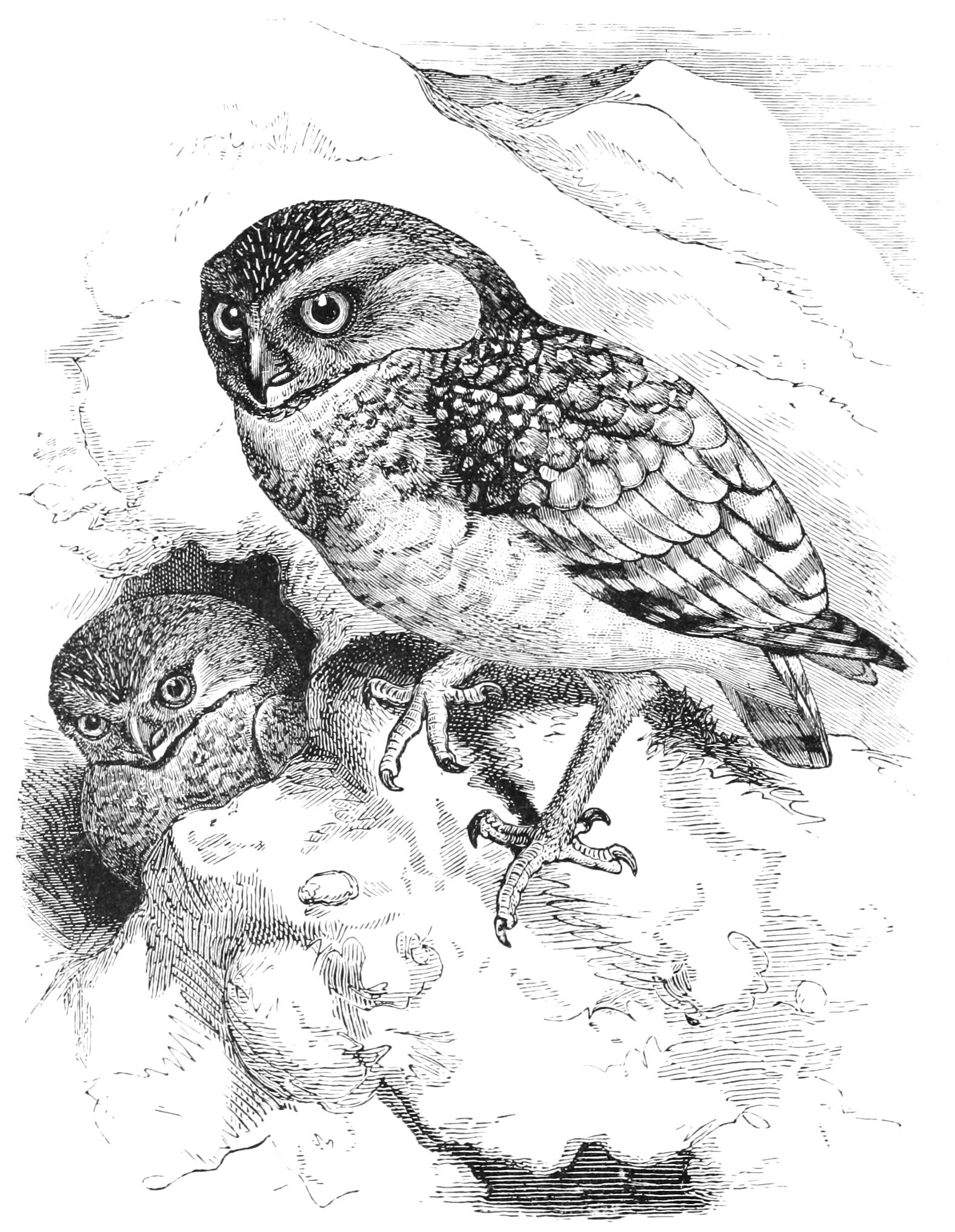
Fig. 86.–Burrowing Owl. Speotyto cunicularia. × ½. (From Nature.)
Carine noctua, the Little Owl of British authors, is greyish-brown above with white markings, and white with brown streaks below. The facial discs are imperfect; the toes are bristly–or feathered in the race from Northern and Central Asia (C. plumipes or bactriana). Another race (C. glaux), of a more sandy colour, occupies North Africa, whence the species ranges to Denmark, the Baltic and the Urals, and through Palestine and Afghanistan to East Siberia and North China. It occurs in England, where liberated specimens breed, but possibly diminish in numbers. C. spilogastra is found in Abyssinia, C. superciliaris in Madagascar, C. brama in India and Baluchistan. The Little Owl is semi-diurnal, and haunts wooded country and orchards; the flight in the day is undulating and slow with many flaps; the note is a muffled monosyllabic or disyllabic cry, a noisy bark, a mew, or a wail; the food consists of rodents, birds, reptiles, frogs, insects, snails, and worms. From three to five eggs are deposited on débris in crevices of rocks or masonry, in buildings, hollow trees, or even ant-hills. Of old the European form was the bird of Pallas Athene and the emblem of wisdom, but whether from its grave appearance when quiescent, or–sarcastically–from its buffoon-like contortions and bowings must remain doubtful; we may, however, compare the Malagasy name of Scops magicus, "atoroko," which means "I am going to say," and the similarly philosophic look that it can put on.
Surnia ulula or funerea, the Hawk-Owl, ranges from Scandinavia and North Russia to Kamtschatka or even Alaska, whence a race with a blacker head, and broader, redder bands below, stretches through Arctic America, and visits Britain more commonly than the typical form. This is dark brown above, freely marked with white, and white below, with distinct but narrow brown bars; the facial disks are very imperfect, the toes are feathered to the claws. The exceptionally compact and firm plumage, the short, acuminate wings, and the long tail conduce to its Hawk-like appearance, heightened still more by the quick flight, the fierce manners, and the shrill Kestrel-like cry. From their native pine-forests a few individuals wander southwards towards winter; while at home they feed on lemmings and rodents generally, Willow Grouse and other birds, and insects. They sit watching for prey on bare branches or stumps in the sunlight, occasionally dashing after a Jay or the like; not unfrequently they quarter the ground like a Harrier, and of course hunt at night also. From three to eight eggs are deposited on a few chips in hollow stumps, in boxes set up by the Lapps, or in a relined nest of some other species; the parents being perfectly fearless in their attacks on an intruder.
Nyctea scandiaca, the white Snowy Owl, occasionally exhibiting spots or broken bars of black, has ill-developed facial discs and hardly visible tufts, but very thickly feathered feet. It inhabits the circumpolar fjelds, tundras, and barren grounds, straying as far as Britain, France, Lower Austria, the Indus Valley and the Bermudas in winter; but when rodents abound on the fells of Norway and Sweden a greater number remain there to breed. The flight is strong and easy; the habits are diurnal; the food consists of lemmings, rats, mice, squirrels, hares, birds large or small, fishes, and doubtless insects. It is called Harfäng (hare-catcher) in Scandinavia. This Owl either catches the fishes in one claw as it skims over the water, or crouches on some stone or piece of ice till the moment comes to strike; at times, moreover, it will follow sportsmen in the field. The cry, seldom heard, is wild and wailing. The large, oval eggs, numbering from three to five, or even ten when food is plentiful, are deposited in holes scraped in the soil on ledges of rocks or other eminences, sometimes lined with moss and feathers; they appear occasionally to be laid in pairs at intervals. The parents, though usually wary, will attack a man at the nest.
The cosmopolitan genus Scops, found almost everywhere except in the extreme north, Australia, Oceania, and the southern portion of South America, contains some fifty so-called species which it would be useless to discuss in the present state of our information, though certain of them are mentioned below. Rufous, brown, and grey phases undoubtedly occur, but the various plumages are still very imperfectly understood. Perhaps two-thirds of the forms occur in the Old World, yet only one (S. giu) inhabits the Palaearctic Region west of Japan, though there we find S. semitorques. The general coloration is a mixture of grey, brown, chocolate or rufous, with a less amount of black, yellowish, and white; some species are finely vermiculated, others hardly at all, while several are almost barred below and many are distinctly banded on the tail. The facial discs are incomplete, but the head-tufts are well developed; the metatarsi and toes are feathered, or bristly, or the latter are occasionally bare. Scops giu, the Petit Duc of France, which visits Britain and Holland, extends over Central and Southern Europe, Asia Minor, Palestine, Persia, and Turkestan, occurring in North Africa, and migrating as far southwards as Abyssinia and Senegal. Sub-species occupy the Ethiopian Region, and Asia to Japan and Siam; S. brucii, ranging from Transcaspia to India being possibly separable. The type species is grey above with the middle of the feathers dark, the back being vermiculated with brown and the wings spotted with white; the whitish lower parts are more streaky and the toes bare. It feeds by night on mice, small birds, grasshoppers, moths, and beetles; and utters a melancholy metallic single note, which rings monotonously through the woods it haunts; in the day it hides in thick cypresses and the like. Five or six roundish eggs are deposited in holes in trees, rocks, and buildings, or rarely in deserted birds' nests; no bedding being added, though the opposite is the case in some Indian species. S. asio, the Mottled or American Screech-Owl, reaches with its different races from Alaska and Canada to Guatemala, and is said to have a wailing cry, varied by deep guttural trills. S. flammeola occurs from Colorado and California to Guatemala; and thence various species carry the range to Brazil. The Ethiopian Region generally is tenanted by S. leucotis, the Gold Coast by S. icterorhynchus, Anjuan in the Comoros by S. capnodes, Madagascar by S. rutilus–though this is said to be a form of S. magicus, extending from Celebes to about New Guinea; the Indian Region and the Moluccas possess a large number of species, among which S. gymnopus of India (with half-naked metatarsi like S. nudipes of Veragua) may be mentioned.
Bubo ignavus, the Eagle-Owl, which visits Britain, and is the Grand Duc of the French, is blackish-brown above, with yellowish-rufous mottlings and interrupted wing- and tail-bars; it is yellowish-buff below with blackish streaks and indistinct transverse markings. The facial discs are fairly distinct, the head-tufts are long, and the toes thickly feathered. This fierce species, one of the largest of the Family, inhabits rugged mountains and forests throughout Europe, Asia north of the Himalayas to Japan, and North Africa; it is partly diurnal, and preys chiefly upon hares, rabbits, large game birds, and rodents, being said moreover to attack fawns. The flight is powerful, though undulating and flapping; the cry is a deep "hoo, hoo," occasionally sounding like a laugh or neigh. Two, or rarely three, roundish eggs are deposited in holes scraped in the soil on rocky ledges or on banks, in disused birds' nests, in hollow trees, or even between their branches or roots; little lining, if any, being added. Nearly allied forms are B. turcomanus of South-West Siberia and Turkestan, B. blakistoni of Japan, and B. dorriesi of East Siberia; B. milesi is found at Muscat, B. abyssinicus in Somali-Land, B. bengalensis–which eats reptiles and crabs–in India, B. nipalensis and B. coromandus–which occasionally lays eggs spotted with lilac and brown–in the same country and Burma, B. orientalis in Malacca and the Great Sunda Islands, B. philippensis in the Philippines. B. lacteus covers all the Ethiopian Region, except the west, where B. shelleyi, B. lettii, B. leucostictus and B. poënsis occur, the last being also met with in Fernando Po. B. ascalaphus inhabits North Africa and Palestine, B. cinerascens North-East and B. maculosus South Africa, B. capensis extending from the South to the East. All North America is occupied by B. virginianus, barred instead of streaked below; the species or sub-species B. nigrescens and B. magellanicus coming respectively from Ecuador and the districts from Peru and Brazil to the extreme south. Some forms have more white in the plumage than the British Eagle-Owl, or bare toes. All seem destructive to game and often to poultry. B. ignavus and B. virginianus have been kept in confinement in England, and the former has propagated freely.
Scotopelia peli, of West Africa and the Zambesi Region, has rufous upper parts with black bars, and fawn-coloured lower surface with the bars less regular; it feeds on reptiles and fish as well as small animals. This fine large bird has two congeners, S. ussheri of Fantee and S. bouvieri of the Gaboon. Ketupa ceylonensis, a still bigger species, ranging from India and Ceylon to Hong-Kong, is buffish-brown above, with the middle of the feathers blackish, and fulvous below with dark streaks and closely set brown bands, the throat being white. K. flavipes, of the Himalayas and China, and the smaller K. javanensis of the Malay Peninsula, Siam, and the Great Sunda Islands, have no bands below; but all have fine head-tufts and naked legs. They frequent coasts or wooded streams, where they can easily procure their main diet of fish, crabs, and insects; they remain under cover in the day, and the last-named at least utters a soft, low whistle. The two roundish eggs, which have the surface pitted like those of the Eagle-Owl, are often laid on ledges or in recesses of rocks, in hollow trees, or at the junction of the larger branches, but more commonly a deserted nest is relined for the purpose.
Of fossil forms referred to the Family, Necrobyas harpax and N. rossignoli are described from the Eocene of France, together with Otus (i.e. Asio) and Bubo; the latter genus and Strix occur in the Lower Miocene of the same country, Strix also in the Malta caverns and in the Mare aux Songes in Mauritius, Nyctea at Torquay and in France, Bubo in Wyoming, Badiostes in Patagonia.
* * * * *
The Sub-Order Caprimulgi consists of the Nightjar or Goat-sucker group, with the Families Caprimulgidae, Podargidae, and Steatornithidae, of which the latter contains only the remarkable Guácharo. The Caprimulgidae may be divided into the Sub-families (1) Caprimulginae and (2) Nyctibiinae. Authorities disagree as to the exact relationship of these birds to their allies, here classified as Coraciiformes; but that all are allies is certain, while both in appearance and habits Nightjars are decidedly Owl-like.
Apart from the Steatornithidae, the skull is flattened, the eyes are large, the beak is short and extremely broad, being hooked and toothed in the Nyctibiinae and occasionally decurved in the Caprimulginae and Podargidae; the gape is enormously wide, and is in many cases provided with stiff bristles, which in Aegotheles have long lateral filaments. An appearance of great size is given to the head by the loose plumage. The feet are fairly strong, with the digits somewhat united basally; the anteriorly scutellated metatarsi vary from comparatively long and bare in Nyctidromus and the Podargidae to very short and feathered in Nyctibius. The outer toe of the Caprimulginae has only four joints, and the mid-toe has a pectinated claw, while in the Podargidae and some Caprimulginae the hallux is partially reversible. The pointed wing has ten primaries, sometimes much elongated (p. 418), and eleven or twelve secondaries; the tail may be square, rounded, graduated, or forked, and has ten rectrices, occasionally lengthened or even racquet-tipped (loc. cit.). The furcula is U-shaped, the tongue short; the slit-like nostrils are basal and overhung by a membrane and feathers in Podargus and Batrachostomus, whereas they are open and near the tip of the bill in Aegotheles, but soft, tubular, and often elongated in the Caprimulginae. The syrinx is bronchial, sometimes tending to tracheo-bronchial; the aftershaft is rudimentary; the adults have down only on the unfeathered tracts, while the nestlings have a thick covering of it, which is generally buff or grey, but white in Podargus and Batrachostomus.
The length varies from about twenty inches in Nyctibius and Podargus to seven or eight in Caprimulgus parvulus and Phalaenoptilus nuttalli. The characteristically soft plumage shews an intricate mixture of brown, grey, fawn, black, and white, and is ordinarily barred and minutely freckled, but frequently patched or spotted with white; it is, however, impossible in a limited space to describe the species in detail, though it may be noticed that several have reddish nuchal collars; and some exhibit rufous and grey phases–unless, as may be the case, the rufous forms are females–while others from arid districts have a protective coloration of a more or less sandy hue. In the Podargidae large powder-down patches occur laterally on the rump, in the Nyctibiinae on the breast and sides. The sexes are often alike, the young either resembling the female, or assuming the full plumage at once. Lyncornis, Otophanes, and Batrachostomus have head-tufts like those of some Owls, the constituent feathers in the last genus being bristle-pointed.
Nightjars are found in most parts of the world, while the northern species habitually move southwards for the winter, Podager and Chordiles, at least, flocking in August and September. The most typical forms are distinctly crepuscular, and pass the day–as our British bird does–quiescent on the soil, or upon some post or fence, often concealing themselves below shrubs or herbage, or in hollow stumps. At such times they will almost permit themselves to be trodden upon before rising from the ground, and sit with their eyes closed; on branches the body is ordinarily placed lengthwise, but on thin palings or wire this is of course impossible. Nyctidromus exhibits more terrestrial habits, and walks instead of shuffling; the American Bull-bat (Chordiles virginianus) hawks in the full glare of the sun. The more diurnal species frequently rise to a considerable height in the air, sailing backwards and forwards with an easy, flapping motion, descending with undulating swoops, or remaining momentarily poised aloft, and then darting suddenly upon their prey; the flight of their nocturnal allies is weaker and more lowly, being jerky, twisting, and erratic. Some forms, if not all, when inspecting an intruder turn the head almost completely round. The vibrating sound often accompanying the passage through the air may be produced by the wings coming into contact, as is the clapping noise occasionally heard; but the cause is not certainly ascertained, nor is that of the far-resounding churr uttered by the male of the Common Nightjar while stationary. The birds are, however, often quiet on the wing, and steal upon the listener noiselessly with the mouth widely opened. The voice is generally hollow, but is described in various cases as a "croak," a "loud shrill cry," a "sad whistle," a "jarring note," or a "moan"; while the American Whip-poor-Will (Antrostomus vociferus), Chuck-Will's-widow (A. carolinensis), and Poor-Will (Phalaenoptilus), as well as the Tasmanian More-pork (Podargus cuvieri), are so called from the sounds they rapidly utter. The second of these is said to be silent when breeding, contrary to the habit of our Nightjar. The food consists as a rule of insects, and especially beetles, captured in the air; but the Podargidae are asserted to pick Phasmidae and Cicadidae off the trees, and even to eat fruit–as Steatornis does–or mice.[236]
Most Nightjars make no nest, but lay one or two white, yellowish, or pinkish eggs, beautifully marbled or scrawled with black, gray, brown, or violet, on the ground in open spots, frequently shaded by trees, ferns, or gorse. More rarely lichen-covered rocks or flat house-tops are chosen. Phalaenoptilus has white eggs, like those of the Podargidae, among which Podargus makes a flat, loose structure of twigs and grass upon some branch to contain its complement of three, and Batrachostomus deposits one on a peculiar pad of brown or greyish down, which is fixed to a bough and is at times based on a little bark, lichen, moss, or leaf-refuse.[237] Aegotheles lays from three to five in hollow trees, the parent hissing if caught upon them. Eggs of Ae. wallacii are stated to shew pale streaks. Nyctibius appears to breed in hollows of branches or stumps, and not on the ground.[238] Nightjars sit very closely, and are said to remove the contents of the nest if disturbed; the young, though hatched helpless, quickly learn to escape from danger; while the parents occasionally feign lameness to divert attention from them. The males sometimes incubate.
The superstitious of all classes are inclined to view these birds with dread, a fact due to their nocturnal habits and Owl-like aspect, coupled with their strange utterances and sudden apparitions. The Indians of Central and South America think that they portend serious evil, but refuse to kill them; while in England gamekeepers and others are only too ready to shoot them under the unfair designation of "Night-hawk."
Fam. VIII. Caprimulgidae.–Of this group some eighty species occupy nearly the whole globe, except the coldest parts, the Eastern Pacific Islands and New Zealand.
Sub-fam. 1. Caprimulginae.–Caprimulgus europaeus, the Nightjar, Goatsucker, or Fern-Owl, visits Britain for the summer, and extends from Europe and North Africa to South Mongolia in Asia, reaching North-West India and South Africa in winter. C. ruficollis of South-West Europe and the neighbouring portions of Africa has once occurred in England, as has C. aegyptius of North-East Africa and West Asia. The genera Heleothreptus of Brazil and Argentina, and Macrodipteryx of Tropical Africa, contain respectively one and two members, remarkable for the extraordinary elongation of the remiges in the male. H. anomalus has the first six primaries curved inwards, the seventh, eighth, and ninth prolonged–especially the eighth; M. vexillarius, the Pennant-winged Nightjar, has the same three feathers produced, but the ninth in particular; M. macrodipterus has the ninth alone extended, with long bare shaft and racquet-like tip: and this is at times erected when the bird is sitting on the ground. Scotornis climacurus of the north of Tropical Africa, the four species of Hydropsalis, inhabiting South America southwards to Argentina, and the three of Macropsalis, ranging from Panama to Bolivia and South-East Brazil, have enormously elongated rectrices, the median pair being highly developed in the first-named, the whole number in the second, and the lateral pair in the last. These long feathers seem to impede the flight but little, though Hydropsalis constantly opens and shuts its tail in the air.
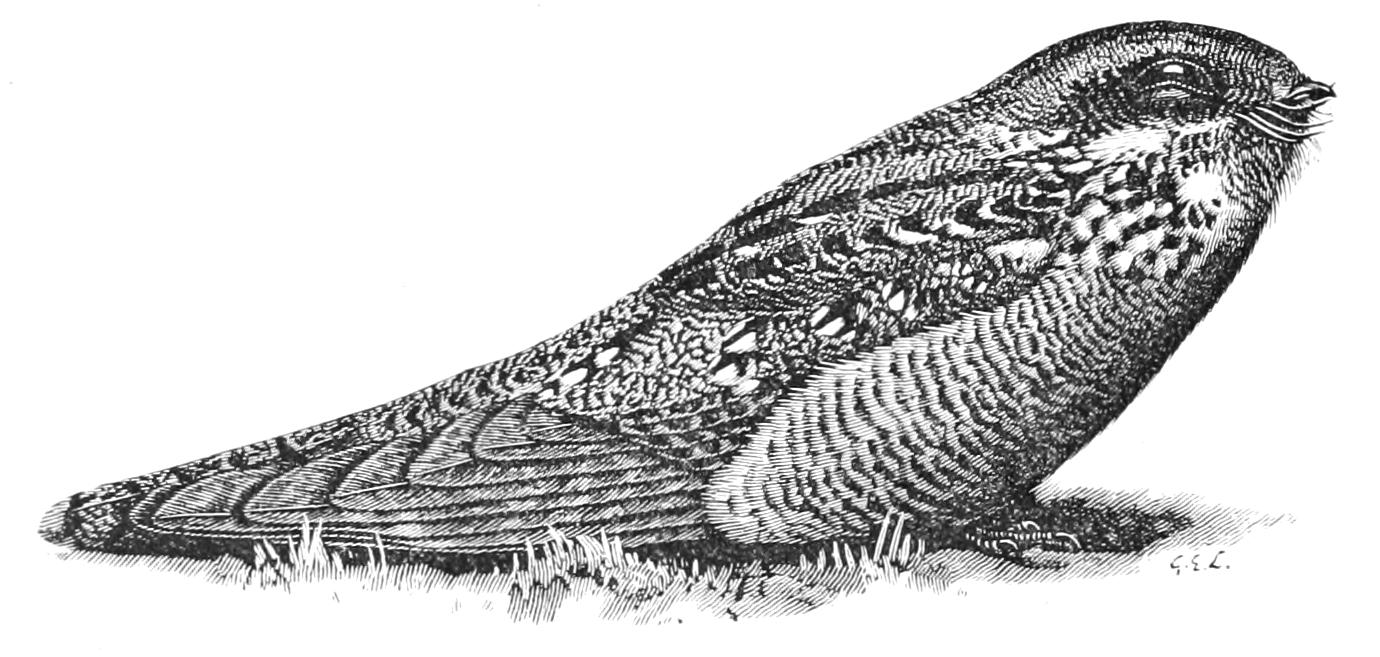
Fig. 87.–Nightjar or Goatsucker. Caprimulgus europaeus. × ⅓.
Sub-fam. 2. Nyctibiinae.–Six species of Nyctibius occur in Tropical America, including Jamaica, and utter wailing cries.
Fam. IX. Podargidae.–This group includes some five and twenty members of the genera Podargus, Batrachostomus[239] (Frog-mouth), and Aegotheles. The first and last occupy Papuasia, Tasmania, and Australia, the second ranges from the Himalayas to Ceylon, the Philippines, and Malay Islands.
Fam. X. Steatornithidae.–This contains only the curious Guácharo, or Oil-bird (Steatornis caripensis) discovered in 1799 by Humboldt and Bonpland at Caripé in Venezuela, but now known to breed also in Colombia, Ecuador, and Peru, as well as in Guiana and Trinidad. Somewhat intermediate between the Owls and the Nightjars, this species is about the size of a Crow, with a similar hard beak, hooked and deeply notched, while it has twelve long stiff bristles on each side of the gape. The tibiae and metatarsi are covered with smooth, flesh-coloured skin, the toes being deeply cleft, and not basally united. The tongue is thin and triangular, the nostrils have a horny covering, the after-shaft is fairly large, while the rest of the structure is mainly Caprimulgine. The acuminate and not particularly soft feathers are chocolate and grey, with darker barring above, and shew white spots, often surrounded by black, in various parts. This bird inhabits sea-side or mountain-caverns, only issuing forth at dusk to traverse considerable distances in search of its food, which consists mainly, if not wholly, of fruits. The flight is noiseless, and occasionally high in the air. Visitors to the breeding caves are suddenly surrounded by a circling crowd of Oil-birds uttering loud croaking or rasping cries, the effect being enhanced by the rush of multitudinous wings. A more plaintive note is uttered by individuals at rest. The numerous nests, each containing from two to four white or dirt-begrimed eggs, are flat circular masses of a clay-like substance, placed on ledges or in holes; while the nestlings are considered a table delicacy, though said to be scented like cockroaches. The natives systematically kill large numbers at certain seasons by knocking them down with poles when scared by torchlight, and melt out the abundant fat to procure the oil, which gives the bird its name. This oil is used for illumination or cooking, and keeps admirably.
* * * * *
The Sub-Order Cypseli consists of the Families Cypselidae or Swifts, and Trochilidae or Humming-birds,[240] which were first grouped together by Nitzsch as Macrochires (long-handed forms) from the length of their manual bones, though really the parts of the wing nearer the body are proportionally most elongated.
Swifts certainly differ from Humming-birds in the broad, flat skull, the short curved bill, and the extremely wide gape, besides their comparatively sombre coloration; but these facts cannot be allowed to militate against an alliance so strongly confirmed by many points of structure, while nothing but the pardonable ignorance of former times caused the Family to be united with their Passerine analogues, the Swallows. The Cypselidae agree with the Trochilidae in the number and colour of their eggs, and the extraordinarily deep keel of the sternum, which, with the long wings, gives so great a power of flight.
Fam. XI. Cypselidae.–Of this group three Sub-families may be recognised, (1) Macropteryginae, (2) Chaeturinae, and (3) Cypselinae.
The short but robust metatarsi are scutellated anteriorly, the scales being nearly obsolete in the Chaeturinae; fairly powerful claws terminate the free toes, which are all directed forwards in the Cypselinae, though the hallux is somewhat laterally inclined in Panyptila, and is said to be occasionally versatile in the other Sub-families. The middle and outer digits in the Cypselinae have the further peculiarity of possessing only three joints, while the metatarsi or even the toes are feathered. The ten primaries, and especially the exterior, are extremely long, with thick narrow outer webs; the short secondaries vary from six to eight. The square or forked tail has ten rectrices–not uncommonly rigid and pointed–as against twelve in Swallows. The furcula is U-shaped; the tongue sagittate; the syrinx tracheo-bronchial (the muscles not being inserted on the bronchial rings); the aftershaft is large or small; the adults have a little blackish down on the unfeathered spaces; the nestlings are blind and naked.
The coloration is usually greenish-black or mouse-brown, occasionally with a white chin, breast, or rump; a rufous collar or chestnut ear-coverts occur in Macropteryx and Cypseloïdes, where alone the males differ from the females, and the young from both. The Family ranges over the whole world, with the exception of the extreme north and south, New Zealand and some other islands; the six genera containing about eighty species varying in size from about four to fourteen inches.
Swifts are essentially aërial, seldom alighting upon the ground, or perching except at night,[241] though they will cling to the entrance of their breeding quarters for a few seconds before entering. From a smooth flat surface they can hardly rise, but in the air they are perfectly at home, whether wheeling and circling at great altitudes, chasing each other aloft, consummating their love affairs, or sweeping over the earth's surface in pursuit of insects attracted by the damp. The exceptionally rapid flight is strong and practically unlimited in duration, two or three quick movements of the wings being repeatedly succeeded by a gliding motion. Though not gregarious in the ordinary sense, they habitually breed in company, and Collocalia nests in vast colonies; a solitary bird, moreover, is comparatively seldom seen, and both before and during incubation our Common Swift flies in screaming flocks around the chosen sites. This species will pass and re-pass close to a pedestrian's head with noisy and apparently vicious rush, even when far from the nest; yet it is not really the intruder but insects that are the attraction, the food being entirely of that nature, and invariably captured in the air, while the beak may be seen filled to repletion when nestlings require to be supported. The voice is a shrill scream, constantly repeated. The districts frequented are of every description, Cypselus andicola and C. horus being particularly alpine; the nest varies to a considerable extent, though a glutinous substance secreted by the highly developed salivary glands is a constant, or frequently almost the sole, material. The situation may be a hole under thatch, slates or tiles; a crevice in a building, cliff, or tree; the perpendicular wall of a cave; the upper side of a branch, palm-leaf, or broad stalk; the lower surface of a rock, and so forth. The shape of the structure is tubular in Panyptila, where it is composed of seeds of plants; but generally it is saucer-like, the materials being straw, feathers, twigs, moss, or cottony vegetable matter, the first two of which have been stated to be caught floating in the air. The American Chimney-Swift plucks off branchlets as it flies. Cypselus affinis and the species of Collocalia commonly join their nests together in masses; Palm Swifts do so more rarely; Cypselus caffer even utilizes those of other birds. The dull white eggs are oval and almost uniform at each end; two or four being the usual complement, though three are exceptionally found, and Macropteryx lays only one.
Sub-fam. 1. Macropteryginae.–The Tree-Swifts, as they are called, have very soft plumage, a long, deeply-forked tail, a patch of downy feathers on the flanks, and elongated plumage on the top or sides of the head. They range from India and Ceylon through the Burmese and Malay countries, and the islands thence to the Solomon Group. Macropteryx coronata of India, Ceylon, Burma, and Siam has bluish ash-coloured upper parts, glossed with metallic green, especially on the crested head, wings, and tail; the under surface is greyish and white, the chin and ear-coverts are rufous. The female lacks the chestnut. The nest is a half saucer of bits of bark and feathers, gummed by saliva to a branch some twenty feet from the ground, trees being usually selected in rough jungle on low hills. It contains one egg, and is so small that the sitting bird quite conceals it. Other species are M. longipennis, M. wallacii, M. comata, and the larger and most eastern M. mystacea.
Sub-fam. 2. Chaeturinae.–Of the three genera, Chaetura, Cypseloïdes, and Collocalia, the first occurs from Central Asia and India to Japan, New Guinea and Australia; in Tropical Africa; and in the Nearctic and Neotropical Regions, except the extreme north and south. All the species, numbering about fifty, have rigid tail-feathers with more or less projecting spiny shafts, save in Collocalia.
Chaetura caudacuta, which has strayed to Britain and New Zealand, ranges from Mongolia and Japan to China and the Eastern Himalayas, wintering southwards to Australia and Tasmania. It is dusky-brown with greenish-black head, wings, and tail, white forehead and breast. The nest, placed on cliffs or in hollow trees, is probably similar to that of the next species, several pairs nidificating together. C. pelagica, the "Chimney Swallow" of the United States, chiefly found in the east, but extending to the Fur Countries and the Great Plains, and in winter at least to Mexico and Yucatan, is dark grey, with lighter lower surface, blackish head and wings. It has almost ceased to breed in trees, but fastens its semicircular nest of small twigs, glued together with salivary secretion, to the inside of chimneys, laying from four to six white eggs. C. zonaris, extending from the West Indies and Mexico to Argentina, is uniform blackish-brown with white collar and breast; C. novae guineae of Papua is glossy greenish-blue above, and grey below, with an exceptionally short tail; C. ussheri of the Gold Coast is dark brown, varied with a good deal of white; C. cassini of the Congo and Gaboon, and C. boehmi of East Equatorial Africa, are glossy black with less white. C. acuta of the West Indies, C. grandidieri of Madagascar, and other forms, complete the genus.
In Cypseloïdes the shafts of the rectrices scarcely project perceptibly; while the tail is emarginate in C. niger of western North America, the Antilles, and Guiana. The coloration is plain black or brown, with a reddish collar round the neck in the males of C. rutilus and C. brunneitorques. The genus ranges to Peru and Brazil. The nest, placed in holes in houses and so forth, is made of straw, leaves, and rubbish; the eggs are four or five.
Collocalia is an especially interesting section of the Family, on account of the nests furnishing the birds'-nest soup of the Chinese. Being formed of the dried secretions of the salivary glands,[242] these are almost entirely glutinous, and when newly built are termed white or "first quality." The thirteen diminutive species are black or brown above, occasionally with a blue gloss, and white on the rump or tail; the under parts being whitish or grey. They are not migratory, but extend over most of the Indian and Australian regions, except the northernmost portions, being found as far south as North Australia. One form reaches the Mascarene Islands. Huge numbers breed in company in dark caves, sticking their nests close together upon the rocky walls, or even joining them in masses; the materials may include moss, straw, lichen, and so forth, but inspissated saliva is the chief, and often the only, constituent, especially in C. fuciphaga. Brown nests are those discoloured by use, or spoilt by an admixture of foreign substances, and are considered hardly worth collecting. Two eggs are the usual complement. The caverns are entered from boats below, or by ladders from above, other ladders or poles notched for the feet being fixed in the rocky flooring of the interior. These are ascended by natives armed with long-pronged forks, who obtain hundreds of nests at one gathering. Bats occupy the caves by day, the birds by night or when incubating; while at any time the noise of the escaping denizens is almost deafening. The breeding sites are a very lucrative property. The especially valuable C. fuciphaga, which obtained its specific name from the erroneous idea that it built with partly digested sea-weed, extends (if we include several more or less distinct races) from the Duke of York Island and the Ladrones in the east to the hills of India, Ceylon, and the Mascarene Group in the west, a small species of slightly more eastern range with whitish band on the rump being known as C. francica.
Sub-fam. 3. Cypselinae.–This contains only the genera Panyptila and Cypselus, granted that the latter is not further divided. The former has feathered toes, a deeply forked tail with pointed outer feathers, and soft, silky black plumage, varied with white. The very remarkable architecture of P. sancti hieronymi of Guatemala is described as follows by Mr. Salvin:[243] "The nest of this species is composed entirely of the seeds of a plant, secured together and hung from the under surface of an overhanging rock by the saliva of the bird. The whole structure measures 2 feet 2 inches in length, and is about 6 inches in diameter. The entrance is at the [lower] end, and the hollow for the eggs at the top." The cavity in the above case was in the shape of a walking-stick, with its knob bent laterally at the top, while a false entrance shewed at one side. P. cayennensis, ranging from Nicaragua to Brazil, makes a similar nest on trees.
The coloration of the twenty or more species of Cypselus is sooty-black or mouse-brown, frequently exhibiting a metallic gloss, while the collar, rump, abdomen, or edges of the feathers may be white. A forked tail is not uncommon, and the strong toes are feathered in C. melanoleucus and C. squamatus. C. apus, the Common Swift or Deviling of Britain, is found through Europe, North Africa, and Asia southward to the Himalayas, migrating to South Africa, Madagascar, and Southern Asia. A paler race (C. pallidus or murinus) extends from the Atlantic Islands and the Mediterranean basin to Bogos Land and Sind. The habits are well-known; but it may be observed that in flying the wings take the form of a bent bow, and that on the Continent it builds in hollow trees instead of in holes under eaves, in walls or cliffs. Few individuals remain with us after early September. C. unicolor is peculiar to Madeira, the Canaries, and the Cape Verd Islands; C. affinis reaches from Africa and Palestine to India; C. melba, the "Alpine Swift," inhabits the same Asiatic countries, extending westward to South Europe and North Africa, and wandering north to Britain and Heligoland.
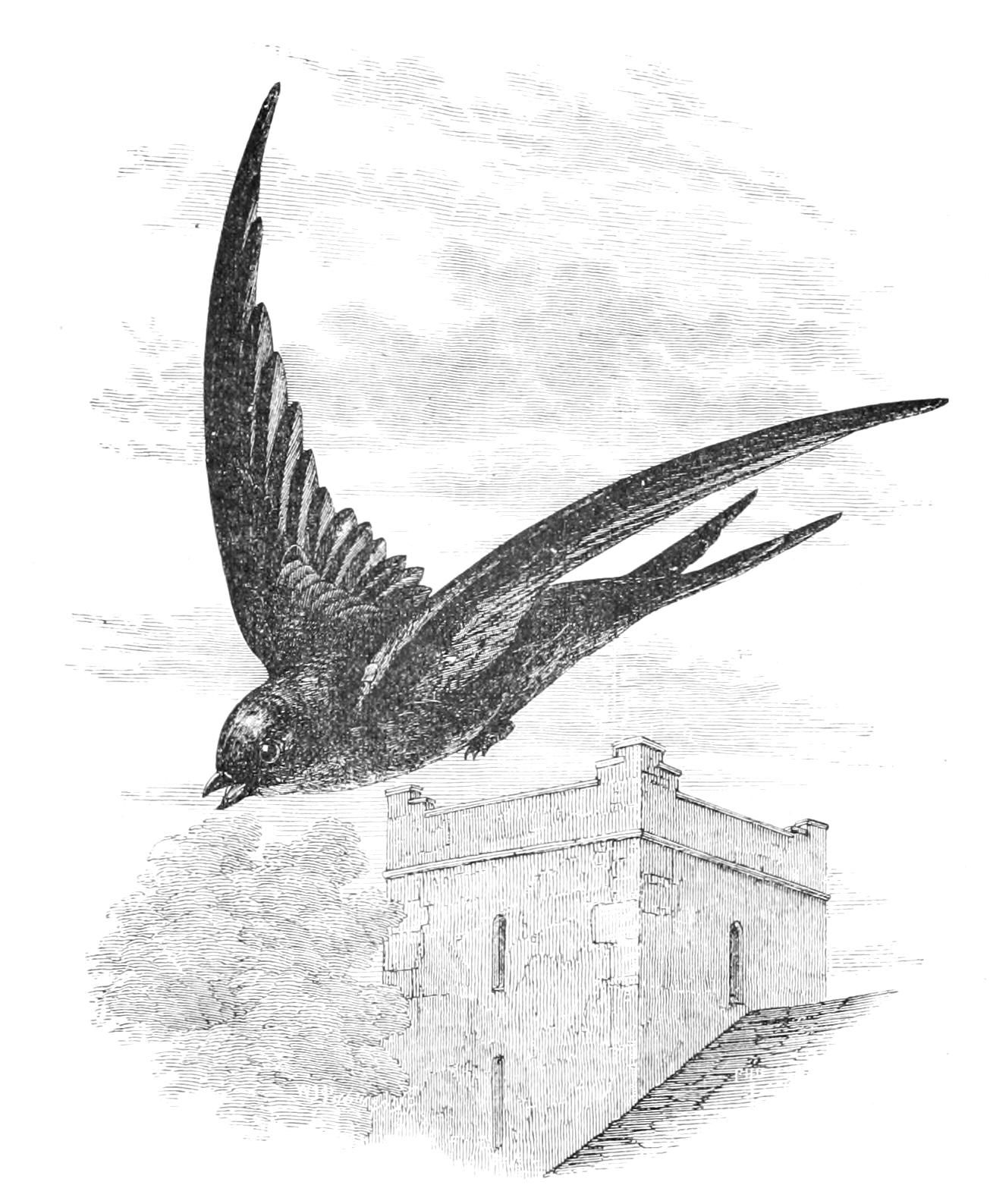
Fig. 88.–Swift. Cypselus apus. × ⅓. (From Natural History of Selborne.)
C. caffer occurs in South Africa, Abyssinia, and Uganda, and exceptionally on the Congo; C. horus across Tropical Africa; C. andicola in Argentina, Peru, and Bolivia: C. montivagus in the last two countries. C. pacificus of East Asia, with Japan and the Burmese countries, reaches Australia in winter. Some species lay four or five eggs, and C. melanoleucus of western North America utters a peculiar twitter in its nest, placed in clefts of rocks.[244] Five species of Tachornis, or Palm-Swift, here included under Cypselus, are found throughout the Ethiopian Region, from India and the Malay countries to China, and in the West Indies; T. (Claudia) squamata occupying Guiana, Brazil, and East Peru. The toes point forward in two pairs, the tail is forked. These birds usually attach their nests of cottony down and feathers to the leaves or spathes of palms with their saliva, but also breed on native huts.
Fossils referred to Cypselus and Collocalia occur in the Lower Miocene of France, while Aegialornis of the Eocene (p. 315) is placed here by M. Milne-Edwards and re-named Tachyornis.
Fam. XII. The Trochilidae, or Humming-birds, so called from the sound often made by the vibrating wings, are New World forms noted for their grace and beauty. The English name dates back to at least 1632, while one species from Hispaniola is mentioned as "paxaro mosquito" by Oviedo in his Hystoria general de las Indias, as early as 1525. This appellation still remains as the French "Oiseau-mouche," that of Trochilus having been borrowed from Pliny by Barrère, who believed Humming-birds to be allied to the Wren, the Trochilus in part of the Latin author. Τροχίλος, however, was applied by the Greeks to the smaller Plovers (p. 295), and apparently ὄρχιλος to the Wren, so that Pliny or his copyists originated a chain of errors. From native sources we have the names Guainumbi, Ourissia, and Colibri, from the Spanish "Picaflor" and Tominejo (atom); from Mexico "Chupa-rosa" and "Chupa-myrta" (Rose-sucker and Myrtle-sucker); from the West Indies "Murmures" and "Bourdons."[245]
The sternum is enormously developed both in length and depth of keel, thus furnishing a wide base for the attachment of the particularly strong wing-muscles, which support the untiring flight. Herein Humming-birds resemble Swifts, but the head is much more compressed, and the bill is slender and elongated, except in nestlings; they are in fact the longest billed members of the Class Aves in proportion to their size, which in this Family reaches the minimum. Both mandibles may be serrated, and the maxilla is hooked in Androdon and Rhamphodon; but for details of the variable beak, remiges and rectrices, reference must be made to the species described below. The metatarsus, feathered in such genera as Eriocnemis and Loddigesia, is short; the toes being usually diminutive, but sometimes stronger, and the claws either small and rounded, or elongated, curved, and sharp. The ten primaries, of which the outermost is the longest, except in Aithurus–where it is shorter than the next–are frequently rigid; in the male "Sabre-wings" (p. 435) the shafts of two or three are extraordinarily dilated and curved; while the tenth is occasionally filiform at the tip or narrowed throughout. The secondaries are only six, or rarely seven. The tail of ten feathers may be long or short, but differs profoundly in shape, texture, and colour; being for example cuneate in Phaëthornis and Sphenoproctus, nearly square in Urosticte and Hylocharis, rounded in Adelomyia and Polytmus, deeply forked in Sappho, Lesbia, and the four genera next named, of which Prymnacantha has the outer pair of rectrices very narrow and pointed, Loddigesia, Spathura, and Discura spatulate.
The very characteristic tongue consists of a double tube, tapering and separating into two externally lacerated sheaths at the tip, which contain the extensile portion. The "horns" of the hyoid apparatus are greatly elongated, and pass round and over the back of the head, meeting near the top, and thence stretching in an ample groove to terminate in front of the eyes. This arrangement, analogous to that found in Woodpeckers, allows the tongue to be suddenly protruded to a considerable distance, and withdrawn again in an instant. The furcula is U-shaped; the syrinx has one or two pairs of tracheo-bronchial muscles; the aftershaft is very small; a crop is present; while down is absent from both nestlings and adults.
Except in the "Hermits" (p. 435), the brilliant coloration almost defies description, the most exquisite metallic[246] or jewel-like hues glorifying a background of green, blue, or brown; while crests, ear-tufts, neck-frills, and pendent beards ending in points or forks, add to the effect. Only among the Passerine Sun-birds (Nectariniidae) of the Indian and Ethiopian Regions can a fitting parallel be found; but these, though often erroneously termed Humming-birds, have no connexion with our New World group. Eulampis and Pterophanes are exceptional in not having dusky remiges. The females are usually sombre in comparison, and lack the ornaments of their consorts, which are said to be occasionally smaller. The statement that young males have no distinctive plumage seems incorrect.
These gems of Ornithology extend from the north to the extreme south of America, the habits differing slightly with the climate; Selasphorus rufus of the Western United States reaches Mt. St. Elias in Alaska, Trochilus colubris occurs in the east up to lat. 57° N., Eustephanus galeritus frequents Tierra del Fuego even in snowy weather, while Oreotrochilus chimborazo and O. pichincha brave the storms of the volcanic regions of the Andes of Ecuador, close to the perpetual snow at a height of sixteen thousand feet. The forms found in the furthest north and south are few, and draw towards the equator at the cold time of year; while the successional flowering of insect-attracting plants, and the seasonal alteration of the snow-line, cause latitudinal or altitudinal movements of the same nature. Only eighteen species are recognised as occurring north of Mexico by New World ornithologists, but many more inhabit Central America, which are either peculiar to that region and even its elevated tablelands, or range into South America; none, however, being migrants in the strict sense of the word. The headquarters of the Family lie in Colombia and Guiana, though Venezuela, Peru, Bolivia, and Brazil claim many, and some of the finest, forms: on the other hand, the dry Peruvian plains and the Argentine Pampas lack sufficient insect-food to be favourite residences. With regard to the West Indies the numbers increase from the Bahamas to Trinidad, each island often having its own species; Eustephanus galeritus, E. fernandensis and E. leyboldi occupy the Juan Fernandez group, and the first-named Chili and the Straits of Magellan also. Humming-birds may be roughly divided as alpine, sub-alpine, and lowland, while it may be noticed that comparatively few inhabit the great forest-clad delta of the Amazon, the congenial centre of so much bird-life.
The Trochilidae live almost entirely in the air, and fly powerfully, though seldom to great distances; they will flit from flower to flower for hours, darting off to each new blossom with arrow-like speed, and remaining suspended before it, with the body vertical and the wings in a state of tremulous motion, while probing the inmost recesses. This is commonly accompanied by a vibratory movement of the tail, which in some cases opens and shuts like a fan. The humming sound, produced at each new departure or change of course, and audible for several yards, is due to a pulsation of the wings, so rapid that little can be seen of the bird but an indistinct misty outline. Messrs. A. and E. Newton give the following charming account of Eulampis holosericeus[247]:–"One is admiring the clustering stars of a Scarlet Cordia, the snowy cornucopias of a Portlandia, or some other brilliant and beautiful flower, when between the blossom and one's eye suddenly appears a small dark object, suspended as it were between four short black threads meeting each other in a cross. For an instant it shows in front of the flower; an instant more, it steadies itself, and one perceives the space between each pair of threads occupied by a grey film; again another instant, and emitting a momentary flash of emerald and sapphire light it is vanishing, lessening in the distance, as it shoots away, to a speck that the eye cannot take note of,-–and all this so rapidly that the word on one's lips is still unspoken, scarcely the thought in one's mind changed. It was a bold man or an ignorant one who first ventured to depict Humming-birds flying; but it cannot be denied that representations of them in that attitude are often of special use to the ornithologist. The peculiar action of this, and probably many or all other species of the Family, is such, that at times, in flying, it makes the wings almost meet both in front and behind at each vibration. Thus, when a bird chances to enter a room, it will generally go buzzing along the cornice; standing beneath where it is, one will find that the axis of the body is vertical, and each wing is describing a nearly perfect semicircle. As might be expected, the pectoral muscles are very large, indeed the sternum of this bird is a good deal bigger than that of the common Chimney Swallow (Hirundo rustica, L.). But the extraordinary rapidity with which the vibrations are effected seems to be chiefly caused by these powerful muscles acting on the very short wing-bones, which are not half the length of the same parts in the Swallow; and accordingly, great as this alar action is, and in spite of the contrary opinion entertained by Mr. Gosse (Nat. Sojourn in Jamaica, 240), it is yet sometimes wanting in power, owing, doubtless, to the disadvantageous leverage thus obtained; and the old authors must be credited who speak of cobwebs catching Humming-birds."
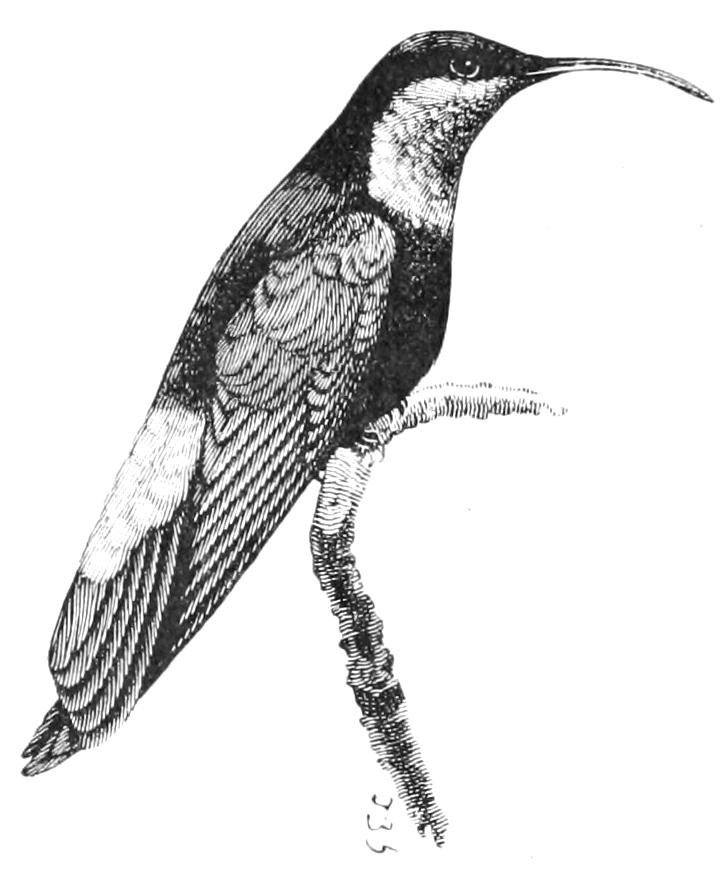
Fig. 89.–Humming-bird. Eulampis jugularus. × ⅔.
Darwin[248] writes of Patagona gigas: "Like others of the genus, it moves from place to place, with a rapidity which may be compared to that of Syrphus among diptera and Sphinx [especially the Humming-bird Sphinx (Macroglossa stellatarum)] among moths, but whilst hovering over a flower, it flaps its wings with a very slow and powerful movement, totally different from that vibratory one, common to most of the species, which produces the humming noise." This slower movement has been observed also in Pterophanes temmincki, and no doubt in other large forms, of which the aerial course is perhaps more zigzag and jerky than elsewhere. Certain species habitually sit with puffed out plumage and somewhat elevated bills; others soar, or skim the surface of water like Bats; the tail-feathers, moreover, are often moved sideways or twisted during flight, especially when they are elongated or spatulate; and Loddigesia constantly extends them perpendicularly to the body, if not further forward, though the racquet-tips may at other times be almost in contact.
The food consists almost entirely of insects, while the alimentary canal shews but little trace of honey, which the birds nevertheless seem to enjoy, when swallowed with the creatures which it allures; and as these appear on the lips of flowers chiefly after wet, or in the morning and evening, their feathered foes are naturally then most active. Cacti, alstroemeriae, orchids, and composites seem particularly attractive, and tubular blossoms to the long-billed species especially. Those with shorter beaks, being unable to penetrate the deepest tubes, are said to pierce the hinder portions, while it is asserted that those with extremely curved mandibles even make use of a twofold process, first inserting the tips, and then raising themselves slightly so as to penetrate the recesses. Rhamphodon, Phaëthornis, Eutoxeres, and Chlorostilbon examine the crevices of trees and walls for spiders, which they habitually eat; while the "Hermits," balanced in the air, pass the bill carefully though quickly over the lower surface of leaves in search of insect-diet. Oreotrochilus pichincha has been observed clinging to rocks and feeding upon the ground; Aithurus, Petasophora, Pygmornis, Lampornis, Patagona and other species, take up posts on dead branches or twigs, thence darting upon their prey in Fly-catcher-like style. Gould once managed to reach the shores of England with two examples, kept alive on sweetened water and yolk of egg.
The males are extraordinarily pugnacious, and one will furiously set upon another who interferes in the least with his comfort, the pair circling around with reiterated, high-pitched notes, attacking and withdrawing in turn, almost heedless of a fall or collision; finally, beak grasps beak, and the struggle grows more intense, until the defeated combatant retreats to some friendly tree, only to renew the fight with vigour unimpaired should his defiant note exasperate his rival beyond control. Or again, should a prowling hawk, an inoffensive heron or thrush, or even a human being, pass perilously near a nest, the cock will make a determined onslaught, often with complete success; the hen following his example, if she feels called upon to protect her charge. These tiny creatures seem absolutely fearless, and frequently feed at once from the hand when caught.
The twittering voice is variously described as a chirp, a squeak, a querulous warble, a whistle, a loud clear piping cry, or a shrill screech, while the absence of proper song-muscles makes it difficult to credit Gosse's statement that Mellisuga minima utters a weak, sweet warble, lasting for ten minutes.[249]
The nest is usually a moderately deep, round or oval cup-like structure, which may be no larger than a walnut-shell; this is formed of the cottony down of plants, moss, wool, or like materials, felted into an extremely light and spongy mass, and often decorated externally with lichens, cobwebs, shreds of bark, or even feathers and dry leaves. It is placed in a small fork, saddled upon a bough, hung from creepers, laced among branchlets, or exceptionally fastened to thatch. In Rhamphodon, Phaëthornis, Cephalolepis, Heliothrix, and possibly elsewhere, a fabric of very delicate twigs, fibres, and bark is attached to the lower part of a palm or similar leaf, several rings of supporting fibre encircling the portion near the stalk, and spiders' webs or silky threads aiding to sustain the sides of the structure, which in depth and make recalls that of the Reed-Warbler. Oreotrochilus forms a peculiar "hammock" of moss, grass, and so forth, attached by like contrivances to rocks; or at times suspends a mass of wool, hair, moss, and feathers, as large as a child's head, with a small depression above for the eggs, from pendent roots, tendrils, or creepers. This is said to be weighted on either side, if necessary, with small stones or morsels of earth, and is repaired for use in successive years. Humming-birds never lay more than two eggs, and sometimes only one; these are plain dull white, and similarly shaped at both ends. The young are hatched blind and naked, and are then about the size of humble bees: but they leave the nest comparatively soon, and are precocious as regards flight. The duration of incubation, which is apparently not shared by the male, is variously stated at ten, twelve, or even more days, and two broods are said to be reared in a season; the first point is clearly doubtful; but, considering the extent of the season fit for nidification, the latter is not improbable. The parents have been known to add to a nest, as the young outgrew it. The cock courts the hen most assiduously, circling around her with dilated throat and swelling plumage, and searching for food to offer, while he carefully watches over her when sitting. Humming-birds have been often said to be killed with water in place of lead, but in truth diminutive pellets of the latter are used, as an alternative to the blow-pipe with its clay ball, or to bird-lime. Immense quantities are exported for decorative purposes, and the Mexicans make pictures of the feathers.
The late Mr. Salvin, who divided the Family into groups by the serration of the beak,[250] recognised a hundred and twenty-seven genera with some five hundred species, while Audubon, Bates, Gosse, Gould, Mulsant, Wilson and Waterton, Count Berlepsch, Messrs. Elliot, Hartert, Ridgway, and Wallace may be mentioned among other Trochilidists. The largest form, Patagona gigas, measures nearly nine inches, Mellisuga minima and others about two and a half.
(1) Forms with distinctly serrated beaks. Heliothrix of Central and South America southward to Brazil contains three members with wedge-shaped bills and blue tufts behind the ears. The females differ little from the males in colour, but have longer tails. Augastes contains the two "Vizor-bearers" of South-East Brazil, so-called from the appearance of the head and throat; A. lumachellus is bronzy green, with a very brilliant green throat terminated by a red line, a little blue shewing between these two colours; the crown is velvety black, the pectoral band white, the tail bright bronzy-red. The female is less highly coloured and has a green head. Rhamphodon naevius of the same country, and Androdon aequatorialis of Colombia and Ecuador, have the bill strongly hooked; the latter is brownish-green above and greyish below, with a blue nape and white rump-bar.
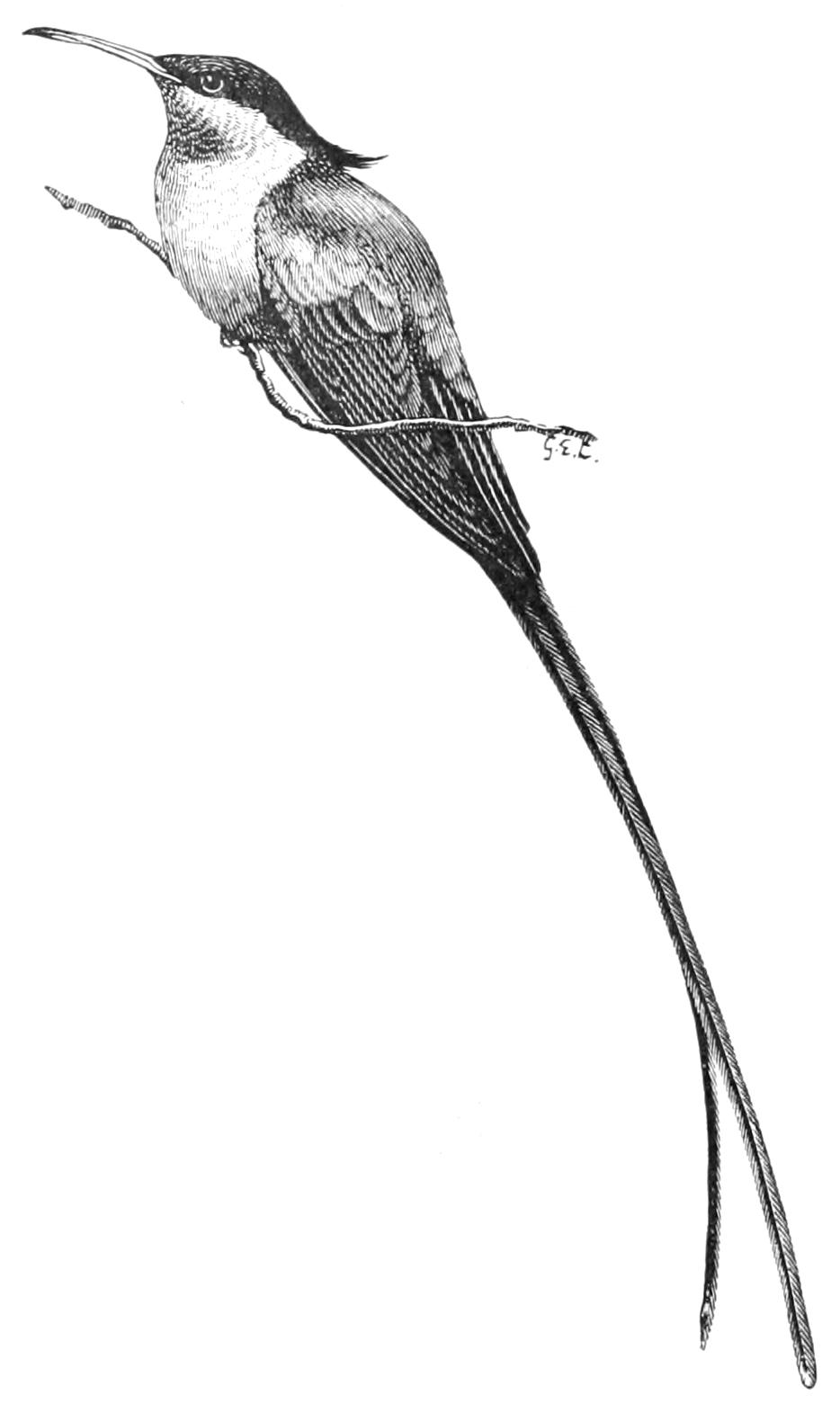
Fig. 90.–Long-tailed Humming-bird. Aithurus polytmus. × ½.
Chlorostilbon, ranging from Mexico to Argentina, possesses some dozen green species with blue or purplish tails, which are forked or rounded; Panychlora of Colombia and Venezuela is similar; Sporadinus, differing in its bronzy-black rectrices, inhabits Florida, the Bahamas, and the greater Antilles. In Aithurus polytmus, peculiar to Jamaica, the two tail-feathers next to the outer pair are immensely elongated, and, after crossing one another, bend outwards in a curve; the lateral rectrices are bluish-black, as is the head with its divided crest; all the other parts being luminous green, and the bill red with black tip. The female is chiefly green above and white below, with brownish crown. The two species of Microchera of Panama, Costa Rica, and Nicaragua, change with the light from coppery-red to black, and have a greenish throat, a white crown, and a partly white tail, except the median feathers. The hen is green above and white below. Lampornis, with about ten species, ranges from South Mexico and the West Indies to Brazil. L. violicauda, the South American "Mango," is green with velvety black abdomen and throat, the latter being edged with blue; the lateral rectrices are violet. Avocettula recurvirostris of Guiana, with its golden green coloration, emerald breast, and tail fiery red beneath in the male, has an upturned tip to the bill, recalling that of the Avocet. The female is chiefly white below. Eulampis holosericeus, extending from Barbados to St. Thomas, is golden-green, with glittering blue tail-coverts and chest; the rectrices are steel-blue, the wings and abdomen blackish. E. jugularis, of the Windward Islands, has green wings and red throat. Petasophora contains some seven members, ranging from South Mexico to Bolivia and Brazil, with fine blue or purple ear-tufts, which occasionally meet in front. Chrysolampis mosquitus, extending from New Granada to Guiana and Brazil, with Trinidad, is often called the Ruby-and-Topaz Humming-bird, from its ruby-red head and nape, and topaz-orange throat and breast; the upper surface is velvety brown, the tail chestnut, the abdomen olive. The plumage of the male is largely used for decoration; but the female is chiefly dull bronzy-green with whitish lower parts.
(2) Forms with feebly serrated beaks. The large musky-scented Pterophanes temmincki, of the Andes from Colombia to Bolivia, is dark green, with the whole wing blue above and below, except for its black tip. The hen-bird is rufous beneath and has purplish-black remiges. Diphlogaena iris, the lovely fork-tailed Rainbow, has a golden-green forehead, an orange-scarlet crown with a rich violet-blue median stripe, a black nape, a lustrous lilac throat-spot, a chestnut rump-region, tail and abdomen, and green plumage elsewhere. The female has little or no copper or blue tints. This species inhabits the Andes from Ecuador to Bolivia, and has two similar congeners. Cyanolesbia gorgo of Colombia and Venezuela is green, with the throat sapphire-blue and the tail violet-blue in the male, these parts being white and nearly green respectively in the hen, which has the under parts chestnut. Sappho, of Peru, Bolivia, Chili, and Argentina, includes two exceptionally lovely birds with long forked tails and luminous throats. S. sparganura, the "Sappho Comet," is bronzy-green with crimson back and fiery orange rectrices, which are black at the tip and brown at the base. S. phaon has both the above parts lustrous crimson. The females have short tails and lack the red back. The four members of Lesbia, another genus with a long forked tail, occupy the Andes from Colombia and Venezuela to Bolivia; L. victoriae, the "Train-bearer" of Bogota, being golden green with glittering throat and purplish-black tail tipped with green; the hen is green and white below, and has the narrow rectrices shorter. Metallura, with about nine species, is found in the same countries. Eustephanus galeritus of Chili, the Straits of Magellan, and Juan Fernandez, which haunts damp shady spots, is bronzy-green, with fiery red crown, and greyish-white under parts spotted with green. The female has the crown green. E. fernandensis inhabits Juan Fernandez, and E. leyboldi Masafuera. Panterpe insignis of Costa Rica is bluish-green, with glittering blue crown and breast, blue-black tail, and bright scarlet throat shading into orange laterally. Cyanomyia verticalis of Mexico is brownish-green above and white below, with shining cobalt head and sides of the neck, and a reddish bill. The hen has a duller crown. Amazilia contains some thirty diverse members ranging from North Mexico to Peru, Guiana, Trinidad, and Tobago. A. pristina of Peru is greenish-bronze, with chestnut sides, rump, and tail, emerald throat, and white middle to the breast and abdomen. A. cyanura of Guatemala and Nicaragua is entirely green, though bluer towards the tail, and shining below. Cyanophaea caeruleigularis of Costa Rica, Panama, and Colombia is bright green, with glittering violet-blue chest. Hylocharis ranges from Guiana to South Brazil, H. sapphirina being deep green, with bronzy rump and tail, chestnut chin, sapphire-blue throat and breast. The female is whitish below with little blue.
(3) Forms with smooth beaks. Eutoxeres, which has the bill curved almost into a semi-circle, was placed by Gould with Rhamphodon and Phaëthornis in a Sub-family Phaëthornithinae, as opposed to Trochilinae, but this has not been generally accepted. The sixteen or more species of Phaëthornis, extending from South Mexico to Bolivia and Brazil, are often termed "Hermits" from their sombre tints of dull green, grey, and brown, or from their habit of frequenting dark forest-recesses. The tail is cuneate and the claws rather large. Eupetomena macrura of Brazil and Guiana, termed the "Swallow-tail" from its forking rectrices, has the two outer primaries in the male with curved and dilated shafts; the three outer feathers being similar in Campylopterus and Sphenoproctus, which range through Central America, and in the last case northern South America. The members of these three genera are denominated "Sabre-wings." The above species is green, with deep cobalt head and throat, and steel-blue tail. Eugenes fulgens of South Arizona, Mexico, and Guatemala is bronzy-green changing to black, the throat being lustrous green, and the crown rich violet. The female has a brownish crown, and greyish lower surface. E. spectabilis of Costa Rica is similar. Docimastes ensifer of Colombia and Ecuador, which has a straight bill, longer than the head and body together, is coppery-green, with black cheeks and throat, and glittering green breast; the last being green and white in the hen. Florisuga mellivora, the Jacobin, occurring from South Mexico to Amazonia, is green, with the head and entire neck blue, the base of the hind-neck, the abdomen, and the middle of the lateral rectrices white. The female is chiefly green, varied with white below. Topaza pella, the "Crimson Topaz" or "King Humming-bird" of Guiana, is golden-red above, with greenish-orange rump, dark purple and cinnamon wings, and rufous lateral rectrices. The two median tail-feathers are bronzy with black tips; the next pair, which are elongated and curve outwards, are purplish-black; the throat is lustrous golden; the narrow pectoral band is black; the remaining lower parts are crimson. The hen is grass-green, with crimson on the throat, and black and cinnamon on the outer tail-feathers. The nest has been stated to be made of a fungus, and certainly the appearance justifies the assertion; but Dr. Paul, a great authority on Fungi, writes of an example which he brought home for the author from the Pomeroon river:–"The felt is formed of the fluff which clothes the young flower-spathes of the Kokerite Palm (Maximiliana martiana)," and his evidence ought to settle the question. T. pyra, of the Rio Negro and Eastern Ecuador, is redder above, with no cinnamon on the wings or lateral rectrices. The genus Oreotrochilus, and the four next succeeding, have particularly strong feet. In common with some half a dozen congeners which range southwards to Chili, O. pichincha of Ecuador inhabits the cloudy regions of the Andes near the snow-line; it is olive-green above, and has an entirely violet-blue head and throat, the latter being followed by a black line and white lower parts, while the lateral tail-feathers are steel-blue and white. The female is green above, ashy and white below. Oreonympha nobilis of Peru, which has a peculiar habit of suddenly stopping in its flight, is a large bird with somewhat forking rectrices. The main colour is bronzy-brown, with a blue crown divided in the centre by a brown bar; the black of the cheeks runs to a point below; the chin is green and the beard crimson; the lower parts are greyish-white; the tail has the external pair of feathers white. The hen has a brown and greenish crown and a black throat. Oxypogon guerini of Colombia, the "Warrior" or "Helmet-crest," is dark green, with blackish sides to the head, a black and white crest, a green and white chin margined with black, a white beard, a greyish abdomen, and purplish and white lateral rectrices. The female lacks the elongated feathers, and has white under parts spotted with dusky. Rhamphomicron heteropogon of Colombia, one of the sharp-beaked "Thornbills," is greenish-bronze, with browner tail and abdomen, and a long amethystine beard surrounded by bronzy-black. R. microrhynchum, having rich purple upper parts and a lustrous green throat, extends to Ecuador, while other members of the genus range to Bolivia. The hens are comparatively dull. Opisthoprora euryptera of Colombia, which is bronzy-green with a little rufous and white below, has an upcurved bill, like Avocettula. Patagona gigas, the largest Humming-bird known, inhabits the Andes from Ecuador to Chili; it is greenish-brown, with white rump and rufous under parts. In Aglaeactis, of the Andes from Colombia to Bolivia, the coloration is brown, dark buff, or black, with glittering amethystine or green lower back, and a white or buff pectoral tuft. The chief marvel of the Family is, however, Loddigesia mirabilis, originally found in Northern Peru by a botanist named Matthews, and rediscovered by M. Stolzmann[251] in almost the same locality. It is shining bronzy-green, with whitish under parts surrounding a black central area; the head and its crest are lustrous cobalt-blue, the throat is emerald-green with black margin, the metatarsi are covered with white feathers. The two lateral rectrices are extraordinarily prolonged, and resemble black wires with large steel-blue terminal discs; the shafts normally cross each other at their bases and again near their tips, but the discs are frequently brought together in flight, or extended horizontally, if not turned above the head. The median tail-feathers are much reduced. The female is green, varied with white below; the external pair of steel-blue lateral rectrices shewing small spatules. Cephalolepis delalandi, of South-East Brazil, is bronzy-green above, and fine violet-blue bordered with grey below, while the long glittering green crest terminates in a single black plume. The crestless hen is grey below. Eriocnemis, of the Andes from Colombia and Venezuela to Bolivia, shares with Panoplites and the spatulate-tailed Spathura of the same regions the characteristic of possessing muff-like tufts of black, white, or buff, which cover the metatarsi. To take an example of the twenty or more species, where the sexes are fairly similar, E. cupreiventris is bronzy-green, with brighter under surface, purplish-black tail, reddish abdomen, and lustrous blue under tail-coverts. Calothorax lucifer, the "Mexican Star," is golden-green above and white below, with shining lilac-red throat; it has purplish-black lateral rectrices tipped with white, of which the outer is filiform, as are the external four in Acestrura of northern South America. Selasphorus rufus, of western North America, from Alaska to Mexico, is cinnamon above and white below, with golden-green crown and glittering red throat; the head-feathers are bordered with rufous, and the sub-median tail-feathers are emarginate. The female has chiefly green upper and white under parts. S. platycercus, resembling the next species, but with a rosy-red throat, occupies the Rocky Mountains and extends to Guatemala, the genus reaching Panama. They constantly have the outer primary or outer rectrix attenuated. Trochilus colubris, found at different seasons from the Fur Countries and the Great Plains to Guatemala, is green above and whitish below, the chin being black, the throat glittering ruby-red, and the forked tail chiefly bluish-black. The hen lacks the red colour. T. alexandri of western North America differs in its violet-purple throat. Calypte annae and C. costae of the South-West United States are green birds with mainly whitish lower surface, and have the crown and throat rosy and lilac respectively. The latter form has elongated gular plumes, as has the bluer Cuban C. helenae, where they are crimson. The minute Mellisuga minima, or "Bee Humming-bird," of Jamaica and San Domingo is green above and white below, with dusky throat-spots in the male. The equally small Chaetocercus bombus of Ecuador is green, with rosy throat, buff breast, and chiefly purplish-black rectrices, of which the outer four are short and spiny; the female is green above and cinnamon below.
Thaumastura cora, the "Peruvian Sheartail," is golden-green, with crimson throat shading into blue, and white under surface; the black and white tail has two enormously elongated sub-median feathers. The hen is white below, with buffish throat and flanks. Prymnacantha popelairii, one of another group of Thornbills (p. 437), has a yellowish-green crest with two long black filamentous plumes; the upper parts are bronzy-green with a white rump; the lower parts are black, with a glittering green throat and rufous tibiae. The forked tail has the pointed narrow feathers steel-blue with white shafts. The hen has a dark green crown and black and white throat. This genus extends from Costa Rica to Bolivia and Brazil. Lophornis covers the same area, but reaches Mexico. L. ornatus has beautiful fawn-coloured tufts with green terminal spots, on the sides of the neck; and is chiefly bright green and cinnamon, with a rufous and purplish rump and a chestnut crest; the female exhibits more white below and lacks the crest and tufts. The remaining half score of species are similar or even more brilliant. Heliactin cornuta of Brazil alone of the Family has resplendent purple, green, and gold tufts above and behind the eyes. The coloration is shining green, with a bluer crown, black cheeks and throat, and white lower parts. The hen is green above and white below, with buff throat.
* * * * *
Fam. XIII. Coliidae.–This group is the only constituent of the Sub-Order Colii or Colies, termed Mouse-birds in South Africa from their creeping habits. They were formerly classed among the Passerine Fringillidae, to which they bear a certain outward resemblance, while at a later date a partial study of the anatomy seemed to point to an affinity with the Plantain-eaters; but it is now generally recognised that they should be placed among those Families which in this work form the Order Coraciiformes. They are small, tough-skinned birds, which would appear larger were it not for the short, dense feathering; the bill is stout and Finch-like, the long metatarsus exhibits one series of scutes in front, and reticulations behind; the toes with their slender claws are all directed forwards, but the hallux and apparently the outer toe can be turned backwards. The wings are weak and rounded, with ten primaries and nine secondaries; the very long tail has ten rectrices, the outer pair not being greatly developed. The furcula is U-shaped; the syrinx has one pair of tracheo-bronchial muscles; the tongue is flat and cartilaginous with horny papillae; an after-shaft is present; the adults, and probably the nestlings, have no down.
Colies frequent forest-districts, especially where the bush is thick; they are active, yet not very shy, and are usually found, except during the breeding season, in flocks of some six to eight individuals. The flight is laboured, with many a quick beat of the wings; but it is direct and fairly rapid, though seldom sustained beyond some neighbouring tree, where the bird may be seen stealing through the foliage, and aiding its creeping movements with its bill. The most peculiar habit, however, is that of climbing with the whole metatarsus applied to the branch, a fact which adds greatly to the mouse-like appearance. When roosting, Colies are said to pack themselves together in masses, and to hang by the feet; rarely are they seen perching or hopping, though they often cling to the boughs with the head downwards. The note is disagreeable and harsh. The cup-shaped nest of twigs, roots, and grass, with a lining of wool or finer grasses, is placed in thick bushes, or near the ground in low trees; the three or four eggs, hardly pointed at either end, are dull white, sometimes streaked with orange or brown. Fresh leaves are not uncommonly added below them. The food consists almost entirely of fruit, though green shoots, or even insects, are believed to be occasionally eaten.
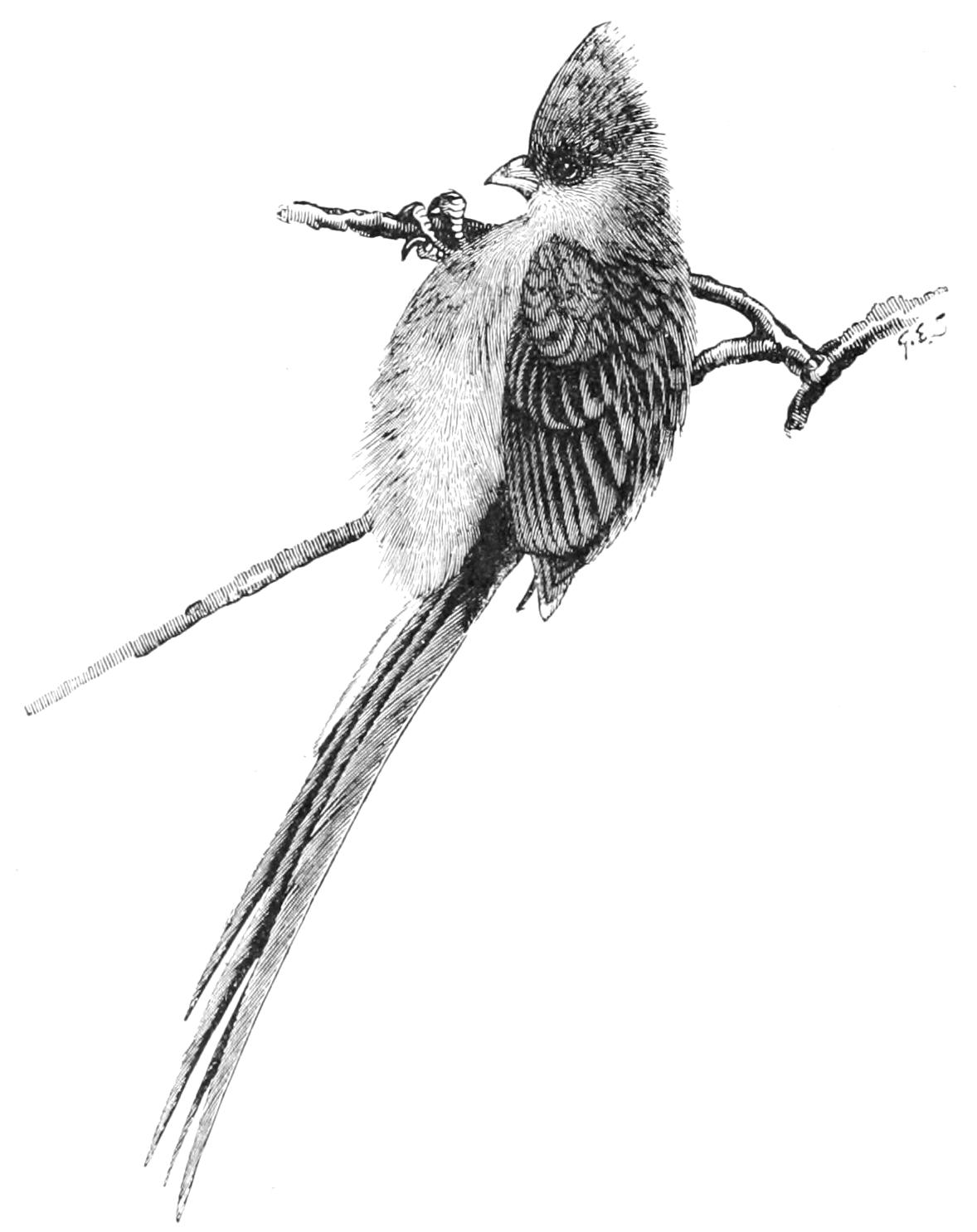
Fig. 91.–Cape Coly. Colius capensis. × ⅓.
The eight or nine species of the single genus Colius, ranging through the whole Ethiopian region except Madagascar, vary in coloration from brown with darker vermiculations or bars to grey or ash-colour, the abdomen being buff. Fine crests add to the general appearance. C. macrurus is remarkable for a tuft of blue feathers on each side of the nape; C. leucocephalus has a white head; C. leucotis white ear-coverts; C. nigricollis a black forehead and throat; C. capensis two stripes of black on the back enclosing one of white; while that species and C. castanonotus have maroon rumps. The bare skin surrounding the eye is scarlet in C. erythromelon, C. macrurus, and C. capensis, and apparently bluish-grey elsewhere. The legs are red in life, fading to buff after death. C. striatus is very nearly uniform brown, C. erythromelon shews a greenish tinge and has some buff on the head. The sexes are similar, nor are the young very different. The length is from eleven to fourteen inches. Kafirs consider these birds very good eating.
Fam. XIV. Trogonidae.–The Trogons are the sole tenants of the Sub-Order Trogones, a very distinct group of birds of brilliant coloration–the Quezal, as will be seen below, being the most splendid of all. Their general aspect is somewhat heavy; the neck is abbreviated; the bill, stoutest in Pharomacrus and most slender in Euptilotis, is short and strong, with a wide bristly gape, and a curved culmen terminating in a hook. The maxilla in these genera, as well as in Harpactes and Hapalarpactes, has a terminal notch, while both mandibles are more or less serrated in adults of Trogon, Hapaloderma, Tmetotrogon, and Prionotelus. The foot is comparatively small and weak, with the short metatarsus feathered and somewhat scaly; the second toe is reversed, a heterodactylous arrangement (p. 10) unique among birds. The moderate wing has ten primaries, and from eight to ten secondaries; the upper wing-coverts being elongated in Pharomacrus, especially in the males. The long rectrices are twelve in number, and are concave at the end with divergent tips in Prionotelus; the feathers, moreover, are often square at the extremity–a noticeable peculiarity in the Family; while in the Quezal, Pharomacrus mocinno, the male has enormously developed upper coverts to the tail, which extend far beyond it, the two median being the longest; in its congeners and in females generally they equal the rectrices; in Euptilotis they are only half the length. The furcula is U-shaped; the tongue flat; the syrinx tracheo-bronchial; the aftershaft long; the nostrils are bristly; the adults have no down; and the nestlings are said to be naked for a short period. The large soft feathers are easily detached from the delicate skin. The male of Pharomacrus mocinno has a fine rounded crest, less developed in the female and in its other congeners. Euptilotis, Tmetotrogon, and Prionotelus have the ear-coverts filamentous and hair-like. Pharomacrus pavoninus has a red bill, as has Prionotelus in part; the usual colour in the former genus, and in Trogon and its allies, being yellow for the cock and more horn-coloured or black for the hen, but in Harpactes violet or bluish, with a duller tip in the female. The orbits are partially or entirely bare in Hapaloderma, Harpactes, and Hapalarpactes, the skin being, it would seem, yellow, violet, or blue. The Family ranges through the tropical portions of the Indian, Ethiopian, and Neotropical Regions, Harpactes and Hapalarpactes being found in the first, Hapaloderma in the second, and the other five genera in the third. Trogon ambiguus reaches northwards to Arizona and Texas. The number of species is nearly fifty, of which the largest (Pharomacrus mocinno) measures some fourteen inches, the smallest (Harpactes duvauceli) about nine.