Chapter VI
Reading edition
NEORNITHES CARINATAE CONTINUED
BRIGADE II–LEGION II (CORACIOMORPHAE). ORDERS: CUCULIFORMES–CORACIIFORMES
Order XII. CUCULIFORMES.
The Order Cuculiformes commences the last great division of Carinate Birds. It contains the Sub-Orders Cuculi and Psittaci; the former consisting of the Families Cuculidae, or Cuckoos, and Musophagidae, or Plantain-eaters; the latter of the Psittacidae, or Parrots, Parrakeets, Macaws, and Cockatoos, and the Trichoglossidae, or Lory group. Zygodactylous feet (p. 10) are characteristic of the Order, while further structural details are to be found below. Dr. Gadow confirms the close connexion of the two Sub-Orders.[214]
Fam. I. Cuculidae.–Here we may accept, in default of full anatomical investigation, the Sub-families of Captain Shelley,[215] namely, (1) Cuculinae, (2) Centropodinae, (3) Phaenicophainae, (4) Neomorphinae, (5) Diplopterinae, and (6) Crotophaginae.
The bill is generally long and curved, being strongly arched in Hyetornis, Piaya, Taccocua, and Zanclostomus; it is straight in Saurothera and Rhinortha, abnormally large in Rhamphomantis and Scythrops, and has the maxilla compressed into a thin elevated plate in Crotophaga. The scutellated metatarsi are commonly stout, and are especially long in the cursorial genera Coua and Geococcyx; in Centropus the hallux terminates in an elongated spur-like claw. The wings are long and straight in the Cuculinae, Diplopterinae, and Crotophaginae, short and curved elsewhere; the primaries numbering ten, and the secondaries usually nine or ten, but thirteen in Scythrops; in the Neomorphinae the quills are about equal in extent. The rounded or wedge-shaped tail is nearly always long, and has ten feathers, except in the Crotophaginae, which have eight; it is forked in two species of Surniculus. Diplopterus has the upper coverts half as long as the rectrices, Dromococcyx has them of the entire length. The impervious nostrils, usually pierced in a swollen membrane, are hidden by bristly plumes in Dasylophus and Lepidogrammus. The furcula is Y-shaped, the tongue is sagittate with retroverted spines on the posterior margin, the syrinx is tracheo-bronchial or occasionally bronchial. Distinct eyelashes are often visible, the after-shaft is rudimentary or absent, the nestlings are naked, and down is only found in adults on the unfeathered spaces.
The plumage of the more typical Cuckoos is brownish or grey, usually with barred under parts, the long flank-feathers covering half the metatarsi; Chrysococcyx, however, contains several beautiful emerald-green forms; while Chalcococcyx is scarcely less brilliant; but Surniculus and Cuculus clamosus are black. Crotophaga is also black. Coccystes, and several species of Coua, have well-developed crests, while Lepidogrammus has a rounded tuft, Guira one of long narrow plumes, and Geococcyx mexicanus an erectile patch. Fork-tipped feathers on the head and neck are not uncommon. The colour of the bill, feet, and iris varies much; the cheeks and orbits are often naked, and may be bright red, blue, or greyish, as in the Phoenicophainae and Centropodinae. Strong glossy feather-shafts, often with filiform extremities, are found in Coua, Taccocua, Phoenicophaës, Rhopodytes and elsewhere, on the head, neck, mantle and chest; Crotophaga has stiff, scale-like borders, and Lepidogrammus metallic horny tips, to the feathers of the first two of these; Dasylophus has fine crimson hair-like tufts springing from above each eye. The beak may be black, green, yellowish, or even, as in Rhamphococcyx, chiefly red. The sexes are alike in most cases.
The Ethiopian and Indian Regions are richest in Cuculidae. New Zealand possesses only two species; but Madagascar, besides other forms, claims the entire genus Coua. In all there are more than a hundred and sixty species of some forty-two genera.
Sub-fam. 1. Cuculinae.–Cuculus canorus, the familiar Cuckoo of Britain and nearly all the Old World, is greyish-brown above and on the throat, the lower parts being white barred with dusky, and the wings and tail shewing a few white markings. A chestnut-brown or "hepatic" phase is sometimes met with. The young are brown mottled with white on the nape. Its flight and general coloration give the Cuckoo a distinctly Hawk-like appearance, and cause it to be systematically mobbed by small birds, while ignorant peasants persecute it mercilessly, and assert that it "changes to a Hawk" in winter. Certain other members of the Family have the same raptorial aspect, notably the Asiatic Hawk-Cuckoo (Hierococcyx); whereas several of the Centropodinae unconsciously mimic Pheasants in their colour, in their red orbits and their wedge-shaped tail. Geococcyx is still more like a Galline bird in some respects; and Surniculus is a decidedly good imitation of a Drongo (Dicruridae).
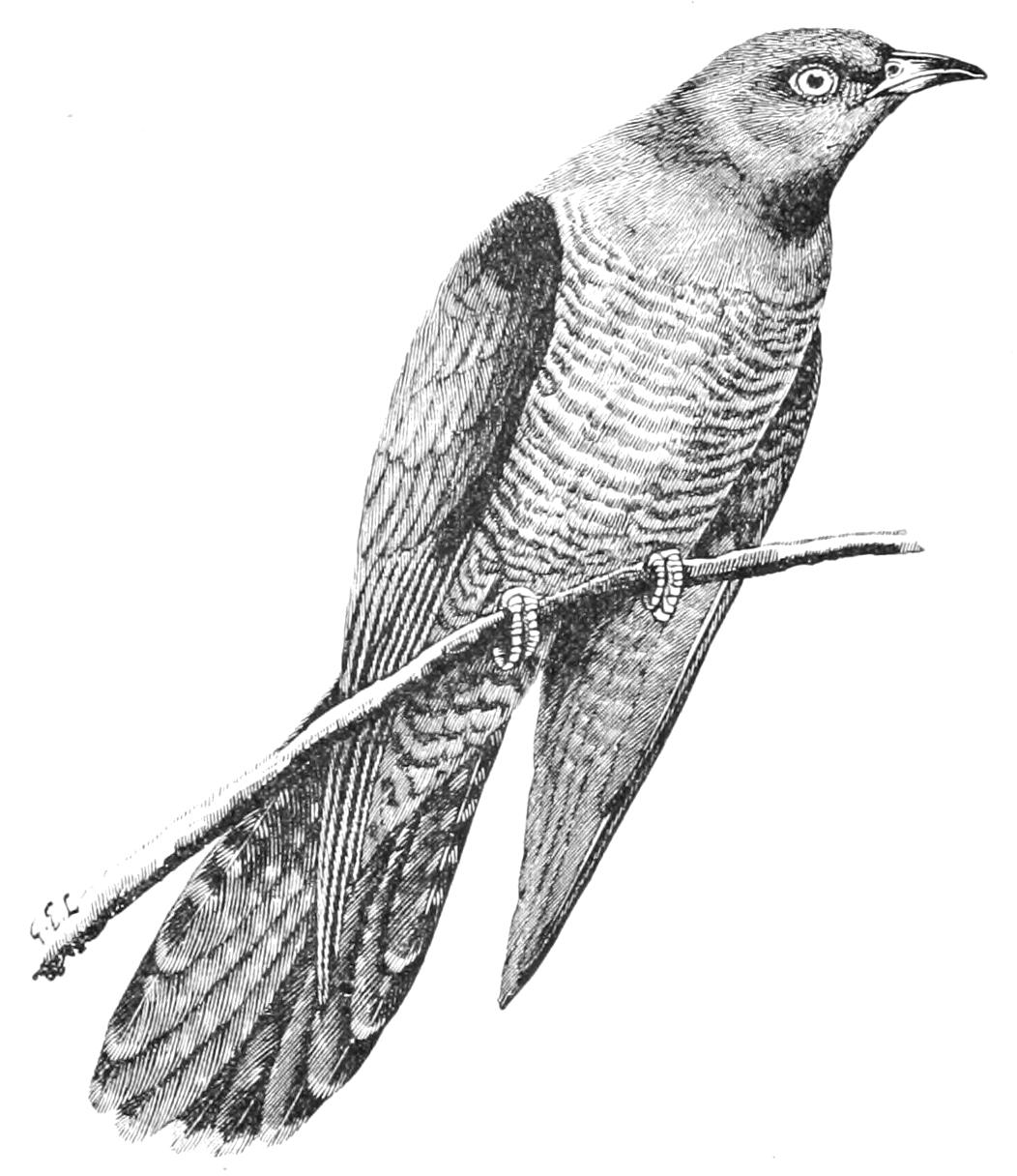
Fig. 69.–Cuckoo. Cuculus canorus. × 2⁄7.
In early April the Cuckoo's note heralds the approaching summer in Britain, and continues to be heard until June, after which it becomes hoarser and the first syllable is doubled; in July the adults begin to disappear, yet stray examples–chiefly, if not entirely, young–remain up to October, when they migrate as far as South Africa, Ceylon, and Celebes. None breed south of North Africa and the Himalayas. The eggs are invariably deposited in the nests of other birds, which rear the intruder and feed it until it leaves the country; but it is doubtful how many are produced in a season–possibly five or six–or whether the same hen ever places two or more in one nest. It is now certain that the egg is laid on the ground and conveyed to the chosen nursery in the bill, an occurrence said to have been actually witnessed by Adolf Müller, a forester in Darmstadt.
Closely connected with the above parasitic habit is the question of the colour of the egg. Red or blue specimens have undoubtedly been found in Germany and elsewhere, as well as the typical brown or greyish varieties; but they do not always assimilate to those of the foster-parent, albeit to the eggs of Pipits, Wagtails, and so forth, that of a Cuckoo is often exactly similar. The theories advanced to account for this are by no means conclusive, though hereditary habit may afford a clue; we may, however, be sure that the hen cannot determine the colour of her egg.
With us the most usual foster-parents are the Meadow-Pipit, Pied Wagtail, Reed Warbler, Hedge-Sparrow and Robin, perhaps in the above order. They seldom, if ever, seem to resent the intrusion, or to notice their consequent losses. The careful observations of Jenner, Hancock, and Mrs. Blackburn shew that the young Cuckoo, when some thirty hours old, begins unaided to remove from the nest the rightful progeny or unhatched eggs by means of its broad back, which has a central depression for the first twelve days; but after this hollow is filled up the desire is said to cease. It pushes below a nestling with its wings, and raises it with much exertion to the edge of the nest, finally ejecting it by a supreme effort.
The probable reason why the Cuckoo's egg often hatches first is the hen's habit of selecting nests with only one or two fresh eggs. Subsequently she neglects her offspring entirely. It is stated that the males, who alone utter the well-known notes, decidedly outnumber the females, and that no strict pairing takes place; while in the courting season a curious bubbling sound, attributed to the hen, may be heard as two or three individuals chase each other along the hedgerows. Wooded districts and bare hill-moors are equally frequented, trees being constantly used as perches. The quick, straight flight is varied by twists and swoops; the food consists of insects and their larvae, the stomach often becoming lined with hairs of caterpillars. Our Cuckoo does not eat eggs, but various foreign species add to their diet seeds and other fruits, land-molluscs, worms, frogs, lizards, small snakes, birds, and mice. Chalcococcyx lucidus bruises its food before swallowing it.
The genus Coccystes, of South Europe, Africa, and Tropical Asia, includes the Great Spotted Cuckoo (C. glandarius), which has twice occurred in Britain, a crested greyish-brown bird, with a yellowish throat, white under parts and markings above. In Southern Spain and Northern Africa it deposits from two to four eggs in the nests of the Magpies, Pica rustica, P. mauritanica, and Cyanopica cooki, or of the Grey Crow, Corvus cornix; these eggs, like those of the foster parents, being pale green with brown and lilac markings. The note of the male is "kee-ou, kee-ou" or "kark-kark", of the female "burroo-burroo." C. coromandus, chiefly greenish- and bluish-black above with rufous wings and white nuchal collar, and buff below with grey abdomen, ranges from India and Ceylon to China and Celebes, laying roundish, plain green-blue eggs in nests of Crateropus and other birds, and having a true Cuckoo's note. C. serratus of South Africa, which is greenish-black with a white alar band, is somewhat terrestrial, and lays a white egg in nests of Pycnonotus and Sigelus.
Surniculus lugubris, extending from India to China and the Malay Islands, is black, with green and purple reflexions and a few scattered white markings. The tail is sometimes forked. Cacomantis passerinus, of India, Java, and Sumatra, is grey, having an olive gloss above, blue-black rectrices with white bars, and white abdomen. It frequents jungles, utters a plaintive series of whistles, continuing for hours, and lays bluish eggs with purplish, markings in various birds' nests. C. virescens of Celebes and Bouru is said by Dr. Meyer to build its own nest. Chrysococcyx smaragdineus, of Tropical and Southern Africa, is a lovely emerald-green bird, with yellow breast and white-barred lateral rectrices. The female has a partially rufous head and mantle, coppery, bronze, and green upper parts, and white lower surface banded with green. The males whistle loudly to their mates for long periods, perched on tall trees, or hawk for insects in the air. C. cupreus, of the same countries, is in both sexes coppery-green varied with white above, and white with bronzy bars below; it is called "Di-dric" from its cry, and lays white eggs in Sun-birds' and Finches' nests. The similarly coloured Chalcococcyx lucidus of Australia, New Zealand, and the Chatham Islands has a reiterated plaintive note, with the effect of ventriloquism, and foists its greenish-white eggs with brown spots upon Acanthiza and Gerygone.
Of Eudynamis, ranging from India and Ceylon to Australia and Polynesia, the black males are barely distinguishable, but the females vary, and are black, brown, rufous, and white. E. honorata, the noisy Indian Koël, has a loud melodious or hoarse whistling note, supposed to portend rain; it feeds on fruit, and lays from one to four greenish eggs with brown and grey blotches in nests of Crows. E. melanorhyncha is the "foreteller at night" of Celebes.[216] The extraordinary Scythrops novae hollandiae, or Channel-bill, of Australia, Papuasia, and the Moluccas, has a grey head, brownish back, and whitish under parts with indistinct dusky bars, the tail exhibiting a subterminal blackish and a terminal white band. The large maxilla has two lateral grooves, the bare lores and orbits are scarlet. This big bird flies like a Hawk, and is possibly parasitic; while eggs, taken from the oviduct, are white with pinkish-brown spots. The weird cry or shriek is syllabled krok, and the flocks feed on fruits and insects.
Coccyzus americanus, the Yellow-billed Cuckoo of America, has occurred in Britain, and ranges from the Great Plains, Canada, and New Brunswick to Argentina; it is an arboreal species, pairing and building–apparently twice a year–a slight flat nest of twigs, grass, and moss, lined with leaves. It lays from three to five light greenish eggs, and the hen feigns lameness when danger threatens the young. C. occidentalis is a more western form. C. erythrophthalmus, the American Black-billed Cuckoo, has been killed in Ireland and Italy. The coloration in the eight members of this genus is brownish-grey, relieved by rufous, the under parts being buff or white.
Sub-fam. 2. Centropodinae.–This group comprises only the thirty or more large Coucals (Centropus) of the Ethiopian Region, Egypt, Madagascar, India, and the countries thence to China, Papuasia, and Australia. C. sinensis, the Crow-Pheasant, extending from India and Ceylon to China, is black with purple and green reflexions, the mantle being chestnut; C. unirufus of the Philippines is entirely rufous. They are strong-billed, long-legged birds with terrestrial tendencies, noisy yet often shy, which fly heavily, run, climb, leap, or glide with up-turned tail about the trees in forests and jungles, and utter a mellow "hoo-too" or a chuckle. The food consists of insects and their larvae, molluscs, reptiles, small mammals, and nestling birds. They make a large globular nest of twigs and leaves, or even of rushes, grass, and rags, with a lateral hole; it is placed in a tree, a thorny bush, or a tuft of herbage. The three to six oval eggs are white or bluish with a readily-stained chalky coating; the young are soon able to skulk among the foliage. C. toulou is held sacred in Madagascar.
Sub-fam. 3. Phoenicophainae.–Taccocua sirkee, the Indian Sirkeer, has somewhat similar habits, but makes a flat nest. It is olive-brown above, relieved by black and white, and rufous below. Coua is peculiar to Madagascar, C. caerulea having loose blue plumage, glossed with violet on the tail, and dark blue naked orbits; but the other species are more olive or grey, with black or rufous on the head, throat, or mantle. The large, shy members of this handsome genus frequent the edges of forests; but whereas five species fly heavily and climb well, jumping from branch to branch with elevated rectrices, occasionally assisted by their beaks, the remaining seven rarely leave the ground, where they run about with the tail trailing. The note is a harsh "tashu" or a sharp "turruh"; the food consists of seeds, insects, worms, small mammals, birds, and molluscs–the last broken on stones; the nest of twigs and fibres is placed in high trees, and contains two or three white eggs.[217]
Saurothera, Hyetornis, and Piaya are the "Rain-birds" of the Bahamas and Antilles, the latter genus extending to Bolivia and Argentina. They are inactive, wary birds, which hide and creep about with outspread tails when in the trees, but are more at ease upon the ground; the cry is a loud harsh scream or cackle; the food consists of insects, berries, lizards, and mice; the flat nest contains two or three white eggs. P. cayana is reddish-brown above with a violet tinge, and grey below with pinkish throat; the tail shewing a subterminal black bar and a white tip, and the bare orbits being red. Phoenicophaës pyrrhocephalus of Ceylon is dark green, with bluish wings, blackish head and chest, tail varied with white, and white breast; the forehead and sides of the head being red and rugose. It is a fruit-eating forest species, said to be parasitic, though the allied Rhopodytes of the Indian Region lays two or three white eggs in a slight nest of sticks and leaves, while the pugnacious Rhamphococcyx calorhynchus, the "foreteller by day" of Celebes, builds a similar structure.[218]
Sub-fam. 4. Neomorphinae.–Geococcyx mexicanus, the curious Chapparal-Cock or Road-runner of the South-Western United States and Mexico, frequents thinly-wooded country, hilly cactus-regions or barren plains. The plumage is brownish, with white margins to the feathers and a purple tinge on the rufous-mottled head, neck, and breast; the back is greener, the tail more lilac, the abdomen white, the bare orbits blue and red. With its long stout legs this species covers the ground very quickly, running with outstretched neck, elevated crest, slightly expanded wings, and jerking tail, or springing into trees and taking brief flights: it is even difficult to outpace it with dogs or on horseback. It eats insects, snapping some in the bill as it leaps into the air, and enjoys grasshoppers, mice, and lizards; in captivity it is thievish. The note is low, the beak being occasionally clattered. The nest of twigs and grass, placed in bushes, contains from three to nine white eggs, the male apparently assisting in incubation. Carpococcyx radiatus of Borneo, and C. viridis of Sumatra, are the only Old World species in this group.
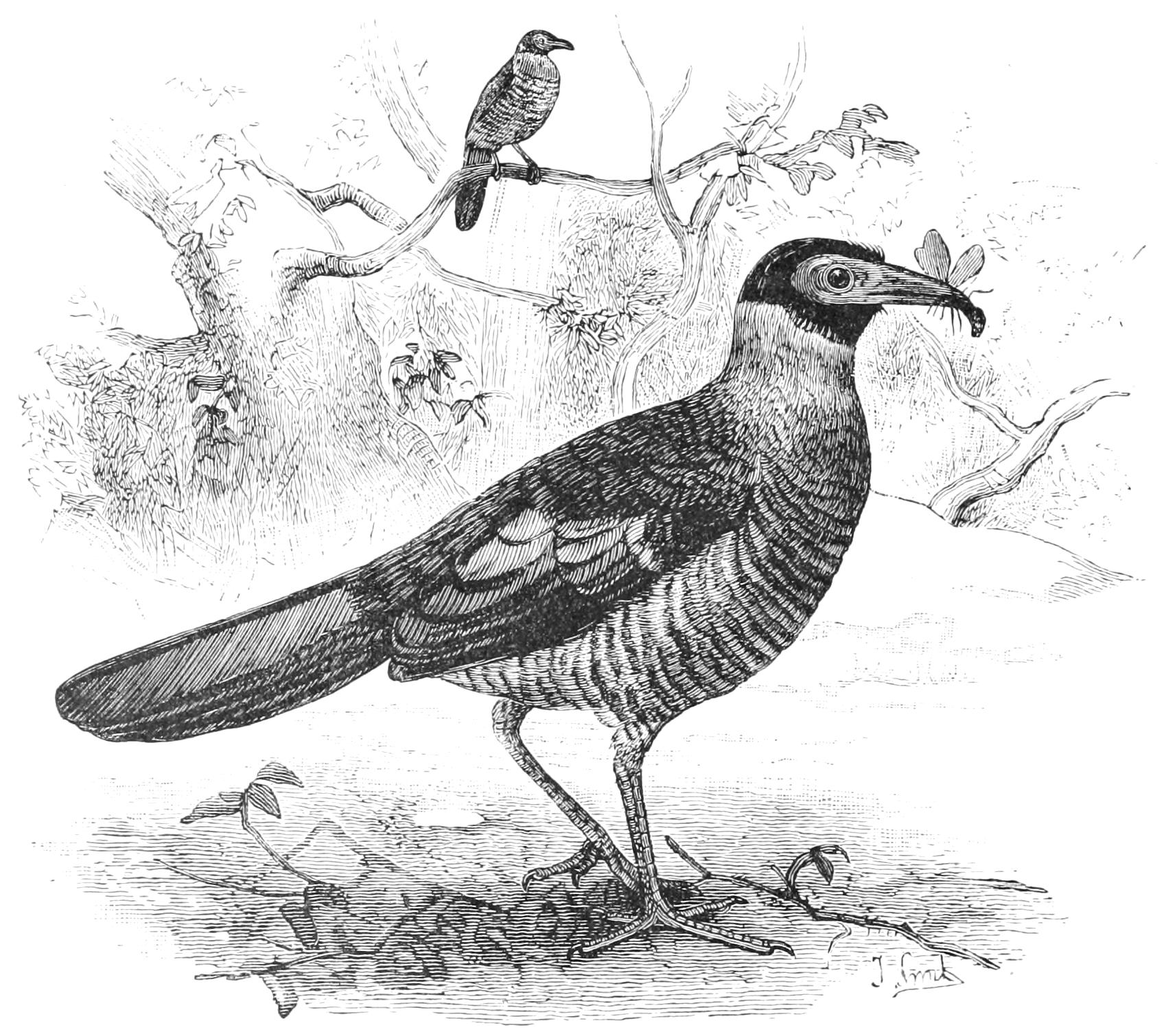
Fig. 70.–Radiated Ground-Cuckoo. Carpococcyx radiatus. × ⅙. (From Nature.)
Sub-fam. 5. Diplopterinae.–Diplopterus naevius, a pale brown bird with darker streaks and white under surface, may represent this Central and South American group, of which the only other members are two species of Dromococcyx.
Sub-fam. 6. Crotophaginae.–Of these birds, peculiar to the New World, Crotophaga ani, the Ani, Black Parrot, or Savannah-blackbird, extending from the Southern United States and the Antilles to most of South America, is glossy purplish- or greenish-black, and has the smooth maxilla compressed into a thin vertical plate, which, like the bare orbits, is black. Its grotesque appearance and alleged malpractices have given it the name of Black Witch in the West Indies. C. sulcirostris, ranging from Texas to Peru, has the bill grooved; C. major of South America is larger and greener. Far from shifting the burden of incubation upon other species, the females form huge co-operative nests of interlaced twigs lined with green leaves in trees, wherein each deposits some five bluish eggs with a chalky incrustation, amounting in all to twenty or more. Around or upon these structures they sit in company. Bold but wary, the Anis flit from bush to bush, or creep and jump about the branches, uttering a mewing sound or a sharper double cry. They are often mobbed by other birds. Flocks gather in wooded or marshy spots, and feed on insects, berries, lizards, and so forth; occasionally digging for their prey, or picking the ticks off cattle.
Guira piririgua, of Brazil, Paraguay, and Argentina, is brown and buff above with darker streaks, and buff below, the back and tips of the lateral rectrices being white. From the similarity of habits to Crotophaga it is termed the White Ani in Brazil. Flocks draw near the houses in winter, and sit miserably huddled together on the trees; the note is a long disyllabic whistle, or in the young an hysterical laugh. Usually each pair makes a rough nest of twigs and leaves, laying six or seven pale blue eggs with reticulated chalky coating; though fourteen have been recorded.
Fam. II. Musophagidae.–The Plantain-eaters are striking birds, peculiar to the Ethiopian Region, without Madagascar. They have large eyes and long necks; while the bill, though small in Gallirex, is generally stout and broad with compressed or rounded culmen and serrated margin, and in Musophaga expands into a broad frontal plate behind. The feet are semi-zygodactylous, with reversible outer toe and strong claws; the robust metatarsi are scutellated anteriorly and coarsely granulated posteriorly. The wings are rather short and round, with ten primaries and twelve or thirteen secondaries; the rounded tail of varying length has ten rectrices. The furcula is U-shaped; the tongue sagittate–with bristly apex in Gallirex; the nostrils–hidden in Turacus–are usually oval, but are linear in Schizorhis and Gymnoschizorhis; the aftershaft is large; the nestlings lack down. The red or grey orbits are naked, save in Schizorhis; in Gymnoschizorhis the cheeks and throat are bare and blackish.
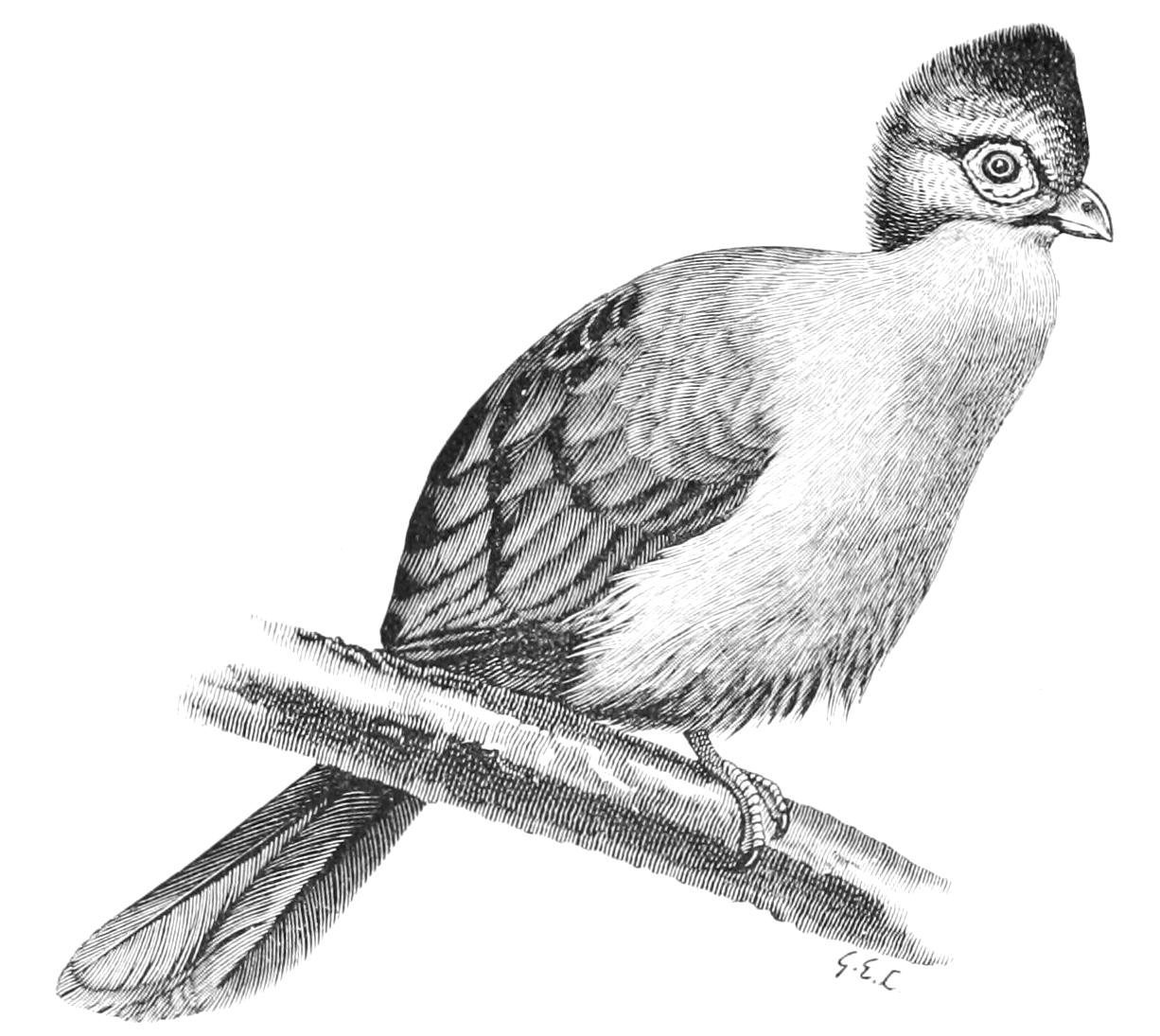
Fig. 71.–Green-mantled Turaco. Gallirex chlorochlamys. × ¼.
The six genera comprise two dozen or more species from about thirty to fifteen inches in length; the general coloration being metallic blue and green or greyish-brown, usually varied with crimson, and in the large Corythaeola with yellow; all have erectile crests of different sizes, except Musophaga violacea. The bill is red, yellowish, or black, the feet are black. The sexes are alike, the young duller. The red feathers yield a peculiar pigment, containing copper, called Turacin, which is reducible to a powder; this is so soluble that the colour is washed away during rain or in a bath, though regained subsequently.[219]
Plantain-eaters are found in pairs, or in small flocks of four to ten, over wooded country near inland or tidal waters, reaching an altitude of some ten thousand feet. The tops of high trees are a favourite haunt, but they are not uncommonly seen amongst the tangled creepers below, flitting from shrub to shrub with undulating flight when disturbed, and alighting with crest erect and up-turned tail. Of some species the flight is clumsy and jerky, of others light and graceful; at times they hover in the air with outspread wings and tail, at times they sport and hop among the branches, expanding and depressing the rectrices. Familiar yet extremely shy and restless, these birds, when wounded, are particularly hard to secure, as they run with great swiftness, and even take refuge in holes in trees. During rain or in the mid-day heat they rest quietly on some bough, but at other times are usually noisy, their harsh reiterated screaming or ringing notes being varied by a cat-like mewing or dove-like sound. The food consists of bananas, tamarinds, papaw-apples, and other fruits, with insects, worms, caterpillars, molluscs, or even small birds. They are occasionally mobbed by their kin, as Cuckoos are. Though some species have been asserted to breed in holes, Schizorhis concolor makes a flat nest in trees, and Gymnoschizorhis leopoldi a loose platform of thorny twigs and roots, both species laying three round greenish- or bluish-white eggs. The flesh is considered a delicacy by the natives.
Turacus (Corythaix) fischeri of East Africa is green, washed with blue on the wings and tail, having a crimson crest tipped with black, a crimson hind neck with white nape, a blackish lower chest and abdomen, and black cheeks margined above and below with white; the remiges are crimson, edged with black, the bare orbits red. T. corythaix is called the Lory in South Africa. Musophaga violacea of West Africa is glossy violet-blue with darker tail, the crown and hind-neck being covered with short, hairy, crimson feathers and partially outlined with white; the chest is greenish, the frontal plate yellow; the wing-quills and orbits are as in T. fischeri. Schizorhis concolor of South Africa is nearly uniform ash-coloured; Gymnoschizorhis personata of Shoa is greyish-brown with paler crest, whitish head and neck, blackish naked cheeks and throat, and dirty green breast.
The remarkable fossil Necrornis occurs in the Middle Miocene of France.
* * * * *
Of all existing Birds the Parrots (Sub-Order Psittaci) are perhaps the most interesting to the public, being easily procurable, docile, and long-lived pets of gorgeous coloration and amusing habits. The red-tailed Grey Parrot of Africa (Psittacus erithacus) is considered the best talker, yet, apart from individual ability, many species of Palaeornis, Chrysotis, and other genera, are equally clever, if we cannot say intelligent. Professor Skeat identifies the name Parrot with the French Pierrot; but, however that may be, Indian species have been known in Europe since the time of Alexander the Great, and one or more African forms were kept in ornamental cages, and even eaten, at Rome under Nero.
In default of a really satisfactory arrangement we may accept that of Dr. Gadow,[220] who agrees in the main with Count Salvadori,[221] and recognises the Family Psittacidae, with Sub-families Stringopinae, Psittacinae, and Cacatuinae; and the Family Trichoglossidae, with Cyclopsittacinae, Loriinae, and Nestorinae.
There are in all about eighty genera containing some five hundred species, but the variety arises chiefly from colour, while the beak alone would sufficiently determine the Family. This feature is usually short and stout, with strongly arched maxilla and mandible, the former being moveable and hinged to the skull, and the latter truncated. In Nestor and Loriculus the curve is more gradual and the depth less; in the Cyclopsittacinae and some Psittacinae the bill is distinctly notched; in the Stringopinae, Nestorinae, and other Psittacinae it is grooved; while a file-like surface with transverse ridges, below the overhanging hooked tip, distinguishes the Psittacidae from the Trichoglossidae. At the base is generally a large swollen cere, or a similar but very narrow band in various Psittacinae; in the Platycercine group this is very small, and it is more or less hidden by feathers in certain Psittacinae, Cacatuinae, Cyclopsittacinae, and Nestorinae. The feet are permanently zygodactylous, the metatarsus being short–except in Ground-Parrots–compressed, and covered with rugose scales. The abbreviated rounded wings of the terrestrial Stringops, where the keel of the sternum is correspondingly reduced, are comparatively useless; while these members, though usually moderate, may be long, as in Nasiterna and Cacatua, or more acute, as in the Loriinae; the primaries are ten in number, the secondaries from eight to fourteen. The tail varies much, being short and square with projecting spiny shafts in Nasiterna, longer with acuminate feathers in Stringops, moderate in the Loriinae and Cyclopsittacinae, elongated and wedge-shaped in Conurus, Ara, Psittacula, and many species of Palaeornis, long and broad in Platycercus and Cacatua, and so forth. Oreopsittacus possesses fourteen rectrices, every other genus twelve; in Prioniturus the median pair have bare shafts and racquet-tips.
The U-shaped furcula is sometimes entirely absent; a completely ossified orbital ring occurs in the Cacatuinae, Stringopinae, and many Psittacinae; the tongue is short and fleshy, being fringed in the Nestorinae, or having a brush of hairs towards the tip in the Loriinae and Nanodes; the uniquely modified syrinx has three pairs of tracheal and tracheo-bronchial muscles; and a crop is present. The aftershaft is large, the down of the adults and young is uniform, the latter being naked when hatched.
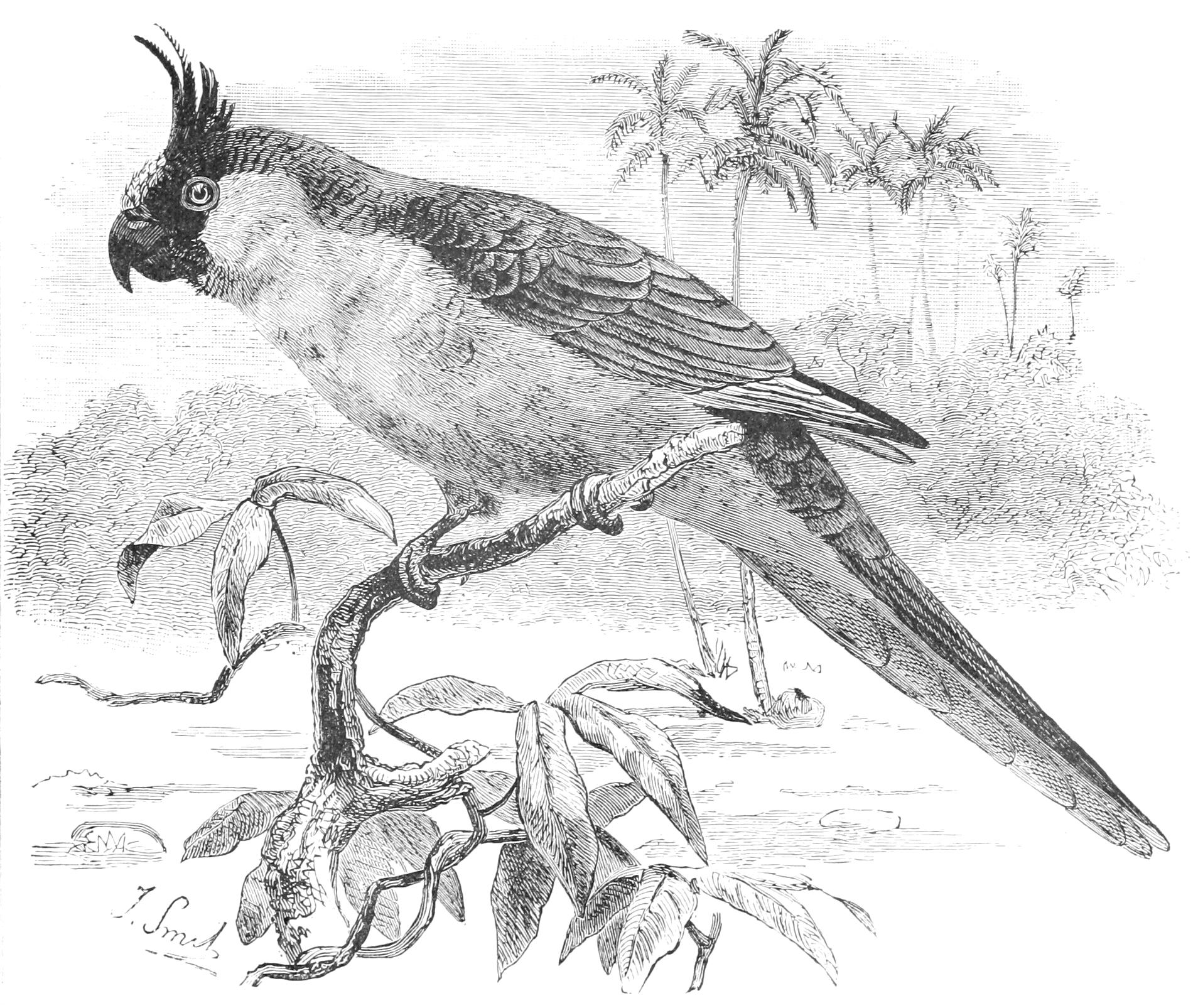
Fig. 72.–Uvaean Parakeet. Nymphicus uvaeensis. × ½. (From Nature.)
The coloration is commonly gaudy, and particularly so in Macaws; yet some species are sober in tint, and that of the beak and feet varies considerably in different forms. Stringops has a disc of stiff feathers round the eye, Nymphicus and the Cacatuinae possess crests, Deroptyus broad erectile nape-plumes. Bare foreheads, cheeks or orbits, of a red, pink, blue, yellow, black, grey, or white hue are found in Microglossus, Cacatua, Licmetis, Anodorhynchus, Cyanopsittacus, Ara, Poeocephalus, Psittacus, Coracopsis, and Dasyptilus; while powder-down patches or tufts occur on the neck, shoulders, and sides of the Cacatuinae, Psittacus, and Chrysotis. The length varies from some thirty inches in the Great Black Cockatoo (Microglossus) to about three in the diminutive Nasiterna pygmaea. The name Macaw is applied to Ara and its nearest allies, Love-bird to Agapornis and Psittacula, Parakeet to Platycercus and Palaeornis, Lorikeet to Loriculus, Charmosyna, and Coriphilus, Lory to Eclectus, Trichoglossus, Lorius, Chalcopsittacus, and Eos, King Lory to Aprosmictus.
Parrots usually feed and roost in company, though in Eclectus the habits are said to be more solitary; the males are, however, monogamous, each courting a single female, which twitters and rolls the head from side to side when love-making. The haunts include wooded districts, grassy plains, or even rocky hills and sandy flats; Stringops being almost entirely terrestrial, Melopsittacus and Neophema (Grass-Parakeets), with Geopsittacus and Pezoporus (Ground-Parakeets), being mainly so, while Cockatoos and many other forms habitually frequent high trees, though Cacatua galerita, Licmetis nasica, and several species of Platycercus spend much time upon the ground. Most Parrots walk with considerable ease, and climb well; their flight is commonly low and undulating, but is comparatively strong in Nestor, the Macaws, the Lories, and the like; the last-named climb less, and often hop along the ground. Loriculus, when sleeping, generally hangs by one foot. Little drink seems necessary, as the vegetable food is ordinarily succulent; plantains, papaw-apples, figs, and tamarinds being varied by flowers, buds, leaves, hard palm-nuts, and fruits of Platanus, Casuarina, Banksia, Cactus, or Capsicum. Grass-Parakeets and their nearest allies subsist almost entirely on grass-seeds and grain, Licmetis and some other Cockatoos dig for tubers and bulbs, Calyptorhynchus and Nestor search the bark of trees for insects, while the latter and the Loriinae suck honey from the flowers of Phormium and Eucalyptus. Nestor notabilis, the New Zealand Kea, eats the flesh of living sheep, an acquired taste as remarkable as it is destructive. Parrots alone among Birds habitually manipulate their food in their claws, these claws, moreover, greatly aiding them to creep about the branches or to cling to the mouth of their breeding-holes. The usual cry is harsh and discordant, Lories and Macaws making an especially deafening noise; but Cockatoos, besides their scream, utter a softer sound, Loriculus has a monosyllabic note, Nymphicus and Melopsittacus quite a pretty warble. The female hisses when caught upon her eggs, and in captivity many forms talk and whistle. Holes in trees, crevices in cliffs or caves, cavities under stones or roots, and even shallow depressions in the soil, seldom with any bedding, serve for a nest; the spherical or somewhat pointed eggs, which are often deposited in confinement, being dull white, occasionally with a greenish tinge or brownish incubation-stains. The larger species usually lay one, two, or three, some of the smaller as many as twelve, the size varying greatly (pp. 367, 372). Palaeornis habitually cuts a circular hole in rotten trees, and even bores to a depth of three feet; Pezoporus is said to make a mass of grass and rushes in tussocks, Myiopsittacus monachus a globular fabric with a side entrance; Nasiterna, Psephotus, Cyanolyseus, and Conurus will breed in holes in ants' nests or steep banks. The male occasionally assists in incubation, and two broods may be reared in a season. Small or large colonies are sometimes formed, and in both the Old and New Worlds large flocks seriously damage ripe maize and corn, or oranges and other fruits. The birds are often killed for eating, and their feathers used for ornament; for caging, they are limed, captured with decoys, or taken from the nest.
The headquarters of Parrots are in the Australian Region and the Malay countries, which possess a majority of the genera and peculiar species; next follows the Neotropical Region; the Indian and Ethiopian are comparatively poor; the Palaearctic possesses no existing representative; and the Nearctic but one, Conurus carolinensis, which early in this century extended northwards to the Great Lakes, but now only inhabits Florida, Arkansas, and Indian Territory. Cyanolyseus patagonus and Microsittace ferruginea occur at the Straits of Magellan, Poeocephalus robustus at the extreme south of Africa, Cyanorhamphus erythrotis in Macquarie Island; while many forms occupy most limited areas, especially in the West Indies and the Pacific. Of Coracopsis mascarinus of Réunion, Nestor productus of Phillip Island, and N. norfolcensis of Norfolk Island, only a few specimens exist, and those in collections; Palaeornis exsul of Rodriguez and Conurus pertinax of St. Thomas in the West Indies are verging upon extinction. A Macaw seems to have disappeared from Jamaica, and six Parrots from Guadeloupe and Martinique.
The sexes of all the species described below are alike, unless otherwise stated, the young being commonly duller.
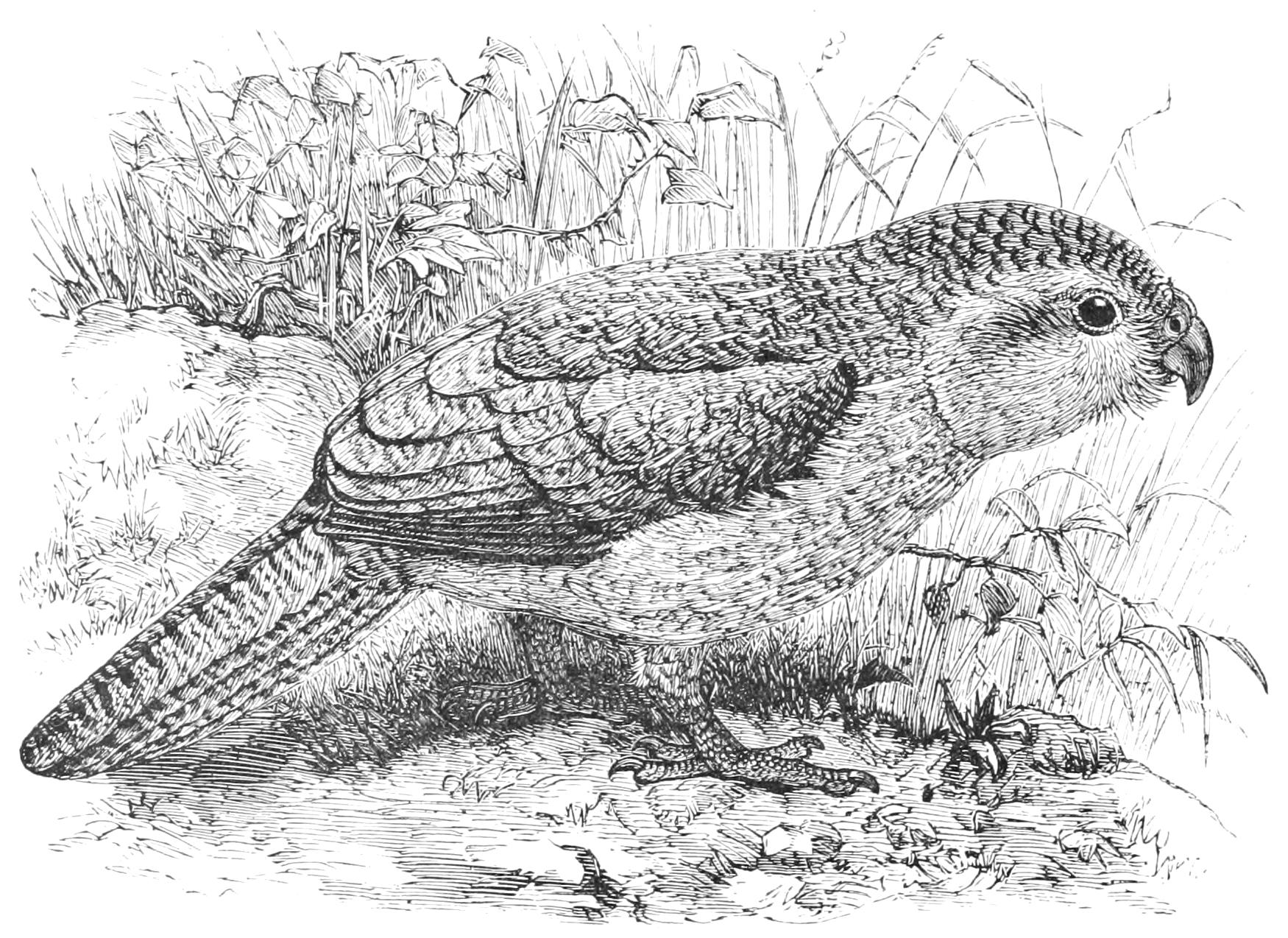
Fig. 73.–Kakapo. Stringops habroptilus. × ⅕. (From Nature.)
Fam. III. Psittacidae.–Sub-fam. 1. Stringopinae.–Stringops habroptilus, the Kakapo or Tarapo of New Zealand, has sap-green upper parts, with yellow middles to the feathers and transverse brown markings; yellower lower surface; and browner cheeks, remiges, and rectrices. The soft plumage, the disc of feathers round the eye, and the nocturnal habits have given this bird the name Owl-Parrot. During the day it usually hides in holes near the ground, emerging towards evening to feed greedily on mosses, bracken, seeds, berries, such as those of Coriaria sarmentosa, and even lizards; while the companies make tracks a foot or more wide across the herbage. The Kakapo inhabits alpine districts or open forests; it climbs well and walks swiftly, but has such limited powers of flight that the natives hunt it on foot by torch-light, or with dogs, which are often seriously wounded by the powerful bill. The note is a croak, grunt, or shriek. Two or three eggs, as large as those of a pullet, are deposited in burrows under tree-roots or rocks, without any nest. It makes a tame and playful pet.[222]
Sub-fam. 2. Psittacinae.–Of this group the nocturnal Geopsittacus occidentalis of South and West Australia, and Pezoporus formosus of the same countries and Tasmania, somewhat resemble Stringops in general coloration. The latter, which has an orange frontal band, rarely resorts to trees, but crouches, skulks, or trusts to its great running powers, flying at most only some hundred yards, with a rapid twisting motion. It haunts sandy plains or marshy districts, laying two or three eggs on a bedding of grass and rushes in long tussocks of herbage.
Our common cage-bird, Melopsittacus undulatus, the Australian Grass-Parakeet or Budgerigar, has a yellow head, with three black cheek-spots surmounted by a blue patch; the nape, back, and wing-coverts are yellow with black transverse markings, the remiges brown with green outer webs and yellow margins, the rump and under parts green, the two long median rectrices blue, the lateral tail-feathers green banded with yellow. These graceful and lively little birds are partly terrestrial, often flocking in thousands to feed upon the seeds of grasses, while they sit motionless during the heat among the foliage. The flight is quick and direct; the note shrill, or warbling; the conduct of individuals towards one another amicably quarrelsome. From three to six eggs are deposited in hollow branches, with no nest. The name Grass-Parakeet is shared with Neophema of Southern Australia and Tasmania, distinguished by a blue frontal band sometimes extending around the eyes. N. petrophila, the Rock-Parakeet, breeds in holes in steep cliffs near water, N. pulchella also shewing a liking for rocks. Porphyrocephalus spurius of West Australia has a maroon crown and nape, green upper parts, black remiges with blue bases and primary coverts, and blue lower surface with scarlet and yellow vent. The flight is swift, the note clucking.
Of the beautiful Australian genus Platycercus, P. elegans, also found in Norfolk Island, may serve as an example: it is crimson-red with black on the dorsal feathers; the cheeks, bend of the wing, primary-coverts, outer webs of quills and the tail being blue. The dozen species haunt grassy hills, feed upon seeds, berries, insects and their larvae, run easily, take short flights, rise with outspread tail, and lay from four to seven eggs in holes in trees without a nest. P. eximius is the Roselle Parakeet of dealers.
Loriculus vernalis is green, tinged with yellowish below and with orange on the back; the rump is red; the throat, the inner webs of the wing-quills, and the under surface of the tail are bluish. The female has little blue on the throat. The flight is rapid, but the birds are not shy; they are found in pairs or small flocks, and are said to suck honey from the flowers. They breed as does the last-mentioned species.
The Ethiopian genus Agapornis shares with the Neotropical Psittacula the appellation Love-bird, due to their habit of sitting huddled together, their mutual caresses, and their intense devotion to each other. If one dies, its mate not uncommonly pines away. A. roseicollis of South Africa is green above and yellower below, the forehead being red, the cheeks and throat rose-coloured, the rump and median rectrices blue; the lateral tail feathers exhibit blue tips, red bases, and a black band. It is found in flocks near water, flying quickly, uttering shrill, rapid notes, feeding on berries and the like, and commonly breeding in Weaver-birds' nests. A. cana of Madagascar, introduced into the neighbouring islands, has the head, neck, and breast grey; A. taranta, of North-East Africa, the forehead red, the rump and tail green; A. pullaria, of West Equatorial Africa, the face orange-red. The sexes differ only in these three species, wherein the under wing-coverts are black in the male, but green in the female, which lacks the grey or red, and in the third case has the face yellowish.
Two dozen members of Palaeornis range from Senegambia to Abyssinia, the Mascarene Islands, India, Ceylon, the Burmese Countries, South China, and the Great Sunda Islands. P. eupatria, the Rose-banded Parakeet or Alexandrine, and P. torquata, the Rose-ringed Parakeet, are similar species from the Indian Region; they are green, with rose-coloured nuchal collar, black neck-stripes, bluish median and yellow and green lateral rectrices, all tipped with yellow, and in the former a red wing-patch. The female shews no pink or black. These birds frequent both hills and plains, being often found in societies; they have a loud musical note, feed on fruits and grain, and lay some four eggs on the chips in a hole cut out by themselves.
The genus Eclectus, extending from the Moluccas with the Tenimber Islands to the Solomon Archipelago, has green males and red females. E. pectoralis of Papuasia is green, with red sides, blue remiges and lateral rectrices edged with green, and yellow-tipped tail. The female differs in having the head, chest, and upper parts bright red, the end of the tail lighter, the breast, abdomen, edge of the wing and a dorsal band blue.
Dasyptilus pesqueti of New Guinea is black, with the tail-coverts, abdomen, sides, much of the wings, and a lateral band on the occiput red; the crown- and nape-feathers are narrow and pointed, the face and throat nearly naked and black. It lives at considerable altitudes in couples or small companies, eating fruit, and uttering a loud, harsh cry. Coracopsis vasa, the Vasa or "loud-voiced" Parrot of Madagascar, sacred to royalty in one of the tribes, and its lesser compatriot, C. nigra, are blackish-brown, with grey wings, rump, and tail, and yellowish naked orbits. The small flocks are partly terrestrial, but fly high; the cry is shrill; the food consists of seeds and other fruits and roots. C. vasa has been introduced into Réunion, C. comorensis and C. sibilans inhabit the Comoros, C. barklyi the Seychelles.
That clever talker, Psittacus erithacus, the Grey Parrot, which ranges across Equatorial Africa, is ashy-grey, with black primaries, red tail, and whitish naked face. It walks well, and climbs admirably by the aid of its beak, flying with chattering screams at considerable elevations, consorting in large companies, and probably nesting in holes in trees. P. timneh is not known to talk.
Poeocephalus robustus of Southern Africa is green, with brownish head, neck, remiges and rectrices; it has vermilion thighs, bend of the wing, and, occasionally, forehead; and naked orbits. The habits call for no special mention. Caica melanocephala of Guiana and Amazonia is green, with yellow cheeks, throat, sides and tip of the tail, a rufous nuchal collar, whitish lower parts, black primaries margined with blue, and green and black naked orbits. Gypopsittacus vulturinus of the Lower Amazons is chiefly green, yellow feathers tipped with black covering the throat, and forming a band at the back of the naked but hairy black head; the thighs are yellow stained with red; the upper wing-coverts blue margined with green, except the lesser, which are orange and red; the primaries are blue and black; the secondaries greener; the rectrices green and yellow, tipped with blue.
The two score members of Chrysotis, commonly termed Amazons, range from Central America to Argentina. C. aestiva, not found north of Brazil, has the plumage mainly green with black edgings, the forehead and lores blue, the crown, cheeks, and throat yellow, the primaries black, blue, and green. The secondaries exhibit red outer webs, the lateral tail-feathers red bases and yellowish tips. Entirely yellow varieties rarely occur in the wild state, but are often produced artificially. These birds breed in holes in high trees, and fly in small flocks, which utter screaming cries, and feed on plantains, berries, oranges, and so forth.
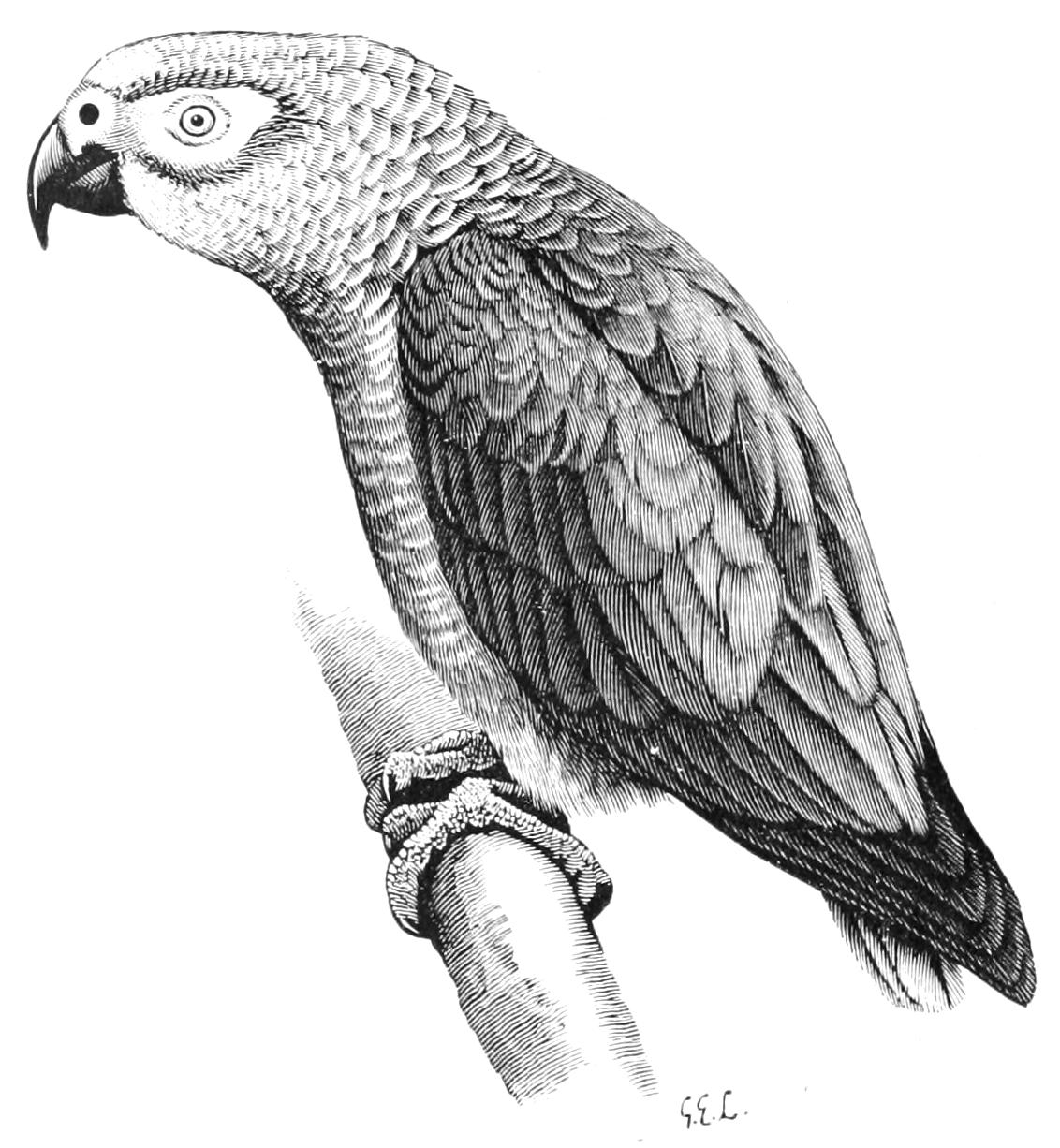
Fig. 74.–Grey Parrot. Psittacus erithacus. × ⅓.
Psittacula contains the green Love-Birds of Central and Tropical South America; they are sometimes tinged with yellow, and have blue on the rump and wings in the male.
Myiopsittacus monachus, the Monk or Loro, of Bolivia, Paraguay, Uruguay, and Argentina, is green, with grey throat, breast, and head, except the occiput; a blue tinge shewing on the wings, and yellow on the lateral rectrices. It is very common and tame near Buenos Aires, being devoted to favourite spots, and playing havoc with garden fruit, which it pecks and leaves hanging, while at times companies feed on thistle-seeds or devastate grain-fields. Its flight is swift but unsteady, with rapid strokes of the wing and folded tail; yet it mobs Birds of prey, while its noisy chatter disturbs the other woodland species. A nest of thorny twigs, used for shelter throughout the year, is usually woven round the end of some branch, and has a vestibule and an inner chamber, which are repaired before the thin-shelled eggs, from six to eight in number, are laid. Though the entrance, with its overhanging eaves, is in the side or beneath, Opossums and Ducks occasionally take possession. A tree may contain several of these dwellings, which often jointly form a mass sufficient to fill a cart, though not communicating with one another.[223] Cyanolyseus patagonus, of Argentina and Patagonia, is brownish-olive, with red on the belly, yellow on the rump and flanks, blue on the primaries, green on the secondaries, and a whitish gorget. The flight is strong though wavering; the cry loud, short, but pleasing; the food consists of shoots, buds, and seeds; the breeding places are holes in banks. Conurus carolinensis, of Florida, Arkansas, and the Indian Territory, is green, with paler lower parts, yellow head and upper neck, orange forehead and cheeks. It frequents wooded creeks or swamps, feeding on cypress-seeds, beech-mast, and so forth, and breeding in company in holes in trees without any nest. Nearly thirty species of the genus range from Mexico and the West Indies to Bolivia and Argentina, C. guarouba of North-East Brazil being yellow with green remiges, C. solstitialis of Guiana and Brazil mainly reddish-yellow with blue and green wings and tail.
Of the fifteen or more large members of Ara, A. chloroptera, the Red-and-blue Macaw, A. macao, which differs in its yellow and green wing-coverts, and A. militaris, the Red-and-green Macaw, occur from Mexico and Central America to Bolivia; A. ararauna, the Blue-and-yellow Macaw, and A. severa, the Green-and-blue Macaw only extend from Panama southwards. The naked flesh-coloured face is crossed by lines of feathers, except in A. macao. The four closely allied Brazilian species of Anodorhynchus and Cyanopsittacus, or Hyacinthine Macaws, are almost uniform blue. The flight of these gorgeous birds is powerful, their note harsh and screaming, while they crush and eat hard nuts of various kinds.
Nasiterna pygmaea, one of some nine Pigmy Parrots, is green, with dusky markings on the upper surface, yellowish crown, reddish forehead and middle of the lower parts; the two median rectrices are blue, the rest chiefly black, with yellow spots on the outer. The female lacks the red and yellow tints. Small flocks of these birds frequent high trees, creeping about them with the aid of their wings and tails, like Tree-creepers, and at midday dozing in fancied security on the lower branches. They feed upon seeds, and are stated by von Rosenberg to lay two eggs, no larger than those of the Long-tailed Tit, in holes in trees.[224]
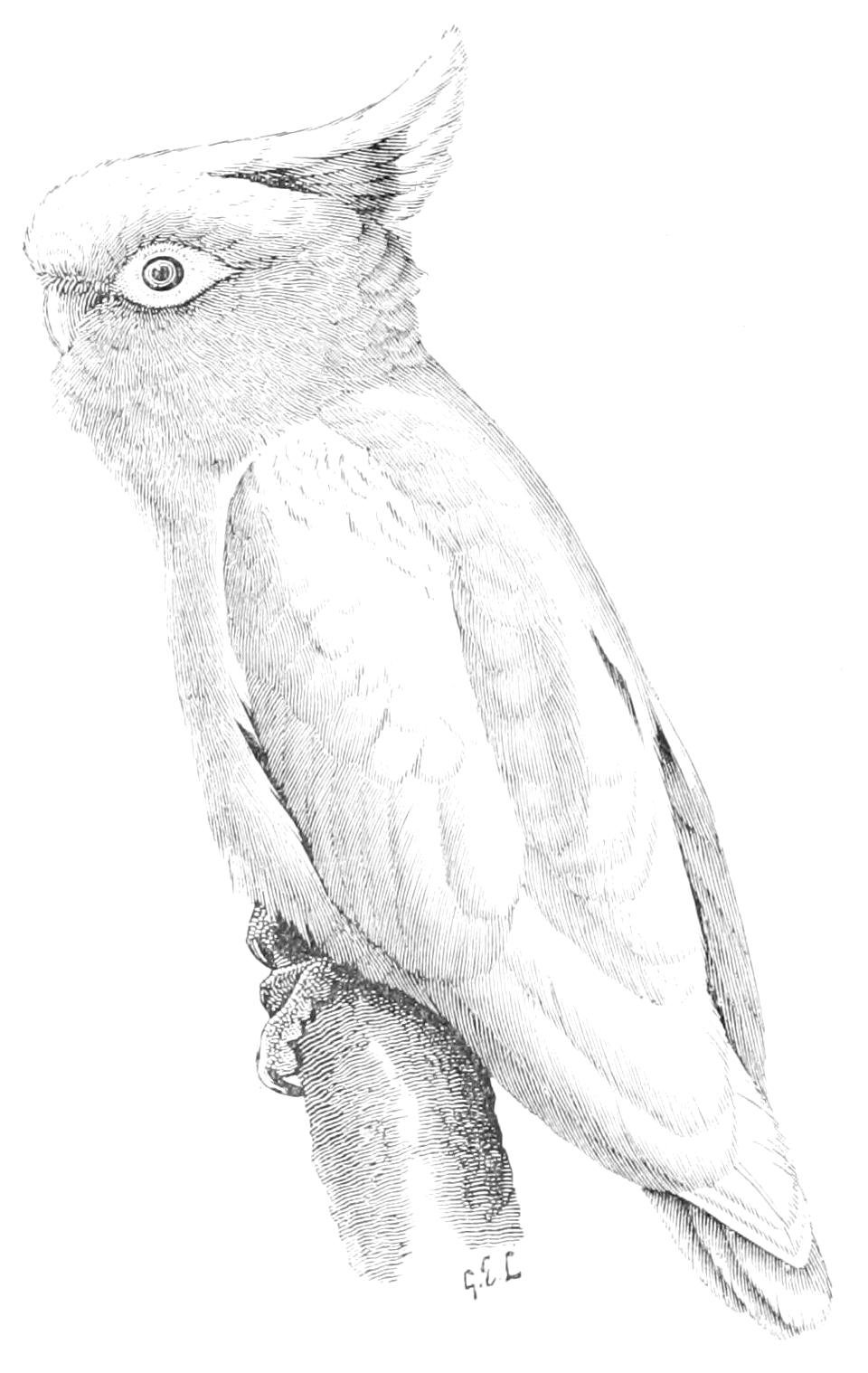
Fig. 75.–Leadbeater's Cockatoo. Cacatua leadbeateri. × ¼.
Sub-fam. 3. Cacatuinae.–Of the Cockatoos, which are restricted to the Australian Region, the Philippine and the Sulu Islands, Cacatua galerita of Australia and Tasmania, one of the forms with narrow recurved crest-feathers, is white, with the erectile tuft and ear-coverts yellow, the plumage being lax and powdery. C. leadbeateri has a red crest banded with yellow and tipped with white, and a rosy tinge on the head and lower surface. Other species exhibit broad straight white, yellow, or red crests, C. roseicapilla being decidedly pink below and grey above. In this group the bare orbits may be blue, red, grey, or white. These tame and active birds love open wooded country, and often form immense flocks; they fly strongly, hop well, utter loud shrill screams, doze in the heat, feed on roots grubbed up from the ground, seeds and grain, and play havoc with crops of maize and the like. Two or three somewhat pointed eggs are deposited in holes in trees or crevices of rocks. The half-dozen crested members of Calyptorhynchus, which are brown or black with a greenish gloss, and a whitish, red, or yellow band across the lateral rectrices, have a more laboured flight and a comparatively low whining cry; they feed on seeds of Banksia and Casuarina and on caterpillars. Callocephalon galeatum is grey, with a scarlet head and crest. In these two Australian genera the supposed females exhibit yellow markings. Microglossus aterrimus, the Great Black Cockatoo of North Australia and Papuasia, is greyish-black with a long narrow crest, and naked red and yellow cheeks. It is a retiring bird, found in pairs among high trees in thick forests; the flight is comparatively weak, the note a plaintive whistle; the food consists of seeds of Pandanus, Canarium, palm-shoots, and the like; the egg is laid on a bed of twigs in a hollow tree. Calopsittacus novae hollandiae, the crested Australian Cockatoo-Parakeet, is dark grey, with yellow forehead and cheeks, orange ear-coverts, and white wing-patch. The female has yellow marks on the tail and under parts. By no means shy, the flocks feed chiefly on the ground, while individuals fly well and love perching on dead branches.
Fam. IV. Trichoglossidae.–Sub-fam. 1. Cyclopsittacinae.–This includes Neopsittacus and Cyclopsittacus of Timor, North-East Australia and Papuasia, which are coloured red, green, blue, and yellow; the peculiarities of structure have already been mentioned.
Sub-Fam. 2. Loriinae.–Trichoglossus novae hollandiae, Swainson's Lory, is blue, with green head and central abdomen; the remaining under parts being red, the sides, nuchal collar and inner webs of the lateral rectrices yellow. Flocks haunt the Eucalyptus-forests of Eastern Australia and Tasmania, uttering incessant screams, flying swiftly and directly from tree to tree, settling again with a dash, creeping and clinging around the branches, and extracting honey from the flowers with their brush-tipped tongues, besides eating seeds. From two to four eggs are deposited in holes in trees. The various species of Trichoglossus range from Celebes and Timor to Australia and the New Hebrides. Ptilosclera versicolor, of North and West Australia, is green, with yellowish streaks on the body, bluish cheeks and nape, red crown, lores and breast. Coriphilus taitianus of the Society Islands is dark blue, with the lower surface chiefly white; C. ultramarinus of the Marquesas shews a combination of light and dark blue. Lorius extends from the Moluccas to the Solomon Archipelago; L. lory of Papuasia being red, with black crown, blue nape, upper back, central breast and abdomen, and tip of the tail; while the wings and middle portion of the rectrices are green. In habits these three genera seem to resemble Trichoglossus. The members of Eos (Red Lory) are red, relieved by blue, except E. fuscata, which is dusky, with red and yellow markings; they extend from the Sanghir and Tenimber Islands and the Moluccas to the Caroline and Solomon groups. Chalcopsittacus of Papuasia has purplish-black, olive, or green species, usually varied with red.
Sub-fam. 3. Nestorinae.–This contains only the genus Nestor, with five species, of which N. norfolcensis of Norfolk Island, and N. productus of Phillip Island are extinct, while N. esslingi is hardly valid. N. meridionalis, the New Zealand Kaka Parrot, is olive-brown, with reddish cheeks and collar, crimson rump, abdomen and under wing-coverts, brown tail and breast, and grey crown. Several races have been described, varying in the amount of red. The Kaka is fearless, social, sprightly, and noisy, though semi-nocturnal and apt to retire to the deep forest during daylight. It utters harsh rasping and chuckling notes, or musical whistles; while it climbs trees with the aid of its beak and feet, and searches the dead wood for insects. It flies in lofty circles, or at times hops about the ground; the food consists largely of juicy fruits, blossoms, and nectar from the Rata (Metrosideros robusta) or the New Zealand flax (Phormium tenax). In semi-captivity this bird is a good mimic and talker, but terribly destructive to furniture, clothing, and orchard produce; the Maories keep it as a lure, encircling the metatarsus with a bone ring fastened by a cord to the perch. Four oval eggs are laid in hollow trees, in crevices of rocks, or under stumps and roots, occasionally on fragments of bark. Nestor notabilis, the Kea of the south island of New Zealand, has olive-green plumage with blackish margins; the wings and tail are varied with blue and yellow, the latter having a brown subterminal band; the rump and under wing-coverts are scarlet. The female is duller. It frequents rugged slopes of high snowy mountains, descending to the lowlands in winter; the small companies soar aloft, fly from peak to peak, or search for insect-food among the stunted vegetation. Tame, inquisitive, and destructive, the natural habits and food resemble those of the Kaka, allowing for the difference of haunts; but this bird will scream or mew, and lays larger and rougher eggs in crevices of rocks. As is well known, the Kea has of recent years become carnivorous, chasing sheep and devouring their flesh. Perching near the tail and clinging to the wool, it digs a deep hole with its powerful beak, and apparently aims at the kidney-fat, the mandible cutting while the hooked maxilla ensures a firm grip. The propensity is said to have originated from the bird pecking at sheep-skins hanging outside country stations. As it sometimes necessitates the abandonment of sheep-runs, or even attacks horses, a price has been set upon its head.
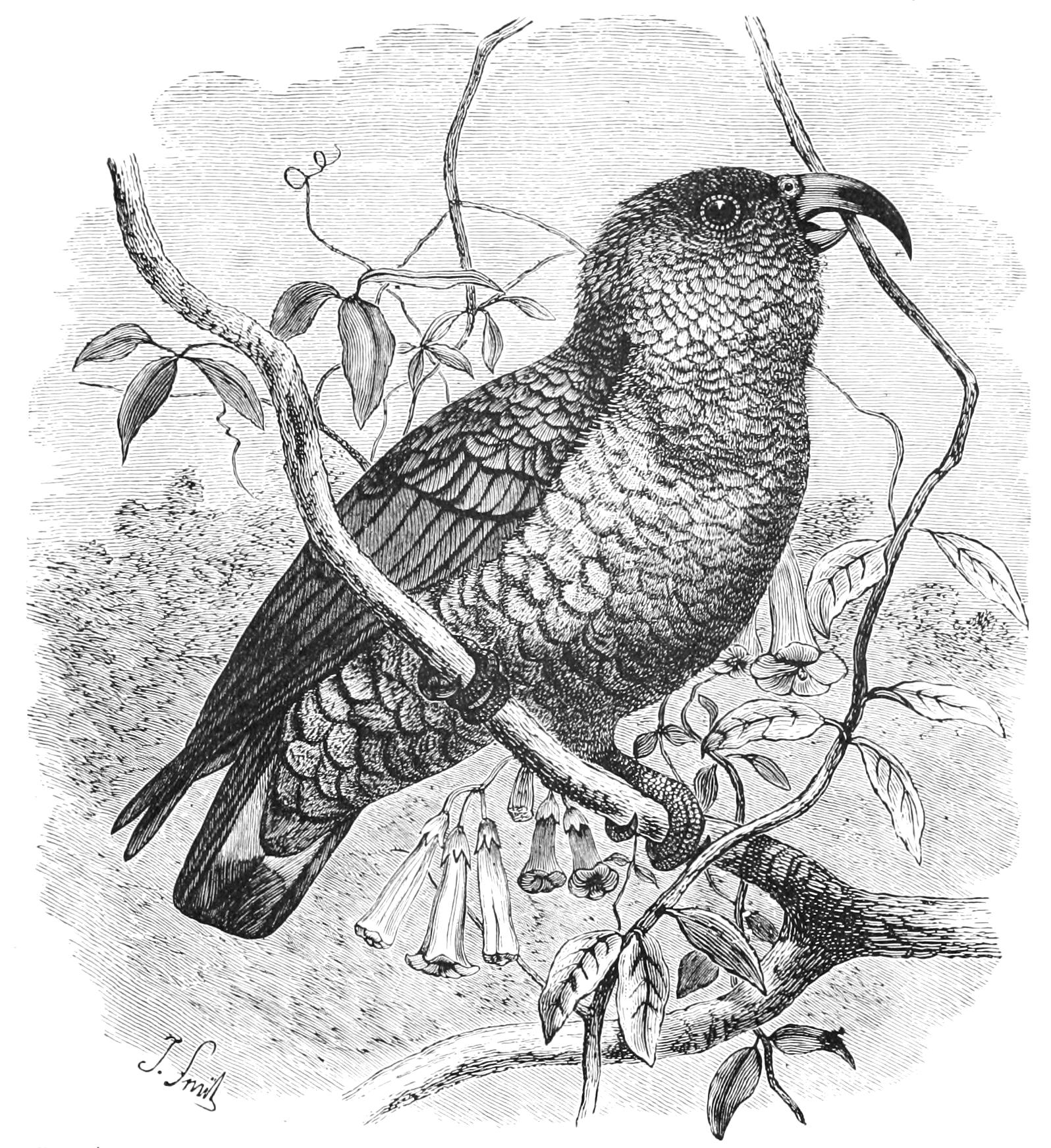
Fig. 76.–The Kea or Mountain Nestor. Nestor notabilis. × ¼. (From Nature.)
Of fossil Parrots, Psittacus occurs in the Lower Miocene of France, the large Necropsittacus rodericanus in Rodriguez, and the still bigger Lophopsittacus mauritianus, known from an old picture to be crested, in the Mare aux Songes in Mauritius.
Order XIII. CORACIIFORMES.
The Order Coraciiformes contains the Sub-Orders Coraciae, Striges, Caprimulgi, Cypseli, Colii, Trogones, and Pici, and includes a large number of arboreal forms with comparatively short legs, which often nest in holes, and have blind and helpless young. The group coincides with the Picariae of Nitzsch and Mr. Sclater, except in so far that the former author included the Psittaci, the latter the Cuculi, while both kept the Striges separate.
The Sub-Order Coraciae consists of the Families Coraciidae or Rollers, Momotidae or Motmots and Todies, Alcedinidae or Kingfishers, Meropidae or Bee-eaters, Bucerotidae or Hornbills, and Upupidae or Hoopoes.
Fam. I. Coraciidae.–Two Sub-families may be recognised of these Old World birds, (1) Coraciinae, and (2) Leptosomatinae; the latter containing only the remarkable "Kirombo" of Madagascar.
Sub-fam. 1. Coraciinae.–Most of the twenty or more species of Rollers are brilliant blue and green, varied with reddish, and bear a resemblance to certain of the Crow-tribe, especially to the genus Cissa. The short metatarsus, however, scutellated in front and reticulated behind, is a clear distinction, as in Cissa and so forth it is longer and smooth behind, with elongated scutes anteriorly. It is comparatively long in Ground-Rollers, but they are quite unmistakeable. The bill is strong, decurved, and slightly hooked, being broad and depressed in Eurystomus; the toes are moderately stout with curved claws, while the second and third are united basally; the wings are long, broad and rounded, or shorter in Ground-Rollers, with ten primaries and about thirteen secondaries; the twelve tail-feathers vary in length, five species of Coracias having them very long, and one spatulate. The furcula is U-shaped, the syrinx is tracheo-bronchial, the nostrils are hidden by bristly feathers, the tongue is thin and horny, the aftershaft is small, while there is no down on adults or nestlings. The sexes are similar, the young duller.
The genus Coracias ranges over temperate Europe, all Africa, and Central and Southern Asia eastwards to Celebes, where C. temmincki alone occurs. C. garrulus, which strays to Britain, and breeds from Sweden and Omsk to North Africa and North India, has the head, most of the wing-coverts, and the lower surface light greenish-blue, a red-brown back, dusky and blue remiges, ultramarine bend of the wing and rump, and greenish tail with light blue on the lateral feathers, the outer pair alone having black tips. In the similar C. abyssinicus the two outer rectrices are elongated and tapering; in the more purple C. spatulatus they are cobalt-blue with black shafts produced into small racquets. C. naevius has an olivaceous back, reddish-lilac head and under parts, a white nuchal patch, white streaks on the breast, blue rump, bend of the wing, lateral rectrices and outer portion of the remiges. The genus Eurystomus occupies Tropical Africa, and extends from India to Manchuria, Australia and the Solomon Islands, occasionally reaching New Zealand. E. glaucurus, of Madagascar and Anjuan Island, is bay above and lilac below, with nearly ultramarine wings and cobalt tail tipped with blackish; E. orientalis is bluish-green, with blackish head, remiges and rectrices, some blue on the wing-coverts, an azure patch on the primaries, and a purple throat. E. australis is similar, and is termed the Dollar-Bird from exhibiting its circular light wing-patch when flying.
The members of these two genera are active, noisy, and pugnacious, though shy; they are usually diurnal, but are occasionally observed hawking for insects at dusk; when disturbed they attempt to hide in some neighbouring tree, while they also roost or take refuge from the heat among the foliage. The flight is swift, though not sustained, the wings being closed from time to time; at the courting season the male darts through the air with many a turn and twist, expanding and contracting his tail; and both sexes have the habit of rolling or turning somersaults in their course, and of puffing out their cheeks and throat. The note is a harsh "rack-rack-kack" or "racker-racker," uttered while perched or flying; the food, largely procured when hopping on the ground, and frequently jerked into the air before being swallowed, consists of small reptiles, frogs, beetles, worms, slugs and grasshoppers, if not of grain. Rollers frequent wooded country up to an altitude of about two thousand feet, in pairs or moderate-sized flocks; they occasionally sit huddled together on some branch, but love to perch on tall bare trees or wires, whence they energetically challenge Hawks and Crows. The four or five oval glossy white eggs are sometimes laid on a mass of roots, grass, hair, and feathers, in cavities in walls or under eaves of buildings; but more usually with little or no bedding in holes in trees or banks. In the breeding season the cock summons the hen from her nest, if danger threatens, while both parents dash at an intruder, or settle near him, jerking the head and tail. Many adults are slaughtered for decorative purposes.
The Ground-Rollers, Atelornis, Uratelornis, Geobiastes and Brachypteracias, are curious forms, peculiar to Madagascar. A. pittoïdes has green upper parts with a ruddy tinge, white bars across the short primaries, a fine blue head and tail, except for the two brown median rectrices, and a reddish-fawn lower surface divided by a blue band from the white throat. A. crossleyi has a rufous head and black gular stripes. Uratelornis chimaera is a nearly allied form. Geobiastes squamigera has the upper back reddish-brown, the lower green; the head and under parts are buff, with black scale-like markings, and a black line down the crown. The primaries are brownish, the tail shews a curious combination of green, blue, black, and brown. Brachypteracias leptosomus is yellowish-green above, with bluish margins to the feathers, and a purplish-brown head and neck, while the brownish tail has a subterminal black and a terminal white bar; it is white below, banded or striped with chestnut and black. These forest-species are almost entirely terrestrial and crepuscular, running about in solitary fashion in the dusk, and carefully examining the ground for insect-food, or scratching for worms and the like; occasionally they fly to a low branch, jerking the tail as they alight. The eggs are said to be white.
Sub-fam. 2. Leptosomatinae.–This contains only Leptosoma discolor, the Kirombo or Vorondreo of Madagascar and the Comoro Islands, which has a big crested head; a long, slightly hooked bill, overhung at the base by recurved loral feathers; linear nostrils, placed far forward and covered by a horny plate; metatarsi scutellated on both aspects; and a partly reversible outer toe. The wings are moderate, having ten primaries and twelve secondaries; the long, square tail has twelve feathers; the tongue is tapering, horny and channelled; a large aftershaft is present, and there is a considerable powder-down patch on each side of the rump. The head is grey, glossed with copper and green, the neck duller; the upper parts are shining green and coppery-red, the under parts grey with white abdomen. The slightly larger female is reddish-brown above, with buff markings and only a dull gloss; the head is chiefly black, and the lower surface fawn-coloured spotted with black. This curious bird is very noisy throughout the day, uttering its note, which resembles the syllables "tu-hou" thrice repeated, either while hovering in the air or while ascending or descending in vertical fashion. Meanwhile the wings are struck against the body, and the throat puffed out like a bag. It is found in the forests in flocks of about a dozen, perching and squatting lazily on the branches, and scarcely moving when its neighbours are shot; the food consists mainly of grasshoppers, chamaeleons, and lizards; the nest is said to be made of rushes and placed in holes, the eggs to be white. One female is often accompanied by several males. The Malagasy consider that the "Reò" brings ill-luck, and make it the theme of various tales and chants.[225]
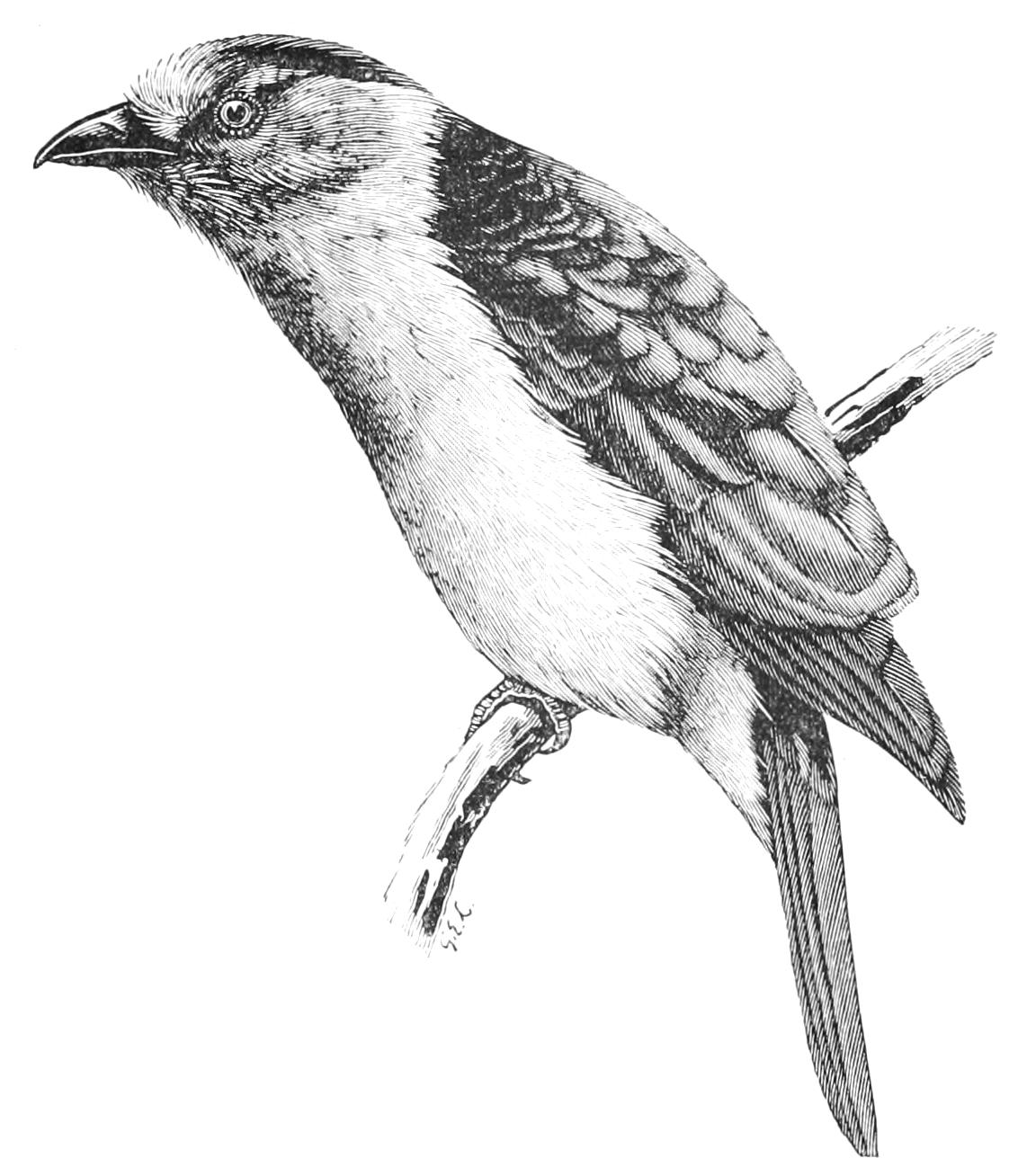
Fig. 77.–Kirombo. Leptosoma discolor. × 2⁄7.
Fam. II. Momotidae.–The Motmots and Todies fall naturally between the Rollers and Kingfishers, but are also closely connected with the Bee-Eaters, which do not occur in the New World. They compose the Sub-families (1) Momotinae and (2) Todinae, the former ranging from South Mexico and the Antilles to Paraguay, while the latter are restricted to the Greater Antilles.
Sub-fam. 1. Momotinae.–Motmots have loose-webbed green, blue, cinnamon, and black plumage; the sexes being barely distinguishable, and the young similar to the adults, but with less developed tail. The length varies from six and a half inches to twenty. The head is generally rather narrow; the bill is Crow-like, with a few rictal bristles, and has the margins of the mandibles more or less serrated; in Prionirhynchus it is unusually broad and strongly keeled. The scutellated metatarsus is of no great length, the third digit being united to the fourth for about a third of its extent; the wings are rather short and rounded, with ten primaries and eleven secondaries. The tail-feathers are generally twelve, though Baryphthengus has only ten; they are very distinctly graduated, as is well seen from beneath, the median pair being much elongated with racquet-tips, except in Hylomanes, Aspatha and Baryphthengus. The furcula is U-shaped; the tongue is long, thin and frayed out towards the apex into laminae which point forwards; the syrinx is tracheo-bronchial; the aftershaft is small; while neither adults nor nestlings possess down.
Motmots are not shy birds, though they inhabit dense forests and seldom visit the outskirts; they prefer the vicinity of streams, where they may be seen, solitary or in pairs, flitting before the traveller from tree to tree, or sitting motionless on the lower branches, whence they make sudden dashes to secure their prey. This consists of insects caught in the air, small reptiles, or fruit; but in captivity they will eat bread, raw meat, small birds and mammals, often rapping live creatures on the ground or on their perch before swallowing them, as is done by Todies, Kingfishers, and Hornbills. The flight is brief, while the short legs are ill-adapted to the ground. The long, soft, "flute-like" note recalls that of the Hoopoe, and may be syllabled Hu-tu, this being a native name in some parts; it is most commonly heard at dawn, while the bird's habit of jerking its tail up and down as it utters each syllable is comparable to that of Barbets and Toucans. Three or four round, creamy-white eggs are deposited, without any nest, in holes in trees or banks, probably bored by the birds themselves; both sexes being said to incubate in turn. Motmots with racquet-tipped rectrices have been shewn to produce that shape by nibbling off the vanes.[226]
Urospatha martii, ranging from Costa Rica to Amazonia, is oil-green above, with a blue tinge on the blackish primaries and the end of the tail, the two median rectrices being much elongated and having terminal blue racquets; the under parts and head are cinnamon, the cheeks black, while a tuft of long black feathers adorns the neck below. Eumomota superciliaris of Central America is green above, with cinnamon mantle and blue remiges and rectrices tipped with black, the two median tail-feathers having elongated bare shafts with broad racquet-tips, half blue and half black. On the sides of the head are black bands and light blue eyebrows, while the throat is black with long blue lateral feathers, and the abdomen chestnut. Momotus brasiliensis, extending from Guiana to Northern Brazil, is somewhat similar in colour, but has little red on the back; the head is cobalt-blue with black on the crown and sides; the under parts are green with a rufous tinge. The long throat-feathers are black with light blue edges. Aspatha gularis of Guatemala is bright green above, and has a yellowish breast; the abdomen and throat are pale blue, with a black tuft at the base of the latter; the sides of the head are reddish-fawn with black ear-coverts. The tail is normal.
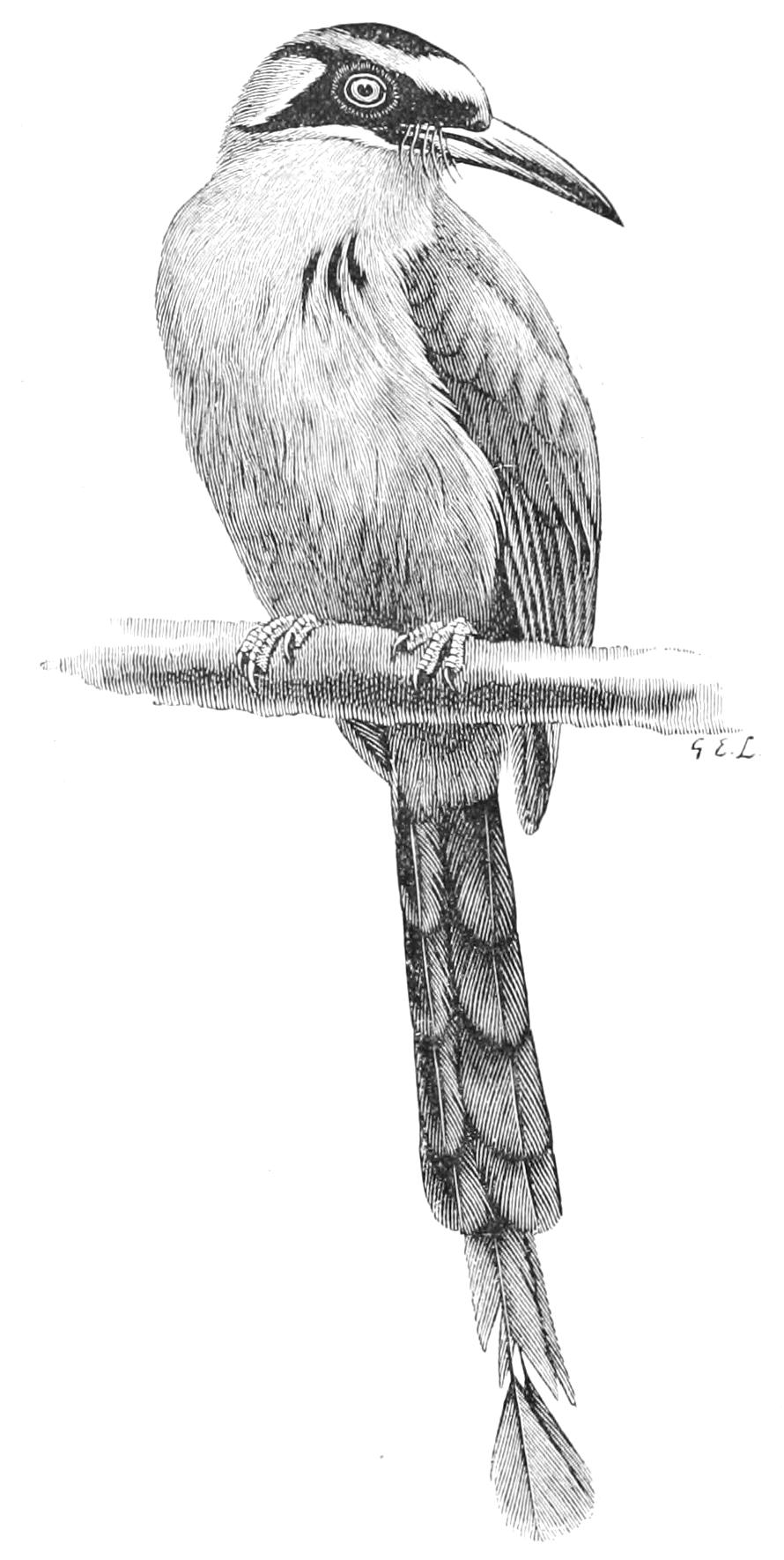
Fig. 78.–Motmot. Momotus brasiliensis. × ⅓.
Sub-fam. 2. Todinae.–This includes four diminutive species of the genus Todus, structurally resembling the Motmots; the tail, however, being short and square, the wings abbreviated with only ten secondaries, the beak flattened and but faintly serrated, and the rictal bristles well-developed. The long metatarsus is covered with one scale; the marginal laminae of the tongue point backwards.
Todies frequent hilly districts and woods, and especially the vicinity of ravines, being very active on their feet, and taking short rapid flights from branch to branch when disturbed. They used to be considered close allies of the Flycatchers, probably owing to their habit of darting out upon their prey from some branch, to which they return immediately. They sit with upturned bill and head drawn in, their wings vibrating and their plumage puffed out, and when thus perched they are so unsuspicious that they may sometimes be caught with a butterfly-net, or even with the hand. The pugnacious males chase each other, clattering their bills, and, while courting, ruffle themselves up and droop their wings. The three or four globular white eggs are laid in a hole low down in the face of some bank, which is excavated to a considerable depth and commonly turns at right angles; the terminal chamber usually containing a slight nest of fibres, grass, moss, or cotton. In captivity Todies make engaging pets.
The coloration is green, with a bright red throat, yellowish-white or pinkish under parts, and yellow, green, or pink feathers on the flanks. The bill is dull red. Todus viridis inhabits Jamaica; T. subulatus Hispaniola; T. multicolor, which has a blue spot on each cheek, Cuba; T. hypochondriacus Porto Rico. The length varies from three and a half to four and a half inches.
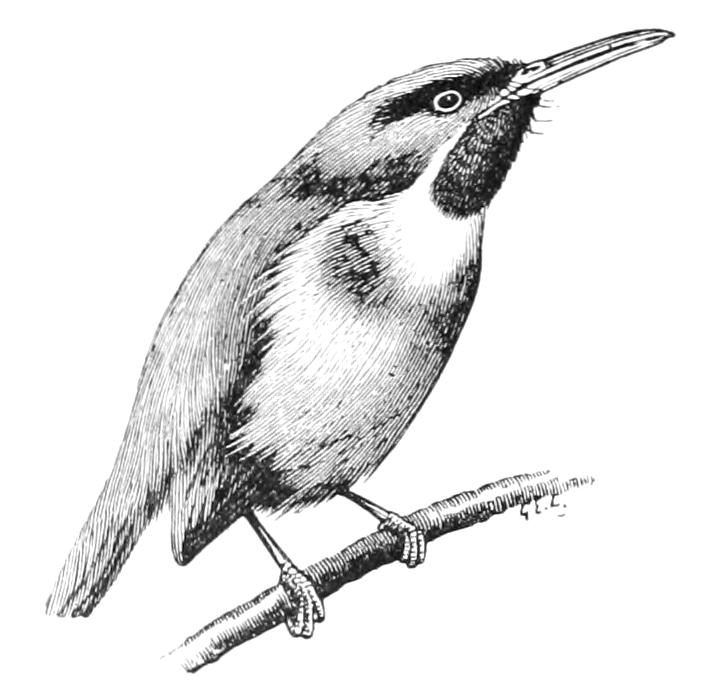
Fig. 79.–Tody. Todus viridis. × ⅝.
Fam. III. Alcedinidae.–The Kingfishers, with the Sub-families (1) Halcyoninae, or Wood-Kingfishers, and (2) Alcedininae, or Water-Kingfishers, are remarkable not only for the aberrant species found among them, but also for their peculiar forms and particularly brilliant colours, at once strikingly contrasted and tasteful. The head looks disproportionately large, an appearance often heightened by the crest and the long, stout bill. This feature in the Alcedininae is compressed and sharp-pointed, with keeled culmen and upcurved genys; in the Halcyoninae it is broader and rounder, and sometimes grooved. In Syma the maxilla is serrated, as in the Momotidae; in Carcineutes and Dacelo it exceeds the mandible, and in Melidora it is hooked. The feeble metatarsi are scutellated or rarely reticulated; the third and fourth toes are joined for most of their length, the second and third for one joint, all being broad below; the claws are sharp and curved. Ceyx and Alcyone have the second digit aborted. The wings are short and rounded, yet powerful, the primaries being eleven in number, with the outer much reduced, the secondaries from eleven to fourteen; the tail is commonly abbreviated, but in Tanysiptera has a median pair of greatly elongated racquet-tipped feathers; that genus, moreover, possesses but ten rectrices instead of twelve. The furcula is U-shaped, the syrinx is tracheo-bronchial, there is no aftershaft, the adults are uniformly downy, the nestlings are naked. The tongue is rudimentary, though said to shew an approach to that of the Motmots in Pelargopsis. The sexes may be similar or dissimilar, even in the same genus; the young are like their parents, or somewhat duller. The colours of the Family are most variable, a combination of blue, green, and chestnut being frequent, while almost uniform red, or black and white, are not uncommon; the beak may be black, red, yellow, or parti-coloured. About twenty genera, with some hundred and fifty species, occupy nearly the whole globe, though by far the greater number are found from Celebes to Papuasia, while Ceryle alone is American.
The habits in the Family are as diverse as the styles of plumage. The Water-Kingfishers love shady haunts by quiet lowland streams, where the fishes which form their chief diet abound; in such situations they may be seen sitting patient and motionless on some favourite overhanging bough or projecting stone, from which they dart out like an arrow upon their prey. If successful, they return immediately to their perch, on which they beat the fish before jerking it down the throat. At other times they hover over the water with vibrating pinions, or dive perpendicularly with closed wings. They are not, however, entirely piscivorous, but eat insects and small crustaceans, especially when they seek the sea-shore, as do several species of Halcyon, Alcedo, and Ceryle, including our native Kingfisher, chiefly towards winter. In tropical countries reeds and sugar-canes serve for perches. The flight is straight and quick, but not long sustained; the note is either high-pitched, and of two or three syllables, which may be likened to "tit-it-it," or is loud and harsh; it is most frequently heard as the birds skim over the streams in the anxious time of breeding, while the young have similar cries, and are very noisy just before leaving the nest, which they render extremely foul. The eggs are laid in holes in perpendicular river-banks, disused gravel-pits and the like, or even in cavities in walls or rotten stumps, the circular tunnel usually penetrating to a depth of two or three feet, and forming an enlarged terminal chamber. The number of eggs varies from four to ten in different species; they are round, white, glossy, and thin-shelled, and look very pink when they are fresh; they usually lie on a bed of fish-bones, consisting chiefly of vertebrae, not uncommonly deposited before laying begins. Ceryle rudis is stated to make a nest of grass, C. amazona one of sticks and straw, the former at times breeding in colonies. The male has been known to assist in incubation, which lasts a fortnight or more; while two broods are occasionally reared in the season, especially in warmer climates. The Wood-Kingfishers prefer shady forest-regions, not necessarily near water, but also frequent the vicinity of houses; their food consists of insects caught in the air, caterpillars, reptiles, frogs, crustaceans, worms and molluscs, though they occasionally eat fish. The nests, placed in holes in trees or banks, are said in some cases to be of a few straws, dry leaves, or moss. The genus Dacelo and its allies, including the largest forms of the Family, are natives of Australia and New Guinea, where they often inhabit very dry situations. They will even eat small mammals or birds, bruising them before deglutition, and lay two or three white eggs in holes in trees without any nest. The note is an extraordinary loud gurgling or barking sound, from which they are called "Laughing Jackasses."
Kingfishers are difficult to keep in captivity, while hard frosts cause much mortality, though the use of the feathers for artificial flies or for ornament adds to the scarcity. The males are at times very pugnacious. Many fables are connected with the Family; for instance, Ceyx and Alcyone were said to have been changed by Zeus into Kingfishers, while Aeolus, father of Alcyone, kept the weather calm in midwinter (the fourteen halcyon days), when the birds formed a floating nest upon the deep. A dried specimen, if hung up, was supposed to act as a weathercock with its bill, as Shakespeare intimates.
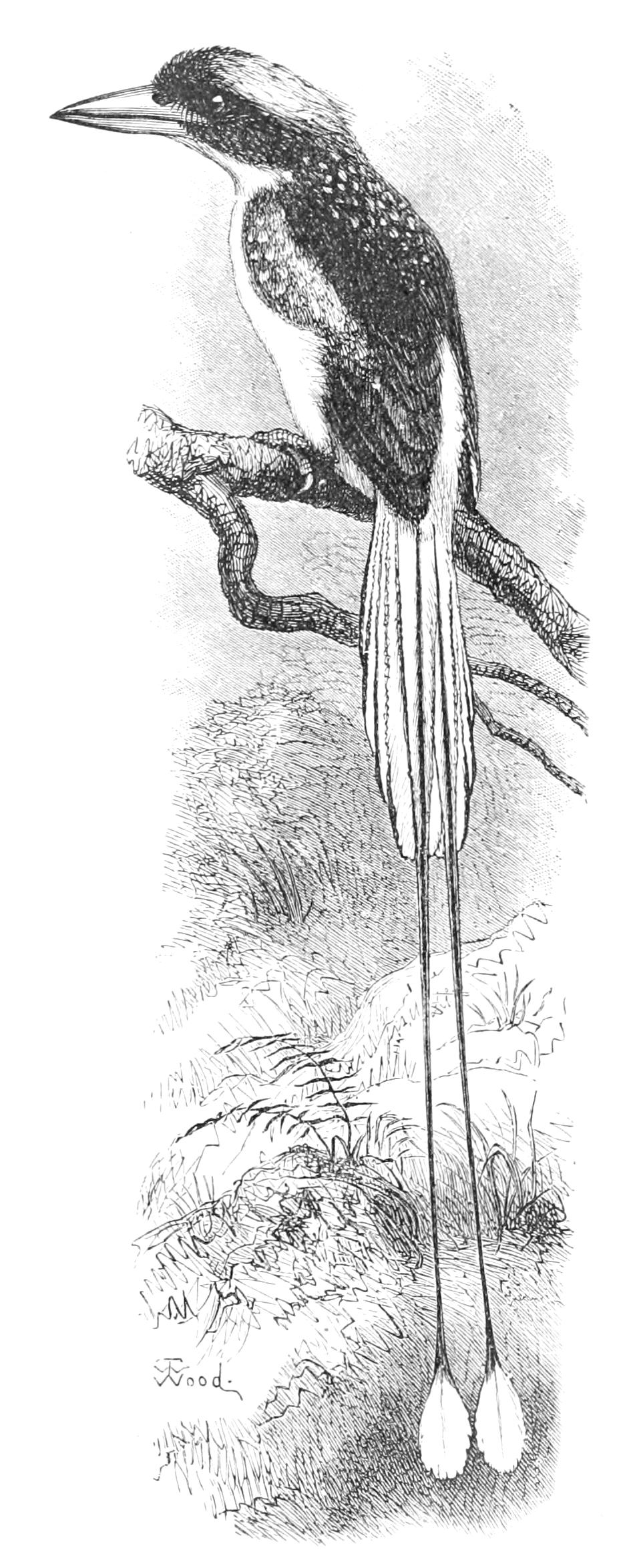
Fig. 80.–Racquet-tailed Kingfisher. Tanysiptera dea. × ½. (From Malay Archipelago.)
Sub-fam. 1. Halcyoninae.–Tanysiptera sabrina of the Moluccas, one of the members of a large and very beautiful genus, is white, except for the crown and wing-coverts, which are bright blue, and the cheeks, nape, remiges, upper back and scapulars, which are bluish-black. The two median rectrices have bluish shafts with white racquet-tips; the bill is red. T. nympha of New Guinea differs in its blue tail, vermilion rump and under parts. Cittura cyanotis of Celebes has a rufous head and chestnut tail, a brown back with partially buff scapulars, bluish-black wings with blue coverts, a blue eye-streak (black in the female), a lilac under surface, and a dark red bill. Halcyon coromandus of Eastern Asia is brown with a lovely lilac tinge above and a sky-blue rump, the lower parts being orange-rufous, and the bill red. H. cyaniventris of Java is rich blue above; the head and wing-coverts are mainly black, the lower parts ultramarine, the throat and cheeks rufous, extending as a collar to the nape; the bill is dark red. H. semicaeruleus of Arabia, West and East Africa, has a whitish head and under parts, with a chestnut abdomen; the upper parts are black, with azure lower back, tail and wing-quills, the bill is red. H. saurophagus of Papuasia and the Moluccas is blue, with white head and under surface, and black bill. H. nigrocyaneus of the former region is black and blue, with white throat, pectoral band and dorsal markings, the bill being black. The female is whiter below. H. lindsayi has dingy green upper parts with buff spots, and a black eye-stripe surmounted by an azure band, both of which extend round the back of the head; the neck and throat are cinnamon divided by a blue stripe, the under parts white mottled with green; the bill is black. The blue parts are green in the female.
Dacelo gigas, the "Laughing Jackass" or "Settlers' Clock" of Australia, is mainly brown above with a white stripe on each side of the head; the tail is rufous and black, the rump of the same colour in the female, greenish-blue in the male; the lower surface is dirty white, the bill blackish. Clytoceyx rex of New Guinea has an immensely thick, blunt, and rather short bill; it is brown above, with a rufous collar, blackish back and neck-stripes, light azure rump, greenish tail and wing-quills; below it is light chestnut with white throat. Carcineutes pulchellus of the Malay countries, Sumatra, and Java has the forehead, cheeks, and collar chestnut, the crown azure, the upper parts black with blue and white bands, the under parts rufous with white throat, the bill red. The female is rufous with black bars above, and white with black spotting below. Syma torotoro of Papuasia is greenish, with blue tail and rump, orange-rufous head and under parts, and a black collar. The crown is black in the female. The serrated bill is yellow. The genera Ispidina and Ceyx furnish the pygmies of the Family, varying from about four to six inches in length; the coloration in the former is usually blue and black above and chestnut below, with a red bill; but I. madagascariensis of Madagascar is entirely rufous, except for some white on the neck and lower surface. C. euerythra, of the Malay countries and the Philippines, which is red with a lilac tinge above, has several similar congeners; here again, however, blue, black, and orange are not uncommon hues.
Sub-fam. 2. Alcedininae.–Alcyone azurea of Australia has dark azure-blue upper parts, reddish-orange lower surface with lighter throat, and a whitish patch on the sides of the neck. Corythornis cristata is ultramarine with light chestnut under parts, the crest being green with black transverse stripes, and the bill black. Alcedo ispida of Britain, the whole of Europe, and the greater part of Asia, has greenish-blue upper parts, brighter blue head and tail, chestnut under parts and broad eye-streak, white throat and patches at the side of the neck, and black bill, often orange at the base. A. beryllina of Java and Lombok differs in being entirely greenish-blue above, and white with a blue chest-band below. Ceryle is the sole genus found in the New World, though it occurs also in South-East Europe, most of Asia and Africa; C. alcyon, the Belted Kingfisher, alone reaches the Northern United States and Canada. The half dozen large crested species are generally black and white, relieved by chestnut or grey, but C. amazona and its nearest allies are dull green above.
Pelargopsis gurial of India and Assam, one of the "Stork-billed Kingfishers," has a brown head, yellowish-fawn collar and under parts, dull green mantle and tail, greenish-blue lower back, and red beak.
Fam. IV. Meropidae.–The Bee-eaters are extremely brilliant and graceful birds, which range over the temperate and tropical portions of the Old World, being especially plentiful in the Ethiopian Region, and somewhat less so in the Indian. The Palaearctic countries possess only four species, but Celebes alone has three, one of which (Merops ornatus) extends through the Moluccas to Papuasia and Australia.
The bill is long and gradually curved, with a culminar ridge and deflected mandible, the maxilla being grooved and more arched in Nyctiornis. The short, stout metatarsus, which is weaker in Merops, is scutellated anteriorly and reticulated posteriorly; the abbreviated toes–rather longer in Nyctiornis–have slender curved claws, and are united in the case of the third and fourth to the last joint, in the second and third to a less extent. The usually short and rounded wings are long and pointed in Merops and Dicrocercus; the primaries number eleven, or ten in Nyctiornis, and the secondaries twelve or thirteen. The tail of twelve rectrices is even in Melittophagus and Nyctiornis, deeply forked in Dicrocercus, and square with two elongated and tapering median feathers in Merops and Meropogon. The furcula is U-shaped, the tongue is lanceolate, the nostrils are concealed by dense feathers in Nyctiornis and Meropogon; the syrinx is tracheo-bronchial, the aftershaft is rudimentary; while there is no down in adults or nestlings.
The flight of Bee-eaters is rapid and Swallow-like, and they have a habit of sitting on dead branches or even upright sticks, from which they dart in pursuit of their prey, to return again promptly after the manner of Flycatchers. They skim actively over the surface of the earth, sail aloft in circles, or float with slightly upturned wings in the air; while they rest among the foliage at mid-day, and not uncommonly roost in a row on some branch at night. Occasionally they may be seen dusting themselves like Larks. Nyctiornis is less energetic, and loves dense forest-shades or woods of lofty trees, as does Meropogon; but the other forms prefer more open country, and frequent the neighbourhood of swamps or rivers, as well as arid districts. Merops is constantly seen in flocks, Melittophagus less often; Nyctiornis, with rare exceptions, lives singly or in pairs. The last-named sometimes will not stir even when shot at, and none of the Family are by nature shy. The note is, according to circumstances, a loud harsh whistle or a soft flute-like sound; but Nyctiornis utters a deep croak, ending in a churring noise, puffing out the gular plumes meanwhile and nodding the head up and down. The birds are not ordinarily noisy. It is when hawking in the air that the brilliant colours are most strikingly displayed, the snap of the bill being at such times distinctly audible; insects are also picked off the backs of cattle, and, more rarely, captured on the ground; while Merops philippinus, and no doubt other species, bruise their prey against their perch. The name Bee-eater is well deserved, for in Spain Merops apiaster is a perfect pest to the bee-keeper, catching the workers as they enter and leave the hives. The indigestible portions of the food are cast up as pellets, often found in the nest. The four to six round, glossy white eggs are deposited in holes in banks, or even in tunnels bored vertically downwards in level ground, which extend to a depth of from three to ten feet. Merops superciliosus and M. nubicus alone are said to make a slight nest of straw and feathers, the members of this genus and of Melittophagus often forming large colonies. The flesh is palatable, while the plumage is in great request for decorative purposes.
The sexes are similar, the young duller, with the rectrices never much elongated; Meropogon and Nyctiornis have the gular feathers broad and lengthened into a tuft.
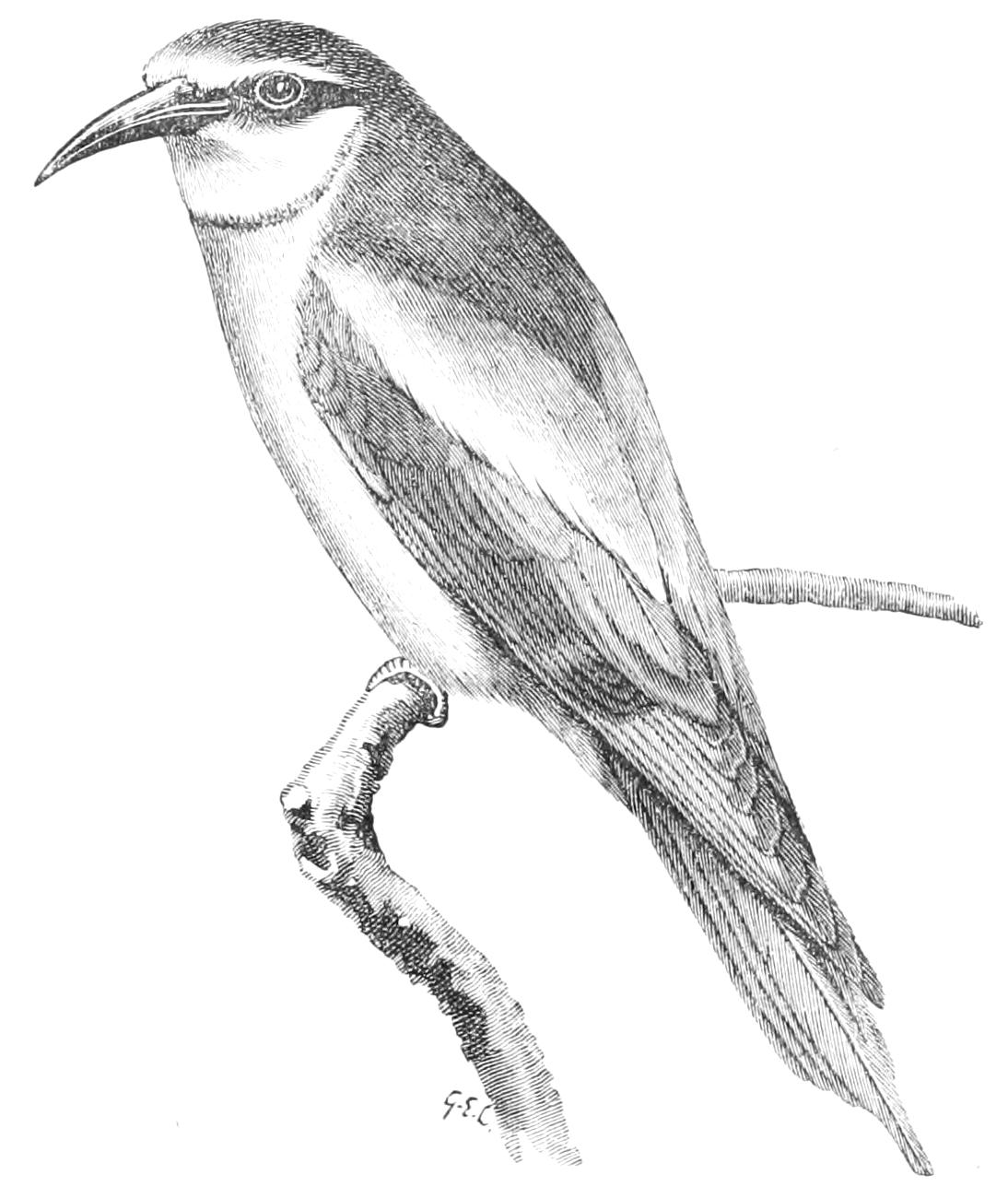
Fig. 81.–Bee-eater. Merops apiaster. × 3⁄7.
The Family contains five genera with some thirty-five species, varying in size from fourteen inches in Merops natalensis to about six and half in several forms of Melittophagus. Nyctiornis amictus, of the Malay countries, is green, with lilac forehead and crown, scarlet cheeks and throat-tuft, and a few greenish-blue plumes at the base of the bill. Meropogon forsteri of Celebes is also green, but has the crown, gular plumes and breast cobalt-blue, the occiput and nape brown, the abdomen dusky, and the lateral tail-feathers reddish-brown margined with green. Merops apiaster has ruddy-brown head, neck, upper back, and broad alar bar, buff lower back, green wings and tail with black tips to the long median rectrices, light blue upper tail-coverts, pale green and white forehead, black ear-coverts, and bright yellow throat, divided from the greenish-blue under parts by a black band. It not unfrequently visits Britain–as the Blue-tailed Bee-eater, M. philippinus, is said to have done once–and ranges from South Europe to Central Asia and North Africa, wintering in North-West India and South Africa. M. viridis, extending from Senegambia to North-East Africa and Cochin China, is yellowish-green, with a rufous tint on the hind-neck, much buff on the wing- and tail-quills, a black band washed with blue on the fore-neck, and some blue and black on the face. M. nubicus of the northern half of the Ethiopian Region has crimson-pink upper parts, blue-green head and throat, light blue rump and abdomen, rose-pink breast, black markings on the sides of the head, and black tips to the remiges and rectrices. Melittophagus gularis of West Africa is glossy black above, with bright blue on the forehead, rump, wings and median tail-feathers; the throat is crimson, the lower surface black with blue streaks; the wing-quills are for the most part rufous margined with black.
The Old World Families Bucerotidae and Upupidae are united under the latter appellation by Dr. Gadow,[227] who recognises the Sub-families Bucerotinae or Hornbills, Upupinae or Hoopoes, and Irrisorinae or Wood-Hoopoes; but the two aforesaid groups should decidedly be kept separate.
Fam. V. Bucerotidae.–The Hornbills derive their name from the immensely developed bill and casque, or helmet, found in such forms as Buceros (p. 395), though the excrescence in Aceros and some species of Lophoceros is rudimentary. It may be mentioned that the huge beak of the Toucans denotes no affinity to this group. The casque–open in front in Bucorvus–is more or less filled with cellular bony tissue, or with an almost solid mass of bony columns in Rhinoplax; the mandibles are occasionally serrated. The metatarsi are short, save in the terrestrial Bucorvus, and are rough and scaly; the toes have broad flat soles, the second and third being united for one phalanx, the third and fourth still further. The powerful wings have eleven primaries, and from ten to sixteen secondaries, while the under coverts do not perfectly cover the base of the quills. The tail has ten rectrices and is usually long, though shorter in Bucorvus; it is either square or graduated, and has the two median feathers much elongated in Rhinoplax and Ortholophus. The furcula is U-shaped, the tongue rudimentary; the aftershaft is wanting; there is no down on the adults or callow young; and the eyelashes are prominent, a rare feature among birds. In most forms the atlas (p. 5) fuses with the axis.
These arboreal birds, termed "Calaos" in French, frequent deep tall jungle or cultivated districts near rivers, up to five thousand feet; most, if not all, of the species descending from the trees in the morning and evening, when they have been observed bathing in streams, and digging up loose soil with their beaks. Bucorvus spends much of the day upon the ground searching for food.
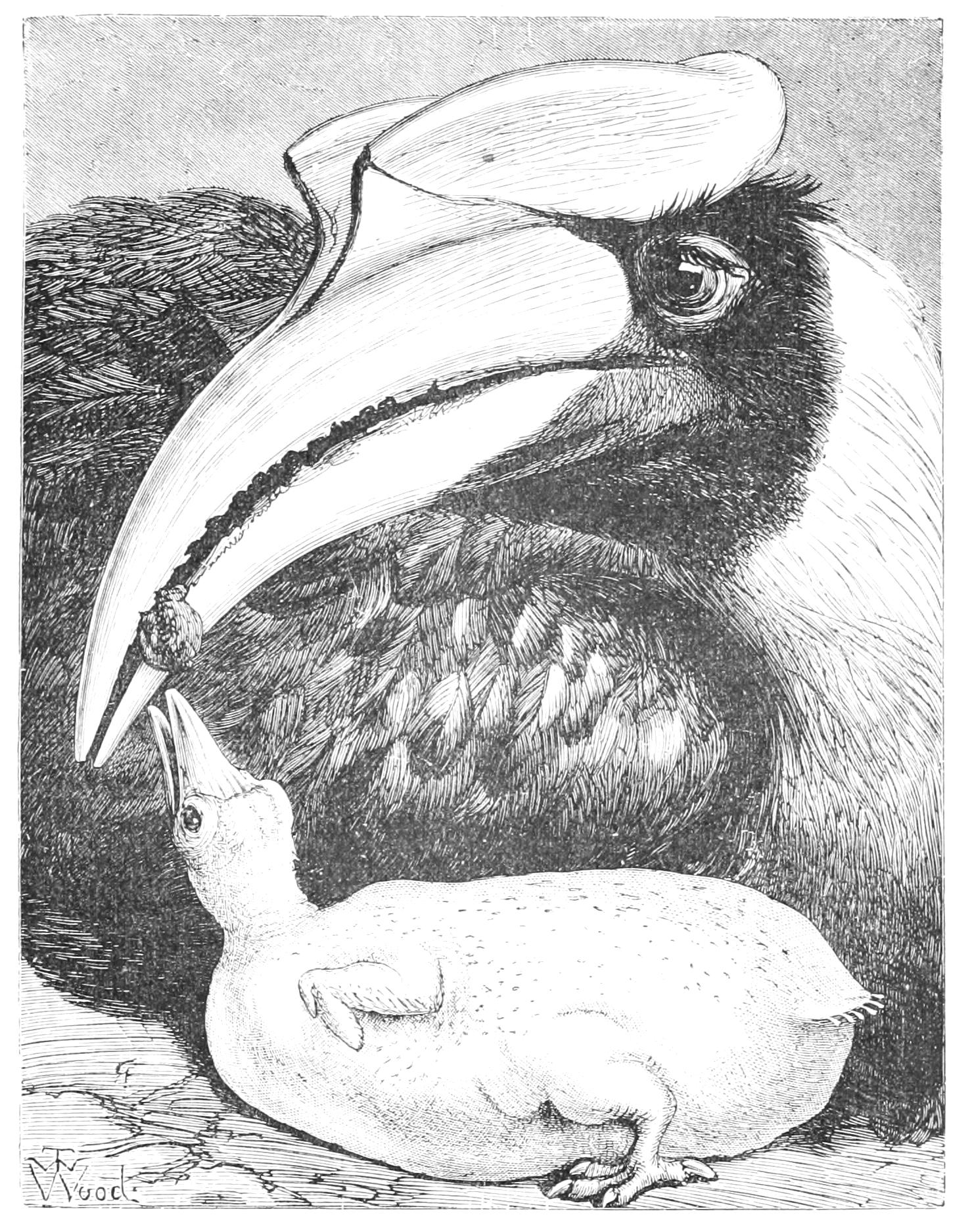
Fig. 82.–Hornbill. Dichoceros bicornis. Female and young. (From Malay Archipelago.)
The flight, often prolonged to considerable distances, is heavy and slow, the unwieldy body acting as a great drag, though counterbalanced by the pneumaticity, or air-containing nature of the bones, which is perhaps greater in Hornbills than in any other birds. On the wing a sound is generally produced like that of a steam-engine, possibly due to the open nature of the quills; but Rhinoplax, Berenicornis, Anorhinus, and Anthracoceros malabaricus are said to fly noiselessly. In some species the wing-action is regular; in others, rapid strokes alternate with sailing movements on outspread pinions; the head is usually drawn in and the tail depressed; while flocks proceed in single file. Individuals alight heavily, and from their bulk are restricted to the stronger branches, along which they shuffle awkwardly, even assisting themselves with their beak.
Hornbills may be met with singly or in pairs, but ordinarily form parties of five or six, if not of larger numbers, gathering together to feed or to roost at fixed spots, which they leave before sunrise. They are not naturally shy, and if disturbed only resort to some neighbouring tree, where they may be often observed sitting on the boughs during the mid-day hours, with puffed out plumage, open bill, and head sunk upon the back as if overcome by the heat. From time to time while perched they elevate or depress the crest and utter loud yelping cries, not uncommonly flapping their wings and bowing their heads; when feeding they constantly chatter in chorus like Parrots, and vanish with shrill screams if intruders appear. The characteristic note, however, is a harsh, continuous sound, intermediate between the bray of an ass and the shriek of a railway engine; that of Bucorvus abyssinicus has been syllabled "hūm-hūm," and that of B. cafer, the "Bromvogel" of South Africa, has been said to resemble a lion's roar, and to be audible for a mile. All the species are apparently most noisy in the morning and evening, or before rain.
Fruits and insects–the latter occasionally hawked for in the air–constitute the normal food, but the larger forms devour small mammals, birds, eggs and reptiles, with grubs, flowers, and young shoots; while Bucorvus, which feeds chiefly upon the ground, and hops rapidly, will eat tortoises, mandioc-roots, and so forth. Berries of Strychnos and figs seem greatly in favour. Nearly everything is swallowed entire, with a backward jerk of the head, animals having the life beaten out of them previously, and most substances being tossed up into the air. The male has a most curious habit of casting up the lining of the gizzard with its contents enclosed, possibly to feed the female or young.[228]
A hole in a tree or a cavity at the junction of two branches serves for the nest, wherein the hen is enclosed by a plaster of dung or like material; there, under penalty of death, she remains until she emerges dirty, wasted and enfeebled, when the brood is hatched. From one to four dingy white eggs with coarse pores are deposited upon the débris or a few feathers. Contrary to expectation, observations seem to shew that the female walls herself in; but, however that may be, the cock feeds her through the small opening left, and is even said to knock with his bill to attract her attention as he clings to the bark. He shews great anxiety about his charge, and the hen screams and bites if molested. Various members of the Family expand the tail and inflate the throat when courting; some thrive fairly well as pets; while Aceros nipalensis of India, and Dichoceros bicornis, the Homrai, ranging thence to the Malay countries, are said to be excellent eating. The latter is sacred to Vishnu; the immured female of Rhytidoceros subruficollis serves as a type of virtue to the Burmese; and natives believe that the plaster for the holes is composed of gum and earth from the four quarters of the globe. In South Africa the Fingoes think that their cattle will contract disease if Hornbills are shot; Kafirs consider that drought will cease if one of them is sunk under water and drowned; Ovampos pretend that the eggs are too brittle to be handled.
Some nineteen genera may be admitted, from the Ethiopian, Indian, and Australian Regions, with about seventy species, more than thirty of which occur in each of the first two areas; a couple inhabit Celebes, and one ranges over the Moluccas and Papuasia to the Solomon Islands. None inhabit Australia.
The somewhat scanty plumage is usually black, white, and grey; but a greenish or bluish tinge, or rufous heads and lower parts are not unfrequent. Crests are present, except in Bucorvus; Ceratogymna has a gular wattle; Berenicornis and Ortholophus exhibit long upcurved loral plumes; while the orbits and throat are more or less naked, and usually of brilliant colours, these with the bill and casque being often a distinguishing mark between the sexes. The last develops gradually in the duller young.
Rhinoplax vigil of the Malay countries, termed the Helmet Hornbill, has a line down the back and the neck naked and red. The casque is yellow in front and red behind, and is much used by Eastern artists for carving and making brooches. Berenicornis comatus, of the same districts, has a moderate black keeled casque, and bare blue orbits and throat. The female exhibits less white. Bycanistes buccinator of East Africa has a large blackish furrowed casque and purple naked areas. Lophoceros nasutus of North-East and West Africa, has the bill and rudimentary casque black, with a yellow streak on the maxilla and several oblique yellow ridges on the mandible, the bare orbits apparently grey. In the female the bill shews red in place of black.
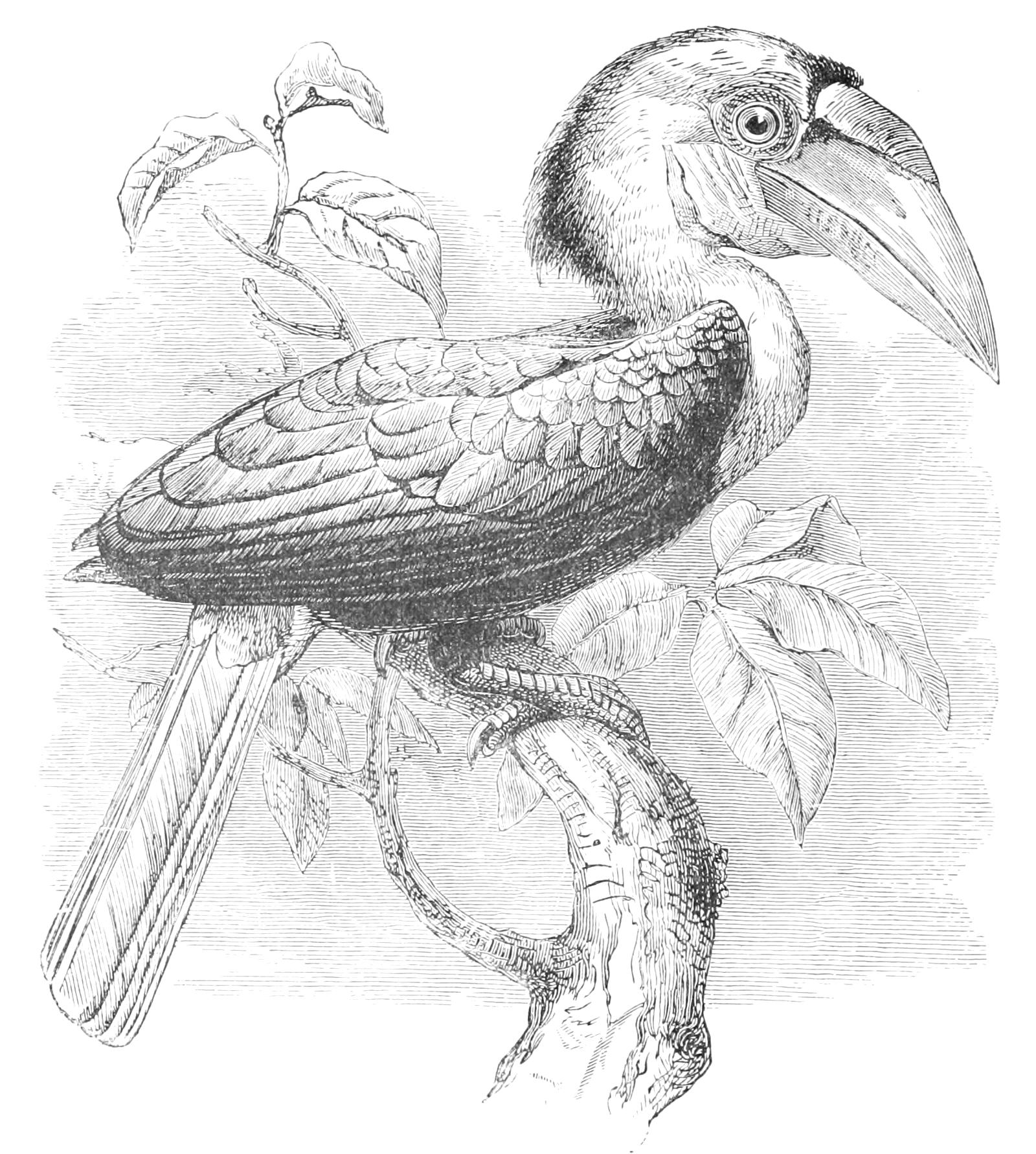
Fig. 83.–Plait-billed Hornbill. Rhytidoceros undulatus. × ⅕-⅙. (From Nature.)
Ceratogymna elata of West Africa has the gular wattle, orbits, and bare throat blue, with red on the first and a median line of feathers on the last, and an abrupt, high whitish casque, which is black at the base in the male. The hen has a rufous head and neck. Rhytidoceros plicatus of Papuasia and the Moluccas has a reddish and white casque with obliquely overlapping plates, pale blue naked orbits and throat. The head and neck are chestnut in the male, black in the female. Cranorhinus cassidix of Celebes has a red casque, high in front and rounded posteriorly over the skull; both mandibles are yellow with red bases, and exhibit grooved plates, the bare parts being chiefly blue with a black bar on the throat. The head and nape are chestnut and black in the respective sexes, the hen having the casque yellower. Penelopides manillae of the Philippines has the moderate, compressed casque transparent brown, and the naked areas white, becoming purplish in the female. Anthracoceros coronatus of India and Ceylon has a large yellow subcrescentic casque blotched with black, a bare white throat and blackish orbits, the latter being white in the hen. Dichoceros bicornis (Fig. 82) of India and the Malay countries has a large yellowish-red casque, hollowed and ending in two points anteriorly, which shews black markings in the male; the naked orbits are pinkish. Buceros rhinoceros of the Malay Peninsula and Indo-Malay Islands has a large red, orange, and black casque, curved up in front, and red orbits; the female having less black on the former. Bucorvus (Bucorax) has a large black casque, nearly or quite closed in B. cafer of South and East Africa, but open anteriorly and ridged in B. abyssinicus of North-East and West Africa. In the respective species the naked parts are red and blue in the male, blue and purple in the female. Some writers adopt a Sub-family Bucorvinae for this genus.
The fossil Cryptornis of the Upper Eocene of France is referred to the Hornbills.
Fam. VI. Upupidae.–Sub-Fam. 1. Upupinae.–This consists of a single genus with five similarly-coloured graceful species, which have the beak long and slightly arched, the metatarsi short and scutellated throughout, the toes rather long and the claws curved. The third and fourth digits only are joined at the base. The broad wing has ten primaries and an equal number of secondaries, the short, square tail has ten rectrices, the nestlings possess a little down. Otherwise the structure resembles that of Hornbills.
Generally found solitary or in pairs, Hoopoes stalk proudly along the ground, nodding their heads, expanding and contracting their crests, and uttering the soft reiterated "hoop" or "hoo," from which is derived their name. Besides probing the soil, the bird taps the ground with its bill or foot, and some persons think that worms are brought to the surface by the vibration; but it will also tap any perch, whether on branch, stump, or wall. The food consists of flies taken on the wing, insects generally, and worms; individuals being frequently observed climbing rocks or branches of trees in search of prey, and carefully examining heaps of refuse. Before being swallowed the larger objects are smartly rapped on some hard surface, and most are tossed into the air. The flight is strong, undulating, and seldom protracted, though Hoopoes often escape from Hawks; they can also run rapidly. The nest, placed in holes in trees, walls, or rocks, consists of a little straw or a few twigs, with some feathers or hair; it is always, however, marked by the addition of ordure to the lining, and sites are on record in coffins or decaying bodies.[229] During incubation the cock feeds the hen, who hardly stirs from her post; the eggs number from four to seven, and are pale greenish-blue with distinct pores. These birds are fond of dusting themselves in loose soil; the male is decidedly pugnacious, except in captivity; and the flesh is considered a delicacy in Southern Europe. Arabs venerate them and ascribe to them medicinal properties. Most persons are familiar with the story of Allah granting to Epops a golden crest, exchanged afterwards at the bird's request for one of feathers.
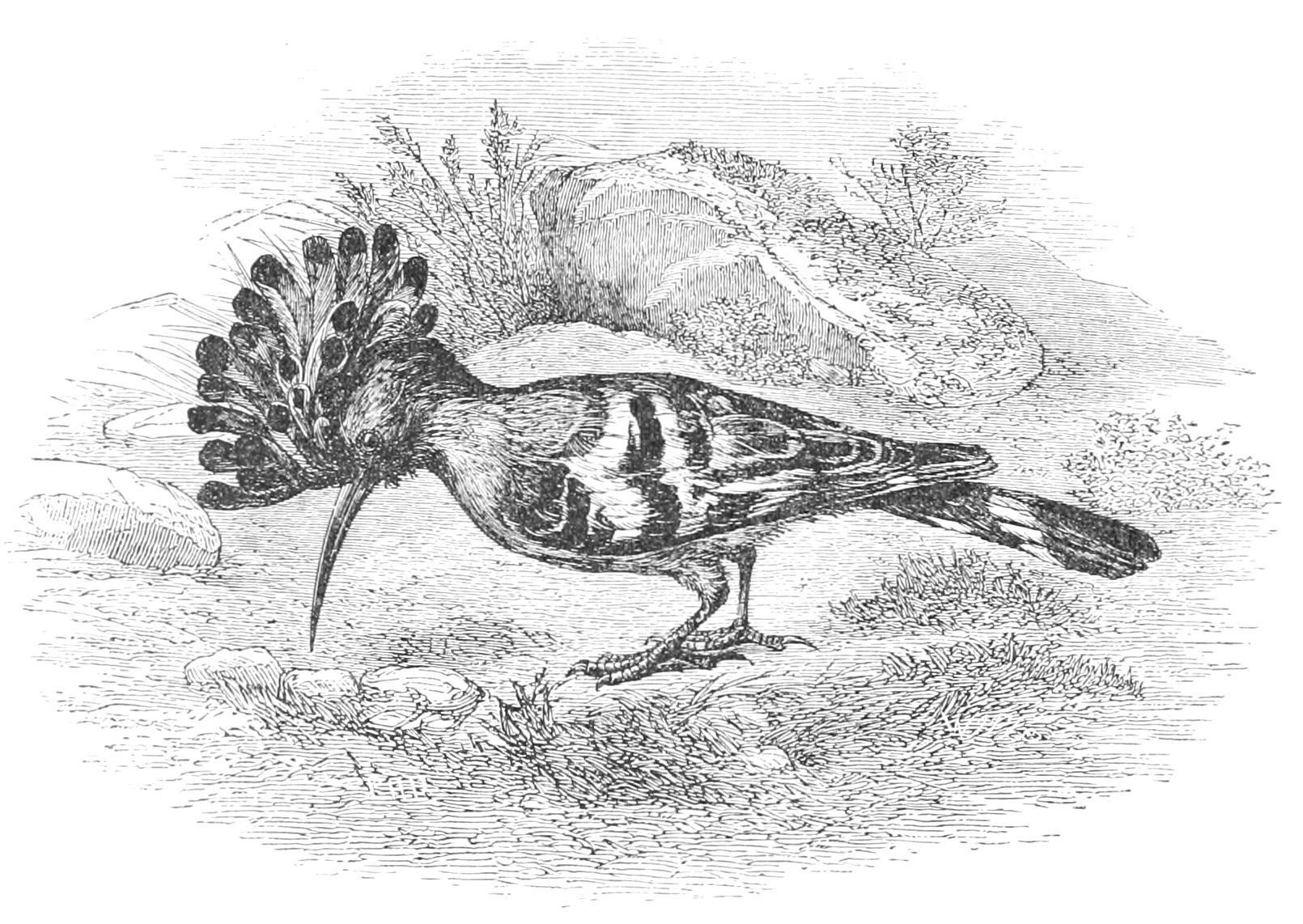
Fig. 84.–Hoopoe. Upupa epops. × ¼. (From Natural History of Selborne.)
Upupa epops not unfrequently visits Britain, where it has nested on several occasions; it breeds from Southern Scandinavia to Northern Africa and the Atlantic Islands, migrating a little further south; while it extends through most of Asia and reaches Japan. The fine erectile crest, the head, neck, and lower parts are cinnamon-coloured; the remaining plumage is black, varied with buff and white; a band of the latter crosses the tail; and the head plumes are tipped with black and white. U. marginata of Madagascar has a larger outer primary and a narrower tail-band; U. indica, with darker cinnamon tints, extends from India to Hainan, and intergrades with U. epops; U. somalensis of Somali-Land is intermediate between the last and U. africana of South Africa, which exhibits no white on the primaries or crest. Females and young are duller and less crested.
A fossil form, Limnatornis, occurs in the Lower French Miocene.
Sub-fam. 2. Irrisorinae.–The Wood-Hoopoes, differing from their allies in the longer and more decurved bill, especially noticeable in Rhinopomastus, the long wedge-shaped tail, and the absence of a crest, are commonly seen in flocks of from six to eight; they are shy, restless and noisy, flitting from bush to bush with undulating motion and expanded rectrices, while they also creep about probing the crannies of the highest trees–to the great detriment of the tail–or search the ground for grubs and insects generally. The note is harsh and chattering; the nest, said to be foul like that of their allies, is placed in holes in trees, the eggs being apparently white. The plumage is metallic purple, blue or greenish, with white wing-patch and tail-markings, the females and young being less bright, with shorter beaks.
Irrisor occupies the Ethiopian Region, I. viridis and I. erythrorhynchus having the head and throat bluish-green, I. bollii those parts buff, I. jacksoni nearly white. Three species of Scoptelus inhabit North-East and West Africa, three of Rhinopomastus extend from the former country and the Congo to South Africa.
* * * * *
The Sub-Order Striges, containing the natural and well-marked group of the Owls, was until lately usually treated as a mere Family situated next to the diurnal Birds of Prey (Accipitres of this work), whatever name or rank may have been given to the combined assemblage. Gradually, however, a conviction has arisen that these nocturnal–or chiefly nocturnal–Birds of Prey deserve a higher position than that of a Family, while Dr. Gadow, in the classification here mainly adopted, agrees with those who would separate them widely from their former associates, and places them in close proximity to the Nightjar alliance (Caprimulgi), the members of which they certainly resemble in their soft plumage, large eyes, and crepuscular tendencies.
Fam. VII. Strigidae.–This, which contains all the Owls, may be divided into two Sub-families, (1) Striginae and (2) Buboninae.[230] In the former, or Screech-Owl section,[231] the sternum has its broad keel joined to the furcula, and exhibits no notches behind; in the latter, containing the remaining genera, the clavicles do not always form a furcula, nor do they meet the sternum, which shews one or two pairs of projections posteriorly. In this section, moreover, there is a bony loop bridging the channel in the metatarsus which contains the common extensor tendon of the toes, as is the case in the Osprey. Pterylography would lead to the same subdivisions. Between the two groups lie Photodilus of the Indian Region, now referred to the Buboninae, and Heliodilus of Madagascar, which is classed with the Striginae.
The head is large; the neck short and thin; the bill moderate in length, but stout, with a sharp hook at the tip; the culmen is usually curved, but is straighter in Strix, while the basal cere is more or less covered by feathering, especially in Nyctea. The short, strong metatarsi–somewhat longer in Speotyto and Sceloglaux–are flattened in front and covered with small scales. They are usually feathered, though in Ketupa and Scotopelia they are all but bare, while they are partly so in Scops gymnopus and S. nudipes, the two former having the toes provided with spicules below, as in Pandion. Many forms have the plumage extended as a thick covering of soft feathers or bristles to the claws, which are normally long, sharp, and curved, that of the middle toe having a serrated margin in the Striginae. The digits are padded beneath, and the fourth of them is reversible at will, enabling Owls to perch with either one or two toes behind. The wings are long, or fairly so, very broad, and more or less rounded, Scops and Strix being instances of greater length, Bubo, Sceloglaux, Speotyto, and Photodilus of shortness; the primaries number eleven and the secondaries from eleven to eighteen. The tail of twelve rectrices is generally short and somewhat rounded, though longer in Surnia. The large eyes are directed obliquely forwards, but those of Ninox are said to have a less staring look; Owls, moreover, have little power of turning the eye-ball, and consequently add to their grotesque appearance by constantly moving the head from side to side. The upper eye-lid shuts over the eye, and not the lower, as in birds generally; the iris is extremely sensitive, contracting and expanding continually. The external ear varies in an extraordinary way, the "conch," or large shell-like aperture, often having its ample membranous margin developed into an elevated operculum or flap which stretches partially or entirely down the anterior side. In Asio and Syrnium the ear-openings are asymmetrical, those of the former reaching nearly the whole height of the skull and being directed respectively upwards and downwards; in Nyctala this asymmetry extends to the bones of the skull itself. The large ear is apparently correlated with a keen sense of hearing in some cases, but not in all.