Chapter VI · (continued 2)
Reading edition
Sub-Fam. 5. Brassolides.—Large butterflies, with the cell of the hind wing closed, and usually with a small adjoining prediscoidal cell. Larva not very spiny; thinner at the two ends, the tail bifid, the head perpendicular and margined with spines. This small sub-family includes less than 100 species arranged in about eight genera, all South American. They have the very unusual habit of resting during the day like moths, becoming active only late in the afternoon. They are truly noble Insects; although not possessed of the brilliant colours of Morpho, they are adorned, especially on the under surface, with intricate lines and shades most harmoniously combined, while the upper surface is frequently suffused with blue or purple. This sub-family attains its highest perfection in the genus Caligo; they are enormous Insects, and some of them not rare. The larva of C. eurylochus (Fig. 179) during early life is green, and sits on the leaf of a Musa, but after the third moult it becomes brown and hides itself among the dry leaves. It is common in the gardens of Rio de Janeiro, where its pupae are found on the walls, like those of our white butterflies here.
Sub-Fam. 6. Acraeides.—Submedian nervure of fore wings not forked at the base; the median without spur. Cells closed. Palpi in section cylindric, sparingly set with hairs. Larva armed with branched spines. A somewhat monotonous and uninteresting division; the size is moderate or small, and the colours not artistic, but consisting of ill-arranged spots; the under side of the hind wings very frequently diversified by numerous line-like marks, radiately arranged, and giving place at the base to a few spots. There are about 200 species known, of which the majority are African; there are but few Oriental or South American species. Some authorities consider there is only one genus, but others prefer to adopt seven or eight divisions. Alaena is now placed in Lycaenidae, though until recently it was considered to belong here. The females of some species possess an abdominal pouch somewhat similar to that of Parnassius.
The members of this sub-family are considered to be of the protected kind.
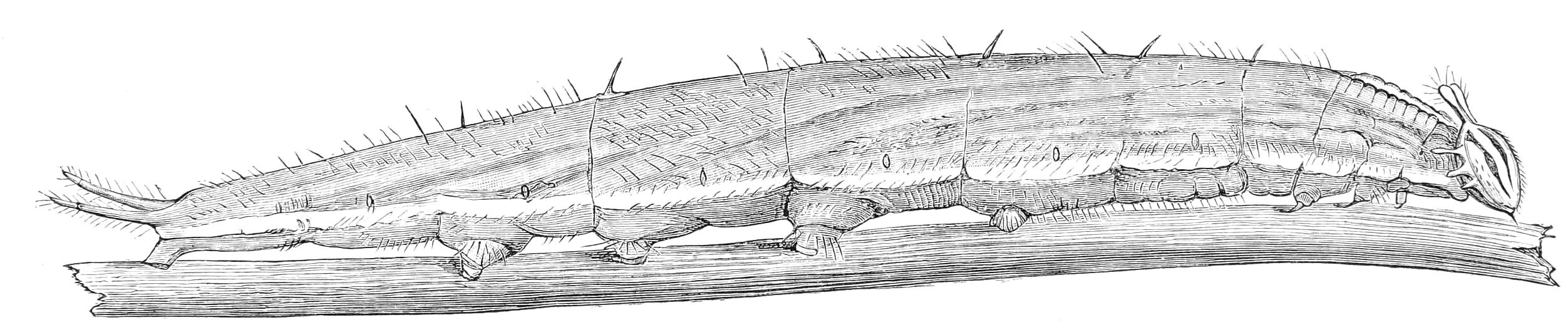
Fig. 179—Larva of Caligo (Pavonia) eurylochus. Rio de Janeiro. × 1. (After Burmeister.)
Sub-Fam. 7. Heliconiides.—Submedian nervure of front wing not forked; median with a short spur near the base. Cell of hind wing closed by a perfect nervule. Palpi compressed, with scales at the sides, in front covered with hairs. Male with an elongate unjointed, female with a four-jointed, front tarsus. Caterpillars set with branched spines. This family is peculiar to tropical America and consists of only two genera, Heliconius and Eueides, with about 150 species; but it is one of the most characteristic of the South American groups of Butterflies. It is very closely allied to the Nymphalides, especially to the genera Metamorpha and Colaenis, but is readily distinguished by the perfectly-formed nervules that close the wing-cells. The wings are longer and narrower than in Nymphalides, and the colour, though exhibiting much diversity, is on the whole similar to that of the heavily-scaled forms of Ithomiides of the genera Tithorea, Melinaea, Melanitis; there being in several cases a great resemblance between species of the two groups. A frequent feature in one group of Heliconius is that the hind wing bears a patch of red prolonged outwards by angular radiating marks. The individuals of certain species—H. melpomene and H. rhea—are known to execute concerted dances, rising and falling in the air like gnats; when some of them withdraw from the concert others fill their places. H. erato exhibits the very rare condition of trichroism, the hind wings being either red, blue, or green. Schatz states that the different forms have been reared from a single brood of larvae. The caterpillars of Heliconiides live on Passiflorae, and are said to be very similar to our European Argynnis-caterpillars. The chrysalids are very spinous. We may here remark that considerable confusion exists in entomological literature in consequence of Ithomiides having been formerly included in this sub-family; for remarks formerly made as to "Heliconiides," but that really referred only to Ithomiides, have been interpreted as referring to Heliconiides of the present system.
The Heliconiides seem remarkably plastic as regards colour, and are therefore exponents of "homoeochromatism." Bates says, as regards them: "In tropical South America a numerous series of gaily-coloured butterflies and moths, of very different families, which occur in abundance in almost every locality a naturalist may visit, are found all to change their hues and markings together, as if by the touch of an enchanter's wand, at every few hundred miles, the distances being shorter near the eastern slopes of the Andes than nearer the Atlantic. So close is the accord of some half-dozen species (of widely different genera) in each change, that he had seen them in large collections classed and named respectively as one species."[219] Many of them are believed to be permeated by nauseous fluids, or to possess glands producing ill-smelling secretions.
Sub-Fam. 8. Nymphalides.—Cells, of both front and hind wing, either closed only by imperfect transverse nervules or entirely open. Front tarsus of the male unjointed and without spines, of the female four- or five-jointed. Caterpillar either spined or smooth; in the latter case the head more or less strongly horned or spined, and the apex of the body bifid. This sub-family is specially characterised by the open cells of the wings; the discocellulars, even when present, being frequently so imperfect as to escape all but the most careful observation. The Nymphalides include upwards of 150 genera and 2000 species. The divisions having smooth larvae are separated by Kirby[220] and others as a distinct sub-family (Apaturides). In Britain, as in most other parts of the world, Nymphalides is the predominant group of butterflies. We have eighteen species, among which are included the Fritillaries, Admirals, Purple Emperor, and the various Vanessa—Peacock, Camberwell Beauty, Red Admiral, Tortoise-shells, and Painted Lady. All have spined caterpillars except the Emperor. In the temperate regions of the northern hemisphere Vanessa may be considered the dominant butterflies, they being very numerous in individuals, though not in species, and being, many of them, in no wise discomfited by the neighbourhood of our own species. Several of them are capable of prolonging and interrupting their lives in the winged condition to suit our climate; and this in a manner that can scarcely be called hibernation, for they frequently take up the position of repose when the weather is still warm, and on the other hand recommence their activity in the spring at a very early period. This phenomenon may frequently be noticed in the Tortoise-shell butterfly; it is as if the creature knew that however warm it may be in the autumn there will be no more growth of food for its young, and that in the spring vegetation is sure to be forthcoming and abundant before long, although there may be little or none at the time the creature resumes its activity. It is probable that the habit may be in some way connected with an imperfect activity of the sexual organs. It should, however, be recollected that many larvae of butterflies hibernate as young larvae after hatching, and, sometimes, without taking any food. Pyrameis cardui, the Painted Lady, is, taking all into consideration, entitled to be considered the most ubiquitous of the butterfly tribe. Its distribution is very wide, and is probably still extending. The creature is found in enormous numbers in some localities, especially in Northern and Eastern Africa; and when its numbers increase greatly, migration takes place, and the Insect spreads even to localities where it cannot maintain itself permanently. In Britain it is probably during some years nearly or quite absent, but may suddenly appear in large numbers as an immigrant. The favourite food of the larva is thistles, but many other plants serve the Insect at times.
Vanessa, or Pyrameis,[221] atalanta, the Red Admiral, is common in the Palaearctic and Nearctic regions, and extends its range to various outlying spots. The most remarkable of these is the remote Hawaiian Islands, where the Insect appears really to be now at home, though it is associated with a larger and more powerful congener, P. tameamea. Another interesting Vanessid is Araschnia levana, which is peculiar to Europe, where it produces annually two generations so dissimilar to one another that they passed current as two species, V. levana and V. prorsa. Although intermediate forms are rare in nature they can be induced by certain treatments applied to the larvae under human control.
The dead-leaf butterflies of the genus Kallima belong to Nymphalides. They are so shaped and coloured that when settled, with wings closed, on a twig, the appearance is exactly that of a dry leaf; the exposed surface is mottled with spots that look just like the patches of minute fungi, etc. that are so common on decaying vegetation. The colour and the spots on the under surface of this butterfly are very variable. According to Mr. Skertchly,[222] we may presume that in the minute details of these resemblances we have a case of hypertely similar to that of the resemblance to Insects' minings exhibited by certain marks on the tegmina of Pterochroza (mentioned in Vol. V. p. 322).
In South America there is a somewhat peculiar genus of Nymphalides—Ageronia—that delights in settling on the trunks of trees rather than on flowers or leaves. It was long since noticed that the the species of Ageronia make a clicking noise; in some cases when on the wing, in other cases by moving the wings when the Insect is settled. The object of the noise is quite uncertain; it has been suggested that it is done in rivalry or courtship, or to frighten away enemies. Bigg-Wether found, however, that in South Brazil there is a lazy little bird to which this sound serves as a signal, inducing it to descend from its perch and eat the clicker. The mode in which the noise is produced is not quite clear. Sir George Hampson has pointed out[223] that the fore wing bears at the extreme base a small appendage bearing two hooks, and that two other processes on the thorax play on these when the wing moves. His suggestion that these hooks are the source of the sound seems highly probable.
There is a great variety in the larvae of Nymphalides. In the Vanessa group the body is armed with spines, each one of which bears shorter thorns, the head being unadorned. The Fritillaries (Argynnis, Melitaea) also have caterpillars of this kind. In many other forms the head itself is armed with horns or spines of diverse, and frequently remarkable, character. In Apatura and its allies the body is without armature, but the head is perpendicular, the vertex bifid and more or less prolonged. The caterpillar of our Purple Emperor, Apatura iris, is quite unlike any other British caterpillar; in colour it is like a Sphingid larva—green with oblique lateral stripes of yellow and red—but in form it is slug-like, pointed behind, and it has on the head two rather long tentacle-like horns. In the South American genus Prepona, the larva of which in general form resembles that of Apatura there are no anal claspers, but the extremity of the body is prolonged, forming a sort of tail.
Fam. 2. Erycinidae (Lemoniidae of some authors).—The female has six perfectly formed legs, though the front pair is smaller. The male has the coxae of the front legs forming a spine, and the tarsi unjointed, without claws. This family consists of about 1000 species, usually of rather small size, exhibiting a great variety of shape and coloration, some of them being remarkably similar to some of the gay, diurnal moths of South America. The palpi are usually small, but in Ourocnemis they are large and porrect. The family is specially characteristic of tropical America, but there is one small group of 30 or 40 species, Nemeobiides, in the Eastern Hemisphere. We have one species in Britain, Nemeobius lucina, the Duke of Burgundy Fritillary. Neither the larvae nor the pupae of Erycinidae present any well-marked characteristic feature, but exhibit considerable variety. According to Bar,[224] some of the larvae are like those of moths; the caterpillar of Meliboeus is said to be like that of a Liparis: the chrysalis has the short, rounded form of that of the Lycaenidae, and is suspended with the head down, and without a band round the body. The larvae of Eurygona are gregarious. The pupae of some other forms adhere, heads downwards, to branches. Scudder considers that this family is not distinct from Lycaenidae, and that the Central American genus Eumaeus connects the two. Reuter also treats Erycinidae as a division of Lycaenidae.
Sub-Fam. 1. Erycinides.—[Characters of the family.] Palpi not unusually large. We place all the Erycinidae in this sub-family except the following—
Sub-Fam. 2. Libytheides.—Butterflies of average size, with the palpi large and porrect: the front legs of the male small, the tarsus reduced to one joint: the front leg of the female of the normal structure, and but little reduced in size. This division consists of the single genus Libythea, with only a score of species. They are Insects somewhat like Vanessa in appearance, but cannot fail to be recognised on account of the peculiar palpi. The genus is of very wide distribution, occurring in most parts of the warm and temperate continental regions, and it also occurs in Mauritius and the Antilles.
The Libytheides have given rise to much difference of opinion amongst systematists, some of whom assign them as a sub-family to the Erycinidae, some to the Nymphalidae; while others treat them as a family apart. The families Nymphalidae, Erycinidae and Lycaenidae are so intimately allied, that Scudder is probably correct in considering them to form really one huge family; if this view were adopted there would be no difficulty in locating Libythea therein. If they be kept apart, it is almost necessary to separate Libythea also; though possibly its claims to be placed in Erycinidae slightly preponderate. The recently described genus Ourocnemis to some extent connects Erycinides with Libythaeides.[225]
Fam. 3. Lycaenidae.—The front legs but little smaller than the others: in the male, however, the tarsus, though elongate, is only of one joint, and is terminated by a single claw. No pad on the front tibia. Claws not toothed. The Lycaenidae, or Blues, are, as a rule, of small size, but in the tropics there are many that reach the average size of butterflies, i.e. something about the stature of the Tortoise-shell butterfly. The family is one of the larger of the divisions of butterflies, considerably more than 2000 species being at present known, and this number is still rapidly increasing. Although blue on a part of the upper surface is a very common feature in the group, it is by no means universal, for there are many "Coppers," as well as yellow and white Lycaenidae. Many species have delicate, flimsy appendages—tails—to the hind wings, but in many others these are quite absent; and there are even tailed and tailless forms of the same species. The members of the group Lipteninae (Liptena, Vanessula, Mimacraea, etc.) resemble members of other sub-families of Nymphalidae, and even of Pieridae. Lycaenidae are well represented wherever there are butterflies; in Britain we have 18 species.
The larvae of this family are very peculiar, being short, thicker in the middle, and destitute of the armature of spines so remarkable in many other caterpillars. It has of late years been frequently recorded that some of these larvae are attended by ants, which use their antennae to stroke the caterpillars and induce them to yield a fluid of which the ants are fond. Guénée had previously called attention[226] to the existence of peculiar structures contained in small cavities on the posterior part of the caterpillar of Lycaena baetica. These structures can be evaginated, and, it is believed, secrete a fluid; Edwards and M‘Cook are of opinion that they are the source of the matter coveted by the ants. The larvae are without spines.
The caterpillars of the Blues have some of them strange tastes; more than one has been recorded as habitually feeding on Aphidae and scale-Insects. The pupae are, like the larvae, of short inflated form. By a remarkable coincidence, the pupae of two species bear a considerable resemblance to the heads of monkeys, or mummies. The Lycaenid pupa is usually extremely consolidated, destitute of movement, and is supported—in addition to the attachment by the cremaster—by a silk thread girdling the middle. There are exceptions to these rules, and according to Mr. Robson the pupa of Tajuria diaeus hangs free, suspended from a leaf, and can move the body at the spot where the abdominal segments meet the wing-cases in the dorsal line.[227]
Fam. 4. Pieridae.—The six legs well developed, and similar in the sexes; there is no pad on the front tibia. The claws of all the feet are bifid, or toothed, and there is an empodium. There are upwards of 1000 species of Pieridae already known. Although several taxonomists treat the Pieridae and Papilionidae as only subdivisions of one family, yet they appear to be quite distinct, and the relationships of the former to be rather with Lycaenidae. In Pieridae, white, yellow, and red are the predominant colours, though there is much black also. It has recently been ascertained that the yellow and red pigments, as well as the white, are uric acid or derivatives therefrom.[228] The physiology of this peculiarity has not yet been elucidated, so that we do not know whether it may be connected with some state of the Malpighian vessels during metamorphosis.
Our Garden-White, Brimstone, Clouded-yellows and Orange-tip butterflies belong to this family; as does also the South American genus formerly called Leptalis. This generic name, which is much mentioned in literature owing to the resemblance of the species of the genus to Heliconiides, has now disappeared; Leptalis having been divided into various genera, while the name itself is now considered merely a synonym of Dismorphia.
The African Insect, Pseudopontia paradoxa, has nearly transparent wings, no club to the antennae, a remarkably small cell on the wing, and an arrangement of the nervules not found in any other butterfly; there being only ten nervules at the periphery of the front wing, and both upper and lower radial nervules uniting with the posterior branch of the subcostal. It has been treated as a moth by several entomologists. Aurivillius considers that it is certainly a butterfly; but as the metamorphoses are unknown, we cannot yet form a final opinion as to this curious form. The extraordinary Peruvian Insect, Styx infernalis, is also placed in this family by Staudinger; it is a small, pale Insect, almost white, and with imperfect scales; a little recalling a Satyrid. It appears to be synthetic to Pieridae and Erycinidae.
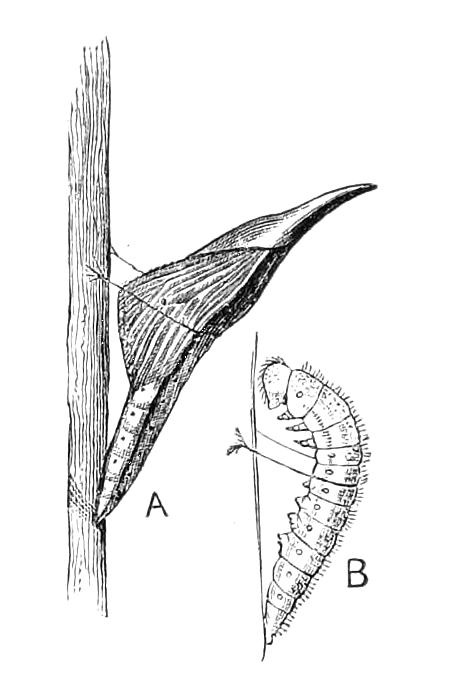
Fig. 180—Pupation of the Orange-tip butterfly, Euchloe cardamines. A, The completed pupa; B, the larva, with its girdle, prepared for the change.
The caterpillars of Pieridae are perhaps the least remarkable or attractive of all butterfly-caterpillars; their skins are as a rule bare, or covered only with fine, short down or hair; their prevalent colour is green, more or less speckled with black and yellow, and they are destitute of any prominent peculiarities of external structure. Pupation is accomplished by the larva fixing itself to some solid body by the posterior extremity, with the head upwards (or the position may be horizontal), and then placing a girdle round the middle of the body. The pupa never hangs down freely as it does in Nymphalidae. It has been ascertained by experiment that if the girdle round the larva be cut, the pupation can nevertheless be accomplished by a considerable proportion of larvae. Some of the pupae are of very peculiar form, as is the case in the Orange-tip (Fig. 180, A) and Brimstone butterflies. The Orange-tip butterfly passes nine or ten months of each year as a pupa, which is variable in colour; perhaps to some extent in conformity with its surroundings. The North American E. genutia has a similar life-history, but the larva leaves its Cruciferous food-plant, wanders to an oak tree, and there turns to a pupa, resembling in colour the bark of the tree.
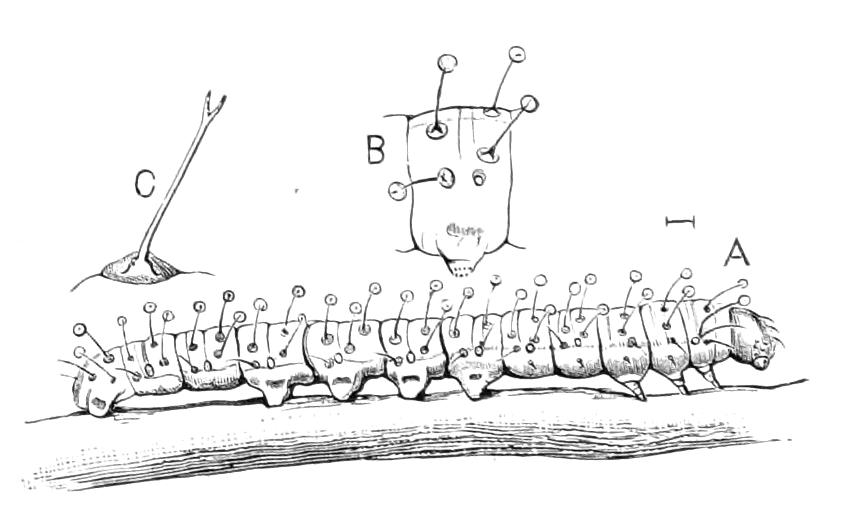
Fig. 181—Newly-hatched larva of Euchloe cardamines. A, The larva in profile; B, one segment more magnified, showing the liquid-bearing setae; C, one of the setae still more magnified, and without liquid.
It is not unusual for caterpillars to change their habits and appearance in a definite manner in the course of the larval life. The caterpillar of Euchloe cardamines exhibits a larval metamorphosis of a well-marked character. The young larva (Fig. 181) is armed with peculiar setae, furcate at the tip, each of which bears a tiny ball of fluid. In this stage the caterpillar makes scarcely any movement. In the middle of the caterpillar's life a new vestiture appears after an ecdysis; numerous fine hairs are present, and the fluid-bearing spines nearly disappear, being reduced to a single series of spines of a comparatively small size on each side of the upper middle region of the body (Fig. 182). The colour is also a good deal changed, and concomitantly there is a much greater voracity and restlessness.
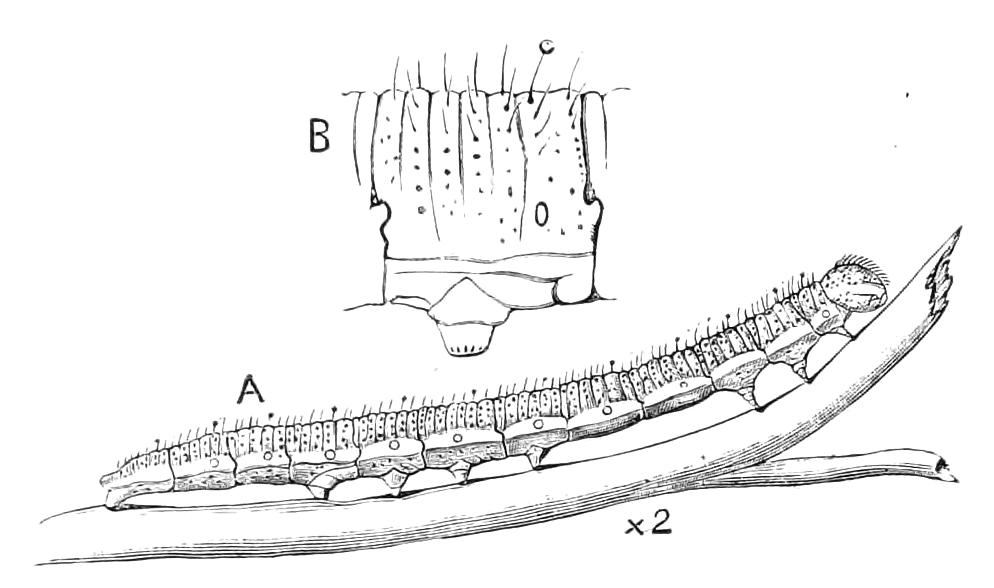
Fig. 182—Larva of Euchloe cardamines in middle life. A, the larva in profile; B, one segment more magnified.
Fam. 5. Papilionidae.—All the legs well developed. Claws large, simple, without empodium. Front tibiae with a pad. The metanotum free, conspicuously exposed between mesonotum and abdomen. This series of butterflies includes some of the most magnificent of the members of the Insect world. It is considered by some authorities to be the highest family of butterflies; and in one very important feature—sexual differentiation—it certainly is entitled to the rank. There are about 700 recorded species, the larger portion of which are included in the genus Papilio. The great variety of form has led to this genus being divided; the attempts have, however, been partial, with the exception of an arrangement made by Felder, who adopted 75 sections, and a recent consideration of the subject by Haase, who arranges Felder's sections into three sub-genera. Many of the sections have received names, and are treated by some authors as genera, so that an unfortunate diversity exists as to the names used for these much-admired Insects. The genus is distributed all over the world, but is perhaps nowhere more numerous in species than in South America.
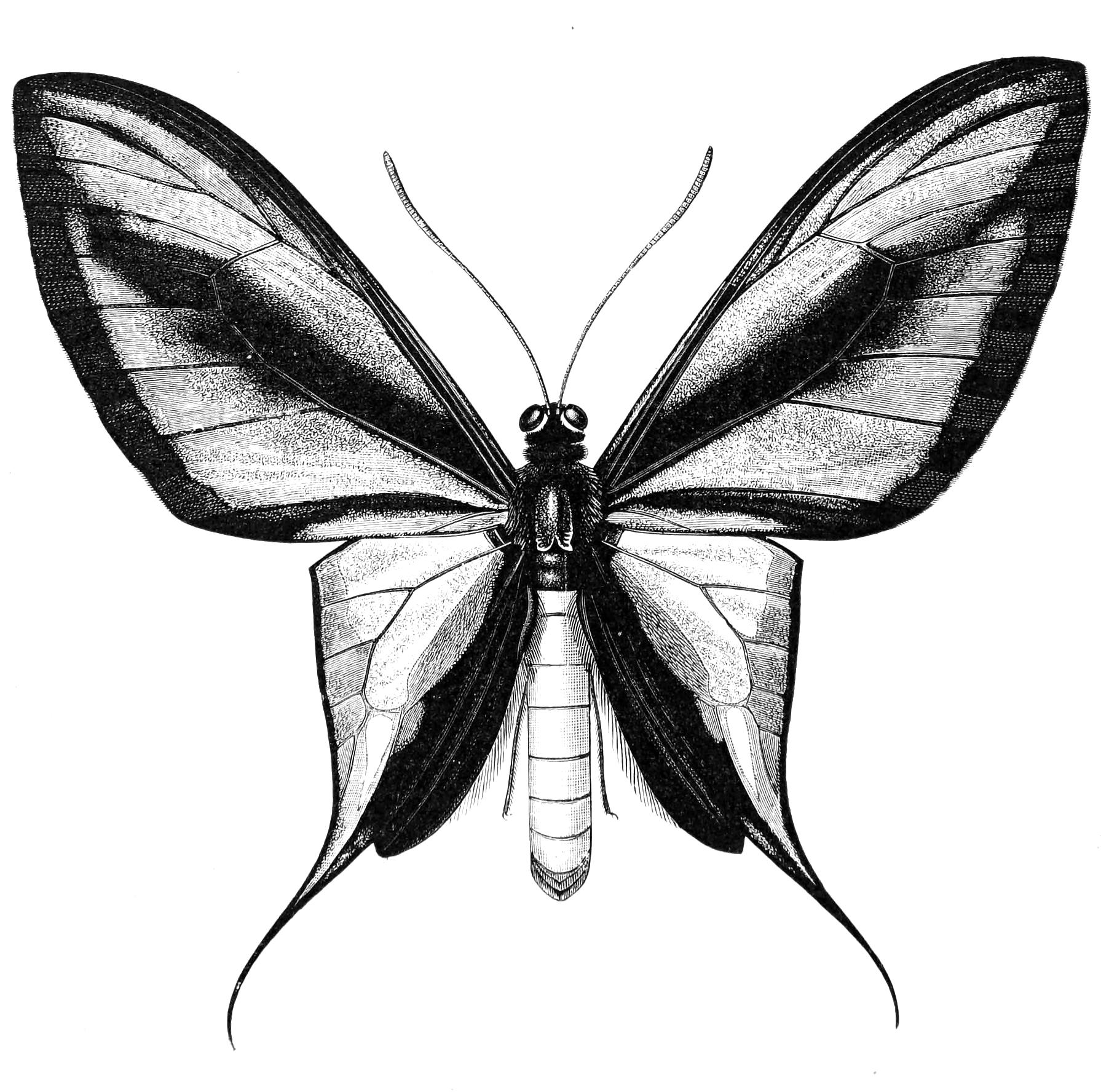
Fig. 183—Ornithoptera (Schoenbergia) paradisea, male. New Guinea. × 1. (Colours, velvet-black, golden-yellow and green.)
Wallace informs us that the great majority of the species of the Amazon valley frequent the shady groves of the virgin forest. In many cases the sexes are extremely different in appearance and habits, and are but rarely found together in one spot. The genus Ornithoptera is closely allied to Papilio, and contains some of the most remarkable of butterflies, the homes of the species being the islands of the Malay Archipelago, and outlying groups of islands, there being a smaller number of species in the neighbouring continents. The females are of great size, and are so excessively different from their consorts of the other sex, as to arouse in the student a feeling of surprise, and a strong desire to fathom the mysteries involved. Fig. 184—Ornithoptera (Schoenbergia) paradisea, female. × 1. (The wings, on the right side, detached, showing the under surface. Colours, black, white, and gray.)
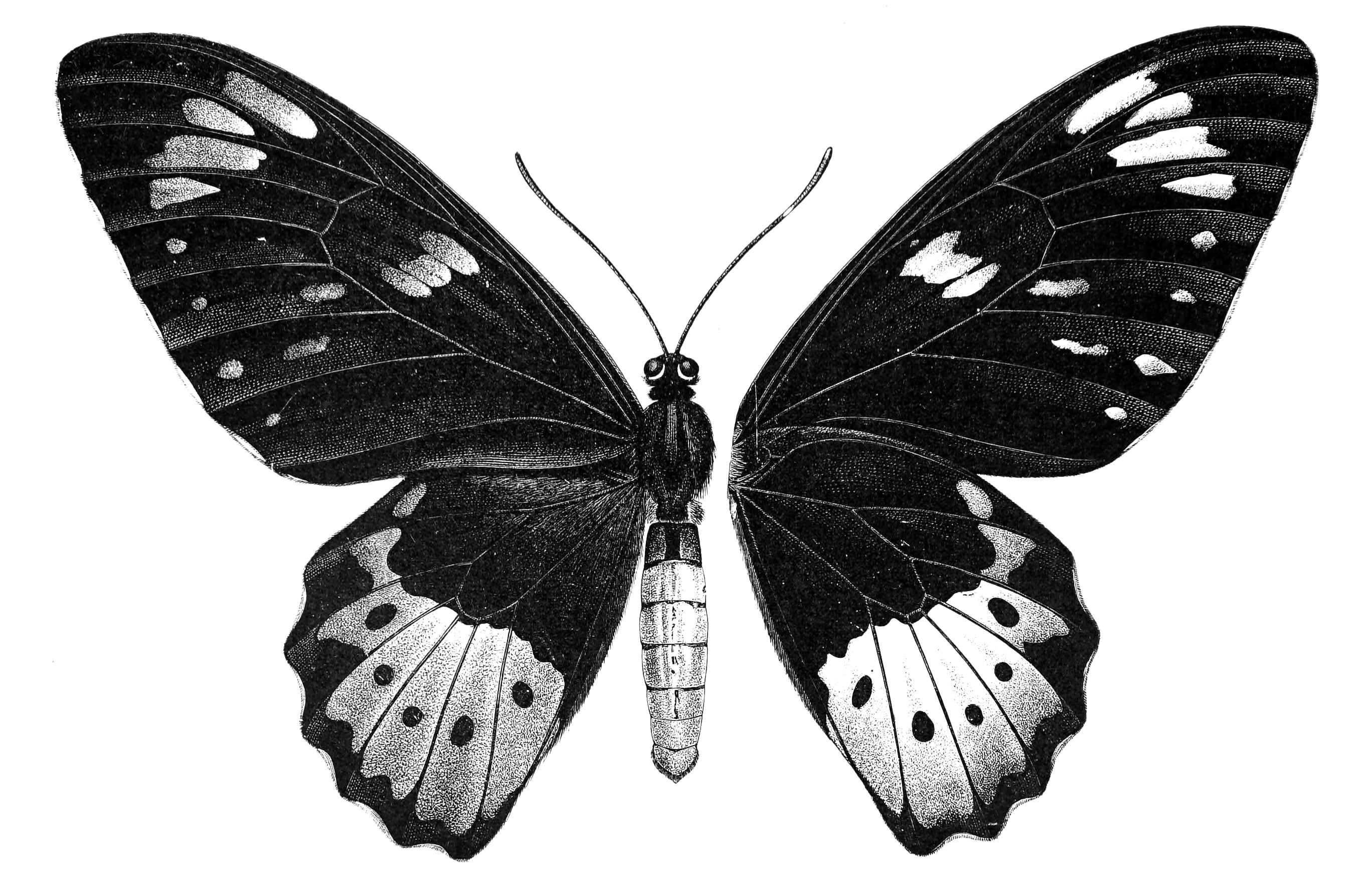
It would be difficult to surpass the effective coloration of the males in many of the species of Ornithoptera; they are, too, very diverse in this respect; O. brookiana is of an intense black colour, with a band of angular green marks extending the whole length of its wings, while behind the head there is a broad collar of crimson colour. Perhaps the most remarkable of all is the O. paradisea, recently discovered in New Guinea; in this species the sexual disparity reaches its maximum. The female (Fig. 184) is a large, sombre creature of black, white and grey colours, but the male (Fig. 183) is brilliant with gold and green, and is made additionally remarkable by a long tail of unusual form on each hind wing.
We may anticipate that these extraordinary cases of sexual total dissimilarity in appearance are accompanied by equally remarkable habits and physiological phenomena. In the case of O. brookiana the female is extremely rare, so that the collector, Künstler, could only obtain fifteen females to a thousand males. According to Mr. Skertchly, instead of the crowd of males being eager to compete for the females, the reverse is the case; the female diligently woos the male, who exhibits a reluctance to coupling. This observer apparently considered that the "emerald feathers" of the male are a guide or incitement to the female.[229]
In Africa Ornithoptera is to a certain extent represented by two extremely remarkable forms, Papilio zalmoxis and P. (Drurya) antimachus. There are about a dozen other genera of Papilionidae; most of them contain but few species. Parnassius, however, is rich in species inhabiting the mountains and elevated plateaus of the northern hemisphere in both the Old and New Worlds; it is remarkable for the small amount of scales on the wings, and for the numerous variations of the species. The female possesses a peculiar pouch at the end of the body; although only formed during the process of coupling, it has a special and characteristic form in most of the species. The curious Indian genus Leptocircus has parts of the front wings transparent, while the hind pair form long tails. This genus is of interest in that it is said to connect Papilionidae to some extent with Hesperiidae. The larvae of this family are remarkable on account of a curious process on the thoracic segment called an "osmeterium." It is usually retracted, but at the will of the caterpillar can be everted in the form of a long furcate or Y-shaped process; there is a gland in the osmeterium, and as a result a strong odour is emitted when the exstulpation occurs.
The pupation of Papilionidae is similar to that of Pieridae, the pupa being placed with the head upwards, fixed by the tail, and girt round the middle. A very curious diversity of pupation occurs in the genus Thais, in which the pupa is attached by the tail as usual, and—which is quite exceptional—also by a thread placed at the top of the head. Scudder thinks there is also a girdle round the middle, but Dr. Chapman inclines to the view that the thread attaching the head is really the median girdle slipped upwards. The pupation of Parnassius is exceptional, inasmuch as, like Satyrides, it is terrestrial, in a slight construction of silk.
Fam. 6. Hesperiidae (Skippers).—Six perfect legs: metanotum not free, largely covered by the mesonotum. A pad on the front tibia. Claws short and thick; empodium present. Although this family has been comparatively neglected by entomologists, upwards of 2000 species and more than 200 genera are known, and it is not improbable that it may prove to be as extensive as Nymphalidae. We have already said that Hesperiidae is generally admitted to be the most distinct of the butterfly groups. It has been thought by some taxonomists to be allied to Papilionidae, but this is a mistake. It is undoubtedly more nearly allied to Heterocera, and when the classification of Lepidoptera is more advanced, so that the various natural groups placed in that sub-Order are satisfactorily distinguished, it is probable that Hesperiidae will be altogether separated from Rhopalocera. We have already mentioned that E. Reuter considers the Hesperiidae to be phylogenetically unconnected with Rhopalocera proper; but though quite ready to admit that he will probably prove correct in this, we think Lepidopterists will not be willing to recognise the family as a sub-Order equivalent in value to all Heterocera.
The body is shorter and thicker than it is in most butterflies, and is pointed at the tip rather than knobbed or bent downwards; the wings are less ample; the antennae are not truly knobbed, but are thicker before the actual tip, which is itself pointed and more or less bent backwards, so that the antennae are somewhat hook-shaped.
In habits as well as structure the family is markedly distinct from butterflies; the pupation is peculiar, and the name Skipper has been applied to the perfect Insects, because so many of them indulge in a brief, jerky flight, instead of the prolonged aerial courses characteristic of the higher butterflies.
There is great difference among the members of the family, and some of them possess a very high development of the powers of locomotion, with a correspondingly perfect structure of the thoracic region, so that, after inspection of these parts, we can quite believe Wallace's statement that the larger and strong-bodied kinds are remarkable for the excessive rapidity of their flight, which, indeed, he was inclined to consider surpassed that of any other Insects. "The eye cannot follow them as they dart past; and the air, forcibly divided, gives out a deep sound louder than that produced by the humming-bird itself. If power of wing and rapidity of flight could place them in that rank, they should be considered the most highly organised of butterflies." It was probably to the genera Pyrrhopyge, Erycides, etc., that Mr. Wallace alluded in the above remarks. Although the Hesperiidae are not as a rule beautifully coloured, yet many of these higher forms are most tastefully ornamented; parts of the wings, wing-fringes, and even the bodies being set with bright but agreeable colours. We mention these facts because it is a fashion to attribute a lowly organisation to the family, and to place it as ancestral to other butterflies. Some of them have crepuscular habits, but this is also the case with a variety of other Rhopalocera in the tropics.
In their early stages the Skippers—so far as at present known—depart considerably from the majority of butterflies, inasmuch as they possess in both the larval and pupal instars habits of concealment and retirement. The caterpillars have the body nearly bare, thicker in the middle, the head free, and more or less notched above. They make much greater use of silk than other butterfly-larvae do, and draw together leaves to form caves for concealment, and even make webs and galleries. Thus the habits are almost those of the Tortricid moths.
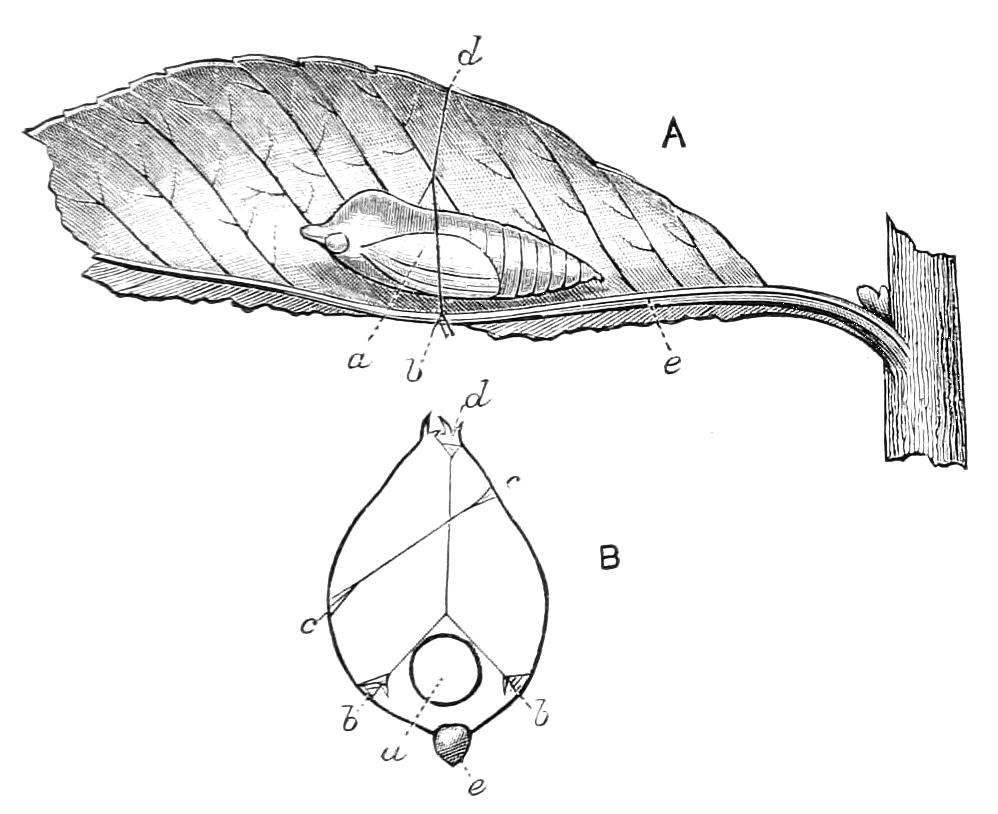
Fig. 185—Pupation of Badamia exclamationis. (After Dudgeon. J. Bombay Soc. x. 1895, p. 144). A, One side of the leaf-cradle, the other (nearest to the observer) being broken away; B, transverse section of entire cradle, a, The pupa; b, fastenings of perpendicular threads round pupa; c, cross thread retaining the leaf in cradle form; d, margins of the leaf; e, midrib of leaf.
Pupation takes place under similar conditions; and it is interesting to find that Chapman considers that the pupa in several points of structure resembles that of the small moths. Not only does the larva draw together leaves or stalks to make a shelter for the pupa, but it frequently also forms a rudimentary cocoon. These arrangements are, however, very variable, and the accounts that have been given indicate that even the same species may exhibit some amount of variation in its pupation. Scudder considers that, in the North American Skippers, the cremaster is attached to a single Y-like thread. In other cases there is a silk pad on the leaf for the cremaster to hook on. An interesting account given by Mr. Dudgeon of the pupation of a common Indian Skipper, Badamia exclamationis, shows that this Insect exercises considerable ingenuity in the structure of the puparium, and also that the arrangements it adopts facilitate one of the acts of pupation most difficult for such pupae as suspend themselves, viz. the hooking the cremasters on to the pad above them. Badamia uses a rolled-up leaf (Fig. 185); the edges of the leaf are fastened together by silk at d; from this spot there descends a thread which, when it reaches the pupa, a, forks so as to form an inverted Y, and is fastened to the leaf on either side; the two sides of the leaf are kept together by a cross thread, cc. Mr. Dudgeon was fortunate enough to observe the act of pupation, and saw that "although the anal prolegs of the larva were attached to a tuft or pad of silk in the usual way, and remained so until nearly the whole skin had been shuffled off, yet when the last segment had to be taken out, the pupa drew it entirely away from the skin and lifted it over the empty skin, and by a series of contortions similar to those made by an Insect in depositing an egg, it soon re-attached its anal segment or cremaster to the web, throwing away the cast-off skin by wriggling its body about."
Series II. Heterocera. Moths.
Although Rhopalocera—if exclusion be made of the Hesperiidae—is probably a natural group, yet this is not the case with Heterocera. The only definition that can be given of Heterocera is the practical one that all Lepidoptera that are not butterflies are Heterocera. Numerous divisions of the Heterocera have been long current, but their limits have become more and more uncertain, so that at the present time no divisions of greater value than the family command a recognition at all general. This is not really a matter of reproach, for it arises from the desire to recognise only groups that are capable of satisfactory definition.
Several attempts have recently been made to form a rough forecast of the future classification of moths. Professor Comstock, struck by some peculiarities presented by the Hepialidae, Micropterygidae (and Eriocephalidae), recently proposed to separate them from all other Lepidoptera as a sub-order Jugatae. Comstock's discrimination in making this separation met with general approval. The character on which the group Jugatae is based is, however, comparatively trivial, and its possession is not sufficient, as pointed out by Packard,[230] to justify the close association of Hepialidae and Micropterygidae, which, in certain important respects, are the most dissimilar of moths. The characters possessed by the two families in common may be summarised by saying that the wings and wing-bearing segments remain in a low stage of development. In nearly all other characters the two families are widely different. Packard has therefore, while accepting Comstock's separation of the families in question, proposed a different combination. He considers that Eriocephalidae should be separated from all others as "Protolepidoptera" or "Lepidoptera Laciniata," while the whole of the other Lepidoptera, comprised under the term "Lepidoptera Haustellata," are divided into Palaeolepidoptera (consisting only of Micropterygidae) and Neolepidoptera, comprising all Lepidoptera (inclusive of Hepialidae) except the Eriocephalidae and Micropterygidae. The question is rendered more difficult by the very close relations that exist between Micropterygidae and a sub-Order, Trichoptera, of Neuroptera. Dr. Chapman, by a sketch of the classification of pupae,[231] and Dyar, by one on larval stages,[232] have made contributions to the subject; but the knowledge of early stages and metamorphosis is so very imperfect that the last two memoirs can be considered only as preliminary sketches; as indeed seem to have been the wishes of the authors themselves.
Simultaneously with the works above alluded to, Mr. Meyrick has given[233] a new classification of the Order. We allude, in other pages, to various points in Mr. Meyrick's classification, which is made to appear more revolutionary than it really is, in consequence of the radical changes in nomenclature combined with it.
As regards the various aggregates of families that are widely known in literature by the names Bombyces, Sphinges, Noctuae, Geometres, Pyrales, we need only remark that they are still regarded as to some extent natural. Their various limits being the subject of discussion and at present undecided, the groups are made to appear more uncertain than is really the case. The group that has to suffer the greatest changes is the old Bombyces. This series comprises the great majority of those moths that have diurnal habits. In it there were also included several groups of moths the larvae of which feed in trunks of trees or in the stems of plants, such as Cossidae, that will doubtless prove to have but little connection with the forms with which they were formerly associated. These groups with aberrant habits are those that give rise to the greatest difficulties of the taxonomist.
The following key to the families of Heterocera is taken from Sir G. F. Hampson's recent work, Fauna of British India—Moths.[234] It includes nearly all the families at present recognised among the larger Lepidoptera; certain families[235] not mentioned in this key are alluded to in our subsequent remarks on the families:—
Key to the Families of Moths[236]
N.B.—This table is not simply dichotomic; three contrasted categories are used in the case of the primary divisions, A, B, C, and the secondary divisions, I, II, III.
A. Fore wing with nervule 5 coming from the middle of the discocellulars, or nearer 6 than 4 (Categories I, II, III = 1-18).
I. Frenulum rudimentary. .......... Fam. 38. Epicopeiidae, see p. 418.
II. Frenulum absent (Categories 1-8).
1. Proboscis present, legs with spurs (Cat. 2-5).
2. Hind wing with nervule 8 remote from 7 (Cat. 3 and 4).
3. Fore wing with nervule 6 and 7 stalked .......... Fam. 39. Uraniidae, see p. 419.
4. Fore wing with nervules 6 and 7 not stalked .......... Fam. 5. Ceratocampidae, see p. 375.
5. Hind wing with nervule 8 nearly touching 7 beyond end of cell .......... Fam. 4. Brahmaeidae, see p. 374.
6. Proboscis absent, legs without spurs (Cat. 7 and 8).
7. Hind wing with one internal nervure .......... Fam. 3. Saturniidae, see p. 372.
8. Hind wing with two or three internal nervures .......... Fam. 6. Bombycidae, see p. 375.
III. Frenulum present (Cat. 9-18).
9. Antennae fusiform [spindle-shaped] .......... Fam. 9. Sphingidae, see p. 380.
10. Antennae not fusiform (Cat. 11-18).
11. Proboscis absent .......... Fam. 7. Eupterotidae, see p. 376.
12. Proboscis present (Cat. 13-18).
13. Hind wing with nervule 8 curved and almost touching 7 after end of cell; nervure 1a reaching anal angle .......... Fam. 12. Cymatophoridae, see p. 386.
14. Hind wing with nervule 8 remote from 7 after end of cell (Cat. 15-18).
15. Tarsi as short as tibia, hairy; stoutly built moths .......... Fam. 11. Notodontidae,[237] see p. 383.
16. Tarsi long and naked; slightly built moths (Cat. 17 and 18)
17. Fore wing with nervule 7 remote from 8, and generally stalked with 6 .......... Fam. 40. Epiplemidae, see p. 420.
18. Fore wing with nervule 7 given off from 8; hind wing with nervure 1a short or absent .......... Fam. 36. Geometridae, see p. 411.
B. Fore wing with nervule 5 coming from lower angle of cell or nearer 4 than 6 [see figures 161 and 162, pp. 318, 319] (Categories 19-58).
19. Hind wing with more than 8 nervules (Cat. 20, 21).
20. Proboscis absent, no mandibles nor ligula; size not very small .......... Fam. 23. Hepialidae, see p. 396.
21. Mandibles, long palpi and ligula present; size very small .......... Fam. 47. Micropterygidae, see p. 435.
22. Hind wing with not more than 8 nervules (Cat. 23-58).
23. Hind wing with nervule 8 remote from 7 after origin of nervules 6 and 7 (Cat. 24-51).
24. Frenulum absent (Cat. 25-29).
25. Hind wing with one internal nervure; nervule 8 with a precostal spur .......... Fam. 31. Pterothysanidae, see p. 406.
26. Hind wing with two internal nervures (Cat. 27 and 28).
27. Hind wing with a bar between nervules 7 and 8 near the base; nervure 1a directed to middle of inner margin .......... Fam. 30. Endromidae, see p. 406.
28. Hind wing with no bar between nervules 7 and 8; nervure 1a directed to anal angle .......... Fam. 29. Lasiocampidae, see p. 405.
29. Hind wing with three internal nervures .......... Fam. 21. Arbelidae, see p. 396.
30. Frenulum present (Cat. 31-51).
31. Hind wing with nervule 8 aborted .......... Fam. 15. Syntomidae, see p. 388.
32. Hind wing with nervule 8 present (Cat. 33-51).
33. Antennae knobbed .......... Fam. 1. Castniidae, see p. 371.
34. Antennae filiform, or (rarely) dilated a little towards the tip (Cat. 35-51).
35. Fore wing with nervure 1c present (Cat. 36-43).
36. Hind wing with nervule 8 free from the base or connected with 7 by a bar (Cat. 37-42).
37. Proboscis present .......... Fam. 16. Zygaenidae, see p. 390.
38. Proboscis absent (Cat. 39-42).
39. Palpi rarely absent; ♀ winged; larvae wood-borers .......... Fam. 20. Cossidae, see p. 395.
40. Palpi absent; ♀ apterous (Cat. 41, 42).
41. ♀ rarely with legs; ♀ and larvae case-dwellers .......... Fam. 19. Psychidae, see p. 392.
42. ♀ and larvae free[238] .......... Fam. 18. Heterogynidae, see p. 392.
43. Hind wing with nervule 8 anastomosing shortly with 7 .......... Fam. 26. Limacodidae, see. p. 401.
44. Fore wing with nervure 1c absent (Cat. 45-51).
45. Hind wing with nervule 8 rising out of 7 .......... Fam. 34. Arctiidae, see p. 408.
46. Hind wing with nervule 8 connected with 7 by a bar, or touching it near middle of cell (Cat. 47, 48).
47. Palpi with the third joint naked and reaching far above vertex of head; proboscis present .......... Fam. 33. Hypsidae, see p. 408.
48. Palpi not reaching above vertex of head; proboscis absent or very minute .......... Fam. 32. Lymantriidae, see p. 406.
49. Hind wing with nervule 8 anastomosing shortly with 7 near the base; proboscis well developed (Cat. 50, 51).
50. Antennae more or less thick towards tip .......... Fam. 35. Agaristidae, see p. 410.
51. Antennae filiform .......... Fam. 37. Noctuidae, see p. 414.
52. Hind wing with nervule 8 curved and nearly or quite touching nervure 7, or anastomosing with it after origin of nervules 6 and 7 (Cat. 53-58).
53. Hind wing with nervure 1c absent (Cat. 54-57).
54. Hind wing with nervule 8 with a precostal spur .......... Fam. 24. Callidulidae, see p. 400.
55. Hind wing with nervule 8 with no precostal spur (Cat. 56, 57).
56. Hind wing with nervure 1a absent or very short .......... Fam. 25. Drepanidae, see p. 400.
57. Hind wing with nervure 1a almost or quite reaching anal angle .......... Fam. 28. Thyrididae, see p. 404.
58. Hind wing with nervure 1c present .......... Fam. 41. Pyralidae, see p. 420.
C. Fore wing with 4 nervules arising from the cell at almost even distances apart (Cat. 59-66).
59. Wings not divided into plumes (Cat. 60-63).
60. Hind wing with nervule 8 coincident with 7 .......... Fam. 13. Sesiidae, see p. 386.
61. Hind wing with nervule 8 free (Cat. 62, 63).
62. Fore wing with nervure 1b simple or with a very minute fork at base .......... Fam. 14. Tinaegeriidae, see p. 387.
63. Fore wing with nervure 1a forming a large fork with 1b at base .......... Fam. 45. Tineidae, see p. 428.
64. Wings divided into plumes (Cat. 65, 66).
65. Fore wing divided into at most two, hind wing into three plumes .......... Fam. 42. Pterophoridae, see p. 426.
66. Fore wing and hind wing each divided into three plumes .......... Fam. 43. Alucitidae (= Orneodidae), see p. 426.
Fam. 1. Castniidae.—The Insects of this family combine to a large extent the characters of butterflies and moths. The antennae are knobbed or hooked at the tip, there is a large precostal area to the hind wing. The nervules of the front wing are complex and anastomose so as to form one or more accessory cells (Fig. 162). This important, but not extensive, family consists chiefly of forms found in tropical America and Australia. The diversity of size, form and appearance is very great, and it is probable that the members of the family will be separated; indeed, taxonomists are by no means in agreement as to the limits of the family. The Castniidae are diurnal Insects, and the North American genus Megathymus is by many considered to belong to the Rhopalocera. Euschemon rafflesiae (Fig. 186) is extremely like a large Skipper with long antennae, but has a well-marked frenulum. The members of the Australian genus Synemon are much smaller, but they also look like Skippers. Their habits are very like those of the Hesperiidae; they flit about in the hot sunshine, and when settling after their brief flights, the fore wings are spread out at right angles to the body, so as to display the more gaily coloured hind wings; at night, or in cloudy weather, the Insect rests on blades of grass with the wings erect, meeting vertically over the back, like a butterfly. Hecatesia, another Australian genus, is now usually assigned to Agaristidae; its members look like moths. The male of H. fenestrata is provided with a sound-producing organ similar to that of the Agaristid genus Aegocera.
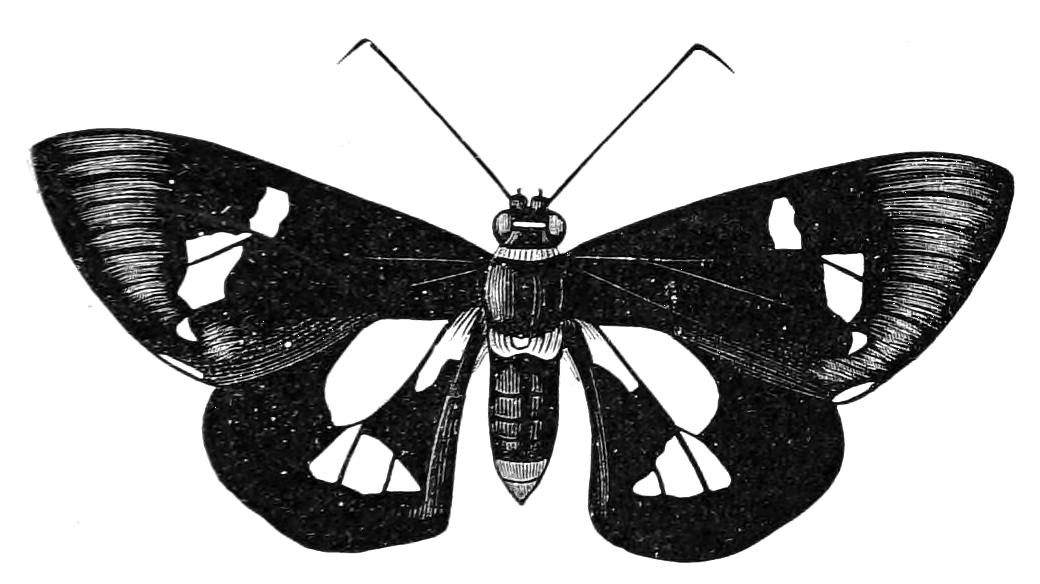
Fig. 186—Euschemon rafflesiae. Australia. (After Doubleday.)
The Castnia of South America are many of them like Nymphalid butterflies, but exhibit great diversity, and resemble butterflies of several different divisions of the family.[239]
The species are apparently great, lovers of heat and can tolerate a very dry atmosphere.[240] The transformations of very few have been observed; so far as is known the larvae feed in stems; and somewhat resemble those of Goat-moths or Leopard-moths (Cossidae); the caterpillar of C. therapon lives in the stems of Brazilian orchids, and as a consequence has been brought to Europe, and the moth there disclosed. The pupae are in general structure of the incomplete character, and have transverse rows of spines, as is the case with other moths of different families, but having larvae with similar habits.[241] Castnia eudesmia forms a large cocoon of fragments of vegetable matter knitted together with silk. These Insects are rare in collections; they do not ever appear in numbers, and are generally very difficult to capture.
Fam. 2. Neocastniidae.—The Oriental genus Tascina, formerly placed in Castniidae has recently been separated by Sir G. Hampson and associated with Neocastnia nicevillei, from East India, to form this family. These Insects have the appearance of Nymphalid butterflies. They differ from Castniidae by the want of a proboscis.
Fam. 3. Saturniidae.—This is a large and varied assemblage of moths; the larvae construct cocoons; the products of several species being used as silk. These moths have no frenulum and no proboscis. The hind wings have a very large shoulder, so that the anterior margin or costa stretches far forward beneath the front wing, as it does in butterflies. The antennae of the males are strongly bipectinated and frequently attain a magnificent development. The family includes some of the largest and most remarkable forms of the Insect-world, Coscinocera hercules, inhabiting North Australia, is a huge moth which, with its expanded wings and the long tails thereof, covers a space of about 70 square inches. One of the striking features of the family is the occurrence in numerous forms of remarkable transparent spaces on the wings; these window-like areas usually occur in the middle of the wing and form a most remarkable contrast to the rest of the surface, which is very densely scaled. In Attacus these attain a large size. In other species, such as the South African Ludia delegorguei, there is a small letter-like, or symboliform, transparent mark towards the tip of each front wing. We have at present no clue to the nature or importance of these remarkable markings. In the genus Automeris, and in other forms, instead of transparent spaces there are large and staring ocellate marks or eyes, which are concealed when the Insect is reposing. In Arceina, Copiopteryx, Eudaemonia and others, the hind wings are prolonged into very long tails, perhaps exceeding in length those of any other moths.
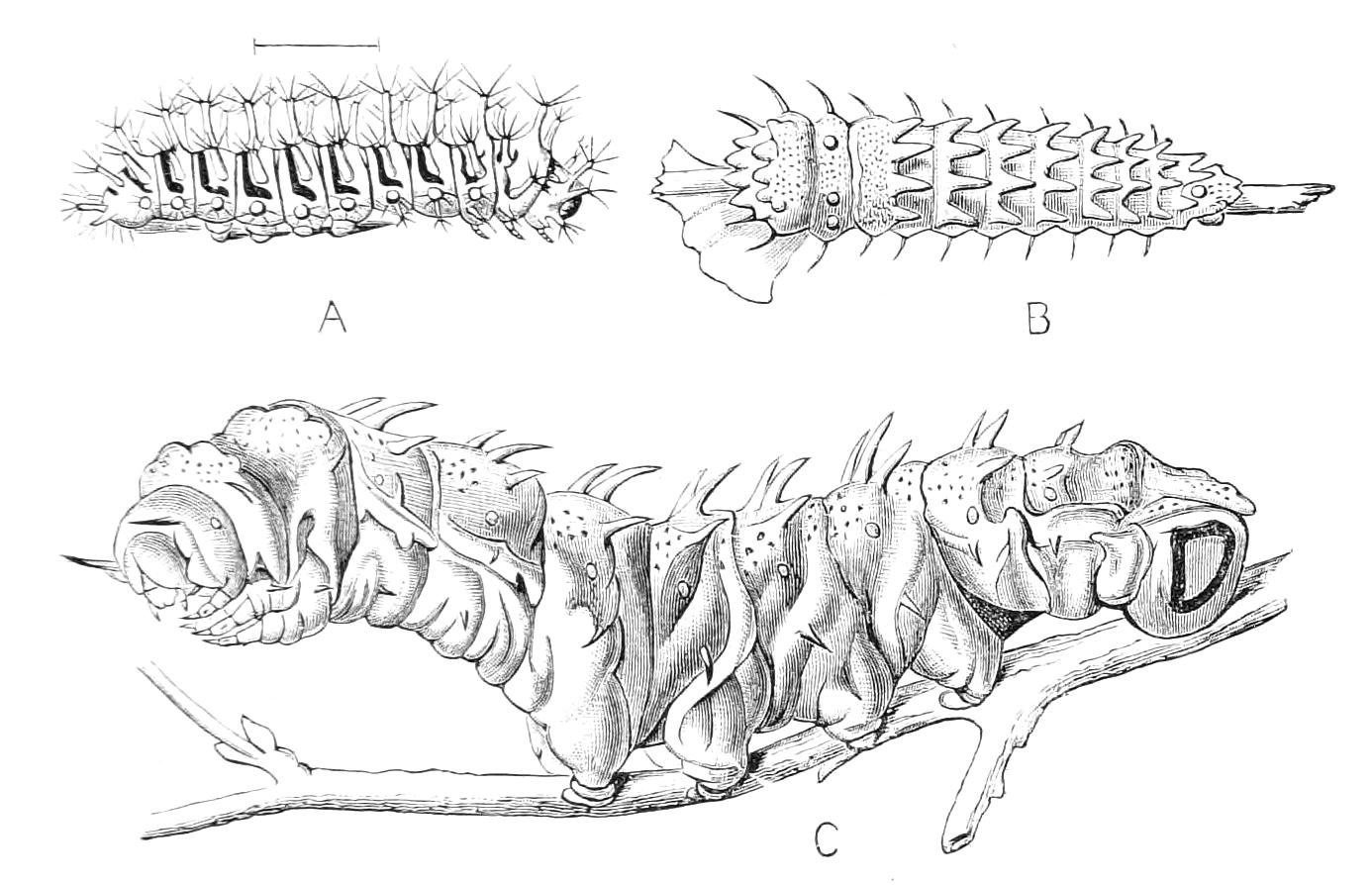
Fig. 187—Larva of Attacus atlas, India. A, at end of 1st instar, profile; B, 4th instar, dorsal view; C, full-grown larva, in repose. (After Poujade.)
The cocoons are exceedingly various, ranging from a slight open network to a dense elaborate structure arranged as in our Emperor moth; in this latter case an opening is left by the larva for its exit after it has become a moth, but by an ingenious, chevaux-de-frise work, this opening is closed against external enemies, though the structure offers no resistance at all to the escape of the moth. Fabre has recorded some observations and experiments which seem to show that the instinct predominating over the formation of the cocoon is not cognoscent. The Insect, if interfered with, displays a profound stupidity. Its method is blind perseverance in the customary.[242] The cocoon of Saturniidae is more often continuous, i.e. entirely closed. Packard says that Actias luna effects its escape by cutting through the strong cocoon with an instrument situate at the base of the front wing. Other species were examined and were found to possess the instrument; but Packard is convinced that the majority of the species possessing the instrument do not use it, but escape by emitting a fluid that softens the cocoon and enables the moth to push itself through.[243] The cocoons of the species of Ceranchia have a beautiful appearance, like masses of filagree-work in silver. The pupa in Ceranchia is very peculiar, being terminated by a long, spine-like process. In Loepa newara the cocoon is of a green colour and suspended by a stalk; looking like the pod, or pitcher, of a plant. The silk of the Saturniidae is usually coarse, and is known as Tusser or Tussore[244] silk.
The larvae of this family are as remarkable as the imagos, being furnished with spine-bearing tubercles or warts, or long fleshy processes; the colours are frequently beautiful. The caterpillar of Attacus atlas (Fig. 187) is pale olive-green and lavender, and has a peculiar, conspicuous, red mark on each flank close to the clasper.
About seventy genera and several hundred species are already known of this interesting family. They are widely distributed on the globe, though there are but few in Australia. Our only British species, the Emperor moth, Saturnia pavonia, is by no means rare, and its larva is a beautiful object; bright green with conspicuous tubercles of a rosy, or yellow, colour. It affects an unusual variety of food-plants, sloe and heather being favourites; the writer has found it at Wicken flourishing on the leaves of the yellow water-lily. Although the Emperor moth is one of the largest of our native Lepidopterous Insects, it is one of the smallest of the Saturniidae.
The family Hemileucidae of Packard is included at present in Saturniidae.
Fam. 4. Brahmaeidae.—The species forming the genus Brahmaea have been placed in various families, and are now treated by Hampson as a family apart, distinguished from Saturniidae by the presence of a proboscis. They are magnificent, large moths, of sombre colours, but with complex patterns on the wings, looking as if intended as designs for upholstery. About fifteen species are recognised; the geographical distribution is remarkable; consisting of a comparatively narrow belt extending across the Old World from Japan to West Africa, including Asia Minor and the shores of the Caspian Sea. Little has been recorded as to the life-histories of these Insects. The larva is said to have the second and third segments swollen and armed with a pair of lateral spines projecting forwards. A cocoon is not formed.
Fam. 5. Ceratocampidae.—This is a small family. They are fine moths peculiar to the New World, and known principally by scattered notices in the works of North American entomologists. Seven genera and about sixty species are known. The chief genus is Citheronia. Some of the larvae are remarkable, being armed with large and complex spines. A cocoon is not formed.
Fam. 6. Bombycidae.—In entomological literature this name has a very uncertain meaning, as it has been applied to diverse groups; even at present the name is frequently used for the Lasiocampidae. We apply it to the inconsiderable family of true silkworm moths. They are comparatively small and uninteresting Insects in both the larval and imaginal instars; but the cocoons formed by the well-known silkworm are of great value, and some other species form similar structures that are of more or less value for commercial purposes. The silkworm has been domesticated for an enormous period, and is consequently now very widely spread over the earth's surface; opinions differ as to its real home, some thinking it came originally from Northern China, while others believe Bengal to have been its native habitat. The silkworm is properly called Bombyx mori, but perhaps it is as often styled Sericaria mori. Besides being of so great a value in commerce, this Insect has become an important object of investigation as to anatomy, physiology and development. Its domestication has probably been accompanied by a certain amount of change in habits and instincts, the creature having apparently lost its appreciation of freedom and its power of flight; it is also said to be helpless in certain respects when placed on trees in the larval state; but the importance of these points has been perhaps somewhat exaggerated.[245]
Although the family Bombycidae is very widely distributed in the warmer regions of the world, it includes only 15 or 20 genera, and none of them have many species. The Mustiliidae of some entomologists are included here. Like the Saturniidae, the Bombycidae are destitute of proboscis and of frenulum to the wings, but they possess two or three internal nervures on the hind wing instead of the single one existing in Saturniidae.
Fam. 7. Eupterotidae (Striphnopterygidae of Aurivillius).—This family has only recently been separated from Lasiocampidae; its members, however, possess a frenulum; while none is present in the larger family mentioned. Its limits are still uncertain, but it includes several extremely interesting forms. The larvae of the European processionary moth, Cnethocampa processionea, are social in habits; they sometimes occur in very large numbers, and march in columns of peculiar form, each band being headed by a leader in front, and the column gradually becoming broader. It is thought that the leader spins a thread as he goes on, and that the lateral leaders of the succeeding files fasten the threads they spin to that of the first individual, and in this way all are brought into unison. The hairs of these caterpillars are abundant, and produce great irritation to the skin and mucous membrane of any one unlucky enough to come into too close contact with the creatures. This property is, however, not confined to the hairs of the processionary moths, but is shared to a greater or less extent by the hairs of various other caterpillars of this division of Lepidoptera. In some cases the irritation is believed to be due to the form of the hair or spine, which may be barbed or otherwise peculiar in form. It is also thought that in some cases a poisonous liquid is contained in the spine.
The larvae of other forms have the habit of forming dense webs, more or less baglike, for common habitation by a great number of caterpillars, and they afterwards spin their cocoons inside these receptacles. This has been ascertained to occur in the case of several species of the genus Anaphe, as has been described and illustrated by Dr. Fischer,[246] Lord Walsingham,[247] and Dr. Holland.[248] The structures are said to be conspicuous objects on trees in some parts of Africa. The common dwelling of this kind formed by the caterpillars of Hypsoides radama in Madagascar is said to be several feet in length; but the structures of most of the other species are of much smaller size.
The larvae of the South American genus Palustra, though hairy like other Eupterotid caterpillars, are aquatic in their habits, and swim by coiling themselves and making movements of extension; the hair on the back is in the form of dense brushes, but at the sides of the body it is longer and more remote; when the creatures come to the surface—which is but rarely—the dorsal brushes are quite dry, while the lateral hairs are wet. The stigmata are extremely small, and the mode of respiration is not fully known. It was noticed that when taken out of the water, and walking in the open air, these caterpillars have but little power of maintaining their equilibrium. They pupate beneath the water in a singular manner: a first one having formed its cocoon, others come successively and add theirs to it so as to form a mass.[249] Another species of Palustra, P. burmeisteri, Berg,[250] is also believed to breathe by means of air entangled in its long clothing; it comes to the surface occasionally, to renew the supply; the hairs of the shorter brushes are each swollen at the extremity, but whether this may be in connexion with respiration is not known. This species pupates out of the water, between the leaves of plants.
Dirphia tarquinia is remarkable on account of the great difference of colour and appearance in the two sexes. In the Australian genus Marane the abdomen is densely tufted at the extremity with hair of a different colour.
Fam. 8. Perophoridae.—The moths of the genus Perophora have for long been an enigma to systematists, and have been placed as abnormal members of Psychidae or of Drepanidae, but Packard now treats them as a distinct family. The larvae display no signs of any social instincts, but, on the contrary, each one forms a little dwelling for itself. Some twenty species of Perophora are now known; they inhabit a large part of the New World, extending from Minnesota to Buenos Aires. The habits of P. melsheimeri have been described by Harris, Packard[251] and Newman, and those of P. batesi by Newman.[252] The larva is very peculiar; there is a flexible pair of appendages on the head, the use of which is unknown;[253] they arise by slender stalks behind and above the eyes, are about as long as the head, and are easily broken off. After hatching, the young larva, when it begins to feed, fastens two leaves together with silk threads, and so feeds after the fashion of a Tortricid, rather than a case-making, larva. Subsequently, however, the caterpillar entirely detaches two pieces of leaves and fastens them together at the edges, thus constructing a case that it lives in, and carries about; it can readily leave the case and afterwards return to it. When at rest, the larva relieves itself from the effort of supporting this case by the device of fastening it to a leaf with a few silken threads; when the creature wished to start again, "it came out and bit off these threads close to the case." Subsequently it changes inside the case to a pupa armed with transverse rows of teeth, like so many other pupae that are capable of a certain amount of movement. The larva is of broad, short, peculiar form, and is said to be very bold in defending itself when attacked. The moth is somewhat like the silkworm moth, though of a more tawny colour. Newman does not allude to any cephalic appendages as existing in the larva of P. batesi. If we accept the eggs figured and described by Snellen,[254] as those of P. batesi, it is possible that this Insect possesses a peculiar mode of oviposition, the eggs being placed one on the other, so as to form an outstanding string; but we think this example probably abnormal; the mode is not shared by P. melsheimeri. The genus Lacosoma is considered by Packard to be an ally of Perophora. The caterpillar of L. chiridota doubles a leaf at the mid-rib and fastens the two edges together, thus forming an unsymmetrical case. Many larvae of Microlepidoptera do something like this, but the Lacosoma cuts off the habitation thus formed and carries it about. Packard says it may have descended from ancestors with ordinary habits and that certain peculiar obsolete markings on the body of the caterpillar may be indications of this.[255]
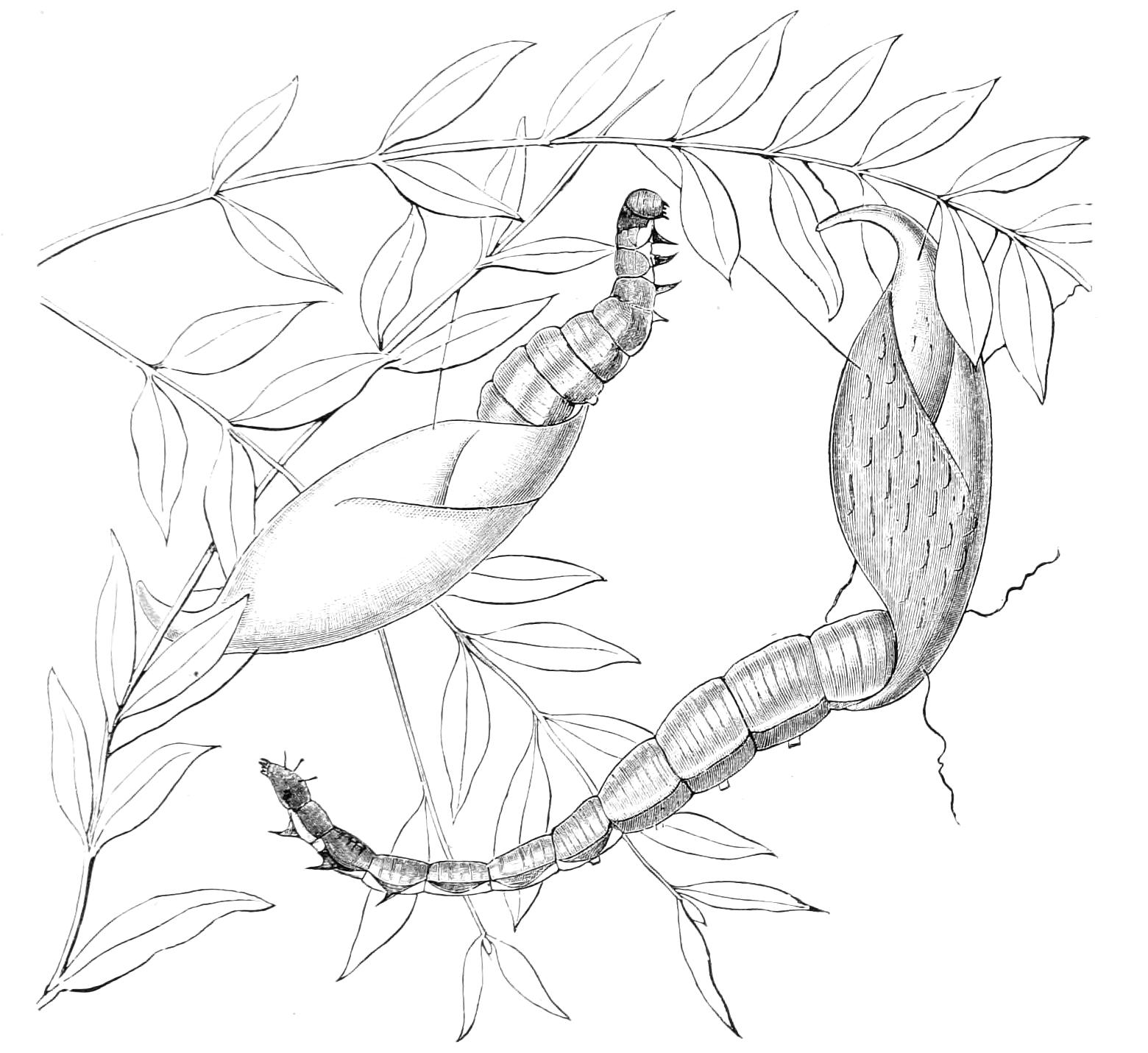
Fig. 188—Larvae of Hammock-moth, Perophora sanguinolenta, projecting from their Hammocks, built from their own excrement. South America. (After Jones.)
The Argentinian Insect Mamillo curtisea[256] is also probably an ally of Lacosoma. The caterpillar of this moth spins a dwelling for itself, and is remarkable from the bright colour of the thoracic segments, the following somites being colourless; the head bears a pair of large processes, quite different from those figured by Harris. The moth itself is very Geometrid-like in colour and form. This species is now assigned to Perophora, but it seems to be very doubtful whether many of the species placed in this genus really belong to it. The diversity of habits and instincts evinced by these moths of exceptional modes of life, but considered to be closely allied, is very interesting. The most remarkable of all is the Hammock-moth, Perophora sanguinolenta, of the centre of South America, the larva of which constructs its portable habitations out of its own excrement, which is of peculiar form, specially suitable for the purpose. The caterpillar, when wishing to enlarge its case, builds it up from excrement "flattened at the sides, so as to adapt it for building purposes."[257]
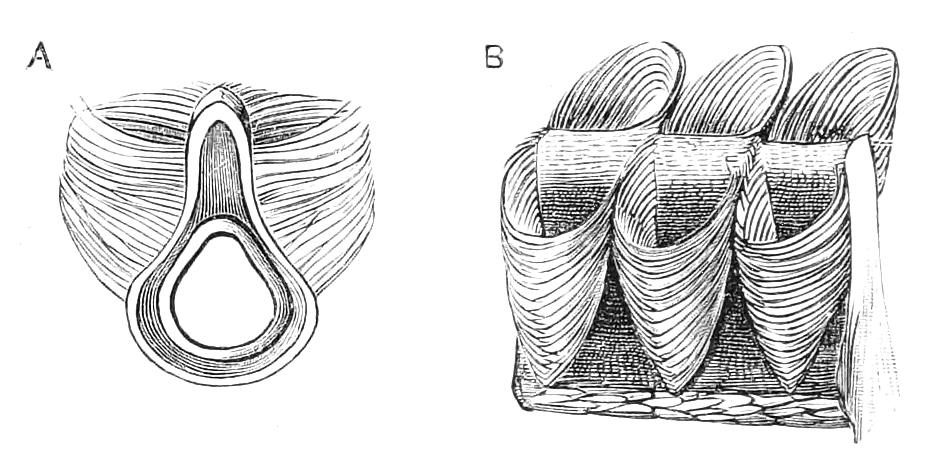
Fig. 189.—Antennae of Sphingidae. A, One joint of antenna of Choerocampa elpenor ♂, enlarged; B, three joints of antenna of Sphinx ligustri, seen from one side, and enlarged.
Fam. 9. Sphingidae (Hawk-moths).—A very important family of moths of large or moderate size. They have a proboscis which is frequently very long; there is a frenulum; the body is stouter than in most other Lepidoptera, and the wings are of small superficies in comparison with it; the antennae are somewhat peculiar, having a thick, solid appearance, pointed at the tip. This is usually somewhat hooked, and bears a few hairs. In the males the antennae are formed in a manner specially characteristic of the family. In section, each joint shows a chitinous process on the under side (Fig. 189, A), forming with that of the other joints a continuous ridge, and on each side of this ridge there exists a series of short, delicate "cilia" arranged in a very beautiful manner (Fig. 189, B). This structure, with some modifications, appears to be usually present in the family; it attains a very perfect development in cases where the tips of two rows of cilia bend towards one another, meeting so as to form an arched cavity. This structure is different from what occurs in the males of other families of Lepidoptera, for though cilia are very common, they are usually placed either on two projections from the body of the antennae (instead of on the two sides of a single projection), or there is but a single whorl, or set, of them on each joint (Catocala, etc.). The front wings are usually pointed at the tip, and are long in proportion to their width; but in the Smerinthini they are of different form, with the outer margin scalloped; the hind wings are remarkably small; the abdomen is frequently pointed, but in the Macroglossini, or Humming-bird hawk-moths, it is furnished at the tip with a tuft, or with two tufts, of dense, long scales, capable of expansion.
The larvae are remarkable for their colours and form. The anterior segments are attenuated, but are capable of great retraction, so that in repose (Fig. 190, A) this shape is concealed by the curious attitudes that are assumed. There is in nearly all cases a conspicuous horn on the eleventh segment, and the body at the extremity behind the horn is so much modified that the terminal two segments look like little more than a pair of large claspers. In the Choerocampini, the thoracic segments are retractile, and can be withdrawn into the more or less inflated fourth segment, and give the creature somewhat the appearance of a miniature hooded snake. The larvae of Sphingidae do not bear any conspicuous hairs—except during the first instar. They do not spin cocoons, but bury themselves in the earth. The pupa is remarkable from the deep cleft that exists to admit air to the first spiracle, and for a deep depression on each side of the anterior part of abdominal segments 5-7; in some cases the proboscis projects on the breast somewhat like the handle of a pitcher.
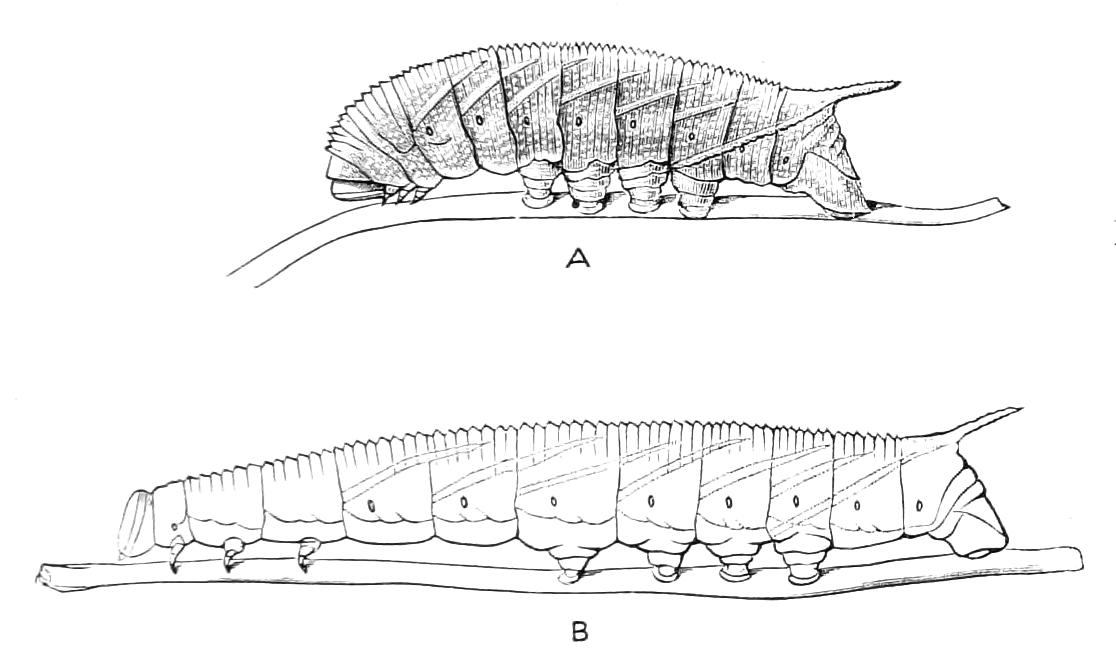
Fig. 190—Larva of the Poplar Hawk-moth, Smerinthus populi. × 1. A, in repose; B, in movement.
A great deal has been written on the colours, markings, and attitudes of Sphingid larvae, and many interesting facts have been brought to light. We may refer the reader to the writings of Weismann[258] and Poulton,[259] without, however, recommending him to place an implicit confidence in their somewhat metaphysical disquisitions; for the views there shadowed will necessarily became much modified with the advance of exact knowledge. It is certain that the position assumed by the same individual varies much according to age, and to the interval since the last moult; sometimes the attitude is much more remarkable than that shown in Figure 190, A, for the anterior segments are held erect, as well as contracted, the front part of the body being curled, and the Insect supported by the claspers and two pairs only of the abdominal feet. There is, too, a considerable difference in colour before and after an ecdysis. Piepers, who has had a long experience among Sphingid larvae in Java, considers that much of what has been written as to the protective value of their colours and attitudes, is mere fancy, and wild generalisation.[260]
Sphingidae have been recorded as capable of producing sounds in the larval and pupal, as well as in the perfect, instars; but the method in which this is done has not been ascertained, except in the case of the imago of the Death's-head moth, which is well known to emit a very audible cry when not on the wing; in this case it is highly probable that the method is the friction of the palpi against the proboscis, as stated by Réaumur and Landois; the inner face of the palp is said to be marked in this case with fine ridges or striae.
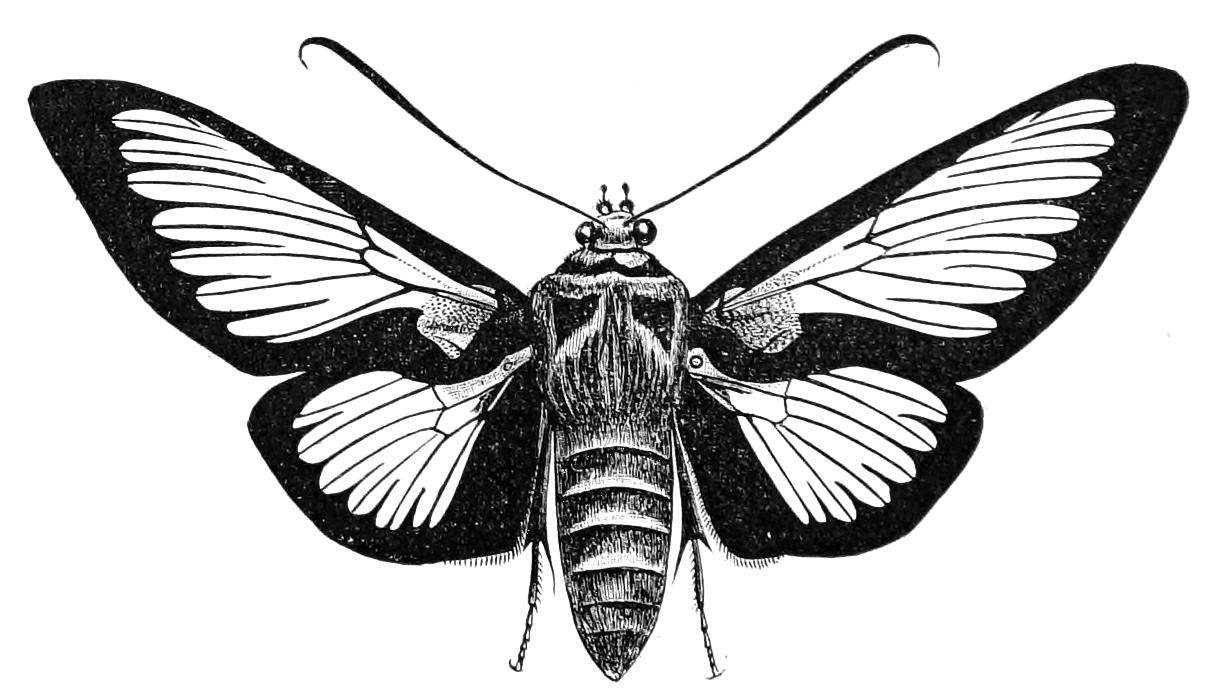
Fig. 191—Cocytia durvillii. New Guinea. (After Boisduval.)
Fam. 10. Cocytiidae.—A single genus constitutes this family, and there are only three or four species known; they come from the region of New Guinea, whence the first was brought by D'Urville nearly a hundred years ago. They are still amongst the rarest of Insects. Nothing is known as to their life-histories. In appearance they somewhat remind us of the Bee-hawk moths and Zygaenidae. Butler says[261] the family is characterised by the palpi, which differ much in the two sexes, and by the antennae resembling those of Castniidae or Hesperiidae. The form, transparency, and coloration of the wings reminds one vividly of the Sphingid genus Hemaris; the nervuration is somewhat like that of Hemaris, but has certain features of Zygaenidae. Butler places the family between Agaristidae and Zygaenidae.
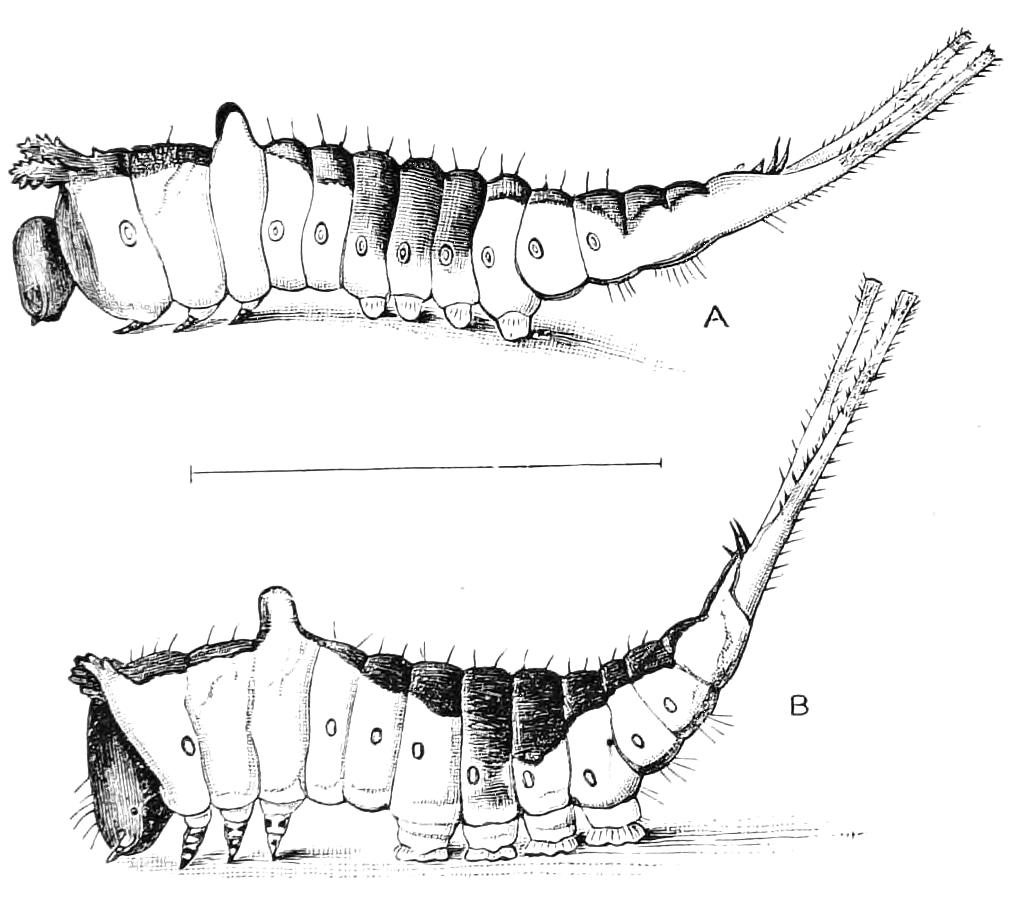
Fig. 192—Cerura vinula (Puss-moth) caterpillar. A, Moulting; B, the same individual a few hours after the moult.
Fam. 11. Notodontidae (Prominents, Puss-moths, etc.).—This is one of the most extensive of the families of Bombyces; it consists in larger part of obscure-coloured moths, somewhat like the ordinary Noctuidae of temperate regions; to which family the Notodonts are indeed considered to be very closely allied. The family contains, however, some very remarkable forms. Tarsolepis has an elongate body, terminated (in the female of T. fulgurifera) by a very conspicuous tuft of enormously long, battledore scales; while in the male of T. sommeri the hind legs are provided with an appendage of beautiful, roseate hairs. A few of the larger kinds bear a considerable resemblance in form and proportions to the Sphingidae. Some of the larvae are most interesting objects; the Puss-moth caterpillar, the Lobster, and the Dragon larvae are of such strange forms that they have already interested several generations of observers. The Puss-moth is common in the southern half of England; its caterpillar (Fig. 192) has, instead of the claspers, a pair of tubes in which are concealed two long, flexible whips, capable of being thrust out, and withdrawn, with rapidity. The structure and the mode of action of these flagella have been well elucidated by Professor Poulton.[262] The flagella are to be considered as actual prolongations of the receptacle in which each is placed, though they are of very different texture therefrom; they are everted by blood-pressure and drawn in by muscular action; this latter function is very perfectly accomplished, the amount of relaxation and contraction of the muscle being very great. It has been maintained that the whips have arisen as arms of protection against the attacks of Ichneumon flies; observation shows, however, that the proportion of these "protected" Insects destroyed by enemies of this sort is quite as large as it is in the case of forms that are not so protected. The Puss-moth larva is also believed to be protected by terrifying attitudes,[263] as well as by ejection (like so many other larvae and insects generally) of fluid. There is no reason for believing that these larvae are less eaten than others, and consequently a further hypothesis has been proposed, to the effect that if they had not acquired these means of defence they would have been exterminated altogether. This supposition is considered to account for their acquiring the defence by means of natural selection; realising the dictum of D. O'Phace, Esq.—
Some flossifers think that a fakkilty's granted, The minnit it's proved to be thoroughly wanted.
When the Puss-moth caterpillar is full grown it spins a peculiar cocoon of a solid and impervious nature, which it manages to make look very like the spots, crevices, or other places amongst which it is located; in this prison the creature remains for nine or ten months—by far the larger part of its existence. When it has changed to a moth it has to escape from the cell in which it so effectually confined itself. This is effected by the cocoon being thinner in front of the head of the moth, and by the emission from the alimentary canal of a fluid that softens the cocoon at the spot alluded to. Mr. Latter has ascertained[264] that this fluid is strongly alkaline, and contains potassium hydroxide. The front of the head of the moth is provided with a shield, consisting of a portion of the pupa shell, which enables the moth to push through in safety, and at the same time protects the head from the emitted fluid. Figure 192 shows the great change that occurs in the period of a few hours in the size of the head of the larva, as well as in that of the spiracles: in A the old spiracles are seen surrounded by the much larger new orifices, which are at the moment of moulting quite visible through the skin that is about to be cast off.
The caterpillar of the Lobster-moth, Stauropus fagi, is more remarkable than that of the Puss-moth, but is unfortunately very rare. It has remarkably long thoracic legs, the abdomen is swollen at the tip, and instead of the terminal claspers has two long slender processes. The effect of these peculiarities is greatly enhanced by the extraordinary attitude assumed by the caterpillar, which holds the first five segments erect, with the second and third pairs of thoracic legs outstretched; the swollen terminal segment is also held erect. Hermann Müller states[265] that when seen from the front this caterpillar looks like a spider, and also that when alarmed it moves the long legs after the fashion of an Arachnid. He believes that it is thus effectually protected from the attacks of Ichneumons. Birchall says[266] that the young larva, when at rest, closely resembles, in colour and outline, one of the twigs of beech with unopened buds, on which it frequently stations itself; and that, when feeding, its likeness to a great earwig or to a Staphylinus is very striking. Others say that this caterpillar resembles a dead and crumpled beech leaf.
The larva of Hybocampa milhauseri—the Dragon of old Sepp—is highly remarkable. When young it has grand lateral horns in front, and a dorsal row; as it grows the lateral horns disappear. Dr. Chapman says[267] that he could not understand at first why any larva should have such remarkable angular outlines, curiously conspicuous corners and humps. But he afterwards found that the creature exactly resembled a curled oak leaf, eaten and abandoned by a Tortrix larva. This caterpillar also constructs an elaborate cocoon from which the moth escapes by an operation performed by the pupa, which is provided with two hard spines, called by Dr. Chapman sardine-openers. "By a lateral rotatory movement of the pupa, which obtains its fulcrum from the tightness with which it is grasped by the cocoon, it traverses over and over again" the same part of the cocoon till it is cut through; at the same time the spines act as guides to a fluid which is emitted so as to soften the part that has to be sundered.
Though many other larvae of Notodontidae are of most curious form and assume remarkable attitudes, yet this is not the case with all, and some are quite ordinary and like the caterpillars of common Noctuidae. This is the case with the species Rhegmatophila alpina we have selected to illustrate the metamorphosis of the Order (Fig. 157). Those who wish to form an idea of the variety of larval forms in this family will do well to refer to Packard's beautiful volume on the North American forms.[268] The family has a very wide distribution, but is absent from New Zealand and Polynesia, and appears to be but poorly represented in Australia. In Britain we have about two dozen species.
Fam. 12. Cymatophoridae.—A small family of nocturnal moths that connect the Bombyces with the Noctuids; they are usually associated with the latter, but are widely separated in Hampson's arrangement because of a slight difference of nervuration, nervule 5 being nearer to 6 than to 4, whereas in Noctuidae the reverse is the case. The Insects, however, in certain respects approach the Notodontidae, and are of interest if only as showing that the linear sequences we adopt in books are necessarily conventional, and to some extent deceptive. We have three genera in Britain; our pretty Peach-blossom, Thyatira batis, and the very different Buff-arches, T. derasa, being among them. Meyrick denies any connexion of this group with Noctuidae, and in his nomenclature Cymatophora becomes Polyploca, and the family, consequently, Polyplocidae.
Fam. 13. Sesiidae or Aegeriidae (Clear-wings).—A family of comparatively small extent; its members have frequently one or both pairs of wings in large part free from scales, the tip of the body tufted, the hind legs of one sex peculiar. The size is usually small, but in the largest forms the measurement may be but little less than two inches across the expanded wings. The pupa is of the kind classed as "incompletae" by Chapman, the appendages not being firmly glued to the body, and much mobility existing; an "eye-collar" is present, and the segments of the abdomen are armed with series of teeth. The larva is a concealed feeder, nearly naked and colourless, but with the legs normal in number—three thoracic, four abdominal pairs of feet, and the terminal claspers; these are sometimes but poorly developed; the larvae have a greater or less resemblance to those of Longicorn beetles, the habits of which they share. The family was formerly associated with the Sphingidae, with which it has no true relationship; it is more closely allied to the Tineidae. Some of the species have a certain resemblance to Hymenoptera, which is probably in most, if not in all cases merely incidental. The proper position of the family was pointed out by Butler,[269] but he did not distinguish it from Tinaegeriidae. Meyrick calls the family Aegeriadae, and places it in his series Tineina.
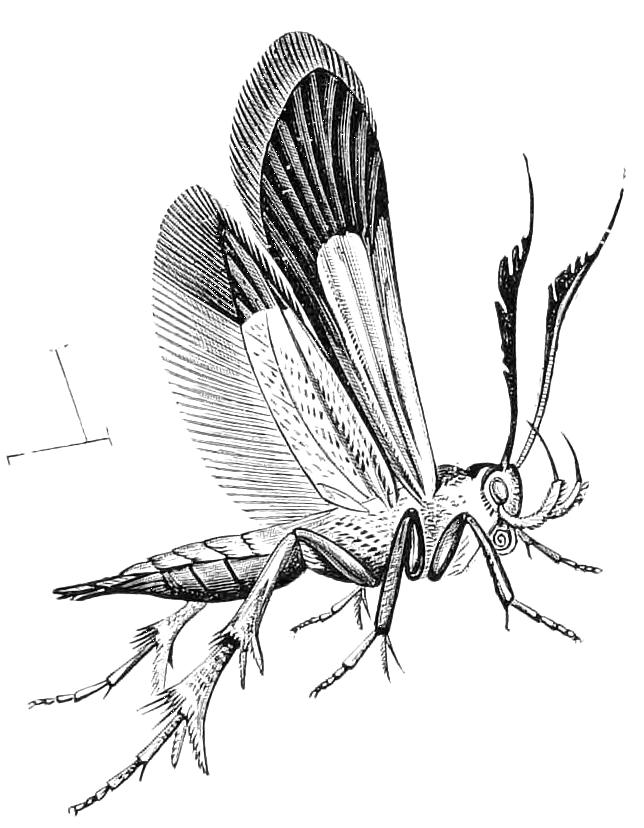
Fig. 193—Oedematopoda princeps. Africa. (After Walsingham.)
We have two genera of these Clear-wings in Britain. They are Trochilium (called variously Sesia, Sphecia, and Aegeria), with two species of comparatively large size, and Sesia (called variously Trochilium and Aegeria), with nearly a dozen species of smaller size. A third genus, Sciapteron, is doubtfully native with us. They are much prized by collectors on account of the rarity of the Insects and their great difference in appearance from our other native Lepidoptera.
Fam. 14. Tinaegeriidae. This is one of the least known of the families of Lepidoptera, and has only recently been distinguished from Sesiidae. It is entirely exotic, and our knowledge of it is principally due to Lord Walsingham.[270] Nothing is known as to the life-histories, except that it has been stated by Stainton that a larva feeds in webs on shoots of a shrub of the genus Clerodendron. The family is widely distributed, but its metropolis will probably prove to be the tropics of Africa. It is of considerable interest as showing that the Sesiidae really belong to the Tineid series of moths. The species we figure (Fig. 193) has a character otherwise peculiar to Sesiidae in the wings being inserted on the thorax remote from the head—a feature we do not find in the Tineidae proper; while on the other hand it has the long wing-fringes, and the shape of the wings that are characteristic of Tineidae. It is worth mentioning that though these Insects are of excessive rarity and very peculiar, there exists in the Solomon Islands[271] a species distinct from, though at first sight excessively similar to, the S. African one we figure.
Fam. 15. Syntomidae.—This family has usually been associated with the Zygaenidae. It includes a large number of moths having, as a rule, in external appearance little to distinguish them from the family named. Many of them are of gaudy colours, and probably of diurnal, but somewhat sedentary, habits. The wings are less ample than usual, the hind pair frequently very small, so that the Insects have somewhat the proportions of Hymenoptera. In some cases the resemblance is made more remarkable by the fact that the wings are transparent and bare of scales, or have scales only at the margins, so as to be like the wings of Hymenoptera. Not less remarkable is the fact that these Insects use the body itself for the purposes of adornment or display; thus adopting a system prevalent in the Hymenoptera, rather than that of their own Order, where the rule is that the wings are more ornamented than the body. In many cases the shape of the body is so very different from the normal that the disposition of the organs of life in the interior of the body must be materially affected. In some genera, such as Andrenimorpha, the form, colour and attitude of the body and some of the limbs are plainly similar to Hymenoptera. These Insects have a highly-developed frenulum, retinaculum, and proboscis; bipectinate antennae in the male, a complex organ at the base of the abdomen on each side, and are in fact highly-developed forms, except perhaps as regards the structures in connexion with flight.
Unfortunately little or nothing is known as to the habits and metamorphoses of these extraordinary creatures, but it is no doubt to them Seitz referred in saying, "How far one may be deceived by appearances of a mimetic nature can only be comprehended by visiting the tropics; in this part of the world [Europe] one is prepared by knowledge gained from books for the appearance Sesia presents. Had one no knowledge of this sort as to Sesiidae he would actually in the field [in Brazil] overlook dozens of these little creatures without being aware of his deception. The surprise at finding a quite different being in the net from what one believes he has caught occurs daily in Brazil, so rich in Lepidoptera."[272] The same intelligent observer says[273] that a species of Macrocneme was observed by him to be exactly like one of the blue wasps of the genus Pepsis.
One remarkable point in these Hymenopteroid Syntomids is their complete dissimilarity from their immediate allies. They resemble very different Hymenoptera; and not only stinging Hymenoptera; the Sessiliventres have a large share of their attentions; the numerous species of Dycladia partaking the appearance of the South American Sawflies in a wonderful manner. Bees, Wasps of the most different kinds, and a variety of Sawflies are beautifully paralleled, if one may use such an expression, by these Syntomids. That shown in Fig. 194 has the abdomen formed like that of a Petiolate Hymenopteron; the base of this part, moreover, resembles in a remarkable manner the "median segment" of that Order. The constriction is, however, placed not at the base of the abdomen but beyond the second segment. Thus the structure is not morphologically similar to that of the Hymenoptera, for the median segment of Aculeate Hymenoptera consists of only one abdominal segment, while in this moth the corresponding part is formed of two segments. Though anatomically inexact, the resemblance is, as to proportions, correct; and those who delight in the use of the imagination will see that had the moth used only one segment for the imitation, the result would have been less successful owing to insufficient size. In his very interesting account of some Brazilian Syntomids,[274] Seitz describes a species of Trichura provided with a long appendage that is held straight backwards during life; and he informs us that this creature resembles a female Ichneumon, the long process looking like the elongate ovipositor of the Hymenopteron. Possibly the species from Demerara we figure may resemble an Ichneumon we are not acquainted with, though its colour and form rather suggest a likeness to an Aculeate. This case of resemblance is of the most noteworthy character, for an appendage of this kind in a Lepidopterous Insect is without parallel, and is almost equivalent to the production of a new structure. An interesting feature of the case is that Ichneumonidae do not sting, and there is no evident reason why the enemies of the moth should be particularly afraid of an ovipositor.
The larvae appear to be in form somewhat like those of Zygaenidae; but with the same sort of remarkable clothing, in the form of tufts and brushes, that we find in Lymantriidae. A cocoon is formed. In Britain no member of this family is to be met with, but Naclia ancilla may formerly have been a native; Syntomis phegea has occurred here; probably an escaped example that had been introduced in one of its earlier stages.
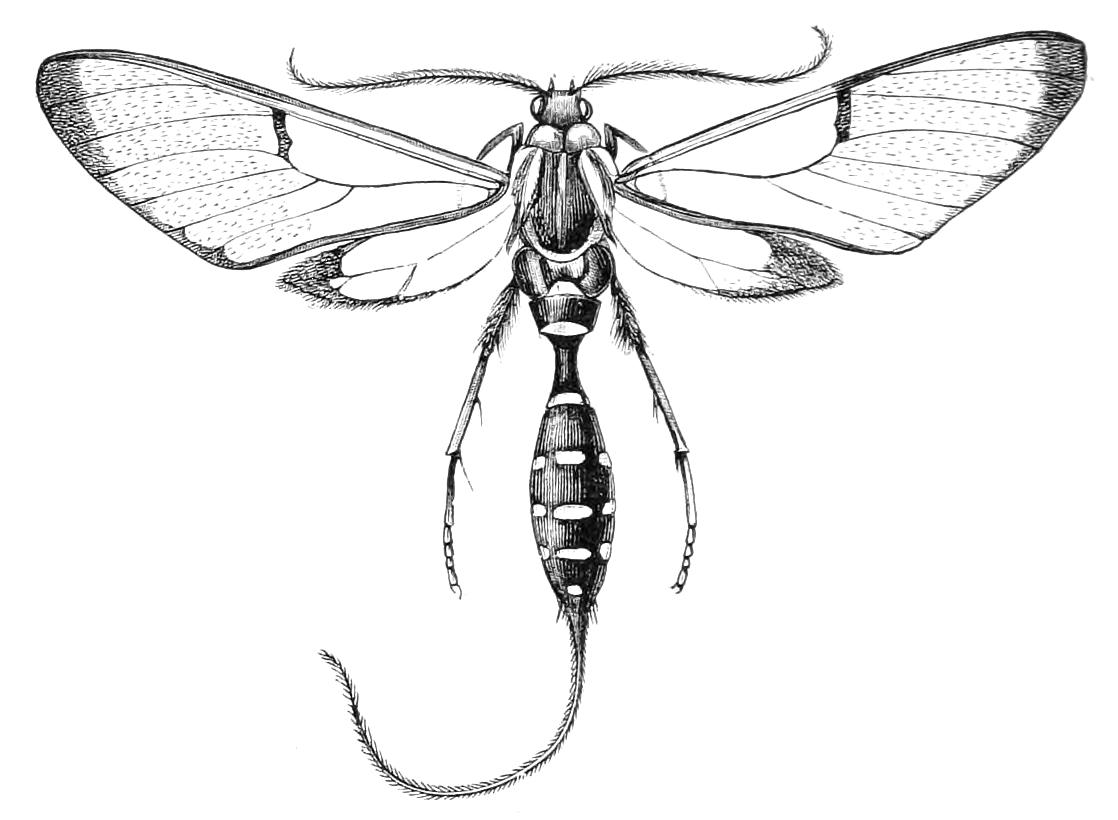
Fig. 194—Trichura, sp. × 2⁄1. Demerara.
Fam. 16. Zygaenidae (Burnet-Moths).—This family is one about the limits and characters of which much difference of opinion prevails. As exemplified by our Burnet-moths it is characterised (in addition to the points given in the table) by the peculiar, flexible antennae; these are a little thicker before the tip, but are curved and pointed at the extremity, and without pectinations in the male. There is an elongate proboscis; bladder-like organs at the sides of the first abdominal segment are not present. The pupa is softer than is usual in the Macrolepidoptera, and the parts are less firmly fixed together, so that unusual mobility exists; six of the intersegmental membranes are free, and the abdomen has much power of movement; there is no eye-collar; the antennae, hind legs, and proboscis-tips stretch backwards as far as the fifth or sixth abdominal segment, the tips being quite free; on the dorsal plates of the abdomen there are rows of minute elevations reminding one of the teeth existing in pupae that live in stems or galleries. This is altogether a peculiar pupa; it lives closely enclosed in a small hard cocoon, and its great capacity for movement is perhaps connected with the fact that the pupa itself manages to force its way through the cocoon in anticipation of the emergence of the moth. This cocoon is fastened tightly to a stem, and is covered with a substance that gives it a glazed appearance. The larvae are objects of a baggy nature, with inferior coloration, consisting of large dark blotches on a light ground, and without any remarkable development of their somewhat feeble system of hairs. Numerous small moths from the tropics are assigned to the family; they are most of them conspicuously marked and coloured, and like our Burnets are probably diurnal.
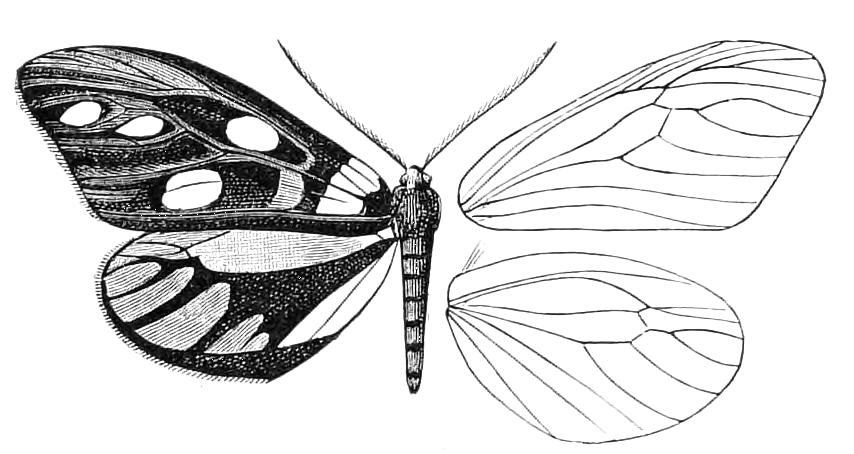
Fig. 195—Hampsonia pulcherrima. Wings on right side detached and denuded to show nervuration. India. (After Swinhoe.)
The family Chalcosiidae is reduced by Hampson to the position of a sub-family of Zygaenidae. It consists of a large variety of diurnal moths of varied and brilliant colours, with an expanse of wing large in comparison with the typical Zygaenae, and with the antennae pectinate or flabellate to the tip. Some of these Insects (which are as conspicuous as possible in appearance, at any rate in a cabinet, the East Indian Cadphises moorei e.g.) are considered to be destitute of any special "protection." Histia is a genus of remarkable cruciform moths, of a mixture of black and metallic colours, with carmine-tinted bodies. Hampsonia pulcherrima (East India) is a curious moth of butterfly form and coloration, red and black with yellow patches, and with some of the nervules distorted, as if they had been forced apart in certain spots in order to accommodate these patches.
Two or three hundred species of Chalcosiidae are recorded. They are specially characteristic of the Indo-Malayan region.
Fam. 17. Himantopteridae (Thymaridae of some authorities) are placed by Hampson in the sub-family Phaudinae of Zygaenidae characterised by the absence of the mouth-parts. The Himantopteridae are small moths, and have the scales on the wings very imperfect and hair-like; the hind wings form long slender tails, so that the Insects scarcely look like moths. They are peculiar to India and Africa. In the South African genus Dianeura (belonging really to Phaudinae) also the wings are scaleless and nearly transparent.
Fam. 18. Heterogynidae.—Consists of the single genus Heterogynis which has hitherto been found only in the south of Europe. This is an important form connecting Zygaenidae and Psychidae. The larvae resemble those of Zygaena, and construct an oval cocoon for their metamorphosis. The male issues as a small moth of smoky colour, the scales being but imperfect; the female chrysalis shows no trace of any appendages, and the imago is practically a maggot, and never leaves the cocoon; in it she deposits her eggs, and the young larvae hatch there.[275]
Fam. 19. Psychidae.—Small, or moderate-sized moths, with imperfect scales, and little or no colour beyond certain shades of duskiness; the sexes very different, the female being wingless and sometimes quite maggot-like; the male often with remarkable, bipectinate antennae, the branches sometimes very long and flexible. Larva inhabiting a case that it carries about. This family consists of Insects unattractive in appearance but presenting some points of great interest. It is frequently stated that the Psychidae are destitute of scales, but Heylaerts states[276] that, in addition to hairs, scales of a more or less imperfect formation are present in all, but that they are, like those of some Sphingidae (Macroglossa), very easily detached. There is much difference in the females, some having well-developed legs, while others are not only apterous, but are bare and destitute of appendages like a maggot, while in certain cases (Fig. 196, G), the head is reduced in size and is of peculiar form so as to make the Insect look really like the larva of one of the parasitic Diptera. These females never leave their cases, but deposit their eggs therein, and inside, also, their former pupa-skin; and here the young hatch; the peculiar little larvae are very numerous, and it is suggested that they make a first meal on the body of their parent, but this we believe has not been satisfactorily ascertained. Great differences as to the condition of the legs, antennae, etc., are said to exist in species of the same genus. There is also a remarkable diversity in the pupae of the females; the male sex being normal in this respect. Some of the female pupae are destitute of wing-sheaths and all other appendages, while others are said to possess them, though there are no wings at all in the imago (Fumea, e.g.).[277] Great difficulties attend the study of these case-bearing Insects, and several points require careful reconsideration, amongst them the one we have just mentioned. The males fly rapidly in a wild manner, and may sometimes be met with in swarms; their lives are believed to be very brief, rarely exceeding a couple of days, and sometimes being limited to a few hours.
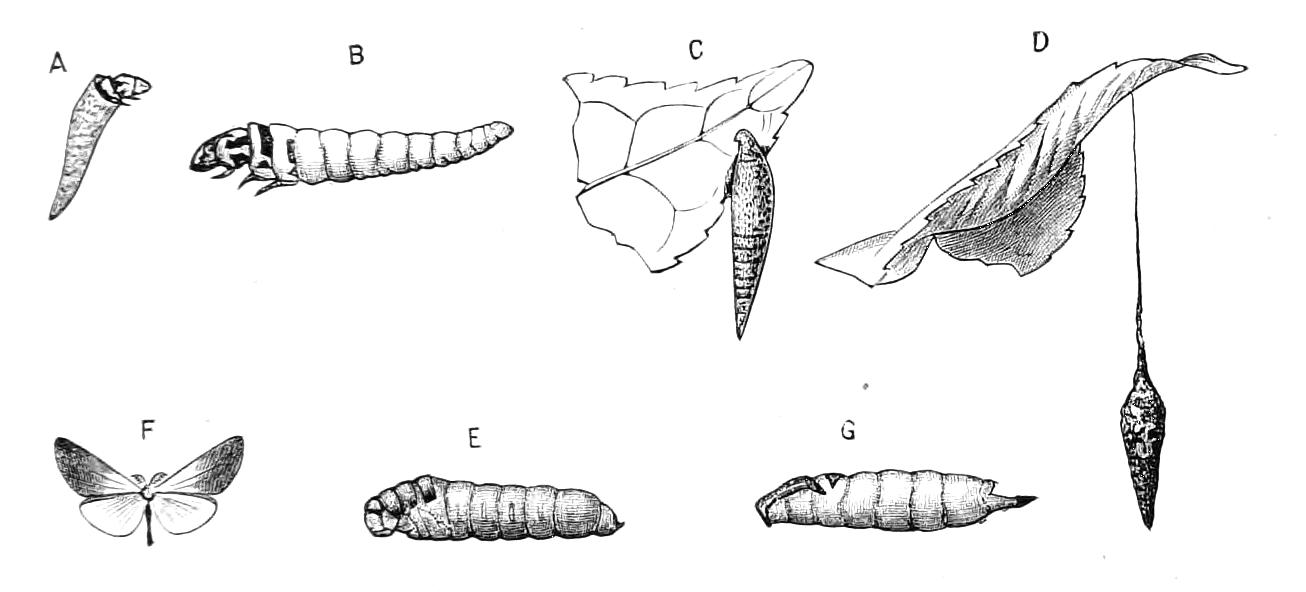
Fig. 196—Metamorphosis of Monda rhabdophora. Ceylon. A, Larva in case, nat. size; B, larva itself, magnified; C, case of female during pupation; D, case of male during pupation; E, female pupa, magnified; F, male moth, nat. size; G, female moth, magnified. (From unpublished drawings by Mr. E. E. Green).
The larvae are called basket-worms, and their baskets or cases are well worthy of attention. Their variety is remarkable; the most extraordinary are some of the genus Apterona Fig. 197, B, which perfectly resemble the shells of Molluscs such as snails; indeed, the specimens in the collection at the British Museum were sent there as shells. This case is not, like those of other Psychidae, constructed of earth or vegetable matter, but is of silk and is in texture and appearance exactly like the surface of a shell. Psyche helix is, according to Ingenitzky,[278] found in great numbers near Lake Issyk-kul in Central Asia, where the larvae feed, in their snail-shell-like cases, on a grass, just like snails. Only females could be reared from these larvae. The case of Chalia hockingi (Fig. 197, C) consists of little pieces of wood cut to the proper lengths, and spirally arranged, so as to form a construction that would be quite a credit to our own species. In some of the Canephorinae we meet with long cylindrical cases, like those of Caddis-worms, or of Tineid larvae.
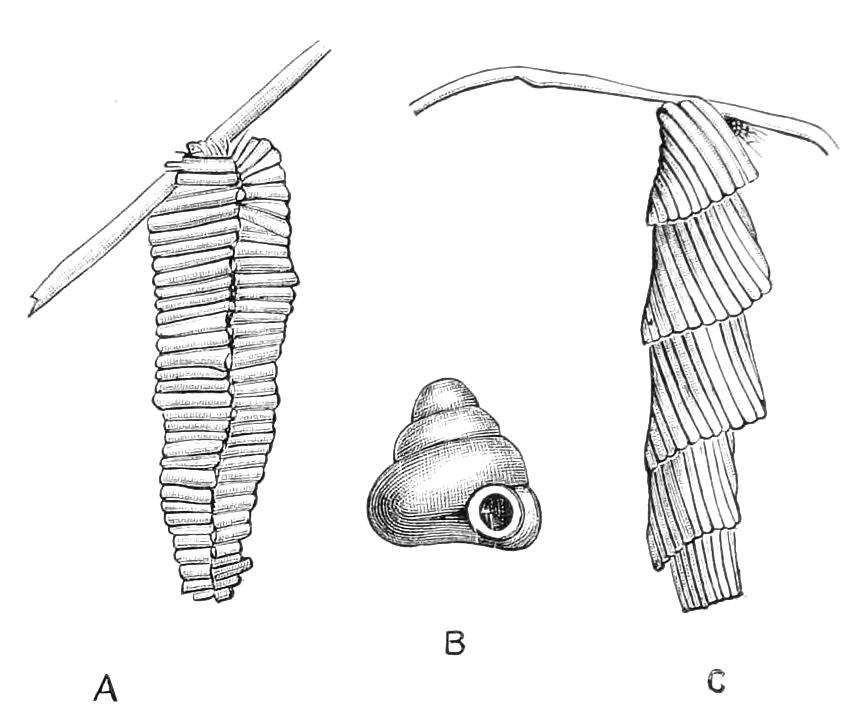
Fig. 197—Baskets, or cases, of Psychidae. A, Amicta quadrangularis; B, Apterona (or Cochlophora) valvata; C, Chalia hockingi.
Riley has given an account of several points in the structure and natural history of one of the North American basket- or bag-worms, Thyridopteryx ephemeraeformis; one of his points being the manner in which the newly hatched larva forms its case.[279] This question has also been discussed by Packard.[280] The larvae when hatched in unnatural conditions will make use of fragments of paper, cork, etc., for the case; the act of construction takes one or two hours, and the larva does not eat till the case is completed. It walks in a peculiar manner, the legs of the third pair being moved forwards together, as if they were the prongs of a fork.
This family is already one of considerable extent, but its study, as already remarked, is but little advanced. Some naturalists are inclined to place it among the Tineidae, but it is connected with Zygaenidae by means of Heterogynidae. Mr. Meyrick divides it, placing Psyche and Sterrhopteryx (the forms representing, according to his ideas, the family Psychidae in Britain) in the series Psychina which includes Zygaenidae. He removes the other British genera, Fumea, and Epichnopteryx, to Tineidae near Solenobia and Taleporia. The group Canephorinae, to which the two genera in question belong, was long since separated from Psychidae by Herrich-Schäffer, but this course was condemned by Heylaerts. Parthenogenesis has been thought by some to occur in numerous species in this family, but Heylaerts says that it is limited to Apterona crenulella var. helix, and even of this species males are found in certain localities.
Fam. 20. Cossidae (Goat-Moths, or Carpenter-Worms).—Moths of moderate, or rather large size, without proboscis, frequently with a dense covering of matted, imperfect scales; the pattern being vague. The larvae bore into trees in which they often make large burrows, leaving holes from which sap exudes. Our common Goat-moth is a good specimen of this family, which is a very widely distributed one. The Australian genus Ptilomacra has very large, pectinated antennae in the male. The larvae of Cossidae are nearly bare of clothing and are unadorned; they form a slight cocoon of silk mixed with gnawed wood. The pupa of the Goat-moth is remarkable for the great development of the rows of teeth on the dorsal aspects of the segments of the abdomen, and for the absence of consolidation in this part, six of the intersegmental incisions being free, and the ventral aspect almost membranous. Very little is known as to other pupae of the family. It is believed that the generations of these Insects are fewer than usual, the growth of the larva occupying a period of two or three years. The larva of Zeuzera aesculi forms a temporary cocoon in which it passes a winter-sleep, before again feeding in the spring.[281] It is a moot question whether the Zeuzeridae should be separated from the Cossidae or not. The group includes our Wood-leopard moth, which, like many other Zeuzerids, is spotted in a very striking but inartistic manner. The position the family Cossidae should occupy in an arrangement of the Lepidoptera is a very difficult question. Some consider the Insects to be allied to Tortricidae. The wing-nervuration of Cossus is very peculiar and complex, there being four or five cells on the front wing, and three on the hind one. Meyrick places Zeuzeridae as a family of his series Psychina, but separates Cossidae proper (he calls them Trypanidae) as a family of the series Tortricina.
Fam. 21. Arbelidae.—Closely allied to Cossidae, but without frenulum, and with less complex wing-nervures. A small family believed to be similar to Cossidae in the life-history. The tropical African Arbelidae are considered by Karsch to be a distinct family, Hollandiidae.
Fam. 22. Chrysopolomidae.—This family has been established by Dr. Aurivillius[282] for an African genus, allied in wing-nervuration to Cossidae; the Insects are like Lasiocampidae.
Fam. 23. Hepialidae (Ghost- and Swift-Moths).—Moths of very diverse size, some gigantic; wings not fitting together well at the bases; without a frenulum; no proboscis; the scales imperfect; the nervures complex. The Hepialidae are extremely isolated amongst the Lepidoptera; indeed, they have really no allies; the conclusion that they are connected with the Micropterygidae being certainly erroneous. Although but small in numbers—only about 150 species being known—they exhibit a remarkable variety in size and colour. Many are small obscure moths, while others are of gigantic size—six or seven inches across the wings—and are amongst the most remarkably coloured of existing Insects. The great Charagia of Australia, with colours of green and rose, bearing white spots, are remarkable. The South African Leto venus is of large size, and has an astonishing supply of glittering metallic splashes on the wings, making a barbaric but effective display. The South Australian Zelotypia staceyi, of enormous size, is also a handsome moth; but the majority of species of the family are adorned only in the feeblest manner.
Very little is known as to the larvae; they are either subterranean, feeding on roots, or they live in the wood of trees and shrubs. They are nearly bare, and are apparently the lowest type of Bombycid larva. At the same time, it would appear there is considerable variety amongst them. Packard says[283] the young larva of Hepialus mustelinus has the arrangement of setae that is normal in Tineidae. The larva of H. humuli seems to be a very simple form, but H. hectus shows a considerable amount of divergence from it. They probably live for several years; the larva of H. argenteo-maculatus in North America lives for three years, at first eating the roots of Alder and then entering the stems. The pupae are also peculiar. They are of unusually elongate, cylindrical form, with comparatively feeble integument, but with a considerable development of chitinous, elevated, toothed ridges, on the dorsal aspect, and a very strong ridge of this kind on the ventral surface of the seventh segment; the wing-sheaths are short; it is very difficult to distinguish the full number of abdominal segments. These pupae are remarkably agile, and by wriggling and kicking are able to move a considerable distance; it is said that they can force themselves to the surface even when the superficial soil is quite hard. We cannot consider this pupa naturally placed amongst either the pupae obtectae or incompletae of Chapman.