MISCELLANEOUS MASTERPIECES AND CHOICE GEMS (continued 2)
Reading edition
There was pride in Casey’s bearing, and a smile on Casey’s face;
And when responding to the cheers he lightly doffed his hat,
No stranger in the crowd could doubt ’twas Casey at the bat.
Ten thousand eyes were on him as he rubbed his hands with dirt,
Five thousand tongues applauded when he wiped them on his shirt;
Then while the writhing pitcher ground the ball into his hip,
Defiance glanced in Casey’s eye, a sneer curled Casey’s lip.
And now the leather-covered sphere came whirling thro’ the air,
And Casey stood a-watching it in haughty grandeur there;
Close by the sturdy batsman the ball unheeded sped.
“That ain’t my style,” said Casey, “Strike one,” the umpire said.
From the benches, black with people, there went up a muffled roar,
Like the beating of storm waves on a stern and distant shore;
“Kill him! kill the umpire!” shouted some one on the stand.
And it’s likely they’d have killed him had not Casey raised his hand.
With a smile of Christian charity great Casey’s visage shone,
He stilled the rising tumult, he bade the game go on;
He signalled to the pitcher, and once more the spheroid flew,
But Casey still ignored it, and the umpire said, “Strike two.”
“Fraud!” cried the maddened thousands, and the echo answered, “Fraud!”
But the scornful look from Casey, and the audience was awed;
They saw his face grow stern and cold, they saw his muscles strain,
And they knew that Casey wouldn’t let that ball go by again.
The sneer is gone from Casey’s lips, his teeth are clenched in hate,
He pounds with cruel violence his bat upon the plate;
And now the pitcher holds the ball, and now he lets it go.
And now the air is shattered by the force of Casey’s blow.
Oh! somewhere in this favored land the sun is shining bright,
The band is playing somewhere, and somewhere hearts are light;
And somewhere men are laughing, and somewhere children shout,
But there is no joy in Mudville—mighty Casey has struck out.
THE MAGICAL ISLE.
HERE’S a magical isle in the River of Time,
Where softest of echoes are straying;
And the air is as soft as a musical chime,
Or the exquisite breath of a tropical clime
When June with its roses is swaying.
’Tis where memory dwells with her pure golden hue
And music forever is flowing:
While the low-murmured tones that come trembling through
Sadly trouble the heart, yet sweeten it too,
As the south wind o’er water when blowing.
There are shadowy halls in that fairy-like isle,
Where pictures of beauty are gleaming;
Yet the light of their eyes, and their sweet, sunny smile,
Only flash round the heart with a wildering wile,
And leave us to know ’tis but dreaming.
And the name of this isle is the Beautiful Past,
And we bury our treasures all there:
There are beings of beauty too lovely to last;
There are blossoms of snow, with the dust o’er them cast;
There are tresses and ringlets of hair.
There are fragments of song only memory sings,
And the words of a dear mother’s prayer;
There’s a harp long unsought, and a lute without strings—
Hallowed tokens that love used to wear.
E’en the dead—the bright, beautiful dead—there arise,
With their soft, flowing ringlets of gold:
Though their voices are hushed, and o’er their sweet eyes,
The unbroken signet of silence now lies,
They are with us again, as of old.
In the stillness of night, hands are beckoning there,
And, with joy that is almost a pain,
We delight to turn back, and in wandering there,
Through the shadowy halls of the island so fair,
We behold our lost treasures again.
Oh! this beautiful isle, with its phantom-like show,
Is a vista exceedingly bright:
And the River of Time, in its turbulent flow,
Is oft soothed by the voices we heard long ago,
When the years were a dream of delight.
STRAY BITS OF CHARACTER.
BY WILL CARLETON.
With original illustrations by Victor Perard.
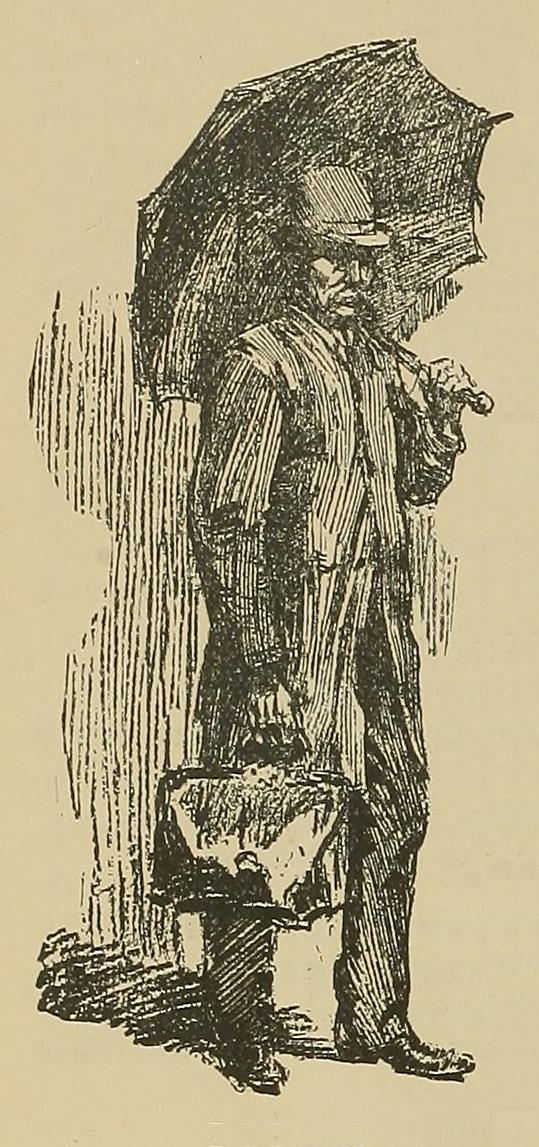
THE TOURIST.
IN art, as well as literature, there should be a vast variety of methods, for a good many kinds of people wait to be instructed and pleased. Besides, there is frequently a great diversity of moods in the same person—all of which must be ministered to, at one time and another.
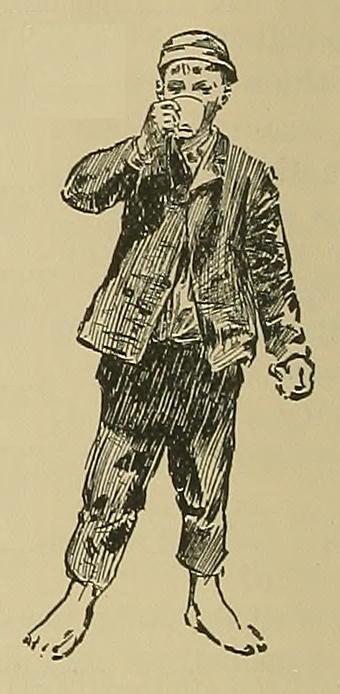
AT THE LUNCH STAND.
Some people, and perhaps all, when in certain states of mind, are fond of pictures brought out with photographic accuracy; every detail attended to; everything provided for; every incident faithfully related. Others prefer only the salient points—a mere suggestion of items is sufficient. They have no time for anything more—they want the spirit, the soul, of the scene and situation.
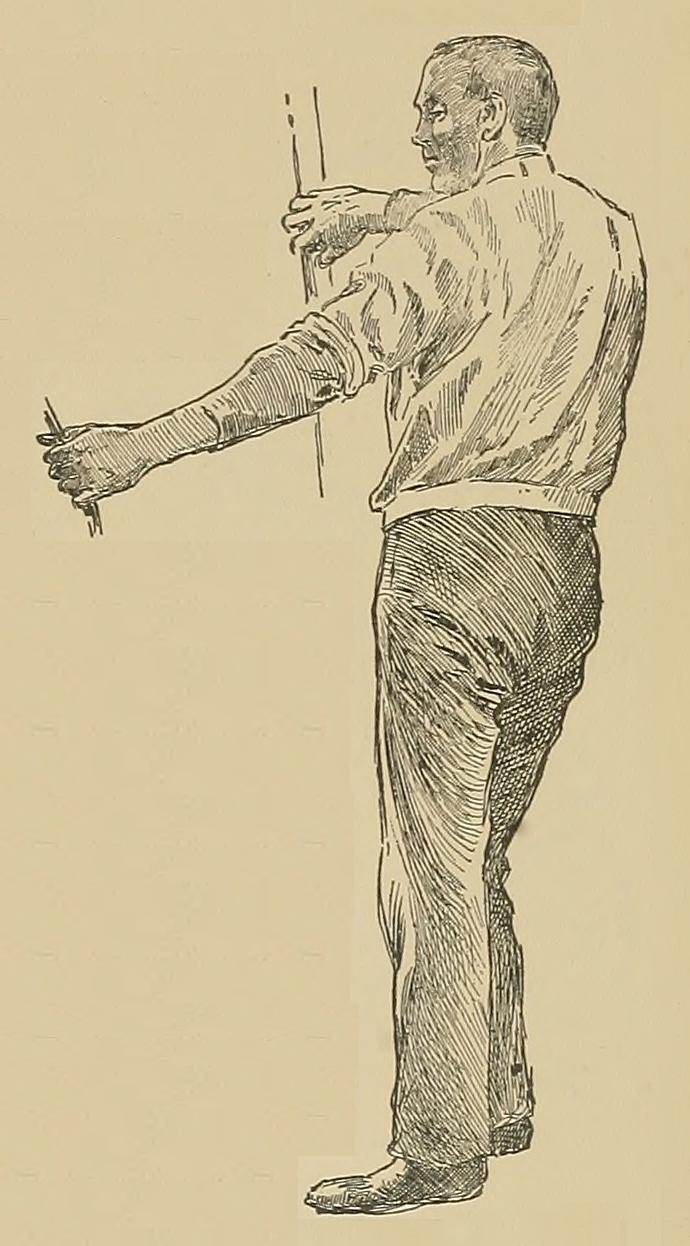
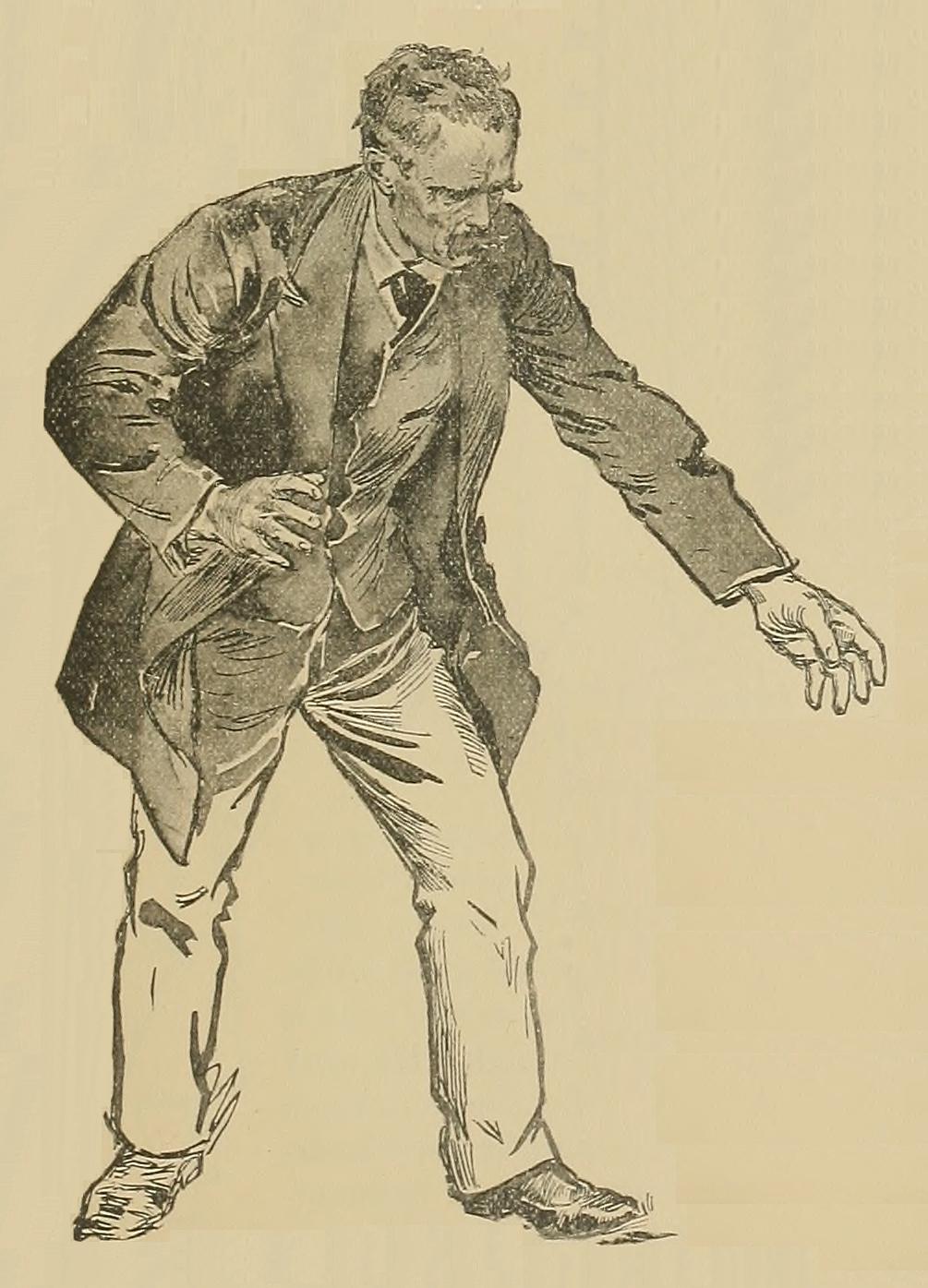
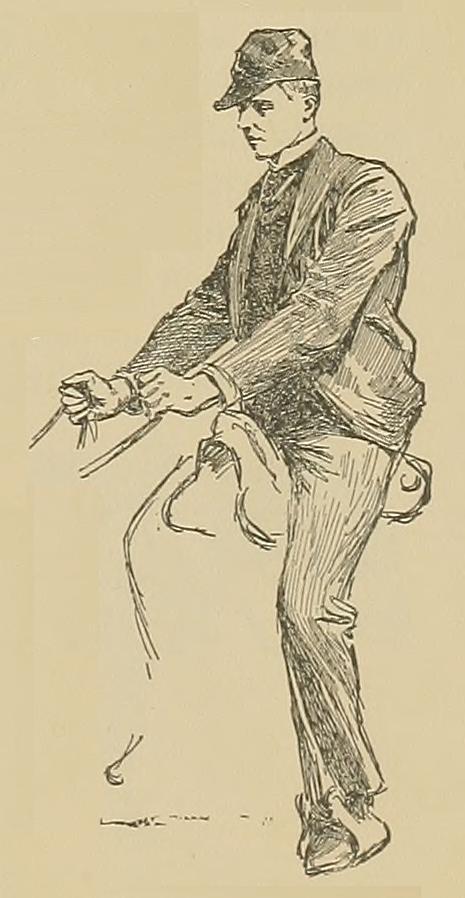
Victor Perard’s work upon these pages will minister most to the latter class of people and moods. As one orator can give in ten words the story that another one has struggled with much voice and many gestures for an hour to make plain, so this silent story-teller dashes his pencil across the paper a few times, and behold! you see just what you already may have noticed again and again, but never before recognized in all its possibilities. You now have before you for a steady gaze, that of which you have had only a glimpse, a sketch that supplies the place of memory, shakes hands with imagination, and enables you to enjoy the scene at leisure.
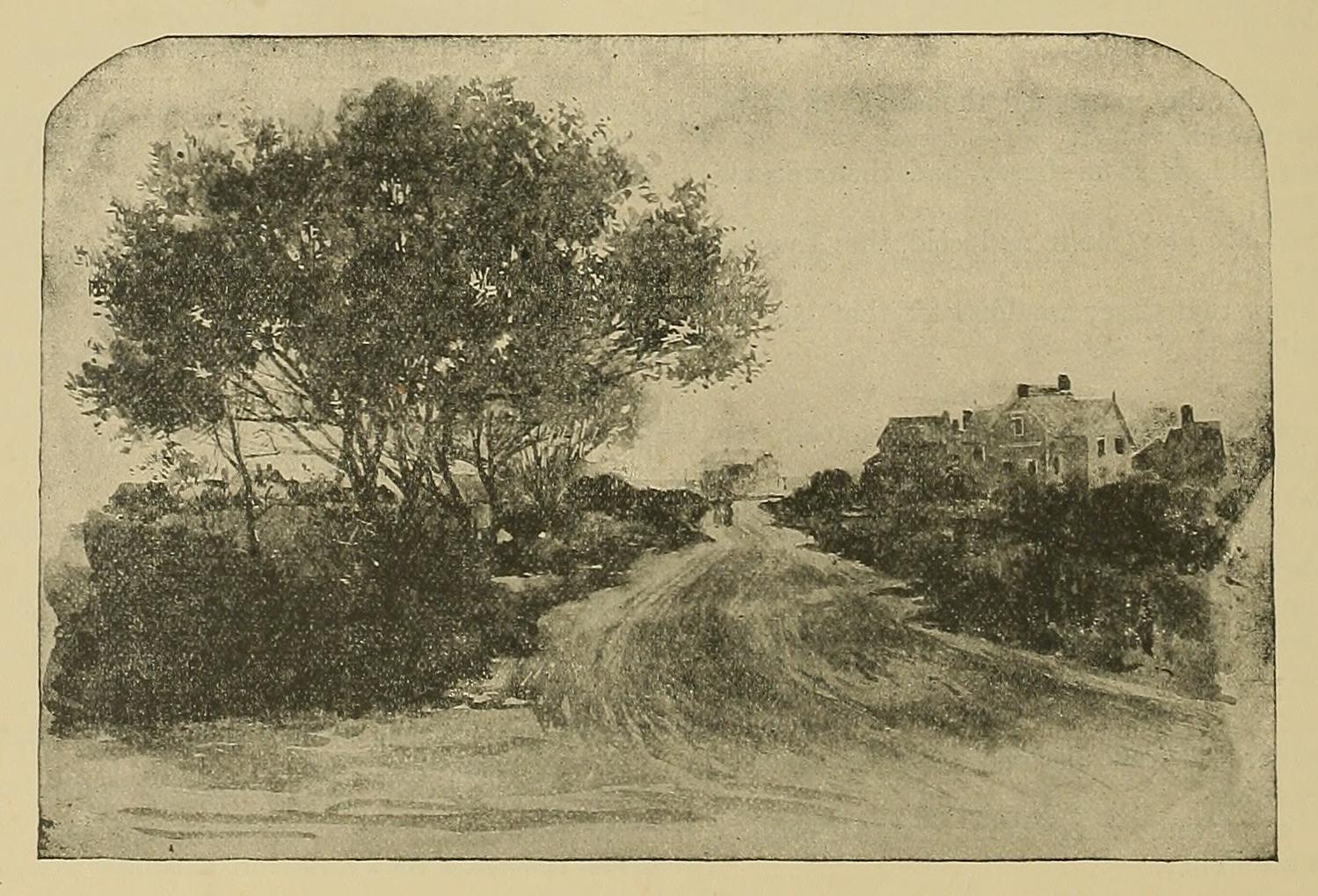
THE STREET TO THE SEA.
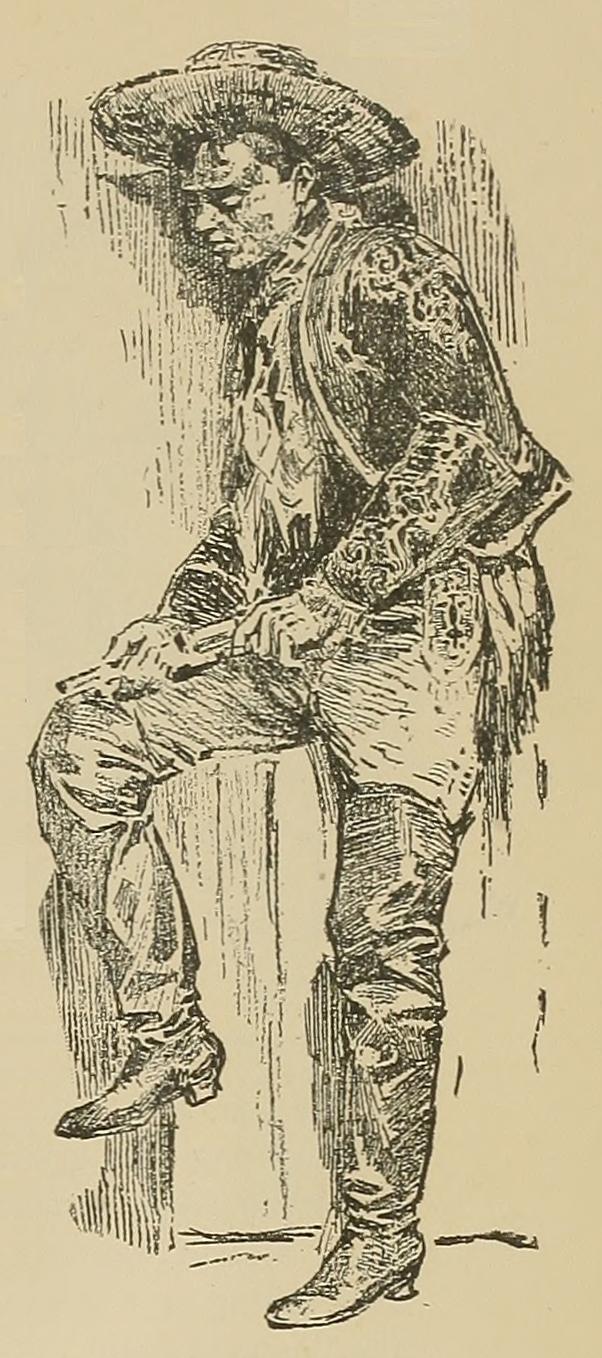
IN WAIT.
These are pictures that explain themselves, or at least permit the gazer to furnish his own explanation—and that is the most complimentary of all imaginative work, and produces a species of gratitude in the minds of the audience.
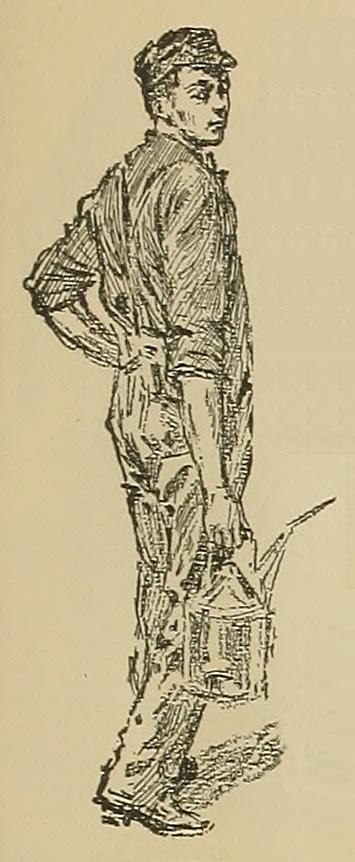
THE OILER.
Victor Perard is one of the younger artists of our country. His name would indicate him to be of French descent; but he is, I believe, a native of the Greater America, which has thus far shown such a cheerful willingness to assimilate the best brain of the world. He has, however, lived in Paris, and contributed to some of the leading French illustrated journals. He is now living a quiet domestic life in our American metropolis, and has done much good work for its periodicals.
In “The Tourist,” one notices with every line of the solemn-looking individual an intense desire to get over the ground promptly and see everything possible on the way. There is something in the painful though unstudied diligence with which he keeps his carpet bag close to his person, that may enable a lively imagination to peep through its sides and detect notes for a forthcoming book.
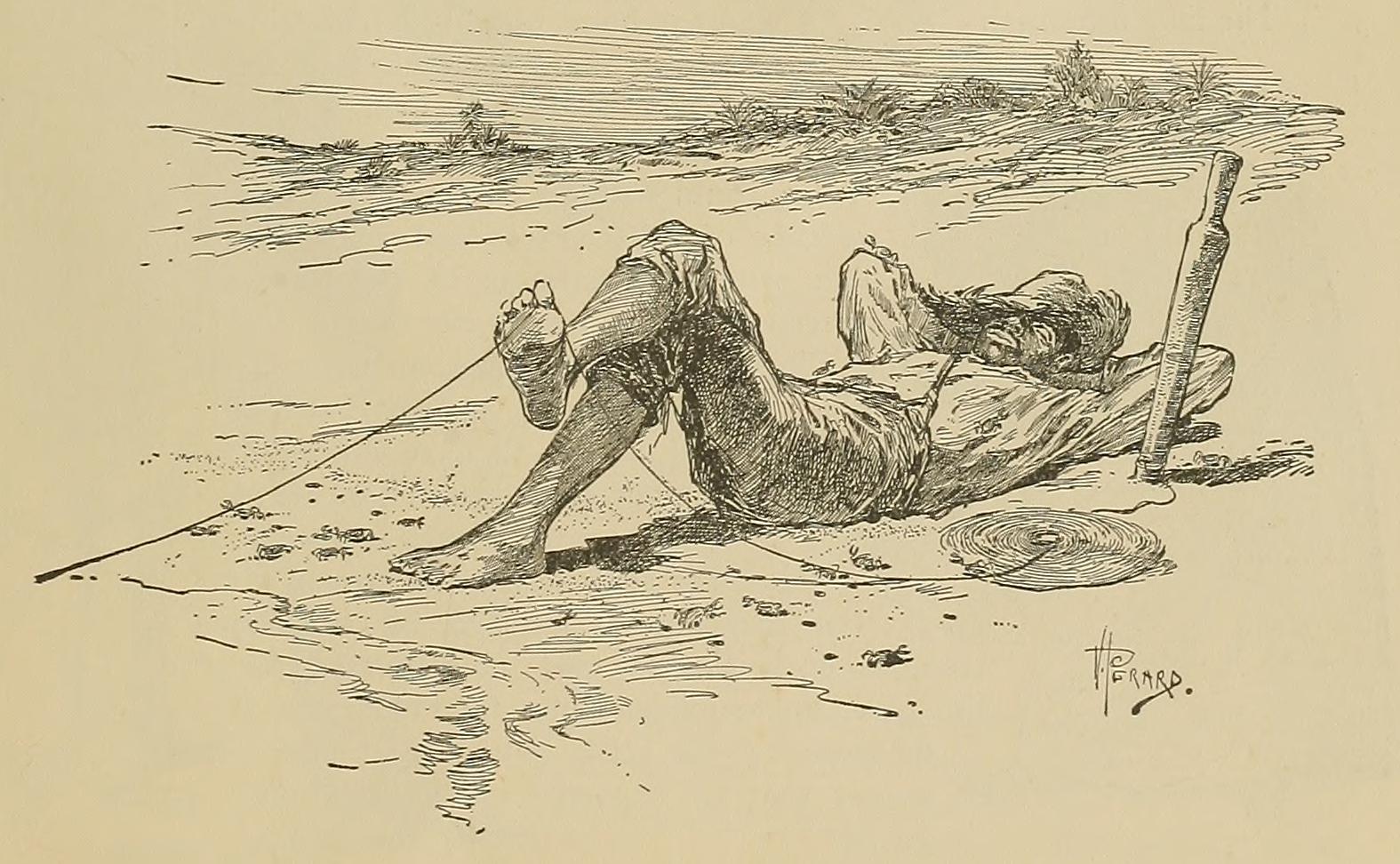
EXPECTING A CALLER.
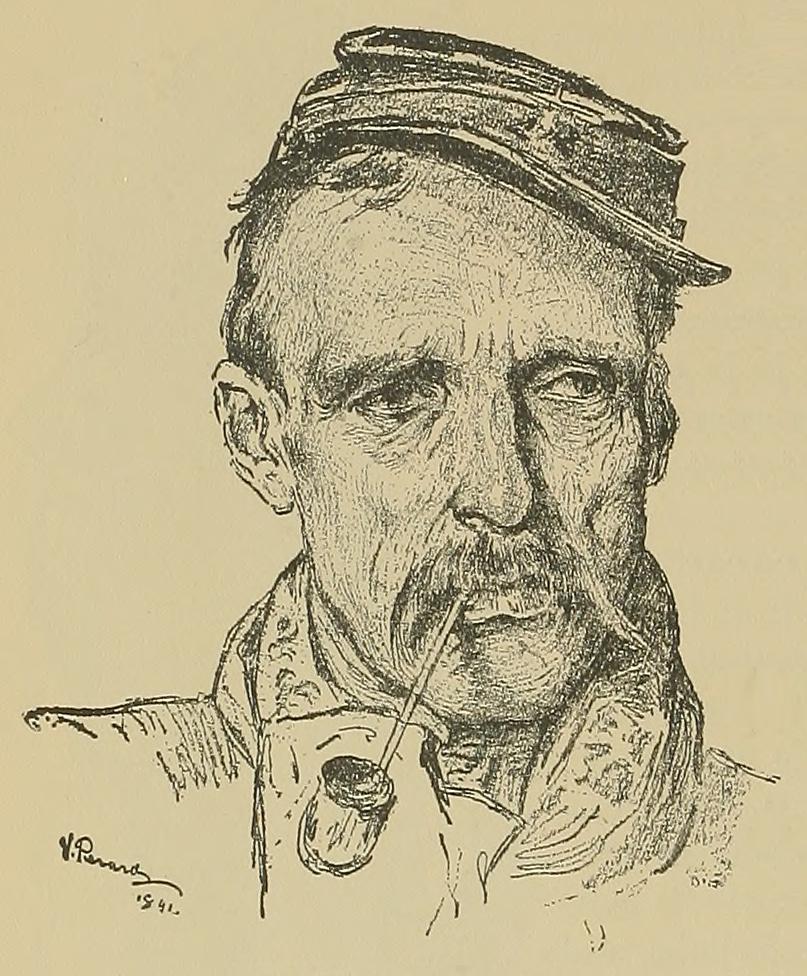
A VETERAN OF THE RANKS.
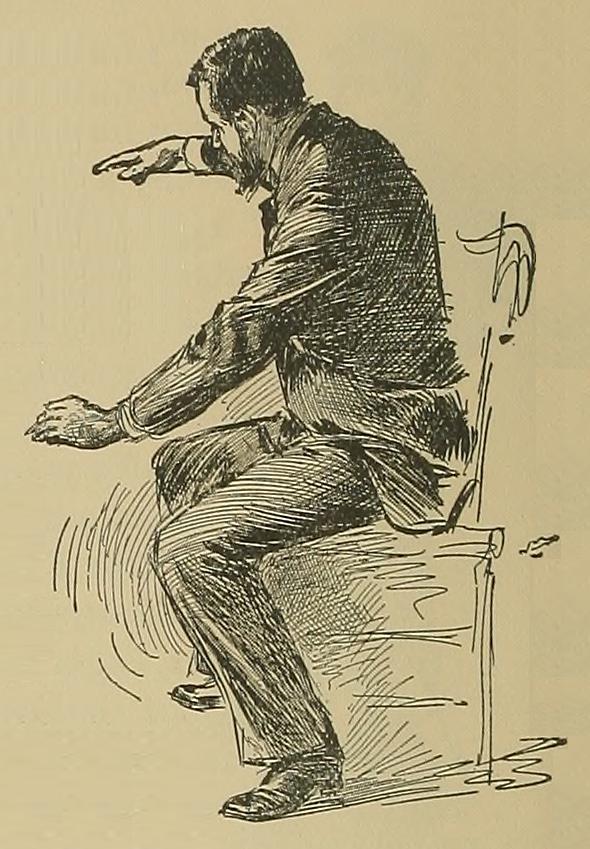
A WIDE-REACHING AFFAIR.
“At the Lunch Stand” is Whittier’s “Barefoot Boy,” transferred to the city. His lips are not “redder still, kissed by strawberries on the hill;” nor may he be coated with “outward sunshine,” or full of “inner joy.” The luxurious bowl of milk and bread which our Quaker poet describes, is not his, even with the wooden dish and pewter spoon; but he seems happy for the moment with the cup of more or less hot coffee which he imbibes. His jaunty, independent attitude shows that he is bound to get all the good of his powerful and perhaps palatable beverage; that he earned it, and is entitled to it.
“The Street to the Sea” is in fact a picture of the sea, although the same is hardly in sight. Everything shows that we are approaching the great Country of the Waters. The villas in view; the wheel-harrowed road, admirably foreshortened; the deep shadows upon each side of the way; human figures looming faintly in the distance; everything, in fact, is somehow telling us a tale of the ocean, and we do not need our too sparse glimpse of the “solemn main” to tell what majestic voice will soon bring us to a halt; we almost smell the salt air.
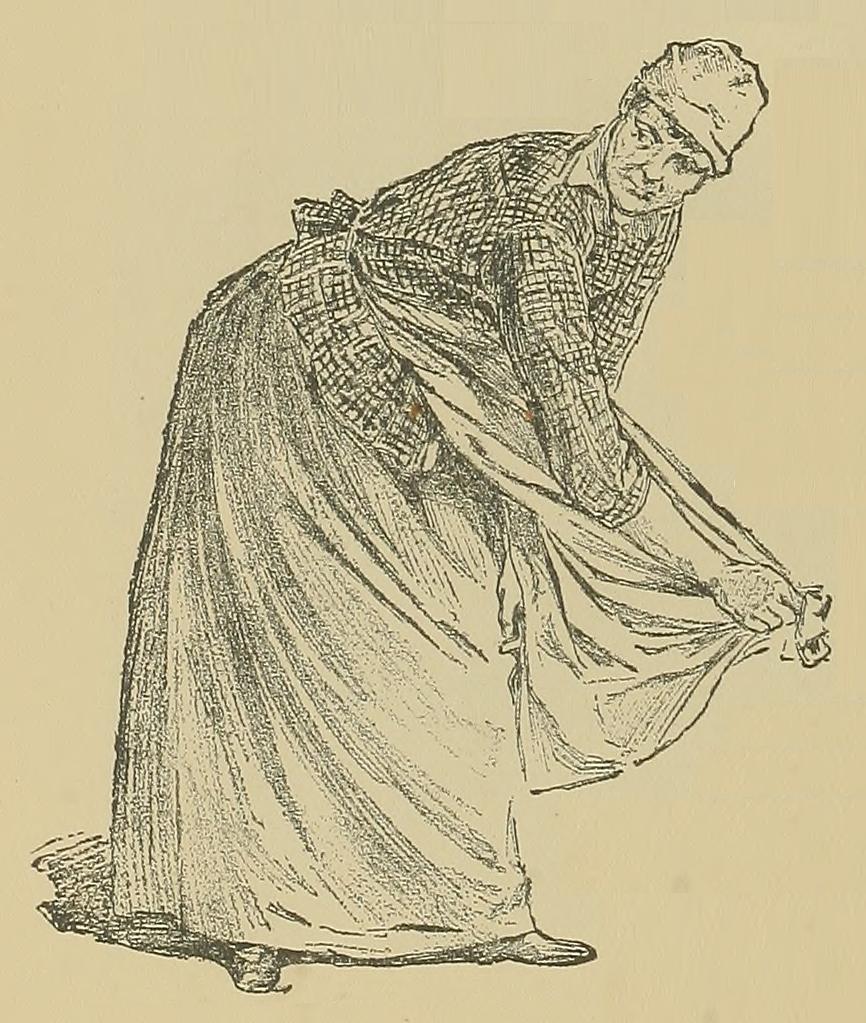
“WHO’S THAT COMING?”
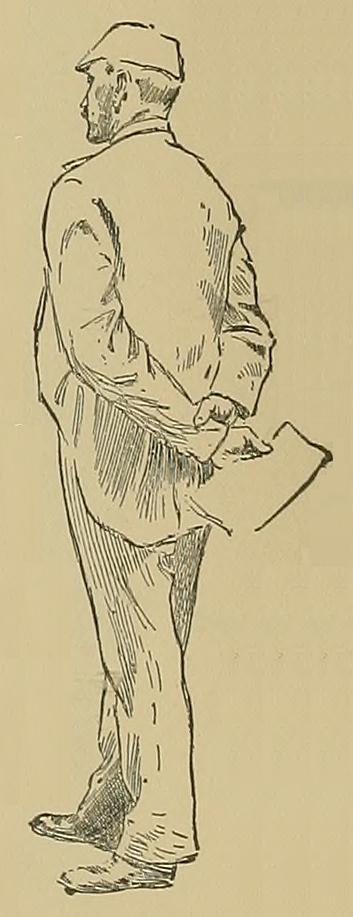
LEISURE.
The lazy fisherman who has hung out his latch-string and is waiting for a dinner to call upon him, is Perard with a godsend of material—of the kind he likes. There could scarcely be found a better wedding of shiftlessness and ingenuity. The primitive character of the man’s garments is apparently not due to the climate alone; he takes no thought of the morrow, and not much of the current day, so far as its temporal affairs are concerned. But the crude marks of mechanical ability are all over and around him; one suspender is induced, by its oblique trend, to do service for two; an elaborate coil of line gives opportunity of play for the largest of fin-bearers; the stick in the sand guarantees that his expected caller shall not go away without experiencing the fisherman’s peculiar hospitality; and there is considerable chance that if a “bite” occurs, the line will waken him, as it gradually warms the interstice between his toes.
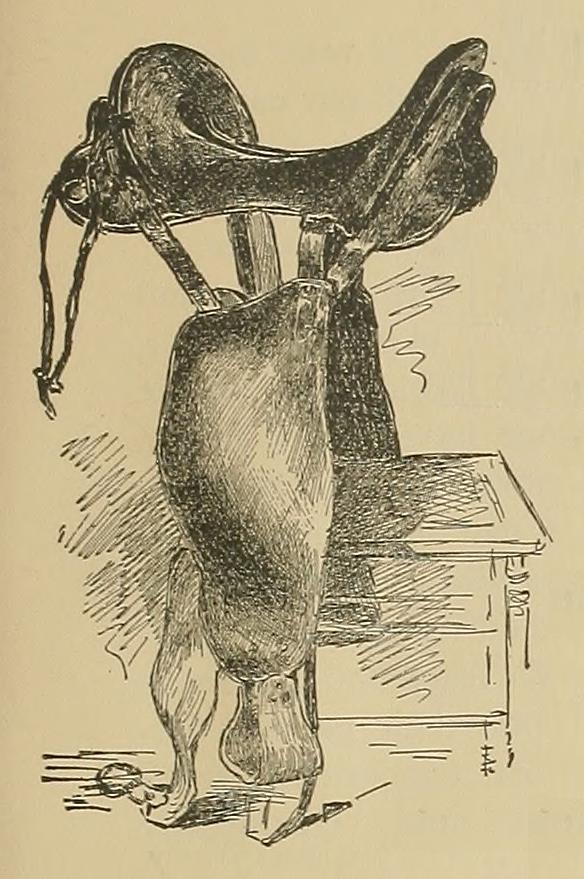
McCLELLAN SADDLE.
SHOOTING THE STEAM ARROW.
“A Veteran of the Ranks” might almost be Kipling’s Mulvaney himself. The fatigue-cap, which in its jaunty pose seems to have vegetated and grown there; the drooping mustache; the capacious pipe; are all what might have been characteristics of that renowned Hibernian warrior of India. The picture finally centres, however, in the eyes; which contain a world, or at least two hemispheres, of shrewdness, of that sort which only gets about so far in life, but is terribly correct within its own scope. They also possess a certain humanity and generosity, which would be likely to act as winsome daughters of his regiment of martial qualities, even upon the battle-field.
“GRACIOUS GOODNESS!”
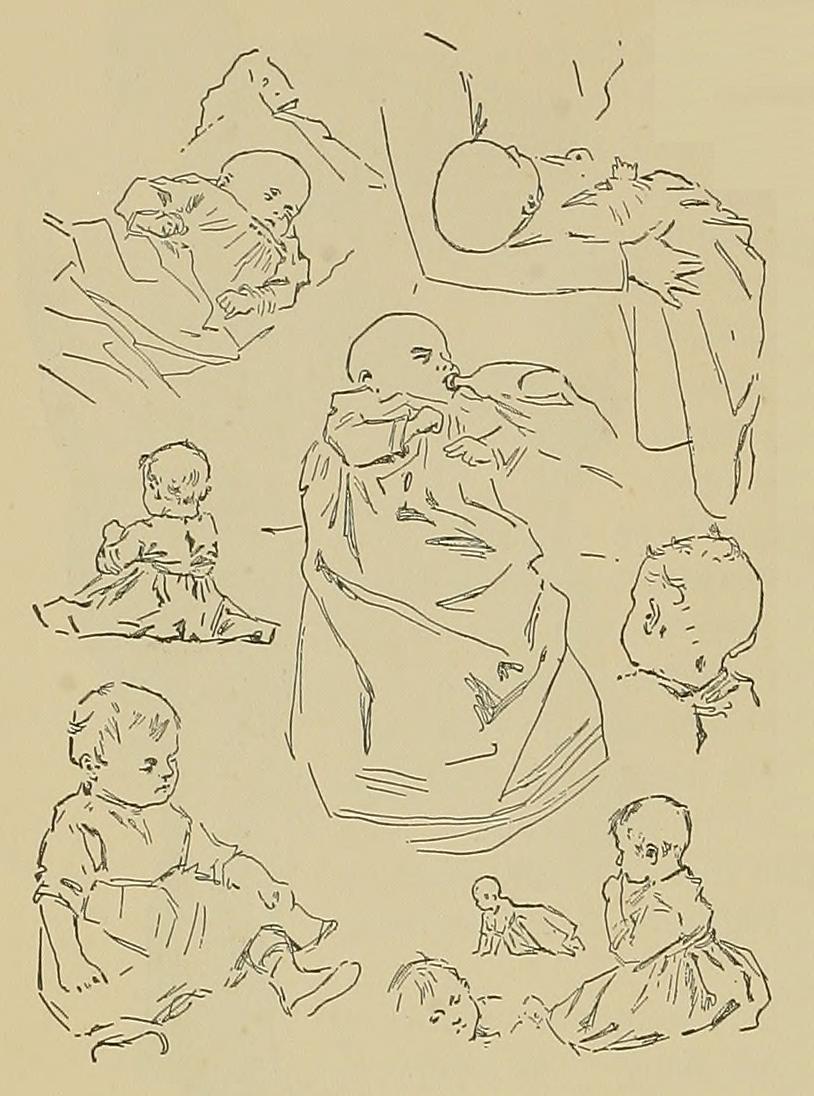
“Miniature Men and Women” include a number of the most interesting of the genus Baby. As everyone knows, there are babies and babies, except to the parents of one. The infant is the true teacher and object-lesson combined; it shows us the grace, although not always the mercy and peace, of unconscious action. It has not been away from Heaven long enough to learn the deceit of this crooked world, is unaware that there is anything in life to conceal, and acts accordingly, until taught better, or, perhaps, worse. These babies, or this baby (for the same infant has so many different ways of acting and appearing, that these may all be pictures of the same) can be said to exhibit grace in every attitude and every position, from the symmetrical fragment of humanity on the mother’s arm, to the tot just contemplating a walking-lesson. All of them have a dignified simplicity.
ON WINGS OF HOOFS.
“Bon Voyage” shows the different attitudes which men will take while intently gazing at the same object. It does not necessarily follow that the “she” referred to is a lady; it may be and probably is, a ship, upon which all of our captured gazers have friends. Each one takes his own peculiar posture of observation; and their characters can be read from them.
MINIATURE MEN AND WOMEN.
“Waiting for Orders” is a faithful and almost pathetic presentation of that patient, long-suffering, but unreliable beast, whose lack of pride and hope have passed into a proverb. One is curious, seeing him standing there, how life can ever manage to wheedle him into the idea that it is worth living; but the same curiosity arises in regard to some men. We often find that these have stowed away upon their persons certain grains of comfort, concerning which we at first failed to take note. Our utterly opaque friend here has pleasanter experiences in the world than that of acting as a locomotive to a cart. The dashes of the breeze, the transports of the sun-bath, the pull at the water-bucket, the nourishment in the manger, all yield him tribute in a certain amount of pleasure; he has no responsibility upon his mind, excepting that he is to pull when told to; and although occasionally suffering maltreatment from the superior race in which he recognizes many of his own characteristics, there is no knowing how soon he may revenge it all, in the twinkling of a pair of heels.
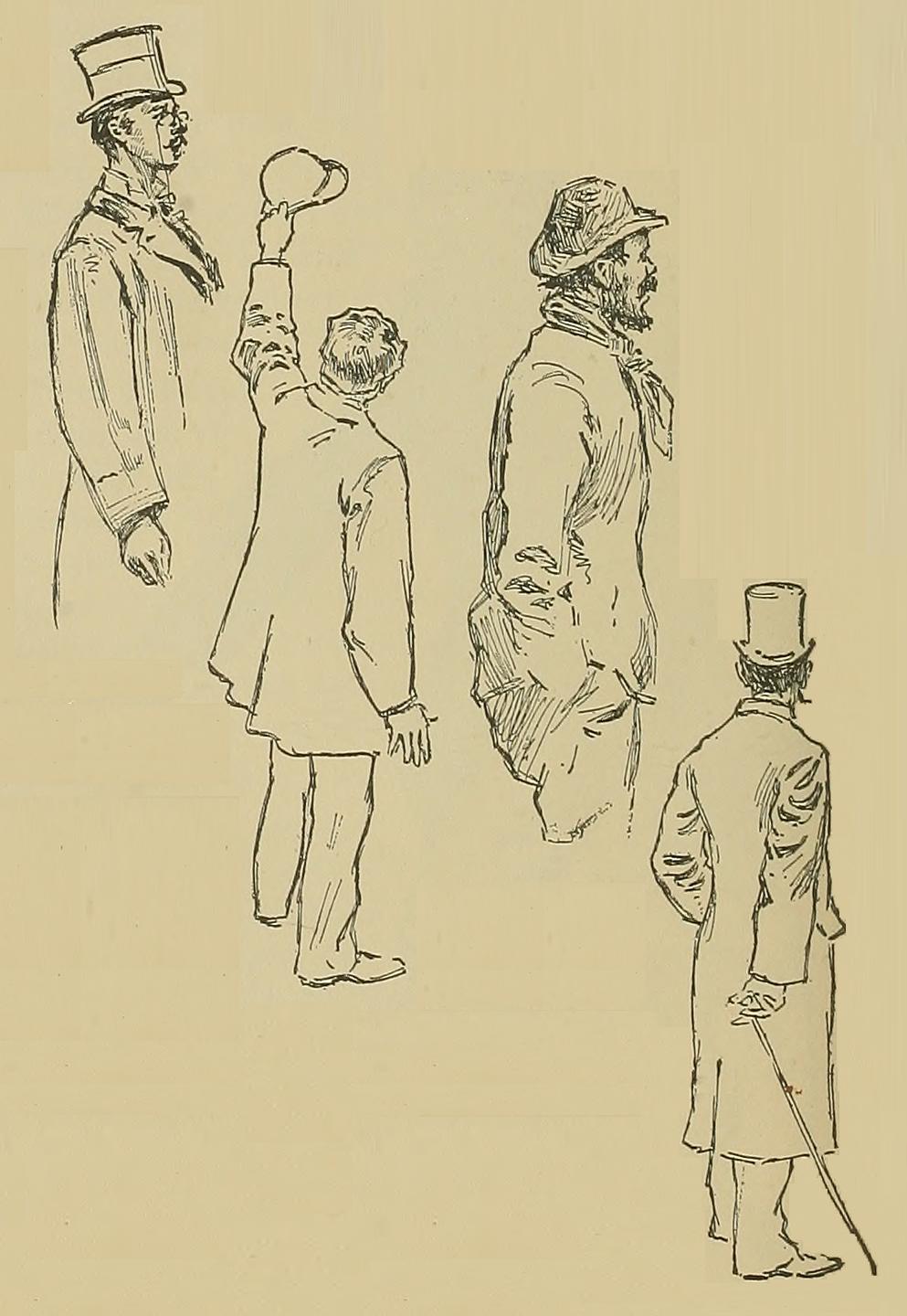
BON VOYAGE!
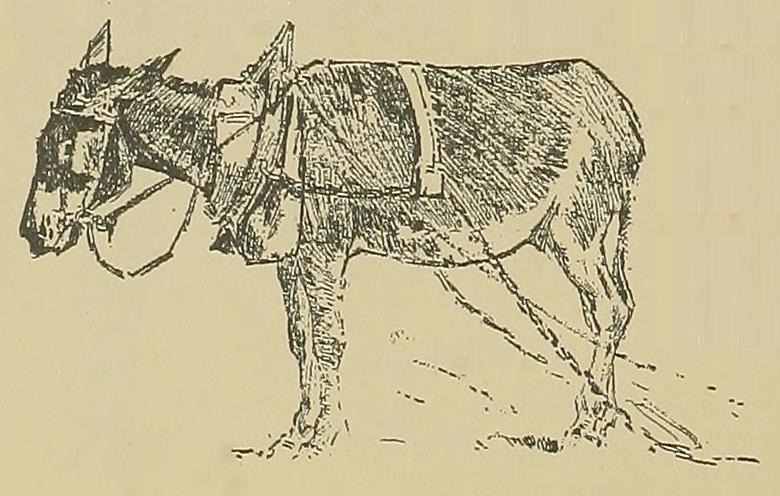
WAITING ORDERS.
Mr. Perard discovers himself in these sketches to be a facile technician, a shrewd and sympathetic observer, and several different kinds of a man—all good kinds. Observe one thing about him: he is healthy and sound all through. His work is calm, firm, and kind. There is heart in it. There is quite as warm a corner in that heart for the ragamuffin as there is for the howling swell.