Chapter XXI
Reading edition
TELEOSTEI: GENERAL CHARACTERS—MALACOPTERYGII—OSTARIOPHYSI
Order IV. Teleostei.[638]
As stated above (p. 495), the Holostean Ganoids pass very gradually into the Teleosteans, the lower groups of which appear to have been directly derived from them. The precise definition of the Order Teleostei, as compared with the Ganoid Order Holostei, is a matter of some difficulty. The most important character appears to be the presence of an ossified supraoccipital bone.[639] Remnants of primitive characters, such as ganoid scales, fulcra, rudiments of a splenial bone, spiral valve to the intestine, multivalvular conus arteriosus, are still found in some lower Teleosteans, but no longer in that combination which serves to define the preceding order. Although Albula is exceptional among all Teleosteans in having two transverse series of valves to the bulbus arteriosus instead of one, no Ganoid has fewer than three.
The first remains of Teleosteans appear scantily in the Upper Trias, and it is not before we reach the Upper Cretaceous that they assume preponderance over other Teleostomes; whilst in the Upper Eocene they have already attained a development and variety of types comparable to their present condition. Out of some 12,000 well-established species of Fishes known to exist at the present day, about 11,500 belong to this order. The classification of such an array of forms is, of course, a matter of great difficulty, and gives scope for much difference of opinion among those who have attempted to grapple with the subject. It is now recognised that the study of the skeleton affords the safest guide to a natural arrangement of the families and higher divisions. Much has been done in this line by Cope, Gill, Sagemehl, A. S. Woodward, and Jordan and his pupils; but the osteology of many important types still remains unknown. For some years a large number of skeletons have been prepared in the British Museum with the object of settling open questions, and this material has enabled me to draw up a scheme of classification which, whatever its defects, and however provisional, I feel sure is on the whole an improvement on those hitherto proposed, and especially on that generally in use in this country. The latter was, to a great extent, based on physiological principles; the present aims at being phylogenetic. In its preparation I have derived great benefit from the labours of the authors quoted above, but have endeavoured in every instance to verify their statements on a larger osteological material than appears to have been available to them. I have also had the advantage of the criticism, on many points, of my young colleague, Mr. C. Tate Regan, who has himself endeavoured to settle some important questions of classification.[640]
The Order Teleostei is divided into thirteen sub-orders, the probable relations of which are expressed in the following diagram:—
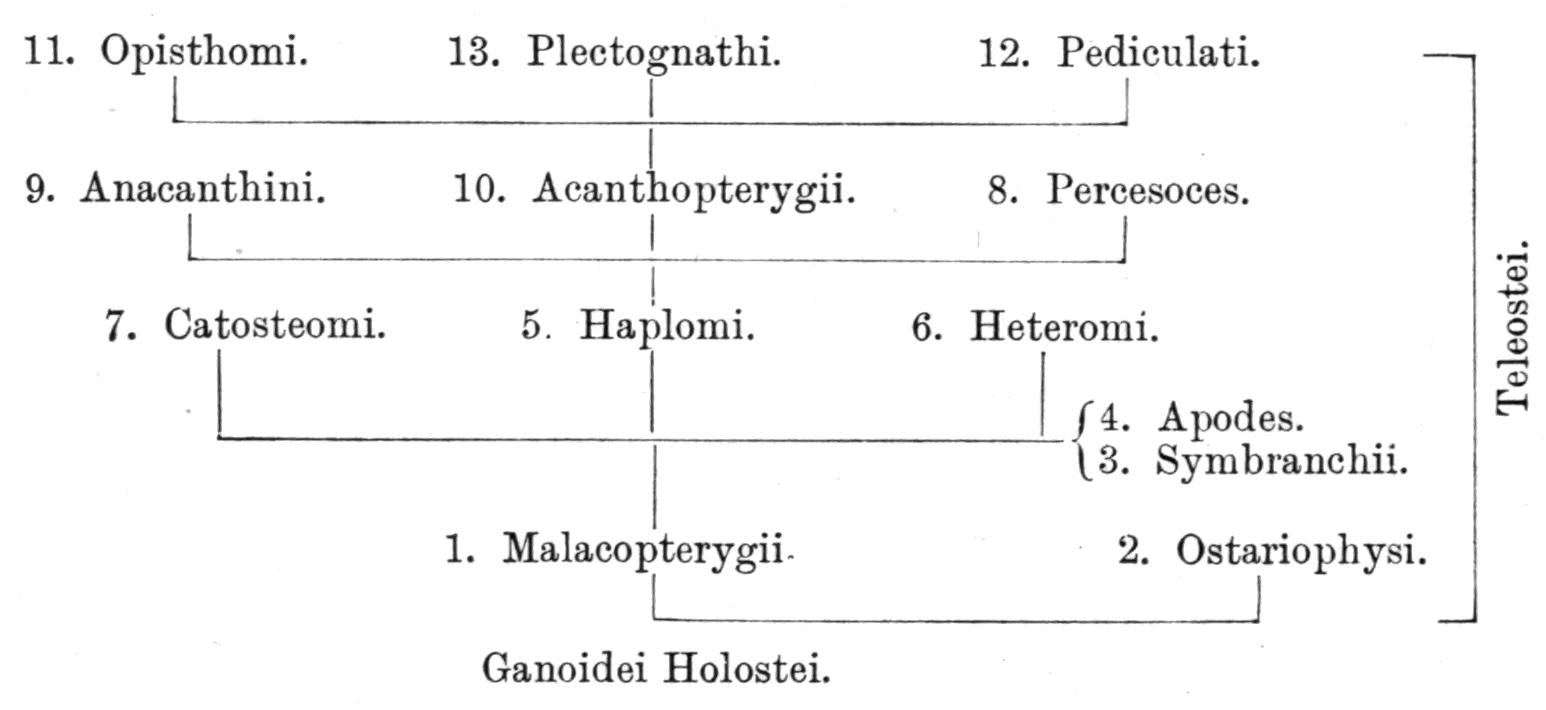
In the classification of Günther, which has been generally in use in this country for the last thirty years, the Teleosts were divided into six principal groups, of ordinal rank: I. Acanthopterygii; II. Acanthopterygii Pharyngognathi; III. Anacanthini; IV. Physostomi; V. Lophobranchii; VI. Plectognathi. Group I. corresponds to Sub-Order 6 (part), 7 (part), 8 (part), 10 (part), 11 and 12 of the present work; Group II. to Sub-Order 10 (part); Group III. to Sub-Order 9 and 10 (part); Group IV. to Sub-Order 1, 2, 3, 4, 5, 6 (part), and 8 (part); Group V. to Sub-Order 7 (part); and Group VI. to Sub-Order 13.
Sub-Order 1. Malacopterygii.
Air-bladder, if present, communicating with the digestive tract by a duct. Opercle well developed. Pectoral arch suspended from the skull; mesocoracoid arch present.[641] Fins without spines, the ventrals abdominal, if present. Anterior vertebrae distinct, without Weberian ossicles.
This sub-order, which corresponds to the Isospondyli and Scyphophori of Cope and to a part of the Isospondyli of A. S. Woodward, embraces the most generalised of the Teleosts, and is intimately connected with the Ganoids by the fossil forms which are placed at the base of the series of families. The physostomous condition of the air-bladder, the connexion of the pectoral arch with the skull, the presence of the mesocoracoid arch, the backward position of the many-rayed ventral fins, the normal condition of the anterior vertebrae, the absence of true spines to the fins, and the separation of the supraoccipital bone from the frontals by the parietals, are primitive characters which among the Teleosts occur combined in some families of this suborder only. The mesocoracoid arch is retained by the Ostariophysi, which differ in the remarkably modified condition of the anterior vertebrae, but it disappears in all other Teleosts, which gradually acquire a more forward position of the ventral fins and a reduction in the number of their rays, develop spines in the vertical fins, and lose the communication of the air-bladder with the outside.
The Malacopterygii may be divided into twenty-one families, the characters of which are contrasted in the following synopsis:—
I. Fins fringed with fulcra, or scales coated with ganoin; notochord usually continuous through the vertebrae.
Vertebral centra not more than rings; fins with fulcra; scales rhombic, united by peg-and-socket joints .......... 1. Pholidophoridae.†
Vertebral centra not more than rings; fins with fulcra; scales cycloid .......... 2. Archaeomaenidae.†
Vertebral centra complete or with minute perforation; fins with fulcra; scales cycloid .......... 3. Oligopleuridae.†
Vertebral centra nearly complete, but with perforation; no fulcra; scales cycloid .......... 4. Leptolepididae.†
II. Fins without fulcra; scales without ganoin; vertebral centra complete.
A. Supraoccipital separated from the frontals by the parietals or upper surface of skull; no adipose fin.
1. Ventral fins with 10 to 16 rays.
An intergular bone; parasphenoid narrow .......... 5. Elopidae.
No intergular bone; parasphenoid very broad .......... 6. Albulidae.
2. Ventrals with not more than 7 rays.
a. Supratemporal very large, plate-like.
Praemaxillary single, its posterior extremity free from the maxillary; symplectic absent; basis cranii simple .......... 7. Mormyridae.
Praemaxillary paired, its posterior extremity firmly attached to the maxillary; symplectic present; basis cranii double .......... 8. Hyodontidae.
b. Supratemporal small; maxillary firmly attached to posterior extremity of praemaxillary.
Praemaxillary paired; a large hole on each side of the skull, between the post-frontal and the squamosal; basis cranii double; suboperculum absent; ribs sessile .......... 9. Notopteridae.
Praemaxillary paired; basis cranii simple; suboperculum reduced; ribs inserted on parapophyses .......... 10. Osteoglossidae.
Praemaxillary single; basis cranii simple; suboperculum and interoperculum absent; ribs inserted on parapophyses .......... 11. Pantodontidae.
c. Supratemporal small; maxillary movable; ribs sessile; ventral fins below the pectorals .......... 12. Ctenothrissidae.†
B. Supraoccipital separating parietals, or adipose fin present.
1. Interoperculum enormous; symplectic absent; basis cranii simple .......... 13. Phractolaemidae.
2. Interoperculum normal; symplectic present; basis cranii double.
a. Teeth in sockets; maxillary firmly attached to praemaxillary. Symplectic exposed .......... 14. Saurodontidae.†
b. Teeth not in sockets.
Symplectic concealed between the quadrate and the hyomandibular .......... 15. Chirocentridae.
Postclavicle on outer side of clavicle; no adipose fin .......... 16. Clupeidae.
Postclavicle on inner side of clavicle; an adipose dorsal fin .......... 17. Salmonidae.
Postclavicle absent; no adipose fin .......... 18. Alepocephalidae.
3. Interoperculum normal; basis cranii simple.
Maxillary large, toothed; praecaudal vertebrae without well-marked parapophyses; scales cycloid or absent; adipose dorsal fin present or absent .......... 19. Stomiatidae.
Mouth small, toothless; vertebrae with strong parapophyses; head and body covered with spiny scales .......... 20. Gonorhynchidae.
Mouth small, toothless; no symplectic; head and body naked .......... 21. Cromeriidae.
† This sign indicates that the group is represented by fossil forms only.
Fam. 1. Pholidophoridae.—Margin of the upper jaw formed by the praemaxillaries and the maxillaries, the latter large and loosely attached; teeth small and conical. Parietal bones separating the supraoccipital from the frontals; opercular bones well developed. Vertebral centra never advanced beyond the annular stage; ribs delicate; no fused or expanded haemal arches at the base of the tail; no epipleurals or epineurals. Fin-fulcra present, but usually small; dorsal and anal fins small, the former above or behind the ventral fins, which are small or may be absent. Scales ganoid, rhombic, those on the flanks united by peg-and-socket joints.
This family, which appears to me to be related to the Dapediidae, is provisionally placed here by A. S. Woodward on account of its resemblance to the Leptolepididae, but it is not yet quite clear that the mandible was destitute of splenial and coronoid elements, while the bones at the base of the pectoral fin have not hitherto been observed. The principal genera are Pholidophorus, ranging from the Upper Trias to the Purbeck; Thoracopterus, from the Upper Trias; and Pleuropholis, from the Upper Jurassic. The species of Pholidophorus are very numerous in the Jurassic period, and Woodward has observed that the scales of the later species are more elaborately ornamented than those of earlier date.
Fam. 2. Archaeomaenidae.—Distinguished from the preceding by the thin, cycloid scales. Conspicuous obtuse ridge-scales are present along the dorsal and ventral lines. Archaeomenes, from the Jurassic (?) of New South Wales.
Fam. 3. Oligopleuridae.—Characters as in Pholidophoridae, but scales cycloid and vertebrae completely or nearly completely ossified.
Oligopleurus, from the Jurassic of England and France; Oenoscopus, from the Jurassic and Cretaceous of France, Germany, and Italy; and Spathiurus, from the Cretaceous of Mount Lebanon and Dalmatia.
Fam. 4. Leptolepididae.—Praemaxillaries very small; maxillaries large, loosely attached; teeth small and conical. Parietal bones separating the supraoccipital from the frontals; opercular bones well developed. Vertebral centra well ossified, but always pierced by the notochord; ribs delicate; epipleurals present; no fused or expanded haemal arches at the base of the caudal fin. Dorsal and anal fins small, the former above or behind the ventrals. Ventrals with 5 to 10 rays. Scales thin, cycloid and deeply imbricate, usually coated with ganoin in their exposed portion.
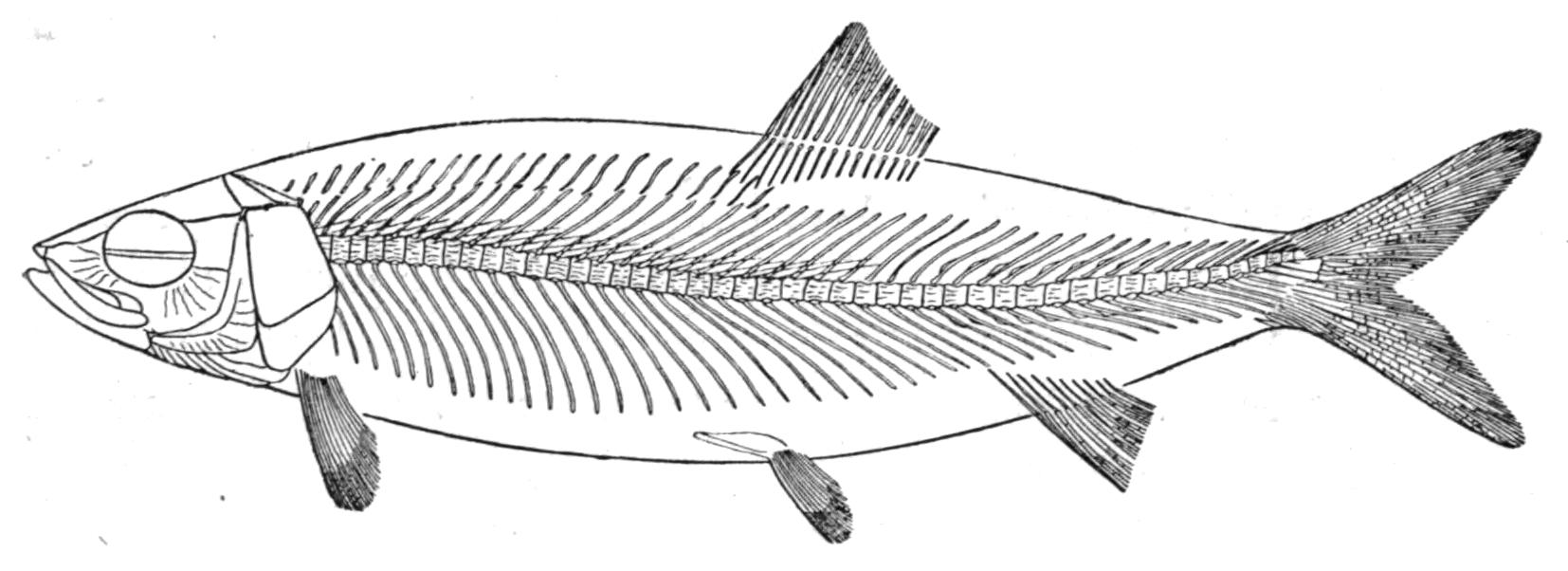
Fig. 325.—Leptolepis dubius. (Restoration of skeleton by A. S. Woodward.)
Leptolepis, with numerous species, from the Jurassic and Cretaceous of Europe and New South Wales; Vidalia, Jurassic of France; Aethalion, Jurassic of Bavaria; Thrissops, Jurassic and Cretaceous of Europe; and Lycoptera, Jurassic of Asia.
Fam. 5. Elopidae.—Margin of the upper jaw formed by the praemaxillaries and the maxillaries, the latter the more developed, and movably articulated above the former to the ethmoid. Parietal bones in contact behind the frontals; opercular bones well developed. Basis cranii double. A bony intergular or sublingual plate. Jaws, palatines, pterygoids, vomer, parasphenoid, glossohyal, and pharyngeals toothed. Ribs mostly sessile, inserted very low down, behind parapophyses; epineurals similar to the ribs, but directed upwards. Pectorals low down, folding like the ventrals. Post-temporal forked, the upper branch attached to the epiotic, the lower to the opisthotic; post-clavicle small; scapular foramen in the scapula; pterygials well developed, three in contact with coracoid. Ventrals with 10 to 16 rays. Branchiostegal rays very numerous (over 20). Air-bladder large.
This family is abundantly represented in Cretaceous times by the genera Osmeroides and Elopopsis, and from the Lower Eocene to the present day by Elops and Megalops. Elops saurus is a handsome elongate silvery Fish, found in all the warm and tropical seas; the young are ribbon-shaped like those of Albula. A second species, E. lacerta, is from the West Coast of Africa, entering rivers. Megalops, distinguished by larger scales, the absence of pseudobranchiae, and the curious prolongation of the last ray of the dorsal fin, includes the well-known Tarpon M. atlanticus, and the Indian M. cyprinoides. The Tarpon occurs from the south-eastern coasts of North America and the West Indies to Brazil, and reaches a length of 6 feet and a weight of 110 lbs. It often leaps out of the water, after the manner of Grey Mullets, and its chase when hooked affords good sport, the landing of so active a giant being attended with great difficulties. Its remarkably large scales, over two inches in diameter, are much prized for fancy work in the Florida curiosity shops.
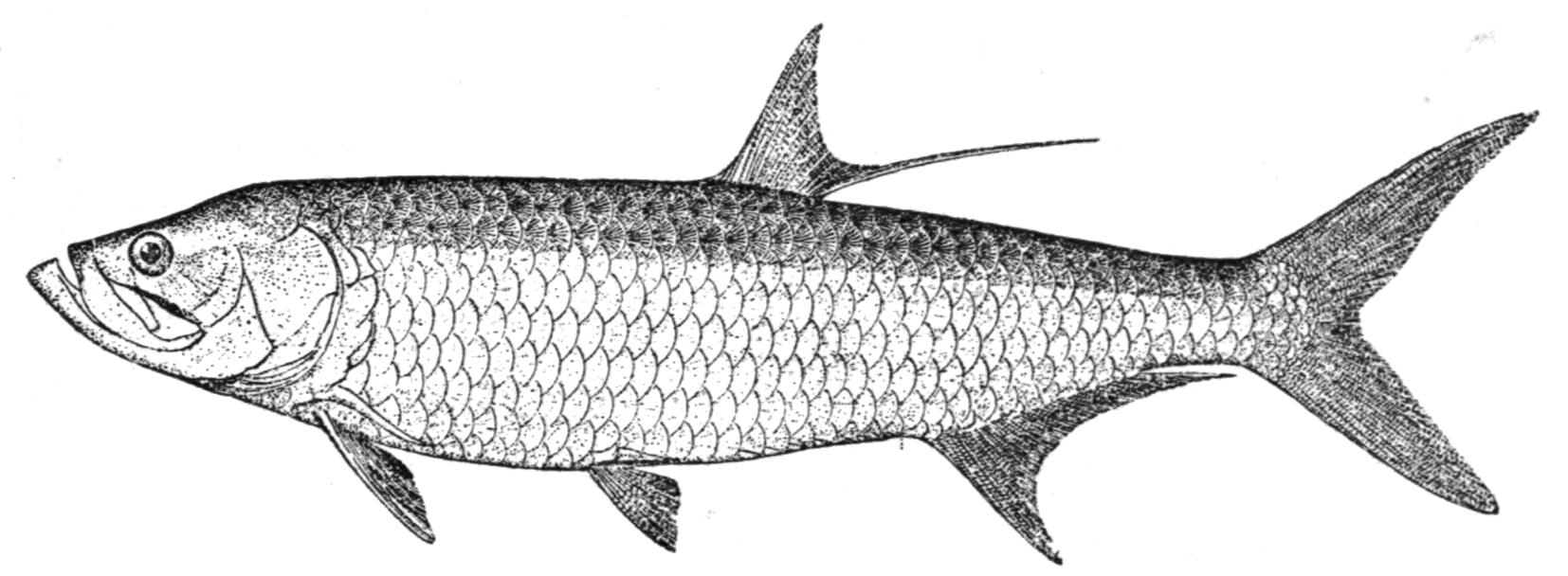
Fig. 326.—Tarpon, Megalops atlanticus, much reduced. (After Goode.)
Fam. 6. Albulidae.—Margin of the upper jaw formed by the praemaxillaries and the maxillaries, the latter movably articulated above the former to the ethmoid. Parietal bones separating the supraoccipital from the frontals; suboperculum large; interoperculum small and entirely or nearly entirely hidden below the praeoperculum. Basis cranii double. Praemaxillaries, mandible, vomer, palatines, pterygoid, parasphenoid, glossohyal, and pharyngeals toothed. Ribs sessile, inserted behind and somewhat below small parapophyses, which are absent or merely indicated on the anterior vertebrae, and gradually increase in size towards the caudal region; these parapophyses, as well as the neural and haemal arches, are autogenous bones; epineurals, no epipleurals. Pectorals low down, folding like the ventrals. Post-temporal trifid, the upper branch attached to the epiotic, the median to the squamosal, the lower to the opisthotic; post-clavicle large (formed of three pieces); scapular foramen between scapula and clavicle; pterygials well developed, two in contact with coracoid. Ventrals with 10 to 14 rays. Branchiostegal rays 6 to 14. Air-bladder large, not communicating with the ear.
Elongate fusiform Fishes, covered with large silvery scales forming regular longitudinal series; head naked; mouth rather small, with thick lips; gill-openings wide. Dorsal fin originating in front of ventrals; anal short; caudal well developed, forked.
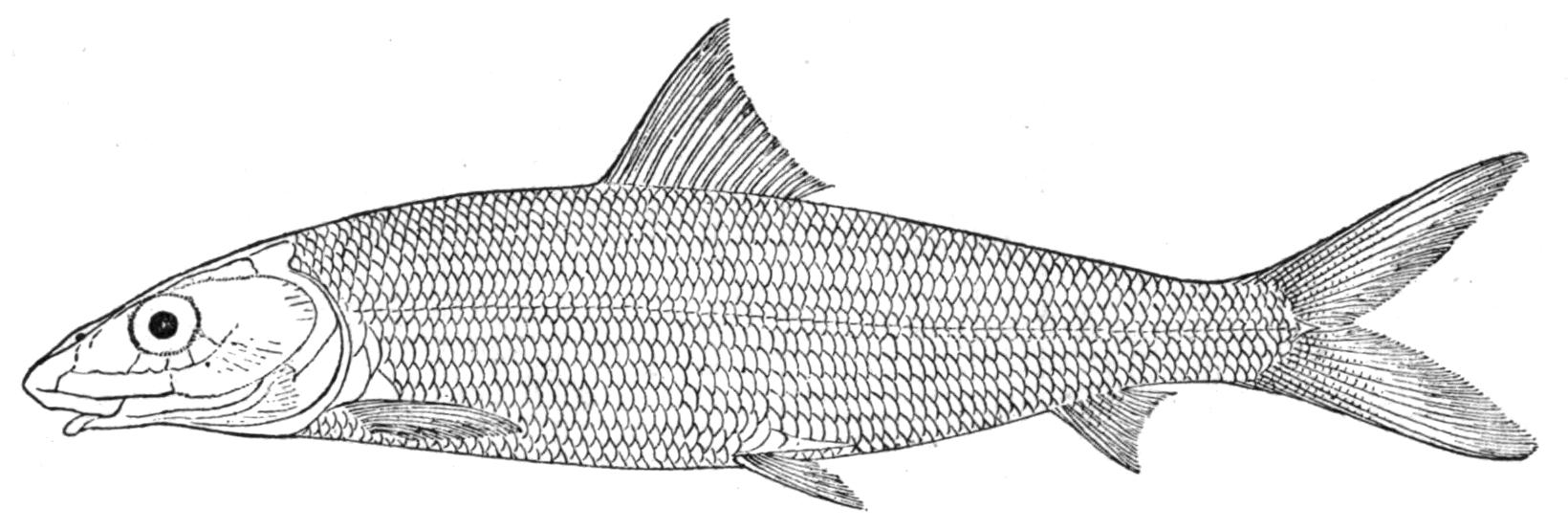
Fig. 327.—Albula conorhynchus. ¼ nat. size.
The type of this family, Albula or Butirinus, is remarkable among Teleosts in possessing a rudiment of a conus arteriosus to the heart, provided with two rows of valvules.[642] Its single species inhabits all the warm and tropical seas. Prof. Gilbert has ascertained that the young pass through a metamorphosis, analogous to that of the Eels. The "Leptocephalid" described as Esunculus by Kaup is probably a larval Albula.

Fig. 328.—Larva of Albula conorhynchus. (After Gilbert.)
The deep-sea Japanese Pterothrissus (Bathythrissa) must be placed in this family; its skeleton is very similar to that of Albula. It differs in the elongate dorsal fin, in the presence of small teeth on the maxillary bone, and in the small number of branchiostegal rays (6 instead of 12 to 14).
Albula is represented in the Eocene (London Clay and Bruxellian); and the Cretaceous Istieus and Anogmius are believed to be possibly related to Pterothrissus. Four Cretaceous types (Plethodus, Thryptodus, Syntegmodus, and Ancylostylus) are referred with doubt to the Albulidae.
Fam. 7. Mormyridae.—Margin of the upper jaw formed by the single praemaxillary and the maxillaries, the latter articulated above the former to the ethmoid. Parietal bones separating the supraoccipital from the frontals; a large hole on each side of the skull, between the squamosal, the epiotic, and the opisthotic, covered by a large, thin, bony plate (the supratemporal), which may extend over a part of the parietal; symplectic absent; suboperculum small and hidden under the operculum, or absent; interoperculum well developed. Basis cranii simple. No pharyngeal teeth. Opercular bones hidden under the skin; gill-clefts narrow. Anterior ribs sessile; epineurals, no epipleurals. Pectorals directed upwards. Ventrals with 6 or 7 rays. Air-bladder communicating with the ear.
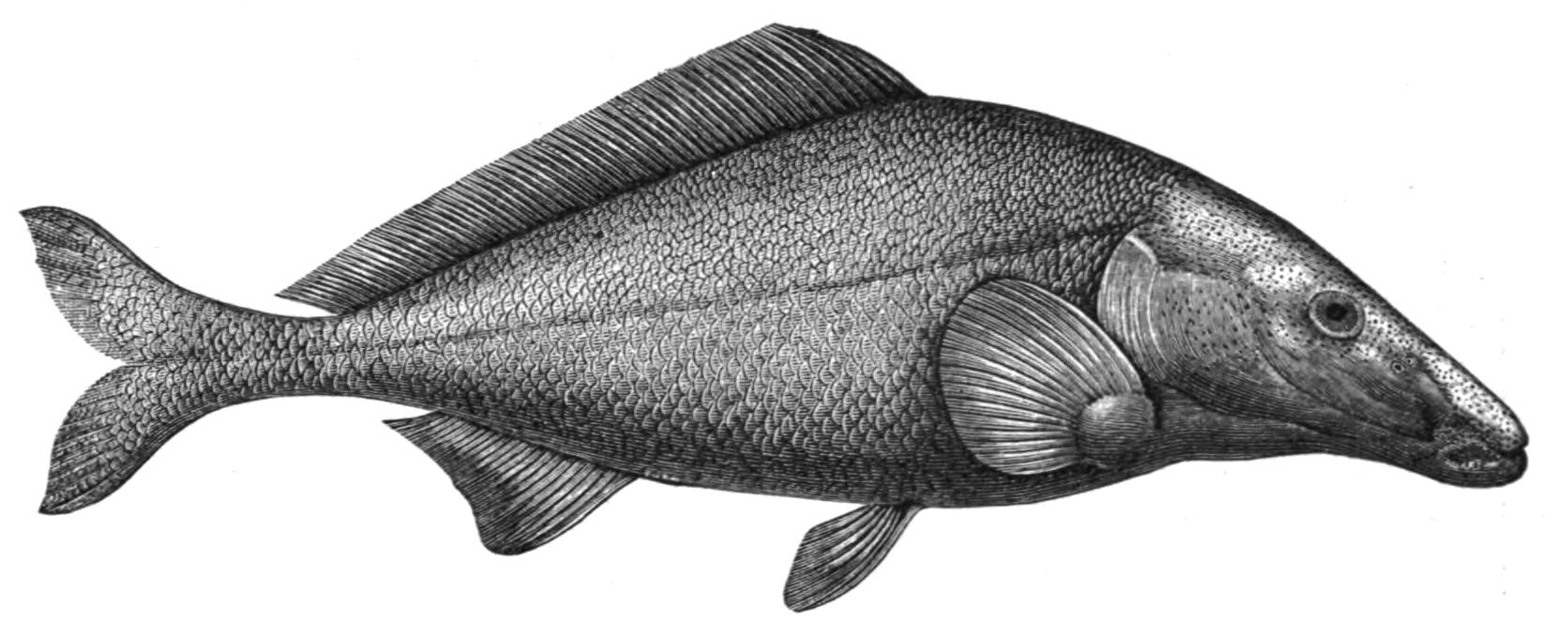
Fig. 329.—Mormyrus caballus. ⅕ nat. size.
Curious-looking Fishes, very variable in the form of the head and body and in the extent of the fins. Mouth often very small; teeth in jaws usually few; teeth usually present on the parasphenoid, working against a similar patch on the glossohyal; eye covered over by skin, sometimes very indistinct; scales small, cycloid; branchiostegal rays 4 to 8. The dorsal and anal fins may be nearly equally developed (Genyomyrus, Gnathonemus); or the former (Mormyrus) or the latter (Hyperopisus) are several times the longer. Gymnarchus, Eel-shaped, apodal, and deprived of the caudal fin, lacks the anal fin, the dorsal extending over the whole extent of the body. Some species of Mormyrops show how a form like Gymnarchus may have been evolved out of a more typically-formed Fish. Nothing is more striking than the variation in shape of the snout within one and the same genus, and the names given to some of the species (ovis, caballus, elephas, tamandua, numenius, ibis) are suggestive of resemblances with the heads of various animals.
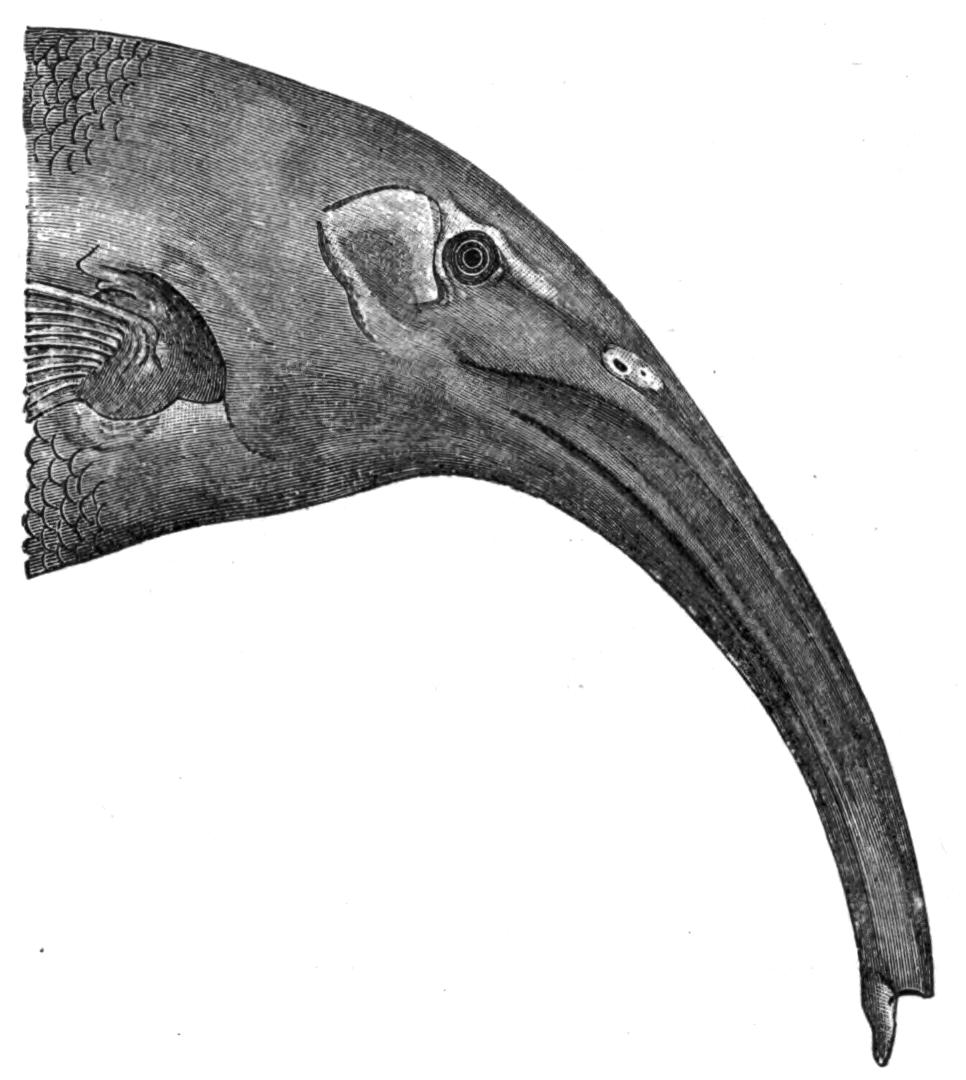
Fig. 330.—Head of Gnathonemus curvirostris.
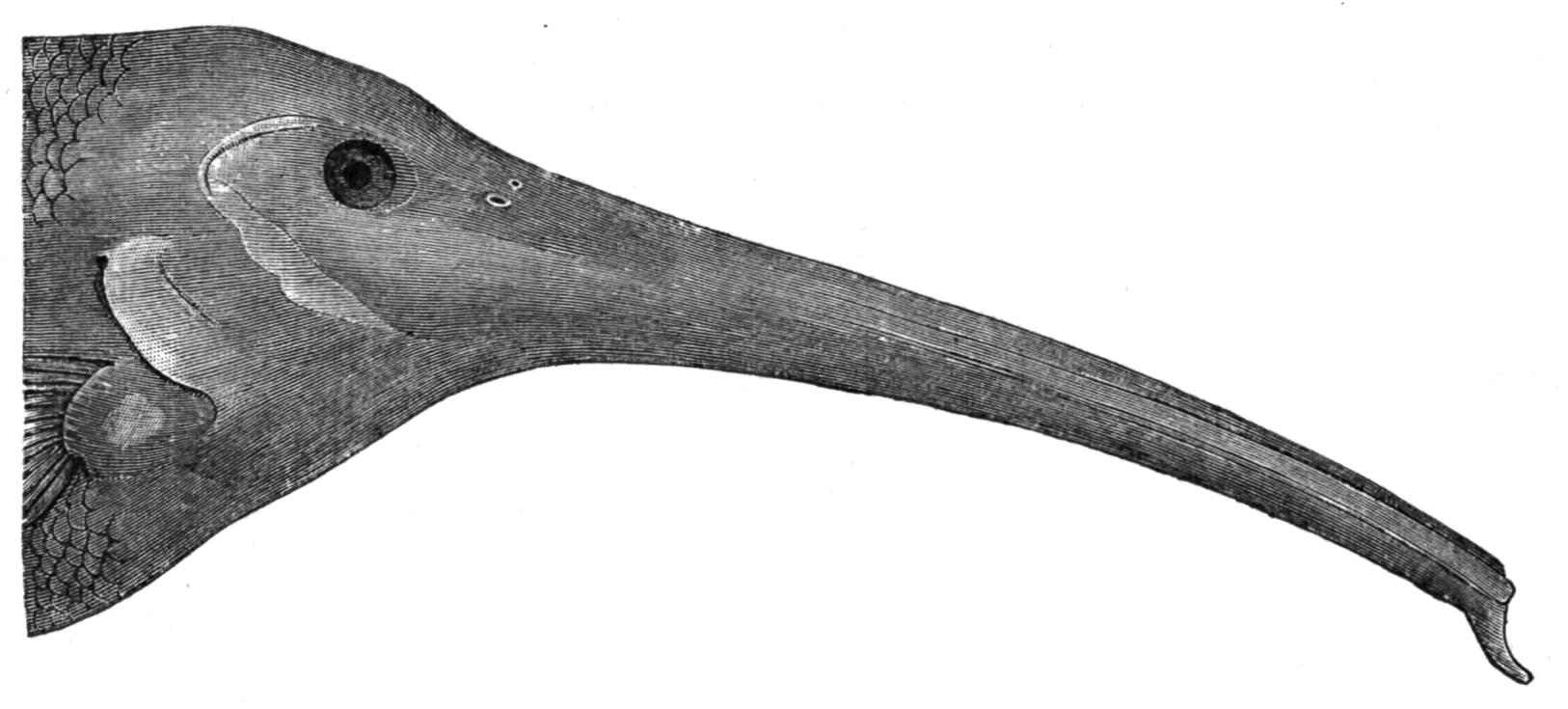
Fig. 331.—Head of Gnathonemus numenius.
The Mormyrids are highly remarkable for the enormous development of the brain, the weight of which equals 1⁄52 to 1⁄82 of the total, a thing unparalleled among lower Vertebrates; and for the problematic organ which surmounts it; also as being among the few Fishes in which an electric organ has been discovered. The organ, situated on each side of the caudal region, is derived from the muscular system and is of feeble power, as ascertained by Babuchin and by Fritsch; it was long considered as "pseudo-electric." The natural affinities of this family appear to be with the Albulidae, and there is nothing to justify the term "Nilhechte" (Nile-pike) which has been bestowed on them by German authors. Ninety-three species are known from the fresh waters of Africa north of the Tropic of Capricorn, and may be referred to two sub-families and ten genera[643]:—
(i.) Mormyrinae, with teeth on the parasphenoid and tongue, with ventral, anal, and caudal fins, and a simple air-bladder; vertebrae 37 to 64; peculiar (Gemmingerian) linear bones, without known homologues, along each side of the tail, above and beneath the electric organ; scapular foramen in the scapula, or between the scapula and the coracoid. Mormyrops, Petrocephalus, Isichthys, Marcusenius, Stomatorhinus, Myomyrus, Gnathonemus, Genyomyrus, Mormyrus.
(ii.) Gymnarchinae, without teeth on the parasphenoid and tongue, without ventral, anal, or caudal fins, and with a cellular air-bladder; vertebrae about 120; Gemmingerian bones absent; scapular foramen in the coracoid. Gymnarchus.
Fossil Mormyrids are unknown.
Venerated by the ancient Egyptians, the Mormyrs of the Nile are frequently represented on hieroglyphics and mural paintings as well as in bronze models. Very little is known of the habits of these Fishes. Prof. G. Fritsch, of Berlin, during his stay in Egypt for the purpose of experimenting on electric Fishes, observed that they perish very rapidly when removed from the river, and he had the greatest difficulty in keeping some alive in an aquarium for two or three days. The species with comparatively large mouths (Mormyrops, Gymnarchus) feed principally on fishes and crustaceans, the others on tiny animals and vegetable and more or less decomposed matter. Delhez, on the Congo, found that many are attracted to the borders of the river in the neighbourhood of human dwellings, where they feed on the refuse thrown into the water. It is probable that the species with a rostrum use it to procure small prey hidden between stones or buried in the mud, and that the fleshy mental appendage with which many are provided is a tactile organ compensating the imperfection of the vision in the search for food. A small Mormyrid from the Congo (Stomatorhinus microps) has the eyes so much reduced and the skin so feebly pigmented as to convey the impression of a cave Fish. Until quite recently, absolutely nothing was known of the breeding habits and development in this important family. To the late J. S. Budgett we owe some very interesting observations made in the Gambia on Gymnarchus niloticus.[644] The Fish makes a floating nest, emerging on three sides, over which the male keeps a fierce watch; the recently-hatched larvae are remarkable for the enormous size of the yolk-sac, which hangs down, acting as a sort of anchor, and for the presence of long external branchial filaments, as in Selachian embryos. The Fish propels itself through the water entirely by the action of its dorsal fin, forwards and backwards with equal facility; when swimming rapidly backwards, it may be seen to use the end of its tail as a feeler to guide the way. Budgett has also identified, with some doubt, the eggs of Hyperopisus bebe, out of which emerged embryos not unlike those of some tailless Batrachians, which hung suspended to rootlets of grass in swamps by means of threads of viscid mucus secreted from glands on the top of the head.
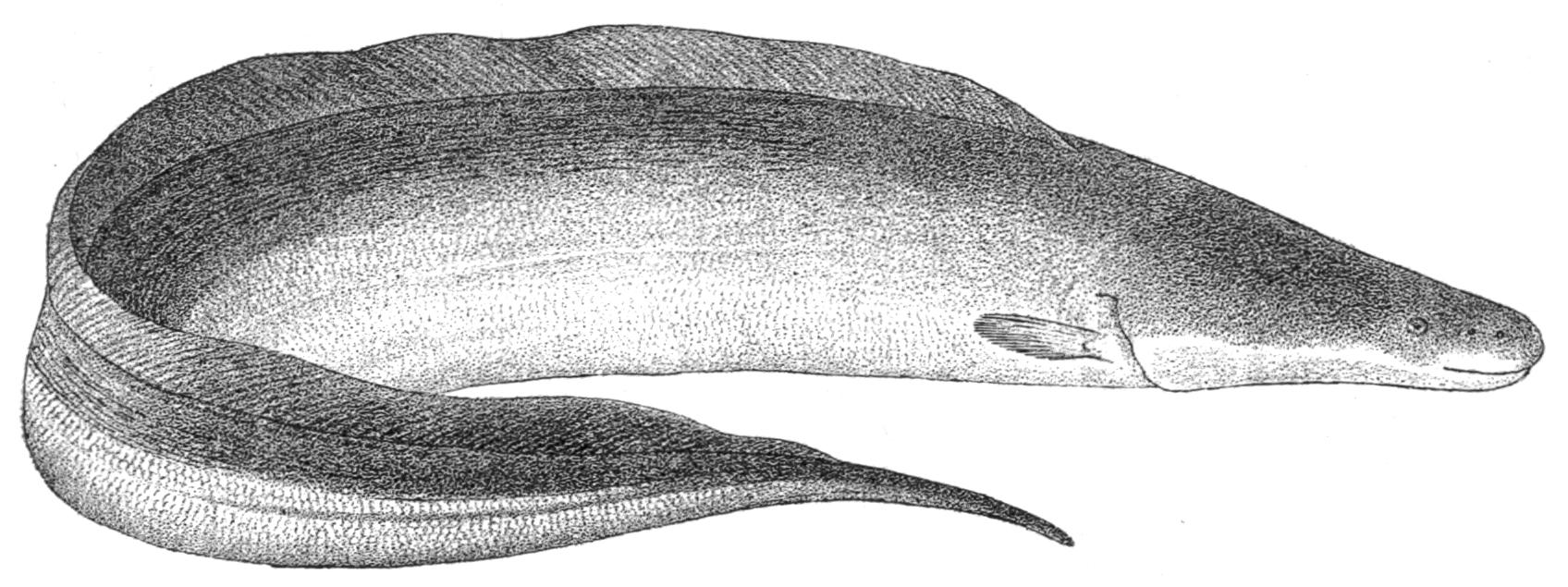
Fig. 332.—Gymnarchus niloticus. ¼ nat. size.
Fam. 8. Hyodontidae.—Margin of the upper jaw formed by the praemaxillaries and the maxillaries, the latter the more developed and firmly united to the end of the former. Parietal bones separating the supraoccipital from the frontals; a large hole on each side of the skull, between the parietal, the squamosal, and the epiotic (paroccipital), closed by a large, thin, bony plate (the supratemporal), which extends over the greater part of the parietal; suboperculum and interoperculum small, the latter partly hidden below the praeoperculum. Basis cranii double. Jaws, palatines, pterygoids, vomer, parasphenoid, and glossohyal toothed; no pharyngeal teeth. Ribs sessile, inserted above and behind well-developed parapophyses; epineurals, no epipleurals. Pectorals low down, folding like the ventrals. Post-temporal forked; the upper branch attached to the epiotic, the lower to the squamosal; no post-clavicle; coracoids forming together a ventral keel; scapular foramen between scapula and clavicle; pterygials well developed, three in contact with coracoid. Ventrals with 7 rays. Branchiostegal rays in moderate number (8 to 10). Air-bladder communicating with the ear. No oviducts, the eggs falling into the abdominal cavity before exclusion.
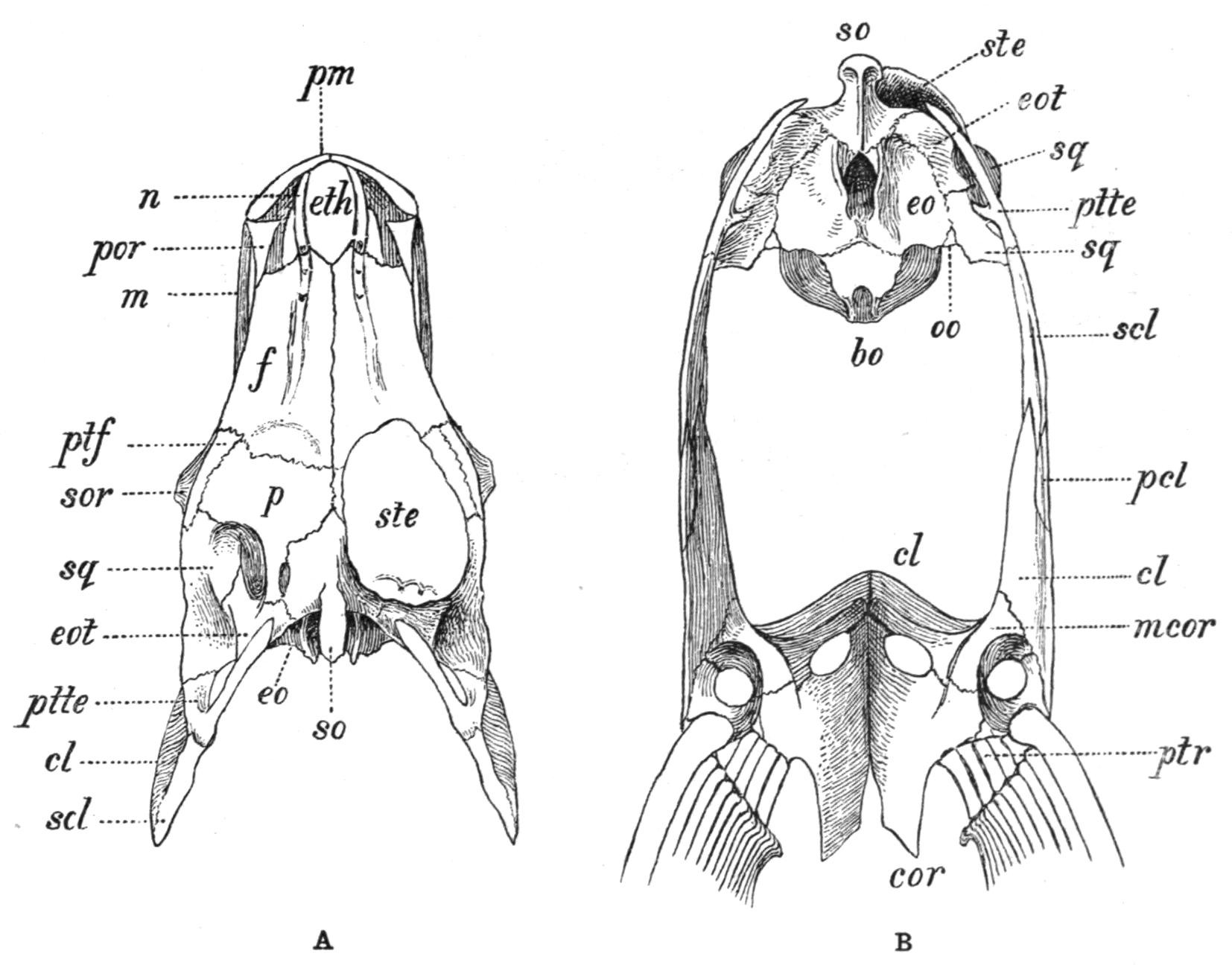
Fig. 333.—Upper (A) and posterior (B) views of skull and pectoral arch of Hyodon alosoides (the supratemporal removed on the left side). bo, Basioccipital; cl, clavicle; cor, coracoid; eo, exoccipital; eot, epiotic; eth, ethmoid; f, frontal; m, maxilla; mcor, mesocoracoid; n, nasal; oo, opisthotic; p, parietal; pcl, postclavicle; pm, praemaxilla; por, praeorbital; ptf, postfrontal; ptr, pterygials; ptte, post-temporal; scl, supraclavicle; so, supraoccipital; sor, suborbital; sq, squamosal; ste, supratemporal.
Elongate, compressed, silvery Fishes, covered with moderate-sized cycloid scales; head naked; mouth large, with strong dentition; gill-openings wide; dorsal fin short, posterior to the ventrals; anal rather elongate; caudal well developed, forked.
A single genus (Hyodon) with three species (Moon-Eyes of the Americans), all reaching the length of about a foot, inhabiting the fresh waters of North America east of the Rocky Mountains.
Fam. 9. Notopteridae. The Fishes which form this family may be regarded as an eccentric modification of a type very similar to the preceding, with which they agree in most osteological features as well as in the dentition, in the connexion between the air-bladder and the ear, and in the absence of oviducts. They differ in the absence of the lid-like supratemporal, the hole which it covers in Hyodon being here bordered by the post-frontal and the squamosal (fused with the opisthotic), sometimes also by the epiotic, in the absence of the suboperculum, in the absence or incomplete ossification of the upper branch of the post-temporal (the lower articulating with the opisthotic), and in the presence of accessory bones (named adpleurals) attached to or fused with the distal extremity of the anterior ribs, which they prolong to the mid-ventral line, where they are embraced by dermal ossifications forming a doubly serrated crest.
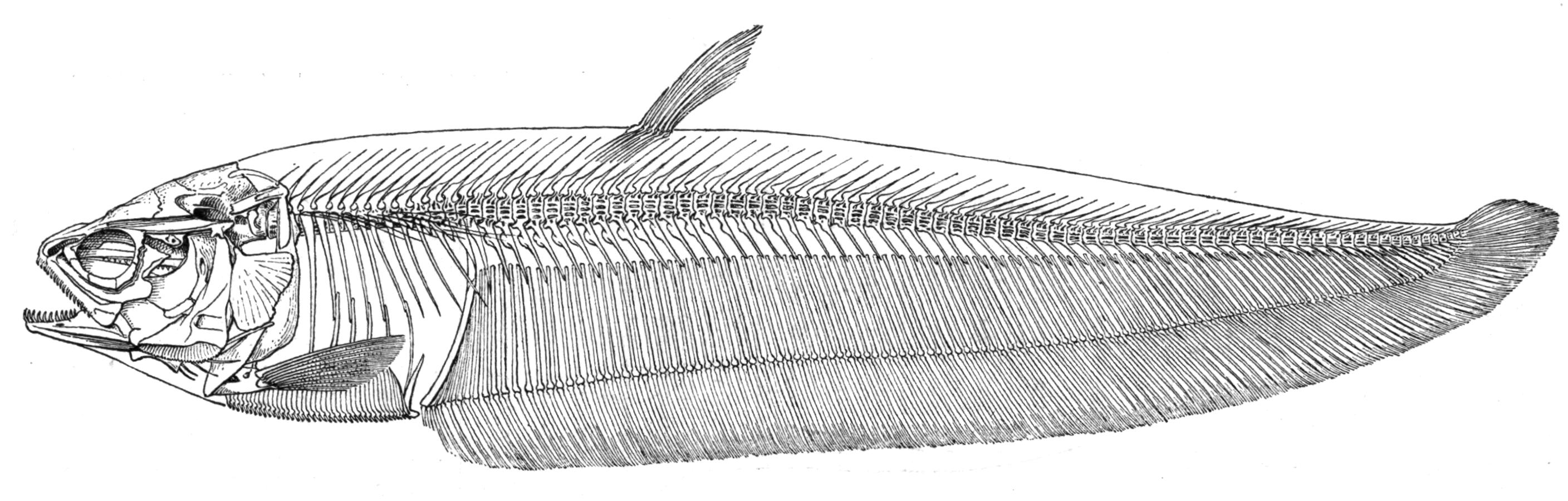
Fig. 334.—Notopterus afer, skeleton, with outline of soft parts. ⅔ nat. size.
The bones of the head are cavernous, the mouth is large; the anterior nostril is produced into a tentacle. The body is very strongly compressed, with very short precaudal region, attenuate behind; the ventral fins are much reduced or absent; the dorsal is short or absent, and the anal is much elongate and confluent with the caudal, which may be regarded as aborted. The scapular foramen is entirely in the scapula. The air-bladder is very large, with several divisions, forked in front and behind, and prolonged along each side of the caudal region; its extraordinary condition has been described by Bridge.[645]
These Fishes live in marshes and lakes, fresh-water or brackish, and feed on worms and insects. Nothing is known of their breeding habits and development.
Two genera: Notopterus, with a dorsal fin and 6 to 9 branchiostegal rays—three species from India, Burma, and the Malay region, and one from West Africa; Xenomystus, without dorsal fin and with only 3 branchiostegal rays, the unique species inhabiting the White Nile and West Africa. Remains of Notopterus have been found in the marl slates (Tertiary) of Padang, Sumatra. The largest species, the Indian N. chitala, attains 4 feet in length; its flesh is said to be uncommonly rich and well flavoured, but a strong prejudice exists against it, owing to the Fish being supposed to live on human carcases.
Fam. 10. Osteoglossidae.—Margin of the upper jaw formed by the praemaxillaries and the maxillaries, the latter the more developed and firmly attached to the end of the former. Parietal bones separating the supraoccipital from the frontals; suboperculum much reduced, and entirely or partially concealed under the praeoperculum. Basis cranii simple. Teeth in jaws, and on pterygoid and hyoid bones; no pharyngeal teeth. Head scaleless, the thin skin confluent with the bones; body covered with large bony scales, composed of pieces like mosaic. Ribs inserted on the strong parapophyses; epineurals, no epipleurals. Pectoral fins low down. Post-temporal forked, the upper branch attached to the epiotic, the lower to the squamosal; post-clavicle present; scapular foramen in scapula; pterygials well developed, only one in contact with coracoid. Dorsal and anal fins originating behind the ventrals; latter with 5 or 6 rays. No oviducts, the eggs falling into the abdominal cavity before exclusion (at least in Heterotis, as observed by Budgett).
This family is represented at the present day by five species, referred to four genera; thus characterised:—
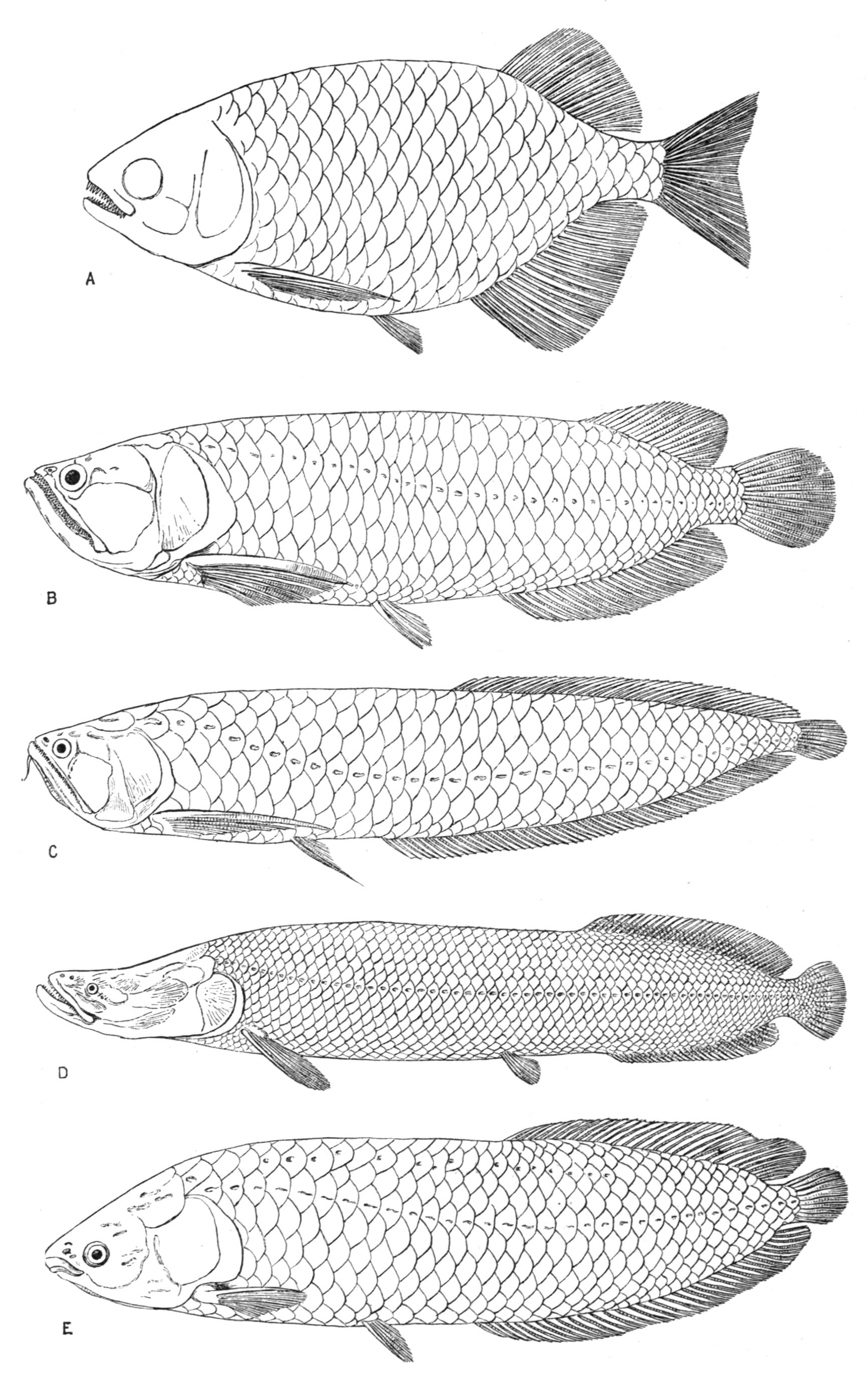
Fig. 335.—Principal forms of Osteoglossids. A, Dapedoglossus testis (restoration); B, Scleropages leichardti; C, Osteoglossum bicirrhosum; D, Arapaima gigas; E, Heterotis niloticus. All much reduced.
Scleropages.—Mouth large; vomer, palatines, pterygoids, and glossohyal toothed; mandibular barbels; branchiostegal rays 15 to 17; body compressed, with trenchant abdomen; coracoids forming a ventral keel; dorsal fin short; ventral fins nearly equally distant from end of snout and caudal fin; vertebrae 29 to 31 + 30; air-bladder not cellular. One species from the northern parts of Australia, and one from Sumatra, Banka, and Borneo.
Osteoglossum.—Mouth large; vomer, palatines, pterygoids, and glossohyal toothed; mandibular barbels; branchiostegal rays 10; body compressed, with trenchant abdomen; coracoids forming a ventral keel; dorsal fin long; ventral fins nearly twice as far from the caudal as from the end of the snout; vertebrae 28 + 59; air-bladder not cellular.—South America (Guianas, Brazil).
Arapaima.—Mouth rather large; vomer, palatines, pterygoids, and glossohyal toothed; branchiostegal rays 16; belly rounded; dorsal fin rather long; ventral fins equidistant from head and caudal fin; vertebrae 36 to 38 + 41 to 42; air-bladder cellular.—South America (Guianas, Brazil).
Heterotis.—Mouth moderate; branchiostegal rays 7; belly rounded; dorsal fin rather long; ventral fins nearer end of snout than caudal fin; vertebrae 27 + 42 to 43; air-bladder cellular; fourth branchial arch with an accessory breathing-organ. Africa (Nile, Senegal, Gambia, Niger).
Dapedoglossus, from the Eocene of Wyoming, appears to be nearest to Scleropages, and Brychaetus, from the Eocene (London Clay) of Sheppey, Kent, to Arapaima, so far as the state of preservation of these fossils enables us to form an opinion.
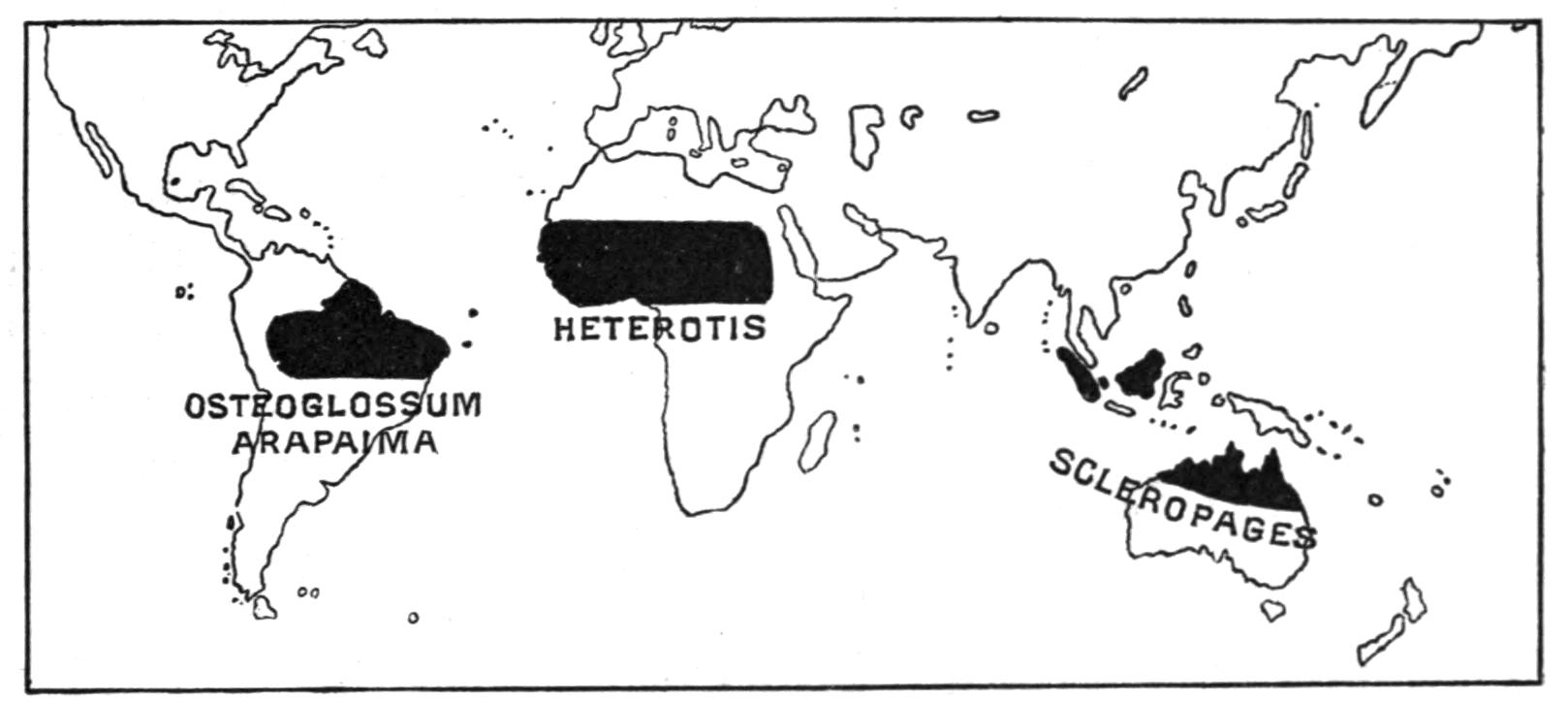
Fig. 336.—Distribution of the Osteoglossids.
Dr. Günther has directed attention to the remarkable coincidence of the geographical distribution of this family and the Dipneusti, although, however, the latter are not known to be represented in the Malay Archipelago. "Not only," he adds, "are the corresponding species found within the same region, but also in the same river systems; and although such a connexion may and must be partly due to a similarity of habit, yet the identity of this singular distribution is so striking that it can only be accounted for by assuming that the Osteoglossidae are one of the earliest Teleosteous types which have been contemporaries of and have accompanied the present Dipnoi since or even before the beginning of the Tertiary epoch."
The Queensland species of Scleropages (S. leichardti) is known to the settlers by the name of Barramunda, which has also been applied to Neoceratodus. Arapaima gigas is one of the largest fresh-water Fishes known, exceeding a length of 15 feet and a weight of 400 pounds. Its flesh is much valued. Sir R. Schomburgh has observed that the mother protects the young, who, for some time after their birth, always swim in front of her. A similar observation has been made in the Gambia on Heterotis niloticus by the late J. S. Budgett, who states that the Fish builds enormous nests in swamps, in about two feet of water; the walls of the nest are made of the stems of the grasses removed by the Fish from the centre; the floor is the swamp-bottom, and is made perfectly smooth and bare. The nest appears to be used for at most four or five days; the newly-hatched larvae are provided with long external gill-filaments of a blood-red colour.[646]
Fam. 11. Pantodontidae.—The little West African Fish described by Peters as Pantodon buchholzi is the unique representative of a family closely related to the Osteoglossidae, but distinguished by the very small, single praemaxillary and the absence of suboperculum and interoperculum. The pectoral fins are very large and are remarkable for the fleshy process to which the inner ray is adnate; the ventrals, formed of 7 rays, some of which are simple and prolonged into filaments, are placed more forward than in any other type of this sub-order, the Ctenothrissidae excepted, viz. immediately behind the pectorals. Teeth in the jaws and on the vomer, palatines, pterygoids, parasphenoid, glossohyal, and pharyngeal bones. Mesocoracoid arch slender, strongly curved, and meeting its fellow on the median line; coracoids forming a ventral keel. Vertebrae few (16 + 14).
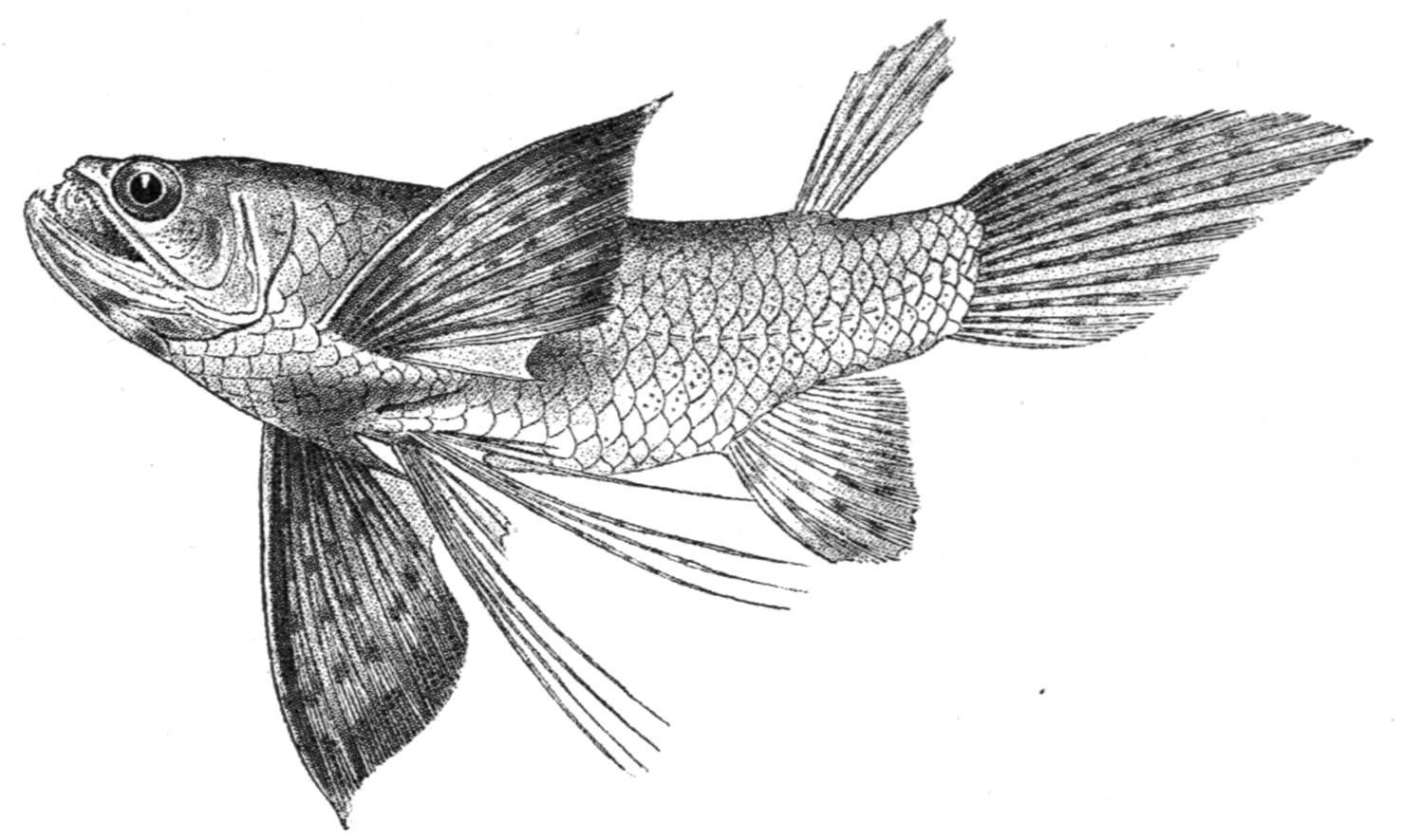
Fig. 337.—Pantodon buchholzi, natural size.
Observed by M. de Brazza to be a freshwater Flying-Fish.
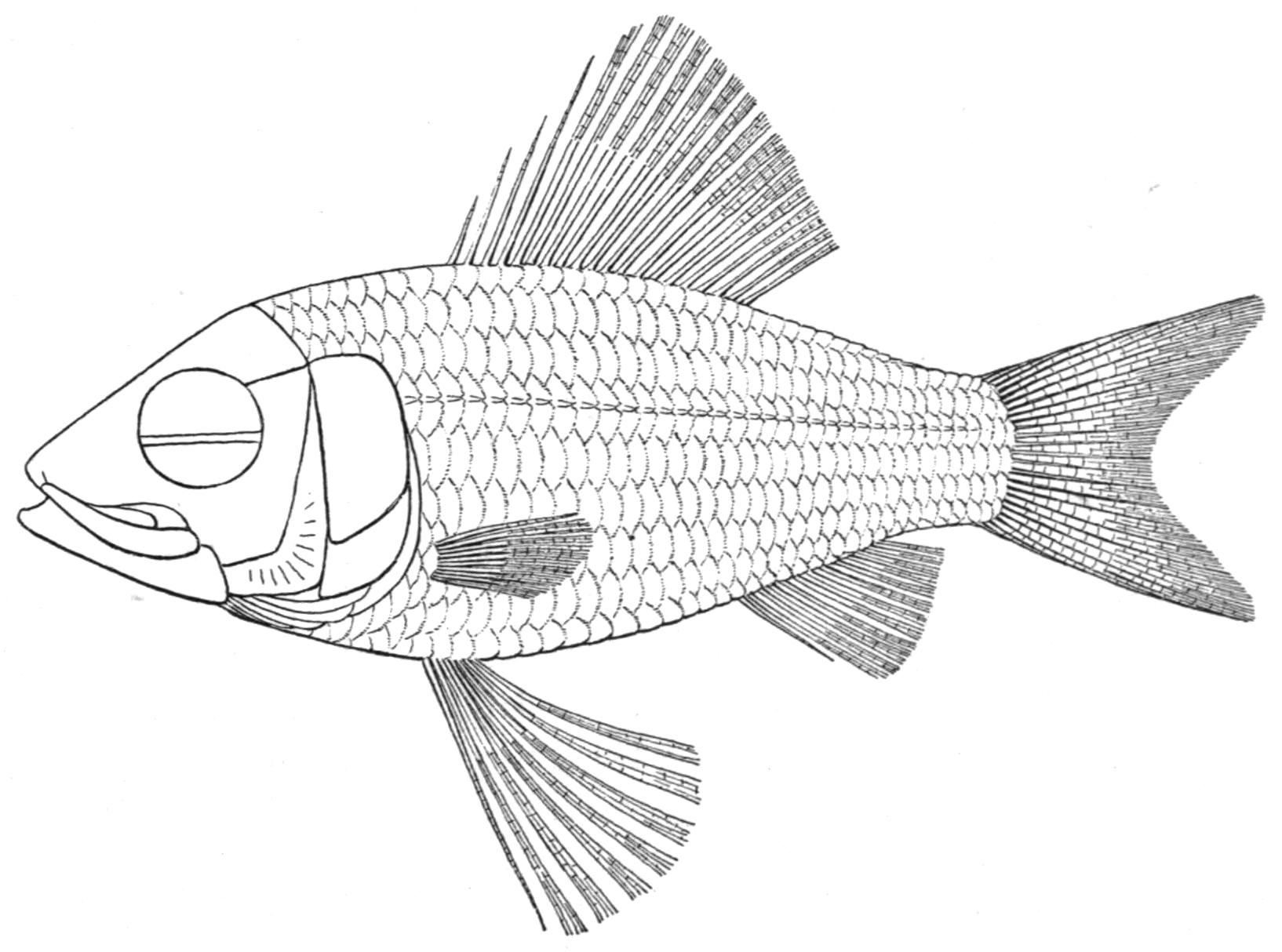
Fig. 338.—Ctenothrissa vexillifer (restored by A. S. Woodward).
Fam. 12. Ctenothrissidae.—A curious type characterised by small praemaxillaries, large maxillaries, with feeble dentition, the parietals in contact on the median line, vertebral centra without transverse processes, a moderately large dorsal with simple anterior rays, and large ventrals advanced far forwards and formed of 8 rays. Its affinities are still obscure, but the condition of the jaws decides its allocation to the suborder Malacopterygii, whilst in the position of the ventrals it is most nearly approached by the Pantodontidae. Small Fishes known only by two genera, of the Cretaceous period (England and Mount Lebanon), one with ctenoid scales (Ctenothrissa), the other with cycloid scales (Aulolepis).
Fam. 13. Phractolaemidae.—Mouth edentulous, projectile, bordered by the very slender praemaxillaries and maxillaries. Supraoccipital in contact with the frontals, widely separating the small parietals; operculum and suboperculum well developed; praeoperculum small; interoperculum enormous, covering the gular region and overlapping its fellow; symplectic absent. Basis cranii single. No pharyngeal teeth. Only 3 slender branchiostegal rays. Ribs stout, sessile, nearly completely encircling the body; slender epineurals; no epipleurals; caudal region very short. Supratemporal small, simple, fixed to the parietal and squamosal; no postclavicle; scapular foramen in the scapula. Pectoral fin inserted low down, folding like the ventrals; latter with 6 rays.
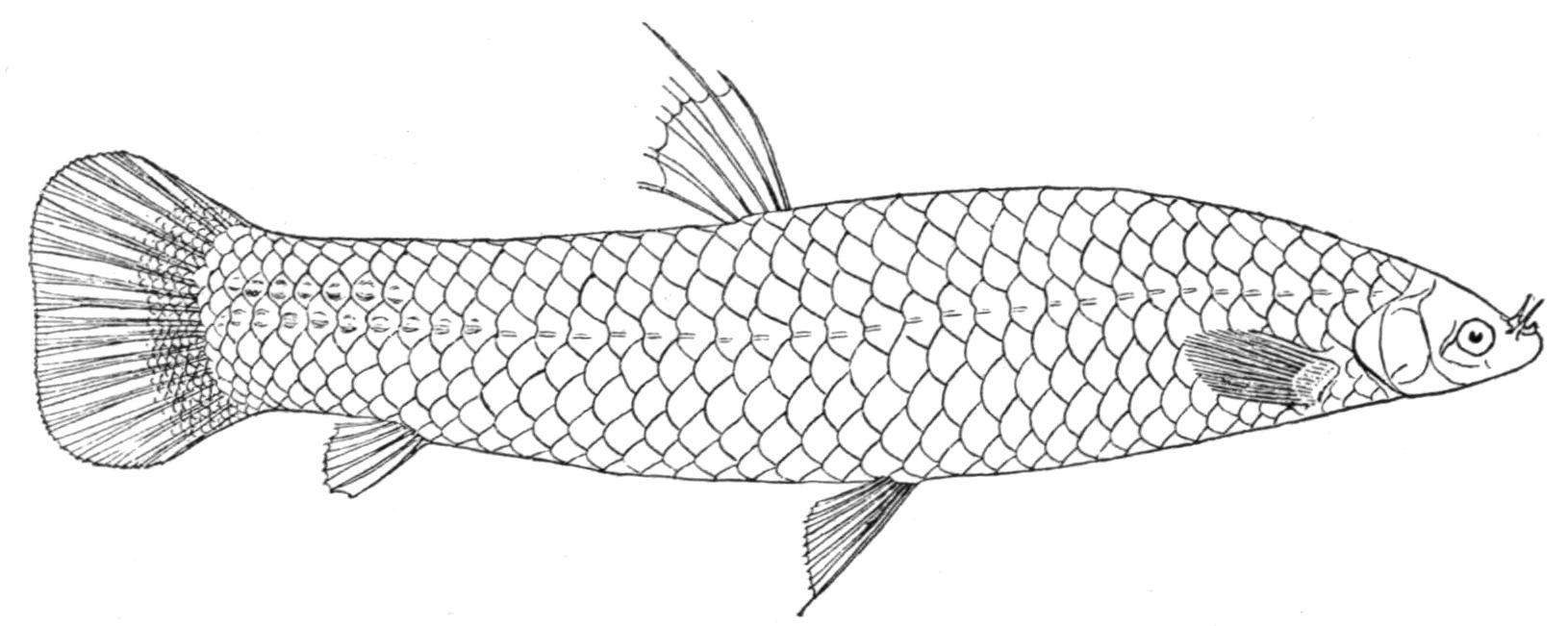
Fig. 339.—Phractolaemus ansorgii. ⅔ nat. size.
The remarkable little Fish, Phractolaemus ansorgii, discovered by Dr. W. J. Ansorge in the Niger Delta in 1900, and which has since also been found in the Congo, stands quite apart among the Malacopterygians, its nearest allies being apparently the Osteoglossidae. The body is elongate and subcylindrical, covered with large striated scales; the head is small, the skull strongly ossified, covered with thin skin; the mouth small, proboscidiform, capable of being thrust forwards, when at rest folded over and received into a depression on the upper surface of the head; the narial orifice is single, and preceded by a barbel; the gill-openings are narrow, restricted to the sides. The ventral fins are inserted far back, the dorsal and anal are short. The air-bladder is very large, and the intestine extremely long and much convoluted. Vertebrae 26 + 8.
Fam. 14. Saurodontidae.—Margin of the upper jaw formed by the praemaxillaries and the maxillaries, the latter the more developed and firmly united to the former; these bones, as well as the mandible, with teeth implanted in deep sockets; palate toothless. Supraoccipital separating the small parietals; opercular bones well developed; symplectic present, exposed. Basis cranii double. Ribs sessile, very low down on the centra; no parapophyses; neural arches not fused with the centra. Pectorals inserted very low down; postclavicle apparently absent. Caudal fin deeply forked, without fused hypurals.
This family, comprising several Cretaceous genera, may be regarded as ancestral to the Chirocentridae, with or near which it has been placed by Cope and various later authors. The normal position of the symplectic, however, entitles its members to rank as a separate family, and the autogenous neural arch, as well as the distinctness of the bones supporting the caudal fin, are also indicative of a greater generalisation. The restoration of Ichthyodectes as given by Loomis, shows a general form similar to an ordinary Herring, but it does not appear to be reliable.
The members of the Saurodontidae have been referred to two groups: (a) with praedentary (praesymphysial) bone, Saurocephalus, Saurodon; (b) without praedentary, Chirocentrites, Portheus, Ichthyodectes, Spathodactylus, Cladocyclus. These Fishes are from the Chalk of Europe and North America, and some among them attain a very large size, perhaps not less than two metres in length.
Fam. 15. Chirocentridae.—Margin of the upper jaw formed by the praemaxillaries and the maxillaries, the latter the more developed and firmly united to the former; these bones, as well as the mandible, with large teeth not implanted in true sockets; minute teeth on the palatines, pterygoids, and hyoid bones, Supraoccipital in contact with the frontals, separating the small parietals; opercular bones well developed; symplectic hidden between the inner surface of the quadrate and a descending process of the hyomandibular. Basis cranii double. Ribs very slender, sessile, very low down on the centra; no parapophyses; epipleurals and epineurals. Pectorals inserted very low down. Post-temporal forked; postclavicle absent; a thin bony lamina, similar to the postclavicle, above the pectoral fin, attached to the scapula; scapular foramen in scapula; coracoids in contact with each other, forming a keel. Ventrals very small, with 7 rays. Brachiostegal rays 8. Air-bladder large, not communicating with the ear, incompletely divided into cells. Mucous membrane of the intestine forming a spiral fold.
The body is very elongate and strongly compressed, covered with thin, deciduous scales; the vertebrae number 75. The dorsal fin is short and opposite to the anal, which is long.
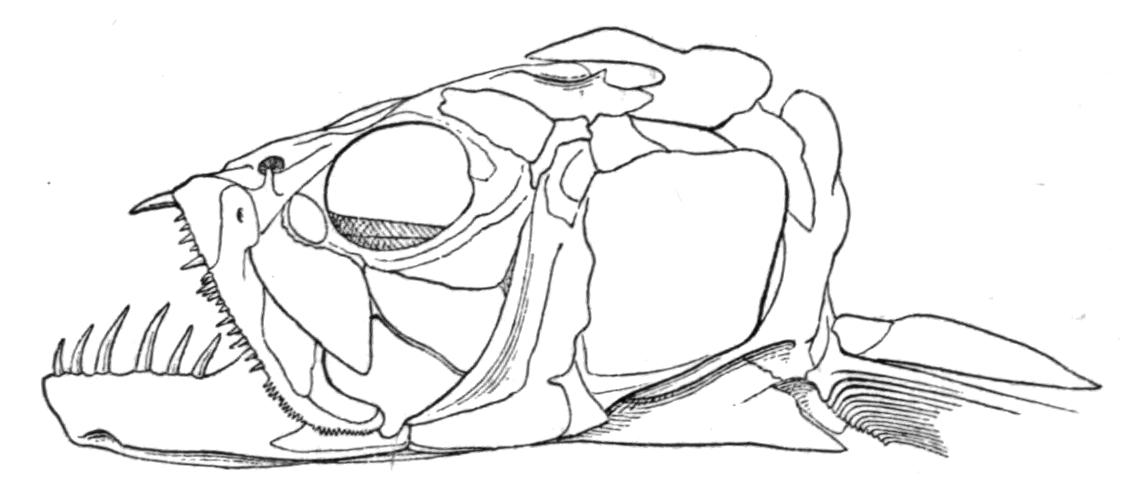
Fig. 340.—Side view of skull and pectoral arch of Chirocentrus dorab.
Chirocentrus dorab, the only representative of this family, inhabits the Indian Ocean and the seas of China and Japan.
Fam. 16. Clupeidae.—Margin of the upper jaw formed by the praemaxillaries and the maxillaries. Supraoccipital separating the small parietals; opercular bones well developed. Basis cranii double. Ribs mostly sessile, inserted behind parapophyses; intermuscular bones (epineurals, epipleurals, adpleurals) usually numerous. Post-temporal forked, the upper branch attached to the epiotic, the lower to the opisthotic; post-clavicle applied to outer side of clavicle. Ventrals with 6 to 11 rays. Air-bladder large, communicating with the ear.
Four sub-families:—
(i.) Thrissopatrinae.—Mouth large; praemaxillaries very small; maxillaries large, with rather narrow supplemental bone, firmly attached to praemaxillaries; branchiostegals about 30; abdomen compressed to an edge, without serration; no lateral line. Thrissopater, from the Gault of Folkestone.
(ii.) Engraulinae.—Mouth moderate or large; praemaxillaries very small; maxillaries large, with narrow supplemental bones, more or less firmly attached to praemaxillaries; branchiostegals 6 to 19; abdomen rounded or more or less compressed, with or without serration; no lateral line. Recent genera: Dussumieria, Etrumeus, Engraulis, Cetengraulis, Heterothrissa, Coilia. Fossil: Spaniodon, Upper Cretaceous.
(iii.) Clupeinae.—Mouth small or moderate; maxillaries freely movable behind the praemaxillaries, usually with large supplemental bones; branchiostegals 5 to 10; abdomen usually serrated; lateral line usually absent. Recent genera: Clupea, Hyperlophus (Diplomystus), Opisthonema, Brevoortia, Pellonula, Clupeichthys, Odaxothrissa, Pellona, Chirocentrodon, Pristigaster, Raconda, Chatoessus. Fossil: Pseudoberyx, Histiothrissa, Scombroclupea, Leptichthys, Upper Cretaceous.
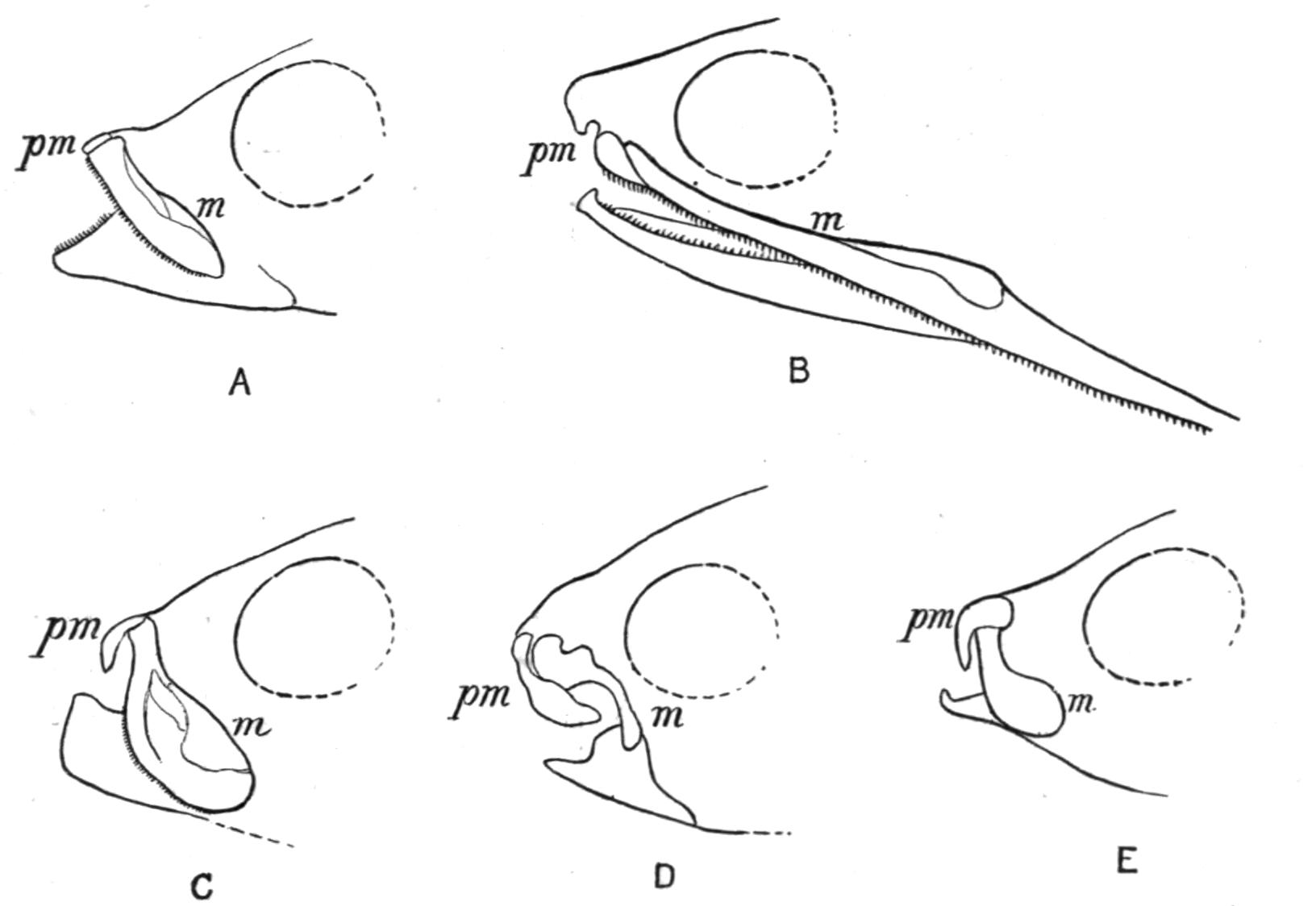
Fig. 341.—Showing the wide range of variation, within the family, of the bones (pm, praemaxillary, m, maxillary) forming the upper border of the mouth. A, Dussumieria; B, Coilia; C, Pellona; D, Chatoessus; E, Chanos. In these semi-diagrammatic figures the orbit is represented of the same size in all, as affording the best term of comparison in judging of the relative development of the bones of the upper jaw.
(iv.) Chaninae.—Mouth small, toothless; maxillaries firmly attached to praemaxillaries; branchiostegals 4, very broad; abdomen rounded or flattened; lateral line distinct. Chanos, recent; Chanoides, Upper Eocene; Prochanos, Cretaceous.
Heralded by the genus Thrissopater,[647] which may be regarded as a connecting type between the Elopidae and the Clupeidae, this family is largely represented in Cretaceous times, more abundantly still in the Eocene and Miocene, where Clupea and Engraulis occur in numerous species; Hyperlophus, distinguished from Clupea by the presence of a dorsal serrated ridge similar to the ventral, occurs in the Upper Cretaceous of Syria, Southern Europe, and South America, in the Eocene of North America and Europe, and is represented at the present day on the West Coast of South America and on the coast and in the rivers of New South Wales. About 200 Clupeids are known to live at the present day, mostly marine species, but a few are confined to fresh-waters; none may be termed deep-sea forms; some, like the Allis Shad (Clupea alosa) and Twait Shad (C. finta), are anadromous, ascending rivers to spawn. The range of the family is almost cosmopolitan. Several species are remarkable for the extreme abundance of individuals, as for example the Herring (Clupea harengus), the Pilchard or Sardine (C. pilchardus), and the Anchovy (Engraulis encrasicholus). The Herring inhabits the northern parts of the Atlantic and the seas north of Asia. As Dr. Günther first showed, the so-called "Whitebait" consists chiefly of the fry of Herrings, which, like those of the Sprat (C. sprattus), have a predilection for brackish water. The Anchovy and the Pilchard, on the other hand, seldom if ever enter estuaries. The eggs of the Herring, contrary to those of most British marine food-fishes, are heavy and adhesive, sticking firmly to stones or fixed objects on the sea bottom, whilst those of the Sprat and Pilchard float on the surface. The larvae are long, slender, and transparent. The Sardine, which affords so valuable a fishery on the West Coast of France, is the immature state of the Pilchard, which grows to a length of 10 to 14 inches. Its movements are not yet well understood, and its scarcity during certain years in the waters where it usually swarms has caused periodical crises in an important industry. Ripe Pilchards are mostly found at a considerable distance from the coasts. The Anchovy is especially abundant in the Mediterranean, but it is also regularly fished in Holland, especially in the Zuydersee, where it breeds, as well as in the Mediterranean; it makes only temporary appearances, and has not been observed to spawn, in the English Channel, although eggs have recently been obtained off the coast of North Lancashire.[648]
The imperfectly known Cretaceous Crossognathidae (Crossognathus and Scyllaemus), referred by some authors to the Percesoces, should probably be placed with or near the Clupeidae.
Fam. 17. Salmonidae.—Margin of the upper jaw formed by the praemaxillaries and the maxillaries. Supraoccipital in contact with the frontals, but frequently overlapped by the parietals, which may meet in a sagittal suture; opercular bones all well developed. Basis cranii double. Ribs sessile, parapophyses very short or absent; epineurals, sometimes also epipleurals, present. Post-temporal forked, the upper branch attached to the epiotic, the lower to the opisthotic; postclavicle, as usual, applied to inner side of clavicle. A small adipose dorsal fin. Air-bladder usually present, large. Oviducts rudimentary or absent, the ova falling into the cavity of the abdomen before exclusion.
Marine and fresh-water Fishes, mostly from the temperate and Arctic zones of the northern hemisphere: one genus (Retropinna) on the coasts and in the rivers of New Zealand; a few deep-sea forms (Argentina, Microstoma, Nansenia, Bathylagus) occur in the Arctic Ocean, the North Atlantic Ocean, the Mediterranean, and the Antarctic Ocean, down to 2000 fathoms. Apparently of comparatively recent age, no remains older than Miocene (Osmerus, Thaumaturus, Prothymallus) being certainly referable to this family. The recent genera may be grouped as follows:—
A. Air-bladder present.
a. Branchiostegal rays 8 to 20; ventral rays 9 to 13; stomach siphonal; pyloric appendages more or less numerous (17 to 200). Breed in fresh water. Salmo, Brachymystax, Stenodus, Coregonus, Phylogephyra, Thymallus.
b. Branchiostegal rays 6; ventral rays 11 to 14; stomach caecal; pyloric appendages in moderate numbers (12 to 20). Argentina.
c. Branchiostegal rays 6 to 10; ventral rays 6 to 8; stomach caecal; pyloric appendages few (2 to 11) or rather numerous. Osmerus, Thaleichthys, Mallotus, Plecoglossus, Hypomesus.
d. Branchiostegal rays 3 or 4; ventral rays 8 to 10; stomach caecal; pyloric appendages absent. Microstoma, Nansenia, Bathylagus.
B. Air-bladder absent; branchiostegal rays 3 to 6; ventral rays 6 or 7; stomach siphonal; pyloric appendages absent. Retropinna, Salanx.
Only about 80 species can, at present, be regarded as valid.
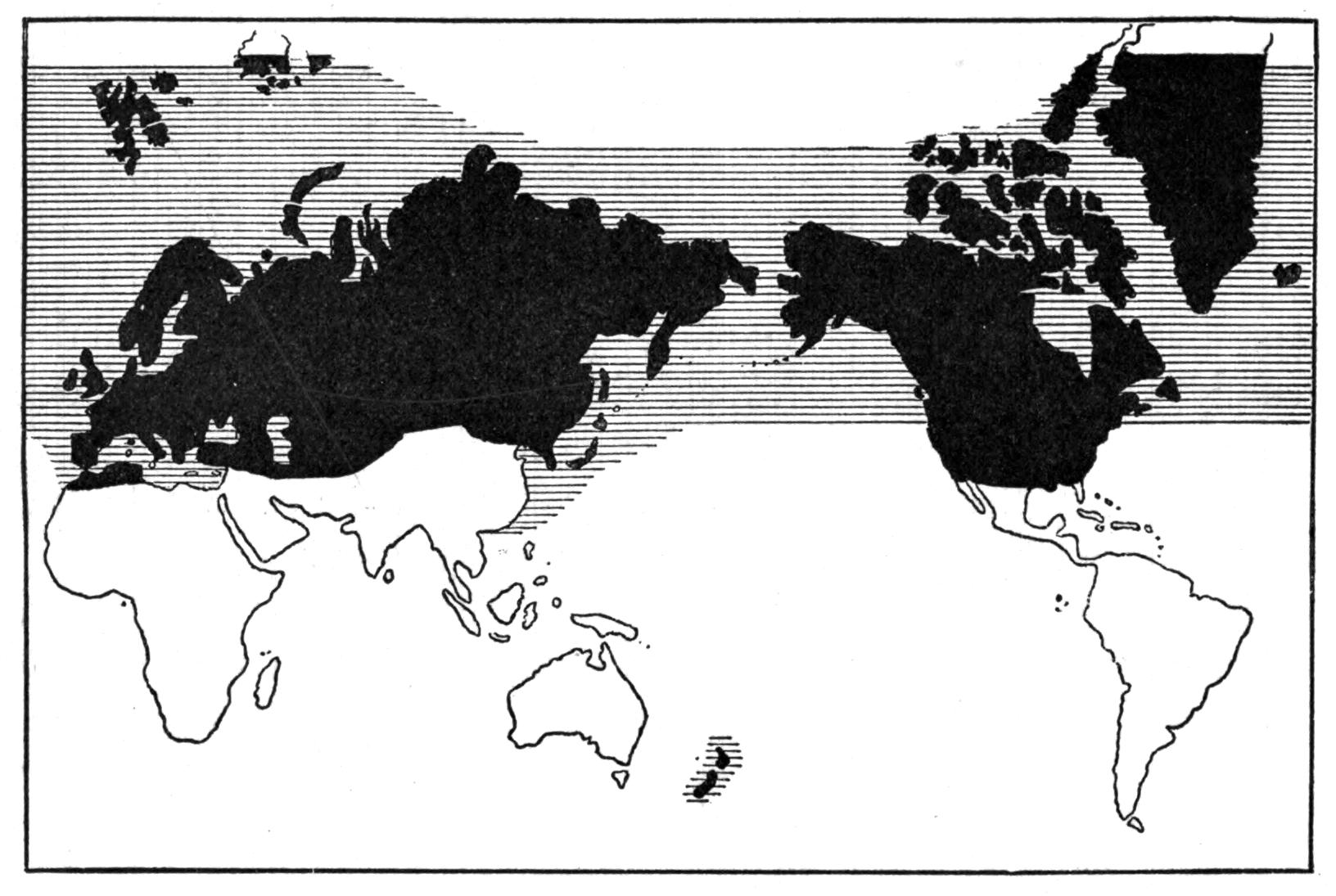
Fig. 342.—Distribution of Salmonidae (deep-sea forms not included).
The beauty, gameness, and great economical value of the Salmonids have caused more attention to be bestowed on them than probably upon any other group of fishes. As Professor Smitt tells us, a Swedish proverb says "A dear child has many names," and this applies well to our Salmon and Trout, the species of which have been unduly multiplied by some writers. The genus Salmo, characterised by a large mouth and powerful dentition, is divided into three sections: Oncorhynchus, Quinnat Salmon, of the North Pacific, ascending rivers in North America and Asia, with 12 to 17 developed rays in the anal; Salmo, Salmon and Trout, with 8 to 12 rays in the anal, and teeth not only on the head of the vomer but also along its shaft, at least in the young, represented in the seas and freshwaters of Europe, Asia, and North America, extending southwards to North-West Africa, Asia Minor, Northern Persia, the Hindu Kush, the head of the Gulf of California, and the Rio Grande; Salvelinus, Charr, with 8 to 10 rays in the anal, and teeth on the raised head of the vomer only, of the lakes of Northern and Central Europe and the rivers of the northern parts of Asia and North America as far north as 82° 34´, sometimes descending to the sea.
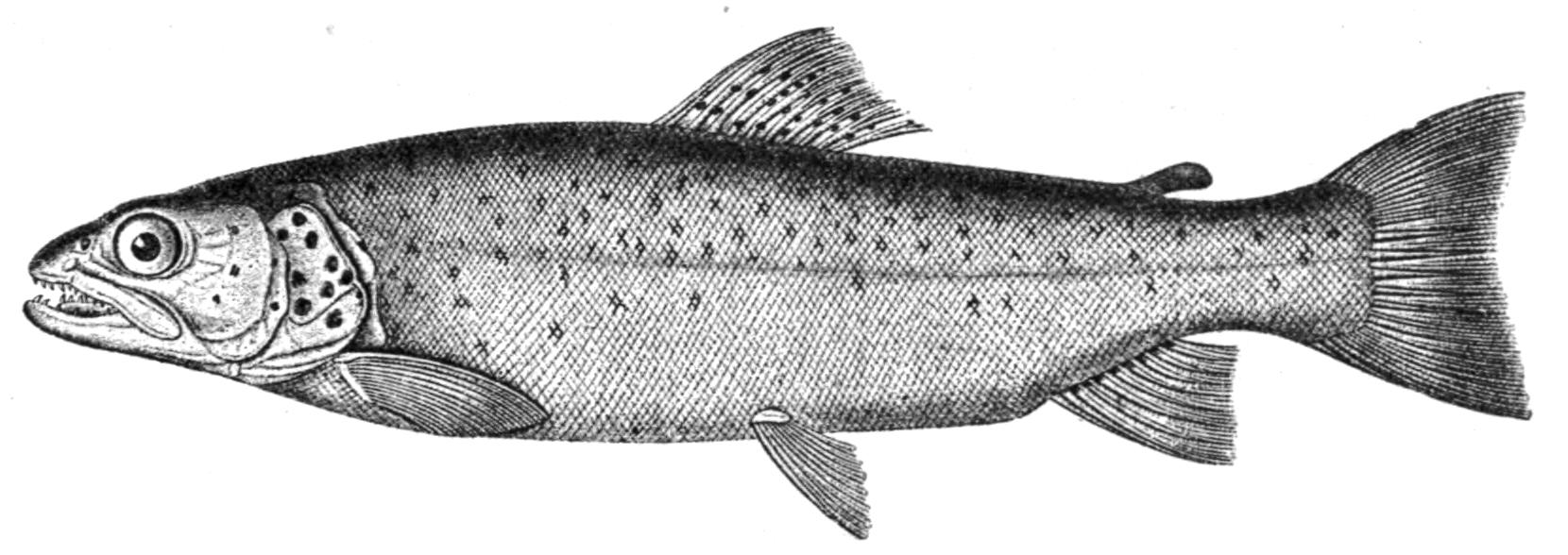
Fig. 343.—Trout (Salmo trutta). × ⅓. (After Valenciennes.)
The changes in form and colour which these fishes undergo when passing from fresh water into the sea or when artificially transported from one place to another are very great, and this plasticity, together with the connecting links which render the naming of not a few specimens impossible, have caused most recent students of the genus Salmo, in Europe at least, to reduce many of the so-called species to the rank of local varieties, and even our common Brown Trout or Brook Trout (S. fario) is now generally regarded as not specifically separable from the anadromous Sea Trout (S. trutta). The anadromous true Salmon (S. salar) may be distinguished by its somewhat larger scales, there being only 11 or 12 in a transverse series running from the posterior border of the adipose fin forwards to the lateral line, Trout having 13 to 16. The Charr of the lakes of Wales, the North of England, Scotland, and Ireland are also regarded as mere varieties of the common Northern migratory Charr (S. alpinus), of which the "Omble Chevalier" of the Swiss lakes and the "Saeblings" of the Alpine lakes of Germany and Austria are likewise varieties. An allied species (S. fontinalis) has been introduced into England from North America, as well as a true Trout (S. irideus). The large size of the eggs, their lack of adhesiveness, and the fact that the ova fall into the abdominal cavity, out of which they may easily be squeezed, renders artificial impregnation particularly easy, and the species of Salmo have always occupied the first place in the annals of fish-culture. Fertilised eggs are transported in ice, the development being simply suspended for several weeks, and several forms of British and American Salmonidae have thus been introduced into New Zealand and Tasmania, where some have thoroughly established themselves.
The White-Fish, Coregonus, are more numerous in species than Salmo, and as a rule more readily defined. They are easily recognised by their large silvery scales and their smaller mouth without or with minute teeth. Some, like the Houting (C. oxyrhynchus) of Northern Europe, occur in the sea, entering rivers to spawn, whilst others, like the Sik, Weiss, Felchen, or Lavaret (C. lavaretus), are confined to lakes. British species are the Gwyniad (C. clupeoides), of Loch Lomond, Haweswater, Ullswater, and Bala, the Vendace (C. vandesius), of Loch Maben, and the Pollan (C. pollan) of Lough Neagh in Ireland.
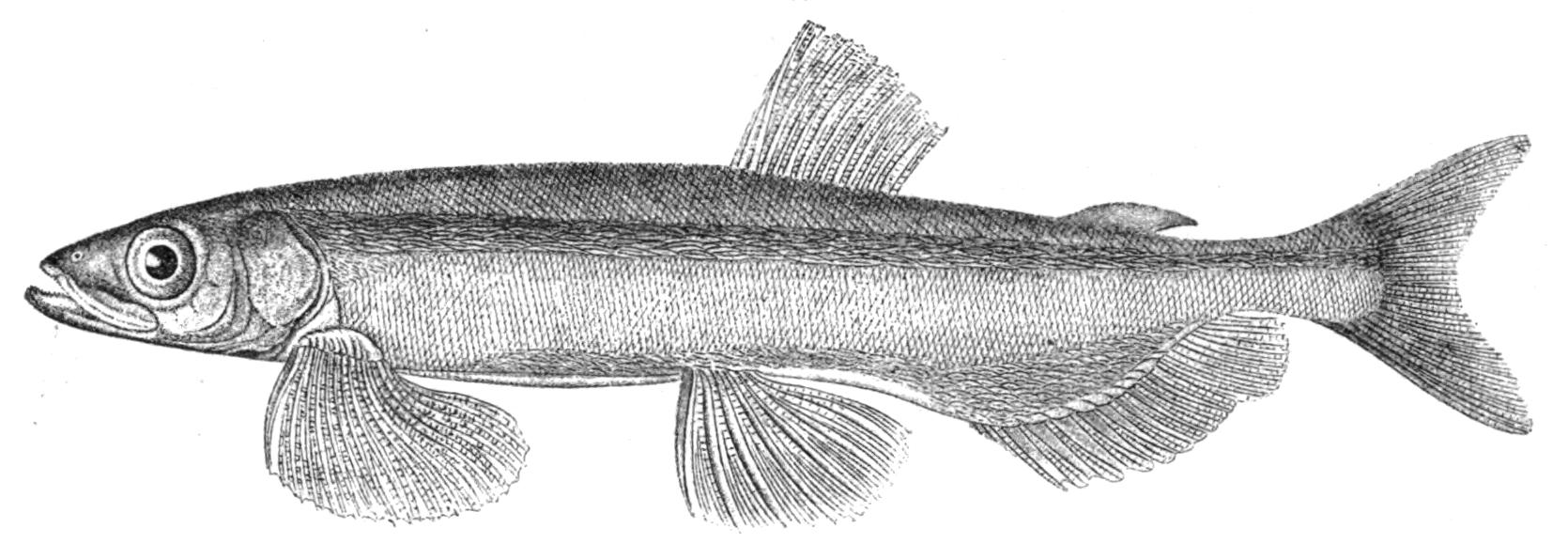
Fig. 344.—Capelin (Mallotus villosus.) ½ nat. size. (After Valenciennes.)
The Grayling (Thymallus vulgaris or vexillifer), with its high dorsal fin formed of about 20 rays, one of the handsomest British fishes, inhabits the rivers and lakes of Northern and Central Europe, and is represented by a few allied species in Asia and North America. It derives its name from having the odour of thyme.
The Smelt (Osmerus eperlanus) breeds in salt water, and although it often enters rivers, it does not ascend beyond tidal influence. The Capelin (Mallotus villosus), of the coasts of Arctic America and North-eastern Asia, deposits its eggs in the sand along the shores in incredible numbers, the beach becoming a quivering mass of eggs and sand. Plecoglossus, from Japan and Formosa, is highly remarkable for its lamellar, comb-like, lateral teeth. The Siel-Smelts (Argentina) are deep-sea Salmonids of which examples have occasionally been taken off the coasts of Scotland and Ireland; large numbers have been brought from Norway to English markets. Bathylagus is still better adapted for life at great depths (down to 1700 fathoms), the eyes being of enormous size. As Dr. Günther has observed, "these fishes must be entirely dependent for vision on the phosphorescent light which is produced by other abyssal creatures. Not being fish of prey themselves, or only to a slight degree, they would be attracted by the light issuing from the Pediculates and Stomiatids of the deep, and thus form an easy prey to these fishes."
Secondary sexual characters are very strongly developed in many Salmonids. In adult males of Salmon, Trout, and Quinnat the snout becomes greatly distorted, both jaws being hooked and the base of the teeth more or less enlarged; in the latter species a fleshy hump is developed before the dorsal fin, and the scales of the back become embedded in the flesh. Pearl-like excrescences appear on the scales of many of the White-Fish during the breeding season, being more prominent in males than in females, and Mallotus villosus is so called from the villous bands formed by the scales of mature males, the scales above the lateral line and along each side of the belly becoming elongate-lanceolate, densely imbricated and produced into free, projecting points.[649]
The Pachyrhizodontidae, with the Cretaceous genus Pachyrhizodus, are placed by some authors with the Salmonidae, but the remains at present known are too fragmentary to afford a correct idea of their exact systematic position. There seems to be less justification for placing them among the Elopidae.
Fam. 18. Alepocephalidae.—Deep-sea Fishes similar in general structure to the Clupeidae and Salmonidae, but destitute of a postclavicle and of an adipose dorsal fin,[650] the rayed fin being situated far back on the body, in the caudal region, and opposed or slightly anterior to the anal. The skeleton of Alepocephalus[651] is remarkable for its feeble ossification. Epipleurals and epineurals are present, and the bilateral division of the neural arch remains perfectly distinct throughout the praecaudal region, both halves being very loosely apposed. The air-bladder is absent. Ventrals are absent in Platytroctes, and the snout is much produced in Aulostomatomorpha.
Eleven genera are distinguished:—A, with scales: Alepocephalus, Conocara, Bathytroctes, Leptochilichthys, Narcetes, Platytroctes, Aulostomatomorpha. B, without scales:—Xenodermichthys, Aleposomus, Leptoderma, Anomalopterus.
Represented by about 35 species in nearly all the seas; as usual with deep-sea forms, individuals of the same species have been obtained from stations very remote from one another.
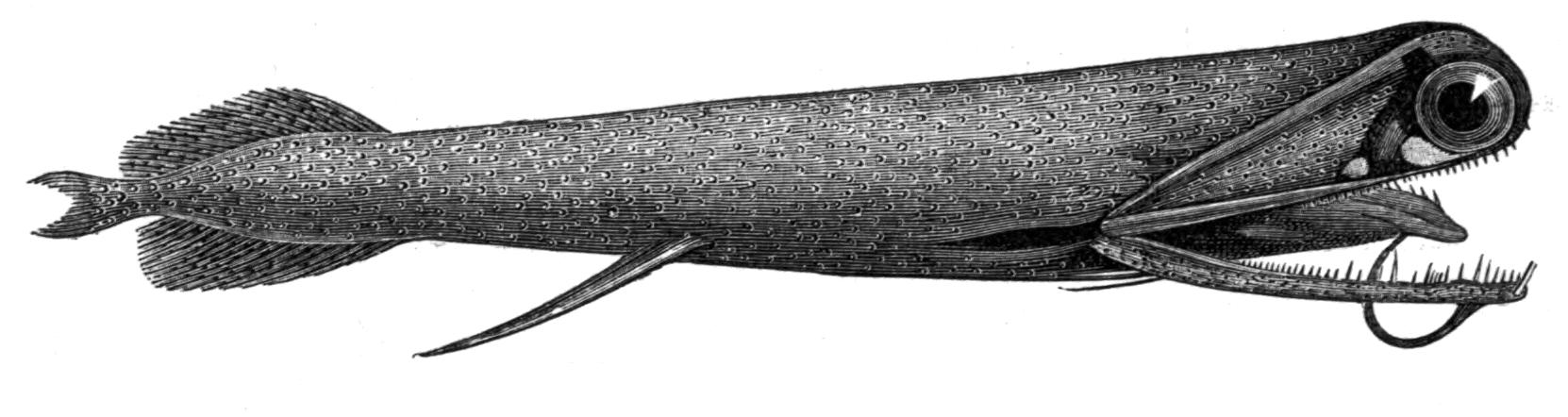
Fig. 345.—Malacosteus indicus. (After Günther.)
Fam. 19. Stomiatidae.—I would unite under this name the Stomiatidae and Sternoptychidae of Günther, an assemblage of aberrant deep-sea Fishes which agree in having the maxillary bone more developed than the praemaxillary, and beset with teeth, a character which differentiates them at once from all other deep-sea forms of this sub-order, as well as from the Scopelidae among the Haplomi. The ventral fins are usually inserted very far back, and the number of their rays varies from 5 to 8. Contrary to what occurs in other groups of fishes, the pectoral fins have a tendency to reduction, and actually disappear in some genera, whilst the ventrals remain well developed; whenever the pectoral fins are fully developed, as in Maurolicus, Chauliodus, Astronesthes, and Photichthys, the mesocoracoid arch is present.[652] The form of the body varies exceedingly, even within the smaller groups into which this family has been divided; it may be excessively short and compressed, or excessively elongate, but the mouth and eyes are always large, these fish being essentially predatory; the dentition is often very powerful, and may extend to the palate or be confined to the jaws. The body is naked or scaly; luminous spots (photophores) are more or less developed.[653] The development and position of the vertical fin is highly variable within this group, and the several families which have been founded upon this character have no more taxonomic importance than in the better-understood groups Characinidae and Siluridae. All authors, besides, have been compelled to admit that the presence or absence of an adipose dorsal fin has no high significance in this case, a view which is further strengthened by Dr. Gilchrist's discovery, off the Cape of Good Hope, of a deep-sea Fish agreeing in every respect with Astronesthes, but for the presence of a small adipose fin, absolutely similar to the dorsal, but situated on the ventral side, immediately in front of the anus. Two species with similar ventral adipose fins have just been discovered by Dr. Brauer and referred to Astronesthes. I am therefore unable to adopt the elaborate arrangement in favour with the modern American school.
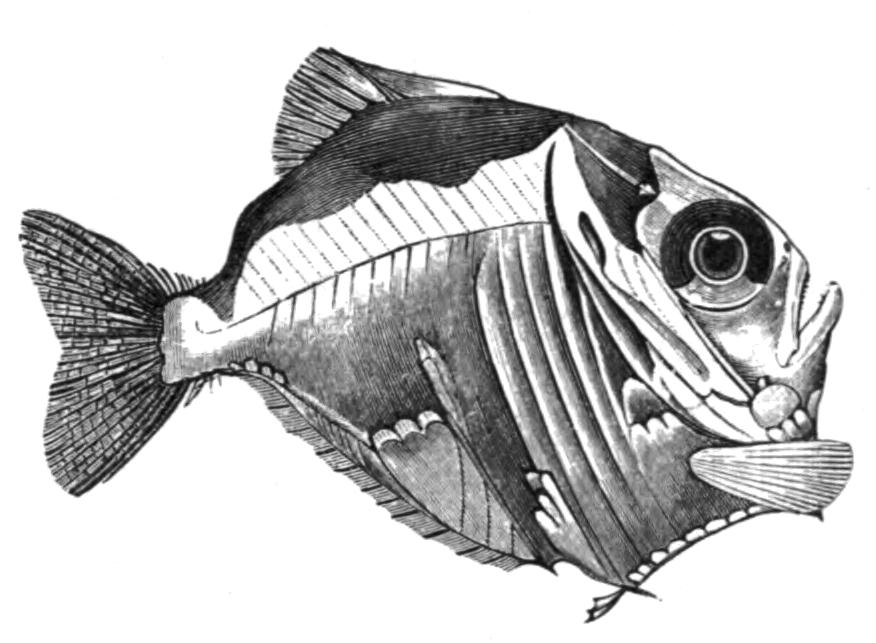
Fig. 346.—Sternoptyx diaphana. (After Günther.)
The genera may be arranged in five sub-families:—
I. Anal not exactly opposed to the rayed dorsal, or much longer than the latter; no hyoid barbel.
A. Rayed dorsal far forward, between pectorals and ventrals; pectorals well developed (Chauliodontinae). Chauliodus.
B. Rayed dorsal above or behind the ventrals; pectorals well developed.
1. Body more or less elongate; ventrals well developed (Gonostomatinae).
a. A hyoid barbel. Astronesthes.
b. No barbel. Bathylychnus, Gonostoma, Cyclothone, Triplophos, Photichthys, Bathylaco, Diplophos, Maurolicus, Ichthyococcus.
2. Body short and deep; ventrals rudimentary or absent (Stenoptychinae). Argyropelecus, Sternoptyx, Polyipnus.
II. Dorsal and anal opposed to each other and very far back on the caudal region; pectorals often reduced or absent; hyoid barbel often present. (Stomiatinae). Stomias, Macrostomias, Echiostoma, Opostomias, Pachystomias, Photonectes, Malacosteus, Thaumatostomias, Photostomias.
This family, comprising about 55 species, has a world-wide distribution, but most of the known forms have been obtained from the Atlantic; some of the species occur both in the Atlantic and the Indo-Pacific. Chauliodus, Astronesthes, and Stomias are among the fishes with the most formidable dentition.
Fam. 20. Gonorhynchidae.—Margin of the upper jaw formed by the praemaxillaries and the maxillaries, the latter articulated above the former to the ethmoid. Supraoccipital in contact with the frontals, widely separating the small parietals; opercular bones well developed; symplectic present. Basis cranii simple. Mouth small and toothless, inferior, surrounded by thick, fringed lips. Four branchiostegal rays. Head and body entirely covered with small spiny scales. Praecaudal vertebrae with strong parapophyses, to the extremity of which slender ribs and epipleurals are attached. No postclavicle. Pectoral fins inserted low down, folding like the ventrals; latter with 10 rays.
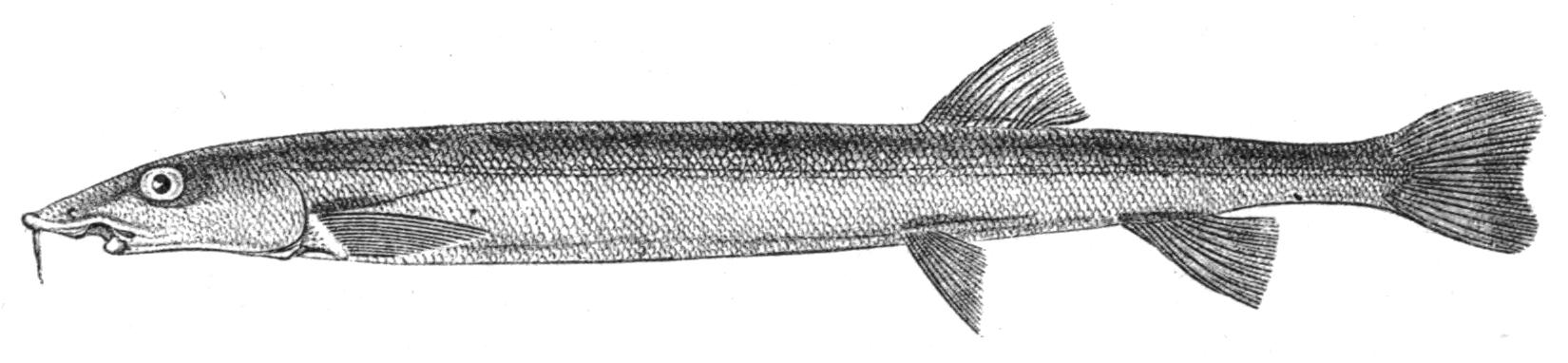
Fig. 347.—Gonorhynchus greyi. ⅓ nat. size. (After Valenciennes.)
The single existing species, Gonorhynchus greyi, is characterised by an elongate, cylindrical body, a pointed projecting snout bearing a single barbel, short dorsal and anal fins, the former opposed to the ventrals, and the gill-membranes broadly attached to the isthmus. Teeth are present on the pterygoid and hyoid bones. No suborbital arch. Vertebrae, 45 + 20. Air-bladder absent. Its distribution is a very wide one, the species being on record from the coasts of the Cape of Good Hope, Australia, New Zealand, and Japan.
The genus Notogoneus, from the freshwater Eocene beds of France and North America, has been referred to this family by Cope, and has been shown by A. S. Woodward to be closely related to Gonorhynchus, differing only in the absence of teeth on the palate and tongue, and in the more forward position of the dorsal fin. The genus Charitosomus, with several species from the Upper Cretaceous of Westphalia and Mount Lebanon, has also been included in this family, but the precise shape and character of the scales have not yet been ascertained.
Fam. 21. Cromeriidae.—Margin of the upper jaw formed by the praemaxillaries and the maxillaries. Supraoccipital large and widely separating the very small parietals; opercular bones well developed; symplectic absent. Basis cranii simple. Mouth small and toothless, inferior; gill-opening narrow. Three branchiostegal rays. Body naked. Praecaudal vertebrae with parapophyses; ribs and epipleurals slender. No postclavicle. Pectoral fin inserted low down, folding like the ventrals.
A single genus, Cromeria, recently discovered in the White Nile. In its elongate, naked body and the posterior position of the dorsal fin, it resembles the Galaxiidae, to which it was at first referred. But this allocation has proved to be incorrect, now that the osteological structure of the minute Fish (only about 30 mm. long) has been worked out by Swinnerton.[654] The vertebrae number 42 to 45 (28-30 + 14-15). A long, slender air-bladder is present.
Sub-Order 2. Ostariophysi.
Air-bladder, if well developed, communicating with the digestive tract by a duct. Pectoral arch suspended from the skull; mesocoracoid arch present. Fins without spines, or dorsal and pectoral with a single spine formed by the co-ossification of the segments of an articulated ray. The anterior four vertebrae strongly modified, often co-ossified and bearing a chain of small bones (so-called Weberian ossicles) connecting the air-bladder with the ear.
This is one of the most natural groups of the Class Pisces, although its members are so diversified in outward appearance as to have been widely separated in the systems of older authors. It is to Sagemehl[655] that is due the credit of having first grouped, under the above name, the Characines, the Carps, the Cat-Fishes, and the Gymnotids, the relations of which had been realised, to a certain extent, by Cope. But it was not until the homology throughout the group of the ossicula auditus, first described by E. H. Weber in 1820, had been demonstrated by Sagemehl that the justification for the course here followed appeared in its full strength, as such an agreement in the structure of so complicated and specialised an apparatus can only be the result of a community of descent of the families which are possessed of it. It is invariably the anterior four vertebrae that take part in the support of the Weberian apparatus. The first vertebra is much reduced; its upper arch is absent and replaced by the ossicles termed claustrum and scaphium[656] (the former being perhaps nothing but the modified neural arch), which fill in the space between the exoccipital and the neural arch of the second vertebra; the principal piece of the apparatus, the tripus, variable in form, is related to the third vertebra, of which it is regarded as a modified rib; a fibrous ligament extends from the anterior extremity of the tripus to the scaphium, and in this ligament is inserted the fourth piece, the intercalarium. The various forms of this sub-order also show a complete agreement in the spinal nerves which pass through these ossicles. The parietal bones either separate the frontals from the supraoccipital or are fused with the latter.
This sub-order is divided into six families. The Characinids are the most generalised, and the others are probably derived from them in the manner expressed by the following diagram:—
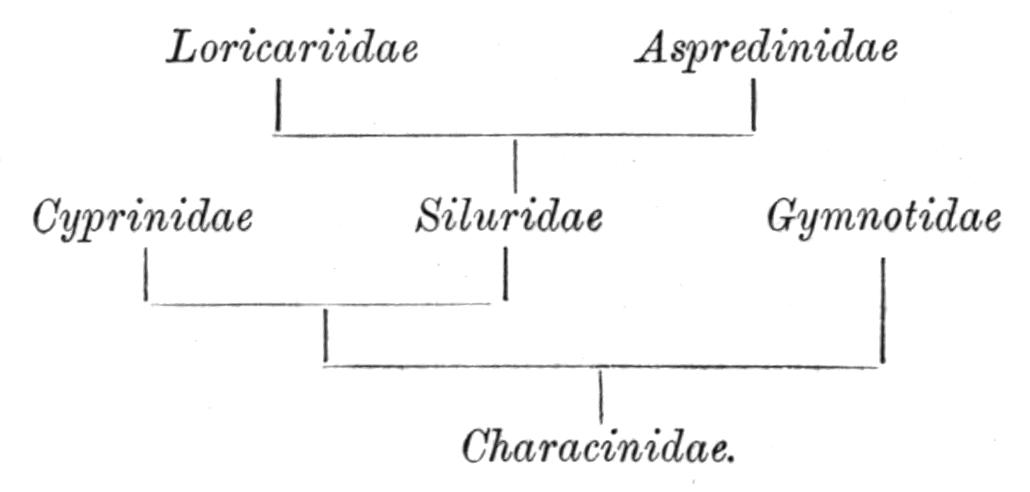
Synopsis of the Families
I. Parietal bones distinct from the supraoccipital; symplectic present; ribs mostly sessile, all or the greater number of the praecaudal vertebrae without parapophyses.
Mouth not protractile, usually toothed; pharyngeal bones normal; body scaly; an adipose dorsal fin often present .......... 1. Characinidae.
Mouth not protractile, usually toothed; pharyngeal bones normal; body Eel-shaped, naked or scaly; vent under the head or on the throat .......... 2. Gymnotidae.
Mouth usually more or less protractile, toothless; lower pharyngeal bones large, falciform; body naked or scaly; no adipose dorsal fin .......... 3. Cyprinidae.
II. Parietal bones usually fused with the supraoccipital; symplectic absent; body naked or with bony scutes; mouth usually toothed, with barbels; adipose fin often present.
Ribs attached to strong parapophyses; operculum well developed .......... 4. Siluridae.
Ribs sessile; parapophyses absent; operculum more or less developed; mouth inferior .......... 5. Loricariidae.
Ribs sessile; strong parapophyses to the vertebrae; operculum absent .......... 6. Aspredinidae.
Fam. 1. Characinidae.—Mouth non-protractile, usually bordered by the praemaxillaries and the maxillaries, rarely by the praemaxillaries only; jaws usually toothed. Parietal bones united in a sagittal suture or separated by a fontanelle; opercular bones well developed; symplectic present. Pharyngeal bones normal, with small teeth. Ribs mostly sessile; no parapophyses in the thoracic region; epipleurals and epineurals, mostly free floating. Pectoral fins inserted very low down, folding like the ventrals. Body covered with scales. An adipose dorsal fin often present.
This is a very generalised type, although perhaps not directly derived from the bony Ganoids, as believed by Sagemehl. The species number about 500, and are confined to the freshwaters of Africa and Central and South America. The classification of the family is still in an unsatisfactory state, but the division into the following groups (hardly deserving the rank of sub-families), although quite provisional, appears preferable to the highly artificial arrangement hitherto adopted:—
I. No adipose fin.
A. Erythrininae.—Carnivorous; teeth strong; maxillary large; gill-openings wide; scales cycloid. American: Macrodon, Erythrinus, Lebiasina, Pyrrhulina, Corynopoma.
II. Adipose fin usually present.
B. Hydrocyoninae.—Entirely or partially carnivorous; teeth strong; maxillary well developed; scales cycloid; lateral line usually nearer ventral than dorsal outline (sometimes only on the tail). African: Sarcodaces, Hydrocyon, Bryconaethiops, Alestes, Micralestes, Petersius. American: Acestrorhynchus, Boulengerella, Acestrorhamphus, Crenuchus, Chalceus, Brycon, Bryconops, Bryconodon, Creagrutus, Chalcinus, Brachychalcinus, Pseudocorynopoma, Stichonodon, Gastropelecus, Tetragonopterus, Scissor, Chirodon, Piabucina, Iguanodectes, Aphiocharax, Salminus, Oligosarcus, Agoniates, Paragoniates, Leptagoniates, Anacyrtus.
C. Serrasalmoninae.—Carnivorous; teeth strong; belly serrated; scales cycloid. American: Serrasalmo, Myletes, Myleus, Metynnis, Catoprion.
D. Ichthyoborinae.—Carnivorous; teeth strong; maxillary very small; upper jaw movable; scales ciliated. African: Eugnathichthys, Paraphago, Mesoborus, Phago, Ichthyoborus, Neoborus.
E. Xiphostominae.—Carnivorous; teeth very small; maxillary rather small; scales ciliated. American: Xiphostoma.
F. Anostominae.—Herbivorous, entirely or partially; teeth well developed in both jaws; maxillary very small; gill-openings narrow; scales cycloid. American: Anostomus, Leporinus, Characidium, Chorimycterus, Nanostomus, Nanognathus.
G. Hemiodontinae.—Partially herbivorous; dentition imperfect; maxillary well developed; scales cycloid. American: Hemiodus, Caenotropis, Saccodon, Parodon.
H. Distichodontinae.—Entirely or partially herbivorous; teeth small but well developed; maxillary well developed; scales ciliated. African: Nannaethiops, Neolebias, Distichodus, Nannocharax, Xenocharax.
I. Citharininae.—Herbivorous; teeth minute or absent; maxillary small; scales cycloid or ciliated. African: Citharinus, Citharidium. American: Prochilodus, Curimatus.
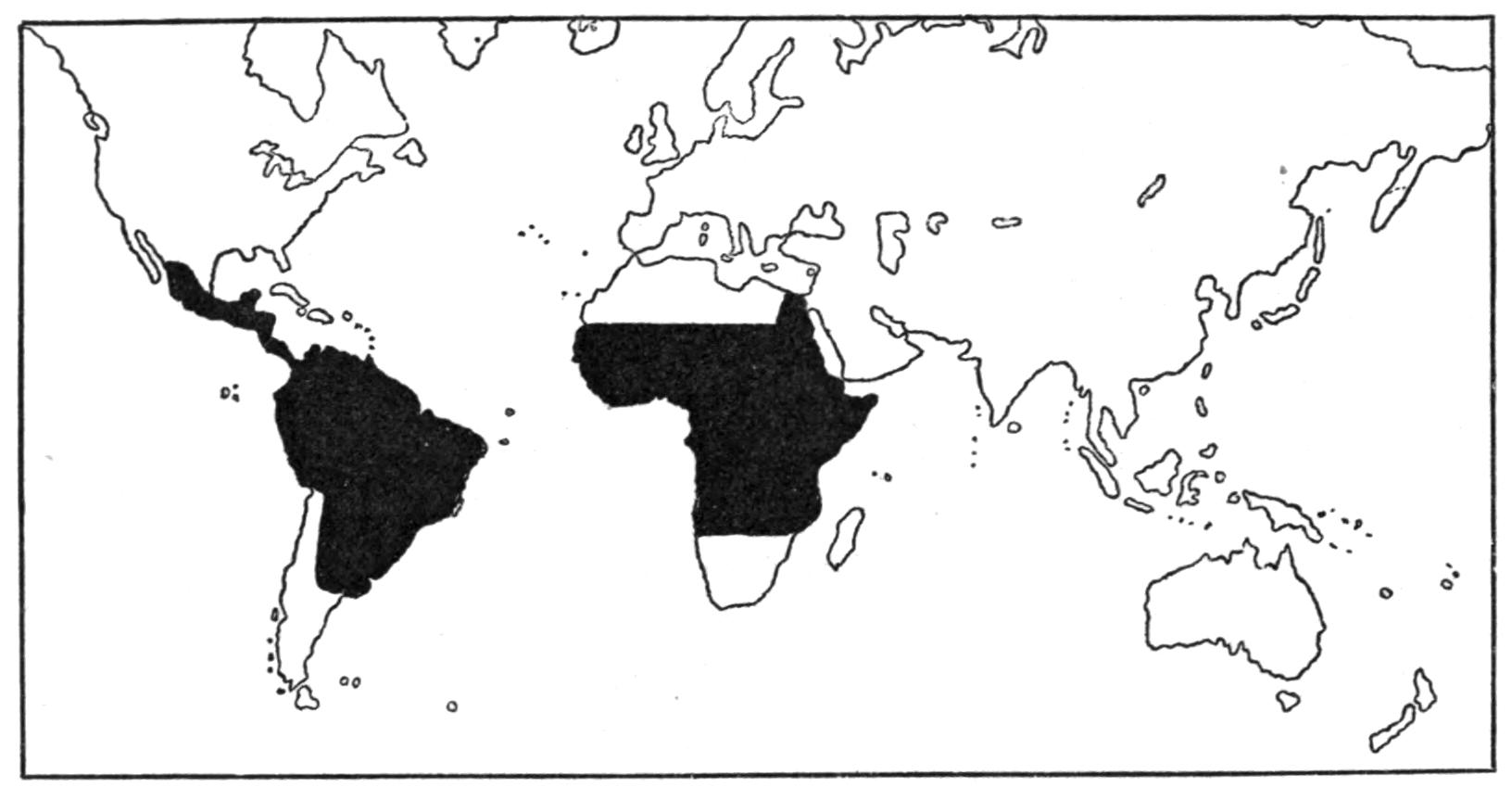
Fig. 348.—Distribution of the Characinidae.
The genera in the above sub-families are mostly founded on the dentition and the extent of the praemaxillary and maxillary bones, which are astonishingly varied, as may be seen from the annexed figures showing the open mouths of a few of the most remarkable types. As I have already pointed out, the character often given as diagnostic of this family, viz. the maxillary forming part of the oral border, is not absolutely constant; this bone is often much reduced, and it is entirely excluded from the mouth in Ichthyoborus and Neoborus. The branchiostegal rays number 3 to 5 only. The fins never bear pungent spines, and the ventrals have 6 to 13 rays. Barbels are absent. In most of the herbivorous forms the brain-case is produced forward to the nasal capsule, whilst in most of the carnivorous forms they are separated by an interorbital septum; but there are exceptions to this correlation, and as otherwise closely related genera may differ in this respect, I have not been able to make use of the character in defining sub-families.
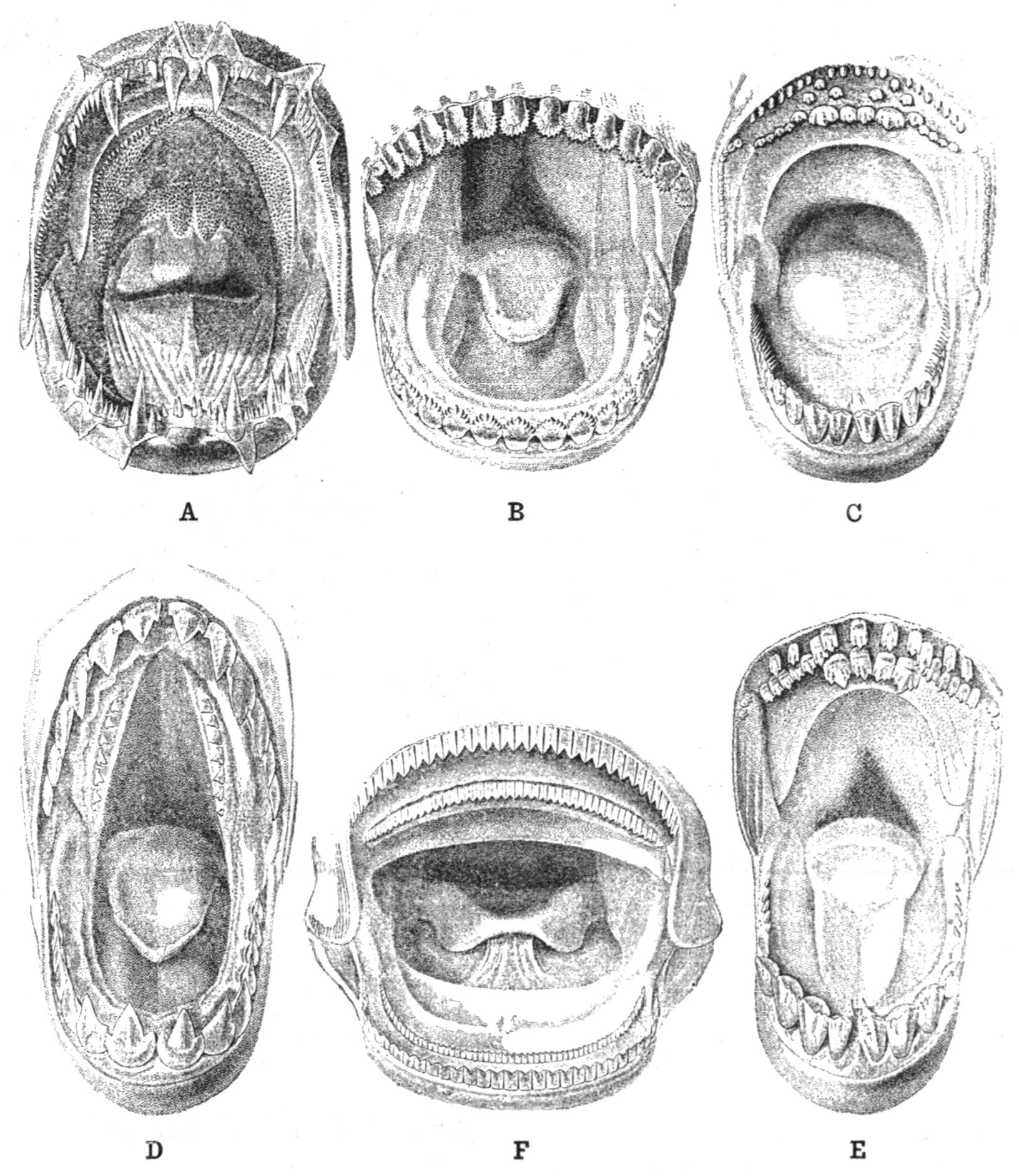
Fig. 349.—Open mouths of Characinidae. (After Müller and Troschel.) A, Macrodon trahira; B, Piabucina argentina; C, Brycon falcatus; D, Chalceus angulatus; E, Serrasalmo rhombeus; F, Distichodus niloticus.
The air-bladder is divided into an anterior and a posterior part by a constriction; the posterior part is the longer, and its anterior portion is cellular in Erythrinus and Lebiasina. Pyloric appendages to the stomach, which are constantly absent in the Cyprinids, are more or less numerous. An accessory respiratory organ in a diverticulum above the fourth branchial arch has been observed in Xenocharax and Citharinus.
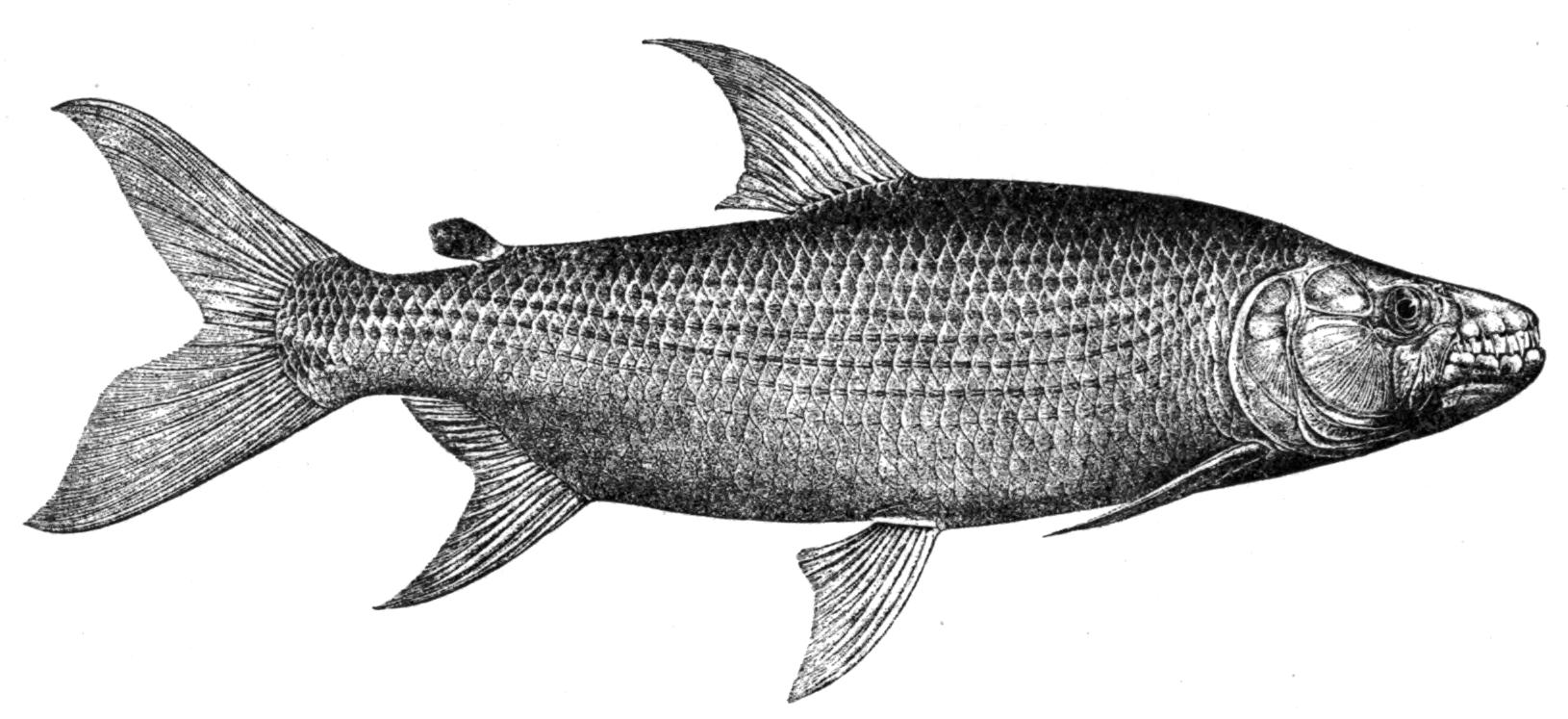
Fig. 350.—Hydrocyon goliath, from the Congo. ⅒ nat. size.
The appearance and habits of the genera which compose this family vary greatly. Some resemble the Cyprinids and are mainly vegetarians, whilst others recall Salmonids and Pike. Among the most formidable are Hydrocyon, the Dogs of the Water, or Kelb-el-Bahr of the Arabs, with their powerful jaws with shark-like teeth, visible when the mouth is closed, and which grow to the size of the Salmon. The five known species inhabit the Nile and the rivers and lakes of tropical Africa. No less ferocious are the "Piranha" or "Cariba" (Serrasalmo) of South America, whose bite has been compared to the cut of a razor. They abound in some rivers and are much dreaded by people having to enter the water, as they fiercely bite off big pieces of flesh as with a pair of scissors, and the smell of blood is said to attract them by thousands; they show a great tenacity of life and can remain for hours out of the water. Serrasalmo niger has been observed by Schomburgk to produce a grunting noise in the water. Salminus orbignianus, of the Plate River, "Dorado" of the Spaniards, which reaches a length of 3 feet, has the predacious habits of the Pike, and follows other fishes moving in shoals; its flesh is much valued, although very full of bones, like that of all Characinids.
As an example of phytophagous types may be mentioned the Moon-Fish of the Nile (Citharinus geoffroyi), with its feeble dentition, deep compressed body, and falciform dorsal fin; it is often represented on the monuments of the ancient Egyptians.[657]
Fam. 2. Gymnotidae.—Mouth non-protractile, bordered by the praemaxillaries and the maxillaries, the latter sometimes much reduced; jaws usually toothed. Parietal bones united in a sagittal suture, or separated by a fontanelle; opercular bones well developed; symplectic present. Pharyngeal bones normal, with small teeth. Anterior ribs sessile, the posterior inserted on transverse processes; epipleurals and epineurals. Body much elongate, Eel-like, naked or scaly; dorsal fin absent or reduced to an adipose strip; anal very long; caudal rudimentary or absent;[658] ventrals absent. Vent under the head or at a very short distance behind the throat. Gill-openings narrow.
In spite of their external appearance, these fishes have nothing to do with the Eels; they are strongly modified, degraded Characinids, as first pointed out by Reinhardt. The few genera and species (about 30) are confined to the fresh waters of Central and South America. No fossils are known. Eight genera may be distinguished:—
A. A cranial fontanelle; maxillary bone larger than the praemaxillary; anterior nostril on the upper surface of the head; vent below the head; body scaly: Sternopygus, Eigenmannia, Sternarchus, Rhamphosternarchus, Rhamphichthys, Steatogenys.
B. No cranial fontanelle; maxillary bone very small; anterior nostril on the upper lip; vent on the throat.
a. Body scaly: Carapus.
b. Body naked; an electric organ: Gymnotus.
The mouth is small or very small, and the modifications of the snout in the genera Sternarchus and Rhamphichthys recall those noticed among the Mormyridae. The air-bladder is divided into an anterior and a posterior part, united by a slender duct.[659] The vertebrae vary in number from 70 (Sternopygus) to 240 (Gymnotus). Gymnotus is unique in this sub-order in having as many as 8 pterygials (actinosts) to the pectoral fin, as in Anguilla.
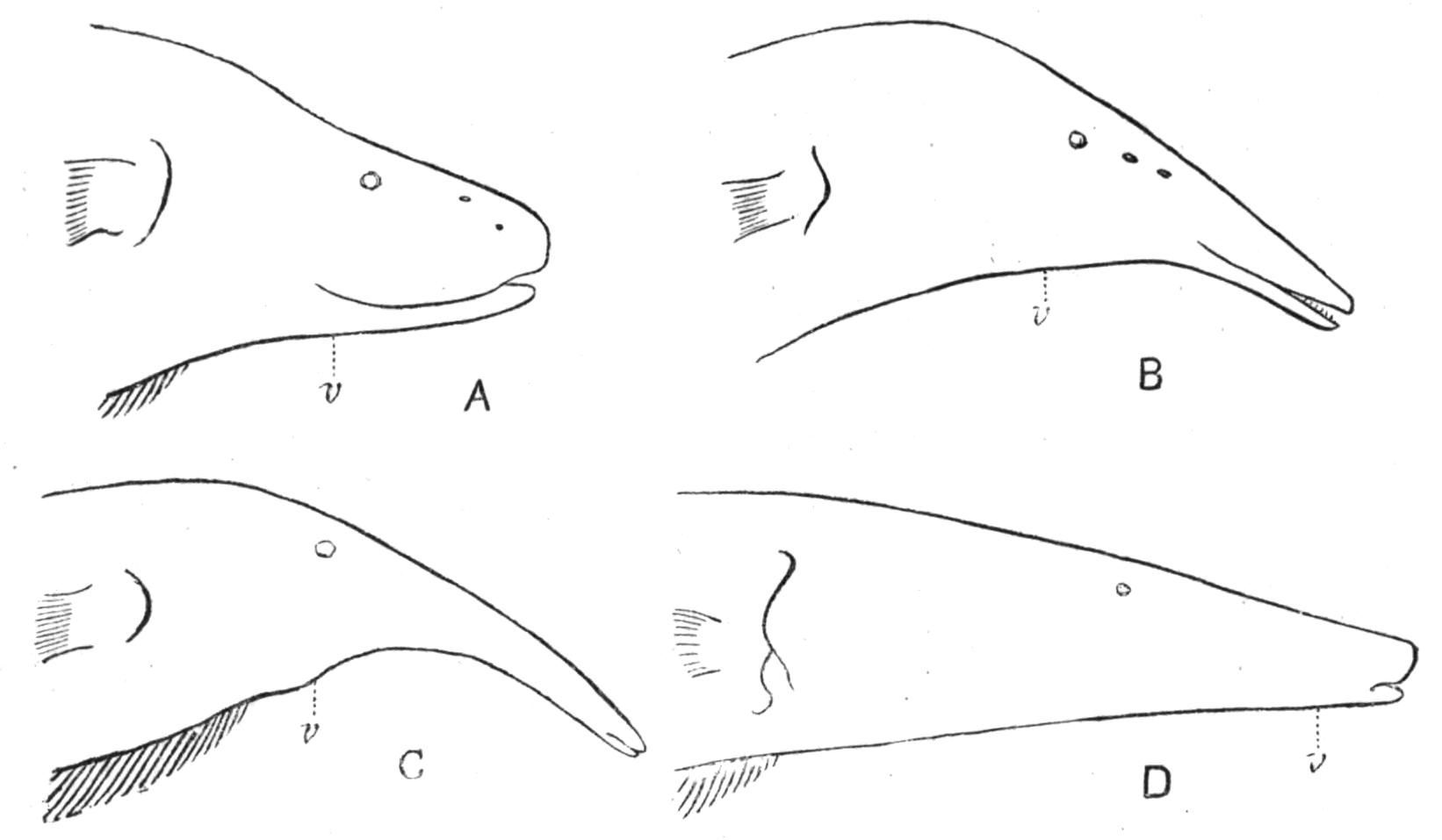
Fig. 351.—Outlines of heads, showing shape of snout and position of vent (v). A, Sternarchus albifrons; B, Sternarchus macrostoma; C, Rhamphosternarchus curvirostris; D, Rhamphosternarchus tamandua.
The best known member of this family is the so-called Electric Eel (Gymnotus electricus), of the Orinoco, Amazons, and intermediate river-systems. It grows to a length of 8 feet and the thickness of a man's thigh, and is much feared for the electric shocks it is able to discharge. The "Tremblador," as it is called by the Spanish-speaking inhabitants of the Orinoco district, is found only in marshes and in comparatively shallow parts of rivers, to the great annoyance of travellers who have to ford at such points, beasts of burden being frequently knocked down by the electric shock. Specimens have often been exhibited alive in this country; two brought to London in the year 1842, neither of them weighing more than one pound, had by 1848 reached the weights of 40 and 50 pounds respectively. About four-fifths of the length of the fish is occupied by the tail, which contains the electric organ; this is formed by modified muscular tissue, and consists of two huge masses, longitudinal bands or columns, of cells filled with a jelly-like substance, occupying the whole of the caudal region below the vertebral column and separated by a narrow median septum; a smaller body, of similar structure, extends along each side at the base of the anal fin. The whole apparatus is supplied with a great number of nerves branching from the spinal nerves. The electrical apparatus is exercised by the will of the fish, even to a distance, but this faculty is exhausted by continuous employment, and is recovered during repose. Although apparently not exempt from exaggeration and fable, Humboldt's account in Observations de Zoologie, p. 497, is recommended for further information on the habits and modes of capture of Gymnotus.[660]
Fam. 3. Cyprinidae.—Mouth usually more or less protractile, toothless, bordered by the praemaxillaries and the maxillaries, or, more frequently by the praemaxillaries only. Parietal bones united in a sagittal suture, or separated by a fontanelle; opercular bones well developed; symplectic present. Lower pharyngeal bones falciform, subparallel to the branchial arches, provided with teeth arranged in one, two, or three series, and often remarkably specialised. Ribs mostly sessile; no parapophyses in the thoracic region; epipleurals and epineurals, mostly free, floating. Pectoral fins inserted very low down, folding like the ventrals. Body naked or scaly. No adipose dorsal fin.
The brain-case is produced forward to the nasal capsule. The branchiostegal rays are reduced to 3; the branchiostegal membrane is usually more or less extensively grown to the isthmus. The suborbital branch of the sensory canals is usually produced on the operculum, as in the Characinidae. The ventral rays number 7 to 12, rarely 5 or 6. Pyloric appendages to the stomach are absent.
Freshwater fishes feeding on vegetable substances or small animals, and dispersed over the whole world with the exception of South America, Madagascar, Papuasia, and Australasia. The species are exceedingly numerous, about 1300 being known, referable to four sub-families, as proposed by Sagemehl.
(i.) Catostominae.—Margin of upper jaw formed in the middle by the small praemaxillaries and on the sides by the maxillaries, which are hidden in thick fleshy lips; no barbels; pharyngeal teeth in a single row, very numerous, comb-like; air-bladder large, divided into two or three parts by transverse constrictions, not surrounded by a bony capsule. Mostly from North America; two species from China and one from Eastern Siberia. Fossil in the Lower Tertiary of North America.
Principal genera:—Sclerognathus, Carpiodes, Catostomus, Moxostoma.
(ii.) Cyprininae.—Maxillaries not bordering the mouth; barbels absent, or one or two pairs; pharyngeal teeth in one to three rows, in small number, often very large, and working against a sclerous plate attached to a ventral process of the basi-occipital, which extends under the anterior vertebrae. Air-bladder usually large and divided into an anterior and a posterior part, rarely tripartite, not surrounded by a bony capsule. The great bulk of the family, represented in every part of its range. Remains of several of the existing genera have been found in Oligocene and later beds of Europe, Sumatra, and North America.
Principal genera:—Cyprinus, Catla, Catlocarpio, Osteochilus, Labeo, Discognathus, Psilorhynchus, Capoëta, Barbus, Gobio, Pseudogobio, Saurogobio, Rhinogobio, Oreinus, Schizothorax, Ptychobarbus, Gymnocypris, Diptychus, Aulopyge, Ceratichthys, Pimephales, Campostoma, Cochlognathus, Exoglossum, Meda, Lepidomeda, Rhinichthys, Rohteichthys, Leptobarbus, Rasbora, Luciosoma, Nuria, Amblypharyngodon, Cyprinion, Semiplotus, Xenocypris, Leuciscus, Tinca, Leucosomus, Chondrostoma, Achilognathus, Rhodeus, Danio, Pteropsarion, Hypophthalmichthys, Abramis, Nematabramis, Aspius, Leucaspius, Alburnus, Barilius, Bola, Neobola, Chelaethiops, Chela, Culter, Pelecus, Parapelecus, Cachius, Opsariichthys, Scombrocypris, Squaliobarbus, Luciobrama.
(iii.) Cobitidinae.—Maxillaries not bordering the mouth; barbels three to six pairs; pharyngeal teeth in one row, in moderate number. Anterior part of the air-bladder divided into a right and left chamber separated by a constriction, and enclosed in a bony capsule, the posterior part free, or absent. Loaches, characterised externally by a low, elongate body, without or with minute scales. Europe, Asia, Abyssinia. Miocene of Oeningen.
Principal genera:—Botia, Lefua, Diplophysa, Nemachilus, Misgurnus, Cobitis, Lepidocephalichthys, Acanthophthalmus, Eucirrhichthys, Apua.
(iv.) Homalopterinae.—Maxillaries not bordering the mouth, which is inferior; barbels three or four pairs; pharyngeal teeth in one row, in moderate number. Air-bladder rudimentary, divided into two lateral halves, encased in a bony capsule. Mountain forms with depressed head and horizontally expanded paired fins. China, India, Further India, Malay Peninsula and Archipelago.
Genera:—Homaloptera, Helgia, Glaniopsis, Gastromyzon.
The recently described Gyrinochilus, from Borneo, resembling Homaloptera in habit, with two gill-clefts on each side, an upper and a lower, a tadpole-like mouth without barbels, and a small, free air-bladder, should probably be regarded as the type of a fifth sub-family.
Many of the genera of the Cyprininae are partly founded on the shape and the disposition of the pharyngeal teeth, which, adapted to various requirements, may be conical, hooked, spoon-shaped, molariform, etc., etc. The importance attached to the disposition of these teeth in one, two, or three series for the definition of genera, has been rather exaggerated.[661]
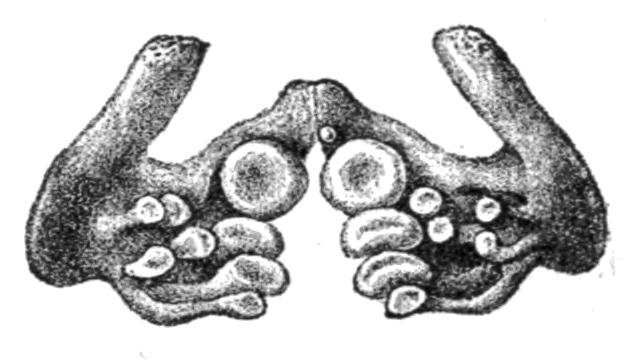
Fig. 352.—Lower pharyngeals of Barbus tropidolepis.
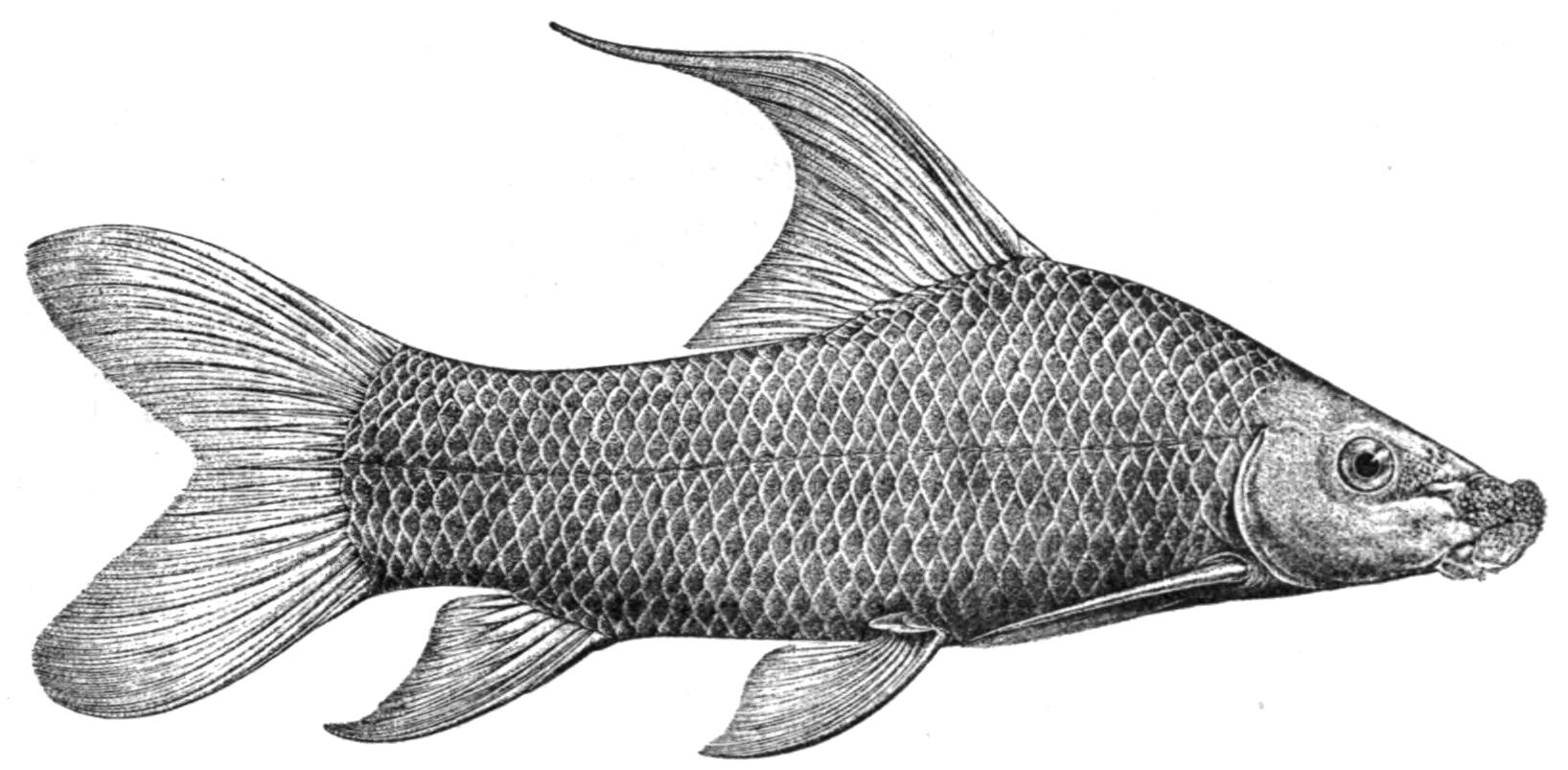
Fig. 353.—Labeo falcifer, from the Congo, showing nuptial tubercles on the snout. ¼ nat. size.
The Cyprinids constitute the majority of the freshwater fishes in Europe, Asia, and North America; they are comparatively few (about 100 species) in Africa, where they coexist with the Characinids. Some, like the Carp (Cyprinus carpio) and the Tench (Tinca vulgaris), are sluggish, except during the breeding season, when they show great excitement and indulge in leaps out of the water; others, like the Bleak (Alburnus lucidus) are constantly on the move in large shoals near the surface; whilst others again, like the M‘Biriki of Lake Tanganyika (Barbus tropidolepis), behave after the manner of Salmon and Trout, travelling long distances, against rapids and over waterfalls, to reach their breeding places at the heads of rivers. During the breeding season, the males of many species assume a more brilliant livery, or develop pearl-like or spiny excrescences on various parts of the head, or also on the body and fins.[662] Cyprinids are oviparous, with the exception of a small Barbel from Natal, discovered and described by Prof. Max Weber as Barbus viviparus.
A most striking instance of symbiosis is offered by a little Carp-like fish of Central Europe, the "Bitterling" (Rhodeus amarus). The genital papilla of the female acquires a great development during the breeding season, becoming produced into a tube nearly as long as the fish itself; by means of this ovipositor the comparatively few and remarkably large eggs, measuring 3 millimetres in diameter—the fish being only 60 to 80 millimetres long—are introduced through the gaping valves, between the branchial laminae of pond mussels (Unio and Anodonta) where, after being inseminated, they undergo their development, the fry leaving their host about a month later, having attained a length of 10 or 11 millimetres.[663] The mollusc reciprocates by throwing off its embryos on the parent fish, in the skin of which they remain encysted for some time, the period of reproduction of the fish and mussel coinciding.
Some members of this family grow to a very large size,—4 to 6 feet; such is the case with the Carp, a native of Asia, introduced into England towards the beginning of the seventeenth century; the Catla (Catla buchanani) of India, Burma, and Siam; the Mahaseer (Barbus mosal) of the mountain streams of Asia, the scales of which may be as large as the palm of a hand; and Hypophthalmichthys molitrix of China and Manchuria, remarkable for the low position of the eyes, the fusion of the gill-rakers into thin plates of spongious appearance, which must act as a most efficient sifting apparatus, and the presence of an involuted problematic superbranchial organ to each branchial arch.[664]
Among well-known aberrations produced by artificial selection may be mentioned the "Leather Carp," a race in which the scales are either lost or much reduced in number, and enlarged along the lateral line and the back, and the Gold-Fish, a variety of Cyprinus carassius, remarkable for its golden or bright red colour, or its perfect albinism, as well as its monstrous form the Telescope Fish, with enormously projecting eyes, and enlarged, horizontally spread caudal fin.[665] This family has also yielded numerous more or less well-established examples of hybridism, congeneric and digeneric, originally described as distinct species, the produce of which is believed to be in some cases fertile for at least one generation.
The crystalline silvery colouring matter of various Cyprinids is said to have been employed from time immemorial for ornamental purposes by the Chinese. The well-known and important industry of "Essence Orientale" and artificial pearls, carried on in France and Germany with the scales of the Bleak, was not introduced before the middle of the seventeenth century.
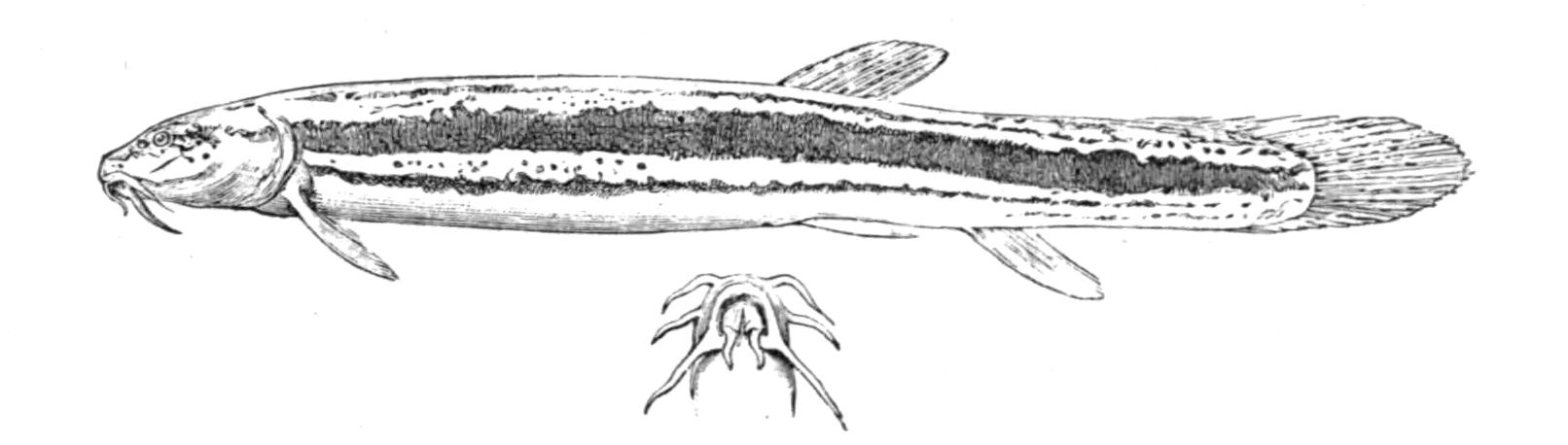
Fig. 354.—Pond Loach (Misgurnus fossilis), with lower view of mouth. ⅓ natural size.
The Loaches, Cobitidinae, which form a very natural sub-family, are small fishes, few species growing to a foot in length, mostly living in small streams and ponds. Many delight in the mud at the bottom, in which they move like Eels. In some cases, the branchial respiration appears to be insufficient, and the intestinal tract acts as an accessory breathing organ. The air-bladder, which is partially encased in a bony capsule, may be so reduced as to lose its hydrostatic functions and becomes transformed into a sensory organ, its outer exposed surface being connected with the skin by a meatus between the bands of muscle, and conveying the thermo-barometrical impressions to the auditory nerves; hence the name of "Wetterfisch," by which Loaches are known in some parts of Germany.
The Homalopterinae are more or less perfectly adapted to life in rapid streams, the most remarkable in this respect being Gastromyzon of North Borneo, in which the pectoral and ventral fins are much expanded to form, with the belly, a sucker by which the fish adhere to the stones of mountain torrents, showing a remarkable analogy to Exostoma among the Silurids.[666]
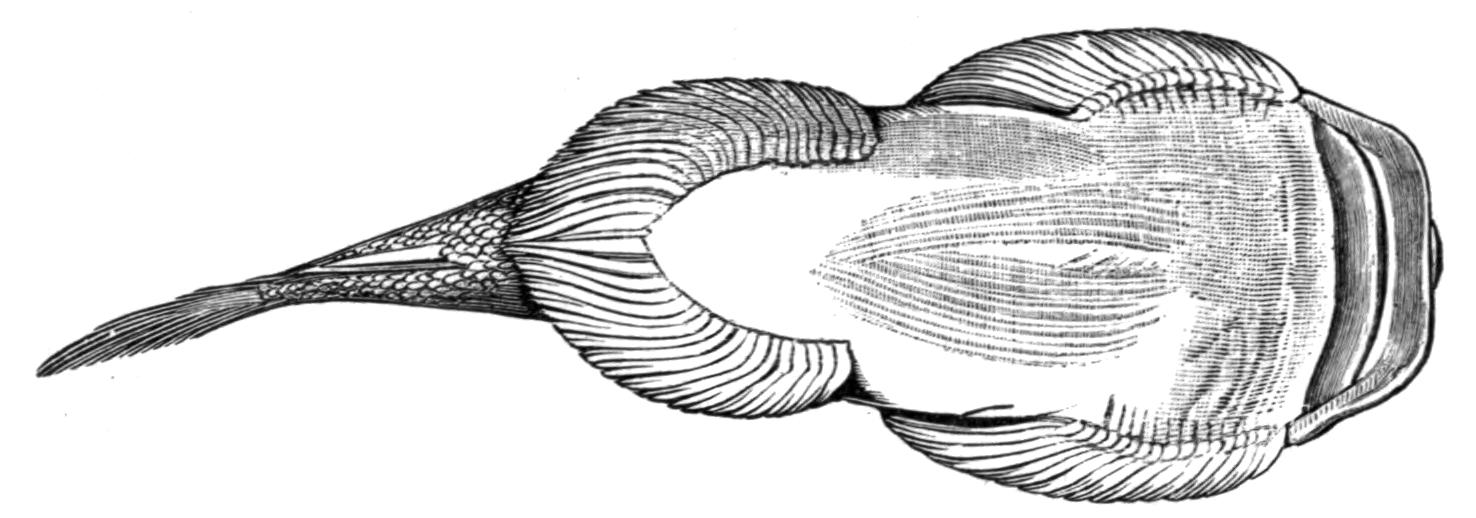
Fig. 355.—Gastromyzon borneensis, ventral view, natural size.
Fam. 4. Siluridae.—Mouth non-protractile, bordered by the praemaxillaries and the maxillaries, or by the praemaxillaries only, the maxillaries being often rudimentary and supporting the base of a barbel; jaws usually toothed. Parietal bones usually confluent with the supraoccipital, forming a single large plate (parieto-occipital); symplectic and suboperculum absent. Pharyngeal bones normal, with small teeth. Ribs attached to the lower surface of long parapophyses; epipleurals absent. Pectoral fins inserted very low down, folding like the ventrals, often armed, like the dorsal, with a strong bony spine. Body naked or with bony plates. An adipose dorsal fin often present. One to four pairs of barbels.
The skull and the opercular apparatus show a reduction in the number of elements as compared with the Characinids and Cyprinids, such as the absence of the metapterygoid, the often rudimentary, rod-like condition of the palatine, and the fusion of the parietals with the supraoccipital.[667] The scapular arch is solidly united to the skull and is often very massive, and the occiput may be connected with the base of the dorsal fin by a buckler formed by the expansion of the first and second inter-neural bones. The pterygials or supports of the pectoral rays are large and reduced to two or three.[668] Teeth are rarely present on the maxillary bones (Diplomystes, Eutropiichthys), being usually confined to the praemaxillaries and dentaries; they often occur on the palate. The branchiostegal rays vary from 4 to 17. The lips are sometimes much developed, and may form a sucking disk, as in Euchilichthys and Exostoma. As in the Cyprinids, the pungent spines which may arm the fins have nothing in common with the true spines of Acanthopterygians; they result from the co-ossification, with age, of successive articles; but, contrary to the condition in the Cyprinids, the axis of the spine is single, not double. The ventral rays vary from 6 to 16, 6 being the most frequent number. Some of the exterior vertebrae may be solidly fused together, and also with the occipito-nuchal buckler. Prof. Ramsay Wright[669] has shown, by a study of the development, that the complex which follows the first vertebra, which is more or less rudimentary, if distinct, represents the fusion of the 2nd, 3rd, and 4th vertebrae, without even nerve-foramina denoting its compound origin; the first, strongly developed, transverse process represents that of the 4th vertebra. The air-bladder is usually large and trilocular, but additional septa may greatly complicate its structure, and external diverticula may also exist;[670] it may be more or less reduced and entirely or partially enclosed in a bilateral bony capsule formed by the transverse processes of the vertebrae, and sometimes (Nematogenys) ankylosed to the skull. In a few genera, like Cetopsis, the air-bladder seems to be altogether absent: it is reduced to two small oval sacs encased in the large compound anterior vertebra. As in Loaches, the air-bladder is often in immediate contact with the skin behind the shoulder-girdle. The intestinal tract may be simple and short (carnivorous forms) or extremely long and convoluted (Callichthys); as in Cyprinids, pyloric appendages are absent.
Cat-Fishes, as Silurids are usually called, are a large family embracing some 1000 species, spread over the fresh waters of all parts of the world, but mostly from between the tropics.[671] Only a few are marine (Plotosus, Arius, Galeichthys).
This family may be divided into eight subfamilies
(i.) Clariinae.—Dorsal and anal fins very long, extending to the caudal; gill-membranes free, or narrowly united to the isthmus. Asiatic-African genera: Clarias, Heterobranchus, Plotosus. Asiatic-Australian: Copidoglanis. Asiatic: Cranoglanis. African: Clariallabes, Allabenchelys, Gymnallabes, Channalabes. Australian: Cnidoglanis.
(ii.) Silurinae.—Dorsal fin very short or absent, anal very long; gill-membranes free. Europaeo-Asiatic: Silurus. Asiatic: Silurodon, Silurichthys, Saccobranchus, Wallago, Belodontichthys, Cryptopterus, Callichrous, Hemisilurus, Ailiichthys, Ailia, Schilbichthys, Laïs, Pseudeutropius, Pangasius, Osteogeniosus, Helicophagus, Silondia. African: Eutropius, Schilbe, Siluranodon, Physailia, Parailia. Australian: Eumeda, Neosilurus.
(iii.) Bagrinae.—Dorsal fin short, followed by a more or less elongate adipose fin; anal short or moderate; gill-membranes free. Asia, Africa, America, Australia: Arius. Asia and America: Amiurus. Asiatic: Macrones, Pseudobagrus, Liocassis, Bagroides, Bagrichthys, Rita, Acrochordonichthys, Acysis, Olyra, Hemipimelodus. African: Bagrus, Clarotes, Chrysichthys, Gephyroglanis, Auchenoglanis, Notoglanidium, Anoplopterus, Galeichthys. American: Diplomystes, Paradiplomystes, Aelurichthys, Genidens, Noturus, Callophysus, Pimelodus, Pimelodina, Nanoglanis, Heptapterus, Nematogenys, Pariolius, Pirinampus, Conorhynchus, Notoglanis, Callophysus, Sorubim, Piramutana, Bagropsis, Sciades. Australian: Nedystoma, Pachyula.
(iv.) Doradinae.—A short-rayed dorsal fin and an adipose, the latter sometimes replaced by a second rayed dorsal; anal short or moderate; gill-clefts more or less widely interrupted below. African: Synodontis, Chiloglanis, Atopochilus, Euchilichthys, Mochocus, Doumea, Phractura, Paraphractura, Andersonia, Trachyglanis, Belonoglanis. Asiatic: Bagarius, Glyptosternum, Gagata, Pseudecheneis, Exostoma, Sisor, Breitensteinia, Sosia, Chaca. South American: Doras, Oxydoras, Leptodoras, Physopyxis, Glanidium, Centromochlus, Wertheimeria, Cetopsis.
(v.) Malopterurinae.—No rayed dorsal fin, an adipose; anal short; gill-clefts interrupted below. African: Malopterurus.
(vi.) Callichthyinae.—Dorsal, anal, and adipose fins short; body completely cuirassed; praemaxillaries much reduced, the border of the upper jaw formed mainly by the maxillaries. South American: Callichthys, Corydoras.
(vii.) Hypophthalminae.—Dorsal fin short, behind the ventrals, anal long; gill-clefts wide or interrupted below. South American: Ageniosus, Trachelyopterus, Auchenipterus, Epapterus, Tetranematichthys, Hypophthalmus, Helogenes.
(viii.) Trichomycterinae.—Dorsal fin short, far back, behind the ventrals; no adipose fin; anal short; operculum and interoperculum armed with erectile spines. South American: Trichomycterus, Eremophilus, Stegophilus, Vandellia, Acanthopoma.
Our knowledge of the distribution in time of the Silurids is still very scanty, and throws no light on the derivation of the group. Arius, and two genera apparently related to it, Rhineaster and Bucklandium, have left remains in the Eocene of Europe and North America, and traces of various recent genera have been found in later Tertiary deposits in Europe, Asia, and North and South America.
The habits of the Silurids are extremely diversified, and the shape of the body varies accordingly. The body may be very short and the head enormous and excessively depressed, for instance in the Indo-Burmese Chaca lophioides, which, as its name implies, resembles the Fishing-Frog or Angler; stout and Cottus-like in some South American Pimelodus; Loach-like in Trichomycterus and Stegophilus; more or less Eel-shaped in Clarias and its allies, etc.; the extreme of slenderness obtains in the African Channalabes, the body being excessively elongate (over 100 vertebrae), the ventral fins absent, and the pectorals rudimentary or absent. Among other remarkable forms may be mentioned the Indian Sisor, which resembles Aspredo, and in which the upper caudal ray is much thickened and greatly prolonged; Pseudecheneis, living in rapids of the Himalayas and Khasia hills, provided with a transversely plaited ventral disk between the pectoral fins; the African Phractura and Andersonia, resembling Loricaria; and the likewise African Belonoglanis, comparable to a Needle-Fish. The spines which so frequently arm the dorsal and pectoral fins may be barbed or serrated, and constitute formidable defensive weapons; in the South American Ageniosus valenciennesi, the maxillary bone is transformed into a strong, barbed, erectile spine, replacing the barbel. Stings of even the smaller Cat-Fish are at least as painful as that of a bee, and this is probably due to some poisonous property of the dermal secretion of the Fish.
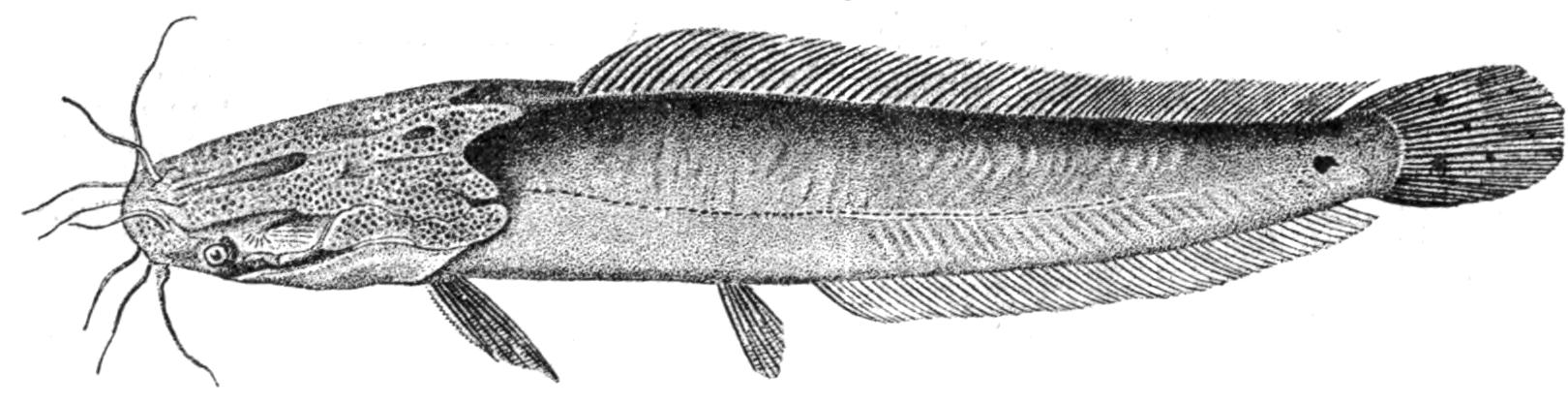
Fig. 356.—Harmout, Clarias anguillaris (after Valenciennes). ¼ nat. size.
Cope believed an orifice at or above the axil of the pectoral fin in Noturus to be the opening of the duct of a poison-gland; "from it may frequently be drawn a solid gelatinous style ending in a tripod, each limb of which is dichotomously divided into short branches of regular length." I think this condition of things has nothing to do with a poison-organ, and is merely a repetition of what is observed in Loaches and in the Characinid Xenocharax, where I have found a gelatinous substance filling the short duct by which the membrane of the air-bladder is placed in communication with the skin and the sensory organ of the lateral line. Most Silurids can live in very foul water, taking in air from the surface, and spend a comparatively long time out of the water, without being possessed of any special apparatus for atmospheric respiration. A few genera, however, are provided with an accessory breathing organ: in Clarias, Heterobranchus, and allies, there is a dendritic superbranchial organ, in Saccobranchus a long air-sac, extending from the first branchial cleft along the side of the body, as described above, p. 295; and these Fish can live for days on land. Clarias lazera has been observed, in Senegambia, to spend several months of the dry season in burrows, from which it emerges at night to crawl about in search of food. Many Silurids, but especially Doras and Synodontis, are known to produce sounds in and out of the water by means of a special mechanism of the air-bladder and the processes of the vertebrae above it, combined with the movements of the pectoral spine grinding in the glenoid cavity.[672] In South America, Doras has been observed to move rapidly on land, projecting itself forward on the pectoral spines by the elastic spring of the tail, travelling long journeys over land, from one drying pond to another, spending whole nights on the way; these migrations sometimes take place in numerous bands, baskets of the small Fish being filled by the Indians who come across them.[673] The African Synodontis are much in the habit of floating or swimming leisurely on the surface with the belly in the air, as was well known to the ancient Egyptians, who have frequently depicted the Fish in this anomalous position. A curious fact in connexion with this habit is that S. membranaceus and S. batensoda, in which it has most frequently been observed, show an inversion of the ordinary mode of coloration, the lower parts being dark brown or black and the upper pale silvery grey. The electric Cat-Fish (Malopterurus electricus), is also a native of Africa, occurring all over the tropical parts of that continent and also in the Lower Nile, growing to a length of three feet. Its flesh is more esteemed than that of other Silurids. It avoids light and is slow in its movements. The electrical apparatus differs absolutely from that of all other Fishes, being derived from the integument, belonging to the glandular system, and surrounding the whole body with a thick coat of grease or gelatinous substance; the apparatus is governed by a single nerve on each side proceeding from a huge ganglionic cell at the anterior extremity of the spinal cord.[674] The shocks given by Madopterurus are very powerful, and the Fish is called "Raad" by the Arabs, a name which means "thunder." Kept in an aquarium with other Fishes, even of the same species, the "Raad" soon kills its companions.
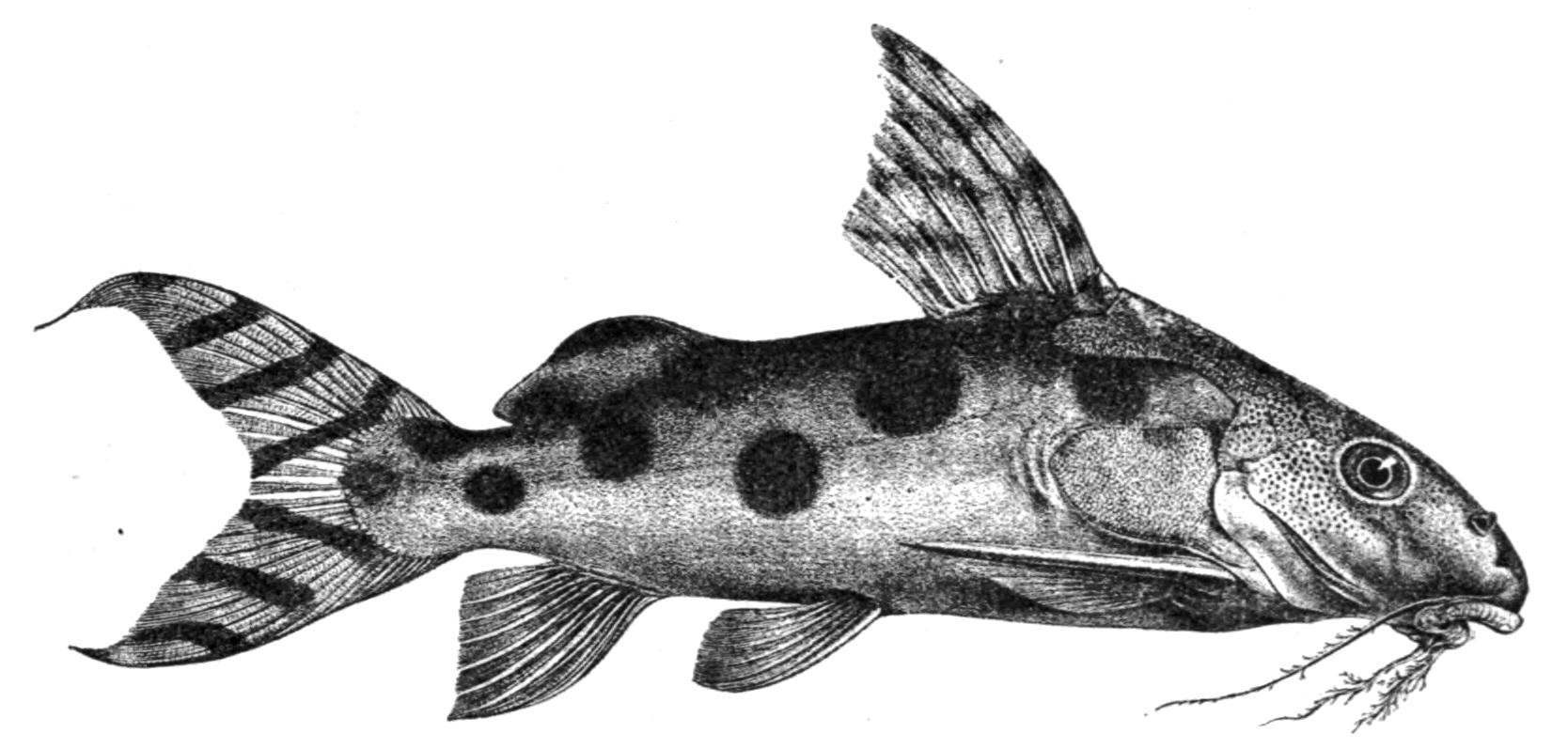
Fig. 357.—Synodontis decorus, from the Congo. ⅓ nat. size.
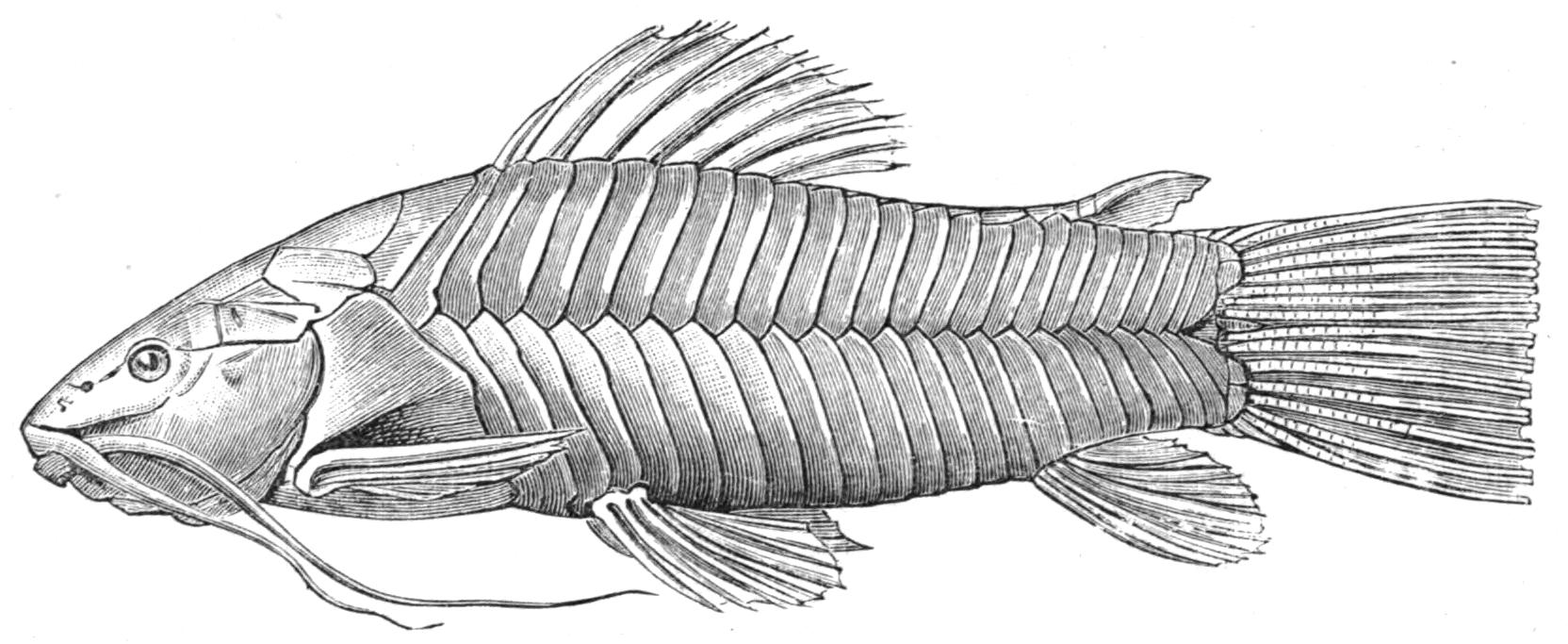
Fig. 358.—Callichthys littoralis, from South America. ⅔ nat. size.
In this family the eggs and young are usually looked after by the parents. Aristotle observed that the male of the European Silurus glanis watches over and defends the eggs. In one of the commonest North American Cat-Fishes, Amiurus nebulosus, a species which has been largely introduced into some parts of Europe of late, now thriving in many ponds and more or less polluted streams of the Continent, the eggs are deposited near the banks of weedy ponds and rivers without currents, in concealed places beneath logs, stumps, or even in pails or other receptacles, failing which both parents join in excavating a sort of nest in the mud, a work often requiring two or three days of incessant labour. The male watches over the eggs, and later leads the young in great schools near the shore, seemingly caring for them as the hen for her chickens.[675] The Doras and the Callichthys of South America, according to Hancock[676] and Vipan,[677] build regular nests of grass or leaves, sometimes placed in a hole scooped out in the bank, in which they cover their eggs and defend them, male and female sharing in this parental duty. In the likewise South American Corydoras (Callichthys paleatus), as observed by Carbonnier,[678] a lengthy courtship takes place, followed by an embrace, during which the female receives the seminal fluid in a sort of pouch formed by the folded membranes of her ventral fins; immediately after, five or six eggs are produced and received in the pouch, to be afterwards carefully placed in a secluded spot. This operation is repeated many times, until the total number of eggs, about 250, have been deposited. In accordance with these pairing habits, the pectoral spines of the male, which are used in amplexation, are longer and stronger than those of the female. These Fish are monogamous, and both parents remain by the side of the nest, furiously attacking any assailant. Dr. R. Semon[679] has made observations in Queensland on the habits of Arius australis, which builds nests in the sandy bed of the Burnett River. These nests consist of circular basin-like excavations, about 20 inches in diameter, at the bottom of which the eggs are laid, and covered over by several layers of large stones. A still more efficient protection is afforded their progeny by the marine and estuarine species of Arius,[680] Galeichthys,[681] and Osteogeniosus,[682] the male, more rarely the female, carrying the eggs in the mouth and pharynx; these eggs, few in number, are remarkably large, measuring as much as 17 or 18 millimetres in diameter in Arius commersonii, a Fish of three or four feet in length. According to Babuchin, Malopterurus also is said by the Nile fishermen to shelter its fry in the mouth.
Some of the Silurids attain to a very large size. Among these is the type of the family, Silurus glanis, the "Wels" of the Germans, its only European representative, which occurs over a great part of Europe, but is absent from the British Isles, France, the Spanish Peninsula, and Italy. It is most abundant in the Danube basin, where it sometimes reaches a length of 10 feet or more and a weight of 400 lbs. It is the largest strictly fresh-water Fish of Europe. Among the smallest species, we have to mention the "Candiru" of Brazil, Vandellia cirrhosa, 60 millimetres in length and 3 or 4 in diameter, which is believed to enter and ascend the urethra of people bathing, being attracted by the urine; the Fish, having once made its way into the urethra, cannot be pulled out again, owing to the erectile spines which arm its gill-covers. The natives of some parts of the Amazons are in great dread of this Fish, and protect themselves when entering the water by wearing a sheath formed of a small, minutely-perforated cocoanut-shell suspended from a belt of palm-fibres.[683] According to Reinhardt[684] the allied Stegophilus insidiosus, a small colourless Fish, 30 to 40 mm. long, from Brazil and Argentine, lives parasitically in the gill-cavity of large Cat-Fishes (Platystoma). Dr. F. Silvestri has noticed that it sucks the blood in the gills of Platystoma coruscans, a Silurid growing to a length of 6 feet.
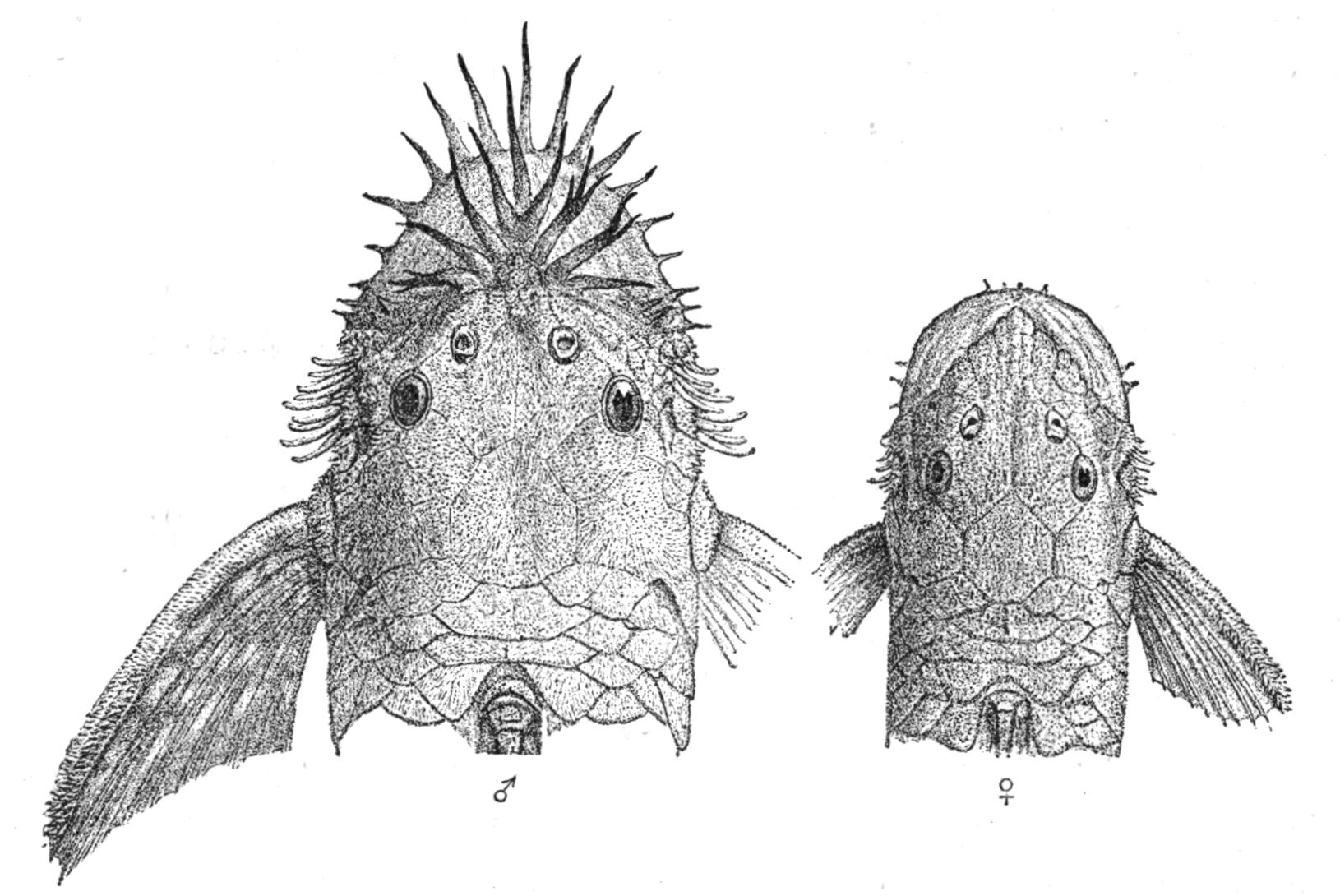
Fig. 359.—Upper view of heads of Chaetostomus cirrhosus, male and female. (Nat. size.)
Fam. 5. Loricariidae.—Distinguished from the preceding by the sessile ribs and the absence of the transverse processes in the praecaudal vertebrae, which have bifid neural spines. The air-bladder is always much reduced, and enclosed in a right and a left bony capsule formed by the skull and the anterior vertebrae. Gill-openings narrow clefts. The mouth is inferior, with more or less developed circular lips and feeble dentition; it is used as a sucker, by which the Fish fixes itself to any hard object with such strength that it cannot be pulled off without great difficulty. The teeth are usually slender and bicuspid. The food consists of very small prey and more or less putrefied organic substances, the intestine being usually extremely elongate and much convoluted. The habits of these Fish are very little known, but the fact that the males of many species have the pectoral fins much stronger than the females renders it probable that they pair like Callichthys. There are other sexual differences in many species of Plecostomus, Chaetostomus, and Loricaria, as the presence of dermal tentacles on the snout (see Fig. 359), or of hair-like bristles on various parts of the head and fins in the males, which are usually of larger size.
About 200 species are known, all from the tropical and subtropical parts of Central and South America. The largest species (Chaetostomus gigas) measures 2½ feet; many are of very small size.[685] The genera may be referred to two sub-families:—
(i.) Arginae.—Body naked; ribs strong. Arges, Stygogenes, Astroblepus.
(ii.) Loricariinae.—Body cuirassed by bony plates; ribs very slender. Plecostomus, Liposarcus, Chaetostomus, Cochliodon, Pterygoplichthys, Rhinelepis, Acanthicus, Otocinclus, Hypoptopoma, Loricaria, Acestra.
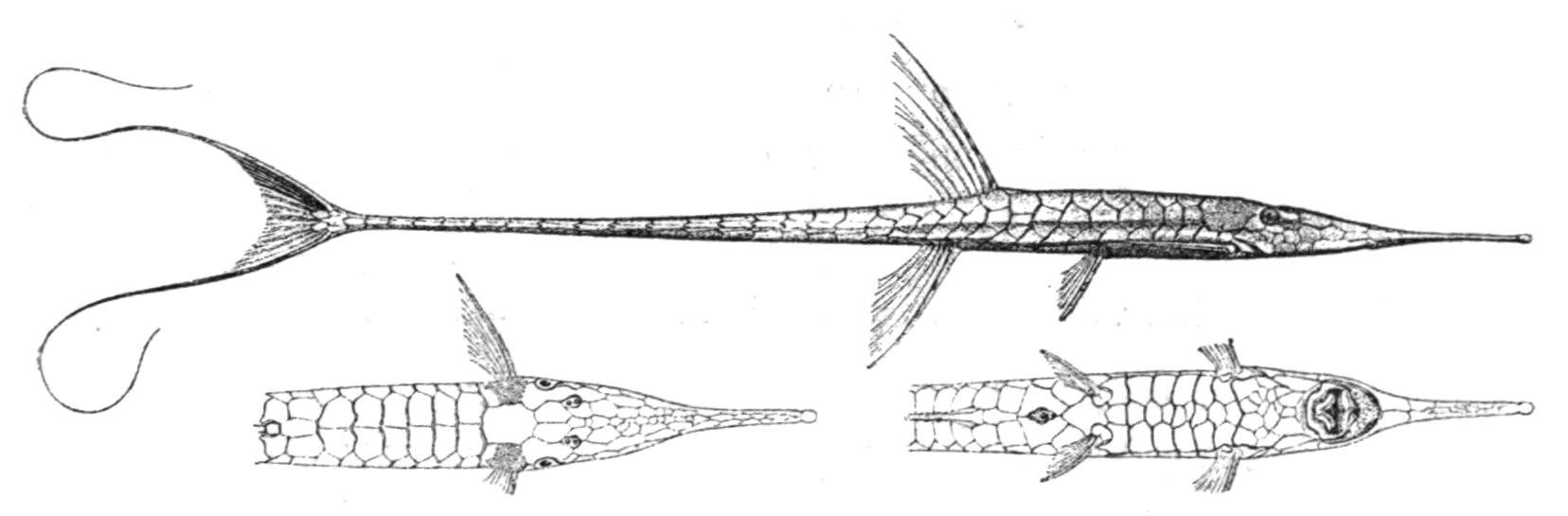
Fig. 360.—Acestra gladius, from the Jurua River, with upper and lower views of head and trunk. (⅔ nat. size.)
The "Prenadillas" of the Andes, Arges and Stygogenes, were believed to live in subterranean waters within the bowels of active volcanoes, and to be ejected with streams of mud and water during eruptions, a story that has been repeated by Humboldt. The fact is that they live in small torrents at great altitudes (up to 10,700 feet), and are swept down during periods of disturbance caused by the eruption of the volcano.[686] The members of the sub-family Loricariinae vary much in the shape of the body, which may be short and stout, or more or less slender, the extreme in the latter respect being attained by the species of the genus Acestra.
Fam. 6. Aspredinidae.—This family is also closely related to the Siluridae. The ribs are sessile as in the Loricariidae, but inserted very low down on the centra, which higher up bear strong transverse processes. The opercular bone is entirely absent. The gill-opening is reduced to a foramen in front of the pectoral fin. The head is extremely depressed and the mouth terminal; the tail is very slender; the body is naked. The air-bladder is large and free, the intestinal canal short. Four genera from South America: Aspredo, Bunocephalus, Bunocephalichthys, Dysichthys. Species 18. Aspredo, of the Guianas, the largest form, reaching to about a foot in length, is remarkable for the manner in which the female carries her eggs. The skin of the lower parts assumes a spongy condition about the breeding season, and the eggs, after being deposited, become attached to the lower surface of the head, belly, and paired fins, forming a single layer; each egg becomes connected with the skin of the mother by a cup-shaped, pedunculate base, supplied with blood-vessels and coated with a layer of epithelium, the formation of which is still unexplained.[687]