Chapter XVII
Reading edition
ELASMOBRANCHII: GENERAL CHARACTERS—PLEUROPTERYGII—ICHTHYOTOMI—ACANTHODEI—PLAGIOSTOMI—SELACHII—BATOIDEI—HOLOCEPHALI
CLASS II. PISCES.
Sub-Class I. Elasmobranchii.
In both the ancient and the modern Sharks, Dog-Fishes, and Rays, the exoskeleton takes the form of a more or less uniform investment of dermal denticles or "shagreen." The endoskeleton is wholly cartilaginous or partially calcified, and there are neither cartilage- nor membrane-bones. The vertebral column is acentrous or chordacentrous, generally with alternating basi- and inter-dorsal elements, and terminating in a heterocercal tail. The skull is usually hyostylic, very rarely amphistylic or autostylic, and the lateral halves of the primary upper jaw (palato-quadrate cartilages) usually meet in a highly characteristic median symphysis beneath the base of the skull. Branchial arches and clefts are five to seven in number, and the clefts are separated by complete interbranchial septa, which, as a rule, are continuous externally with the skin. An operculum is developed only in the Holocephali. A pelvic girdle is present. With rare exceptions the pectoral fin is uniserial. The pelvic fin is invariably uniserial. The exoskeletal supports of all the fins consist of ceratotrichia, and, when present, the fin-spines are invested by enamel. Claspers are generally present in the males.
In the surviving members of the group the nostrils retain their primitive ventral position. There is a conus arteriosus with several rows of valves. A spiracle, often furnished with a spiracular pseudobranch, is generally present, and, as a rule, there is a hyoidean hemibranch supplied with venous blood from the ventral aorta. The gill-filaments are attached throughout their length to the interbranchial septa. There is an optic chiasma. An air-bladder is not developed. The intestine has a spiral valve, and there is a cloaca. The gonoducts in both sexes are derived from the kidney system. The ova are large, few in number, and enclosed in horny egg-cases, and they are fertilised before extrusion. The segmentation is meroblastic, and the embryo is furnished with long external gills.
The Elasmobranchs are for the most part active predaceous Fishes, living at different depths in the sea, from the surface to nearly a thousand fathoms, and ranging from mid-ocean to the shallower waters round the coasts in almost every part of the world. Although typically marine, they sometimes ascend rivers beyond the reach of tides, and a few are permanent inhabitants of fresh water. They are most abundant in tropical and subtropical areas, where they also attain their greatest size, and are numerous in temperate regions, but there are some species which are typically Arctic. None of them are small, and some of the Sharks are the largest of living Fishes. All are carnivorous, but so diversified is their food that in different species it may range from other Fishes of no mean size to Molluscs, Crustaceans and other Invertebrates, or even to plankton. In their breeding habits the Sharks and Dog-Fishes present many interesting features. Unlike the generality of Fishes, the eggs are fertilised internally as a sequel to the copulation of the sexes. For this purpose the males are furnished with special intromittent organs, the myxopterygia or so-called claspers, which are developed as modifications of the hinder portions of the pelvic fins.[515] Each clasper is supported by an internal skeleton, consisting of several cartilages derived from the radialia of the fins, and is traversed along its inner aspect by a groove. When sexual congress takes place the claspers are thrust through the cloaca of the female into the oviducal orifices, and in some instances it is probable that they are retained in this position by hook-like denticles developed at their free extremities. The seminal fluid then flows along these conduits into the oviducts, in the upper portions of which it meets and impregnates the eggs. After fertilisation the egg is enclosed in a dark brown horny egg-case, secreted by the oviducal gland.
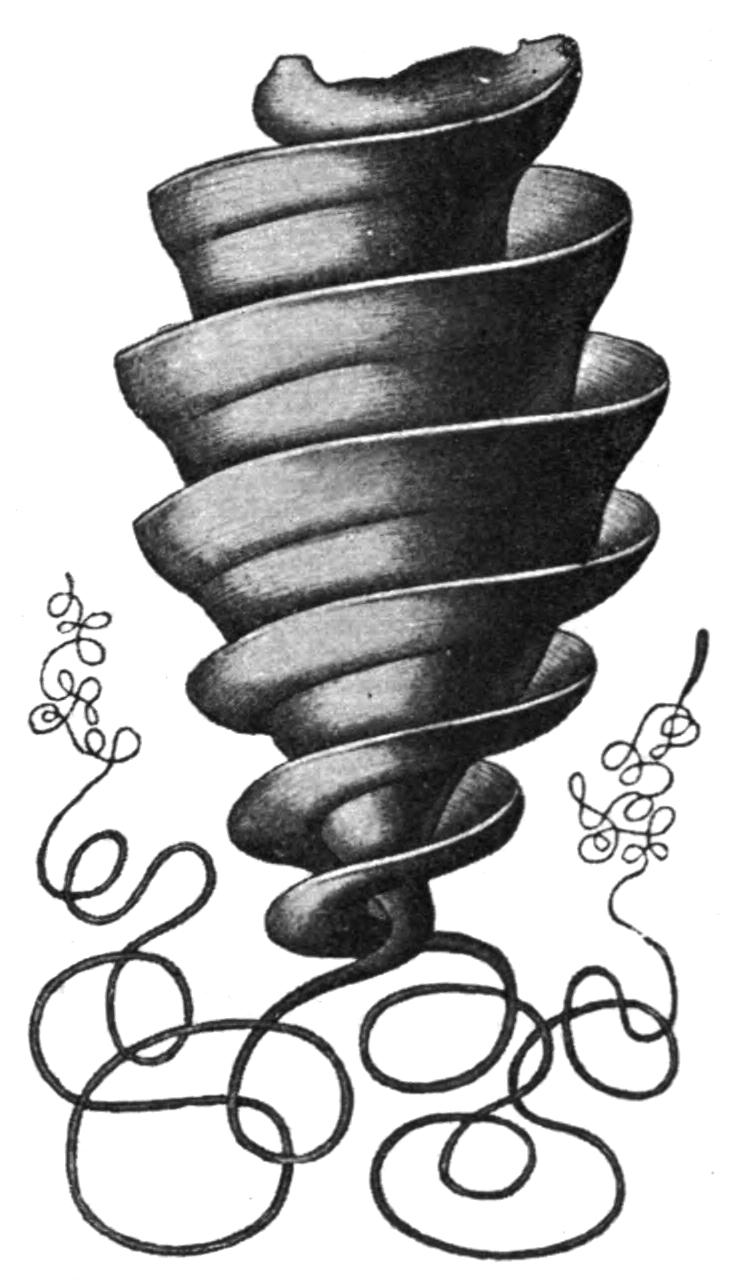
Fig. 245.—Egg-case of Heterodontus (Cestracion) galeatus. (From Parker and Haswell, after Waite.)
As a rule each egg-case has but a single egg, but in Rhinobatus and Trygonorhina (Batoidei), both of which are viviparous, each case contains three to four eggs. Generally the egg-cases are somewhat quadrangular in shape, with the four angles, two at each end, prolonged either into short horns, or into long tapering tendrils (Fig. 246). The oval egg-cases of the Heterodontidae are remarkable not only for their size, but also for the presence of a broad spiral lamina winding round the exterior of the case from one pole to the other (Fig. 245). The majority of the Sharks, Dog-Fishes, and Rays are viviparous, that is, the young are born alive; the rest, like the Scylliidae (e.g. the common British Dog-Fishes, Scyllium canicula and S. catulus), the Heterodontidae, and the Raiidae are oviparous, that is, the young are hatched out after the extrusion of the eggs. In the oviparous species the eggs are extruded either singly or in pairs, and generally deposited on the sea-bottom. When, however, the egg-cases are provided with tendrils, as, for example, in the two British Dog-Fishes just mentioned, these organs act as anchoring filaments. When extruding an egg, the female swims round and round some piece of upright seaweed, and the curling tendrils become entwined round it in such a way that the egg becomes securely attached thereto (Fig. 246).[516] The embryos are long in developing, and in Scyllium it may be several months after fertilisation (200 to 275 days) before they are hatched, the young Fish finally escaping through a rupture in the egg-case.
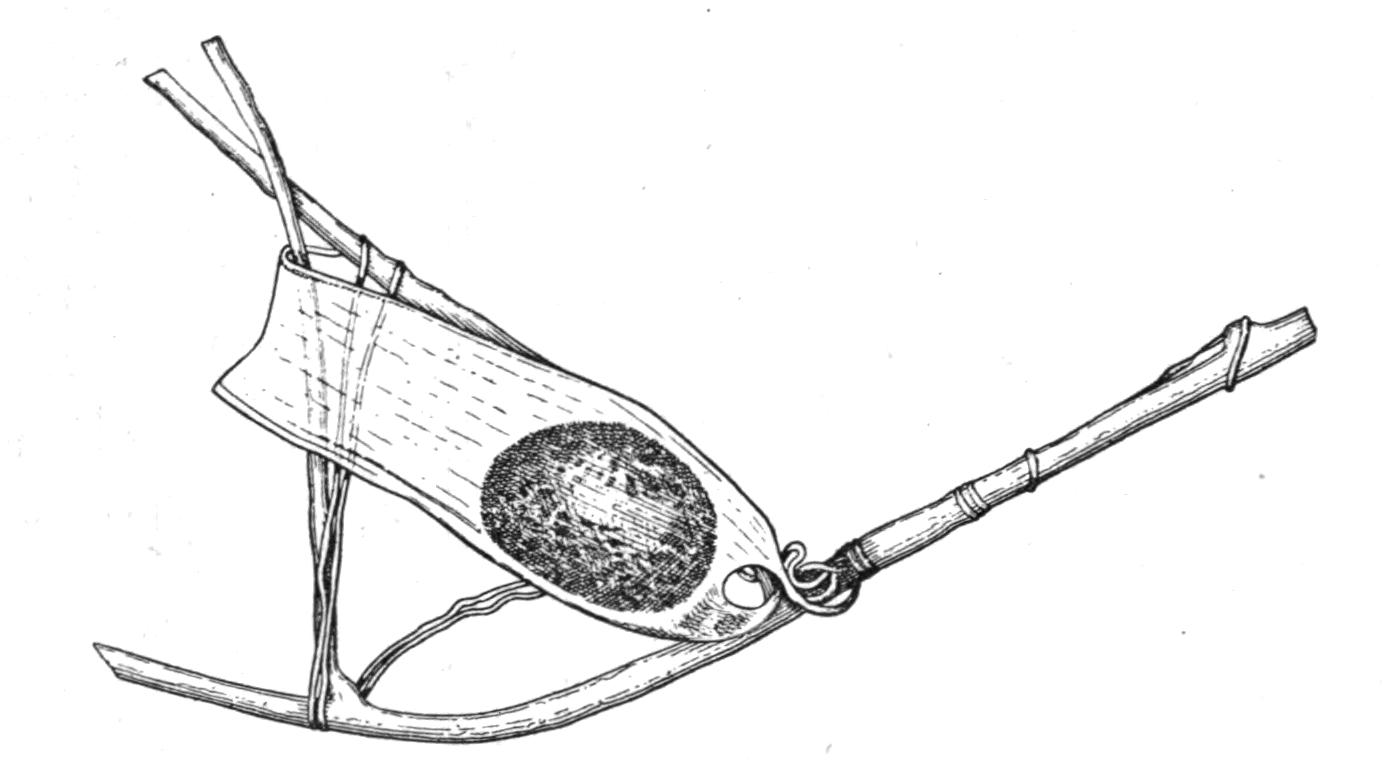
Fig. 246.—Egg of the Spotted Dog-Fish (Scyllium canicula), showing its mode of attachment after extrusion. (From Hertwig, after Kopsch.)
In the oviparous species the nutritive food-yolk stored up, first in the egg and subsequently in the yolk-sac (Fig. 248), suffices for the nourishment of the embryo until the period of hatching, but in viviparous forms, whose embryonic development is completed within special uterine dilatations of the oviducts, additional means of nutrition are provided for the young. Such Elasmobranchs as Spinax, Acanthias, Centrina, Scymnus, Trygon, Torpedo, and Myliobatis have long filaments (villi or trophonemata) developed from the inner surface of the uterus, which secrete a nutritive fluid, and this fluid is either absorbed by the blood-vessels of the embryonic yolk-sac, or it is taken up by the embryo in some more direct manner. In some of the Trygonidae and Myliobatidae of the Indian Ocean it seems probable that the secretion is taken into the alimentary canal of the embryo either through the mouth or through the open spiracles.[517] One species, Pteroplatea micrura, has its long and highly vascular and glandular trophonemata gathered into two bundles, which are thrust through the huge spiracles into the pharynx of the embryos, of which there may be from one to three, and the nutritive secretion is apparently digested in the alimentary canal of the embryo and absorbed by the foetal blood-vessels (Fig. 247). A few Sharks, like most species of Mustelus, develop a placenta when the food-yolk in the yolk-sac of the embryo is nearly used up. Folds or projections from the highly vascular wall of the yolk-sac interlock with similar vascular folds of the lining membrane of the uterus, and a diffusion of nutrient material takes place from the maternal blood in the uterine blood-vessels to the foetal blood in the vessels of the yolk-sac.[518] Each embryo has its own placenta, and in Mustelus antarcticus the uterine portion of the oviduct is divided by septa into several chambers, each containing a single embryo.[519] It is worthy of note that in the viviparous species a distinct but very thin, delicate egg-case is formed, occasionally even with the rudiments of tendrils, which may either be retained or thrown off in the uterus. The Greenland Shark (Laemargus borealis) is unique amongst Elasmobranchs. Its eggs are small and unprotected by egg-cases, and their fertilisation is said to be effected in the water after deposition, as in the generality of Fishes.
Fossil remains of Elasmobranchs in the shape of fin-spines (ichthyodorulites) and dermal denticles, associated with various Ostracodermi (Coelolepidae, Pteraspidae, and Cephalaspidae), are amongst the earliest undoubted indications of Vertebrate life. They first appear in the Upper Ludlow Bone Bed and in Silurian rocks in other parts of Europe, and in North America; and in greater or less abundance the group is represented in almost every subsequent geological period. It cannot be said that the group shows signs of decadence, for Elasmobranchs still survive in apparently undiminished numbers and variety in the marine fauna of the present day.
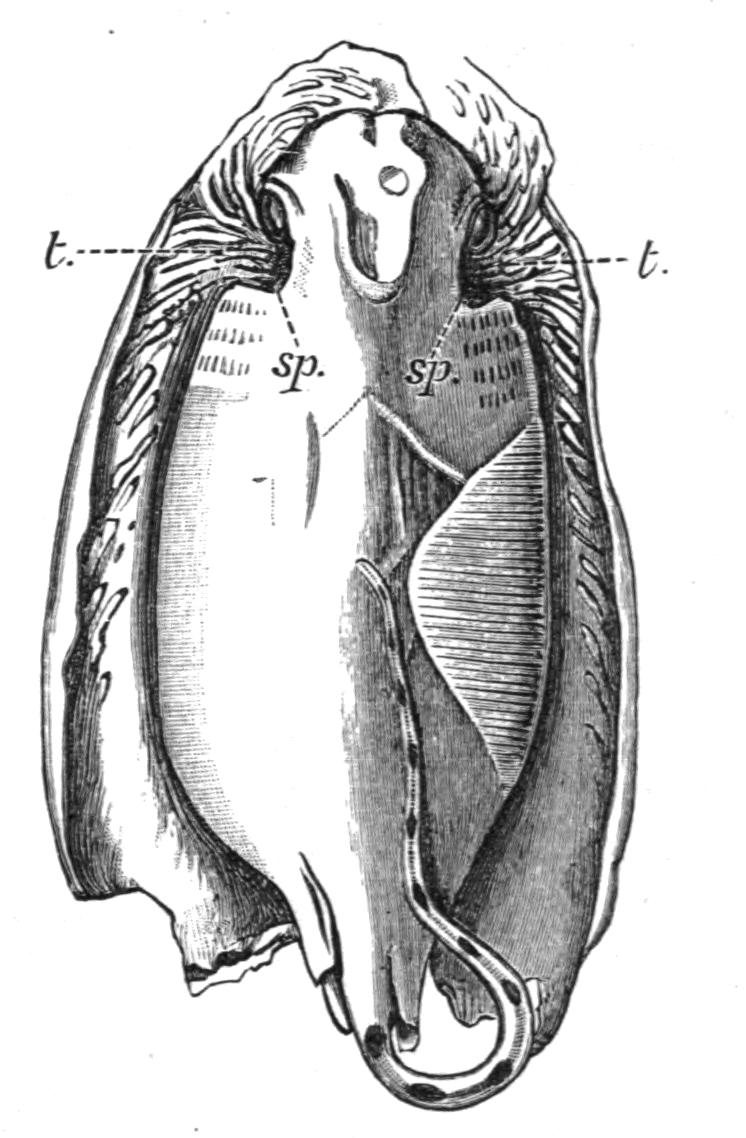
Fig. 247.—Embryo of an Indian Sting Ray (Pteroplatea micrura) as seen when the uterus is laid open. t. t, Two bundles of trophonemata inserted into the spiracles, sp, sp. (From Wood-Mason and Alcock.)
The Elasmobranchs are certainly a very primitive race of Fishes. Their earliest representatives of whose structure we have any precise knowledge (e.g. Cladoselache and Pleuracanthus) are in many respects the most archaic of known gnathostomatous Craniates, and from such types as these, amongst others, we may reasonably look for the ancestors of all or most of the remaining groups of Fishes. It has been well said of Pleuracanthus that "it is a form of Fish which might with little modification become either a Selachian, Dipnoan, or Crossopterygian,"[520] while the condition of the primary upper jaw in the Chondrostean Polyodon suggests that even the more primitive Actinopterygii had an Elasmobranch origin. The important researches of Dr. Traquair render it also highly probable that the ancient Ostracodermi may claim kinship through their Coelolepid ancestors with some primitive type of Elasmobranch; and within the limits of the group there is ample evidence that differentiation has taken place on many divergent lines, of which we have notable examples in such specialised offshoots as the Acanthodei and the Holocephali, to say nothing of several highly specialised families which became extinct at successive periods in the history of the group.
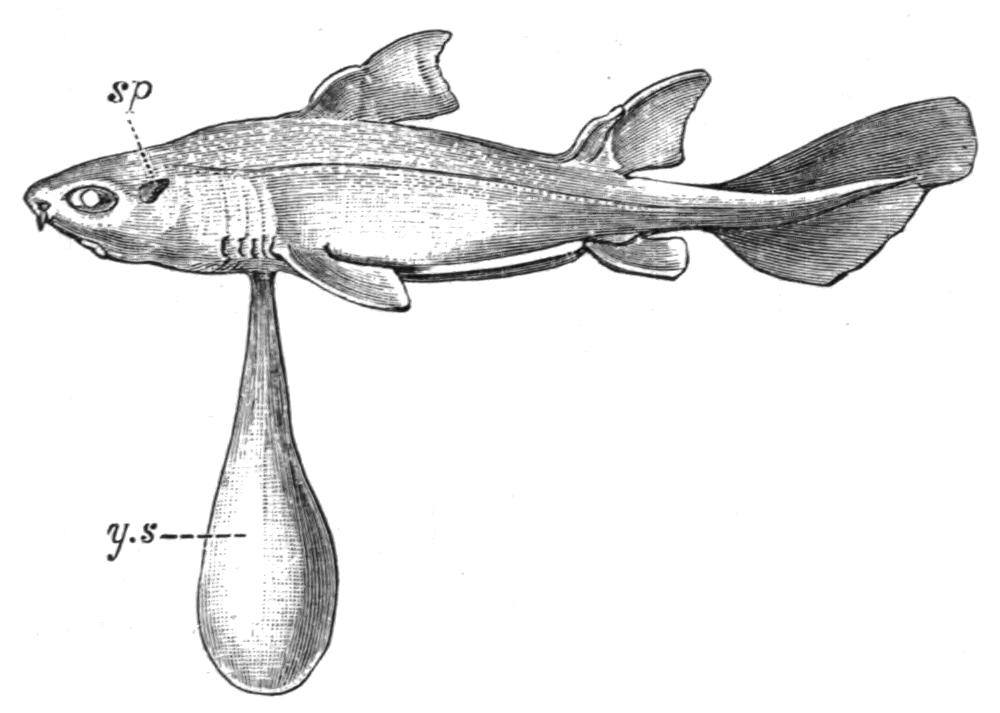
Fig. 248.—An embryo Shark, with its yolk-sac (y.s); sp, spiracle.
Order I. Pleuropterygii.
The only certain representative of this group is the Palaeozoic form Cladoselache, probably the most primitive Elasmobranch at present known (Fig. 249). Elongated and somewhat cylindrical in shape, Cladoselache[521] has a terminal mouth, five or possibly seven pairs of branchial clefts, and a pair of olfactory organs, lateral in position near the extremity of the snout. Wide-based, triangular pectoral and pelvic fins, a low anterior and a posterior dorsal fin, devoid of spines, and a heterocercal caudal fin with homocercal tendencies, are present, but no anal fin has yet been detected.
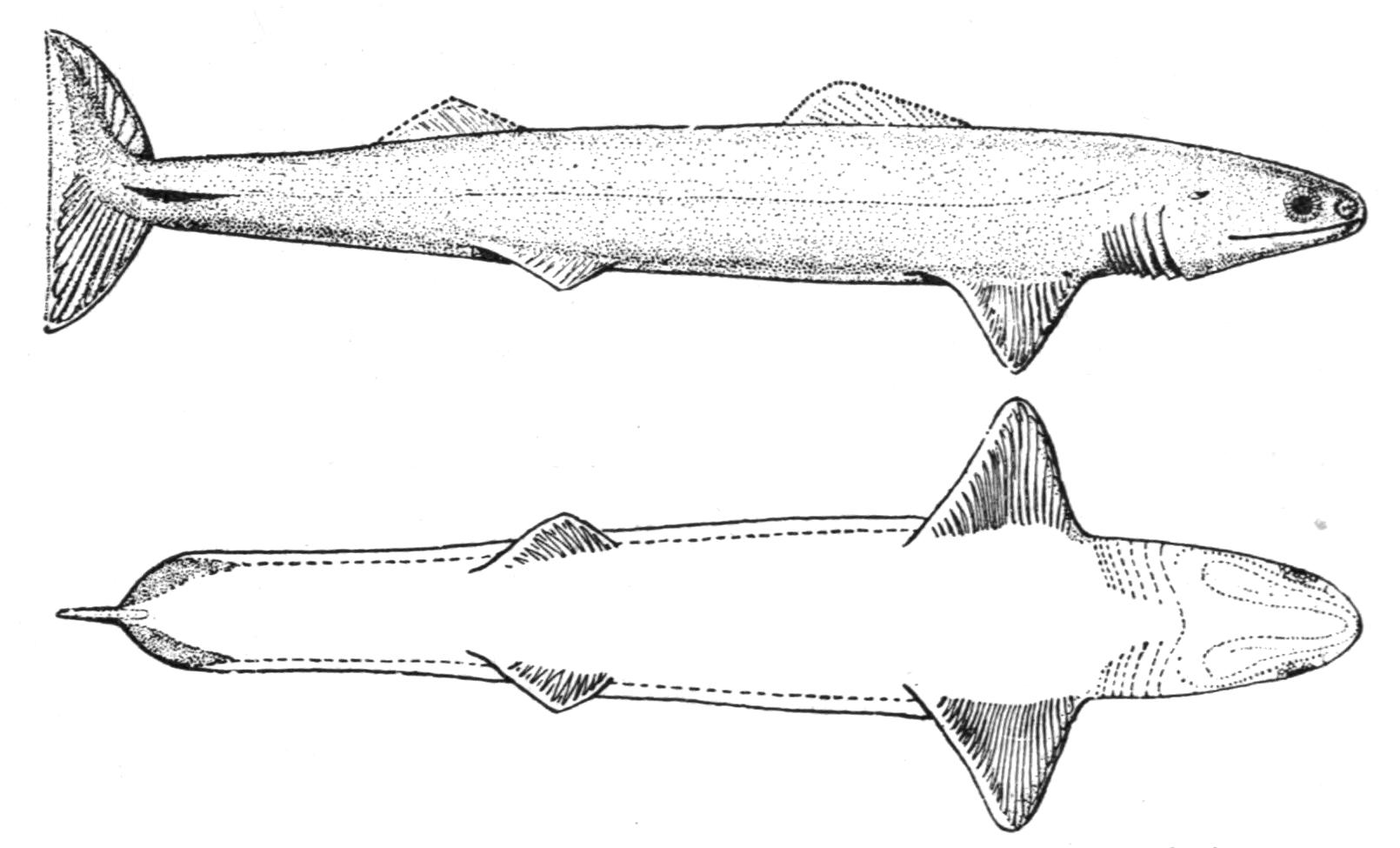
Fig. 249.—Restoration of Cladoselache fyleri. Lateral and ventral views. (From Parker and Haswell, after Dean.)
The exoskeleton consists of minute lozenge-shaped denticles, which invest the body and extend on to the surfaces of the fins, and there is also a circumorbital ring of several concentric rows of small square plates. A lateral line, in the form of a groove between two rows of denticles, extends along each side of the body. The notochord is persistent. Calcified neural and haemal arches (basidorsals and basiventrals) have been observed in the caudal region, where they correspond numerically with the remains of the myotomes, but interdorsal or intercalary arcualia seem to be absent. The upper and lower jaws, similar in size and shape, are apparently supported by a hyomandibular cartilage; hence the skull is hyostylic. The endoskeletal supports of the pectoral, and especially those of the pelvic fins, exhibit a more primitive disposition than in any other Fishes. They extend nearly to the distal margins of the fins, where they seem to interdigitate with the proximal ends of feebly-developed ceratotrichia (Fig. 145). The extension of the fins in the horizontal plane, the gradual shading off of their broad bases into the sides of the body, and the resemblance between their radialia and those supporting median fins, are very suggestive of the origin of the paired fins from continuous lateral fin-folds. Claspers are absent. The dentition is well developed, and several rows of teeth seem to be functional at the same time. Each tooth consists of a broad base, supporting a long pointed central cusp and a variable number of similarly shaped but much shorter lateral cusps. The teeth in the various transverse rows from without inwards are closely wedged together by the interlocking or overlapping of their bases.
Fam. 1. Cladoselachidae.—Several species of Cladoselache, varying from 2 to 5 feet in length, have been found in the Cleveland Shale (Upper Devonian) of Ohio. Isolated teeth similar to those of Cladoselache occur in the Lower Carboniferous of Europe, India, and North America, and have been referred to various species of the genus Cladodus, but with one exception nothing more is known of the structure of these Fishes, and consequently their relationship to Cladoselache is doubtful. C. neilsoni,[522] from the Lower Carboniferous (Calciferous Sandstones) of Kilbride in Scotland, has a very different type of pectoral fin, which appears to be distinctly uniserial, but intermediate in structure between the biserial fin of Pleuracanthus and that of the modern sharks. There are several other genera from the Devonian and Lower Carboniferous whose claims to inclusion in this group rest on no better foundation.
Order II. Ichthyotomi.
While more specialised than the Pleuropterygii the Fishes included in this group represent an extremely generalised type of Elasmobranch, which, as already indicated, may easily have been the ancestor of more than one group of Fishes. In the typical genus Pleuracanthus[523] (Fig. 250)[524] the body is elongate, but slightly depressed, with a terminal mouth, and a tapering diphycercal tail fringed above and below by a continuous caudal fin. A long dorsal fin, two small anal fins, and well-developed paired fins with contracted bases, are present. The head is armed with a prominent, serrated, dorsal spine, but it is doubtful if dermal denticles (shagreen) are present. The vertebral column is acentrous, and the persistent notochord supports a series of basidorsal cartilages, which alternate with small interdorsals, a series of basiventrals supporting small ribs, and in the caudal region well-developed haemal arches. The dorsal fin is supported by slender, tri-segmented radialia, which appear to be twice as numerous as the neural arches in the trunk; but in the dorsal lobe of the caudal fin the two structures agree in number. Ventrally-prolonged haemal spines are the sole endoskeletal supports of the inferior lobe of the caudal. The coraco-scapular cartilages of opposite sides remain distinct, and each supports a biserial fin. The pelvic girdle is represented by a pair of small cartilages supporting the basipterygia. The pelvic fins are uniserial, with post-axial skeletal supports for claspers in the males. Both the median and the paired fins are provided with marginal ceratotrichia. The skull is probably amphistylic. Five, possibly six or seven, branchial arches, bearing clusters of minute denticles, are present. Circumorbital plates are wanting. All the endoskeletal structures are partially calcified. The teeth are tricuspid, each with two long divergent lateral cusps and a minute median cusp; the broad bases of the teeth overlap and articulate with one another by means of facets.
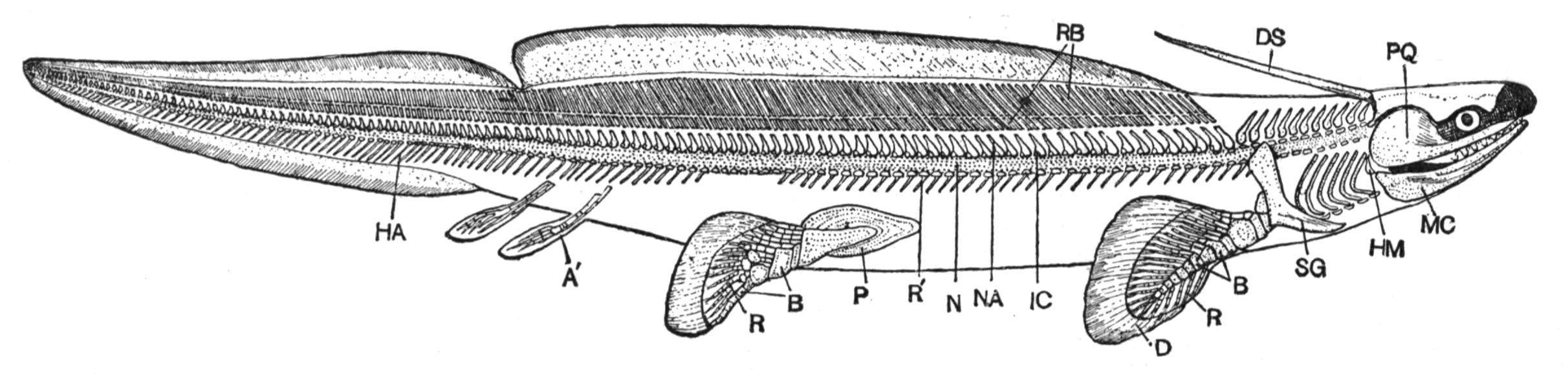
Fig. 250.—Restoration of Pleuracanthus ducheni. A', Ventral fin; B, basal cartilages of the paired fins; D, ceratotrichia; DS, head-spine; HA, haemal arches; HM, hyomandibular; IC, interdorsal cartilages; MC, Meckel's cartilage; N, notochord; NA, neural arch; P, supposed pelvic cartilage; the triangular cartilage behind it is the basipterygium; PQ, palato-quadrate; R, radialia of the paired fins; R′, rib; RB, radialia of the dorsal fin; SG, shoulder-girdle. (From Parker and Haswell, after Dean.)
Fam. 1. Pleuracanthidae.—The single family included in the group ranges from the Lower Carboniferous to the Lower Permian. Within these limits the family is widely distributed in different formations in Great Britain, Continental Europe, New South Wales (Lower Hawkesbury Formation), and North America. Pleuracanthus, of which complete skeletons and skulls have been found, is the best known genus.
Order III. Acanthodei.
The Fishes comprising the Acanthodei[525] may be regarded as a highly specialised and terminal offshoot from some primitive race of early Elasmobranchs. The Elasmobranch kinship of the Acanthodei is indicated by their exoskeleton of shagreen tubercles; the completely heterocercal tail; the absence of an operculum, the external gill-clefts apparently being exposed; the position of the lateral line of the trunk between two rows of shagreen denticles; the nature of the powerful spines in connexion with the dorsal and anal, and the pectoral and pelvic fins; and the formation of the hard parts of the skeleton, not by ossification involving the presence of bone-cells, but by the calcification of cartilage, or of more superficial membranous or fibrous tracts. On the other hand, it may be noted that the Acanthodei appear to have undergone much specialisation on lines in some respects parallel to those which have marked the evolution of the Teleostomi, but by methods which are simply an exaggeration of features normally characteristic of Elasmobranchs. Perhaps the most striking illustration of this is to be seen in the development of a species of secondary skull by an extension of a process of calcification as distinguished from ossification. Hence the presence of membrane-calcifications in relation with the upper and lower jaws, whose development is proportional to the size of the teeth they support, and of smaller investing plates of the cranial roof. Similar exoskeletal calcifications, when most completely developed (e.g. Diplacanthus), form a dorsally incomplete arch, apparently corresponding to a secondary pectoral girdle for the support of the stout pectoral spines, in which elements analogous to clavicles or cleithra and infra-clavicles can be recognised. Each pectoral spine forms the preaxial margin of the fin, and behind it there is a series of ceratotrichia. Nothing is known of the endoskeletal supports, but having regard to the nature and proportions of the pectoral spines it may be inferred that the exoskeletal elements of the fins predominate over the former to an extent which is only paralleled elsewhere in the Teleostei.
Apparently the notochord is persistent, and there are long and slender neural and haemal arches, but no ribs. The dermal denticles are uniform in size, and so small as to give a granular appearance to the skin. In structure they are thick, with a flat, enamelled, often sculptured, external surface, quadrate or rhombic in shape, and fitting closely together. Teeth are either absent or very minute, but sometimes (e.g. Acanthodopsis and Ischnacanthus) they are few in number and large, conical in shape, occasionally with minute cusps between the larger teeth. Claspers are absent. The Acanthodei are small Fishes, most of them being less than .3 m. in length, and ranging from the Upper Silurian to the Lower Permian inclusive. Two families are recognised.
Fam. 1. Diplacanthidae.—Two dorsal fins are present. Usually there is a row of lateral spines extending along each side of the body between the pectoral and pelvic fins. Exclusively Upper Silurian and Devonian.
The genera Diplacanthus, Climatius, Parexus, Euthacanthus, and Ischnacanthus are all found in the Lower Old Red Sandstone of Scotland. Climatius and Diplacanthus are also represented in the Devonian of Canada.
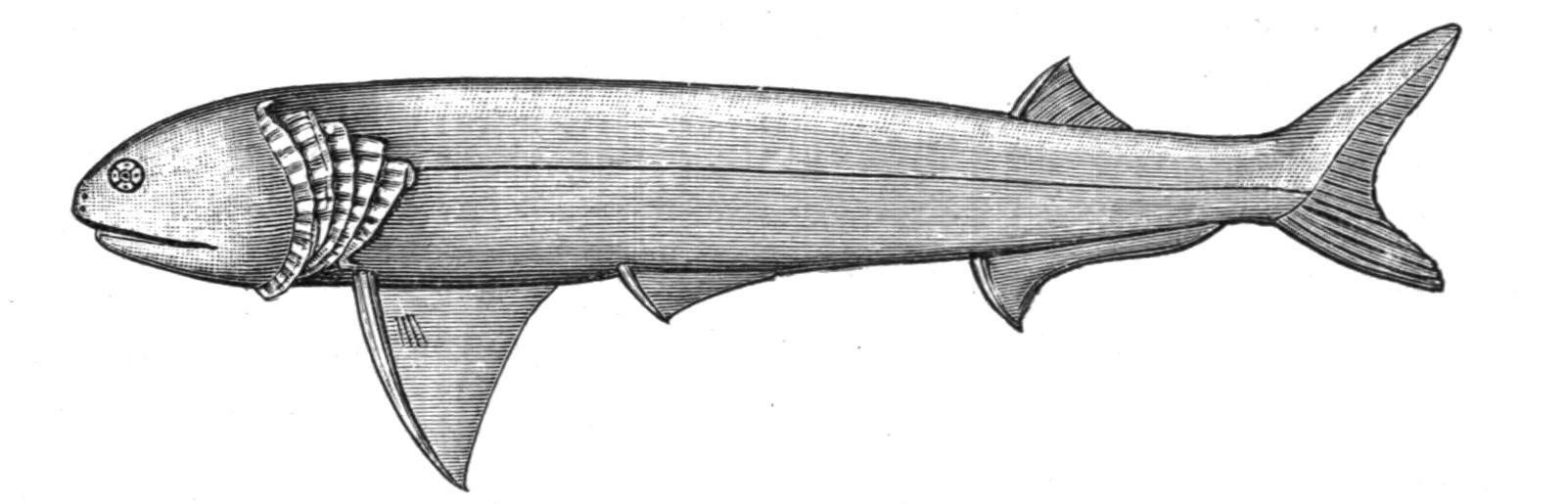
Fig. 251.—Restoration of Acanthodes wardi. Carboniferous of England and Scotland. (From Smith Woodward.)
Fam. 2. Acanthodidae.—A single dorsal fin; lateral spines vestigial or absent. Lower Devonian to the Lower Permian.
The widely-distributed genus Acanthodes (Fig. 251) is represented in the Lower Old Red of Scotland, the Devonian of Siberia and Canada, the Carboniferous of England and Scotland, and the Lower Permian of France, Germany, and Bohemia. Acanthodopsis (Coal Measures), and Mesacanthus and Cheiracanthus (Lower Old Red) are the remaining genera.
Order IV. Plagiostomi.
Head prolonged in front of the ventrally-situated mouth as a more or less prominent preoral rostrum, vertebral column consisting of alternating basi- and inter-dorsal cartilages, generally supported by more or less well-developed chorda-centra. Pectoral and pelvic fins uniserial. Pelvic girdle and claspers present. Except in two families the branchial arches and clefts are invariably five in number. An operculum is not developed.[526]
Sub-Order 1. Selachii.
Body elongate or fusiform, shading imperceptibly into a powerful swimming tail. Pectoral fins of moderate size, with contracted bases; not confluent with the sides of the head. Branchial clefts lateral in position. Vertebral centra generally asterospondylic or cyclospondylic.
This sub-order includes such typical Elasmobranchs as the modern Sharks and Dog-Fishes as well as numerous fossil representatives ranging from the Carboniferous, and probably from still earlier periods, to the present day.
Fam. 1. Notidanidae.—Body moderately elongate, the spineless dorsal fin opposite the anal. Mouth ventral; nostrils ventral, near the extremity of the snout, without oro-nasal grooves. Branchial arches and clefts six or seven. Interbranchial septa devoid of marginal frills. Notochord persistent and continuous, partially constricted by simple chorda-centra, each consisting of two distinct rings, without either concentric or radial lamellae, except in one species (Notidanus cinereus), which exhibits a feeble asterospondylism in the caudal vertebrae. Skull amphistylic. Teeth unlike in the two jaws; those in the upper jaw usually with a large central cusp and smaller lateral cusps; those in the lower jaw comb-like, each consisting of numerous graduated pointed cusps inclining in the same direction, and supported on a long basal plate.
The very few species included in this family are widely distributed in the tropical and subtropical regions of the Atlantic and Pacific Oceans. Notidanus (Heptanchus) cinereus, which has seven branchial arches and clefts, inhabits the Mediterranean and Atlantic. N. (Hexanchus) griseus, with six branchial arches and clefts, has a similar distribution, but besides being an occasional visitant to the British coasts, it is not uncommon at Cuba in the West Indies. It is said to grow to a length of 26 feet.
Fossil remains of Notidanus, principally teeth, occur in the Middle and Upper Jurassic, in the Cretaceous, and in the Eocene and Pliocene of England and the Continent.
Fam. 2. Chlamydoselachidae (Frilled Sharks).—Body much elongate. Median fins as in Notidanus. Mouth nearly terminal. Nostrils lateral, nearly terminal, and without oro-nasal grooves. Branchial arches and clefts six. The outer margins of the interbranchial septa are produced into overlapping cutaneous frills, the first of which is developed from the hyoid arch and overlaps the hyobranchial cleft, like a rudimentary operculum. Vertebral column as in the preceding family, but in the hinder part of the trunk the notochord is unconstricted and uniform in diameter, centra being absent. Skull hyostylic. Lateral line an open groove. Teeth alike in both jaws, each consisting of a broad basal plate supporting three slender curved cusps, separated by a pair of much smaller cusps.
The only living species known is Chlamydoselachus anguineus (Fig. 252),[527] which occurs in the Pacific near Japan, in deep water off Madeira, and also off the Azores and the coast of Norway. It reaches a length of 4 to 5 feet. Teeth from the Pliocene deposits of Tuscany have been referred to an extinct species, C. lawleyi.
Scarcely anything is known of the habits of the Notidanidae and the Chlamydoselachidae. It is evident that they are closely-related forms, and from the unusual number of their gill-clefts and branchial arches, and the condition of the vertebral column, it is also obvious that they are the most archaic of modern Selachians.
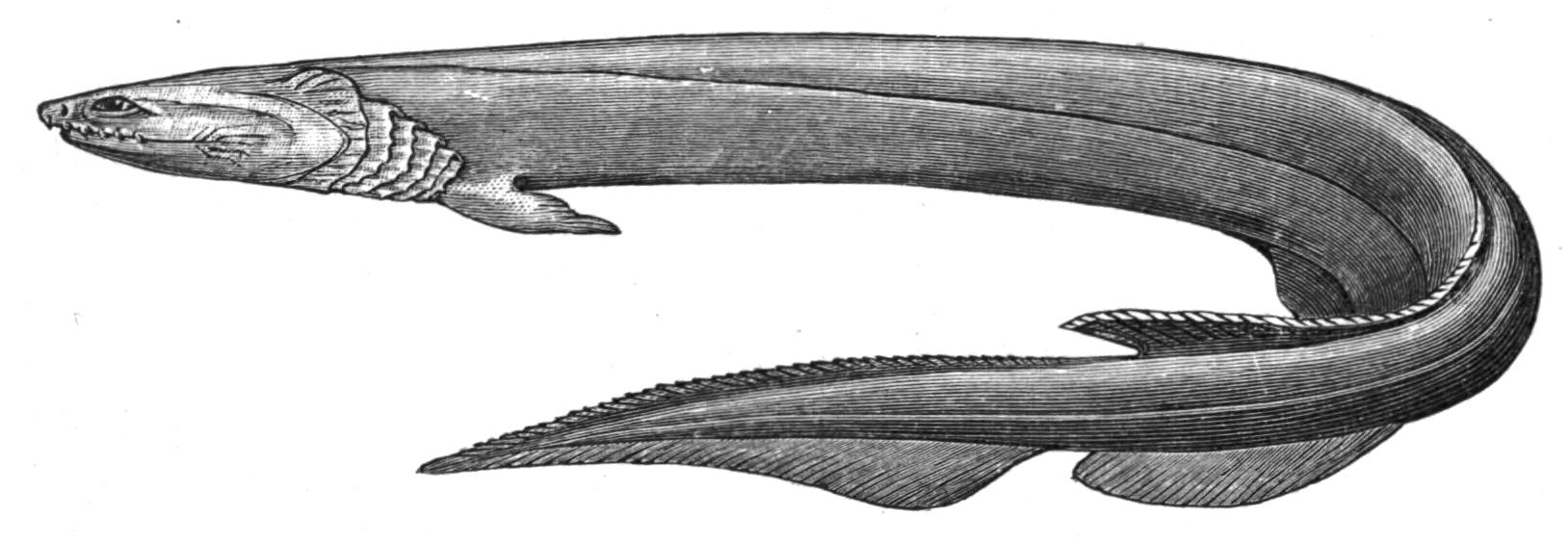
Fig. 252.—Chlamydoselachus anguineus. (From Günther.)
Fam. 3. Heterodontidae (Bullhead Sharks).—Head large and high, with a blunt snout projecting but little in front of the small and almost terminal mouth, and with prominent supraorbital crests. Trunk thick-set and somewhat trihedral, covered with fine shagreen. Nostrils ventral but nearly terminal, with oro-nasal grooves. Spiracles small, beneath the eyes. Two dorsal fins, each with a spine in front, the first opposite the interval between the pectorals and pelvics, the second in front of the anal. Vertebral centra asterospondylic when fully developed. Palato-quadrate cartilages with an extensive articulation with the sides of the preorbital regions of the cranium, the normal suspensoria of a hyostylic skull (hyomandibular cartilages) taking little share in their support. Dentition similar in both jaws. Teeth at the symphyses numerous, small, and conical, furnished with three to five cusps in the young; those behind broad and pad-like, arranged in oblique rows, the teeth forming the two middle rows being much larger than those in the front or behind. Living species, oviparous. Egg-cases large, with an external spiral lamina (Fig. 245).
About four species belonging to one genus, Heterodontus (= Cestracion) (Fig. 253), or possibly to two, represent this dwindling family. All are inhabitants of the Pacific Ocean (Japan, Amboyna, Australia, the Galapagos, and the Californian coast of North America). Little is known of their habits. They feed principally on Molluscs, the shells of which are crushed by their massive grinding teeth. The different species vary in size from 2 to 5 feet.
The Heterodontidae were the most characteristic and abundant Sharks of the Mesozoic period. Amongst extinct genera Hybodus ranges from the Middle Trias to the Lower Cretaceous (Wealden); an allied genus, Acrodus, from the Middle Trias to the Upper Cretaceous (Gault). Palaeospinax occurs in the Lias and possibly in the Upper Trias. Synechodus is a Cretaceous genus, and Asteracanthus, which has large hooked spines on the head, is characteristic of the Middle and Upper Jurassic. An even greater antiquity may be claimed for the Heterodontidae if, as is not improbable, such Palaeozoic Sharks as Orodus, Sphenacanthus, Tristychius (Carboniferous), and Wodnika (Permian) belong to this family. Many ichthyodorulites are probably the spines of various extinct Heterodontidae.
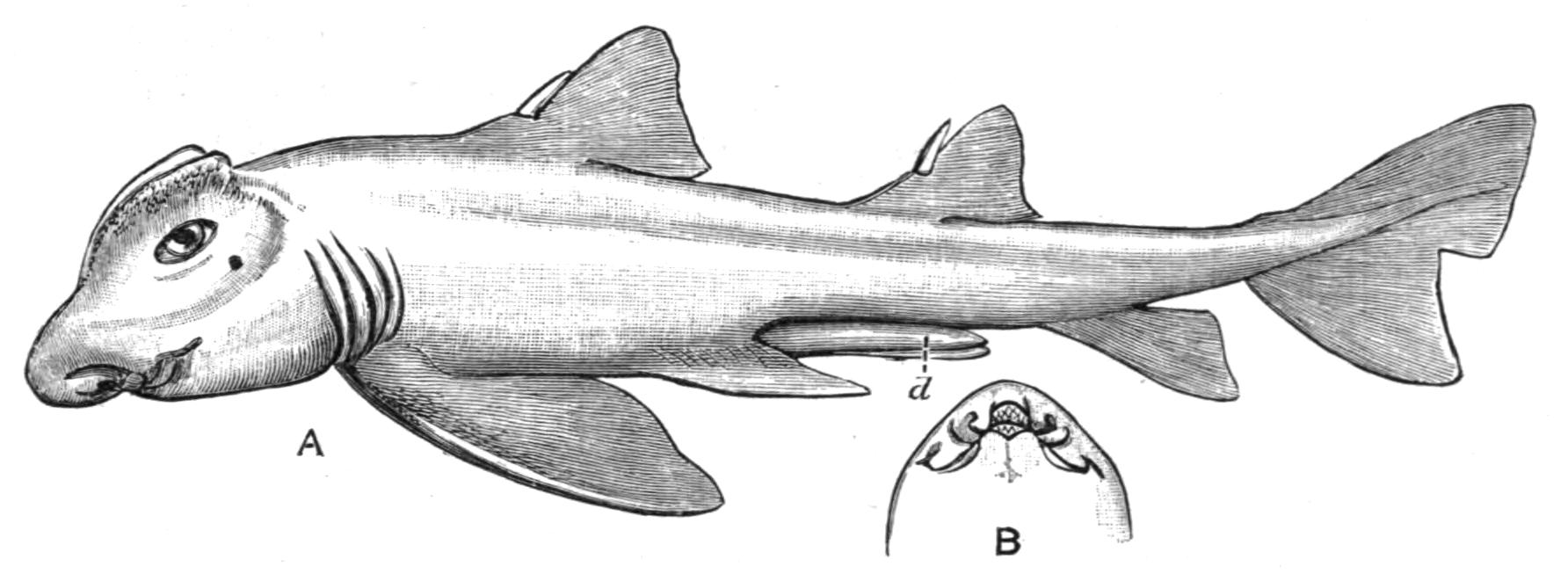
Fig. 253.—Port Jackson Shark (Heterodontus philippi). A, lateral view; B, mouth and nostrils. d, Clasper. (From a specimen in the Cambridge University Museum.)
Fam. 4. Cochliodontidae.[528]—This Palaeozoic family includes a number of Sharks probably related to the Heterodontidae, but of which little is known except their dentition. The teeth are in some respects similar to those of Heterodontus, except that those which appear to correspond to one or both of the middle rows of the latter genus tend to fuse and form a few large, convex, and often scroll-like plates. The typical Cochliodonts are exclusively Carboniferous (Europe and North America). Psephodus, Pleuroplax, Deltodus, Poecilodus, Cochliodus, Deltoptychius, Helodus, and Menaspis (Permian) are characteristic genera. Probably some ichthyodorulites described under various generic names belong to this family.
Fam. 5. Psammodontidae.—Teeth large, flat or slightly arched, oblong or quadrate, and arranged in one, two, or more longitudinal rows. Only the teeth are known, and from differences in their shape, size, and surface markings, the genera Psammodus, Archeobatis, and Copodus have been recognised. The family is confined to the Lower Carboniferous of Great Britain and Ireland, Russia, Belgium, and North America.
Fam. 6. Petalodontidae.—Teeth transversely elongated, with a blunt or a sharply-ridged crown, separated from a single or multiple root by a constricted neck, and disposed in transverse and longitudinal pavement-like rows; exoskeleton of smooth, oval, rounded or quadrate shagreen denticles. Only the teeth, and in some genera the dermal denticles, are known, except in Janessa, which has a Ray-shaped body, with large pectoral fins prolonged towards the head. The family is mainly confined to the Carboniferous formations of Great Britain, Europe, and North America. Petalodus, Janessa (also represented in the Permian), Glossodus, Polyrhizodus, and Callopristodus are characteristic genera.
Fam. 7. Scylliidae (Dog-Fishes).—Dorsal fins two in number, small, and without spines, the first above or behind the pelvic fins, the second usually behind the anal. Tail not bent upwards or but slightly so, without lateral keels. Spiracles present. Nictitating membranes absent. Vertebrae asterospondylic. Teeth small, each with a median cusp, and one to four small cusps on each side. Oviparous. Egg-cases (Fig. 246) large, quadrate, with long twining tendrils at the angles for attachment.
The genus Scyllium includes the true Dog-Fishes (Fig. 254). The species are coast Fishes of small or moderate size, and are widely distributed in temperate and tropical seas, at depths not as a rule exceeding 400 fathoms. Two species, S. canicula and S. catulus, are common on the British coasts, living near the bottom and feeding on Crustaceans and Molluscs. An allied form, Pristiurus, is also common in European and British waters. Chiloscyllium is a widely-distributed genus ranging from the Cape of Good Hope through the Indian Ocean to the coasts of Australia, China, and Japan. Stegostoma tigrinum of the Indian Ocean attains a length of 10 to 15 feet, and is remarkable for its handsome coloration of dark bands on a yellow ground, which has suggested the name of Tiger- or Zebra-Shark. The pelagic genus Ginglymostoma has the terminal portion of the tail bent upwards, and grows to a length of 6 to 12 feet. It is represented by species in the Indian Ocean and the tropical parts of the Atlantic (West Indies and the west coast of Mexico). Crossorhinus includes species of large size, some of which are 10 feet long. They are ground-sharks, frequenting the coasts of Australia and Japan, which lie on the bottom watching for their prey, and in accordance with this habit their coloration closely resembles that of their surroundings.[529] A large North Atlantic Shark (Pseudotriakis microdon), of which only two specimens are known, one taken on the Portuguese coast, and the other, 10 feet in length, off Long Island, on the Atlantic coast of North America, has the general characters of the Scylliidae, except that the first dorsal fin is opposite the interval between the pectoral and pelvic fins. Some Scylliidae live at great depths, Scyllium (Scylliorhinus) profundorum having been obtained from a depth of 816 fathoms in the North Atlantic.[530]

Fig. 254.—A female Dog-Fish (Scyllium canescens), from the south-western coast of South America. (From Günther.)
Most of the fossil Scylliidae belong to existing genera. The earliest known representatives of the family occur in the Upper Jurassic (Lithographic Stone of Bavaria), where the extinct genus Palaeoscyllium, a near ally of the existing Scyllium, and Pristiurus, are found, nearly complete. Scyllium itself ranges from the Cretaceous through the different Tertiary formations. A species of Chiloscyllium has been recorded from the Miocene Tertiaries, and detached teeth of Ginglymostoma from the Eocene of Belgium and North America. An extinct genus (Mesiteia), which is found in the Upper Chalk of Mount Lebanon and the Upper Eocene of Monte Bolca, is remarkable for the enclosure of its lateral sensory canals in a series of incomplete calcified rings, as in the Holocephali.
Fam. 8. Carchariidae.—Sharks with two dorsal fins, the first in front of the pelvic fins and the second opposite the anal fin, both devoid of spines. Tail without lateral keels. Preoral rostrum elongated. Mouth crescentic. Eyes with nictitating membranes. Spiracles small or absent. Vertebrae asterospondylic. Teeth usually consisting of a single triangular cusp, with smooth, trenchant, or serrated margins, rarely with basal cusps; generally with an axial cavity when fully developed. Viviparous. The family comprises about twenty genera, and approximately sixty species; found in all seas, often in mid-ocean. Amongst the more important genera may be mentioned Carcharias (Carcharhinus), Galeocerdo, Triakis, Thalassorhinus, Galeus, Mustelus and Scylliogaleus.
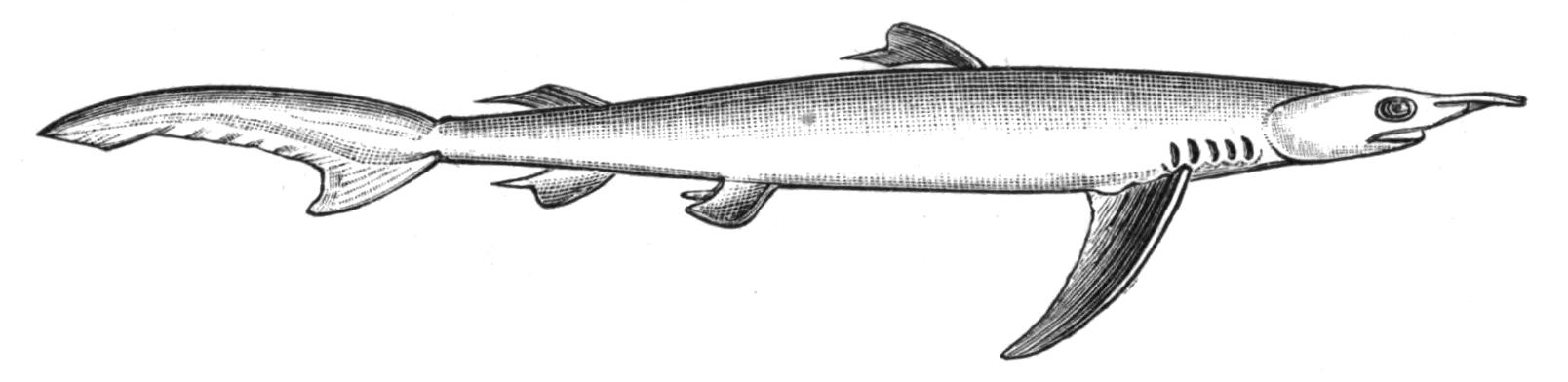
Fig. 255.—The Blue Shark (Carcharias glaucus). (From Müller and Henle.)
Species of Carcharias are found in nearly all tropical and subtropical seas. The genus is a somewhat comprehensive one, and groups of its species have been distinguished as sub-genera under the names of Prionodon, Hypoprion, Scoliodon, Aprionodon,[531] etc. One of the most widely distributed of the thirty to forty species is the Blue Shark, C. (Prionodon) glaucus (Fig. 255), of the Atlantic and Pacific Oceans, which may grow to a length of 25 feet, although the young forms not infrequently captured in British waters do not exceed 6 to 8 feet. It is a slender, swift, pelagic Shark, of a slaty-blue colour above and white underneath, and a voracious hunter of other Fishes. C. nicaraguensis, a Shark about 7 feet long, is confined to Lake Nicaragua and its outlet the Rio San Juan, and is one of the very rare strictly freshwater Sharks. Galeocerdo is a large Shark found in temperate and tropical waters, but one species, G. arcticus, is confined to Arctic seas. The variegated G. tigrinus, or West Indian Tiger-Shark, is said to reach a length of 15 to 20 feet. The genus Galeus includes the small Sharks commonly known as "Topes," which are common in nearly all tropical and temperate seas. The British species, G. canis, which ranges from 4 to 6 feet in length, is a bottom-feeding Fish, preying on Molluscs, Crustacea, Star-Fish, and small Fishes. The various species of Mustelus, or "Hounds," resemble the Topes in their habits and distribution. Living principally on Molluscs and Crustaceans, the dentition has lost the trenchant, unicuspidate type characteristic of most other Carchariidae, and is adapted for crushing and grinding, the teeth being flat, without cusps, and arranged in pavement-like rows. Two species, M. vulgaris and M. laevis, are abundant on the coasts of Europe and the British Isles. Scylliogaleus, which combines the general characters of Mustelus with nostrils similar to those of a Scyllium, is known only from a single specimen from the coast of Natal.[532]
The Carchariidae are comparatively modern Sharks. No undoubted remains are known earlier than the Eocene, in which, as in the succeeding Miocene and Pliocene deposits, they are represented principally by their characteristic teeth. The extinct fossil genera are few in number, and so far as their dentition is concerned they differ but little from their living allies.
Fam. 9. Sphyrnidae (Hammer-head Sharks).—In their general characters the Hammer-head Sharks agree with the Carchariidae. They are distinguished, however, by the remarkable shape of the head, which is prolonged into two conspicuous lateral lobes, supported internally by corresponding cartilaginous outgrowths from the post-orbital and the lateral ethmoidal or nasal regions of the skull, with the eyes at their distal extremities, and the nostrils in relation with their anterior margins. One genus and five species.
The Sphyrnidae are denizens of nearly all tropical and subtropical seas. Sphyrna (Zygaena) tudes occurs in the Mediterranean, and S. zygaena is a very rare visitant to the British coasts. A specimen over 13 feet in length was captured at Ilfracombe in 1865, and other examples have been taken off Banffshire, at Newlyn in Cornwall, at Yarmouth, and in Carmarthen Bay.[533] The shape of the head differs in different species, and in young forms the peculiarities of the adult are less marked. In the Bonnet Shark (S. tiburo) (Fig. 256, A), the head is crescentic or kidney-shaped, with prominent postero-lateral angles, and between this type of head and the more pronounced "hammer" of S. zygaena (Fig. 256, B) an almost perfect gradation is supplied by other species. The Hammer-heads are voracious Sharks, usually living in deep water, and they may grow to a length of 15 feet. As many as thirty-seven embryos have been taken from the oviducts of a female nearly 11 feet in length.[534]
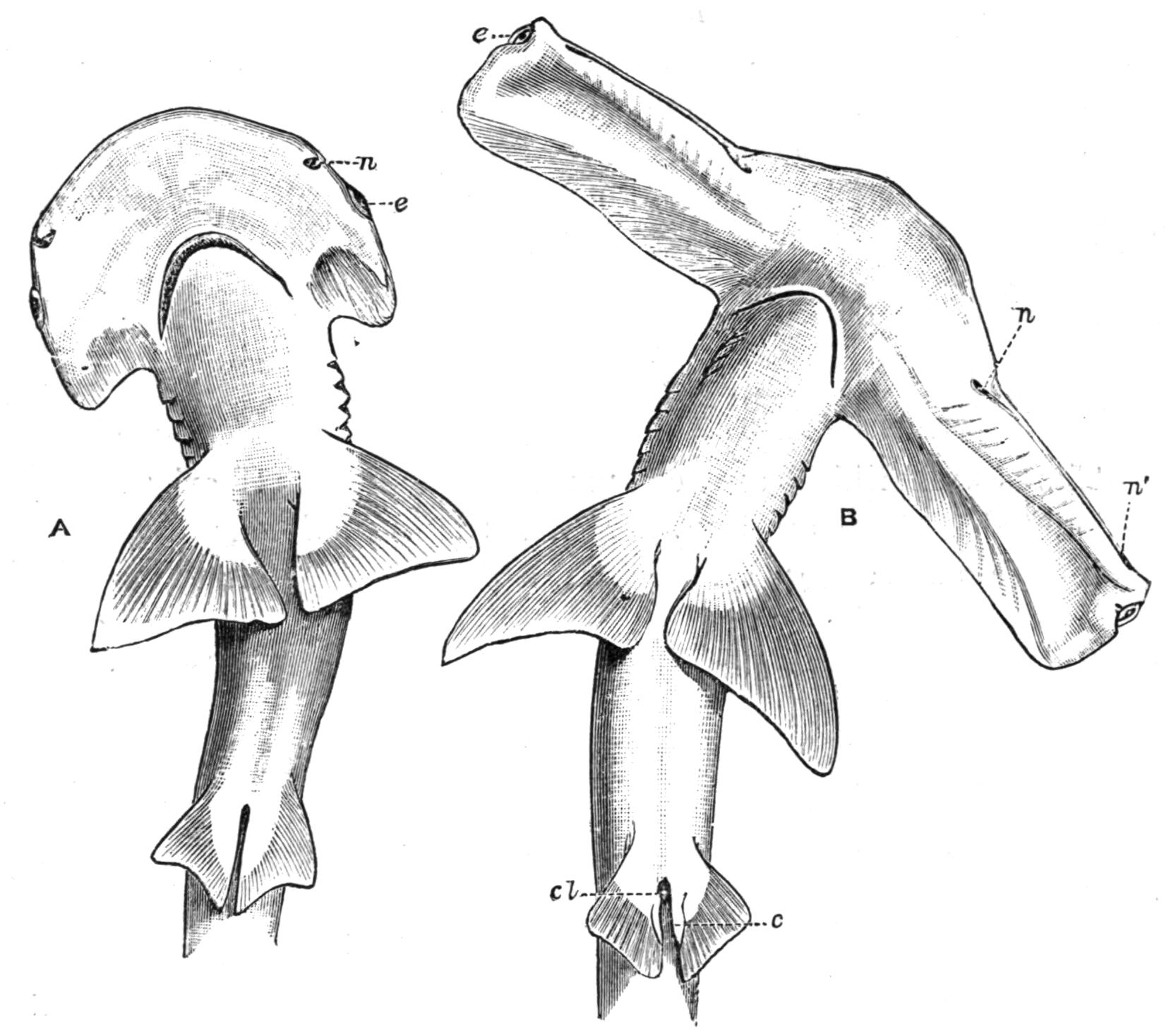
Fig. 256.—Ventral view of the head and trunk (A) of a young Bonnet Shark (Sphyrna tiburo), and (B) of a young male Hammer-head (S. zygaena). c, Clasper; cl, cloacal aperture; e, eye; n, nostril; n′, nasal groove.
Teeth assigned with more or less probability to Sphyrna are found in the Miocene of Europe and North America.
Fam. 10. Lamnidae (Porbeagle Sharks).—Large, stout-bodied Sharks with two dorsal fins, the first just behind the pectoral fins, the second, which is small, opposite the small anal fin; both without spines. Tail with a prominent lateral keel on each side. Nictitating membranes absent. Spiracles minute or wanting. Branchial clefts very wide. No oro-nasal grooves. Vertebrae asterospondylic. When fully developed the teeth are solid.
In the genus Lamna, which includes the Porbeagle Sharks, the teeth are large, each consisting of a long narrow central cusp, usually with smaller cusps at the base. The common Porbeagle (L. cornubica), a fierce pelagic Shark, which may reach a length of 10 feet, frequents the North Atlantic and the North Pacific (Fig. 257). It has often been captured off the coasts of Great Britain and Ireland in Mackerel or Salmon nets, or by lines laid for food Fishes. An allied genus, Isurus, is represented by species on the Atlantic coast of North America, in the Mediterranean and the neighbouring parts of the Atlantic, and also in Asiatic seas. Carcharodon rondeletii[535] is a pelagic Shark with large, triangular, finely-serrated teeth, without basal cusps, and is found in all tropical and subtropical seas from the Mediterranean to Australia and New Zealand. It is one of the largest and most formidable of Sharks, and it is said to grow to a length of 40 feet. Nothing is known of its breeding habits. Odontaspis, which has minute pore-like spiracles, but no lateral caudal keels, is a Shark of moderate size, chiefly inhabiting the Atlantic, but found also in the Mediterranean and the Southern Pacific. Its teeth are long and awl-like, with small basal cusps.
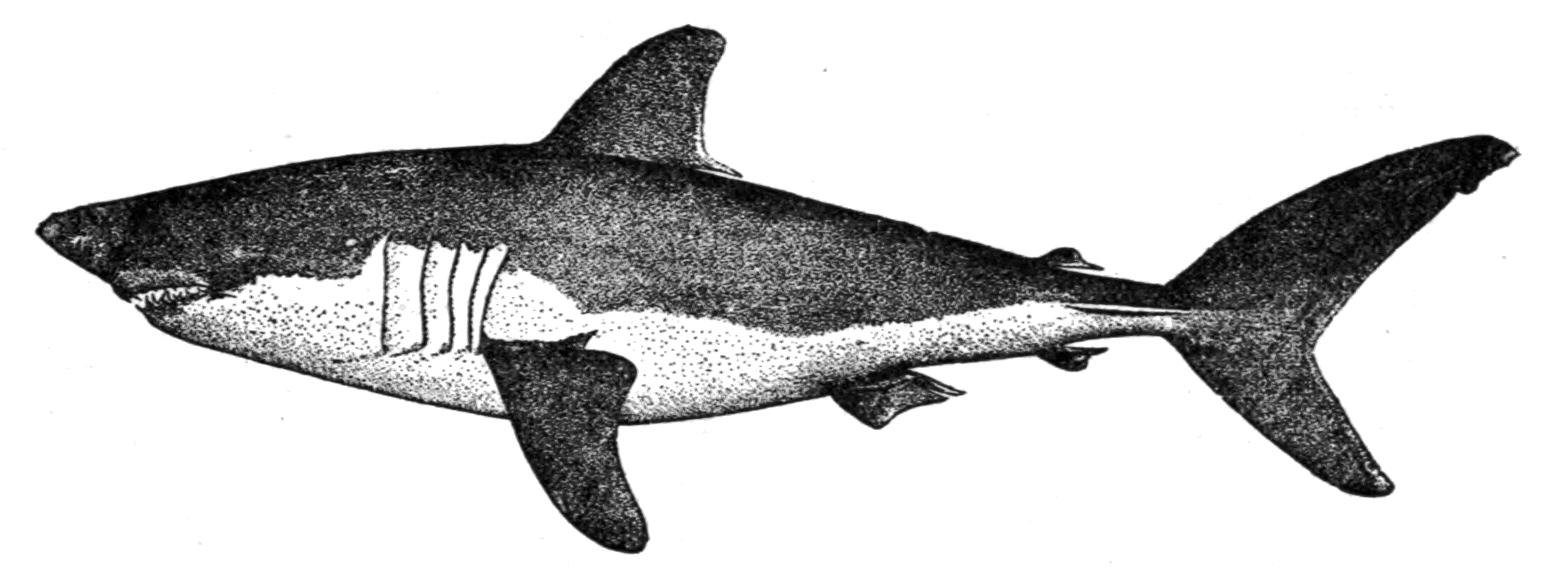
Fig. 257.—The Common Porbeagle (Lamna cornubica). (From Parker and Haswell, after Bashford Dean.)
The Thresher or Fox Shark (Alopecias vulpes) is remarkable for the extraordinary length of the upper lobe of the caudal fin, which is as long as the rest of the body (Fig. 258). Its teeth are of moderate size, triangular in shape, and without serrations. The "Thresher" has a wide distribution, being abundant in the Atlantic and Pacific Oceans, besides being the commonest of the larger Sharks frequenting the British coasts. It grows to a length of 15 feet, of which the tail forms at least one-half. Quite inoffensive to man, the Thresher feeds on the shoals of smaller Teleosts, such as Pilchards, Herrings, and Sprats. When feeding it swims in gradually diminishing circles round the shoal, splashing the water with its long tail, and keeping its victims so crowded together that they become an easy prey. A remarkable Lamnoid Shark (Mitsukurina owstoni),[536] which has the snout produced into a "long, flat, flexible, leaf-like blade," somewhat resembling that of Polyodon, but narrower and more pointed, and has protractile jaws and large spiracles, is found in deep water near Yokohama, and may prove to be generically identical with the Cretaceous Shark Scapanorhynchus.[537]
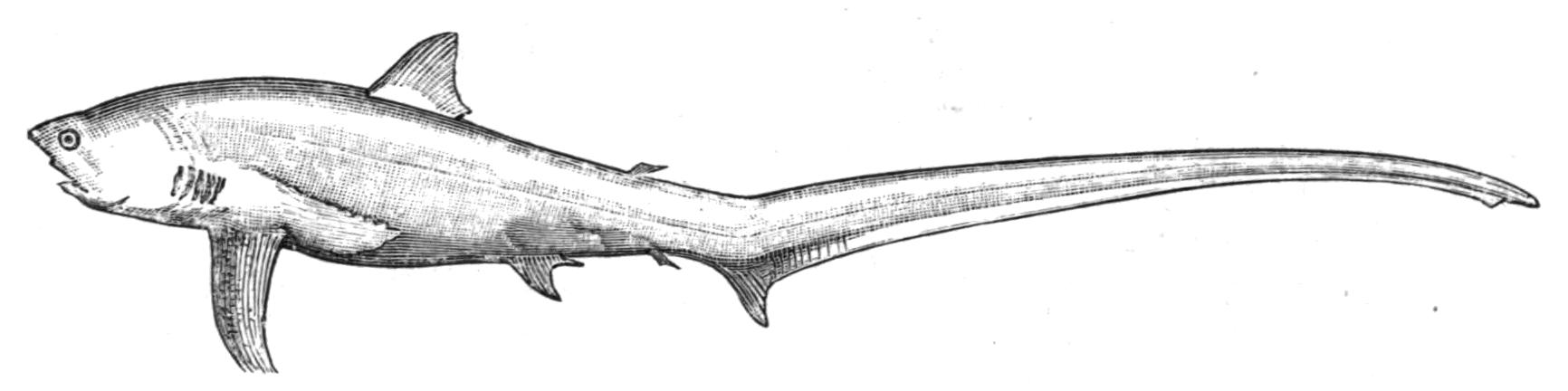
Fig. 258.—The Thresher Shark (Alopecias vulpes). (From Jordan and Evermann.)
Lamnoid Sharks are not certainly known to have existed until the Upper Cretaceous formations, in which, as well as in different Tertiary deposits, teeth indistinguishable from those of the existing genera Lamna, Odontaspis, and Carcharodon are found. The interesting genus Carcharodon has one extinct species in the Cretaceous and several others distributed in Tertiary formations in nearly every part of the world. The teeth of some of the Tertiary species measure 5 inches along the margin and 4 inches across the base, and it is evident that they belonged to Sharks so gigantic as completely to dwarf the existing species. That these giant Lamnidae have only recently become extinct is proved by the fact that similar teeth have been dredged from the bottom of the Pacific. Teeth and detached vertebrae from various Tertiary deposits have been referred to species of Alopecias. Entire Fishes, with an elongated rostrum and an extensive anal fin, from the Cretaceous of Mount Lebanon, have been assigned to an extinct genus, Scapanorhynchus.
Fam. 11. Cetorhinidae (Basking Sharks).—Two dorsal fins, without spines, the anterior midway between the pectoral and pelvic fins. Tail without lateral keels. Nictitating membranes absent. Spiracles small, situated just above the angles of the mouth. Branchial clefts wide and of great vertical extent, extending from the dorsal to the ventral surface. Teeth small, very numerous, conical in shape, without serrations. Claspers of the male provided with horn-like denticles.
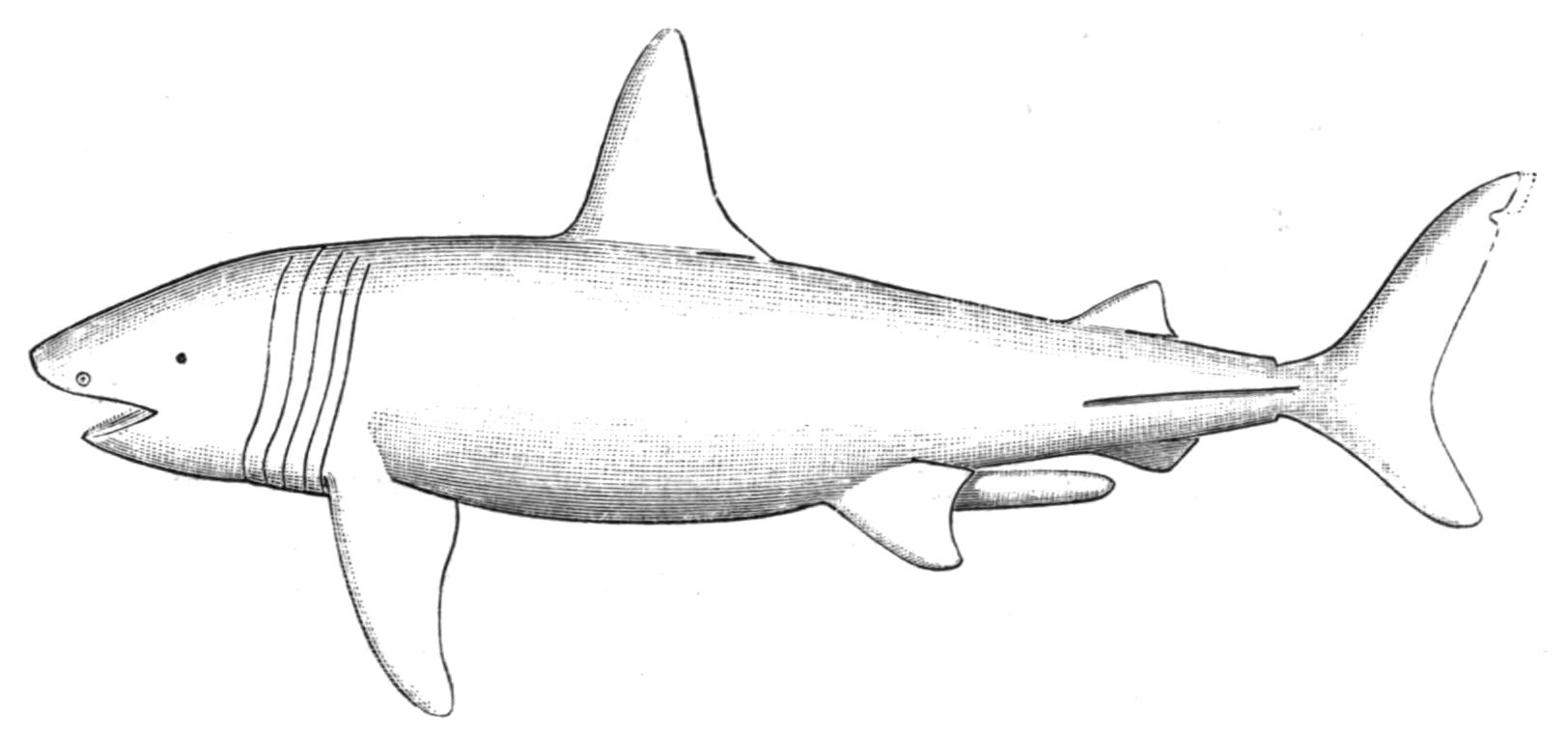
Fig. 259.—The Basking Shark (Cetorhinus (Selache) maximus). (From Goode and Bean.)
The single species included in this family, the Basking Shark, (Cetorhinus (Selache) maximus), is one of the largest of living Fishes, reaching a length of 40 feet (Fig. 259). It is a pelagic Shark, inhabiting the Arctic seas, but wandering as far south on opposite sides of the Atlantic as the Mediterranean, the coasts of Portugal and Virginia, and in the Pacific to the Californian coast. Although generally described as a northern form, Cetorhinus is known to occur in Australian waters.[538] It is fairly common off the coasts of Scotland, and it has been seen or captured at various points on the western coast of Ireland, and the eastern and southern coasts of England. The Fish is gregarious in its habits, often swimming in shoals near the surface. The name "Basking Shark" has been suggested by its habit of lying motionless on the surface in warm or calm weather, as if basking in the sun, with its dorsal fin protruding from the water. Unless attacked, this Shark is quiet and inoffensive. It derives its food-supply from small pelagic Fishes, and also from marine Invertebrates, which are strained from the water by the fringes of long, slender gill-rakers with which the branchial arches are provided. At one time harpooned and caught off the Irish, Scotch, and Norwegian coasts for the sake of the oil obtained from its liver, the Fish is now of little economic importance. Nothing is known of its mode of reproduction.
Extinct species of Cetorhinus have been founded on detached vertebrae and isolated teeth from deposits of Pliocene age in Belgium and Italy, and possibly from still earlier Tertiary formations. Dermal spines similar to those found on the claspers of the males in the existing species occur in the Antwerp Crag, and in the Red Crag of Suffolk.
Fam. 12. Rhinodontidae.—Two dorsal fins, without spines, the anterior a little in front of the pelvic fins, the second opposite the anal. Tail with lateral keels and a pit at its root. Spiracles small. Nictitating membranes absent. Mouth and nostrils nearly terminal. Teeth very minute, numerous, and conical in shape.
One genus, Rhinodon, with one or two species, is known. These Sharks are very widely distributed, specimens having been seen or captured in the neighbourhood of Ceylon, at the Seychelles, the Cape of Good Hope, Callao on the Peruvian coast, in the Gulf of California, and off the coast of Florida. Rhinodon is probably the largest known Shark. It is stated to exceed 50 feet in length, but to be quite harmless. Scarcely anything is known of its habits, but the small size of the teeth, and the length of the gill-rakers, which resemble those of the Basking Shark, suggest a similar kind of food.
Fam. 13. Spinacidae.—Two dorsal fins, the first in advance of the pelvic fins. Anal fin absent. Nictitating membrane absent. Spiracles rather large. Vertebrae cyclospondylic. Teeth variously modified in different genera.
The more typical representatives of this family are the Spiny Dog-Fishes, which are distinguished by the presence of a strong spine in front of each dorsal fin. They are more abundant in temperate regions than in the intervening tropics. The more important genera are Acanthias, Centrina, Centrophorus, Spinax, and Centroscyllium. Acanthias vulgaris, the Picked or Piked Dog-Fish, is a gregarious, voracious Shark, about 3 to 4 feet in length, and is frequently seen in huge shoals all round the British coasts, especially during the summer months. It is very destructive to food Fishes, and its ravages result in serious loss to fishermen. Acanthias is viviparous. Centrina salviani is a much smaller Shark, which frequents the Mediterranean and the Bay of Biscay; on rare occasions it has been taken off the southern coast of England. Centrophorus occurs in deep water in the Mediterranean and adjacent portions of the Atlantic, and off the coasts of Japan. Centroscyllium is found on opposite sides of the North Atlantic (Greenland and Massachusetts), and in the opposite hemisphere at the Falkland Isles. A deep-water form, Paracentroscyllium, has been obtained in the Bay of Bengal at depths from 285 to 405 fathoms.[539]
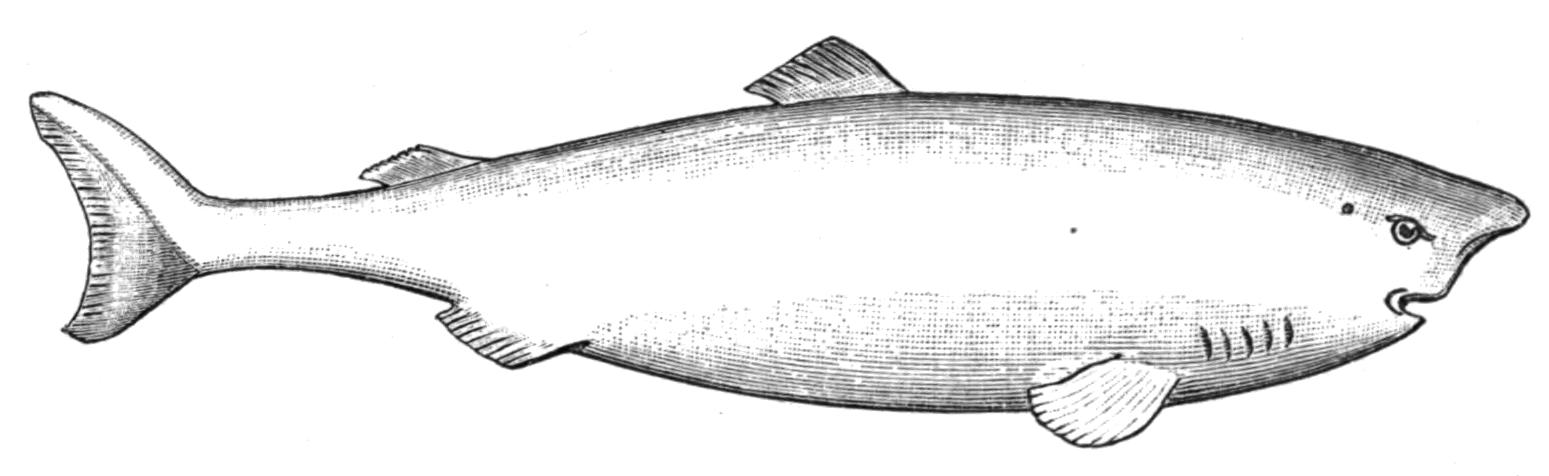
Fig. 260.—The Greenland Shark (Laemargus borealis). (From Goode and Bean.)
Three remaining genera (Scymnus, Laemargus, and Echinorhinus) differ from the preceding in the absence of dorsal spines.
Scymnus lichia is common in the Mediterranean and the neighbouring parts of the Atlantic. The Greenland Shark (Laemargus borealis) (Fig. 260) is an inhabitant of the Arctic regions, wandering as far southwards on opposite sides of the Atlantic as the French coast and Cape Cod. It is a huge, clumsy shark, reaching a length of 26 feet. Numerous instances are recorded of its capture off the coasts of Great Britain, especially in northern waters. The Greenland Shark is said to be a determined foe to the Right Whale, which it attacks, biting pieces out of its body. Scymnus is viviparous, Laemargus oviparous, and the latter is unique among Sharks in producing eggs devoid of a horny shell, which are deposited on the sea-bottom. Echinorhinus has dermal denticles in the form of relatively large rounded tubercles, each surmounted by a tuft of fine spines. One species only is known, E. spinosus, a large Shark attaining a length of 10 feet, and frequenting deep water off the Atlantic coasts of Europe and Africa from the North Sea to the Cape of Good Hope. A single specimen has been taken at Cape Cod on the eastern coast of the United States, and another off Dunedin, New Zealand. The capture of thirty examples in British waters since 1828 has been recorded,[540] the largest a female 9 feet in length.
Most of the existing genera of Spinacidae are represented by teeth or detached spines in the later Tertiary deposits, but none are certainly known to occur earlier than the Pliocene.
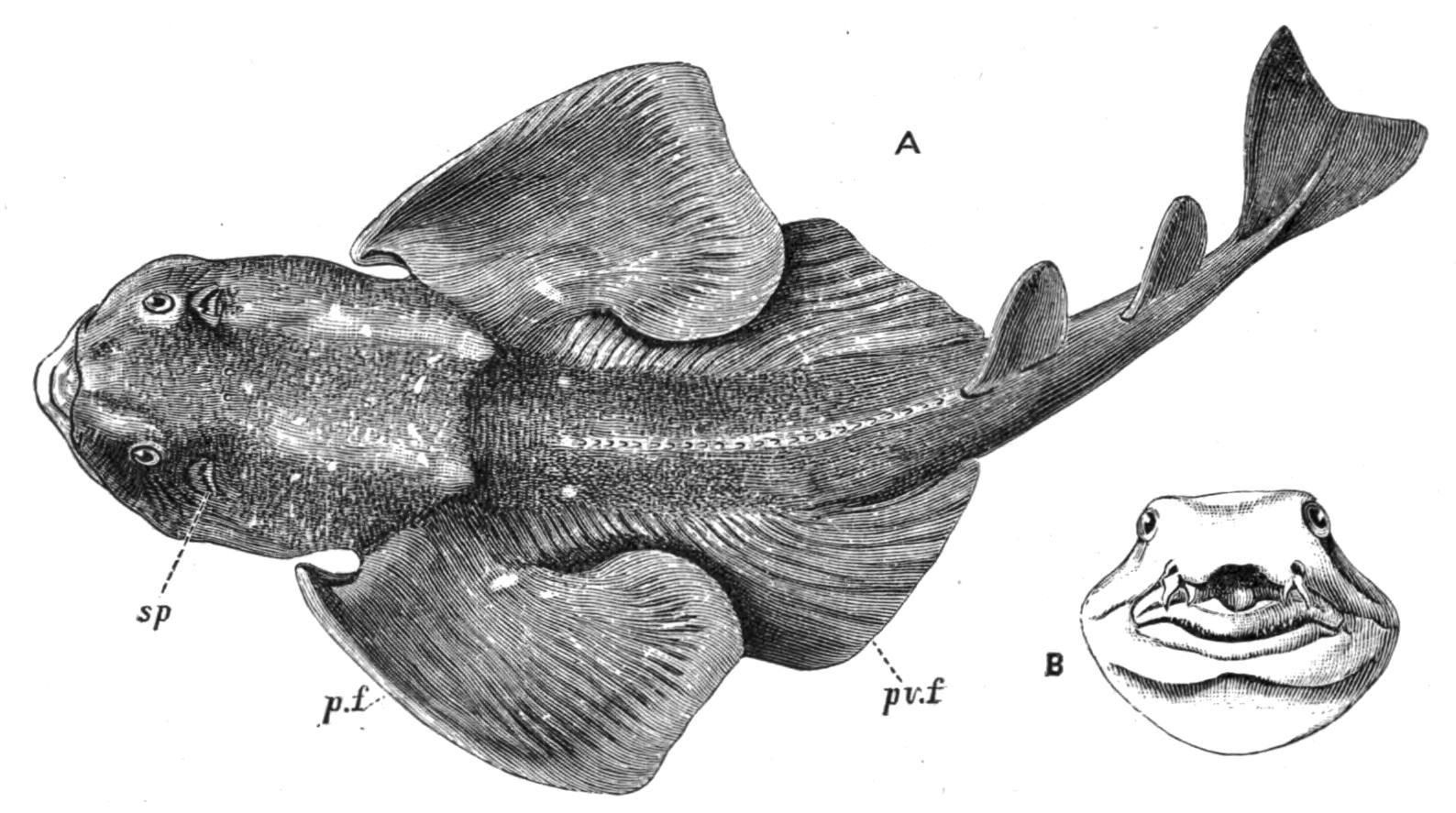
Fig. 261.—The Angel-Shark (Rhina squatina). A, dorsal view; B, view of the mouth and nasal barbels. p.f, Pectoral fin; pv.f, pelvic fin; sp, spiracle.
Fam. 14. Rhinidae (Angel-Sharks).—Ray-like Sharks with a flattened head and body, and nearly terminal mouth and nostrils. Pectoral fins very large, horizontally expanded, but constricted at the base and not adherent to the sides of the head or trunk. Two dorsal fins, both small, without spines, and situated on the tail behind the pelvic fins. Anal fin absent. Spiracles large and crescentic. Vertebrae tectospondylic. Teeth conical and pointed. A single species only is known.
Rhina squatina, the Angel-Shark or Monk-Fish (Fig. 261), is intermediate between the ordinary Sharks and the Skates and Rays, both in external appearance and internal structure, but is more Ray-like than Shark-like in its habits. Within the temperate and tropical regions of both hemispheres it is almost cosmopolitan in its distribution, frequenting the coasts of Europe, including the British Isles, the Atlantic and Pacific coasts of North America, and the shores of South Australia and Japan. The Angel-Shark is viviparous, producing about twenty young at a time. Not rarely it grows to a length of 5 feet.
The family ranges from the Upper Jurassic to the present time. Species of Rhina are represented by more or less complete skeletons in the Lithographic Stone of Bavaria, and in the Upper Cretaceous of Westphalia and Mount Lebanon, and by teeth and vertebrae in the English Chalk, as well as in different European Tertiary formations.
Fam. 15. Pristiophoridae.—Prenasal portion of the head and cranium produced into a long flattened rostrum, furnished with a pair of long tentacles on its under surface, and, as in Saw-Fishes, with a series of large, tooth-like, dermal denticles, of equal or unequal size, along each of its lateral margins. Two dorsal fins, without spines, the first in front of the pelvics. No anal fin. Pectoral fins large, distinct from the head and trunk, with a contracted base. Spiracles large and crescentic. Teeth small, with a conical cusp and a broad base.
These singular Sharks closely resemble the true Saw-Fishes (Pristidae), but they differ in the lateral position of their gill-clefts, the presence of rostral tentacles, and their smaller size. The few species known belong to the genus Pristiophorus, and are confined to the Australian and Japanese seas.
Pristiophorus is represented in the Upper Cretaceous of Mount Lebanon, and in the Miocene deposits.
Sub-Order 2. Batoidei.
Body generally discoidal or rhombic in shape, the axial portion being formed by the flattened head and trunk, and the lateral portions by the enormously expanded pectoral fins, which are usually confluent with the sides of the head. Tail slender, sharply marked off from the trunk, to which it usually appears as a mere appendage. Dorsal fins, when present, on the tail. Anal fin absent. Branchial clefts ventral in position. Spiracles large, usually crescentic. Vertebrae tectospondylic.
For the most part the Batoidei are sluggish ground-Fishes, slowly moving over the sea-bottom by the gentle undulatory vibrations of the margins of their huge pectoral fins, the tail being of little use in locomotion. They feed principally on Crustacea, Molluscs, and the smaller Teleosts. As with other Fishes of similar habits, the coloration of the dorsal surface harmonises with that of the sea-bottom, while the ventral surface is either deficient in pigment or white. The majority of them are coast Fishes, rarely descending to a greater depth than 500 fathoms, but some are pelagic. The Batoidei are a relatively modern race, first appearing towards the middle of the Mesozoic period, and evidently representing an assemblage of specialised Elasmobranchs adapted for a bottom-living existence. As remarked by Smith Woodward, the three families, Rhinobatidae, Raiidae, and Trygonidae, are not so clearly differentiated before the close of the Cretaceous period as they subsequently become.[541]
The first two families, the Pristidae and the Rhinobatidae, are interesting connecting-links between such Selachii as the Rhinidae and the Pristiophoridae and the more specialised Batoidei like the Skates, Rays, and Trygons. While they agree with the latter in the ventral position of the gill-clefts, the absence of an anal fin, and the caudal position of the dorsal fins, the body still retains an elongated and somewhat Shark-like shape, and shades off imperceptibly into a powerful swimming tail, and in the Pristidae at all events the pectoral fins are of moderate size and free from any fusion with the sides of the head. It must be admitted that the institution of the two sub-orders introduces a somewhat arbitrary distinction between certain families of Plagiostomes which has little to recommend it except custom and some measure of convenience. The two series of Fishes shade almost imperceptibly into one another, and the importance of the ventral position of the gill-clefts has probably been overestimated. Primitively, the gill-clefts are lateral, and lie wholly in front of the pectoral fins, a position which is retained in many Selachii. In others, however, the hinder gill-clefts tend to extend backwards above the base of the pectoral fins, while in some the clefts assume a more ventral position, and extend beneath the pectoral fin; hence, even within the limits of the Selachii the position of the gill-clefts varies to the extent that these structures may be lateral, or they may tend to become either dorsal or ventral.[542] On the score of convenience the customary usage is adopted here.
Fam. 1. Pristidae (True Saw-Fishes).—Although somewhat depressed, the body is still elongate and Shark-like, with a well-developed tail terminating in a heterocercal caudal fin. Dorsal fins large, the first opposite the pelvic fins. Head and skull prolonged into a long flattened rostrum, the lateral margins of which are armed with a series of strong tooth-like denticles, firmly implanted in sockets in the calcified rostral cartilage. No rostral tentacles. Teeth in the jaws minute and obtuse. One genus and about four or five species are known, all inhabitants of tropical and subtropical seas.
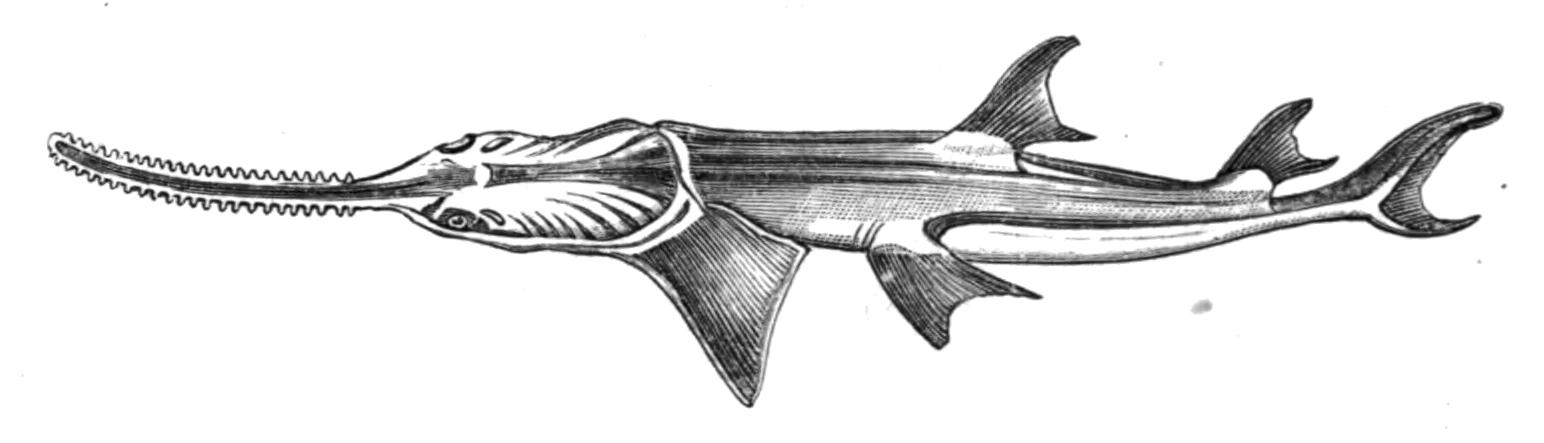
Fig. 262.—The Saw-Fish (Pristis antiquorum). (From Cuvier.)
Some of the true Saw-Fishes attain a considerable size, 10 to 20 feet or even longer, and "saws" 6 feet long and a foot in width across the base are not uncommon. By means of powerful lateral strokes of its saw the Fish is capable of lacerating the bodies of other animals and tearing off pieces of flesh, which it then devours. Indian species are known to ascend rivers beyond tidal influence, and an American species, ranging northwards to the West Indies and the Gulf of Mexico, where it is abundant, enters the lower Mississippi. P. antiquorum occurs in the Mediterranean and the Atlantic, but does not extend so far northward as the British coasts.
The earliest known representative of the family is the extinct genus Sclerorhynchus from the Upper Chalk of Mount Lebanon, in which the smaller size and more superficial position of the rostral "teeth," and the absence of sockets in the rostral cartilage, prove that the "teeth" approximate more to ordinary dermal spines in this genus than in any of the more recent Saw-Fishes. An extinct genus Propristis, from the Upper Eocene of Egypt, with non-socketed teeth, and species of the existing genus Pristis from the English Middle Eocene, are also known.
Fam. 2. Rhinobatidae.—Owing to the increased expansion of the pectoral fins and the forward growth of their anterior cutaneous portions along the sides of the head, as well as backwards along the trunk, the body now assumes a sub-rhombic shape, and approximates to the disc of the more typical Batoidei, but the tail with its dorsal and caudal fins is still strongly developed, and blends imperceptibly with the trunk in front. Teeth very obtuse. No electric organs. About five genera and twenty species are known, distributed in most tropical and subtropical seas.
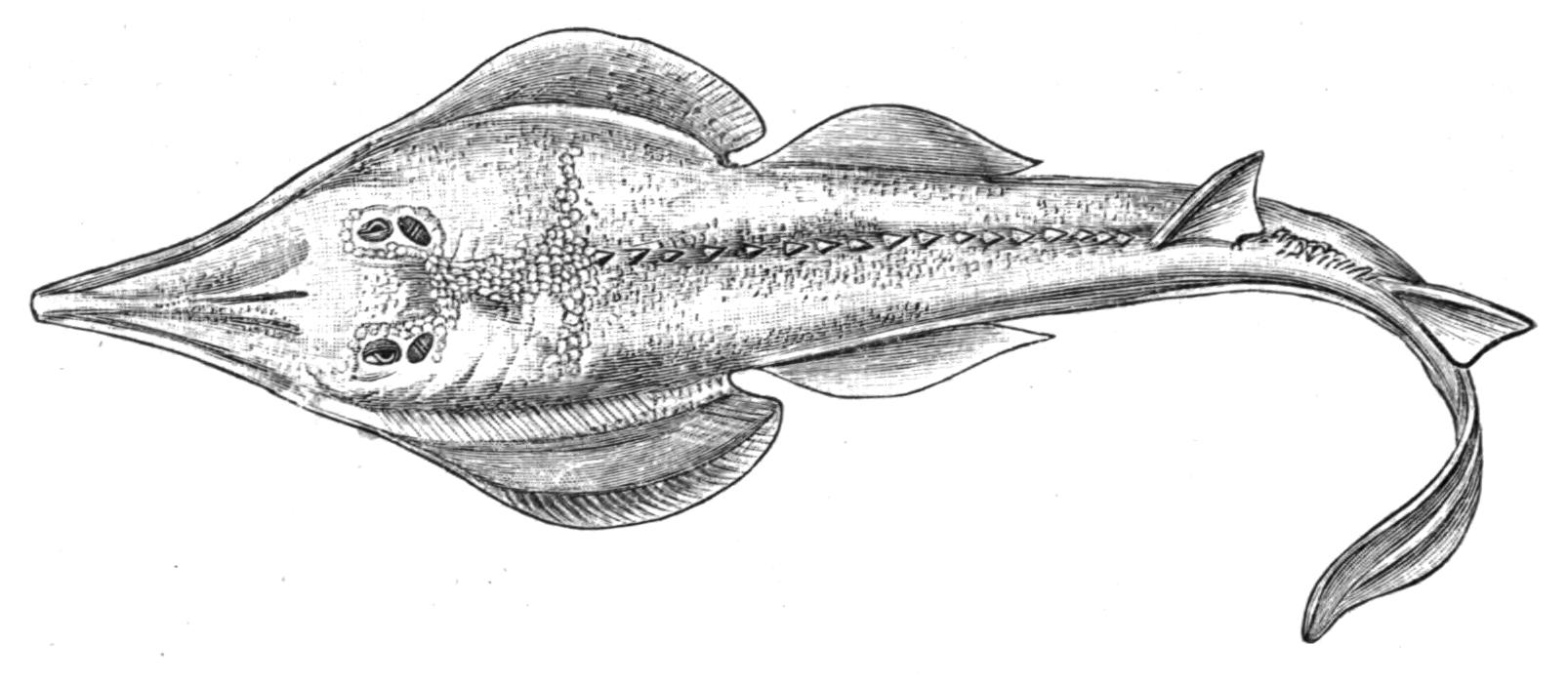
Fig. 263.—Rhinobatus granulatus. (From Müller and Henle.)
The cosmopolitan Rhinobatus is represented by species from the Mediterranean, the Red Sea, the west coast of Africa, the Indian Ocean, Australia and China, as well as from the Atlantic and Pacific coasts of America, and the Galapagos. Rhynchobatus ranges from the Red Sea through the Indian Ocean to China, Zapteryx occurs at San Diego and Panama, and Platyrhinoidis on the Californian coast. Trygonorhina is an Australian genus.
The family dates from the Upper Jurassic. Rhinobatus is represented by complete skeletons in the Lithographic Stone of Bavaria, the Upper Cretaceous of Mount Lebanon, and the Upper Eocene of Monte Bolca. Trygonorhina occurs in the Eocene.
Fam. 3. Raiidae (Skates or Rays).—The endoskeletally supported portions of the large pectoral fins extend along the lateral margins of the trunk and head from the pelvic fins to the snout, and are confluent therewith, forming the lateral portions of a large rhombic disc. The tail is slender, and sharply marked off from the trunk. Usually two small dorsal fins on the tail. Caudal fin small or absent. No serrated spine on the tail. Caudal electric organs are often present. Larger or smaller denticles or spines are generally present on the skin. Oviparous. Egg-cases four-horned, without tendrils. Four genera and from thirty to forty species. Found in all temperate seas, a few ranging into deep water.
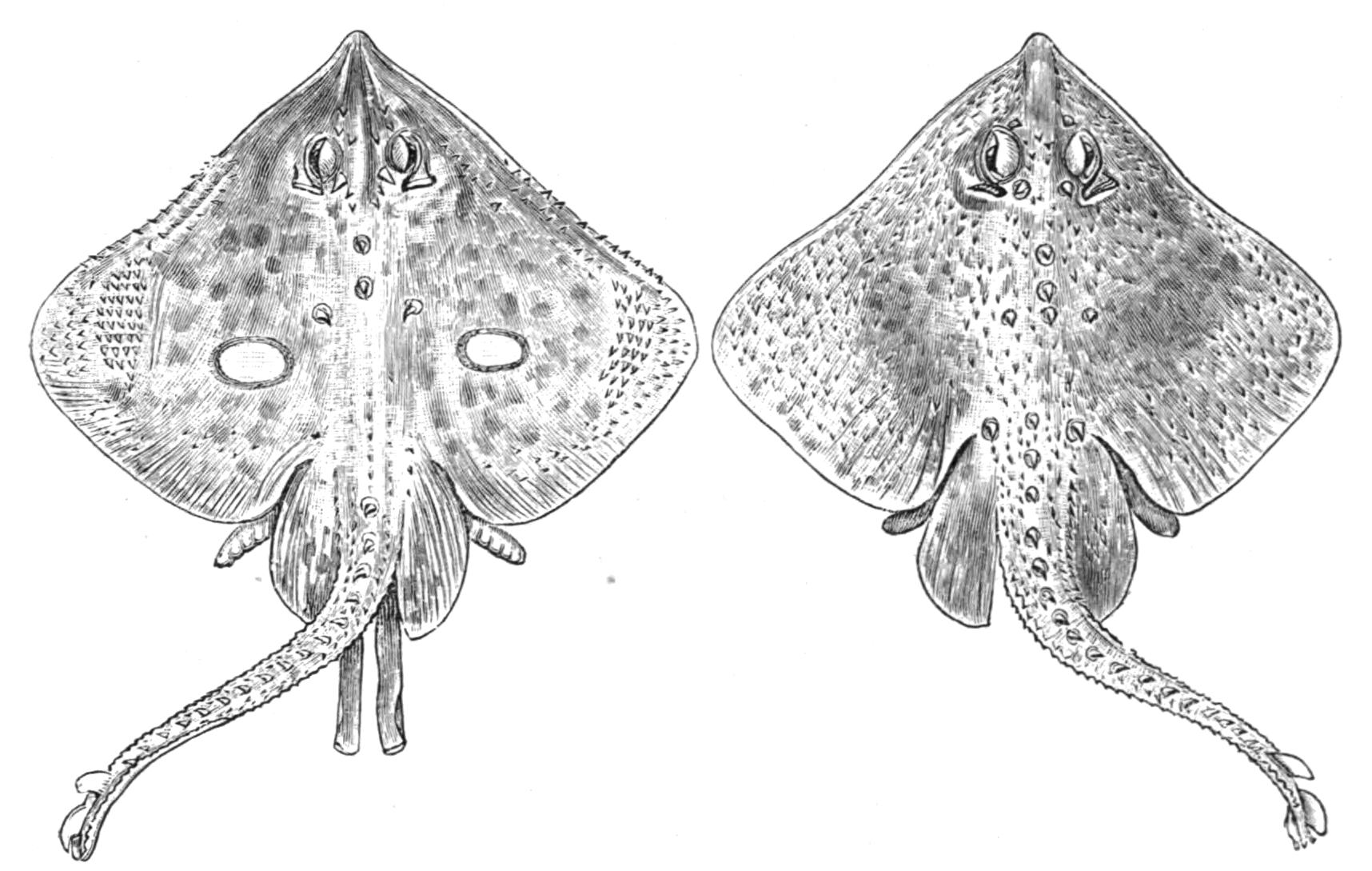
Fig. 264.—Raia murrayi, from Kerguelen Island. A, male; B, female. (From Günther.)
The great majority of the species belong to the genus Raia (Fig. 264), which chiefly inhabits temperate seas, but is more abundant in the northern than in the southern hemisphere, and approaches nearer to the Arctic and Antarctic regions than any other Batoidei. The colour of the upper surface of the body is closely assimilated to that of the sandy or gravelly bottom on which they live, and thus concealed, small Fishes, Crustaceans, and other organisms are lured unsuspectingly within the reach of the comparatively inactive and sluggish Ray. From the ventral position of the mouth the Ray cannot at once seize its prey, but the Fish darts over its victim and covers it with its body, and then readily devours it. The sexes are usually distinguished by secondary sexual characters, which take the form of differences in size and coloration, in the dentition, and also in the presence and position of patches or rows of specially modified dermal spines on the dorsal surface (Fig. 264). Some of the larger species reach a great size, the disc measuring 7 to 8 feet in width. A few species range into deep water. R. mamillidens, a uniformly jet-black species, has been obtained from a depth of 597 fathoms in the Bay of Bengal,[543] and R. abyssicola from 1588 fathoms off Queen Charlotte Islands, British Columbia.[544] The following are British species: the Thornback (R. clavata); the Spotted Ray (R. maculata); the Painted Ray (R. microcellata); the Starry Ray (R. radiata); the Cuckoo or Sandy Ray (R. circularis); the Skate (R. batis); the Flapper Skate (R. macrorhynchus); the White Skate (R. alba); the Long-nosed Skate (R. oxyrhynchus); and the Shagreen Ray (R. fullonica).[545] Most of the species are of some economic value as food Fishes. Psammobatis, with a circular disc, frequents the southern coasts of South America, and Platyrhina the coasts of India, China, and Japan.
The family ranges from the Upper Cretaceous, in which, as well as in different Tertiary deposits, it is represented by species of Raia. An extinct genus, Cyclobatis, with a circular or oval disc, occurs in the Upper Cretaceous of Mount Lebanon.
Fam. 4. Tamiobatidae.—The systematic position of the only representative of this family, Tamiobatis vetustus,[546] from the Devonian or Lower Carboniferous of Kentucky, is very uncertain, but in some respects this unique type seems to be intermediate between the modern Sharks and the Rays.
Fam. 5. Torpedinidae (Electric Rays).—A disc is formed as in the Raiidae, but it is sub-circular in shape rather than rhombic, and in the nature of its endoskeletal supports it is in some respects unique. Its semicircular anterior margin is supported in the centre by a branched prenasal rostrum, and laterally by the curiously branched preorbital cartilages, each of which radiates outwards and forwards from a common basal articulation with the lateral ethmoid regions of the skull. Tail relatively short and thick, with two dorsal fins, a caudal fin, and two lateral longitudinal folds. Skin smooth, without denticles. Mouth transverse and ventral. A characteristic quadrangular naso-frontal lobe, with a free hinder margin, which forms the anterior lip, is enclosed by the two nasal organs and the oro-nasal grooves leading from them to the corresponding angles of the mouth. A pair of large electric organs between the pectoral fins and the head. Seven genera and about fifteen species. Inhabitants of most warm seas.
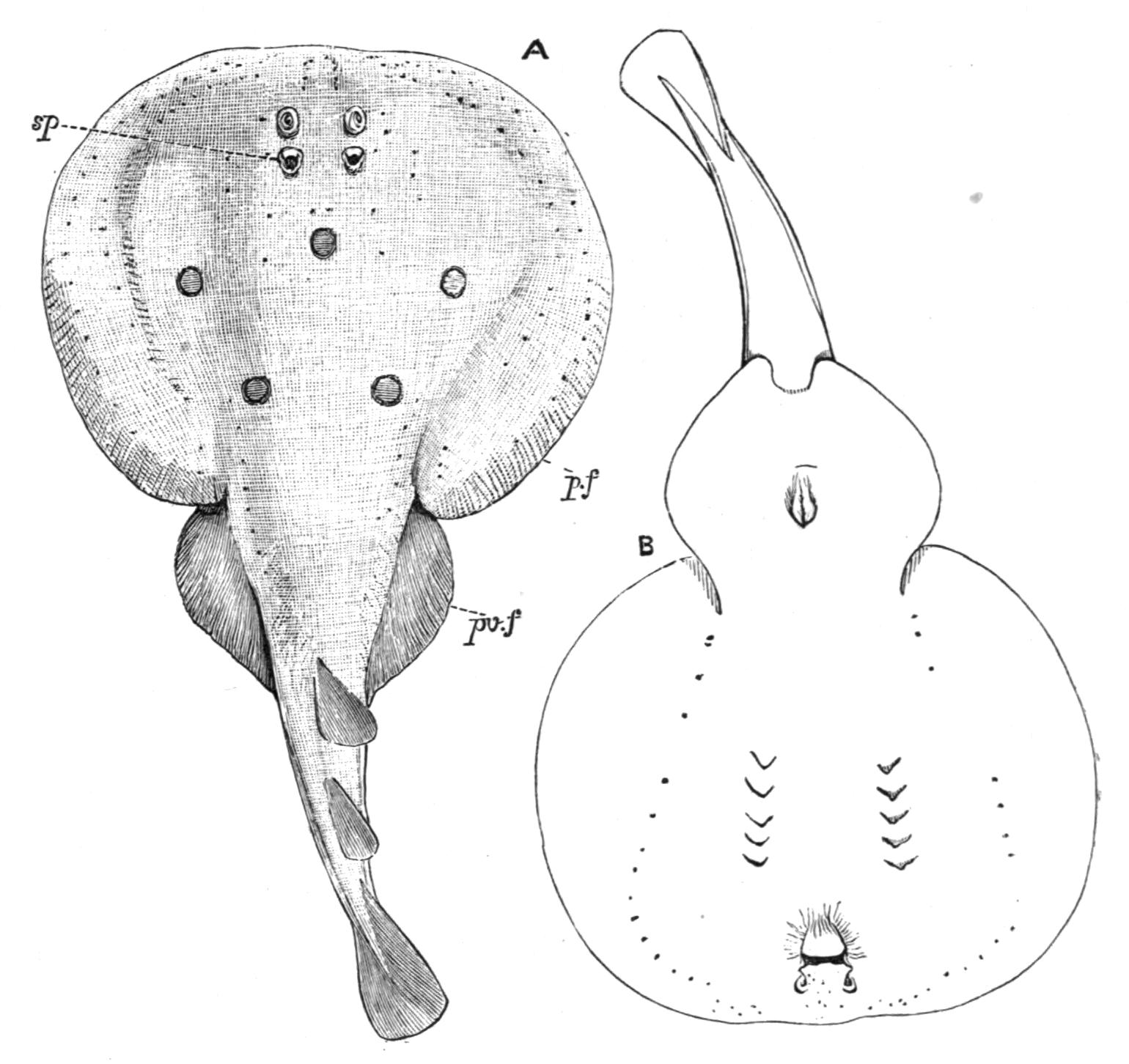
Fig. 265.—The Electric Ray (Torpedo ocellata). Dorsal (A) and ventral (B) views. p.f, Pectoral fin; pv.f, pelvic fin; sp, spiracle.
The well-known genus Torpedo (Fig. 265) is represented by species in the Mediterranean (T. marmorata, T. narce, T. hebetans), the Red Sea, and the Atlantic and Pacific Oceans. T. hebetans has been taken at several places in British waters. An American Torpedo (Tetronarce) is represented by species on the Atlantic and Pacific coasts. Narcine is a very widely distributed genus, species having been recorded from the East Indies, Tasmania, China, Japan, South Africa, and the Atlantic coasts of North and South America. Discopyge is an eastern Pacific genus (Peru and Panama). Hypnos frequents the Australian seas.
The family seems to be exclusively Tertiary, and its earliest fossil representatives are from the Upper Eocene of Monte Bolca.
Fam. 6. Trygonidae (Sting- or Whip-tailed Rays).—Disc sub-rhombic, broader than long. Pectoral fins confluent with the sides of the head, their preaxial endoskeletal radialia meeting in front of the skull along the lateral margins of a slender prenasal rostral cartilage. Tail usually whip-like, terminating in a small caudal fin, and generally armed with a sharp, serrated spine, which takes the place of a dorsal fin. Skin smooth or spinose. A rectangular naso-frontal flap in front of the mouth. About ten genera and fifty species. Found in nearly all tropical and subtropical seas.
Of the more important genera, Trygon (Dasyatis) is represented by numerous species in the tropical parts of the Atlantic and Pacific Oceans, including the Pacific coasts of North and South America. Two species occur in the Mediterranean, and one of them (T. pastinaca), ranges from the coasts of Norway and the British Isles through the Atlantic and Indian Oceans to Japan. Urogymnus frequents the Red Sea and the Indian Ocean. Urolophus includes a few species of small size, distributed along the Atlantic and Pacific coasts of Central and North America, and in Australian seas. Pteroplatea comprises rather large species, and is almost cosmopolitan in its distribution, being represented by species on the Atlantic and Pacific coasts of North and South America, in the Mediterranean and the Red Sea, the Indian Ocean, the Malay Archipelago, and on the coasts of China and Japan. The caudal spines, which may be 8 to 9 inches long in some of the larger species, are capable of inflicting very severe wounds, the danger of which is greatly increased by the apparently poisonous cutaneous mucus introduced into the wound. As the spines become lost they are replaced by others developed from behind. Some Trygonidae live in fresh waters. Trygon (Dasyatis) sabina frequents the streams and estuaries of Florida as well as on the adjacent coasts, and specimens have been obtained from Lake Munroe at some distance from salt water.[547] Ellipesurus and Paratrygon are freshwater genera, found in Colombia, Venezuela, and Guiana.
Fossil remains of undoubted Trygonidae appear to be confined to the Tertiary period.
Fam. 7. Myliobatidae (Eagle-Rays).—Disc much broader than long, and rhombic in shape. The huge pectoral fins are not continued to the extremity of the snout, but cease on the sides of the head, and reappear in front of the snout as a pair of distinct folds, the so-called cephalic fins. The head projects above the level of the disc, and consequently the eyes and spiracles are lateral in position. Tail long, slender, and whip-like, with a single dorsal fin near the root, and usually one or two serrated spines behind the fin. A rectangular naso-frontal fold is present. The dentition consists of flat, hexagonal, pavement-like crushing teeth arranged from before backward in arched rows in both jaws, and there is either a single median row of large teeth, with (e.g. Myliobatis) or without (e.g. Aëtobatis) the addition of several rows of much smaller teeth on each side, or there are numerous rows, the teeth then decreasing in size from the middle line laterally (e.g. Rhinoptera). Skin smooth. Sexes similar. Five genera and about twenty-seven species are known; all inhabitants of tropical and subtropical seas.
Myliobatis is represented in the Mediterranean by two species, and one of them, the almost cosmopolitan M. aquila (Fig. 266), has been taken at various points on the eastern and southern coasts of England. Aëtobatis is also widely distributed in tropical seas, but is unknown in European waters. Rhinoptera has one species in the Mediterranean, while others have been recorded from Brazil, the Atlantic and Pacific coasts of North America, and the East Indies. The two tropical genera Dicerobatis and Ceratoptera have the cephalic fins prolonged anteriorly into a pair of horn-like appendages, which are said to be used in conveying food to the mouth. The teeth are small, flat or tubercular, and are arranged in numerous rows. In Ceratoptera they are wanting in the upper jaw. The Eagle-Rays feed principally on Molluscs, the shells of which they crush with their large grinding-teeth. Some of them attain an enormous size, and are among the largest of Fishes. Ceratoptera vampyrus of the West Indies, for example, grows to a width of 20 feet, and an embryo extracted from the oviduct of a gravid female 15 feet wide, and from 3 to 4 feet in thickness, measured 5 feet across the disc and weighed twenty pounds.[548] This Fish is much dreaded by the divers engaged in the pearl fisheries near Panama, whom it is said to devour after enveloping them with its vast wings.[549]
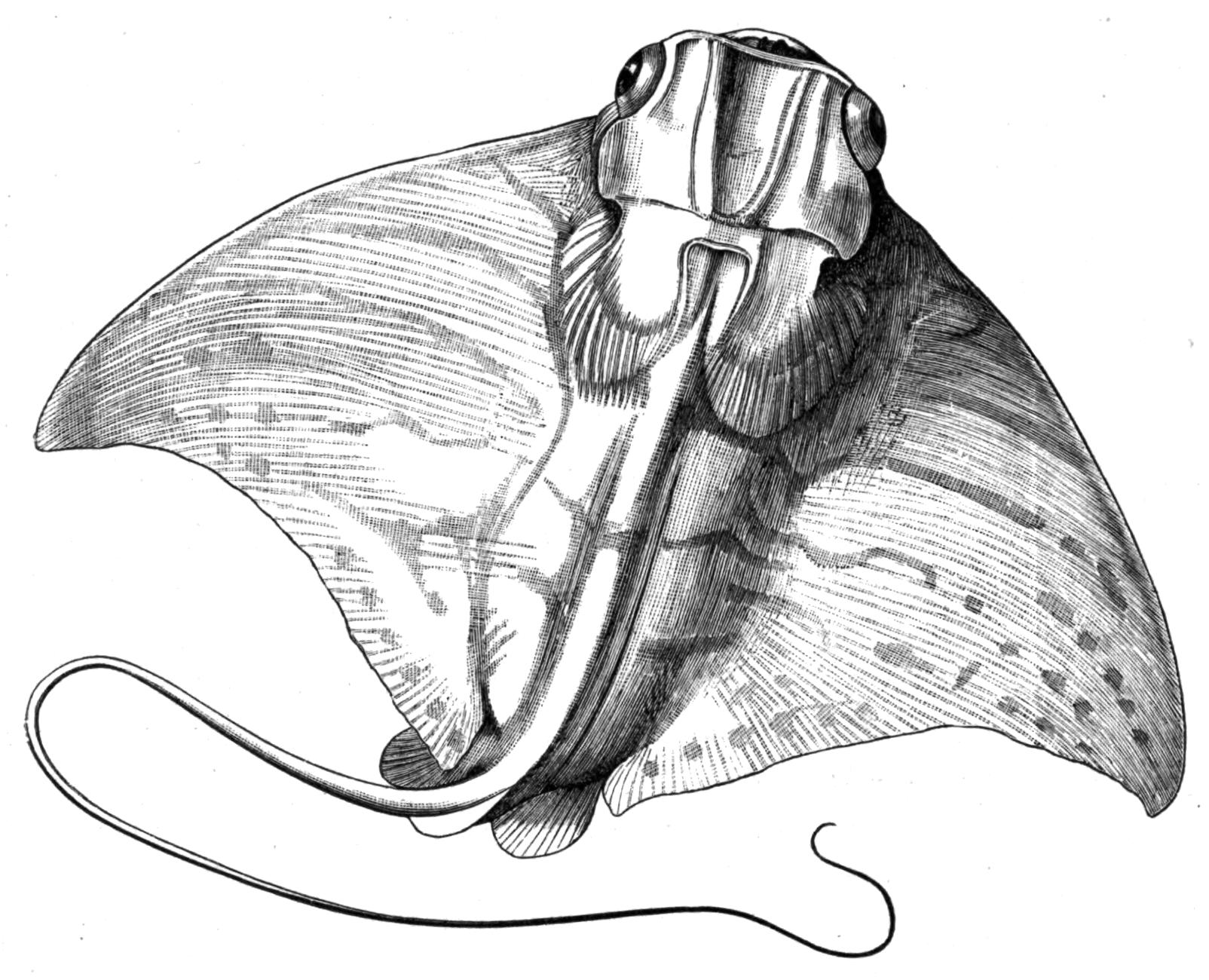
Fig. 266.—The Eagle-Ray, Myliobatis aquila.
The family is exclusively Tertiary, and with the exception of an extinct genus, Promyliobatis, from the Eocene of Monte Bolca, all the fossil species belong to the existing genera Myliobatis, Rhinoptera, and Aëtobatis.
Order V. Holocephali
The propriety of including the Holocephali in the sub-class Elasmobranchii is scarcely open to doubt. Like the Acanthodei they seem to represent a divergent and specialised offshoot from some primitive Elasmobranch type, and while retaining most of the essentially distinctive features of their ancestors, they have acquired, perhaps independently, certain characters distinctive of the Teleostomi, combined with others peculiar to themselves. In the few surviving genera agreement with the Elasmobranchs is to be seen in the wholly cartilaginous condition of the endoskeleton and the complete absence of cartilage- and membrane-bones. The vertebral column is acentrous and ribless, and the notochord is persistent; the dorsal arcualia include supradorsals and regularly alternating basi- and inter-dorsals. The limbs and limb-girdles are essentially Elasmobranch. Dermal denticles are present, either locally, or, as in some of the fossil types, in the form of a general investment. The brain and the reproductive organs agree more closely with the corresponding structures in the Elasmobranchs than with those of any other Fishes, and the agreement extends to the large size of the eggs and their enclosure in horny egg-cases. In both groups the nostrils are connected with the mouth by oro-nasal grooves; the hyoidean hemibranch is a true gill, and there is no air-bladder. The Holocephali also agree with the Elasmobranchs in retaining such primitive features as an intestinal spiral valve and a conus arteriosus. On the other hand, indications of specialisation in the Teleostome direction are to be noticed in the tendency to the concentration of the branchial arches towards and beneath the skull; the reduction of the interbranchial septa to the extent that they are no longer continuous with the skin, and the gill-filaments project beyond their outer margins; the presence of an operculum; the suppression of the spiracles; and the absence of a cloaca, the rectum opening externally by an anus in front of the urino-genital apertures. Among the more notable features evolved within the limits of the group mention may be made of the autostylic condition of the skull, probably an adaptive modification induced by the large size of the crushing dental plates which have taken the place of ordinary teeth; and the singular development of anterior and frontal "claspers."
The group is one of great antiquity. Apart from the isolated spines or "ichthyodorulites" common in Devonian and Carboniferous strata, some of which are probably the frontal or the fin-spines of ancient Holocephali, dental plates, closely resembling those of modern Chimaeroids and referred to the Ptychodontidae, are probably the earliest indications of the existence of the group. The Holocephali become more abundant in the Mesozoic period, but of the four families usually recognised, only one, the Chimaeridae, has survived.
Fam. 1. Ptyctodontidae.—This Palaeozoic family is known only by the dental plates, of which there is a single pair in each jaw, meeting at the symphysis. Ptyctodus[550] and Rhynchodus occur in the Devonian of either Russia or Germany, and in North America, and Palaeomylus only in the Devonian of North America.
Fam. 2. Squaloraiidae.—General shape of the body similar to the existing Harriotta. There is a long, depressed, preoral rostrum, and in the male the head carries a long slender frontal spine. Conical denticles are sparsely present on the head and body. No dorsal fin-spine. Dental plates similar to those of the living Chimaeroids, but thinner, the tritoral areas being less well defined. The only genus is Squaloraia from the English Lias, of which nearly complete skeletons are known.[551]
Fam. 3. Myriacanthidae.[552]—Body elongate, but less depressed. A dorsal fin-spine is present, and in the males a frontal spine. The dentition consists of a median incisor-like tooth at the symphysis of the lower jaw, in addition to dental plates similar to those of Squaloraia. There is a symmetrical series of tuberculated dermal plates on the lateral surfaces of the head, which probably represent groups of fused denticles. One species (Myriacanthus granulatus) has its rostrum terminating in a cutaneous flap, as in Callorhynchus. Myriacanthus, from the Lower Lias of Lyme Regis, and Chimaeropsis, from the Lithographic Stone of Bavaria, are the only two genera.
Fam. 4. Chimaeridae.—Body elongate and shark-like in form, but the head is compressed and the mouth is small. Pectoral and pelvic fins large, especially the former, which are somewhat ventrally placed. Two dorsal fins, the anterior over the pectorals, with a stout spine in front; and a small anal fin. Dermal denticles restricted to the claspers, and to localised areas on the dorsal surface in young forms. Dental plates large and thick, including a single pair in the lower jaw and two pairs, vomerine and palatine teeth, above, which combine trenchant edges with well-marked grinding areas. Three genera are known.
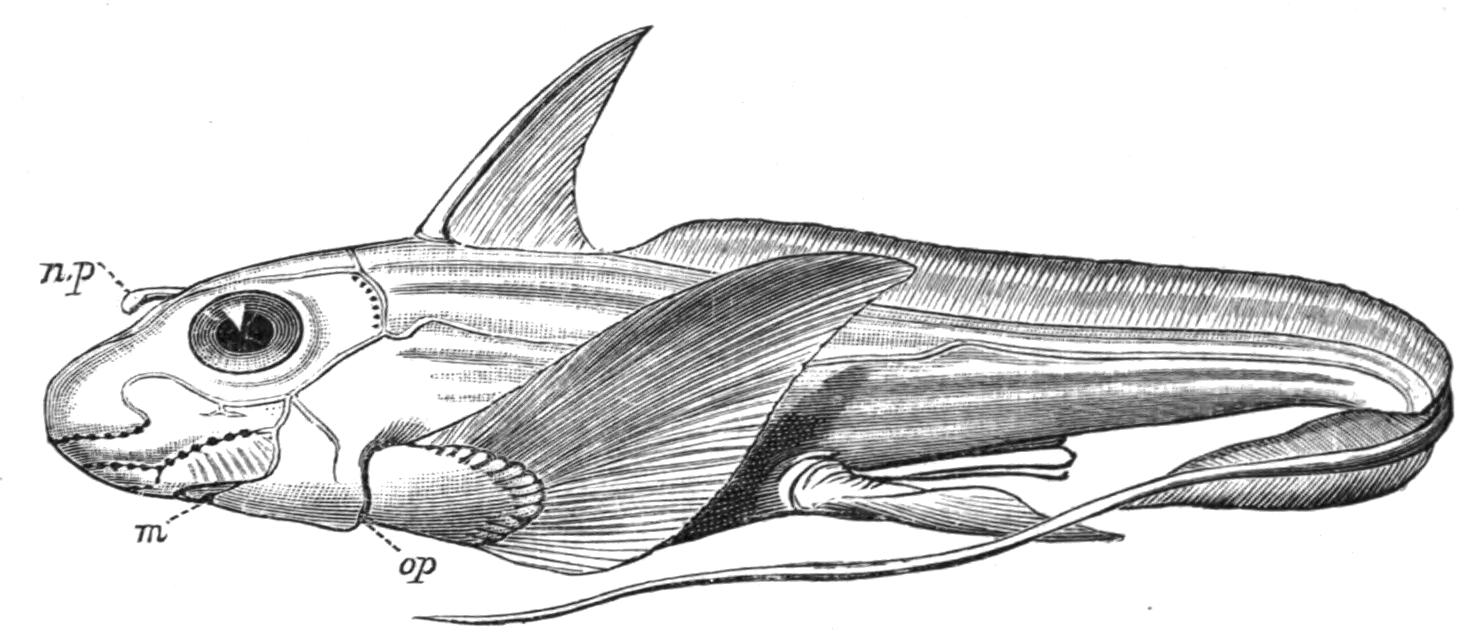
Fig. 267.—Chimaera monstrosa (male). m, Mouth; n.p, frontal clasper; op, operculum.
In Chimaera (Fig. 267) the mouth and nostrils are ventral, posterior to a bluntly conical snout. Head surmounted in the males by a club-shaped appendage armed with a pad of recurved denticles, the frontal clasper; there is also an anterior clasper armed with similar denticles and retractile into a shallow glandular pouch in front of each pelvic fin, in addition to the ordinary clasper behind the fin. The caudal fin consists of nearly equal-sized dorsal and ventral lobes, between which the slightly up-tilted caudal axis is prolonged as a long tapering filament: hence the tail appears to be nearly diphycercal. C. monstrosa occurs off the coasts of Europe from Norway to Portugal, including the Mediterranean, and also in the neighbourhood of the Azores, as far south as the Cape of Good Hope, and eastwards off the coast of Japan. It is the largest of the living species, reaching a length of 3 feet. C. affinis was first taken off the coast of Portugal, and subsequently on the North American side of the Atlantic, at depths ranging from 200 to 1200 fathoms. C. (Hydrolagus) colliei is restricted to the North Pacific, and is especially plentiful off South-eastern Alaska, and about the wharves at Esquimalt. Unlike most other Chimaeroids this species swims at the surface, and there is no evidence that it is a deep-sea form. In its breeding habits, and in the mode in which its eggs are fertilised, Chimaera probably resembles the oviparous Sharks and Dog-Fishes.
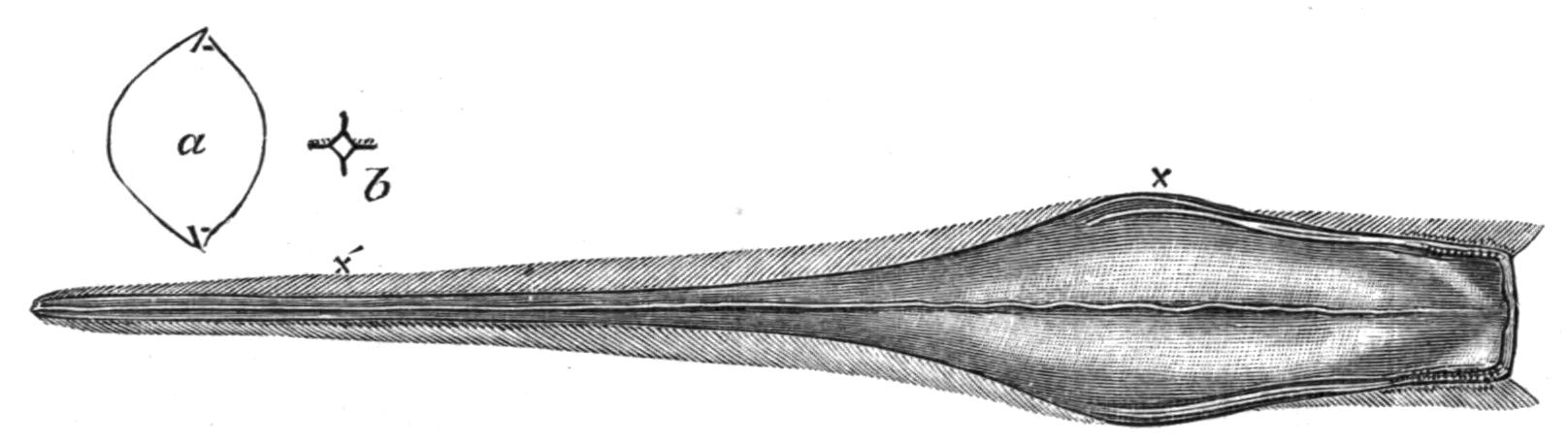
Fig. 268.—Egg-case of a species of Chimaera. a, Transverse section across the case at x, showing the lateral valvular slits; b, similar section across x′, showing the vertical ridges. (From Günther.)
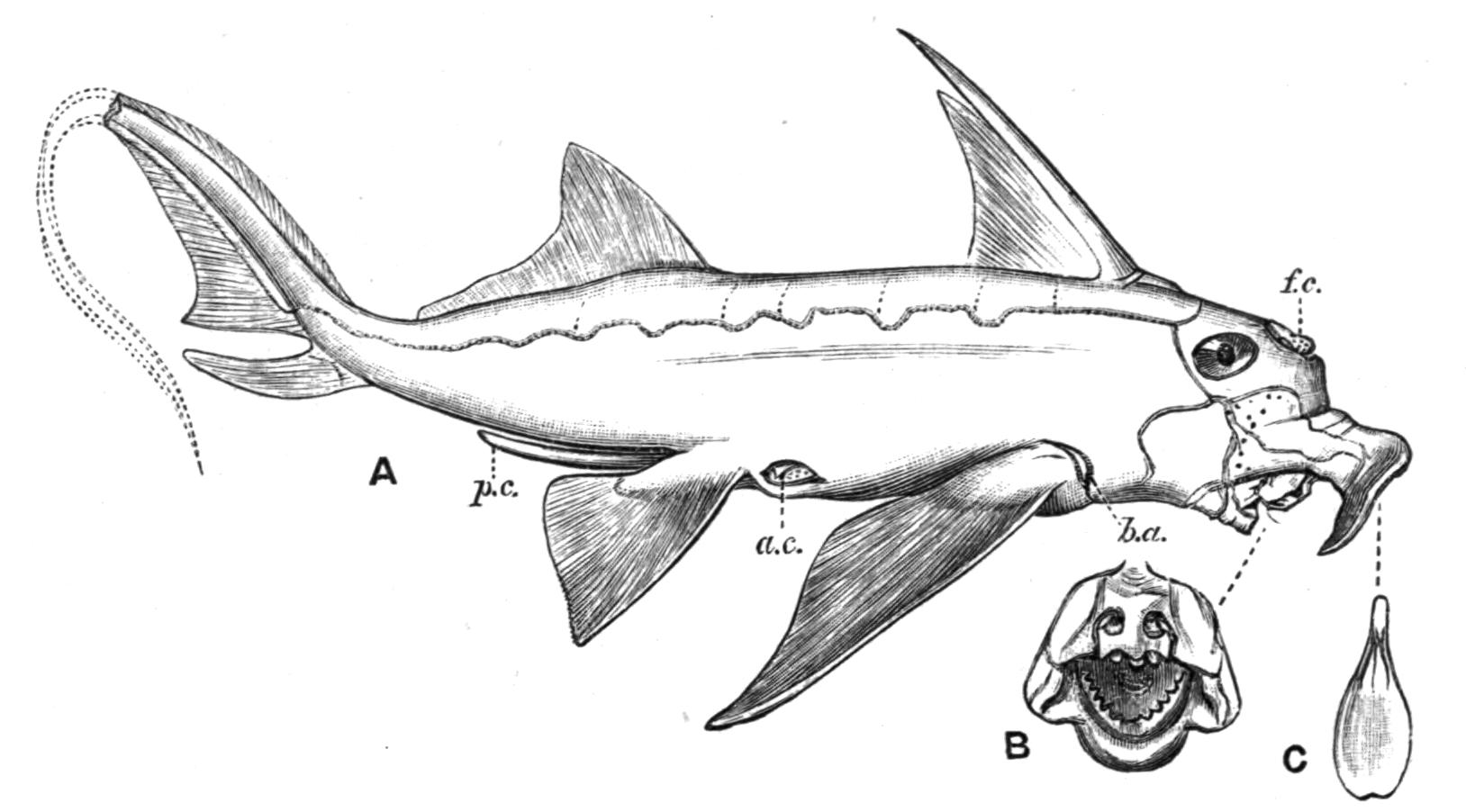
Fig. 269.—Callorhynchus antarcticus. Male. A, lateral view; B, front view of the mouth; C, front view of nasal process. a.c, Anterior clasper; b.a, external branchial aperture; f.c, frontal clasper; p.c, posterior clasper. (From a specimen in the Cambridge Museum.)
The eggs appear to be deposited on the sea-bottom in deep water, but they are very rarely obtained. An egg-case dredged up off the south-west coast of Ireland, at a depth of 315 fathoms, and about 6½ inches in length, is shown in Fig. 268.[553] It consisted of a broad, somewhat oval, flattened portion which contained the egg, and terminated at one end in a truncated margin, while at the other it was produced into a long tapering styliform process, traversed by dorsal, ventral, and lateral ridges. The cavity of the egg-case was open in front, and also along each side, where linear, slit-like valvular apertures freely admitted sea-water into the central cavity. A similar egg-case from Japan, measuring 9 inches in length, had its surface traversed by longitudinal and transverse ridges, and no doubt belonged to a Japanese Chimaera.[554] In neither egg-case was there any trace of tendrils. The eggs probably lie on the sea-bottom, or, when the cases have styliform prolongations, it is possible that they are implanted in the ooze.
Callorhynchus (Fig. 269) is distinguished by a singular prolongation of the rostrum, which terminates in a downwardly-directed cutaneous flap, evidently from its abundant nerve-supply an important tactile organ. A frontal clasper is present in the male. The prolonged caudal axis is up-tilted, and the tail is more distinctly heterocercal than in Chimaera. The only species, C. antarcticus, is confined to the Antarctic basin and the South Pacific. The egg-cases of Callorhynchus differ considerably from those of Chimaera, and so large are they that one may measure 25 cm. in length, or nearly as long as the abdominal cavity of the Fish. Each case is ovoid in shape, surrounded by a wide flat margin which is covered on one side with yellow hair-like fibres, thus giving to the case a protective resemblance to a mass of seaweed (Fig. 270). In the central part of the case there is a pear-shaped cavity in which the egg or the embryo is contained. From one end of this cavity a passage, guarded by a valve, leads to the exterior, and provides for the escape of the young. While in the egg-case the nearly ripe embryo has long external gills, and its body is nearly sessile on a large and singularly lobed yolk-sac.
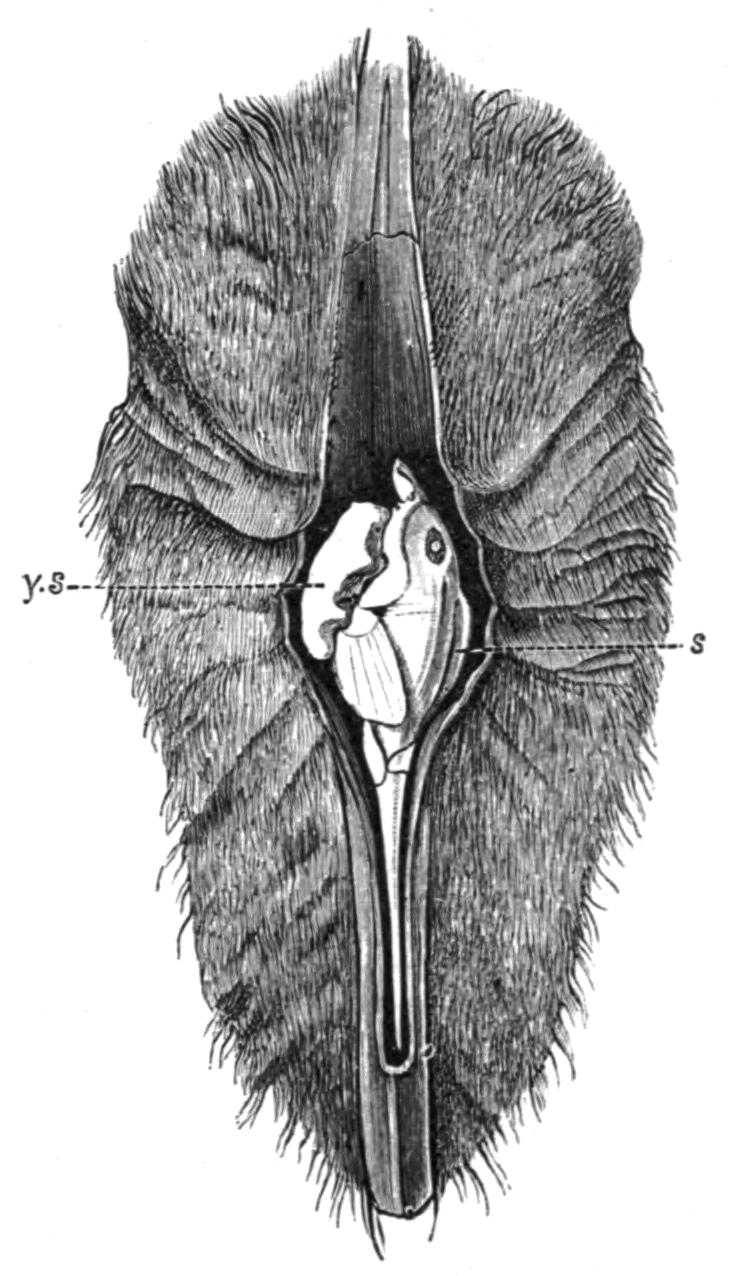
Fig. 270.—Egg-case of Callorhynchus antarcticus, laid open to show the embryo and its lobed yolk-sac (y.s); s, dorsal spine. (Cambridge Museum.)
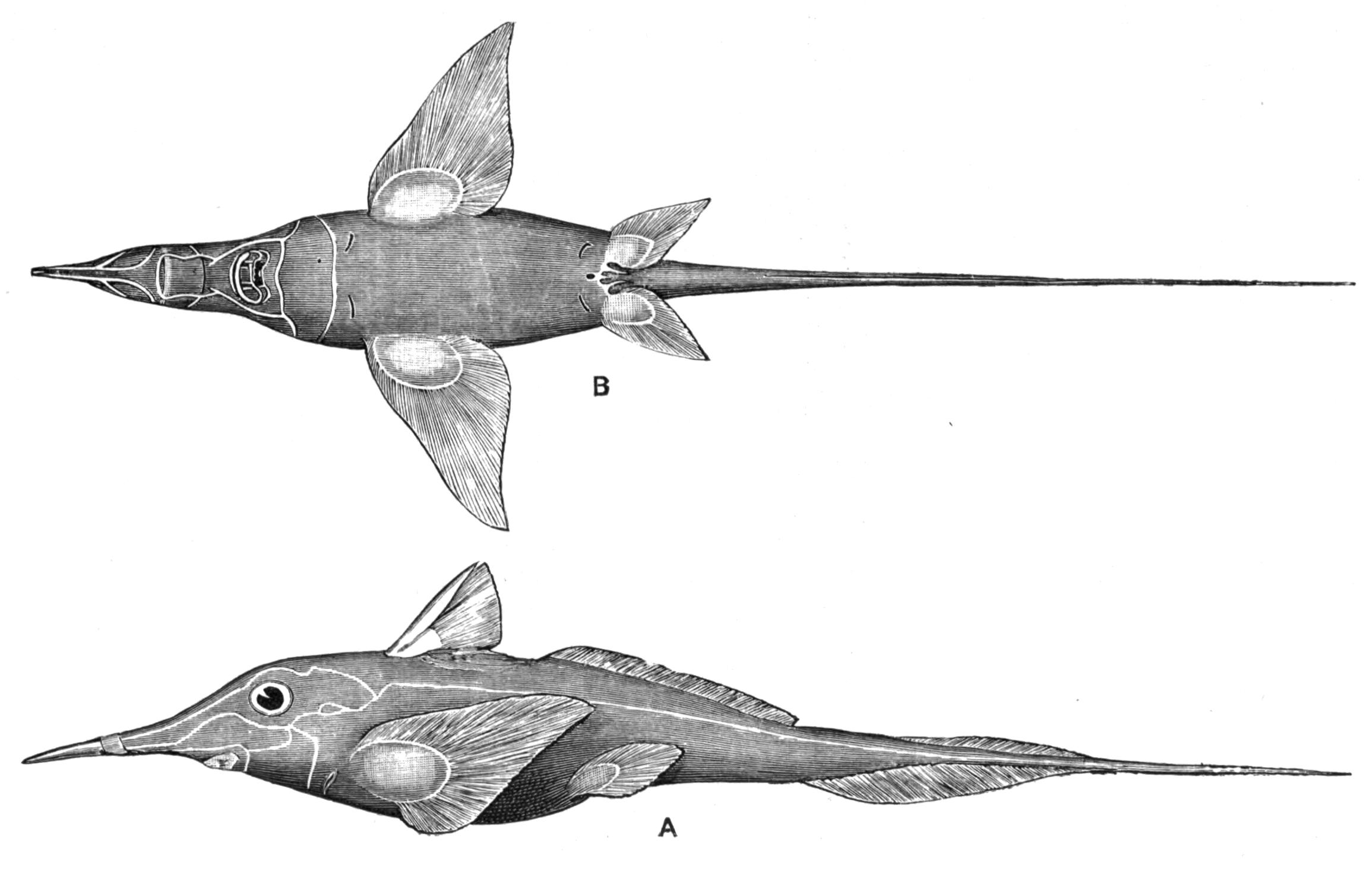
Fig. 271.—Harriotta raleighana. A, lateral view; B, ventral view of a male. (From Goode and Bean.)
The third genus, Harriotta (Fig. 271),[555] is remarkable for its elongated, tapering, and depressed rostrum, and for the large size and wing-like appearance of the pectoral fins. There is no frontal clasper, and the ordinary claspers in the young male examined were very small and simple. The caudal filament, which is longer in older specimens than in the younger, and is not developed at all in the youngest examples at present known (Fig. 272, A), is not uptilted, although the lower lobe of the caudal fin is much larger than the upper. Young forms have a double row of stout spine-like denticles in front of the second dorsal fin, and also in the interval between the latter and the upper caudal lobe. Similar denticles are also present on the upper surface of the head between the orbits (Fig. 272). H. raleighana is found in the North Atlantic. Individuals varying in length from 4 to 25 inches have been taken at depths ranging from 707 to 1081 fathoms. A species of Harriotta has also been recorded as occurring in Japanese waters.[556]
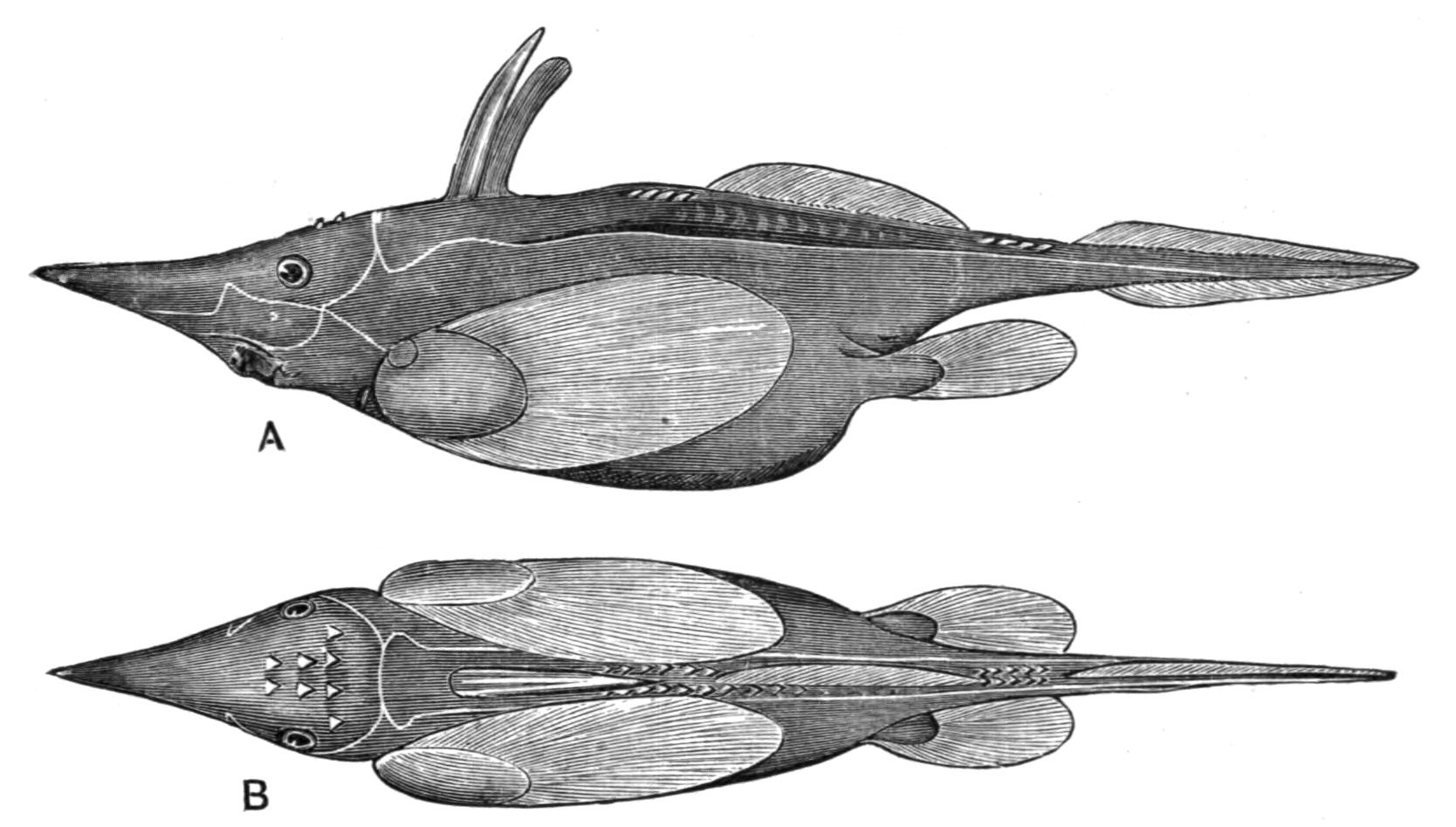
Fig. 272.—Young example of Harriotta raleighana, 4 inches in length. A, side view; B, dorsal view. (From Goode and Bean.)
With the probable exception of Chimaera colliei the surviving Holocephali are denizens of deep water; hence their comparative rarity and our almost complete ignorance of their habits. Young forms of C. monstrosa, 1½ to 5 inches in length, have been dredged in the Färoe Channel at depths from 505 to 555 fathoms;[557] and the youngest specimen of Harriotta was obtained from 991 fathoms. Egg-cases are rarely obtained, and then only from considerable depths. It is therefore reasonable to infer that these Fishes breed in deep water. As might be expected, little is known of the embryology of any of the Holocephali, but that little adds further proof of the Elasmobranch relationship of the group. The segmentation of the egg of Chimaera and the overgrowth of the yolk by a circular blastoderm are essentially as in Elasmobranchs. The early embryos are said to be shark-like, and to possess both spiracles and "external gills," and the primary upper jaw is less completely confluent with the skull than in the adult. It is also said that the palatine dental plates are represented at an early stage by series of small, more or less conical elements, which, outwardly at least, resemble the rudiments of the grinding teeth of the Cestraciont Sharks.[558]
The Chimaeridae first appear in the Lower Oolites, and attain their maximum development in the Cretaceous and the Eocene.[559] Ganodus is an Oolitic genus. Ischyodus ranges from the Lower Oolites to the Lower Cretaceous. Edaphodon is Cretaceous and Eocene, extending, however, into the Miocene, and Elasmodus ranges from the Upper Cretaceous into the Eocene. Teeth of the existing genus Callorhynchus occur in the Cretaceous of New Zealand, and of Chimaera in the Upper Tertiary of Europe and Java. The fossil Holocephali afford little evidence of the origin of the group from more typical or more primitive Elasmobranchs. So far as their structure is known, they all possess the essentially distinctive features of their modern representatives, and offer little evidence of transitional forms. The surviving Chimaeroids seem to have acquired a more specialised dentition, but in other respects they are either more primitive, or possibly somewhat degenerate.