THE DICTIONARY OF COOKERY. (continued 3)
Reading edition
In the production of Aërated Bread, wheaten flour, water, salt, and carbonic acid gas (generated by proper machinery), are the only materials employed. We need not inform our readers that carbonic acid gas is the source of the effervescence, whether in common water coming from a depth, or in lemonade, or any aërated drink. Its action, in the new bread, takes the place of fermentation in the old.
In the patent process, the dough is mixed in a great iron ball, inside which is a system of paddles, perpetually turning, and doing the kneading part of the business. Into this globe the flour is dropped till it is full, and then the common atmospheric air is pumped out, and the pure gas turned on. The gas is followed by the water, which has been aërated for the purpose, and then begins the churning or kneading part of the business.
Of course, it is not long before we have the dough, and very “light” and nice it looks. This is caught in tins, and passed on to the floor of the oven, which is an endless floor, moving slowly through the fire. Done to a turn, the loaves emerge at the other end of the apartment,—and the Aërated Bread is made.
It may be added, that it is a good plan to change one’s baker from time to time, and so secure a change in the quality of the bread that is eaten.
Mixed Breads.—Rye bread is hard of digestion, and requires longer and slower baking than wheaten bread. It is better when made with leaven of wheaten flour rather than yeast, and turns out lighter. It should not be eaten till two days old. It will keep a long time.
A good bread may be made by mixing rye-flour, wheat-flour, and rice-paste, in equal proportions; also by mixing rye, wheat, and barley. In Norway, it is said that they only bake their barley bread once a year, such is its “keeping” quality.
Indian-corn flour mixed with wheat-flour (half with half) makes a nice bread, but it is not considered very digestible, though it keeps well.
Rice cannot be made into bread, nor can potatoes; but one-third potato-flour to three-fourths wheaten flour makes a tolerably good loaf.
A very good bread, better than the ordinary sort, and of a delicious flavour, is said to be produced by adopting the following recipe:—Take ten parts of wheat-flour, five parts of potato-flour, one part of rice-paste; knead together, add the yeast, and bake as usual. This is, of course, cheaper than wheaten bread.
Flour, when freshly ground, is too glutinous to make good bread, and should therefore not be used immediately, but should be kept dry for a few weeks, and stirred occasionally until it becomes dry, and crumbles easily between the fingers.
Flour should be perfectly dry before being used for bread or cakes; if at all damp, the preparation is sure to be heavy. Before mixing it with the other ingredients, it is a good plan to place it for an hour or two before the fire, until it feels warm and dry.
Yeast from home-brewed beer is generally preferred to any other: it is very bitter, and on that account should be well washed, and put away until the thick mass settles. If it still continues bitter, the process should be repeated; and, before being used, all the water floating at the top must be poured off. German yeast is now very much used, and should be moistened, and thoroughly mixed with the milk or water with which the bread is to be made.
The following observations are extracted from a valuable work on Bread-making, and will be found very useful to our readers:—
The first thing required for making wholesome bread is the utmost cleanliness; the next is the soundness and sweetness of all the ingredients used for it; and, in addition to these, there must be attention and care through the whole process.
An almost certain way of spoiling dough is to leave it half-made, and to allow it to become cold before it is finished. The other most common causes of failure are using yeast which is no longer sweet, or which has been frozen, or has had hot liquid poured over it.
Too small a proportion of yeast, or insufficient time allowed for the dough to rise, will cause the bread to be heavy.
Heavy bread will also most likely be the result of making the dough very hard, and letting it become quite cold, particularly in winter.
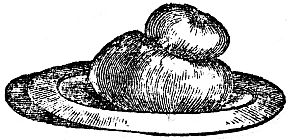
COTTAGE LOAF.
If either the sponge or the dough be permitted to overwork itself, that is to say, if the mixing and kneading be neglected when it has reached the proper point for either, sour bread will probably be the consequence in warm weather, and bad bread in any. The goodness will also be endangered by placing it so near the fire as to make any part of it hot, instead of maintaining the gentle and equal degree of heat required for its due fermentation.
Milk or Butter.—Milk which is not perfectly sweet will not only injure the flavour of the bread, but, in sultry weather, will often cause it to be quite uneatable; yet either of them, if fresh and good, will materially improve its quality.
To keep bread sweet and fresh, as soon as it is cold it should be put into a clean earthen pan, with a cover to it: this pan should be placed at a little distance from the ground, to allow a current of air to pass underneath. Some persons prefer keeping bread on clean wooden shelves without being covered, that the crust may not soften. Stale bread may be freshened by warming it through in a gentle oven. Stale pastry, cakes, &c., may also be improved by this method.
COTTAGE LOAF.
The utensils required for making bread on a moderate scale, are a kneading-trough or pan, sufficiently large that the dough may be kneaded freely without throwing the flour over the edges, and also to allow for its rising; a hair sieve for straining yeast, and one or two strong spoons.
Yeast must always be good of its kind, and in a fitting state to produce ready and proper fermentation. Yeast of strong beer or ale produces more effect than that of milder kinds; and the fresher the yeast, the smaller the quantity will be required to raise the dough.
As a general rule, the oven for baking bread should be rather quick, and the heat so regulated as to penetrate the dough without hardening the outside. The oven door should not be opened after the bread is put in until the dough is set, or has become firm, as the cool air admitted, will have an unfavourable effect on it.
Brick ovens are generally considered the best adapted for baking bread: these should be heated with wood faggots, and then swept and mopped out, to cleanse them for the reception of the bread. Iron ovens are more difficult to manage, being apt to burn the surface of the bread before the middle is baked. To remedy this, a few clean bricks should be set at the bottom of the oven, close together, to receive the tins of bread. In many modern stoves the ovens are so much improved that they bake admirably; and they can always be brought to the required temperature, when it is higher than is needed, by leaving the door open for a time.
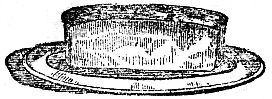
TIN BREAD.
BREAD, to make good Home-made (Miss Acton’s Recipe).
Ingredients.—1 quartern of flour, 1 large tablespoonful of solid brewer’s yeast, or nearly 1 oz. of fresh German yeast, 1¼ to 1½ pint of warm milk-and-water. Mode.—Put the flour into a large earthenware bowl or deep pan; then, with a strong metal or wooden spoon, hollow out the middle; but do not clear it entirely away from the bottom of the pan, as, in that case, the sponge, or leaven (as it was formerly termed) would stick to it, which it ought not to do. Next take either a large tablespoonful of brewer’s yeast which has been rendered solid by mixing it with plenty of cold water, and letting it afterwards stand to settle for a day and night; or nearly an ounce of German yeast; put it into a large basin, and proceed to mix it, so that it shall be as smooth as cream, with ¾ pint of warm milk-and-water, or with water only; though even a very little milk will much improve the bread. Pour the yeast into the hole made in the flour, and stir into it as much of that which lies round it as will make a thick batter, in which there must be no lumps. Strew plenty of flour on the top, throw a thick clean cloth over, and set it where the air is warm; but do not place it upon the kitchen fender, for it will become too much heated there. Look at it from time to time: when it has been laid for nearly an hour, and when the yeast has risen and broken through the flour, so that bubbles appear in it, you will know that it is ready to be made up into dough. Then place the pan on a strong chair, or dresser, or table, of convenient height; pour into the sponge the remainder of the warm milk-and-water; stir into it as much of the flour as you can with the spoon; then wipe it out clean with your fingers, and lay it aside. Next take plenty of the remaining flour, throw it on the top of the leaven, and begin, with the knuckles of both hands, to knead it well. When the flour is nearly all kneaded in, begin to draw the edges of the dough towards the middle, in order to mix the whole thoroughly; and when it is free from flour and lumps and crumbs, and does not stick to the hands when touched, it will be done, and may be covered with the cloth, and left to rise a second time. In ¾ hour look at it, and should it have swollen very much and begin to crack, it will be light enough to bake. Turn it then on to a paste-board or very clean dresser, and with a large sharp knife divide it in two; make it up quickly into loaves, and despatch it to the oven: make one or two incisions across the tops of the loaves, as they will rise more easily if this be done. If baked in tins or pans, rub them with a tiny piece of butter laid on a piece of clean paper, to prevent the dough from sticking to them. All bread should be turned upside down, or on its side, as soon as it is drawn from the oven: if this be neglected, the under part of the loaves will become wet and blistered from the steam, which cannot then escape from them. To make the dough without setting a sponge, merely mix the yeast with the greater part of the warm milk-and-water, and wet up the whole of the flour at once after a little salt has been stirred in, proceeding exactly, in every other respect, as in the directions just given. As the dough will soften in the rising, it should be made quite firm at first, or it will be too lithe by the time it is ready for the oven. Time.—To be left to rise an hour the first time, ¾ hour the second time; to be baked from 1 to 1¼ hour, or baked in one loaf from 1½ to 2 hours.
BREAD, to make a Peck of good.
Ingredients.—3 lbs. of potatoes, 6 pints of cold water, ½ pint of good yeast, a peck of flour, 2 oz. of salt. Mode.—Peel and boil the potatoes; beat them to a cream while warm; then add 1 pint of cold water, strain through a colander, and add to it ½ pint of good yeast, which should have been put in water over-night to take off its bitterness. Stir all well together with a wooden spoon, and pour the mixture into the centre of the flour; mix it to the substance of cream, cover it over closely, and let it remain near the fire for an hour; then add the 5 pints of water, milk-warm, with 2 oz. of salt; pour this in, and mix the whole to a nice light dough. Let it remain for about 2 hours; then make it into 7 loaves, and bake for about 1½ hour in a good oven. When baked, the bread should weigh nearly 20 lbs. Time.—About 1½ hour.
BREAD-AND-BUTTER FRITTERS.
Ingredients.—Batter, 8 slices of bread and butter, 3 or 4 tablespoonfuls of jam. Mode.—Make a batter, the same as for apple fritters; cut some slices of bread and butter, not very thick; spread half of them with any jam that may be preferred, and cover with the other slices; slightly press them together, and cut them out in square, long, or round pieces. Dip them in the batter, and fry in boiling lard for about 10 minutes; drain them before the fire on a piece of blotting-paper or cloth. Dish them, sprinkle over sifted sugar, and serve. Time.—About 10 minutes. Average cost, 1s. Sufficient for 4 or 5 persons. Seasonable at any time.
BREAD-AND-BUTTER PUDDING, Baked.
Ingredients.—9 thin slices of bread and butter, 1½ pint of milk, 4 eggs, sugar to taste, ¼ lb. of currants, flavouring of vanilla, grated lemon-peel, or nutmeg. Mode.—Cut 9 slices of bread and butter, not very thick, and put them into a pie-dish, with currants between each layer, and on the top. Sweeten and flavour the milk, either by infusing a little lemon-peel in it, or by adding a few drops of essence of vanilla; well whisk the eggs, and stir these to the milk. Strain this over the bread and butter, and bake in a moderate oven for 1 hour, or rather longer. This pudding may be very much enriched by adding cream, candied peel, or more eggs than stated above. It should not be turned out, but sent to table in the pie-dish, and is better for being made about two hours before it is baked. Time.—1 hour, or rather longer. Average cost, 9d. Sufficient for 6 or 7 persons. Seasonable at any time.
BREAD CRUMBS, Fried.
Cut the bread into thin slices, place them in a cool oven over-night, and when thoroughly dry and crisp, roll them down into fine crumbs. Put some lard, or clarified dripping, into a frying-pan; bring it to the boiling-point, throw in the crumbs, and fry them very quickly. Directly they are done, lift them out with a slice, and drain them before the fire from all greasy moisture. When quite crisp, they are ready for use. The fat they are fried in should be clear, and the crumbs should not have the slightest appearance or taste of having been, in the least degree, burnt.
BREAD, Fried, for Borders.
Proceed by frying some slices of bread, cut in any fanciful shape, in boiling lard. When quite crisp, dip one side of the sippet into the beaten white of an egg mixed with a little flour, and place it on the edge of the dish. Continue in this manner till the border is completed, arranging the sippets a pale and a dark one alternately.
BREAD, Fried Sippets of, for Garnishing many Dishes.
Cut the bread into thin slices, and stamp them out in whatever shape you like,—rings, crosses, diamonds, &c. &c. Fry them in the same manner as the bread-crumbs, in clear boiling lard or clarified dripping, and drain them until thoroughly crisp before the fire. When variety is desired, fry some of a pale colour, and others of a darker hue.
BREAKFASTS.
It will not be necessary to give here a long bill of fare of cold joints, &c., which may be placed on the sideboard, and do duty at the breakfast-table. Suffice it to say, that any cold meat the larder may furnish should be nicely garnished and be placed on the buffet. Collared and potted meats or fish, cold game or poultry, veal-and-ham pies, game-and-rump-steak pies, are all suitable dishes for the breakfast-table; as also cold ham, tongue, &c. &c.
The following list of hot dishes may perhaps assist our readers in knowing what to provide for the comfortable meal called breakfast. Broiled fish, such as mackerel, whiting, herrings, dried haddocks, &c.; mutton chops and rump-steaks, broiled sheep’s kidneys, kidneys à la maître d’hôtel, sausages, plain rashers of bacon, bacon and poached eggs, ham and poached eggs, omelets, plain boiled eggs, œufs-au-plat, poached eggs on toast, muffins, toast, marmalade, butter, &c. &c.
In the summer, and when they are obtainable, always have a vase of freshly-gathered flowers on the breakfast-table, and, when convenient, a nicely-arranged dish of fruit: when strawberries are in season, these are particularly refreshing; as also grapes, or even currants.
BRILL.
Ingredients.—¼ lb. of salt to each gallon of water; a little vinegar. Mode.—Clean the brill, cut off the fins, and rub it over with a little lemon-juice, to preserve its whiteness. Set the fish in sufficient cold water to cover it; throw in salt, in the above proportions, and a little vinegar, and bring it gradually to boil: simmer very gently, till the fish is done, which will be in about 10 minutes for a small brill, reckoning from the time the water begins to simmer. It is difficult to give the exact number of minutes required for cooking a brill, as the fish varies somewhat in thickness, but the cook can always bear in mind that fish of every description should be very thoroughly dressed, and never come to table in the least degree underdone. The time for boiling of course depends entirely on the size of the fish. Serve it on a hot napkin, and garnish with cut lemon, parsley, horseradish, and a little lobster coral sprinkled over the fish. Send lobster or shrimp sauce and plain melted butter to table with it. Time.—After the water boils, a small brill, 10 minutes; a medium sized brill, 15 to 20 minutes; a large brill, ½ hour. Average cost, from 4s. to 8s.; but when the market is plentifully supplied, may be had from 2s. each. Seasonable from August to April.
To choose Brill.—The flesh of this fish, like that of turbot, should be of a yellowish tint, and should be chosen on account of its thickness. If the flesh has a bluish tint, it is not good.
A Brill and John Dory are carved in the same manner as a Turbot.
Note.—The thick parts of the middle of the back are the best slices in a turbot; and the rich gelatinous skin covering the fish, as well as a little of the thick part of the fins, are dainty morsels, and should be placed on each plate.
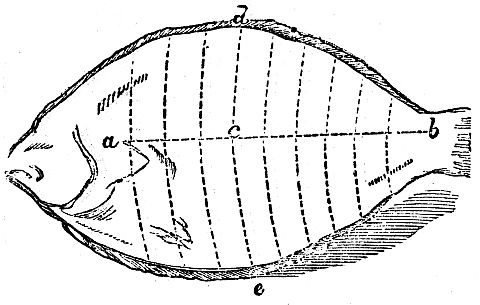
HOW TO CARVE A BRILL.
BROWNING, for Stock.
Ingredients.—2 oz. of powdered sugar, and ½ a pint of water. Mode.—Place the sugar in a stewpan over a slow fire until it begins to melt, keeping it stirred with a wooden spoon until it becomes black, when add the water, and let it dissolve. Cork closely, and use a few drops when required.
Note.—In France, burnt onions are made use of for the purpose of browning. As a general rule, the process of browning is to be discouraged, as apt to impart a slightly unpleasant flavour to the stock, and consequently all soups made from it.
BROWNING for Gravies and Sauces.
The browning for stock answers equally well for sauces and gravies, when it is absolutely necessary to colour them in this manner; but where they can be made to look brown by using ketchup, wine, browned flour, tomatoes, or any coloured sauce, it is far preferable. As, however, in cooking so much depends on appearance, perhaps it would be as well for the inexperienced cook to use the artificial means. When no browning is at hand, and you wish to heighten the colour of your gravy, dissolve a lump of sugar in an iron spoon close to a sharp fire; when it is in a liquid state, drop it into the sauce or gravy quite hot. Care, however, must be taken not to put in too much, as it would impart a very disagreeable flavour to the preparation.
BRUSSELS-SPROUTS, Boiled.
Ingredients.—To each ½ gallon of water allow 1 heaped tablespoonful of salt; a very small piece of soda. Mode.—Clean the sprouts from insects, nicely wash them, and pick off any dead or discoloured leaves from the outsides; put them into a saucepan of boiling water, with salt and soda in the above proportion; keep the pan uncovered, and let them boil quickly over a brisk fire until tender; drain, dish, and serve with a tureen of melted butter, or with a maître d’hôtel sauce poured over them. Another mode of serving them is, when they are dished, to stir in about 1½ oz. of butter and a seasoning of pepper and salt. They must, however, be sent to table very quickly, as, being so very small, this vegetable soon cools. Where the cook is very expeditious, this vegetable when cooked may be arranged on the dish in the form of a pineapple, and so served has a very pretty appearance. Time.—from 9 to 12 minutes after the water boils. Average cost, 1s. 4d. per peck. Sufficient.—Allow between 40 and 50 for 5 or 6 persons. Seasonable from November to March.
BUBBLE-AND-SQUEAK.
[Cold Meat Cookery.] Ingredients.—A few thin slices of cold boiled beef; butter, cabbage, 1 sliced onion, pepper and salt to taste. Mode.—Fry the slices of beef gently in a little butter, taking care not to dry them up. Lay them on a flat dish, and cover with fried greens. The greens may be prepared from cabbage sprouts or green savoys. They should be boiled till tender, well drained, minced, and placed, till quite hot, in a frying-pan, with butter, a sliced onion, and seasoning of pepper and salt. When the onion is done, it is ready to serve. Time.—Altogether, ½ hour. Average cost, exclusive of the cold beef, 3d. Seasonable at any time.
BULLOCK’S HEART, to Dress a.
Ingredients.—1 heart, stuffing of veal forcemeat. Mode.—Put the heart into warm water to soak for 2 hours; then wipe it well with a cloth, and, after cutting off the lobes, stuff the inside with a highly-seasoned forcemeat. Fasten it in, by means of a needle and coarse thread; tie the heart up in paper, and set it before a good fire, being very particular to keep it well basted, or it will eat dry, there being very little of its own fat. Two or three minutes before dishing remove the paper, baste well, and serve with good gravy and red-currant jelly or melted butter. If the heart is very large, it will require 2 hours, and, covered with a caul, may be baked as well as roasted. Time.—Large heart, 2 hours. Average cost, 2s. 6d. Sufficient for 6 or 8 persons. Seasonable all the year.
Note.—This is an excellent family dish, is very savoury, and, though not seen at many good tables, may be recommended for its cheapness and economy.
BUNS, Light.
Ingredients.—½ teaspoonful of tartaric acid, ½ teaspoonful of bicarbonate of soda, 1 lb. of flour, 2 oz. of butter, 2 oz. of loaf sugar, ¼ lb. of currants or raisins,—when liked, a few caraway seeds, ½ pint of cold new milk, 1 egg. Mode.—Rub the tartaric acid, soda, and flour all together through a hair sieve; work the butter into the flour; add the sugar, currants, and caraway seeds, when the flavour of the latter is liked. Mix all these ingredients well together; make a hole in the middle of the flour, and pour in the milk, mixed with the egg, which should be well beaten; mix quickly, and set the dough, with a fork, on baking-tins, and bake the buns for about 20 minutes. This mixture makes a very good cake, and if put into a tin, should be baked 1½ hour. The same quantity of flour, soda, and tartaric acid, with ½ pint of milk and a little salt, will make either bread or tea-cakes, if wanted quickly. Time.—20 minutes for the buns; if made into a cake, 1½ hour. Sufficient to make about 12 buns.
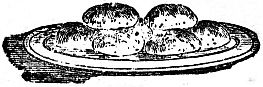
BUNS.
BUNS, Plain.
Ingredients.—1 lb. of flour, 6 oz. of good butter, ¼ lb. of sugar, 1 egg, nearly ¼ pint of milk, 2 small teaspoonfuls of baking-powder, a few drops of essence of lemon. Mode.—Warm the butter, without oiling it; beat it with a wooden spoon; stir the flour in gradually with the sugar, and mix these ingredients well together. Make the milk lukewarm, beat up with it the yolk of the egg and the essence of lemon, and stir these to the flour, &c. Add the baking-powder, beat the dough well for about 10 minutes, divide it into 24 pieces, put them into buttered tins or cups, and bake in a brisk oven from 20 to 30 minutes. Time.—20 to 30 minutes. Average cost, 1s. Sufficient to make 12 buns. Seasonable at any time.
BUNS, Victoria.
Ingredients.—2 oz. of pounded loaf sugar, 1 egg, 1½ oz. of ground rice, 2 oz. of butter, 1½ oz. of currants, a few thin slices of candied-peel, flour. Mode.—Whisk the egg, stir in the sugar, and beat these ingredients both together; beat the butter to a cream, stir in the ground rice, currants, and candied-peel, and as much flour as will make it of such a consistency that it may be rolled into 7 or 8 balls. Place these on a buttered tin, and bake them for ½ to ¾ hour. They should be put into the oven immediately or they will become heavy, and the oven should be tolerably brisk. Time.—½ to ¾ hour. Average cost, 6d. Sufficient to make 7 or 8 buns. Seasonable at any time.
BUTTER, Browned.
Ingredients.—¼ lb. of butter, 1 tablespoonful of minced parsley, 3 tablespoonfuls of vinegar, salt and pepper to taste. Mode.—Put the butter into a frying pan over a nice clear fire, and when it smokes, throw in the parsley, and add the vinegar and seasoning. Let the whole simmer for a minute or two, when it is ready to serve. This is a very good sauce for skate. Time.—¼ hour.
BUTTER, Clarified.
Put the butter in a basin before the fire, and when it melts, stir it round once or twice, and let it settle. Do not strain it unless absolutely necessary, as it causes so much waste. Pour it gently off into a clean dry jar, carefully leaving all sediment behind. Let it cool, and carefully exclude the air by means of a bladder, or piece of wash-leather, tied over. If the butter is salt, it may be washed before melting, when it is to be used for sweet dishes.
BUTTER, Curled.
Tie a strong cloth by two of the corners to an iron hook in the wall; make a knot with the other two ends, so that a stick might pass through. Put the butter into the cloth; twist it tightly over a dish, into which the butter will fall through the knot, so forming small and pretty little strings. The butter may then be garnished with parsley, if to serve with a cheese course; or it may be sent to table plain for breakfast, in an ornamental dish. Squirted butter for garnishing hams, salads, eggs, &c., is made by forming a piece of stiff paper in the shape of a cornet, and squeezing the butter in fine strings from the hole at the bottom. Scooped butter is made by dipping a teaspoon or scooper in warm water, and then scooping the butter quickly and thin. In warm weather, it would not be necessary to heat the spoon.
BUTTER, Fairy.
Ingredients.—The yolks of 2 hard-boiled eggs, 1 tablespoonful of orange-flower water, 2 tablespoonfuls of pounded sugar, ¼ lb. of good fresh butter. Mode.—Beat the yolks of the eggs smoothly in a mortar, with the orange-flower water and the sugar, until the whole is reduced to a fine paste; add the butter, and force all through an old but clean cloth by wringing the cloth and squeezing the butter very hard. The butter will then drop on the plate in large and small pieces, according to the holes in the cloth. Plain butter may be done in the same manner, and is very quickly prepared, besides having a very good effect.
BUTTER, to keep Fresh.
Butter may be kept fresh for ten or twelve days by a very simple process. Knead it well in cold water till the buttermilk is extracted; then put it in a glazed jar, which invert in another, putting into the latter a sufficient quantity of water to exclude the air. Renew the water every day.
BUTTER, Maître d’Hôtel, for putting into Broiled Fish just before it is sent to Table.
Ingredients.—¼ lb. of butter, 2 dessertspoonfuls of minced parsley, salt and pepper to taste, the juice of 1 large lemon. Mode.—Work the above ingredients well together, and let them be thoroughly mixed with a wooden spoon. If this is used as a sauce, it may be poured either under or over the meat or fish it is intended to be served with. Average cost, for this quantity, 5d.
Note.—4 tablespoonfuls of Béchamel, 2 do. of white stock, with 2 oz. of the above maître d’hôtel butter stirred into it, and just allowed to simmer for 1 minute, will be found an excellent hot maître d’hôtel sauce.
BUTTER, Melted.
Ingredients.—¼ lb. of butter, a dessertspoonful of flour, 1 wineglassful of water, salt to taste. Mode.—Cut the butter up into small pieces, put it into a saucepan, dredge over the flour, and add the water and a seasoning of salt; stir it one way constantly till the whole of the ingredients are melted and thoroughly blended. Let it just boil, when it is ready to serve. If the butter is to be melted with cream, use the same quantity as of water, but omit the flour; keep stirring it, but do not allow it to boil. Time.—1 minute to simmer. Average cost for this quantity, 4d.
BUTTER, Melted (more Economical).
Ingredients.—2 oz. of butter, 1 dessertspoonful of flour, salt to taste, ½ pint of water. Mode.—Mix the flour and water to a smooth batter, which put into a saucepan. Add the butter and a seasoning of salt, keep stirring one way till all the ingredients are melted and perfectly smooth; let the whole boil for a minute or two, and serve. Time.—2 minutes to simmer. Average cost for this quantity, 2d.
BUTTER, Rancid, What to do with.
When butter has become very rancid, it should be melted several times by a moderate heat, with or without the addition of water, and as soon as it has been well kneaded, after the cooling, in order to extract any water it may have retained, it should be put into brown freestone pots, sheltered from the contact of the air. The French often add to it, after it has been melted, a piece of toasted bread, which helps to destroy the tendency of the butter to rancidity.
BUTTER, Melted (the French Sauce Blanche).
Ingredients.—¼ lb. of fresh butter, 1 tablespoonful of flour, salt to taste, ½ gill of water, ½ spoonful of white vinegar, a very little grated nutmeg. Mode.—Mix the flour and water to a smooth batter, carefully rubbing down with the back of a spoon any lumps that may appear. Put it in a saucepan with all the other ingredients, and let it thicken on the fire, but do not allow it to boil, lest it should taste of the flour. Time.—1 minute to simmer. Average cost, 5d. for this quantity.
BUTTER, Melted, made with Milk.
Ingredients.—1 teaspoonful of flour, 2 oz. of butter, ½ pint of milk, a few grains of salt. Mode.—Mix the butter and flour smoothly together on a plate, put it into a lined saucepan, and pour in the milk. Keep stirring it one way over a sharp fire; let it boil quickly for a minute or two, and it is ready to serve. This is a very good foundation for onion, lobster, or oyster sauce: using milk instead of water makes it look much whiter and more delicate. Time.—Altogether, 10 minutes. Average cost for this quantity, 3d.
CABBAGE, Boiled.
Ingredients.—-To each ½ gallon of water allow 1 heaped tablespoonful of salt; a very small piece of soda. Mode.—Pick off all the dead outside leaves, cut off as much of the stalk as possible, and cut the cabbages across twice, at the stalk end; if they should be very large, quarter them. Wash them well in cold water, place them in a colander, and drain; then put them into plenty of fast-boiling water, to which have been added salt and soda in the above proportions. Stir them down once or twice in the water, keep the pan uncovered, and let them boil quickly until tender. The instant they are done, take them up into a colander, place a plate over them, let them thoroughly drain, dish, and serve. Time.—Large cabbages, or savoys, ½ to ¾ hour, young summer cabbage, 10 to 12 minutes, after the water boils. Average cost, 2d. each in full season. Sufficient.—2 large ones for 4 or 5 persons. Seasonable.—Cabbages and sprouts of various kinds at any time.
CABBAGE, Red, Pickled.
Ingredients.—Red cabbages, salt and water; to each quart of vinegar, ½ oz. of ginger well bruised, 1 oz. of whole black pepper, and, when liked, a little cayenne. Mode.—Take off the outside decayed leaves of a nice red cabbage, cut it in quarters, remove the stalks, and cut it across in very thin slices. Lay these on a dish, and strew them plentifully with salt, covering them with another dish. Let them remain for 24 hours, turn into a colander to drain, and, if necessary, wipe lightly with a clean soft cloth. Put them in a jar; boil up the vinegar with spices in the above proportion, and, when cold, pour it over the cabbage. It will be fit for use in a week or two, and, if kept for a very long time, the cabbage is liable to get soft and to discolour. To be really nice and crisp, and of a good red colour, it should be eaten almost immediately after it is made. A little bruised cochineal boiled with the vinegar adds much to the appearance of this pickle. Tie down with bladder, and keep in a dry place. Seasonable in July and August, but the pickle will be much more crisp if the frost has just touched the leaves.
CABBAGE, Red, Stewed.
Ingredients.—1 red cabbage, a small slice of ham, ½ oz. of fresh butter, 1 pint of weak stock or broth, 1 gill of vinegar, salt and pepper to taste, 1 tablespoonful of pounded sugar. Mode.—Cut the cabbage into very thin slices, put it into a stewpan, with the ham cut in dice, the butter, ½ pint of stock, and the vinegar; cover the pan closely, and let it stew for 1 hour. When it is very tender, add the remainder of the stock, a seasoning of salt and pepper, and the pounded sugar; mix all well together, stir over the fire until nearly all the liquor is dried away, and serve. Fried sausages are usually sent to table with this dish: they should be laid round and on the cabbage, as a garnish. Time.—Rather more than 1 hour. Average cost, 4d. each. Sufficient for 4 persons. Seasonable from September to January.
CABBAGE SOUP.
Ingredients.—1 large cabbage, 3 carrots, 2 onions, 4 or 5 slices of lean bacon, salt and pepper to taste, 2 quarts of medium stock. Mode.—Scald the cabbage, cut it up and drain it. Line the stewpan with the bacon, put in the cabbage, carrots, and onions; moisten with skimmings from the stock, and simmer very gently, till the cabbage is tender; add the stock, stew softly for half an hour, and carefully skim off every particle of fat. Season and serve. Time.—1½ hour. Average cost, 1s. per quart. Seasonable in winter. Sufficient for 8 persons.
CABINET or CHANCELLOR’S PUDDING.
Ingredients.—1½ oz. of candied peel, 4 oz. of currants, 4 dozen sultanas, a few slices of Savoy cake, sponge-cake, a French roll, 4 eggs, 1 pint of milk, grated lemon-rind, ¼ nutmeg, 3 tablespoonfuls of sugar. Mode.—Melt some butter to a paste, and with it, well grease the mould or basin in which the pudding is to be boiled, taking care that it is buttered in every part. Cut the peel into thin slices, and place these in a fanciful device at the bottom of the mould, and fill in the spaces between with currants and sultanas; then add a few slices of sponge-cake or French roll; drop a few drops of melted butter on these,and between each layer sprinkle a few currants. Proceed in this manner until the mould is nearly full; then flavour the milk with nutmeg and grated lemon-rind; add the sugar, and stir to this the eggs, which should be well beaten. Beat this mixture for a few minutes; then strain it into the mould, which should be quite full; tie a piece of buttered paper over it, and let it stand for two hours; then tie it down with a cloth, put it into boiling water, and let it boil slowly for 1 hour. In taking it up, let it stand for a minute or two before the cloth is removed; then quickly turn it out of the mould or basin, and serve with sweet sauce separately. The flavouring of this pudding may be varied by substituting for the lemon-rind essence of vanilla or bitter almonds; and it may be made much richer by using cream; but this is not at all necessary. Time.—1 hour, Average cost, 1s. 3d. Sufficient for 5 or 6 persons. Seasonable at any time.
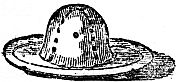
CABINET PUDDING.
CABINET or BOILED BREAD-AND-BUTTER PUDDING, Plain.
Ingredients.—2 oz. of raisins, a few thin slices of bread and butter, 3 eggs, 1 pint of milk, sugar to taste, ¼ nutmeg. Mode.—Butter a pudding-basin and line the inside with a layer of raisins that have been previously stoned; then nearly fill the basin with slices of bread and butter with the crust cut off, and, in another basin, beat the eggs; add to them the milk, sugar, and grated nutmeg; mix all well together, and pour the whole on to the bread and butter; let it stand ½ hour, then tie a floured cloth over it; boil for 1 hour, and serve with sweet sauce. Care must be taken that the basin is quite full before the cloth is tied over. Time.—1 hour. Average cost, 9d. Sufficient for 5 or 6 persons. Seasonable at any time.
CAFÉ AU LAIT.
This is merely very strong coffee added to a large proportion of good hot milk; about 6 tablespoonfuls of strong coffee being quite sufficient for a breakfast-cupful of milk. Of the essence which answers admirably for café au lait, so much would not be required. This preparation is infinitely superior to the weak watery coffee so often served at English tables. A little cream mixed with the milk, if the latter cannot be depended on for richness, improves the taste of the coffee, as also the richness of the beverage. Sufficient.—6 tablespoonfuls of strong coffee, or 2 tablespoonfuls of the essence, to a breakfast-cupful of milk.
CAFÉ NOIR.
This is usually handed round after dinner, and should be drunk well sweetened, with the addition of a little brandy or liqueurs, which may be added or not at pleasure. The coffee should be made very strong, and served in very small cups, but never mixed with milk or cream. Café noir may be made of the essence of coffee by pouring a tablespoonful into each cup, and filling it up with boiling water. This is a very simple and expeditious manner of preparing coffee for a large party, but the essence for it must be made very good, and kept well corked until required for use.
CAKES, Making and Baking of.
Eggs should always be broken into a cup, the whites and yolks separated, and they should always be strained. Breaking the eggs thus, the bad ones may be easily rejected without spoiling the others, and so cause no waste. As eggs are used instead of yeast, they should be very thoroughly whisked; they are generally sufficiently beaten when thick enough to carry the drop that falls from the whisk.
Loaf Sugar should be well pounded, and then sifted through a fine sieve.
Currants should be nicely washed, picked, dried in a cloth, and then carefully examined, that no pieces of grit or stone may be left amongst them. They should then be laid on a dish before the fire, to become thoroughly dry; as, if added damp to the other ingredients, cakes will be liable to be heavy.
Good Butter should always be used in the manufacture of cakes; and, if beaten to a cream, it saves much time and labour to warm, but not melt, it before beating.
Less butter and eggs are required for cakes when yeast is mixed with the other ingredients.
The heat of the oven is of great importance, especially for large cakes. If the heat be not tolerably fierce, the batter will not rise. If the oven is too quick, and there is any danger of the cake burning or catching, put a sheet of clean paper over the top: newspaper, or paper that has been printed on, should never be used for this purpose.
To know when a cake is sufficiently baked, plunge a clean knife into the middle of it; draw it quickly out, and if it looks in the least sticky put the cake back, and close the oven door until the cake is done.
Cakes should be kept in closed tin canisters or jars, and in a dry place. Those made with yeast do not keep so long as those made without it.
CAKES, nice Breakfast.
Ingredients.—1 lb. of flour, ½ teaspoonful of tartaric acid, ½ teaspoonful of salt, ½ teaspoonful of carbonate of soda, 1½ breakfast-cupful of milk, 1 oz. of sifted loaf sugar, 2 eggs. Mode.—These cakes are made in the same manner as the soda bread, with the addition of eggs and sugar. Mix the flour, tartaric acid, and salt well together, taking care that the two latter ingredients are reduced to the finest powder, and stir in the sifted sugar, which should also be very fine. Dissolve the soda in the milk, add the eggs, which should be well whisked, and with this liquid work the flour, &c. into a light dough. Divide it into small cakes, put them into the oven immediately, and bake for about 20 minutes. Time.—20 minutes.
CAKE, Christmas.
Ingredients.—5 teacupfuls of flour, 1 teacupful of melted butter, 1 teacupful of cream, 1 teacupful of treacle, 1 teacupful of moist sugar, 2 eggs, ½ oz. of powdered ginger, ½ lb. of raisins, 1 teaspoonful of carbonate of soda, 1 tablespoonful of vinegar. Mode.—Make the butter sufficiently warm to melt it, but do not allow it to oil; put the flour into a basin, add to it the sugar, ginger, and raisins, which should be stoned and cut into small pieces. When these dry ingredients are thoroughly mixed, stir in the butter, cream, treacle, and well-whisked eggs, and beat the mixture for a few minutes. Dissolve the soda in the vinegar, add it to the dough, and be particular that these latter ingredients are well incorporated with the others; put the cake into a buttered mould or tin, place it in a moderate oven immediately, and bake it from 1¾ to 2¼ hours. Time.—1¾ to 2¼ hours. Average cost, 1s. 6d.
CAKE, Common (suitable for sending to Children at School).
Ingredients.—2 lbs. of flour, 4 oz. of butter or clarified dripping, ½ oz. of caraway seeds, ¼ oz. of allspice, ½ lb. of pounded sugar, 1 lb. of currants, 1 pint of milk, 3 tablespoonfuls of fresh yeast. Mode.—Rub the butter lightly into the flour; add all the dry ingredients, and mix these well together. Make the milk warm, but not hot; stir in the yeast, and with this liquid mix the whole into a light dough; knead it well, and line the cake-tins with strips of buttered paper: this paper should be about 6 inches higher than the top of the tin. Put in the dough; stand it in a warm place to rise for more than an hour, then bake the cakes in a well-heated oven. If this quantity be divided into two, they will take from 1½ to 2 hours’ baking, Time.—1½ to 2 hours. Average cost, 1s. 9d. Sufficient to make 2 moderate-sized cakes.
CAKE, Economical.
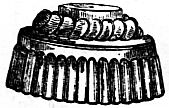
CAKE-MOULD.
Ingredients.—1 lb. of flour, ¼ lb. of sugar, ¼ lb. of butter or lard, ½ lb. of currants, 1 teaspoonful of carbonate of soda, the whites of 4 eggs, ½ pint of milk. Mode.—In making many sweet dishes, the whites of eggs are not required, and if well beaten and added to the above ingredients, make an excellent cake with or without currants. Beat the butter to a cream, well whisk the whites of the eggs, and stir all the ingredients together but the soda, which must not be added until all is well mixed, and the cake is ready to be put into the oven. When the mixture has been well beaten, stir in the soda, put the cake into a buttered mould, and bake it in a moderate oven for 1½ hour. Time.—1½ hour. Average cost, 1s. 3d.
CAKE, Good Holiday.
Ingredients.—1½d. worth of Borwick’s German baking-powder, 2 lbs. of flour, 6 oz. of butter, ¼ lb. of lard, 1 lb. of currants, ½ lb. of stoned and cut raisins, ¼ lb. of mixed candied peel, ½ lb. of moist sugar, 3 eggs, ¾ pint of cold milk. Mode.—Mix the baking-powder with the flour; then rub in the butter and lard; have ready the currants, washed, picked, and dried, the raisins stoned and cut into small pieces (not chopped), and the peel cut into neat slices. Add these with the sugar to the flour, &c., and mix all the dry ingredients well together. Whisk the eggs, stir to them the milk, and with this liquid moisten the cake; beat it up well, that all may be very thoroughly mixed; line a cake-tin with buttered paper, put in the cake, and bake it from 2¼ to 2¾ hours in a good oven. To ascertain when it is done, plunge a clean knife into the middle of it, and if, on withdrawing it, the knife looks clean, and not sticky, the cake is done. To prevent it burning at the top, a piece of clean paper may be put over whilst the cake is soaking, or being thoroughly cooked in the middle. A steamer, such as is used for steaming potatoes, makes a very good cake-tin, if it be lined at the bottom and sides with buttered paper. Time.—2¼ to 2¾ hours. Average cost, 2s. 6d. Seasonable at any time.
CAKE, Luncheon.
Ingredients.—½ lb. of butter, 1 lb. of flour, ½ oz. of caraway seeds, ¼ lb. of currants, 6 oz. of moist sugar, 1 oz. of candied peel, 3 eggs, ½ pint of milk, 1 small teaspoonful of carbonate of soda. Mode.—Rub the butter into the flour until it is quite fine; add the caraway seeds, currants (which should be nicely washed, picked, and dried), sugar, and candied peel cut into thin slices; mix these well together, and moisten with the eggs, which should be well whisked. Boil the milk, and add to it, whilst boiling, the carbonate of soda, which must be well stirred into it, and, with the milk, mix the other ingredients. Butter a tin, pour the cake into it, and bake it in a moderate oven from 1 to 1½ hour. Time.—1 to 1½ hour. Average cost, 1s. 8d. Seasonable at any time.
CAKE, a nice useful.
Ingredients.—¼ lb. of butter, 6 oz. of currants, ¼ lb. of sugar, 1 lb. of dried flour, 2 teaspoonfuls of baking-powder, 3 eggs, 1 teacupful of milk, 2 oz. of sweet almonds, 1 oz. of candied peel. Mode.—Beat the butter to a cream; wash, pick, and dry the currants; whisk the eggs; blanch and chop the almonds, and cut the peel into neat slices. When all these are ready, mix the dry ingredients together; then add the butter, milk, and eggs, and beat the mixture well for a few minutes. Put the cake into a buttered mould or tin, and bake it for rather more than 1½ hour. The currants and candied peel may be omitted, and a little lemon or almond flavouring substituted for them; made in this manner, the cake will be found very good. Time.—Rather more than 1½ hour. Average cost, 1s. 9d.
CAKE, a Pavini.
Ingredients.—1-2 lb. of flour, ½ lb. of ground rice, ½ lb. of raisins stoned and cut into small pieces, ¼ lb. of currants, ¼ lb. of butter, 2 oz. of sweet almonds, ¼ lb. of sifted loaf sugar, ½ nutmeg grated, 1 pint of milk, 1 teaspoonful of carbonate of soda. Mode.—Stone and cut the raisins into small pieces; wash, pick, and dry the currants; melt the butter to a cream, but without oiling it; blanch and chop the almonds, and grate the nutmeg. When all these ingredients are thus prepared, mix them well together; make the milk warm, stir in the soda, and with this liquid make the whole into a paste. Butter a mould, rather more than half fill it with the dough, and bake the cake in a moderate oven from 1½ to 2 hours, or less time should it be made into 2 cakes. Time.—1½ to 2 hours. Average cost, 1s. 8d. Seasonable at any time.
CAKE, a nice Plain.
Ingredients.—1 lb. of flour, 1 teaspoonful of Borwick’s baking-powder, ¼ lb. of good dripping, 1 teacupful of moist sugar, 3 eggs, 1 breakfast-cupful of milk, 1 oz. of caraway seeds, ½ lb. of currants. Mode.—Put the flour and the baking-powder into a basin; stir these together; then rub in the dripping, add the sugar, caraway seeds, and currants; whisk the eggs with the milk, and beat all together very thoroughly until the ingredients are well mixed. Butter a tin, put in the cake, and bake it from 1½ to 2 hours. Let the dripping be quite clean before using: to insure this, it is a good plan to clarify it. Beef dripping is better than any other for cakes, &c., as mutton dripping frequently has a very unpleasant flavour, which would be imparted to the preparation. Time.—1½ to 2 hours, Average cost, 1s. Seasonable at any time.
CAKE, a nice Plain, for Children.
Ingredients.—1 quartern of dough, ¼ lb. of moist sugar, ¼ lb. of butter or good beef dripping, ¼ pint of warm milk, ½ grated nutmeg or ½ oz. of caraway seeds. Mode.—It you are not in the habit of making bread at home, procure the dough from the baker’s, and as soon as it comes in put it into a basin near the fire; cover the basin with a thick cloth, and let the dough remain a little while to rise. In the mean time, beat the butter to a cream, and make the milk warm; and when the dough has risen, mix with it thoroughly all the above ingredients, and knead the cake well for a few minutes. Butter some cake-tins, half fill them, and stand them in a warm place, to allow the dough to rise again. When the tins are three parts full, put the cakes into a good oven, and bake them from 1¾ to 2 hours. A few currants might be substituted for the caraway seeds when the flavour of the latter is disliked. Time.—1¾ to 2 hours. Average cost, 1s. 2d. Seasonable at any time.
CAKE, Queen.
Ingredients.—1 lb. of flour, ½ lb. of butter, ½ lb. of pounded loaf sugar, 3 eggs, 1 teacupful of cream, ½ lb. of currants, 1 teaspoonful of carbonate of soda, essence of lemon, or almonds to taste. Mode.—Work the butter to a cream; dredge in the flour, add the sugar and currants, and mix the ingredients well together. Whisk the eggs, mix them with the cream and flavouring, and stir these to the flour; add the carbonate of soda, beat the paste well for 10 minutes, put it into small buttered pans, and bake the cake from ¼ to ½ hour. Grated lemon-rind may be substituted for the lemon and almond flavouring, which will make the cakes equally nice. Time.—¼ to ½ hour. Average cost, 1s. 9d. Seasonable at any time.
CAKE, Saucer, for Tea.
Ingredients.—¼ lb. of flour, ¼ lb. of tous-les-mois, ¼ lb. of pounded white sugar, ¼ lb. of butter, 2 eggs, 1 oz. of candied orange or lemon-peel. Mode.—Mix the flour and tous-les-mois together; add the sugar, the candied peel cut into thin slices, the butter beaten to a cream, and the eggs well whisked. Beat the mixture for 10 minutes, put it into a buttered cake-tin or mould, or, if this is not obtainable, a soup-plate answers the purpose, lined with a piece of buttered paper. Bake the cake in a moderate oven from 1 to 1¼ hour, and when cold, put it away in a covered canister. It will remain good some weeks, even if it be cut into slices. Time.—1 to 1¼ hour. Average cost, 1s. Seasonable at any time.
CAKES, Scrap.
Ingredients.—2 lbs. of leaf, or the inside fat of a pig; 1½ lb. of flour, ¼ lb. of moist sugar, ½ lb. of currants, 1 oz. of candied lemon-peel, ground allspice to taste. Mode.—Cut the leaf, or flead, as it is sometimes called, into small pieces; put it into a large dish, which place in a quick oven; be careful that it does not burn, and in a short time it will be reduced to oil, with the small pieces of leaf floating on the surface; and it is of these that the cakes should be made. Gather all the scraps together, put them into a basin with the flour, and rub them well together. Add the currants, sugar, candied peel, cut into thin slices, and the ground allspice. When all these ingredients are well mixed, moisten with sufficient cold water to make the whole into a nice paste; roll it out thin, cut it into shapes, and bake the cakes in a quick oven from 15 to 20 minutes. These are very economical and wholesome cakes for children, and the lard, melted at home, produced from the flead, is generally better than that you purchase. To prevent the lard from burning, and to insure its being a good colour, it is better to melt it in a jar placed in a saucepan of boiling water; by doing it in this manner, there will be no chance of its discolouring. Time.—15 to 20 minutes. Sufficient to make 3 or 4 dozen cakes. Seasonable from September to March.
CALF.
The manner of cutting up a calf for the English market is to divide the carcase into four quarters, with eleven ribs to each fore quarter; which are again subdivided into joints, as exemplified on the cut.
Hind quarter:—
1. The loin.
2. The chump, consisting of the rump and hock-bone.
3. The fillet.
4. The hock, or hind knuckle.
Fore quarter:—
5. The shoulder.
6. The neck.
7. The breast.
8. The fore knuckle.
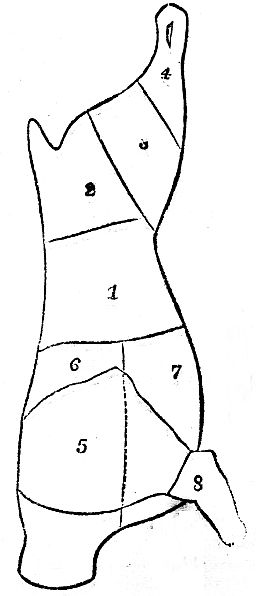
SIDE OF A CALF, SHOWING THE SEVERAL JOINTS.
The several parts of a moderately-sized well-fed calf, about eight weeks old, are nearly of the following weights:—loin and chump 18 lbs., fillet 12½ lbs., hind knuckle 5½ lbs., shoulder 11 lbs., neck 11 lbs., breast 9 lbs., and fore knuckle 5 lbs.; making a total of 144 lbs. weight. The London mode of cutting the carcase is considered better than that pursued in Edinburgh, as giving three roasting joints and one boiling in each quarter; besides the pieces being more equally divided, as regards flesh, and from the handsomer appearance they make on the table.
CALF’S FEET, Baked or Stewed.
Ingredients.—1 calf’s foot, 1 pint of milk, 1 pint of water, 1 blade of mace, the rind of ½ lemon, pepper and salt to taste. Mode.—Well clean the foot, and either stew or bake it in the milk-and-water with the other ingredients from 3 to 4 hours. To enhance the flavour, an onion and a small quantity of celery may be added, if approved; ½ a teacupful of cream, stirred in just before serving, is also a great improvement to this dish. Time.—3 to 4 hours. Average cost, in full season, 9d. each. Sufficient for 1 person. Seasonable from March to October.
CALF’S FEET, Boiled, and Parsley and Butter.
Ingredients.—2 calf’s feet, 2 slices of bacon, 2 oz. of butter, two tablespoonfuls of lemon-juice, salt and whole pepper to taste, 1 onion, a bunch of savoury herbs, 4 cloves, 1 blade of mace, water, parsley, and butter. Mode.—Procure 2 white calf’s feet; bone them as far as the first joint, and put them into warm water to soak for 2 hours. Then put the bacon, butter, lemon-juice, onion, herbs, spices, and seasoning into a stewpan; lay in the feet, and pour in just sufficient water to cover the whole. Stew gently for about three hours; take out the feet, dish them, and cover with parsley and butter. The liquor they were boiled in should be strained and put by in a clean basin for use: it will be found very good as an addition to gravies, &c. Time.—Rather more than 3 hours. Average cost, in full season, 9d. each. Sufficient for 4 persons. Seasonable from March to October.
CALF’S-FOOT BROTH.
Ingredients.—1 calf’s foot, 3 pints of water, 1 small lump of sugar, nutmeg to taste, the yolk of 1 egg, a piece of butter the size of a nut. Mode.—Stew the foot in the water with the lemon-peel very gently, until the liquid is half wasted, removing any scum, should it rise to the surface. Set it by in a basin until quite cold, then take off every particle of fat. Warm up about ½ pint of the broth, adding the butter, sugar, and a very small quantity of grated nutmeg; take it off the fire for a minute or two, then add the beaten yolk of the egg; keep stirring over the fire until the mixture thickens, but do not allow it to boil again after the egg is added, or it will curdle, and the broth will be spoiled. Time.—To be boiled until the liquid is reduced one half. Average cost, in full season, 9d. each. Sufficient to make 1½ pint of broth. Seasonable from March to October.
CALF’S FEET, Fricasseed.
Ingredients.—A set of calf’s feet; for the batter, allow for each egg 1 tablespoonful of flour, 1 tablespoonful of bread-crumbs, hot lard, or clarified dripping, pepper and salt to taste. Mode.—If the feet are purchased uncleaned, dip them into warm water repeatedly, and scrape off the hair, first one foot and then the other, until the skin looks perfectly clean, a saucepan of water being kept by the fire until they are finished. After washing and soaking in cold water, boil them in just sufficient water to cover them, until the bones come easily away. Then pick them out, and after straining the liquor into a clean vessel, put the meat into a pie-dish until the next day. Now cut it down in slices about ½ inch thick, lay on them a stiff batter made of egg, flour, and bread-crumbs in the above proportion; season with pepper and salt, and plunge them into a pan of boiling lard. Fry the slices a nice brown, dry them before the fire for a minute or two, dish them on a napkin, and garnish with tufts of parsley. This should be eaten with melted butter, mustard, and vinegar. Be careful to have the lard boiling to set the batter, or the pieces of feet will run about the pan. The liquor they were boiled in should be saved, and will be found useful for enriching gravies, making jellies, &c. Time.—About 3 hours to stew the feet, 10 or 15 minutes to fry them. Average cost, in full season, 9d. each. Sufficient for 8 persons. Seasonable from March to October.
Note.—This dish can be highly recommended to delicate persons.
CALF’S-FEET JELLY.
Ingredients.—1 quart of calf’s-feet stock, ½ lb. sugar, ½ pint of sherry, 1 glass of brandy, the shells and whites of 5 eggs, the rind and juice of 2 lemons, ½ oz. of isinglass. Mode.—Prepare the stock as directed in recipe for stock, taking care to leave the sediment, and to remove all the fat from the surface. Put it into a saucepan cold, without clarifying it; add the remaining ingredients, and stir them well together before the saucepan is placed on the fire. Then simmer the mixture gently for ¼ hour, but do not stir it after it begins to warm. Throw in a teacupful of cold water, boil for another 5 minutes, and keep the saucepan covered by the side of the fire for about ½ hour, but do not let it boil again. In simmering, the head or scum may be carefully removed as it rises; but particular attention must be given to the jelly, that it be not stirred in the slightest degree after it is heated. The isinglass should be added when the jelly begins to boil: this assists to clear it, and makes it firmer for turning out. Wring out a jelly-bag in hot water; fasten it on to a stand, or the back of a chair; place it near the fire with a basin underneath it, and run the jelly through it. Should it not be perfectly clear the first time, repeat the process until the desired brilliancy is obtained. Soak the moulds in water, drain them for half a second, pour in the jelly, and put it in a cool place to set. If ice is at hand, surround the moulds with it, and the jelly will set sooner, and be firmer when turned out. In summer it is necessary to have ice in which to put the moulds, or the cook will be, very likely, disappointed, by her jellies being in too liquid a state to turn out properly, unless a great deal of isinglass is used. When wanted for table, dip the moulds in hot water for a minute, wipe the outside with a cloth, lay a dish on the top of the mould, turn it quickly over, and the jelly should slip out easily. It is sometimes served broken into square lumps, and piled high in glasses. Earthenware moulds are preferable to those of pewter or tin for red jellies, the colour and transparency of the composition being often spoiled by using the latter. To make this jelly more economically, raisin wine may be substituted for the sherry and brandy, and the stock made from cow-heels, instead of calf’s feet. Time.—20 minutes to simmer the jelly, ½ hour to stand covered. Average cost, reckoning the feet at 6d. each, 5s. 6d. Sufficient to fill two 1½-pint moulds. Seasonable at any time.
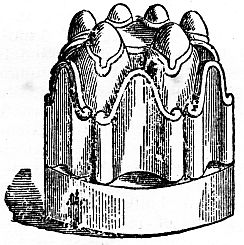
JELLY-MOULD.
Note.—As lemon-juice, unless carefully strained, is liable to make the jelly muddy, see that it is clear before it is added to the other ingredients. Omit the brandy when the flavour is objected to.
CALF’S HEAD à la Maître d’Hôtel.
[Cold Meat Cookery.] Ingredients.—The remains of a cold calf’s head, rather more than ½ pint of maître d’hôtel sauce. Mode.—Make the sauce by the given recipe, and have it sufficiently thick that it may nicely cover the meat; remove the bones from the head, and cut the meat into neat slices. When the sauce is ready, lay in the meat; gradually warm it through, and, after it boils up, let it simmer very gently for 5 minutes, and serve. Time.—Rather more than 1½ hour. Average cost, exclusive of the meat, 1s. 2d. Seasonable from March to October.
CALF’S HEAD, Boiled (with the Skin on).
Ingredients.—Calf’s head, boiling water, bread-crumbs, 1 large bunch of parsley, butter, white pepper and salt to taste, 4 tablespoonfuls of melted butter, 1 tablespoonful of lemon juice, 2 or 3 grains of cayenne. Mode.—Put the head into boiling water, and let it remain by the side of the fire for 3 or 4 minutes; take it out, hold it by the ear, and with the back of a knife, scrape off the hair (should it not come off easily, dip the head again into boiling water). When perfectly clean, take the eyes out, cut off the ears, and remove the brain, which soak for an hour in warm water. Put the head into hot water to soak for a few minutes, to make it look white, and then have ready a stewpan, into which lay the head; cover it with cold water, and bring it gradually to boil. Remove the scum, and add a little salt, which assists to throw it up. Simmer it very gently from 2½ to 3 hours, and when nearly done, boil the brains for ¼ hour; skin and chop them, not too finely, and add a tablespoonful of minced parsley which has been previously scalded. Season with pepper and salt, and stir the brains, parsley, &c., into about 4 tablespoonfuls of melted butter; add the lemon-juice and cayenne, and keep these hot by the side of the fire. Take up the head, cut out the tongue, skin it, put it on a small dish with the brains round it; sprinkle over the head a few bread-crumbs mixed with a little minced parsley; brown these before the fire, and serve with a tureen of parsley and butter, and either boiled bacon, ham, or pickled pork as an accompaniment. Time.—2½ to 3 hours. Average cost, according to the season, from 3s. to 7s. 6d. Sufficient for 8 or 9 persons. Seasonable from March to October.
CALF’S HEAD, Boiled (without the Skin).
Ingredients.—Calf’s head, water, a little salt, 4 tablespoonfuls of melted butter, 1 tablespoonful of minced parsley, pepper and salt to taste, 1 tablespoonful of lemon-juice. Mode.—After the head has been thoroughly cleaned, and the brains removed, soak it in warm water to blanch it. Lay the brains also into warm water to soak, and let them remain for about an hour. Put the head into a stewpan, with sufficient cold water to cover it, and, when it boils, add a little salt; take off every particle of scum as it rises, and boil the head until perfectly tender. Boil the brains, chop them, and mix with them melted butter, minced parsley, pepper, salt, and lemon-juice in the above proportion. Take up the head, skin the tongue, and put it on a small dish with the brains round it. Have ready some parsley and butter, smother the head with it, and the remainder send to table in a tureen. Bacon, ham, pickled pork, or a pig’s cheek, are indispensable with calf s head. The brains are sometimes chopped with hard-boiled eggs, and mixed with a little Béchamel or white sauce. Time.—From 1½ to 2¼ hours. Average cost, according to the season, from 3s. to 5s. Sufficient for 6 or 7 persons. Seasonable from March to October.
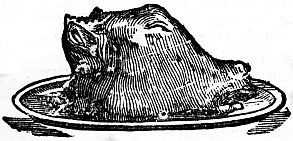
CALF’S HEAD.
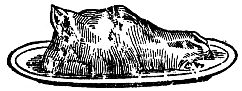
HALF A CALF’S HEAD.
Note.—The liquor in which the head was boiled should be saved: it makes excellent soup, and will be found a nice addition to gravies, &c. Half a calf’s head is as frequently served as a whole one, it being a more convenient-sized joint for a small family. It is cooked in the same manner, and served with the same sauces, as in the preceding recipe.
CALF’S HEAD, Collared.
Ingredients.—A calf’s head, 4 tablespoonfuls of minced parsley, 4 blades of pounded mace, ½ teaspoonful of grated nutmeg, white pepper to taste, a few thick slices of ham, the yolks of 6 eggs boiled hard. Mode.—Scald the head for a few minutes; take it out of the water, and with a blunt knife scrape off all the hair. Clean it nicely, divide the head and remove the brains. Boil it tender enough to take out the bones, which will be in about 2 hours. When the head is boned, flatten it on the table, sprinkle over it a thick layer of parsley, then a layer of ham, and then the yolks of the eggs cut into thin rings and put a seasoning of pounded mace, nutmeg, and white pepper between each layer; roll the head up in a cloth, and tie it up as tightly as possible. Boil it for 4 hours, and when it is taken out of the pot, place a heavy weight on the top, the same as for other collared meats. Let it remain till cold; then remove the cloth and binding, and it will be ready to serve. Time.—Altogether, 6 hours. Average cost, 5s. to 7s. each. Seasonable from March to October.
CALF’S HEAD, Fricasseed (an Entrée).
[Cold Meat Cookery.] Ingredients.—The remains of a boiled calf’s head, 1½ pint of the liquor in which the head was boiled, 1 blade of pounded mace, 1 onion minced, a bunch of savoury herbs, salt and white pepper to taste, thickening of butter and flour, the; yolks of 2 eggs, 1 tablespoonful of lemon-juice, forcemeat balls. Mode.—Remove all the bones from the head, and cut the meat into nice square pieces. Put 1½ pint of the liquor it was boiled in into a saucepan, with mace, onions, herbs, and seasoning in the above proportion: let this simmer gently for ¾ hour, then strain it and put in the meat. When quite hot through, thicken the gravy with a little butter rolled in flour, and, just before dishing the fricassee, put in the beaten yolks of eggs, and lemon-juice; but be particular, after these two latter ingredients are added, that the sauce does not boil, or it will curdle. Garnish with forcemeat balls and curled slices of broiled bacon. To insure the sauce being smooth, it is a good plan to dish the meat first, and then to add the eggs to the gravy: when these are set, the sauce may be poured over the meat. Time.—Altogether, 1¼ hour. Average cost, exclusive of the meat, 6d.
CALF’S HEAD, Hashed.
[Cold Meat Cookery.] Ingredients.—The remains of a cold boiled calf’s head, 1 quart of the liquor in which it was boiled, a faggot of savoury herbs, 1 onion, 1 carrot, a strip of lemon-peel, 2 blades of pounded mace, salt and white pepper to taste, a very little cayenne, rather more than 2 tablespoonfuls of sherry, 1 tablespoonful of lemon-juice, 1 tablespoonful of mushroom ketchup, forcemeat balls. Mode.—Cut the meat into neat slices, and put the bones and trimmings into a stewpan with the above proportion of liquor that the head was boiled in. Add a bunch of savoury herbs, 1 onion, 1 carrot, a strip of lemon-peel, and 2 blades of pounded mace, and let these boil for 1 hour, or until the gravy is reduced nearly half. Strain it into a clean stewpan, thicken it with a little butter and flour, and add a flavouring of sherry, lemon-juice, and ketchup, in the above proportion; season with pepper, salt, and a little cayenne; put in the meat, let it gradually warm through, but not boil more than two or three minutes. Garnish the dish with forcemeat balls and pieces of bacon rolled and toasted, placed alternately, and send it to table very hot. Time.—Altogether 1½ hour. Average cost, exclusive of the remains of the head, 6d. Seasonable from March to October.
CALF’S HEAD, Moulded.
[Cold Meat Cookery.] Ingredients.—The remains of a calf’s head, some thin slices of ham or bacon, 6 or 8 eggs boiled hard, 1 dessertspoonful of salt, pepper, mixed spice, and parsley, ½ pint of good white gravy. Mode.—Cut the head into thin slices. Butter a tin mould, cut the yolks of eggs in half, and put some of them round the tin; sprinkle some of the parsley, spice, &c., over it; then put in the head and the bacon in layers, adding occasionally more eggs and spice till the whole of the head is used. Pour in the gravy, cover the top with a thin paste of flour and water, and bake ¾ of an hour. Take off the paste, and, when cold, turn it out. Time.—From ¾ to 1 hour to bake the preparation. Seasonable from March to October.
CALF’S HEAD, to Carve.
This is not altogether the most easy-looking dish to cut when it is put before a carver for the first time; there is not much real difficulty in the operation, however, when the head has been attentively examined, and, after the manner of a phrenologist, you get to know its bumps, good and bad. In the first place, inserting the knife quite down to the bone, cut slices in the direction of the line 1 to 2; with each of these should be helped a piece of what is called the throat sweetbread, cut in the direction of from 3 to 4. The eye, and the flesh round, are favourite morsels with many, and should be given to those at the table who are known to be the greatest connoisseurs. The jawbone being removed, there will then be found some nice lean; and the palate, which is reckoned by some a tit-bit, lies under the head. On a separate dish there is always served the tongue and brains, and each guest should be asked to take some of these.
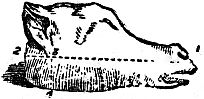
CALF’S HEAD.
CALF’S LIVER, aux Fines Herbes and Sauce Piquante.
Ingredients.—A calf’s liver, flour, a bunch of savoury herbs, including parsley; when liked, 2 minced shalots; 1 teaspoonful of flour, 1 tablespoonful of vinegar, 1 tablespoonful of lemon-juice, pepper and salt to taste, ¼ pint water. Mode.—Procure a calf’s liver as white as possible, and cut it into slices of a good and equal shape. Dip them in flour, and fry them of a good colour in a little butter. When they are done, put them on a dish, which keep hot before the fire. Mince the herbs very fine, put them in the frying-pan with a little more butter; add the remaining ingredients, simmer gently until the herbs are done, and pour over the liver. Time.—According to the thickness of the slices, from 5 to 10 minutes. Average cost, 10d. per lb. Sufficient for 7 or 8 persons. Seasonable from March to October.
CALF’S LIVER and BACON
Ingredients.—2 or 3 lbs. of liver, bacon, pepper and salt to taste, a small piece of butter, flour, 2 tablespoonfuls of lemon-juice, ¼ pint of water. Mode.—Cut the liver in thin slices, and cut as many slices of bacon as there are of liver; fry the bacon first, and put that on a hot dish before the fire. Fry the liver in the fat which comes from the bacon, after seasoning it with pepper and salt and dredging over it a very little flour. Turn the liver occasionally to prevent its burning, and when done, lay it round the dish with a piece of bacon between each. Pour away the bacon fat, put in a small piece of butter, dredge in a little flour, add the lemon-juice and water, give one boil, and pour it in the middle of the dish. It may be garnished with slices of cut lemon, or forcemeat balls. Time.—According to the thickness of the slices, from 5 to 10 minutes. Average cost, 10d. per lb. Sufficient for 6 or 7 persons. Seasonable from March to October.
CALF’S LIVER, Larded and Roasted (an Entrée).
Ingredients.—A calf’s liver, vinegar, 1 onion, 3 or 4 sprigs of parsley and thyme, salt and pepper to taste, 1 bay-leaf, lardoons, brown gravy. Mode.—Take a fine white liver, and lard it the same as a fricandeau; put it into vinegar with an onion cut in slices, parsley, thyme, bay-leaf, and seasoning in the above proportion. Let it remain in this pickle for 24 hours, then roast and baste it frequently with the vinegar, &c.; glaze it, serve under it a good brown gravy, or sauce piquante, and send it to table very hot. Time.—Rather more than 1 hour. Average cost, 10d. per lb. Sufficient for 7 or 8 persons. Seasonable from March to October.
Note.—Calf’s liver stuffed with forcemeat (see Forcemeat), to which has been added a little fat bacon, will be found a very savoury dish. It should be larded or wrapped in buttered paper, and roasted before a clear fire. Brown gravy and currant jelly should be served with it.
CAMP VINEGAR.
Ingredients.—1 head of garlic, ½ oz. cayenne, 2 teaspoonfuls of soy, 2 ditto walnut ketchup, 1 pint of vinegar, cochineal to colour. Mode.—Slice the garlic, and put it, with all the above ingredients, into a clean bottle. Let it stand to infuse for a month, when strain it off quite clear, and it will be fit for use. Keep it in small bottles well sealed, to exclude the air. Average cost for this quantity, 8d.
CANARY PUDDING (very good).
Ingredients.—The weight of 3 eggs in sugar and butter, the weight of 2 eggs in flour, the rind of 1 small lemon, 3 eggs. Mode.—Melt the butter to a liquid state, but do not allow it to oil; stir to this the sugar and finely-minced lemon-peel, and gradually dredge in the flour, keeping the mixture well stirred; whisk the eggs; add these to the pudding; beat all the ingredients until thoroughly blended, and put them into a buttered mould or basin; boil for 2 hours, and serve with sweet sauce. Time.—2 hours. Average cost, 9d. Sufficient for 4 or 5 persons. Seasonable at any time.
CANNELONS, or Fried Puffs (Sweet Entremets).
Ingredients.—½ lb. of puff-paste; apricot, or any kind of preserve that may be preferred; hot lard. Mode.—Cannelons, which are made of puff-paste rolled very thin, with jam inclosed, and cut out in long narrow rolls or puffs, make a very pretty and elegant dish. Make some good puff-paste by the recipe given; roll it out very thin, and cut it into pieces of an equal size, about 2 inches wide and 8 inches long; place upon each piece a spoonful of jam, wet the edges with the white of egg, and fold the paste over twice; slightly press the edges together, that the jam may not escape in the frying; and when all are prepared, fry them in boiling lard until of a nice brown, letting them remain by the side of the fire after they are coloured, that the paste may be thoroughly done. Drain them before the fire, dish on a d’oyley, sprinkle over them sifted sugar, and serve. These cannelons are very delicious made with fresh instead of preserved fruit, such as strawberries, raspberries, or currants: it should be laid in the paste, plenty of pounded sugar sprinkled over, and folded and fried in the same manner as stated above. Time.—About 10 minutes. Average cost, 1s. Sufficient.—½ lb. of paste for a moderate-sized dish of cannelons. Seasonable, with jam, at any time.
CAPER SAUCE, for Fish.
Ingredients.—½ pint of melted butter, 3 dessertspoonfuls of capers, 1 dessertspoonful of their liquor, a small piece of glaze, if at hand (this may be dispensed with), ¼ teaspoonful of salt, ditto of pepper, 1 tablespoonful of anchovy essence. Mode.—Cut the capers across once or twice, but do not chop them fine; put them in a saucepan with ½ pint of good melted butter, and add all the other ingredients. Keep stirring the whole until it just simmers, when it is ready to serve. Time.—1 minute to simmer. Average cost for this quantity, 5d. Sufficient to serve with a skate, or 2 or 3 slices of salmon.
CAPER SAUCE, for Boiled Mutton.
Ingredients.—½ pint of melted butter, 3 tablespoonfuls of capers or nasturtiums, 1 tablespoonful of their liquor. Mode.—Chop the capers twice or thrice, and add them, with their liquor, to ½ pint of melted butter, made very smoothly with milk; keep stirring well; let the sauce just simmer, and serve in a tureen. Pickled nasturtium-pods are fine-flavoured, and by many are eaten in preference to capers. They make an excellent sauce. Time.—2 minutes to simmer. Average cost for this quantity, 8d. Sufficient to serve with a leg of mutton.
CAPER SAUCE, a Substitute for.
Ingredients.—½ pint of melted butter, 2 tablespoonfuls of cut parsley, ½ teaspoonful of salt, 1 tablespoonful of vinegar. Mode.—Boil the parsley slowly to let it become a bad colour; cut, but do not chop it fine. Add it to ½ pint of smoothly-made melted butter, with salt and vinegar in the above proportions. Boil up and serve. Time.—2 minutes to simmer. Average cost for this quantity, 3d.
CAPSICUMS, Pickled.
Ingredients.—Vinegar, ¼ oz. of pounded mace, and ¼ oz. of grated nutmeg, to each quart; brine. Mode.—Gather the pods with the stalks on, before they turn red; slit them down the side with a small-pointed knife, and remove the seeds only; put them in a strong brine for 3 days, changing it every morning; then take them out, lay them on a cloth, with another one over them, until they are perfectly free from moisture. Boil sufficient vinegar to cover them, with mace and nutmeg in the above proportions; put the pods in a jar, pour over the vinegar when cold, and exclude them from the air by means of a wet bladder tied over.
CARP, Baked.
Ingredients.—1 carp, forcemeat, bread-crumbs, 1 oz. butter, ½ pint of stock (see Stock), ½ pint of port wine, 6 anchovies, 2 onions sliced, 1 bay-leaf, a faggot of sweet herbs, flour to thicken, the juice of 1 lemon; cayenne and salt to taste; ½ teaspoonful of powdered sugar. Mode.—Stuff the carp with a delicate forcemeat, after thoroughly cleansing it, and sew it up, to prevent the stuffing from falling out. Rub it over with an egg, and sprinkle it with bread-crumbs, lay it in a deep earthen dish, and drop the butter, oiled, over the bread-crumbs. Add the stock, onions, bay-leaf, herbs, wine, and anchovies, and bake for 1 hour. Put 1 oz. of butter into a stewpan, melt it, and dredge in sufficient flour to dry it up; put in the strained liquor from the carp, stir frequently, and when it has boiled, add the lemon-juice and seasoning. Serve the carp on a dish garnished with parsley and cut lemon, and the sauce in a boat. Time.—1¼ hour. Average cost. Seldom bought. Seasonable from March to October. Sufficient for 1 or 2 persons.
CARP, Stewed.
Ingredients.—1 carp, salt, stock, 2 onions, 6 cloves, 12 peppercorns, 1 blade of mace, ¼ pint of port wine, the juice of ½ lemon, cayenne and salt to taste, a faggot of savoury herbs. Mode.—Scale the fish, clean it nicely, and, if very large, divide it; lay it in the stewpan, after having rubbed a little salt on it, and put in sufficient stock to cover it; add the herbs, onions and spices, and stew gently for 1 hour, or rather more, should it be very large. Dish up the fish with great care, strain the liquor, and add to it the port wine, lemon-juice, and cayenne; give one boil, pour it over the fish, and serve. Time.—1¼ hour. Average cost. Seldom bought. Seasonable from March to October. Sufficient for 1 or 2 persons.
Note.—This fish can be boiled plain, and served with parsley and butter. Chub and Char may be cooked in the same manner as the above, as also Dace and Roach.
CARROT JAM, to Imitate Apricot Preserve.
Ingredients.—Carrots; to every lb. of carrot pulp allow 1 lb. of pounded sugar, the grated rind of 1 lemon, the strained juice of 2, 6 chopped bitter almonds, 2 tablespoonfuls of brandy. Mode.—Select young carrots; wash and scrape them clean, cut them into round pieces, put them into a saucepan with sufficient water to cover them, and let them simmer, until perfectly soft; then beat them through a sieve. Weigh the pulp, and to every lb. allow the above ingredients. Put the pulp into a preserving-pan with the sugar, and let this boil for 5 minutes, stirring and skimming all the time. When cold, add the lemon-rind and juice, almonds and brandy; mix these well with the jam; then put it into pots, which must be well covered and kept in a dry place. The brandy may be omitted, but the preserve will then not keep: with the brandy it will remain good for months. Time.—About ¾ hour to boil the carrots; 5 minutes to simmer the pulp. Average cost, 1s. 2d. for 1 lb. of pulp, with the other ingredients in proportion. Sufficient to fill 3 pots. Seasonable from July to December.
CARROT PUDDING, Baked or Boiled.
Ingredients.—½ lb. of bread-crumbs, 4 oz. suet, ¼ lb. of stoned raisins, ¾ lb. of carrot, ¼ lb. of currants, 3 oz. of sugar, 3 eggs, milk, ¼ nutmeg. Mode.—Boil the carrots, until tender enough to mash to a pulp; add the remaining ingredients, and moisten with sufficient milk to make the pudding of the consistency of thick batter. If to be boiled, put the mixture into a buttered basin, tie it down with a cloth, and boil for 2½ hours: if to be baked, put it into a pie-dish, and bake for nearly an hour; turn it out of the dish, strew sifted sugar over it, and serve. Time.—2½ hours to boil; 1 hour to bake. Average cost, 1s. 2d. Sufficient for 5 or 6 persons. Seasonable from September to March.
CARROT SOUP.
Ingredients.—4 quarts of liquor in which a leg of mutton or beef has been boiled, a few beef-bones, 6 large carrots, 2 large onions, 1 turnip; seasoning of salt and pepper to taste; cayenne. Mode.—Put the liquor, bones, onions, turnip, pepper, and salt, into a stewpan, and simmer for 3 hours. Scrape and cut the carrots thin, strain the soup on them, and stew them till soft enough to pulp through a hair sieve or coarse cloth; then boil the pulp with the soup, which should be of the consistency of pea-soup. Add cayenne. Pulp only the red part of the carrot, and make this soup the day before it is wanted. Time.—4½ hours. Average cost, per quart, 1½d. Seasonable from October to March. Sufficient for 8 persons.
CARROT SOUP.
Ingredients.—2 lbs. of carrots, 3 oz. of butter, seasoning to taste of salt and cayenne, 2 quarts of stock or gravy soup. Mode.—Scrape and cut out all specks from the carrots, wash, and wipe them dry, and then reduce them into quarter-inch slices. Put the butter into a large stewpan, and when it is melted, add 2 lbs. of the sliced carrots, and let them stow gently for an hour without browning. Add to them the soup, and allow them to simmer till tender,—say for nearly an hour. Press them through a strainer with the soup, and add salt and cayenne if required. Boil the whole gently for 5 minutes, skim well, and serve as hot as possible. Time.—1¼ hour. Average cost, per quart, 1s. 1d.
CARROTS, Boiled.
Ingredients.—To each ½ gallon of water, allow one heaped tablespoonful of salt; carrots. Mode.—Cut off the green tops, wash and scrape the carrots, and should there be any black specks, remove them. If very large, cut them in halves, divide them lengthwise into four pieces, and put them into boiling water, salted in the above proportion; let them boil until tender, which may be ascertained by thrusting a fork into them: dish, and serve very hot. This vegetable is an indispensable accompaniment to boiled beef. When thus served, it is usually boiled with the beef; a few carrots are placed round the dish as a garnish, and the remainder sent to table in a vegetable-dish. Young carrots do not require nearly so much boiling, nor should they be divided: these make a nice addition to stewed veal, &c. Time.—Large carrots, 1¾ to 2¼ hours; young ones, about ½ hour. Average cost, 6d. to 8d. per bunch of 18. Sufficient.—4 large carrots for 5 or 6 persons. Seasonable.—Young carrots from April to July, old ones at any time.
CARROTS, to dress, in the German way.
Ingredients.—8 large carrots, 3 oz. of butter, salt to taste, a very little grated nutmeg, 1 tablespoonful of finely-minced parsley, 1 dessertspoonful of minced onion, rather more than 1 pint of weak stock or broth, 1 tablespoonful of flour. Mode.—Wash and scrape the carrots, and cut them into rings of about ¼ inch in thickness. Put the butter into a stewpan; when it is melted, lay in the carrots, with salt, nutmeg, parsley, and onion in the above proportions. Toss the stewpan over the fire for a few minutes, and when the carrots are well saturated with the butter, pour in the stock, and simmer gently until they are nearly tender. Then put into another stewpan a small piece of butter; dredge in about a tablespoonful of flour; stir this over the fire, and when of a nice brown colour, add the liquor that the carrots have been boiling in; let this just boil up, pour it over the carrots in the other stewpan, and let them finish simmering until quite tender. Serve very hot. This vegetable, dressed as above, is a favourite accompaniment to roast pork, sausages, &c., &c. Time.—About ¾ hour. Average cost, 6d. to 8d. per bunch of 18. Sufficient for 6 or 7 persons. Seasonable.—Young carrots from April to July, old ones at any time.
CARROTS, Sliced (Entremets, or to be served with the Second Course, as a Side-Dish).
Ingredients.—5 or 6 large carrots, a large lump of sugar, 1 pint of weak stock, 3 oz. of fresh butter, salt to taste. Mode.—Scrape and wash the carrots, cut them into slices of an equal size, and boil them in salt and water until half done; drain them well, put them into a stewpan with the sugar and stock, and let them boil over a brisk fire. When reduced to a glaze, add the fresh butter and a seasoning of salt; shake the stewpan about well, and when the butter is well mixed with the carrots, serve. There should be no sauce in the dish when it comes to table, but it should all adhere to the carrots. Time.—Altogether, ¾ hour. Average cost, 6d. to 8d. per bunch of 18. Sufficient for 1 dish. Seasonable.—Young carrots from April to July, old ones at any time.
CARROTS, Stewed.
Ingredients.—7 or 8 large carrots, 1 teacupful of broth, pepper and salt to taste, ½ teacupful of cream, thickening of butter and flour. Mode.—Scrape the carrots nicely; half-boil, and slice them into a stewpan; add the broth, pepper and salt, and cream; simmer till tender, and be careful the carrots are not broken. A few minutes before serving, mix a little flour with about 1 oz. of butter; thicken the gravy with this; let it just boil up, and serve. Time.—About ¾ hour to boil the carrots, about 20 minutes to cook them after they are sliced. Average cost, 6d. to 8d. per bunch of 18. Sufficient for 5 or 6 persons. Seasonable.—Young carrots from April to July, old ones at any time.
CAULIFLOWERS à la SAUCE BLANCHE (Entremets, or Side-dish, to be served with the Second Course).
Ingredients.—3 cauliflowers, ½ pint of sauce blanche, or French melted butter, 3 oz. of butter, salt and water. Mode.—Cleanse the cauliflowers as in the succeeding recipe, and cut the stalks off flat at the bottom; boil them until tender in salt and water, to which the above proportion of butter has been added, and be careful to take them up the moment they are done, or they will break, and the appearance of the dish will be spoiled. Drain them well, and dish them in the shape of a large cauliflower. Have ready ½ pint of sauce made by recipe, pour it over the flowers, and serve hot and quickly. Time.—Small cauliflowers, 12 to 15 minutes; large ones, 20 to 25 minutes, after the water boils. Average cost, large cauliflowers, in full season, 6d. each. Sufficient, 1 large cauliflower for 3 or 4 persons. Seasonable from the beginning of June to the end of September.
CAULIFLOWERS, Boiled.
Ingredients.—To each ½ gallon of water allow 1 heaped tablespoonful of salt. Mode.—Choose cauliflowers that are close and white; trim off the decayed outside leaves, and cut the stalk off flat at the bottom. Open the flower a little in places to remove the insects, which are generally found about the stalk, and let the cauliflowers lie in salt and water for an hour previous to dressing them, with their heads downwards: this will effectually draw out all the vermin. Then put them into fast-boiling water, with the addition of salt in the above proportion, and let them boil briskly over a good fire, keeping the saucepan uncovered, and the water well skimmed. When the cauliflowers are tender, take them up with a slice; let them drain, and, if large enough, place them upright in the dish. Serve with plain melted butter, a little of which may be poured over the flower. Time.—Small cauliflower 12 to 15 minutes, large one 20 to 25 minutes, after the water boils. Average cost, for large cauliflowers, 6d. each. Sufficient.—Allow 1 large cauliflower for 3 persons. Seasonable from the beginning of June to the end of September.
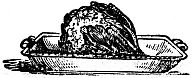
BOILED CAULIFLOWER.
CAULIFLOWERS, with Parmesan Cheese (Entremets, or Side-dish, to be served with the Second Course).
Ingredients.—2 or 3 cauliflowers, rather more than ½ pint of white sauce, 2 tablespoonfuls of grated Parmesan cheese, 2 oz. of fresh butter, 3 tablespoonfuls of bread-crumbs. Mode.—Cleanse and boil the cauliflowers by the preceding recipe, drain them, and dish them with the flowers standing upright. Have ready the above proportion of white sauce; pour sufficient of it over the cauliflowers just to cover the top; sprinkle over this some rasped Parmesan cheese and bread-crumbs, and drop on these the butter, which should be melted, but not oiled. Brown with a salamander, or before the fire, and pour round, but not over, the flowers the remainder of the sauce, with which should be mixed a small quantity of grated Parmesan cheese. Time.—Altogether, ½ hour. Average cost, for large cauliflowers, 6d. each. Sufficient.—3 small cauliflowers for 1 dish. Seasonable from the beginning of June to the end of September.
CAYENNE CHEESES.
Ingredients.—½ lb. of butter, ½ lb. of flour, ½ lb. of grated cheese, 1/6 teaspoonful of cayenne, 1/3 teaspoonful of salt; water. Mode.—Rub the butter in the flour; add the grated cheese, cayenne, and salt, and mix these ingredients well together. Moisten with sufficient water to make the whole into a paste; roll out, and cut into fingers about 4 inches in length. Bake them in a moderate oven a very light colour, and serve very hot. Time.—15 to 20 minutes. Average cost, 1s. 4d. Sufficient for 6 or 7 persons. Seasonable at any time.
CAYENNE VINEGAR, or Essence of Cayenne.
Ingredients.—½ oz. of cayenne pepper, ½ pint of strong spirit, or 1 pint of vinegar. Mode.—Put the vinegar, or spirit, into a bottle, with the above proportion of cayenne, and let it steep for a month, when strain off and bottle for use. This is excellent seasoning for soups or sauces, but must be used very sparingly.